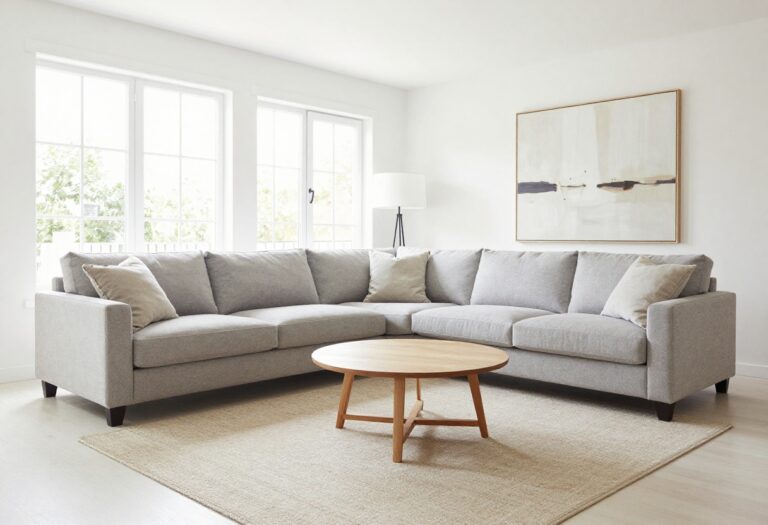
11 Colorful Living Room Ideas That Bring Happy Energy
Color has a way of shifting a room's mood. A splash of yellow can feel like sunshine, while a deep teal wraps you in calm. But adding color to your living room doesn't mean you have to go bold or trendy.
It's about choosing shades that make you smile and layering them in ways that feel natural and lived-in. If you're looking to brighten up your space without losing that cozy vibe, you're in the right place.
These 11 ideas are all about bringing happy energy into your living room while keeping it warm and welcoming. Think soft corals, earthy greens, and pops of mustard that feel like a hug for your eyes.
1. Start with a Statement Sofa in a Cheerful Hue
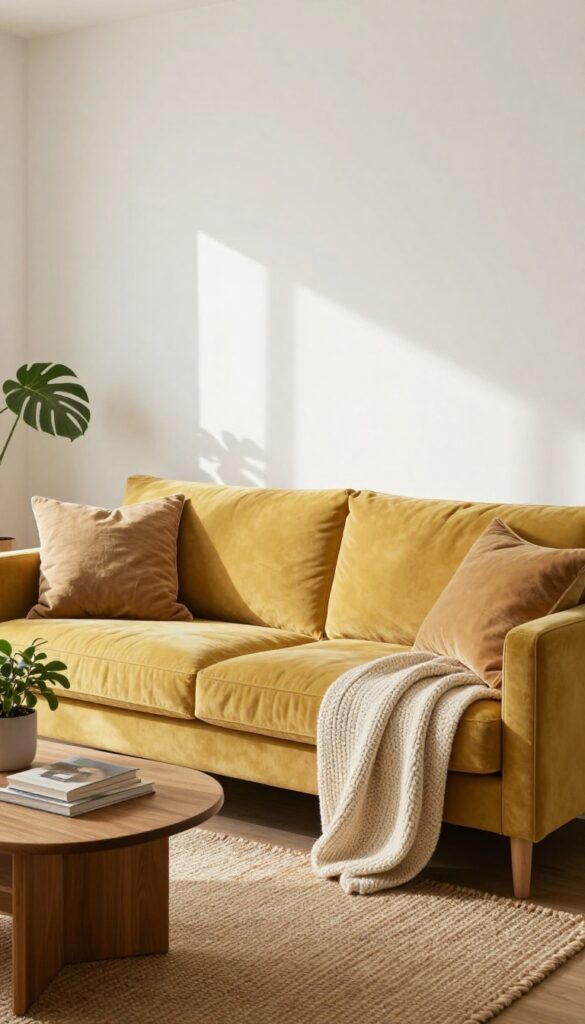
Nothing sets the energy of a room quite like a sofa in a bold, happy color. A mustard yellow or coral piece does more than just provide seating—it becomes the emotional anchor of the space. The key is letting that color shine while keeping everything else calm and collected.
Neutral walls, soft textures, and a few natural accents let the sofa do the talking without the room feeling chaotic.
A statement sofa in a cheerful hue is the easiest way to inject personality into a living room. It works in almost any layout, from open-plan spaces to cozy apartments. The trick is balancing the boldness with soft, neutral surroundings so the color feels intentional, not overwhelming.
Start with your sofa, then build the rest of the room around it.
Best Colors For A Cheerful Vibe
- Mustard yellow, coral, deep teal, and blush pink are top contenders. Mustard adds warmth without being too loud, while coral brings a playful, energetic feel. Deep teal feels rich and grounded, and blush pink keeps things soft and inviting.
- Avoid neon or overly bright shades unless you're going for a more eclectic look.
Texture Mix To Keep It Cozy
Pair your colorful sofa with plenty of texture to keep the room from feeling flat. A chunky knit throw, velvet or linen pillows, and a wool or jute rug add depth. Mixing smooth and rough textures—like a sleek leather sofa with a nubby wool blanket—creates visual interest and makes the space feel lived-in.
Layout Tip: Let The Sofa Lead
- Place the sofa as the focal point, then arrange other furniture around it. In a small room, float the sofa away from the wall to create a conversation area. Add a round coffee table to soften the lines, and keep side tables minimal.
- This layout draws the eye to the sofa and makes the room feel open and inviting.
2. Layer Throw Pillows in Mixed Patterns and Colors
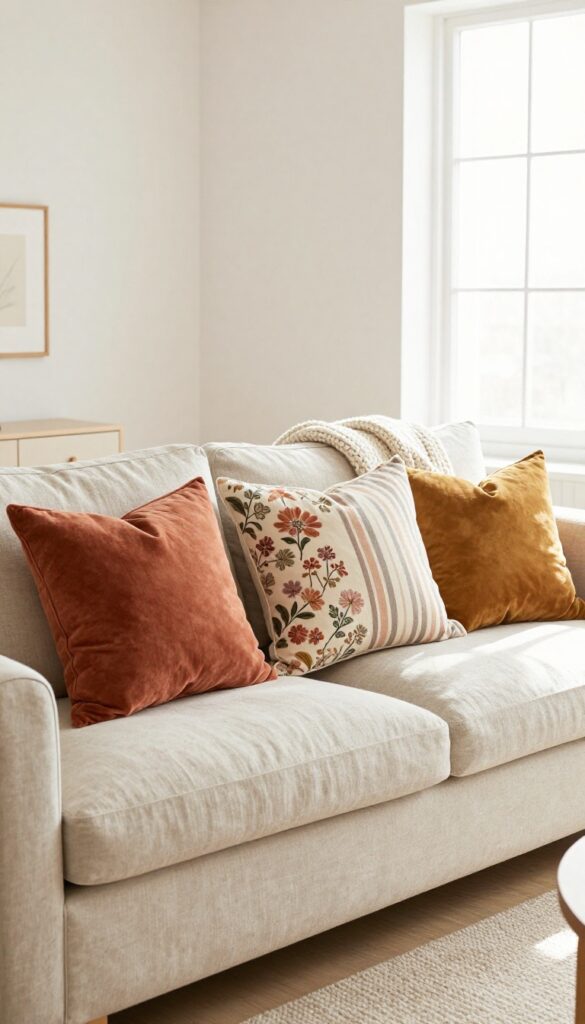
Throw pillows are the easiest way to inject personality into a living room without committing to a full redo. When you layer them in a mix of patterns and colors, the effect is instantly inviting—like the room has been collected over time rather than styled in one afternoon. The trick is to keep the chaos intentional by sticking to a cohesive color palette while letting stripes, florals, and solids play together.
Start with a neutral sofa as your canvas, then pile on pillows in warm tones like terracotta, mustard, and dusty rose. A striped lumbar pillow adds structure, a floral square brings softness, and a solid velvet piece ties it all together. Don't be afraid to mix scales—a large floral pairs beautifully with a narrow stripe.
The goal is a relaxed, layered look that feels cozy and lived-in, not overly matched.
Best Colors For A Warm Vibe
- Stick to earthy, warm hues that complement each other naturally. Think rust, ochre, burnt orange, and cream. These tones play well together and keep the arrangement feeling grounded.
- Avoid cool blues or grays if you want that cozy, sunlit energy.
Pattern Mixing Tips
Combine one large-scale pattern (like a bold floral), one medium pattern (like a ticking stripe), and one solid or textured pillow. Repeat one color from each pattern in the others to create visual harmony. For example, a floral with rust accents pairs perfectly with a rust solid and a cream stripe.
Finishing Touch
Fluff pillows daily and stagger their placement—lean a couple against the armrests and let others sit more casually. A chunky knit throw draped over the back of the sofa adds another layer of texture and warmth.
3. Paint the Ceiling a Soft Pastel for a Surprise Pop
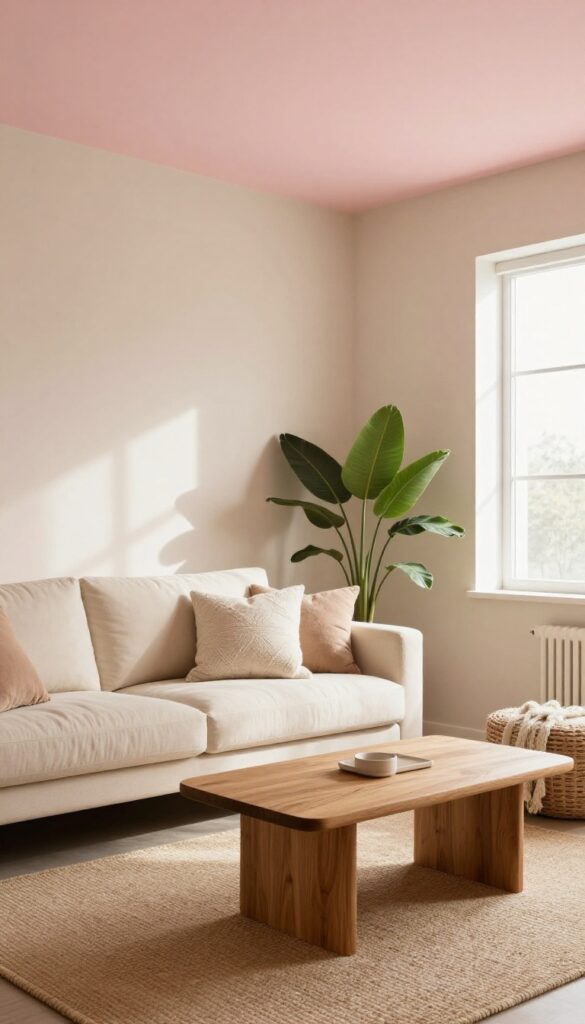
Ceilings often get ignored, painted plain white and forgotten. But that blank canvas overhead is a huge opportunity to inject personality without taking up any floor space. A soft pastel hue—like blush pink, powder blue, or mint green—turns your ceiling into a subtle focal point that feels playful yet refined.
It’s an unexpected twist that instantly makes the room feel taller, airier, and more whimsical, all while keeping the cozy, lived-in vibe intact.
Painting the ceiling a pastel shade is one of the easiest ways to add color without overwhelming the room. Because it’s above eye level, the effect is gentle—like a soft wash of color that you notice gradually. This trick works especially well in living rooms with neutral walls and furniture, as the ceiling becomes a quiet surprise.
For a warm, cozy feel, stick with pastels that have a hint of warmth: think peachy pinks, buttery yellows, or sage greens. Pair with warm wood tones, creamy whites, and plenty of textured fabrics to keep the space grounded.
Best Pastel Shades For A Cozy Vibe
- Not all pastels feel warm. For a cozy living room, lean toward shades with yellow or red undertones. A soft apricot or blush pink adds warmth without being too sweet.
- Pale terracotta or dusty rose also work beautifully. If you prefer blue or green, choose muted versions like slate blue or sage green rather than icy tones. Test samples on the ceiling and live with them for a day—light changes everything.
Finishing Touch: Trim And Lighting
- To make the pastel ceiling pop, keep the crown molding and trim white or off-white. This crisp edge defines the color and keeps it from feeling sloppy. Lighting matters too: warm white bulbs (2700K-3000K) enhance the coziness, while cool light can make pastels look flat.
- A soft glow from floor lamps or a dimmer switch will make the ceiling color feel even more inviting.
4. Add a Colorful Area Rug to Anchor the Space
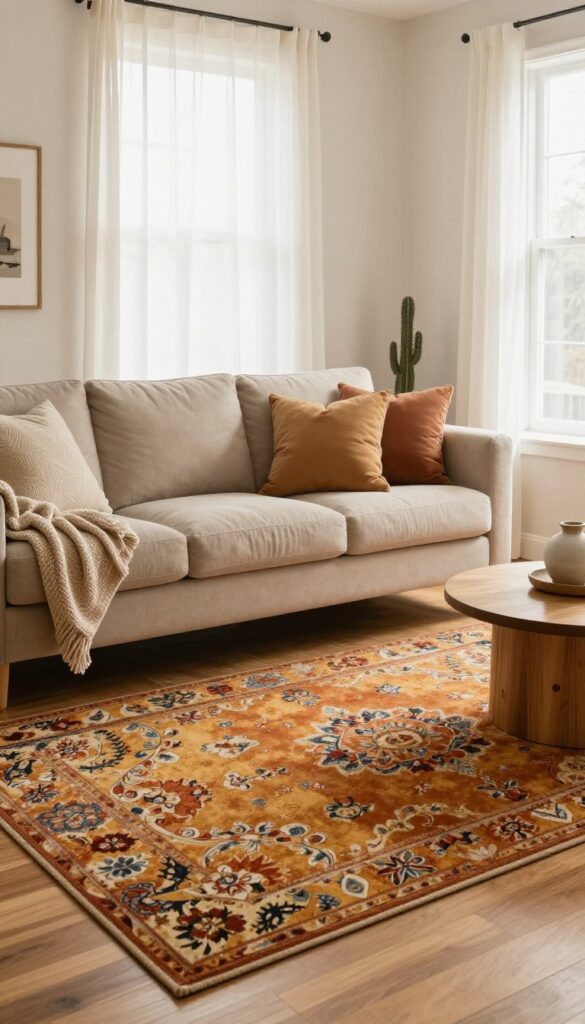
A rug does more than just cover the floor—it sets the mood for the entire room. In a warm and lived-in living room, a colorful area rug becomes the foundation that pulls everything together. Whether you choose a bold geometric print or a faded floral pattern, the right rug adds instant energy and a cozy underfoot feel.
It’s also one of the easiest ways to introduce color without committing to painted walls or new furniture.
Think of your rug as the visual anchor of the room. A vibrant rug with reds, oranges, or yellows can make a neutral sofa pop, while a blue-and-white pattern brings a calm yet cheerful vibe. The key is to pick a rug that echoes the accent colors already present in your pillows, curtains, or artwork.
This creates a cohesive look that feels intentional, not chaotic. For a warm and lived-in feel, go for rugs with slightly worn-in patterns or natural fibers like wool or cotton—they add texture and soften the space.
Best Colors For A Cozy Vibe
- Stick with warm tones like terracotta, mustard, rust, or deep teal. These hues naturally make a room feel inviting. If you prefer a softer look, try a rug with a cream background and colorful accents.
- Avoid cool grays or stark whites if you're aiming for that warm, lived-in aesthetic.
Rug Placement And Size
- Go big—a rug that’s too small can make the room feel disjointed. Ideally, the front legs of your sofa and chairs should sit on the rug. In a small living room, a 5×7 or 6×9 rug works well.
- Leave about 12–18 inches of bare floor around the edges to keep the space from feeling wall-to-wall.
Texture And Material
For a cozy feel, choose a rug with a low pile but soft texture, like a wool or cotton flatweave. Avoid high-pile shag rugs in high-traffic areas—they trap dust and are harder to clean. A flatweave also lets you layer a smaller patterned rug on top for extra personality.
5. Incorporate Vibrant Artwork That Speaks to You
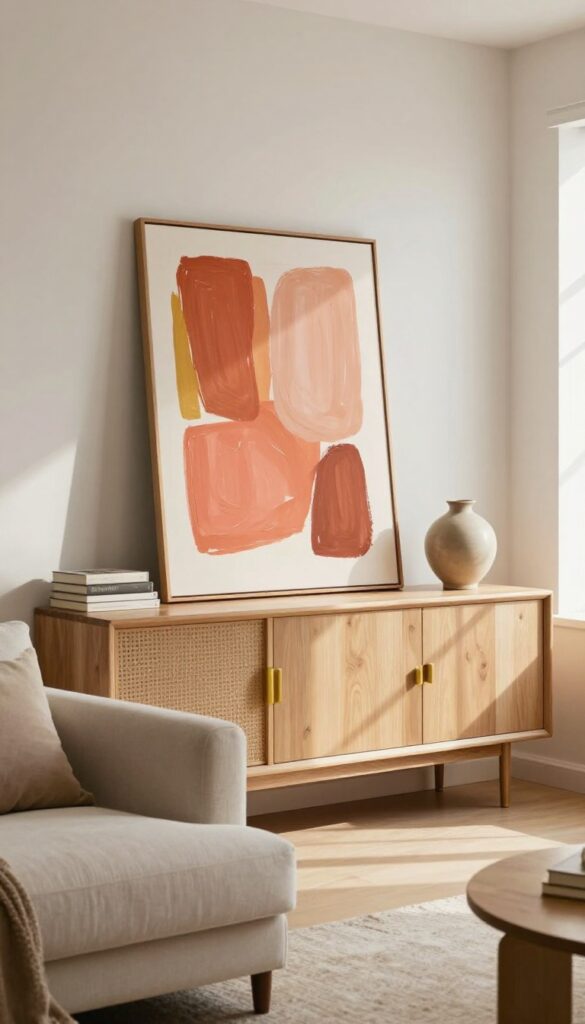
Large-scale art with vivid colors can set the tone for the whole room. Hang a piece that makes you happy and let it inspire your other decor choices.
Art isn't just decoration—it's a mood setter. A bold, colorful painting or print can instantly lift the energy of your living room, making it feel more personal and alive. When you choose something that truly speaks to you, the whole space starts to reflect your personality.
Plus, it gives you a natural starting point for pulling together a warm, cohesive color palette.
Best Colors
Look for artwork with warm hues like coral, mustard, terracotta, or deep teal. These colors naturally create a cozy, inviting atmosphere. If your room already has neutral walls, a vibrant piece will pop beautifully without overwhelming the space.
Shelf Styling Tip
Lean your artwork on a shelf or console table instead of hanging it. This casual approach feels more relaxed and lived-in, plus it's easy to swap out when you want a change. Pair it with a small stack of books or a ceramic vase for a curated look.
Finishing Touch
Use a warm-toned frame—think natural wood or brushed brass—to tie the art into your cozy decor. Avoid black or stark white frames if you're going for that warm, lived-in feel.
6. Use Sheer Curtains in a Bold Color for Soft Light
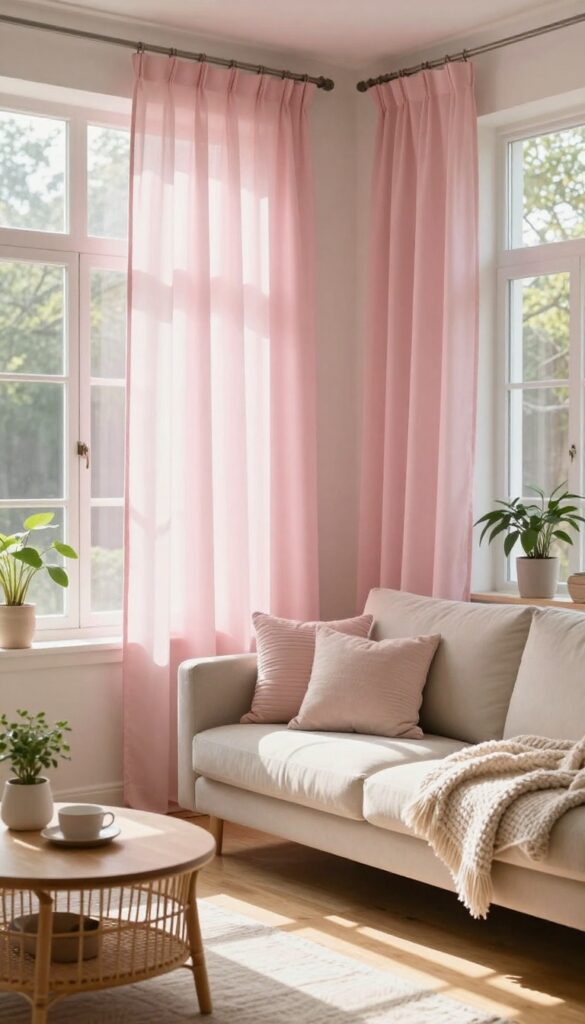
Sheer curtains usually come in white or cream, but swapping them for a bold color changes everything. Blush pink, lavender, or soft orange curtains filter sunlight into a warm, dreamy glow that feels both playful and cozy. The color is present without being overpowering, and the fabric keeps the room airy.
It's an easy swap that instantly lifts the mood of any living room.
Sheer curtains in bold colors add personality while maintaining a light, open feel. The key is picking a shade that complements your existing palette—blush works with neutrals, lavender pairs with gray or white, and soft orange brings warmth to cool tones. Hang them high and wide to maximize the effect, letting the fabric pool slightly on the floor for a relaxed look.
This idea works especially well in rooms that get good natural light, as the color will shift throughout the day.
Best Colors For A Warm Glow
- Stick to muted, dusty versions of bold colors for a sophisticated look. Blush pink adds a soft romantic feel, lavender brings a calming touch, and muted orange or peach creates a sunny, energetic vibe. Avoid neon or overly bright shades that can feel harsh when light passes through.
- Test a small swatch in your window first to see how the color changes with the light.
Hanging And Styling Tips
- Install the curtain rod close to the ceiling and extend it past the window frame to make the room feel larger. Use clip rings for an easy, casual drape. Let the sheers puddle on the floor for a cozy, lived-in look, or keep them just grazing the floor for a cleaner line.
- Pair with heavier drapes on the sides for depth and texture, but keep the sheers as the main layer to maintain the soft light effect.
Where This Works Best
- This idea shines in living rooms with east or west-facing windows, where the light is softer in the morning or afternoon. It's also great for small spaces because the sheer fabric doesn't block visual space. If your room has a lot of neutral furniture, bold sheers add a pop of color without committing to a painted wall or expensive decor.
- Just keep the rest of the window treatment simple to let the color stand out.
7. Display a Collection of Colorful Vases or Books
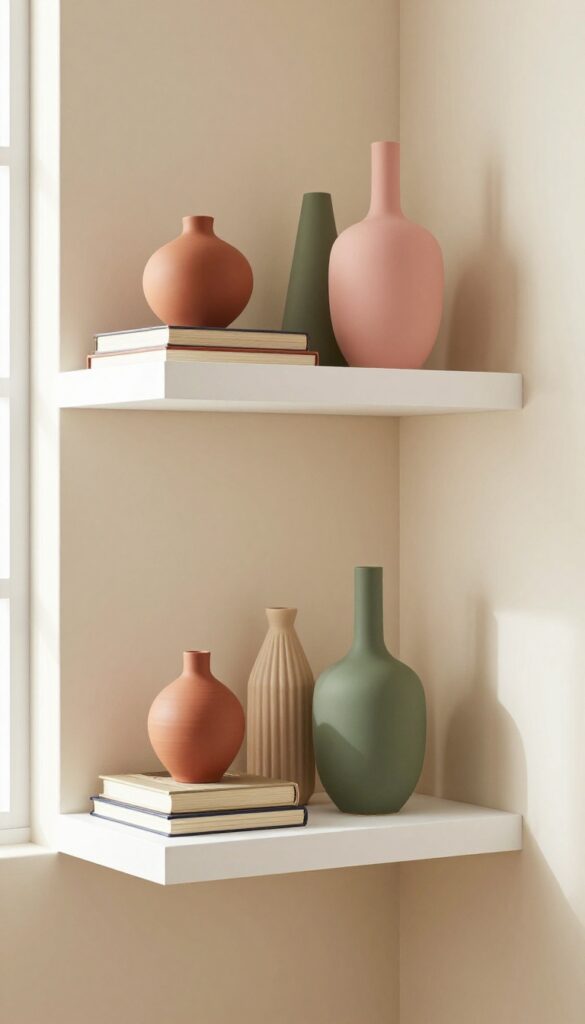
There's something so inviting about a shelf or coffee table that tells a story through color. A curated collection of vases, books, or ceramics in your favorite hues instantly adds personality and warmth. The trick is to choose pieces that feel intentional—like you gathered them over time—rather than a random jumble.
Stick to a cohesive palette of two or three colors, and let the varying shapes and textures do the work.
Grouping colorful objects on a shelf or coffee table is an easy way to inject happy energy into your living room. Start with a neutral backdrop—like a white or wood shelf—so the colors pop. Then layer in vases, books, and ceramics that share a common color thread, such as warm terracotta, soft blush, and deep olive.
Mix heights and sizes for visual rhythm. A stack of books topped with a small vase creates a natural vignette. Don't forget negative space: leaving a few inches between objects keeps the display from feeling cluttered.
This idea works especially well on a console table behind a sofa, a floating shelf, or even a coffee table tray.
Best Colors To Use
For a warm, lived-in feel, lean into earthy tones like rust, ochre, and sage green. If you prefer a brighter vibe, add pops of coral, mustard, or cobalt blue. The key is to limit your palette to two or three colors so the collection looks cohesive, not chaotic.
Shelf Styling Tip
Create depth by placing larger items in back and smaller ones in front. Use books as risers to elevate smaller vases. Odd numbers of objects (like three or five) tend to look more natural and balanced.
Budget-Friendly Swap
You don't need expensive ceramics. Thrift stores and flea markets are goldmines for colorful vases and unique pottery. Spray paint mismatched finds in a unified color for an instant curated look.
8. Paint an Accent Wall in a Warm, Saturated Tone
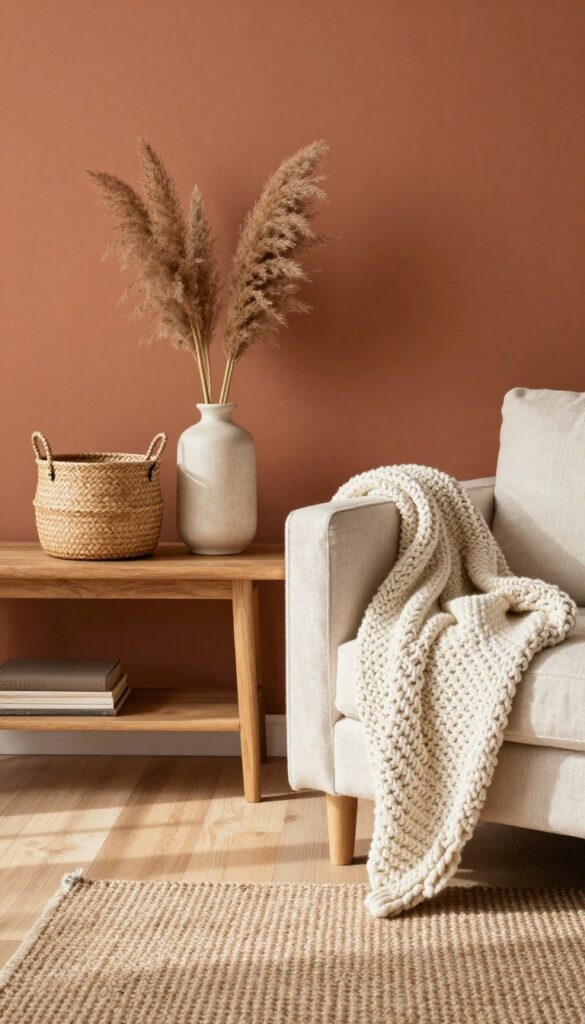
An accent wall is one of the easiest ways to inject color without committing to a full room makeover. When you choose a warm, saturated shade like terracotta, olive green, or burnt orange, the wall instantly becomes a cozy focal point. It adds depth and a lived-in feel that cooler tones just can't match.
The trick is to keep the surrounding walls neutral—think creamy white, warm beige, or soft greige—so the accent wall pops without overwhelming the space.
This idea works especially well in living rooms that get plenty of natural light, because the color will shift beautifully throughout the day. In the morning, it feels soft and inviting; by evening, it glows with warmth. It's also a great way to define a seating area or highlight a fireplace.
Pair the wall with natural textures like linen, wood, and rattan to keep the look grounded and cozy.
Best Colors
- Terracotta, olive green, and burnt orange are top picks because they feel earthy and grounding. For a bolder look, try a deep rust or paprika. If you're nervous about going too dark, test a few swatches on the wall and live with them for a few days.
- The right shade will make the room feel like a warm hug.
Finishing Touch
Once the paint dries, style the wall with a few carefully chosen pieces. A large framed print or a woven mirror can add personality without clutter. Keep the furniture in front of the wall simple—a low console or a cozy armchair—so the color remains the star.
Lighting Tip
Warm lighting is key here. Swap cool white bulbs for soft white or warm LED bulbs to enhance the wall's richness. A floor lamp with a linen shade placed near the accent wall will cast a gentle glow that makes the color even more inviting.
9. Bring in Potted Plants with Colorful Blooms
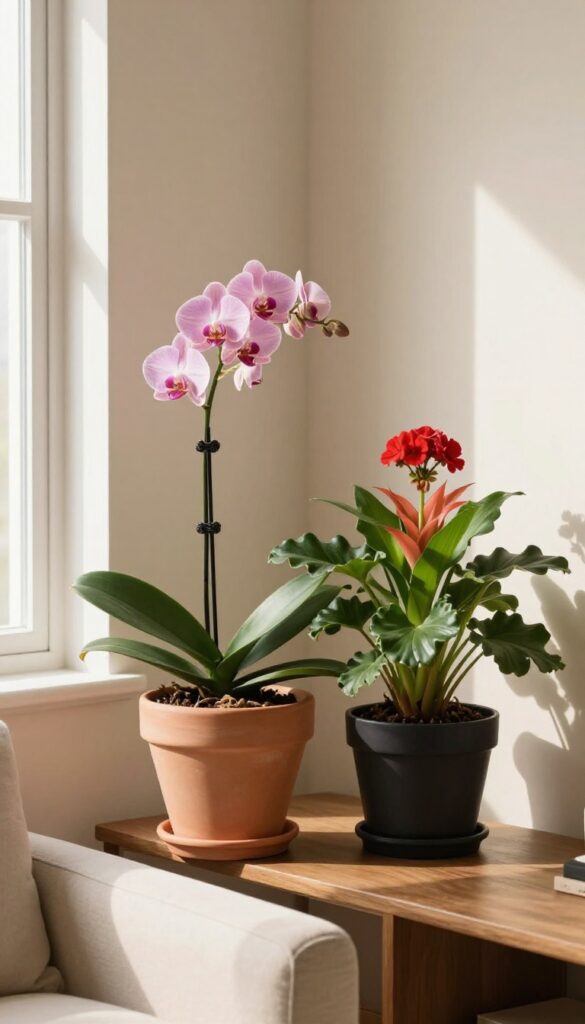
Plants do more than just clean the air—they bring life, texture, and a pop of natural color that no store-bought decor can match. But instead of sticking to all-green foliage, try mixing in flowering plants for an instant mood boost. Bright blooms like orchids, geraniums, or bromeliads add cheerful spots of color that feel fresh and intentional.
They also let you switch things up seasonally without redoing your whole room.
Flowering plants are an easy way to layer in color that feels organic and lively. Unlike painted accessories, blooms have a soft, natural vibrancy that makes a space feel lived-in and happy. Group a few flowering pots with leafy greens on a console table or floating shelf to create a mini garden vignette.
The contrast between the bright petals and deep green leaves gives the eye a place to rest while still feeling energetic. For a warm, cozy look, choose pots in earthy tones like terracotta, warm beige, or matte black so the flowers remain the star.
Best Plant Choices For Color
- Orchids are a classic for a reason—they bloom for weeks and come in shades from soft pink to deep purple. Geraniums offer clusters of red, orange, or white and thrive in bright light. Bromeliads have striking, long-lasting flowers in hot pink, coral, or yellow that feel tropical and fun.
- For something smaller, African violets or kalanchoe add a delicate pop of color on side tables or windowsills.
Styling Tip: Mix Heights And Textures
Place tall flowering plants like orchids in ceramic pots on the floor or a plant stand, then group shorter pots like geraniums on a coffee table or shelf. Combine glossy leaves with matte blooms for visual interest. A small watering can or decorative pebbles can add a finishing touch that ties the arrangement together.
Seasonal Swap Strategy
Keep a few neutral green plants as your base, then rotate flowering pots with the seasons. Spring tulips, summer zinnias, fall mums, and winter amaryllis keep the look ever-changing. This approach keeps your decor feeling fresh without a full redesign—just swap a pot or two and you’re done.
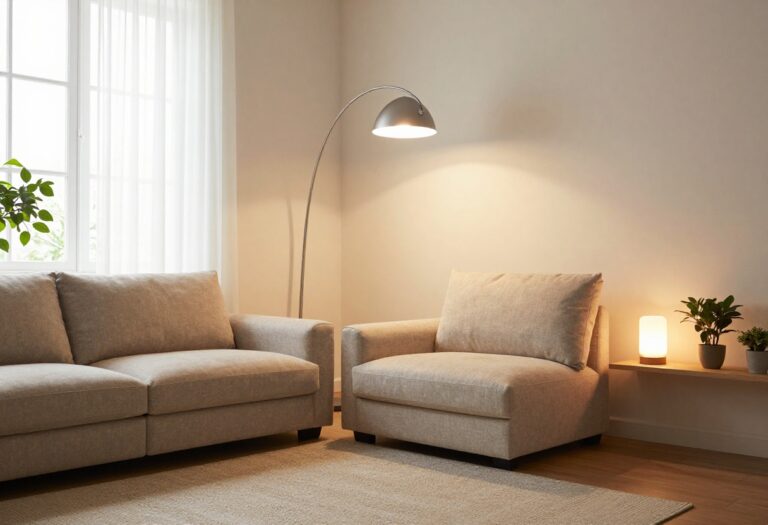
10. Swap Out Lampshades for Colored or Patterned Ones
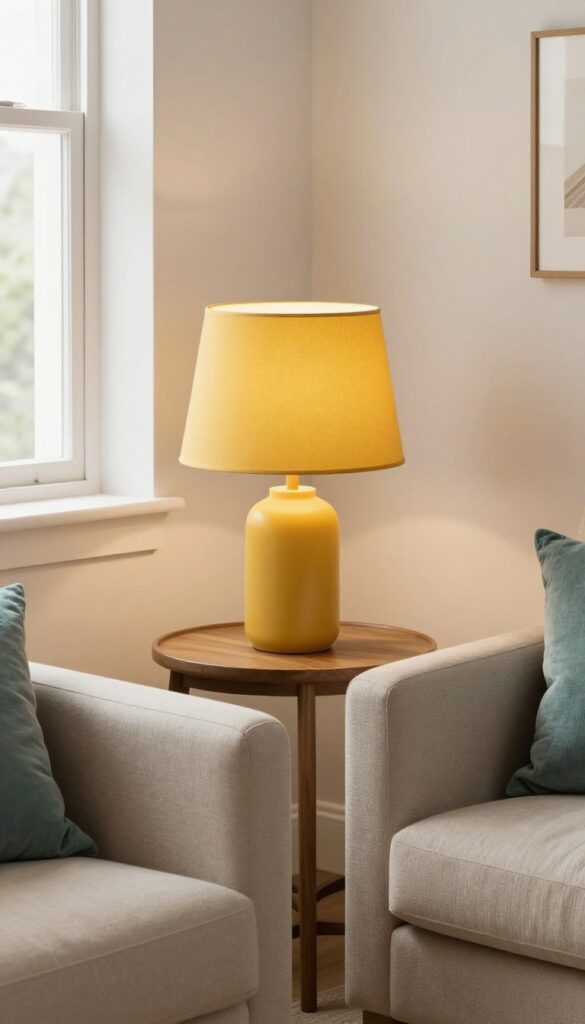
A simple lampshade swap can transform a room's mood without a major overhaul. Choose shades in mustard, teal, or a playful pattern to cast a warm, colored glow that instantly lifts the energy. It's a low-commitment way to inject personality and make your living room feel more curated and cozy.
Lampshades are often an afterthought, but they're one of the easiest ways to add a pop of color and warmth. A neutral lamp base becomes a statement piece when topped with a vibrant shade. The light filters through the color, creating a soft, ambient glow that feels inviting and lived-in.
This trick works especially well in corners or on side tables where the lamp becomes a focal point. For a cohesive look, tie the shade color to other accents in the room, like throw pillows or art. If you're feeling bold, try a patterned shade—geometric or floral prints add texture and visual interest without overwhelming the space.
Best Colors For A Cozy Glow
- Mustard yellow and burnt orange are top picks for a warm, inviting atmosphere. Teal and deep navy cast a cooler but still cozy light, perfect for evening relaxation. For a playful touch, consider a shade with a subtle pattern like stripes or small florals.
- Stick to matte finishes over glossy ones to keep the light soft and diffuse.
Where To Place Them
Swap a floor lamp in a reading nook or a table lamp on a console table for maximum impact. Group two lamps with matching colored shades on either side of a sofa for symmetry and a warm, balanced glow. Avoid placing them directly in front of windows, as natural light can wash out the color effect.
Budget-Friendly Swap
- You don't need to buy new lamps—just replace the shades. Look for affordable options at thrift stores or online marketplaces. A simple drum shade in a rich color can cost under $20 and instantly refresh your space.
- For a DIY twist, paint a plain shade with fabric paint or add trim for extra personality.
11. Add a Pop of Color with a Painted Coffee Table
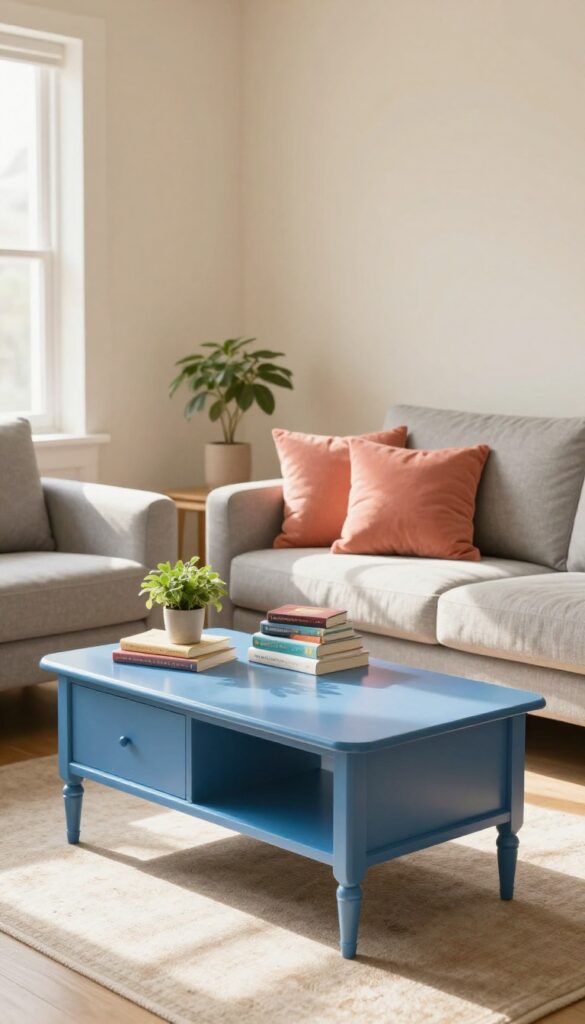
A coffee table is often the center of the living room, so why not make it a cheerful focal point? Painting an old table in a bold hue like cobalt blue or coral instantly energizes the space without a full renovation. It’s a weekend project that brings personality and a happy vibe to your seating area.
Giving an old coffee table a fresh coat of paint is one of the easiest ways to inject color into a neutral living room. The key is to choose a shade that complements your existing palette—cobalt blue pops against warm beige walls, while coral adds a playful contrast to gray sofas. For a cohesive look, pick up a similar accent color in throw pillows or a rug.
This trick works especially well in rooms with lots of natural light, as the painted surface will reflect brightness and feel lively. Plus, it’s budget-friendly: a quart of paint and a sanding block are all you need for a dramatic transformation.
Best Colors For A Painted Coffee Table
- Go for hues that feel joyful and inviting. Cobalt blue, coral, mustard yellow, or emerald green are excellent choices. If your room leans warm and cozy, stick to earthy tones like terracotta or ochre.
- For a more eclectic vibe, try a two-tone finish—paint the top a lighter shade and the base a darker one.
Finishing Touch: Protect The Paint
Since coffee tables get daily use, seal your painted surface with a durable matte polyurethane or furniture wax. This prevents scratches and makes cleaning easy. Choose a matte finish to keep the look soft and lived-in, not glossy or plastic.
Styling A Painted Coffee Table
- Keep the tabletop clutter-free to let the color shine. Add a single tray with a small plant or a stack of books in complementary tones. A ceramic vase or a woven coaster set adds texture without competing with the paint.
- This balance makes the table feel intentional and cozy.
FAQ
How do I add color to my living room without it looking chaotic?
Stick to a cohesive color palette of 3-4 shades and repeat them throughout the room. Use neutrals as a base and layer in color through accessories like pillows, rugs, and art.
What are the best colors for a warm and cozy living room?
Warm tones like terracotta, mustard yellow, olive green, and soft coral create a cozy feel. Pair them with natural textures like wood, linen, and wool for added warmth.
Can I use bright colors in a small living room?
Absolutely. Bright colors can make a small space feel lively. Use them on an accent wall or in accessories, and balance with light neutrals to keep the room from feeling cramped.
How do I choose a color scheme for my living room?
Start with a color you love—maybe from a piece of art or a rug. Then build around it with complementary shades. Use the 60-30-10 rule: 60% neutral, 30% secondary color, 10% accent.
What if I want to change colors seasonally?
Focus on easily swappable items like throw pillows, blankets, and curtains. This way you can update your color scheme with the seasons without a major overhaul.
Conclusion
Adding color to your living room doesn't have to be intimidating. Start with one or two ideas that feel right for your space, and build from there. The goal is to create a room that feels like you—warm, inviting, and full of happy energy.
Remember, the best colorful rooms are the ones that feel lived-in and loved. So take your time, experiment with what makes you smile, and enjoy the process of making your home a little brighter every day.