11 Small Room Makeover Ideas for a Cozy Bedroom Refresh
A small bedroom runs out of room fast, and the usual advice to just declutter rarely fixes the real problem. The layout itself is working against you, so every bulky piece and dark corner makes the space feel tighter than it is.
A cozy refresh does not require a renovation or a bigger budget. It comes down to a handful of smart swaps that protect your floor space, soften the light, and give everything a clear place to live.
The eleven ideas below cover layout, storage, lighting, and texture for real apartments and rentals. Some take an afternoon, others a slow weekend, and none ask you to knock down a wall.
1. Float Your Furniture to Free Up Floor Space
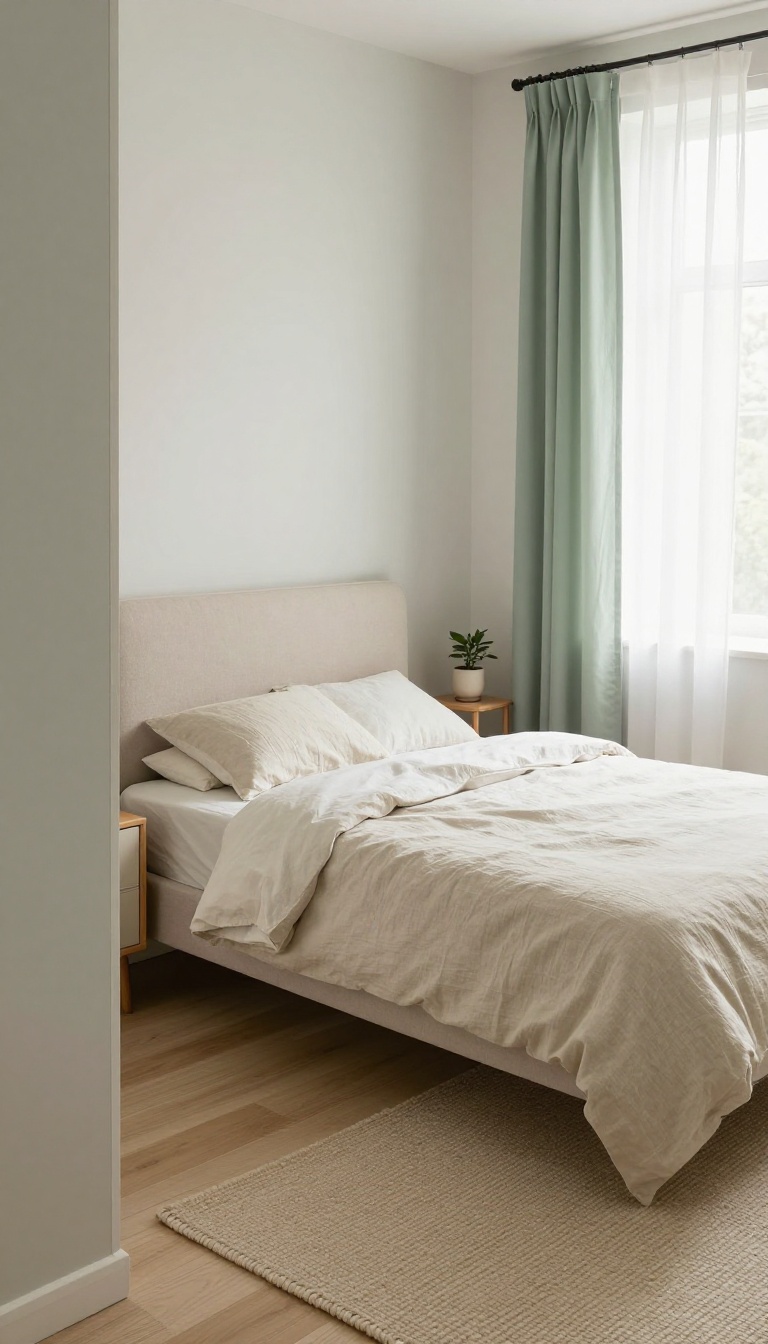
Most small bedrooms get arranged the same way: bed pushed into a corner, nightstand jammed against the wall, dresser hugging the opposite side. It feels safe and tidy, but it also turns the middle of the room into dead space you can only cross in a straight line. Floating your furniture means pulling the big pieces a few inches off the walls and letting them sit in the room instead of around it.
You are not adding square footage, but you are changing how the room reads. Suddenly there is a path, a little breathing room, and a shape that feels intentional rather than leftover.
The trick is knowing which pieces to float and how far, because shoving a bed into the center of a nine-by-ten room will just make it feel like a waiting area. Start with the bed, since it eats the most space, then work outward. You do not need a designer eye for this.
A tape measure, some painter's tape, and twenty minutes of moving things around will tell you more than any floor plan app.
Start With The Bed
Pull the headboard off the wall by three to six inches if you have the room. That gap alone stops the bed from feeling bolted down and gives the eye somewhere to travel. If your bed sits under a window, angle it slightly toward the door instead of squaring it up.
In really tight rooms, even two inches helps. The point is not a dramatic gap, it is breaking the flat line where wall meets furniture.
Give Walkways A Clear Lane
Aim for at least 24 inches between the bed and the dresser or wall so you can walk without turning sideways. If you cannot hit that, the piece you are squeezing past is probably the one to move or replace. Try placing the dresser perpendicular to the wall instead of flat against it.
It doubles as a soft divider and keeps the closet or doorway from feeling blocked.
Use Rugs To Anchor The Layout
A rug does the work of a wall when your furniture is floating. Place it so the front legs of the bed and the nightstand sit on it, and the room instantly looks grouped instead of scattered. Go slightly larger than feels right.
A rug that is too small makes a floating layout look accidental, while one that reaches under most of the furniture pulls everything together.
Keep The Gaps Intentional
Do not leave random slivers of space behind every piece. Either commit to a visible gap or push the item back flush, because half-measures read as clutter. Check the room from the doorway once you are done.
If your eye stops at a awkward gap, close it. If the space feels open and easy to move through, you got it right.
2. Choose a Bed with Built-In Storage
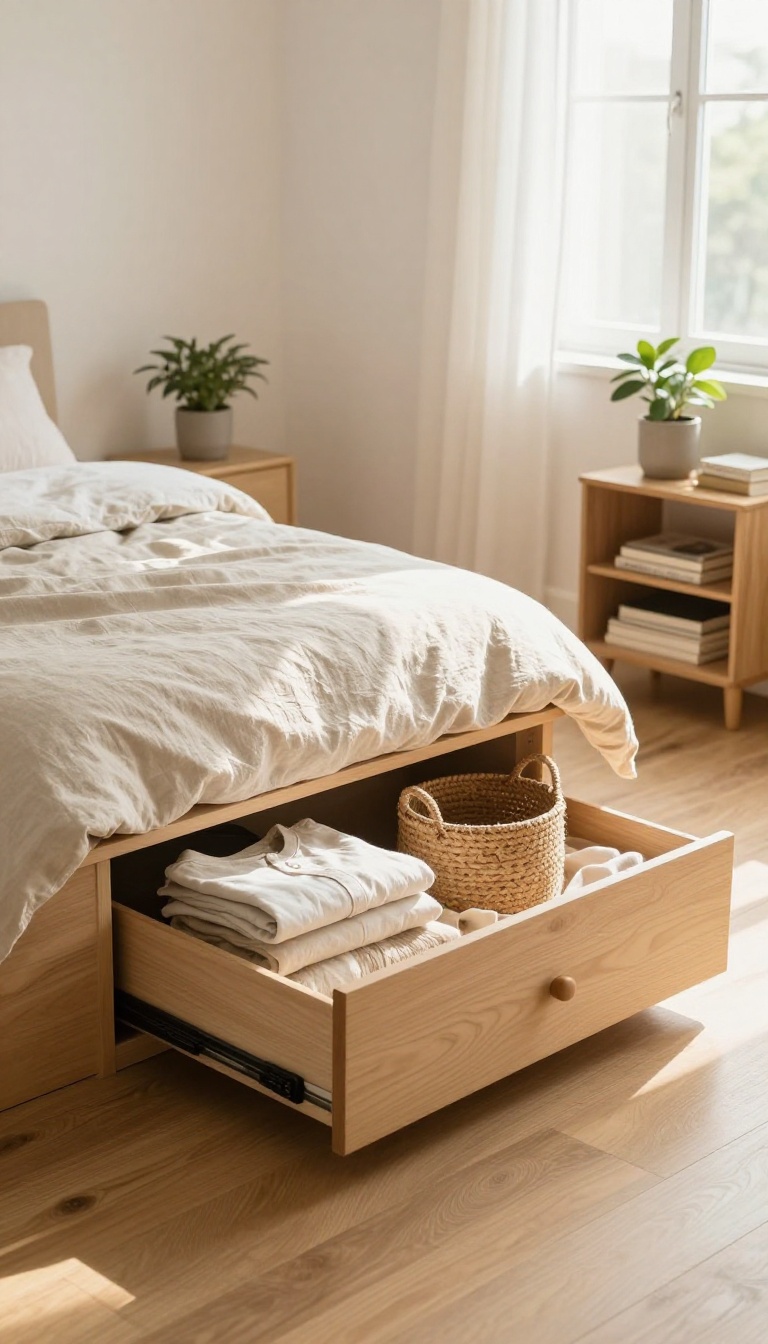
Your bed takes up the most square footage in a small bedroom, so why let all that space underneath go to waste? A bed with built-in storage turns that dead zone into a functional area for clothes, books, or extra bedding. It’s one of the easiest ways to cut clutter without adding another piece of furniture.
Under-bed drawers and platform beds with cubbies keep your floor clear and your belongings hidden. You get the same sleeping space, but now it’s working double duty. No more tripping over shoes or stacking bins in the corner.
Types Of Storage Beds
You’ll find three main styles: drawers that pull out from the side or foot, lift-up platforms that reveal a large compartment, and beds with built-in cubbies or shelves. Drawers work well for clothes and shoes, while lift-up storage handles bulky items like suitcases or winter blankets. Cubbies are great for books, baskets, or display items.
Measure Before You Buy
Storage beds come in standard sizes, but the drawers need clearance to open. Measure the space around your bed, especially if it sits near a wall or closet. You want at least two feet of open floor on the side where drawers pull out.
If space is tight, choose a bed with storage on the foot end only.
Keep It Organized
Built-in storage only helps if you use it well. Assign categories: one drawer for pajamas, another for off-season clothes, and a cubby for books. Use dividers or small bins inside drawers to stop things from sliding around.
A quick label on the inside of each drawer saves you from digging later.
3. Use Mirrors to Bounce Light and Expand Sightlines
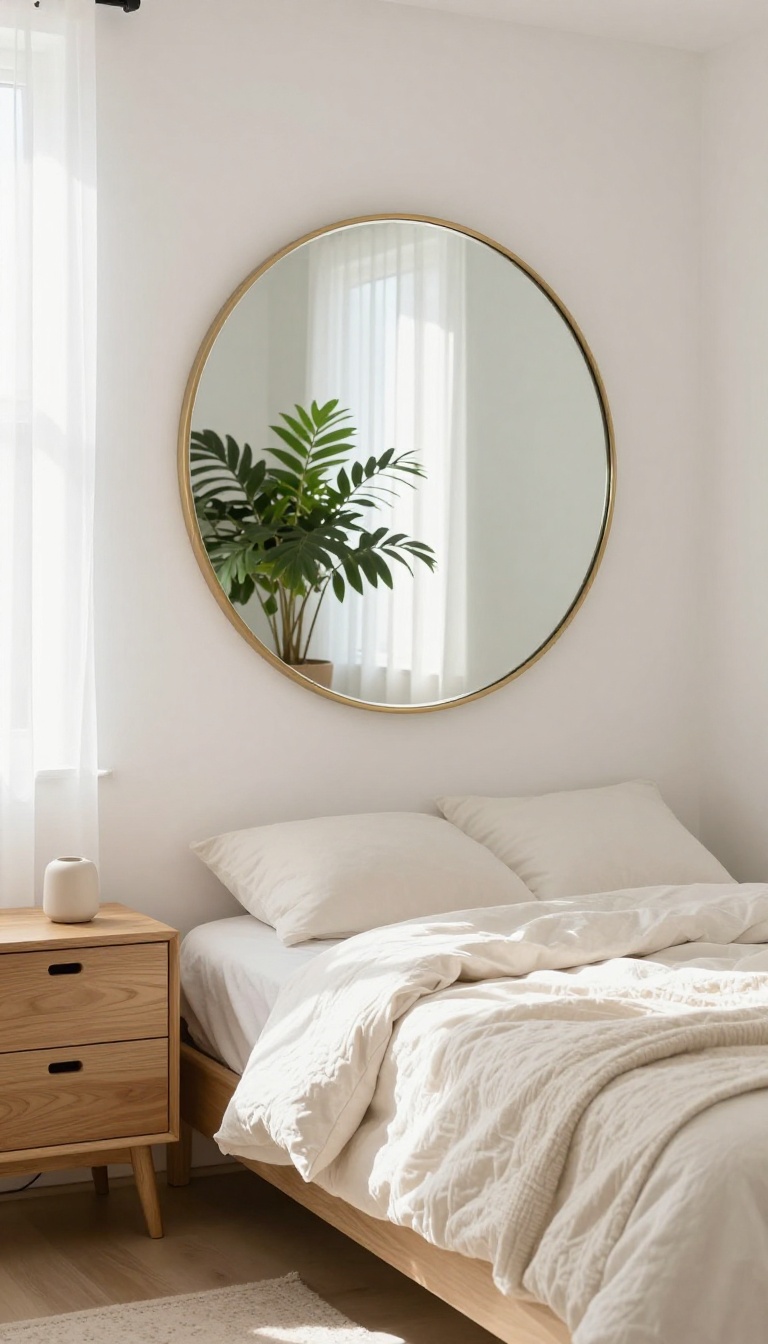
Mirrors are the closest thing to a cheat code for a small bedroom. They don't just reflect your face—they bounce light around the room and trick your eye into seeing more space than actually exists. A single well-placed mirror can make a cramped corner feel open and airy without moving a single piece of furniture.
The trick is placement. A large mirror hung directly opposite a window catches all that natural light and throws it back into the room, doubling the brightness. That extra light makes walls feel farther apart and dark corners disappear.
You don't need a floor-to-ceiling mirror, either. Even a medium-sized one can do the job if it's angled toward the light source. But mirrors can also backfire.
Put one in the wrong spot and you'll just reflect clutter or a blank wall, which makes the room feel smaller. The goal is to reflect something worth looking at—a view, a plant, a piece of art—or to amplify light. Keep that in mind as you choose where to hang it.
Pick The Right Spot
The best spot is usually opposite a window or a light source. That way, the mirror bounces daylight deeper into the room. If you don't have a good window view, try placing it across from a lamp or a bright wall.
Avoid hanging mirrors where they'll reflect a TV, a pile of laundry, or a dark hallway—that just adds visual noise.
Choose The Right Size And Shape
Bigger isn't always better, but too small won't help much. A mirror that's at least two-thirds the width of your bed or dresser tends to work well. Round mirrors soften sharp angles, while rectangular ones can make a wall feel taller.
Lean a full-length mirror against the wall if you can't drill holes—just secure it so it doesn't tip.
Style It Without Clutter
A mirror is a focal point, so keep the area around it simple. A slim console table underneath or a single plant beside it adds interest without blocking the reflection. Skip heavy frames that eat up visual space.
Thin metal or wood frames keep the look light and let the mirror do its job.
4. Swap Heavy Curtains for Light, Airy Fabrics
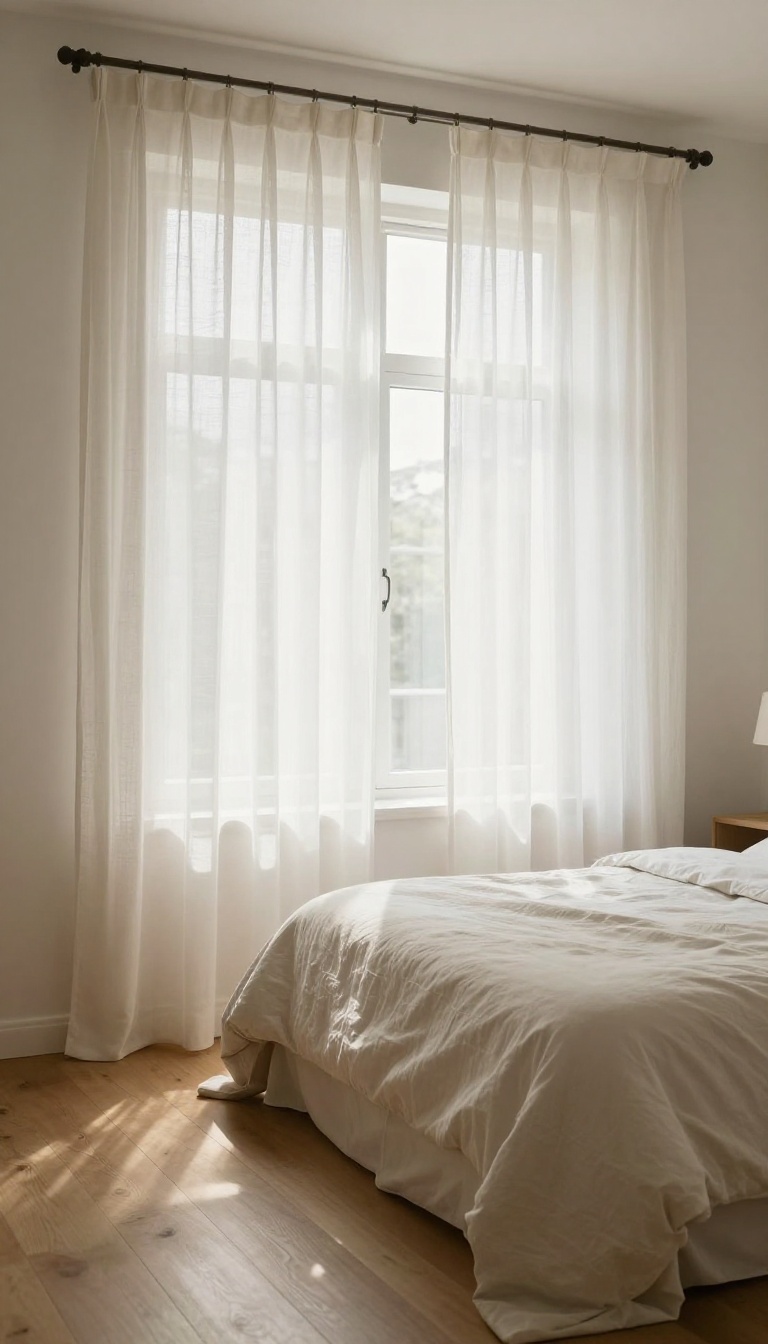
Heavy curtains do more damage to a small bedroom than most people realize. They block daylight, swallow wall space, and make the room feel boxed in even when the window is wide open. Switching to sheer or linen panels is one of the cheapest ways to make the same square footage feel brighter and calmer.
The swap takes about ten minutes once you have the new panels. You keep the same rod, the same window, and the same layout, but the room reads completely differently. Light moves through the fabric instead of stopping at it, and the walls stop feeling like they are closing in.
Why Heavy Fabric Shrinks A Room
Thick, lined curtains are built to block light and insulate, which is great in a large living room and rough in a small bedroom. They add visual weight at eye level and cut off the brightest part of the room. In a tight space, that darkness makes every piece of furniture feel closer than it is.
Best Fabrics For A Small Bedroom
Sheer voile, cotton voile, and lightweight linen are the easiest wins. They filter harsh afternoon sun without turning the room into a cave. If you need privacy at night, layer a sheer panel with a slim roller blind instead of going back to a heavy drape.
Hanging Them So The Room Feels Taller
Mount the rod close to the ceiling and extend it a few inches past each side of the window. The extra height and width trick the eye into reading the window as bigger. Keep the panels floor-length but barely touching the floor for a clean, uncluttered line.
A Quick Rental-friendly Option
If you cannot drill new holes, use a tension rod inside the window frame or an adjustable no-drill curtain rod. Sheer panels on a tension rod cost very little and come down without a mark. That keeps your deposit safe while still letting the light in.
5. Install Wall Sconces Instead of Table Lamps
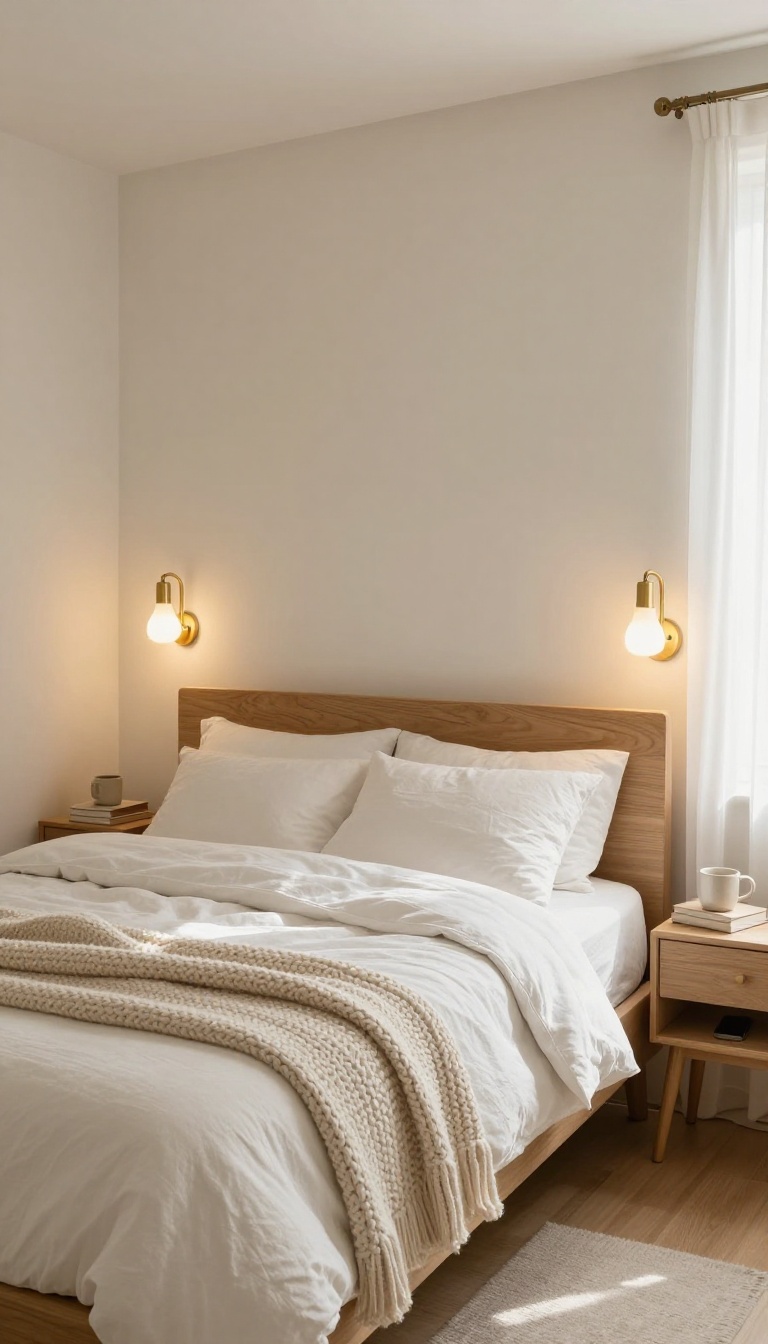
Table lamps eat up prime real estate on your nightstand, and in a small bedroom, that surface is precious. Swapping them for wall sconces frees up that space and gives you light that feels more intentional and cozy. You also get to control the glow without cluttering the room.
Wall sconces mount directly to the wall, so they take up zero floor or surface area. That means your nightstand can hold a book, a glass of water, and your phone without a lamp base fighting for room. The light also comes from a better angle—closer to eye level—which feels softer and more relaxing than a lamp shining from below.
Pick The Right Mounting Style
Hardwired sconces look cleanest, but they require an electrician and a hole in the wall. If you rent or want a quick fix, plug-in sconces are your best friend. They come with a cord you can tuck behind furniture or hide with a cord cover.
Battery-operated options exist too, though they need recharging. Choose based on your wiring situation and how permanent you want the change to be.
Get The Height And Placement Right
Mount sconces about 30 to 36 inches above the mattress, or roughly at shoulder height when you're sitting up in bed. You want the light to hit your reading material, not your eyes. If you sleep with a partner, consider two sconces—one on each side—so you can each control your own light.
A single sconce centered above the bed works for solo sleepers or very tight spaces.
Choose Warm, Adjustable Bulbs
Look for bulbs in the 2700K to 3000K range for a cozy, golden glow. Dimmable or smart bulbs let you switch from bright task lighting to a soft nightlight without getting out of bed. A sconce with a built-in dimmer or a compatible smart plug makes that even easier.
Avoid cool white bulbs—they'll make your bedroom feel like an office.
6. Create a Cozy Reading Nook with a Corner Chair
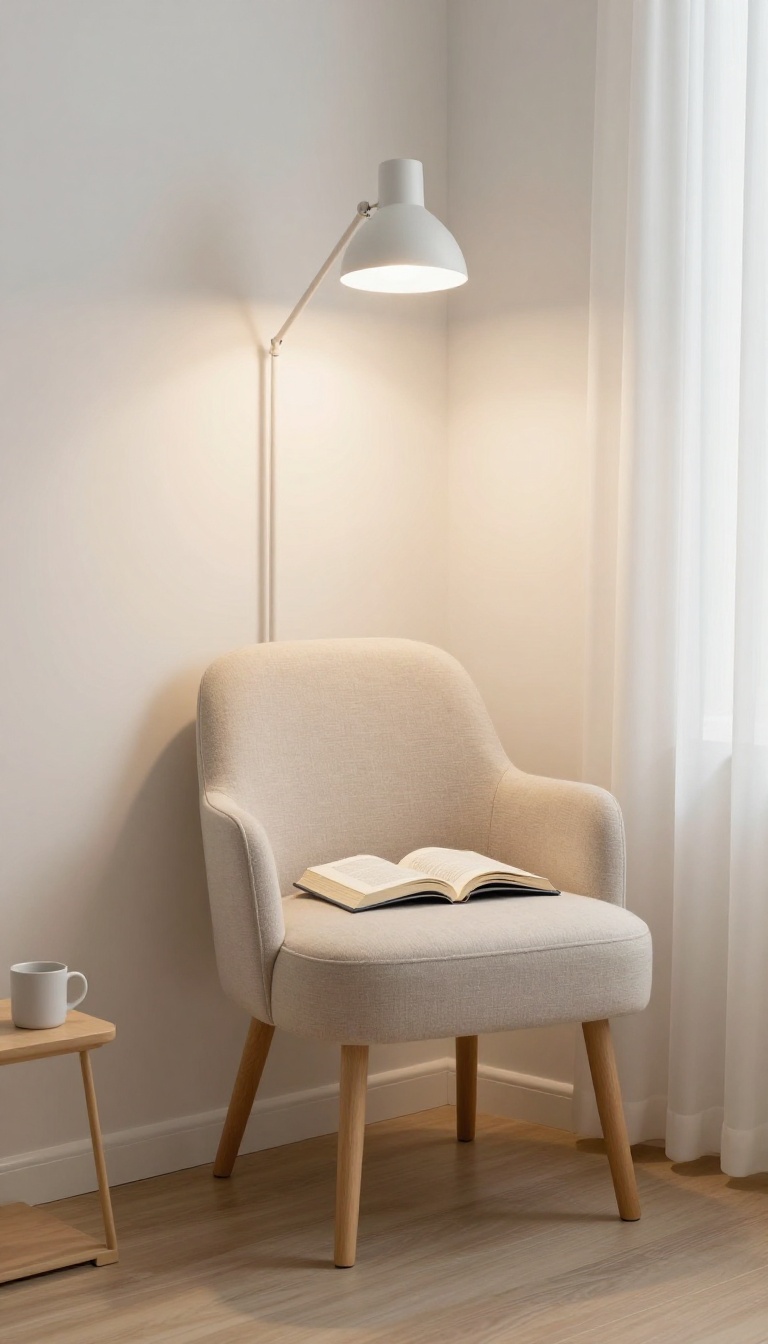
That awkward corner where nothing fits is actually prime real estate. A small armchair and a floor lamp turn dead space into a spot you'll actually use every day. The key is keeping it light and movable.
You want a chair that doesn't swallow the room and a lamp that lights the page without lighting up the whole bedroom.
A reading nook works because it gives one corner a clear job. Instead of a pile of laundry or a lonely plant, you get a destination. And in a small bedroom, having a dedicated spot to sit that isn't your bed makes the whole room feel bigger.
You don't need much square footage. A 30-inch-wide corner is enough for a slim chair and a floor lamp. The trick is choosing pieces that visually stay out of the way.
Pick A Chair That Disappears
Go for a slipper chair or a small accent chair with legs. Legs let you see the floor underneath, which makes the corner feel open instead of blocked. Stick to light or neutral fabrics if your walls are dark, or a deep color if your walls are light.
Either way, avoid bulky recliners or anything with a wide footprint. A swivel chair can work too, since you can turn it toward the room when you're not reading.
Light It From Above
A floor lamp with an adjustable arm lets you aim light right at your book. Skip the giant shade that hogs space. A slim task lamp with a small head does the job without dominating the corner.
Place the lamp behind or beside the chair so the light falls over your shoulder. That way you're not casting a shadow on the page. If you have an outlet nearby, a plug-in sconce is another space-saving option.
Add One Soft Layer
A single throw blanket draped over the chair back adds warmth and invites you to sit. Keep it to one layer so the corner doesn't look cluttered. A small round side table or a wall shelf for your mug and phone finishes the setup without eating floor space.
If you have room, a tiny stool works as a footrest or an extra surface.
7. Layer Textiles for Warmth and Depth
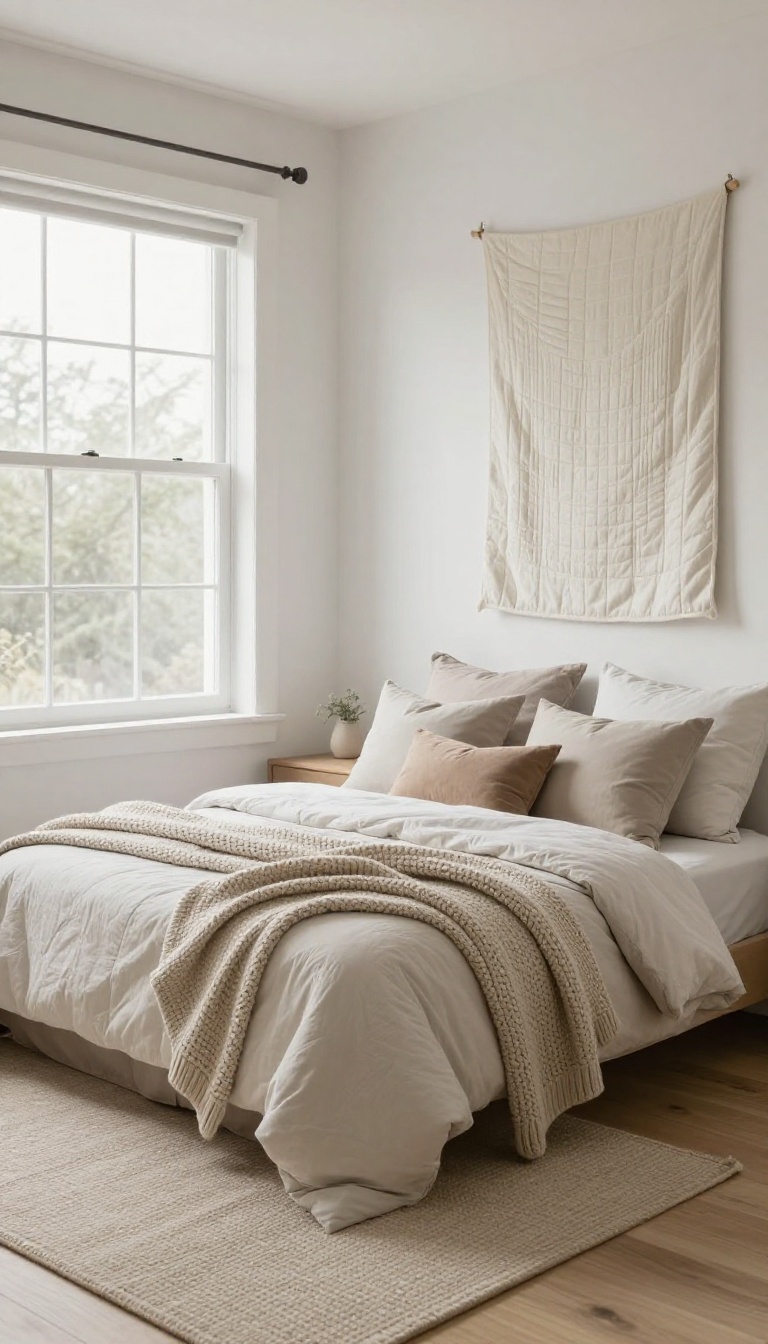
Textiles do the heavy lifting in a small bedroom. They add warmth, soften hard surfaces, and make the room feel finished without taking up an inch of floor space. A few well-chosen layers can also hide bare walls, cover ugly flooring, and distract from the fact that your room is the size of a walk-in closet.
The trick is to layer different textures and weights so the room feels collected, not cluttered. Start with what you already have and build from there. You do not need to buy everything at once.
Thrift stores, sales, and even your own linen closet can supply most of what you need.
Start With The Bed
Your bed is the biggest surface in the room, so it sets the tone. Add a quilt or duvet in a soft, neutral color, then fold a throw blanket across the foot. A mix of pillow sizes—two large shams, two standard pillows, and one small accent pillow—creates depth without overwhelming the space.
Stick to three colors max so it looks intentional, not chaotic.
Cover The Floor
Bare floors make a small room feel cold and unfinished. A rug anchors the space and adds instant coziness. If you have wall-to-wall carpet, layer a flat-weave rug on top for pattern and texture.
For hard floors, choose a rug that covers most of the open area—too small and it looks like a bath mat. A 5×8 or 6×9 works in most small bedrooms.
Dress The Walls
Blank walls make a room feel boxy. Hang a tapestry, a lightweight quilt, or even a fabric shower curtain as art. It adds color and softness without the weight of framed pictures.
You can also drape a scarf or fabric remnant over a curtain rod or a simple hook. Just keep it neat—wrinkled fabric looks messy, not cozy.
Mix And Match Textures
Combine smooth cotton with chunky knits, velvet with linen, and faux fur with woven wool. The contrast makes the room feel rich and inviting. You do not need to spend a lot—a $10 throw from a discount store can look expensive next to a textured pillow.
Rotate pieces with the seasons to keep things fresh without buying new stuff.
8. Go Vertical with Shelves and Hooks
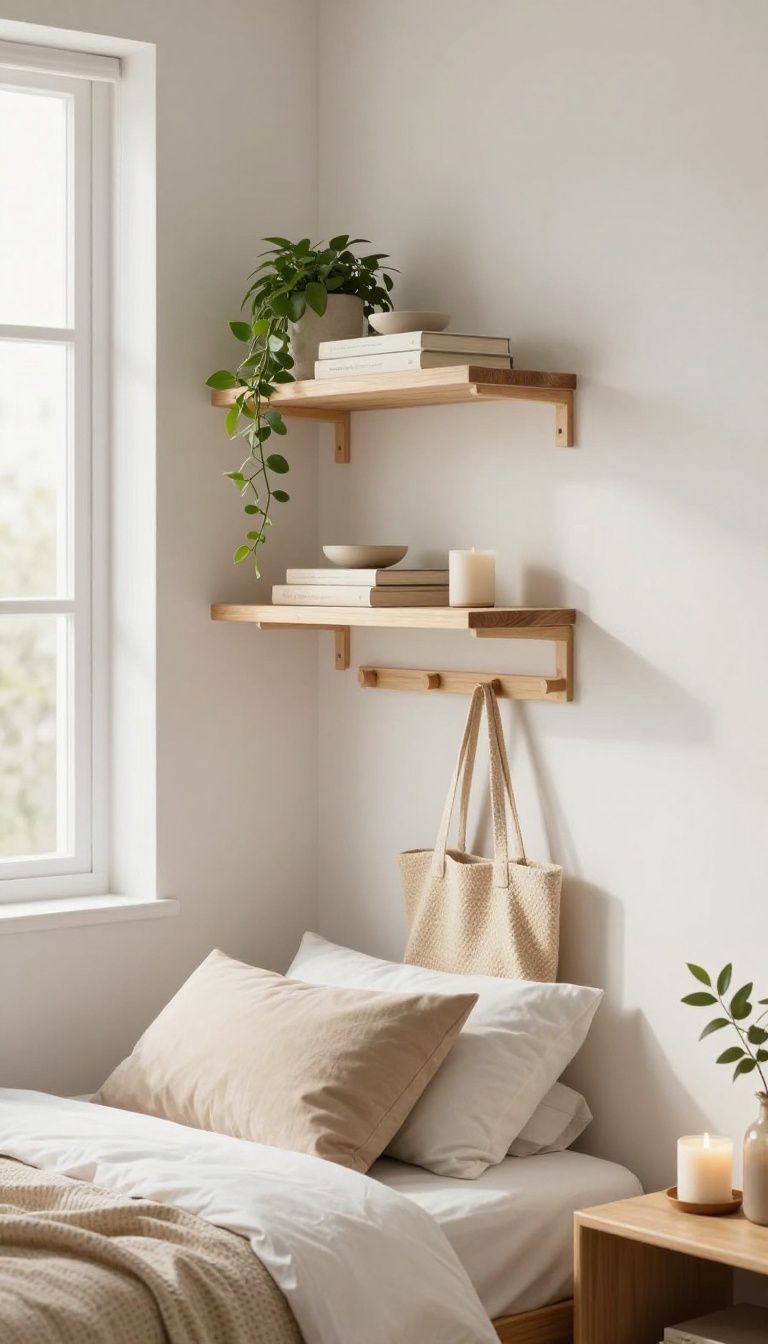
Floor space is precious in a small bedroom, so stop treating your walls like blank decoration. Floating shelves and adhesive hooks turn empty vertical inches into storage that holds your stuff without crowding the room. The best part?
You can install most of these in an afternoon, even in a rental.
Think of your walls as free real estate. A few well-placed shelves and hooks can replace a bulky nightstand, a cluttered desk, or a pile of clothes on the floor. They keep daily essentials visible and within arm's reach, which makes your morning routine smoother and your room feel calmer.
The trick is to choose the right spots and the right hardware. You don't need a full wall of shelving; a couple of strategic pieces will do more than you think. And if you're renting, adhesive options have gotten strong enough to handle real weight without leaving a mark.
Pick The Right Spot
Look for wall space above furniture you already have. The area over your bed, beside your mirror, or above a dresser is prime for a slim shelf. Keep shelves shallow (around 4 to 6 inches deep) so they don't jut into the room or hit your head when you sit up.
In tight corners, a corner shelf uses space that's otherwise wasted. Hooks work best near the door, on the back of the closet, or beside the bed. A row of hooks behind the door holds bags, hats, and tomorrow's outfit without taking up an inch of floor.
Choose The Right Hardware
For renters, adhesive hooks and removable shelves are game-changers. Look for ones rated for at least 5 to 10 pounds and follow the cure time before hanging anything. For heavier loads, a simple wall anchor and screw setup is sturdier and still easy to patch later.
Floating shelves with hidden brackets look clean and modern. If you're not handy, many come with templates and all the hardware you need. Just make sure you hit a stud or use anchors rated for the weight.
Style It Without Clutter
A shelf packed with stuff looks messy fast. Treat it like a display: a small plant, a few books, a candle, and one or two meaningful objects. Leave some empty space so the shelf feels airy.
Use small baskets or trays to corral tiny items like chargers, glasses, and jewelry. Hooks can look intentional too. A row of matching hooks with a single bag or robe hanging from each reads as organized, not chaotic.
Rotate seasonal items so the wall doesn't become a dumping ground.
9. Pick a Light, Cohesive Color Palette
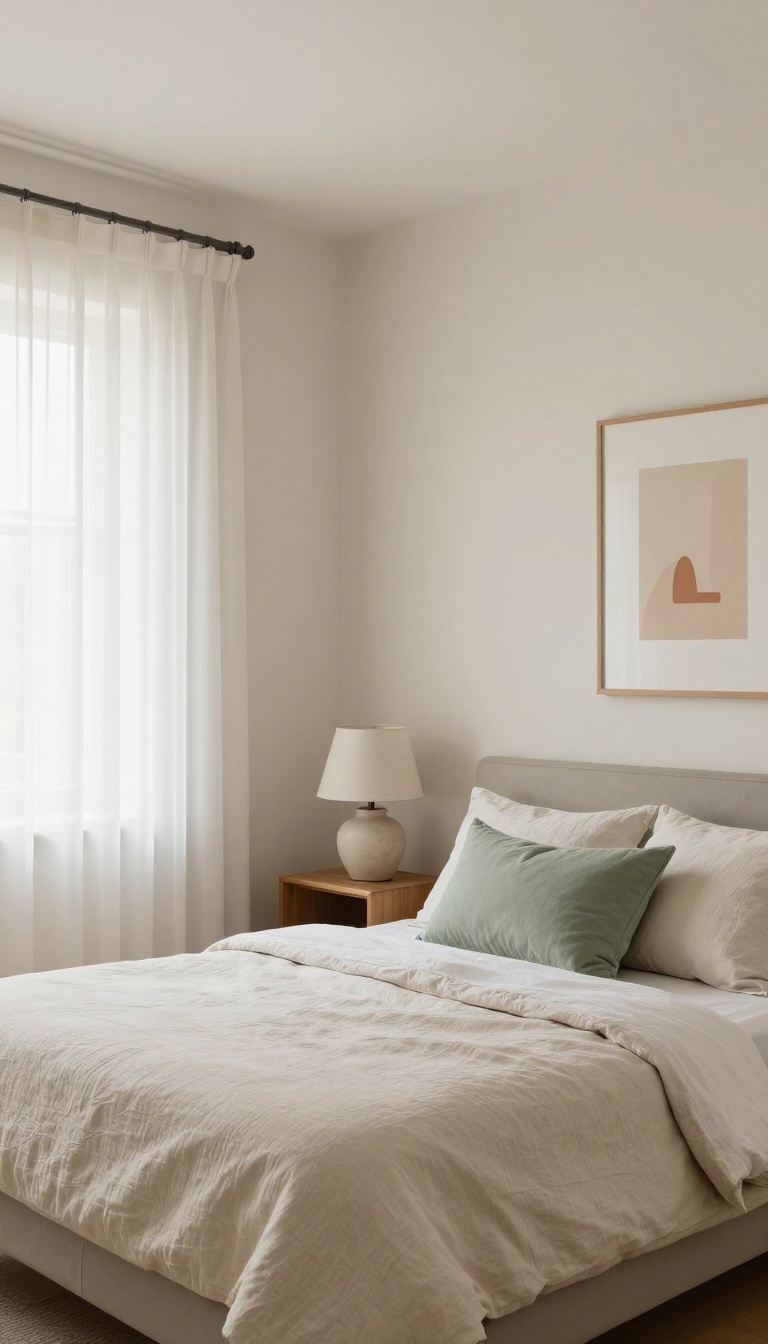
Color has a sneaky way of shrinking or stretching a room before you move a single piece of furniture. In a small bedroom, a light, unified palette reflects more light and blurs the edges between walls, trim, and ceiling, so the space reads as one continuous surface instead of a box with hard stops. The goal is not to make everything white and boring.
It is to choose a soft base, then repeat it with intention so the room feels calm, open, and finished.
A cohesive palette does two jobs at once: it makes the room feel bigger and it makes your stuff look like it belongs together. When every color is fighting for attention, your eye never rests, and the room feels busier and tighter than it actually is. Soft neutrals and a single accent color give your eye a clear path, which is exactly what a small bedroom needs.
Start With A Soft Base
Pick a wall color that sits somewhere between white and light beige, like warm ivory, pale greige, or a whisper of blush. These shades bounce light around without turning the room into a hospital. If you rent, a peel-and-stick wallpaper in a light texture can do the same trick on one wall without touching the paint.
Keep the ceiling and trim in the same family, or go a shade lighter on the ceiling to lift it visually.
Choose One Accent, Not Three
A single accent color keeps things interesting without chopping up the space. Sage green, dusty blue, or muted terracotta all work well because they are soft enough to live next to neutrals. Use that accent in small doses: a throw pillow, a lampshade, a piece of art, or the edge of a shelf.
When the same color shows up in three or four spots, the room feels deliberate instead of random.
Repeat Colors To Pull The Room Together
Cohesion comes from repetition, not from matching everything perfectly. Pull one color from your bedding into a curtain, then echo it again in a small tray or a candle. This creates a visual thread that ties the whole room together.
If you are unsure, take a photo of your space and squint. The colors that jump out are the ones you either need to repeat or tone down.
Keep The Floor And Furniture In The Same Family
A light rug and light wood furniture keep the lower half of the room from feeling heavy. If your floor is dark, a large pale rug can break it up and reflect more light. Avoid putting a dark dresser against a dark wall, because that corner will swallow the room.
When in doubt, go one shade lighter on the biggest pieces and save the deeper tones for small accessories.
10. Hide Clutter with Multi-Functional Furniture
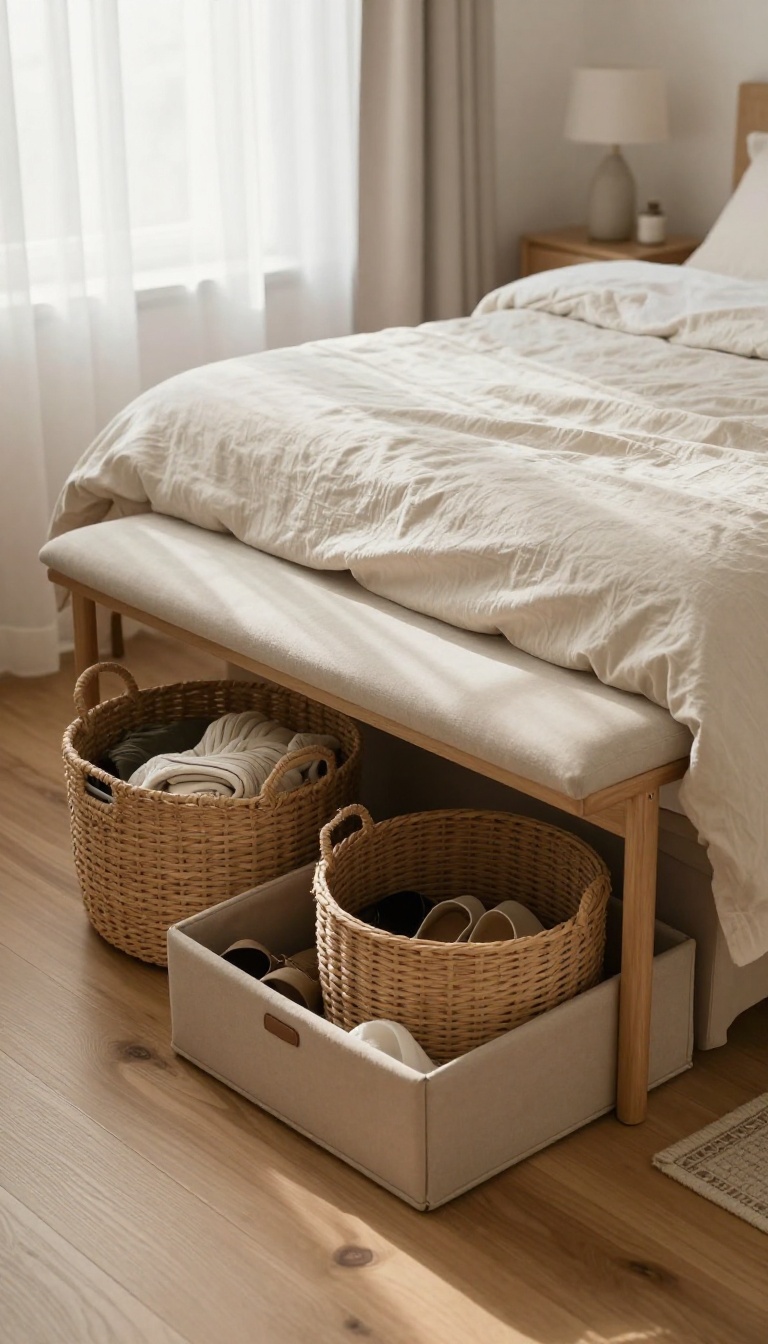
Clutter in a small bedroom isn't just about mess; it's about the visual noise that makes the space feel chaotic. Multi-functional furniture tackles this head-on by giving your belongings a designated home while also serving a practical purpose. Think of it as double-duty design that keeps your room tidy and your floor clear.
When every inch counts, furniture that only does one job is a wasted opportunity. A storage ottoman, for example, can be a footrest, a seat, and a hidden compartment for blankets or shoes. A bench with baskets underneath corrals laundry or books without adding visual clutter.
These pieces pull their weight, so you don't have to sacrifice style for storage.
Storage Ottomans: Sit, Store, Repeat
An ottoman with a lift-up lid is a small bedroom's best friend. Use it as a coffee table, extra seating, or a place to stash extra pillows and off-season clothes. Look for one with a soft-close hinge and a fabric that hides dust.
Place it at the foot of your bed or in a reading nook to keep the floor open.
Benches With Baskets: Corral The Chaos
A slim bench at the end of your bed can hold woven baskets that swallow up shoes, laundry, or magazines. Choose baskets that complement your room's palette so they look intentional, not like an afterthought. This setup keeps daily items within reach but out of sight, instantly making the room feel calmer.
Choose Pieces That Pull Double Duty
Look for furniture that combines two functions seamlessly. A bed with drawers underneath, a nightstand with a hidden charging station, or a mirror that opens to reveal jewelry storage. Each piece you swap for a multi-tasker frees up space and reduces the number of items you need to manage.
11. Add a Plant or Two for Life and Freshness
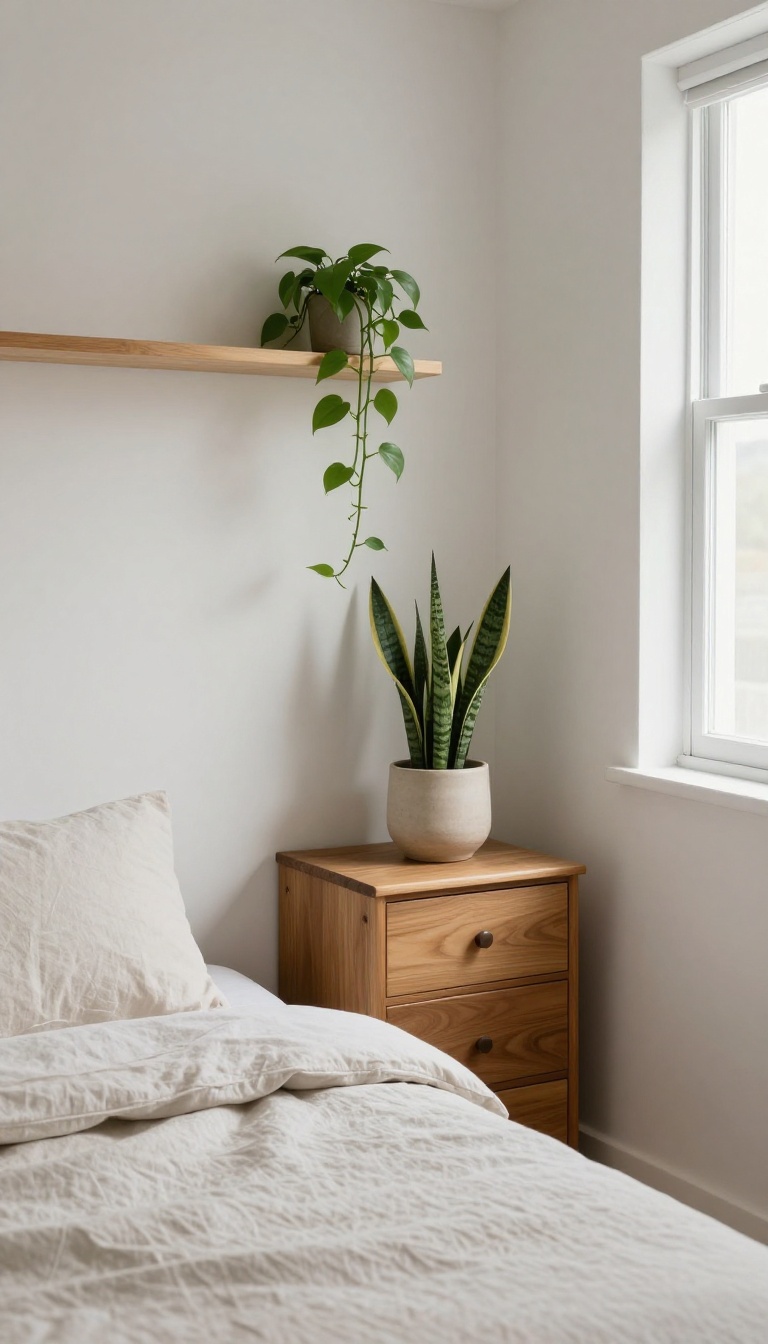
Every small bedroom needs something alive in it. Plants bring that quiet energy without asking for much space in return. A trailing vine on a shelf or a snake plant tucked into a corner softens all the hard edges in the room.
They also add a natural texture that no throw pillow or lamp can copy. Best of all, greenery reads as calm. A little bit of it goes a long way in a tight space.
You do not need a jungle to get the effect. Two plants, placed with some thought, will do more for the room than a shelf full of decorative objects. The trick is matching the plant to the spot.
Some thrive in low light corners, others want that one bright window. Pick right and they basically take care of themselves.
Go Small And Trailing
A pothos or string of pearls on a floating shelf draws the eye upward and keeps the floor clear. Let the vines spill over the edge for a soft, lived-in look. Hang a small hook or use a narrow ledge near the window.
Trailing plants love that spot and reward you with growth you can actually see.
Pick A Corner Stunner
A snake plant or ZZ plant stands tall without spreading wide, which makes it perfect for that dead corner beside the dresser. It adds height and green without eating your walking space. Both tolerate low light and forgetful watering.
That matters in a bedroom where you are not always thinking about plant care.
Keep It Manageable
Stick to two or three plants max. More than that and a small room starts to feel crowded instead of fresh. Choose pots that match your color scheme so the plants read as part of the design, not an afterthought.
A simple ceramic or woven basket works every time.
FAQ
What is the fastest way to make a small bedroom feel cozier?
Add warm lighting and soft textiles like a throw blanket and a rug. These changes take minutes and instantly soften the space.
How can I make my small bedroom look bigger without painting?
Use mirrors, declutter surfaces, and choose light-colored bedding. These tricks reflect light and reduce visual weight.
Do I need to buy new furniture for a small room makeover?
Not necessarily. Rearranging what you have, adding storage baskets, and swapping lamps for sconces can make a big difference.
What colors work best for a cozy small bedroom?
Soft whites, warm grays, and muted earth tones create a calm, open feel. Add one accent color for personality.
How do I keep a small bedroom from feeling cluttered?
Stick to a few key pieces, use vertical storage, and hide everyday items in closed containers or under-bed bins.
Conclusion
You don't need to try all eleven ideas at once. Pick the one that fixes your biggest daily annoyance, whether that's a dark corner, a bed hogging the floor, or clothes piling up on a chair. Live with it for a week before judging.
Once that change settles, add the next one.
Small bedrooms reward patience, not a frantic weekend of shopping. Layer your choices, notice what still bugs you, and let the room evolve. A cozy refresh happens one smart move at a time.