10 Clever Black Kitchen Cabinets Ideas for a Fresh, Pulled-Together Look
Black kitchen cabinets instantly add depth and sophistication, but they can feel heavy if you don't balance them right. The secret is pairing that dark foundation with the right textures, lighting, and accents to keep the room airy and inviting.
You don't need a full gut renovation to pull it off—small tweaks like swapping hardware or adding a glossy backsplash can make a huge difference. These ten ideas focus on practical, budget-friendly ways to make black cabinets feel fresh, warm, and effortlessly styled.
Each one tackles a different angle, so you can pick what suits your space and start transforming today.
1. Mix Matte Black with Warm Wood Tones
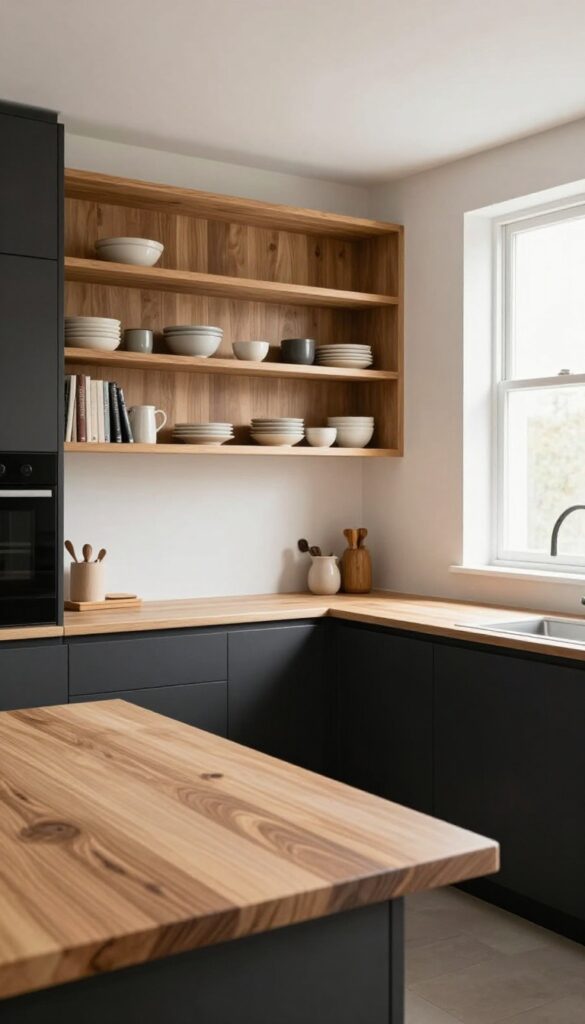
When you go all-in on black cabinets, the room can start to feel like a cave if you're not careful. That's where warm wood comes to the rescue. Natural oak, walnut, or even a rich teak adds a softness that balances the darkness, making the space feel grounded and welcoming instead of stark and cold.
The trick is to let wood do the heavy lifting in areas that get the most visual attention. Open shelving is a great place to start—swap out a few upper cabinet doors for solid wood shelves and display your everyday dishes or a stack of cookbooks. Butcher-block countertops are another easy win, especially on an island or a section of your main counter.
The wood grain breaks up the black and gives your eye a place to rest, so the kitchen feels layered rather than flat.
Why Wood Works With Black
Black absorbs light, which can make a space feel smaller or heavier. Wood reflects warmth, both literally and visually. The contrast between the dark cabinetry and the lighter, grain-filled wood creates a natural focal point.
It also adds a touch of organic texture that prevents the kitchen from feeling too industrial or modern. Plus, wood ages beautifully, so your kitchen will develop character over time.
Where To Add Wood Without Overdoing It
You don't have to go full rustic. Start with a few key pieces: open shelving, a butcher-block island top, or even wooden bar stools. If you're feeling bolder, consider a wood range hood cover or a wood accent wall behind the stove.
The goal is to let wood appear in about 20-30% of the visible surfaces. That's enough to warm things up without competing with the black for attention.
Choosing The Right Wood Tone
Lighter woods like oak or ash keep the look airy and casual, perfect for a farmhouse or Scandinavian vibe. Mid-tone woods like walnut add richness and pair well with brass or gold hardware. Darker woods like ebony or mahogany can get lost against black cabinets, so it's best to avoid them unless you're going for a moody, dramatic effect.
Stick with woods that have visible grain and a natural finish to maximize the contrast.
2. Use Brass or Gold Hardware for Instant Contrast
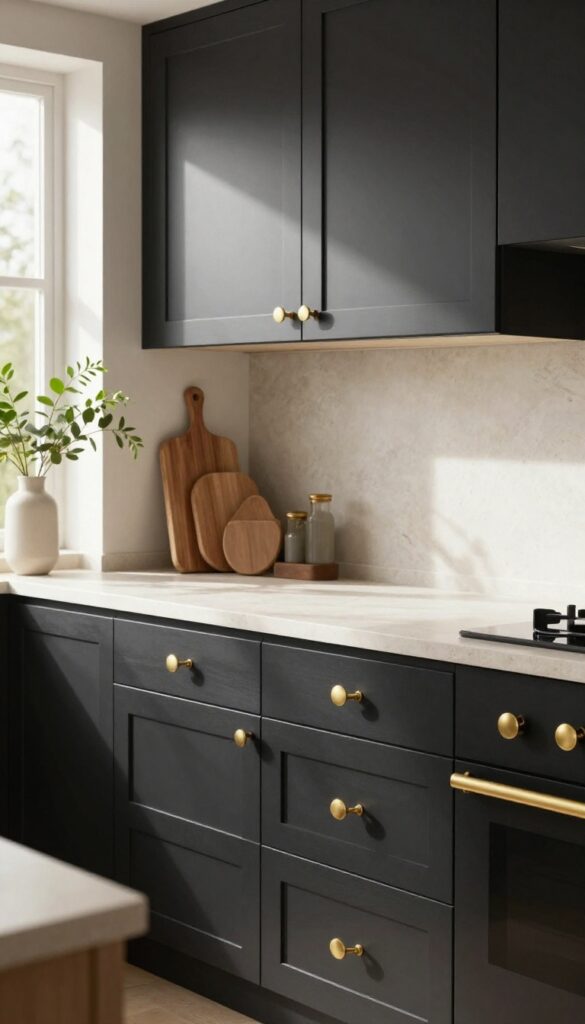
Hardware might seem like a small detail, but it’s the jewelry of your kitchen. When your cabinets are black, the right knobs and pulls can either make them disappear or make them shine. Brass and gold tones create a warm, luminous contrast that instantly lifts the darkness, giving your space a curated, high-end feel without a full remodel.
Swapping out standard silver or black hardware for unlacquered brass or brushed gold is one of the quickest wins you’ll find. The metallic pop draws the eye to the cabinet lines, highlighting the craftsmanship and adding a touch of luxury. Plus, brass develops a beautiful patina over time, which adds character and depth to your kitchen.
Why Brass Works So Well With Black
Black is a neutral, but it’s a strong one. Brass and gold bring warmth that prevents the dark from feeling cold or sterile. The contrast is bold yet refined, making your cabinets the focal point without being overwhelming.
This pairing also works in any style—from modern farmhouse to sleek contemporary—so you can adapt it to your taste.
How To Choose The Right Finish
Unlacquered brass will age and darken, giving a vintage, lived-in look. Brushed gold is more durable and maintains a consistent sheen, perfect for busy kitchens. If you’re unsure, start with a few samples and see how they look in your lighting.
Remember, the finish you pick will set the tone for the entire room.
Mixing Metals Without Going Overboard
You don’t have to match every metal in the room. Mixing brass hardware with a stainless steel sink or a chrome faucet can look intentional if you keep the undertones similar. For example, pair warm brass with a matte black faucet for a cohesive, designer vibe.
Just avoid going overboard—stick to two or three metal finishes maximum.
3. Add a Glossy Backsplash to Reflect Light
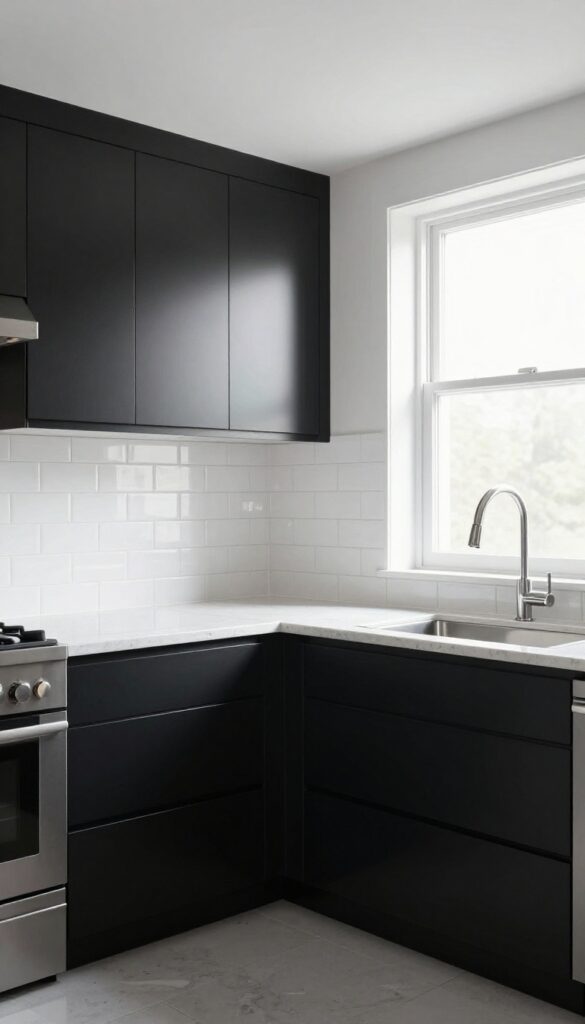
Black cabinets can soak up light and make a kitchen feel smaller than it is. A glossy backsplash is one of the easiest fixes—it acts like a mirror, bouncing light around and opening up the space. You don't have to redo the whole kitchen; just swap out the backsplash and watch the room transform.
The reflective surface of a glossy subway tile or polished marble backsplash works wonders behind dark cabinetry. It catches both natural and artificial light, creating a brighter, airier feel. Plus, it adds a touch of elegance that pairs beautifully with the boldness of black.
Why Glossy Works With Black
Glossy finishes reflect more light than matte ones, which is exactly what black cabinets need. The contrast between the dark cabinets and the shiny backsplash creates depth and visual interest. It also helps define the cooking area without making it feel heavy.
Best Materials To Consider
Subway tile is a classic choice—affordable, easy to clean, and available in glossy white or soft gray. Polished marble adds a more luxurious feel, while glass tiles offer a modern twist. Pick a material that matches your style and budget.
Installation Tips
You can install a backsplash yourself if you're handy, but professional installation ensures a flawless finish. Make sure to seal natural stone to protect it from stains. Use light grout to keep the look bright and cohesive.
4. Go Two-Tone with White Upper Cabinets
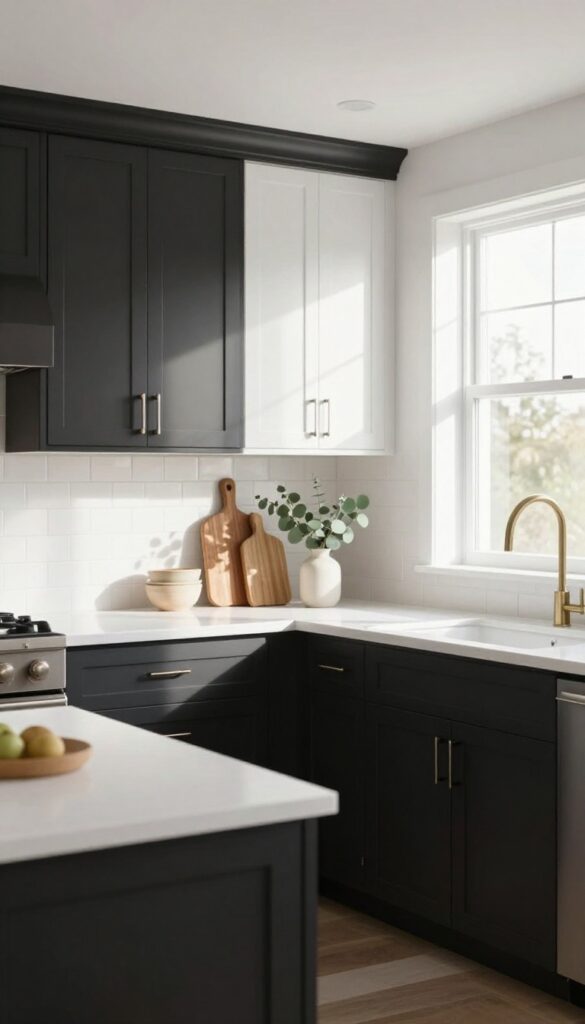
Black lower cabinets can feel grounding, but they also have a way of pulling the eye down. Pairing them with white uppers flips that dynamic, giving your kitchen a balanced, airy lift without losing the drama. This two-tone approach is a favorite among designers because it offers the best of both worlds—dark, moody bases that hide wear and tear, and bright, reflective uppers that bounce light around the room.
It’s a simple change that can make your space feel bigger and more open, especially if you’re working with a smaller kitchen.
Why White Uppers Work So Well
White uppers create a natural focal point at eye level, drawing attention upward and making the ceiling feel higher. They also reflect natural and artificial light, which helps counteract the light-absorbing nature of black cabinets. The contrast adds depth and dimension, so the kitchen doesn’t look flat or monotonous.
Plus, white uppers make the space feel less cluttered—dark cabinets tend to show every smudge, but white can be easily wiped down and keeps the room looking fresh.
Choosing The Right Shade Of White
Not all whites are created equal. A soft, warm white or cream (like Benjamin Moore’s White Dove or Swiss Coffee) pairs beautifully with black, avoiding the harsh, sterile look that pure white can sometimes bring. Test a few samples on your upper cabinets to see how they interact with your lighting and countertops.
If your kitchen gets lots of natural light, a brighter white can work; if it’s darker, go with a warmer tone to keep things cozy.
Styling Tips For A Seamless Transition
To make the two-tone look feel intentional, carry the white up to the ceiling with crown molding or a matching backsplash. Use hardware that bridges the two colors—brushed brass or matte black knobs and pulls work well. Keep the upper cabinets free of heavy decor so the white can shine.
And don’t forget the countertop: a light quartz or marble will tie the two tones together, while a dark counter can create a striking contrast if you want more drama.
5. Install Under-Cabinet Lighting for Depth
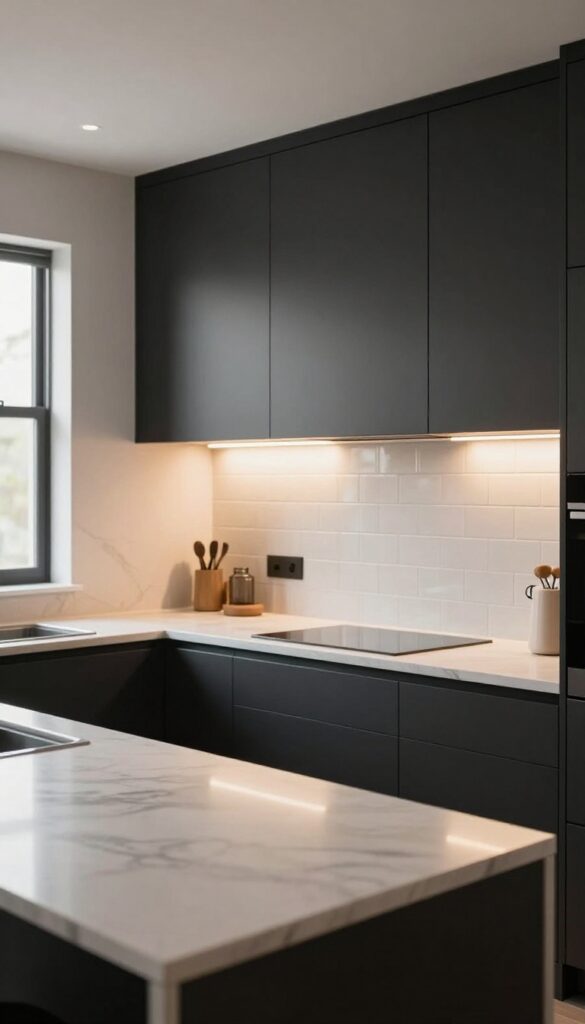
When your cabinets are dark, lighting becomes more than just a practical necessity—it's a design tool. Under-cabinet lighting is one of the most effective ways to break up the heaviness of black cabinets and make your countertops pop. It adds a warm, layered glow that transforms the kitchen after sunset, turning a flat, dark surface into a dimensional, inviting space.
Under-cabinet lighting is a small upgrade with a big impact. It not only improves visibility for meal prep but also highlights the texture of your countertops and backsplash. With black cabinets, the contrast between the dark cabinetry and the illuminated countertop creates a striking focal point that draws the eye and adds depth.
Choose The Right Light Color
Warm white (2700K–3000K) is your best bet for black cabinets. It gives off a cozy, inviting glow that softens the darkness. Cool white or daylight bulbs can make the space feel clinical and stark, which works against the warm, pulled-together look you're aiming for.
Stick with warm tones to keep the kitchen feeling welcoming.
Placement Matters
Mount the strips near the front edge of the upper cabinets, not too far back. This way, the light hits the countertop directly and doesn't get lost in the shadow of the cabinet. If you have a glass-front cabinet or open shelving, consider adding a small strip inside to showcase your dishes and add another layer of light.
Go For Dimmable Options
Dimmable LED strips give you control over the mood. Bright for cooking and prepping, low for a relaxed evening vibe. Many smart options let you adjust brightness with your phone or voice, so you can set the perfect ambiance without getting up.
It's a simple feature that adds a lot of flexibility.
6. Choose Open Shelving to Break Up Mass
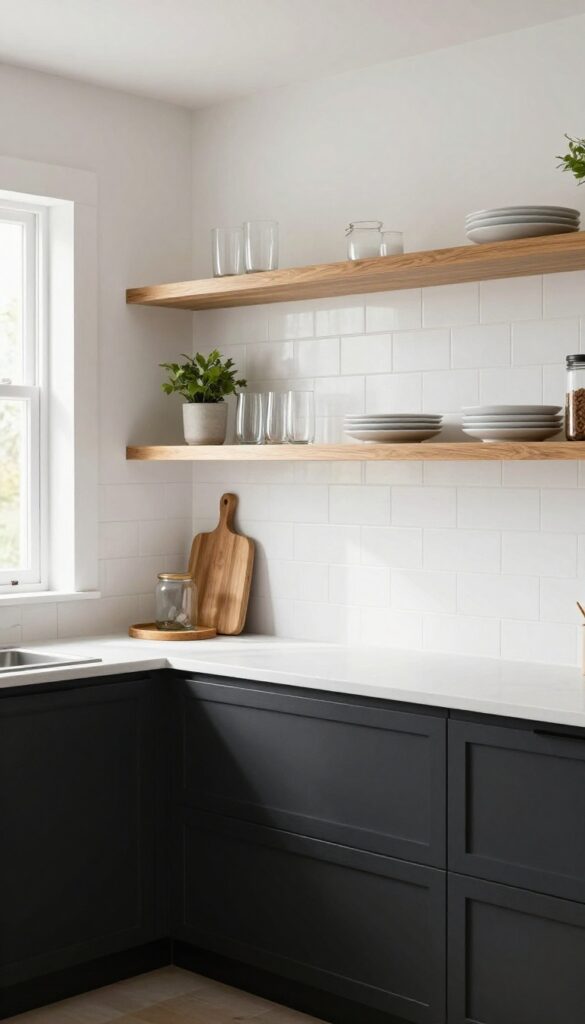
A wall of dark cabinets can feel like a solid block, especially in a smaller kitchen. Open shelving offers a simple way to break up that visual weight and add a lighter, more casual feel. By removing a few upper doors, you create breathing room and a chance to show off your style.
Open shelving isn't just about storage—it's about creating a rhythm. Replacing some upper cabinet doors with open shelves in a contrasting material like light wood or black metal draws the eye upward and adds texture. It also gives you a spot to display everyday dishes, plants, or a favorite mug collection, making the kitchen feel lived-in and welcoming.
Mix Materials For Contrast
Pair your black cabinets with open shelves in a warm wood tone, like oak or walnut, to soften the dark finish. The natural grain adds warmth and prevents the kitchen from feeling too stark. You can also go with black metal shelves for a more industrial look, which keeps the aesthetic cohesive while still breaking up the mass.
Style With Everyday Items
Use your open shelves to store items you reach for daily—plates, glasses, or a stack of bowls. This makes the shelves practical, not just decorative. Add a few plants or a small vase to bring life to the space.
The key is to keep it organized but not overly styled, so it feels natural and effortless.
Balance The Layout
You don't need to remove all your upper doors. Instead, choose one or two sections to convert, perhaps near the sink or stove. This creates a focal point without losing too much hidden storage.
Keep the shelves symmetrical with the remaining cabinets to maintain a balanced look.
7. Add a Pop of Color with Styling or Accessories
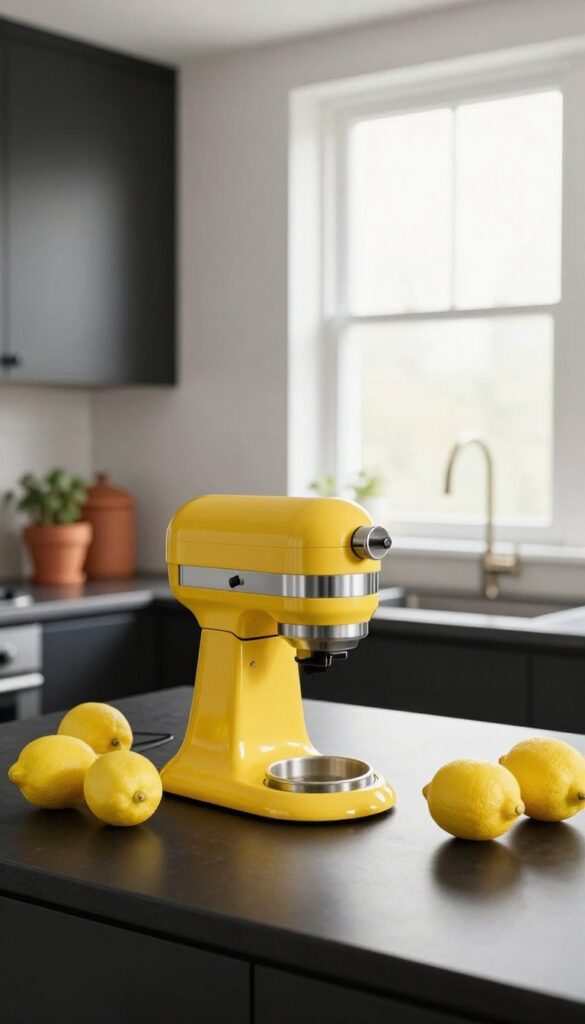
Black cabinets are a bold, neutral backdrop, but they can sometimes feel a bit flat if everything stays monochrome. That's where a splash of color comes in—it's the easiest way to inject personality and warmth without committing to a full redesign. By adding vibrant accents through everyday items, you can keep the sophistication of black while making the space feel lively and inviting.
The beauty of using accessories is that you can change them with the seasons or whenever you crave a fresh look. A single colorful element—like a mustard yellow stand mixer or a set of terracotta canisters—can become the focal point of the room. The key is to choose one or two shades that complement the black rather than compete with it, creating a balanced, pulled-together feel.
Pick A Color That Pops
Emerald green, mustard yellow, and terracotta are all excellent choices because they have enough warmth to stand out against black without feeling jarring. If you prefer a softer look, pastel pink or powder blue can add a gentle contrast. Consider the overall mood you want: bold colors energize, while muted tones calm.
Style With Small Appliances And Bar Stools
Small appliances like a retro toaster or a kettle in a bright hue can add function and flair. Bar stools with colorful upholstery or painted legs are another great way to introduce color at seating height. These pieces are large enough to make an impact but easy to swap out if you change your mind.
Add Life With A Fruit Bowl Or Fresh Flowers
A bowl of lemons, limes, or oranges brings a natural, vibrant pop that also smells amazing. Fresh flowers in a bright vase can do the same, adding a soft, organic touch. These are the simplest, most affordable ways to test a color before committing to bigger items.
8. Use Textured Materials Like Concrete or Brick
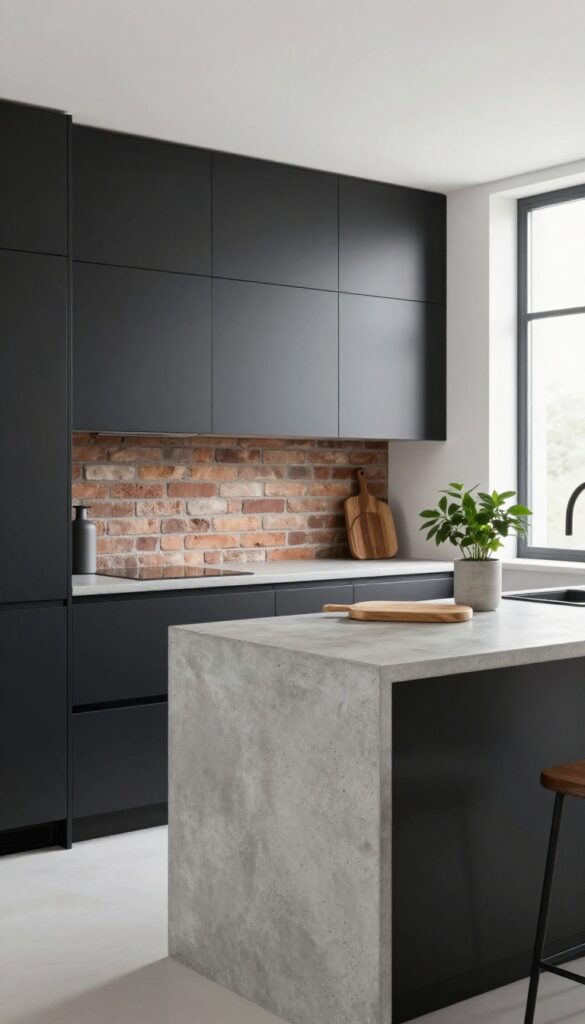
Smooth black cabinetry can sometimes feel a little flat, especially if the rest of the kitchen is sleek and glossy. That's where texture comes in. Adding rough, tactile materials like concrete or exposed brick creates a striking contrast that makes the whole space feel more grounded and intentional.
Concrete and brick bring an industrial edge that pairs beautifully with black cabinets. The roughness of these materials breaks up the uniformity of dark cabinetry, adding visual interest and a sense of warmth. Plus, they're surprisingly versatile—they work in modern lofts, farmhouse kitchens, and even transitional spaces.
Concrete Countertops For A Raw, Modern Feel
A concrete countertop is a bold choice that instantly adds texture and a handmade quality. The natural variations in color and finish mean no two slabs are alike. Pair it with black cabinets for a look that feels both rugged and refined.
You can seal it for a smooth, matte surface or leave it slightly rough for extra tactile appeal.
Exposed Brick Walls For Warmth And Character
If you have a brick wall behind your stove or sink, consider leaving it exposed. The warm reddish-brown tones of brick soften the starkness of black cabinets and add a layer of history to the room. For a more polished look, you can whitewash the brick or paint it a soft gray, but the natural brick color often works best.
Mixing Textures For Balance
You don't have to choose just one texture. Combine a concrete countertop with a brick backsplash, or add a concrete sink with a brick accent wall. The key is to let the textures complement each other without overwhelming the space.
Keep the rest of the kitchen simple—clean lines, minimal hardware—so the materials can shine.
9. Add a Large Mirror or Glass-Front Cabinets
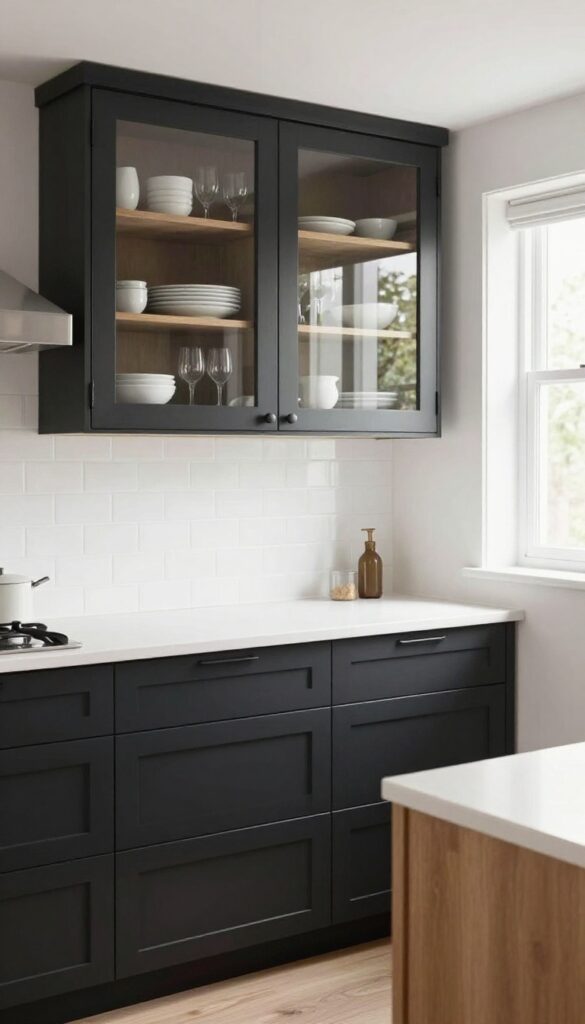
Dark cabinets can sometimes swallow light, especially in a kitchen that doesn't get much natural sun. A simple trick is to bounce light around with reflective surfaces—mirrors or glass-front doors do exactly that without taking up extra space. They break up the visual weight of black cabinetry and make the whole room feel more open and airy.
A large mirror on the backsplash wall is an easy, budget-friendly upgrade. It reflects whatever light is available, whether that's from a window or your overhead fixtures, and it doubles the visual depth of the room. If you're worried about smudges or splatters, place it away from the main cooking zone—maybe on a side wall or behind a floating shelf.
Glass-front cabinets are another classic move. Swap the solid doors on a few upper cabinets for clear or frosted glass. Clear glass shows off your everyday dishes and adds a layer of visual interest, while frosted glass gives you a softer, more diffused glow.
Either way, you'll create a break in the dark mass of cabinetry and give the eye somewhere to rest.
Where To Place The Mirror
The best spot is usually across from a window or light source. That way, the mirror catches the light and throws it back into the room. If your kitchen is narrow, a mirror on the end wall can make it feel twice as wide.
Just avoid placing it directly behind the stove—grease and steam will be a pain to clean off.
Choosing Glass-front Cabinets
You don't have to convert every upper cabinet. Pick two or three that are at eye level and hold items you actually like looking at. Clear glass works well for neatly stacked dishes or glassware, while frosted glass hides clutter but still lets light pass through.
If you're on a budget, you can even replace just the door panels with glass inserts—many cabinet makers sell them as a retrofit.
Balancing Light And Privacy
Mirrors and glass can make a kitchen feel more open, but they also show everything. If you're not into displaying every mug, use frosted glass or position the mirror so it reflects a blank wall or a plant, not a messy countertop. You can also add under-cabinet lighting to brighten the counter and reduce the contrast between dark cabinets and the rest of the room.
10. Keep the Ceiling and Trim Light
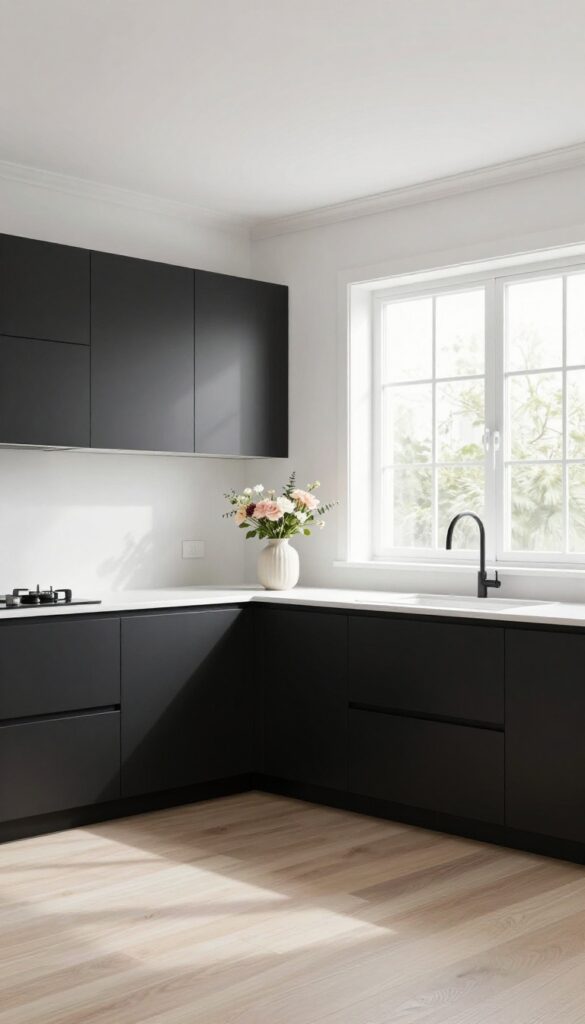
A common mistake with dark cabinets is letting the entire room go dark, which can make the space feel like a cave. Keeping the ceiling and trim bright is a simple trick that creates a visual break and keeps the eye moving upward. This approach frames your black cabinets as the star of the show without letting them swallow the room.
When you paint the ceiling and window trim a crisp white or soft off-white, you establish a clean boundary that makes the black cabinets pop. The contrast adds depth and makes the ceiling feel higher, which is a big win for smaller kitchens. It also helps bounce natural light around, so the room stays bright and welcoming even with those dark lower cabinets.
Why Light Trim Works
Light trim and ceiling act like a frame for your cabinets. They create a clear separation between the dark cabinetry and the rest of the room, preventing the space from feeling too heavy. This contrast draws the eye upward, making the kitchen feel larger and more open.
Plus, it gives you a natural place to stop the dark color, so the cabinets feel intentional rather than overwhelming.
Choosing The Right White
Not all whites are created equal. A pure white with a hint of blue or gray can look crisp and modern, while a warm off-white with yellow undertones feels softer and more traditional. Consider the undertones in your black cabinets and your overall color scheme.
Test a few samples on the ceiling and trim to see how they look in different lighting throughout the day.
Carrying It Through
Don't stop at the ceiling and window trim—extend the same light color to baseboards, door casings, and even the crown molding if you have it. This creates a cohesive look that ties the whole room together. You can also use the same white on the ceiling to make the black cabinets stand out even more.
Just keep the trim and ceiling in the same family of white to avoid a mismatched feel.
FAQ
Do black kitchen cabinets make a small kitchen look smaller?
Not necessarily. If you balance them with light counters, open shelving, and good lighting, black cabinets can actually add depth and make a small kitchen feel more intentional and cozy rather than cramped.
What color hardware goes best with black cabinets?
Brass, gold, and brushed nickel are popular choices. Brass adds warmth, while nickel gives a cooler, more modern look. Choose a finish that complements your other fixtures like faucets and lighting.
Are black cabinets hard to keep clean?
Black cabinets can show dust and fingerprints, but matte finishes hide smudges better than glossy ones. Regular wiping with a mild cleaner keeps them looking sharp without much effort.
Can I paint my existing cabinets black instead of buying new ones?
Yes, painting is a budget-friendly option. Use a high-quality primer and paint designed for cabinets, and consider a matte or satin finish for durability. Proper prep is key to a smooth, lasting result.
What countertop colors work with black cabinets?
White, light gray, and warm wood tones are safe bets. They create contrast and keep the space from feeling too dark. You can also go bold with a veined marble for a dramatic look.
Conclusion
Black cabinets don’t have to be intimidating. With the right mix of textures, lighting, and a few clever styling tricks, they can become the most memorable part of your kitchen. Start with one or two ideas that fit your space and budget, and build from there.
The goal is a kitchen that feels fresh, functional, and uniquely yours—not a showroom copy. So go ahead, embrace the dark side, and watch your kitchen transform.