10 Small Narrow Bedroom Ideas with Better Space Balance
A narrow bedroom often feels like a hallway with a bed squeezed in. But with the right tweaks, you can turn that awkward strip into a balanced, restful space. The trick is working with the proportions, not against them.
You don't need to knock down walls or spend a fortune. Simple shifts in layout, storage, and color can make a narrow room feel wider and more intentional. Each idea here focuses on one clear change that pays off.
We'll cover everything from bed placement to lighting tricks. Pick the ones that fit your space and budget, and watch the room come together.
1. Float the Bed Away from the Long Wall
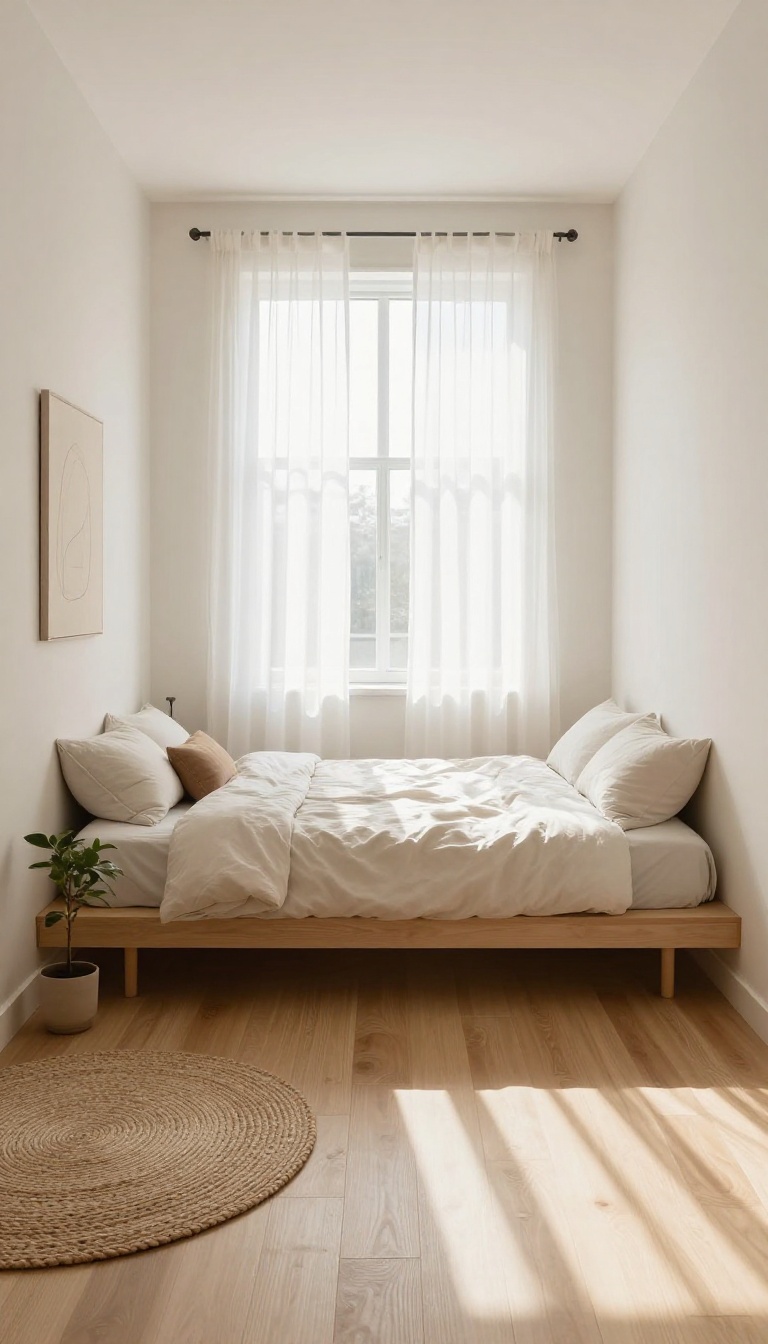
Most people shove their bed against the longest wall because it feels like the only option. But that move can make a narrow room feel even tighter, turning the remaining floor into a skinny corridor. Instead, pull the bed away from that wall and center it.
You'll gain breathing room on both sides and a layout that actually works with the room's shape, not against it.
When you float the bed, you're not just moving furniture—you're rethinking how the room flows. A centered bed creates two paths instead of one, which instantly makes the space feel wider. It also gives you a natural focal point, so the eye doesn't just slide down a long, empty wall.
The result is a more balanced, intentional look that doesn't scream 'I gave up on this room. ' Of course, floating a bed in a narrow space takes some planning. You need enough clearance to walk comfortably, and you might need to rethink where your nightstands go. But the payoff is worth it: a room that feels less like a tunnel and more like a cozy retreat.
How Much Space You Really Need
You don't need a ton of room to pull this off. Aim for at least 24 inches of walking space on each side of the bed. That's enough to get in and out comfortably without feeling cramped.
If you're tight on space, 18 inches can work in a pinch, but it'll feel snug. Measure your room first. If the bed is wider than the wall it's on, floating might not be possible.
But in most narrow bedrooms, you can shift the bed just a foot or two and still make a difference. Even a small gap on both sides can change how the room feels.
What To Do With Nightstands
Floating the bed often means you lose the wall behind you for nightstands. That's okay—you have options. Slim floating shelves mounted on the side walls can hold a lamp, phone, and a book without eating up floor space.
Or use small stools or side tables that tuck under the bed when not in use. If you need more storage, consider a headboard with built-in shelves. It keeps everything within reach and looks intentional.
Just make sure whatever you choose doesn't block the walking paths you just created.
Making It Look Intentional
A floating bed can look like a mistake if you don't style it right. Anchor it with a rug that extends a few inches beyond the bed on all sides. That visually connects the bed to the floor and makes the placement feel deliberate.
Add a headboard or a large piece of art on the wall behind the bed to create a focal point. Symmetry is your friend here—matching lamps or matching nightstands on both sides will make the layout feel balanced. And don't forget the ceiling: a pendant light or two can draw the eye up and make the room feel taller.
2. Use Vertical Storage to Free Up Floor Space
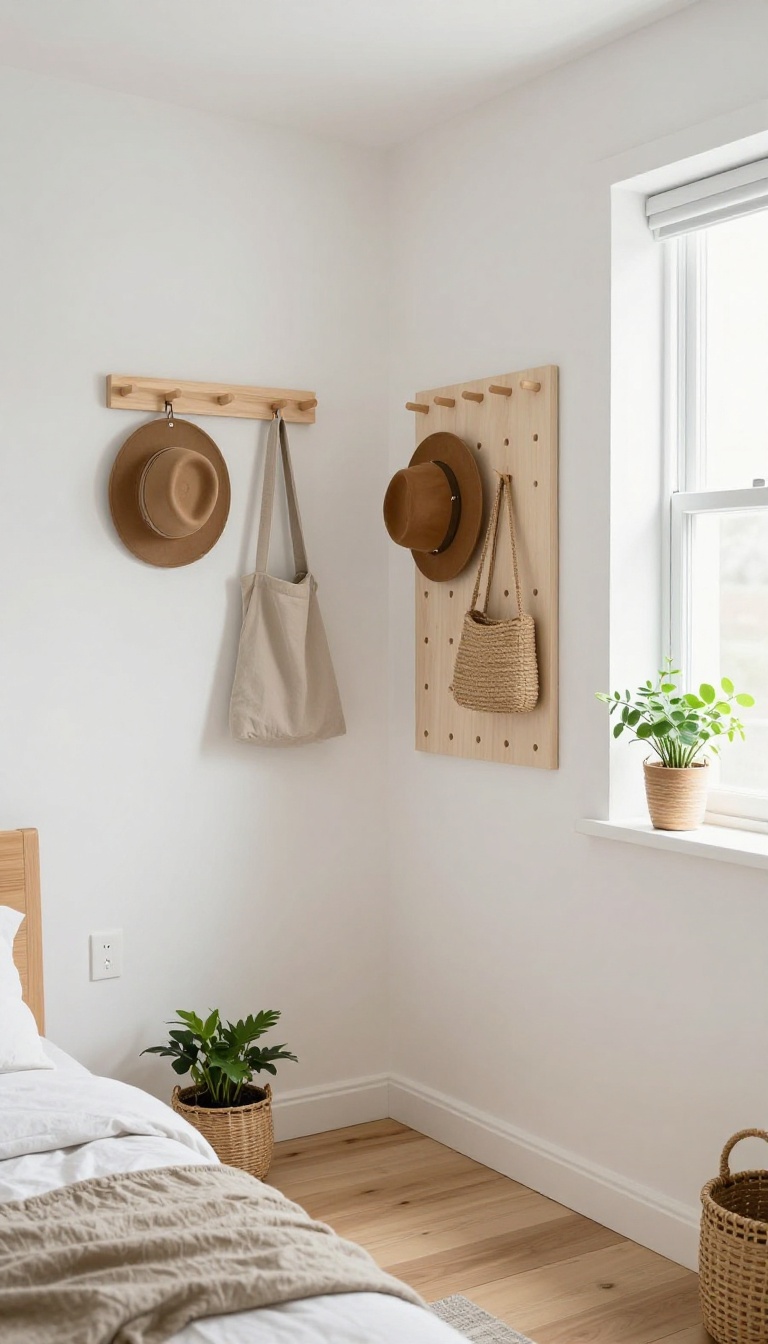
Floor space is precious in a narrow bedroom. Every square foot you free up makes the room feel less cramped. Vertical storage pulls double duty: it holds your stuff and draws the eye upward, which makes the ceiling feel higher and the walls feel farther apart.
The best part? You don't need custom cabinetry. A few smart, affordable pieces can transform how the room functions and feels.
Think of your walls as prime real estate. In a narrow room, the floor is the most expensive square footage you have. When you move storage up, you reclaim that space for walking, dressing, or just breathing.
Tall, slim shelving units hug the wall without jutting into the room. Wall-mounted hooks and racks keep everyday items off the floor. The result is a clearer path and a calmer view.
Here's how to make vertical storage work in your space.
Choose Tall, Narrow Shelving
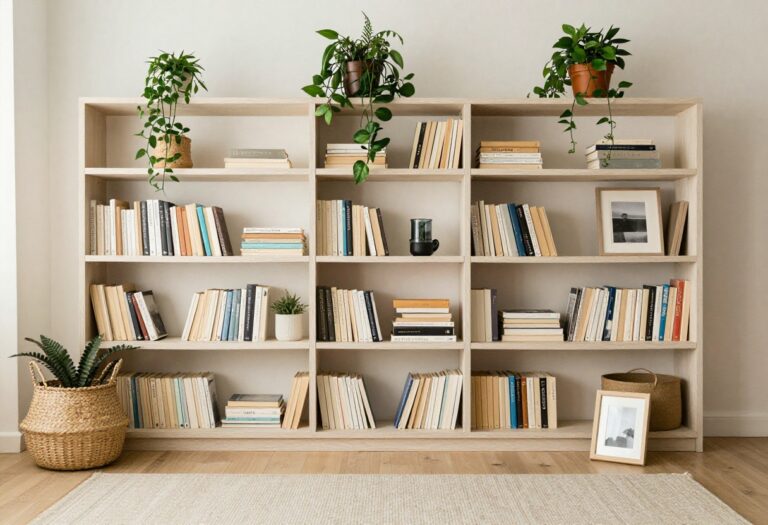
A bookshelf that's 12 to 16 inches deep can hold a lot without eating into your walking path. Look for units that are 72 inches or taller to maximize vertical space. Place one at the end of the bed or in a corner where it won't block traffic.
Open shelves feel lighter than solid cabinets. They also let you style the space with books, baskets, and small plants. Just keep the shelves tidy to avoid visual noise.
Install Wall Hooks And Pegboards
Hooks aren't just for coats. A row of hooks behind the door or on a side wall can hold hats, bags, robes, and even jewelry. Pegboards offer flexible storage for accessories and small items.
Mount them at eye level or higher to keep the floor clear. Use matching hooks or a consistent color to keep the look cohesive. This is one of the cheapest ways to add storage without adding bulk.
Go High With Over-the-door Racks
The back of your bedroom door is often wasted space. Over-the-door racks can hold shoes, towels, or toiletries. They're perfect for renters because they require no drilling.
Choose a rack that matches your door's width and doesn't stick out too far. Slim designs are best for narrow rooms. You can also use the top of the door for a hanging organizer.
Use Floating Shelves For Display And Storage
Floating shelves are sleek and don't take up floor space. Install a few above a desk or dresser to hold books, decor, or frequently used items. They draw the eye up and make the room feel taller.
Keep the shelves shallow—6 to 8 inches deep is plenty. Arrange items in small groups to avoid clutter. A mix of vertical and horizontal lines keeps the wall interesting.
3. Choose a Light, Monochrome Color Palette
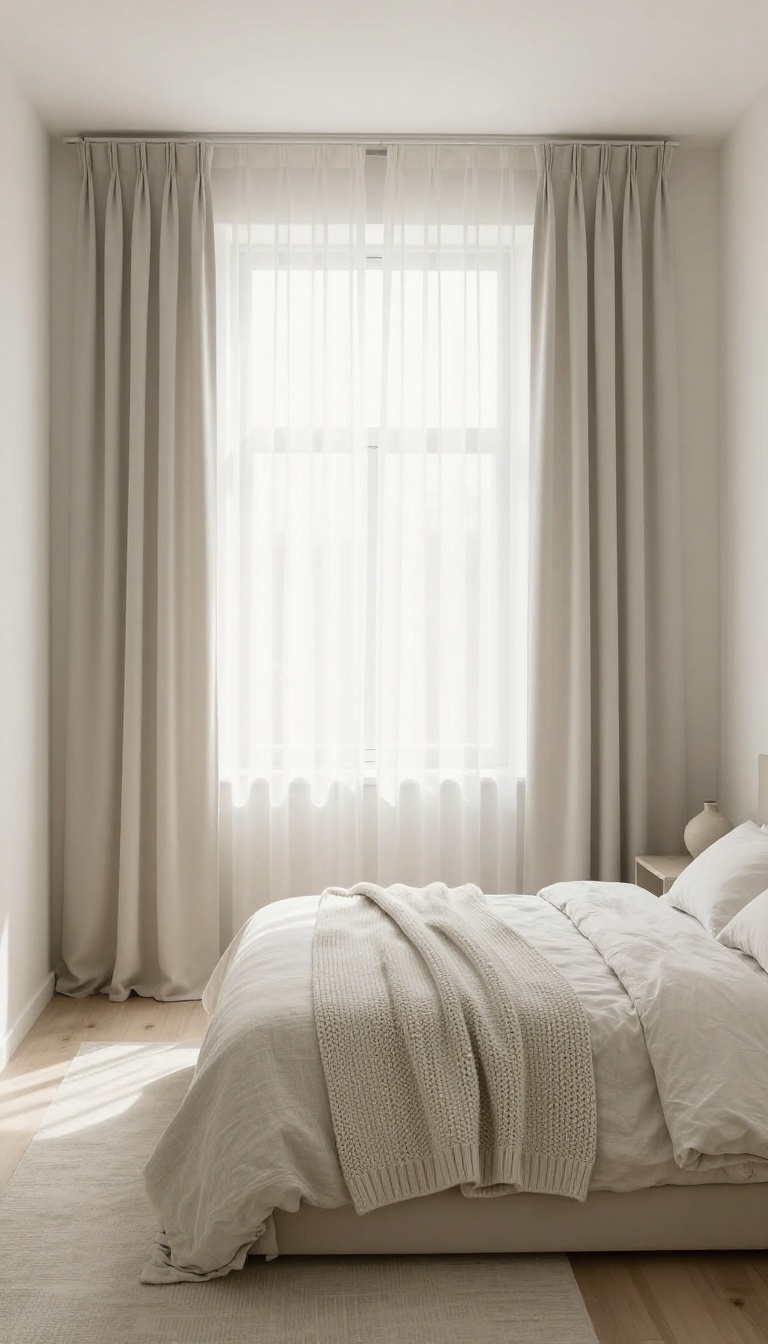
Color has a sneaky way of changing how big a room feels. In a narrow bedroom, a busy mix of shades can chop the space into visual chunks, making it feel even tighter. But when you stick to one soft, light color across walls, bedding, and curtains, those boundaries blur.
The eye glides around without stopping, and suddenly the room feels wider and calmer.
Monochrome doesn't mean boring. It means picking a single hue and using it in slightly different tones. Think warm white, pale gray, soft blush, or muted sage.
Keep the walls, bedding, and curtains in that same family. The result is a seamless wash of color that makes the walls seem to recede. You can still add texture and small accents, but the base stays unified.
Pick A Soft, Light Base Color
Go for colors with a high light reflectance value. Warm whites, light grays, and pale pastels work best. Avoid stark white if you want warmth; try off-white or cream.
The goal is to bounce light around the room, not absorb it. A light base makes the ceiling feel higher and the walls feel farther apart.
Match Your Bedding And Curtains
Your bedding and curtains should blend with the walls, not fight them. Choose curtains in the same color as the walls, or one shade lighter. For bedding, stick to the same hue but vary the texture.
A linen duvet in soft gray with a slightly darker gray throw looks pulled together without adding visual noise. This keeps the eye moving vertically, which stretches the room.
Add Depth With Texture, Not Color
Since you're limiting color, texture becomes your best friend. Mix a chunky knit blanket with smooth cotton sheets. Add a woven jute rug or a ribbed lamp shade.
These subtle variations keep the room from feeling flat. You can also introduce one or two small accents in a deeper shade of the same color—like navy pillows on a light blue bed—to add interest without breaking the monochrome flow.
4. Swap Heavy Curtains for Roman Shades
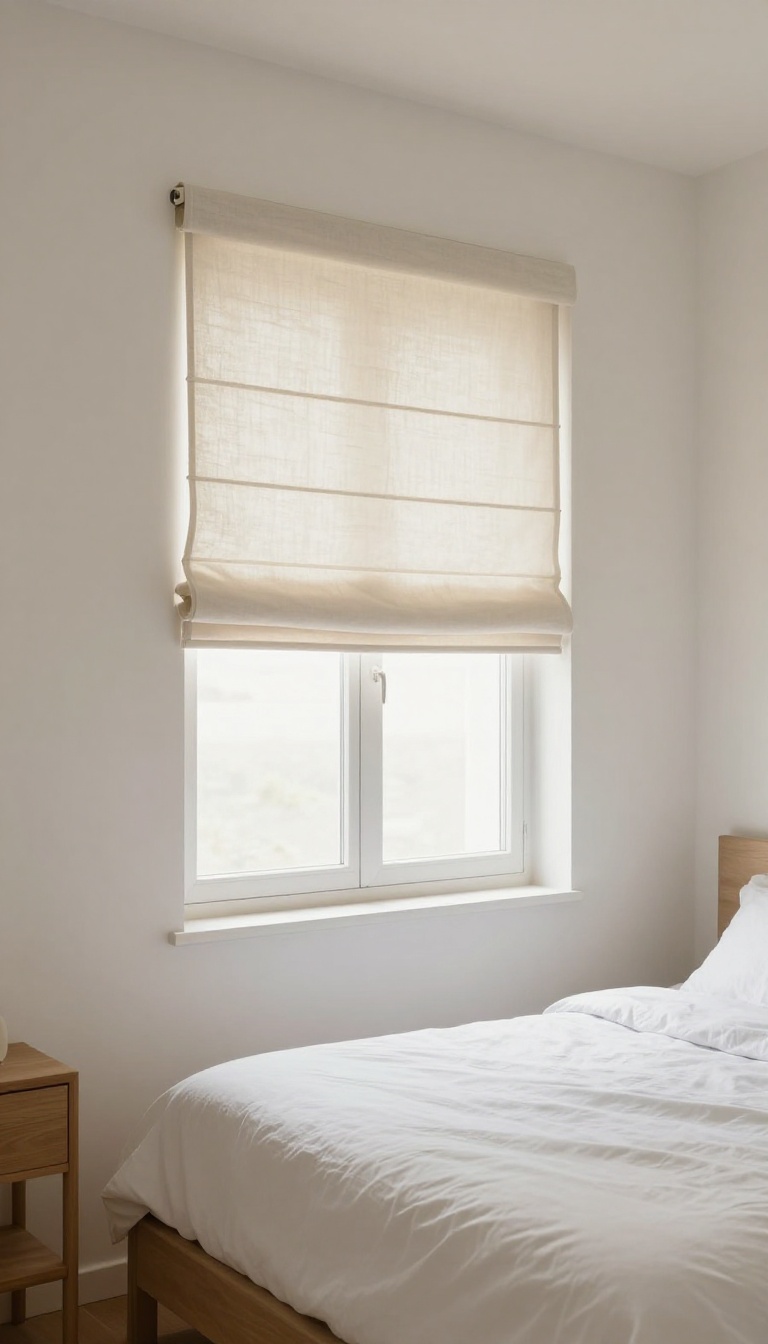
Heavy curtains may look cozy, but in a narrow bedroom they can swallow valuable wall space. When drawn open, they stack up on either side of the window, pushing into corners and making the room feel even tighter. Roman shades offer a cleaner solution by sitting flat against the window frame and taking up almost no room when raised.
This simple swap can instantly make your bedroom feel more open and balanced.
Roman shades are a game-changer for small spaces because they don't protrude into the room. Unlike curtains that need clearance to stack, shades mount directly on the window or inside the frame. That means you can push furniture closer to the window without worrying about fabric getting in the way.
The result is a streamlined look that maximizes every inch of width.
Why Roman Shades Work In Narrow Rooms
Roman shades are designed to fold up neatly when raised, so they don't block light or take up wall space. They also come in a variety of materials, from light-filtering linens to blackout fabrics, so you can control privacy and light without bulk. Because they sit close to the glass, they don't interrupt the visual line of the room, making the space feel larger.
Choosing The Right Style And Mount
For the cleanest look, mount your Roman shade inside the window frame. This keeps it flush with the wall and avoids any protrusion. If you need total darkness, go with an outside mount that overlaps the frame slightly, but keep the shade slim.
Flat Roman shades are the most space-efficient, while relaxed styles add softness but may take up a bit more room.
Installation Tips For Tight Spaces
Measure your window carefully before buying. Inside mounts require precise dimensions, so double-check the width and height. If you're handy, you can install the brackets yourself with a drill and screws.
Otherwise, a handyman can do it quickly. Also, consider cordless options for a cleaner look and added safety.
5. Add a Slim Console Instead of a Nightstand
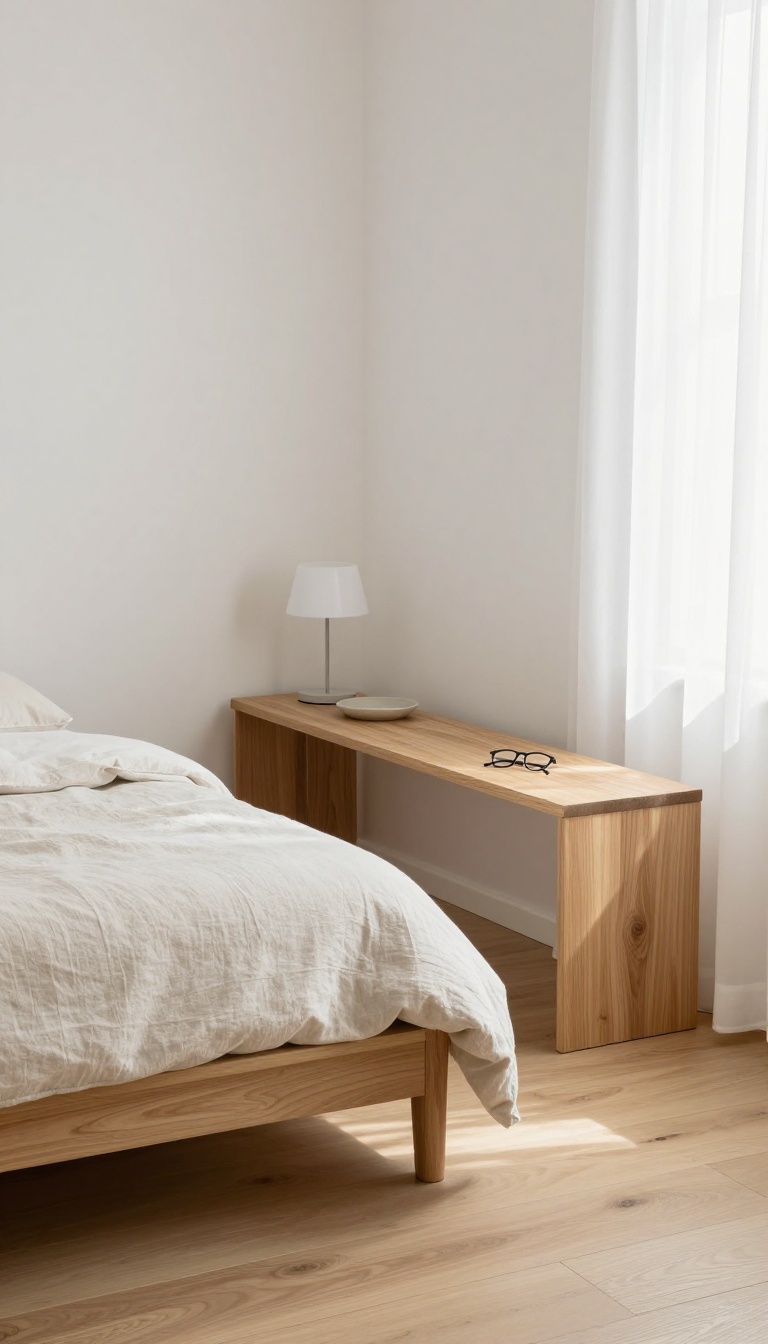
Nightstands are great until they aren't. In a narrow bedroom, a standard 20-inch-deep nightstand can eat up half the walking space beside your bed, leaving you to shuffle sideways every time you get up. A slim console or a floating shelf gives you the same landing spot for your phone, glasses, and a lamp, but it hugs the wall instead of jutting into the room.
You keep the function and lose the bulk. This swap works in almost any narrow layout, whether your bed sits against the long wall or the short one. The key is picking the right depth and mounting height so it feels intentional, not like an afterthought.
The whole point of a nightstand is to hold the stuff you need within arm's reach. A slim console does that job without turning your limited floor space into an obstacle course. Start by measuring the gap between your mattress edge and the wall.
If that gap is less than 24 inches, a traditional nightstand is probably too deep. A console that's 8 to 12 inches deep will slide right in and still leave room to move. You can go with a freestanding piece or a wall-mounted floating shelf.
Freestanding consoles are easier to move and don't require drilling. Floating shelves save even more visual space because you see the floor underneath, which makes the room feel less cluttered. Either way, keep the top surface clear enough to actually use.
A small tray for keys and a compact lamp is plenty. If you need more storage, look for a console with a single drawer or a lower shelf for a basket.
Pick The Right Depth
Measure the walkway between your bed and the wall. Aim for a console that's no deeper than 12 inches, and ideally closer to 8. That keeps the path clear and stops you from banging your hip on the corner every morning.
If you're short on width too, a narrow console that's 24 to 30 inches wide will fit beside a twin or full bed without crowding the headboard.
Go Floating For A Lighter Look
A floating shelf mounted at mattress height gives you a clean surface with zero legs on the floor. It's a great choice if you want the room to feel more open. Mount it 24 to 28 inches above the floor, or roughly level with your mattress top.
That puts it right where your hand naturally reaches when you're lying down. Use heavy-duty wall anchors and make sure you hit a stud if you can. A small shelf can hold a lamp, a book, and a glass of water without any trouble.
Style It Without Clutter
A slim console can look sparse if you leave it empty, but it can also turn into a junk pile fast. Stick to three or four items max. A small lamp, a coaster, and a tiny dish for rings or earbuds are enough.
If you need more, add a woven basket on a lower shelf to hide chargers and cables. Keep the color light or match it to the wall. A console that blends in won't draw attention to how narrow the space is.
6. Install a Corner Desk or Vanity
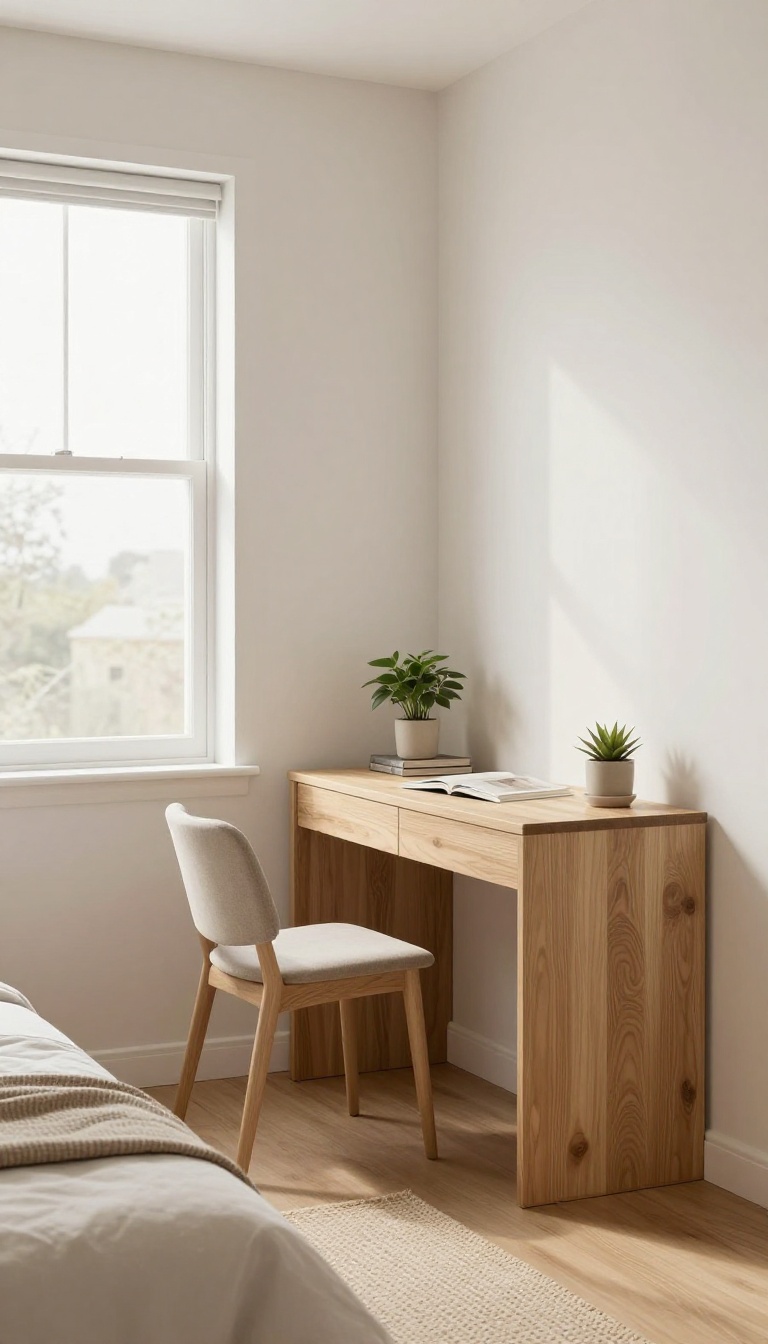
Corners in a narrow bedroom often sit empty, collecting dust or random clutter. But that awkward angle is prime real estate for a desk or vanity. A corner unit slides right in, giving you a dedicated spot without stealing floor space from the rest of the room.
Unlike a straight desk that juts out into the walkway, a corner design hugs the walls. It turns dead space into a functional zone for work, makeup, or hobbies. You get the benefits of a full station while keeping the room's flow intact.
The best part? You don't need a custom build. Plenty of ready-made corner desks and vanities fit narrow rooms.
Just measure your corner, pick a style that matches your vibe, and you're set.
A corner desk or vanity is one of those upgrades that makes you wonder why you didn't do it sooner. It solves two problems at once: it gives you a place to work or get ready, and it makes that weird corner feel purposeful. In a narrow bedroom, every inch counts, and this move puts an unused inch to work.
You might worry that adding furniture will make the room feel smaller. But a corner unit actually opens things up. Because it fits snugly into the angle, it doesn't block traffic or create a visual barrier.
The room feels more organized, not more cramped. Plus, a corner desk can double as a nightstand or a spot for your morning routine. It's a multitasker that earns its keep.
Measure First, Then Shop
Before you fall in love with a corner desk online, grab a tape measure. You need the width of each wall from the corner to the nearest obstruction, like a window or closet door. Also note the height of your baseboards and any outlets.
A corner desk typically has a triangular or L-shaped footprint. Make sure the legs or base won't block an outlet you need. And check that the desk depth leaves enough room to pull out a chair without hitting your bed.
If you're short on space, consider a floating corner desk that mounts to the wall. It leaves the floor open, which makes the room feel bigger. Just make sure you hit studs when installing it.
Pick A Style That Blends In
In a narrow bedroom, bulky furniture is the enemy. Look for corner desks with open frames or slim legs. Glass tops and metal bases visually disappear, so the room stays airy.
For a vanity, a wall-mounted option with a single drawer keeps things light. Avoid heavy hutches or oversized mirrors that dominate the wall. A simple round mirror or a slim rectangular one works better.
If you want storage, choose a corner unit with a few shelves or a small drawer. But don't overload it. The goal is function without bulk.
Make It Work For Your Routine
A corner desk can be more than a workspace. If you work from home, add a small lamp and a plant to make it inviting. If it's a vanity, install a plug-in wall sconce for better lighting.
Keep the surface clear. In a small room, clutter spreads fast. Use a small basket or drawer to stash supplies when you're done.
A fold-down desk is another option if you only need it occasionally. And don't forget the chair. A slim stool or an armless chair tucks away easily.
If you have space, a chair that slides under the desk keeps the walkway clear.
7. Use a Mirror to Bounce Light and Depth
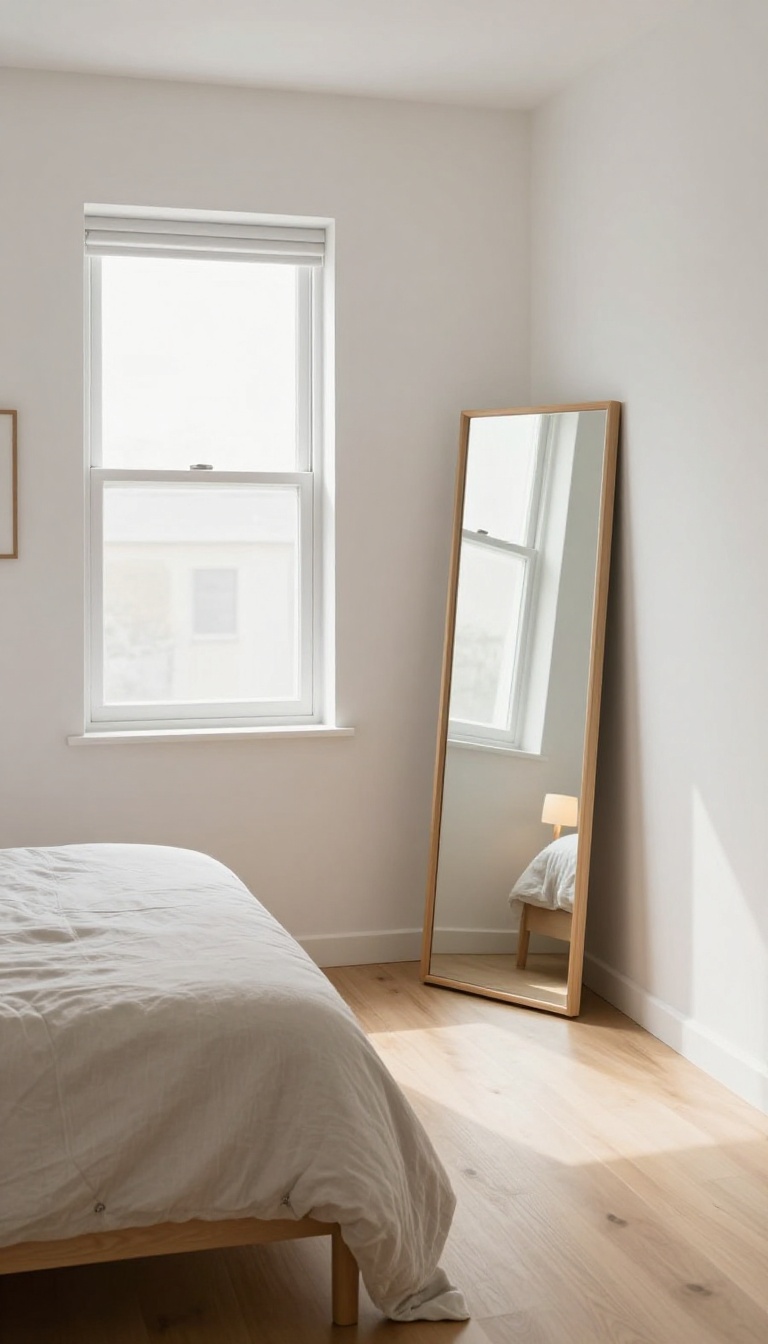
A mirror does more than give you a place to check your outfit. In a narrow bedroom, it acts like a visual escape hatch, reflecting light and pulling the eye toward a sense of depth that isn't really there. The right mirror can make a tight strip feel noticeably wider without moving a single piece of furniture.
The key is placement and size. You want the mirror to reflect something interesting—like a window, a lamp, or a piece of art—so the reflection reads as extra space rather than a flat copy of the wall. A large, simple frame works best because it doesn't add visual clutter.
Where To Hang It
Put the mirror on the wall opposite a window if you can. That way, it bounces natural light across the room and makes the whole space feel brighter and bigger. If a window isn't an option, hang it across from a floor lamp or a bright piece of art.
Just avoid facing it directly at the bed if you're prone to late-night distractions.
Pick The Right Size And Shape
Go big or go home—literally. A mirror that's too small looks like a decoration, not a space expander. Aim for something that covers at least half the width of the wall it's on.
A tall, rectangular mirror can make the ceiling feel higher, while a wide one stretches the room sideways. Round mirrors soften hard lines but won't create as much width.
Keep The Frame Simple
Ornate frames eat up visual space. A thin metal or wood frame keeps the focus on the reflection. If you want a bit of style, choose a frame that matches your other hardware, like drawer pulls or curtain rods.
That way it feels intentional, not like an afterthought.
8. Pick a Low-Profile Bed Frame
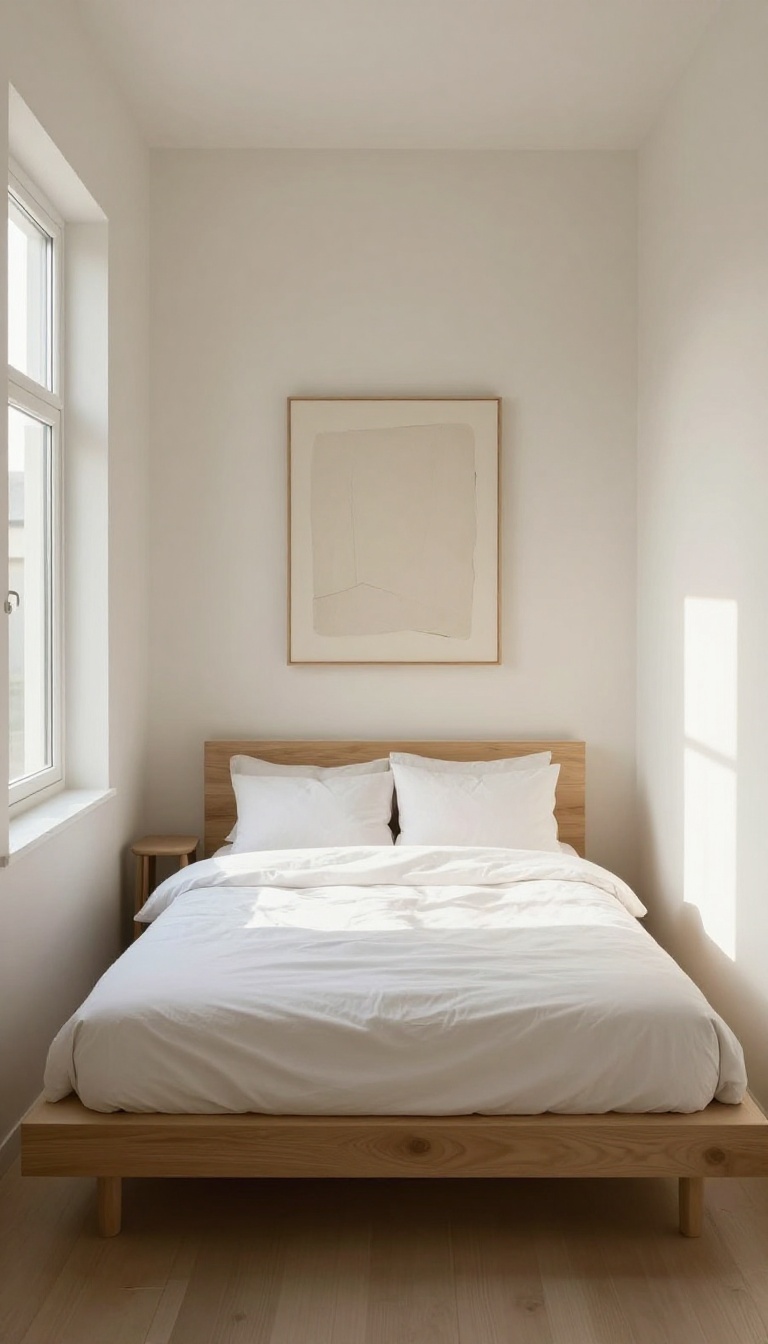
A tall bed frame can make a narrow room feel like a tunnel, especially if it blocks the view from the door to the window. Switching to a low-profile bed frame changes that dynamic in a hurry. It keeps sightlines open and gives the illusion of more ceiling height, which makes the whole space feel less cramped.
Low beds aren't just a style choice; they're a practical move for small rooms. When your bed sits closer to the floor, your eye travels further across the room without interruption. That simple shift can make a narrow bedroom feel wider and more balanced.
Plus, you get a more modern, relaxed vibe that works with almost any decor.
Why Height Matters In A Narrow Room
In a narrow bedroom, vertical space is your friend. A low bed frame reduces the visual weight of the bed, so it doesn't dominate the room. This leaves more open wall space above, which you can use for art or shelves without feeling crowded.
The result is a room that feels airier and more intentional.
Types Of Low-profile Frames
You've got options: platform beds, Japanese-style floor beds, or even a simple mattress on a slatted base. Platform beds with built-in storage are great if you need extra space for linens or clothes. Just make sure the frame doesn't stick out too far—keep it streamlined to maintain those open sightlines.
Styling Tips For A Low Bed
With a low bed, you can go bold with bedding or keep it minimal. A light-colored duvet will blend with the walls and enhance the spacious feel. Add a couple of large pillows for comfort, but avoid too many—they can clutter the look.
And if you have the wall space, a floating nightstand or a small shelf keeps the floor clear.
9. Create a Defined Zone with a Rug
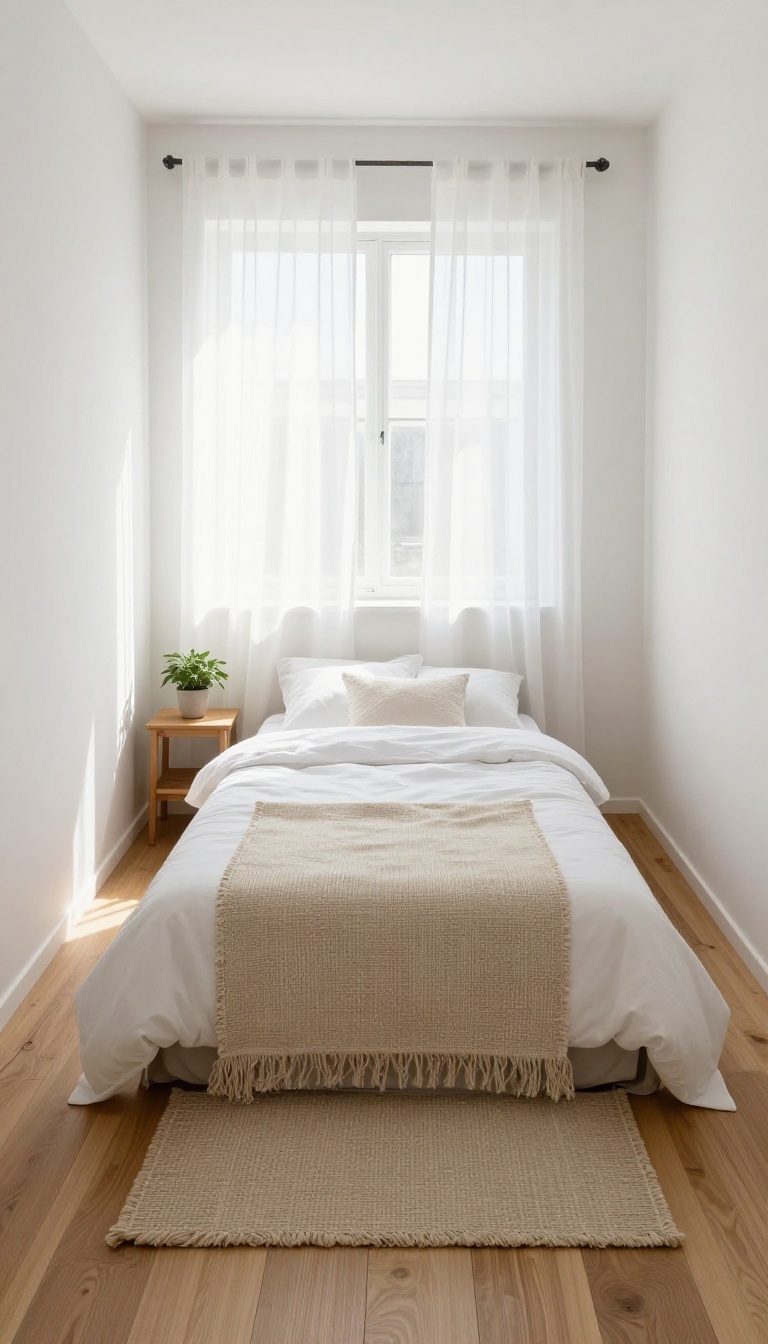
A rug does more than warm up cold floors. In a narrow bedroom, it draws a clear boundary around the bed, making the sleeping area feel like its own spot instead of part of a long corridor. That visual separation helps the room feel wider and more put together.
You don't need wall-to-wall carpeting or a massive rug that swallows the floor. A runner or a small area rug placed just right can anchor the bed and guide the eye. The key is picking a size and placement that work with your room's proportions, not against them.
A rug does more than warm up cold floors. In a narrow bedroom, it draws a clear boundary around the bed, making the sleeping area feel like its own spot instead of part of a long corridor. That visual separation helps the room feel wider and more put together.
You don't need wall-to-wall carpeting or a massive rug that swallows the floor. A runner or a small area rug placed just right can anchor the bed and guide the eye. The key is picking a size and placement that work with your room's proportions, not against them.
Pick The Right Size And Shape
In a narrow room, a runner (usually 2 by 6 feet or 2. 5 by 8 feet) often works better than a standard area rug. It runs alongside the bed, defining the walking path without covering every inch of floor.
If you prefer a small area rug, aim for one that extends about 18 to 24 inches beyond the sides and foot of the bed. That's enough to frame the bed without overwhelming the space. Avoid oversized rugs that leave only skinny strips of bare floor—they make narrow rooms feel even tighter.
Place It To Anchor The Bed
Position the rug so it sits under the lower two-thirds of the bed, extending out on the sides and foot. This anchors the bed visually and creates a clear zone. If you're using a runner, place it parallel to the bed, either on one side or at the foot.
Just make sure it doesn't stick out into a doorway or main walkway. A rug that stops short of walls can also make the room feel wider by leaving visible floor space around it.
Choose Colors And Patterns That Expand
Light, neutral colors and simple patterns keep the space feeling open. A rug with a subtle stripe running lengthwise can visually stretch the room. Avoid busy, high-contrast patterns that chop up the floor.
If you want a bit of personality, go for a tone-on-tone texture or a small-scale geometric print. And keep the rug low-pile—thick, fluffy rugs can make a narrow room feel crowded and are harder to walk on in tight quarters.
10. Keep Lighting Layered and Warm
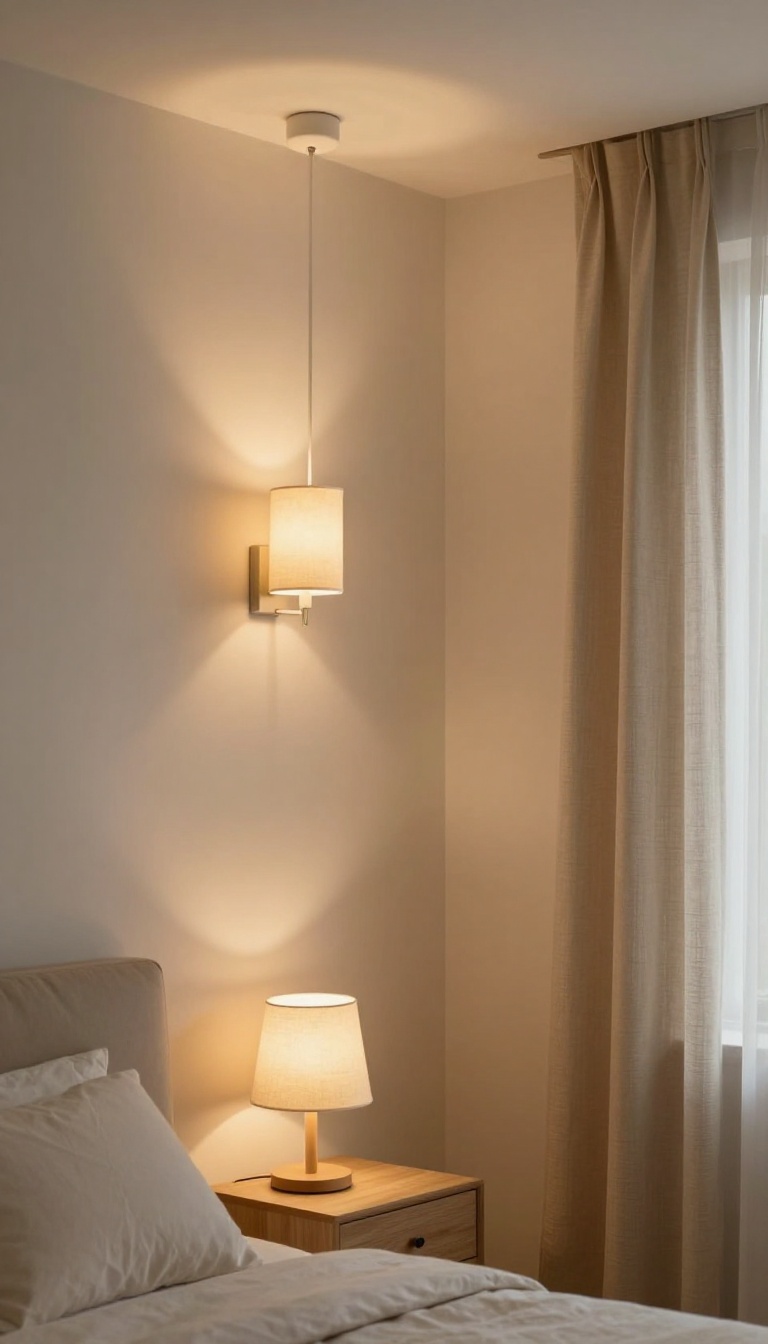
One bright ceiling light in a narrow bedroom flattens everything. It kills the shadows that give a room depth, and it makes the walls feel closer than they are. Layering smaller lights at different heights fixes that without eating up an inch of floor space.
The goal is warmth and dimension, not brightness for its own sake. A few low-wattage sources spread around the room do more than one powerful fixture ever could.
Think of lighting in three layers: overhead, mid-level, and low. You don't need all three, but two usually beats one. Each layer lights a different part of the room, so your eye has somewhere to travel.
Warm bulbs matter here too. Anything in the 2700K range gives a soft, golden glow that makes tight spaces feel cozy instead of clinical.
Swap The Big Overhead For Something Softer
If your only light is a flush-mount ceiling fixture, it's probably blasting the whole room at once. Try a dimmable version, or add a shade that softens the output. You still get overhead light when you need it, but you can dial it down at night.
A small pendant or semi-flush light also draws the eye upward. That vertical pull makes a narrow room feel taller, which balances the tight width.
Add Mid-level Light At Eye Height
Wall sconces are the quiet heroes of small bedrooms. They sit at eye level, so they light the room without glaring down at you. Plug-in versions need no wiring, which matters if you rent.
Mount them on the long wall, not the short one. That spreads light across the room's widest span and makes the space read as broader than it is.
Use Low Light To Ground The Room
A small table lamp or a clip-on reading light near the bed adds a warm pool of light at the lowest level. This is the layer that makes the room feel lived-in and calm. Keep the bulb low-wattage so it stays soft.
If floor space is tight, a wall-mounted swing-arm lamp works just as well. It hugs the wall and frees up whatever surface you'd otherwise lose.
Stick To One Warm Color Temperature
Mixing cool and warm bulbs in the same room looks messy fast. Pick one temperature, ideally around 2700K, and use it everywhere. Your eyes read the room as more cohesive, and cohesion makes small spaces feel intentional.
Smart bulbs help here. You can set them all to the same warm tone and dim them together from your phone. No extra hardware, no clutter.
FAQ
What's the best bed placement for a narrow bedroom?
Place the bed centered on the longest wall if possible. This creates balanced walking space on both sides and makes the room feel wider.
How can I make a narrow bedroom look bigger without painting?
Use mirrors, light-colored bedding, and vertical storage. Also, keep the floor clear and choose furniture with exposed legs to reduce visual weight.
Are dark colors bad for small narrow bedrooms?
Not necessarily. Dark colors can add depth and coziness, but they may make the room feel smaller if not balanced with light. Use them on an accent wall or in small doses.
What kind of storage works best in a narrow room?
Vertical storage like tall bookshelves, over-door organizers, and floating shelves. Under-bed storage also helps if the bed frame allows it.
Should I use a rug in a narrow bedroom?
Yes, a runner or small rug can define the space and add warmth. Just make sure it doesn't crowd the walkway. A rug that extends slightly under the bed works well.
Conclusion
The best narrow bedroom setup is the one that makes your daily routine easier, not the one that looks best in a photo. Start with the idea that solves your biggest frustration, whether that's floor space, storage, or lighting, and give it a week before you judge it. You don't need to overhaul everything at once.
Let one change settle, notice what still bugs you, then layer in the next. Small rooms get better through steady, thoughtful tweaks, not a single rushed weekend.