15 Stamped Concrete Patio Ideas With Decorative Detail
A stamped concrete patio is more than a flat slab—it’s a canvas for creativity. With the right patterns and colors, you can mimic the look of natural stone, brick, or even wood, all while keeping the durability and low maintenance of concrete.
Whether you’re starting from scratch or revamping an existing patio, these ideas will help you add character and charm. From subtle borders to bold geometric designs, the possibilities are nearly endless.
The key is to choose a style that complements your home’s architecture and your personal taste. Let’s dive into 15 stamped concrete patio ideas that bring decorative detail to the forefront.
1. Ashlar Slate Pattern for a Classic Look
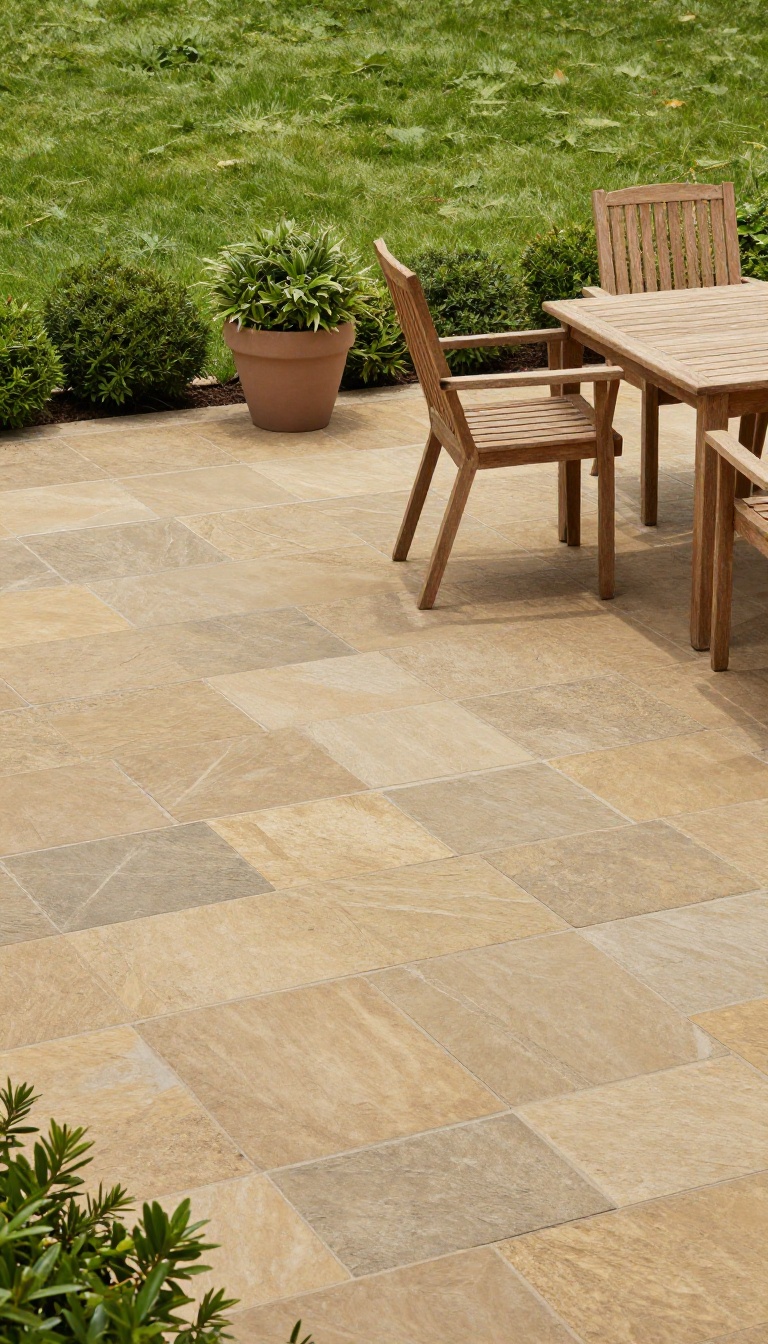
Ashlar slate is one of the most popular stamped concrete patterns for good reason. It replicates the look of natural cut stone with irregular rectangles that fit together like a puzzle. The result is a patio that feels both refined and welcoming, blending seamlessly with almost any landscape.
What makes ashlar slate so appealing is its versatility. It can be dressed up with formal furniture and manicured gardens, or kept casual with potted plants and a fire pit. The pattern works well in both small courtyards and sprawling backyards, giving you a high-end look without the high-end price tag.
The ashlar slate pattern brings a sense of order and natural beauty to your outdoor space. Its varied rectangle shapes create visual interest without being too busy, making it a safe but stylish choice for homeowners who want a classic look that won't go out of fashion. The pattern is especially effective when paired with earthy tones that echo the colors found in real slate.
Choosing The Right Colors
When selecting colors for your ashlar slate patio, think about the surrounding environment. Earthy browns, warm grays, and subtle tans mimic natural stone and help the patio blend into your yard. If you want a more modern feel, consider a charcoal or blue-gray tone that contrasts with green grass and bright flowers.
You can also add an accent border in a complementary color to define the space and add extra detail.
How The Pattern Enhances Your Yard
The irregular rectangles of the ashlar pattern break up large areas, making your patio feel more intimate and inviting. The eye naturally follows the lines and shapes, creating a dynamic surface that's still easy to walk on. This pattern works particularly well with rustic or traditional home styles, but it can also soften the look of a modern house by adding a natural, organic element.
Installation Tips For Best Results
For the most realistic ashlar slate effect, work with an experienced contractor who can properly align the pattern and vary the shapes. A good installer will also use a release agent to add subtle color variations and texture, making the concrete look even more like natural stone. Be sure to seal the patio after installation to protect it from stains and weather, and reseal every few years to keep it looking fresh.
2. Cobblestone Texture with a Vintage Vibe
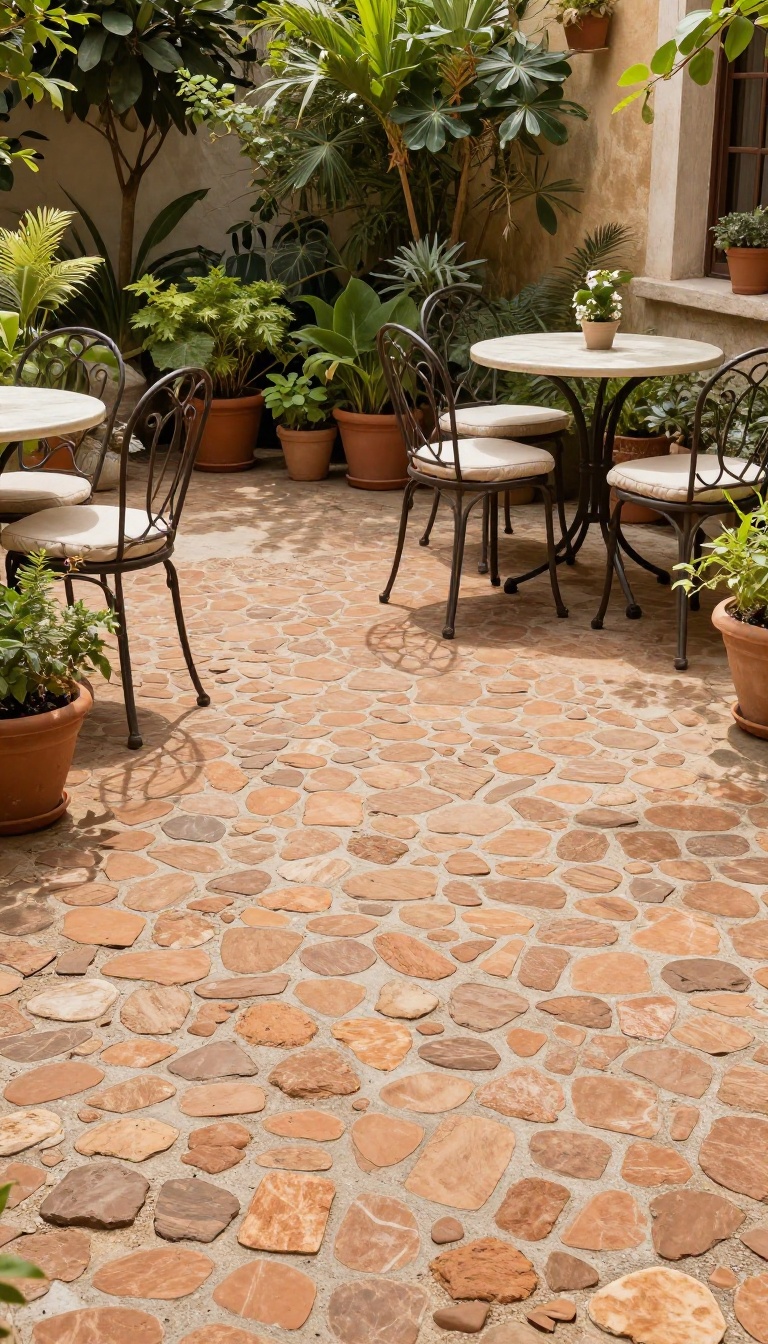
Cobblestone stamping brings a timeless, old-world charm to any outdoor space. The rounded, uneven texture instantly evokes images of historic European streets, adding a sense of warmth and character that feels both inviting and established. It’s a fantastic choice if you want your patio to feel like it’s been there for decades, even if it’s brand new.
What makes cobblestone so appealing is its versatility. It works beautifully not just for patios but also for driveways and walkways, creating a cohesive look across your entire property. And when you pair the texture with the right colors—think earthy terracottas, warm ochres, or muted browns—you get that rustic, vintage vibe that’s both cozy and sophisticated.
The beauty of cobblestone stamping lies in its ability to transform a plain concrete slab into a surface that looks like it was hand-laid with centuries-old stones. The irregular shapes and subtle variations in depth catch the light in interesting ways, creating a dynamic visual texture that plain concrete simply can't match. It’s a style that works well with a variety of architectural designs, from cottages and farmhouses to more traditional or even Mediterranean-inspired homes.
One of the practical benefits of choosing a cobblestone pattern is its forgiving nature. Because the pattern is busy and textured, it does a great job of hiding minor imperfections, dirt, or wear over time. This makes it an excellent option for high-traffic areas or for homeowners who want a beautiful patio without the constant upkeep that real cobblestone would require.
You get the classic look without the weeds, uneven surfaces, or costly installation. When it comes to color, the choices you make can dramatically affect the overall feel. For a truly vintage look, stick to earthy, muted tones that mimic natural stone.
But don’t be afraid to experiment with slightly darker grout lines or subtle highlights to make the individual “stones” pop. The right color combination can make your patio look like it was unearthed from a charming old village, adding a unique story to your home.
Why Choose Cobblestone Stamping?
Cobblestone stamping is more than just a pretty pattern; it’s a practical choice for many homeowners. The texture provides excellent traction, which is a huge safety plus around pools or in areas that get wet. Unlike real cobblestone, stamped concrete is seamless, so there are no gaps for weeds to push through or uneven surfaces to trip on.
Plus, it’s a more budget-friendly way to achieve that high-end, historic look without the hefty price tag of actual stone installation.
Color Options For A Vintage Look
The color palette you choose can make or break the vintage vibe. Warm, earthy tones like terracotta, burnt sienna, and aged bronze work wonderfully to create that old-world feel. You can also use a release agent or antiquing stain to add depth and highlight the texture, making the cobblestones look more realistic.
For a softer, more weathered appearance, consider blending two or three complementary colors together. The goal is to mimic the natural variations you’d see in real, time-worn stone.
Where To Use Cobblestone Patterns
While cobblestone is a classic choice for patios, it’s just as stunning for driveways, walkways, and even pool decks. Using the same pattern throughout your outdoor spaces creates a seamless flow and a cohesive design. Imagine a cobblestone driveway leading up to a matching patio—it instantly boosts your home’s curb appeal and creates a grand, welcoming entrance.
Inside the patio area, you can use the pattern to define different zones, like a dining area or a cozy fire pit corner, by changing the color or scale of the pattern.
3. Herringbone Brick Pattern for a Formal Touch
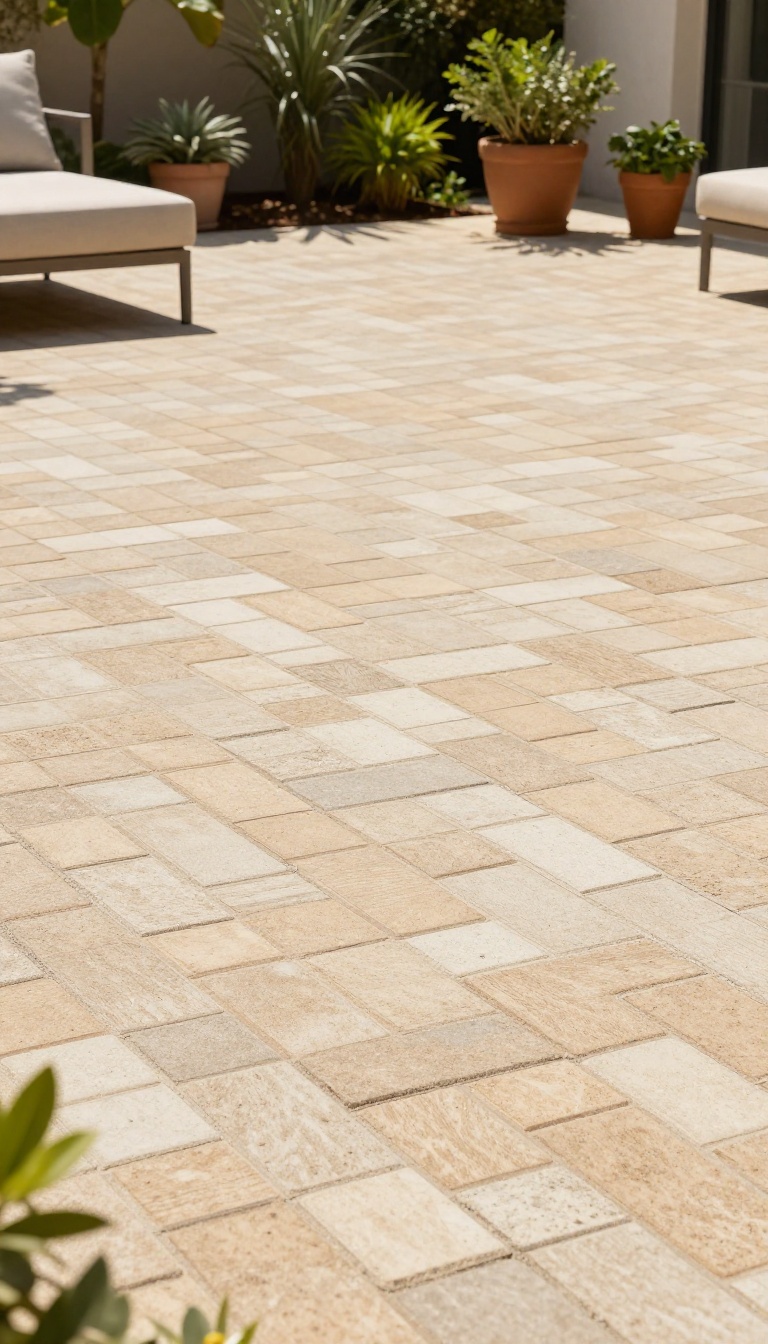
Few patterns say 'organized' quite like herringbone. The zigzag layout instantly adds structure and a tailored feel, turning a simple patio into a refined outdoor room. When you pair it with stamped concrete, you get that classic brick look without the upkeep of real mortar joints.
Why Herringbone Works
Herringbone isn’t just about looks—it’s also a smart choice for high-traffic areas. The interlocking design distributes weight evenly, making it less likely to shift or crack over time. That makes it perfect for patios that double as dining spaces or walkways.
Plus, the repetitive V-shape naturally draws the eye, guiding guests from your back door to the seating area.
Playing With Color
One of the best parts about stamped concrete is the freedom to choose colors. For herringbone, you can go subtle with two shades of the same tone, like tan and cream, for a quiet, sophisticated look. Or, if you want more drama, pick a bold contrast—think charcoal and warm red—to make the pattern really pop.
Just remember, the more contrast, the more attention the patio gets.
Scale And Placement
Herringbone works on patios of all sizes, but the scale of the pattern matters. Larger herringbone tiles make a small space feel bigger, while smaller bricks add texture to a large area. You can also use herringbone as a border or inset, framing a simpler center field.
That approach gives you the formal touch without overwhelming the entire patio.
Finishing Touches
To complete the formal vibe, pair herringbone with clean-lined furniture and subtle greenery. Avoid cluttering the space with too many decorative items. A neutral outdoor rug and a few potted boxwoods can reinforce the structured feel.
And don’t forget the sealer—a good coat will protect the color and keep the pattern crisp for years.
4. Wood Plank Stamping for Rustic Warmth
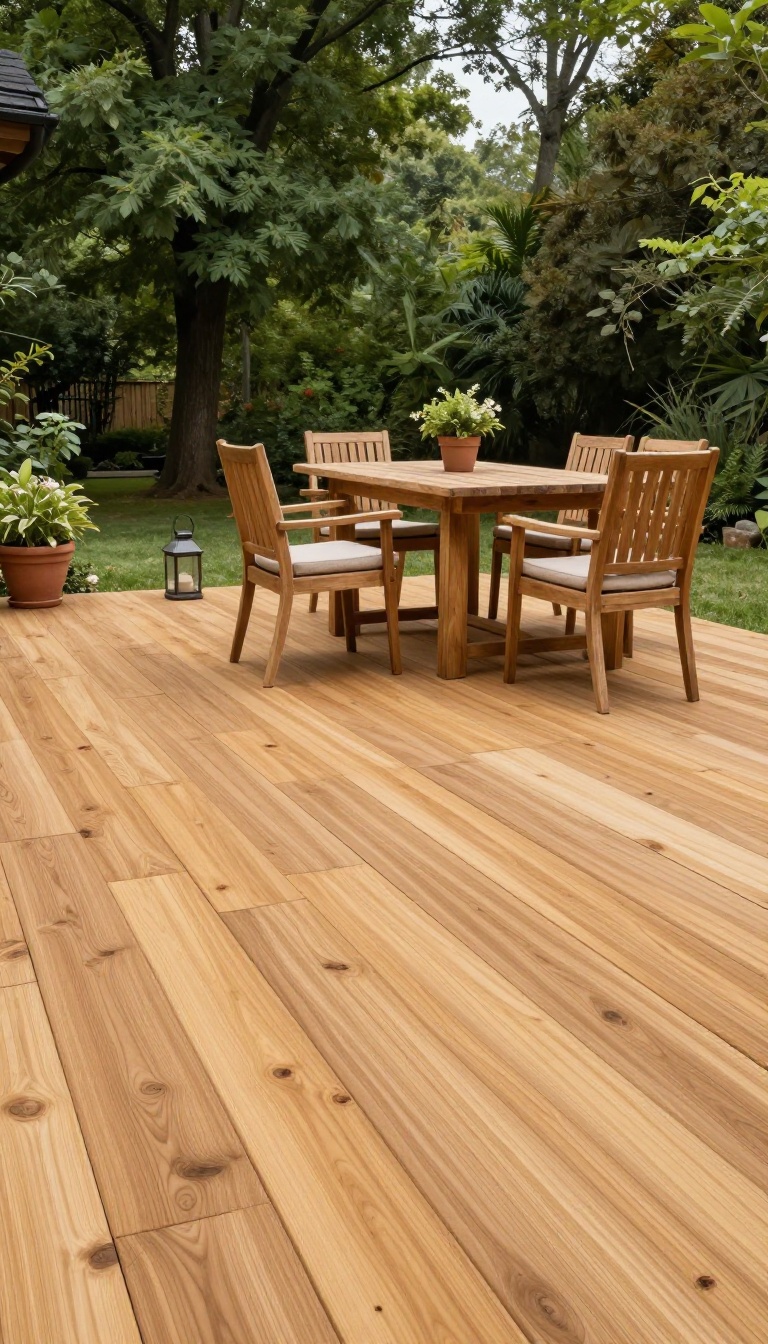
If you love the cozy feel of a wooden deck but dread the annual staining and sealing, wood plank stamping is your answer. This technique recreates the look of real timber—complete with grain and texture—using durable concrete. It's a smart choice for homes with a rustic or cabin-style vibe, where warmth and charm matter more than perfect uniformity.
Wood plank stamping transforms an ordinary patio into a welcoming retreat that mirrors the character of a wooden deck. The concrete is poured and then stamped with patterns that mimic individual boards, complete with realistic wood grain. You can choose from a range of wood species and colors, from warm cedar to weathered gray, to match your home's palette.
The result is a low-maintenance surface that stands up to weather and heavy use without the splinters or rot.
Choosing The Right Wood Look
The beauty of wood plank stamping lies in its versatility. You can go with a classic straight plank layout for a clean, traditional feel, or opt for a diagonal or herringbone pattern to add visual interest. Consider the scale of your patio: wider planks can make a small space feel larger, while narrower ones add a more detailed look.
When selecting a color, think about the surrounding landscape and architecture. Warm honey tones blend well with natural settings, while gray or driftwood shades offer a more contemporary twist.
Installation And Sealing Tips
Professional installation is key to achieving a realistic wood effect. The concrete needs to be properly mixed and placed, then stamped at the right time to capture the texture without leaving deep impressions that trap dirt. After the concrete cures, a high-quality sealer is applied to protect the surface and enhance the color.
For a more authentic look, ask about using a release agent that adds subtle shading variations. Plan for regular resealing every few years to keep the patio looking fresh.
Pairing With Rustic Elements
A wood plank stamped patio pairs beautifully with other natural materials. Think stone veneer columns, a pergola with wooden beams, or a fieldstone fire pit. Add some outdoor furniture in wrought iron or Adirondack chairs to complete the cabin feel.
For a softer touch, incorporate planters with ornamental grasses or wildflowers. The key is to let the stamped concrete be the star while supporting elements enhance the rustic atmosphere.
5. Fan Pattern for a Mediterranean Flair
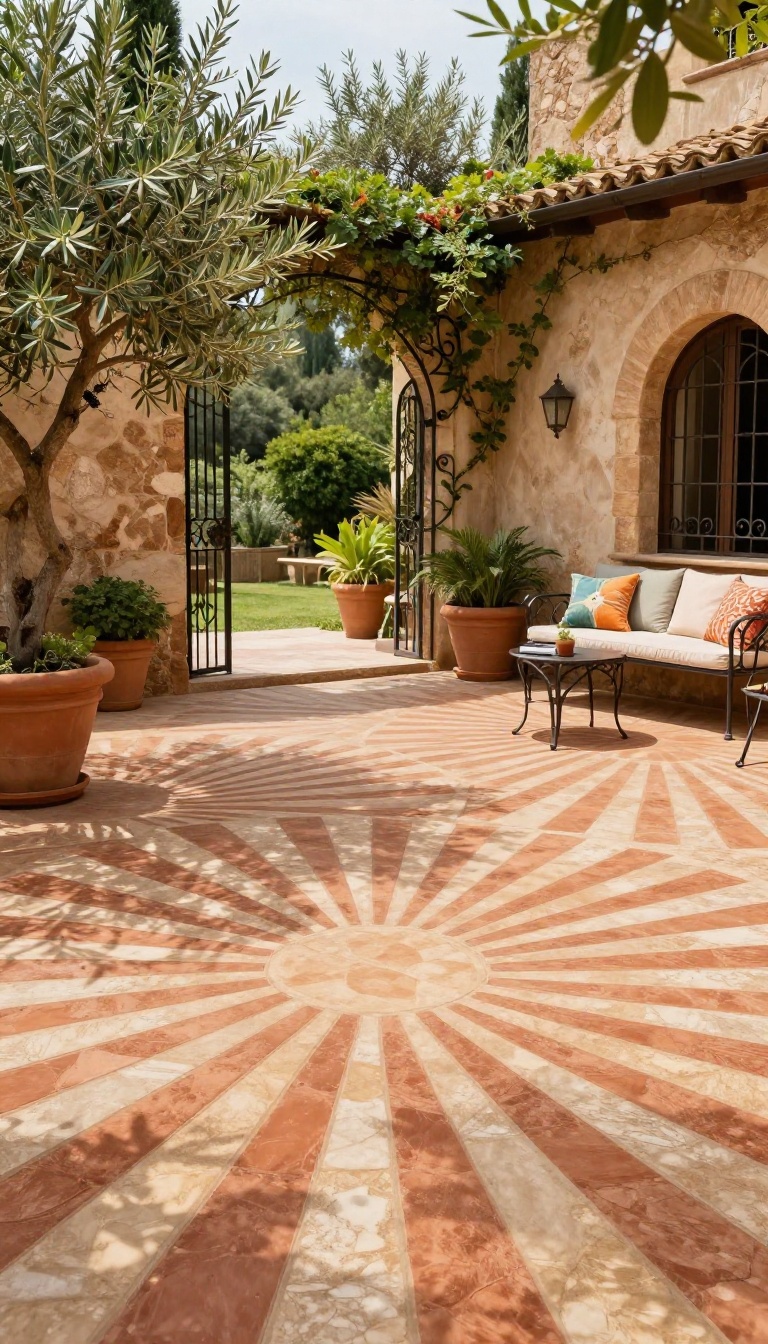
Some stamped patterns feel like they’ve been around for centuries, and the fan pattern is one of them. Inspired by classic European courtyards, it brings a romantic, old-world charm that’s hard to replicate with other designs. The sweeping arcs and radiating lines catch the eye and add a sense of movement to an otherwise static patio.
When you pair the fan pattern with warm terracotta or sandstone colors, it instantly transports you to a sun-drenched villa in Tuscany or a quiet plaza in Spain. It’s a bold choice, but one that pays off with a distinctive, upscale look. Whether you use it as a full patio treatment or just as an accent, the fan pattern is a surefire way to inject Mediterranean flair into your outdoor space.
The fan pattern, sometimes called a sunburst or scalloped design, works beautifully in a variety of settings. It can be the star of the show on a large patio, or it can serve as a decorative border or inlay within a larger concrete area. The key is to let the pattern breathe—give it enough space to make a statement without overwhelming the entire yard.
One of the best things about this pattern is its versatility. You can adjust the size of the fan to fit your space, and you can play with color combinations to match your home’s exterior. For a more authentic Mediterranean look, stick with earthy tones like ochre, sienna, and warm beige.
If you want a more modern twist, you can use cool grays or even a subtle two-tone effect. Another advantage is that the fan pattern works well with other materials. Consider adding a stone or brick border to frame the fan, or use it as a centerpiece surrounded by a simpler texture.
This way, you get the best of both worlds—a unique focal point and a cohesive overall design.
Choosing The Right Colors
Color is everything when you’re aiming for a Mediterranean vibe. Warm, sun-baked hues like terracotta, clay, and sandstone are your best friends. These shades mimic natural stone and blend seamlessly with stucco walls, wrought iron furniture, and lush potted plants.
If you’re feeling adventurous, try a subtle color wash or antiquing technique to give the surface more depth and character. Just remember to keep the palette cohesive with your home’s exterior to avoid a jarring contrast.
Placement And Layout Ideas
The fan pattern is a natural fit for entryways, pool decks, or a central seating area. You can orient the fan to radiate from a door, a fire pit, or a focal point like a fountain. For a more dynamic look, alternate the direction of the fans or combine them with a border of contrasting color.
If your patio is long and narrow, consider using a series of fans in a row to create a rhythmic, almost musical effect. The key is to plan the layout carefully so the pattern flows with the space, not against it.
Pairing With Other Elements
To really sell the Mediterranean feel, think beyond the concrete itself. Pair your fan-patterned patio with elements like arched doorways, wrought iron accents, and terracotta pots filled with olive trees or lavender. Outdoor rugs with geometric patterns and comfortable seating with cushions in earthy tones can also enhance the ambiance.
Even the lighting matters—warm, soft lights will make the pattern glow in the evening, creating an inviting atmosphere that’s perfect for entertaining or quiet relaxation.
6. Geometric Tile Design for Modern Flair
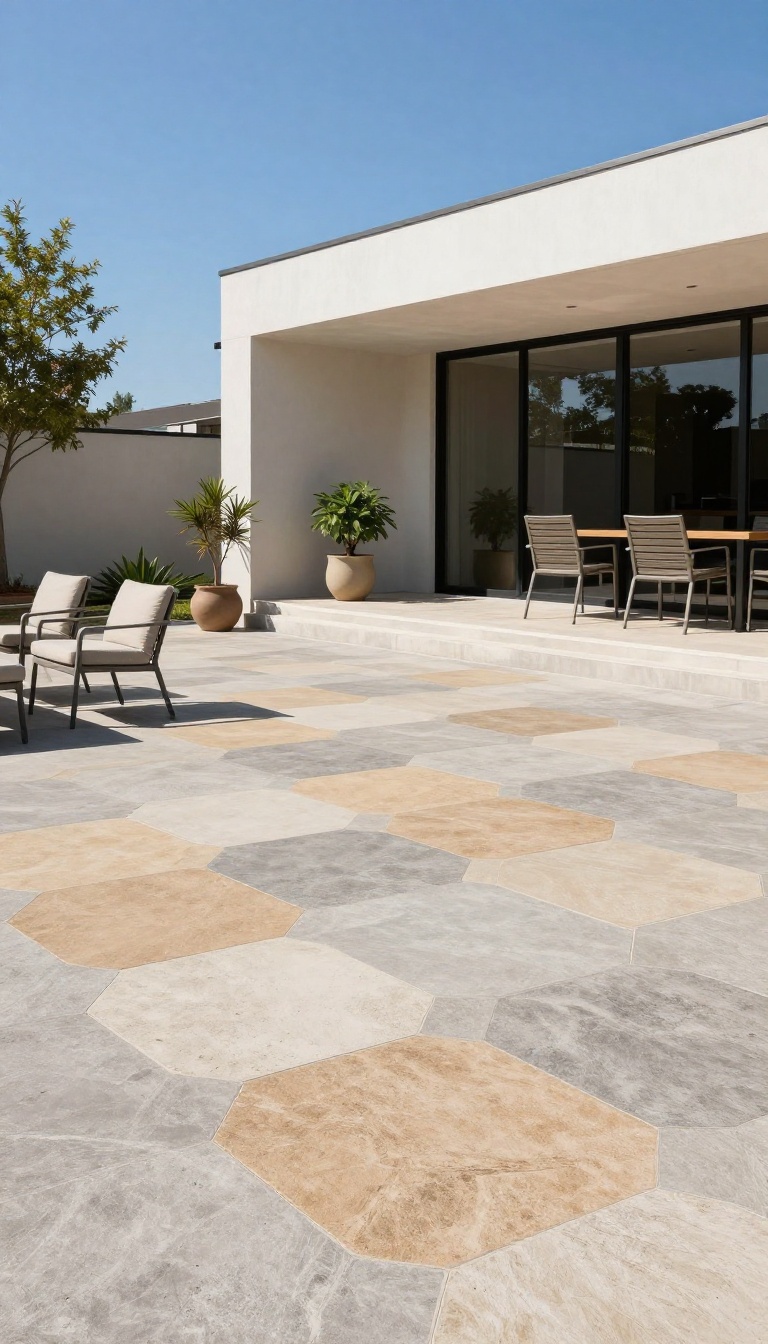
Geometric patterns bring a crisp, contemporary energy to stamped concrete. Unlike organic stone looks, these designs rely on clean lines and repeating shapes to create a sense of order and sophistication. The result is a patio that feels intentional, almost like a piece of modern art you can walk on.
What makes geometric stamping so appealing is its versatility. You can go bold with large hexagons or keep it subtle with fine diagonal lines. The key is matching the pattern to your home’s architectural style and the mood you want to create.
Geometric tile designs are a standout choice for homeowners who want a patio that feels current and sharp. The pattern itself does most of the heavy lifting, so you can keep the color palette simple and let the lines shine. A monochromatic scheme—think varying shades of gray or warm taupe—prevents the design from feeling busy while still adding depth.
One of the biggest advantages of geometric stamping is how well it hides dirt and wear. The repetitive shapes break up the surface visually, making small imperfections less noticeable. Plus, the pattern adds texture underfoot, which can be a nice bonus on sunny days when the concrete heats up.
When planning your geometric patio, think about the scale of the pattern relative to your space. Large tiles open up a small area, while smaller patterns can make a vast patio feel more intimate. You can also mix geometric stamps with plain concrete borders to create a framed, custom look that ties the whole design together.
Choosing The Right Geometric Stamp
The stamp you pick determines the entire vibe of your patio. Hexagons and diamonds are popular for a modern, almost honeycomb effect. If you prefer something more subtle, consider a simple grid or staggered squares.
Each pattern creates a different visual rhythm, so it’s worth ordering sample panels or viewing them in person before committing. Also, think about the scale in relation to your patio’s size. A large hexagon pattern can make a small space feel bigger, while a dense, small-scale tile might overwhelm a large area.
Don’t be afraid to ask your contractor for recommendations based on your specific layout.
Color Pairings That Pop
Geometric patterns look best when the color palette is restrained. A single base color with a slightly darker or lighter accent for the grout lines can add depth without chaos. For a clean, modern look, stick to cool grays, warm beiges, or even soft whites.
If you want a bit more drama, a deep charcoal base with lighter lines creates a striking contrast. You can also use color to tie the patio to your home’s exterior. Pull a shade from your siding, trim, or landscaping stones to create a cohesive flow from house to yard.
Just remember that lighter colors reflect heat, while darker tones absorb it—so factor in your climate.
Installation Tips For A Flawless Finish
Geometric patterns require precise stamp placement to look intentional. That’s why it’s essential to hire an experienced contractor who has worked with these stamps before. They’ll need to keep the joints aligned and consistent, especially around edges and corners.
Also, make sure the concrete is properly cured before stamping to avoid cracking or shifting. A good contractor will also apply a high-quality sealer to protect the color and make the pattern pop. With the right installation, your geometric patio will stay sharp for years.
7. Random Stone Pattern for Natural Appeal
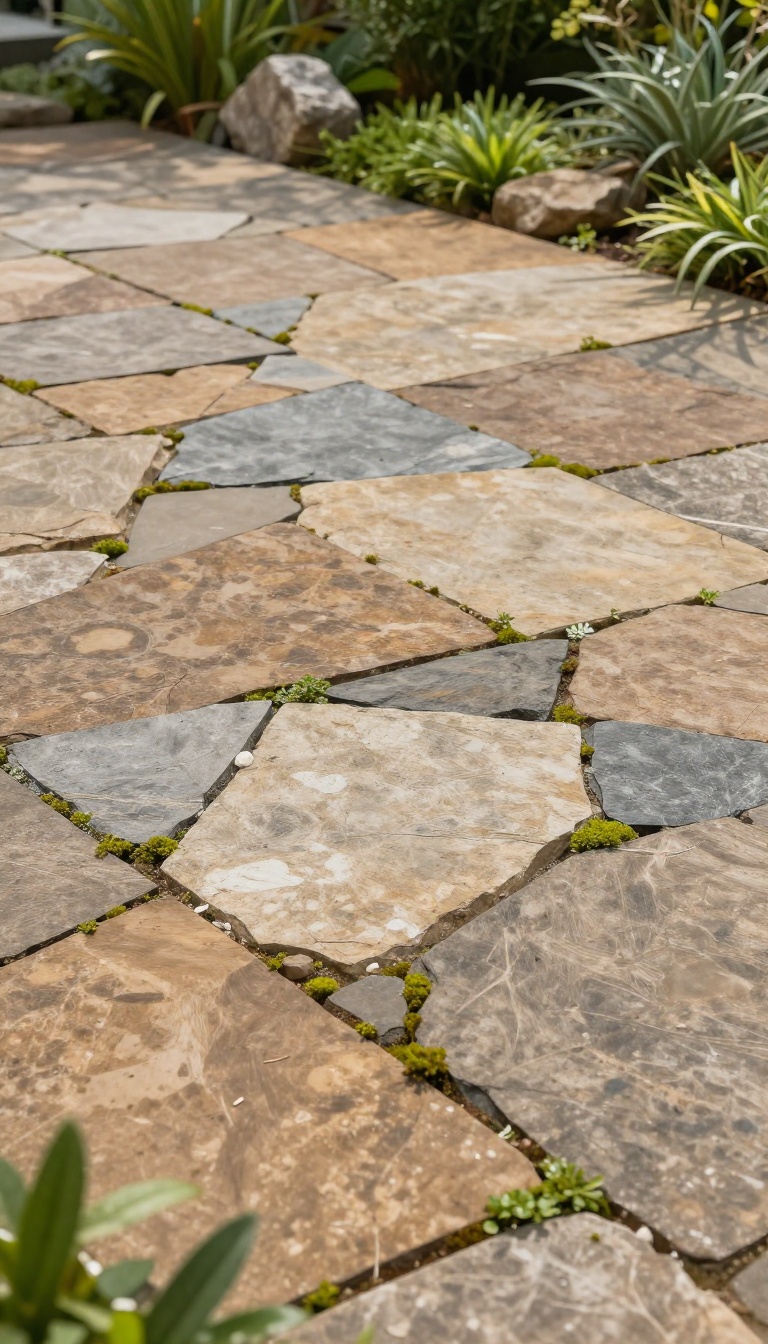
Sometimes the best design is the one that looks like it just happened. A random stone pattern on your stamped concrete patio mimics the irregularity of natural stone, giving your outdoor space a relaxed, organic feel. This approach works especially well if you want your patio to blend seamlessly with the surrounding garden, as if it were always there.
The random stone pattern stands out because it avoids repetition. Instead of uniform shapes, you get a mix of sizes and shapes that feel like they were laid by nature itself. This variety adds visual interest and makes the patio look less manufactured and more like a natural extension of your landscape.
Choosing Earth Tones
To achieve that seamless integration with your garden, stick to earth tones like warm browns, soft tans, and subtle grays. These colors echo the natural surroundings and help the patio fade into the background. You can also add a hint of green or rust to mimic moss or fallen leaves, but keep it subtle so the overall effect stays grounded.
Blending With The Landscape
The random stone pattern shines when it's paired with natural elements. Use it to create a transition from a stone pathway or a flagstone terrace. By choosing colors that match your garden's soil or rock features, you can make the patio feel like it grew out of the ground.
Adding plants or decorative gravel around the edges further blurs the line between hardscape and softscape.
Installation Tips
When installing a random stone pattern, work with an experienced contractor who can vary the stamp placement to avoid any accidental repetition. The goal is to create a truly irregular layout. Also, consider using a release agent to add depth and texture to the surface, which will enhance the natural stone look and make the pattern more convincing.
8. Basketweave Pattern for a Timeless Classic
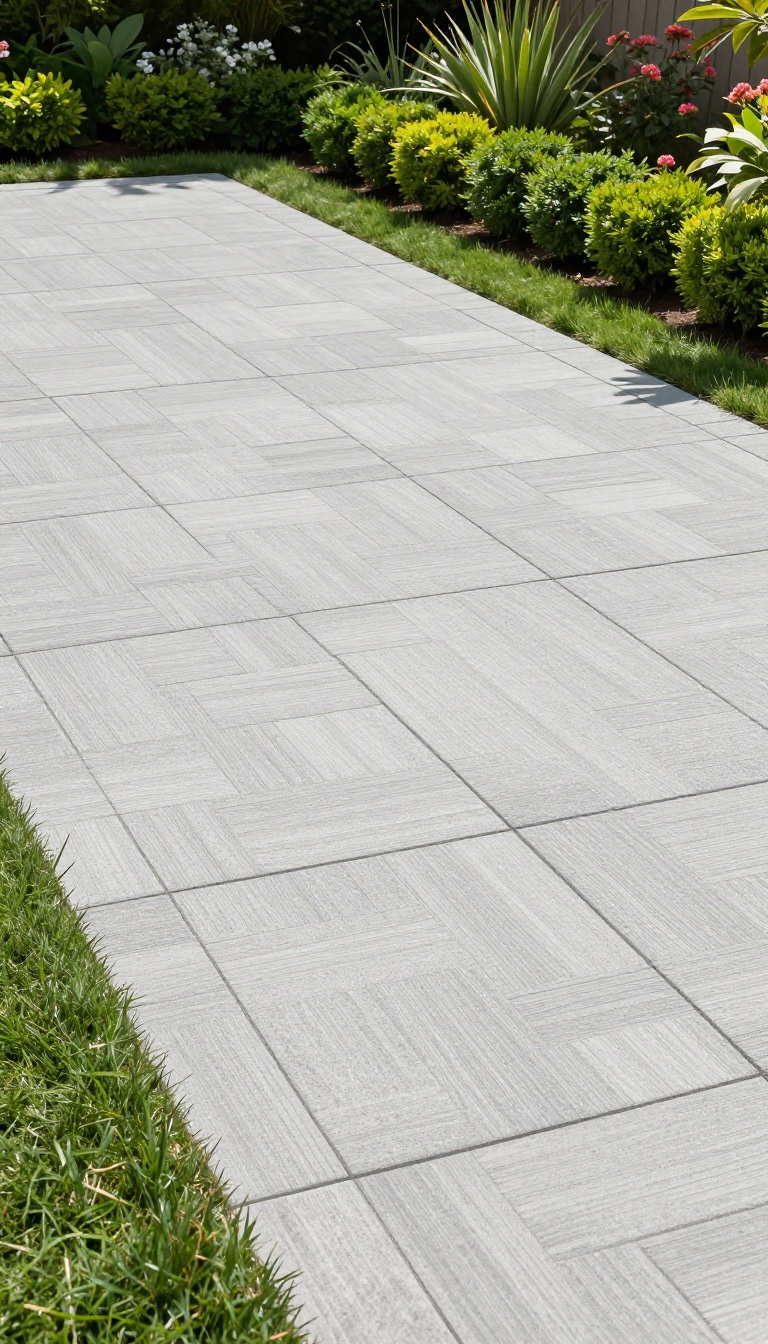
If you're drawn to symmetry and order, the basketweave pattern delivers a clean, interlocking look that never feels busy. It's a classic choice that pairs well with both traditional brick homes and more transitional styles. The pattern's alternating rectangles create a subtle texture that reads as refined from a distance and intriguing up close.
Neutral tones like warm gray, tan, or soft brown let the weave shine without competing with your landscaping.
The basketweave pattern is more than just a pretty layout—it's a practical choice for many patios. Its tight, interlocking design creates a stable surface that handles foot traffic and furniture well. Because the pattern is so orderly, it can make a small patio feel larger and more structured, while on a large expanse it adds a sense of rhythm and purpose.
It also works beautifully with simple borders, like a contrasting band of solid color or a row of cobblestone stamps, to frame the area and tie it to your home's architecture.
Choosing The Right Scale
Basketweave comes in different block sizes, and the scale you pick changes the whole vibe. Larger blocks, say 12×12 inches, give a more modern, bold feel, while smaller 6×6 or 8×8 blocks read as more traditional and intricate. Think about the size of your patio and how much detail you want.
For a cozy courtyard, smaller blocks add charm without overwhelming the space. For a sprawling backyard, larger blocks keep the pattern from feeling too busy.
Color And Finish Ideas
The beauty of basketweave is that it works with almost any color palette. Earthy tones like sandstone, terra cotta, or warm beige give a Mediterranean feel, while cool grays and charcoal suit a more contemporary home. You can also go with a two-tone approach, alternating light and darker shades to emphasize the weave effect.
A matte finish keeps it understated, but a light gloss can make the colors pop and add a subtle sheen—just be mindful of slip resistance in wet areas.
Pairing With Borders And Accents
Basketweave shines when it's framed properly. A simple border of a different color—like a deep brown or slate gray—defines the patio's edge and gives it a finished look. You can also use a soldier course of rectangles laid end-to-end around the perimeter for a crisp, tailored feel.
If you want to add a focal point, consider a contrasting medallion or a circular inset in the center of the weave. Just keep the border subtle so the main pattern remains the star.
9. Seamless Texture with Subtle Color Variation
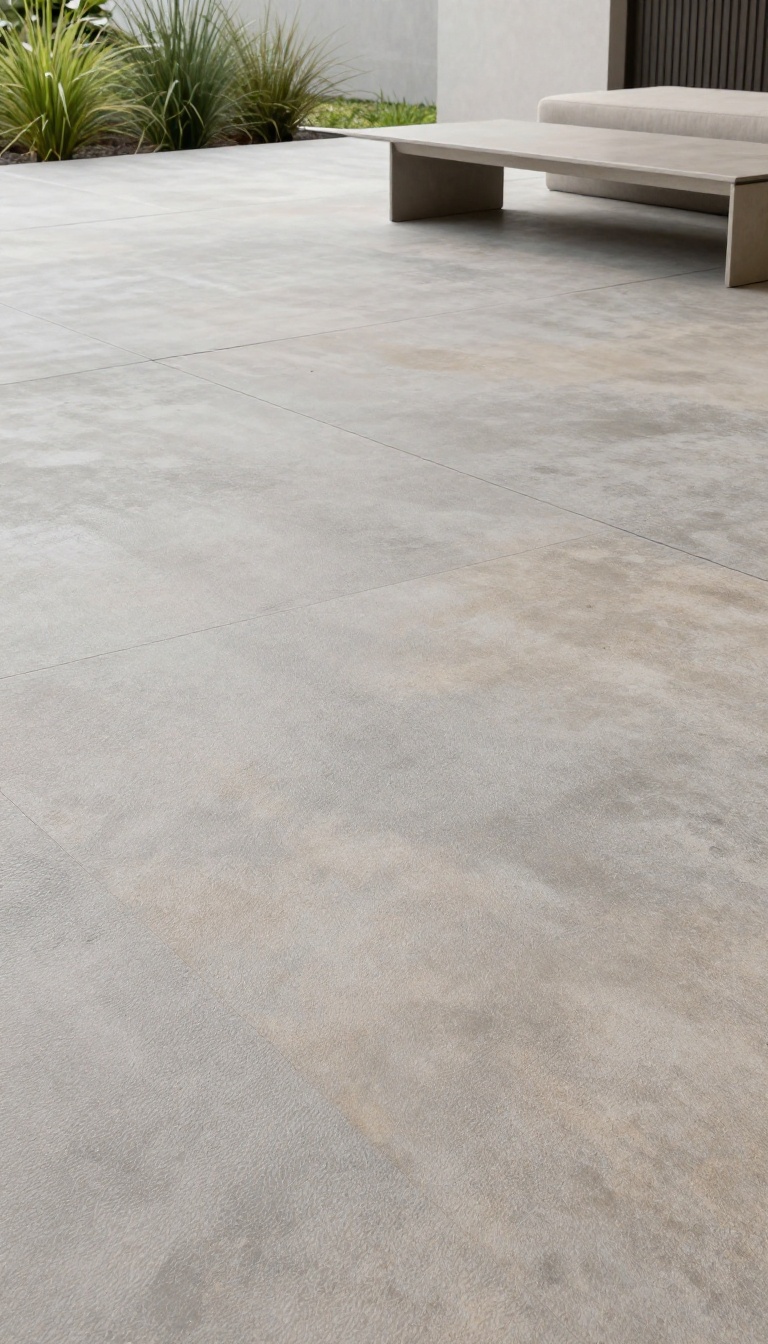
Sometimes the most striking patios aren’t the loudest. A seamless texture with subtle color shifts can create a quiet, sophisticated backdrop that lets your outdoor furniture and landscaping shine. This approach works especially well for modern or minimalist homes where clean lines and understated elegance take center stage.
Instead of bold patterns, you rely on gentle tonal changes within the concrete itself. Think soft grays blending into warm taupes, or a faint blush of brown across a cool gray base. The effect is depth without distraction—a surface that feels rich and intentional but never overwhelming.
To pull off this look, the stamped texture should be smooth and unobtrusive, like a fine leather or a lightly sanded stone. The color variation comes from a technique called dry-shake coloring, where powdered pigments are broadcast onto the fresh concrete and worked into the surface. This creates a mottled effect that mimics natural weathering, but in a controlled, elegant way.
Another option is to use a single base color and then apply a translucent stain or tinted sealer after the concrete cures. This adds a subtle layer of depth without altering the overall hue drastically. The key is restraint—you want the variation to be noticeable up close but not shout from across the yard.
Choosing The Right Color Palette
Start with a base color that harmonizes with your home’s exterior. If your house has warm brick or wood accents, lean toward earthy tones like sandstone, tan, or soft terracotta. For a cooler palette—think gray siding or white stucco—opt for shades of slate, charcoal, or cool beige.
The variation should be subtle, so pick a secondary color that’s only a few shades lighter or darker than your base. Avoid high-contrast combos like black and white, which can look busy and defeat the seamless effect. A good rule of thumb is to hold the two color samples side by side and squint—if they blend into a single tone, you’re on the right track.
Texture Options That Keep It Sleek
For a seamless look, skip the deep embossing of cobblestone or slate. Instead, choose a light texture like a fine sand finish, a smooth leather-like pattern, or a subtle ashlar slate with shallow joints. These textures add just enough grip and visual interest without creating harsh lines.
Another popular choice is a brushed or swirl finish, which is actually a technique used on plain concrete but can be combined with stamping for a unique effect. The goal is to create a surface that feels smooth to the touch but isn’t slippery when wet. Ask your contractor about adding a light broom finish or a matte sealer to keep the surface safe and subtle.
How To Enhance The Subtle Variation
Once the concrete is poured and stamped, you can enhance the color variation with an antiquing release agent. This powder is applied before stamping and not only prevents sticking but also leaves a subtle, darker residue in the low spots of the texture. The result is a gentle shadowing that adds depth without looking artificial.
If you’re working with an existing patio, a translucent stain in a slightly darker or lighter tone can mimic this effect. Apply it in thin, uneven coats using a sprayer or a rag, then wipe off the excess to create a natural, weathered look. Always test on a small area first to ensure you like the level of variation.
10. Brick and Stone Combo for Contrast
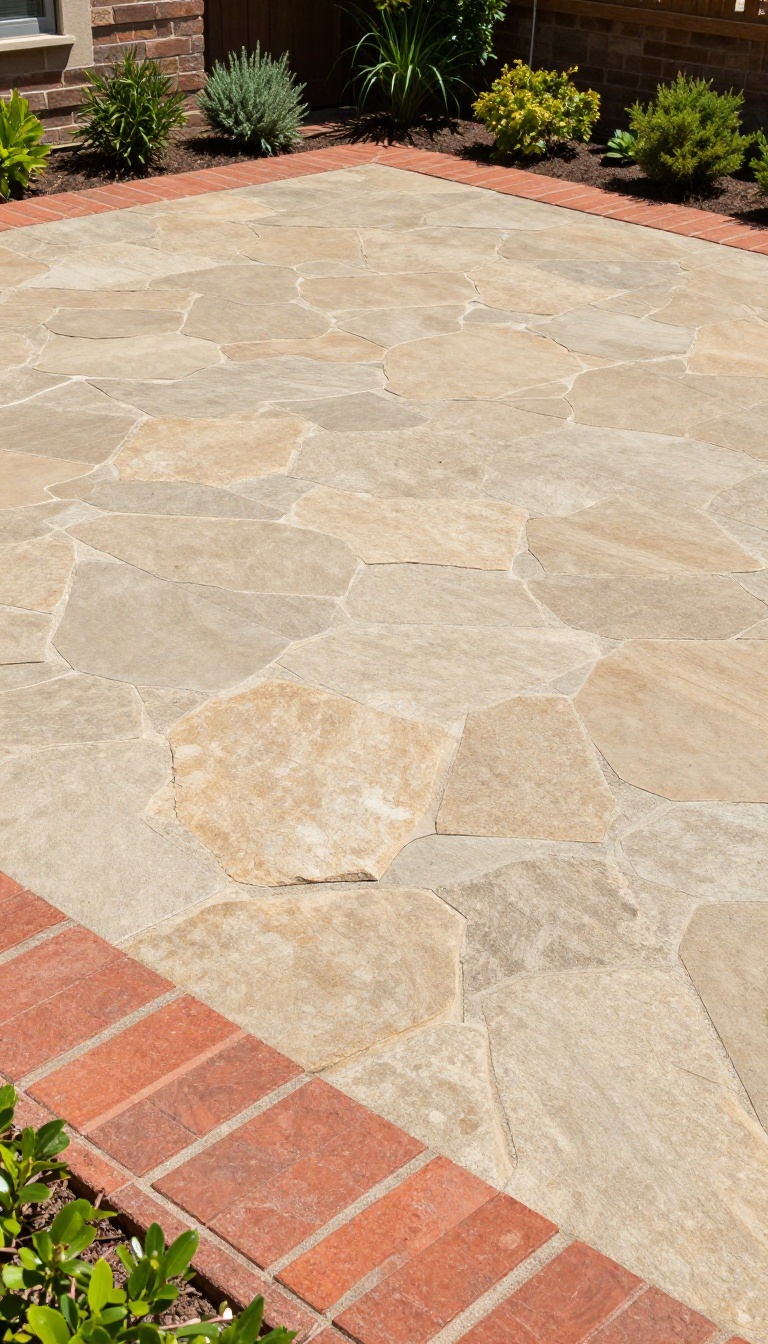
Mixing brick and stone stamps on one patio gives you the best of both worlds. The warm, linear feel of brick pairs beautifully with the organic texture of stone, creating a surface that looks custom and considered. It’s a smart way to break up large areas and add visual interest without going overboard.
Start by planning where each material will go. A brick border around a stone field is a classic approach that frames the space and defines the edges. Or, if you prefer a more eclectic vibe, alternate brick and stone in large blocks or stripes across the patio.
Whichever layout you choose, the contrast in texture and color will make your patio stand out.
Border And Field Layout
A brick border with a stone interior is a timeless combination. The brick provides a crisp, structured edge, while the stone adds a relaxed, natural center. Use a contrasting color for the brick—like a deep red or brown—to make the border pop against lighter stone tones.
This layout works well for both traditional and transitional homes.
Alternating Sections
For a more modern or playful look, alternate brick and stone in large squares or rectangles. This creates a checkerboard-like effect that feels deliberate and artistic. You can also vary the size of each section to suit the proportions of your patio.
Keep the color palette cohesive so the mix feels intentional, not chaotic.
Color Coordination
The right colors make all the difference when mixing materials. Choose brick and stone shades that share an undertone—warm earth tones, for example—so they complement rather than clash. Use a release agent or stain to deepen or soften the colors as needed.
Test samples on a small area first to see how they look together in natural light.
11. Large-Format Slabs for a Minimalist Aesthetic
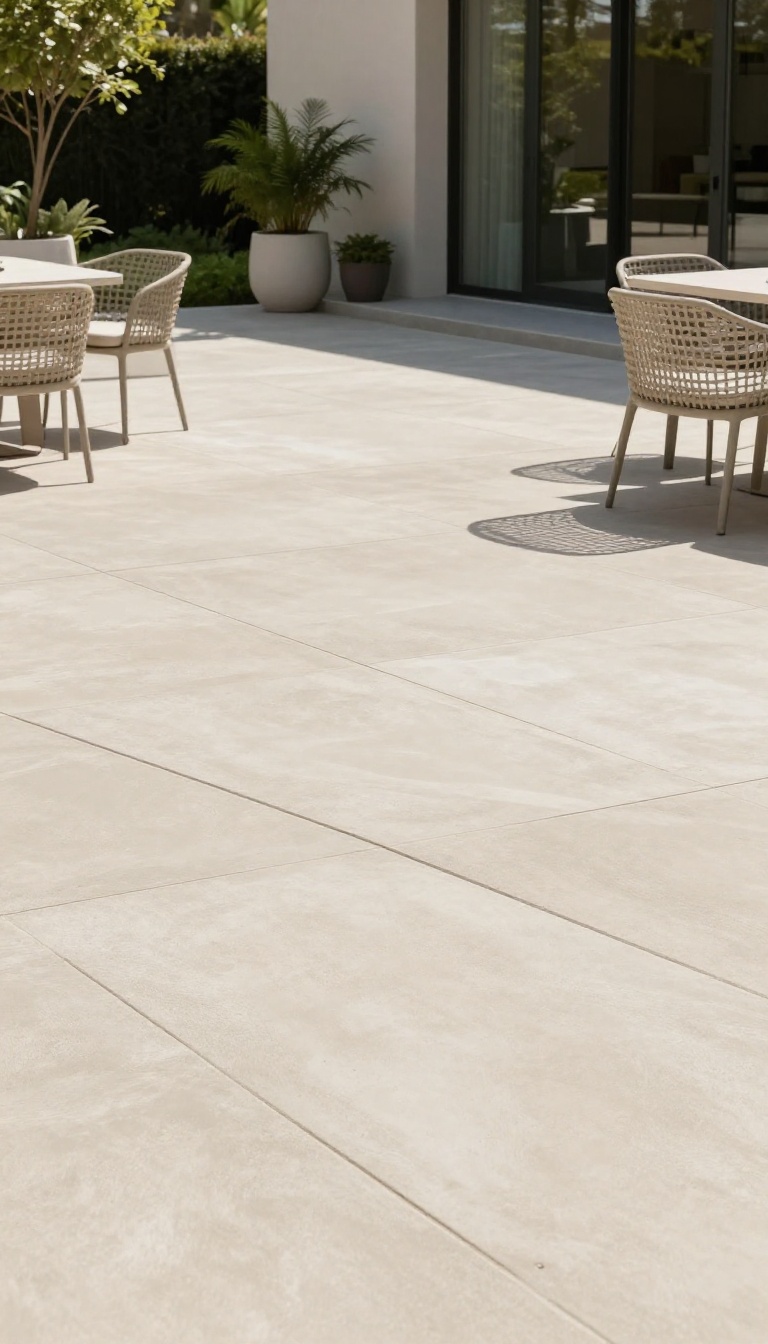
If your taste leans toward clean lines and uncluttered spaces, large-format stamped slabs are a game-changer. Instead of busy patterns, you get expansive, smooth surfaces that make your patio feel bigger and more open. The subtle texture of the stamp adds just enough interest without stealing the spotlight.
Large-format slabs are all about simplicity and space. By using bigger stamps, you minimize the number of joints and lines, which creates a seamless, modern look. This style works beautifully with contemporary homes, especially when paired with sleek outdoor furniture and a few potted plants.
The result is a patio that feels like a natural extension of your indoor living area.
Choosing The Right Color Palette
Stick to light gray, warm beige, or soft taupe to keep the space airy and bright. These tones reflect sunlight, making the patio feel cooler and more inviting during hot summer days. Darker shades can be dramatic, but they tend to absorb heat and show dust more easily.
A light, neutral palette also gives you flexibility to add colorful accents through furniture or planters.
Layout And Joint Placement
Even with large slabs, you'll need some control joints to prevent cracking. Work with your contractor to place these joints strategically—perhaps aligning them with the edge of your house or the patio's perimeter. This way, the lines look intentional and don't disrupt the minimalist vibe.
Avoid creating small, awkward sections that defeat the purpose of large-format slabs.
Adding Subtle Texture
Large-format doesn't mean completely flat. Choose a stamp with a light, subtle texture that mimics natural stone or smooth concrete. This adds a tactile quality and prevents the surface from being slippery when wet.
A gentle broom finish or a light acid wash can also enhance the texture without overpowering the clean aesthetic.
12. Accent Border with Contrasting Color
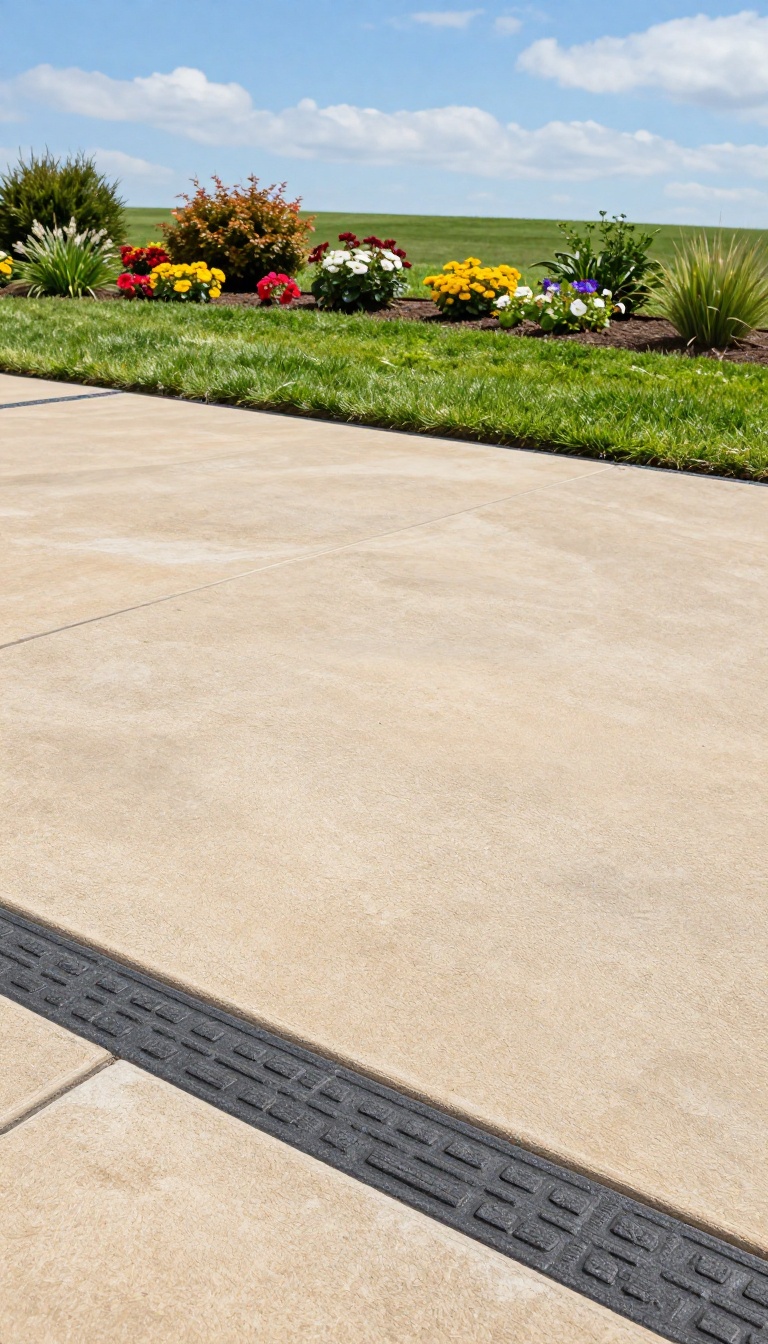
A contrasting border does more than just frame your patio—it gives the whole space a clear, intentional edge. Whether you choose a deep charcoal against a warm gray or a rich earth tone beside a lighter shade, the contrast draws the eye and makes the stamped pattern pop. It’s a small change that can make a big difference in how polished and finished your outdoor area feels.
Think of the border as the picture frame for your patio. Without it, the stamped surface can feel like it just stops abruptly at the lawn. A contrasting border creates a visual stopping point that ties the design together and adds a layer of sophistication.
Plus, it’s a practical way to define where the patio ends and the garden begins, which can help with mowing and maintenance.
Choosing The Right Contrast
The key is to pick a border color that complements, not clashes with, the main patio color. If your main field is a warm beige or sandstone, a deep brown or charcoal border adds weight without feeling harsh. For a cooler gray palette, a darker slate or even a subtle cream border can work nicely.
Sample colors on a small area first to see how they look in different lighting throughout the day.
Width And Proportions
Border width should relate to the overall size of your patio. A narrow, 6-inch border can look elegant on a small seating area, while a wider 12- to 18-inch border suits larger spaces and gives more presence. Keep the border proportional—too thin on a big patio looks lost, and too thick on a small one can feel overwhelming.
Pattern And Texture Ideas
You don’t have to stick with the same stamp pattern for the border. Try a smooth, untextured band for a subtle contrast, or use a different stamp pattern like a cobblestone or running bond to add visual interest. A border that’s slightly recessed or raised can also create a subtle shadow line that enhances the definition.
13. Inlaid Medallion for an Artistic Centerpiece
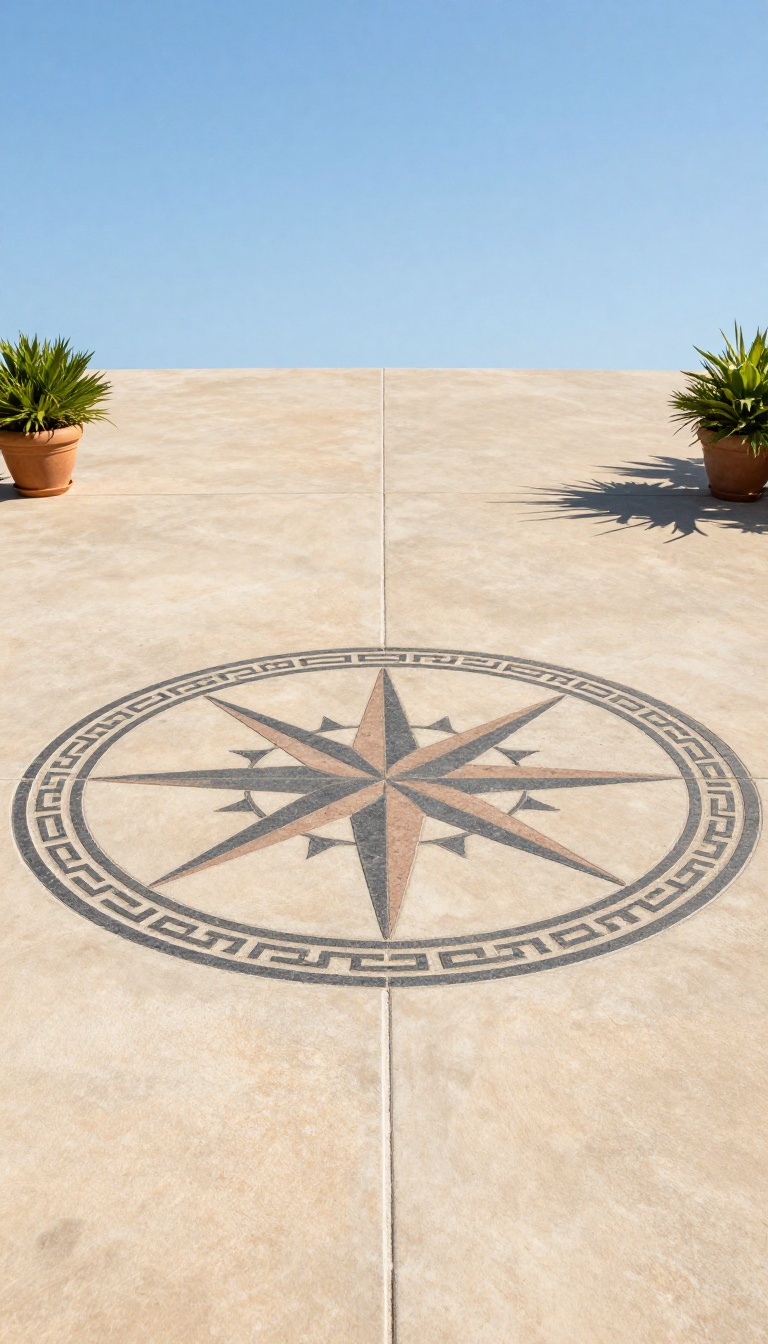
A medallion can turn an ordinary patio into a conversation piece. Placed at the center, it draws the eye and gives the space a polished, custom feel. This works especially well on larger patios where there’s room to let the design breathe.
You can choose a simple geometric pattern or something more elaborate, like a compass rose or floral motif. Many homeowners also personalize the medallion with their initials or a family crest, making the patio truly one-of-a-kind.
The medallion is created by stamping a circular or oval design into the concrete while it’s still wet. The concrete is usually colored in a contrasting tone to make the medallion stand out. This is a great way to add a focal point without adding extra materials or maintenance.
Choosing The Right Spot
The center of the patio is the most obvious location, but you can also place a medallion off-center to create a more dynamic look. If your patio has a seating area, consider placing the medallion in the middle of that zone to anchor the furniture arrangement. Just make sure the design won’t be hidden under a table or rug.
Design Options And Customization
Medallions come in a variety of patterns, from classic sunbursts to intricate Celtic knots. You can also incorporate your initials, a family monogram, or even a meaningful symbol. Talk to your contractor about the possibilities—many stamp manufacturers offer custom medallion stamps that can be tailored to your taste.
Pairing With Other Elements
A medallion looks best when it’s part of a cohesive design. Consider adding a border that echoes the medallion’s shape or color. You can also repeat the medallion motif in smaller versions along the edges or in a walkway for a coordinated look.
Just avoid overdoing it—one large medallion is usually enough to make a statement.
14. Circular Patterns for a Dynamic Flow
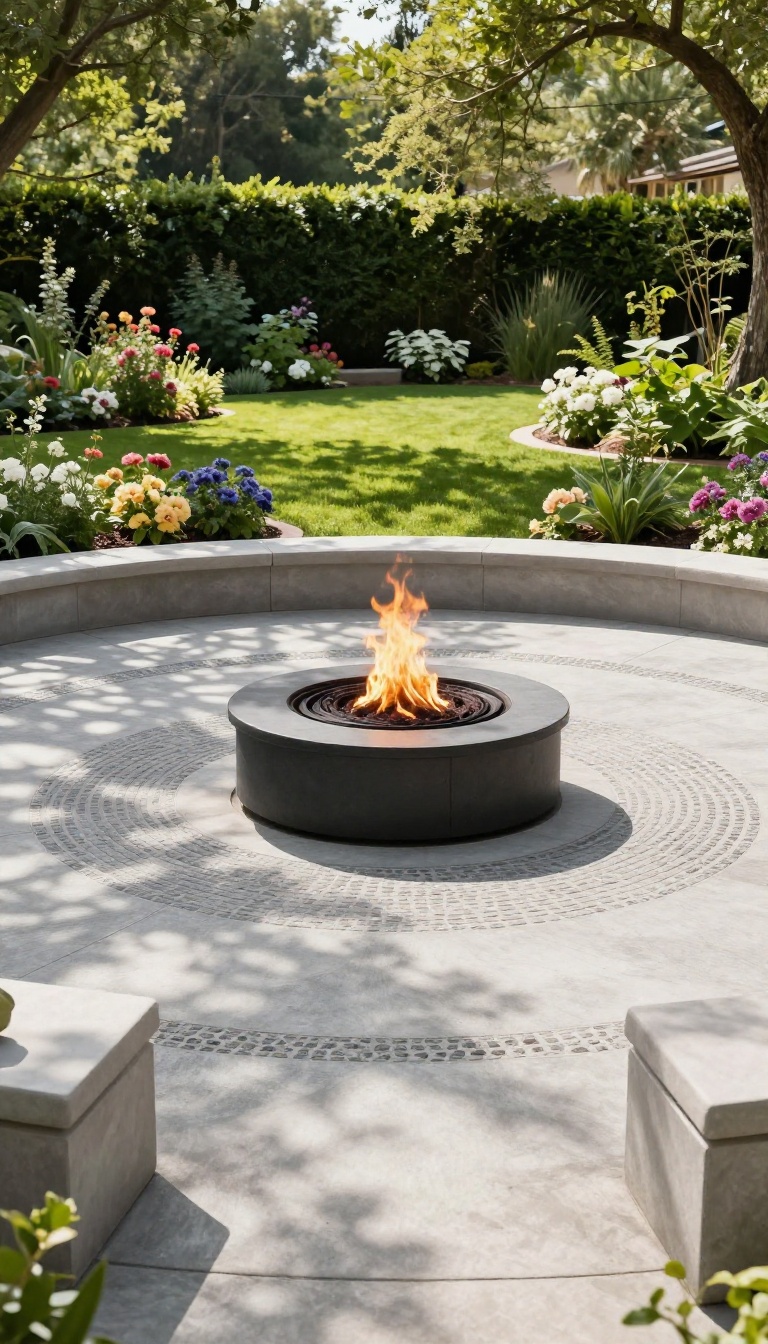
Straight lines and right angles can make a patio feel predictable. If you want to encourage movement and create a natural gathering spot, circular patterns are a smart choice. They break the monotony and add a sense of rhythm to the space.
Circular stamped concrete works well in both large and small patios. A full circular layout can anchor a fire pit or a seating area, making it the focal point of your backyard. Alternatively, you can use circular accents within a larger rectangular patio to soften the edges and add visual interest.
Full Circle Layout
Design the entire patio as a circle or a series of concentric circles. This layout naturally draws people to the center, making it ideal for conversation pits or outdoor dining. Use a stamp that mimics cobblestone or flagstone to enhance the organic feel.
Circular Accents
If a full circle feels too bold, incorporate circular medallions or rings into a standard rectangular patio. Place them near entryways or under outdoor furniture to create subtle focal points. You can also use a different color for the circles to make them stand out.
Curved Borders
Instead of straight borders, use curved lines to define the patio's edge. A wavy border or a series of arcs can soften the transition between the patio and the lawn or garden. This approach works well with freeform designs and natural landscapes.
15. Mixed Finishes: Smooth and Textured Zones
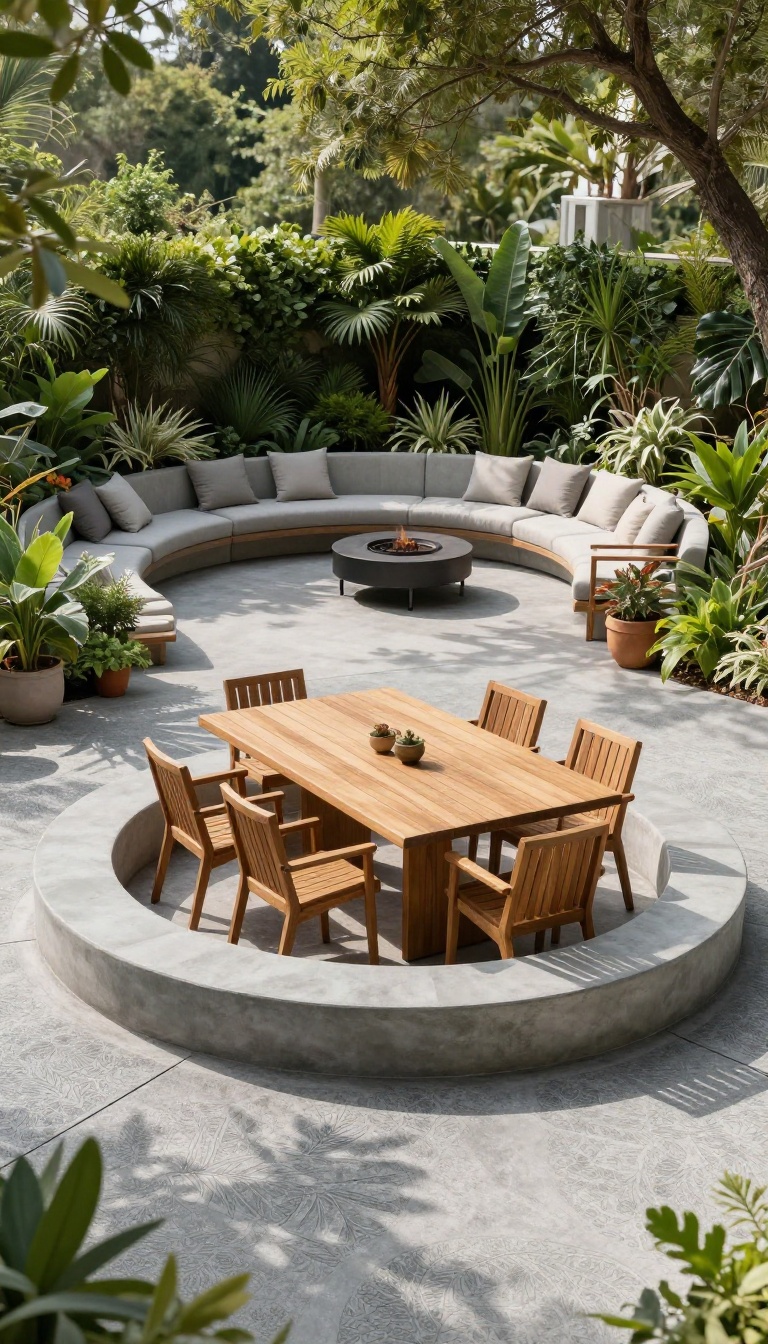
Who says a patio has to be all one finish? Blending smooth concrete with textured stamped sections creates distinct zones that feel intentional and look stunning. It’s a smart way to separate a dining area from a lounging spot, or to guide foot traffic without building walls.
The contrast between sleek, smooth concrete and a rich, textured stamp adds depth and dimension. Smooth areas are perfect for seating or dining where you want a clean, easy-to-clean surface. Textured zones, on the other hand, offer better traction and a more rustic, tactile feel, making them ideal for walkways or around a fire pit.
Why Mix Finishes?
Mixing finishes isn’t just about looks—it’s about function. Textured concrete provides slip resistance, which is crucial near pools or in wet climates. Smooth concrete is easier to keep clean and feels more refined underfoot.
By combining them, you get the best of both worlds.
Designing Your Zones
Think about how you’ll use the patio. A large smooth circle under the dining table keeps chairs stable and crumbs easy to sweep. Surround it with a textured border or a stamped pathway that leads to a lounging area with a rougher, more natural finish.
This creates a visual flow that feels deliberate.
Tips For A Seamless Transition
To avoid a jarring line, use a subtle transition like a narrow band of contrasting concrete or a gentle curve. Choose colors that complement each other—maybe a warm gray smooth section paired with a cool slate-textured one. Work with your contractor to ensure the stamping depth and finish match your vision.
FAQ
How long does stamped concrete last?
With proper installation and maintenance, stamped concrete can last 25 years or more. Sealing every few years helps protect it from wear and weather.
Can I stamp an existing concrete patio?
Yes, you can stamp over existing concrete if it’s in good condition. The surface must be clean, level, and free of cracks. A professional can apply a new overlay and stamp it.
What is the best color for a stamped concrete patio?
The best color depends on your home’s exterior and your personal style. Earthy tones like tan, brown, and gray are versatile and timeless. You can also use multiple colors for a more natural look.
How much does stamped concrete cost compared to pavers?
Stamped concrete is generally more affordable than high-end pavers, but costs vary based on pattern, color, and location. It offers a similar aesthetic at a lower price point.
Do I need to seal stamped concrete?
Yes, sealing is essential to protect the color and surface from stains, moisture, and UV damage. It also enhances the pattern’s depth and makes cleaning easier.
Conclusion
Stamped concrete patios offer endless possibilities to express your style while providing a durable, low-maintenance surface. Whether you prefer the classic elegance of ashlar slate or the modern edge of geometric patterns, there’s a design that fits your home and budget.
Take your time to explore these ideas and consult with a professional to bring your vision to life. With the right pattern and color, your patio can become the outdoor retreat you’ve always wanted.