13 Stone Patio Ideas That Bring Texture and Timeless Appeal
A plain concrete slab can feel flat and uninspiring. Stone changes that. It brings natural variation, rich color, and a sense of permanence that other materials often lack.
But choosing the right stone isn't just about looks. You need something that suits your climate, your home's architecture, and how you actually use the space. That's where these ideas come in.
From rustic fieldstone to sleek cut granite, each option below solves a specific problem—whether it's slip resistance, heat retention, or blending with a particular landscape. Let's find the one that fits your yard.
1. Flagstone on Sand for a Natural, Irregular Look
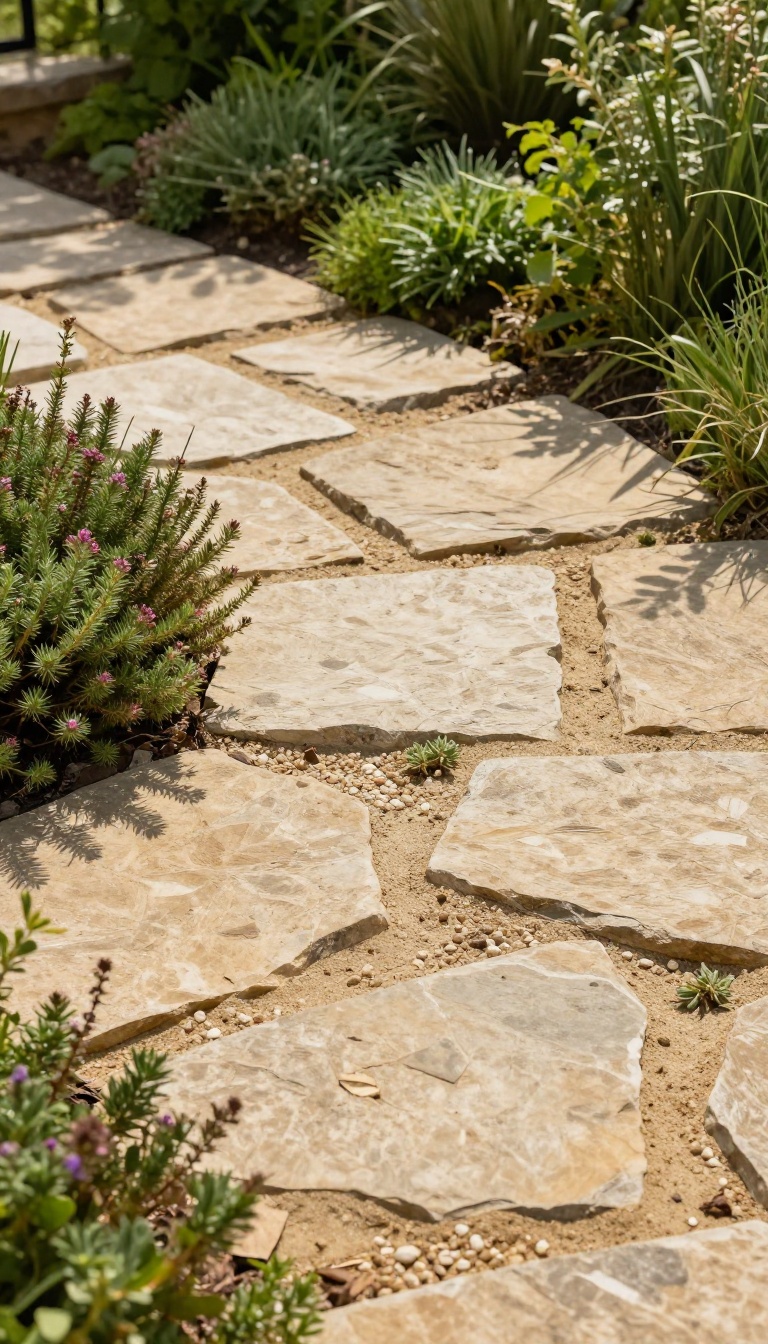
Sometimes, the best patio isn't perfectly level or uniformly patterned. Flagstone set on a sand base offers an organic, earthy aesthetic that feels like it grew right out of the ground. This approach is forgiving for DIYers and easy to adjust if you change your mind later.
Plus, the gaps between stones create charming pockets for greenery or gravel, softening the overall look.
Laying flagstone on sand is one of the most approachable stone patio methods. You simply excavate, fill with compacted sand, and arrange the stones to your liking. Because the stones sit individually, you can fine-tune their placement and height.
This method works well for casual seating areas, garden paths, or spots where you want a less rigid, more relaxed vibe.
Why Sand Beats A Mortar Base
A sand base gives you flexibility. If a stone settles or shifts over time, you can lift it, add or remove sand, and set it back in place. That's a huge advantage over mortar, which is permanent and can crack with ground movement.
Sand also allows better drainage, reducing puddles and ice buildup in colder months.
Choosing The Right Flagstone
Look for stones with a thickness of 1. 5 to 2 inches for stability. Popular options include bluestone, quartzite, or sandstone, each offering distinct colors and textures.
For a natural look, mix shapes and sizes rather than uniform cuts. Avoid stones with smooth, polished surfaces—they can get slippery when wet.
Filling The Gaps: Grass, Gravel, Or Ground Cover
What you put between the stones sets the tone. For a soft, cottage-garden feel, plant creeping thyme or Irish moss in the gaps. If you prefer a low-maintenance option, use fine gravel or stone dust.
A grass-filled patio feels lush but requires occasional mowing and edging. Choose based on how much upkeep you're willing to do.
Installation Tips For A Stable Surface
Start by excavating about 6 to 8 inches deep, then add a layer of crushed stone for drainage, followed by a 1-inch layer of sand. Compact each layer thoroughly. Set the flagstones with a rubber mallet, checking for level with a long straightedge.
Sweep more sand into the joints and water it in to settle. This creates a firm, long-lasting surface.
2. Cobblestone for Old-World Charm and Durability
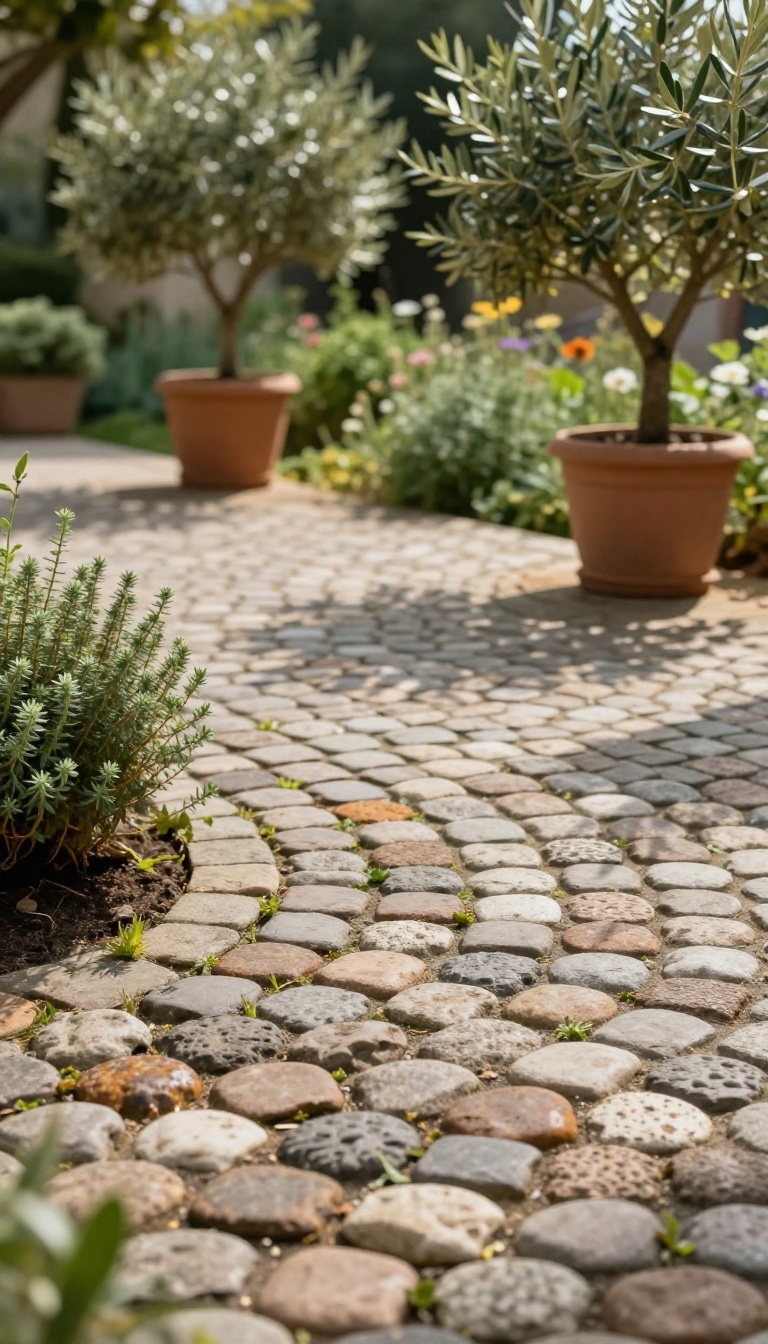
Few materials whisper old-world elegance quite like cobblestone. Its rounded, irregular shapes and weathered tones instantly transport you to a European courtyard or a quiet village lane. But beyond the romance, cobblestone is a workhorse—built to handle heavy foot traffic, shifting soil, and years of weather without losing its character.
If you want a patio that feels both timeless and tough, this might be your match.
Why Cobblestone Stands The Test Of Time
Cobblestone is essentially natural granite or basalt that's been tumbled smooth over centuries. That means it's incredibly dense and resistant to cracking, chipping, and staining. Unlike concrete pavers that can fade or flake, cobblestone keeps its color and texture for decades—even in freeze-thaw climates.
It's also naturally slip-resistant when wet, thanks to its slightly bumpy surface, making it a safe choice for pool areas or walkways.
Designing With Cobblestone's Natural Palette
Cobblestones come in earthy tones—grays, browns, rusts, and even subtle blues. You can create a uniform look by choosing stones of similar size and color, or go for a more rustic, patchwork feel by mixing hues. For a classic European vibe, lay them in a fan or arc pattern.
If you prefer a more casual style, random placement with wider joints and creeping thyme or moss in between softens the look.
Installation: Patience Pays Off
Cobblestone isn't a weekend DIY for most people. Each stone needs to be set individually into a prepared base—typically 6 to 8 inches of compacted gravel and sand. Proper edge restraints are crucial to keep the stones from shifting over time.
Once laid, you'll sweep sand or stone dust into the joints and compact everything. It's labor-intensive, but the result is a surface that can last 50 years or more with minimal upkeep.
Maintenance And Care
Once installed, cobblestone is remarkably low-maintenance. Occasional sweeping and an annual rinse with a hose usually keep it clean. If weeds pop up in the joints, a quick pull or a spot treatment with boiling water does the trick.
You might need to re-sand the joints every few years, but that's a simple task. And if a stone ever cracks (rare), you can replace just that one without redoing the whole patio.
3. Large-Format Porcelain Pavers That Mimic Stone
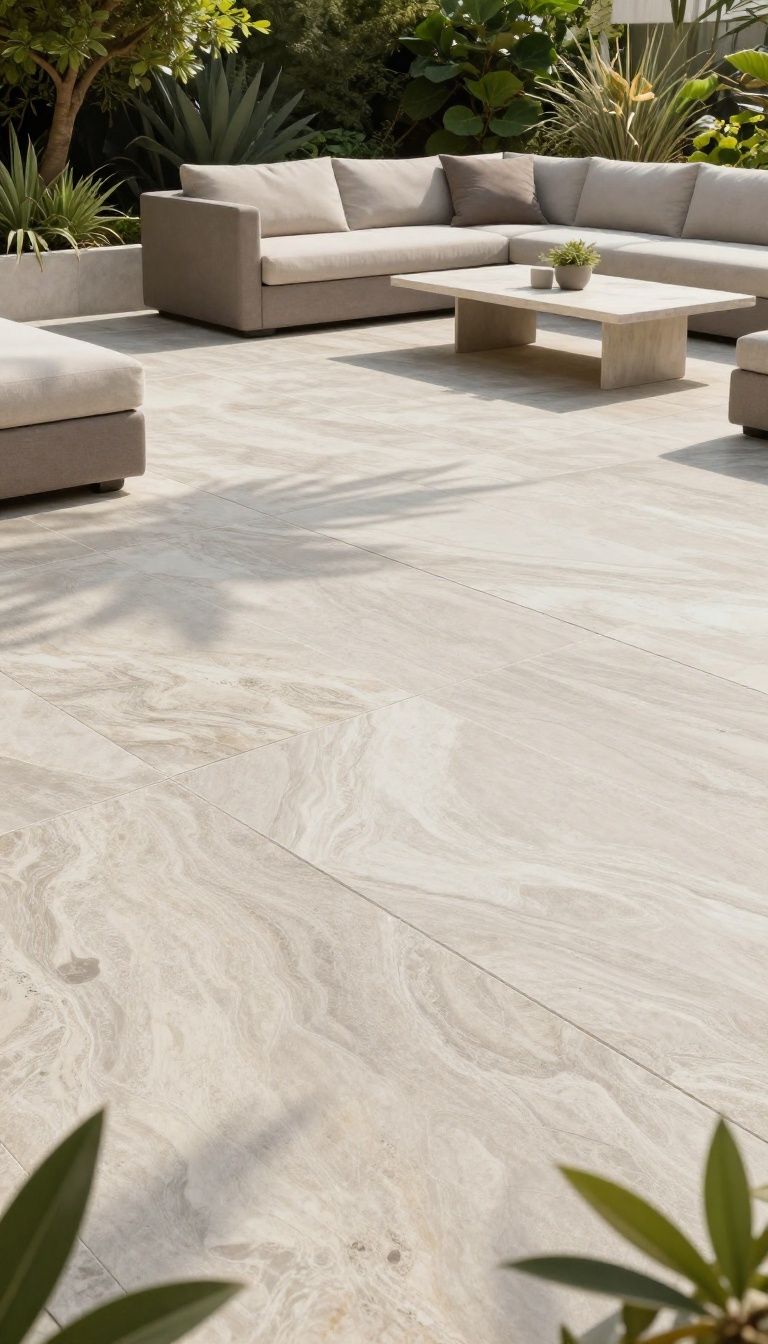
If you love the look of natural stone but dread the upkeep, large-format porcelain pavers might be your perfect match. These tiles are engineered to replicate the texture and color variations of real stone, but they come with a whole lot less fuss. They're a smart choice for busy homeowners who want that high-end aesthetic without the constant sealing or worrying about stains.
Large-format porcelain pavers are a fantastic alternative to natural stone, offering a sleek, modern look that's also incredibly durable. Because they're made from dense ceramic, they resist moisture, stains, and even frost, making them ideal for outdoor use in almost any climate. Plus, their large size means fewer grout lines, creating a clean, seamless surface that makes your patio feel more expansive.
Why Choose Porcelain Over Natural Stone?
The biggest draw is low maintenance. You won't need to seal them annually or worry about acidic spills like lemon juice or wine causing etching. They're also non-porous, so they don't harbor mold or mildew, which is a huge plus in damp areas.
And because they're slip-resistant, they're safer around pools or in rainy weather.
Design Options For Every Style
Porcelain pavers come in a wide range of finishes that convincingly mimic everything from bluestone to travertine. You can choose a matte finish for a more natural feel or a textured surface for extra grip. They're available in large formats like 24×24 inches or even 48×48 inches, which can make a small patio look bigger and a large patio look sleek and contemporary.
Installation Tips For A Flawless Finish
Proper installation is key to getting the most out of porcelain pavers. They can be laid on a compacted gravel base or over concrete, but they need a perfectly flat surface to avoid cracking. Use a polymer sand in the joints to keep weeds at bay and lock everything in place.
Hiring a pro who has experience with large-format tiles is worth the investment to ensure a job well done.
4. Crushed Stone or Gravel Patio for Budget-Friendly Texture
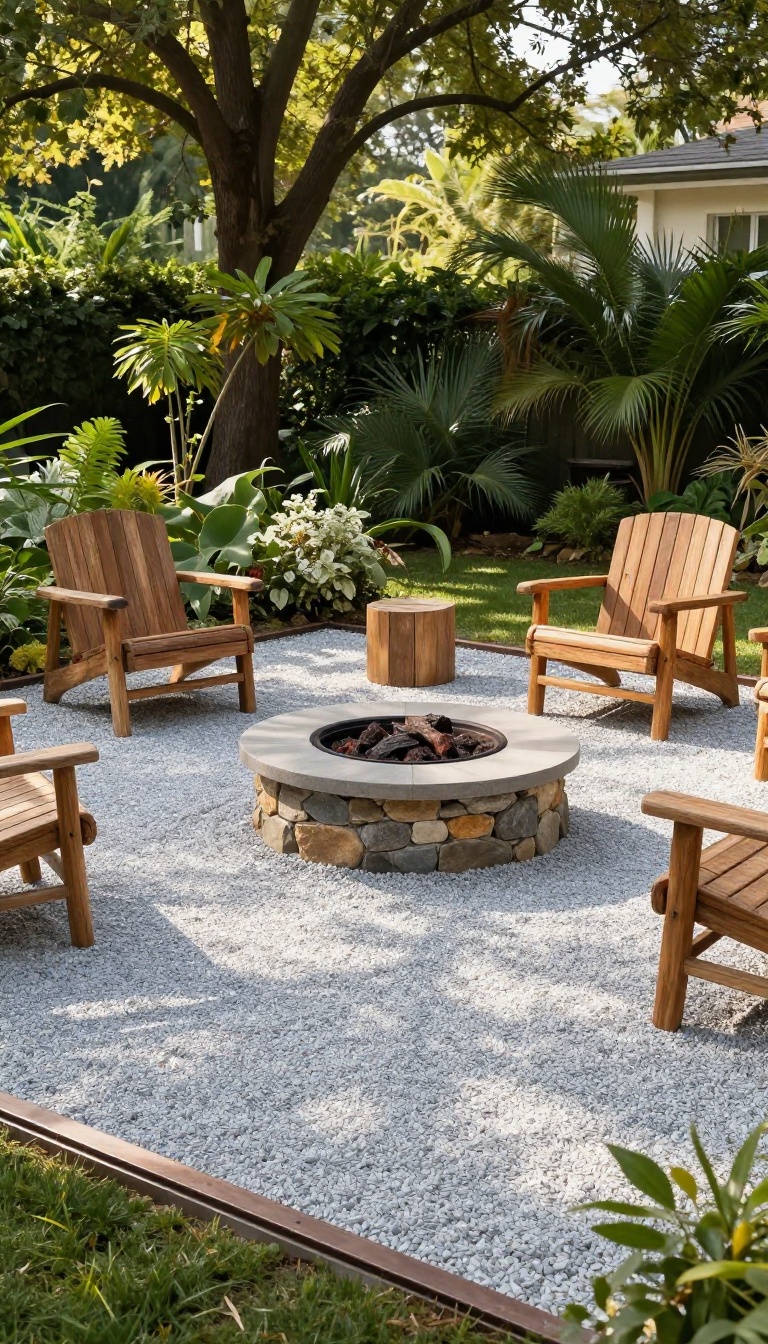
Crushed stone and gravel bring that relaxed, natural feel without the heavy price tag of large pavers. They're also champions of drainage, so puddles disappear fast after a storm. If you're dreaming of a fire pit hangout or a casual seating nook, this could be the most practical route to a textured, earthy patio.
Gravel patios are surprisingly versatile. They work beautifully in modern landscapes when paired with clean lines and steel edging, and they feel right at home in cottage gardens or rustic yards. The key is picking the right type of gravel—smooth pea gravel feels different underfoot than sharp, angular crushed stone.
Angular stone locks together better and stays put more reliably on slopes, while pea gravel is gentler on bare feet but shifts more easily. Another big plus is how forgiving gravel is. You don't need a perfectly level base or expensive tools.
Just lay down a weed barrier, add a sturdy edge, and pour the stone. It's a weekend project that can transform a tired corner of your yard. And if you ever change your mind, the gravel is easy to remove or reuse elsewhere.
Choosing The Right Gravel Type
Not all gravel is created equal. Crushed stone, like limestone or granite chips, has sharp edges that interlock, making it stable for walking and chair legs. Pea gravel, with its smooth, rounded stones, feels nicer underfoot but can scatter.
For patios, many people prefer a mix: a base layer of crushed stone for stability, topped with a thin layer of pea gravel for comfort. Think about how the space will be used. If you'll be dragging chairs around or playing yard games, crushed stone is the better bet.
Edging And Containment
Gravel will wander unless you contain it. Metal or plastic edging keeps the stone in place and gives the patio a crisp, intentional line. You can also use larger stones, bricks, or even a wooden border for a more rustic look.
The edging should sit slightly above the gravel level to prevent spillover. Proper edging also makes maintenance easier—you can rake the gravel back into place without it scattering into your lawn.
Layering And Drainage
A proper gravel patio starts with a stable base. Remove the topsoil, lay landscape fabric to block weeds, and add a few inches of compacted crushed rock. This base layer provides support and prevents the gravel from sinking into the mud.
The top layer of decorative gravel should be about two inches deep. Because gravel is porous, water drains straight through, making it an excellent choice for areas with heavy rain or poor drainage.
Comfort And Maintenance
Gravel isn't the comfiest surface for walking barefoot, especially if you choose sharp crushed stone. If you want a barefoot-friendly feel, opt for pea gravel or add a few flat stepping stones as pathways. Maintenance is simple: rake the gravel occasionally to keep it level, and add more every few years as it naturally settles.
Weeds may pop up despite the fabric, but they're easy to pull. A leaf blower works well for clearing debris without disturbing the stone.
5. Limestone Pavers for a Light, Airy Mediterranean Feel
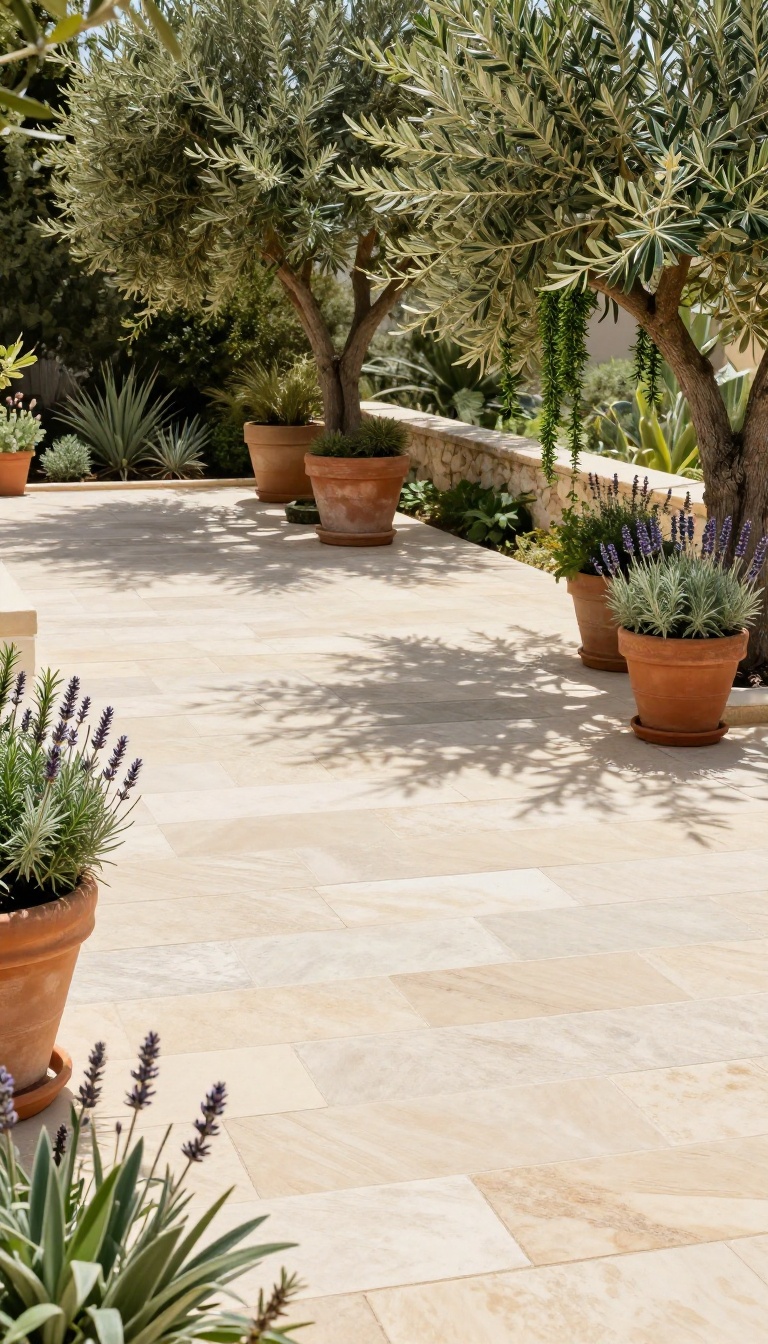
Limestone pavers bring a soft, sun-washed look that instantly evokes Mediterranean courtyards. Their pale, warm tones—ranging from cream to soft beige—reflect light rather than absorb it, making the whole patio feel more open and inviting. If your backyard gets plenty of sun, limestone stays surprisingly cool underfoot, so you can walk barefoot even in July.
Limestone is a sedimentary rock with a naturally subtle texture that adds gentle interest without overwhelming the space. It pairs beautifully with terracotta pots, olive trees, and trailing rosemary, creating that effortless coastal vibe. The key is to choose a finish that suits your lifestyle: tumbled for a softer, aged look, or honed for a smoother, more modern surface.
Either way, limestone's light palette makes the patio feel larger and brighter, especially when surrounded by lush greenery.
Why Limestone Works In Sunny Climates
Unlike dark stones that soak up heat, limestone's light color reflects sunlight, so it doesn't turn into a frying pan on hot afternoons. That makes it a favorite for pool decks and sun-exposed patios. Plus, its natural cleft provides a bit of traction, though you can opt for a brushed or sandblasted finish for extra slip resistance near water.
Pairing Limestone With Mediterranean Plants
To complete the look, frame the patio with drought-tolerant plants like lavender, sage, and ornamental grasses. Their silvery-green foliage echoes the stone's warm undertones. Add a few oversized clay pots filled with citrus trees or bougainvillea for a pop of color.
The contrast between the pale stone and vibrant greenery is what makes this style so photogenic.
Installation And Maintenance Tips
Limestone is softer than granite or bluestone, so it's more prone to scratching and etching from acidic spills. Seal it properly during installation and reapply every couple of years to protect against stains. Use a pH-neutral cleaner for routine upkeep.
With a little care, your limestone patio will develop a lovely patina that adds character over time.
6. Slate Patio for Rich Color and a Non-Slip Surface
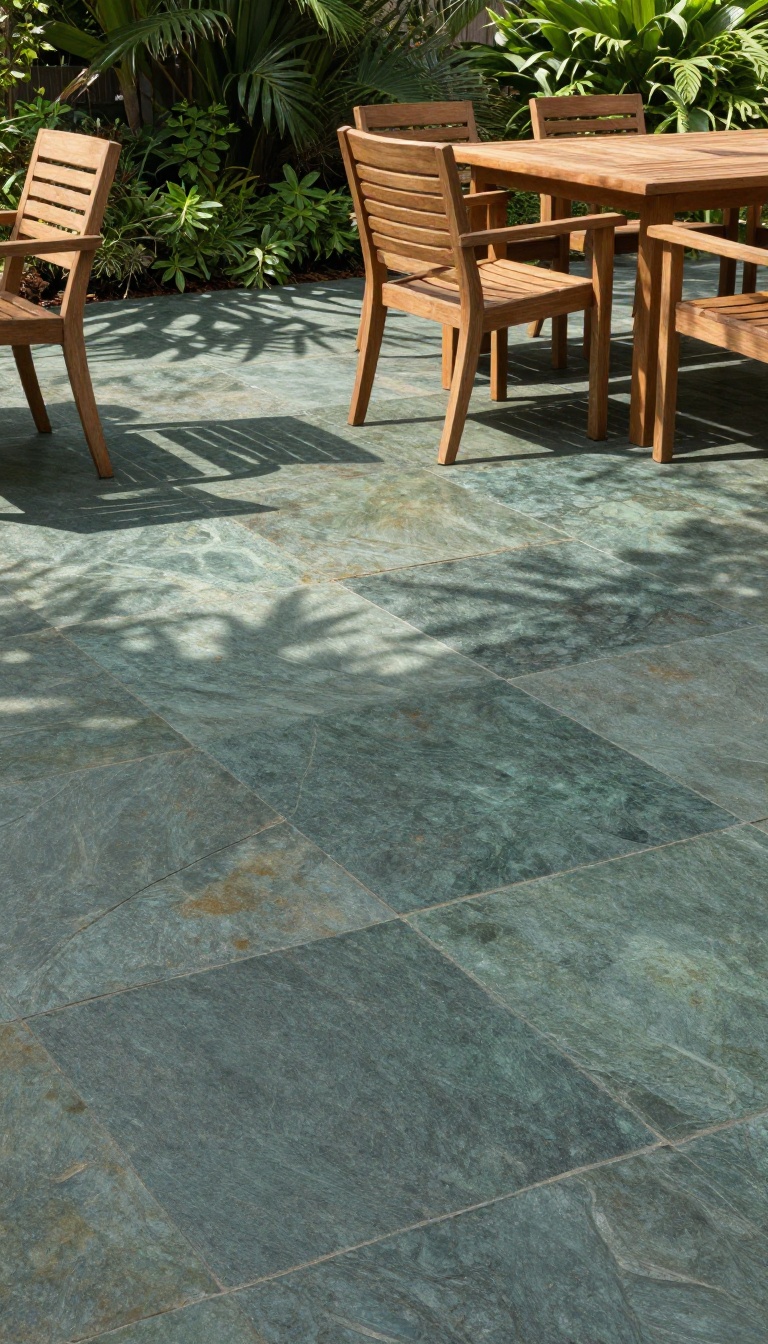
Slate brings a depth of color that few stones can match, with earthy tones ranging from charcoal to rust. Its naturally cleft surface offers excellent traction, making it a smart choice for pool decks or rainy regions. Beyond safety, slate's layered texture adds visual interest that shifts with the light.
Why Slate Wins On Safety
Slate's cleft finish creates a rough, grippy texture that stays slip-resistant even when wet. That makes it ideal for patios near pools, hot tubs, or in climates with frequent rain. Unlike smooth pavers, you won't worry about a sudden shower turning your outdoor space into a hazard.
Color Variations That Suit Any Style
From deep greens and purples to warm grays and browns, slate offers a palette that complements both modern and rustic homes. You can choose a consistent tone for a clean look or mix shades for a more organic feel. The natural variation in each tile ensures no two patios look exactly alike.
Installation And Maintenance Tips
Slate is durable but can be brittle, so professional installation is recommended. Use a polymeric sand in the joints to prevent weed growth and stabilize the pavers. Seal the slate to enhance its color and protect against staining, then simply sweep and rinse to keep it looking fresh.
7. Mixed Stone Patterns for Visual Interest
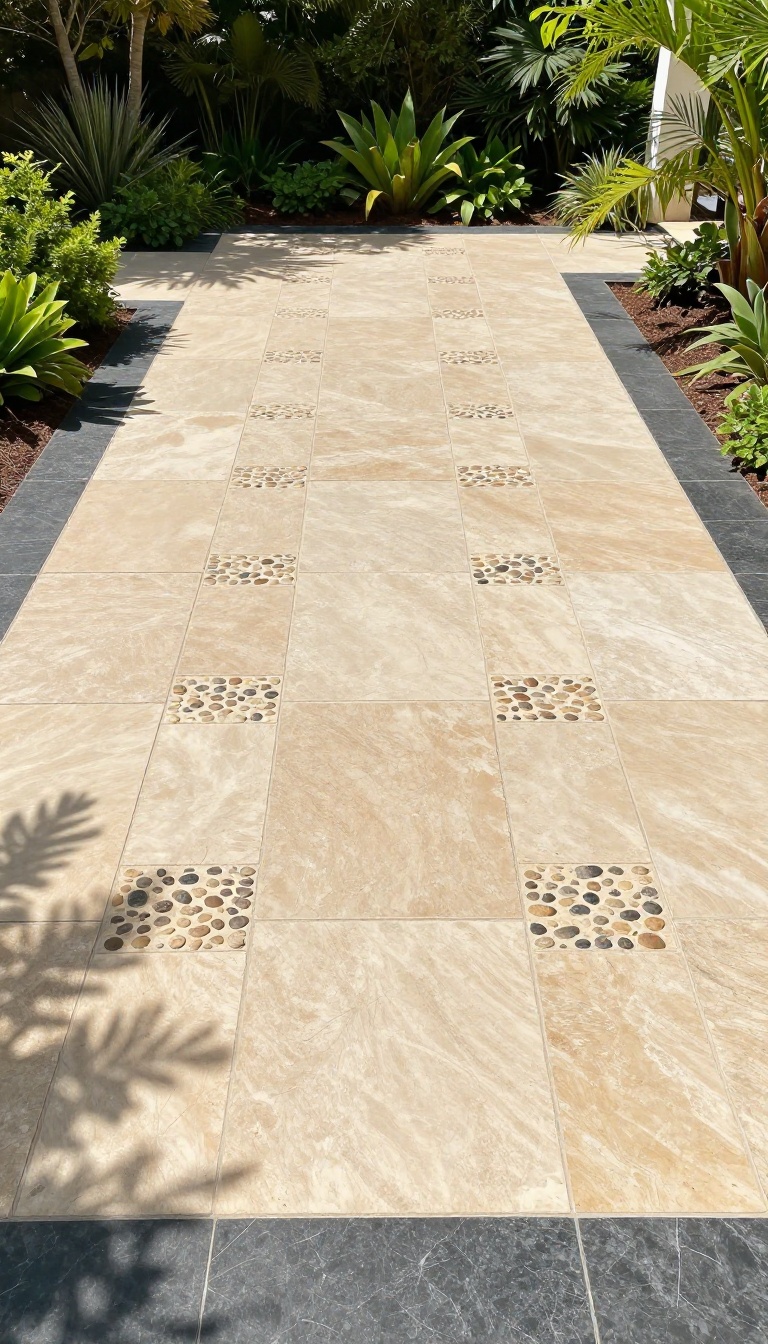
Mixing stone shapes and sizes turns a plain patio into a one-of-a-kind feature. It’s a way to add rhythm and movement without extra furniture or plants. You can play with contrast or keep it subtle—either way, the result feels intentional and artistic.
Start by laying large rectangular pavers as the main field, then weave in smaller squares or cobbles for texture. This creates a mosaic-like surface that catches the eye. For a cleaner look, use the same stone type but vary the sizes.
For more drama, pair warm flagstone with cool bluestone or add a band of dark basalt around the edges.
Define Zones With Contrasting Borders
A border of different stone instantly separates the dining area from the lounging spot. Use a contrasting color like charcoal or a lighter tone to outline the patio. This not only adds visual interest but also guides foot traffic naturally.
It’s an easy way to make the space feel more organized.
Mix Shapes For A Custom Mosaic
Instead of uniform rectangles, try combining random flagstones with small square pavers. The irregular edges create a puzzle-like effect that looks handcrafted. Keep the mortar joints tight for a smoother surface, or leave them wider for a more rustic feel.
This approach works especially well in gardens or courtyards.
Balance Color And Texture
Too many contrasting colors can feel chaotic, so pick one dominant tone and use the other as an accent. For example, pair warm travertine with deep brown slate. Also, think about texture: smooth, tumbled stones feel different underfoot than rough, cleft ones.
Mixing textures adds depth without overwhelming the eye.
8. Stone Patio with a Pebble Mosaic Inset
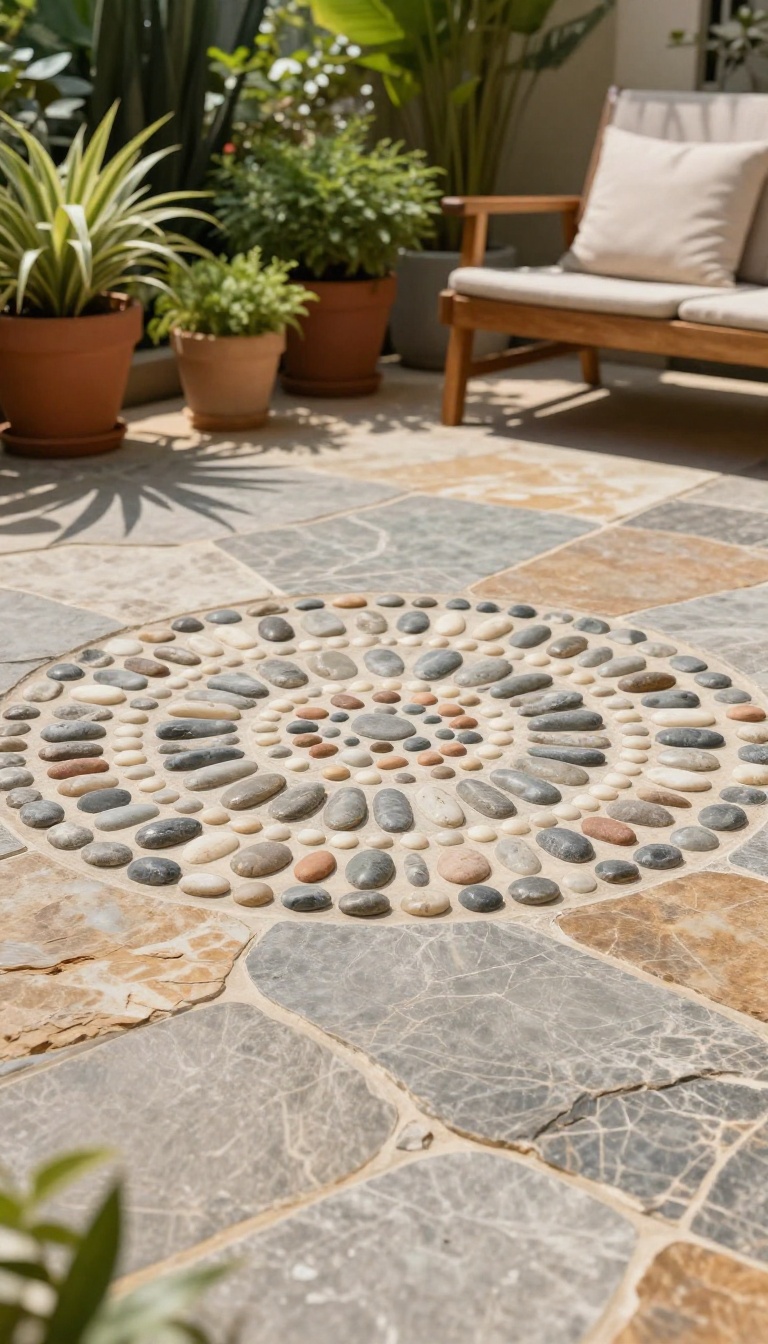
Sometimes a patio needs a little extra flair without going overboard. A pebble mosaic inset delivers that perfectly—it adds a decorative focal point that draws the eye and gives the space character. Whether you embed a medallion in the center or weave a pebble path through the stone, this technique brings color and pattern into the mix without overwhelming the overall design.
Pebble mosaics have been used for centuries, from ancient Roman villas to modern courtyards. The beauty lies in their versatility: you can create intricate geometric designs or keep it organic with flowing curves. The pebbles themselves come in a range of colors—from cool grays to warm earth tones—so you can match them to your existing stone or introduce a subtle contrast.
Plus, the texture adds a tactile element that makes the patio more inviting underfoot.
Design Ideas For Your Mosaic
Think about what you want the mosaic to do. A large medallion in the center of the patio can anchor a seating area, while a border along the edges adds a neat frame. If you have a walkway leading to the patio, a pebble path with a matching motif can tie everything together.
For a more organic feel, let the mosaic flow in a freeform shape that mimics a riverbed.
Installation Tips And Considerations
You can install pebble mosaics directly into a concrete base or use pre-cast mosaic tiles that are easier to handle. If you're doing it yourself, plan your design on paper first and then transfer it to the ground. Use a mortar bed that's thick enough to embed the pebbles securely.
Allow plenty of time for the mortar to cure before walking on it. Also, consider sealing the mosaic to protect it from stains and to enhance the colors.
Maintenance And Durability
Pebble mosaics are surprisingly durable, especially when installed properly. They can handle foot traffic and outdoor weather, but they do need occasional cleaning. A gentle rinse with a hose and a soft brush will keep the pebbles looking fresh.
Avoid using harsh chemicals that could damage the mortar or the pebbles themselves. With minimal care, your mosaic will stay beautiful for years.
9. Bluestone for a Classic, Formal Appearance
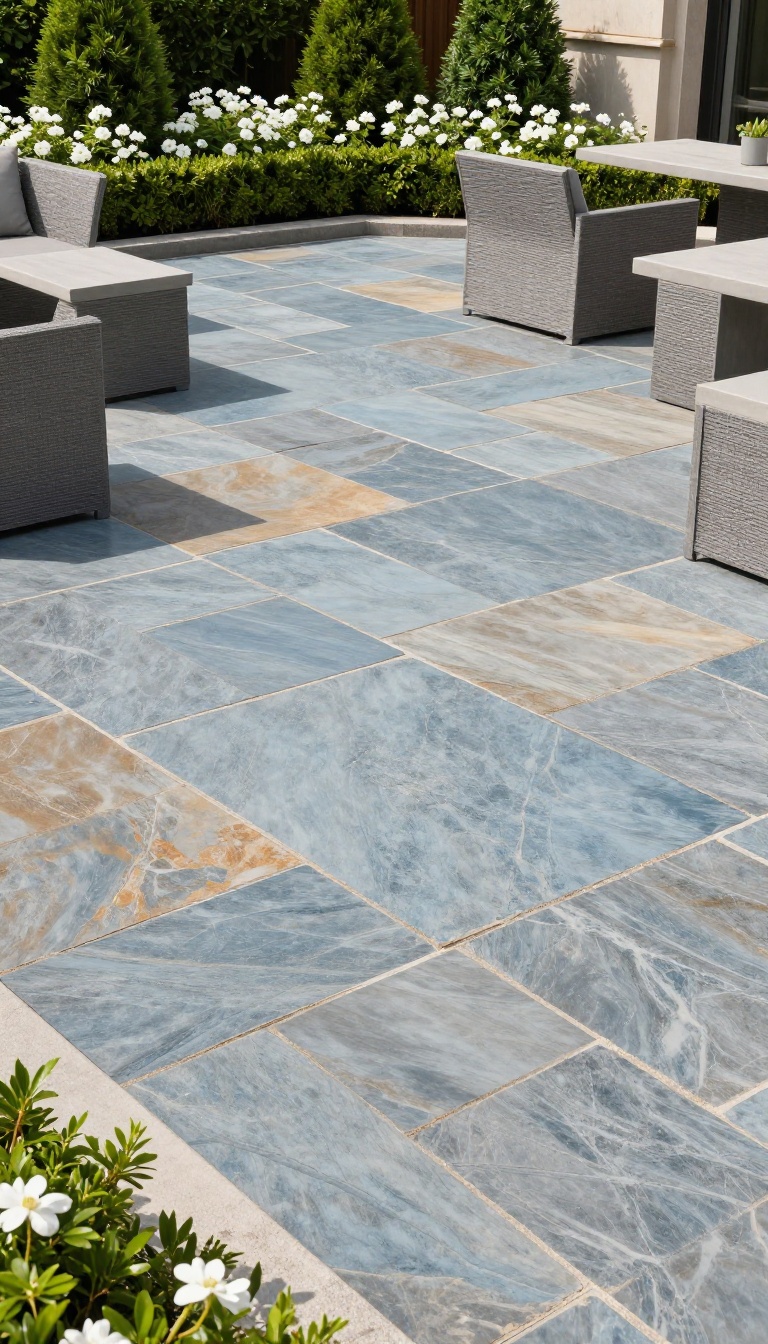
When you want a patio that feels polished and intentional, bluestone is a go-to. Its clean lines and subtle color shifts—from soft blue-grays to warm browns—give it a refined look that works with both traditional and modern homes. Plus, it’s tough enough to handle heavy foot traffic and weather, so it’s as practical as it is pretty.
Bluestone is a natural quarried stone that’s prized for its durability and timeless aesthetic. It’s often used in formal gardens or upscale outdoor spaces because it doesn’t scream for attention—it quietly elevates. The stone’s surface can be left natural for a slightly textured feel or thermal-treated for a smoother, more consistent finish.
Either way, it resists cracking and chipping, making it a smart long-term investment.
Why Bluestone Reads As Formal
Bluestone’s appeal lies in its restraint. The muted palette and uniform thickness (when cut as pavers) create a neat, orderly surface that feels intentional. That’s why it’s a favorite for symmetrical layouts, straight-edged borders, or geometric patterns.
It doesn’t compete with your landscaping—it complements it.
Two Finishes To Consider
Natural cleft bluestone has a rugged, slightly uneven surface that adds character and better slip resistance. Thermal bluestone is heat-treated to create a smooth, even texture that feels softer underfoot and is easier to clean. For a formal look, thermal is often the better pick; for a touch of rustic charm, natural cleft works nicely.
Laying Patterns That Work
Bluestone can be laid in a running bond, herringbone, or as large rectangular slabs. For a classic formal appearance, choose a consistent pattern with minimal grout lines. A random rectangular layout with varied sizes can also look elegant if the joints are tight and the stone colors are kept within a similar range.
Care And Maintenance
Bluestone is low-maintenance. Sweep regularly and rinse with a hose to keep dirt from settling into the surface. Sealing is optional but can help resist stains and make cleaning easier.
Avoid harsh chemical cleaners—warm water and mild soap are enough. With basic care, a bluestone patio can look great for decades.
10. Travertine Pavers for a Timeless, Cool Surface
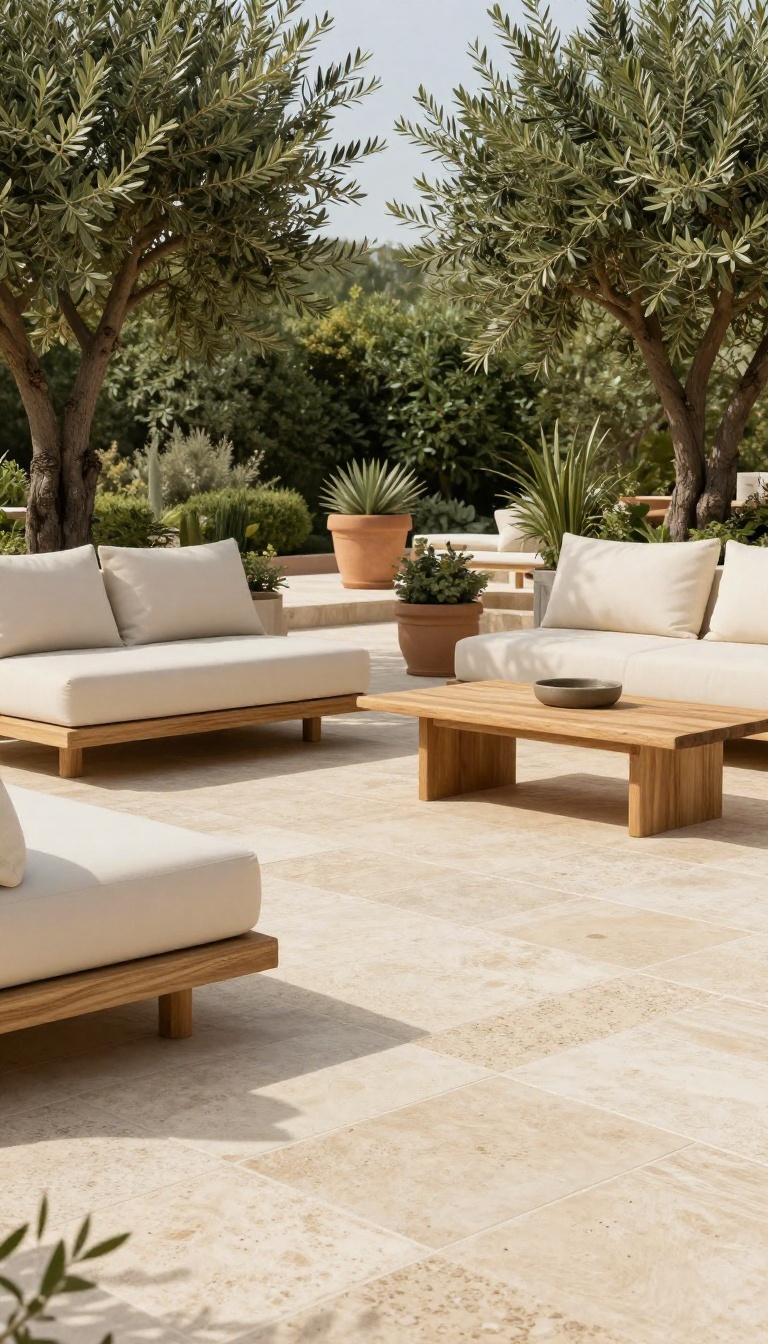
If you live somewhere the sun beats down hard, you know the pain of stepping barefoot onto a scorching patio. Travertine solves that in a way few other stones can. It naturally stays cool underfoot, even in the middle of a blazing afternoon, which makes it a favorite in hot climates like Arizona, Texas, and the Mediterranean.
But travertine isn't just practical. Its soft, earthy tones—ranging from ivory to walnut—bring a warm, Old-World elegance that feels at home with both modern and traditional architecture. The stone's naturally pitted surface adds subtle texture, though you can opt for filled travertine if you prefer a smoother finish for lounging or dining areas.
Travertine is a type of limestone formed in hot springs, which gives it that distinctive porous character. Those tiny holes and troughs are part of its charm, but they also mean the surface isn't perfectly even. For most patios, unfilled travertine works fine, especially in poolside areas where traction matters.
But if you're planning to set up a dining table or lounge chairs, you might want to go with filled and honed travertine for a silky-smooth feel. One of the biggest perks is that travertine doesn't absorb and hold heat the way concrete or darker stone does. It stays pleasantly cool, so you can walk barefoot even at high noon.
That's a game-changer for summer afternoons. Plus, the neutral palette pairs beautifully with greenery, water features, and outdoor furniture in almost any color. Installation is a bit more involved than pouring concrete, but the payoff is worth it.
Travertine pavers are typically set on a gravel and sand base, which allows for drainage and prevents cracking. Over time, the stone develops a lovely patina that only adds to its character. And if a paver ever cracks or stains, you can replace it individually without redoing the whole patio.
Why Travertine Stays Cool
The secret is in the stone's structure. Travertine is full of tiny air pockets, which act as insulation. That means heat doesn't transfer quickly from the surface to your feet.
In contrast, dense stones like granite can get scorching hot. So if you're in a warm region, travertine is one of the most comfortable choices you can make for a barefoot-friendly patio.
Filled Vs. Unfilled Travertine
Unfilled travertine has an open, pitted texture that provides excellent slip resistance—perfect around pools. But those pits can collect dirt or make it tricky to clean spills. Filled travertine has those holes leveled with a cementitious grout, resulting in a smoother, more uniform surface.
It's easier to wipe down and feels nicer underfoot for dining or lounging. You can also choose a tumbled finish for a more rustic look or a honed finish for a sleek, matte feel.
Design Ideas With Travertine
Travertine works well in large, uniform squares for a clean, contemporary look, or in a random pattern with varied sizes for a more traditional, old-world vibe. You can mix it with gravel or ground cover between pavers for a softer, more natural feel. And because travertine comes in a range of earth tones, you can pick a shade that complements your home's exterior or landscape.
For a cohesive design, use the same stone for a walkway or pool coping to tie the whole space together.
11. Stone Patio with a Built-In Fire Pit
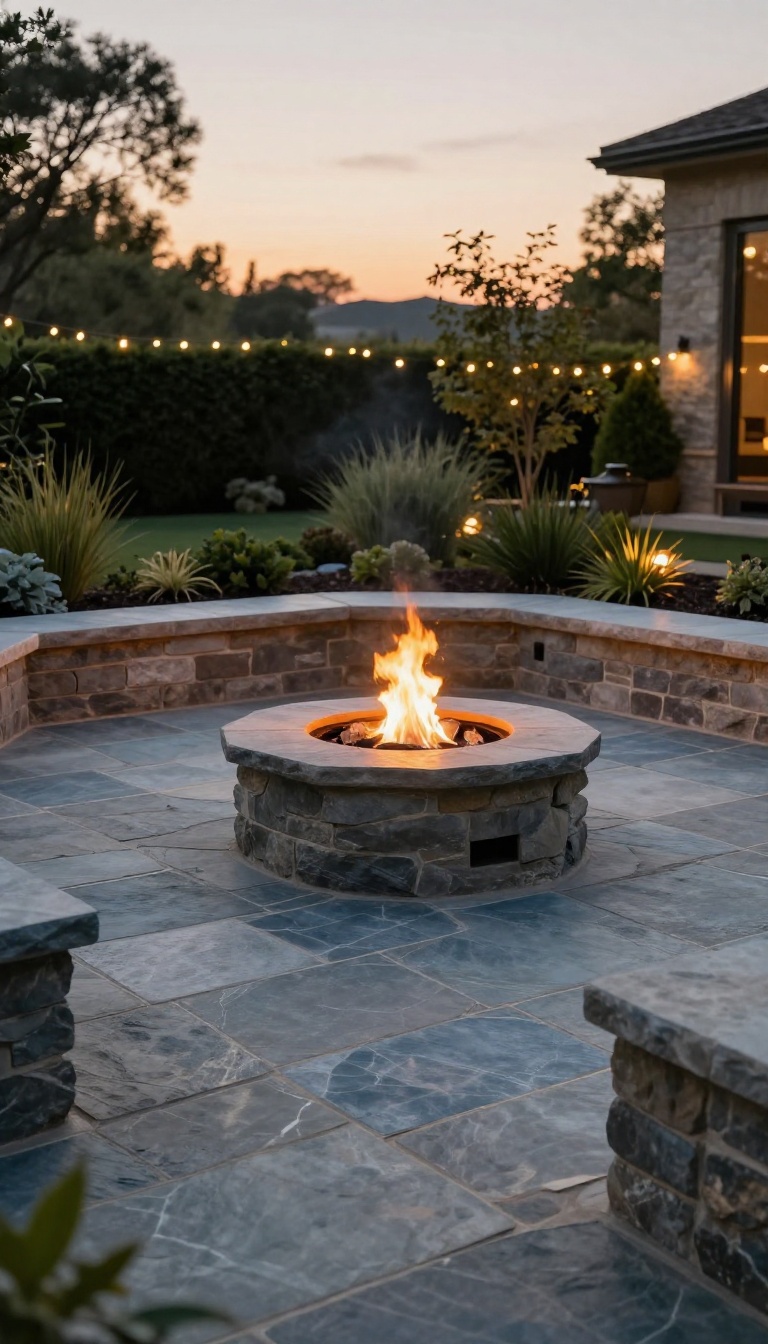
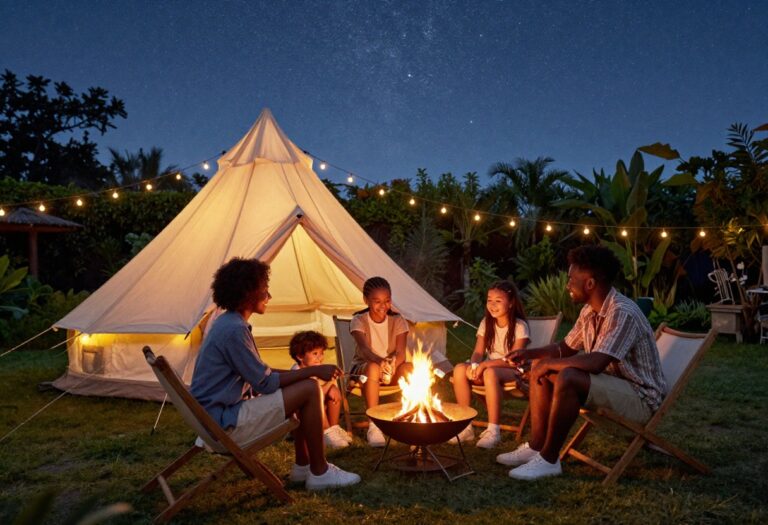
A fire pit does more than warm your hands—it becomes the heart of your patio. When you build it from the same stone as the floor, the whole space feels like one intentional design. No mismatched materials, no visual clutter, just a seamless gathering spot that works from spring through fall.
Pairing a stone patio with a matching fire pit creates a natural focal point. The continuity of material makes the area feel larger and more cohesive. Plus, you can choose stones that retain heat well, so the fire pit radiates warmth efficiently and the surrounding stone stays comfortable underfoot.
Why Matching Stone Works
When the patio and fire pit share the same stone, your eye travels smoothly across the space. This creates a unified look that feels custom and polished. It also simplifies maintenance—you only need one type of sealer and cleaning routine.
Best Stone Choices For Fire Pits
Go with dense, heat-resistant stones like granite, basalt, or bluestone. Avoid porous stones like limestone or sandstone, which can crack or discolor from high heat. A thermal finish on the patio surface adds slip resistance and a subtle texture that looks great around the flames.
Design Tips For A Cohesive Layout
Lay the patio stones first, then build the fire pit base on top. Keep the pit's height around 16–18 inches for easy seating. Extend the seating ledge with the same stone for a clean, built-in look.
Leave a gap between the fire pit and the patio for proper drainage.
12. Stone Patio with a Retaining Wall or Raised Beds
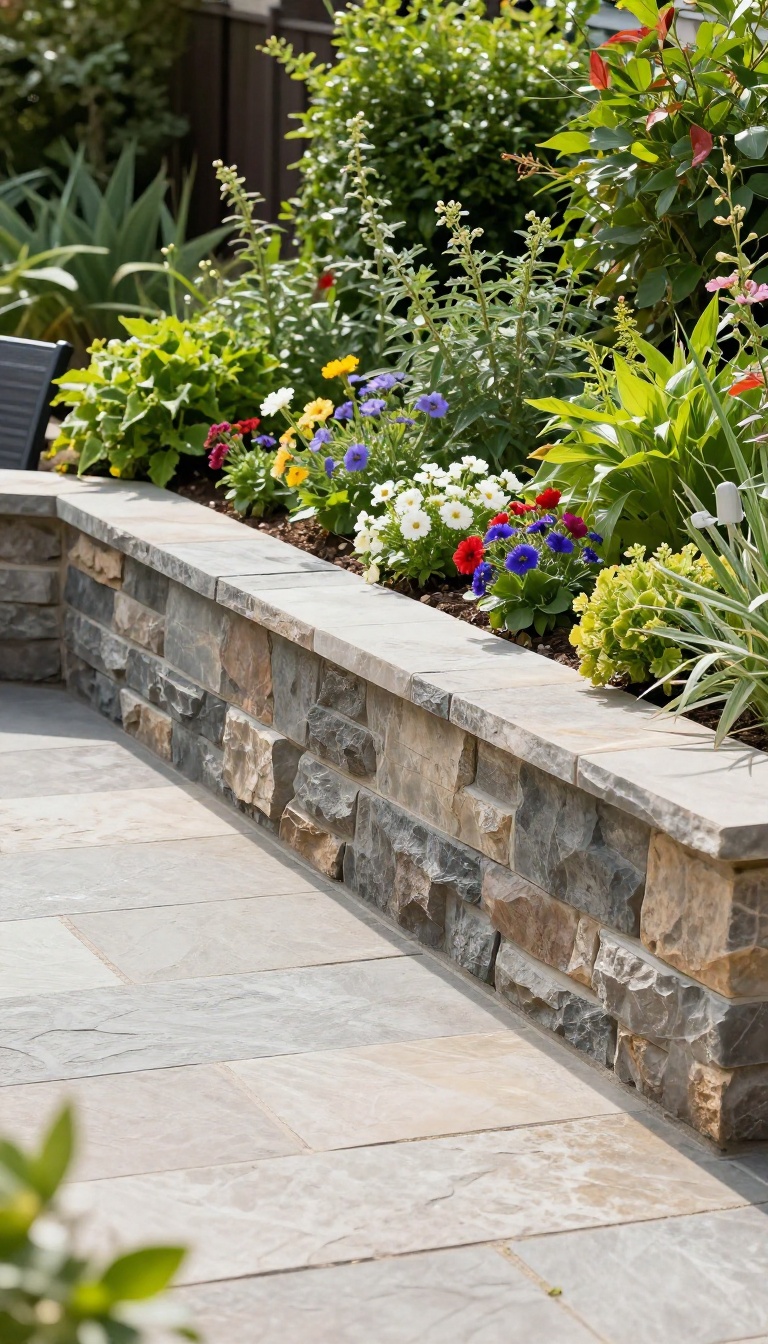
A flat, level patio can feel a little one-note. Adding a retaining wall or raised beds changes the whole dynamic. It gives the space structure, creates visual interest, and solves practical problems like sloping ground.
Plus, you get extra planting opportunities right at the edge of your seating area.
This approach works especially well on sloped lots, where you need to level out the ground anyway. Instead of just pouring concrete, you can build a stone retaining wall that holds back the soil and doubles as a design feature. The wall adds depth and dimension, making the patio feel more like an outdoor room.
You can also use raised beds to frame the patio, softening the hardscape with greenery and flowers.
Taming A Sloped Yard
If your backyard slopes away from the house, a retaining wall is often necessary to create a usable flat area. But you don't have to hide it—choose a natural stone that complements your patio and let the wall become a focal point. A curved wall can soften the transition between levels, while a straight wall gives a more formal look.
Either way, you'll turn a problem into an opportunity.
Adding Planting Opportunities
Raised beds built from the same stone as your patio create a cohesive look. They're perfect for growing herbs, flowers, or even small shrubs. The height makes them easier to tend, and they add a layer of greenery that contrasts nicely with the hard stone.
You can also use the top of a retaining wall as a shelf for potted plants, adding flexibility to change things up with the seasons.
Choosing The Right Stone
For a retaining wall, you'll want stone that's sturdy and weather-resistant. Options like flagstone, limestone, or manufactured stone veneer all work well. If you're using the same stone for the patio and the wall, it ties everything together.
But you can also mix materials—say, a bluestone patio with a fieldstone wall—for a more rustic feel. Just make sure the wall is properly engineered for drainage and stability.
13. Stone Patio with a Permeable Base for Eco-Friendly Drainage
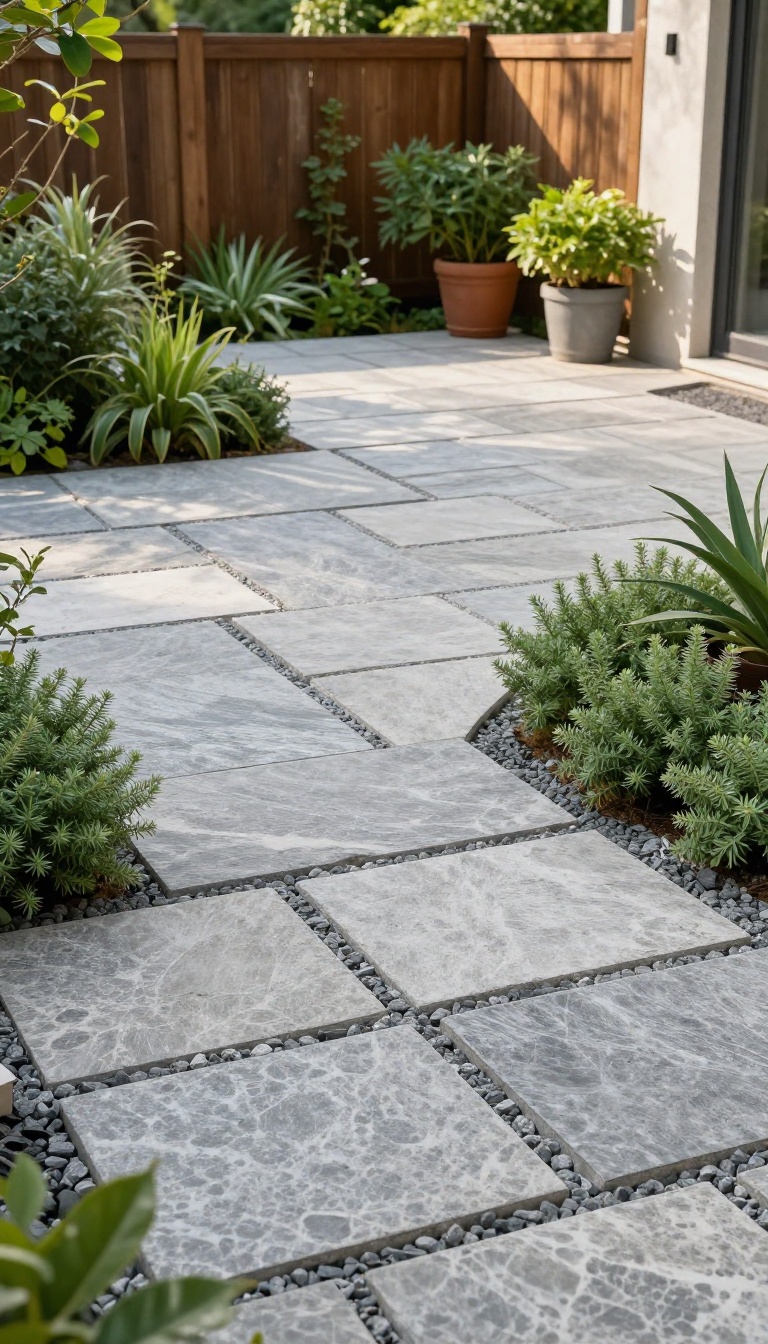
Heavy rain can turn a solid patio into a puddle magnet, especially if the ground slopes toward your house. A permeable stone patio solves that by letting water drain right through the surface. It's a smart, low-maintenance choice for anyone dealing with runoff or soggy spots.
The secret lies in the base and joints. Instead of a solid concrete slab, you use an open-graded crushed stone base that allows water to pass through. The joints between the stones are filled with gravel or even grass, so rainwater filters down naturally.
This reduces surface runoff and helps recharge groundwater.
What Makes It Permeable
Permeable patios rely on three layers: a deep gravel base, a layer of smaller stones, and the surface stones with wide gaps. The gaps are key—they should be at least 1/4 inch wide. You can fill them with pea gravel, decomposed granite, or even creeping thyme for a softer look.
Best Stone Choices
Flagstone and travertine work well because they can be cut into irregular shapes with natural gaps. If you prefer a more uniform look, use rectangular pavers with spacers. Avoid stones that are too brittle or have smooth surfaces, as they can shift or become slippery when wet.
Installation And Maintenance
Installing a permeable patio takes more preparation than a standard one, but it's not overly complicated. You'll need to excavate deeper to accommodate the gravel base. Once in place, maintenance is easy—just occasionally top up the gravel joints and sweep away debris.
If you use grass, water it during dry spells to keep it lush.
FAQ
What is the best stone for a patio that gets a lot of sun?
Light-colored stones like limestone or travertine are best for sunny areas because they reflect heat and stay cooler underfoot. Darker stones like slate or bluestone can become uncomfortably hot.
How much does a stone patio cost compared to concrete?
Stone patios generally cost more than poured concrete, ranging from $15 to $30 per square foot installed, while concrete is often $6 to $12. However, stone offers greater durability and aesthetic appeal, which can increase property value.
Do I need to seal my stone patio?
Sealing is recommended for porous stones like flagstone or limestone to prevent stains and weathering. It also enhances color. Consult your stone supplier for the right sealer and reapply every few years.
Can I install a stone patio myself?
Small, simple patios with pre-cut pavers on a sand base can be DIY-friendly. However, larger or more complex installations with mortar or heavy stones are best left to professionals to ensure proper drainage and longevity.
How do I prevent weeds from growing between stone joints?
Use polymeric sand or jointing compound that hardens and blocks weed growth. Alternatively, you can plant creeping thyme or other low-growing ground covers for a natural look.
Conclusion
Stone patios shine when they feel like they’ve always been part of your yard, not just added on. Start with one idea that solves a real issue—whether it’s uneven ground, a boring corner, or too much glare—and let that guide your material and layout choices. Texture and contrast do the heavy lifting, so mix sizes, shapes, and colors with confidence.
The best part is that stone rewards patience. A simple flagstone path or a stacked-stone fire pit can transform how you use the space without requiring a full overhaul.