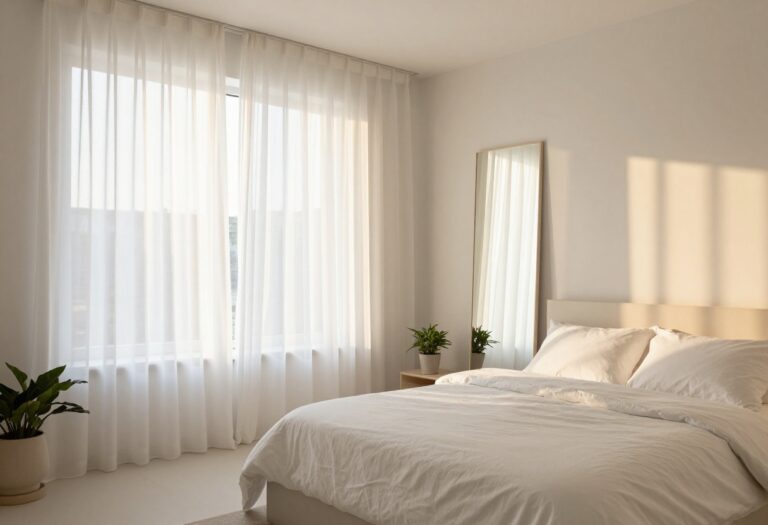
13 Dining and Living Room Combo Ideas for a Home That Feels Finished
Combining a dining and living room can feel like a design puzzle. You want the two zones to flow together without looking like a furniture showroom. The secret is balance—letting each area keep its purpose while sharing a cohesive vibe.
Light and airy spaces thrive on simplicity. Think soft neutrals, natural textures, and just enough contrast to keep things interesting. When done right, the result feels open, calm, and effortlessly put together.
Here are 13 ideas to help you create a dining and living room combo that feels finished, not forced. Each one focuses on practical styling that you can adapt to your own home.
1. Float a Sofa to Define the Zones
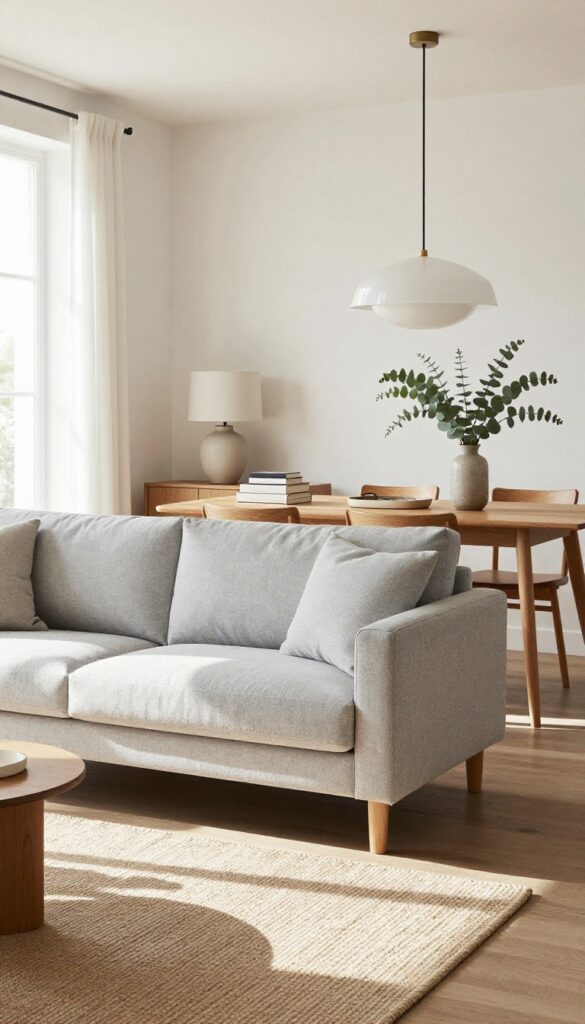
In an open-concept dining and living room, the biggest challenge is making each area feel distinct without closing things off. Floating the sofa—positioning it away from the wall with its back to the dining table—creates a clear visual boundary that still lets light and conversation flow freely. The result is a space that feels both connected and intentionally arranged, with a natural rhythm that guides movement from one zone to the next.
Why It Works
This layout uses the sofa as a room divider without adding any bulky furniture or walls. It keeps the sightline open across the entire room, making the space feel larger and more airy. The back of the sofa becomes a functional surface when paired with a console table, offering a spot for decor, drinks, or extra storage.
Best For
Long, narrow open-plan rooms where you want to separate the living area from the dining area without losing the sense of openness. It also works well in rooms with a focal point like a fireplace or large window that you want to keep visible from both zones.
Styling Tip
Choose a sofa with a finished back—one that looks good from all angles. Place a slim console table behind it, about 6 to 12 inches away, and style it with a lamp, a few books, and a small tray for remotes or coasters. This creates a polished look from the dining side while adding function.
2. Use a Rug to Anchor Each Area
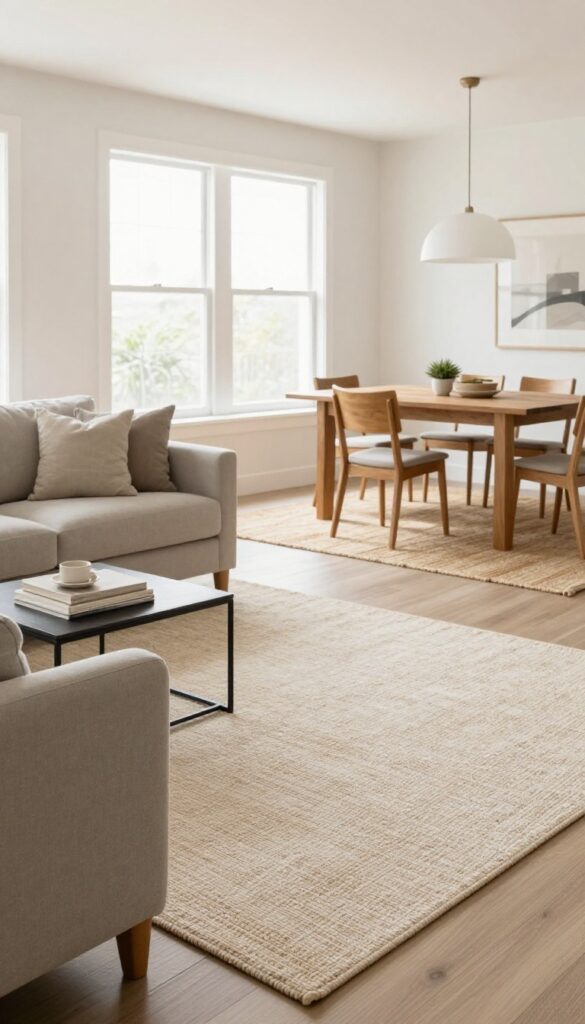
In an open-concept living and dining room, a single rug can leave both zones feeling a bit lost. Two rugs, on the other hand, create distinct islands of purpose without a single wall going up. The trick is choosing rugs that talk to each other—maybe a soft jute under the dining table and a wool flatweave in the living area, both in warm neutrals.
This way, the eye naturally moves from one space to the next, but each area feels grounded and intentional.
Why It Works
Rugs act like visual boundaries, defining the living area for lounging and the dining area for meals. When the rugs share a similar color story or texture, the whole room stays cohesive. Plus, the dining rug needs to be large enough for chairs to stay on it when pulled out, so no one catches a rug edge mid-meal.
Best For
Open-plan spaces where you want separate zones but don't want to block sightlines. It's especially effective in long, narrow rooms where furniture can feel like it's floating.
Styling Tip
Layering a smaller, patterned rug over a larger neutral one in the living area adds depth and a collected-over-time feel. Keep the dining rug solid or low-pattern to avoid visual clutter under the table.
3. Pick a Unified Color Palette
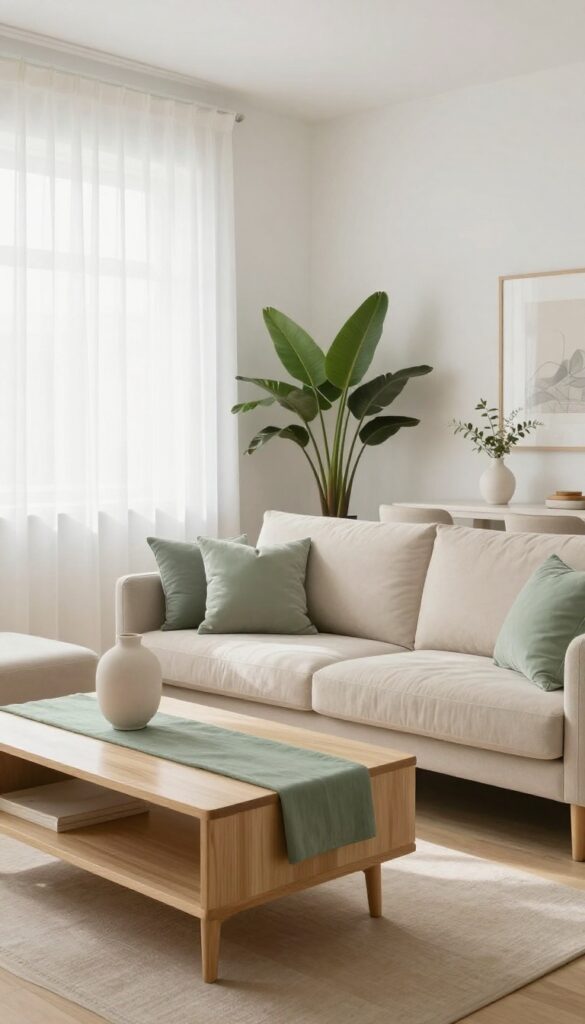
A light and airy dining-living combo starts with a cohesive color story. By limiting yourself to two or three main hues—like soft white, warm beige, and muted sage—you create a seamless visual flow that tricks the eye into seeing one larger, more open space. This isn't about matching everything perfectly; it's about choosing colors that naturally complement each other and repeat them across both zones.
The result is a calm, collected room that feels intentional and expansive, even if your square footage is modest.
Why It Works
A unified palette eliminates visual clutter and boundary lines between the dining and living areas. When your eye isn't jarred by contrasting color shifts, the space reads as a single, harmonious whole. This approach also makes the room feel larger because there are no abrupt stops or starts—just a gentle, continuous wash of color that expands the sense of depth.
Best For
This idea is perfect for open-plan layouts where you want a serene, uncluttered backdrop. It works especially well in rooms with limited natural light, because lighter, consistent colors bounce daylight around more effectively. If you're someone who loves a minimalist or Scandinavian aesthetic, a unified palette is your best friend.
Styling Tip
- Introduce your chosen colors through large surfaces first—walls, floors, and major furniture pieces. Then, echo those same hues in smaller accents like throw pillows, art, and table linens. For extra depth, add one neutral texture (like a chunky knit throw or a linen curtain) in a tone slightly lighter or darker than your main color.
- This keeps the palette cohesive without feeling flat.
4. Let Lighting Do the Dividing
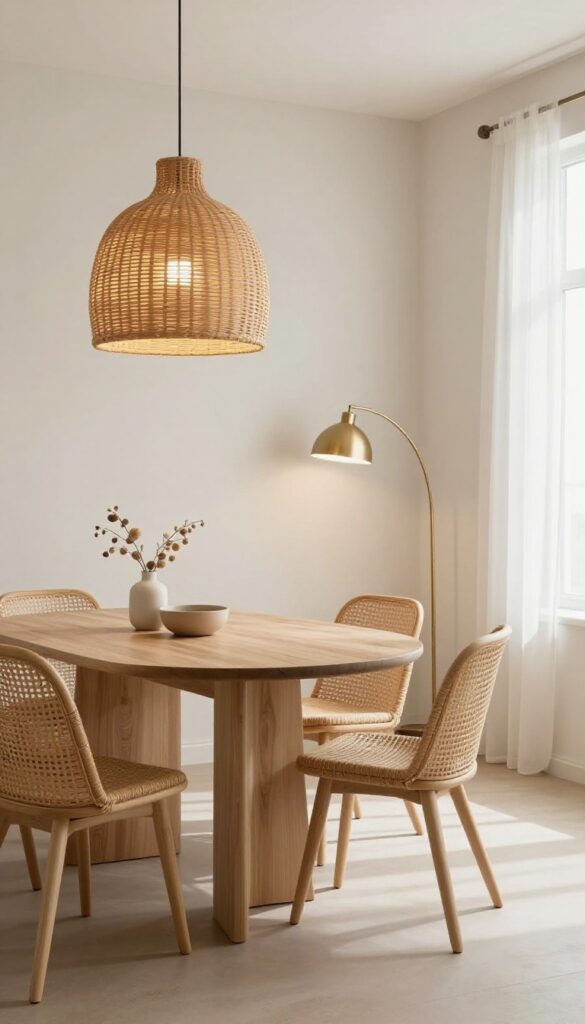
In an open-concept dining and living room, you don't need walls to create separation. A smart lighting plan can quietly carve out distinct zones while keeping the space feeling open and airy. Hang a sculptural pendant or a slim chandelier low over the dining table to anchor that area, and use a floor lamp or a flush-mount fixture in the living zone to mark a cozier spot.
The trick is to choose fixtures that share a common finish—like brushed brass or matte black—so the whole room still feels connected.
Why It Works
Lighting naturally draws the eye, so different fixtures create visual boundaries without blocking sightlines or light flow. The contrast in height and intensity helps each zone feel purposeful, while the matching finish keeps the look cohesive.
Best For
This idea works well in long, rectangular open-plan rooms where you want to avoid a tunnel effect. It's also great for renters who can't build walls but can swap out light fixtures.
Styling Tip
For a light and airy feel, choose a rattan or woven pendant over the table and a slim arc floor lamp in the living area. Stick to warm white bulbs (2700K) to keep the glow soft and inviting.
5. Go for a Glass Dining Table
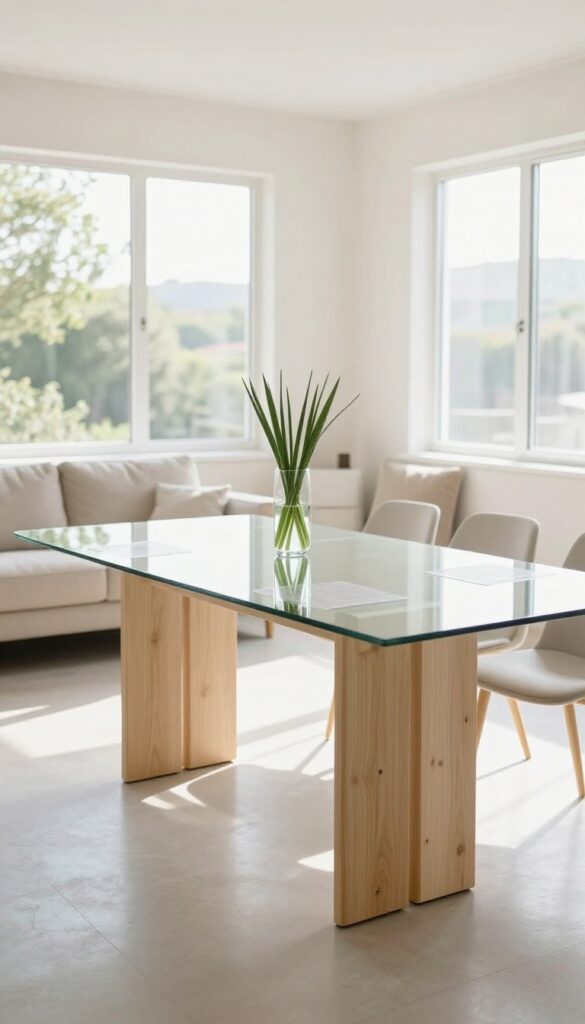
A glass dining table is one of those pieces that quietly does a lot of heavy lifting in a combined living and dining space. Instead of a bulky wooden slab that visually chops the room in half, the transparent surface lets your eye travel straight through, making the whole area feel larger and more connected. It’s especially effective in rooms where natural light is limited, since the glass reflects whatever daylight is available and keeps the space feeling bright and breezy.
Why It Works
The transparent surface eliminates visual weight, so the dining zone doesn’t compete with the living area for attention. Light passes through and bounces off the glass, which helps the room feel more open and airy. This is especially valuable in open-concept layouts where you want distinct zones without any hard barriers.
Best For
Small to medium-sized combined rooms where you need a dining surface but don’t want it to dominate the space. It’s also great for rooms with limited natural light, because the glass helps bounce light around rather than absorbing it like a solid wood table would.
Styling Tip
Pair the glass top with slim, light-colored legs—think pale oak, white metal, or clear acrylic—to keep the airy look going. Use sheer or light-colored placemats and a simple centerpiece like a single branch or a few stems in a clear vase. Avoid heavy tablecloths or dark runners that would defeat the purpose.
6. Create a Continuous Gallery Wall
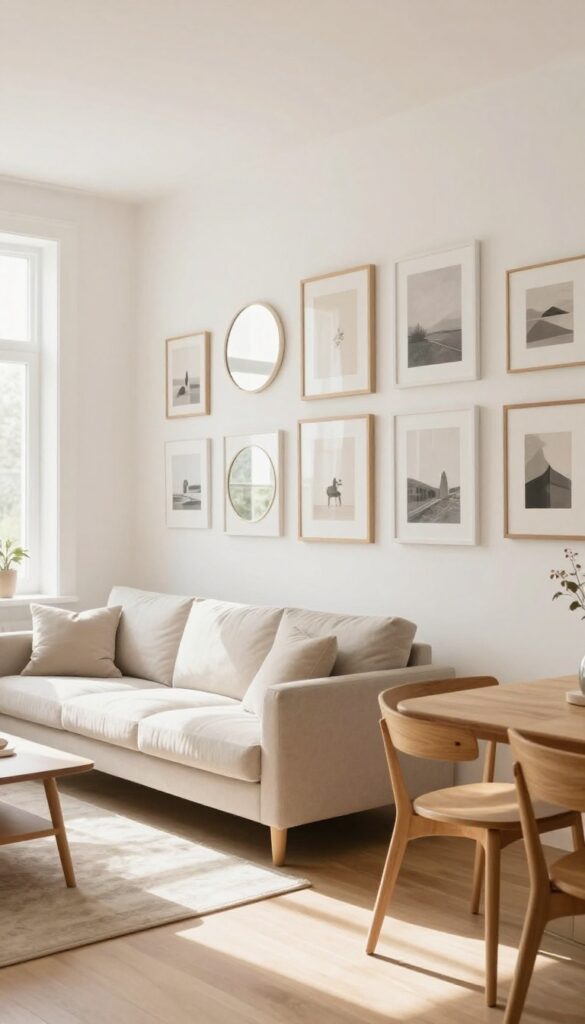
A gallery wall doesn’t have to stop at the edge of your sofa. By letting it flow from the living area into the dining zone, you create a visual bridge that pulls the whole space together. The repetition of frames and art across both areas makes the room feel intentionally designed rather than accidentally arranged.
Light, airy tones in the artwork and matting keep the look fresh and open.
Why It Works
A continuous gallery wall establishes a strong horizontal line that guides the eye across the entire room, making the combined space feel larger and more cohesive. The consistent frame style and spacing create a rhythm that subtly unifies the two zones without needing physical dividers.
Best For
Open-plan living and dining rooms where the two areas feel disconnected or awkwardly shaped. It’s also great for renters who can’t paint or add permanent walls but want a clear visual link between zones.
Styling Tip
Stick to one frame color—like white, light wood, or slim black—and use the same spacing (about 2–3 inches) between each piece. Mix in a couple of round or oval mirrors to add variety and reflect natural light, which keeps the wall from feeling too heavy.
7. Choose Slim and Streamlined Furniture
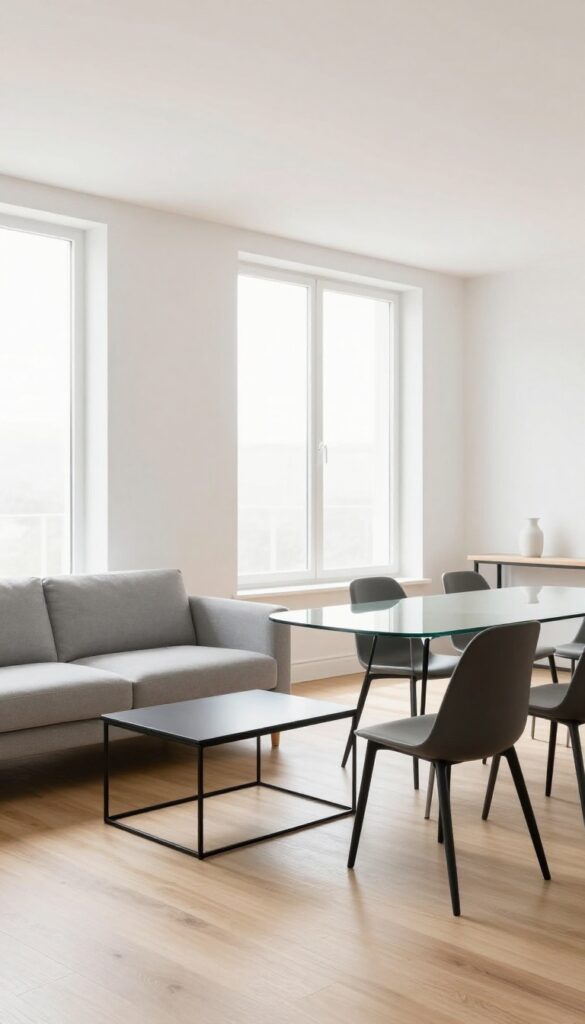
Bulky furniture can quickly overwhelm a combined dining and living area, making it feel cramped and heavy. The trick is to select pieces that take up less visual space while still providing comfort and function. Think sofas with exposed legs, dining chairs with slender frames, and a console table that doesn't dominate the room.
This approach keeps the layout open and the atmosphere light, so the room breathes easier.
Why It Works
Slim furniture creates a sense of airiness because it leaves more negative space around and beneath each piece. Exposed legs allow light to flow under sofas and chairs, making the floor area feel larger. Streamlined shapes also reduce visual clutter, which is especially important in a combo space where two zones need to coexist without competing for attention.
Best For
This idea works well in smaller or narrow open-plan rooms where every inch counts. It's also a smart choice for apartments with low ceilings, since low-profile furniture won't make the ceiling feel lower. If your style leans modern, Scandinavian, or mid-century, streamlined pieces will feel right at home.
Styling Tip
To keep the look cohesive, repeat a similar leg finish—like black metal or light wood—across your sofa, dining chairs, and side table. This subtle repetition ties the two zones together without adding bulk. Also, consider a glass-top dining table; the transparent surface practically disappears, reinforcing the light and airy feel.
8. Add a Statement Mirror
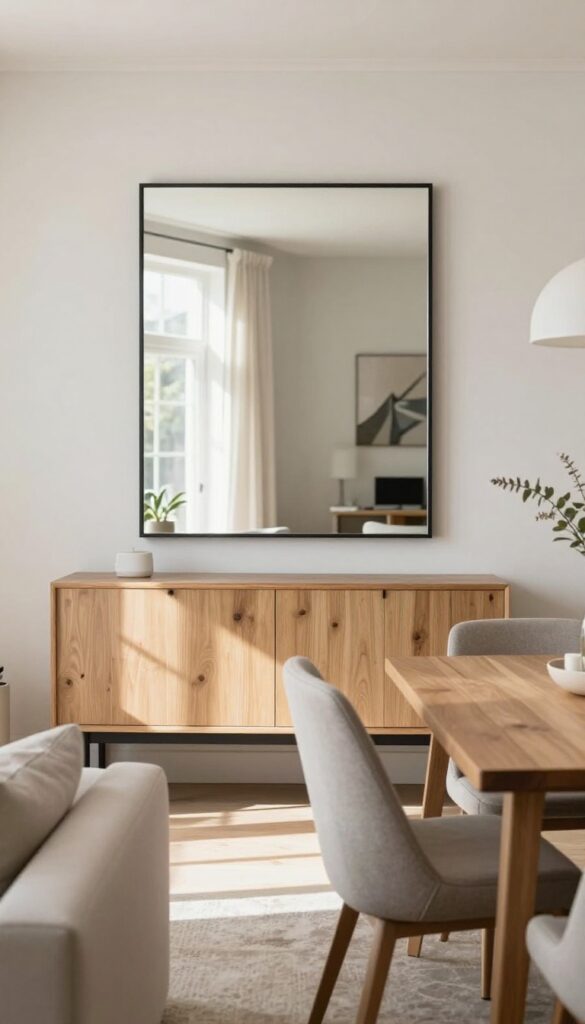
Mirrors are a classic trick for making any room feel larger and brighter, and in a combined dining and living space, they pull double duty. A well-placed mirror above the sofa or sideboard catches natural light and bounces it around the room, instantly lifting the whole area. The right frame adds personality without overwhelming the clean, airy vibe you're going for.
Why It Works
A large mirror reflects both the dining and living zones, visually expanding the room and creating a sense of flow. It also acts as a decorative anchor, drawing the eye and making the space feel more intentional.
Best For
This idea shines in narrow or windowless rooms where natural light is limited. It's also perfect for open layouts that need a unifying element without adding bulky furniture.
Styling Tip
Choose a frame that matches your room's finish—thin black metal for a modern look, natural wood for warmth, or an arched shape for softness. Hang it so it reflects a window or a pretty light fixture, not a cluttered corner.
9. Use Open Shelving as a Room Divider
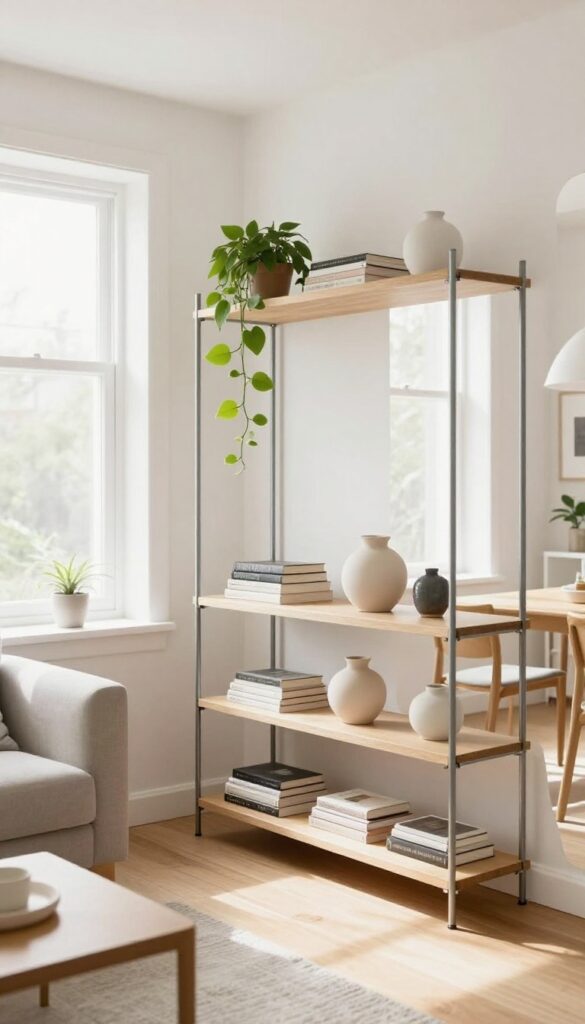
A low open shelf unit can work wonders in an open-plan space. It separates the dining and living zones without blocking light or views, keeping the room feeling open and connected. The key is choosing a design that feels airy—think slim metal frames or light wood with plenty of negative space.
Why It Works
Unlike solid partitions, open shelving maintains visual flow and natural light. It defines each zone while allowing the eye to travel through the piece, so the room still feels spacious. Plus, the shelves themselves become a curated display that adds character to both sides.
Best For
This idea is ideal for narrow or galley-style open layouts where a full wall or tall bookcase would feel too heavy. It also works well in rentals where permanent changes aren't an option. If your combo space gets limited natural light, a low shelf unit is a smart choice.
Styling Tip
Keep the styling minimal to avoid visual clutter. Arrange a few large objects—like a trailing plant, a stack of books, and a ceramic vase—with plenty of breathing room. Repeat similar colors or materials on both sides to tie the zones together.
10. Layer Textures for Warmth
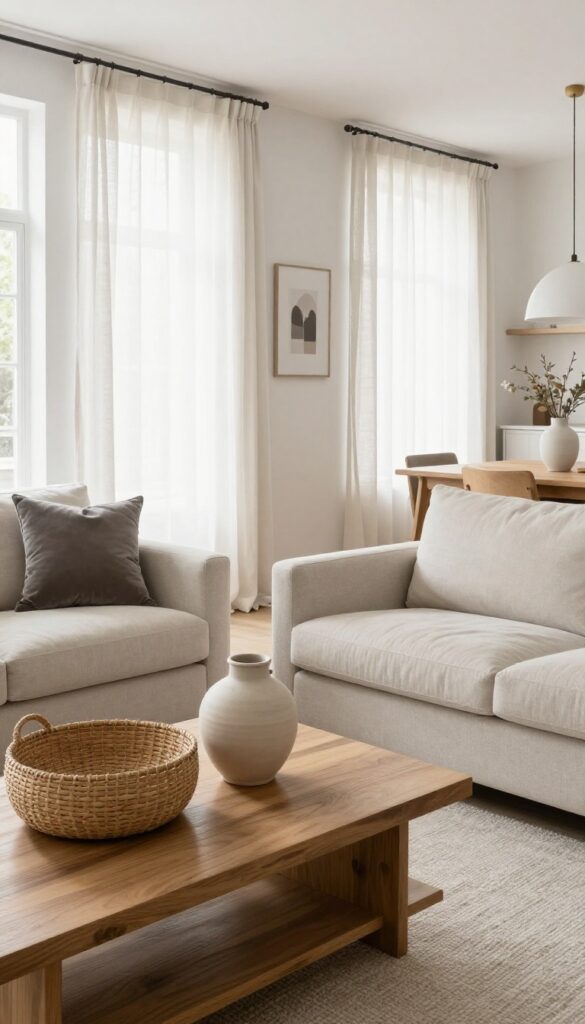
A light and airy room can sometimes feel a little one-note. That’s where texture comes in. By layering different materials—soft, rough, smooth, and woven—you add visual interest without introducing a single bold color.
Think linen curtains that catch the light, a chunky wool rug underfoot, velvet cushions on the sofa, and a matte ceramic vase on the coffee table. Each piece brings its own tactile quality, making the space feel collected and cozy rather than flat or sterile.
Why It Works
Texture creates depth in a neutral palette. When everything is white, beige, or gray, the eye needs variation to stay engaged. Mixing fabrics and finishes gives the room dimension and warmth, so it feels inviting rather than cold or unfinished.
Best For
Open-concept living and dining combos where you want a cohesive, calm look. It’s especially effective in rooms with lots of natural light, because the sun highlights each texture throughout the day.
Styling Tip
Stick to three or four textures to keep the look intentional. Pair a nubby wool rug with smooth linen curtains and a few velvet pillows. Add one natural element like a ceramic vase or a wooden tray to ground the scheme.
11. Incorporate Greenery Throughout
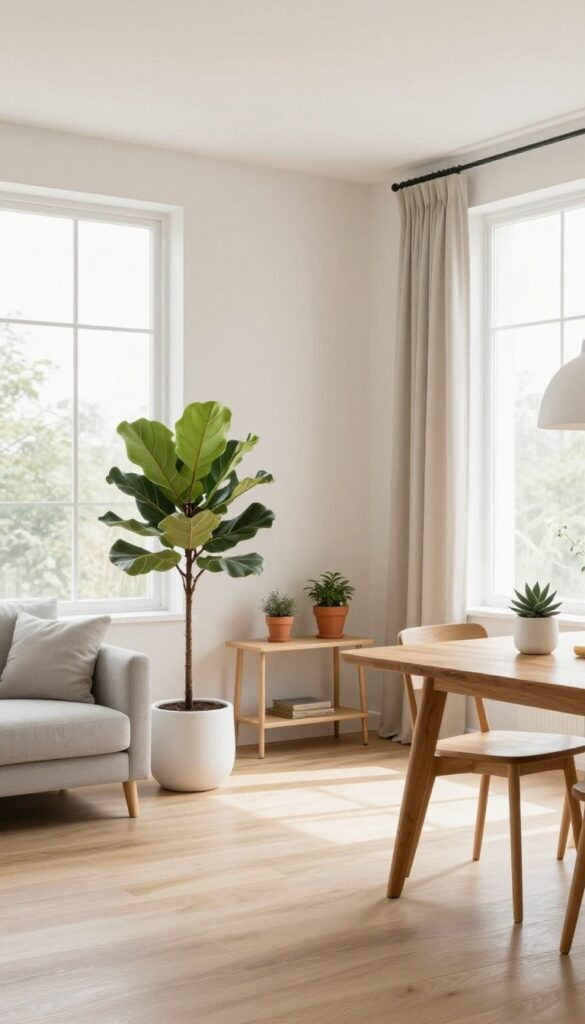
Nothing softens the line between living and dining areas quite like a few well-placed plants. In a light and airy room, greenery adds life without cluttering surfaces or blocking sightlines. A tall fiddle leaf fig by the sofa draws the eye up, while a small succulent centerpiece on the dining table keeps things grounded.
The trick is consistency: use matching pots or a uniform color palette so the plants feel intentional, not random.
Why It Works
Plants naturally bridge different zones by creating visual continuity. The same pots or similar leaf shapes tie the two areas together, making the whole room feel cohesive. Plus, the organic shapes and varied heights add depth and softness to clean, modern lines.
Best For
Open-concept rooms that need a subtle, natural divider. It’s also perfect for anyone who wants to bring the outdoors in without overwhelming the space.
Styling Tip
Stick to two or three plant varieties and repeat them in both zones. Use neutral ceramic pots in white, terracotta, or matte black to keep the look streamlined. Group smaller plants on a console table behind the sofa for extra impact.
12. Keep the Coffee Table Low and Simple
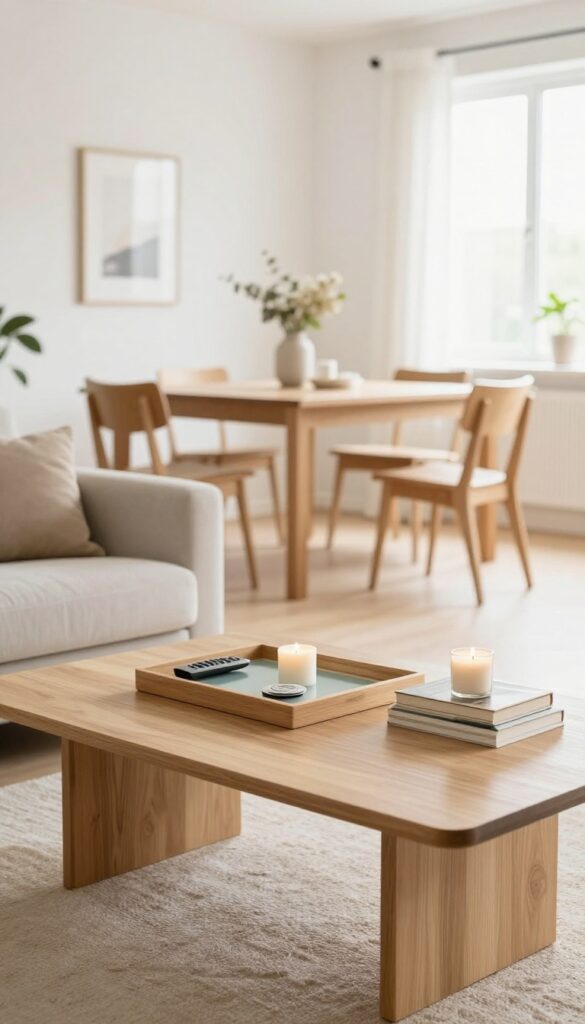
In an open living-dining room, the coffee table can easily become a visual competitor to the dining table. Choosing a low profile with a glass or light wood top keeps the line of sight clear and the space feeling airy. A simple, uncluttered coffee table lets the eye travel freely between the two zones, making the whole room feel larger and more cohesive.
Why It Works
A low coffee table sits below the visual horizon, so it doesn't block the view of the dining table or create a cluttered midpoint. Glass tops disappear into the room, while light wood echoes the natural tones often used in dining furniture. This subtle design choice preserves the open, connected feel of a combo space.
Best For
This idea works best in smaller or narrower open-plan rooms where you want to avoid visual weight in the center. It's also ideal for homes with a minimalist or Scandinavian style, where clean lines and light colors are key.
Styling Tip
Use a shallow tray to group remotes, coasters, and a small candle. Keep the rest of the surface clear—maybe one stack of books or a single small plant. The goal is to look intentional, not empty.
13. Add a Bench on One Side of the Dining Table
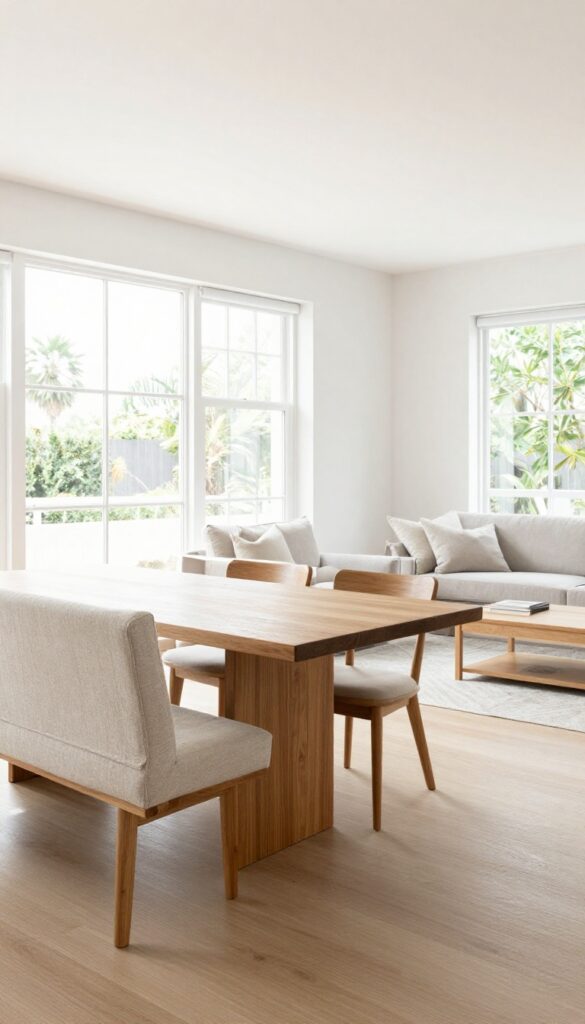
Swapping out chairs for a bench on one side of your dining table instantly shifts the energy of the room. It opens up the visual flow, making the dining area feel less cluttered and more connected to the living space. The bench’s low profile keeps sightlines clear, which is exactly what you want in a combined room that needs to feel light and airy.
Why It Works
A bench eliminates the visual weight of multiple chair backs, creating a cleaner line along one side of the table. This subtle change helps the dining zone blend into the living area rather than feeling like a separate, bulky piece of furniture. It also makes the space feel more casual and inviting, perfect for everyday meals or impromptu gatherings.
Best For
This idea shines in narrow or open-concept rooms where every inch of visual space matters. It’s also great for families or anyone who loves an easy, relaxed dining setup—no more pulling out chairs or squeezing around a crowded table.
Styling Tip
Choose a bench with slim, tapered legs and a light wood or neutral upholstery to keep the look airy. Add a few textured cushions in a soft linen or cotton for comfort without adding bulk. Keep the bench free of heavy throw pillows so it stays sleek and streamlined.
FAQ
How do I make a small dining and living room combo look bigger?
Use light colors, mirrors, and glass furniture. Keep the layout open by floating furniture instead of pushing it against walls. Choose multi-functional pieces like a console table that can double as a buffet.
What's the best way to separate the dining and living areas?
Rugs, lighting, and furniture placement are the most effective dividers. A sofa with its back to the dining area or a low shelf unit can define zones without closing off the space.
Can I use different styles in each zone?
Yes, but keep a common thread like color or material. For example, a modern sofa with a rustic dining table can work if both share a similar wood tone or neutral palette.
What colors work best for a light and airy combo space?
Soft whites, warm beiges, pale grays, and muted pastels like sage green or blush. These colors reflect light and create a calm, open feel.
How many rugs should I use in a combined room?
Two rugs—one for each zone—can help define the areas. Make sure they coordinate in color or texture to keep the room cohesive. Avoid rugs that are too small for the furniture.
Conclusion
Blending your dining and living room doesn't have to be complicated. With a few thoughtful choices—like floating furniture, layered lighting, and a unified color palette—you can create a space that feels both open and intentional. The goal is to let each area breathe while still feeling like part of a whole.
Start with one or two ideas that resonate with your space, and build from there. Small changes like swapping a bulky table for a glass one or adding a rug can make a surprising difference.