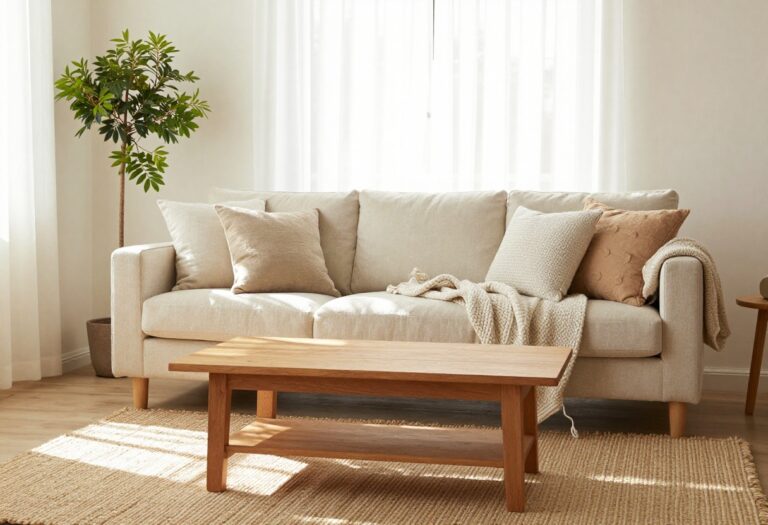
13 Cottage Living Room Ideas to Instantly Refresh Your Space
Cottage style doesn't have to mean frilly curtains and overstuffed furniture. A modern take keeps the warmth but adds clean lines and a breathable feel. Think light woods, soft neutrals, and just enough texture to keep things interesting.
These 13 ideas are designed to refresh your living room without a full renovation. Each one focuses on a specific swap, addition, or styling trick that makes a noticeable difference. Whether you're starting from scratch or just tweaking a few details, there's something here for you.
Ready to give your space a subtle but effective update? Let's walk through the ideas that bring modern cottage living to life.
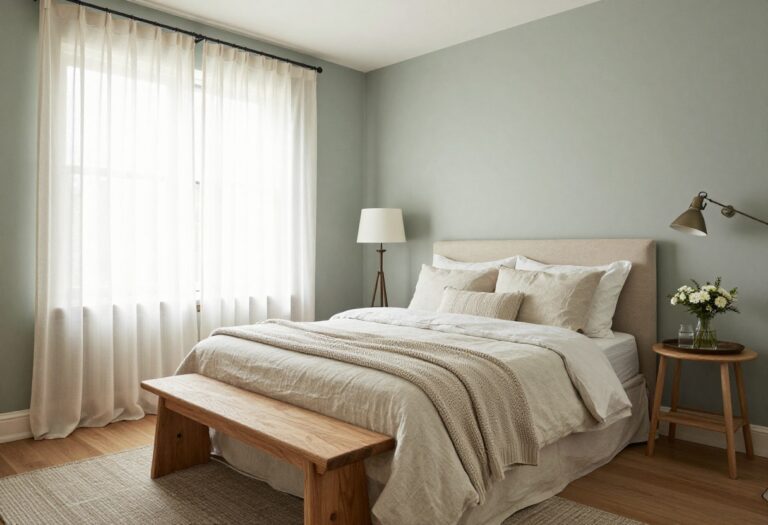
1. Swap Heavy Drapes for Light Linen Curtains
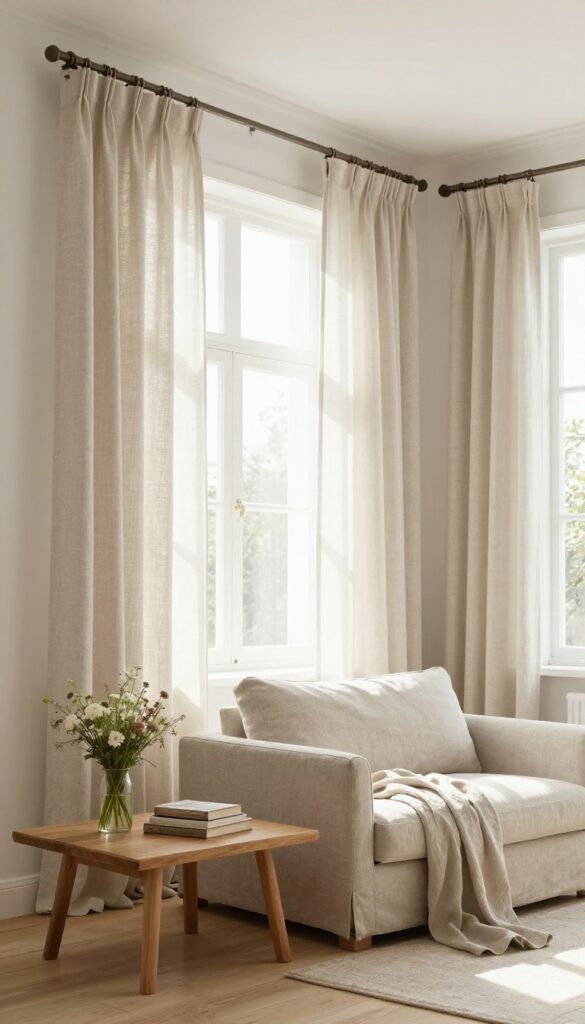
If your living room feels a little dark or closed in, the quickest fix might be hanging right at your windows. Heavy drapes can make a small space feel even smaller, especially in a cottage where you want that breezy, open feel. Switching to light linen curtains in white or oatmeal instantly changes the whole mood—suddenly the room breathes, and natural light floods in without glare.
The texture of linen adds just enough softness to keep the look from feeling stark, so you get casual elegance without trying too hard. It’s one of those swaps that feels like a deep breath for your space.
Linen curtains work because they’re not trying to block the world out; they filter light gently, creating a warm, diffused glow that makes any room feel more inviting. In a cottage living room, that soft light is everything—it highlights the cozy furniture and natural textures you’ve already chosen. Plus, linen has a relaxed drape that never looks stiff, so even if your windows aren’t perfectly square, the curtains hang beautifully.
You can find affordable linen panels almost anywhere, and they’re easy to wash and hang yourself, making this an achievable weekend project.
Best Colors
- Stick with whites, off-whites, oatmeal, or very pale greige. These colors reflect light and keep the room feeling airy. If you want a hint of warmth, go for a natural flax or cream—they add depth without darkening the space.
- Avoid bright white if your walls are already white; a slightly warmer tone creates a softer contrast.
Hanging Tip
Hang your curtain rod as high as possible—close to the ceiling—and let the panels skim the floor or pool just slightly. This tricks the eye into thinking the windows are taller and the room is bigger. For a truly cottage feel, choose a simple wooden or black metal rod with minimal finials.
Texture Mix
Pair your linen curtains with other natural textures like a jute rug, a chunky knit throw, or a wicker basket. The contrast keeps the room from feeling one-note. Linen’s slight slub and crinkle look even better next to smooth surfaces like a glass coffee table or a polished wood floor.
2. Add a Slipcovered Sofa in a Neutral Tone
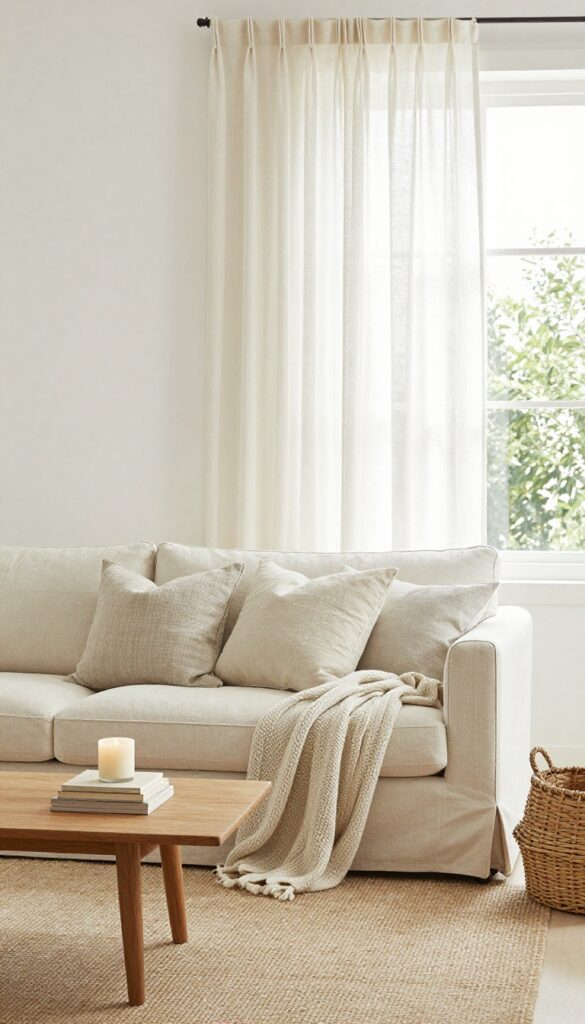
A slipcovered sofa in cream or light gray feels relaxed and easy to clean. It anchors the room without overwhelming it, and the removable covers are practical for everyday life. This piece brings a soft, casual elegance that fits perfectly in a modern cottage living room.
A neutral slipcovered sofa is the foundation of a relaxed, inviting space. Its loose, washable covers make it ideal for homes with kids or pets, while the light color keeps the room airy. Pair it with textured pillows and a chunky knit throw to add warmth without sacrificing the clean look.
Best Colors
- Stick with off-white, cream, or light gray for that fresh cottage feel. These shades reflect light and make the room feel larger. Avoid stark white—it can look clinical.
- Instead, opt for warm whites with a hint of beige or gray.
Texture Mix
Balance the smooth slipcover with rougher textures like a jute rug, linen curtains, or a woven basket. Add a few velvet or chunky knit pillows for contrast. This mix keeps the sofa from looking too flat or boring.
Finishing Touch
Tuck a lightweight throw blanket over one arm of the sofa and add a couple of linen pillows. Keep the coffee table simple—maybe a wooden tray with a candle and a stack of books. The goal is effortless, not staged.
3. Incorporate a Wood Coffee Table with Clean Lines
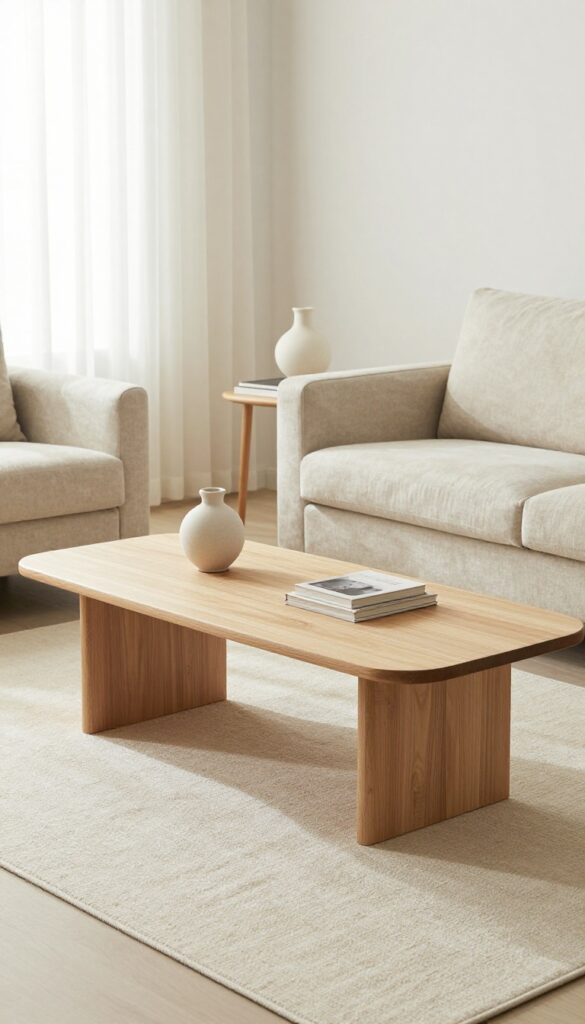
A coffee table does more than hold your remote and a stack of books—it sets the tone for the whole seating area. In a modern cottage living room, you want a piece that feels grounded without being bulky. A wood coffee table with clean lines delivers exactly that: simple shape, natural warmth, and zero fuss.
Think smooth surfaces and straight edges, not carved details or heavy distressing. It's the kind of table that blends in quietly but makes the room feel put together.
The trick is to choose a light oak or ash finish that keeps the space airy. A rectangular or round top works best—oval and square can feel too formal. The goal is a table that looks like it belongs in a relaxed, sunlit room, not a stuffy parlor.
Pair it with a soft rug and a few textured accessories, and you've got a focal point that's both stylish and practical.
Best Wood Tones
- Stick with light to medium woods like oak, ash, or birch. These tones keep the room feeling bright and open, which is key for a modern cottage look. Avoid dark walnut or mahogany—they can weigh down the space and clash with the clean, airy vibe you're going for.
- A whitewashed or limed finish also works beautifully if you want a slightly more coastal feel.
Shape And Size
- Round coffee tables are great for smaller rooms or seating arrangements where you need to move around easily. Rectangular tables fit better in front of a long sofa and offer more surface area for styling. Whichever shape you choose, make sure the table is roughly two-thirds the length of your sofa and about the same height as the seat cushions.
- That keeps everything proportional and easy to reach.
Styling Tip
Keep the top simple: a small tray for remotes, a stack of two or three coffee table books, and a low vase with a few stems. Avoid overcrowding—the clean lines of the table should still be visible. A woven basket underneath can hold extra blankets or magazines, adding texture without clutter.
4. Layer a Jute or Sisal Rug Under a Smaller Patterned One
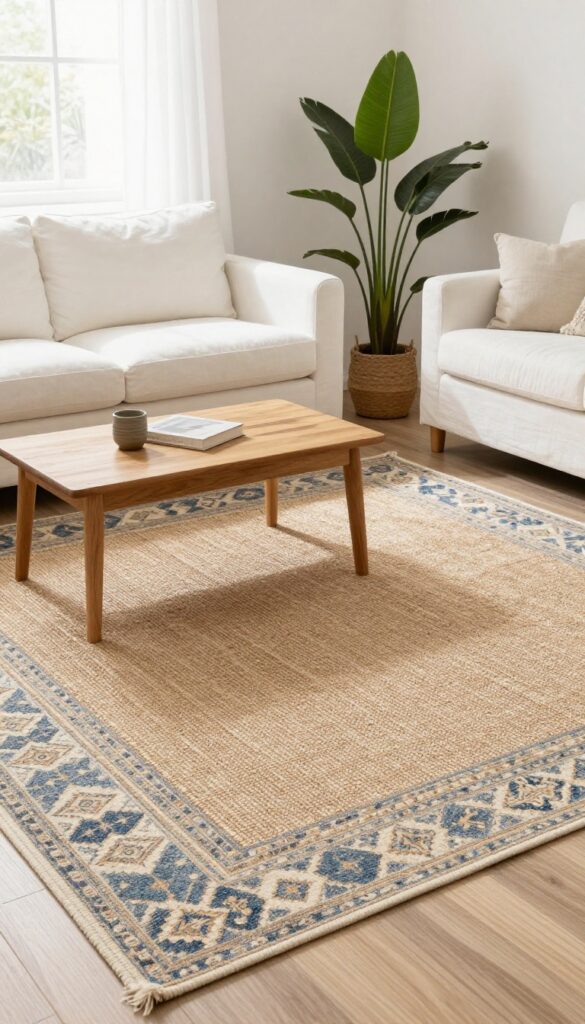
Rug layering is one of those tricks that instantly adds depth and a collected-over-time feel to a cottage living room. By starting with a large, neutral jute or sisal rug, you get a durable, textural base that feels natural underfoot. Then placing a smaller wool or cotton patterned rug on top defines the seating area and brings in color or pattern without overwhelming the space.
This approach works especially well in open layouts where you want to anchor the furniture without making the room feel too busy. The contrast between the rough, earthy weave of the base rug and the softer, more detailed top rug creates visual interest that feels intentional but not fussy. Plus, it's a budget-friendly way to update your space—swap out the top rug seasonally for a quick refresh.
Layering rugs is a simple way to add warmth and personality to a cottage living room. The key is to choose a large natural fiber rug as your base—jute or sisal are great for their texture and durability. Then, pick a smaller rug with a pattern or color you love to place on top, ideally in a wool or cotton blend for softness.
Make sure the top rug is large enough to fit under the front legs of your sofa or chairs, so the whole arrangement feels cohesive. This technique also helps define zones in an open floor plan, like separating the seating area from a dining nook.
Best Colors And Patterns
- Stick with neutral or earthy tones for the base rug—think natural tan, warm gray, or light beige. For the top rug, you have more freedom: a subtle stripe, a faded floral, or a geometric pattern in muted blues, greens, or rusts works beautifully. The goal is contrast without clashing, so avoid matching the top rug exactly to the base.
- Instead, let the patterns play off each other—a busy top rug on a simple base keeps the look balanced.
Rug Placement And Layout
- Position the larger rug so it extends beyond the edges of your seating area, ideally at least 6 inches on each side. Then center the smaller rug in front of the sofa, with the front legs of the sofa and any chairs resting on it. This anchors the furniture and creates a clear focal point.
- If your space is small, try placing the top rug at an angle for a relaxed, casual vibe—just make sure it doesn't stick out too far and become a tripping hazard.
Texture Mix And Finishing Touch
- The beauty of this layered look is the texture contrast. The coarse, woven base rug adds organic warmth, while the softer top rug feels cozy underfoot. To complete the look, add a few textured throw pillows or a chunky knit blanket on the sofa.
- This ties the whole room together and makes the rug layering feel like a deliberate design choice rather than an afterthought.
5. Use Open Shelving for a Curated Display
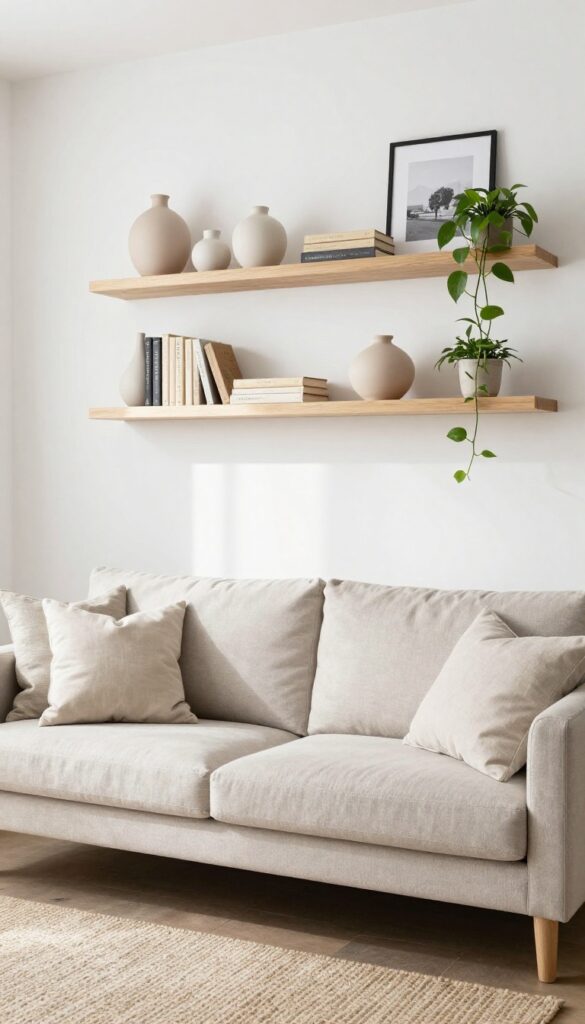
Open shelving is a go-to for adding character without overwhelming a small living room. Light wood floating shelves keep things airy and modern, while a carefully edited mix of ceramics, books, and greenery brings in personality. The trick is to leave breathing room between items so the display feels intentional, not cluttered.
Install floating shelves in a light wood finish and style them with a mix of ceramics, books, and small plants. Keep the arrangement sparse and intentional to avoid clutter.
Shelf Styling Tip
Group items in odd numbers and vary heights using stacked books or small risers. Leave some empty space to let the eye rest.
Best Materials
Light wood like oak or pine keeps the look fresh. Pair with matte ceramic vases, linen-wrapped books, and trailing plants like pothos.
6. Bring in a Woven Basket for Blankets or Magazines
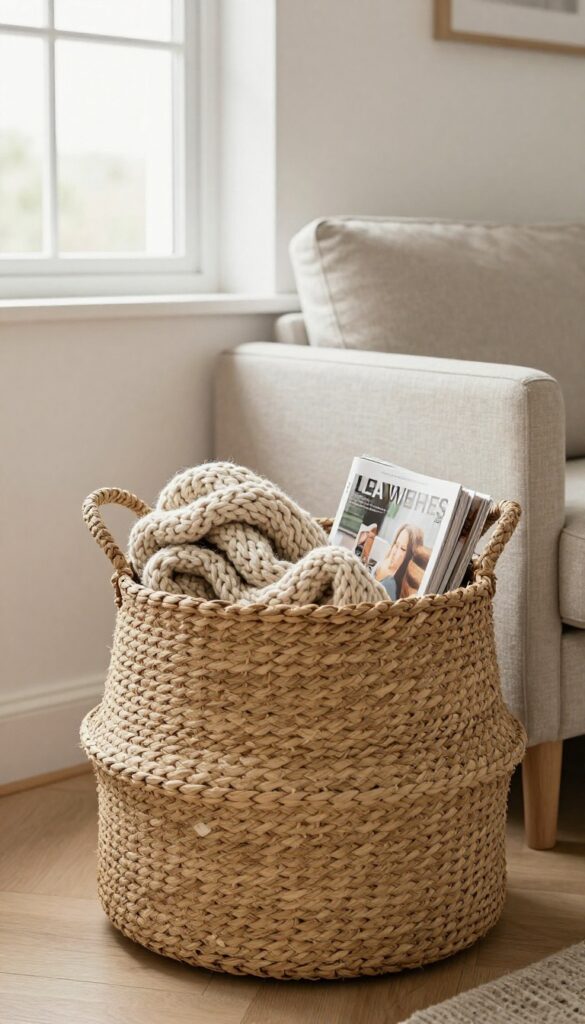
A large woven basket in seagrass or rattan does double duty: it adds organic texture and hides everyday clutter. Place it beside the sofa or near the fireplace, and you’ve got a spot that’s both practical and visually grounding. In a modern cottage living room, this simple addition keeps the space feeling clean while still warm and lived-in.
Woven baskets are one of those decor pieces that work hard without trying. They soften hard edges, introduce natural fiber, and give you a go-to home for throws, magazines, or even firewood. The key is choosing one with a relaxed, open weave—tight weaves can feel too formal for a cottage vibe.
Seagrass and rattan are ideal because they’re durable and their earthy tones blend with almost any color palette. Set it next to your sofa or armchair, and you’ll find yourself reaching for a blanket more often. It’s a small change that makes the room feel instantly more inviting.
Best Materials
Stick with natural fibers like seagrass, rattan, or water hyacinth. They bring warmth and a slight texture contrast against upholstery. Avoid synthetic baskets if you want that genuine cottage feel—they can look too shiny or uniform.
Placement Tip
For maximum impact, place the basket near a seating area where you actually use blankets or magazines. If you have a fireplace, a basket of logs on the hearth adds rustic charm and keeps fuel handy. Just make sure the basket is large enough to hold what you need without overflowing.
Styling Detail
Layer a folded throw over the basket’s rim so it looks styled even when empty. Or tuck a few magazines vertically alongside a rolled blanket for a casual, curated look. This keeps the basket from feeling like a catch-all.
7. Paint the Ceiling a Soft White or Pale Blue
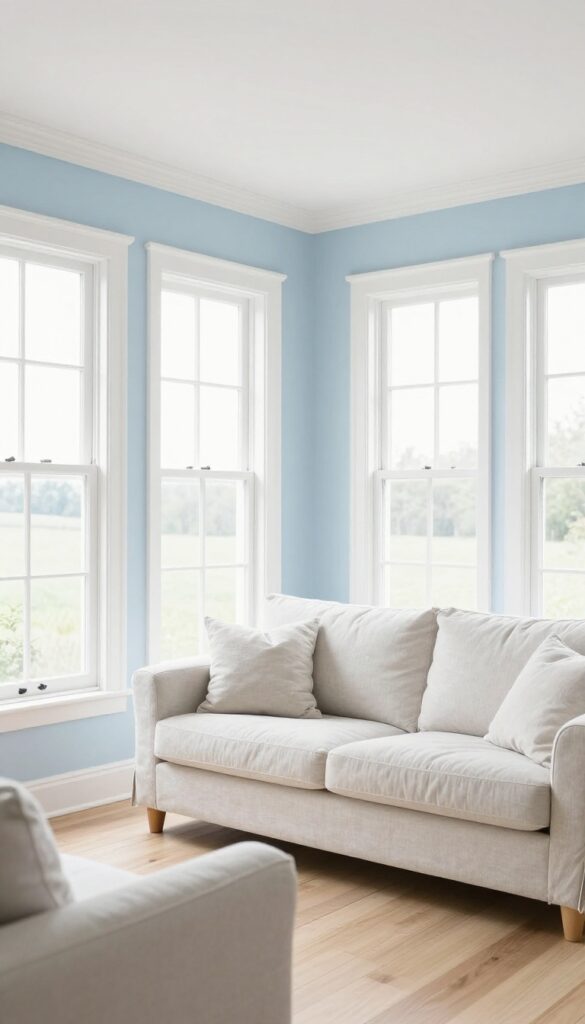
Most people focus on walls and furniture, but the ceiling is a huge surface that often gets ignored. Giving it a fresh coat of paint in a soft white or pale blue can completely change how the room feels. It’s a simple, low-cost update that makes the space feel taller, airier, and more intentional.
A lighter ceiling draws the eye upward, creating the illusion of height and openness. Soft white is the go-to for a clean, timeless look that works with any wall color. Pale blue adds a subtle cottage touch without being overwhelming—it reads as a whisper of sky rather than a bold statement.
Either choice keeps the room feeling bright and relaxed, which is exactly what a cottage living room should be.
Best Colors
For a modern cottage look, stick with soft whites like Benjamin Moore’s Cloud White or a pale blue like Sherwin-Williams’ Rainwashed. Avoid anything too cool or gray—you want warmth and softness. If you’re unsure, white is the safest bet; blue works best in rooms with good natural light.
Finishing Touch
Once the ceiling is painted, add a simple white or light wood crown molding to define the edge. It gives the room a finished, polished look without adding fuss. Skip ornate trim—keep it clean and minimal to match the modern angle.
Small-space Fix
In a small living room, painting the ceiling white and the walls a slightly darker shade (like a soft beige or light gray) creates contrast that makes the ceiling feel even higher. It’s a classic trick that works every time.
8. Choose a Simple Mantel Styling with Natural Elements
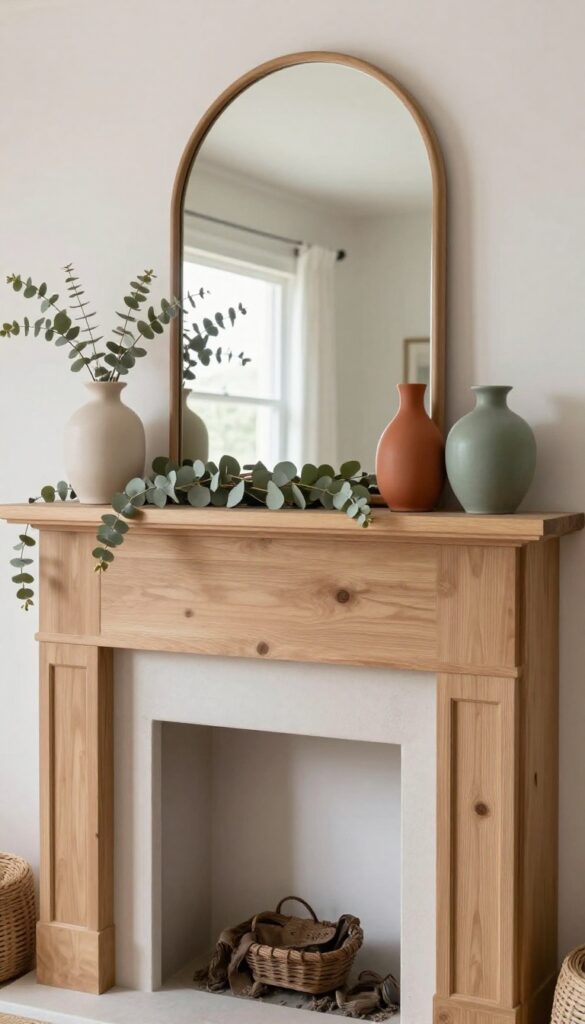
A fireplace mantel can easily become a dumping ground for random odds and ends. But in a cottage living room, it’s a prime spot to create a calm, curated focal point. The trick is to resist the urge to fill every inch.
Instead, let a few natural pieces do the talking.
Keep your mantel styling intentionally sparse. Start with a large mirror or a single piece of art as the anchor—something that reflects light and opens up the room. Then, add two or three ceramic vases in earthy tones, varying heights for visual interest.
Finish with a dried eucalyptus wreath or a simple garland draped loosely. The result is a look that feels effortless, airy, and connected to nature. This approach works especially well in smaller living rooms where clutter can quickly overwhelm the space.
Best Materials
Stick with natural textures: ceramic, stoneware, dried botanicals, and unfinished wood. Avoid shiny metals or overly polished finishes—they can feel too formal for a relaxed cottage vibe. Matte, handcrafted pieces add warmth and authenticity.
Shelf Styling Tip
When placing items on the mantel, create a loose triangle shape with your tallest piece in the center or slightly off-center. This guides the eye naturally and keeps the arrangement balanced without looking symmetrical. Leave plenty of negative space around each object.
Budget-Friendly Swap
If you don’t have a large mirror or art piece, try a single, oversized botanical print in a simple frame. Or lean a vintage window frame against the wall—it adds character and doubles as a unique backdrop for smaller decor items.
9. Add a Reading Nook with a Cozy Armchair and Floor Lamp
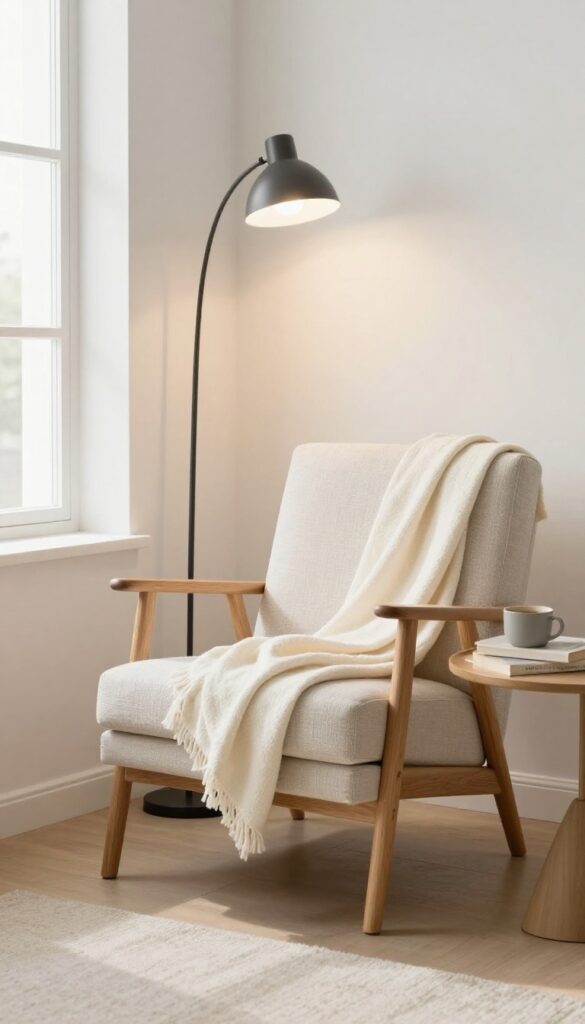
Tucking a reading nook into a corner of your living room is one of those small changes that makes a big difference. It gives you a dedicated spot to unwind without eating up floor space or cluttering the layout. A single armchair, a tall floor lamp, and a tiny side table are all you need to create a quiet escape that feels intentional and inviting.
Start by choosing a corner that gets a bit of natural light during the day, but also feels separate from the main traffic flow. A spot near a window is ideal, but an unused corner by a bookshelf works just as well. The key is to keep the setup minimal so it doesn't visually crowd the room.
Pick an armchair with clean lines and a compact silhouette—think a mid-century accent chair or a cozy wingback without oversized proportions. Pair it with a slim floor lamp that arches over the chair, casting light right where you need it for reading. A small side table, just big enough for a coffee mug and a stack of books, completes the vignette.
To make it feel instantly cozy, drape a soft throw blanket over the arm of the chair. Choose a neutral tone like cream or light gray to keep the look airy and modern.
Best Chair Styles For A Clean Look
- For a modern and clean aesthetic, stick with chairs that have exposed wood legs and a slim profile. A classic Eames-style lounge chair or a simple upholstered armchair in a light fabric like linen or cotton works beautifully. Avoid bulky recliners or heavily tufted designs that add visual weight.
- If your room leans minimalist, a leather or faux-leather chair in a warm tan or charcoal can add texture without feeling heavy.
Lighting Tip: Layer With A Floor Lamp
- A floor lamp with an adjustable arm or a tall arc lamp gives you control over the light direction. Choose a lamp with a neutral metal finish like brushed brass or matte black to blend with the clean aesthetic. Place it so the light falls over your shoulder or directly onto your book, not glaring in your eyes.
- A warm bulb (2700K–3000K) keeps the corner soft and relaxing.
Finishing Touch: Keep The Side Table Simple
- A slim side table with a single shelf or a small round top is all you need. Avoid cluttering it with too many decor pieces—just a small plant or a coaster keeps the look fresh. A wooden table in a light oak or walnut adds warmth without distracting from the chair.
- If space is tight, a wall-mounted shelf can double as a side table and save floor area.
10. Mix Metal Finishes for a Collected Look
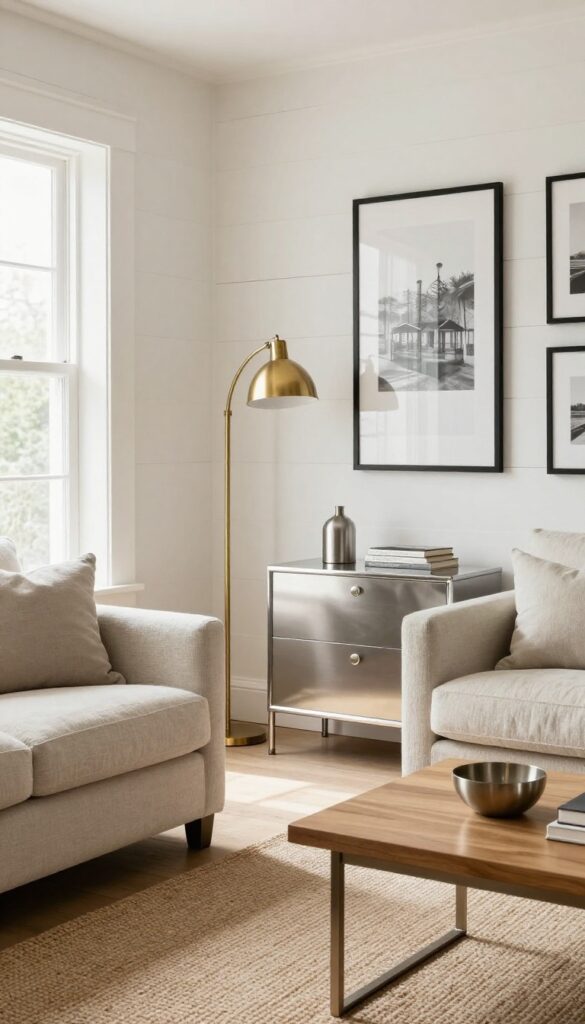
A living room that feels curated rather than decorated often comes down to one subtle trick: mixing metal finishes. Instead of matching every lamp, frame, and pull to the same shiny standard, try blending brass, black, and chrome in small doses. The result is a space that looks layered, intentional, and anything but boring.
A living room that feels curated rather than decorated often comes down to one subtle trick: mixing metal finishes. Instead of matching every lamp, frame, and pull to the same shiny standard, try blending brass, black, and chrome in small doses. The result is a space that looks layered, intentional, and anything but boring.
The key is restraint. You don’t need every surface to be a different metal—just a few well-placed accents. A brass floor lamp near a black-framed gallery wall, chrome cabinet pulls on a sideboard, and maybe a brushed nickel table lamp.
The mix keeps the eye moving without feeling chaotic.
This approach works especially well in cottages where you want that collected-over-time vibe. It’s modern enough to feel fresh but relaxed enough to fit a cozy setting.
Best Metals To Start With
- Stick to three finishes max. Brass, black, and chrome are a classic trio that plays well together. Brass adds warmth, black brings contrast, and chrome keeps things light.
- If you prefer a softer look, swap chrome for brushed nickel. The goal is balance, not competition.
Where To Mix Them
Focus on high-touch or eye-level spots: lamp bases, picture frames, drawer pulls, and light fixtures. Avoid mixing metals on one piece of furniture—keep each item consistent. For example, a brass lamp on a black metal side table creates contrast without clashing.
Finishing Touch
Pull the look together with a single unifying element, like a wood coffee table or a neutral rug. That way, the metals pop without feeling scattered. A simple tray on the coffee table can also house a few mixed-metal objects for a cohesive vignette.
11. Introduce a Large Mirror to Bounce Light Around
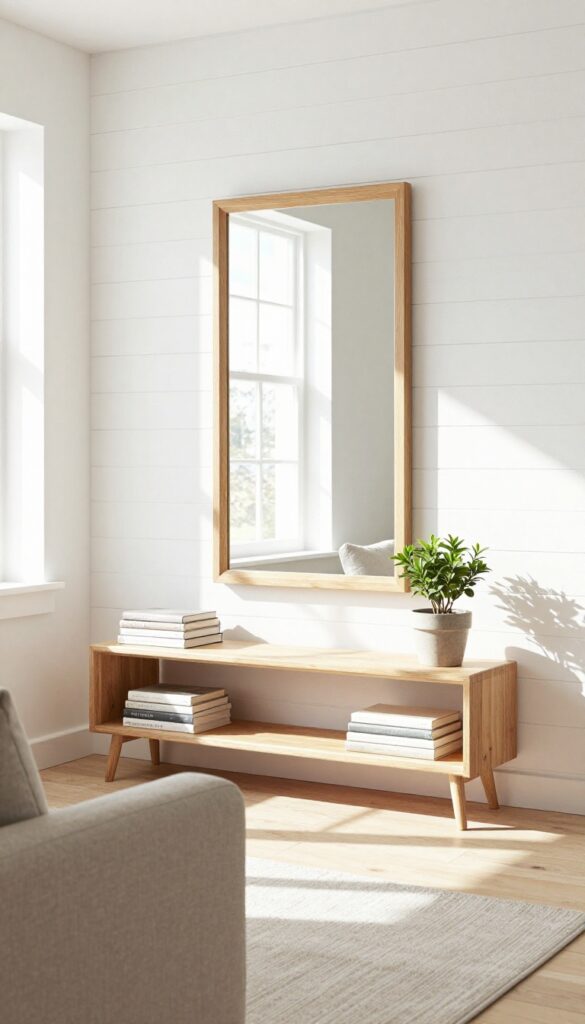
Cottage living rooms can sometimes feel a little dark or cramped, especially if the windows are small or tucked into corners. A large mirror is one of the simplest fixes—it instantly reflects natural light and tricks the eye into seeing more space. Plus, it doubles as a decor piece that adds character without clutter.
Pick a mirror with a simple frame, like natural wood or black metal, to keep things clean and modern. Lean it against the wall for a casual vibe, or hang it above a console table to anchor the room. The reflection will bounce light around, making the whole space feel brighter and more open.
It’s an easy swap that works in any cottage setup.
Best Frame Styles For A Modern Cottage
Stick with slim frames in light oak, whitewashed wood, or matte black. These finishes blend seamlessly with cottage textures without feeling heavy. Avoid ornate or overly distressed frames—they can clash with a clean, modern look.
Placement Tips For Maximum Light
Position the mirror directly across from a window to catch the most natural light. In a small room, leaning it against the wall at a slight angle can reflect light deeper into the space. Above a console table, keep it centered and at eye level for balance.
Finishing Touch: Add A Simple Vignette
Style the area around the mirror with a few low-maintenance plants or a stack of books. This creates a layered look that feels intentional but not fussy. Keep it minimal—the mirror is the star here.
12. Use Soft, Warm Lighting with Multiple Sources
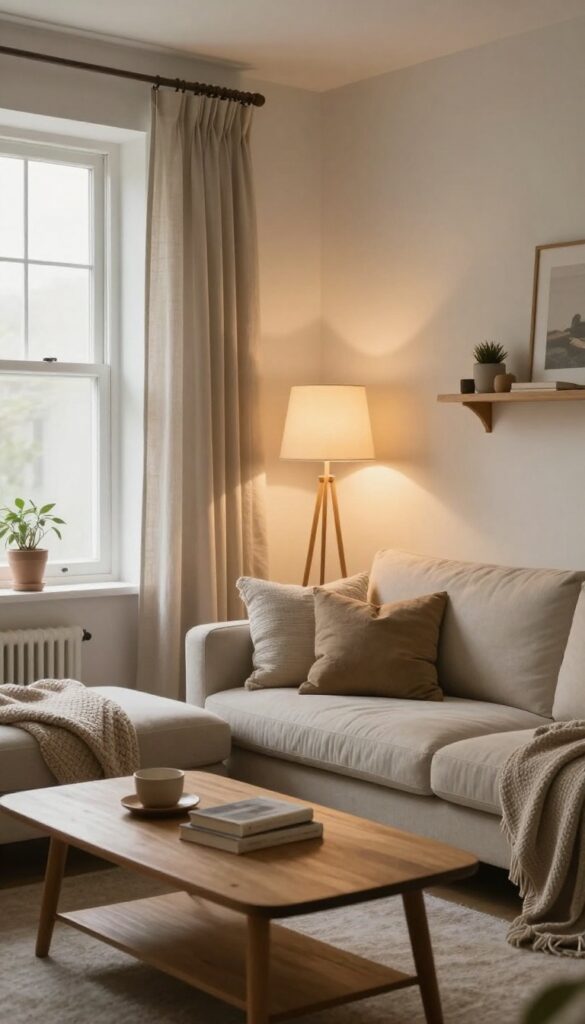
Overhead lights can feel harsh and uninviting, especially in a cottage-style room where you want a relaxed, cozy vibe. Instead of relying on a single ceiling fixture, layer in several warm light sources around the space. Think table lamps on side tables, a floor lamp in the corner, and maybe a sconce or two on the walls.
The goal is to create pools of soft light that make the room feel intimate and welcoming, not like a doctor's waiting room.
Warm bulbs (2700K) are your best friend here—they cast a golden glow that flatters neutral palettes and makes wood tones look richer. Place lamps at different heights to add visual depth, and use dimmers where possible so you can adjust the mood throughout the day. This approach not only makes the room feel more comfortable but also highlights your decor in a flattering way.
Best Bulb Temperature
Stick to 2700K to 3000K bulbs for that warm, honeyed light. Anything cooler will feel stark and ruin the cottage coziness. LED bulbs in this range last forever and save energy, so you can leave a lamp on for hours without guilt.
Lamp Placement Tips
Place a floor lamp next to your sofa or armchair for reading, and set table lamps on end tables or consoles at eye level when seated. Sconces work great flanking a mirror or artwork, adding light without taking up floor space. The key is to avoid dark corners—every seating area should have its own light source.
Finishing Touch: Dimmers
Install dimmer switches on any lamps you can, or buy plug-in dimmers. Being able to dial the light down from bright to barely there makes a huge difference in creating a relaxed evening atmosphere. It’s a small upgrade that instantly makes your living room feel more like a retreat.
13. Add a Touch of Green with Low-Maintenance Plants
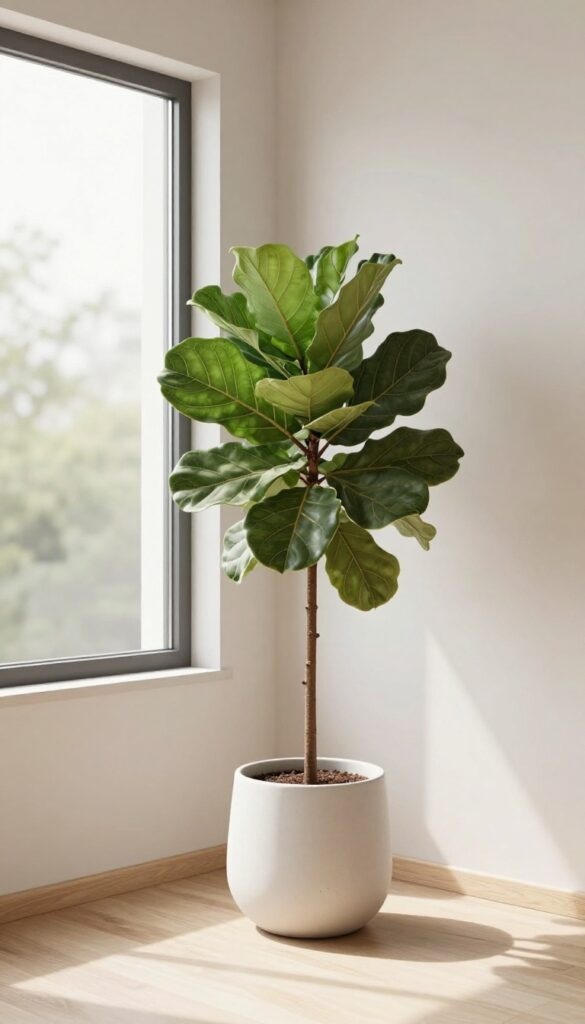
Plants are one of the easiest ways to make a cottage living room feel alive and welcoming. They add color, texture, and a sense of calm without requiring a green thumb. For a modern cottage look, stick with low-maintenance varieties that thrive in indirect light and don't need constant attention.
Snake plants, pothos, and fiddle leaf figs are perfect choices—they're forgiving, stylish, and instantly elevate the space.
A single well-placed plant can transform a dull corner into a focal point. Choose a simple ceramic pot in white, cream, or terracotta to keep the look clean and modern. The contrast of lush green leaves against neutral walls or natural wood tones creates a fresh, organic feel.
Group a couple of plants together on a console table or sideboard for more impact, or let a tall fiddle leaf fig stand alone next to a window. The key is to keep it uncluttered—let the plants breathe and be the star.
Best Plant Choices
- Snake plants are nearly impossible to kill and add vertical interest with their upright leaves. Pothos trails beautifully from a shelf or hanging planter, softening hard edges. Fiddle leaf figs have large, sculptural leaves that make a statement.
- All three tolerate lower light and irregular watering, so they're ideal for busy homeowners.
Pot And Placement Tips
- Stick with simple ceramic or matte pots in neutral tones to keep the look modern. Avoid overly ornate or brightly colored containers that compete with the plant. Place plants where they'll get indirect light—near a north or east-facing window is ideal.
- Use a cachepot with drainage holes or a liner to prevent water damage to surfaces.
Styling With Greenery
- Mix plant heights and textures for visual interest. Pair a tall snake plant with a trailing pothos on a shelf. Use a plant stand to elevate smaller pots and create layers.
- Incorporate natural elements like woven baskets or wooden trays to tie the greenery back to the cottage aesthetic. A single leaf cutting in a small glass vial can also add a delicate touch.
FAQ
What defines modern cottage style?
Modern cottage style blends cozy, traditional elements with clean, contemporary lines. Think light woods, neutral colors, natural textures, and uncluttered spaces.
How can I make a small cottage living room feel bigger?
Use light paint colors, hang curtains high and wide, add a large mirror, and choose furniture with exposed legs. Keeping the floor visible and minimizing clutter also helps.
What colors work best for a modern cottage living room?
Stick with a neutral base: whites, creams, soft grays, and beiges. Accent with muted blues, sage greens, or warm wood tones for depth.
Can I mix modern and cottage decor?
Absolutely. Pair a sleek sofa with a rustic wood table, or combine a modern floor lamp with a vintage rug. The contrast creates a balanced, personal look.
How do I add texture without clutter?
Layer different materials like linen, wool, wood, and rattan. Stick to a cohesive color palette so the textures stand out without feeling chaotic.
Conclusion
Refreshing your cottage living room doesn't require a complete overhaul. Small, intentional changes—like swapping curtains, adding a rug layer, or styling a shelf—can shift the whole feel of the space. The key is to keep things light, airy, and uncluttered while still embracing that cozy cottage charm.
Try one or two of these ideas this weekend and see how your room responds. Sometimes the smallest tweaks make the biggest difference. Enjoy the process and make it your own.