11 Carpet Ideas Living Room Floors Need for Soft Comfort
A soft carpet underfoot can transform a living room from just another space into a cozy retreat. But when you're working with limited square footage, every piece needs to pull double duty.
That's where storage-smart carpet ideas come in—they add warmth and texture while helping you stay organized.
Whether you're renting or own, these 11 ideas prove that comfort and clever storage can absolutely coexist.
1. Layer a Flatweave Over Storage Benches
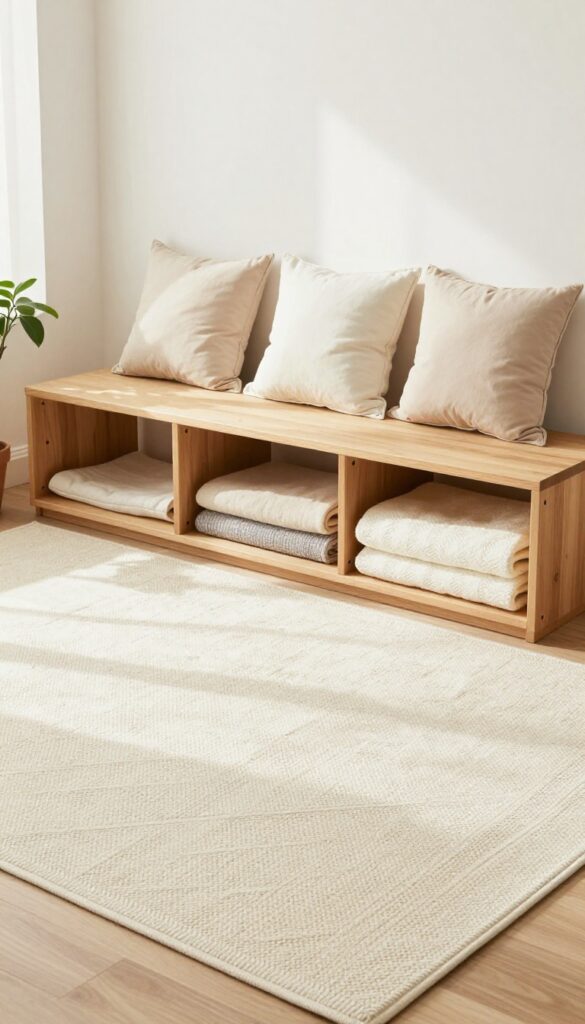
A storage bench or trunk is a lifesaver in a busy living room—tucking away blankets, books, and board games while doubling as extra seating. But let’s be honest: that wooden or upholstered top can feel a little hard and cold underfoot. The fix is simple and stylish: drape a low-pile flatweave carpet right over the bench.
It softens the surface, adds a layer of texture, and turns your storage piece into a cozy spot to sit or prop your feet up. Plus, the rug helps anchor the bench visually, making it feel like a intentional part of the room rather than an afterthought.
The beauty of this trick is how effortlessly it blends storage and comfort. A flatweave is thin enough that the bench lid still opens and closes easily, but dense enough to feel plush when you sit. Choose a pattern that ties into your existing rug or pillows—maybe a subtle geometric or a warm tribal print.
In a small living room, this layered look also adds visual depth without eating up floor space. Try it with a wooden storage trunk for a rustic vibe, or a sleek upholstered bench for a more modern feel.
Best Colors And Patterns
- Since the bench is already a statement piece, keep the flatweave pattern simple. Neutral tones like cream, gray, or beige work with almost any decor. If your bench is dark wood, a light rug with a faint stripe or diamond pattern creates nice contrast.
- For a pop of color, try a muted blue or terracotta flatweave that echoes a hue from your sofa or throw pillows.
Storage Tip
Use the bench to store items you reach for often, like extra throws, magazines, or kids’ toys. The flatweave on top means you can sit comfortably while pulling out a blanket—no cold surface shock. If the bench is near a window, the rug also protects the wood from sun fading.
Finishing Touch
Add a couple of floor cushions or a small tray on top of the flatweave for a casual, lived-in look. The tray can hold remotes or a candle, making the bench feel like a proper coffee table alternative. Just keep the tray lightweight so you can still lift the lid easily.
2. Use a Carpet Tile Grid for Modular Storage Zones
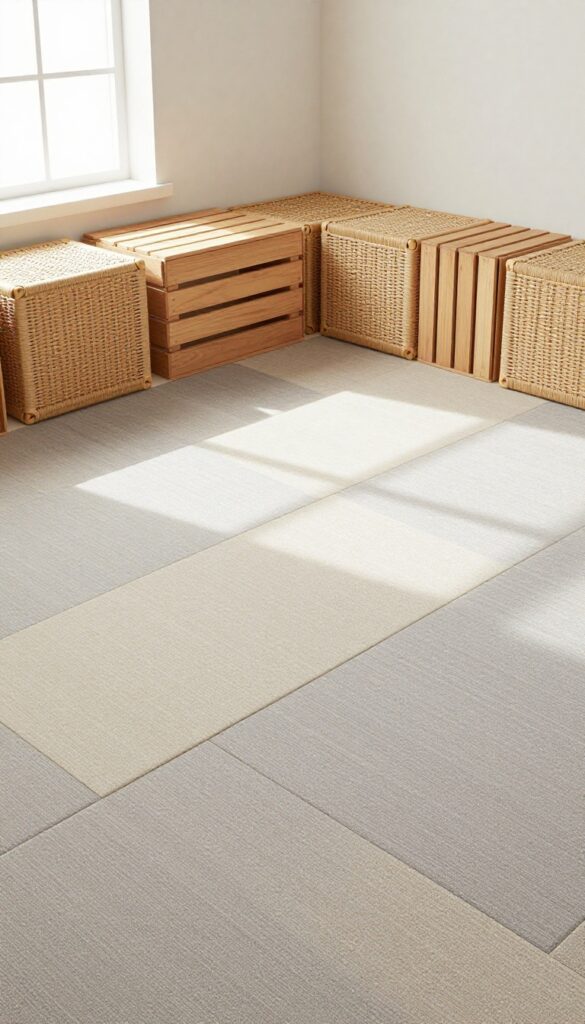
Carpet tiles aren't just for offices anymore. In a living room, they let you build a custom floor layout that doubles as a storage system. By mixing tile colors or patterns, you can mark off a reading corner, a play zone, or a media area—then tuck storage cubes or bins right into the grid.
It's a smart way to keep things organized without sacrificing style.
Think of carpet tiles as building blocks for your floor. You can arrange them in a grid that visually separates different activity zones, then place low storage cubes or woven bins along the edges or inside the grid. This works especially well in open-plan living rooms where you want to define a kids' play area without adding bulky furniture.
The tiles provide softness underfoot, and the integrated storage keeps toys, blankets, or books within easy reach but out of sight.
Best Layout Tip
Create a 4×4 tile square for a reading nook, then leave a one-tile gap around it for a border in a contrasting color. Place a low bookshelf or cube storage unit along one side of the square. The tiles anchor the zone, while the storage becomes a natural room divider.
Storage Tip
Use modular fabric bins or wooden crates that match the tile colors. For a toy corner, choose bins with lids so clutter disappears instantly. Label each bin with a tag or stencil to keep the system easy for everyone to follow.
Color And Texture Mix
- Stick to two or three tile colors that complement your existing palette. For a calm look, use neutral tones like warm gray and beige. For a playful zone, add a pop of mustard or teal.
- Mix a loop-pile tile with a cut-pile one for subtle texture contrast that still feels cohesive.
3. Try a Shag Rug with Under-Rug Storage Pockets
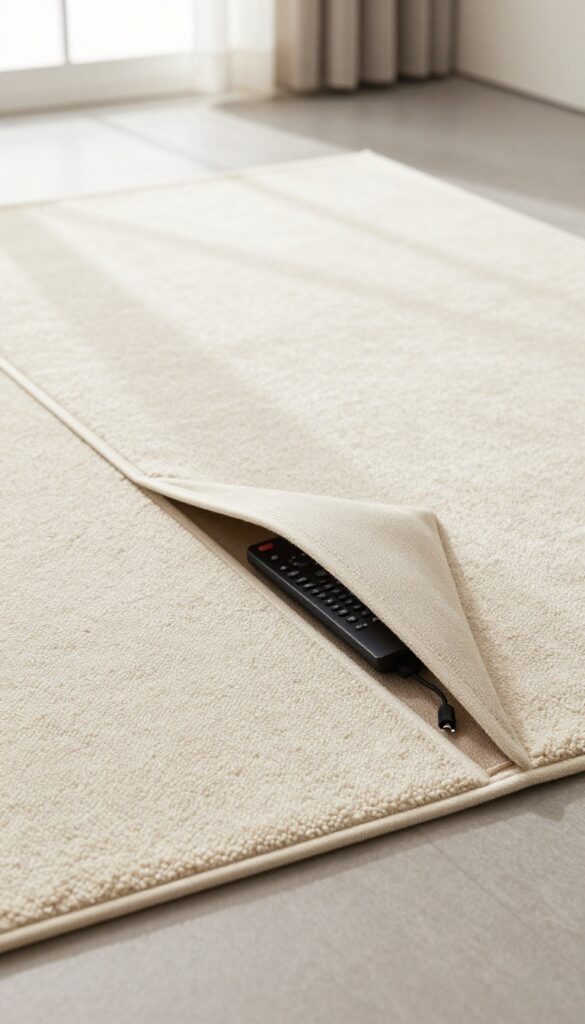
A shag rug already brings that cloud-like softness underfoot, but here’s a twist that makes it even smarter. Some modern shag rugs come with built-in storage pockets sewn into the underside, letting you tuck away remotes, coasters, or charging cables right where you need them. No more digging between couch cushions or losing the clicker in the abyss.
It’s the kind of cozy-meets-functional that makes a living room feel both luxurious and lived-in.
This idea works especially well in media rooms or family lounges where you’re constantly juggling snacks, devices, and small accessories. The thick pile hides the pockets completely, so your floor stays looking plush and uncluttered. You get the tactile comfort of a shag rug without sacrificing surface space—your coffee table stays clear, and everything is still within arm’s reach.
It’s a small upgrade that changes how you use the room day to day.
Best Colors And Materials
Stick with neutral or earth-toned shags—cream, taupe, or warm gray—so the rug blends into the room and doesn’t draw attention to the pockets. Synthetic fibers like polypropylene or polyester are ideal because they’re soft, stain-resistant, and easy to clean. Avoid natural wool if you plan to stash snacks underneath, as crumbs can attract pests.
Storage Tip
Choose a rug with pockets large enough for a tablet or a pair of glasses, but not so deep that items get lost. Place the rug so the pocket openings face the seating area. For a custom touch, you can sew your own fabric pockets onto an existing shag rug using a heavy-duty needle and thread—just make sure the pockets lie flat so they don’t create bumps.
Texture Mix
Balance the shag’s volume with smooth, hard surfaces nearby. A sleek leather sofa or a glass coffee table creates contrast that keeps the room from feeling too fluffy. Add a few metallic or wooden accessories on the table to echo the clean lines, and let the rug be the cozy anchor.
4. Install a Wall-to-Wall Carpet with a Hidden Floor Safe
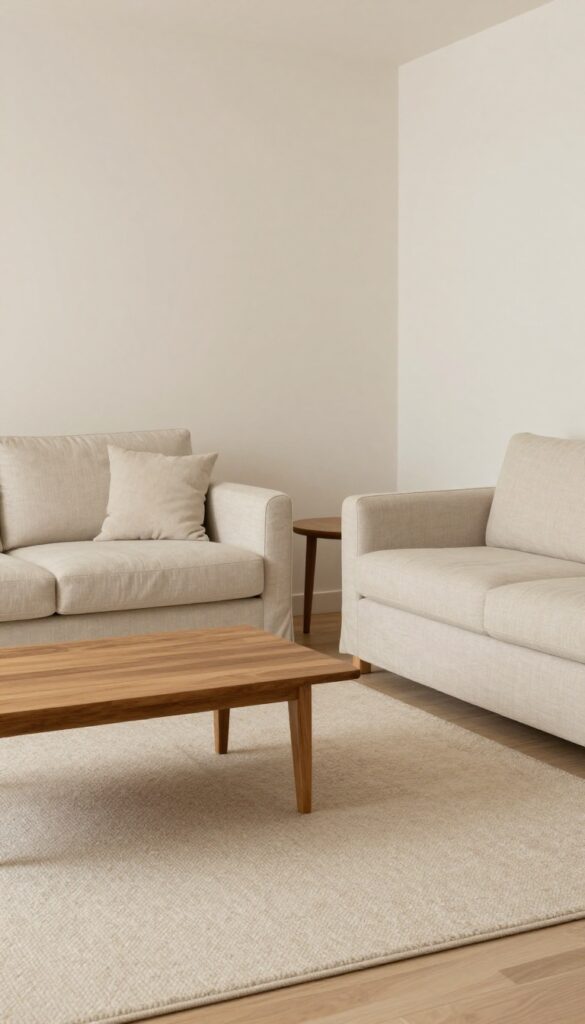
Security doesn't have to clash with comfort. A wall-to-wall carpet can do double duty: it softens your living room underfoot and discreetly conceals a floor safe. This idea is perfect for anyone who wants peace of mind without sacrificing a cozy, seamless look.
The carpet hides the safe's outline completely, so your valuables stay out of sight while the room stays inviting.
Blending safety with style is easier than you think. A hidden floor safe under a wall-to-wall carpet keeps your important documents, jewelry, or cash secure, yet the room feels warm and uncluttered. The key is choosing the right carpet texture and thickness to mask the safe's presence.
Plus, you get the bonus of a plush, quiet floor that's perfect for lounging or kids playing.
Best Carpet Materials For Concealment
- Opt for a dense, medium-pile carpet like a textured loop or a soft frieze. These materials hide the safe's edges well and feel luxurious underfoot. Avoid very thin carpets that might reveal the safe's outline, and skip high-pile shag that can snag or shift.
- Nylon or wool blends are durable and hold their shape, so the carpet stays smooth over the safe.
Placement And Installation Tips
- Install the safe in a low-traffic area, like under a coffee table or in a corner. Have a professional cut the carpet precisely around the safe's lid, leaving a small flap that blends with the rest. Use a magnetic or key-locked lid that sits flush with the subfloor.
- Then, lay the carpet over it, and you'll never notice a bump.
Styling To Keep It Discreet
Place a heavy piece of furniture, like a sofa or a large ottoman, over the safe area to further disguise it. Add a rug on top of the wall-to-wall carpet for extra texture and to distract the eye. Keep the room's layout natural, so the safe's location doesn't become obvious.
5. Choose a Carpet with Built-In Cable Management Channels
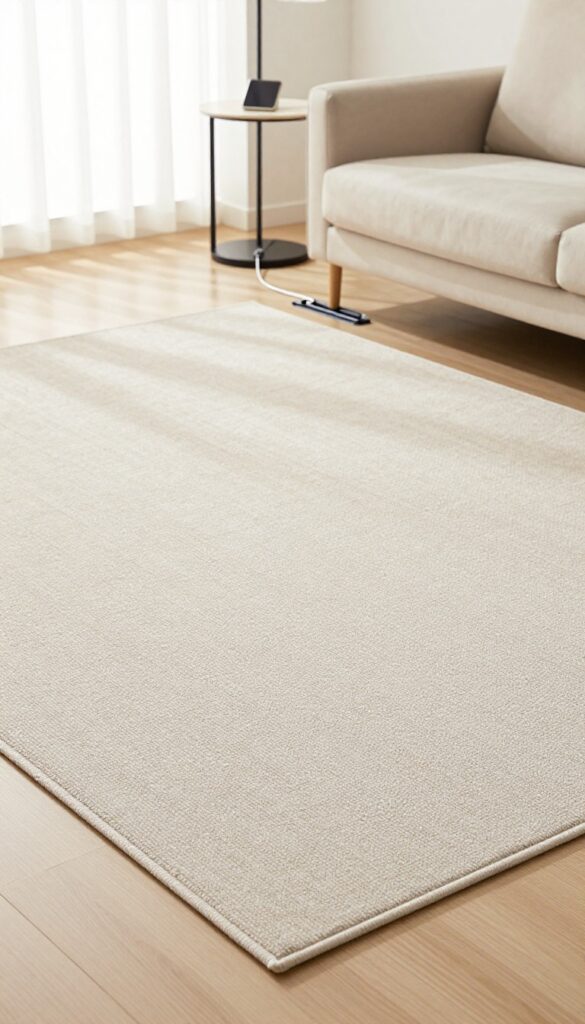
We all have that one corner in the living room where charging cables and power cords turn into a tangled mess. It’s not just an eyesore—it can actually be a tripping hazard. But what if your carpet could help you solve that problem?
Some modern carpets now come with built-in channels or cutouts designed specifically to route cables neatly underfoot. This clever feature lets you keep your electronics close without the visual clutter, making your space feel cleaner and more intentional.
Carpets with cable management channels are a game-changer for living rooms that double as home offices or entertainment hubs. The channels are usually integrated into the carpet backing or padding, allowing you to run cords from your TV, gaming console, or phone charger directly to the nearest outlet without them snaking across the floor. The result?
A seamless look that keeps your floor space safe and tidy. Plus, these carpets often come in stylish textures and colors that blend right in with your decor, so you’re not sacrificing aesthetics for function.
Best Materials
Look for low-pile or looped carpets made from durable synthetic fibers like nylon or polyester. These materials hold up well to the pressure of furniture and foot traffic, and they’re easier to clean if dust settles into the channels. Berber or flat-weave styles work particularly well because the channels stay visible and accessible without getting lost in deep fibers.
Layout Tip
- Place your carpet so that the cable channels align with your main electronics setup. For example, if your TV is against one wall, position the carpet so the channels run from the TV stand toward the nearest outlet. You can also use the channels to route cables from a floor lamp or a charging station tucked in a corner.
- Plan the layout before you buy to make sure the channels line up with your power sources.
Finishing Touch
Once your cables are in the channels, cover them with a thin, matching rug pad or a decorative strip to keep everything flush and hidden. Some carpets come with removable covers for the channels, which makes cleaning a breeze. Add a small plant or a stack of books near the outlet to further disguise the connection point—it’s a subtle way to blend function with style.
6. Place a Round Carpet Over a Storage Ottoman
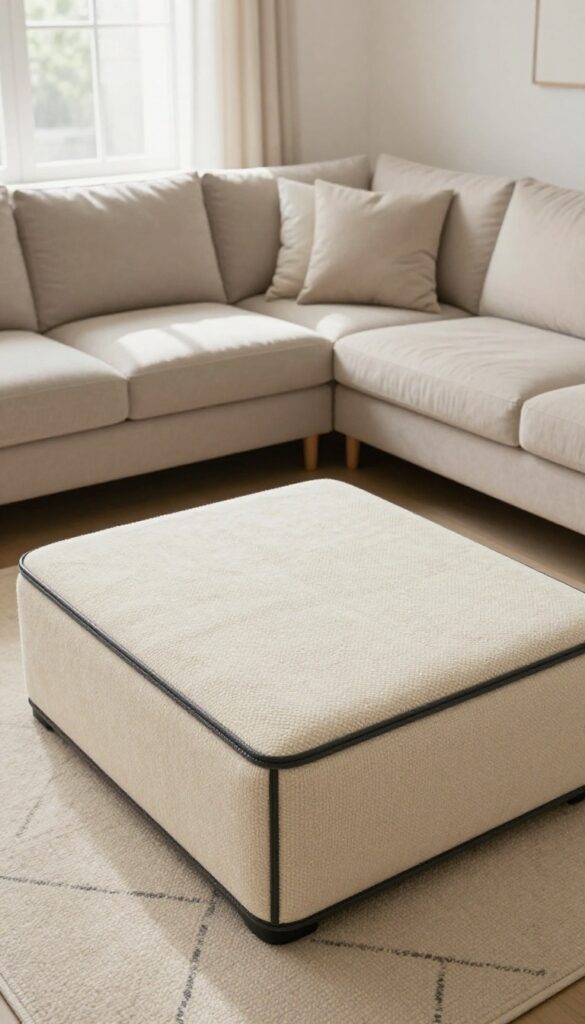
Ottomans already pull double duty as seating and storage, but adding a round carpet on top turns them into a cozy focal point. The soft texture underfoot makes the piece feel more like a cushioned bench than a storage box, while the round shape softens the hard lines of the room. It’s an easy way to introduce pattern and warmth without committing to a full rug.
Layering a round carpet over a large storage ottoman is one of those tricks that looks intentional but takes almost no effort. The carpet protects the ottoman’s surface from scratches and spills, and it gives you a spot to rest your feet that feels plush and inviting. Choose a carpet with a low pile or flat weave so it stays put and doesn’t slide around when you sit down.
For the ottoman itself, go with a neutral or leather finish so the carpet can be the star. This setup works especially well in front of a sofa or in a reading nook where you want a soft landing but don’t have floor space for a rug.
Best Colors And Patterns
Stick with carpets that have a clear contrast against the ottoman—think a cream wool carpet on a charcoal ottoman or a navy geometric print on a tan leather one. Avoid busy patterns that compete with the room’s other textiles. A simple stripe, diamond, or medallion design keeps the look polished.
Size And Placement Tip
The carpet should be slightly smaller than the ottoman’s top, leaving a border of at least two inches on all sides. Center it evenly so it doesn’t shift when you lean back. If the ottoman is round, choose a carpet with a matching diameter; if square, a round carpet creates a nice contrast.
Storage And Styling Combo
Use the ottoman to store throw blankets, extra pillows, or board games—items you want close but out of sight. Top the carpet with a small tray for remotes or coasters, and add a couple of decorative books or a candle to finish the vignette. This keeps the ottoman functional while making it feel like a curated piece.
7. Opt for a Carpet with Fringe That Doubles as a Toy Corral
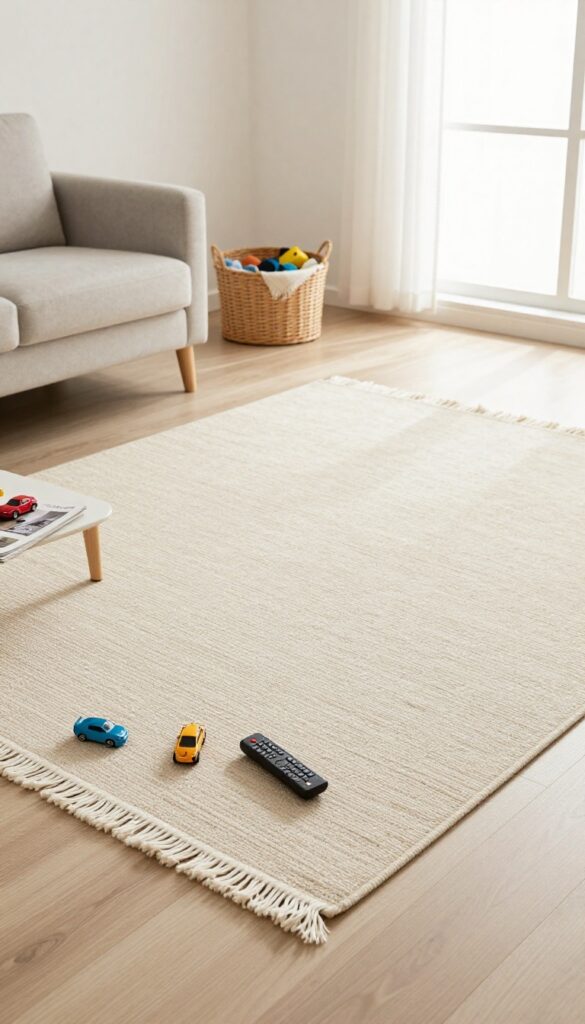
Kids’ toys, remote controls, and magazines have a way of scattering across the living room floor, no matter how many baskets you own. A carpet with long, chunky fringe can actually help contain that chaos. The fringe acts like a soft barrier, catching lightweight items and keeping them near the rug’s edge instead of drifting into the middle of the room.
It’s a clever, low-lift way to keep the floor tidier without adding a single piece of furniture.
This idea works best with a wool or cotton flatweave rug that has substantial fringe—think at least three inches long. The fringe should be thick enough to stop a toy car or a paperback from rolling past, but soft enough to feel nice underfoot. Place the rug in the main seating area, and let the fringe do its job.
You’ll find that smaller items naturally gather along the edges, making them easy to scoop up at the end of the day. It’s not a perfect system, but it cuts down on the visual clutter and makes tidying feel less like a chore.
Best Rug Styles
Look for a low-pile kilim or a handwoven dhurrie with visible, sturdy fringe. Avoid shag rugs, because the fringe tends to be too flimsy to corral anything. Neutral tones like beige, gray, or navy hide dust and crumbs well, which is a bonus in a high-traffic play zone.
Toy Containment Hack
Pair the fringed rug with a low, open basket or a fabric bin placed right at one corner of the rug. The fringe will guide small toys toward the basket, and kids can easily toss them in without bending down much. For adults, it’s a natural spot to drop remote controls or reading glasses.
Finishing Touch
To keep the fringe looking neat, give it a gentle brush with a wide-tooth comb every few weeks. This prevents tangling and maintains that tidy, intentional look. If the fringe gets dusty, a quick vacuum on low suction does the trick.
8. Use a Carpet Runner Along a Built-In Shelf Wall
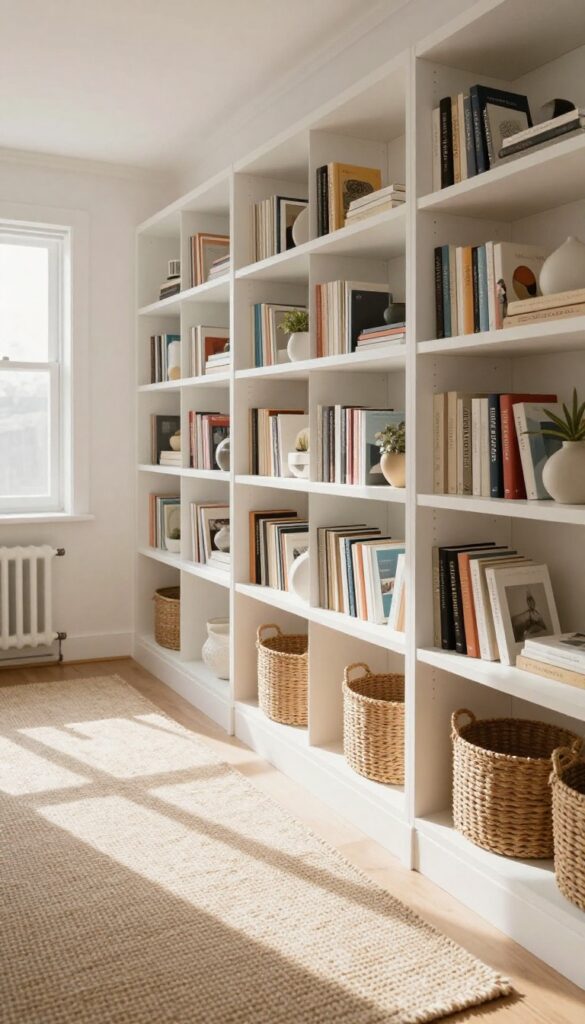
Built-in shelves are a dream for storage, but they can feel a little cold and corridor-like if they run the full length of a wall. A narrow carpet runner placed parallel to the shelves instantly defines a walkway and brings softness underfoot. It also creates a visual anchor that makes the whole setup feel intentional and cozy, not just functional.
Pair it with baskets or bins on the lower shelves, and you've got a storage-smart zone that looks pulled together without trying too hard.
Running a carpet runner along a wall of built-in shelves does more than just warm up the floor. It carves out a clear pathway, which is especially helpful in open-plan rooms where zones can blur together. The runner also absorbs sound, making the space feel quieter and more intimate.
For a relaxed look, choose a runner in a natural fiber like jute or a low-pile wool in a neutral tone—something that won't compete with the shelves or the items on display. Keep the runner narrow enough that it doesn't extend past the shelf depth; about two feet wide usually works. Then, fill the bottom shelf or two with woven baskets for hidden storage of blankets, magazines, or kids' toys.
This combination of soft flooring and clever stashing makes the whole wall feel both styled and practical.
Best Materials For The Runner
Stick with materials that can handle foot traffic and are easy to clean. Wool blends are durable and naturally stain-resistant, while flatweave cotton or sisal adds texture without trapping dust. Avoid thick shag here—you want the runner to lie flat so it doesn't trip you up or look bulky against the shelves.
Storage Tip: Basket Pairing
- Use the runner to visually anchor a row of baskets on the lower shelves. Choose baskets in natural seagrass, dark rattan, or even fabric bins that match the runner's color palette. This creates a cohesive storage zone that feels built-in, not cluttered.
- Keep the baskets shallow enough that they don't stick out past the shelf edge.
Layout And Placement
Center the runner directly under the shelf wall, leaving a few inches of bare floor on each side. If the shelves are in a long, narrow room, the runner will actually make the space feel wider by breaking up the floor visually. For a more casual vibe, let the runner extend a foot or two past the end of the shelves to soften the transition.
9. Select a Low-Profile Carpet Over a Platform Bed Frame
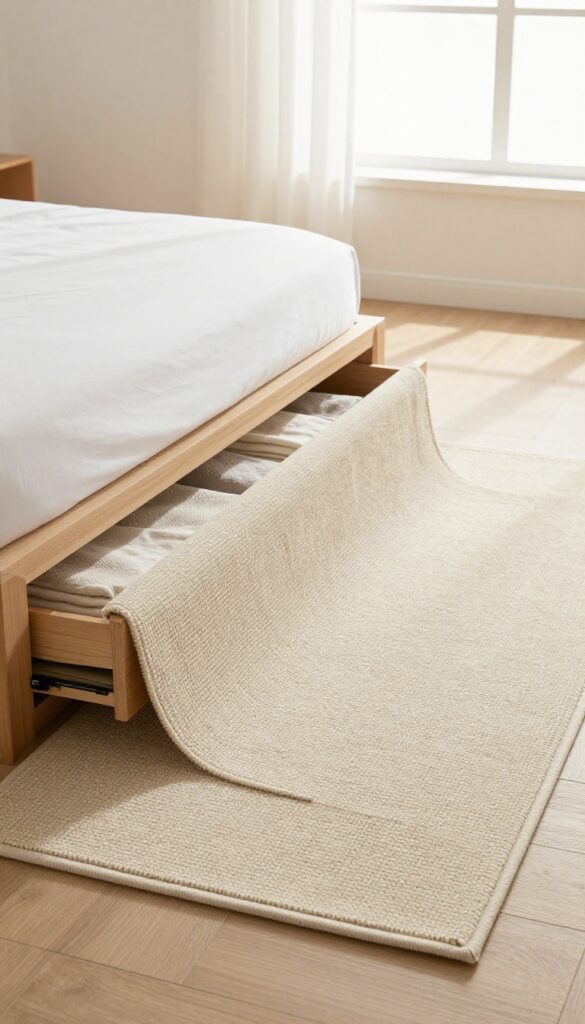
When your living room doubles as a guest space, every square inch has to work harder. A platform bed frame with built-in drawers already pulls its weight with hidden storage, but the flooring around it can make or break the cozy factor. Laying a low-profile carpet right over the frame—instead of under it—creates a soft, unified surface that feels more like a lounge area than a spare bedroom.
The trick is keeping the carpet thin enough to not interfere with the drawers and choosing a color that blends with the rest of the room.
This setup works best in a living room where the bed sits against a wall or in a corner. The low-profile carpet extends just past the frame's edges, creating a soft landing zone for bare feet while preserving easy access to the storage below. Because the carpet sits on top, you can swap it out seasonally or replace it when it wears without moving the heavy bed frame.
It's a practical, low-commitment way to add warmth and texture without sacrificing function.
Best Materials
- Stick with low-pile options like berber, looped wool, or flatweave cotton. These materials are dense enough to lie flat over the frame without bunching, and they won't trap dust or pet hair as easily as high-pile carpets. A wool blend offers durability and a soft feel, while a synthetic berber is budget-friendly and stain-resistant.
- Avoid anything with a thick cushion backing—it can make the carpet slip or cause the drawers to scrape.
Layout Tip
- Measure the bed frame and cut the carpet to extend 12 to 18 inches beyond the sides and foot. If the bed is in a corner, let the carpet run along the wall and only extend on the open sides. This keeps the carpet from bunching near the wall and makes the room feel larger.
- Use double-sided carpet tape along the edges to prevent shifting, especially if the frame is on hardwood or tile.
Finishing Touch
Add a thin rug pad underneath for extra grip and a bit of cushion, but make sure it's no thicker than ¼ inch. Choose a carpet color that complements the bed frame and the living room's palette—neutral tones like warm gray, sand, or oatmeal keep the space airy. Tuck a small woven basket or a stack of floor pillows on the carpet to reinforce the lounge vibe and make the bed area feel intentional.
10. Incorporate a Carpet with Woven Storage Pouches
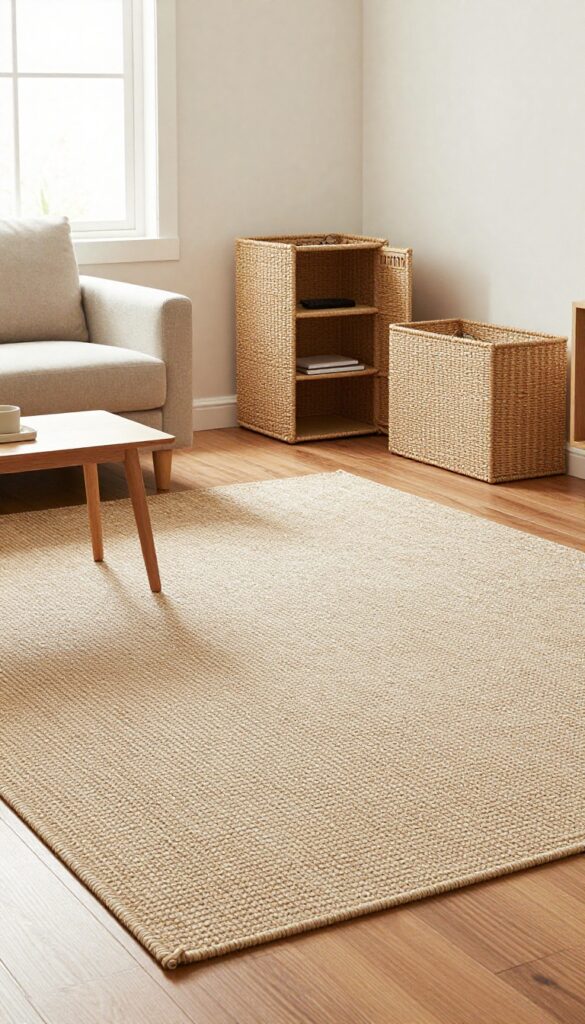
Imagine a carpet that does double duty—soft underfoot and secretly stashing your clutter. Woven storage pouches attached at the corners or edges turn an ordinary rug into a smart catch-all for remote controls, reading glasses, or magazines. It’s a clever solution for living rooms where every inch counts, blending cozy texture with practical storage without sacrificing style.
This idea works best in family rooms or media spaces where you frequently need quick access to small items. The pouches are typically made from the same material as the carpet—like wool, cotton, or jute—so they blend in seamlessly. You can choose a neutral tone for a subtle look or a contrasting color to make the pockets a design feature.
Place the carpet near seating areas so everything you need is within arm’s reach, eliminating the need for a separate side table or basket.
Best Materials
Look for carpets made from durable, stain-resistant fibers like polypropylene or wool blends. The pouches should be reinforced with sturdy stitching to hold heavier items like tablets or books. Natural jute or sisal adds a warm, organic feel but may shed—opt for a low-pile synthetic if you prefer easy maintenance.
Layout Tip
- Position the carpet so the pouches face your main seating area—like the sofa or armchair. This way, you can grab a magazine or remote without getting up. If the carpet is large, consider pouches on two opposite sides to serve multiple seats.
- Keep the pouches shallow to avoid tripping hazards.
Styling Note
Coordinate the carpet’s color with your existing palette. A gray or beige carpet with matching pouches feels minimalist, while a patterned rug with contrasting pockets (like navy pouches on a cream rug) adds visual interest. Add a small tray on top of the carpet for drinks to keep the pouches dry.
11. Layer a Sheepskin Rug Over a Storage Cube Cluster
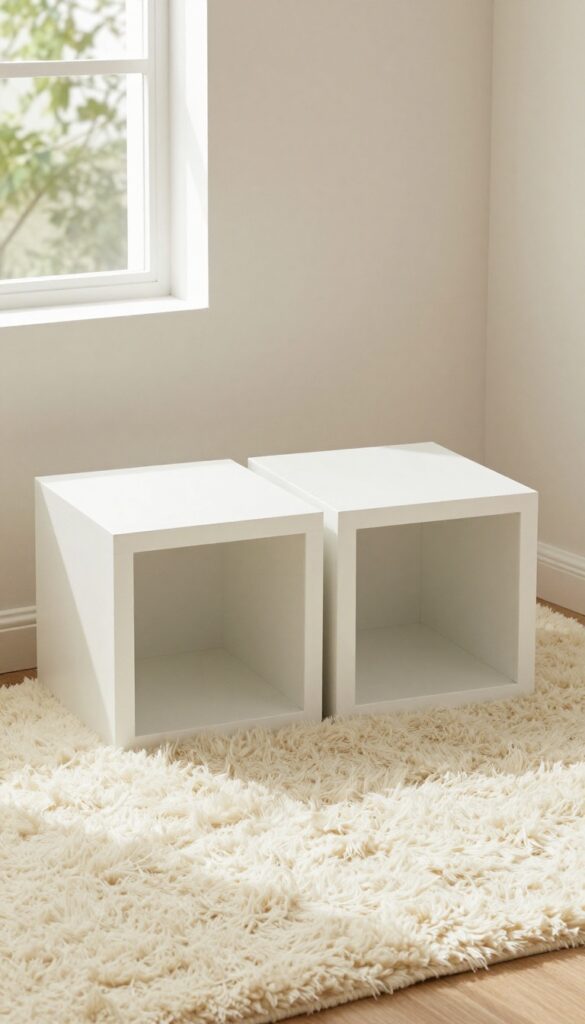
Storage cubes are a lifesaver in tight spaces, but let’s be honest—they can look a bit dorm-room basic on their own. By draping a fluffy sheepskin rug over a cluster of them, you instantly create a cozy, sculptural seating nook that hides clutter in plain sight. The soft texture softens the hard edges of the cubes, making the whole setup feel intentional and inviting rather than makeshift.
This idea is perfect for small living rooms or bonus spaces where you need both seating and storage but don’t have room for a bulky sofa or ottoman. Arrange four to six storage cubes in a low square or rectangle, then top them with a large sheepskin rug (real or faux) that cascades over the sides. The cubes underneath can hold books, blankets, toys, or extra decor—keeping the room tidy while the sheepskin adds a luxe, cloud-like surface for lounging.
Stick to neutral sheepskin tones like cream, gray, or warm taupe so the cubes can be any color you like, from bright white to wood tones or even bold painted hues. For a more polished look, choose cubes with doors or baskets to hide the contents completely.
Best Materials & Colors
- Go for real or high-quality faux sheepskin with a thick, fluffy pile—thin versions won’t give the same plush effect. Cream and off-white are classic, but a charcoal or blush sheepskin can add a fun pop if your room is mostly neutral. The cubes themselves work best in a solid color or natural wood that doesn’t compete with the rug.
- If you want extra texture, try a woven basket cube paired with the sheepskin.
Layout & Styling Tip
Place the cube cluster against a wall or in a corner to anchor the seating area. Add a small side table or a floor lamp nearby so the spot feels like a real lounge zone. You can also stack two cubes vertically for a taller surface, then drape a smaller sheepskin just on top—great for a reading nook or extra seating by a window.
Storage-smart Finish
Use the cubes to store items you want easy access to, like throw blankets, magazines, or kids’ toys. Label the cubes or use matching baskets inside to keep everything organized. This way, the cluster doubles as a coffee table or ottoman when you’re not sitting on it—just remove the sheepskin when you need the surface for drinks or snacks.
FAQ
Can I use carpet tiles to create storage zones in a small living room?
Absolutely. Carpet tiles let you define separate areas—like a reading nook or play zone—and you can integrate storage cubes or bins right into the layout for a tidy, multifunctional space.
How do I hide cables under a carpet without damaging it?
Look for carpets with built-in cable management channels, or use flat cable covers under a low-pile rug. Avoid thick shags that might hide cables but create tripping hazards.
What's the best way to store blankets under a rug?
Use a flat storage pouch designed for under-rug use, or place a thin rug over a storage bench or trunk. Just make sure the rug doesn't bunch up or create lumps.
Are there carpets with built-in storage pockets?
Yes, some carpets come with woven pouches or pockets at the corners. They're great for holding remotes, magazines, or small toys without adding furniture.
Can I put a rug over a storage ottoman?
Yes, layering a round or small rug over a storage ottoman works well. It adds softness and defines the seating area while the ottoman hides clutter inside.
Conclusion
Bringing soft comfort into your living room doesn't have to mean sacrificing storage. With these carpet ideas, you can enjoy a cozy floor while keeping your space organized and clutter-free.
From hidden pouches to modular tiles, there's a solution for every style and need. Try one or mix a few to create a living room that feels both warm and wonderfully efficient.