10 Minimal Bedroom Ideas for Small Rooms with Clean Style
A small bedroom can feel twice as big when you strip away the noise. Minimal design isn't about having nothing—it's about making every piece count. You get a room that breathes, even if the square footage doesn't.
The trick is knowing where to cut back and where to invest. A few smart swaps can turn a cramped space into a calm, functional retreat. No renovation required.
Here are ten ideas that actually work in real small rooms. Each one focuses on clean lines, hidden storage, and a layout that lets you move without dodging furniture.
1. Choose a Low-Profile Bed Frame
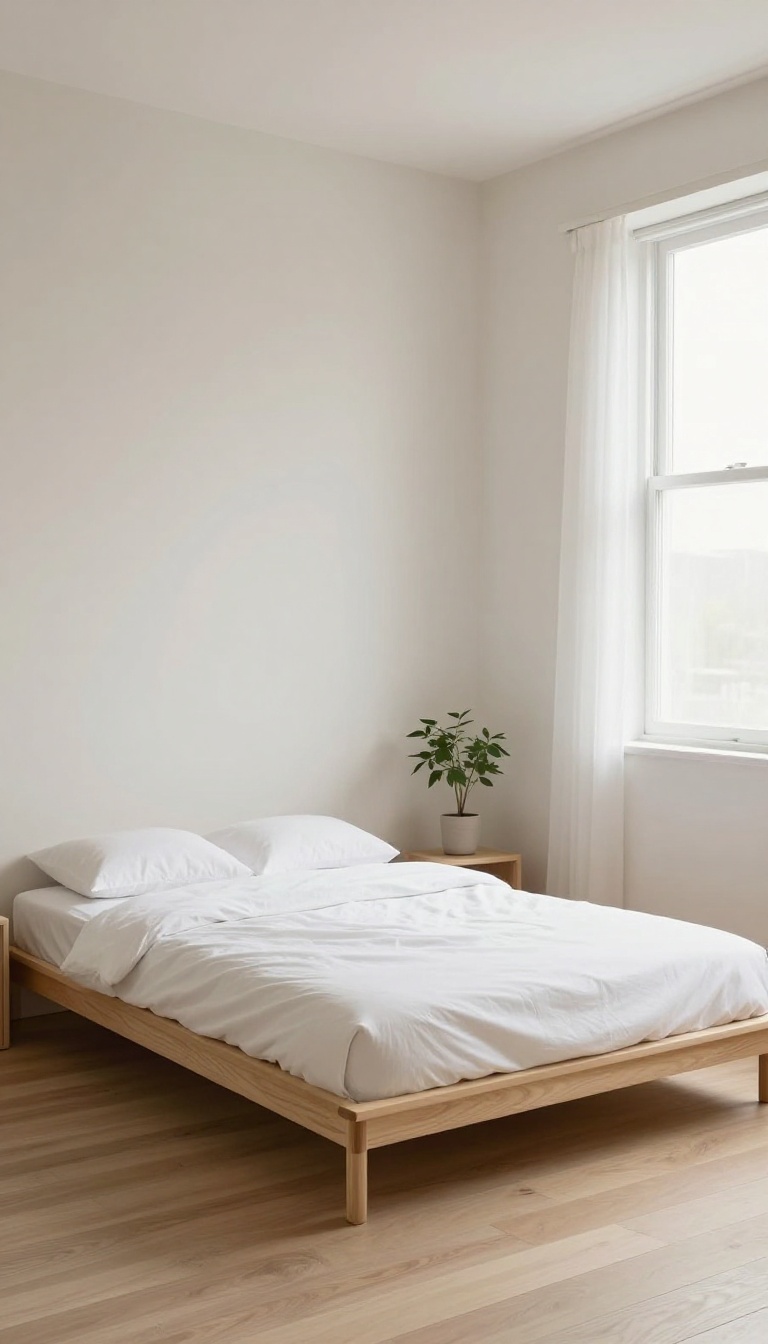
A tall bed frame eats up visual space before you even add a mattress. Swap it for a low-profile platform bed and suddenly the ceiling feels higher. The room gets a cleaner, more open look without moving a single wall.
Low beds work because they keep the eye moving horizontally instead of stacking bulk upward. When your bed sits close to the floor, the empty wall space above becomes part of the room's volume. That vertical breathing room is what makes a small bedroom feel less cramped.
You also cut down on visual clutter. A chunky headboard or footboard adds weight and shadows. A simple platform frame with clean lines keeps things light and easy to live with.
Why Height Matters More Than Width
Most people focus on floor space, but vertical space changes how a room feels. A low bed leaves more open wall above, which tricks the eye into seeing a taller room. Even a few inches of extra clearance can make a difference in a tight space.
What To Look For In A Frame
Skip anything with a tall headboard, thick posts, or a footboard. Look for a platform bed with a simple, low base. Slatted frames work well because they support the mattress without a box spring, which saves even more height.
Metal frames with a matte finish also keep things minimal.
Make It Work With Your Layout
Place the bed against the longest wall if possible. That keeps the center of the room open for walking. If you have a window, a low bed under it can look intentional and cozy.
Just make sure you leave enough space on both sides so the room doesn't feel blocked in.
2. Use a Monochrome Color Palette
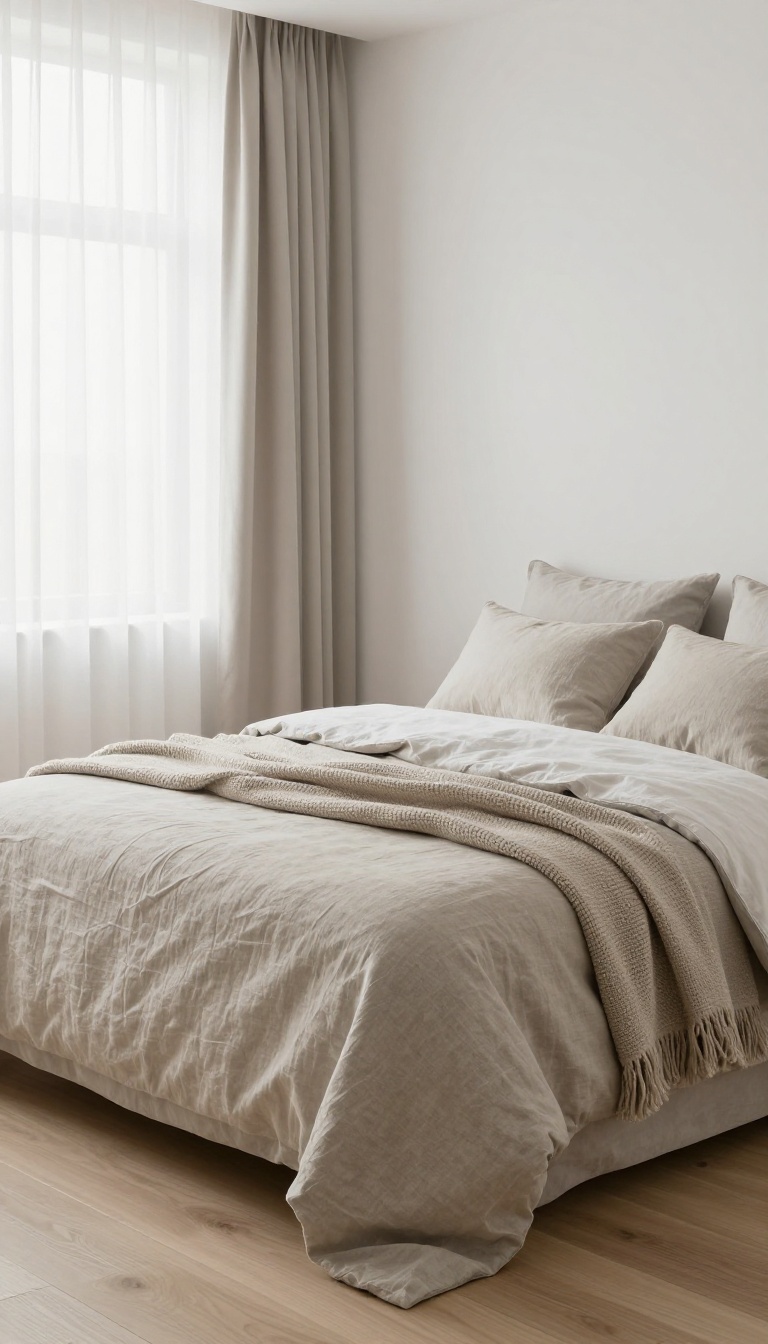
Color can make a small room feel busy without you realizing it. When every wall, sheet, and curtain fights for attention, the eye has nowhere to rest. A monochrome palette fixes that by keeping things quiet and seamless.
Stick to one or two neutral tones—soft white, warm gray, oatmeal, or muted beige. The lack of contrast blurs the edges of the room, so it reads as one continuous space instead of a bunch of separate zones. The real trick is adding texture, not color.
That's what keeps a monochrome room from feeling flat or boring.
A monochrome room doesn't mean everything is the exact same shade. It means staying within a tight family of tones so nothing jumps out. You can layer light, medium, and deep versions of the same neutral and still keep that seamless look.
The payoff is visual. Your eye doesn't stop at a bold accent wall or a bright pillow. It just glides across the room.
That smoothness makes the space feel larger than it is. Start with your biggest surfaces: walls, floor, and bedding. Pick a base tone and build from there.
Then bring in texture through fabric, weave, and finish.
Pick A Base Tone And Commit
Choose one neutral as your anchor. Warm white, greige, soft taupe, or pale gray all work well in small bedrooms. Use it on the walls and the largest pieces of furniture.
Don't overthink it. If you like it on a swatch, you'll like it on the wall. Just make sure it's light enough to reflect some natural light.
Layer Tones, Not Colors
Once your base is set, add one or two shades lighter or darker. A slightly deeper tone on the duvet and a lighter one on the curtains creates depth without breaking the calm. Keep the contrast low.
If two tones look almost the same in dim light, you're doing it right.
Add Interest With Texture
This is where monochrome gets good. A chunky knit throw, a linen headboard, a woven rug, and a smooth ceramic lamp all read as the same color but feel completely different. Mix matte and soft finishes with one or two subtle sheens.
The variety keeps the room from looking like a blank box.
3. Install Floating Nightstands
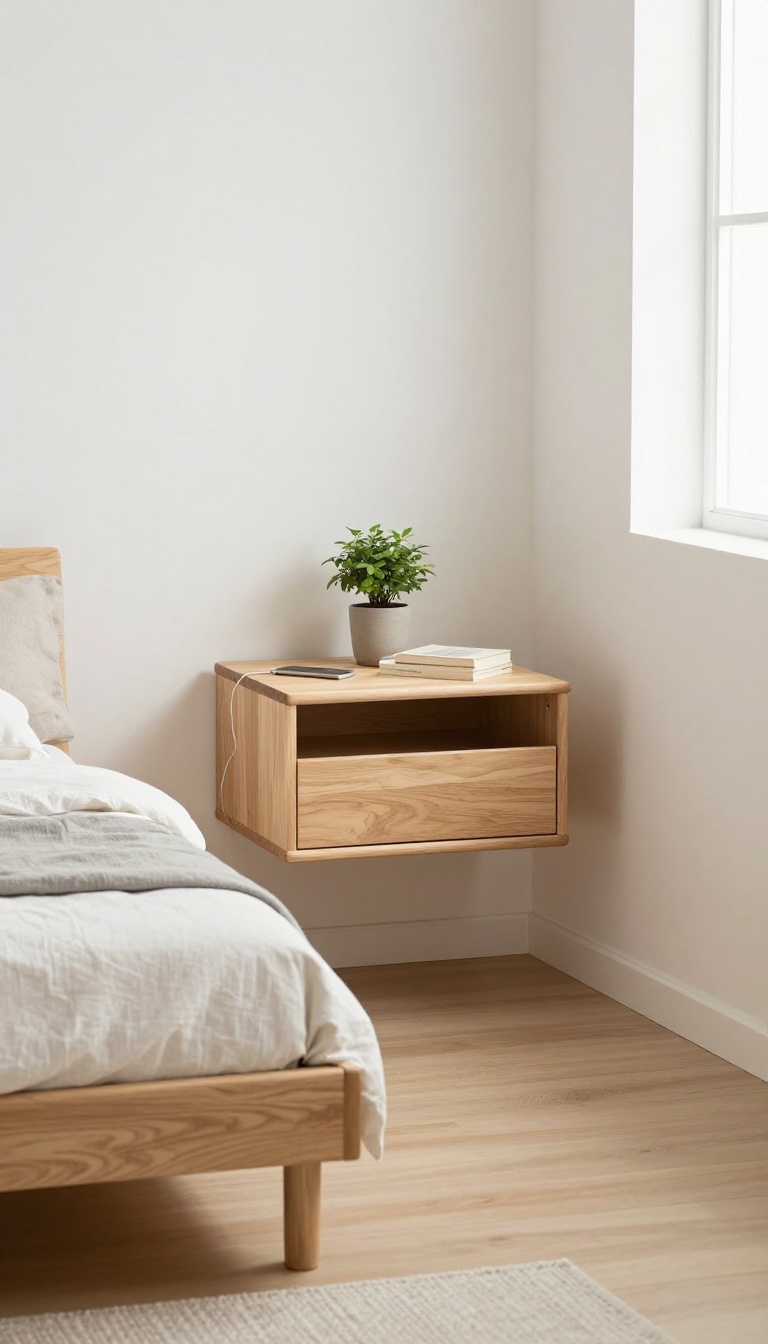
Floor space is precious in a small bedroom, and traditional nightstands quietly steal a chunk of it. Floating nightstands attach to the wall, so the area under them stays open and usable. That open gap makes the whole room read as lighter and less crowded.
They also pull double duty. Many designs include a drawer, a shelf, or a small cubby that hides clutter while keeping essentials within reach. Mount one at the right height and you get storage, a surface, and a cleaner look in one move.
A floating nightstand is basically a shelf or drawer box mounted directly to the wall beside your bed. Because it has no legs, the floor beneath it stays clear. In a tight room, that visual gap matters as much as the actual saved inches.
You can buy ready-made versions or build a simple one from a wall bracket and a wood box. Either way, the goal is the same: keep the surface small, the profile slim, and the clutter hidden. ### Pick the Right Height and Depth Mount it so the top sits roughly level with your mattress or a few inches above. That puts your phone, water glass, and book right where your hand naturally falls.
Keep the depth shallow, around 8 to 12 inches, so it doesn't jut into your walking path. If you share the bed, mount one on each side at the same height. Matching heights keep the wall looking calm instead of lopsided. ### Use It as a Charging Station This is where floating nightstands quietly win.
Drill a small hole in the back or run a cable along the underside, then plug in a compact charging block. Your phone charges overnight without a tangle of cords on the floor. Add a small clip or adhesive cable holder to keep the cord tidy.
When you wake up, the phone is right there and the floor is still clear. ### Choose a Style That Disappears Go for a finish that blends with your wall or matches your bed frame. White, light wood, or matte black tend to vanish into the background, which is exactly what you want. Skip bulky hardware and ornate edges.
A simple floating drawer with a push-to-open front keeps the look smooth. If you need more storage, stack two slim shelves instead of one deep unit.
Pick The Right Height And Depth
Mount it so the top sits roughly level with your mattress or a few inches above. That puts your phone, water glass, and book right where your hand naturally falls. Keep the depth shallow, around 8 to 12 inches, so it doesn't jut into your walking path.
If you share the bed, mount one on each side at the same height. Matching heights keep the wall looking calm instead of lopsided.
Use It As A Charging Station
This is where floating nightstands quietly win. Drill a small hole in the back or run a cable along the underside, then plug in a compact charging block. Your phone charges overnight without a tangle of cords on the floor.
Add a small clip or adhesive cable holder to keep the cord tidy. When you wake up, the phone is right there and the floor is still clear.
Choose A Style That Disappears
Go for a finish that blends with your wall or matches your bed frame. White, light wood, or matte black tend to vanish into the background, which is exactly what you want. Skip bulky hardware and ornate edges.
A simple floating drawer with a push-to-open front keeps the look smooth. If you need more storage, stack two slim shelves instead of one deep unit.
4. Opt for a Built-In or Reach-In Closet
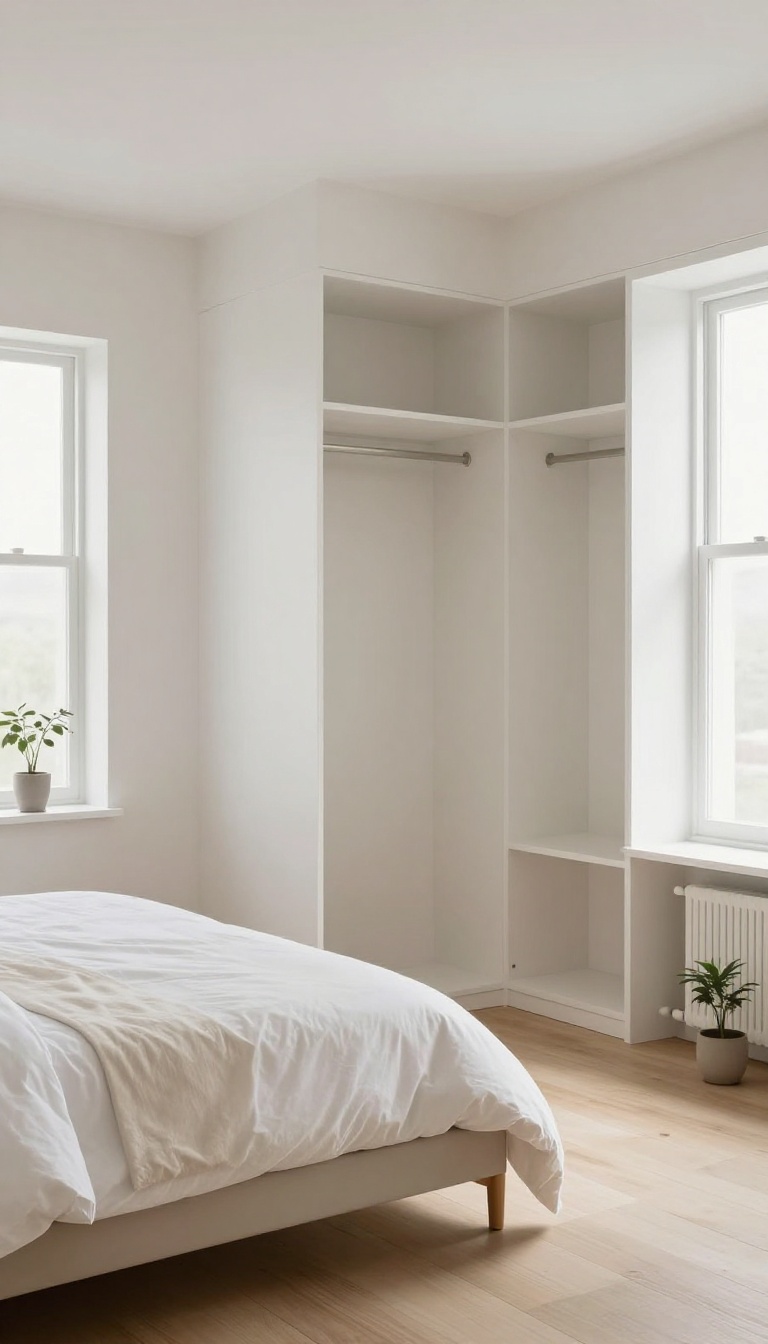
A freestanding wardrobe or dresser can dominate a small bedroom, but built-in or reach-in closets use vertical space to keep clutter hidden. These floor-to-ceiling solutions blend into the walls and free up floor area for movement. If building in isn't an option, swapping closet doors for a curtain is a quick, affordable fix that saves precious inches.
Built-in closets are custom-made to fit your room's exact dimensions, often extending from floor to ceiling. They eliminate the bulky look of standalone furniture and provide tailored storage for clothes, shoes, and accessories. Reach-in closets are shallower and typically use sliding or bi-fold doors, but they still offer efficient storage without eating into your room.
Both options keep the visual noise down, which is key in a minimal bedroom.
Why Built-ins Work In Small Rooms
Built-in closets make the most of every inch by using the full height of your walls. You can add shelves, drawers, and hanging rods to fit your needs, all behind clean, flush doors. This creates a seamless look that makes the room feel larger and more organized.
The Curtain Swap
If you have a reach-in closet with doors that swing out, they can block traffic and take up valuable floor space. Replacing them with a curtain on a tension rod is a simple, renter-friendly upgrade. Choose a fabric that matches your wall color or a neutral tone to keep things calm and cohesive.
Maximize Inside The Closet
No matter which type you have, make the inside work harder. Add a second hanging rod for shirts and skirts, install stackable bins for folded items, and use over-the-door organizers for small accessories. A well-organized closet means you can keep the rest of the room minimal.
5. Hang Curtains High and Wide
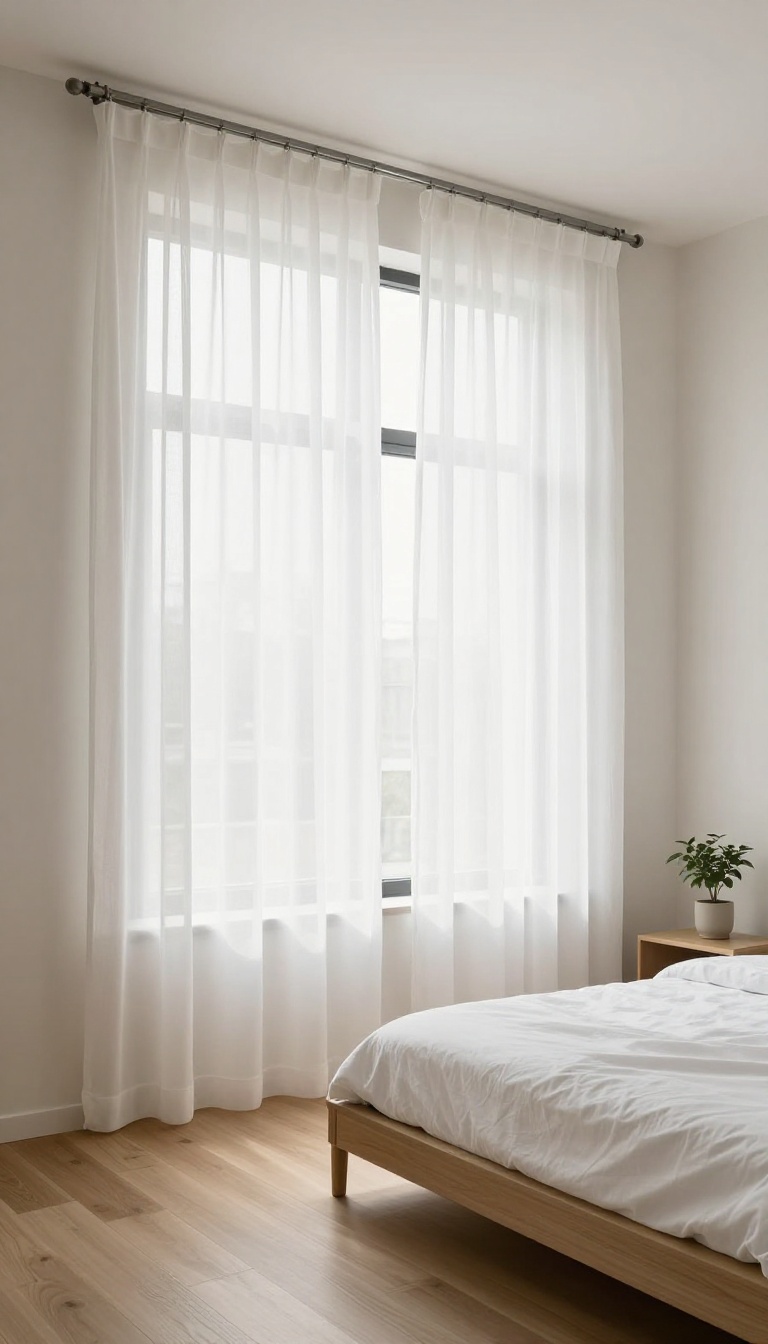
Curtains are one of those things you hang once and forget about. But where you put that rod changes how the whole room reads. Move it up and out, and suddenly your window looks bigger and your ceiling feels higher.
Most people mount the rod just above the window frame and stop at the sides. That frames the window tightly, which makes it look small. Instead, push the rod up toward the ceiling and extend it several inches past each side.
The extra fabric creates the illusion of a larger window, and the vertical lift draws the eye upward. It's a simple shift with a big payoff. Light fabrics keep the effect airy.
Heavy drapes can weigh down a small room, especially if they block light. Sheer curtains or lightweight linen let daylight filter through while still giving you privacy. If you need room-darkening options, use a double rod with sheers underneath and pull the heavier panels back during the day.
When you hang them high and wide, the wall space above and beside the window becomes part of the design. That extra visual space makes the room feel less boxed in. It's a trick designers use all the time, and it costs nothing extra if you're already planning to hang curtains.
How High Is High Enough?
Aim for the rod to sit two to four inches below the ceiling, or right at the ceiling line if you have crown molding. This draws the eye up and makes the ceiling feel taller. If your ceiling is very low, go as close to the top as possible without looking cramped.
How Wide Should You Go?
Extend the rod six to ten inches past each side of the window frame. When curtains are open, they should cover the wall, not the glass. That way, the full window is exposed, and the room feels wider.
Just make sure the rod is sturdy enough to hold the extra fabric.
Pick The Right Fabric
Sheer, light-colored fabrics like voile or linen blend work best. They diffuse light and keep things feeling open. Avoid heavy velvet or thick blackout curtains unless you absolutely need them.
If you do, choose a light color and keep them pulled back during the day.
6. Add a Large Mirror Opposite the Window
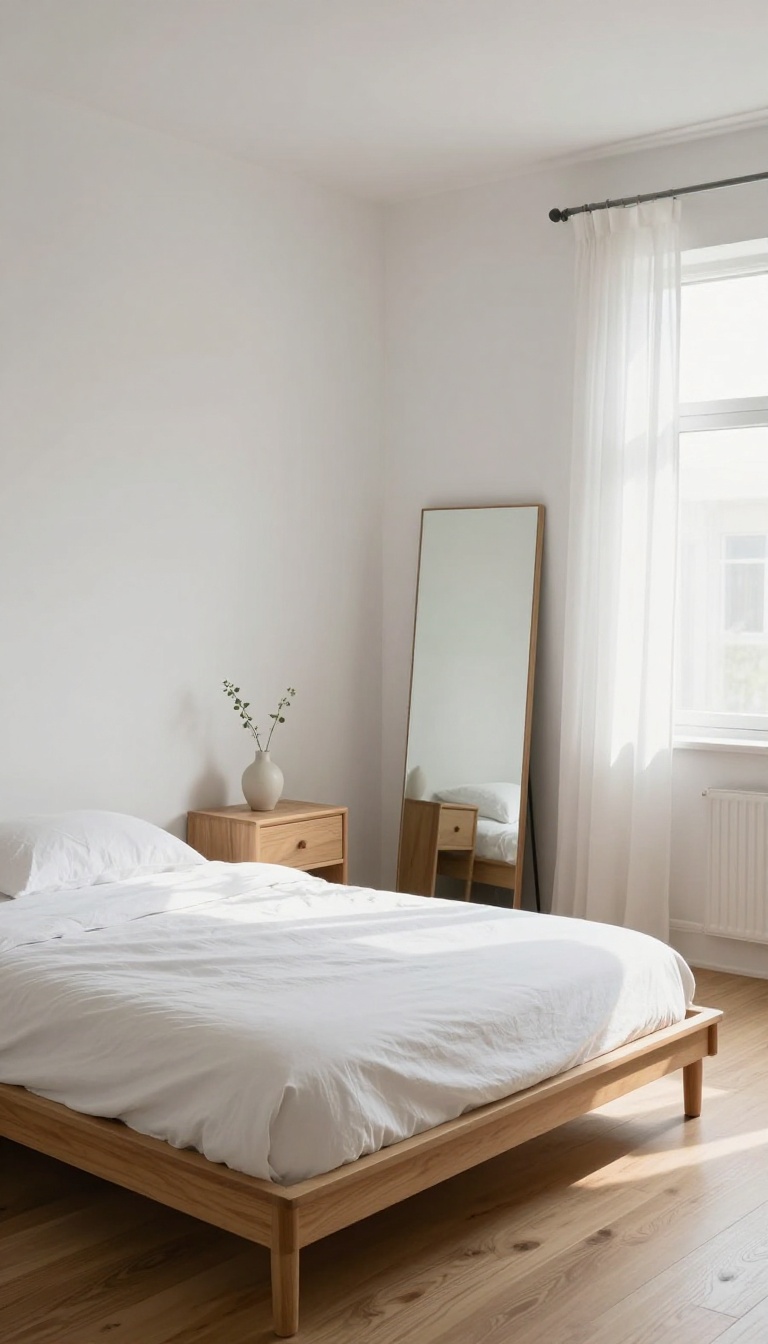
A large mirror placed opposite a window does more than just give you a place to check your outfit. It catches natural light and bounces it around the room, making even a tiny bedroom feel brighter and more open. The effect is almost like adding a second window—without the construction.
Plus, the reflection adds depth, so the space doesn't feel like a box.
You don't need a fancy frame or a designer piece. A simple, frameless or thin-framed mirror can lean against the wall or be mounted flush. Just make sure it's big enough to reflect a good chunk of the window and the room.
That's where the magic happens.
Why It Works
Mirrors trick the eye by doubling the visual space. When placed opposite a window, they capture daylight and spread it across the room. This reduces shadows and makes the walls feel farther apart.
In a small bedroom, that can mean the difference between cozy and cramped.
Leaning Vs. Mounting
Leaning a mirror is easy and renter-friendly. Just make sure it's secure—use a anti-tip strap or lean it against a wall that doesn't get bumped. Mounting it flush gives a cleaner, more streamlined look.
It also saves floor space, which is always a win in a small room.
Size And Placement Tips
Go as large as your wall allows, but leave some breathing room. A mirror that's too small can look like an afterthought. Center it on the wall opposite the window for maximum light reflection.
If you have a low ceiling, a tall mirror can add vertical interest.
7. Keep Surfaces Clear with Hidden Storage
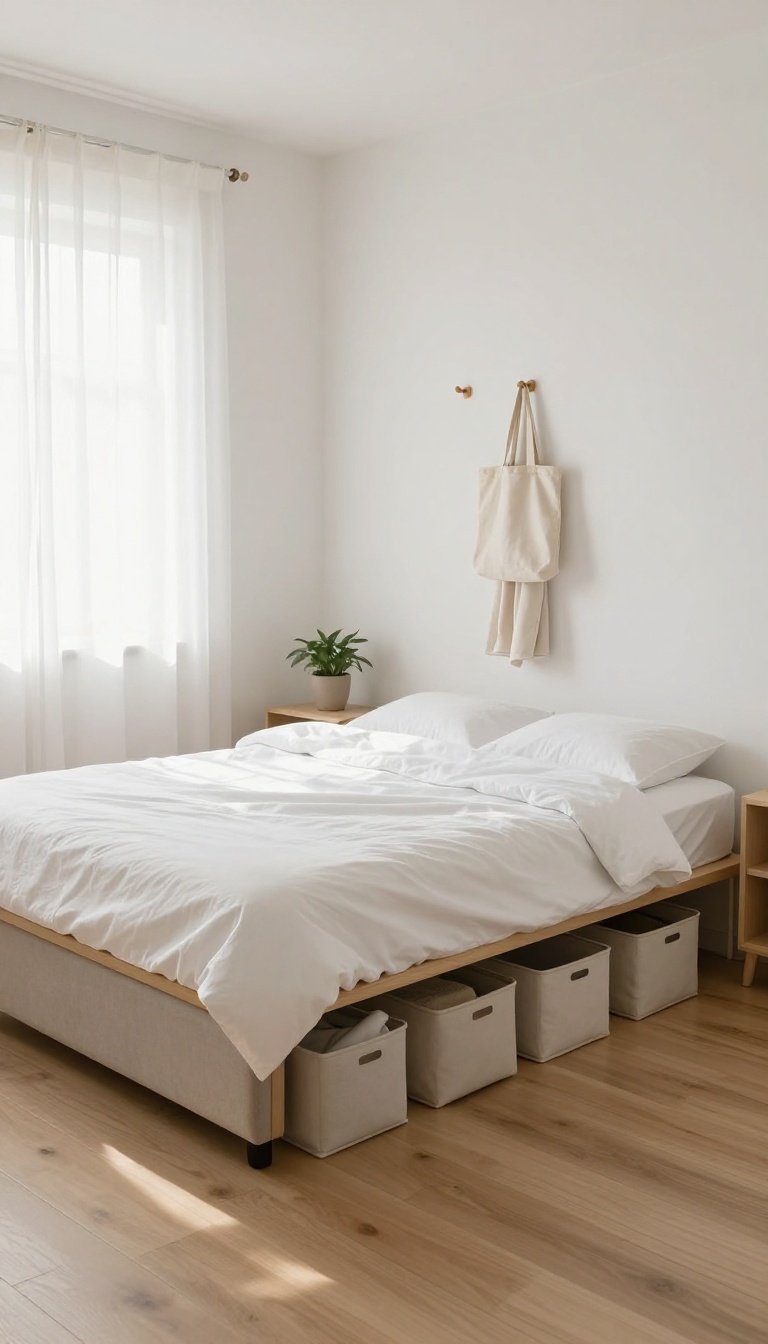
Clutter doesn't just look messy—it makes a small room feel smaller. When every flat surface is covered with stuff, your eyes have nowhere to rest. The fix is simple: give everything a home that's out of sight.
That way, the surfaces stay clear, and the room feels open and calm.
Hidden storage is the secret weapon of minimal small bedrooms. It lets you keep what you need without seeing it all the time. The goal is to see empty surfaces, not piles of stuff.
So, where do you hide it all?
Under-bed Bins
The space under your bed is prime real estate. Use low-profile bins to store off-season clothes, extra bedding, or shoes. Choose bins with wheels or handles so they're easy to pull out.
Clear bins help you see what's inside, but opaque ones look cleaner. Just make sure they fit the height of your bed frame.
Storage Ottomans
An ottoman that opens up gives you double duty: seating and storage. Tuck it at the foot of the bed or in a corner. Inside, stash blankets, pillows, or anything you want out of sight.
Look for one with a lid that stays open when you need it. It's a small piece that makes a big difference.
Wall Hooks And Over-door Racks
Walls are often overlooked for storage. Install hooks behind the door or on an empty wall for bags, hats, and robes. Over-door racks add instant hanging space without drilling.
Keep it minimal—only hang what you use daily. This keeps floors and surfaces clear.
8. Choose a Single Statement Light
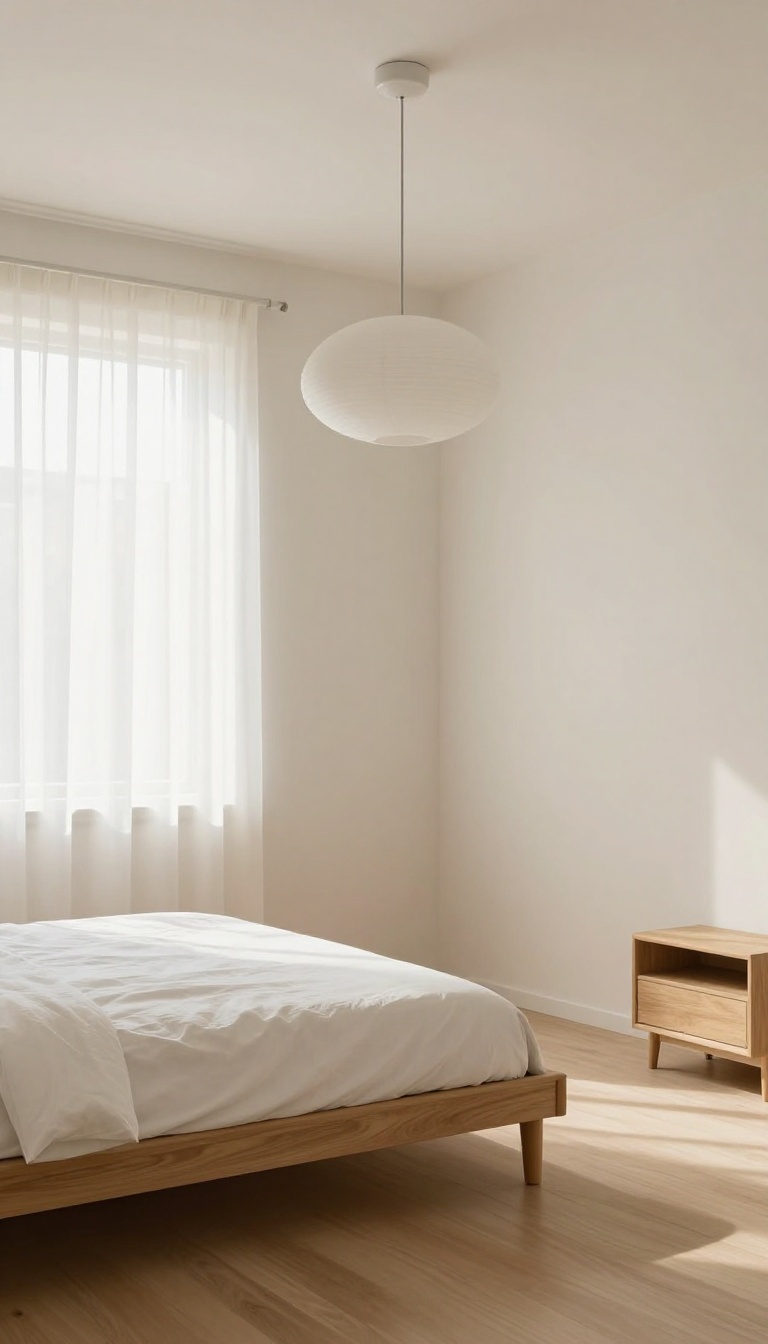
Lighting often gets treated as an afterthought in small bedrooms, but it's one of the easiest places to simplify. Instead of scattering table lamps, floor lamps, and sconces around the room, you can anchor the space with one standout fixture. A single pendant or flush-mount light does the job of several pieces while keeping surfaces clear and the ceiling uncluttered.
It's a small change that makes a big difference in how open the room feels.
A single light fixture becomes the focal point of the room, drawing the eye upward and making the ceiling feel higher. It also eliminates the need for multiple lamps, which means fewer cords, fewer surfaces taken up, and less visual noise. The key is choosing a fixture that matches your style without overpowering the space.
Think of it as jewelry for the ceiling—one great piece is better than a handful of average ones.
Why One Light Works
Multiple light sources can make a small room feel busy, even if each one is small. A single fixture simplifies the visual field and gives the room a clear purpose. It also frees up nightstand and dresser space, which is always at a premium in tight quarters.
When you have one light, you're forced to make it count—and that usually leads to a better choice.
Pendant Vs. Flush-mount
Pendants hang down and add a bit of drama, but they need ceiling height to work. In a room with low ceilings, a flush-mount or semi-flush-mount is safer because it won't crowd the space. If you have the height, a pendant can act as a sculptural element that ties the room together.
Either way, pick a shape that feels clean and doesn't block sightlines.
Placement And Brightness
Center the fixture in the room for even light, or hang it slightly toward the foot of the bed if you read there. A dimmable bulb lets you go from bright task lighting to a soft glow for winding down. Avoid cool white bulbs—they make small spaces feel clinical.
Warm white or soft white keeps things cozy and calm.
9. Use a Rug to Define the Space
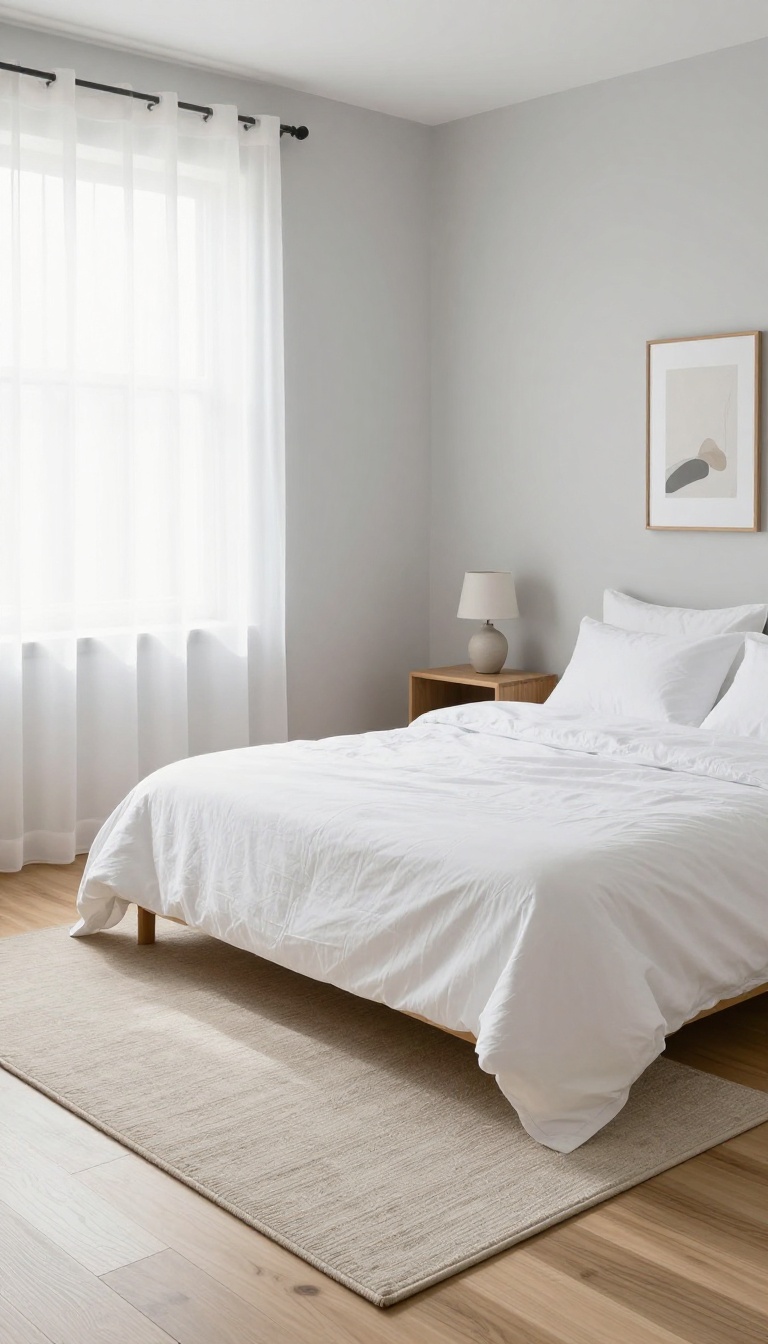
A rug can make or break a small bedroom. Choose the wrong size and it chops the floor into awkward zones. Choose the right one and the whole room snaps into focus.
The goal is simple: anchor the bed and create a clear boundary that feels intentional. A large, low-pile rug in a neutral tone does exactly that. It adds softness without bulk, and it keeps the floor plan readable at a glance.
Skip the tiny accent rugs. They scatter your eye and make the room feel pieced together. One big rug does more for flow than three small ones ever will.
When you're working with limited square footage, every element needs a job. A rug's job is to ground the furniture and tell your brain where the conversation area begins and ends. In a small bedroom, that usually means the bed.
A rug that's too small creates visual clutter. It looks like a postage stamp floating in the middle of the floor. Your eye stops at its edges instead of gliding across the room.
That's the opposite of calm. A rug that's too thick adds unnecessary height. You'll stub your toe on it, and it can make the door drag.
Low-pile or flatweave styles keep things sleek and easy to clean. Color matters, too. Neutral tones like oatmeal, soft gray, or warm beige blend with almost any palette.
They don't compete with your bedding or wall art. They just quietly do their job. ### Size It Right For a small bedroom, aim for a rug that extends at least 18 to 24 inches beyond the sides and foot of the bed. If the room is really tight, you can place two-thirds of the rug under the bed and let the rest show at the foot.
That still gives you the anchoring effect without swallowing the whole floor. A common mistake is buying a 5×8 rug for a queen bed. It's too narrow.
The bed will hang over the edges, and the rug will look like an afterthought. Go with an 8×10 if you can fit it. If not, a 6×9 can work in a pinch, but only if you angle it slightly or keep the bed centered. ### Pick the Right Pile Low-pile rugs are your friend in small rooms.
They don't trap dust, they're easy to vacuum, and they don't create a tripping hazard. Flatweave cotton or jute rugs are great options. They're durable and add a subtle texture without bulk.
Avoid shag or high-pile rugs. They look cozy, but in a small space they can feel heavy and overwhelming. Plus, they're a pain to clean.
If you want softness underfoot, add a small washable mat beside the bed instead. ### Keep the Edges Clean A rug with a simple border or no border at all keeps the look clean. Busy patterns can be fun, but they can also make a small room feel chaotic. If you want pattern, go with a subtle stripe or a tonal geometric.
Something that reads as texture from a distance. Also, make sure the rug lies flat. Curled edges are a trip hazard and they look sloppy.
Use a rug pad to keep it in place. A thin pad also adds a bit of cushioning without raising the height too much. ### Coordinate, Don't Match The rug doesn't have to match your bedding exactly. In fact, it's better if it doesn't.
Pick a neutral rug that complements your color scheme. If your walls are white and your bedding is light gray, a warm beige rug adds a nice contrast. If your room is mostly cool tones, a soft blue-gray rug can tie things together.
The key is to keep it simple. One rug, one statement. Let the other elements in the room breathe.
Size It Right
For a small bedroom, aim for a rug that extends at least 18 to 24 inches beyond the sides and foot of the bed. If the room is really tight, you can place two-thirds of the rug under the bed and let the rest show at the foot. That still gives you the anchoring effect without swallowing the whole floor.
A common mistake is buying a 5×8 rug for a queen bed. It's too narrow. The bed will hang over the edges, and the rug will look like an afterthought.
Go with an 8×10 if you can fit it. If not, a 6×9 can work in a pinch, but only if you angle it slightly or keep the bed centered.
Pick The Right Pile
Low-pile rugs are your friend in small rooms. They don't trap dust, they're easy to vacuum, and they don't create a tripping hazard. Flatweave cotton or jute rugs are great options.
They're durable and add a subtle texture without bulk. Avoid shag or high-pile rugs. They look cozy, but in a small space they can feel heavy and overwhelming.
Plus, they're a pain to clean. If you want softness underfoot, add a small washable mat beside the bed instead.
Keep The Edges Clean
A rug with a simple border or no border at all keeps the look clean. Busy patterns can be fun, but they can also make a small room feel chaotic. If you want pattern, go with a subtle stripe or a tonal geometric.
Something that reads as texture from a distance. Also, make sure the rug lies flat. Curled edges are a trip hazard and they look sloppy.
Use a rug pad to keep it in place. A thin pad also adds a bit of cushioning without raising the height too much.
Coordinate, Don't Match
The rug doesn't have to match your bedding exactly. In fact, it's better if it doesn't. Pick a neutral rug that complements your color scheme.
If your walls are white and your bedding is light gray, a warm beige rug adds a nice contrast. If your room is mostly cool tones, a soft blue-gray rug can tie things together. The key is to keep it simple.
One rug, one statement. Let the other elements in the room breathe.
10. Limit Wall Art to One or Two Pieces
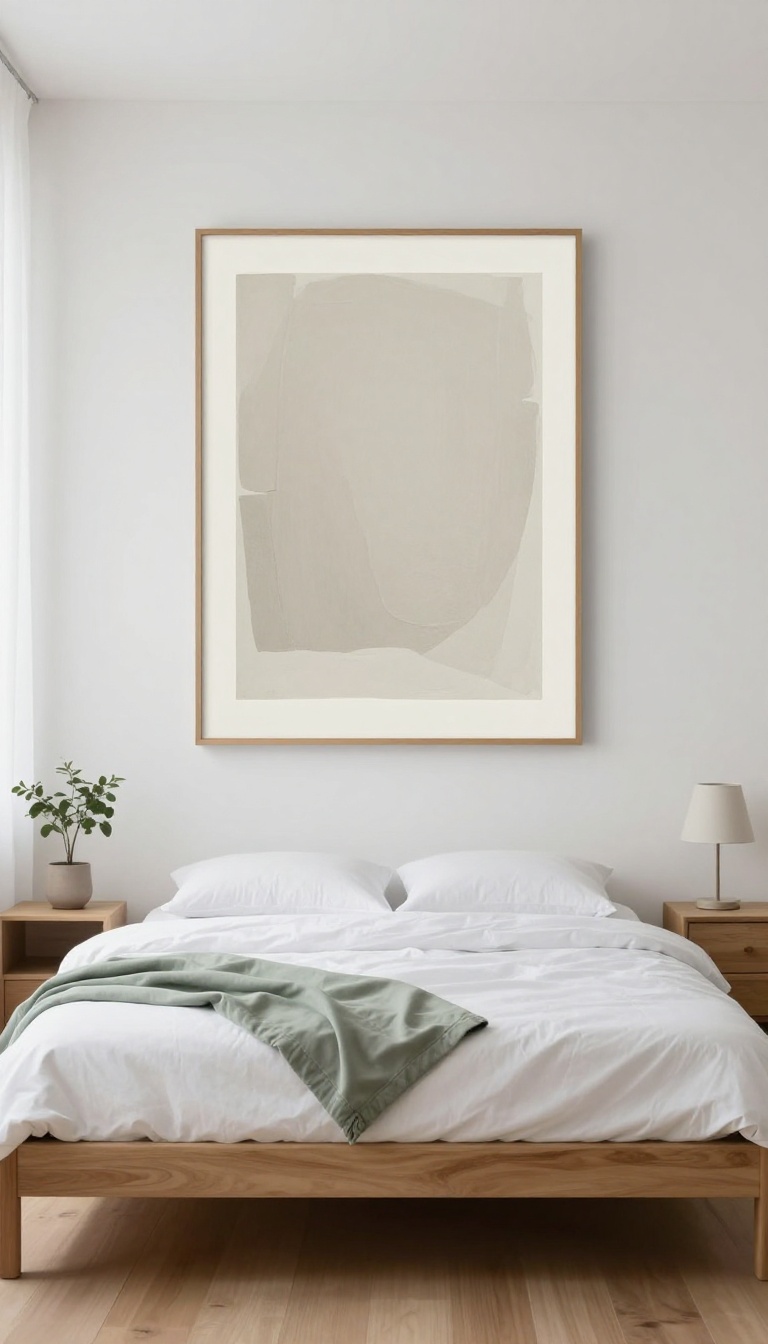
Blank walls can feel boring, but a gallery wall in a small bedroom is a fast track to visual clutter. Every frame you add competes for attention in a room that doesn't have much space to give. The fix is simple: pick one or two pieces you truly love and let them breathe.
A single large print can act as a focal point without overwhelming the room. It draws the eye and gives the space a finished look, all while keeping things calm. If you prefer a pair, choose two smaller frames and hang them side by side or stacked vertically.
The key is restraint—two is plenty, three starts to feel busy.
Pick A Scale That Fits
In a small room, a tiny frame on a big wall looks lost, while an oversized piece can feel heavy. Aim for artwork that takes up about two-thirds of the wall width above a piece of furniture, like a dresser or bed. That balance keeps the room feeling intentional, not cramped.
Choose Frames That Disappear
Simple frames in neutral tones—white, black, or natural wood—blend into the background instead of shouting for attention. Match the frame to your existing hardware or trim for a cohesive look. If you want a hint of color, pick one shade that already appears in your bedding or rug.
Hang With Purpose
Center your art at eye level, usually about 57 to 60 inches from the floor. If you're hanging above a bed, leave 6 to 8 inches between the top of the headboard and the bottom of the frame. This prevents the art from feeling disconnected or crowded.
FAQ
What colors make a small bedroom look bigger?
Light neutrals like white, cream, and soft gray reflect light and blur boundaries, making the room feel more open. You can add depth with textures like linen or wood.
How do I store clothes in a small bedroom without a closet?
Use a rolling rack, under-bed bins, or a tall dresser with slim profile. Wall hooks and over-door organizers also help keep things tidy.
Is a bed with storage worth it for a small room?
Yes, if you need extra space for linens or off-season clothes. A platform bed with drawers or a lift-up mattress saves floor space and reduces clutter.
Should I use a ceiling fan or a pendant light in a small bedroom?
A flush-mount pendant or a low-profile ceiling fan works best. Both save headroom and keep the visual line clean. Choose based on your climate and style.
How can I make a small bedroom feel cozy without clutter?
Layer soft textures like a chunky throw, linen curtains, and a plush rug. Keep the color palette tight and limit decor to a few meaningful pieces.
Conclusion
A small bedroom doesn't need to feel cramped or cluttered. The best minimal setups work because every piece earns its place, and that's something you can build slowly instead of all at once.
Pick one idea from this list that fits your space and your budget, then live with it for a week before adding anything else. You'll be surprised how much calmer the room feels with just a few smart changes.