15 Modern Bathroom Floor Tile Ideas with Chic Finishes
Bathroom floors take more abuse than any surface in the house. They soak up splashes, survive dropped shampoo bottles, and still have to look good enough to greet you at 6 a. m. The right tile handles all of that while quietly setting the tone for the whole room.
The catch is that "modern" covers a lot of ground. You can go seamless and minimal, warm and earthy, or bold and graphic, and each direction changes how the space feels and how much upkeep it demands.
Budget matters too, since some of the chicest looks cost less per square foot than the trendy ones. We rounded up fifteen floor tile ideas that balance style with real-world durability.
1. Large-Format Porcelain Slabs for a Seamless Look
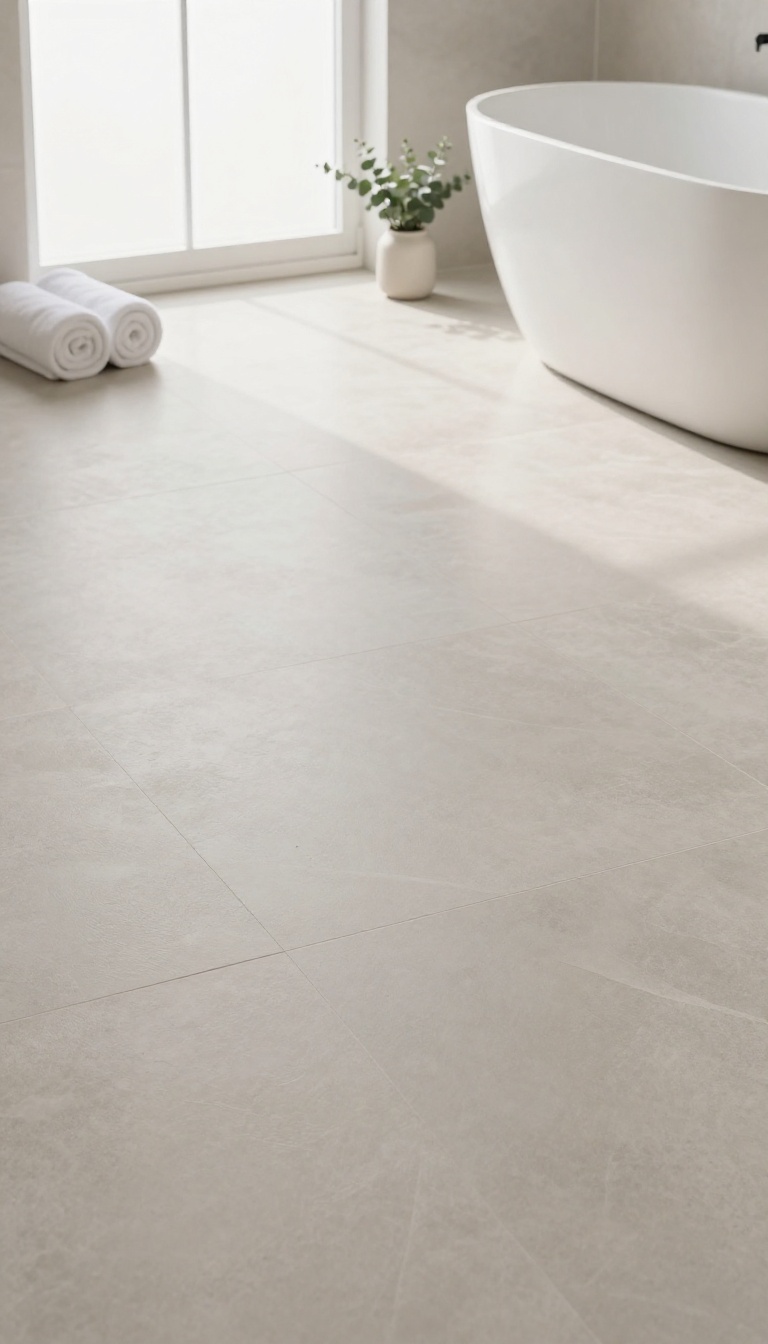
Large-format porcelain slabs are the closest thing to a floor with no seams at all. Instead of a grid of small tiles, you get big panels that stretch across the room with just a few thin grout lines. That single change does more for a cramped bathroom than almost any other upgrade.
The look reads clean and modern without trying hard. It also happens to be one of the most practical picks on this list, which is why it keeps showing up in high-end remodels and budget-savvy flips alike.
Why Fewer Grout Lines Change Everything
Grout is where bathrooms start to look dated. It stains, it discolors, and it chops a small floor into dozens of little boxes that make the room feel tighter than it is. A large-format slab cuts that visual noise way down.
With panels running 24 by 48 inches or bigger, your eye glides across the floor instead of stopping at every line. In a five-by-eight bathroom, that alone can make the space feel a foot wider. Cleaning gets easier too.
Fewer seams mean fewer places for soap scum and mildew to hide, so a quick mop actually finishes the job.
Matte Beats Glossy For Real Bathrooms
Glossy porcelain looks stunning in showroom lighting. In a real bathroom, it shows every water spot, toothpaste fleck, and footprint. Matte and honed finishes flip that script.
They soften reflections, hide smudges, and give you grip underfoot when the floor is wet, which matters more than most people admit until they slip. You still get the sleek, seamless look. You just spend less time chasing streaks with a microfiber cloth.
Slab Sizes And Layout Tips
Measure your room before you fall in love with a slab size. A 24-by-48 panel works in most standard bathrooms, while 32-by-64 or larger suits bigger spaces and wet rooms. Plan the layout so cut edges land against walls or under the vanity, not in the middle of the floor.
Book-matching two slabs creates a subtle mirrored pattern that looks intentional and expensive. And always order one extra slab for cuts and future repairs. Dye lots vary, so a replacement later may not match.
What It Costs And Where It Pays Off
Large-format porcelain runs higher per square foot than standard tile, and installation costs more because the panels are heavy and unforgiving. A wavy subfloor will show through, so leveling is non-negotiable. That said, you save on grout, labor time, and long-term maintenance.
In small bathrooms, the visual payoff is huge for the money. If the budget is tight, use slabs on the floor and a simpler tile on the walls. You still get the seamless effect where it counts.
2. Matte Hexagon Tiles with a Soft, Modern Edge
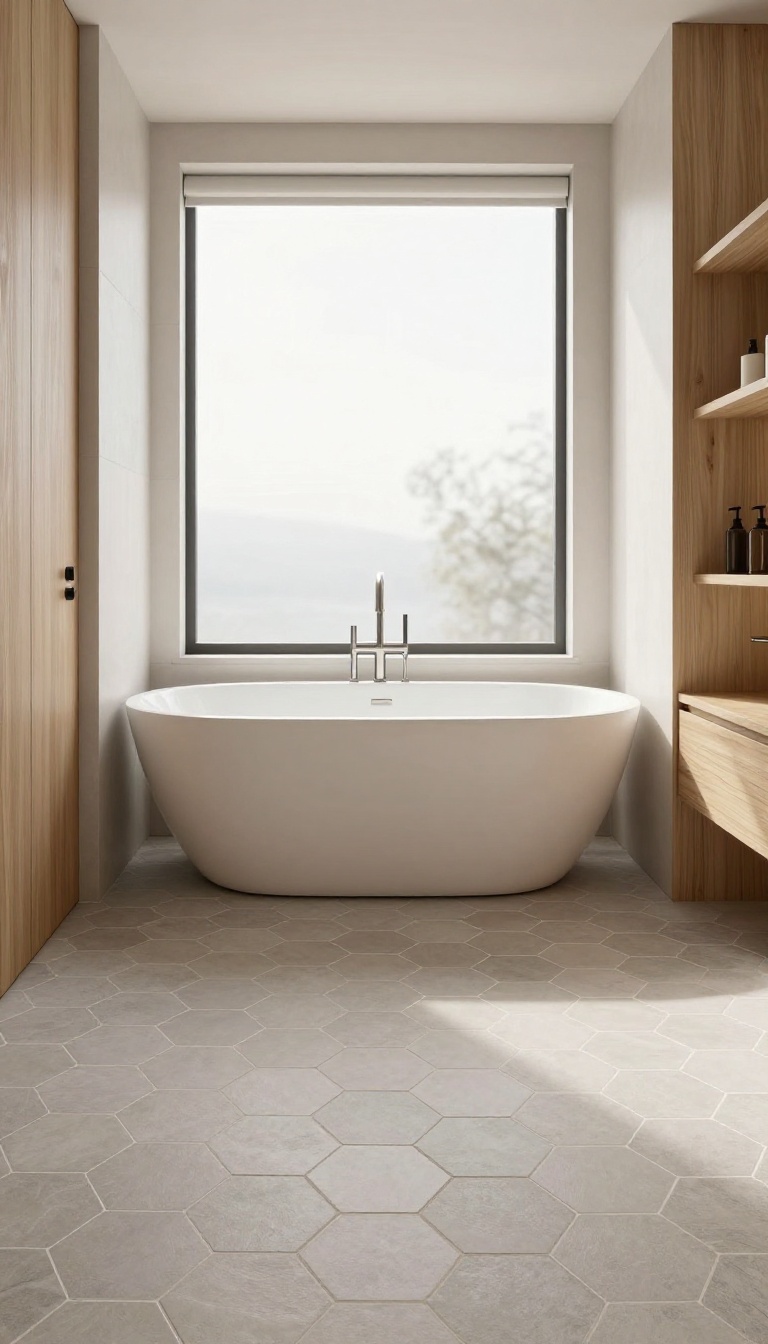
Hexagon tiles bring a quiet kind of geometry to the floor. They're not as loud as a bold pattern, but they're far from boring. The six-sided shape adds just enough visual interest to keep things from feeling flat.
Matte finishes take that softness up a notch. Instead of bouncing light around like a glossy surface, matte glazes absorb it, giving the floor a calm, contemporary feel. It's a look that works in almost any bathroom, from tiny powder rooms to spacious master baths.
And because hexagons come in so many sizes and colors, you can dial the style up or down. Go small and dark for drama, or large and light for an airy vibe. Either way, the matte finish keeps it grounded.
Hexagon tiles have been around for ages, but the modern versions feel fresh. They're often made from porcelain or ceramic, which means they're tough enough for wet areas. The matte glaze hides water spots better than shiny tiles, so your floor looks clean even when it's not.
One of the best things about hexagons is how versatile they are. You can lay them in a simple grid, or mix in a few accent tiles for a subtle pattern. They play well with other shapes too, like subway tiles on the walls.
The key is to let the floor be the star without overwhelming the space.
Why Matte Works In A Bathroom
Matte finishes are practical for bathrooms because they're less slippery when wet. That's a big plus for safety, especially in homes with kids or older adults. They also don't show smudges and water spots as easily as glossy tiles, so you can go longer between deep cleans.
From a style standpoint, matte gives the floor a soft, almost velvety look. It pairs beautifully with natural materials like wood and stone, and it tones down the shine of chrome or glass fixtures. The result is a bathroom that feels modern but not cold.
Sizing And Layout Tips
Hexagon tiles come in a range of sizes, from tiny mosaics to large-format hexagons. Smaller tiles mean more grout lines, which can make a small bathroom feel busier. Larger hexagons create a cleaner look with fewer lines to break up the floor.
For a classic hexagon layout, you can't go wrong with a simple honeycomb pattern. If you want something a bit more custom, try a staggered or offset arrangement. Just keep the layout consistent with the rest of the room's style.
Color And Grout Choices
Neutral colors like white, gray, and beige are safe bets that never go out of style. But don't be afraid to try a deep green, navy, or charcoal for a bolder statement. Matte finishes make dark colors look rich rather than harsh.
Grout color matters too. Matching grout creates a seamless look, while contrasting grout highlights the hexagon shape. For a modern edge, consider a light tile with dark grout, or vice versa.
Just make sure the grout is sealed to resist stains.
3. Wood-Look Porcelain Planks for Warmth Without the Worry
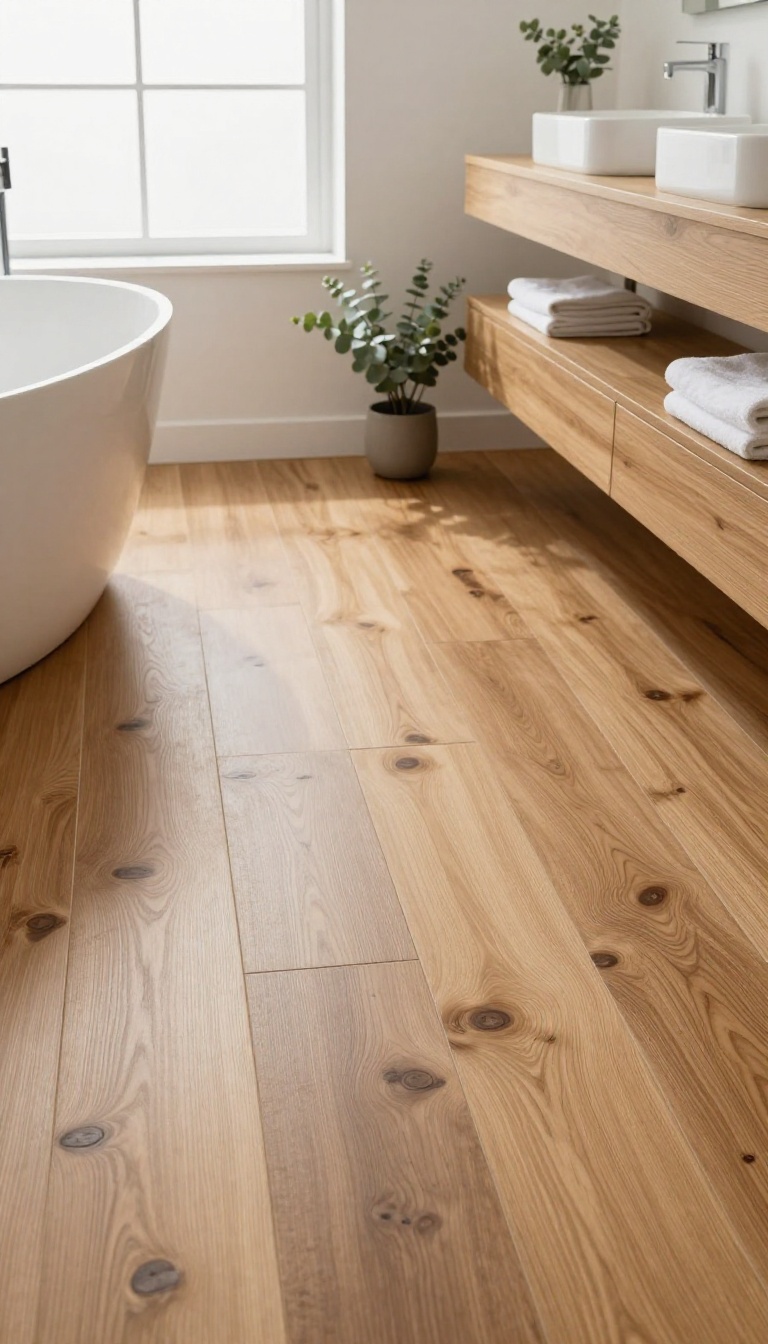
Wood floors in a bathroom sound like a beautiful mistake. The warmth, the grain, the way they soften a space—all of it works until steam and splashes get involved. Wood-look porcelain planks give you that same cozy look, but they shrug off water like tile should.
These aren't the fake-looking planks from a decade ago. Modern printing techniques capture knots, grain, and subtle color shifts so convincingly that guests will do a double-take. You get the charm of hardwood with the durability of porcelain, which is a trade most homeowners happily make.
They're also easier to live with than real wood. No sealing, no swelling, no panic over a leaky toilet. Just a warm-looking floor that handles real bathroom life.
Porcelain planks come in long, narrow formats that mimic actual hardwood boards. You'll find them in widths from about 6 to 10 inches and lengths up to 48 inches or more. That elongated shape is what sells the illusion—short, stubby tiles read as tile, not wood.
The finish matters as much as the pattern. Matte and textured surfaces look more like real wood than high-gloss options, and they offer better slip resistance when wet. A little texture also hides water spots and soap residue between cleanings.
Color choice sets the mood. Warm browns and honey tones feel traditional and inviting, while gray and washed-out blondes lean modern and airy. Either direction works in a bathroom; it just depends on whether you want the room to feel rustic or clean-lined.
Why They Beat Real Hardwood
Real wood and moisture are enemies, plain and simple. Even sealed hardwood can warp, cup, or grow mold when it lives in a steamy room. Porcelain absorbs almost no water, so splashes and humidity don't stand a chance.
You also skip the maintenance routine. No re-oiling, no refinishing, no worrying about which cleaner might damage the finish. A damp mop handles just about everything.
And if you have radiant floor heating, porcelain is an ideal partner. It conducts heat well, so the floor feels warm underfoot—which is half the reason people want wood in a bathroom in the first place.
Getting The Layout Right
Plank direction changes how the room reads. Run them parallel to the longest wall to stretch the space, or perpendicular to make a narrow bathroom feel wider. Herringbone and chevron patterns add drama but eat up more material and labor.
Grout lines make or break the wood illusion. Go thin—1/8 inch or less—and match the grout to the tile color. Wide, contrasty grout lines scream "tile floor" and kill the effect.
If you're tiling over an existing floor, check your subfloor first. Porcelain planks need a flat, stable base, and some larger formats require a leveling system to prevent lippage.
What To Expect On Cost
Wood-look porcelain usually runs $3 to $10 per square foot for the material, though premium realistic prints push higher. That's often less than mid-range hardwood and far less than engineered wood in a wet area. Installation adds to the total, especially with patterns like herringbone.
A straightforward plank layout keeps labor costs down. Compared to real wood over the life of the floor, porcelain wins on cost. You'll never refinish it, and it won't need replacing after a leak.
That math tends to surprise people who assume tile is the expensive option.
4. Polished Marble-Look Tiles on a Realistic Budget
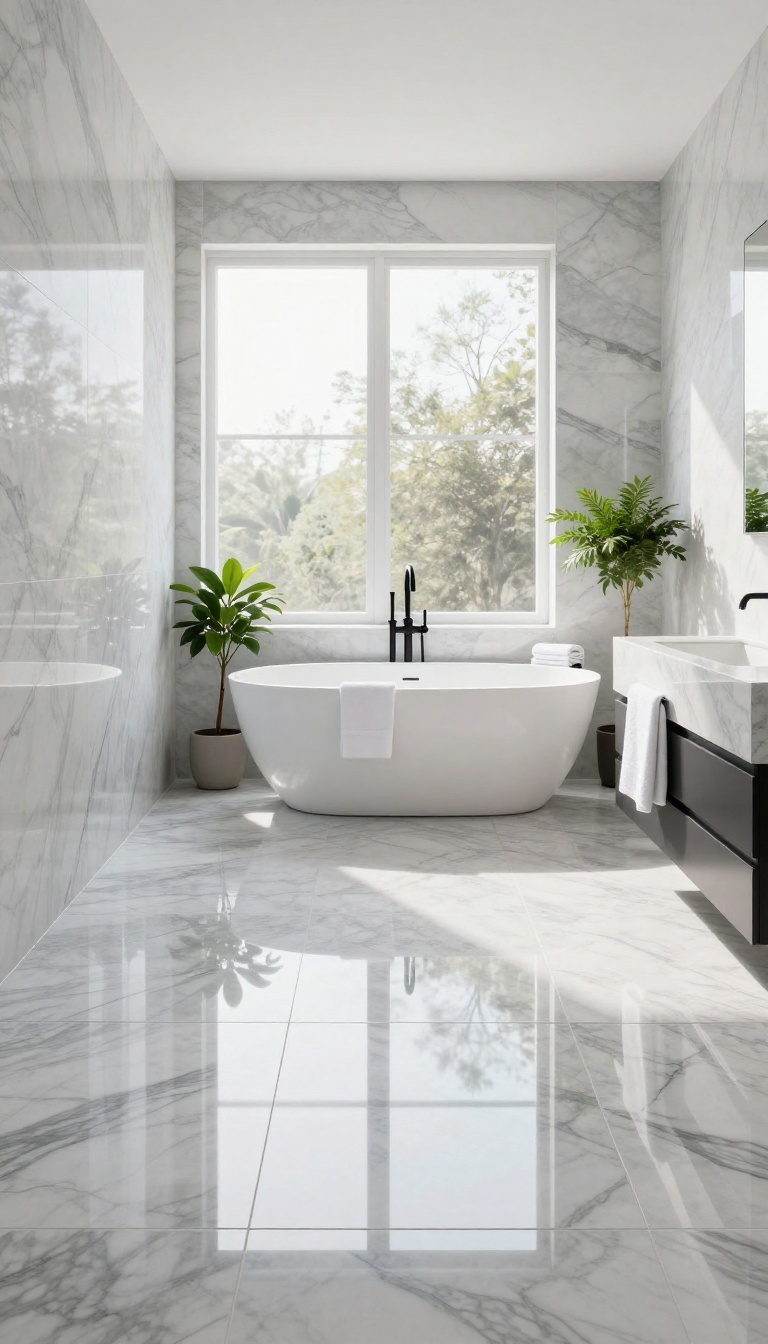
Real marble floors are stunning, but they come with a price tag and a maintenance list that most of us would rather skip. Porcelain tile makers have gotten scary good at copying that look, down to the soft gray veining and glassy shine. You get the high-end vibe without sealing, polishing, or panicking every time a splash of lemon juice hits the floor.
It's one of the smartest swaps in a modern bathroom.
Marble-look porcelain starts with a printed design layer that mimics natural stone, then gets a protective glaze on top. That glaze is what makes it practical. Water, soap, and hairspray wipe right off, and you never have to worry about etching or staining the way you would with the real thing.
The shine level is where you have choices. High-gloss polished finishes throw light around and make small bathrooms feel bigger. Matte and honed versions look softer and hide water spots better, which matters if you have hard water.
Veining patterns range from bold and dramatic to faint and subtle. Look for tiles labeled with multiple face variations so the floor doesn't repeat the same vein pattern over and over.
Pick The Right Sheen For Your Space
Glossy marble-look tile reflects light and looks luxurious, but it can show every footprint and water droplet. If your bathroom gets heavy daily use, a honed or matte finish keeps things calmer and easier to live with. Both styles still read as marble, just with different personalities.
Watch The Grout Lines
Thin grout lines in a color that matches the tile make the floor look more like one continuous slab. Wider lines break up the pattern and can cheapen the effect. A grout color close to the lightest or darkest vein in the tile usually works best.
Size And Layout Matter
Large rectangular tiles laid in a simple grid or offset pattern mimic the look of marble slabs without the seams. Smaller tiles cost less and work fine in tight spaces, but more grout lines mean more places for dirt to settle. Pick based on the size of the room, not just the price.
5. Warm Terracotta Tones for an Earthy, Grounded Feel
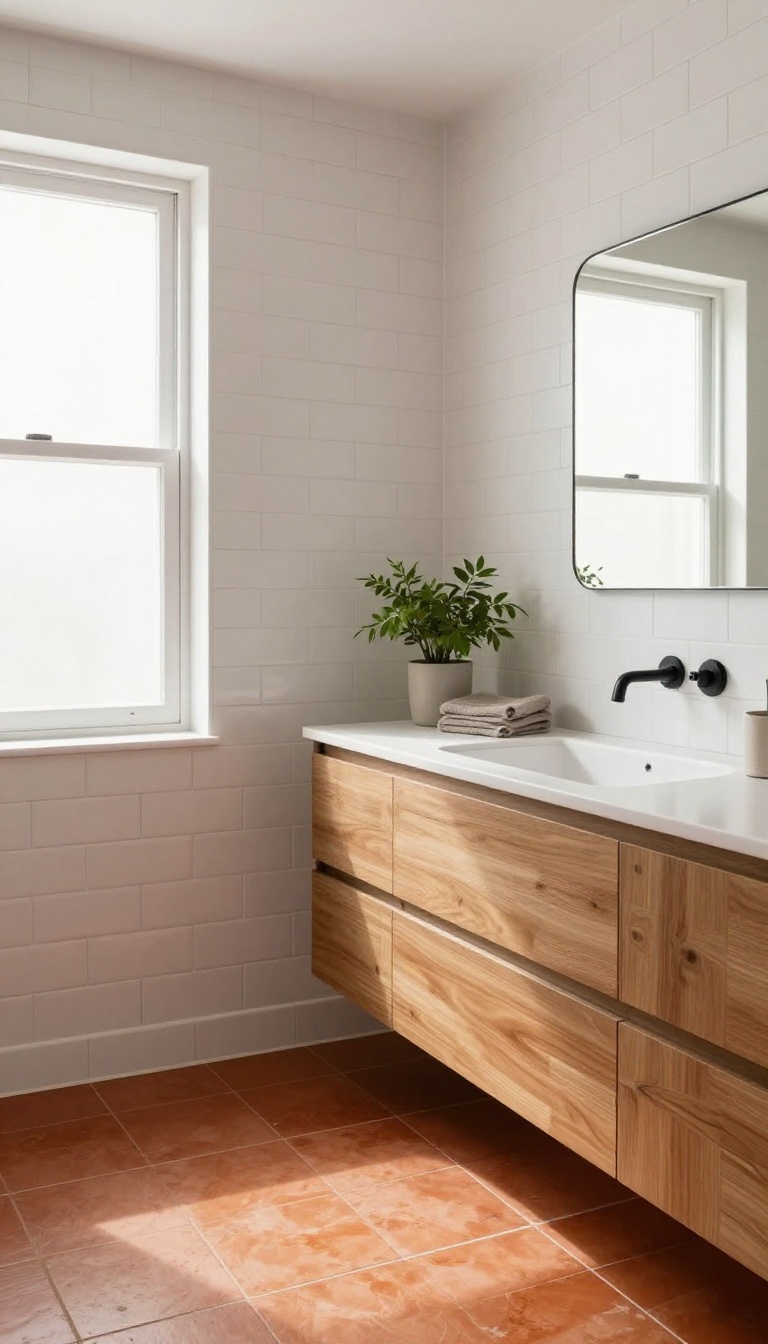
Terracotta has a way of making a room feel like it's been there forever, in the best sense. Those warm orange-brown tones pull in a soft, grounded energy that cool grays and stark whites just can't match. The old knock on terracotta was that it hated water.
Modern sealed versions fixed that problem, so you get the rustic charm without the soggy regrets. It's a smart pick if you want your bathroom to feel cozy instead of clinical.
Why The Warmth Works
Terracotta sits in that sweet spot between earthy and polished. The color range runs from pale sand to deep burnt sienna, so you can dial the intensity up or down depending on the mood you want. It also plays well with other materials.
Pair it with white subway tile for a clean contrast, or lean into the rustic look with wood vanities and matte black fixtures. The warmth softens an all-white bathroom fast, which is exactly what a lot of cold, builder-grade spaces need.
Sealed Vs. Unsealed
Traditional unsealed terracotta is porous, and porous tile plus bathroom moisture equals trouble. Water seeps in, stains set, and eventually the tile starts to flake or crack. Sealed terracotta solves most of that.
A quality penetrating sealer closes the pores so splashes bead up instead of soaking in. Just plan on resealing every year or two, especially in a shower-adjacent bathroom, to keep the protection strong.
Sizes, Shapes, And Layouts
Classic square terracotta tiles give you that old-world Mediterranean feel, and they look great laid in a simple grid or a herringbone pattern. Hexagon and octagon shapes add a little more visual interest without going overboard. If you want something more modern, look for large-format terracotta-look porcelain.
You get the same warm color with tighter grout lines and way less maintenance. Rectangular planks laid in a running bond can even mimic wood, which is a nice trick for small bathrooms.
Keeping It Clean
Sweep or dry-mop regularly, because grit is the enemy of any tile finish. For weekly cleaning, use a pH-neutral cleaner and skip anything acidic, since acids can eat through the sealer over time. Wipe up spills when you notice them, and avoid harsh scrubbing pads that dull the surface.
If the tile starts looking thirsty or absorbs water instead of repelling it, that's your cue to reseal.
6. Zellige-Style Tiles with Handmade Character
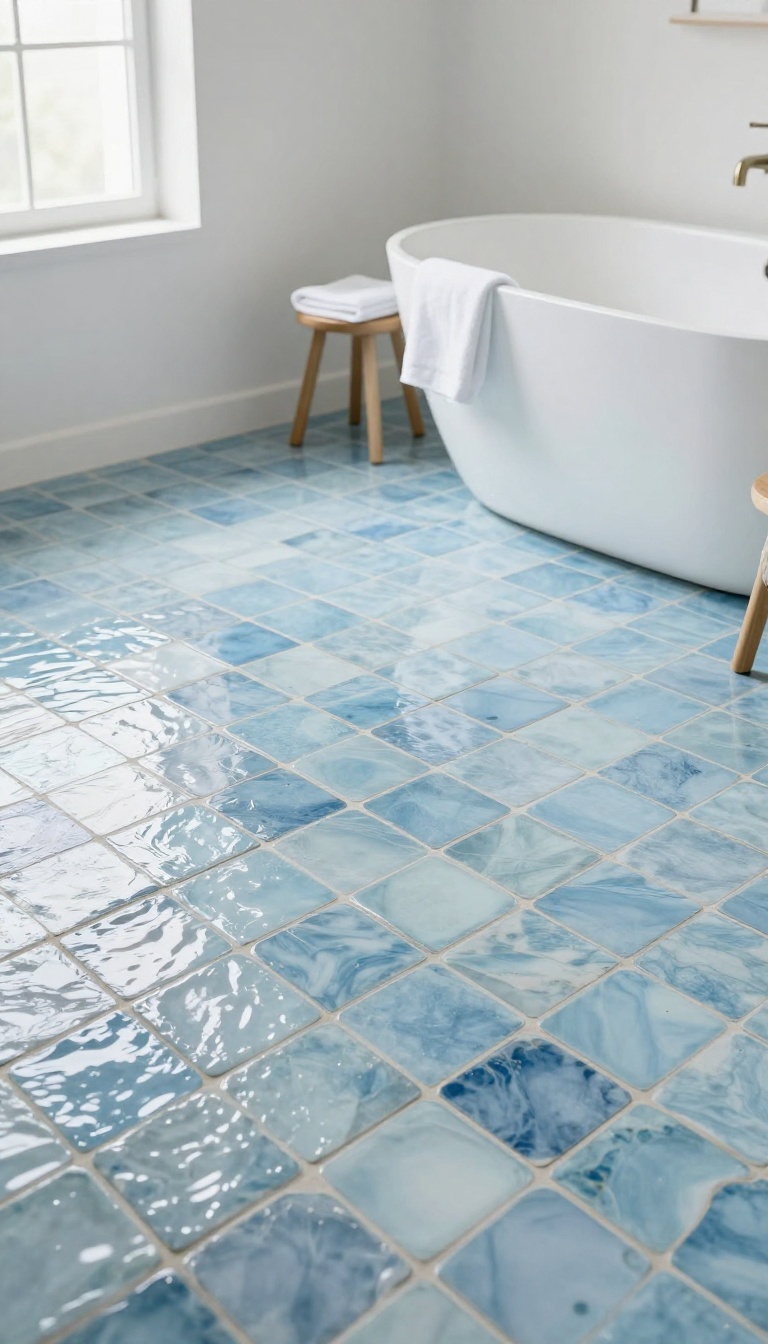
Zellige tiles bring a handmade, artisanal feel that machine-made tiles can't replicate. Each piece is slightly different, with uneven surfaces and glossy glazes that catch the light in interesting ways. This creates a floor that feels alive and full of character, perfect for adding warmth to a modern bathroom.
Zellige tiles originate from Morocco, where artisans still shape and glaze them by hand. The imperfections are the point—they give the floor a subtle, organic texture that feels rich without being loud. In a modern bathroom, they work beautifully as a solid field of color or as an accent alongside simpler tiles.
Just be prepared for a bit more upkeep than your average ceramic.
What Makes Them Special
The magic of zellige is in the glaze. It's applied unevenly, so each tile has its own depth and shine. When light hits, you get a soft, rippling effect across the floor.
Colors range from icy blues to warm terracottas, and no two tiles are exactly alike. That variation is what makes the floor feel custom and handcrafted.
Installation And Sealing
Because zellige is porous and the edges are irregular, installation takes more time and skill. You'll want a tile setter who's worked with them before. After installation, sealing is a must.
A penetrating sealer protects the tiles from water and stains, and you'll need to reapply it every year or two. It's a small trade-off for the look.
Cleaning And Care
Regular cleaning is simple: sweep or vacuum, then mop with a pH-neutral cleaner. Avoid anything abrasive, which can dull the glaze. Because the surface isn't perfectly flat, dirt can settle in the tiny dips, so a soft brush helps for deeper cleans.
With a little attention, zellige ages gracefully and keeps its shine.
7. Micro-Cement and Concrete-Look Tiles for Industrial Calm
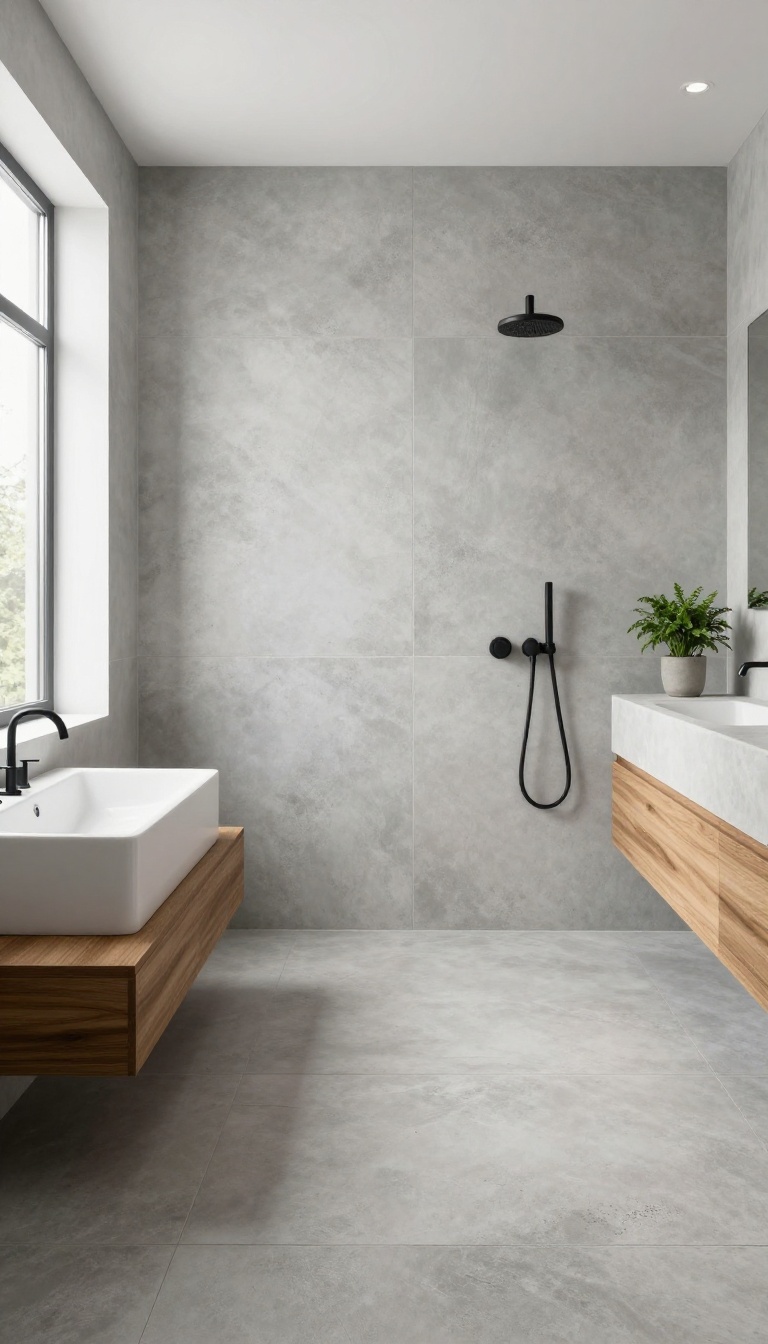
Micro-cement and concrete-look tiles bring a soft, industrial edge that feels modern without shouting. Their muted gray tones and matte surfaces create a calm backdrop that lets other elements—like black fixtures—stand out. It’s a look that works in both tiny powder rooms and spacious master baths.
Micro-cement is a seamless coating that dries to a smooth, stone-like finish. Concrete-look tiles mimic that same aesthetic but come in easy-to-install planks or squares. Both options offer a cool, minimalist vibe that pairs beautifully with matte black faucets, showerheads, and hardware.
Why It Works
The matte finish hides water spots and footprints better than glossy tiles. Soft gray tones keep the room feeling light and open, even without windows. And the subtle texture adds depth without busy patterns.
Installation Tips
For a true seamless look, micro-cement requires a professional applicator. Concrete-look tiles are more DIY-friendly but need a level subfloor to avoid lippage. Consider large-format tiles to minimize grout lines and enhance the industrial feel.
Pairing With Fixtures
Black fixtures create a striking contrast against the gray backdrop. Brushed nickel or chrome can also work if you want a softer transition. Add a warm wood vanity or a touch of greenery to keep the space from feeling too cold.
8. Penny Round Tiles for Small Bathrooms and Tight Corners
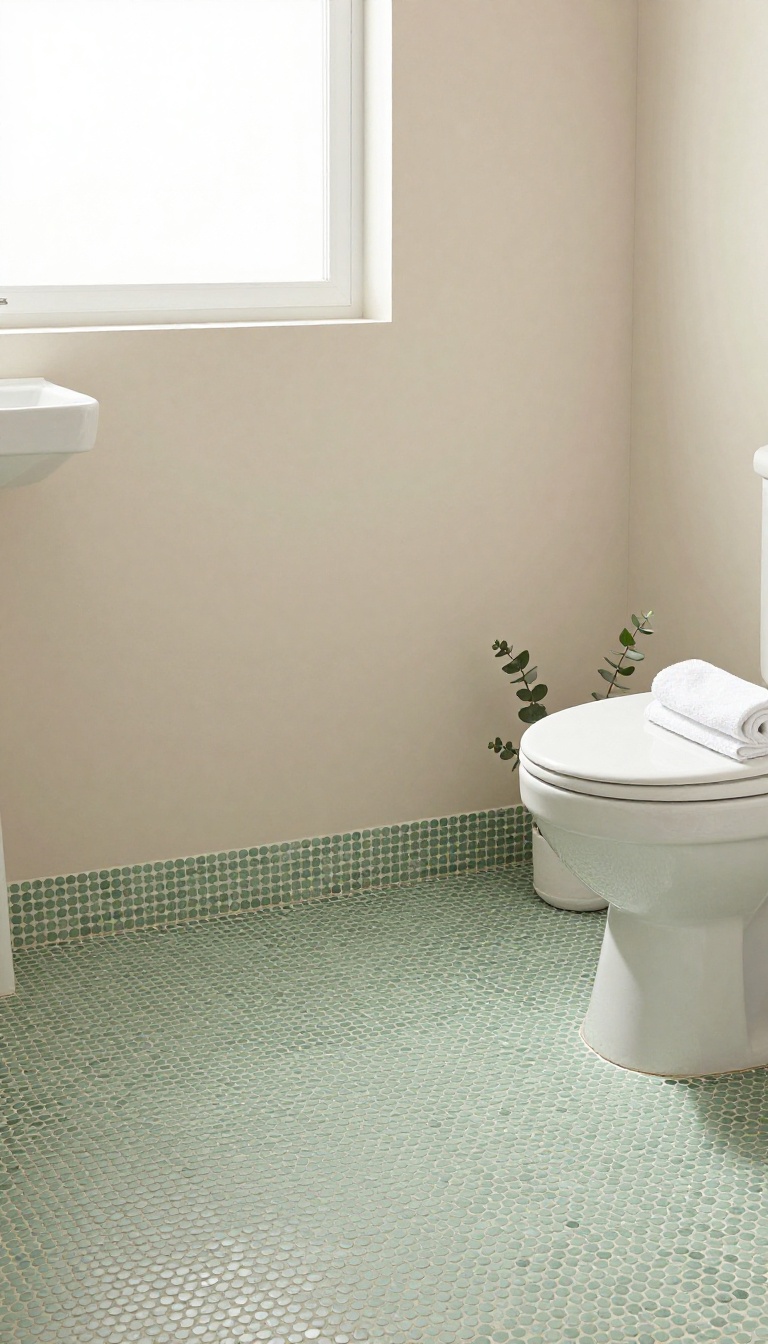
Penny round tiles are the quiet problem-solvers of bathroom flooring. Their small, circular shape lets them curve around toilets, hug pedestal sinks, and slip into corners where a 12×24 tile would need a messy cut. In a tight powder room or a narrow shower stall, that flexibility keeps the floor looking intentional instead of patched together.
The classic mosaic also brings a bit of vintage charm without feeling dated. Modern versions come in matte finishes, muted colors, and even warm metallics, so you can lean retro or keep it clean and contemporary. And because the tiles are small, the grout lines create a subtle texture that adds grip underfoot—a nice bonus in a room that gets wet.
Why The Small Scale Works In Tight Spots
A standard tile might need three or four cuts to wrap around a toilet flange. Penny rounds handle those curves with ease because each piece is only about three-quarters of an inch wide. That means fewer awkward slivers and a cleaner finished edge.
In a powder room that's barely five feet wide, that difference is huge.
Finish And Color Options That Feel Current
Matte porcelain in soft white, sage, or charcoal keeps the look modern and hides water spots better than glossy versions. If you want a little shimmer, try a pearl or brushed nickel finish on the shower floor. Just avoid high-gloss in wet zones unless you enjoy mopping every day.
Installation Tips For A Flawless Floor
Penny rounds come on mesh-backed sheets, which makes them faster to lay than individual pieces. But you still need a level subfloor and a thin grout line—around an eighth of an inch—to keep the pattern crisp. Use a grout color that matches the tile for a seamless look, or go slightly darker to highlight the circles.
9. Black and White Checkerboard with a Fresh Twist
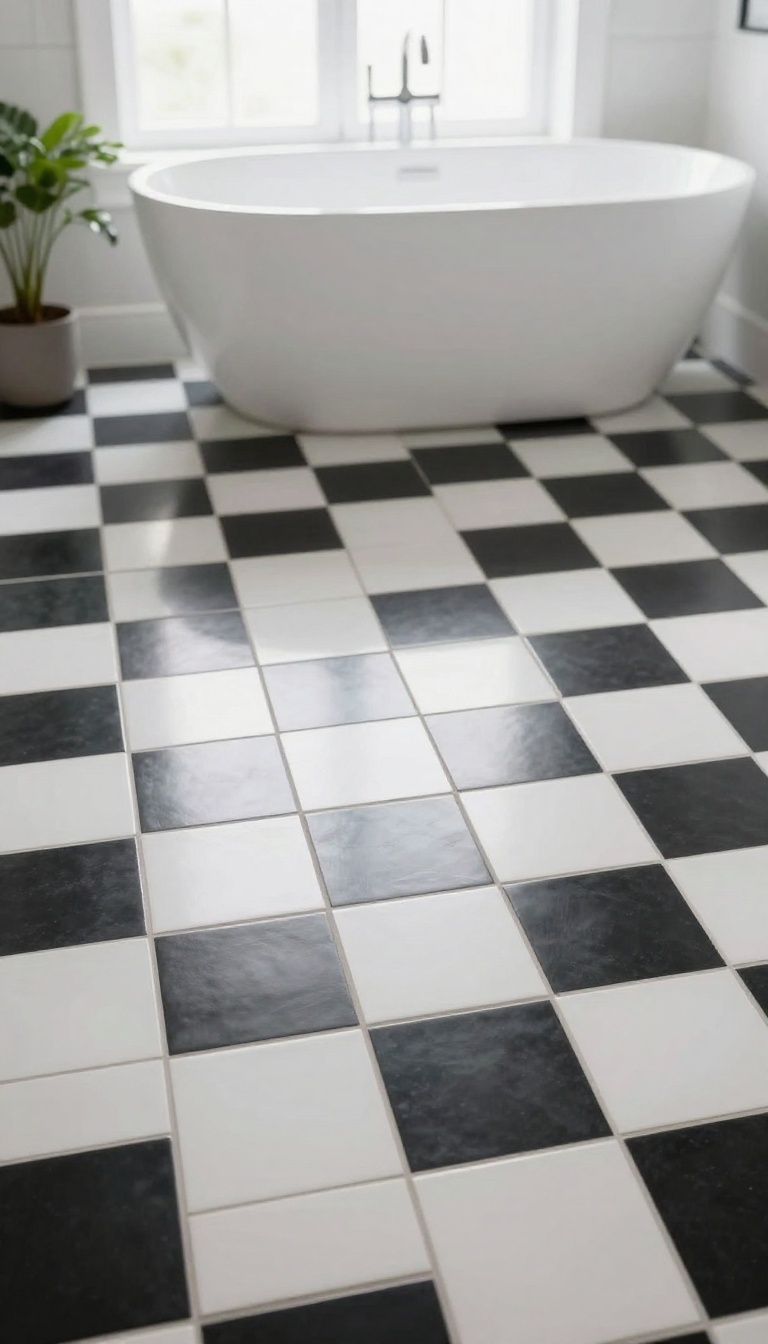
Checkerboard floors never really left, but the version people are installing now looks nothing like the retro diner tile you remember. Oversized squares turn the pattern into something closer to modern art, and mixing matte with glossy finishes adds a quiet layer of texture you only notice when the light hits it. It's classic bones with a contemporary attitude, and it works in bathrooms of almost any size.
The original checkerboard was all about small, high-contrast squares laid in a tight grid. Scale those squares up to 12 or even 18 inches and the whole mood shifts. The pattern reads as bold geometry instead of busy nostalgia, and fewer grout lines mean less scrubbing over time.
Finish is where this idea gets interesting. Pair matte black with glossy white, or flip it, and you get contrast that changes throughout the day as shadows and reflections move across the floor. It's subtle, but it keeps the room from feeling flat.
Why Oversized Squares Work
Bigger tiles mean fewer grout lines, which is a genuine win in a wet room. They also make small bathrooms feel less chopped up because your eye reads the pattern as a few strong shapes rather than dozens of tiny ones. A 12×12 or 16×16 square is the sweet spot for most residential bathrooms.
Go larger and you risk losing the checkerboard effect entirely.
Mixing Matte And Gloss
A matte-and-gloss mix gives you the pattern without the harshness of straight black and white. Choose one finish for the dark squares and the opposite for the light ones, then keep the grout color matched to the lighter tile. The result is a floor that feels dimensional but still calm.
It also hides water spots better than a fully polished surface.
Layout And Grout Details
Straight-set is the traditional route, but a diagonal layout adds movement and can make a narrow bathroom feel wider. For grout, a mid-gray keeps things soft, while white grout on white tile creates a seamless look that downplays the grid. Just know that white grout shows every bit of dirt, so seal it well if you go that route.
Where It Works Best
This pattern shines in powder rooms and guest baths where you want a strong design moment without committing to a full renovation. In a primary bathroom, keep the rest of the palette quiet so the floor stays the star. Pair it with warm wood tones or brass fixtures to keep the black and white from feeling cold.
10. Slate-Look Tiles for a Natural, Textured Finish
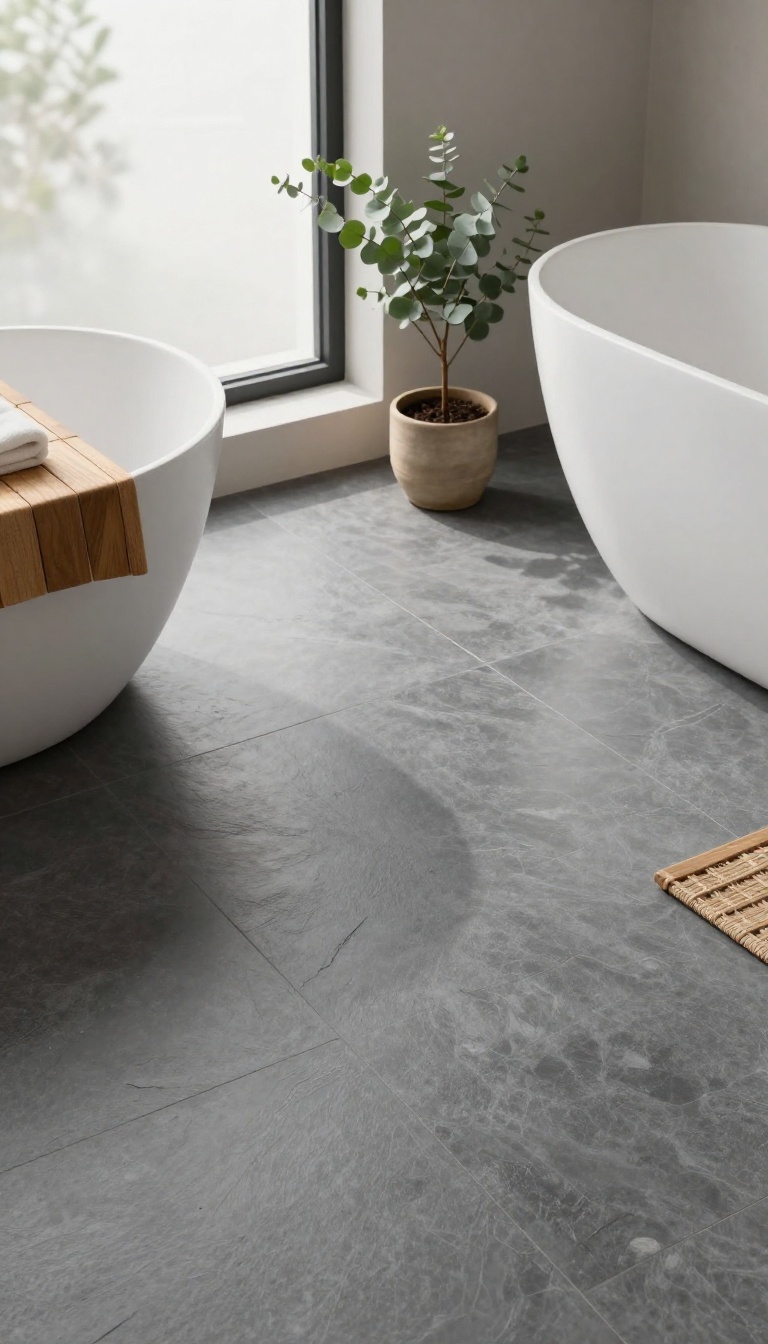
Slate-look tiles bring the rugged beauty of natural stone indoors without the headaches of the real thing. They add depth and character to bathroom floors, especially in spa-inspired spaces where cool grays and earthy browns set a calming mood. Porcelain versions mimic slate's cleft texture so well that guests will do a double-take, but they won't require sealing or special cleaners.
Real slate is stunning but high-maintenance: it chips, stains, and needs regular sealing. Slate-look porcelain gives you the same organic appeal with none of the fuss. It's dense, waterproof, and shrugs off soap scum and hard water.
Plus, it comes in a range of tones, from charcoal to rust, so you can dial the look from moody to warm.
Why Porcelain Wins Over Real Slate
Porcelain tile is fired at high temperatures, making it incredibly durable and non-porous. That means no sealing, no staining, and no worrying about water damage. It's also easier to clean—just a damp mop and mild cleaner.
Real slate, on the other hand, can flake and requires periodic resealing to stay protected.
Texture That Feels As Good As It Looks
Slate-look tiles often feature a subtle cleft or riven surface that adds tactile interest. This texture also provides natural slip resistance, a smart choice for wet areas. Just be aware that deeper textures can trap dirt, so choose a tile with a light texture for easier upkeep.
Pairing Slate-look Floors With Your Bathroom Style
These tiles shine in rustic, industrial, and modern spa bathrooms. Pair charcoal slate-look floors with white subway tile and warm wood accents for balance. For a softer look, go with multicolored slate in greens and browns alongside brass fixtures and creamy walls.
11. Glossy Subway Tiles Laid in a Modern Pattern
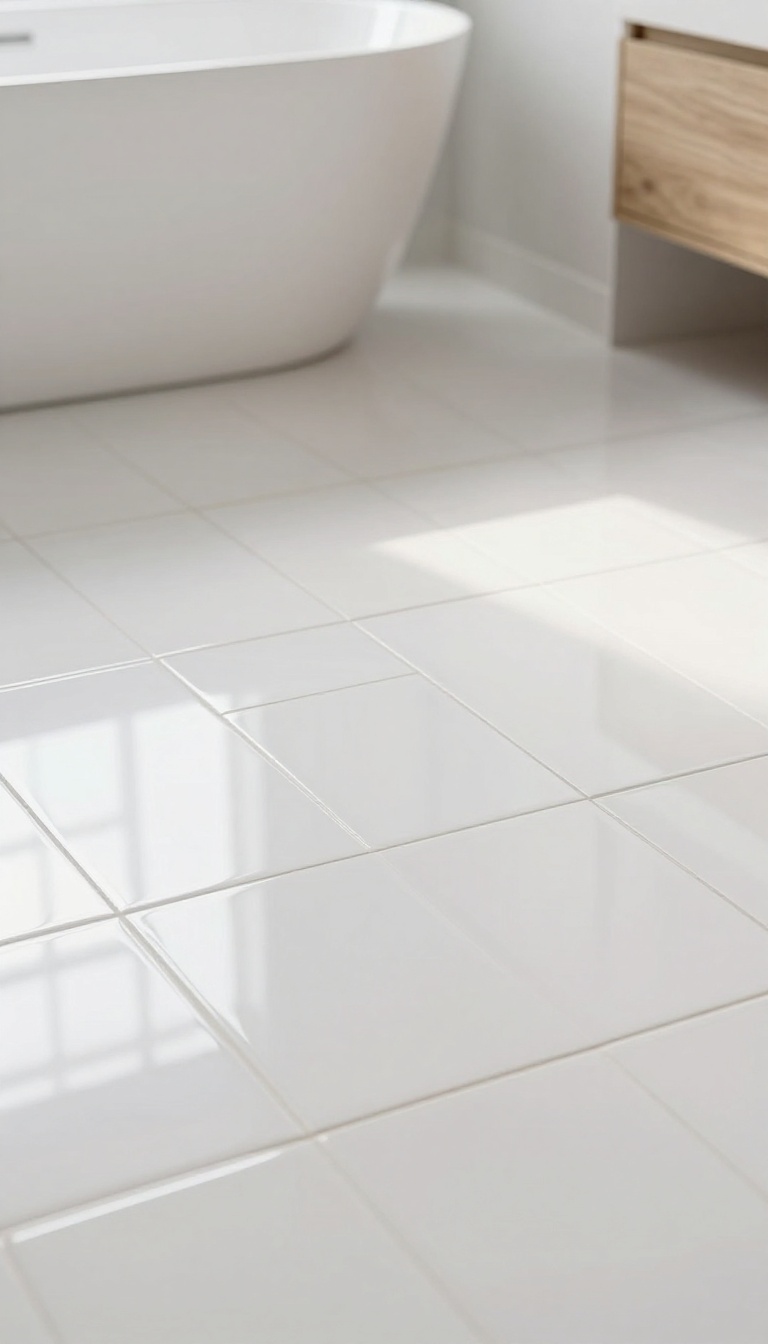
Subway tile has been a bathroom staple for over a century, but the way you lay it changes everything. A glossy finish paired with a modern pattern turns a basic, budget-friendly tile into a genuine design feature. The shine bounces light around the room, which helps small or dim bathrooms feel brighter without adding a single fixture.
And because subway tiles are cheap and widely available, you can splurge on a more interesting layout instead of pricier material.
Subway tiles are the little rectangles you've seen in kitchens and baths forever. The classic look is a running bond, where each tile sits halfway over the one below it, like brickwork. It's fine, but it's also everywhere.
Swap the layout and the same tile reads completely different. A herringbone pattern, where tiles meet at 90-degree angles, adds movement and a bit of old-world charm. A stacked layout, with tiles lined up in a straight grid, feels crisp and contemporary.
Both work on a bathroom floor, and both cost the same in materials. You're just paying for a slightly more careful install.
Why Gloss Works On A Floor
Glossy tile on a floor sounds slippery, and it can be if you choose a polished finish. Look for a glossy glazed ceramic or porcelain with a slight texture, or add a matte sealer. The shine reflects light, so a dark or windowless bathroom feels less cave-like.
It also hides the dullness that matte floors can develop over time. A quick mop brings the shine right back.
Herringbone Vs. Stacked
Herringbone is the more decorative option. It draws the eye and makes a small floor feel larger because the pattern leads you across the room. It does create more cuts, so expect a bit more waste and labor.
Stacked is the cleaner, more modern choice. The straight lines feel calm and orderly, and it's easier to install, which keeps the cost down. If you want a floor that feels tailored rather than busy, go stacked.
Grout And Tile Size Matter
Thin grout lines make the pattern look seamless and high-end. A light grout on white tile keeps things airy, while a dark grout adds contrast and hides stains better. Standard 3-by-6-inch subway tiles work, but longer 4-by-12 or 3-by-12 tiles make the pattern feel more current.
Just check that your tile setter is comfortable with the layout before you commit.
12. Mosaic Pebble Tiles for a Spa-Like Shower Floor
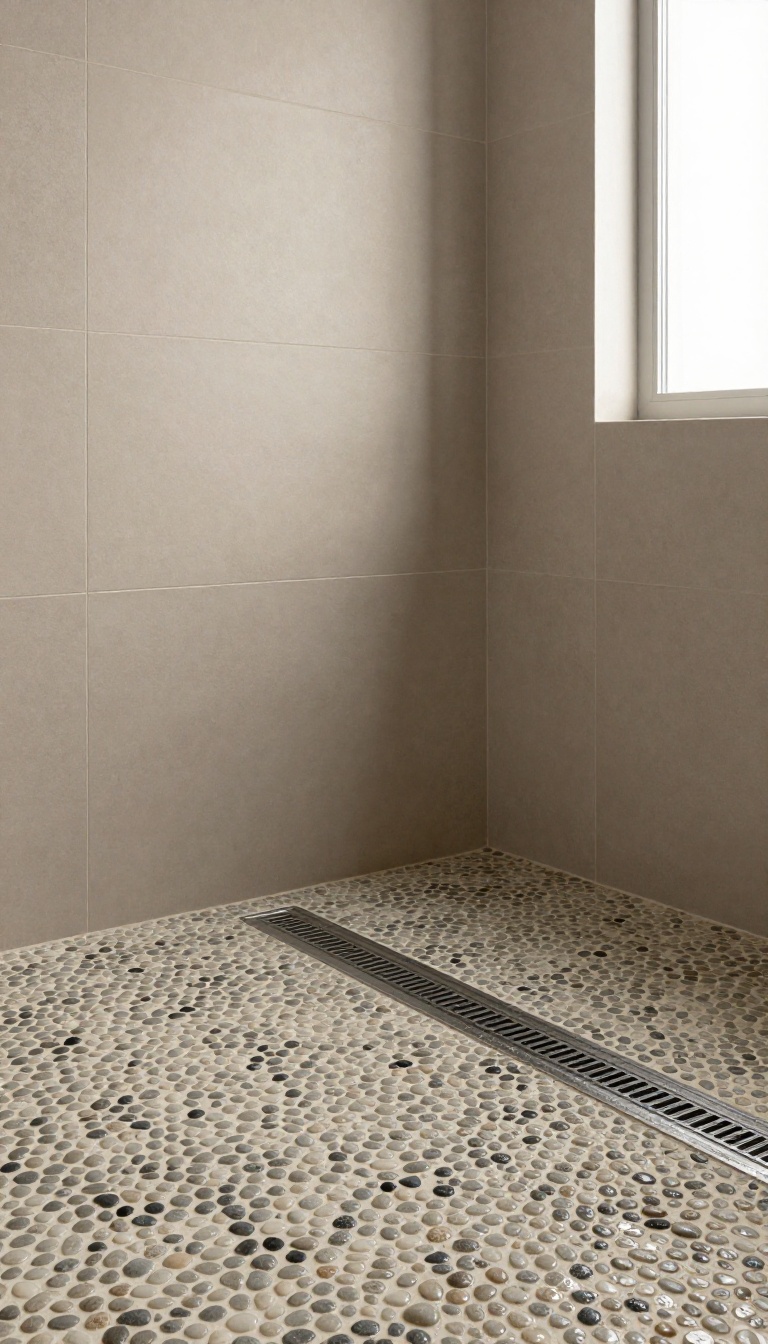
Pebble mosaic tiles turn a shower floor into a mini retreat. The rounded stones mimic river rock, so every step feels like a gentle foot massage. They also deliver serious grip when things get slippery, which is why spas love them.
Just know they ask for a little more scrubbing than smooth porcelain.
Pebble mosaics come as mesh-backed sheets, so you can bend them around drains and curves without cutting individual stones. Most are made from natural stone or porcelain that's been tumbled to soften the edges. The result is a floor that looks organic and feels warm underfoot, even before the hot water starts running.
Why Your Feet Will Thank You
Wet pebbles create thousands of tiny contact points, which means water escapes instead of pooling under your soles. That texture gives you traction that flat tile can't match, especially on a slope toward the drain. It's a smart pick for anyone who's ever done the slippery-shower shuffle.
The Trade-off: More Scrubbing
All those crevices between stones trap soap scum, shampoo residue, and the occasional stray hair. You'll need a stiff brush and a mild cleaner once a week to keep grout lines from turning grimy. A squeegee after every shower helps a lot, but this floor won't be as low-maintenance as large-format tile.
Making It Look Chic, Not Cheesy
Stick with a tight, consistent stone size and a neutral grout that blends in. Warm grays, soft beiges, and muted taupes read as modern spa, while high-contrast grout can look busy. Pair the pebbles with a sleek linear drain and simple wall tile so the floor stays the star.
13. Warm Beige and Sand Tones for a Soft, Timeless Base
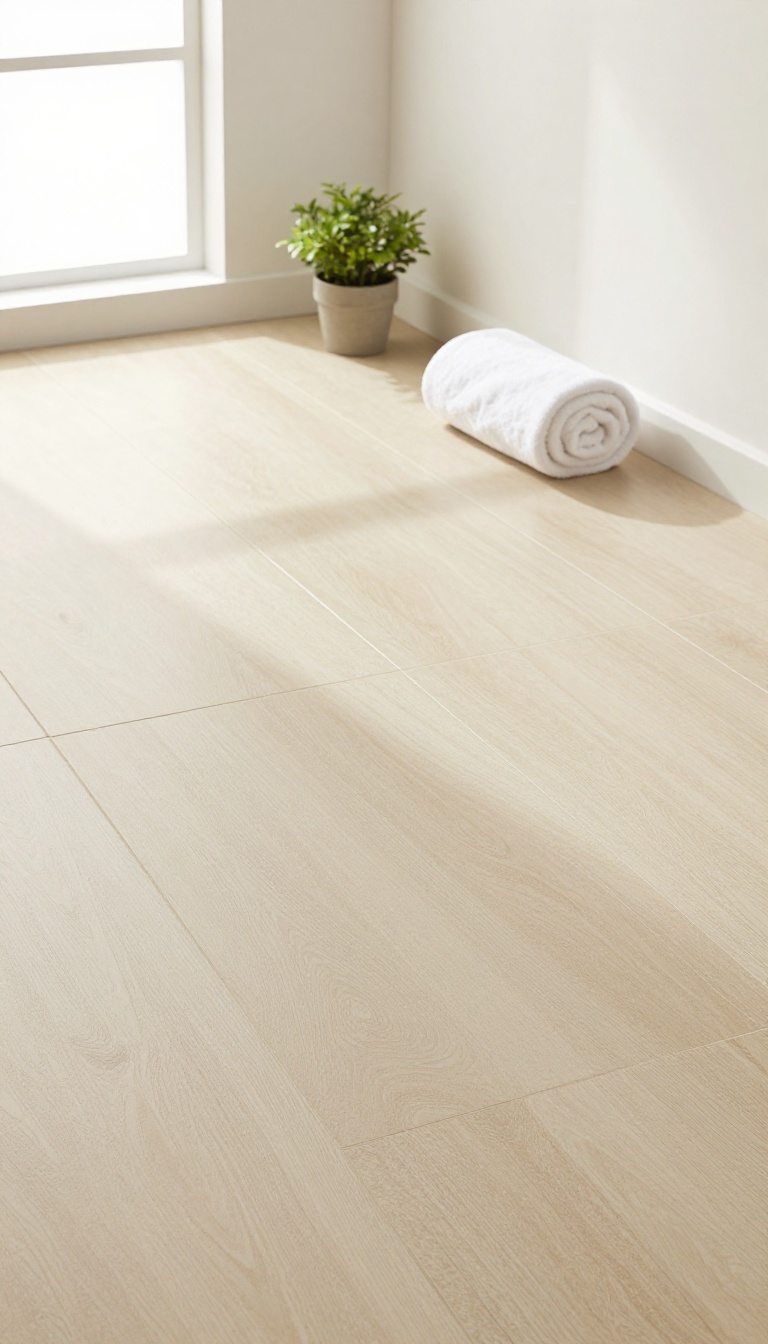
Beige and sand tones often get labeled boring, but that reputation comes from the wrong shades. The modern versions lean warmer and softer, with subtle movement that keeps them from looking flat. They create a calm base that lets the rest of your bathroom do the talking.
These colors also work hard in ways you might not notice at first. Dust, water spots, and stray hairs show up far less on a sandy floor than on bright white or dark charcoal. That means fewer mid-week wipe-downs for a floor that still looks put together.
Pair them with almost any wall color and they hold their own. Warm whites, soft greens, muted blues, even bold black accents all sit comfortably next to beige tile. It is a long-term choice that will not feel dated in five years.
Why Warm Neutrals Work In Real Bathrooms
Warm neutrals sit in a sweet spot between light and dark, so they hide everyday mess without feeling heavy. A sandy beige floor shows less soap scum and toothpaste splatter than a glossy white one. It also reflects enough light to keep small bathrooms from feeling like caves.
Unlike cool grays that can read sterile, warm beige adds a gentle glow. That makes morning routines feel less clinical and more spa-like. If you have ever stepped onto a cold-looking floor at 6 a. m. , you know the difference.
Choosing The Right Finish And Format
Matte and honed finishes are your best bet here. They soften the look of the tile and provide better grip when the floor is wet. Polished beige can work in a powder room, but it shows water spots more easily.
Large-format tiles mean fewer grout lines, which keeps the floor looking seamless. A 12×24 or even 24×24 inch tile in a warm sand tone feels modern without trying too hard. For a bit more texture, look for tiles with subtle stone or concrete patterns.
Pairing Beige Floors With Wall Colors
Beige floors play nicely with warm white walls for a soft, airy feel. Add a wood vanity or brass fixtures and the whole room warms up instantly. If you want more contrast, a deep green or navy wall makes the sandy floor pop.
For a cohesive look, pull one undertone from the tile and repeat it on the walls. A beige floor with a hint of pink pairs well with blush or terracotta accents. Just avoid cool gray walls unless you want the floor to look yellow by comparison.
14. Geometric Patterned Tiles for a Bold Focal Point
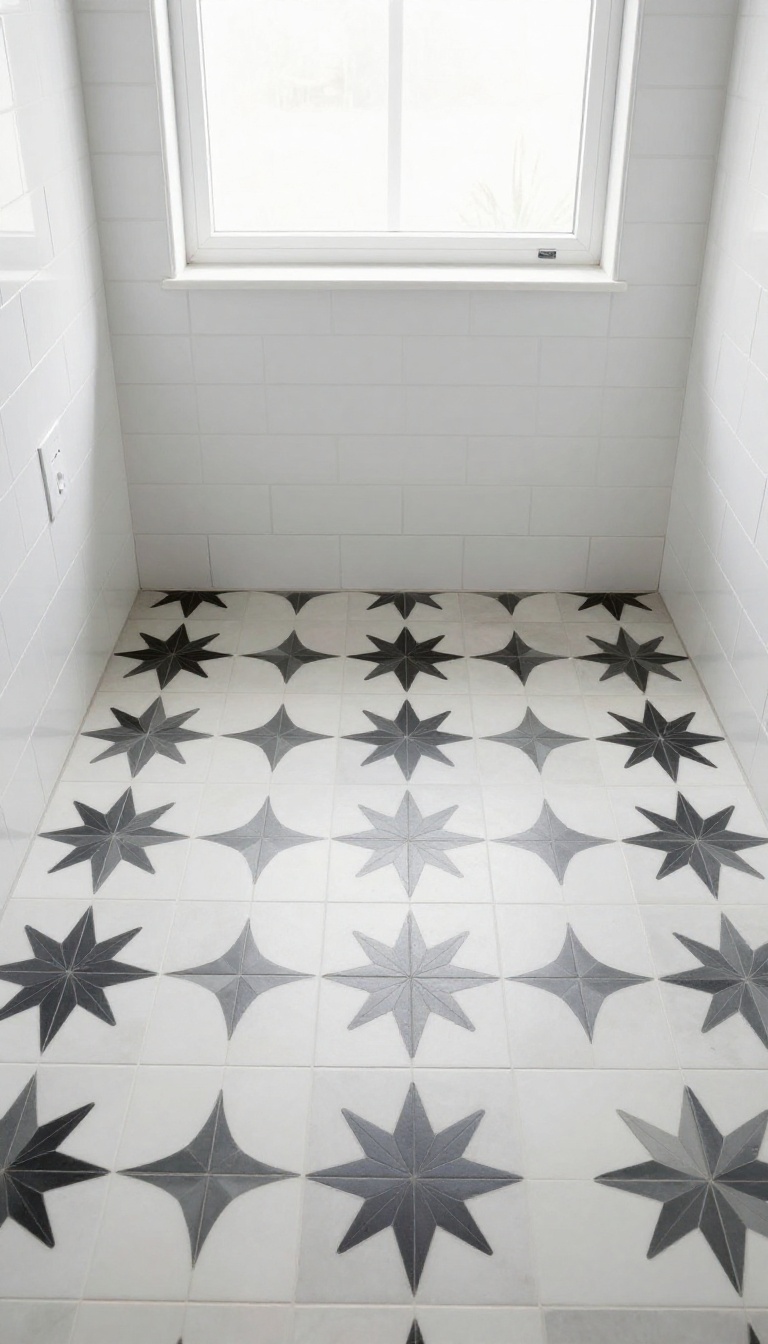
A patterned floor does the decorating for you. Skip the art prints and the statement mirror; the tile itself becomes the thing people notice when they walk in. The trick is picking a pattern that feels current, not like a time capsule from a 1990s powder room.
Encaustic-style tiles lead the pack here. Those hand-painted cement looks with stars, hexagons, and repeating florals bring instant personality, and porcelain versions now copy them so closely that most guests can't tell the difference. You get the same graphic punch without the sealing, staining, and price tag that real cement demands.
A small bathroom can carry a busy pattern because the square footage is limited. A larger room usually looks better with the pattern contained to the main floor area and a plain tile around the perimeter.
Pick A Pattern That Fits The Room
Tiny hexagons and penny rounds read as texture from a distance, so they work in almost any size bathroom. Bigger geometrics, like oversized diamonds or bold crosses, need more floor to breathe. In a narrow room, run the pattern straight toward the far wall to stretch the space visually.
Porcelain Beats Cement On Upkeep
Real encaustic cement tiles need regular sealing and can stain if you leave a wet towel down too long. Porcelain patterned tiles wipe clean with a damp mop and never need resealing. Look for a matte or slightly textured finish so the floor isn't slippery when wet.
Keep The Rest Of The Room Calm
When the floor is the star, let the walls and vanity fade back. Plain white or soft gray wall tile, a simple mirror, and one or two matte black or brass fixtures keep the look intentional. Add a solid bath mat and a plain shower curtain so nothing competes.
15. Slip-Resistant Finishes for Safety Without Sacrificing Style
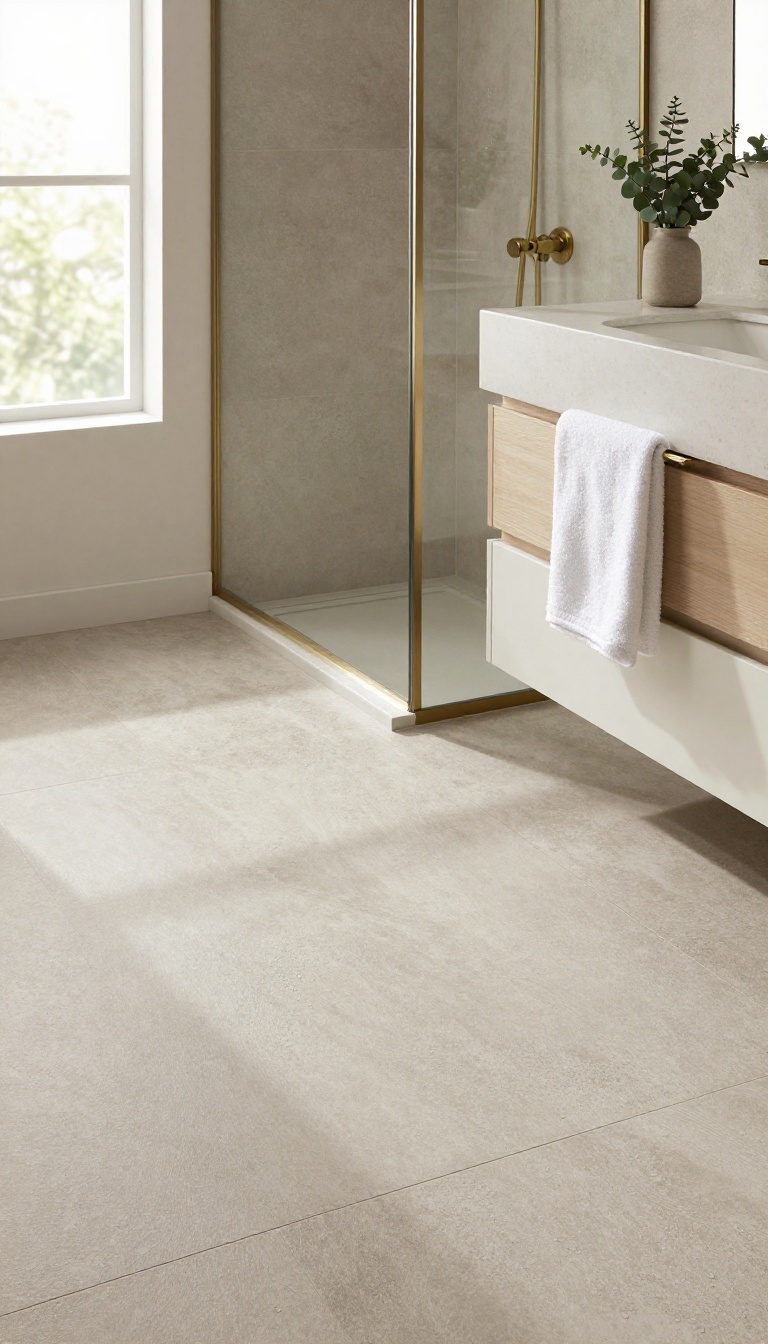
A slick, glossy floor looks stunning in photos, but it turns into a skating rink the second water hits it. Slip-resistant finishes solve that problem without forcing you into ugly, industrial-looking tile. Modern textures and matte glazes now come in every color and pattern you could want, so safety and style finally play nice.
The trick is understanding that slip resistance lives on the surface, not in the tile's color or shape. A matte finish, a subtle texture, or a slightly raised pattern all create friction underfoot. You get grip where it counts, especially in showers and around vanities, and the floor still reads as chic rather than clinical.
Manufacturers rate slip resistance with a number called the DCOF, or dynamic coefficient of friction. Anything at 0. 42 or higher is considered safe for wet areas.
You don't need to memorize the science, but knowing that number helps you shop smarter and avoid floors that feel dangerous when damp.
Matte Glazes That Hide Water Spots
Matte porcelain has a soft, velvety look that feels warm underfoot and hides water spots far better than polished tile. It comes in wood-look planks, concrete finishes, and even marble patterns, so you're not limited to plain colors. In a shower, a matte finish gives you reliable grip without a single visible texture line.
One thing to know: matte surfaces can show soap scum a bit more than glossy ones, so a quick squeegee after showers keeps them looking fresh. That small habit is worth it for the safety and the understated elegance.
Textured Surfaces That Still Feel Refined
Textured tiles used to mean rough, rustic, and hard to clean. Today's versions use fine, subtle grain patterns that add grip without trapping dirt. Think linen-look porcelain or a lightly ribbed stone finish that catches light in a lovely way.
These work especially well on shower floors and in curbless designs where water spreads. The texture gives you confidence with every step, and the finish still looks intentional and high-end rather than utilitarian.
Where Grip Matters Most
You don't need slip-resistant tile across the entire bathroom, though it doesn't hurt. Focus your budget on the wet zones: inside the shower, right in front of the tub, and the strip around the vanity. Those are the spots where bare feet meet water most often.
If you love a glossy tile for the main floor, pair it with a textured mosaic in the shower pan. The contrast can look deliberate and designer, and you get safety exactly where you need it.
FAQ
What's the most budget-friendly modern bathroom floor tile?
Standard ceramic or porcelain in a simple square or plank shape usually costs the least, especially when you install it yourself and keep the layout simple.
Are wood-look tiles slippery when wet?
Many wood-look porcelain tiles come with textured or matte finishes that offer decent grip. Check the slip-resistance rating before buying for a shower floor.
How do I keep white grout from looking dirty?
Seal it after installation, wipe up spills quickly, and consider a light gray or charcoal grout if you want a lower-maintenance look.
Can I install bathroom floor tile over an existing floor?
Sometimes, if the old floor is level, solid, and not cracked. A thin-set or self-leveling compound may be needed, so check with a pro first.
Which tile finish is best for a small bathroom?
Large-format tiles in light colors with a matte or satin finish tend to work best because they reduce grout lines and reflect soft light without glare.
Conclusion
You don't have to redo the whole bathroom to get a floor you love. Pick one idea here that fits your budget and your tolerance for mess, then start small—a single finish change can shift the entire room. Live with it for a week before adding anything else.
Watch how the light hits it in the morning and how it feels underfoot at night. The best tile choices are the ones that still make you happy after the novelty wears off.