13 Small Living Dining Room Ideas to Improve Shared Flow
Combining a living room and dining area in one compact space can feel like a puzzle. You want both zones to function well without one crowding out the other. The good news is that with a few smart choices, you can create a seamless flow that feels open, inviting, and totally intentional.
Budget-friendly doesn't mean boring. Small changes like swapping a bulky sofa for a streamlined one or adding a slim console table can make a world of difference.
The key is to focus on pieces that earn their keep while keeping the visual weight light. These 13 ideas are all about making your shared space work harder without spending a fortune.
1. Float Furniture Away from Walls
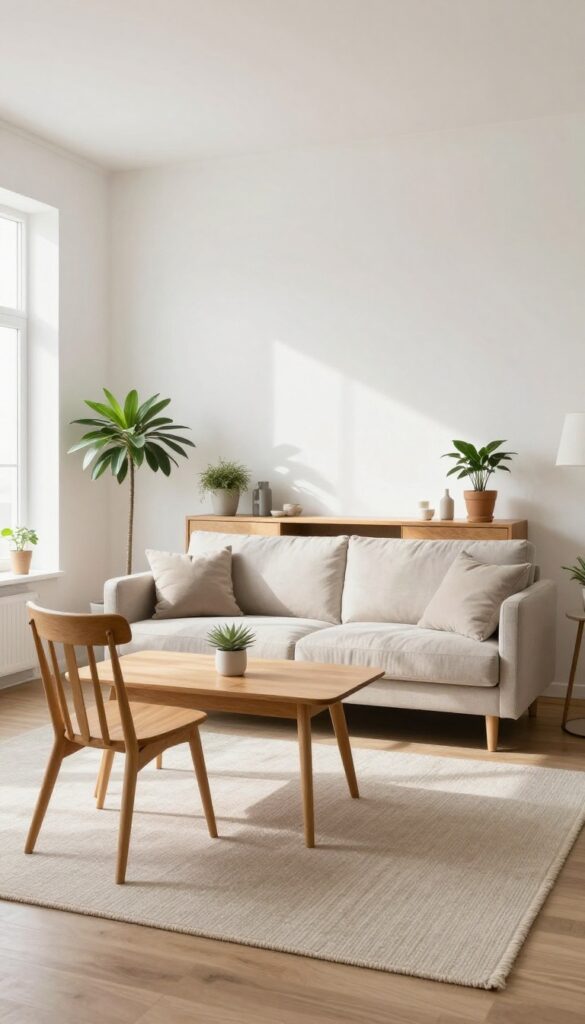
Pushing every piece of furniture against the wall is a common reflex in small spaces, but it often backfires. That tight lineup can make a room feel more like a hallway than a living area. Pulling your sofa and dining table just a few inches—or even a foot—away from the walls creates natural pathways and breathing room.
This simple shift makes the space feel larger and encourages better traffic flow, all without spending a dime.
When you float furniture away from walls, you instantly create a more inviting, layered layout. The gap behind the sofa becomes an opportunity for a slim console table or a row of tall plants, adding depth without eating into the main floor area. For the dining table, leaving space behind the chairs allows people to move freely without bumping into walls.
This trick works especially well in long, narrow rooms where centering the furniture breaks up the tunnel effect. Best of all, it costs nothing—just a bit of muscle and a willingness to rethink your arrangement.
Best Layout For Small Spaces
- Aim for at least 6 to 12 inches of clearance behind your sofa and 18 to 24 inches behind dining chairs. If your room is extra tight, even 4 inches makes a visible difference. Center the sofa on the longest wall but pull it forward so the back is aligned with the midpoint of the room.
- Place the dining table slightly off-center to create a natural division between living and dining zones. This layout keeps both areas functional while making the whole room feel more open.
Budget-Friendly Swap
- Instead of buying a new console table for behind the sofa, repurpose a slim bookshelf or a long, low bench you already own. A floating shelf mounted at sofa-back height can also serve as a catchall for decor and daily essentials. For the dining area, a narrow sideboard or even a simple folding table pushed against the wall behind the chairs adds storage without crowding the room.
- The key is to use what you have first—no shopping required.
Finishing Touch
Once your furniture is floated, anchor the arrangement with a rug that extends under both the sofa and dining table. Choose a rug large enough to reach at least 6 inches beyond the furniture on all sides—this visually ties the two zones together. Add a floor lamp in the corner behind the sofa to fill the empty space with warm light, making the gap feel intentional and cozy rather than awkward.
2. Choose a Round Dining Table
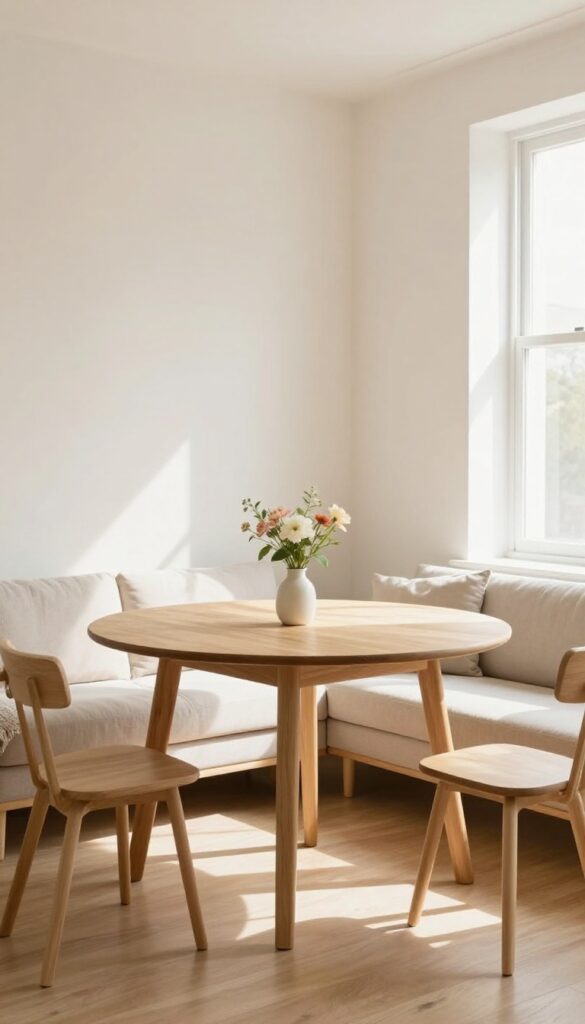
A round dining table can be a game-changer in a small living-dining combo. Its curved shape takes up less visual space than a rectangle, making the room feel more open and less cluttered. Plus, the lack of sharp corners means you can squeeze it into tighter spots without blocking traffic flow.
The soft, circular form also balances out the straight lines of a sofa or media console, creating a more inviting and conversational setup. Whether you're hosting dinner or just enjoying a quiet meal, a round table encourages everyone to face each other, making the space feel cozier and more connected.
When you're working with a combined living and dining area, every piece of furniture needs to earn its keep. A round dining table does exactly that. It's not just about saving space—it's about making the room feel intentional and easy to move through.
The circular shape naturally guides the eye around the room, which helps the dining area blend into the living zone without feeling like a separate, awkward corner. Plus, a round table often feels more approachable than a formal rectangular one, which makes it perfect for everyday meals or casual get-togethers. To keep the look budget-friendly, look for a simple wooden table or a laminate top with a clean silhouette.
You can always dress it up with a tablecloth or a centerpiece later.
Best Size And Placement
- For a small shared room, aim for a table that's 36 to 48 inches in diameter. That's enough to seat four comfortably without overwhelming the space. Place it near the kitchen side of the room or in a spot that doesn't block the main walking path.
- Leave at least 24 inches of clearance around the table so chairs can slide out easily. If your room is extra tight, consider a drop-leaf round table that can expand when you need it.
Budget-Friendly Swap
- You don't need to spend a fortune on a designer round table. Check secondhand stores or online marketplaces for solid wood or metal bases. A fresh coat of paint or a stained finish can transform a thrifted find.
- Another affordable option is a round folding table from a home store—just add a floor-length tablecloth and a centerpiece, and it looks custom. Pair it with mismatched chairs for an eclectic, collected-over-time vibe that feels personal and stylish.
Styling And Finishing Touch
- Keep the tabletop simple to avoid visual clutter. A small vase with fresh greenery or a single candle works well. For the chairs, choose slim, armless styles that slide under the table when not in use.
- If you have a rug, make sure it extends at least 18 inches past the table legs so the chairs stay on the rug when pulled out. This anchors the dining area and makes it feel like a defined zone within the larger room.
3. Use a Slim Console as a Room Divider
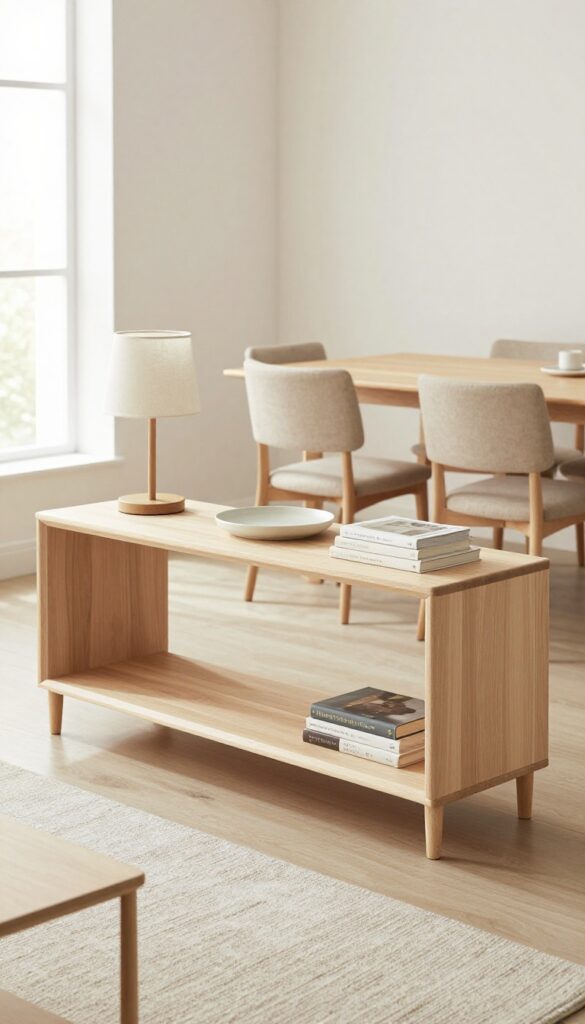
In an open-plan living and dining area, defining separate zones without closing off the space can feel tricky. A slim console table placed behind the sofa does the job beautifully—it creates a visual boundary while keeping sightlines open. This budget-friendly trick adds function and style without the cost or permanence of a built-in divider.
A narrow console behind the sofa acts like a gentle separator. It doesn't block the view, but it clearly marks where the living room ends and the dining area begins. Use it to hold a lamp, a tray for remotes, or a few stacked books.
The key is keeping it shallow—12 to 14 inches deep is ideal—so it doesn't eat into walking space. This piece works especially well in long, narrow rooms where you want to avoid a cramped feel. For a cohesive look, choose a console that echoes the sofa's style or finish.
A light wood console with clean lines keeps the room airy, while a darker tone adds contrast without weight.
Best Materials For A Slim Console
- Stick with materials that feel light and open. A metal or acrylic console with a glass top disappears visually, perfect for tight spots. Wood adds warmth, but go for a slim profile with tapered legs to keep the piece from feeling bulky.
- If you need extra storage, look for a console with a lower shelf or a single drawer—enough for coasters, menus, or mail, but not so deep that it overwhelms.
Styling Tips For The Console Top
- Keep the surface clutter-free to maintain the open feel. A small table lamp with a fabric shade adds cozy light for evening. A shallow bowl or tray catches keys and mail, preventing piles.
- Add a low vase with fresh greenery or a stack of books for height. The goal is to make the console look intentional, not like a catchall. If your sofa has a back, place the console flush against it; if it's open-backed, leave a few inches for a cleaner line.
Budget-Friendly Swap
- You don't need to buy a new piece. A narrow sideboard, a repurposed desk, or even a sturdy shelf mounted on legs can work. Look for secondhand finds and paint them to match your room.
- A simple IKEA Besta frame with a custom top can become a sleek console for under $100. The key is keeping the depth slim and the look cohesive with your existing furniture.
4. Stick to a Cohesive Color Palette
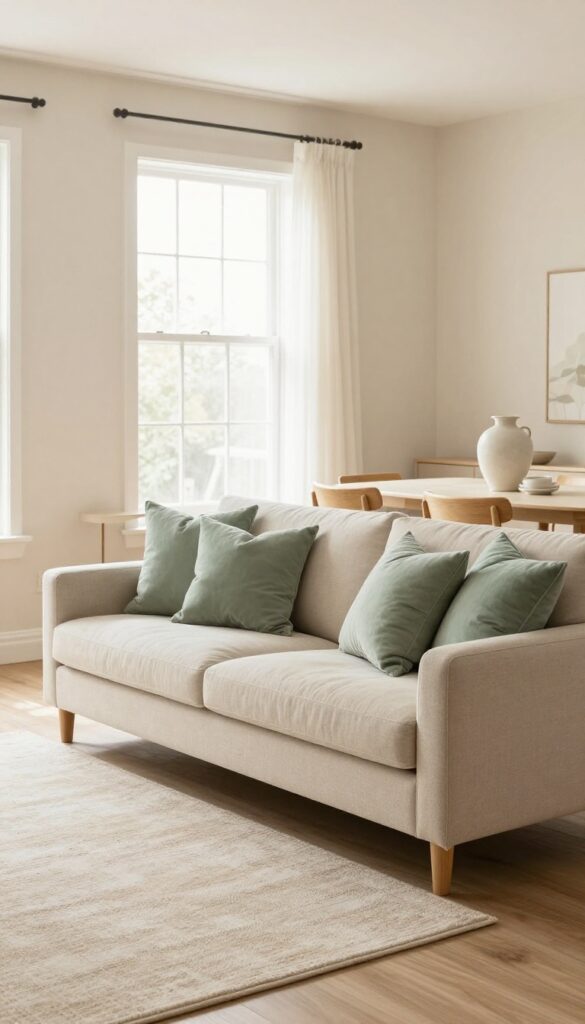
A shared living and dining space can feel chaotic when every wall, piece of furniture, and accessory fights for attention. The easiest fix is committing to a unified color scheme that flows from one zone to the next. Soft neutrals like warm beige, creamy white, or light greige create a calm backdrop, while one accent color—think sage green, dusty blue, or terracotta—adds personality without overwhelming the eye.
This approach visually expands the room because there are fewer jarring transitions, making the whole area feel larger and more intentional.
Painting all the walls the same light neutral is step one. Then carry that color into your larger furniture pieces: a beige sofa, a cream dining table, or a light wood sideboard. Your accent color can appear in pillows, a rug, or a few ceramic vases.
The key is restraint—stick to one main accent and maybe one tiny pop (like a single throw pillow in a brighter shade). This keeps the room from feeling busy and helps the two zones blend seamlessly. Budget-friendly tip: you can achieve this by painting yourself and swapping out small decor items rather than buying new furniture.
Best Colors For A Small Shared Space
- Off-whites, warm grays, and soft beiges are your best friends. They reflect light and make the room feel airy. For your accent, choose a muted tone that won't dominate: sage green, pale blush, or warm oatmeal.
- Avoid high-contrast combos like black and white, which can chop up the space visually.
Budget-Friendly Swap
If you can't repaint, unify the room with a large neutral rug that spans both the living and dining areas. Then add accent-colored accessories like cushion covers, a table runner, or a simple gallery wall with frames in your accent hue. This costs very little but creates instant cohesion.
Finishing Touch
Repeat your accent color in both zones at least twice. For example, a sage green cushion on the sofa and a sage green vase on the dining table. This subtle echo ties the two areas together without needing a physical divider.
5. Layer Lighting for Each Zone
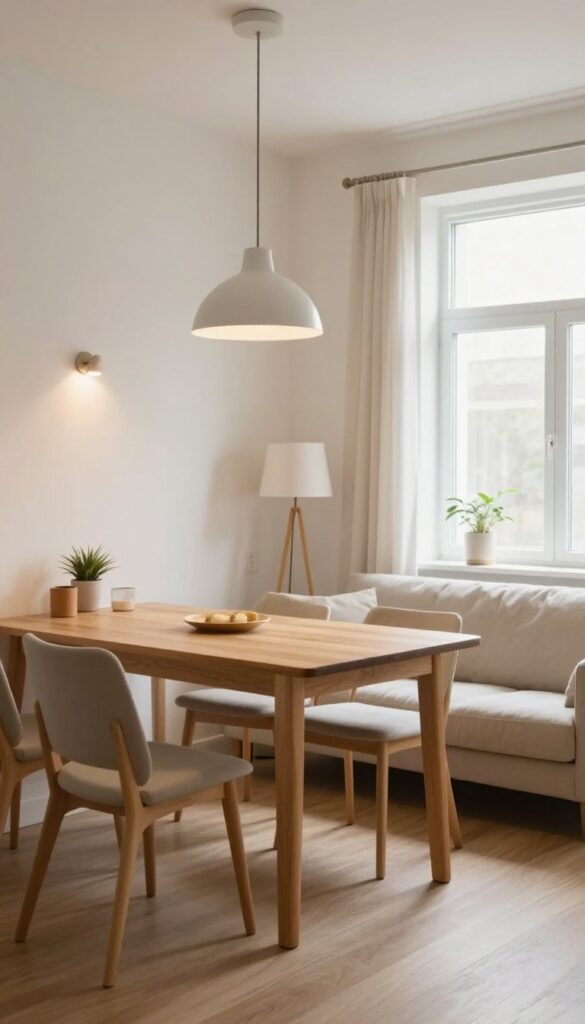
Lighting can quietly define how a shared living-dining room feels and functions. Instead of relying on one overhead fixture, layering different light sources lets you carve out separate zones without any walls. A pendant light over the dining table anchors the eating area, while a floor lamp beside the sofa creates a cozy living corner.
This approach is budget-friendly because you can mix affordable fixtures and even thrifted lamps to achieve a custom look.
The key is to use at least three types of lighting: ambient, task, and accent. Overhead lights provide general illumination, but they often wash out a room. Adding a floor lamp or table lamp introduces softer, warmer light that makes the living area feel intimate.
For the dining zone, a pendant hung 30–36 inches above the table gives focused light for meals and doubles as a visual separator. Accent lighting—like a small spotlight on a plant or a picture light—adds depth and highlights your favorite decor. This layered setup not only improves function but also makes the room feel larger by drawing the eye to different heights and corners.
Budget-Friendly Swap
- You don’t need expensive designer fixtures to layer light. Look for a simple pendant kit from a hardware store and pair it with a thrifted or IKEA floor lamp. Swap out standard bulbs for warm LED dimmable ones to control brightness easily.
- A plug-in wall sconce can also add accent light without hardwiring—just mount it near a gallery wall or mirror.
Lighting Tip
Use different light temperatures to separate zones: a warm 2700K for the living area and a slightly cooler 3000K for the dining table. This subtle shift helps the brain register two distinct spaces. Place lamps at different heights—a tall floor lamp, a mid-height table lamp, and a low uplight—to create visual layers that feel natural.
Finishing Touch
Add a dimmer switch to your overhead light so you can adjust the mood from bright meals to soft evening ambiance. For the floor lamp, choose one with a three-way switch for easy control. A small LED strip under a console table or behind a TV can also serve as a subtle nightlight that ties the zones together.
6. Opt for a Compact Sofa or Loveseat
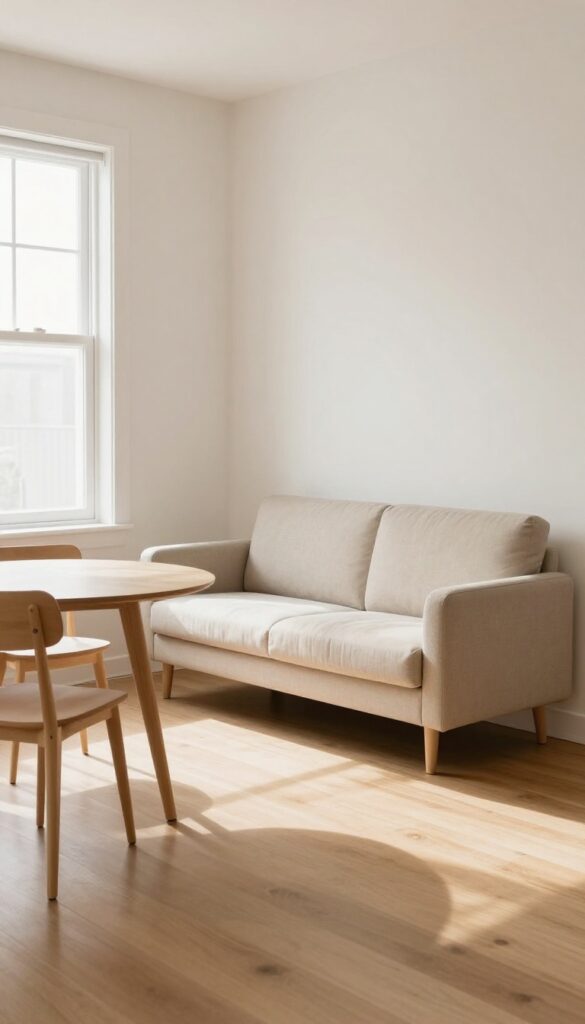
A full-sized sofa can overwhelm a small living-dining combo, swallowing up precious floor space that could be used for dining. Switching to a compact sofa or a loveseat instantly frees up square footage without sacrificing seating. Look for styles with exposed legs—they keep the visual weight light and make the room feel more open and airy.
In a shared living-dining space, every inch counts. A smaller sofa or loveseat not only leaves more room for your dining table but also makes the whole area feel less cramped. Exposed legs are key here: they let light pass underneath, creating an illusion of more space.
Stick with clean lines and neutral upholstery to keep the look cohesive and budget-friendly.
Best Colors And Fabrics
Light colors like beige, soft gray, or pale blue keep the sofa from visually dominating the room. Performance fabrics—such as polyester blends or crypton—are smart for high-traffic areas and are often more affordable than linen or cotton. They resist stains and wear, which is especially handy if the sofa doubles as a dining seat.
Layout Tip
Place the loveseat against the longest wall, leaving a clear path to the dining area. If possible, angle it slightly toward the dining table to create a natural conversation flow. This setup makes both zones feel connected without blocking movement.
Budget-Friendly Swap
Skip expensive designer brands and look for a loveseat from a direct-to-consumer online retailer. Many offer stylish, compact options under $500. Alternatively, check secondhand stores for a solid frame and reupholster it with a light fabric—a weekend project that saves money and gives you a custom piece.
7. Add a Rug Under Each Zone
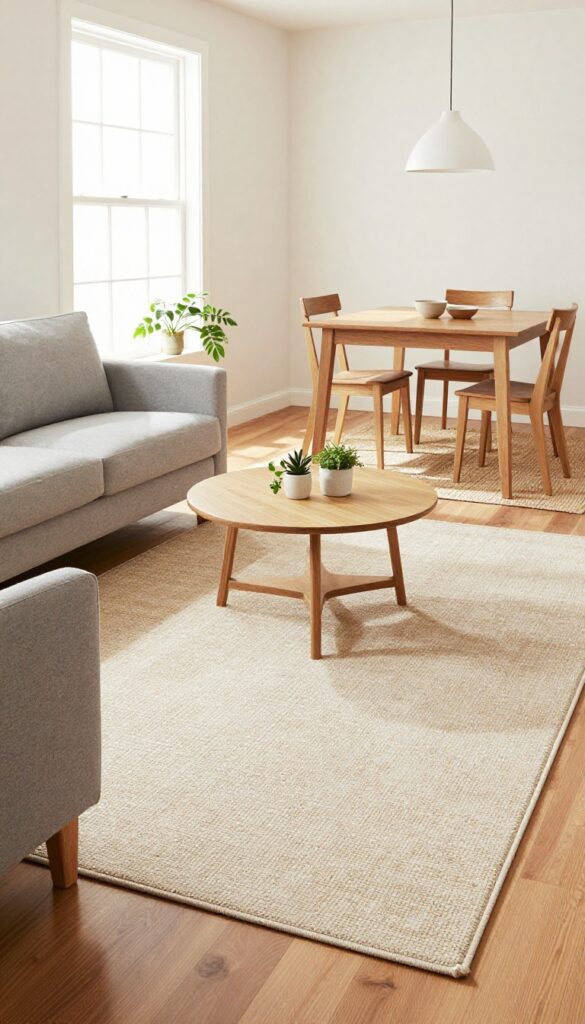
Rugs do more than soften floors—they can carve out clear zones in an open layout without a single wall. In a small living-dining combo, two rugs work like invisible room dividers. The trick is to pick rugs that feel connected, not clashing.
Think similar tones or textures so the space still flows as one.
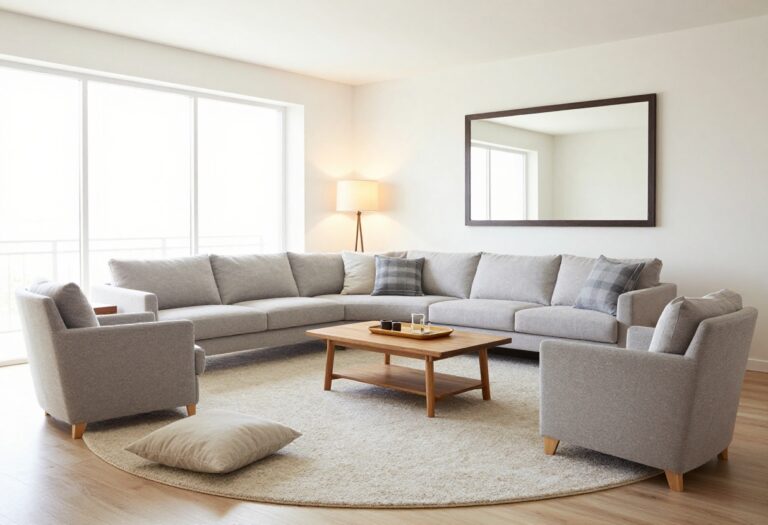
When you place a rug under the sofa and coffee table, and another under the dining table, each area instantly feels intentional. Your eye registers the shift, and the room starts to make sense. This is especially helpful in narrow or square rooms where furniture can blur together.
Stick to low-pile or flatweave rugs for easy cleaning under the dining table, and go for something plusher in the living zone. Keep the colors in the same family—maybe a natural jute under the table and a soft wool in the same beige tone near the sofa. That way, the rugs define without competing.
Best Rug Pairings
- A natural fiber rug like sisal or jute works great under the dining table because it’s durable and hides crumbs. For the living area, try a low-pile wool or cotton blend in a similar neutral. If you want a subtle pattern, keep it on just one rug so the other stays solid.
- This balance keeps the eye moving smoothly across the room.
Size And Placement Tips
Make sure the dining rug is large enough for chairs to stay on it when pulled out—aim for at least 24 inches beyond the table edge on each side. The living room rug should extend past the front legs of your sofa and any accent chairs. Leave a few inches of floor visible between the two rugs to define the separation clearly.
Budget-Friendly Swap
If two new rugs aren’t in the budget, layer a smaller, affordable rug over a larger neutral one. Or use a single large rug in a solid color and place a smaller patterned rug on top in the dining zone. This creates the same zoned effect for less.
8. Install Floating Shelves for Storage
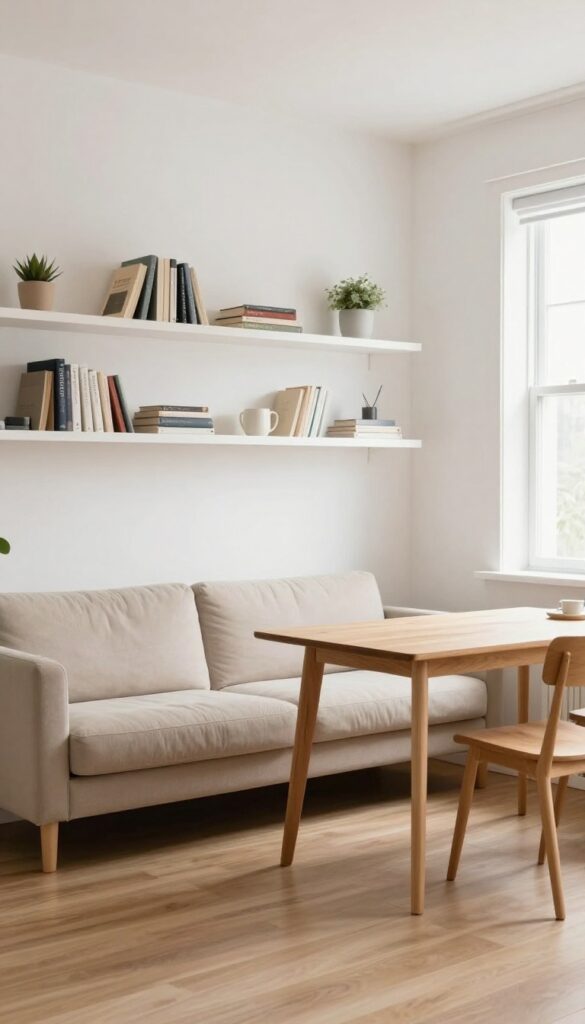
Wall space is often the most underused real estate in a small living-dining combo. Floating shelves turn bare walls into functional storage without stealing an inch of floor area. They keep books, dishes, or decorative objects within easy reach while letting the room breathe.
The trick is choosing the right depth and placement so the shelves feel intentional, not cluttered.
Floating shelves are a budget-friendly way to add storage and display space in a shared living-dining room. By mounting them at varying heights, you can create visual interest and keep everyday items accessible. Stick to a consistent color or material—like white shelves against a light wall—to maintain a clean, airy look.
For a cohesive feel, echo the shelf finish in other furniture details, such as table legs or picture frames.
Best Placement
Install shelves above a sofa or console table in the living area, and above a sideboard or small buffet in the dining zone. Keep them at eye level or slightly higher to avoid knocking items off. In a narrow room, stagger shelves on one wall to draw the eye upward and make the ceiling feel taller.
Storage Tip
Use shelves for items you reach for daily—cookbooks, coffee mugs, or remote controls. Mix open storage with a few closed baskets to hide less attractive essentials. This keeps the look tidy without requiring a full cabinet.
Budget-Friendly Swap
Skip expensive custom shelving and opt for ready-to-mount floating shelves from home improvement stores. Paint unfinished wood shelves yourself to match your trim or wall color. Even basic brackets can look stylish if you choose a sleek black or brass finish.
9. Use Multifunctional Furniture
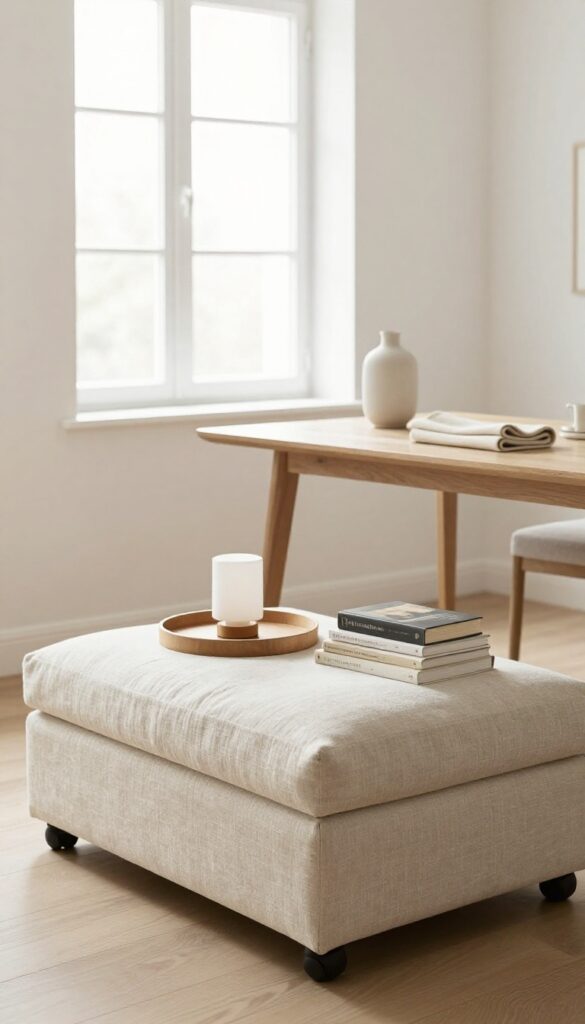
A coffee table that lifts into a desk, an ottoman that opens for storage, a bench that hides clutter—these are the unsung heroes of a shared dining-living space. Multifunctional furniture lets you do more with less, which is exactly what a small, budget-friendly room needs. Instead of buying separate pieces for every function, you choose one that pulls double duty, saving both money and square footage.
The trick is to pick pieces that look intentional, not makeshift. A storage ottoman in a neutral linen or leather can act as extra seating, a footrest, and a catchall for remotes and throws. A drop-leaf table against the wall works as a console by day and expands for dinner guests by night.
When every piece earns its keep, the room feels less cluttered and more flexible.
Best Budget-friendly Swaps
Skip a traditional coffee table and opt for a storage ottoman or a trunk. Look for secondhand drop-leaf tables or nesting tables that tuck away. Even a simple bench with woven baskets underneath adds seating and hidden storage without the price tag of custom built-ins.
Layout Tip
Place a storage ottoman on casters so you can roll it between seating and dining areas. A drop-leaf table works best along a wall or under a window, leaving the center of the room open for flow. Keep pathways clear by choosing pieces that can be easily moved or folded.
Finishing Touch
Top a storage ottoman with a wooden tray to create a stable surface for drinks or decor. Add a small lamp or a stack of books to make it feel like a purposeful piece, not just a box. For a drop-leaf table, style the surface with a simple vase or a stack of coasters that can be quickly cleared when it’s time to dine.
10. Hang Curtains High and Wide
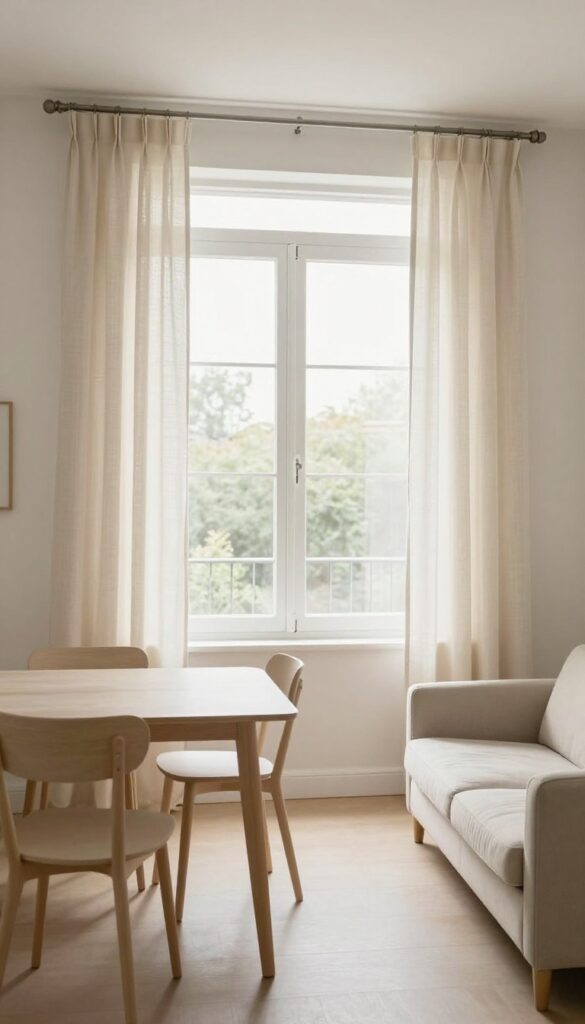
Curtains do more than just block light—they can completely reshape how a room feels. In a small living-dining combo, hanging them high and wide is one of the simplest ways to create the illusion of more space. It’s a budget-friendly trick that works in any style, from modern to farmhouse.
Mount your curtain rod as close to the ceiling as possible, ideally just a few inches below the crown molding. Then extend the rod several inches past the window frame on each side. This makes the window—and the entire wall—feel larger.
When curtains hang from ceiling height, they draw the eye upward, making the ceiling seem taller. The wider rod also lets you stack the panels completely off the glass, so more natural light floods in. For a shared living-dining space, this visual lift helps both zones feel airier and more connected.
Choose lightweight fabrics like linen or cotton in a neutral tone to keep the look soft and unfussy.
Best Fabric Choices
- Stick with breathable, flowy materials that don’t add visual weight. Linen, cotton blends, or sheer voile work beautifully. Avoid heavy velvet or thick blackout linings in a small room—they can feel bulky and dark.
- A medium-weight linen in cream, oatmeal, or soft gray keeps things light and airy.
Budget-friendly Hardware
- You don’t need expensive custom rods. A simple tension rod or a basic metal rod from a home store works fine. Spray-paint it in a matte black or brushed nickel finish for a polished look.
- Curtain rings with clips make hanging easy and let you adjust length without sewing.
Styling Tip For Shared Spaces
Use the same curtain treatment on all windows in the combined area to create visual continuity. If you have a sliding glass door, treat it like a window: hang the rod high and wide, and use two panels that stack neatly to the sides. This keeps the dining and living zones feeling unified.
11. Incorporate Mirrors to Reflect Light
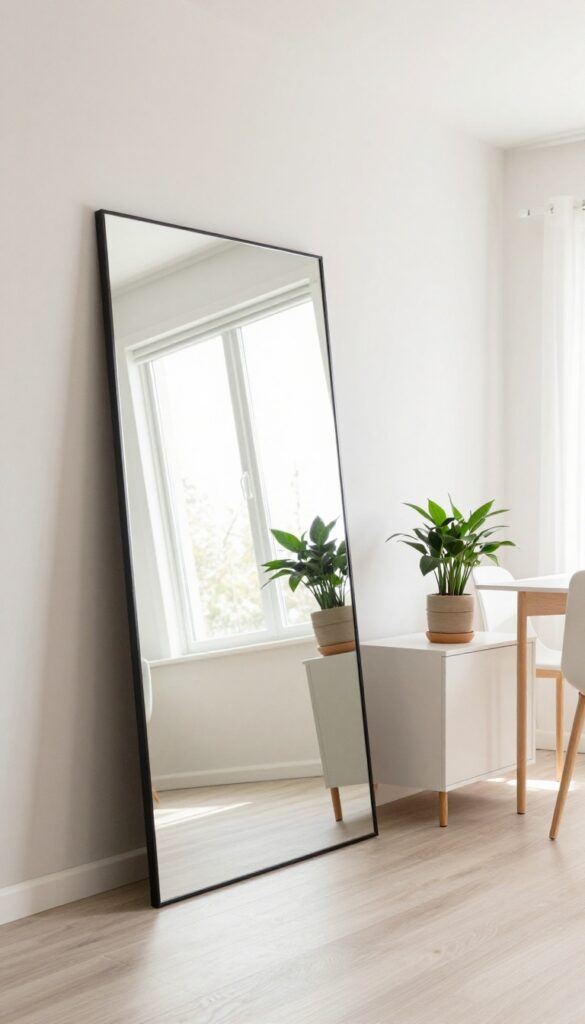
A well-placed mirror can transform a cramped living-dining space without costing a fortune. By bouncing natural light around the room, mirrors make the area feel brighter and more open. This budget-friendly trick works especially well in shared layouts where every square foot needs to earn its keep.
Mirrors are one of the easiest ways to visually expand a small room. When you position a large mirror across from a window, it reflects the view and floods the space with light. This simple swap can make your living-dining area feel twice as large without any construction.
Plus, mirrors add a decorative touch that fits almost any style—from sleek modern to cozy traditional.
Best Placement
Hang a large mirror opposite the main window to maximize natural light reflection. If your window is small, try placing the mirror at a 45-degree angle to catch more light. Avoid putting mirrors directly facing a cluttered area, as they’ll just double the visual noise.
Budget-Friendly Swap
Skip expensive framed mirrors and look for thrifted or DIY options. A simple frameless mirror can be leaned against a wall for a casual, airy feel. You can also repurpose an old window frame with mirrored glass for a unique, inexpensive piece.
Finishing Touch
Pair your mirror with a small plant or a sleek lamp on a console table beneath it. The reflection will double the greenery or light, adding depth and a polished look. Keep the area around the mirror minimal to maintain the illusion of space.
12. Keep Traffic Paths Clear
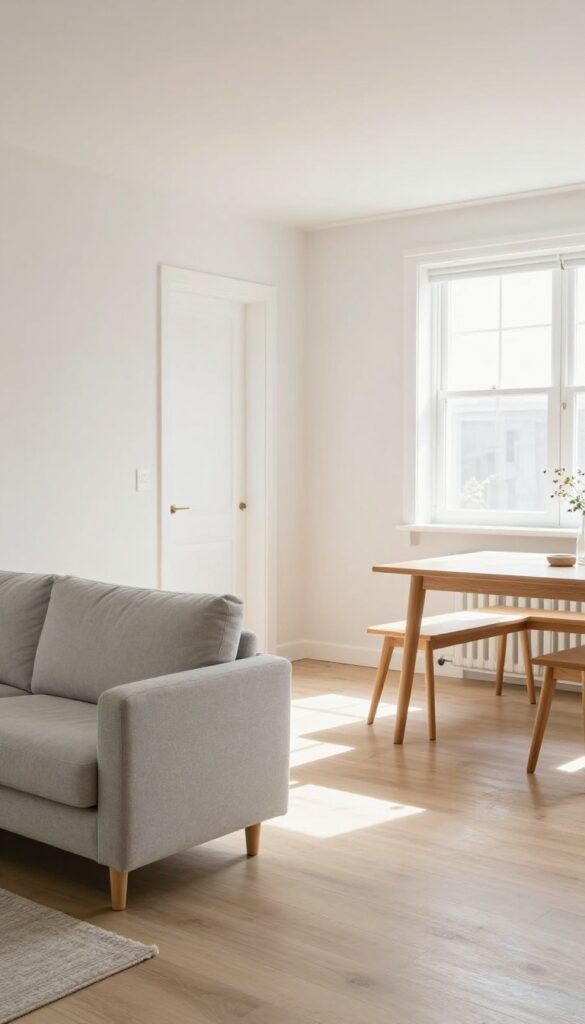
In a shared living and dining room, nothing disrupts the flow faster than furniture that blocks the way. When you have to squeeze between the sofa and the dining table just to get to the kitchen, the whole room feels cramped. The fix is simpler than you might think: map out your main walkways and keep them wide open.
Even a few inches of extra space can make the layout feel intentional and airy.
Arranging furniture so there's a clear walkway between the living and dining zones is the backbone of a functional small space. Start by identifying the natural paths people take when moving through the room—usually from the entry to the seating area, and from the dining table to the kitchen. Avoid placing any piece of furniture directly in these lines.
Push the sofa against the wall or float it just enough to create a corridor behind it. Choose a dining table that doesn't extend too far into the room, and consider a bench on one side to tuck under the table when not in use. The goal is to create a visual and physical lane that guides movement without obstacles.
Layout Tip
Measure your main walkway and aim for at least 36 inches of clearance. If the room is tight, 30 inches can work, but anything less will feel like an obstacle course. Use painter's tape on the floor to test the path before moving heavy furniture.
Budget-Friendly Swap
Instead of a bulky armchair near the entry, use a slim console table or a wall-mounted shelf for keys and decor. It keeps the path open while adding storage. A narrow bench with a basket underneath can serve the same purpose without blocking traffic.
Finishing Touch
Define the walkway visually with a runner rug that runs parallel to the path. Choose a low-pile or flatweave style so it doesn't trip anyone up. The rug will subtly guide the eye and reinforce the separation between zones.
13. Add Greenery for Freshness
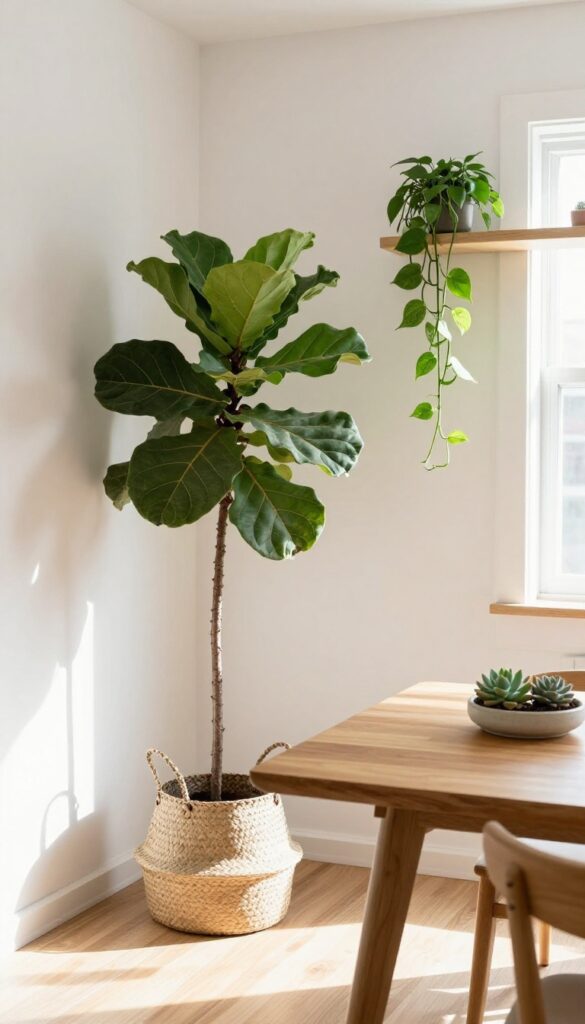
A tall plant in a corner or a small succulent on the table brings life to the room. Plants soften edges and add a natural, budget-friendly decor element. They also improve air quality and create a calming atmosphere without breaking the bank.
Greenery is one of the easiest ways to refresh a small living-dining space. A fiddle-leaf fig in a woven basket anchors an empty corner, while a trailing pothos on a shelf adds softness overhead. For tabletops, a cluster of small succulents or a single snake plant in a ceramic pot works wonders.
The key is choosing plants that thrive in your light conditions—low-light lovers like ZZ plants or peace lilies are perfect for darker spots. Grouping plants of varying heights creates visual interest, and using uniform pots (like terracotta or matte black) keeps the look cohesive. Plus, plants are a budget-friendly swap for expensive art or decor—they grow and change over time, adding living texture to your room.
Best Plants For Small Spaces
- Stick with plants that don't outgrow their spot quickly. Snake plants, pothos, and ZZ plants are forgiving and stay compact. For a taller statement, try a dwarf umbrella tree or a small fiddle-leaf fig—both add height without overwhelming the room.
- Succulents and air plants are perfect for tabletops and require minimal care.
Plant Styling Tip
Use a mix of hanging planters, floor pots, and shelf displays to layer greenery at different heights. A macrame hanger near a window draws the eye upward, making the ceiling feel higher. On a dining table, a low ceramic dish with three small succulents creates a simple centerpiece that doesn't block conversation.
Budget-Friendly Swap
Skip expensive planters—thrifted ceramic bowls, tin cans painted matte, or simple terracotta pots with a coat of white paint look just as chic. Propagate clippings from friends' plants to grow your collection for free. A single large plant can be the focal point; fill in with smaller cuttings or faux stems for a lush look without the cost.
FAQ
How can I make a small living dining room feel bigger?
Use light colors, mirrors, and multi-functional furniture. Keep the layout open by floating furniture away from walls and choosing pieces with exposed legs.
What is the best dining table shape for a small shared space?
A round or oval table works best because it takes up less visual space and allows easier movement around it.
Can I use a rug in both the living and dining areas?
Yes, using two rugs can help define each zone. Choose rugs with similar colors or textures to keep the look cohesive.
How do I separate the living and dining areas without walls?
Use furniture placement, area rugs, lighting, or a slim console table to create visual separation without blocking sightlines.
What are some budget-friendly decor ideas for a combined room?
Paint an accent wall, add floating shelves, use mirrors, swap out light fixtures, or incorporate plants. These updates are low-cost but high-impact.
Conclusion
Blending your living and dining areas doesn't have to be a compromise. With thoughtful furniture choices and a few clever tricks, you can create a space that feels open, functional, and stylish. The best part?
Most of these ideas are easy on the wallet and simple to implement. Start with one or two changes that address your biggest pain point, whether that's traffic flow, storage, or visual clutter. Small shifts can make a big difference in how your shared room feels and functions every day.