9 Light Living Room Ideas for a Cozy, Elevated Look
A light living room doesn't have to feel cold or sterile. With the right balance of soft tones, natural materials, and thoughtful layers, you can create a space that feels both airy and warmly inviting.
The key is choosing elements that reflect light while adding just enough texture and contrast to keep the room from feeling flat. Modern design often leans into clean lines and minimal clutter, but that doesn't mean sacrificing comfort.
By focusing on a few intentional pieces and a cohesive color story, your living room can feel open, calm, and still perfectly livable. Whether you're starting from scratch or just refreshing a few details, these ideas will help you bring that bright, cozy energy home.
1. Start with a Warm White Base
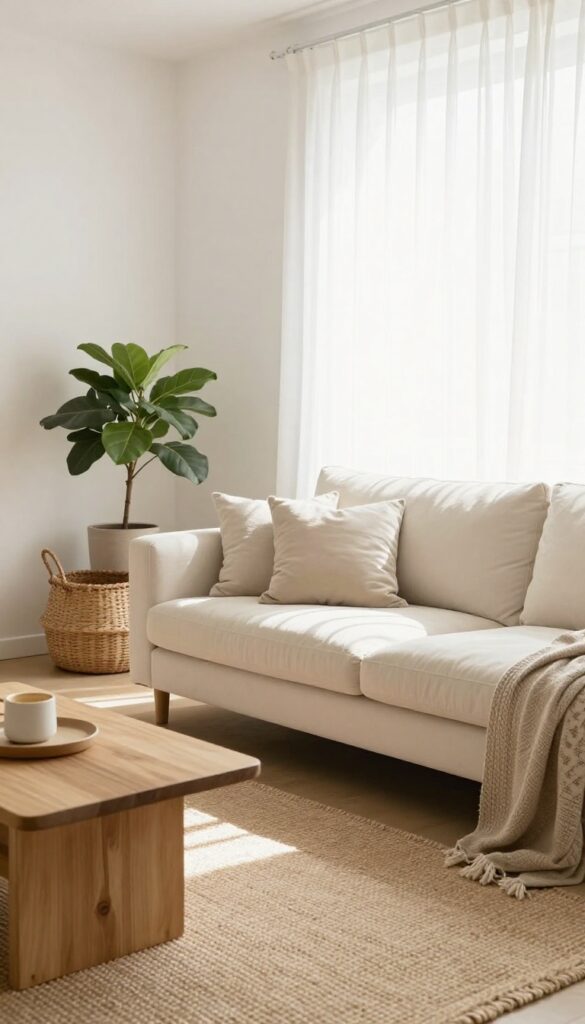
A warm white base is the secret to a living room that feels airy and bright without going full-on sterile. Think of it as a soft, welcoming canvas—walls and large furniture pieces in a creamy off-white or a subtle greige. This isn't your basic builder-grade white; it's a shade with just enough warmth to make the space feel cozy and lived-in.
The beauty of this approach is that it lets your textures, wood tones, and accent colors do the talking without competing with the walls.
Choosing the right warm white sets the whole mood of your living room. It's not about picking the first white you see off the swatch—it's about finding one with undertones that work with your lighting and the rest of your decor. A warm white with a hint of beige or gray (often called greige) can make a room feel grounded and sophisticated, while a creamier white adds a touch of softness.
This base color works wonders in both small and large spaces, making them feel open yet inviting. It's the perfect backdrop for layering in cozy textiles, natural wood furniture, and pops of color through pillows or art.
Best Shades To Try
- Look for paint colors like Benjamin Moore's White Dove or Sherwin-Williams' Alabaster—they're popular for a reason. These shades have a subtle warmth that doesn't lean too yellow or too pink. If you want something a bit deeper, try a greige like Revere Pewter for a more grounded feel.
- Always test samples on your wall and observe them at different times of day, because natural light can change how the undertones read.
Texture Mix
- Since your base is neutral, texture becomes your best friend. Pair a warm white linen sofa with a chunky knit throw, a jute rug, and a reclaimed wood coffee table. The contrast between smooth walls and tactile fabrics keeps the room from feeling flat.
- Add in some matte metal or ceramic accents for a subtle sheen that catches the light without being shiny.
Lighting Tip
- Warm white walls really shine with layered lighting. Use a mix of overhead fixtures, floor lamps, and table lamps with warm bulbs (2700K to 3000K). The soft glow will enhance the cozy undertones of your paint and make the room feel even more inviting.
- Avoid cool white bulbs—they can make a warm white look dingy or gray.
2. Layer in Natural Textures
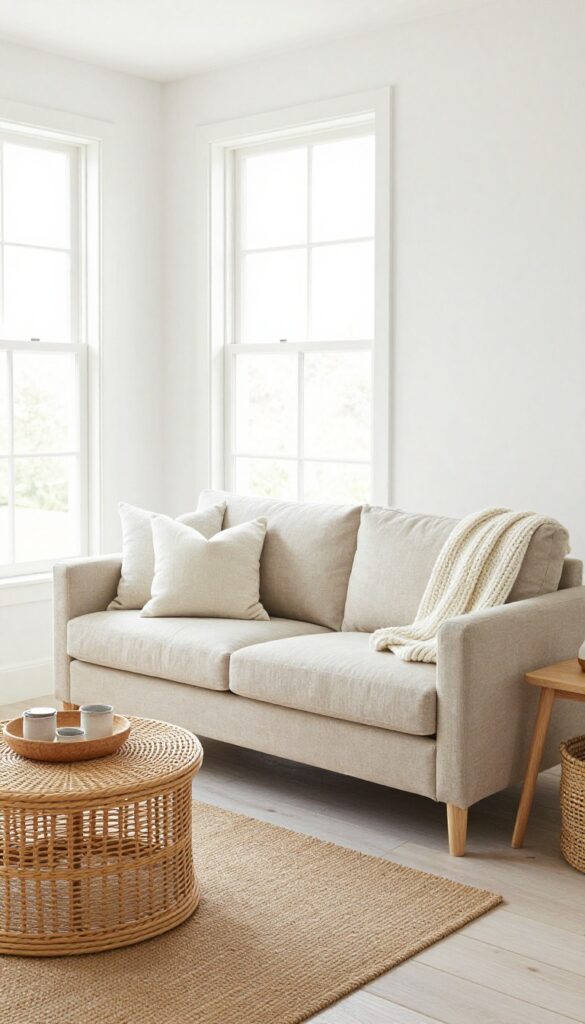
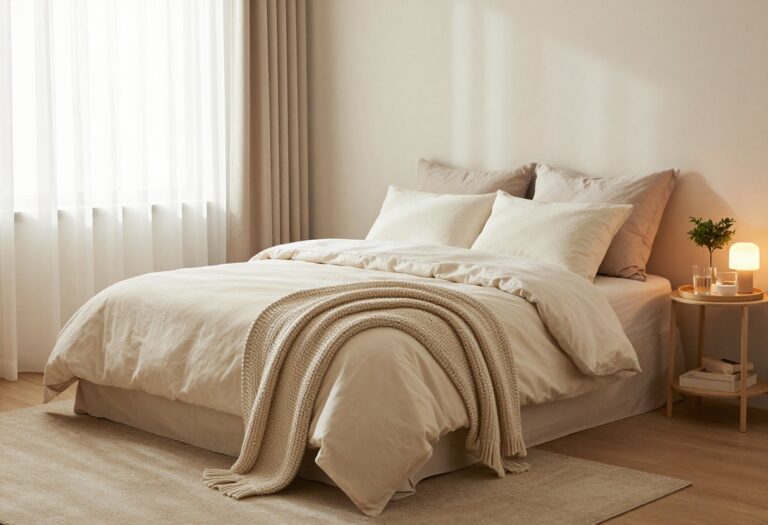
Natural textures are the secret to making a light living room feel warm and inviting without sacrificing that airy, open vibe. Think linen curtains that soften the light, a chunky knit throw draped over a neutral sofa, or a sisal rug underfoot that adds grip and visual interest. These materials bring a tactile richness that keeps the space from feeling cold or sterile, even when the palette stays pale.
Start by choosing a hero texture, like a jute or sisal rug, to anchor the seating area. Then layer in smaller accents: a cotton bouclé pillow, a rattan coffee table, or a light wood side table. The key is to mix textures without overcrowding—stick to two or three materials in similar neutral tones so the effect feels curated, not chaotic.
This approach works especially well in rooms with lots of natural light, where the textures cast subtle shadows and add depth.
Best Materials
Linen, cotton, jute, rattan, light oak, and bamboo are your go-tos. Avoid dark woods or heavy velvets that can weigh down the look. Stick to matte, natural finishes for that modern yet relaxed feel.
Texture Mix
Pair a smooth linen sofa with a chunky knit throw and a woven rattan basket. The contrast between sleek and coarse creates visual interest without adding color. Keep the palette tonal—cream, beige, taupe—so the textures shine.
Small-space Fix
In a compact living room, swap a bulky coffee table for a light wood or rattan trunk that doubles as storage. Add a flat-weave cotton rug instead of a thick shag to keep the floor feeling open. These choices maintain the airy feel while adding natural warmth.
3. Use Sheer Curtains for Soft Light
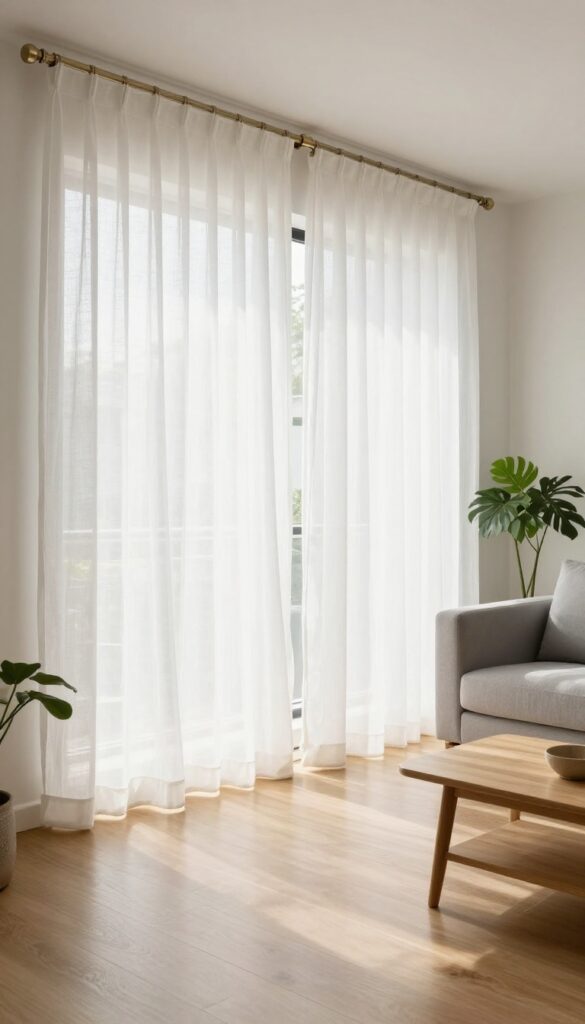
Heavy drapes can make a room feel smaller and darker than it actually is. Swapping them out for floor-length sheer curtains in white or ivory changes the whole energy of a space. The fabric diffuses sunlight beautifully, creating a gentle glow that makes the room feel larger and more serene throughout the day.
It's one of those small swaps that instantly lifts the mood without costing a fortune.
Sheer curtains are a go-to for anyone wanting a modern, airy living room. They let in natural light while still offering a bit of privacy, and the soft, flowing fabric adds texture without overwhelming the space. For a clean look, choose curtains that pool slightly on the floor—this adds a relaxed, elegant touch.
Pair them with a simple rod in brushed nickel or matte black to keep the focus on the light and the view. This idea works especially well in rooms with limited square footage, as the transparency tricks the eye into seeing more depth.
Best Colors And Fabrics
Stick with whites, ivories, or very pale greys for that airy effect. Linen blends are ideal because they have a natural texture that catches light gently, while polyester sheers are more budget-friendly and wrinkle-resistant. Avoid anything with heavy patterns or dark tints—they defeat the purpose of softening the light.
Layering Tip
For a more polished look, layer sheers with a pair of lightweight linen or cotton panels on the sides. This gives you the option to close the sheers for soft light or pull the outer panels for more privacy. It also adds visual depth without making the window feel crowded.
Installation Trick
Mount the curtain rod as close to the ceiling as possible and extend it a few inches past the window frame. This makes the ceiling feel taller and lets the sheers drape in a full, graceful way. Floor-length is non-negotiable—short sheers can make the room feel chopped off and less serene.
4. Pick a Statement Piece in a Pale Tone
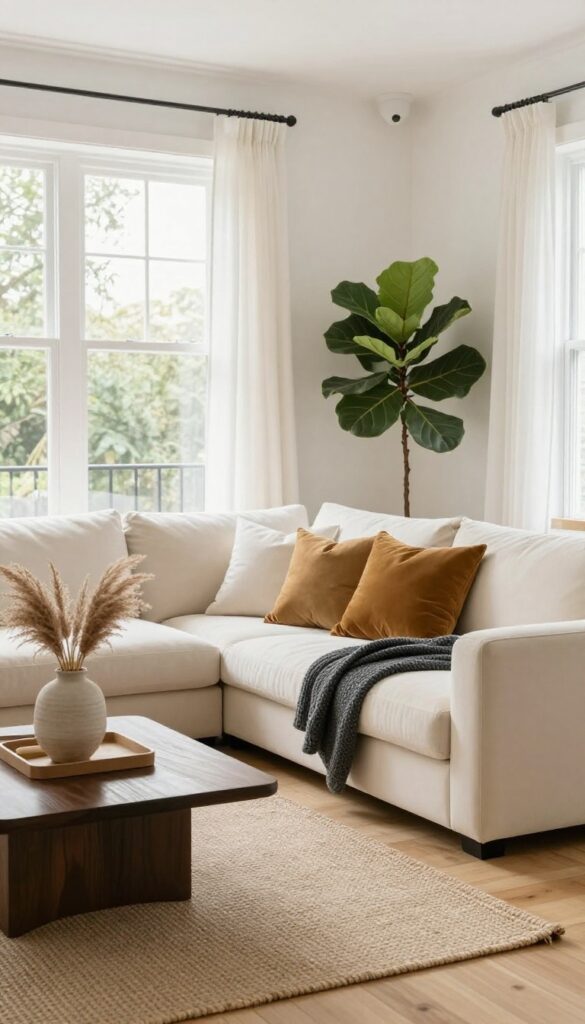
A pale-toned statement piece—like an off-white sofa or a blush armchair—doesn't just look pretty. It quietly anchors the room with a sense of calm, giving you a neutral base that makes everything else feel intentional. Think of it as the visual breath of fresh air your living room needs, especially if you're working with darker floors or bold wall colors.
When you choose a light-colored anchor piece, you're not playing it safe—you're setting up a versatile stage. A creamy sofa or a pale gray lounge chair becomes the star, but it doesn't scream for attention. Instead, it invites you to layer in textures and accents: a chunky knit throw in charcoal, a few mustard velvet pillows, or a dark wood coffee table.
The contrast feels balanced, not chaotic. This approach works beautifully in both small spaces (where light tones keep things airy) and larger rooms (where they prevent the space from feeling cavernous). Plus, maintenance is easier than you think—many modern fabrics are stain-resistant, and a quick vacuum keeps them fresh.
Best Colors
Stick with warm off-whites like ivory or cream for a cozy feel, or go with cool pale grays for a more modern edge. Blush and very light beige also work well, especially when paired with natural wood or black metal accents. Avoid stark white—it can feel clinical and shows every speck of dust.
Texture Mix
Since the piece itself is light and smooth, bring in contrast with textured accessories. A chunky cable-knit throw, a faux fur pillow, or a woven jute rug adds depth without competing. The key is to keep the palette tonal but the surfaces varied.
Styling Tip
Place your pale statement piece against a darker wall or in front of a large piece of art. This creates a natural frame that makes the furniture pop. If your walls are also light, add a floor lamp with a black or brass stem to draw the eye.
5. Add Mirrors to Bounce Light Around
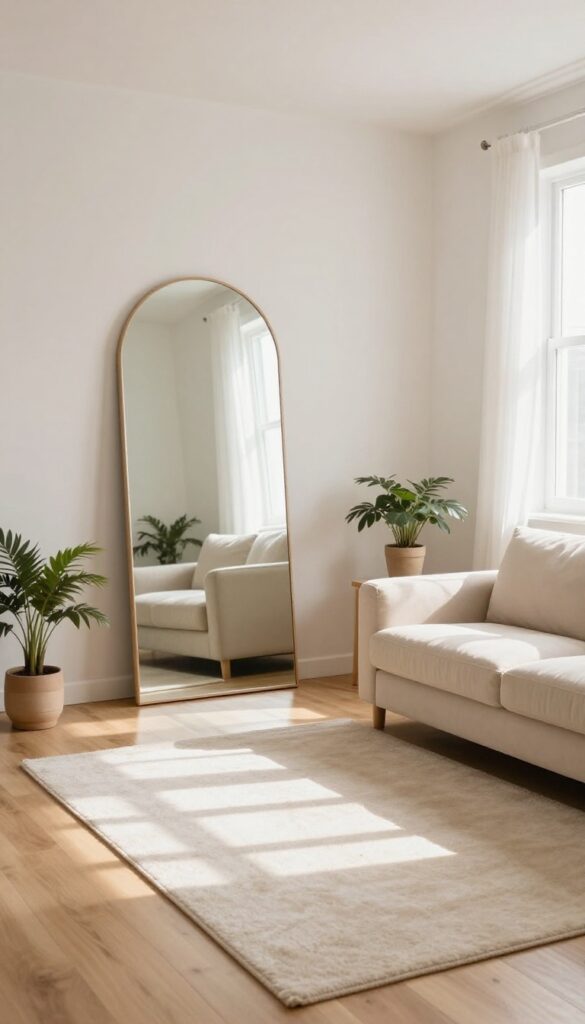
Mirrors are like magic for a light-filled living room. They catch whatever sunlight you have and send it right back into the space, making even a north-facing room feel brighter and airier. Plus, they add a polished, modern touch without any heavy lifting.
A well-placed mirror can also make your room feel significantly larger, which is always a win in cozy spaces.
The trick is to choose a mirror that feels intentional, not just functional. A large round or arched mirror brings softness and a bit of personality, while a leaner floor mirror adds casual elegance. Position it opposite a window to maximize reflection, or tuck one into a darker corner to wake up that area.
The result is a room that feels open, bright, and effortlessly put together.
Best Placement Tips
Hang a large mirror directly across from your main window to reflect the view and double the natural light. In a narrow living room, place a tall mirror at the far end to create depth. Avoid putting mirrors where they'll reflect clutter or a TV screen—keep the reflection clean and intentional.
Style And Shape Ideas
- Round and arched mirrors are having a moment because they soften the straight lines of furniture and windows. A sunburst or ribbed mirror adds texture without overwhelming the room. For a modern look, choose a mirror with a slim, metallic frame in brass or black.
- Lean a large floor mirror against the wall for a relaxed, studio-apartment vibe.
Small-space Bonus
In a small or windowless living room, a mirror can be a game-changer. Use a mirrored wall or a series of small mirrors to trick the eye into seeing more space. A mirrored console table also reflects light while offering storage—doubly useful.
6. Incorporate Subtle Metallic Accents
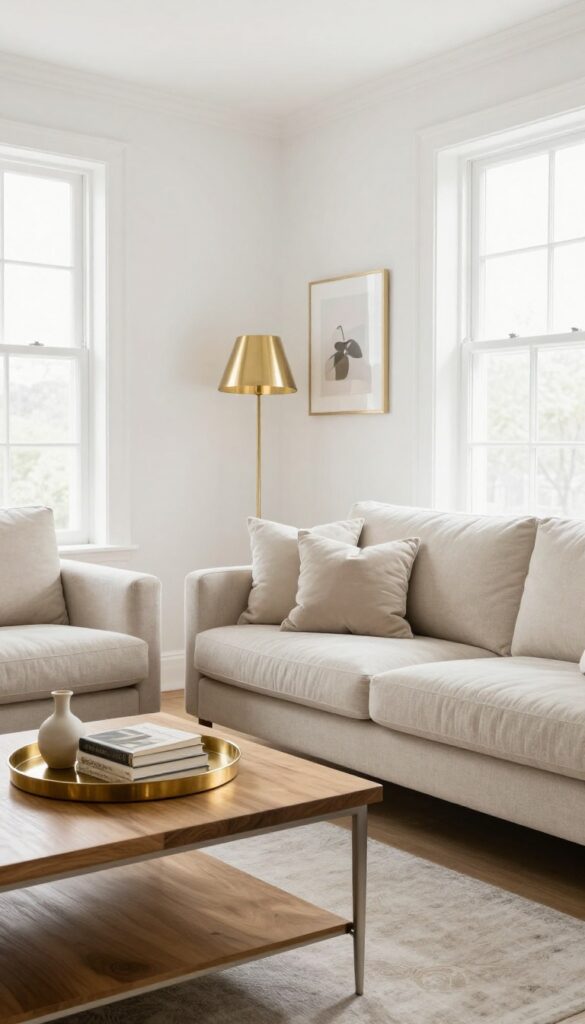
Metallics can feel intimidating—too shiny, too glam, too much. But when used in small doses, they add just the right amount of polish without overwhelming a light, airy space. Think brushed brass lamp bases, champagne gold picture frames, or matte silver coffee table legs.
These tiny touches bring warmth and a subtle lift, like a soft glow that catches the light without screaming for attention.
The key is restraint. You don't need a gold coffee table or a brass chandelier. Instead, let metallics play a supporting role.
A single brass floor lamp in the corner, a set of silver nesting tables, or a few gold-framed prints on the wall can do the trick. They work beautifully in rooms with neutral palettes—white walls, beige sofas, natural wood tones—because they add a layer of sophistication without adding color. Plus, they catch the light in a way that makes the room feel more dynamic and alive, especially during golden hour.
Best Metals For A Light Room
- Stick with warm metallics like brushed brass, champagne gold, and rose gold for a cozy feel. Cooler metals like matte silver or pewter can work too, especially if your room has gray or blue undertones. Avoid high-polish finishes—they can feel too flashy.
- Brushed or satin finishes are more subtle and forgiving with fingerprints.
Where To Place Them
Focus on eye-level spots: lamp bases, drawer pulls, mirror frames, and small decor objects. A brass tray on the coffee table or a gold vase on a shelf adds a hint of shine without dominating. For a cohesive look, repeat the same metal finish in at least two or three places around the room.
Finishing Touch
Don't forget the hardware. Swapping out standard drawer pulls or cabinet knobs for brushed brass or matte silver ones is an easy, budget-friendly upgrade. It's a small detail that makes a big difference in how polished the room feels.
7. Choose Low-Profile Furniture
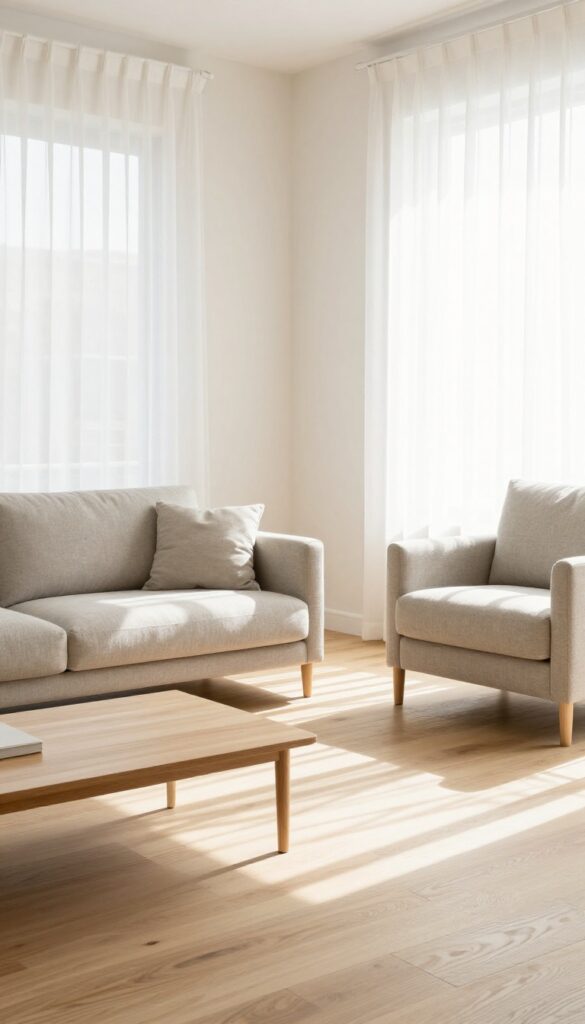
Ever walk into a room and feel like the furniture is taking up all the visual space? That's often because pieces are too bulky or sit too high. Low-profile furniture—think sofas with slim legs, coffee tables that hover just above the floor, and armless chairs—changes everything.
It keeps sightlines open, making the room feel bigger and less cluttered. Plus, light can actually move under and around your pieces, which does wonders for that airy, modern vibe you're going for.
Low-profile furniture is a game-changer for small or narrow living rooms, but it works just as well in open layouts where you want zones to feel connected. The trick is to choose pieces that sit a few inches off the ground—enough to let light pass underneath but not so much that they feel floaty or unstable. Sofas with exposed legs, especially in a matching wood tone, create a cohesive look.
And when you pair them with a low console or a slim coffee table, the whole room breathes easier.
Best Materials
- Stick with light or medium wood tones for legs and frames—oak, walnut, or even a matte black metal. These materials keep the visual weight down and blend well with neutral walls and floors. Avoid chunky upholstery bases; instead, look for sofas and chairs with a visible frame or a slim, tailored skirt.
- For a cleaner look, choose solid colors over busy patterns so the low silhouette stays the focus.
Layout Tip
- Arrange your low-profile pieces so they don't block any natural pathways. Keep the coffee table at least 12 inches from the sofa to maintain that open feel. If you have a low media console, mount the TV slightly higher than usual so it doesn't compete with the furniture line.
- And don't forget to leave a few inches of floor visible around each piece—that's where the airy magic happens.
Finishing Touch
- Add a slim, low-profile rug that sits just under the front legs of your sofa. A flatweave or low-pile option works best because it won't add visual bulk. Choose a light color or a subtle pattern to reinforce the open, modern feel.
- Then finish with a couple of floor cushions or a low pouf for extra seating that keeps the whole look grounded and relaxed.
8. Bring in Greenery for Fresh Contrast
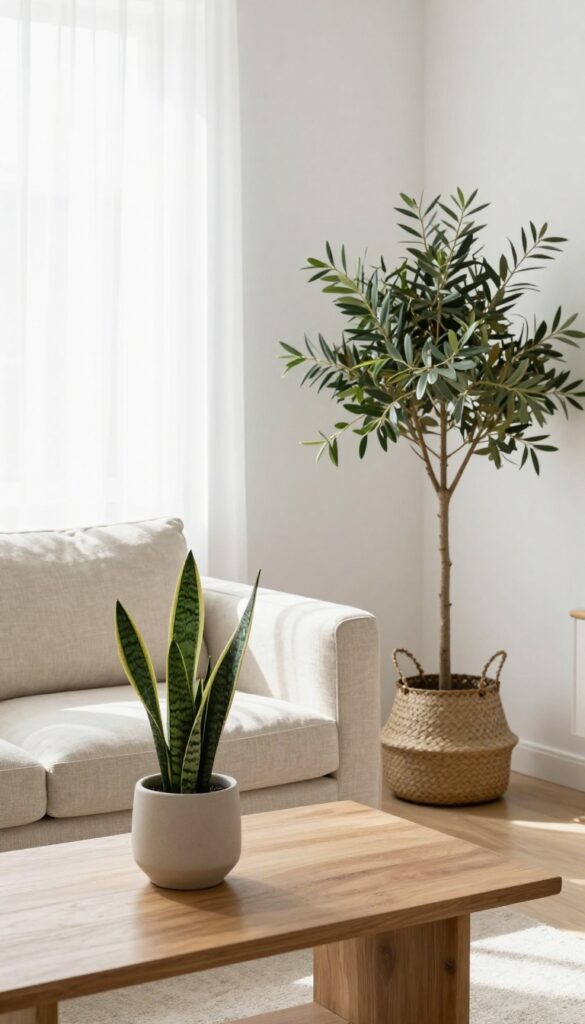
Plants are the easiest way to breathe life into a light, airy room. A few well-placed houseplants with soft green leaves—think snake plants, pothos, or a petite olive tree—add a gentle pop of color that feels refreshing, not jarring. Against white walls, pale furniture, or neutral textiles, that touch of green keeps the space from feeling sterile or flat.
It’s a low-effort upgrade that instantly makes the room feel more alive and welcoming.
Greenery works because it introduces organic texture and a natural color accent without competing with your light palette. The key is choosing plants with muted, soft green tones rather than bold, tropical leaves. Snake plants and pothos are forgiving for beginners, while an olive tree adds a sculptural, Mediterranean feel.
Place them at different heights—on a coffee table, a shelf, or a floor stand—to create visual rhythm. The result is a calm, layered look that feels both modern and lived-in.
Best Plants For A Light Room
- Stick with plants that have subtle green hues and simple leaf shapes. Snake plants (Sansevieria) offer upright, architectural lines. Pothos trails nicely from a hanging planter or high shelf.
- An olive tree brings a soft, silvery-green tone that pairs beautifully with beige and white. Avoid plants with very dark or variegated leaves, as they can feel heavy against a light backdrop.
Placement Tips
- Group plants in odd numbers for a natural, collected look. A trio of small pots on a side table or a single tall plant in a corner creates a focal point without clutter. Use woven baskets or ceramic pots in neutral tones to keep the focus on the foliage.
- Near a window is ideal, but many of these plants tolerate lower light, so you can tuck them into darker corners too.
Finishing Touch
Mix in a few dried stems or branches for texture contrast. Eucalyptus or pampas grass adds a soft, airy feel that complements living plants. This combination keeps your greenery arrangement interesting year-round, even when some plants go dormant.
9. Finish with Layered Lighting
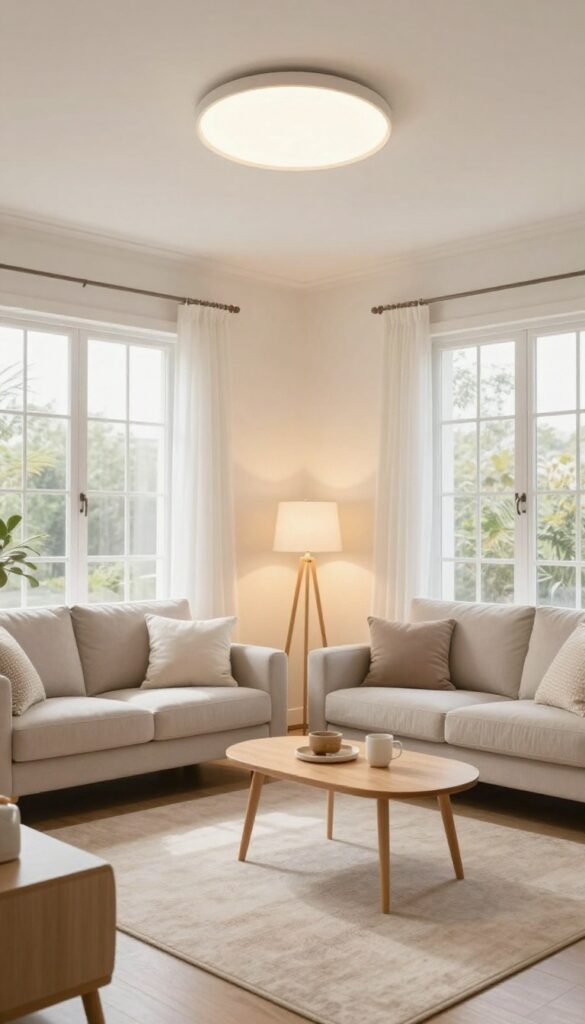
Lighting can make or break a room, and in a light living room, it’s your secret weapon for creating warmth without clutter. Layering different light sources—overhead, floor, and table lamps—lets you shift the mood from bright and airy during the day to soft and intimate at night. The best part?
You don’t need fancy fixtures; just a few smart choices and dimmers give you total control.
Start with a central overhead fixture like a flush mount or a simple pendant to provide general illumination. Then add floor lamps in corners or beside seating to create pools of light that break up the space. Table lamps on side tables or consoles add a third layer, bringing light to eye level and making the room feel more inviting.
Use warm white bulbs (2700–3000K) for a cozy evening glow, and let natural light take over during the day. Dimmers on overheads and lamps let you adjust brightness instantly, so you can go from a bright afternoon to a candlelit evening with a simple turn.
Best Bulb Choices
Stick with warm white LEDs in the 2700–3000K range—they mimic the softness of incandescent bulbs without the heat. Avoid cool or daylight bulbs (4000K+), which can feel harsh and sterile. For dimmable fixtures, make sure the bulbs are labeled dimmable to avoid flickering.
Placement Tips
Position floor lamps in dark corners or next to sofas to fill shadowy areas. Table lamps work best on surfaces at seating height—like an end table or a console behind the sofa. Aim for three light sources in the room, but vary their heights to create visual interest.
FAQ
What colors work best for a light living room?
Stick with warm whites, soft beiges, pale grays, and muted pastels like blush or sage. These colors reflect light well and create a calm, airy foundation that feels cozy rather than cold.
How can I make a light living room feel cozy?
Layer in textures like chunky knits, linen, and wood. Add warm lighting with dimmers, and include soft furnishings like plush rugs and cushions. The contrast between light colors and tactile materials adds warmth.
Can I use dark colors in a light living room?
Yes, but use them sparingly as accents—think a dark wood coffee table, black picture frames, or a navy throw pillow. This creates visual interest without overwhelming the light palette.
What type of flooring is best for a light living room?
Light wood floors, pale tile, or a soft neutral carpet work well. If you have dark floors, balance them with a large light-colored rug to keep the room feeling bright.
How do I keep a light living room from looking boring?
Mix different textures, add plants, and include a few statement pieces like a sculptural lamp or an interesting mirror. Varying heights and shapes also prevents the room from feeling flat.
Conclusion
Creating a light living room that feels cozy and elevated is all about balance. By starting with a warm neutral base and layering in natural textures, soft lighting, and thoughtful accents, you can achieve a space that feels open without sacrificing comfort.
Each idea here is meant to be flexible—mix and match what works for your home and personal style. Remember, the goal isn't perfection but a room that makes you feel relaxed and at ease.