11 Warm Moody Kitchen Ideas That Make the Space Feel Finished
A warm moody kitchen doesn’t just look good—it feels good. The right mix of deep tones, natural materials, and soft lighting can turn a purely functional room into the heart of your home. The payoff is immediate: every time you walk in, the space wraps around you with a sense of calm and character.
You don’t need a full renovation to get that finished look. Small, intentional changes—like swapping hardware or adding a textured rug—can shift the entire vibe.
The goal is to create depth and warmth without making the room feel dark or cramped. In this guide, we’ll walk through 11 specific ideas that bring that cozy, moody aesthetic to life.
1. Paint the Cabinets in a Deep, Saturated Hue
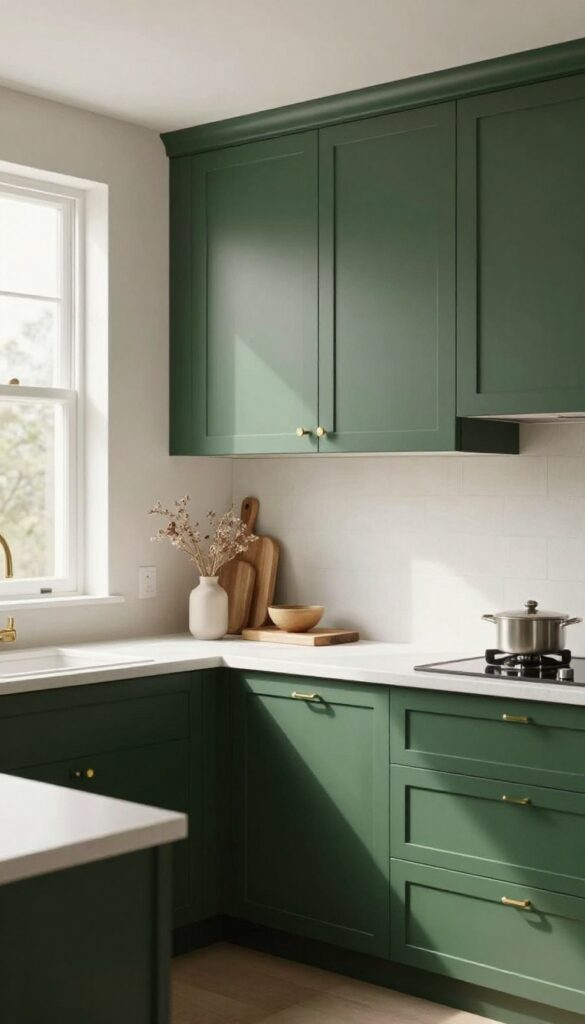
A surefire way to set a moody tone is to ditch the all-white cabinet look. Deep, saturated colors like forest green, navy, or charcoal instantly add a layer of richness that feels both grounded and inviting. This single change can transform the entire atmosphere of your kitchen, making it feel more intimate and polished.
Painting your cabinets is one of the most impactful updates you can make. It’s a weekend project that doesn’t require a full remodel, yet it completely changes the room’s personality. The key is choosing a shade that feels cozy rather than cold, and pairing it with the right finishes to keep the space from feeling too heavy.
Choosing The Right Shade
Not all deep colors are created equal. For a warm, moody feel, look for hues with an undertone of brown or green—think forest green, deep teal, or a navy that leans more towards slate. Charcoal can work too, but make sure it has a warm base to avoid feeling stark.
Test samples on your cabinets and observe them at different times of day to see how they change with the light.
Balancing With Hardware And Countertops
Once your cabinets are dark, you’ll want to balance the heaviness. Brass or matte black hardware adds a touch of elegance and warmth. Pair the cabinets with lighter countertops—like white quartz or butcher block—to keep the space from feeling too closed in.
A simple, clean backsplash in a neutral tone also helps maintain that airy yet moody balance.
Lighting Matters
Deep cabinet colors absorb light, so you need to be intentional about your lighting. Under-cabinet lighting is a must to keep countertops bright and functional. Add a few warm pendant lights or a dimmer switch to create that soft, cozy glow in the evenings.
The right lighting will make the deep hue feel rich, not gloomy.
2. Add Warm Brass or Oil-Rubbed Bronze Fixtures
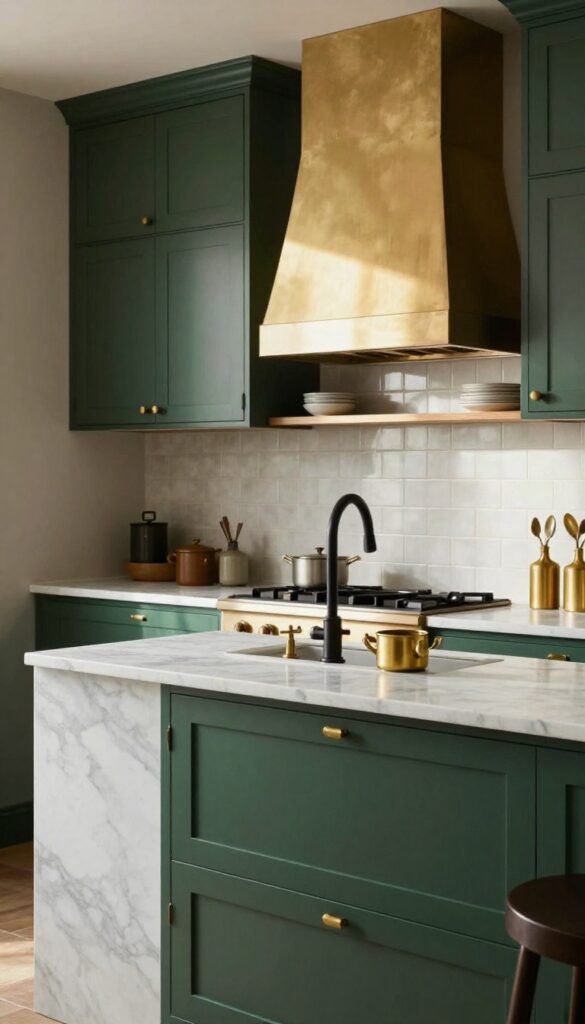
The little details often make the biggest difference in a moody kitchen. Swapping out shiny chrome or nickel for warm brass or oil-rubbed bronze instantly adds depth and a sense of history. These metals catch the light in a soft, golden way, making the space feel more intimate and finished.
Warm metals are the jewelry of a kitchen. They draw the eye and add a layer of richness that complements dark cabinets, stone countertops, and textured backsplashes. Whether you go for polished brass or a darker, aged bronze, the key is to choose a finish that feels intentional and cohesive with the rest of your design.
Start With The Faucet
The faucet is the workhorse of the kitchen, so it's a great place to begin. A bridge-style faucet in unlacquered brass develops a lovely patina over time, adding character. Or, go with a matte oil-rubbed bronze for a more understated look that hides water spots and fingerprints.
Upgrade Knobs And Pulls
Cabinet hardware is the easiest swap you can make. Mixing finishes—like brass knobs on upper cabinets and bronze pulls on drawers—adds a collected, designer feel. Just keep the undertones consistent: warm brass and bronze play well together, but avoid mixing them with cool chrome or stainless steel.
Don't Forget The Details
Small touches like a pot filler, towel ring, or even a switch plate can tie the whole look together. When you choose warm metals for these extras, the room feels thoughtfully designed, not just decorated. It's the kind of detail that makes a space feel truly finished.
3. Layer Lighting with Dimmer Switches and Pendants
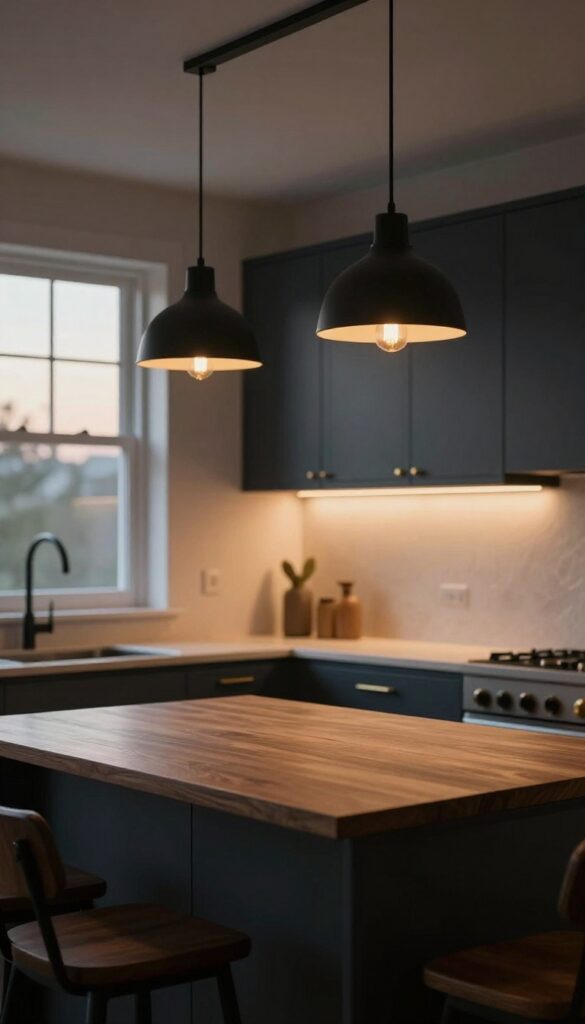
Lighting can make or break a moody kitchen. Bright overheads kill the vibe, while a single dim bulb leaves you squinting. The trick is to build layers—each with its own switch—so you can dial the room from bright and functional to soft and intimate in seconds.
Start by swapping standard switches for dimmers, then mix pendant lights with under-cabinet strips. This combo gives you control and depth, letting shadows fall where they should. The result is a kitchen that feels finished, not flat.
Dimmers are the unsung heroes of moody design. They let you adjust the intensity of your main light source, so you can keep things bright while prepping dinner and then lower the glow for a late-night glass of wine. Pair that with pendants over an island or sink, and you’ve got focal points that draw the eye.
Under-cabinet lighting adds a practical layer, washing the countertop with light without bouncing off the ceiling. Together, these layers create a warm, inviting atmosphere that feels intentional and polished.
Start With Dimmers On Every Circuit
Dimmers are the easiest upgrade you can make. They work with most LED bulbs and give you instant control over the room’s energy. Install them on overhead fixtures, pendants, and even under-cabinet lights.
That way, you can set the scene for cooking, dining, or relaxing without ever feeling harshly lit. If you’re not comfortable with wiring, an electrician can swap out switches in under an hour.
Choose The Right Pendants
Pendants are more than just light sources—they’re jewelry for your kitchen. Go with matte black, brass, or smoked glass to complement a moody palette. Hang them low over an island or breakfast bar to create a cozy, intimate pool of light.
Make sure they’re on a dimmer so you can soften them when you don’t need full brightness. The right pendants add character and make the space feel designed, not just lit.
Add Under-cabinet Lighting For Depth
Under-cabinet strips are a game-changer. They eliminate shadows on your countertops, making food prep safer and easier. But they also add a subtle glow that highlights your backsplash and adds depth to the room.
Choose warm-toned LEDs (around 2700K) to keep the moody feel. Install them on a separate switch or dimmer so you can use them alone for a soft, ambient effect in the evening.
4. Introduce Natural Wood Textures
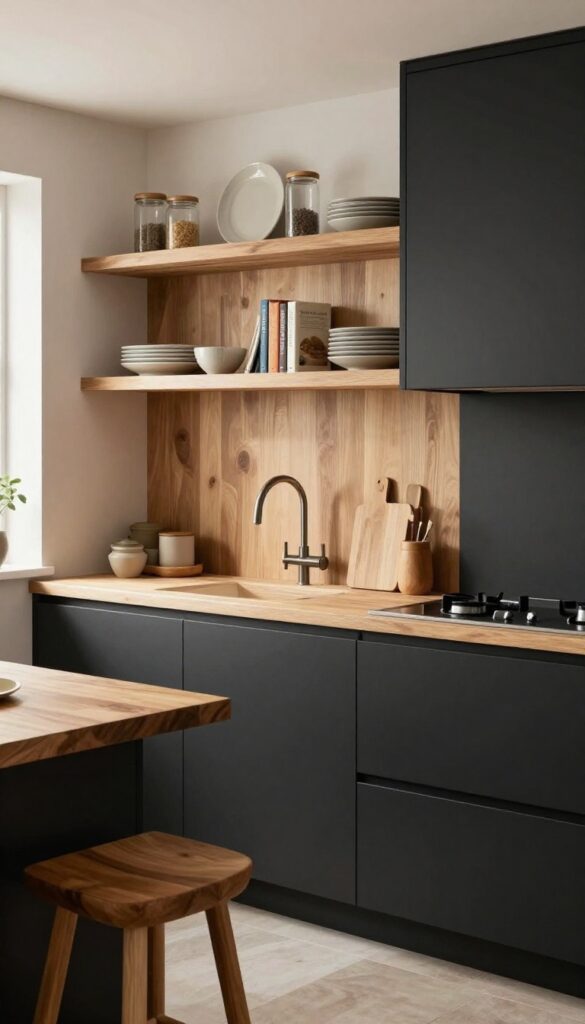
When a kitchen leans heavy on dark paint, matte black fixtures, and moody lighting, it can start to feel a little flat. That’s where wood comes in. Natural wood textures add a layer of warmth that softens the drama and keeps the room from feeling like a cave.
Think of wood as the bridge between the dark, moody palette and the cozy, lived-in vibe you’re after.
Wood is one of the quickest ways to make a moody kitchen feel more approachable. The key is to choose wood tones that complement your existing palette—warm oak, walnut, or reclaimed pine all work well. You don’t have to overhaul your cabinets; even a few well-placed wood elements can shift the whole feel of the space.
Here’s how to bring it in without going overboard.
Open Shelving That Warms The Walls
Replacing a few upper cabinets with open wood shelving instantly adds texture and visual interest. Use solid wood planks in a natural finish, and style them with ceramics, glass jars, and cookbooks. The exposed wood breaks up the monotony of dark cabinetry and gives you a spot to display pieces that add character.
Just keep the shelves tidy—open storage works best when it’s curated.
Butcher Block Countertops For A Soft Touch
If you’re up for a bigger change, butcher block countertops are a classic choice. They bring a warm, tactile surface that contrasts nicely with dark lower cabinets or a matte black sink. Wood counters are also forgiving—they hide small scratches and can be sanded down if they get worn.
Pair them with a dark stone or tile backsplash to keep the moody feel while letting the wood shine.
Wooden Bar Stools That Anchor The Space
Bar stools are an easy, low-commitment way to add wood. Look for stools with natural wood frames or seats, and choose a style that matches your kitchen’s vibe—sleek and modern or chunky and rustic. They add warmth at eye level and make the kitchen feel more inviting, especially if you have a breakfast bar or island.
Mixing wood stools with metal or upholstered options can also create a nice layered look.
5. Use Dark Backsplash Tiles with Subtle Texture
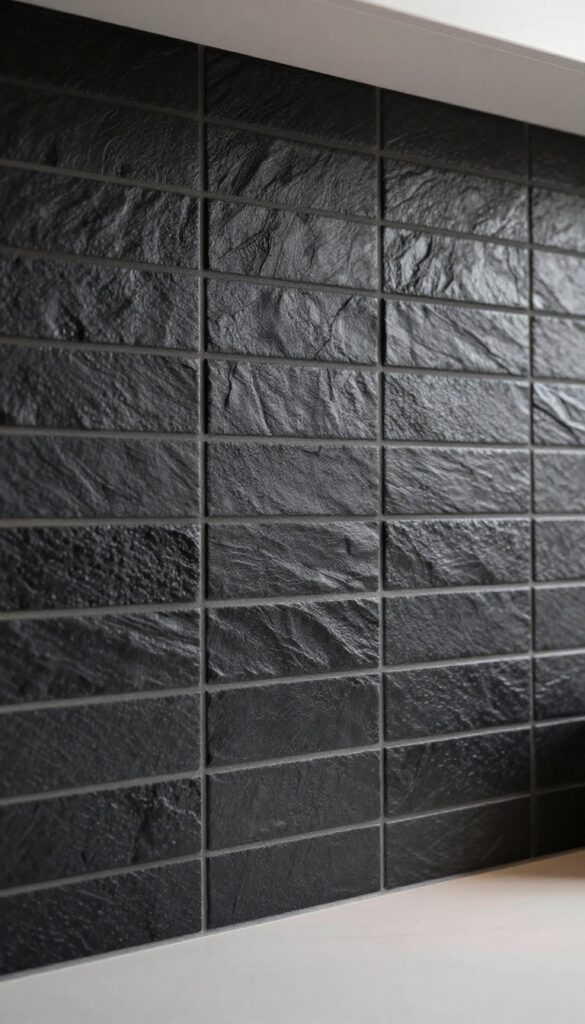
A dark backsplash can anchor a moody kitchen, but flat, glossy tiles can feel cold and stark. That’s where texture comes in—it adds a tactile quality that catches the light and gives the wall a soft, almost organic feel. Matte black, deep slate, or handmade tiles with subtle ridges or uneven surfaces bring depth without shouting for attention.
The trick is to choose tiles that read as one solid color from a distance but reveal their texture up close. This creates a quiet, sophisticated backdrop that lets your countertops and cabinetry shine. It’s a simple swap that instantly makes the space feel more layered and finished.
Texture is the unsung hero of a moody kitchen. It prevents dark surfaces from looking flat or lifeless. When you run your hand along a matte tile with a slight bump or wave, it feels intentional—like the room was designed with care.
Plus, textured tiles hide smudges and water spots better than glossy ones, which is a huge win for a busy kitchen. Another benefit: texture plays with light in a way that makes the wall feel alive. Even under dim, warm lighting, the subtle shadows and highlights create visual interest.
You don’t need a loud pattern; just a gentle undulation or a rough, handmade finish does the job.
Matte Black: The Go-to Choice
Matte black tiles are a classic for a reason. They’re forgiving, sophisticated, and pair well with almost any countertop material—from butcher block to white quartz. Look for tiles with a slightly uneven surface, like a tumbled or honed finish.
This adds a natural, stone-like quality that feels more grounded than a flat black. Use them in a brick-lay pattern for extra movement, or keep it simple with a straight stack.
Deep Slate: Earthy And Timeless
If pure black feels too harsh, deep slate is your friend. It has a blue-gray undertone that softens the mood and brings in an earthy, organic vibe. Slate tiles often have a cleft surface—meaning they’re naturally split and textured—which gives them a rugged, authentic look.
They work beautifully with wood cabinets and brass fixtures, creating a warm, grounded feel. Just seal them properly to keep them stain-resistant.
Handmade Tiles: Imperfectly Perfect
Handmade tiles are where texture really shines. Each piece has slight variations in thickness, color, and surface, which adds a handcrafted charm that mass-produced tiles can’t match. They often have a rippled or dimpled texture that catches light in the most flattering way.
Use them as a full backsplash or as an accent strip behind the range. Their imperfections make the kitchen feel personal and lived-in, not sterile.
6. Style Open Shelves with Ceramic and Brass Accessories
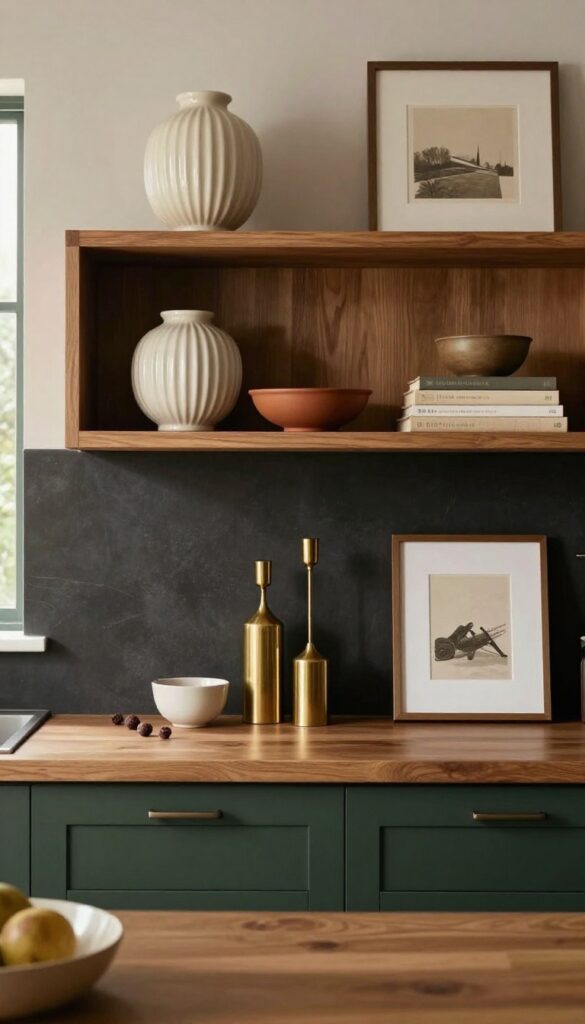
Open shelving is a double-edged sword in a moody kitchen. Leave it cluttered and it disrupts the calm, but style it with intention and it becomes a focal point that adds depth and personality. The trick is to treat your shelves like a slow-styled vignette, not a storage dump.
A curated mix of ceramic bowls, brass candlesticks, and a few well-chosen cookbooks brings warmth and a lived-in feel that matches the moody aesthetic perfectly. These materials catch the light, break up dark cabinetry, and make the space feel finished without being fussy.
Start by clearing your shelves completely. Then, group items in odd numbers—three or five—and vary the heights and textures. Ceramic pieces in earthy tones like cream, terracotta, or matte black add organic contrast.
Brass candlesticks or small brass accents bring a subtle gleam that plays nicely with warm lighting. Stack a couple of cookbooks horizontally to anchor a display, and lean a framed print or a small piece of art against the back for depth. Don't forget the practical side.
Keep everyday items like mugs or bowls within easy reach, but choose ones that look good too. Mixing function with style is what makes open shelves feel intentional rather than messy.
Mix Textures And Materials
The magic happens when you combine different textures. Smooth ceramic against rough linen, shiny brass against matte wood. For example, place a ribbed ceramic vase next to a smooth brass candlestick and a stack of linen-bound books.
The contrast creates visual interest and makes each piece stand out. Avoid using all the same material—that gets monotonous. Instead, aim for a balanced blend that feels collected over time.
Use Warm Lighting To Highlight Displays
Open shelves need proper lighting to shine. Install small LED strip lights under the shelf above or use a picture light to illuminate the display. Warm white bulbs (2700K–3000K) enhance the brass and ceramic tones, making them glow against darker walls.
If you can't add hardwired lights, battery-operated puck lights work well and are easy to install. The goal is to make your curated pieces feel like they're on display, not just stored.
Edit And Rotate Seasonally
A styled shelf isn't a set-it-and-forget-it project. Every few months, swap out a few pieces to keep it feeling fresh. In fall, add amber glass or copper tones; in spring, introduce lighter ceramics or fresh greenery.
Editing is key—if a shelf starts to feel crowded, remove one or two items. The goal is a balanced, uncluttered look that still feels warm and personal.
7. Incorporate Vintage or Antique Decor Pieces
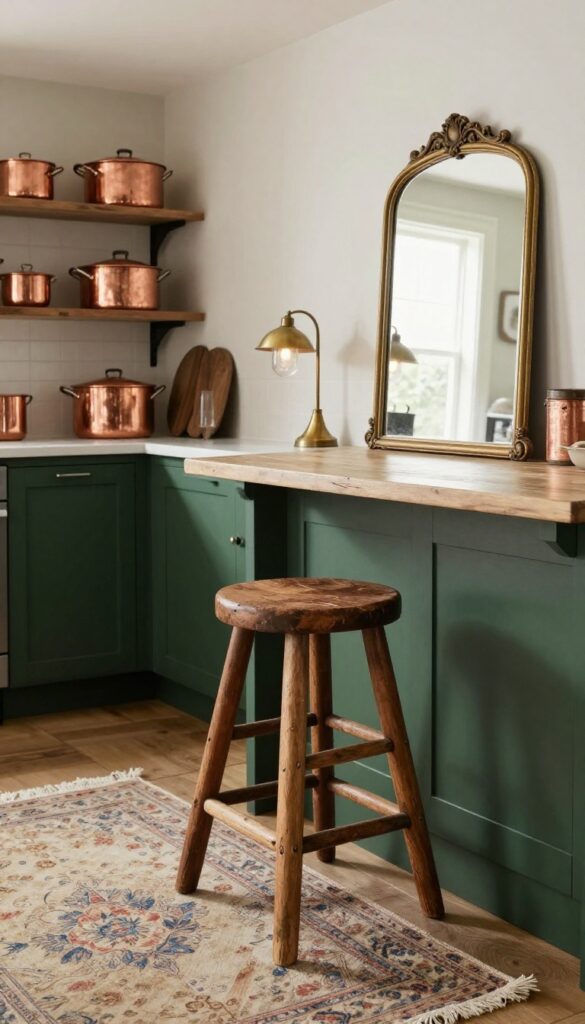
Vintage pieces carry stories that new items just can't replicate. A worn wooden stool or a tarnished brass lamp instantly adds layers of history and warmth to a moody kitchen. It's not about filling the room with antiques—just a few well-chosen items can make the space feel collected and personal.
The contrast between old and new is what makes this idea work so well. Dark cabinetry and modern appliances can feel cold, but a vintage rug or an antique mirror softens that edge. These pieces bring texture, patina, and a sense of permanence that makes the kitchen feel finished.
Start by thinking about what already feels right in your kitchen. A vintage rug underfoot can anchor the space and add warmth. An antique mirror leaning against the backsplash can bounce light around and make the room feel larger.
Old copper pots hanging on a rack or displayed on open shelves add a rich, warm glow. Don't worry about matching everything perfectly. The beauty of vintage is in the imperfections—the scratches, the faded colors, the slightly uneven edges.
These details add character that mass-produced decor just can't match. Mixing a few antique pieces with your modern essentials creates a layered, lived-in look that feels intentional and cozy.
Start With One Statement Piece
Pick a single vintage item that speaks to you. It could be a large antique mirror with a worn gold frame, a rustic farmhouse table, or a collection of old brass candlesticks. Place it where it will get noticed—above the stove, on an empty wall, or at the center of the island.
This piece becomes the focal point and sets the tone for the rest of the room.
Mix Old With New For Balance
Pair vintage finds with modern elements to keep the kitchen from feeling like a museum. A sleek quartz countertop looks even better next to a reclaimed wood cutting board. Stainless steel appliances feel warmer when surrounded by antique copper pots.
The contrast highlights the beauty of both old and new.
Use Vintage Textiles For Softness
Textiles are an easy way to add vintage charm without a big commitment. A worn Persian rug, a linen tea towel with a faded pattern, or a set of embroidered napkins can soften the hard surfaces of a kitchen. They also bring in subtle colors and textures that complement the moody palette.
8. Add a Statement Range Hood in a Contrasting Finish
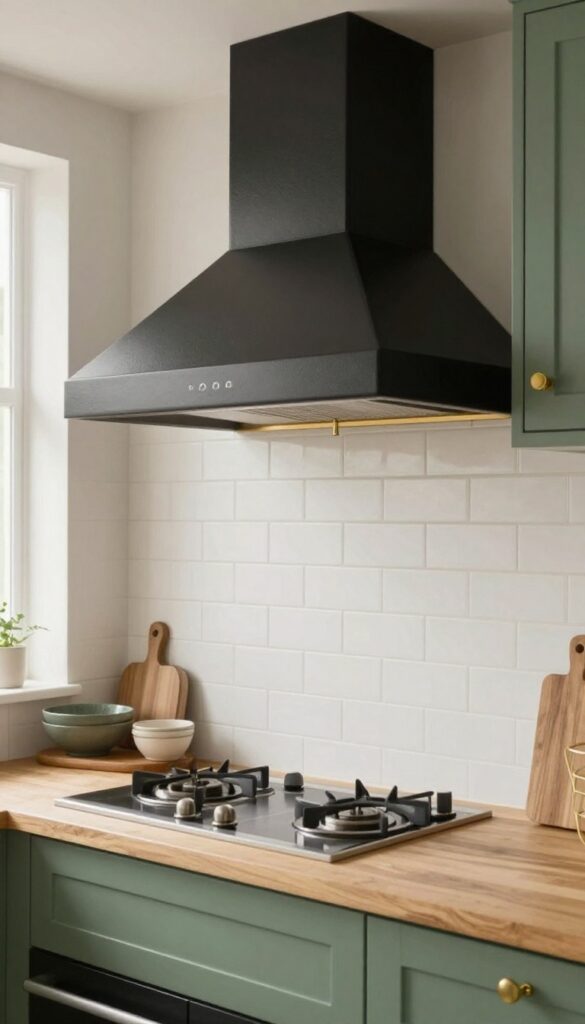
The range hood often gets treated as an afterthought—just a functional box that quietly does its job. But in a moody kitchen, it can be the piece that pulls the whole look together. By choosing a finish that stands out against your walls or cabinets, you turn a practical necessity into a striking focal point.
Think matte black against a warm white or soft green tile, or brushed brass against deep navy cabinetry. The contrast adds depth and a touch of drama, making the kitchen feel intentional and polished. It’s a small change with a big visual payoff.
A statement range hood doesn’t just look good—it also anchors the cooking zone, giving the room a clear center of gravity. When you pick a contrasting finish, you create a natural visual pause that draws the eye upward and adds architectural interest. This works especially well in open-plan kitchens where the hood is visible from the living area.
Beyond the color, think about the shape and style. A sleek, boxy hood feels modern and minimal, while a curved or angled design can soften the overall look. You can also play with materials—like a matte black hood with a subtle texture or a brass hood with a brushed finish.
The key is to choose something that complements the rest of the room without blending in completely.
Why Contrast Works In A Moody Kitchen
Moody kitchens rely on layers of dark tones, and a contrasting hood prevents the space from feeling too heavy or one-note. A lighter hood against dark cabinets can open up the area, while a dark hood against lighter walls adds a bold, grounded feel. The contrast creates a natural focal point that guides the eye and adds visual interest without overwhelming the room.
Choosing The Right Finish And Material
When selecting a contrasting finish, think about durability and maintenance. Matte black is forgiving with fingerprints and smudges, making it a practical choice for busy cooks. Brass adds warmth and develops a beautiful patina over time, but it requires a bit more care.
Stainless steel is always an option, but it can feel too shiny—so consider a brushed or satin finish to keep the moody vibe intact.
Installation Tips And Considerations
Before you commit, check the clearance and ventilation requirements for your stove type. A professional installation is often worth the cost, especially if you’re working with gas or need to reroute ductwork. Also, think about the scale—a hood that’s too small will look lost, while one that’s too large can overwhelm the space.
Measure carefully and consult the manufacturer’s guidelines to get the proportions right.
9. Choose Warm, Low-Voltage Under-Cabinet Lighting
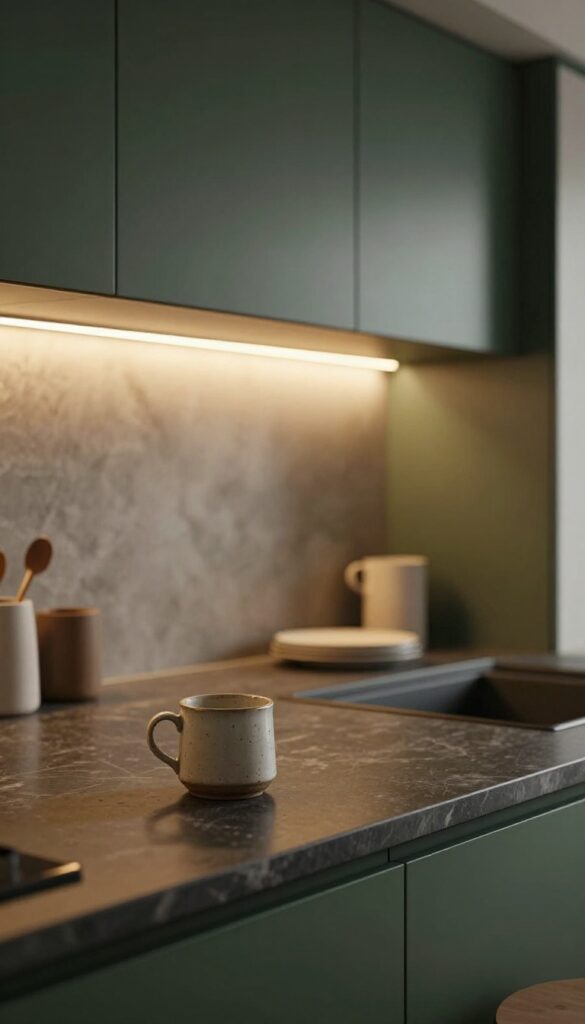
The glow under your cabinets often gets overlooked, but it’s one of the easiest ways to make a moody kitchen feel intentional. Harsh overhead lights can wash out the depth you’ve worked to create, while warm under-cabinet strips add a soft, focused layer that invites you to linger. It’s not just about visibility—it’s about setting the right mood for everything from morning coffee to late-night snacks.
Warm under-cabinet lighting does more than brighten your countertops. It adds a subtle glow that makes dark cabinetry feel richer and highlights the textures of your backsplash or countertop. Low-voltage LED strips are energy-efficient, easy to install, and come in a range of color temperatures—so you can pick a warm amber or soft white that matches your kitchen’s vibe.
The result is a finished, polished look that feels both practical and inviting.
Pick The Right Color Temperature
Not all warm lights are the same. Look for LEDs in the 2700K to 3000K range, which mimic the cozy glow of incandescent bulbs. Avoid anything above 3500K—that starts to look sterile and cool.
If you’re unsure, buy a small sample strip and test it against your cabinet color before committing to a full run.
Placement And Coverage
Mount the strips toward the front edge of the cabinet, not the back, to cast light on the countertop rather than the wall. For a seamless look, use multiple strips or a continuous run to avoid dark spots. If you have a range or sink, add dedicated task lighting to those areas for extra functionality.
Dimmers And Smart Controls
A dimmer switch or smart plug lets you adjust the brightness throughout the day. Crank it up while prepping dinner, then lower it to a soft glow for evening winding down. Many smart systems let you schedule the lights to turn on automatically at dusk, so the kitchen always feels welcoming when you walk in.
10. Install a Butcher Block Island with a Dark Base
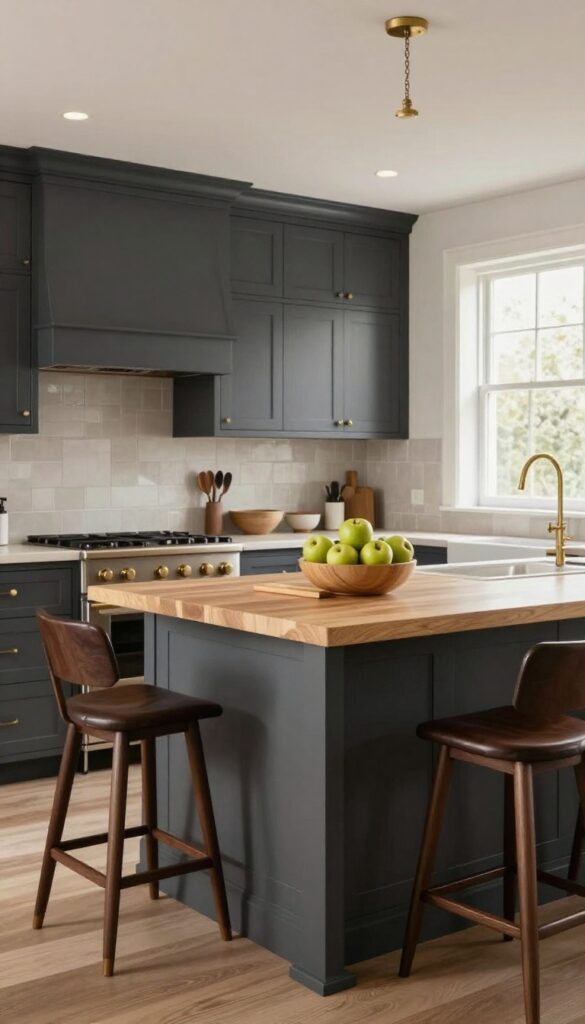
A butcher block top paired with a deep-toned island base adds warmth and a sturdy, functional workspace. The contrast between the light wood and the dark base creates a visual anchor that feels both grounded and inviting. It’s a straightforward upgrade that instantly makes the kitchen feel more finished.
Butcher block brings a natural, organic texture that softens the moody palette. The dark base—think charcoal, espresso, or black—adds depth without overwhelming the room. Together, they create a piece that’s both practical and beautiful.
Why Butcher Block Works In A Moody Kitchen
Butcher block’s warm tones balance the cooler, darker shades typical of a moody kitchen. It introduces a tactile element that feels inviting and lived-in. Plus, it’s a durable surface that can handle everything from chopping to casual dining.
Choosing The Right Dark Base Finish
A matte black or deep espresso base adds richness without reflecting too much light. Consider a two-tone look: the butcher block top in a lighter wood like maple or oak, and the base in a dark, almost charcoal tone. This contrast creates a striking focal point.
Styling Around The Island
Pair the island with bar stools in a similar dark tone or a contrasting leather. Add a simple bowl of fruit or a wooden cutting board to enhance the natural vibe. Keep the countertop clear to let the wood shine.
11. Finish with Textured Fabrics and Rugs
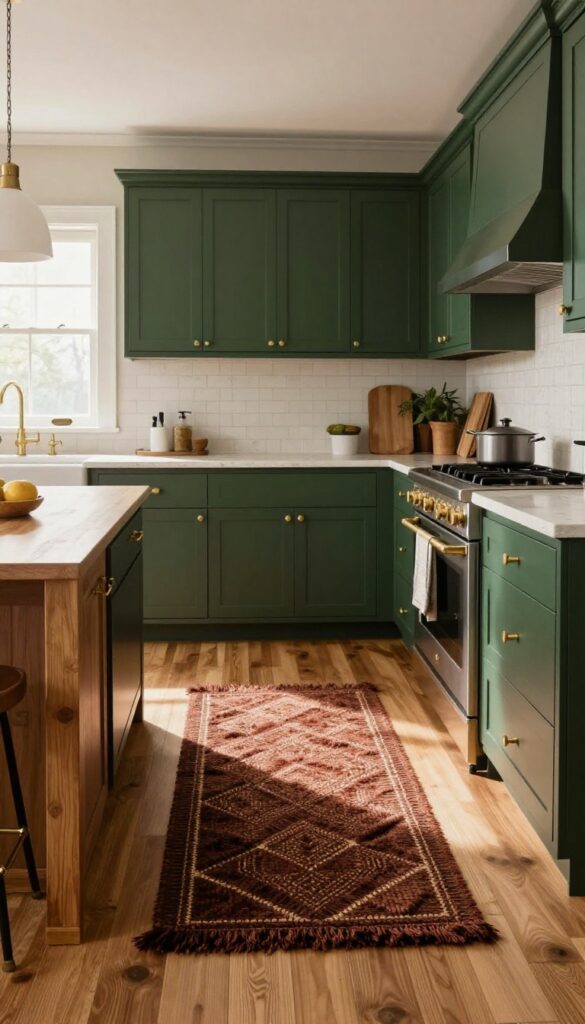
The final touch in any moody kitchen often comes from what you feel underfoot. Hard surfaces dominate most kitchens—tile, wood, stone—and while they look great, they can leave the room feeling a bit cold and echoey. Adding a plush runner or a textured wool rug softens the space and brings a layer of warmth that instantly makes the room feel more finished.
A rug does more than just warm your toes. It anchors the space, defines work zones, and adds a visual softness that balances all the hard edges. In a moody kitchen, a rug with a subtle pattern or a rich, deep tone can tie the whole palette together.
Think of it as the final accessory that makes the room feel collected and intentional.
Where To Place Rugs For Maximum Impact
The most practical spots are in front of the sink, the stove, or the island. A runner in front of the sink softens the standing area during dish duty, while a larger rug under the island can anchor the whole layout. If you have a kitchen with a separate dining nook, a rug there adds warmth and visually separates the zone.
Just make sure any rug is placed away from high-traffic paths where it could become a trip hazard.
Choosing The Right Material And Texture
Wool is a top choice because it’s durable, naturally stain-resistant, and feels soft underfoot. Flat-weave cotton or jute rugs are easier to clean but offer less cushioning. For a moody look, go for a rug with a low pile and a textured weave—like a chunky wool or a braided style.
These add depth without trapping crumbs and are easier to vacuum than high-pile shag. If you’re worried about spills, look for indoor-outdoor rugs that mimic the texture of wool but wipe clean easily.
Layering Rugs For A Cozy, Collected Look
Don’t be afraid to layer a smaller rug on top of a larger one. This adds visual interest and lets you mix patterns or textures. For example, a neutral jute rug can serve as a base, with a smaller, patterned wool runner on top.
This works especially well in front of the sink or in a breakfast nook. Layering also lets you introduce a pop of color or a bold motif without committing to a large statement piece.
FAQ
What colors work best for a warm moody kitchen?
Deep greens, navy blues, charcoal grays, and warm browns are excellent choices. These colors add depth and pair well with natural wood and brass accents.
How do I keep a moody kitchen from feeling too dark?
Balance dark tones with plenty of lighting—both natural and layered artificial. Use under-cabinet lights, pendants, and dimmers to control brightness. Also, incorporate lighter elements like white countertops or open shelving.
Can I achieve a moody look on a budget?
Absolutely. Simple swaps like painting cabinets, changing hardware, adding a rug, or installing new lighting can transform the space without a full remodel.
What materials add warmth to a kitchen?
Natural wood, brass, copper, stone, and textured fabrics like wool or linen bring warmth. These materials add tactile and visual coziness.
Is a moody kitchen suitable for small spaces?
Yes, if done carefully. Use lighter shades of dark colors, maximize natural light, and avoid heavy patterns. Mirrors and open shelving can also help create a sense of space.
Conclusion
Bringing warmth and moodiness into your kitchen is all about layering the right elements—color, texture, and light. Each idea here works on its own, but together they create a space that feels intentional and complete. Start with one or two changes that resonate with you, and build from there.
The result is a kitchen that doesn’t just look beautiful but also feels like a true gathering spot. With a little effort, you can turn your kitchen into a cozy retreat you’ll love spending time in.