15 Covered Patio Ideas With Fireplace Warmth and Style
A covered patio with a fireplace turns an ordinary outdoor space into the spot everyone wants to gather around—even when the temperature drops. The trick is choosing a design that fits how you actually live, whether that means hosting movie nights, cooking pizzas, or just curling up with a book.
Warmth is only part of the equation. The right layout, materials, and extras can make your fireplace the visual anchor of your backyard.
From rustic stone to sleek gas lines, these 15 covered patio ideas blend function with personality, so you can enjoy your outdoor retreat in every season.
1. Rustic Stone Fireplace for a Cozy Cabin Feel
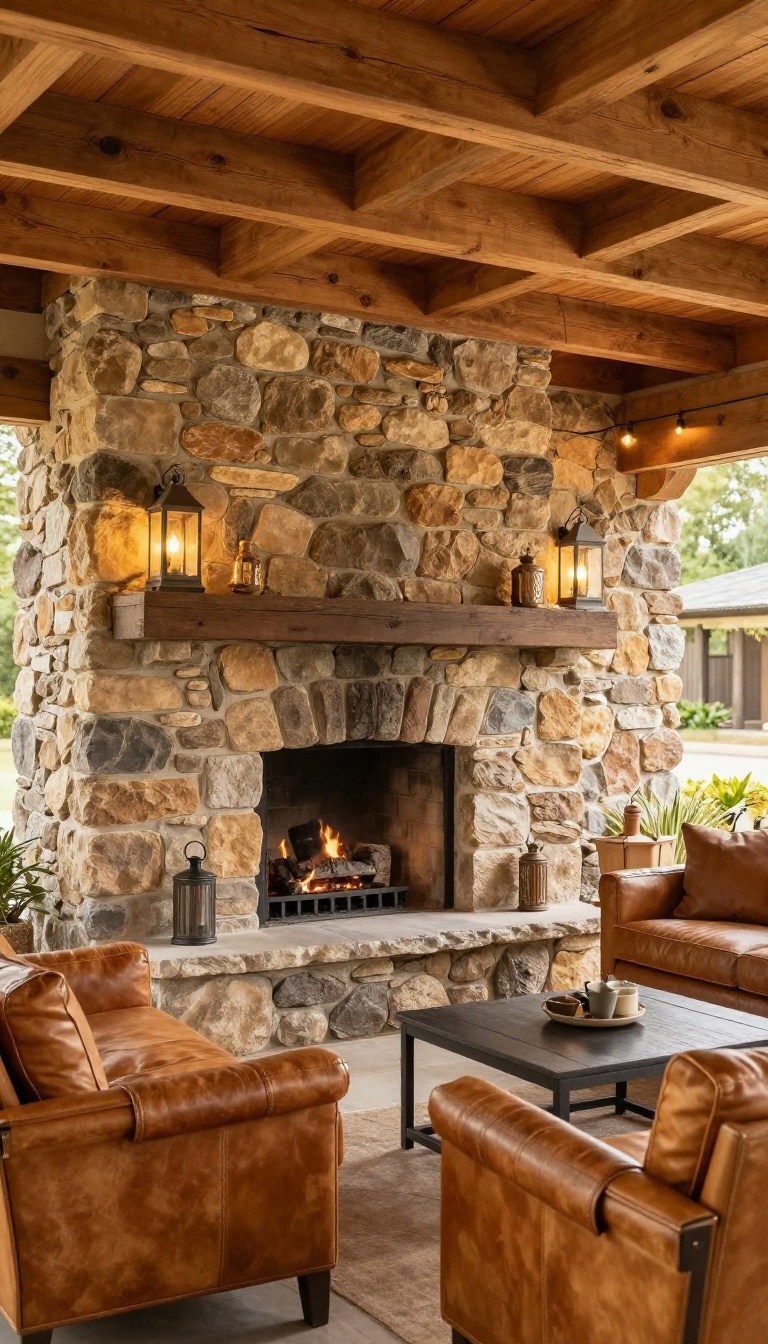
There’s something about a stone fireplace that instantly makes a patio feel like a mountain retreat. Natural stone veneer or stacked stone brings texture and warmth that other materials just can’t match. Pair it with wood beams and earthy furniture, and you’ll have a space that invites long conversations and slow evenings.
A rustic stone fireplace is more than just a heat source—it’s a design statement. The rugged look of stone works beautifully under a covered patio, creating a focal point that feels grounded and timeless. Whether you choose a full stone surround or a partial accent, the effect is cozy and inviting.
To pull off this style, focus on materials that complement the stone. Think reclaimed wood for beams or mantels, leather or canvas seating, and warm-toned lighting. The goal is to create a cohesive cabin vibe that feels natural, not forced.
Placement matters too. Position the fireplace so it’s visible from main seating areas and safe from overhead structures. With the right setup, your patio will become the go-to spot for chilly evenings, year-round.
Choosing The Right Stone
Natural stone veneer is a popular choice because it’s lighter and easier to install than full stone. Stacked stone, on the other hand, offers a more textured, organic look. Consider the color palette of your home and patio—earthy browns, grays, and warm tans blend well with most outdoor settings.
Pairing With Wood And Earthy Tones
Wood beams on the ceiling or a reclaimed wood mantel add a rustic touch that complements the stone. Use furniture in leather, canvas, or other natural fabrics, and add accents like woven rugs or ceramic planters. These elements create a cohesive, cabin-inspired atmosphere.
Placement And Safety Tips
Ensure your fireplace is installed by a professional and meets local building codes. Keep it at least a few feet away from seating and any flammable materials. For covered patios, check the ceiling height and ventilation to prevent smoke buildup.
A well-placed fireplace not only looks great but also operates safely.
2. Sleek Linear Gas Fireplace for Modern Patios
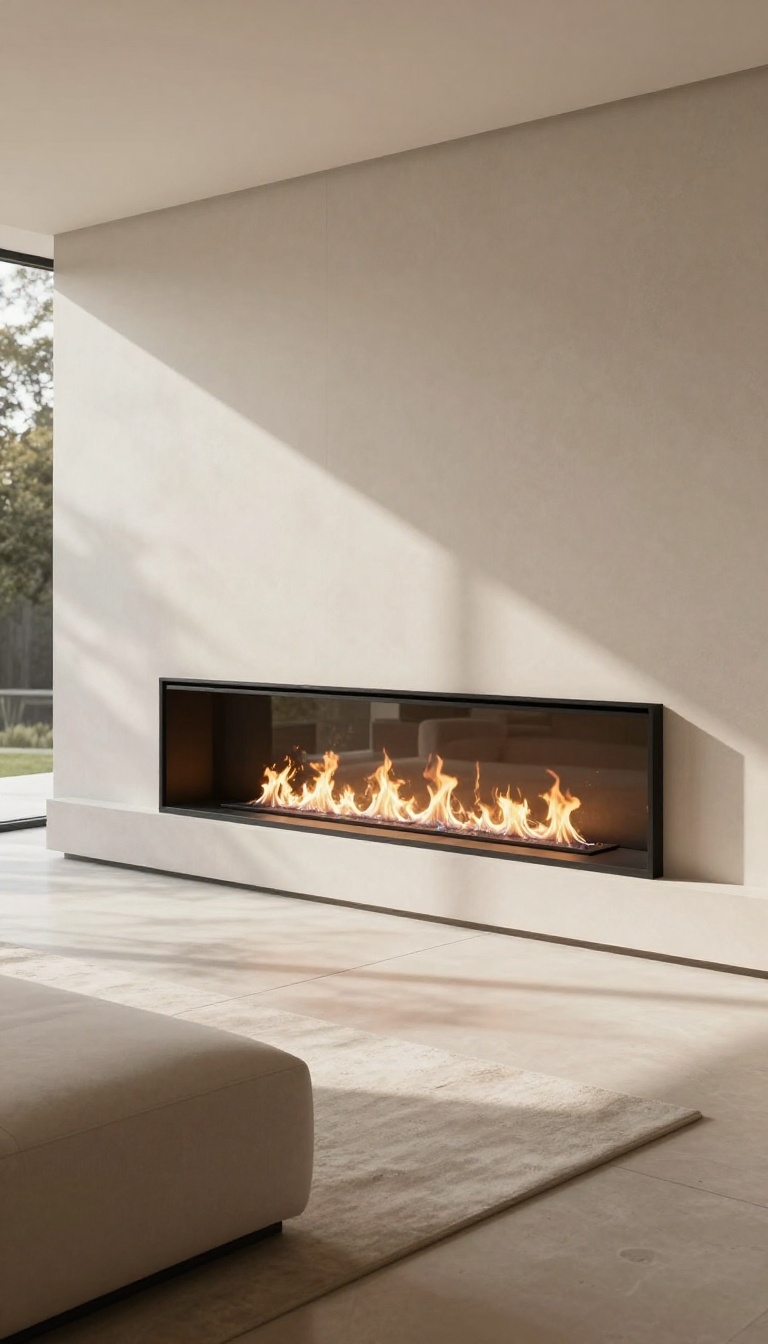
If your style leans more toward clean lines than rustic charm, a linear gas fireplace is a natural fit. Its long, low profile hugs the wall or sits as a standalone feature, bringing a sleek, architectural vibe to your covered patio. The flame dances over glass or stone media, creating a warm glow that feels both refined and inviting.
This isn't the bulky stone hearth of a mountain lodge. Instead, it's a minimalist statement piece that anchors your outdoor living area with quiet confidence. The slim shape works beautifully under a mounted TV or as a subtle room divider, and because it runs on gas, you get instant heat and easy control without the hassle of logs or cleanup.
Placement And Proportions
Think about sightlines first. A linear fireplace looks best when it's the first thing you see as you step onto the patio, or as a backdrop to your main seating group. Keep the proportions balanced—a 60-inch unit works well for a large seating area, while a 40-inch version suits a cozy corner.
Position it at seated eye level so the flames are fully visible.
Material And Finish Pairings
The surround is where you make it yours. Polished porcelain tile or large-format concrete slabs keep things ultra-modern, while a matte black steel frame adds an industrial edge. For a softer look, pair the fireplace with light wood paneling or a warm-toned stucco wall.
The key is to let the fireplace stand out without clashing with your patio's existing palette.
Media Choices And Flame Effects
Inside the firebox, the media you choose changes the whole feel. Clear glass crystals reflect the flame and create a bright, lively effect. Dark river stones or black glass give a more dramatic, contemporary look.
Some models let you adjust the flame height and even add a glowing ember bed, so you can dial in the perfect ambiance for a quiet evening or a lively get-together.
3. Corner Fireplace to Maximize Seating Space
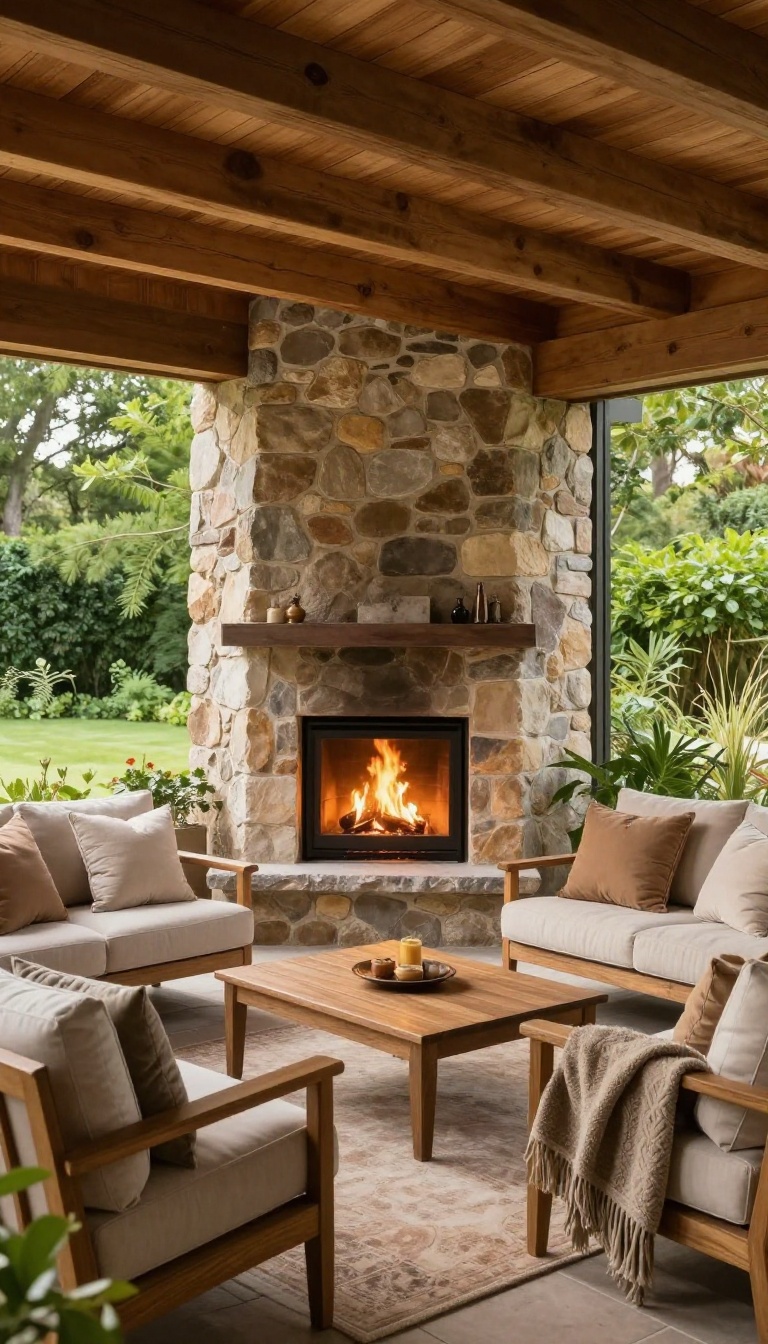
Placing the fireplace in a corner is a smart move when you want to keep the center of your patio open. It draws the eye without hogging the floor plan, leaving plenty of room for seating and movement. This layout works especially well for smaller covered patios where every square foot matters.
A corner fireplace can turn an awkward, underused nook into the heart of your outdoor living area. By positioning the fire source against two walls, you free up the middle for furniture arrangements that encourage conversation. It also creates a natural focal point that doesn't compete with other features like an outdoor kitchen or dining set.
Choosing The Right Corner Spot
Look at how you use your patio and where the main seating area will be. The fireplace should be visible from the primary gathering spot but not block pathways. If you have a roof with beams, check that the chimney or venting can run up cleanly without interference.
Furniture Layout That Works
With the fireplace tucked away, you can arrange sofas and chairs in an L-shape or U-shape around it. Leave at least three feet of walking space behind seating to keep traffic flowing. A couple of ottomans or poufs can add flexible extra seats without crowding the space.
Storage And Shelving On The Sides
Corner fireplaces often have empty wall space on either side. Use that for built-in wood storage, a small shelf for marshmallow skewers and blankets, or even a compact bar cart. This makes the area more functional while keeping the look tidy.
4. Double-Sided Fireplace for Indoor-Outdoor Flow
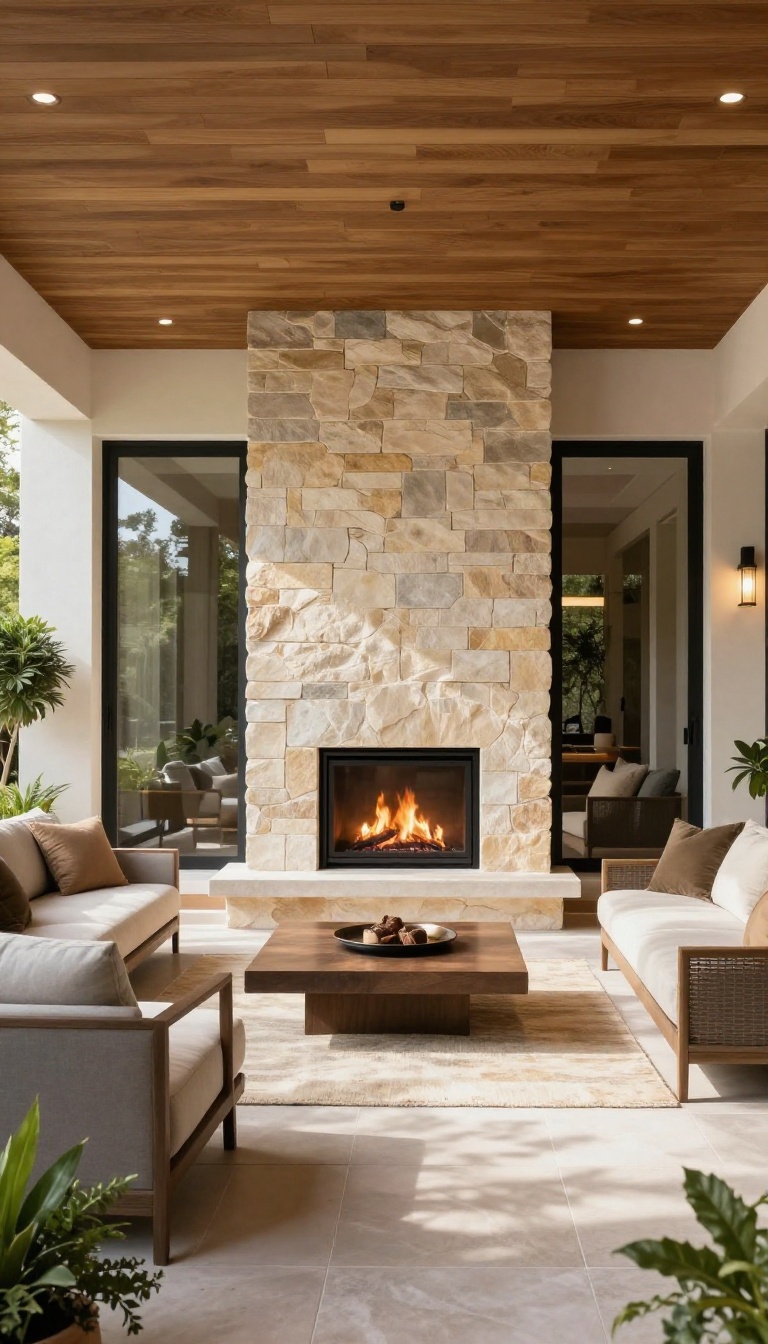
A double-sided fireplace is a clever way to blur the line between your living room and your covered patio. Also known as a see-through or two-sided fireplace, it sits on a shared wall, letting you enjoy the flames from both sides. This setup doesn't just add warmth—it creates a visual connection that makes both spaces feel larger and more inviting.
If you love entertaining, this design lets guests mingle between indoors and out without missing the fire.
Placing a double-sided fireplace on an interior wall that opens to your patio is a structural decision that pays off in both function and style. It gives you two gathering spots with one heat source, and it can be fueled by gas, wood, or even ethanol. The see-through design also brings natural light into your home while offering a cozy backdrop for outdoor seating.
Design Ideas For The Shared Wall
For a seamless look, frame the fireplace with materials that complement both spaces—think stone veneer on the patio side and a sleek tile or brick on the interior. You can also add a hearth that extends through the wall, creating a continuous bench or shelf. If privacy isn't a concern, consider a fully open wall with a large glass panel on each side, so the fire becomes the centerpiece from every angle.
Fuel And Installation Considerations
Gas models are the easiest to operate and can be turned on with a remote, making them a popular choice for this setup. Wood-burning versions require a proper chimney and more clearance, but they offer a traditional crackle and aroma. No matter the fuel, you'll need to plan for ventilation and local building codes.
Work with a professional to ensure the fireplace is safely installed and sealed against weather.
Making The Most Of Both Sides
Arrange furniture so each side has its own focal point. Inside, place a sofa facing the fire; outside, set up a low conversation pit with chairs and a coffee table. Add sliding glass doors or large bi-fold doors that open fully to merge the spaces when the weather is nice.
This flexibility lets you host a crowd without crowding—guests can drift in and out while staying connected to the action.
5. Fireplace With Built-In Seating and Storage
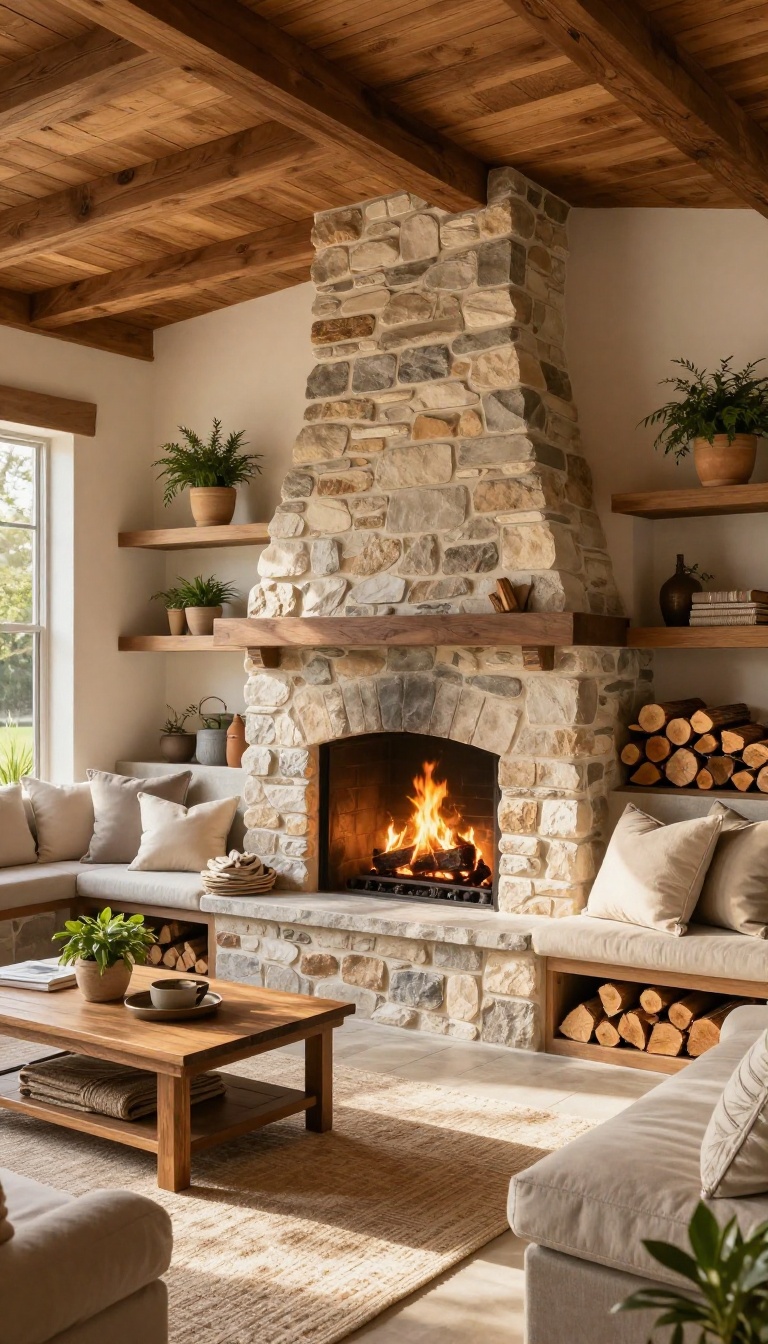
A fireplace that pulls double duty is a smart move for any covered patio. When you build seating and storage right into the structure, you save space and keep everything you need within arm's reach. It’s the kind of design that makes your outdoor area feel more like a true living room.
Built-in benches hug the warmth of the fire, giving guests a cozy spot without dragging extra chairs around. Cubbies or drawers tucked into the sides can hold blankets, pillows, fire tools, or even board games for those long evenings outside. Log storage integrated below or beside the firebox keeps fuel dry and handy, so you won't have to trek back and forth.
This approach also streamlines the look—no random furniture or clutter breaking up the visual flow of your patio.
Designing For Comfort And Flow
When planning built-in seating, think about how people naturally gather. A U-shaped or L-shaped bench around the fireplace creates an intimate conversation area, while a straight bench along one side works well for smaller spaces. Add cushions and throw pillows in weather-resistant fabrics to keep things comfortable.
Make sure the bench depth is generous—around 18 to 24 inches—so guests can sit back and relax. Leave enough walkway space so the area doesn’t feel cramped.
Smart Storage Solutions
Storage can be as simple or as elaborate as you like. For firewood, a recessed niche below the firebox keeps logs stacked neatly and within easy reach. If you prefer a cleaner look, add cabinet doors that hide the wood until you need it.
On the sides, open cubbies are perfect for storing folded blankets or extra pillows. You could also include a small drawer for matches, lighters, or fire starters. Think about what you’ll actually use—no point in building storage that just collects dust.
Material And Style Choices
The materials you choose affect both durability and aesthetics. Natural stone or brick gives a rustic, timeless feel, while sleek concrete or stucco matches a modern design. If you go with a wood-burning fireplace, make sure the surrounding surfaces are heat-resistant and properly sealed.
For a gas unit, you have more flexibility with built-ins since there’s less heat and no ash. Coordinate the bench and storage finishes with your patio’s overall palette—stained wood, tile, or even metal accents can tie everything together.
6. Outdoor TV Above the Fireplace for Entertainment
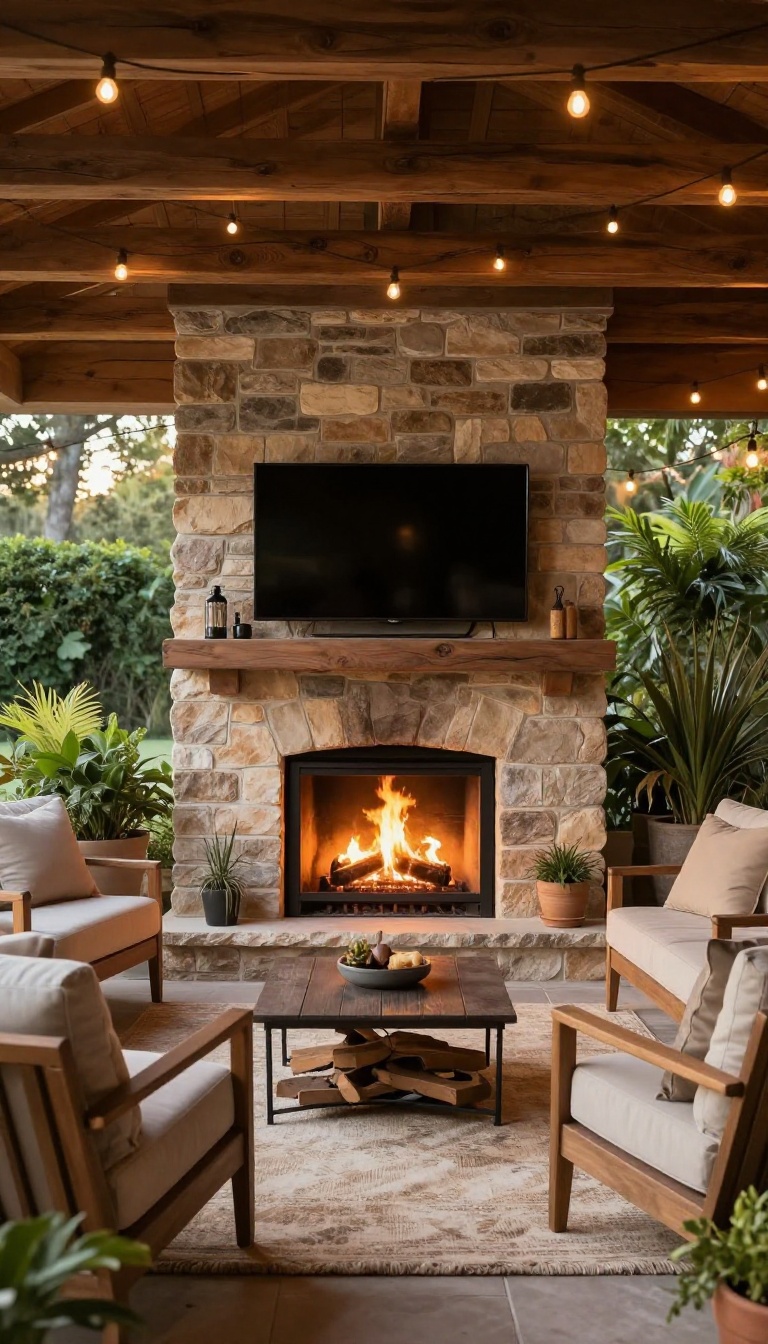
When a fireplace anchors your covered patio, it naturally becomes the focal point. Why not make it the centerpiece of your outdoor entertainment setup? Mounting a weatherproof TV above the mantel turns your patio into an open-air media lounge, perfect for game days, movie nights, or catching up on your favorite shows under the stars.
It’s a setup that combines the cozy warmth of a fire with the convenience of indoor entertainment, all without sacrificing style.
The key to pulling off this idea is choosing the right equipment and placement. You’ll need a TV specifically rated for outdoor use, or at least one with a high IP rating to withstand moisture and temperature swings. Position it so the sightlines work from your seating area, and make sure the fireplace heat doesn’t blow directly on the screen—this can cause damage over time.
With a little planning, you’ll have a space that’s both inviting and practical.
Choosing The Right Tv And Mount
Start with a TV designed for the outdoors, like those with an IP56 rating or higher. These are built to resist rain, dust, and extreme temperatures. If you’re on a budget, a standard TV inside a weatherproof enclosure can work, but it’s not as seamless.
For the mount, go with a full-motion arm so you can angle the screen toward different seating areas. Just make sure the mount is rated for the TV’s weight and can handle wind loads.
Protecting The Screen From Heat And Glare
Heat from the fireplace can be a real issue. Keep the TV at least 12 inches above the mantel and consider a mantel that extends a few inches to deflect rising heat. Also, think about glare: a matte screen or an anti-glare coating helps, but positioning the TV under a covered roof or adding a pergola with louvers can reduce direct sunlight.
You want the picture to be clear, not washed out.
Setting Up The Sound And Seating
Outdoor sound can get lost, so add a soundbar or wireless speakers that are weatherproof. Place them at ear level for the best audio. For seating, arrange sofas and chairs in a semicircle facing both the fire and the screen.
That way, you can watch a game or just enjoy the flames. Don’t forget side tables for drinks and snacks—it’s all about comfort.
7. Fireplace With a Mantel for Decor and Personality
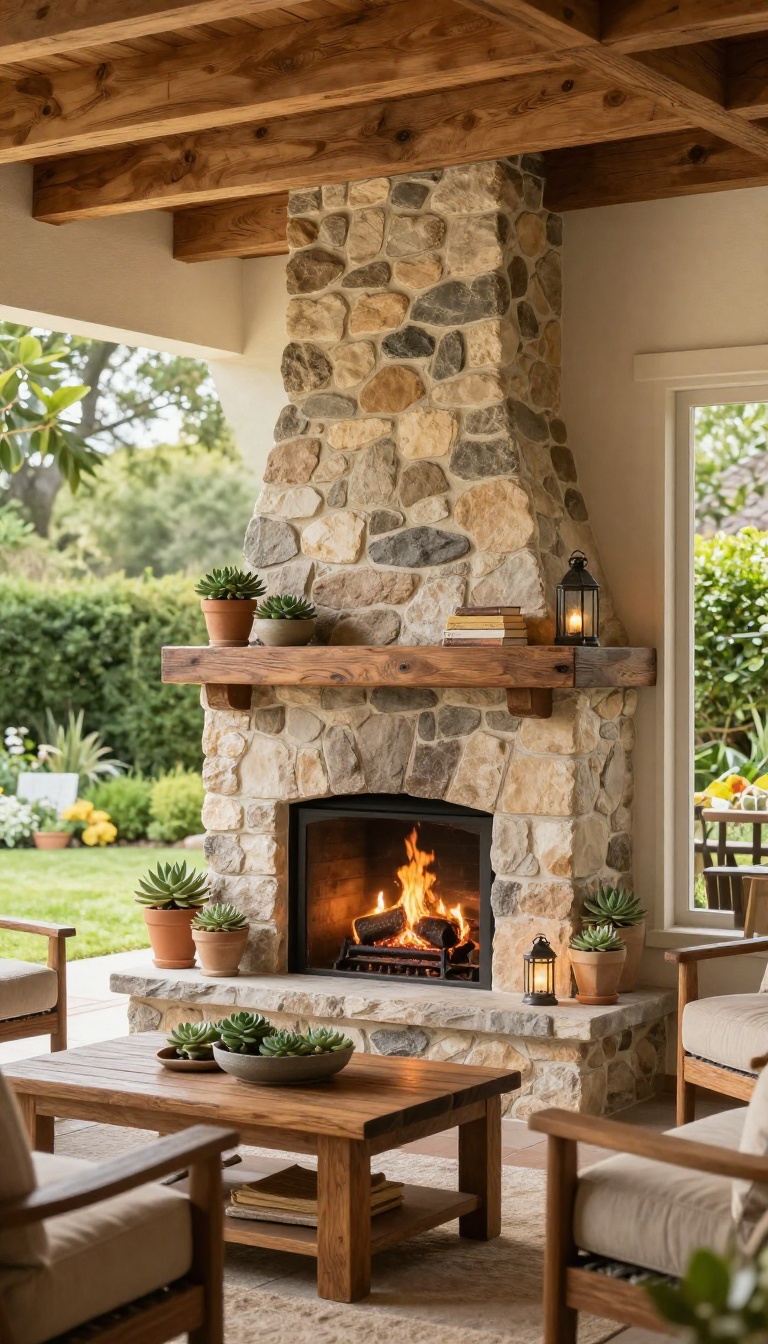
A fireplace mantel isn't just for indoor living rooms—it can work wonders on a covered patio too. Adding a mantel gives your outdoor fireplace a finished, intentional look while creating a natural shelf for displaying things that reflect your style. Whether you prefer a rustic wood beam or a sleek stone slab, a mantel turns a plain fire feature into a personal focal point.
The beauty of a mantel is that it adds both function and charm. You get a spot to set drinks, books, or decor, and it visually anchors the fireplace, making it feel more like a permanent part of your home. Plus, it gives you an easy way to change the look of your patio with the seasons or holidays.
Choosing The Right Mantel Material
Wood mantels bring warmth and a rustic feel, especially if you use reclaimed barn wood or a thick cedar beam. Stone or concrete mantels offer a more modern or traditional look and hold up well against the elements. Consider your patio's overall style and how much maintenance you're willing to do—wood may need sealing, while stone is virtually worry-free.
Decorating Ideas For Your Outdoor Mantel
Think of your mantel as a mini stage for your personality. Display potted succulents or trailing ivy for a fresh look, or lean a piece of weather-resistant art against the back. Seasonal decor like lanterns in fall, fairy lights in winter, or a simple vase of flowers in spring keeps things interesting without taking up floor space.
Mantel Safety And Practicality
Make sure your mantel is properly installed and made of non-combustible material if it's close to the firebox. Check local building codes for clearance requirements. Also, keep decor items a safe distance from the flame, and choose pieces that can handle heat and outdoor conditions without fading or warping.
8. Fireplace and Pizza Oven Combo for Alfresco Dining
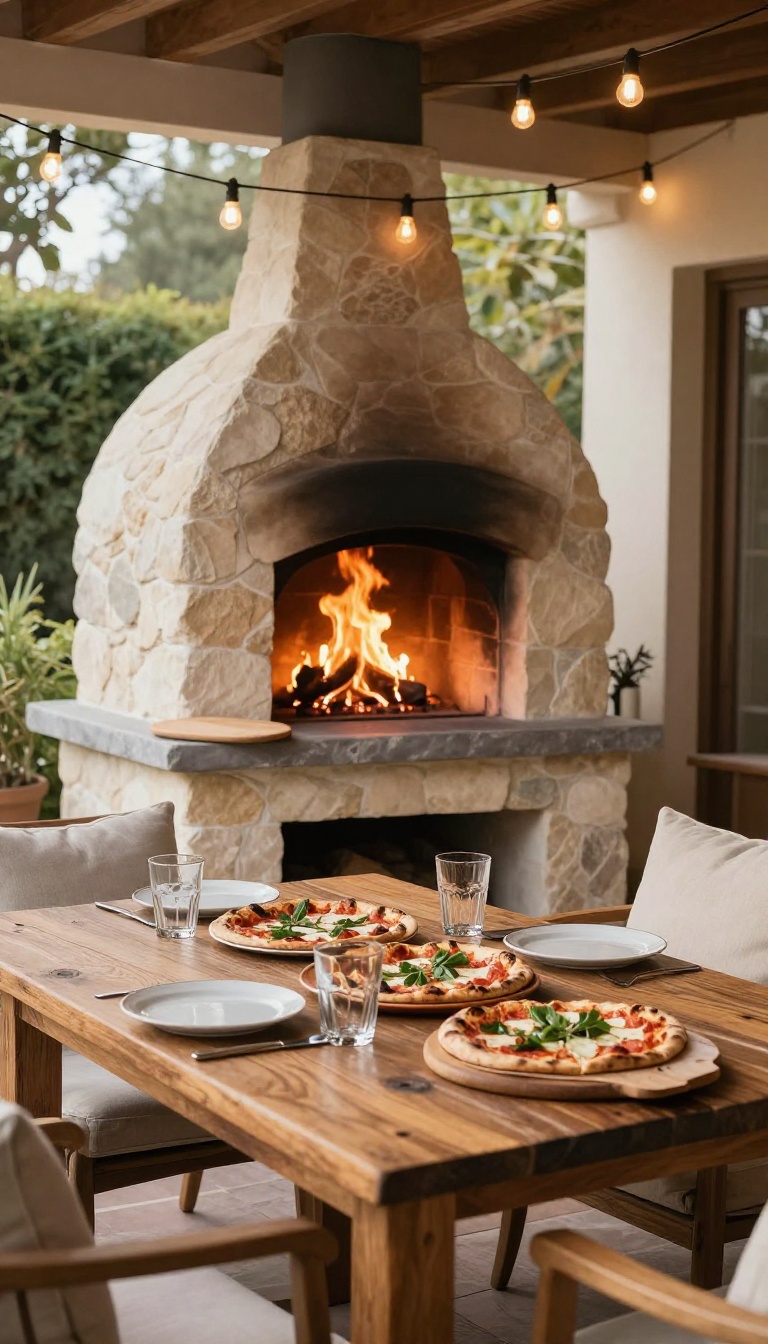
If your covered patio is all about hosting, a fireplace and pizza oven combo can turn it into the ultimate gathering spot. You get cozy warmth for chilly evenings and a functional cooking station that makes meal prep part of the fun. It’s a practical upgrade that adds serious wow factor to your outdoor space.
Pairing a fireplace with a built-in pizza oven is a smart way to maximize both comfort and function. The fireplace keeps guests warm while the oven serves up fresh, hot pizzas—no more running back and forth to the kitchen. This setup works well for families who love entertaining or anyone who enjoys outdoor cooking.
Design Ideas For A Combined Unit
You can build the pizza oven right into the same structure as the fireplace, using matching stone or brick for a seamless look. Place the oven at a comfortable height so you can slide pizzas in without bending, and add a wood storage nook below. If you prefer gas, choose a combo unit with a gas fireplace and a gas-fired pizza oven for easy operation.
Cooking And Warmth Benefits
The real beauty of this combo is that it serves two purposes at once. On a cool evening, guests can stand near the fire while you pull a bubbling margherita pizza out of the oven. The retained heat from the oven also adds extra warmth to the patio, so you can extend your outdoor season well into fall.
Layout And Safety Considerations
Think about traffic flow when placing the unit—you want easy access to the oven without crowding the seating area. Keep a clear zone in front of the fireplace for safety, and make sure the chimney and venting meet local codes. If you’re unsure about installation, consult a professional to handle gas lines or structural support.
9. Fireplace With a Water Feature for a Spa-Like Vibe
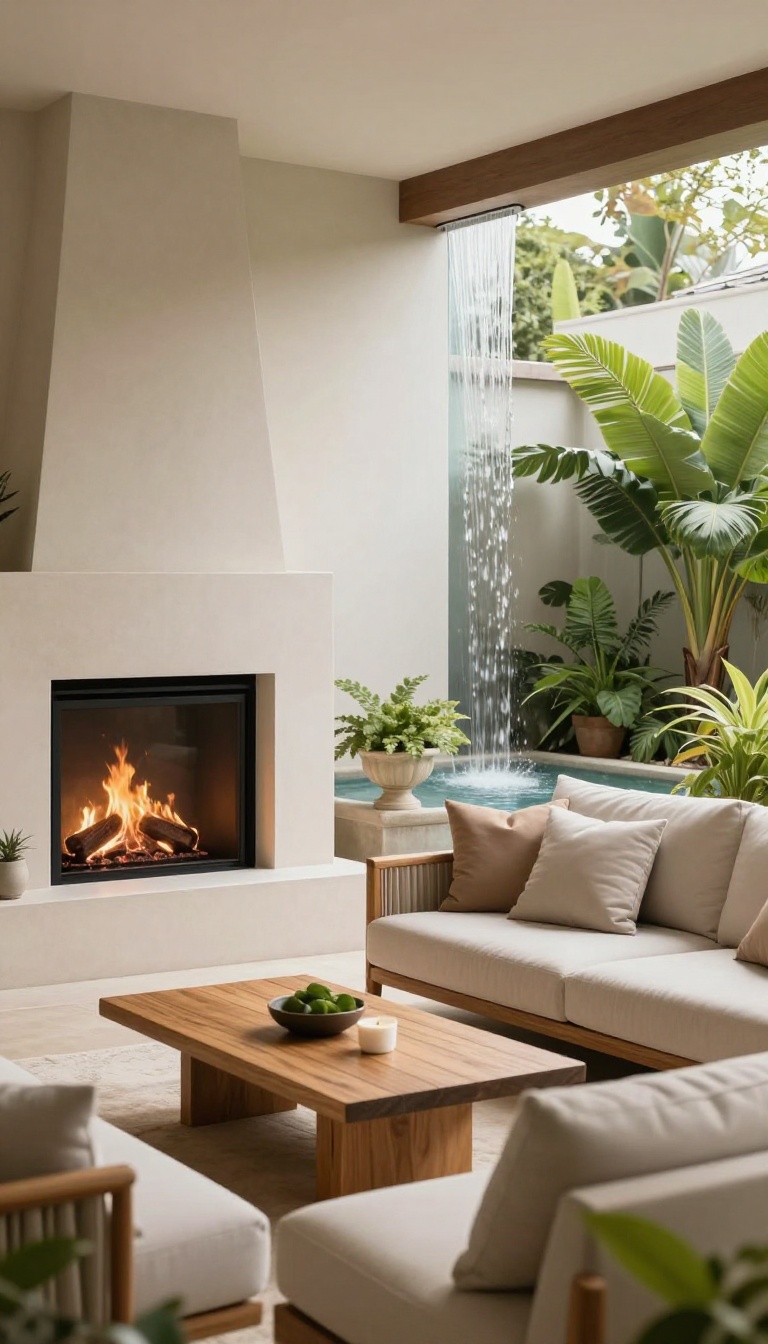
There’s something instantly calming about the sound of trickling water, and when you pair it with the crackle of a fire, your covered patio starts to feel like a private retreat. Adding a small fountain or a sleek water wall beside your fireplace introduces a sensory balance that’s both luxurious and relaxing. It’s a design choice that turns an ordinary outdoor space into a place where you can truly unwind after a long day.
Combining fire and water might sound like a design contradiction, but when done right, it creates a stunning focal point that feels both grounded and elegant. The key is to choose a water feature that complements your fireplace’s style without overwhelming it. A modest bubbling urn or a slim sheet of water cascading over glass can add just enough movement and sound to elevate the atmosphere without turning your patio into a splash zone.
Choosing The Right Water Feature
Think about scale and placement. A small tabletop fountain works well next to a seating area, while a vertical water wall can serve as a dramatic backdrop behind your fireplace. For a more natural look, consider a rock waterfall that blends into a stone fireplace surround.
Make sure the water feature is positioned so it doesn’t interfere with the fire’s airflow or create a slipping hazard on the patio floor.
Balancing Sound And Warmth
The sound of water should be subtle—more like a gentle babbling brook than a roaring stream. Adjust the pump’s flow rate to find a level that masks street noise but still allows conversation to flow easily. The warmth from the fire will keep you cozy, while the water adds a refreshing coolness to the air, making the space comfortable even on warmer evenings.
Maintenance And Practical Tips
Water features do require some upkeep, but it’s manageable. Use distilled water to prevent mineral buildup, and clean the pump and basin regularly. In colder climates, you’ll need to drain and store portable fountains or winterize a permanent water wall.
Choose a model with a hidden reservoir to keep the design clean and minimize algae growth.
10. Fireplace With a Chimney That Extends Above the Roof
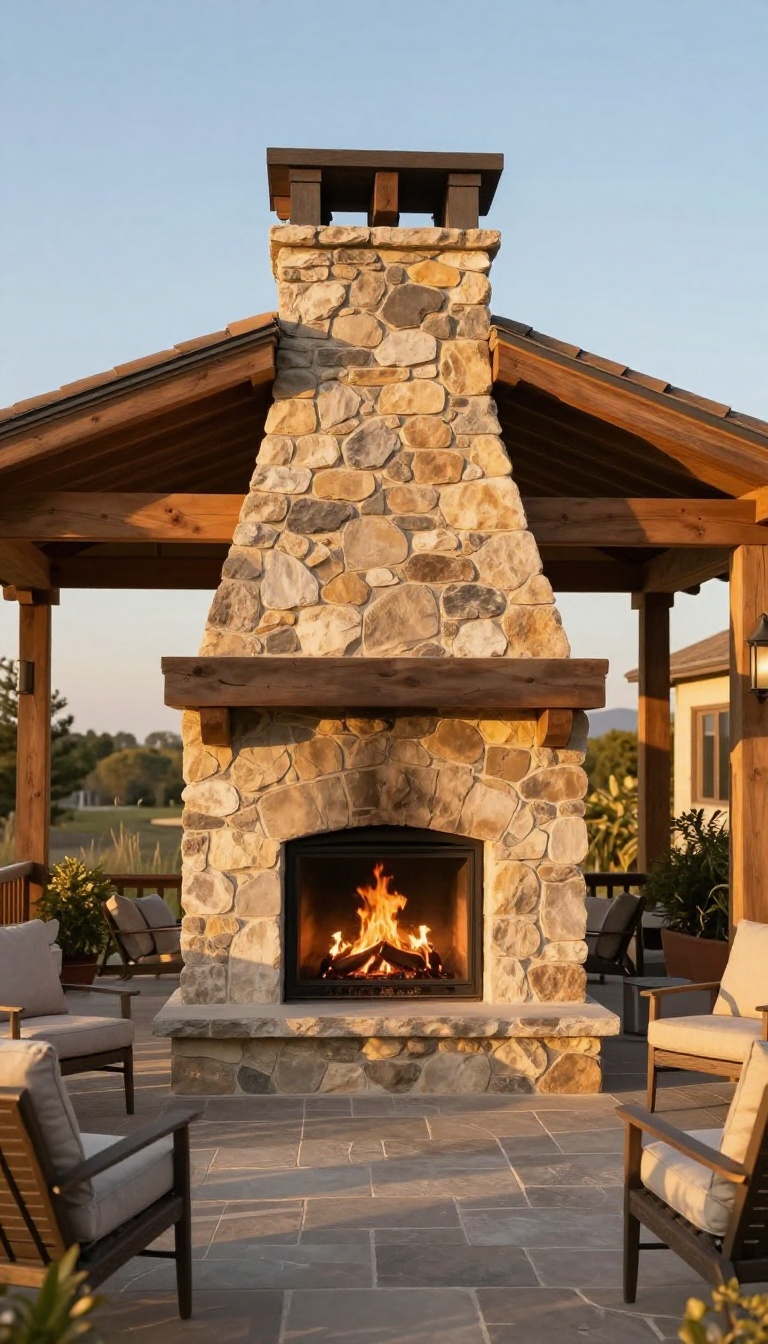
Most covered patios hide the chimney, but letting it rise above the roofline changes the entire look. It’s a bold move that adds height, drama, and a sense of permanence to your outdoor space. Beyond aesthetics, this design solves practical issues like smoke flow and wind protection, making it a favorite for homeowners who want both style and function.
When your chimney extends above the patio cover, it becomes a striking vertical element that draws the eye upward. This works especially well with flat or low-pitched roofs, where a tall chimney adds contrast and architectural interest. You can finish it with stone, brick, or stucco to match your home’s exterior, or choose a contrasting material to make it stand out.
The extra height also helps with smoke dispersion, keeping your patio comfortable even when the fire is roaring.
Why Go Above The Roof?
A chimney that stops at the roofline can cause smoke to linger under the cover, especially on windy days. Extending it higher creates a stronger draft, pulling smoke up and away more effectively. It also reduces the risk of downdrafts, so you won’t get gusts of smoke blowing back into your seating area.
Plus, the visual impact is undeniable—your fireplace becomes a landmark in your backyard.
Design Options To Consider
You can keep it simple with a straight, boxy chimney or add a decorative cap or spark arrestor. For a more rustic feel, use natural stone that matches your patio flooring. If your home is modern, a sleek metal or stucco finish with clean lines works better.
Don’t forget to check local building codes—some areas have minimum height requirements for chimneys near roofs.
Installation And Safety Tips
This is not a DIY job. Hire a professional to ensure the chimney is properly supported and sealed where it passes through the roof. Use fireproof materials and maintain proper clearance from combustible surfaces.
Regular cleaning is also important, as a taller chimney can collect more creosote. A chimney cap with a mesh screen keeps out leaves, birds, and rain while still letting smoke escape.
11. Fireplace With a Stone Hearth and Raised Hearth Seating
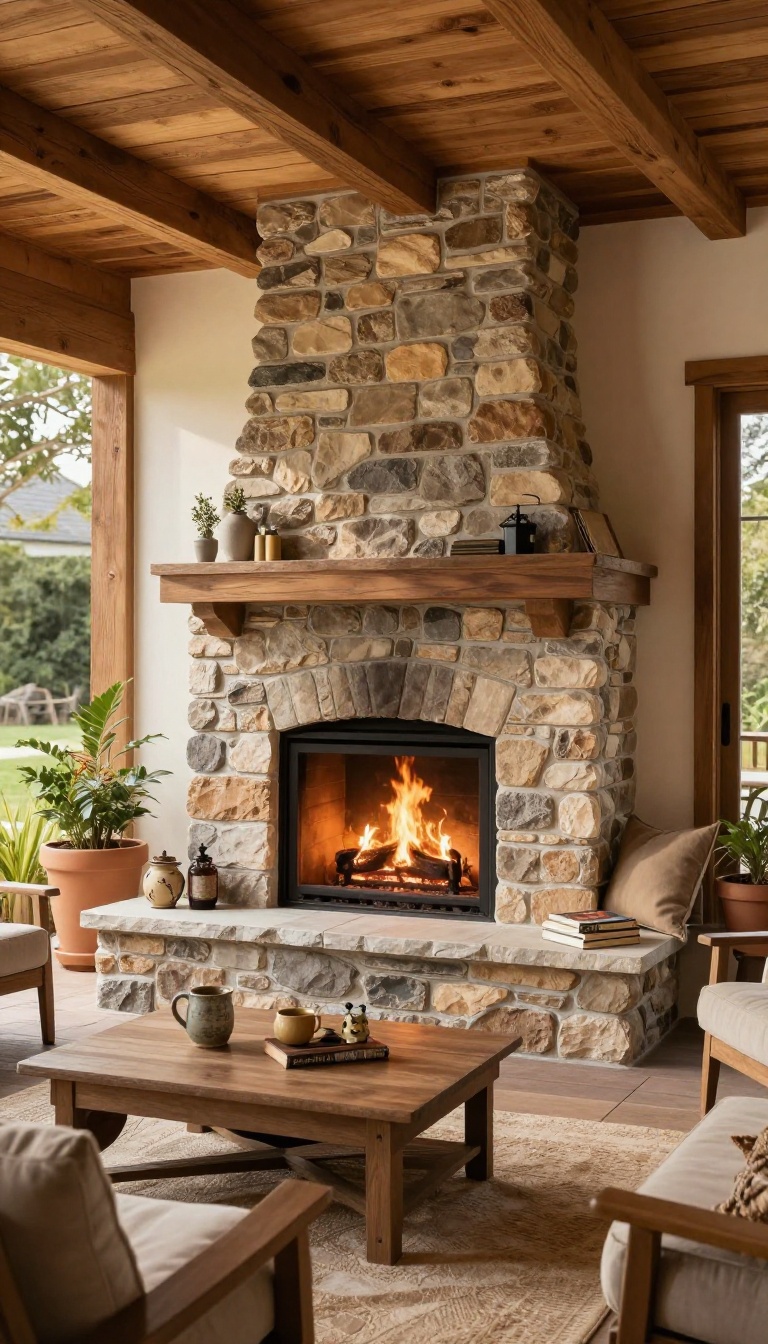
A fireplace that stretches into a low, wide hearth does more than throw heat—it becomes a natural gathering spot. Raising the hearth a few inches off the floor adds visual weight and gives you a built-in place to perch or set down a mug. This design works especially well on covered patios where you want the fire to feel grounded, not floating.
The stone extension softens the transition between the firebox and the surrounding floor, making the whole setup look intentional and cozy.
The key is to treat the hearth as a functional feature, not just a decorative base. Extend it outward at least 18 inches so it can actually hold drinks, books, or a plate of snacks. If you raise it to seat height—around 18 to 20 inches—you create casual seating that faces the fire naturally.
Add a few weather-resistant cushions and you’ve got an instant conversation nook. For a clean look, use the same stone or concrete as the fireplace surround. That keeps the eye moving without visual clutter.
If you want a bit of contrast, choose a lighter or darker shade for the hearth top, which can also make the seating area feel more defined.
Designing The Right Height And Depth
Seat-height hearths usually land between 18 and 20 inches, which works for most adults. If you plan to use it mainly as a drink ledge, keep it around 12 to 14 inches high so it feels more like a table than a bench. Depth matters too—too shallow and it’s awkward to sit on; too deep and it eats up floor space.
Aim for at least 18 inches of usable depth, and test the proportions before you commit.
Choosing Stone That Complements Your Patio
Natural stone like flagstone or bluestone brings an organic, timeless feel, while manufactured stone veneer is lighter and easier to install. Match the color palette of your patio floor and any nearby walls. If your covered patio has a wood ceiling, a gray or brown stone hearth can tie the whole space together.
Avoid overly shiny surfaces—they can feel slippery and less inviting.
Adding Comfort Without Cluttering The Look
Cushions are a must if you plan to sit on the hearth. Look for outdoor-grade foam with water-resistant covers that you can remove for cleaning. Keep them in a neutral tone or a subtle pattern that complements the stone.
For cooler evenings, add a few folded throws on a nearby shelf or basket so guests can grab one without moving too far from the fire.
12. Fireplace With a Built-In Bar or Mini Fridge
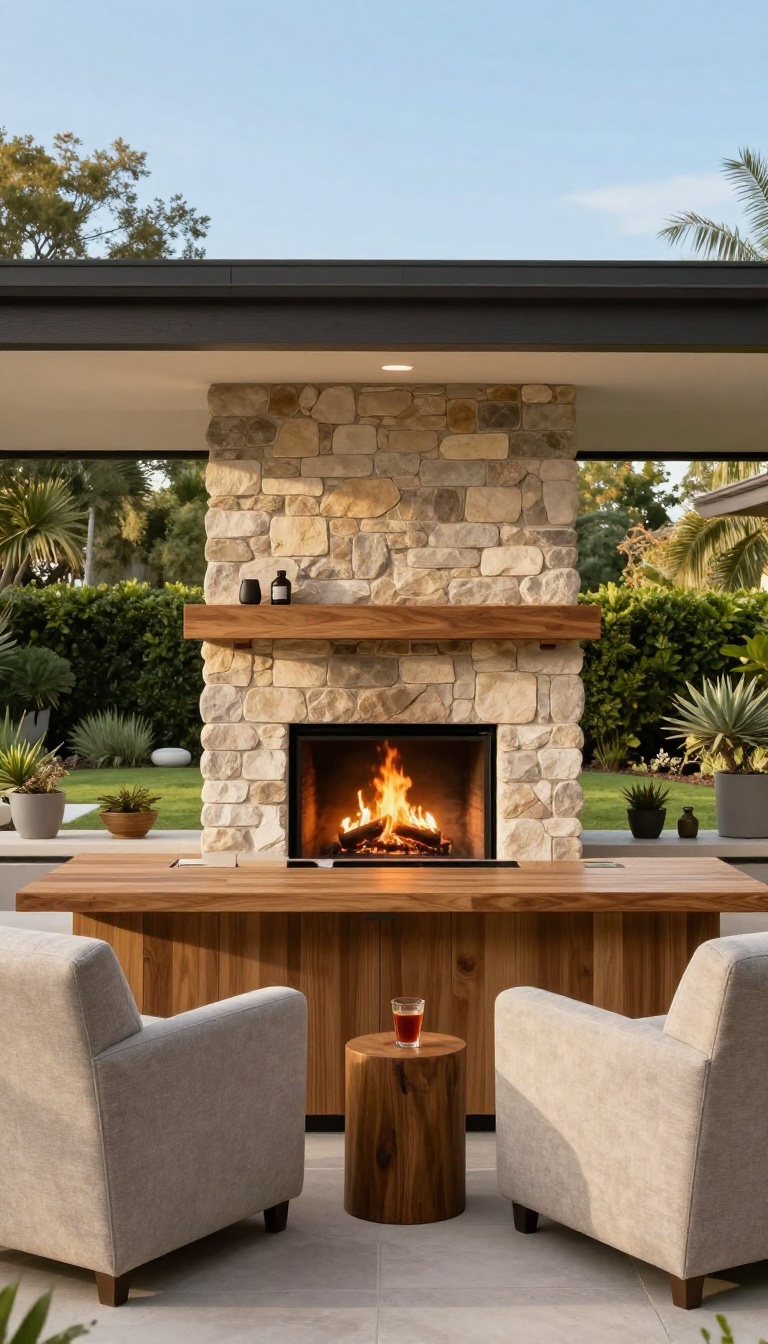
Imagine settling into your favorite chair by the fire, then realizing you need another drink. Instead of heading back inside, you simply reach over to a built-in bar or mini fridge tucked right into the fireplace surround. This setup keeps everything you need within arm's reach, so the conversation never has to pause.
Combining a fireplace with a bar or fridge is a clever way to make your covered patio more self-sufficient. It saves trips inside and keeps drinks cold while the fire keeps you warm. You can design it as a simple countertop with a fridge underneath, or go all out with a full wet bar, sink, and storage.
The key is to plan the layout so the bar area doesn't compete with the fireplace for attention—it should feel like a natural extension of the hearth.
Designing The Layout
Think about how you'll use the space. If you entertain often, a longer counter on one side of the fireplace gives you room to mix drinks or set out snacks. If it's just for family, a compact fridge and a small prep area might be enough.
Place the bar or fridge on the side that's most convenient to your seating area, and make sure there's enough clearance for opening doors and drawers.
Choosing The Right Fridge
Outdoor-rated mini fridges are built to handle temperature changes and moisture, so they last longer than indoor models. Look for one with a solid door that matches your cabinetry or a glass door if you want to show off your drink selection. Consider the capacity too—a 24-inch fridge fits nicely under a counter, while a smaller 18-inch model can slide into a tighter spot.
Material And Style Tips
Use the same stone, brick, or tile as the fireplace surround to tie the bar area into the overall design. A countertop of granite, quartz, or weather-resistant concrete gives you a durable surface for drinks and prep. Add a few open shelves above for glasses and a bottle opener, and you'll have a stylish, functional setup that feels like part of the original architecture.
13. Fireplace With a Wood Beam Mantel and Industrial Accents
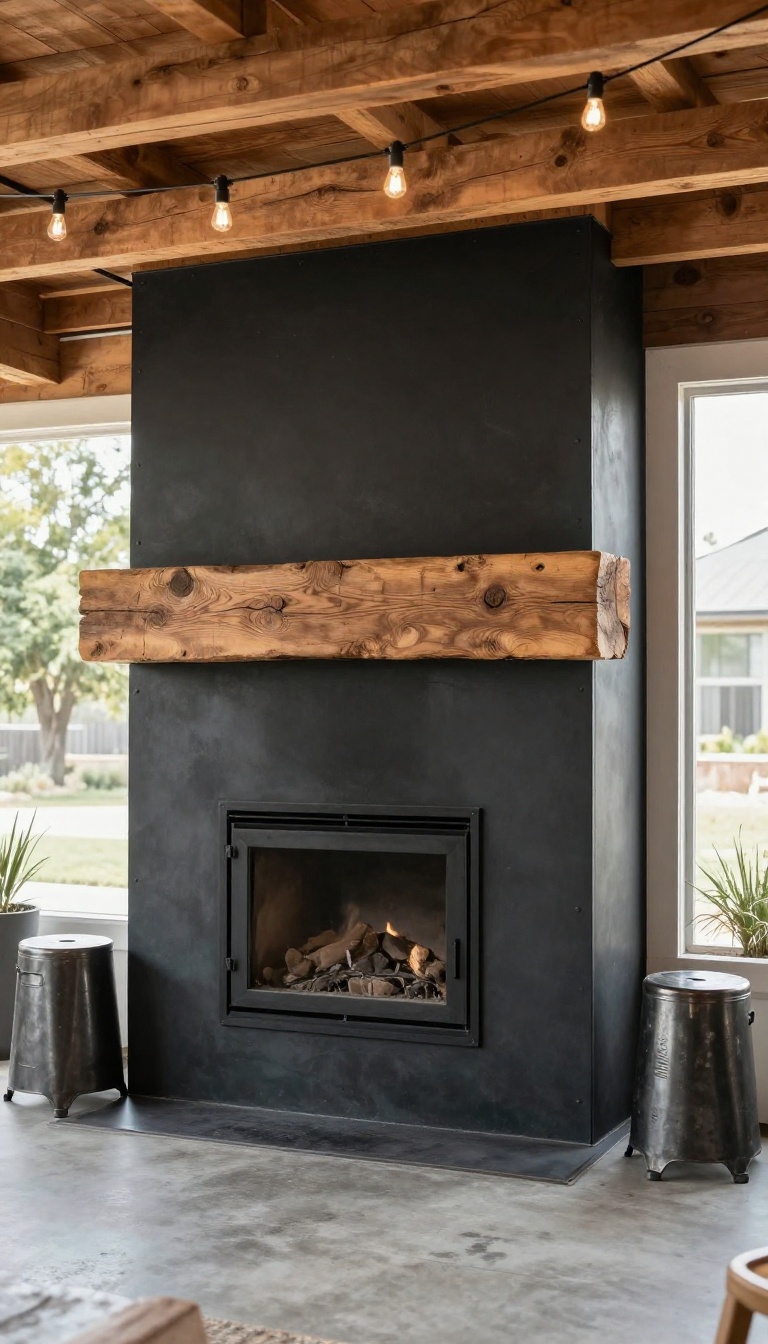
A fireplace doesn’t have to be all stone or brick to make a statement. Pairing a chunky reclaimed wood mantel with metal and concrete details gives your covered patio a rugged, workshop-inspired feel that still knows how to welcome guests. It’s a look that celebrates raw materials and honest craftsmanship, and it works especially well under a roof where the wood stays dry and the lines stay clean.
The combination of warm wood and cool metal creates a balanced focal point that feels both grounded and edgy. Reclaimed wood brings history and texture, while steel or iron accents add an urban, industrial edge. This style suits modern farmhouse, loft, or even contemporary patios that want a bit of character without going full rustic.
Choosing The Right Reclaimed Wood
Look for beams with visible grain, nail holes, or saw marks—those imperfections tell a story. Reclaimed barn wood or old timber is ideal, but if that’s hard to find, you can distress new wood with wire brushes or chains. Make sure the wood is properly sealed to handle outdoor humidity, even under a covered patio.
A floating mantel or one supported by hidden steel brackets keeps the focus on the wood itself.
Industrial Accents That Work
Think matte black steel, exposed bolts, and corrugated metal panels. A simple steel surround or a blackened metal firebox cover can anchor the industrial vibe. Add a few metal stools or a steel log holder for function and style.
Edison bulb string lights overhead echo the same warm-meets-raw aesthetic without competing with the fireplace.
Placement And Proportions
The mantel should be proportional to the fireplace and the patio size—too thin and it disappears, too thick and it overwhelms. A good rule is to make the mantel at least as wide as the firebox, and extend it a few inches on each side. Mount it at a height that feels natural for leaning or decorating, usually around 54 to 60 inches from the floor.
If you plan to hang a TV above, leave extra clearance for heat protection.
14. Fireplace With a Stone Accent Wall and Lighting
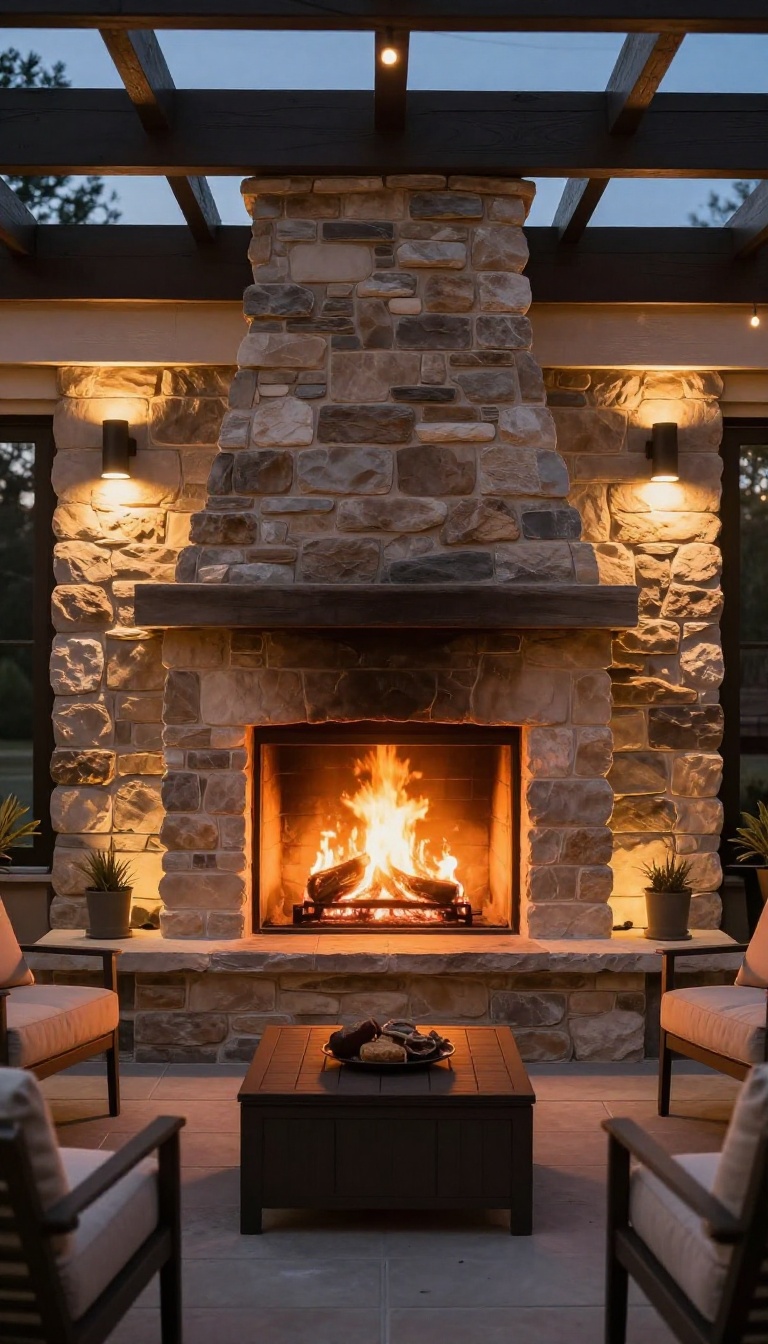
A fireplace can be the heart of your covered patio, but it truly becomes a showstopper when paired with a full stone accent wall and layers of light. This combination turns your outdoor space into an inviting retreat that feels both grand and cozy after sunset.
Stone brings texture and timeless appeal, while lighting adds drama and depth. Together, they create a focal point that draws people in and makes the fire the obvious center of attention.
Here’s how to make this idea work in your space, from choosing the right stone to placing lights for maximum effect.
Choosing The Right Stone
Go for natural stone like ledgestone or fieldstone if you want an organic, rustic look. If you prefer a cleaner, more modern aesthetic, consider large-format porcelain tiles that mimic stone but offer a sleeker finish.
Think about the color of your patio furniture and flooring. A warm-toned stone pairs well with earthy hues, while cooler grays can complement a more contemporary palette.
Lighting Placement That Flatters
Use uplights at the base of the wall to cast a soft glow upward and highlight the stone’s texture. Place them about 12 inches away from the wall and angle them slightly to avoid harsh shadows.
Add wall sconces on either side of the fireplace for a balanced, symmetrical look. Choose fixtures with a downward light to create a cozy reading nook vibe, or go with adjustable spotlights to highlight specific stone features.
Balancing Firelight And Ambient Glow
Remember that the fire itself is a light source. Don’t overwhelm it with too many bright lights. Use dimmers on your accent lights so you can adjust the mood from lively to intimate.
Consider warm LED bulbs (2700K-3000K) to match the fire’s glow and keep everything feeling harmonious. Avoid cool white lights, which can make the space feel sterile.
15. Fireplace With a Pergola-Style Cover and Open Sides
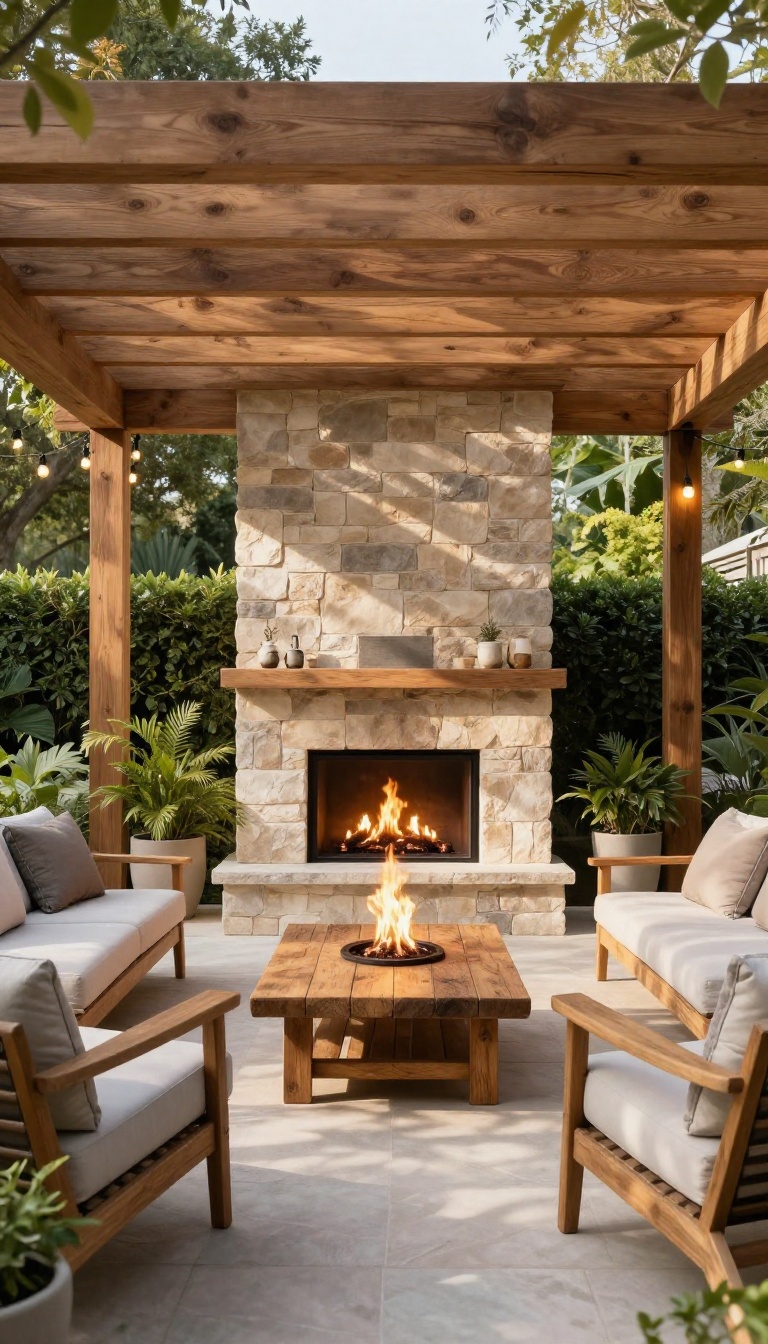
A pergola cover is a great middle ground between full shelter and open sky. It filters sunlight, defines the space, and still lets you feel the breeze. Add a fireplace underneath, and you get the best of both worlds: warmth without walls, and a cozy spot that never feels closed off.
The open sides keep the area airy, so you can enjoy the fire without feeling boxed in. The slatted roof provides just enough cover to keep the worst of the sun off, and it lets smoke drift away naturally. This setup works beautifully for patios that are partially covered or for homeowners who want a more casual, resort-like vibe.
Why Open Sides Work With A Fireplace
With no walls to trap heat, you might think the fire would be less effective, but the opposite is true. The open design allows heat to radiate outward, warming a larger seating area. Plus, you avoid the smoke and stuffiness that can come with fully enclosed spaces.
It’s a practical choice for those who want to use the fireplace in mild weather without feeling overheated.
Choosing The Right Pergola Material
Wood pergolas bring a natural warmth that pairs well with stone or brick fireplaces, but they require more upkeep. Aluminum or vinyl options are low-maintenance and resist moisture, making them a smart pick for rainy climates. Whichever you choose, make sure the structure is rated to handle the heat from the fireplace, especially if it’s close to the roof.
Placement Tips For Comfort And Safety
Position the fireplace so the seating faces the fire but isn’t too close to the open sides. That way, you get the warmth without blocking the view. Also, keep the fireplace a safe distance from any pergola posts, and consider a spark screen if you’re using wood.
For gas units, check local codes about clearances under a covered structure.
FAQ
What type of fireplace is best for a covered patio?
The best type depends on your climate and patio structure. Gas fireplaces are convenient and clean, while wood-burning fireplaces offer a traditional experience. Ensure proper ventilation and check local codes.
Can I install a fireplace under an existing covered patio?
Yes, but you'll need to consider clearance, ventilation, and structural support. Consult a professional to assess your patio's design and ensure safe installation.
How much does it cost to add a fireplace to a covered patio?
Costs vary widely based on materials, type, and labor. A basic gas fireplace might start around $2, 000, while custom stone wood-burning units can exceed $10, 000.
Do outdoor fireplaces require a chimney?
Yes, most fireplaces need a chimney or vent to expel smoke and gases. Prefabricated models may have venting options, but proper ventilation is essential for safety.
What are the safety considerations for a covered patio fireplace?
Maintain clearance from combustible materials, use a spark screen, keep a fire extinguisher nearby, and never leave a fire unattended. Also, ensure your patio cover is fire-rated if needed.
Conclusion
A fireplace can turn a covered patio into the spot everyone gravitates toward, even on cooler evenings. Start with the feature that excites you most—whether that's a built-in fire table or a simple chiminea—and let the rest of the design follow.
You don't need to tackle everything at once. Pick one idea that fits your space, make it happen, and you'll quickly discover how much more time you want to spend outside.