13 Small Bathroom Floor Tile Ideas for Tight Spaces
A small bathroom can still look polished, and the floor does most of the heavy lifting. The right tile makes a tight room feel bigger, brighter, and far less generic. You just have to choose a pattern and finish that work with the space instead of against it.
Penny rounds, large-format porcelain, and warm wood-look options all solve different problems. Some cut down on grout lines, others add texture or a graphic jolt. A few layouts even trick the eye into seeing extra square footage that isn't there.
The 13 ideas below cover classic looks, bold patterns, and practical picks for real bathrooms. Each one is specific enough to act on and flexible enough to adapt.
1. Penny Round Tiles for a Seamless Look
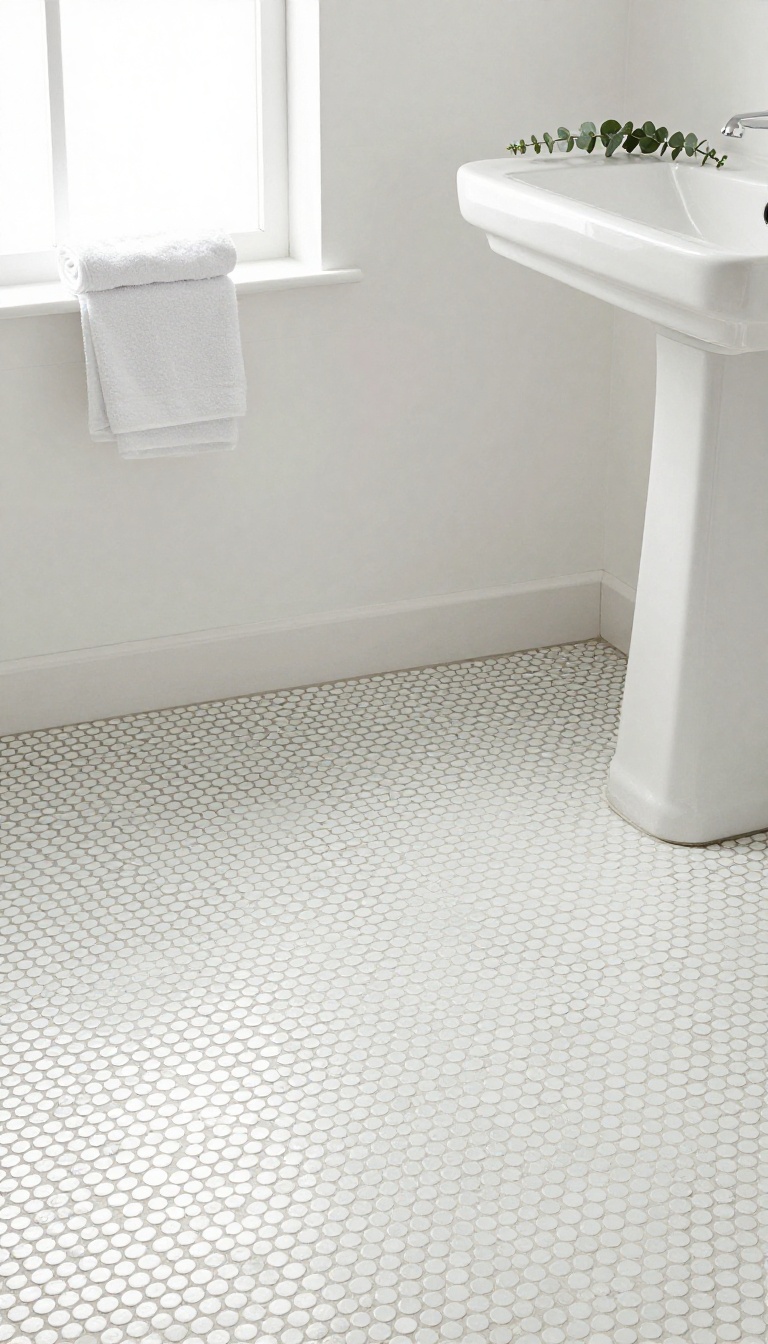
Penny rounds earn their spot in small bathrooms for one simple reason: they turn the floor into a single, continuous surface. Because the tiles are so tiny, your eye stops noticing individual pieces and starts reading the whole floor as one smooth plane. That visual trick is gold in a tight room with awkward corners, jogs, and nooks.
They also hide dirt remarkably well, since crumbs and dust settle into the grout instead of sitting on a glossy field tile.
The shape itself does a lot of quiet work. Circles have no hard edges, so there's no strong grid pulling your attention across the room. The result feels softer and more organic than a standard square layout, which is exactly what a cramped bathroom needs.
You get texture and interest without visual noise. Penny rounds also handle curves and odd geometry better than almost any other tile. Toilets, pedestal sinks, and angled walls create cut lines that look clumsy with big rectangles.
Small circles wrap around those obstacles with barely noticeable seams. That's why designers keep coming back to them for powder rooms and half baths. One thing to know before you commit: penny rounds mean a lot of grout.
That's part of the charm, but it changes how the floor reads. A light grout blends everything into a soft wash, while a dark grout turns the floor into a dotted pattern. Neither is wrong, but the choice shifts the whole mood of the room.
Why The Seamless Effect Works
A continuous floor makes a small room feel calmer and slightly larger. Penny rounds create that effect because the pattern repeats so tightly that no single tile stands out. Your eye glides across the surface instead of stopping on a grid line.
In a narrow bathroom, that smoothness can be the difference between feeling boxed in and feeling settled.
Grout Color Changes Everything
Match the grout to the tile and the floor turns into a soft, almost monolithic plane. Contrast the grout and you get a playful polka-dot look that adds personality. For tight spaces, a tone-on-tone approach usually reads cleaner and more spacious.
Save the high-contrast version for a bathroom where you want the floor to be the star.
Where Penny Rounds Shine
They're ideal for powder rooms, under-stair bathrooms, and any floor with lots of cuts. Curved shower curbs, angled vanities, and tight door swings all become easier to tile. They also work well over a heated mat, since the small format follows the warmth evenly.
If your bathroom has a weird shape, penny rounds are often the most forgiving fix.
2. Large-Format Porcelain to Reduce Grout Lines
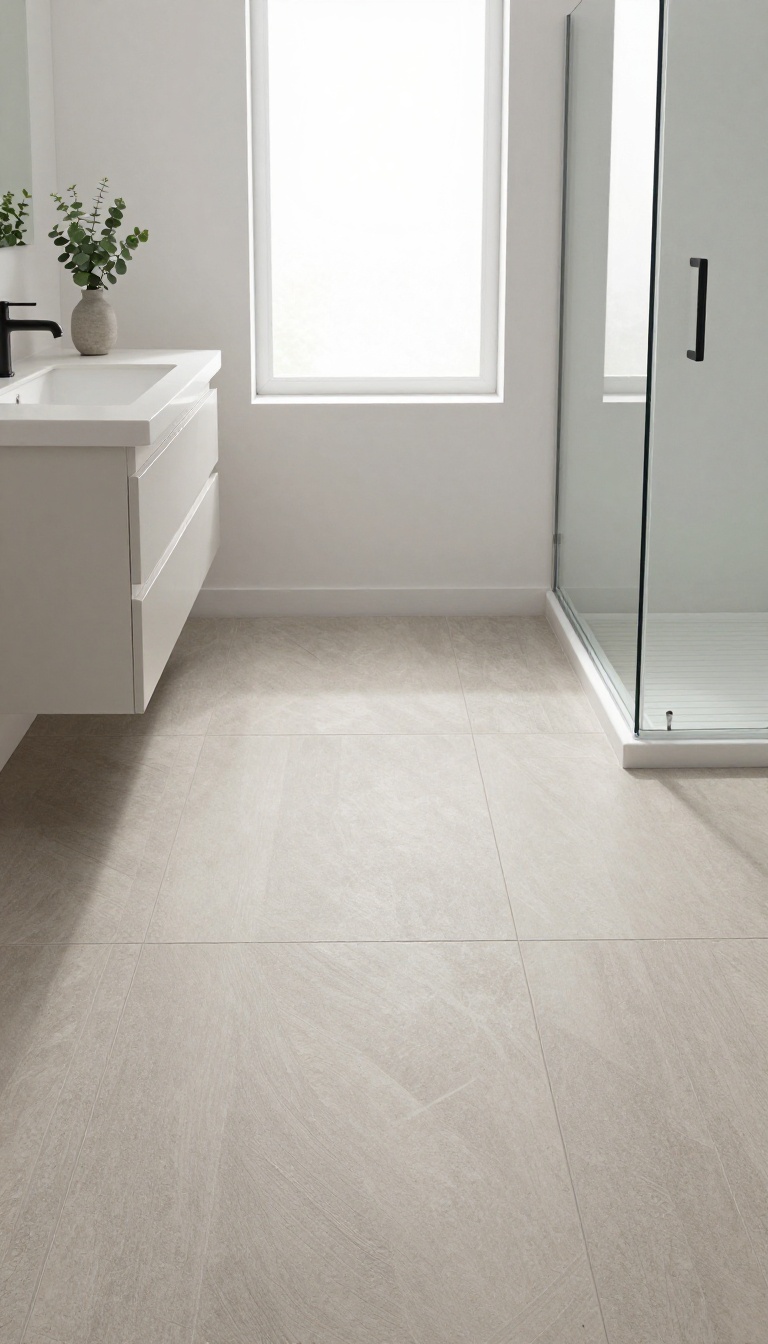
Grout lines are the enemy of a small floor. Every seam breaks up the surface and makes the room feel chopped into pieces. Large-format porcelain tiles cut down on those seams, so the floor reads as one continuous sheet.
That visual calm can make even a tiny bathroom feel bigger and more put-together.
Large-format porcelain usually means tiles that are at least 12 by 24 inches, but many options go much bigger. You'll find 24 by 48, 30 by 60, and even larger slabs. The bigger the tile, the fewer grout lines you see.
Fewer lines mean less visual noise, and less noise means the eye can glide across the floor without stopping. In a tight space, that smooth read is a big win. Porcelain also holds up well in wet areas.
It resists water, stains, and everyday wear. So you get the clean look and the durability without babying the floor. Just make sure your subfloor is flat and your installer knows how to handle the size.
Big tiles need a solid, level base to sit right.
Why Fewer Lines Work
Grout lines act like visual speed bumps. They catch light and shadow, and they break up the floor into smaller zones. When you remove most of them, the floor becomes a single field.
That field feels larger because your eye isn't constantly hitting edges. It's a simple trick, but it works in almost any small bathroom.
Sizing And Layout Tips
Pick a tile size that fits your room without too many cuts. A 24 by 24 tile might work in a narrow bathroom, while a 12 by 24 can run lengthwise to stretch the space. Running tiles parallel to the longest wall is a classic move.
It guides the eye and makes the room feel longer. Also, consider a rectified tile, which has straight edges and allows for very thin grout lines.
Grout Color Matters
Even with big tiles, grout color can make or break the look. Match the grout to the tile as closely as you can. That way the lines nearly disappear.
A contrasting grout will highlight every seam and undo the benefit of going large. If you want a subtle grid, go one shade darker or lighter, but keep it close.
Watch The Weight And Install
Large porcelain tiles are heavy, and they need a flat substrate. If your floor isn't level, the tiles can crack or rock. Hire an installer who has experience with large-format material.
They'll use the right trowel, back-butter the tiles, and keep the lippage minimal. It's worth the extra cost to get it right.
3. Hexagon Tiles with a Light Grout
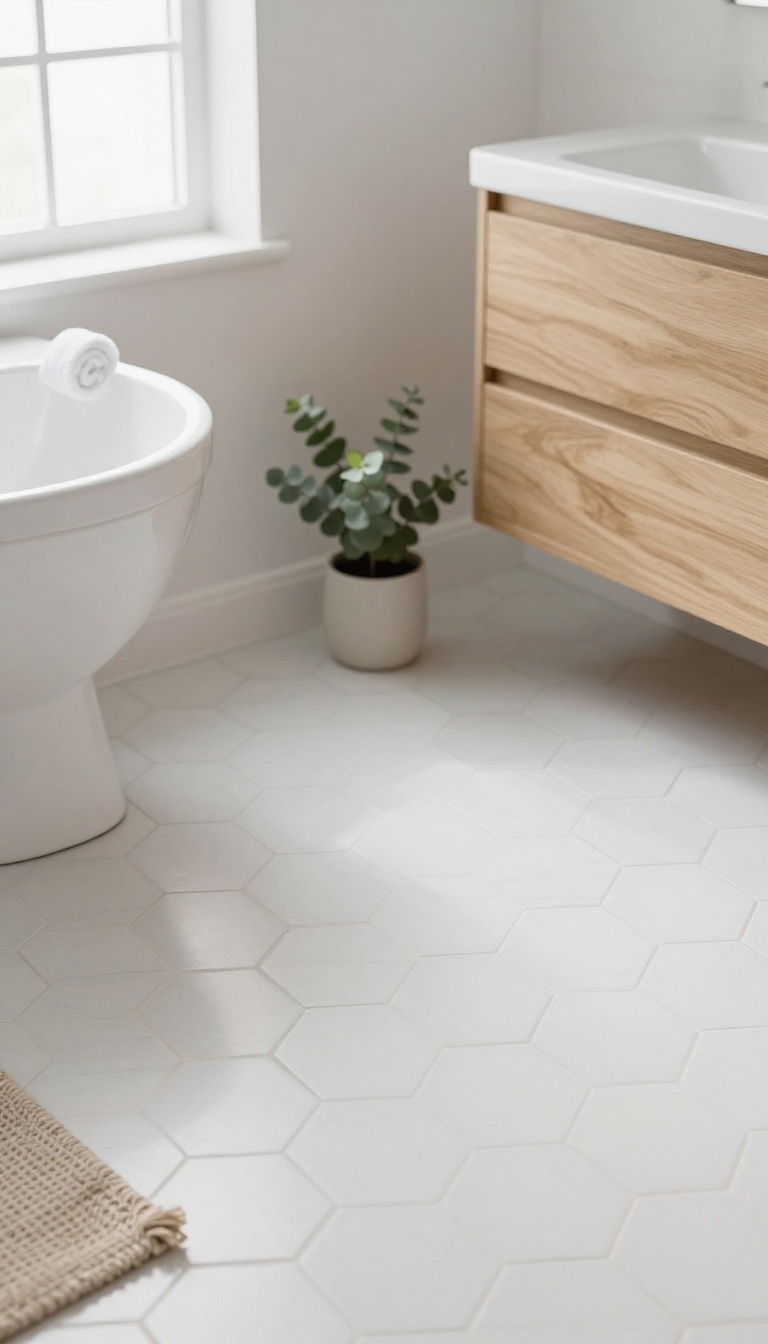
Hexagons bring a quiet kind of geometry to a small floor. They're interesting without shouting, which is exactly what a tight bathroom needs. Pair them with a light grout and the pattern stays soft instead of busy.
The shape does most of the work here. Hexagons break up a floor into smaller visual pieces, so your eye doesn't get stuck on one big slab. That subtle movement can make a compact room feel more dynamic, not more cramped.
Light grout is the other half of the equation. When the grout color sits close to the tile color, the lines fade into the background. The hexagon shape still reads, but it doesn't turn into a loud grid.
Why Light Grout Matters
Dark grout on a hexagon floor creates a strong outline around every single tile. In a small bathroom, that can feel like a thousand little boxes competing for attention. Light grout softens all those edges.
The floor looks calmer, and the room feels less chopped up.
Best Tile And Grout Pairings
White hexagons with white or pale gray grout are a classic for a reason. They keep the floor bright and open. If you want a little warmth, try a soft cream tile with a matching cream grout.
For a subtle twist, pick a light gray tile with grout one shade lighter. The pattern stays visible without getting loud.
Sizing And Layout Tips
Small hexagons, around one to two inches, work well in tiny bathrooms because they add texture without demanding attention. Larger hexagons, three to four inches, can make a small floor feel slightly more expansive. Either way, keep the layout simple.
A straight-set pattern is easier on the eyes than a busy mosaic arrangement.
Where This Idea Works Best
This look suits bathrooms with simple, modern finishes. It also plays nicely with vintage-style fixtures if you keep the rest of the palette light. Skip it if you already have a bold wall tile or a patterned vanity.
The floor should support the room, not fight it.
4. Herringbone Pattern in a Neutral Tone
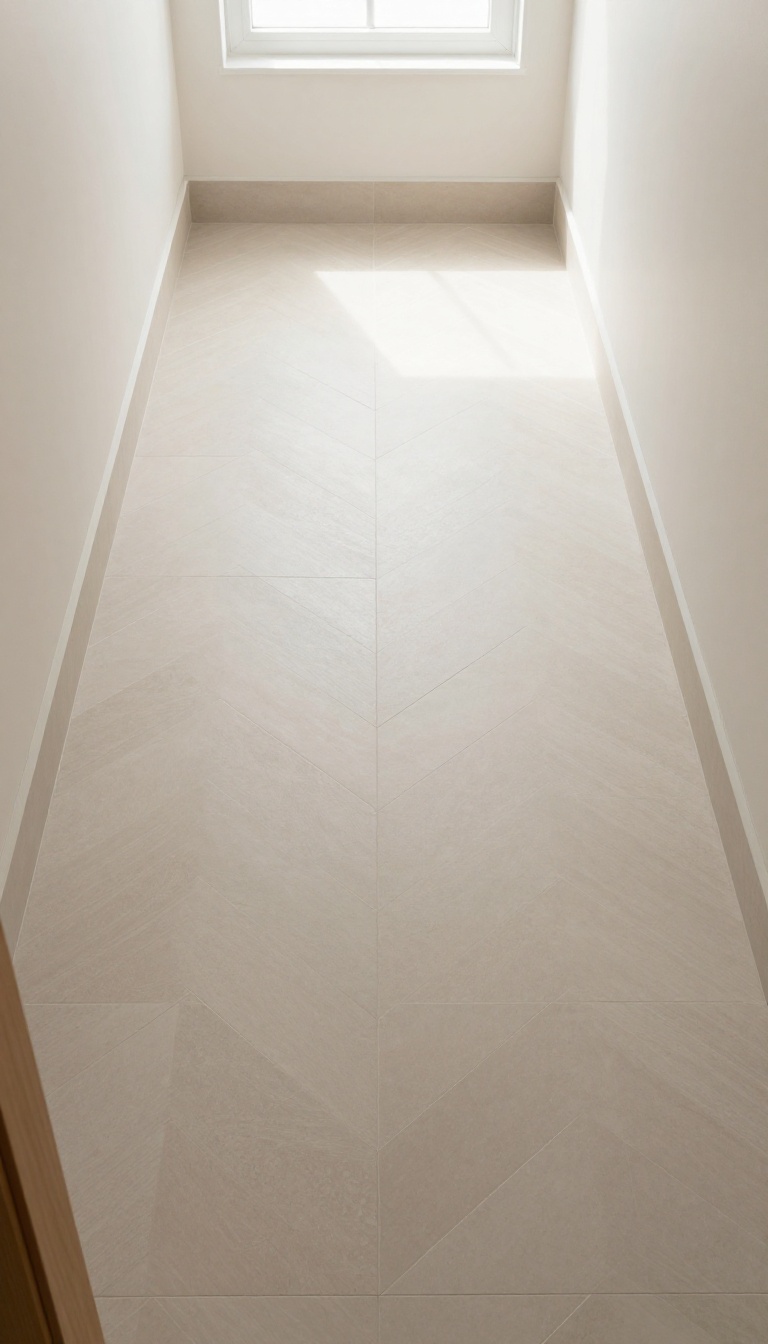
Herringbone tiles lay out in a V-shaped zigzag that pulls the eye from one end of the bathroom to the other. That visual movement makes a short, narrow floor read as longer than it actually is. And when you stick to a neutral color, the pattern adds interest without making the room feel busy or closed in.
The trick is keeping the palette calm so the pattern does the talking. A soft white, warm beige, or light gray tile keeps things airy while the herringbone layout adds just enough detail to feel custom. You get a high-end look without paying high-end prices, especially if you choose porcelain or ceramic instead of natural stone.
Why Neutrals Work Best Here
Bold colors in a herringbone pattern can overwhelm a small bathroom fast. Neutrals let the zigzag shape stand out on its own, and they bounce light around the room instead of absorbing it. That combination keeps the space feeling open while still giving the floor a designer touch.
Pick The Right Tile Size
Small tiles mean more grout lines, which can make a floor look choppy in a tight space. Go with tiles that are at least 3 by 12 inches, or even 4 by 16, to stretch the pattern and reduce visual noise. Longer planks also emphasize the length of the room, which helps a narrow bathroom feel less cramped.
Keep Grout Subtle
Match your grout to the tile color as closely as you can. A light gray or off-white grout blends into the floor and lets the herringbone shape read clearly without drawing attention to the joints. Contrasting grout can look sharp, but in a small room it often adds clutter instead of style.
Installation Tips For Tight Spaces
Herringbone takes more cuts than a standard grid, so plan your layout starting from the most visible wall. That way, any awkward cuts end up hidden under the vanity or behind the toilet. If you're hiring a pro, expect a bit more labor cost, but the payoff is a floor that looks custom-made for the room.
5. Diagonal Layout to Stretch the Room
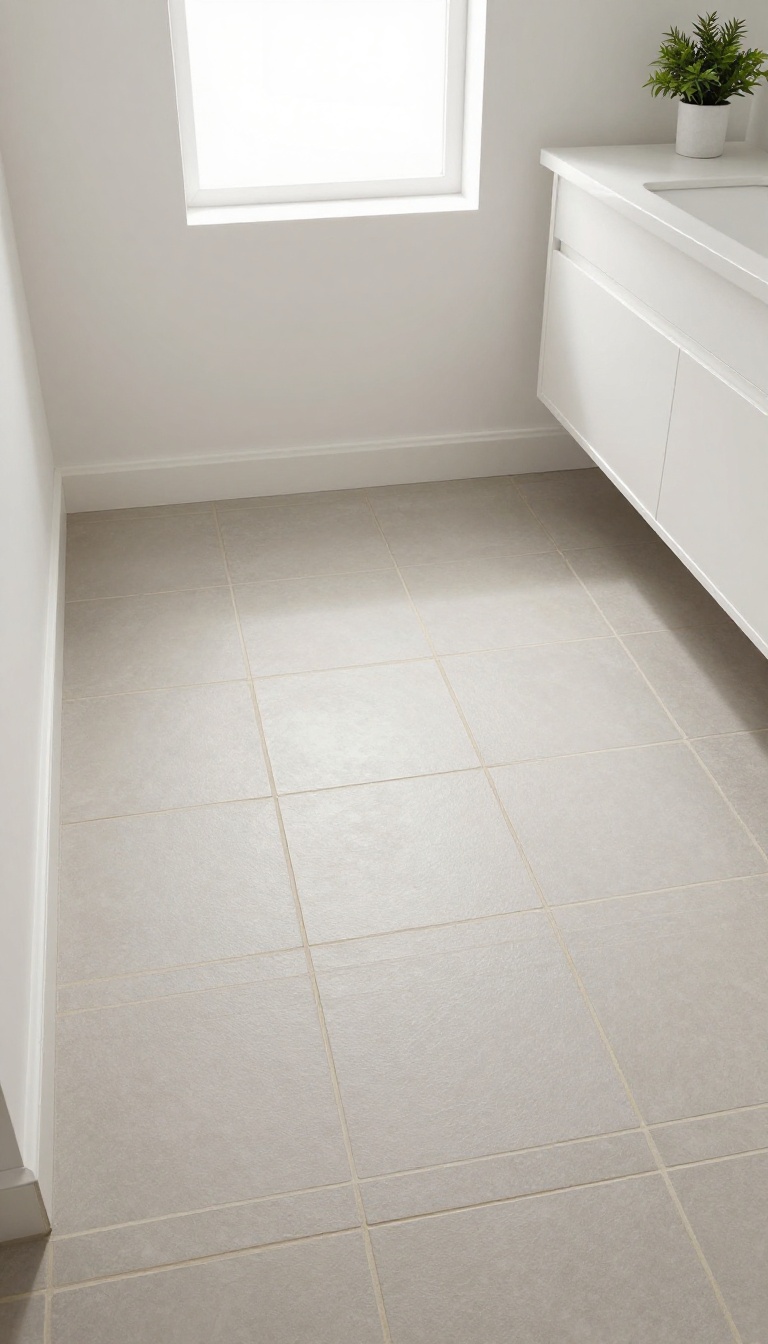
Straight lines have a way of boxing a small bathroom in. When every tile edge runs parallel to the walls, your eye reads the floor as a tight grid and the room feels narrower than it is. Rotating square tiles 45 degrees changes that math entirely.
The floor suddenly reads as a diamond pattern, and the walls seem to push outward instead of closing in.
A diagonal layout works because it interrupts the visual connection between tile lines and walls. In a tight room, that connection is what makes the space feel cramped. Once the grout lines run at an angle, the floor stops looking like a small rectangle and starts looking like a wider, more open surface.
It's a simple trick, but it's one of the most reliable ways to make a small bathroom feel less boxy. The effect is strongest with square tiles, since the 45-degree rotation creates clean diamond shapes. You can use almost any size, but medium to large squares tend to work best because they keep the pattern readable without turning the floor into a busy mess.
The trade-off is extra cutting around the perimeter, so plan for more waste and a bit more labor. If you're hiring a tiler, expect the diagonal set to cost a little more than a straight lay. Color and grout choices matter here too.
A light tile with a matching grout keeps the pattern subtle and the room bright. A darker grout makes the diamond grid pop, which can look great but also draws attention to the floor's edges. In a very small bathroom, subtle usually wins.
You want the eye to glide across the floor, not stop at every line.
Why 45 Degrees Changes Everything
When tiles run parallel to the walls, they create a visual frame that mirrors the room's actual boundaries. That's why a straight-laid floor can make a narrow bathroom feel even narrower. A diagonal layout removes that frame.
The lines point toward the corners instead of the walls, which makes the floor feel like it extends beyond the room's edges. It's a subtle optical illusion, but it works in almost any small space.
Tile Size And Grout Tips
Medium squares, roughly 8 to 12 inches, hit the sweet spot for diagonal layouts in small bathrooms. They're big enough to reduce grout lines but small enough to keep the diamond pattern clear. If you go too large, the cuts at the edges get tricky and the pattern can feel overwhelming.
If you go too small, the floor gets busy and the diagonal effect gets lost. Pair with a grout color close to the tile for a seamless look, or go slightly darker for a bit of definition.
What To Expect During Installation
Diagonal tile takes more planning and more cuts than a standard grid. Your tiler will need to measure carefully from the center of the room outward, and you'll likely need 10 to 15 percent extra tile for waste. The perimeter cuts are the fiddly part, especially around a toilet flange or vanity.
But the payoff is a floor that feels custom and makes the whole room feel larger. Just budget a little more time and money for the install.
6. Mosaic Sheets for Quick Coverage
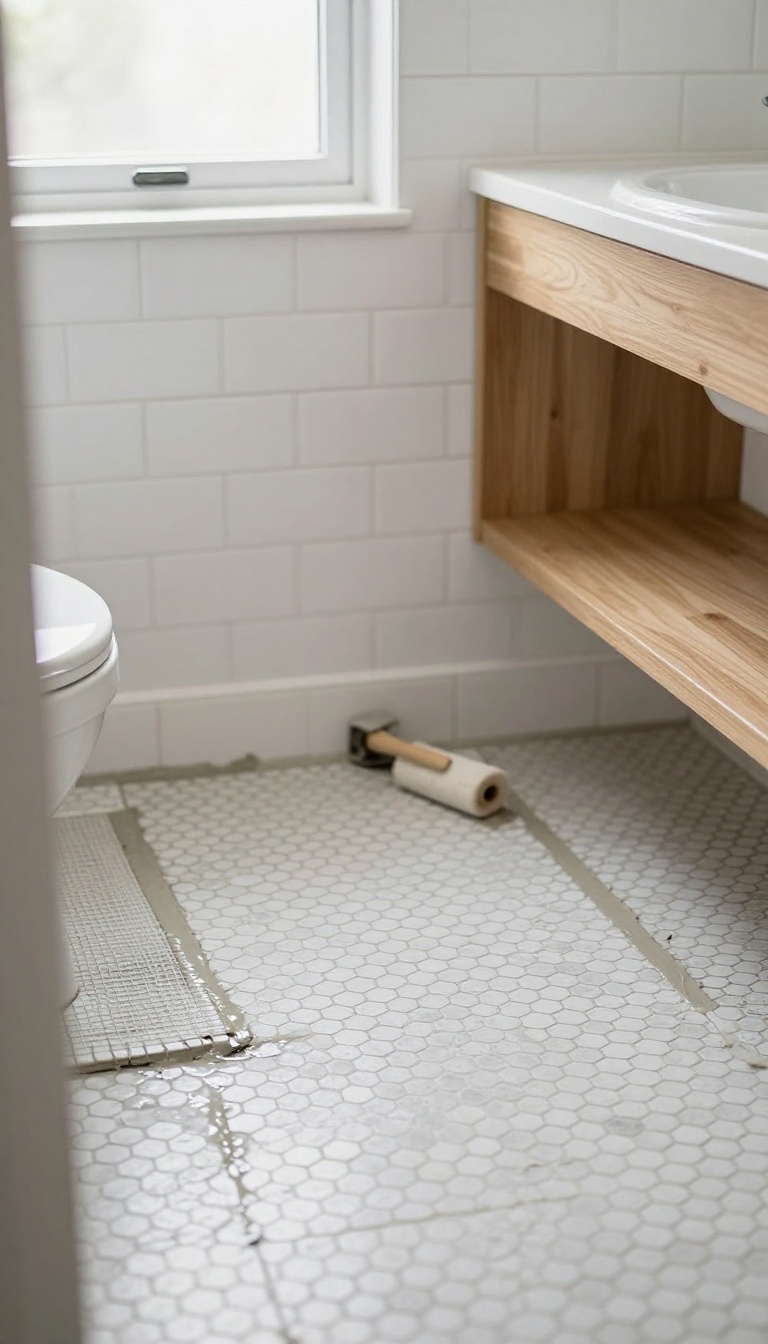
Mosaic sheets take the slowest part of tiling—placing hundreds of tiny pieces—and turn it into a single peel-and-stick operation. Each sheet holds dozens of tiles in perfect alignment, so you cover a lot of floor in a fraction of the time. For a tight bathroom, that speed matters because you're often working in cramped, awkward positions.
The real win with mosaic sheets is how they handle weird shapes. Small tiles flex and conform to corners, curves, and around a toilet flange without complicated cuts. You just press the sheet into place, and the mesh backing holds everything together until the thinset cures.
That makes them a solid choice for DIYers who don't want to rent a wet saw or spend a weekend on their knees.
Why They Work In Tight Spaces
Mosaic sheets are typically 12×12 inches or smaller, so you can maneuver them in bathrooms where a full-size tile won't fit. The individual tiles are usually 1 to 2 inches, which means they wrap around obstacles with minimal cutting. You get a continuous look without the hassle of piecing together dozens of loose tiles.
Installation Tips For Diyers
Start by dry-fitting a few sheets to plan your layout, especially around the toilet and sink. Use a notched trowel to spread thinset, then press each sheet firmly with a grout float to ensure full contact. Work in small sections so the adhesive doesn't skin over before you set the sheets.
A grout release or pre-sealing the tiles can save you cleanup time later.
Grout And Finish Options
Because mosaic sheets have more grout lines, the grout color plays a big role in the final look. A matching grout makes the floor feel seamless and larger, while a contrasting grout highlights the mosaic pattern. Unsanded grout works best for joints under 1/8 inch, which is common with mosaics.
Seal the grout after it cures to keep it looking fresh in a damp bathroom.
7. Wood-Look Tile for Warmth Without Bulk
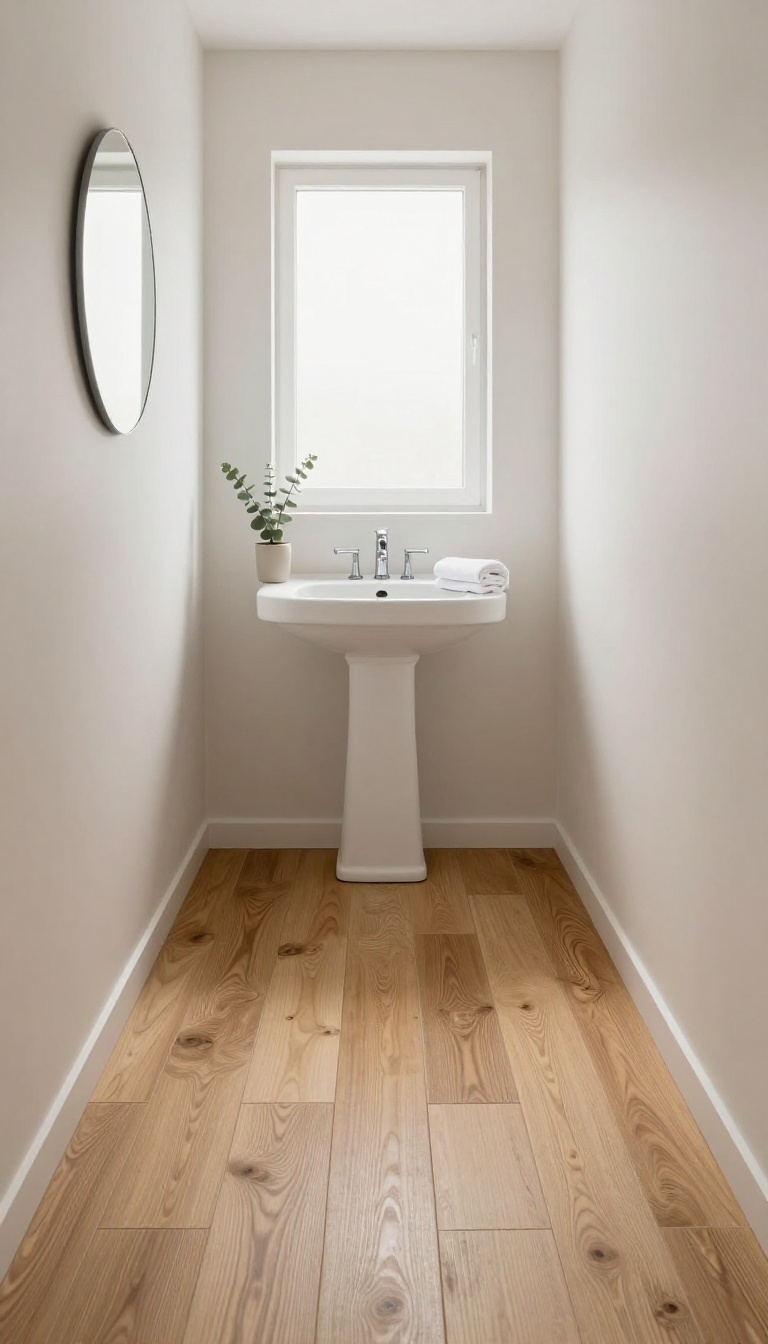
Real wood floors in a bathroom sound charming until you picture them swelling every time someone takes a steamy shower. Wood-look porcelain gives you the cozy grain and tone of timber without the moisture drama. It's a smart swap for tight spaces that need warmth but can't afford the maintenance headaches.
These tiles are printed with realistic wood patterns, so you get planks that look like oak, walnut, or driftwood. The surface is porcelain, which means it shrugs off water, soap scum, and humidity. You can run them wall to wall without worrying about warping or rot.
Because they come in long, narrow planks, they also help a small floor feel longer. The trick is in how you lay them. A little planning goes a long way.
Why Porcelain Beats Real Wood In A Wet Room
Real wood expands and contracts with moisture, which leads to gaps, cupping, and eventually replacement. Porcelain doesn't care about steam or splashes. It stays flat and stable year after year.
You also skip the refinishing cycle. No sanding, no sealing, no special cleaners. A damp mop handles almost everything.
Plank Direction That Makes The Room Feel Bigger
Run the planks parallel to the longest wall. That draws the eye lengthwise and stretches the visual footprint. In a narrow bathroom, this can make a huge difference.
If the room is nearly square, try laying them diagonally. It adds a bit of motion and keeps the space from feeling boxy. Just expect a little more waste on cuts.
Texture And Finish Matter More Than You Think
Go with a matte or lightly textured finish. Glossy wood-look tile can be slippery when wet, and it shows every water spot. A subtle wood grain texture also adds grip underfoot.
Stick to warm mid-tones like honey oak or greige. Very dark planks can swallow light in a small bathroom, while very light ones may look washed out. A mid-range shade keeps things balanced.
8. Black and White Checkerboard for Graphic Punch
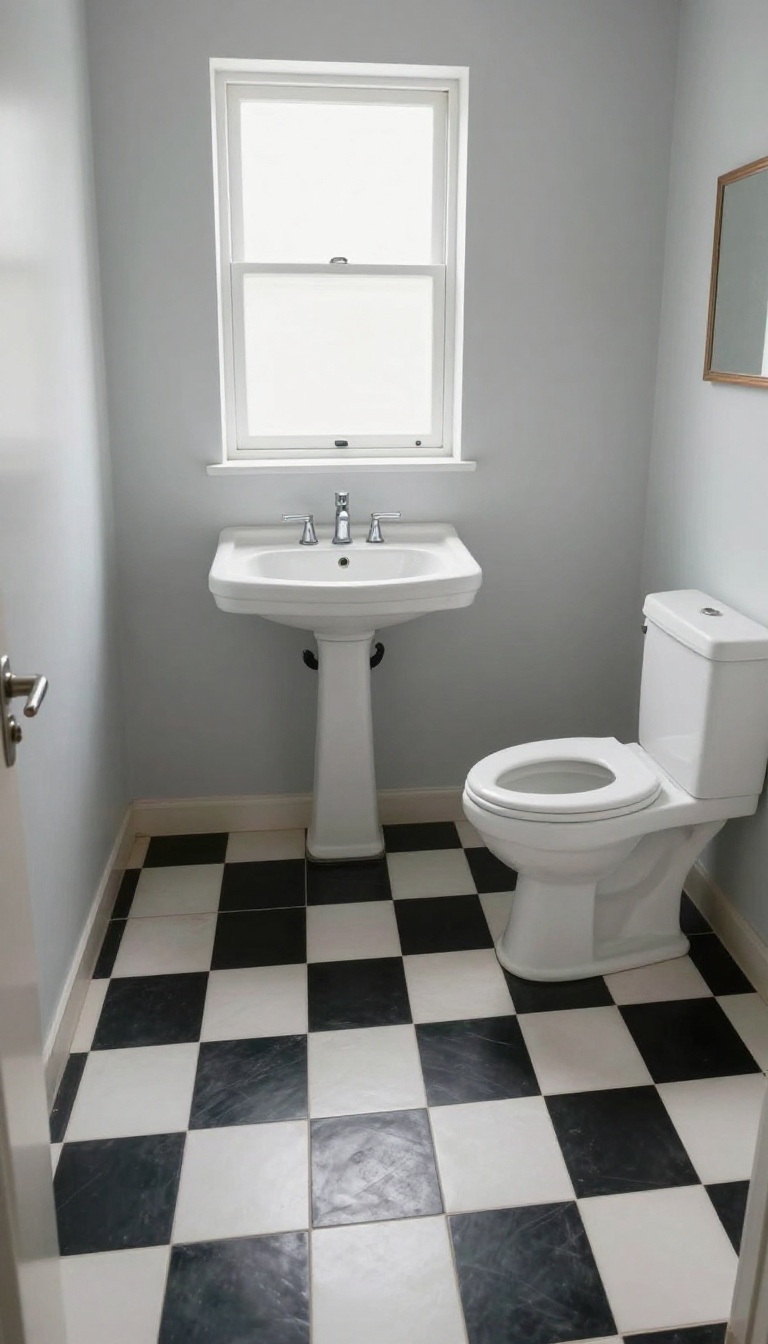
Checkerboard floors have been stealing scenes since the 1920s, and they still work hard in a small bathroom. The pattern is simple, high-contrast, and instantly legible, which gives a tight room a clear focal point instead of a vague beige blur. It also adds a little vintage charm without asking for much.
You get personality from two colors and one layout, and the floor starts to feel intentional rather than leftover.
A checkerboard is basically a grid of alternating squares, usually black and white or near-black and off-white. In a small bathroom, that grid does two things at once: it adds graphic punch and it creates a sense of order. The eye reads the pattern fast, so the floor feels deliberate instead of busy.
It works in just about any style, from retro to modern farmhouse to clean contemporary. You can lean classic with true black and white, or soften it with charcoal and cream. Either way, the contrast is what makes the floor pop.
Scale Changes Everything
Small squares create a busier, more detailed look that can feel charming in a tiny powder room. Larger squares calm the pattern down and make the floor feel more open. In most small bathrooms, 12-inch squares hit a nice middle ground: bold enough to notice, not so busy that they overwhelm the room.
If your bathroom is really tight, try 8-inch squares to keep the pattern from feeling chopped off at the edges. If you have a bit more floor to work with, 16-inch squares can make the space feel bigger while still delivering the graphic hit.
Lay It Straight Or Turn It On Point
A straight-set checkerboard lines up parallel to the walls, which feels tidy and traditional. A diagonal or diamond layout rotates the grid 45 degrees and adds a little more energy. The diagonal version can also soften awkward room shapes because the eye follows the angles instead of the walls.
Both are easy to install with square tiles. Just decide whether you want calm and classic or a bit more movement underfoot.
Make The Grout Work For You
Grout color changes the whole vibe. White grout on a black-and-white floor keeps the pattern crisp and graphic. Black grout blends the squares together and makes the floor feel more seamless, which can help a small room feel less chopped up.
A mid-gray grout is a good compromise: it hides dirt better than white and still lets the pattern read clearly. Whatever you choose, use a grout that matches the tile edges closely if you want a cleaner, more modern look.
Keep The Rest Of The Room Quiet
A checkerboard floor is already doing a lot of talking. Let it. Keep the walls, vanity, and fixtures simple, and skip any other bold patterns in the room.
A plain white or soft gray wall gives the floor room to be the star. Warm wood tones on the vanity or a natural fiber rug can soften the contrast and keep the room from feeling too sharp. One or two accents are plenty; the floor is the main event.
9. Subway Tiles Laid in a Stack Bond
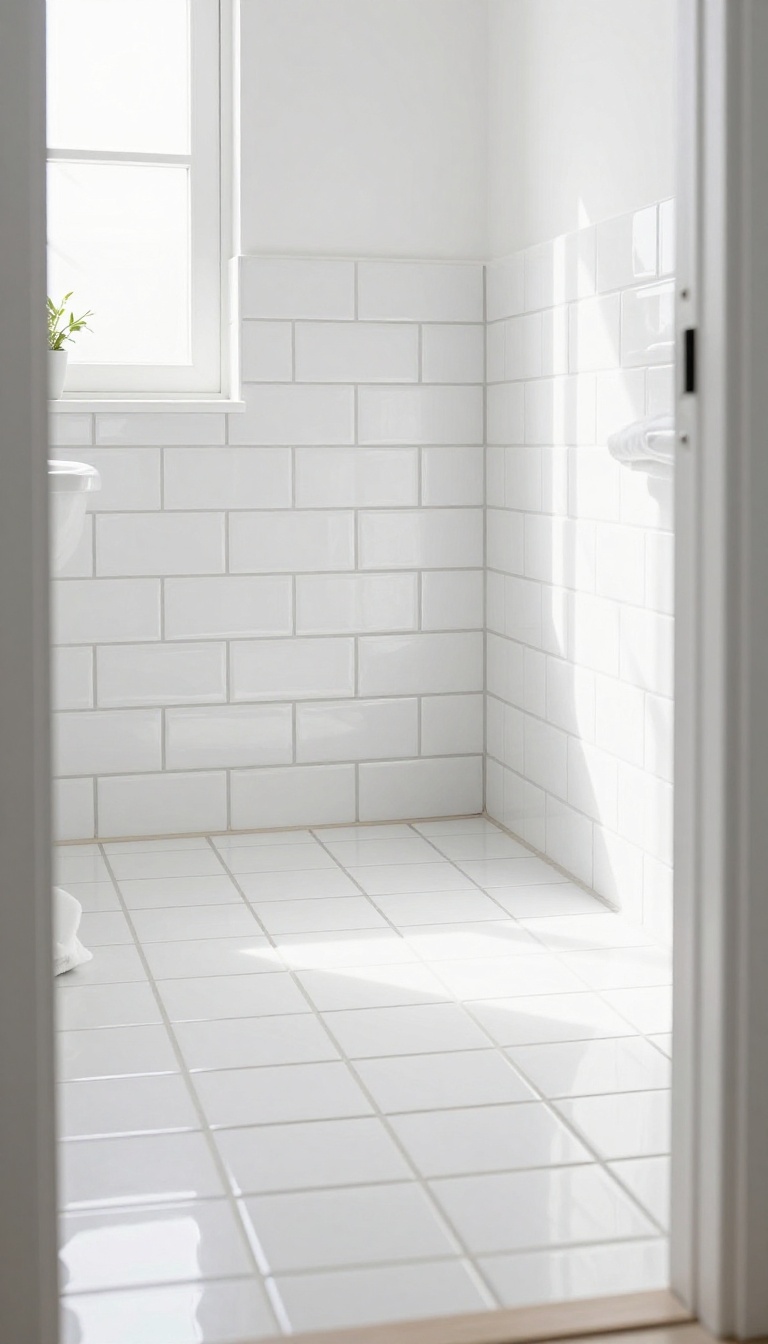
Subway tiles usually show up in a running bond, where each row is offset by half a tile. Flip that layout into a stack bond and every grout line lines up in a perfect grid. That simple shift changes how the floor reads in a small bathroom.
Instead of horizontal zigzag, you get clean vertical and horizontal lines that guide the eye upward. The result is a floor that feels taller and more open without adding an inch of square footage.
Stack bond works because it leans on repetition. Rectangular tiles sit directly above one another, so the grout lines form continuous stripes. Those stripes pull your gaze from the floor to the ceiling, which makes the walls feel higher.
It's a subtle trick, but in a tight bathroom, subtle is often enough. The pattern also cuts visual noise. Running bond creates a busy, brick-like texture that can feel choppy underfoot.
Stack bond is calmer. The grid is orderly and predictable, so the floor doesn't compete with the rest of the room. That makes it easier to layer in a bold vanity, a patterned shower curtain, or a statement mirror without the space feeling cluttered.
You can use classic 3-by-6-inch subway tiles, but don't feel locked into that size. Longer planks, like 4-by-12 or 6-by-24 inches, stretch the grid even further. Wider tiles mean fewer grout lines, which keeps the look sleek.
Just keep the layout consistent. A stack bond only works when the lines stay true.
Why The Grid Makes The Room Feel Taller
Vertical lines are a classic height booster, and stack bond gives you a steady supply of them. Your eye follows those columns upward, so the ceiling feels farther away. Horizontal lines do the same for width, but in a small bathroom, height is usually the bigger win.
The grid also creates a sense of order. A tidy floor reads as more spacious because there's less visual chaos to process.
Tile Sizes And Grout Choices That Work
Standard 3-by-6-inch tiles give you a traditional look with plenty of grid lines. For a cleaner, more modern feel, go with 4-by-12 or 6-by-24-inch planks. Fewer grout lines mean a smoother surface that's easier to clean.
Match your grout to the tile for a seamless, blended grid, or use a contrasting grout to make the pattern pop. In a small room, a close color match usually feels more expansive.
Where Stack Bond Shines (and Where It Doesn't)
This layout works best on floors that are relatively flat and square. If your bathroom has a lot of angles or odd cuts, the grid can highlight those imperfections. It's also a great choice for a minimalist or modern space.
In a farmhouse or vintage bathroom, stack bond can feel a little too rigid. Pair it with warm textures, like a wood vanity or a woven bath mat, to soften the look.
10. Pebble Tiles for a Spa-Like Texture
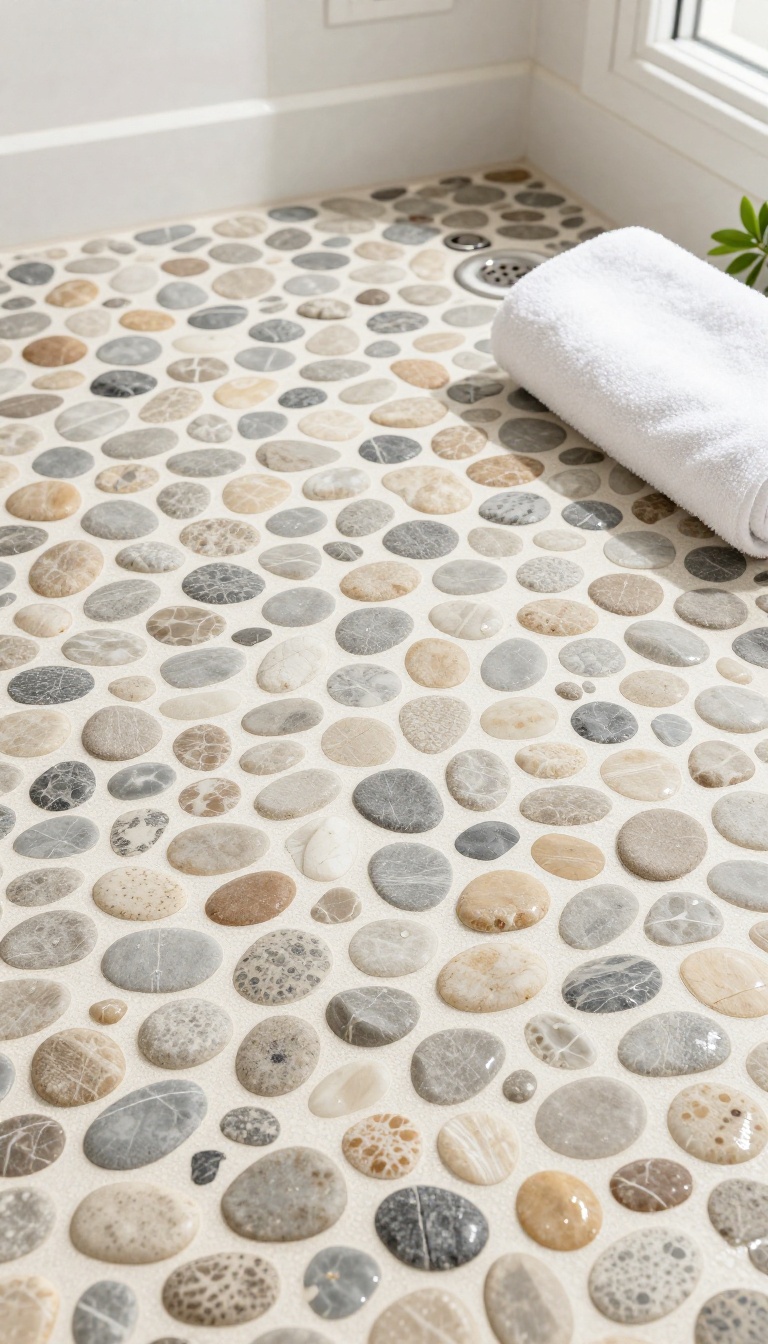
Pebble tiles bring a bit of the outdoors inside, turning a cramped bathroom into something closer to a mini retreat. The irregular stone shapes create a soft, organic texture that breaks up the hard edges of a small space. They also add serious grip underfoot, which matters when every step is a short one.
Most pebble tiles come as mesh-backed sheets, so you install them like mosaic rather than placing each stone by hand. That keeps the project manageable even in a tight footprint. The look works best when you let the natural variation do the talking instead of fighting it with busy walls or loud fixtures.
Why Pebbles Work In Tight Spots
Small bathrooms often feel clinical because every surface is flat, glossy, and uniform. Pebbles interrupt that with rounded shapes and subtle shadows that add depth without adding clutter. The uneven surface also hides water spots and dust better than polished tile, which is a quiet win in a room you use every day.
Grip And Drainage Benefits
Wet floors are the main hazard in a small bathroom, especially if you step straight from the shower onto tile. Pebble surfaces give your feet something to grab, even when soapy water is involved. If you install them on a slight slope toward the drain, water moves off the floor instead of pooling around your toes.
Picking The Right Pebble Style
Flat-cut pebbles sit closer to the surface and feel smoother underfoot, which suits bathrooms used by kids or older adults. Rounded river-rock pebbles give more of that foot-massage feel but can be trickier to clean. Stick with neutral grays, warm tans, or mixed earth tones so the floor stays calm and the room feels larger.
Installation And Upkeep Notes
Use a dark or matching grout to keep the floor looking clean between deep scrubs. Seal the stone after installation, then reseal every year or two depending on how much moisture the room sees. A soft brush and a pH-neutral cleaner handle routine maintenance without dulling the finish.
11. Terrazzo Look for Playful Speckles
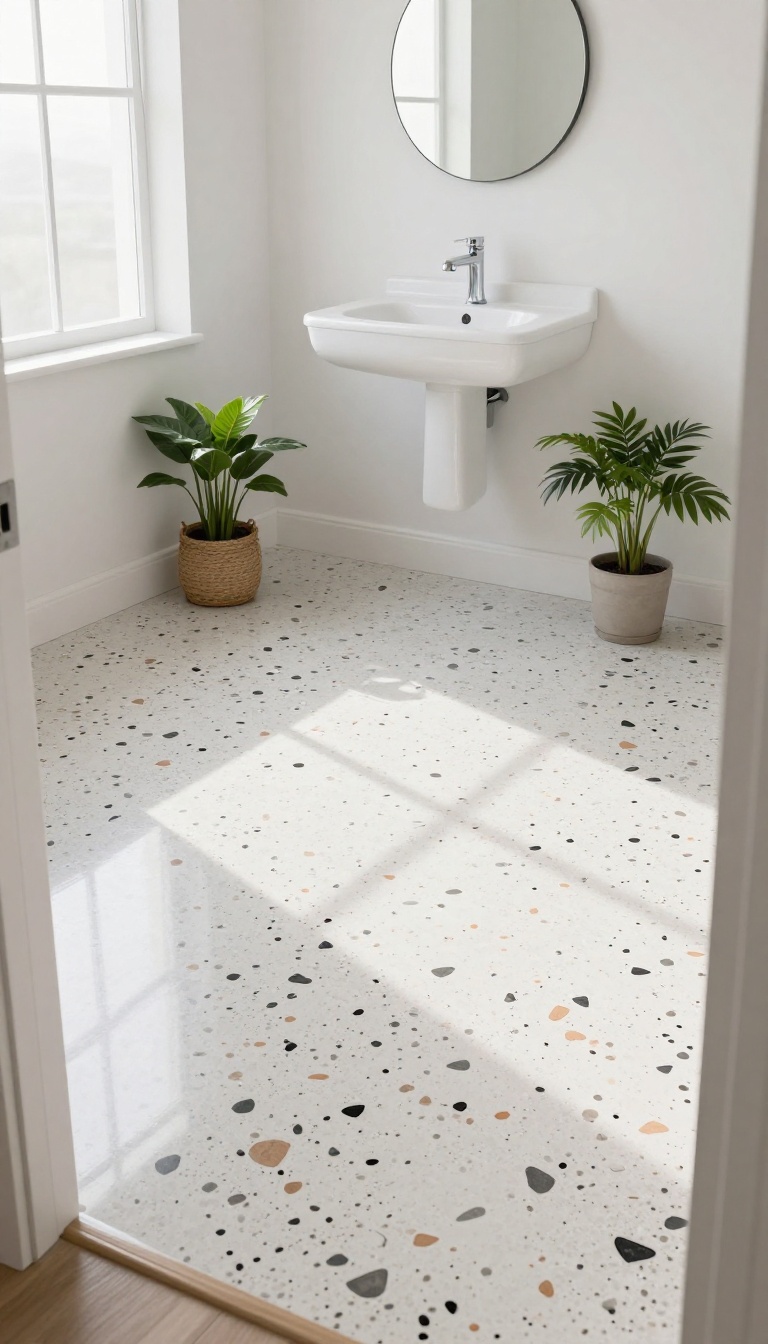
Terrazzo-style tile takes the classic speckled look and turns it into a low-maintenance floor that works overtime in a small bathroom. The busy pattern hides water spots, stray hairs, and lint better than any solid color ever will. And because your eye stays busy tracking the speckles, the room feels less like a cramped box and more like a fun little space.
Terrazzo has a long history in grand buildings and mid-century schools, but the modern version comes in porcelain and ceramic tiles that are far easier to install and clean. The speckled pattern is created with chips of marble, quartz, or glass set into a base color, then sealed under a smooth finish. In a small bathroom, that translates to a floor that looks intentional and playful without demanding constant sweeping.
The real advantage here is camouflage. Solid floors show every drop of water and every dust bunny, which makes a tiny room feel messy fast. Terrazzo’s random speckles break up the visual field, so small messes disappear into the pattern.
That means you can go a little longer between deep cleans without the floor looking grimy. You can also use terrazzo to add a subtle pop of color without overwhelming the space. A white base with black and gray chips reads neutral and calm, while a warm cream base with terracotta and amber flecks brings in a soft retro vibe.
Either way, the pattern adds personality that a plain beige floor never could.
Why Speckles Work In Small Spaces
A small bathroom magnifies every flaw, from water rings to footprints. Terrazzo’s speckled surface scatters light and breaks up the visual line, so your eye doesn’t lock onto one spot. That makes the floor feel more forgiving and the room feel slightly larger because there’s no single focal point dragging you down.
The pattern also adds depth without being overwhelming. Unlike a bold geometric tile that can make a tiny room feel busy, terrazzo speckles are small and evenly distributed. They add texture and interest while still reading as a cohesive surface.
Choosing Colors And Chip Size
Chip size changes the whole look. Large chips feel more dramatic and retro, while fine chips read almost like a solid color from a distance. In a tight bathroom, medium chips tend to hit the sweet spot—visible enough to hide dirt, but not so large that they make the floor feel chaotic.
For color, stick with two or three tones max. A white base with black and gray chips is timeless and pairs with almost any wall color. If you want warmth, try a cream base with brown and tan flecks.
Cooler bathrooms can handle a gray base with white and blue chips for a subtle coastal feel.
Installation And Maintenance Tips
Porcelain terrazzo-look tiles are dense and water-resistant, so they work well in a bathroom. Look for a matte or slightly textured finish to add grip when the floor is wet. A polished finish looks sleek but can get slippery, so consider a smaller tile size with more grout lines for traction.
Grout color matters more than you’d think. A mid-tone grout that blends with the base color keeps the pattern looking seamless. Dark grout can highlight the speckles but may also make the floor look busier.
Clean with a pH-neutral cleaner and avoid harsh acids that can dull the surface over time.
12. Matte Finish to Avoid Glare
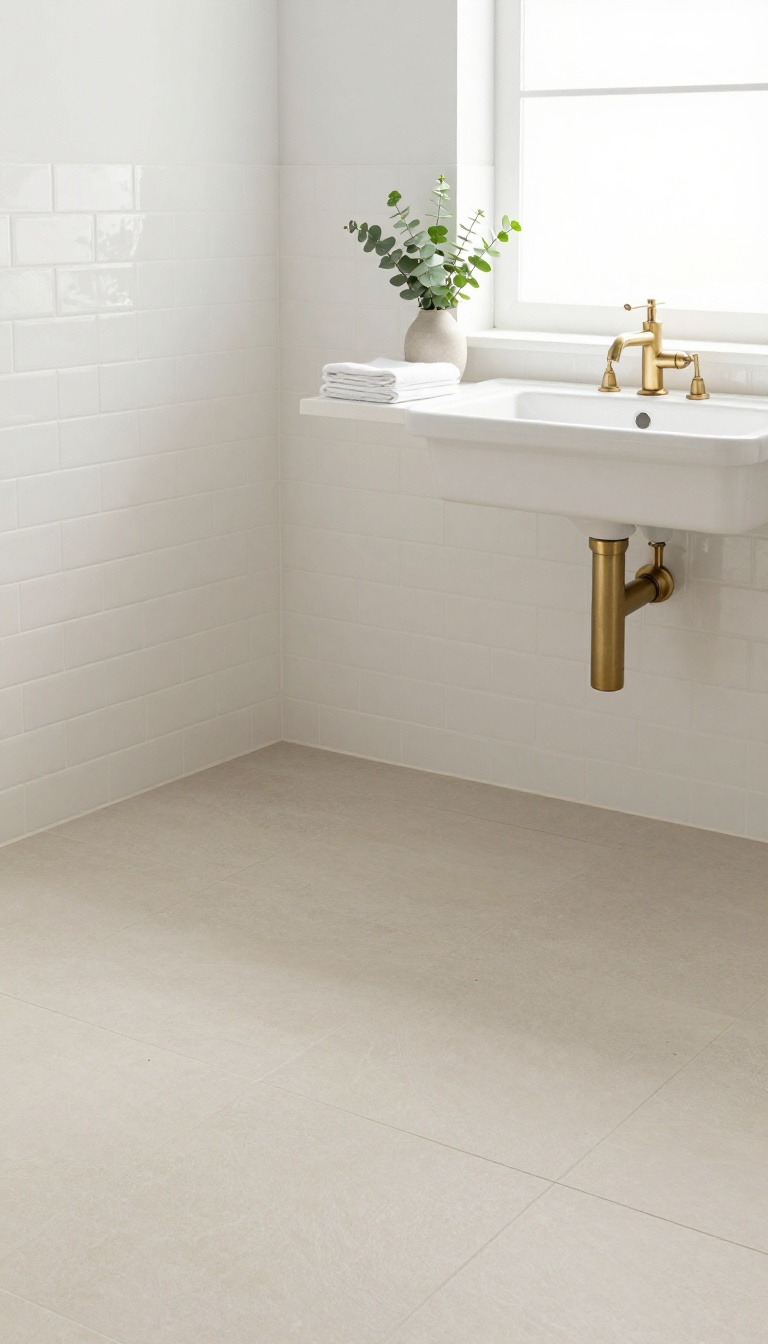
Glossy floors bounce light around a small bathroom like a mirror, which can make the room feel busy and a little harsh. A matte finish absorbs that light instead, softening the whole space without dimming it. You still get plenty of brightness from your walls and fixtures, just without the glare fighting back.
Matte tiles also tend to have more grip underfoot, which matters in a room where water ends up on the floor more often than anyone plans for. That extra texture makes the surface feel safer, especially if you share the bathroom with kids or older family members. It's a small change that quietly improves how the room looks and how it works.
Matte finishes come in almost every material now, from porcelain and ceramic to natural stone and even some vinyl and laminate options. So you're not locked into one look just to get the softer surface. You can pick the color, shape, and pattern you actually want, then choose the matte version of it.
One thing to know: matte doesn't mean flat or boring. Many matte tiles have a subtle texture or slight variation in tone that catches light in a gentle way. That's part of why they read as warmer and more natural in a tight room. ## Why Glare Hurts a Small Bathroom In a bigger bathroom, a shiny floor can look clean and polished.
In a small one, every reflection has nowhere to go, so it bounces off the floor, the walls, and the mirror all at once. The result is a room that feels visually loud even when it's empty. Matte surfaces break up that bounce.
Light still fills the room, but it spreads out instead of ricocheting. The space feels calmer and easier to be in, which is exactly what you want in a room you use first thing in the morning. ## Grip and Safety Underfoot Wet bathroom floors are a real hazard, and glossy tiles can get surprisingly slick. Matte tiles usually have a higher coefficient of friction, which is a fancy way of saying your feet have more to hold onto.
That's a genuine upgrade in a small bathroom where you're often stepping from the shower to the sink in a few short feet. If you want even more traction, look for tiles labeled as having a textured or slightly raised matte finish. They're still comfortable to stand on barefoot, but they handle splashes better than a polished surface. ## Keeping It Clean Without the Shine Some people worry that matte tiles show dirt or water spots more than glossy ones.
In practice, it depends on the color and the specific tile. A mid-tone or warm gray matte hides everyday dust and water marks well. Very light matte tiles can show smudges, and very dark ones can show soap scum.
The fix is simple: choose a matte tile in a medium tone, and wipe up standing water when you can. A quick squeegee after a shower keeps the floor looking fresh without much effort. Matte finishes also tend to hide fine scratches better than polished ones, so they hold up nicely over time.
Why Glare Hurts A Small Bathroom
In a bigger bathroom, a shiny floor can look clean and polished. In a small one, every reflection has nowhere to go, so it bounces off the floor, the walls, and the mirror all at once. The result is a room that feels visually loud even when it's empty.
Matte surfaces break up that bounce. Light still fills the room, but it spreads out instead of ricocheting. The space feels calmer and easier to be in, which is exactly what you want in a room you use first thing in the morning.
Grip And Safety Underfoot
Wet bathroom floors are a real hazard, and glossy tiles can get surprisingly slick. Matte tiles usually have a higher coefficient of friction, which is a fancy way of saying your feet have more to hold onto. That's a genuine upgrade in a small bathroom where you're often stepping from the shower to the sink in a few short feet.
If you want even more traction, look for tiles labeled as having a textured or slightly raised matte finish. They're still comfortable to stand on barefoot, but they handle splashes better than a polished surface.
Keeping It Clean Without The Shine
Some people worry that matte tiles show dirt or water spots more than glossy ones. In practice, it depends on the color and the specific tile. A mid-tone or warm gray matte hides everyday dust and water marks well.
Very light matte tiles can show smudges, and very dark ones can show soap scum. The fix is simple: choose a matte tile in a medium tone, and wipe up standing water when you can. A quick squeegee after a shower keeps the floor looking fresh without much effort.
Matte finishes also tend to hide fine scratches better than polished ones, so they hold up nicely over time.
13. Heated Floor Tile for Comfort in Compact Spaces
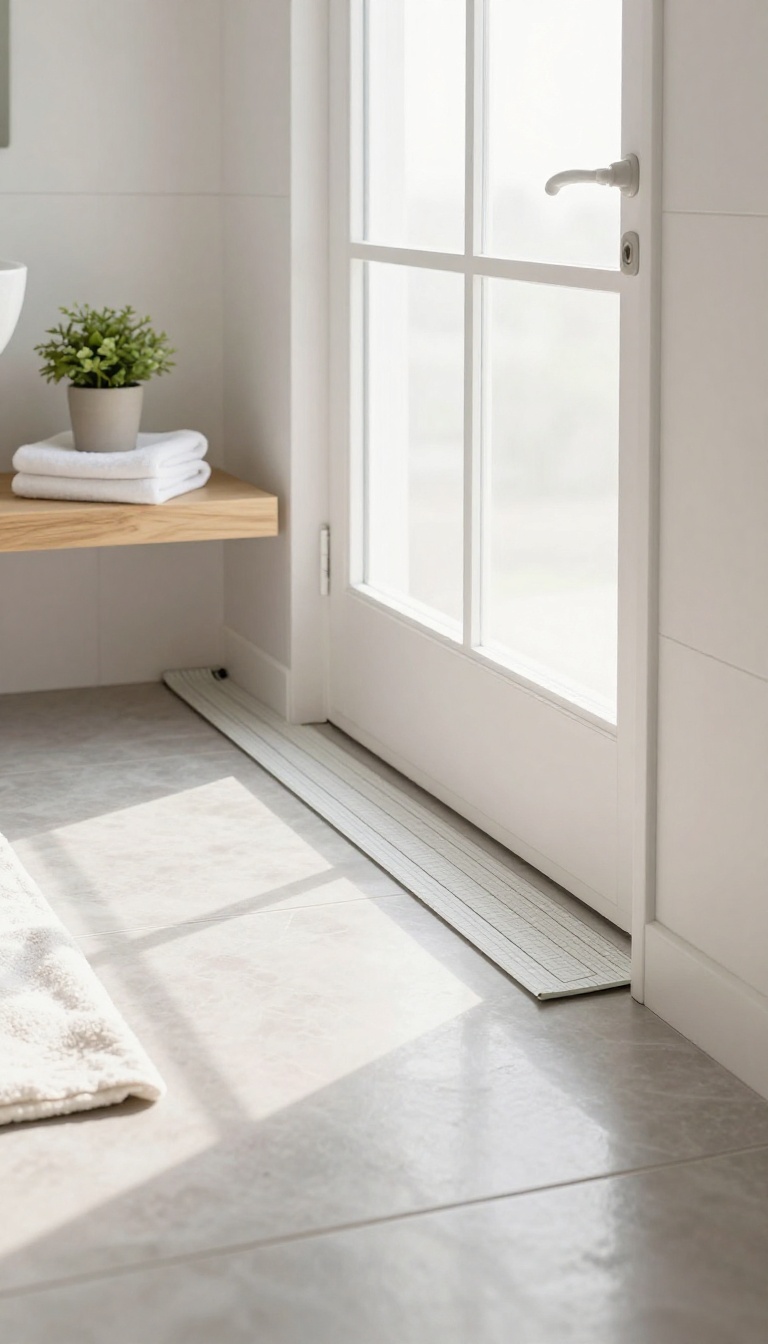
Cold tile underfoot is one of the few downsides of a hard bathroom floor. In a small space, that chill feels even more noticeable because you're standing in one spot more often. Electric floor heating solves the problem without adding bulk or eating into your square footage.
It also dries the floor faster after showers and spills, which matters when every inch gets used. The system hides under the tile, so you keep the look you want while adding a layer of comfort you'll feel every morning.
Heated floor tile isn't a tile material on its own. It's a thin electric mat or cable system installed beneath whatever tile you choose. That means you can pair it with porcelain, ceramic, or even natural stone and still get the warmth.
For a small bathroom, the biggest win is efficiency. You're only heating 30 to 50 square feet, so the system warms up quickly and costs less to run than heating a larger room. Many kits come with programmable thermostats, so you can set a schedule and forget it.
Installation adds a step to the tile job, but it doesn't change the finished height much. Most mats add about 1/8 inch, which is easy to account for at the threshold. If you're already pulling up the floor, it's the smartest time to add it.
How It Works Under Tile
Electric floor heating uses a thin mat with embedded heating wires or a loose cable you space yourself. You roll it out over a leveled subfloor, secure it, and cover it with thinset and tile. A thermostat wired to a floor sensor keeps the temperature steady.
Most small bathrooms need a 120-volt system, which runs on standard household current. That keeps the install simple and avoids a dedicated 240-volt line in many cases. Always check the manufacturer's specs for square footage limits.
Why It Suits Tight Spaces
Small bathrooms have less air volume, so they can feel colder faster. A heated floor offsets that without needing a bulky space heater that eats floor space. It also cuts down on moisture sitting on the tile, which helps prevent slippery spots.
If your bathroom doubles as a laundry or pet-washing spot, the faster drying time is a real bonus. And because the heat is underfoot, you feel it right where you stand, not wasted near the ceiling.
Cost And Installation Basics
A DIY-friendly mat kit for a small bathroom often runs $150 to $400, depending on size and brand. Hiring an electrician to tie it into a circuit adds to the cost, but many setups plug into a GFCI outlet. The tile install itself costs the same as any other floor.
Running costs stay low because you only heat a small area for short periods. A programmable thermostat that lowers the temp when you're away or asleep keeps the bill in check. If you're remodeling anyway, the added expense is modest for the daily payoff.
Pairing It With The Right Tile
Porcelain and ceramic both conduct heat well, so they're ideal over heating mats. Natural stone like marble or slate also works, but it may need a slightly different sensor placement. Avoid thick, insulating materials like cork or rubber if you want the heat to come through.
Large-format tiles mean fewer grout lines, which can make the floor feel smoother and easier to keep clean. Just make sure your installer accounts for the mat thickness so the transition to the hallway stays flush.
FAQ
What's the best tile size for a small bathroom floor?
Large-format tiles (12×24 inches or bigger) reduce grout lines and make the floor look bigger. But small mosaics work well in oddly shaped spaces because they conform to curves and corners.
Do dark floor tiles make a small bathroom look smaller?
Not necessarily. Dark tiles can add depth and drama, especially with light walls and good lighting. Just avoid very busy patterns that overwhelm the eye.
How can I make my small bathroom floor look bigger?
Use a light color palette, lay tiles diagonally, keep grout lines thin and matching, and choose a consistent finish. Avoiding heavy borders also helps.
Are peel-and-stick tiles a good option for small bathrooms?
They can be a quick, budget-friendly fix for rentals or temporary updates. Just make sure the surface is clean and dry, and avoid areas with constant standing water.
What's the most durable tile for a small bathroom floor?
Porcelain and ceramic are top choices because they resist water, stains, and wear. Natural stone like slate or travertine is durable but needs sealing.
Conclusion
Small floors reward smart choices more than big budgets. Pick one idea that fits your space and your tolerance for mess, then live with it for a week before adding anything else.
Watch how the light moves across it in the morning and how it feels underfoot at night. The right tile disappears into your routine, and that is exactly the point.