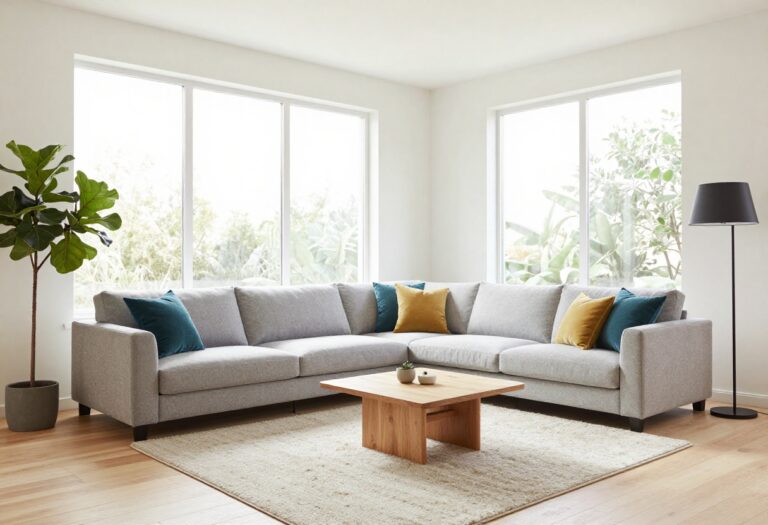
10 Bedroom Chair Ideas for Small Spaces with Cozy Appeal
A bedroom chair can steal back a corner you thought was useless, and in a small room that's a genuine win. The right pick adds a cozy spot to read, dress, or dump tomorrow's outfit without eating your walking space. Size matters less than shape.
A slipper chair tucked into a corner, a wall-mounted seat that floats above the floor, or a foldable stool that slides under the bed all solve the same problem in different ways. You just have to match the piece to the gap you're working with.
Storage helps too. Chairs with hidden compartments, built-in shelves, or slipcovers that catch laundry pull double duty, so nothing sits around purely decorative.
1. The Corner Slipper Chair That Fits Like a Puzzle Piece
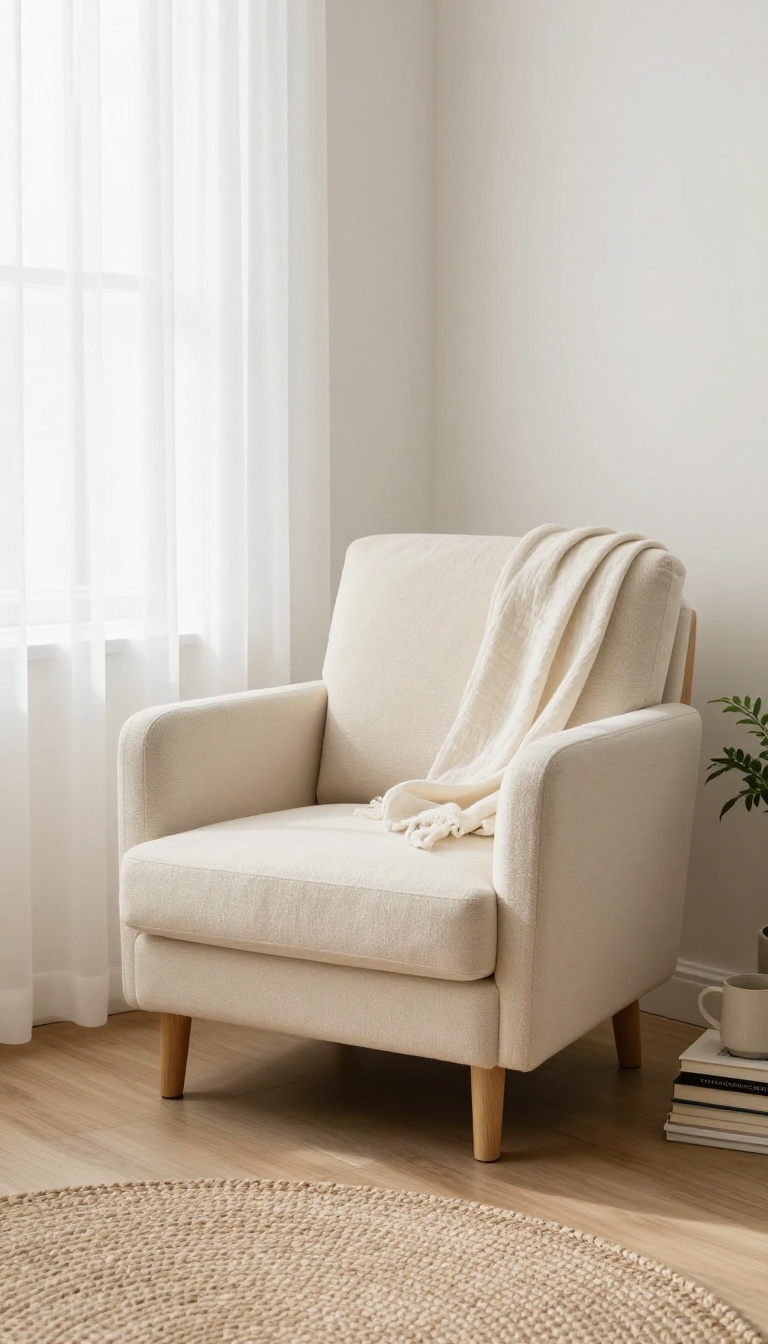
Corners are the most underused real estate in a small bedroom. A slipper chair—low, armless, and compact—slides right into that dead space without crowding the room. It’s like finding a spot you didn’t know you had.
Unlike bulky armchairs, a slipper chair keeps sightlines open and floors clear. You get a cozy perch for reading or pulling on socks, and the room still feels airy. The trick is picking the right shape and angle.
A slipper chair works because it’s essentially a seat on legs. No arms means it doesn’t demand extra width, and its low back won’t block light or make the corner feel heavy. In a tight bedroom, that’s a game-changer.
You’re not just filling a corner; you’re adding function without the bulk. It’s a quiet piece that does its job and stays out of the way.
Why A Slipper Chair Beats A Full Armchair
Armchairs eat up inches you don’t have. A slipper chair typically measures 20–24 inches wide, so it tucks into narrow gaps. It also sits lower, which makes the ceiling feel higher and the room less cramped.
And because there are no arms, you can slide it closer to a wall or window without losing walking space. That’s a win in any small bedroom.
Pick The Right Shape And Size
Look for a rounded back and a seat depth under 20 inches. A curved silhouette softens hard corners and feels more inviting. Measure your corner first—width and depth—then subtract a few inches for breathing room.
A small footprint (think 22 inches wide) is ideal. If the chair has a skirt or exposed legs, either works, but exposed legs visually free up floor space.
Angle It For A Relaxed Look
Don’t shove it flush against both walls. Instead, angle the chair slightly—maybe 15 degrees—so it faces into the room. That small turn makes the corner feel intentional and cozy, not like a storage afterthought.
Add a tiny side table or a floor lamp behind it, and you’ve got a reading nook that feels custom-fit.
2. A Floating Wall-Mounted Seat for Zero Floor Clutter
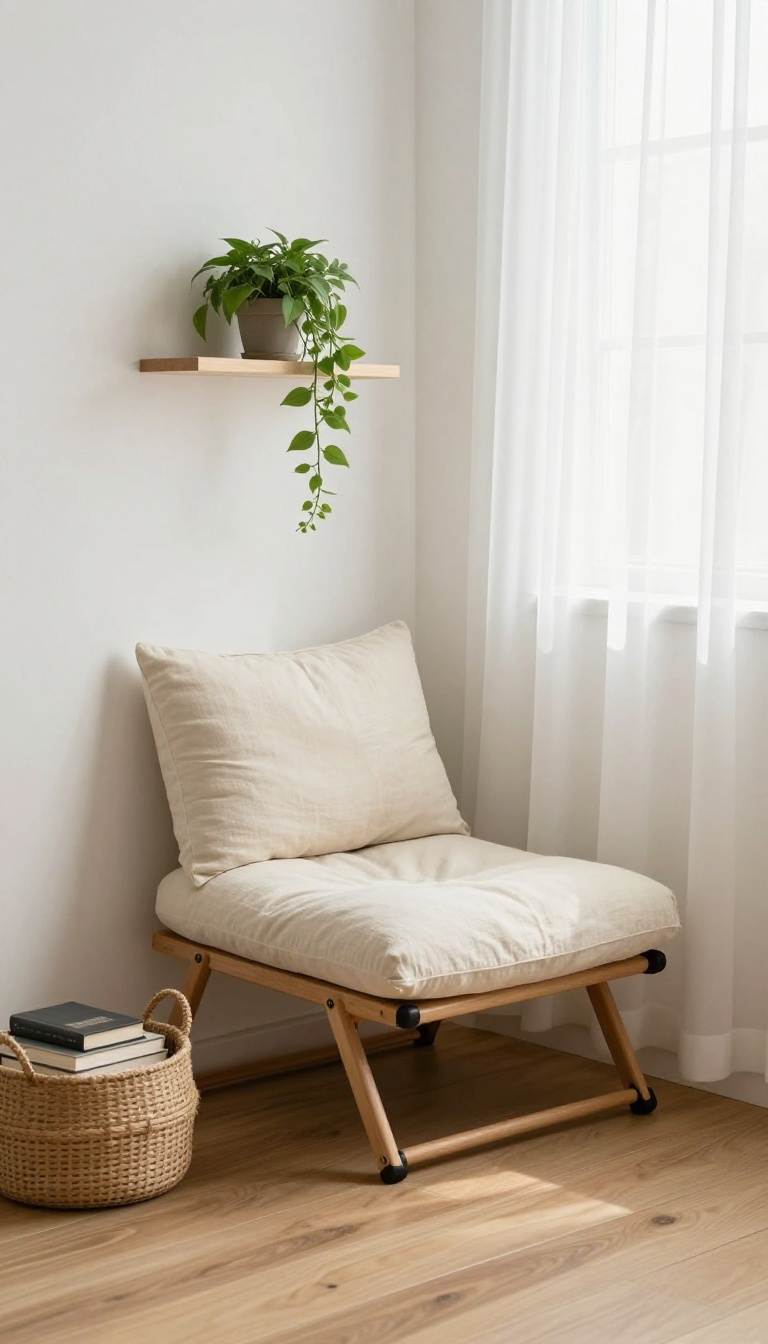
Floor space disappears fast in a small bedroom, and a chair that sits on it only makes things tighter. A wall-mounted folding seat flips that equation. It attaches to the wall, holds you when you need it, and folds flat when you don't.
The floor underneath stays completely open. These seats work almost anywhere there's a stud and a few feet of clearance. Beside a window, they turn a dead strip into a reading nook.
At the foot of the bed, they give you a spot to sit while you pull on shoes. When folded up, they're barely there. It's a simple trade: you give up a permanent footprint and get a seat that appears on demand.
For rooms where every inch counts, that's a smart swap.
A wall-mounted seat isn't a compromise piece. It's a deliberate choice for rooms where the floor is the most valuable real estate you own. You mount it, use it, fold it away, and move on with your day. ### How to Pick the Right Mount Start with the wall itself.
You need solid anchoring, which usually means hitting studs or using heavy-duty toggle bolts rated for the load. A folding chair bracket that supports 250 pounds or more gives you room to sit without second-guessing it. Measure the seat height before you drill.
Most people want the seat about 17 to 19 inches off the floor, the same as a standard dining chair. Sit on a stack of books at that height first if you want to be sure. ### Best Spots for a Floating Seat Beside a window is the classic move. You get natural light, a view, and a reason to linger for ten minutes with a book.
Just check that the folded seat doesn't block the sill or a curtain rod. At the foot of the bed, a floating bench gives you a landing spot for clothes, a laptop, or a mug of tea. It also keeps the walkway clear because nothing juts into the room.
A narrow wall between the closet and the door works too. It's a strip you probably ignore now, and a folding seat turns it into something useful. ### Folding vs. Fixed Floating Seats Folding models are the space-savers.
They hinge down when you need them and tuck flat against the wall when you don't. Some fold up to just a few inches deep, which is barely more than a picture frame. Fixed floating benches don't fold, but they can double as a shelf.
A shallow ledge with a cushion on top gives you a perch and a place to set a lamp or a stack of books. You lose the fold-flat trick, but you gain storage. ### Installation and Safety Basics Find your studs with a stud finder, or knock along the wall until you hear a solid thud instead of a hollow tap. Mark the bracket holes, drill pilot holes, and use the hardware that comes with the seat or better.
If you rent, a wall-mounted seat is still doable. Patch the holes with spackle when you move out, and nobody will know it was there. Just don't skip the anchors and hope for the best.
Test the seat with a firm push before you trust it with your full weight. A little wobble means the bracket isn't tight enough or the wall isn't right for the load.
How To Pick The Right Mount
Start with the wall itself. You need solid anchoring, which usually means hitting studs or using heavy-duty toggle bolts rated for the load. A folding chair bracket that supports 250 pounds or more gives you room to sit without second-guessing it.
Measure the seat height before you drill. Most people want the seat about 17 to 19 inches off the floor, the same as a standard dining chair. Sit on a stack of books at that height first if you want to be sure.
Best Spots For A Floating Seat
Beside a window is the classic move. You get natural light, a view, and a reason to linger for ten minutes with a book. Just check that the folded seat doesn't block the sill or a curtain rod.
At the foot of the bed, a floating bench gives you a landing spot for clothes, a laptop, or a mug of tea. It also keeps the walkway clear because nothing juts into the room. A narrow wall between the closet and the door works too.
It's a strip you probably ignore now, and a folding seat turns it into something useful.
Folding Vs. Fixed Floating Seats
Folding models are the space-savers. They hinge down when you need them and tuck flat against the wall when you don't. Some fold up to just a few inches deep, which is barely more than a picture frame.
Fixed floating benches don't fold, but they can double as a shelf. A shallow ledge with a cushion on top gives you a perch and a place to set a lamp or a stack of books. You lose the fold-flat trick, but you gain storage.
Installation And Safety Basics
Find your studs with a stud finder, or knock along the wall until you hear a solid thud instead of a hollow tap. Mark the bracket holes, drill pilot holes, and use the hardware that comes with the seat or better. If you rent, a wall-mounted seat is still doable.
Patch the holes with spackle when you move out, and nobody will know it was there. Just don't skip the anchors and hope for the best. Test the seat with a firm push before you trust it with your full weight.
A little wobble means the bracket isn't tight enough or the wall isn't right for the load.
3. The Storage Ottoman Chair That Hides Your Clutter
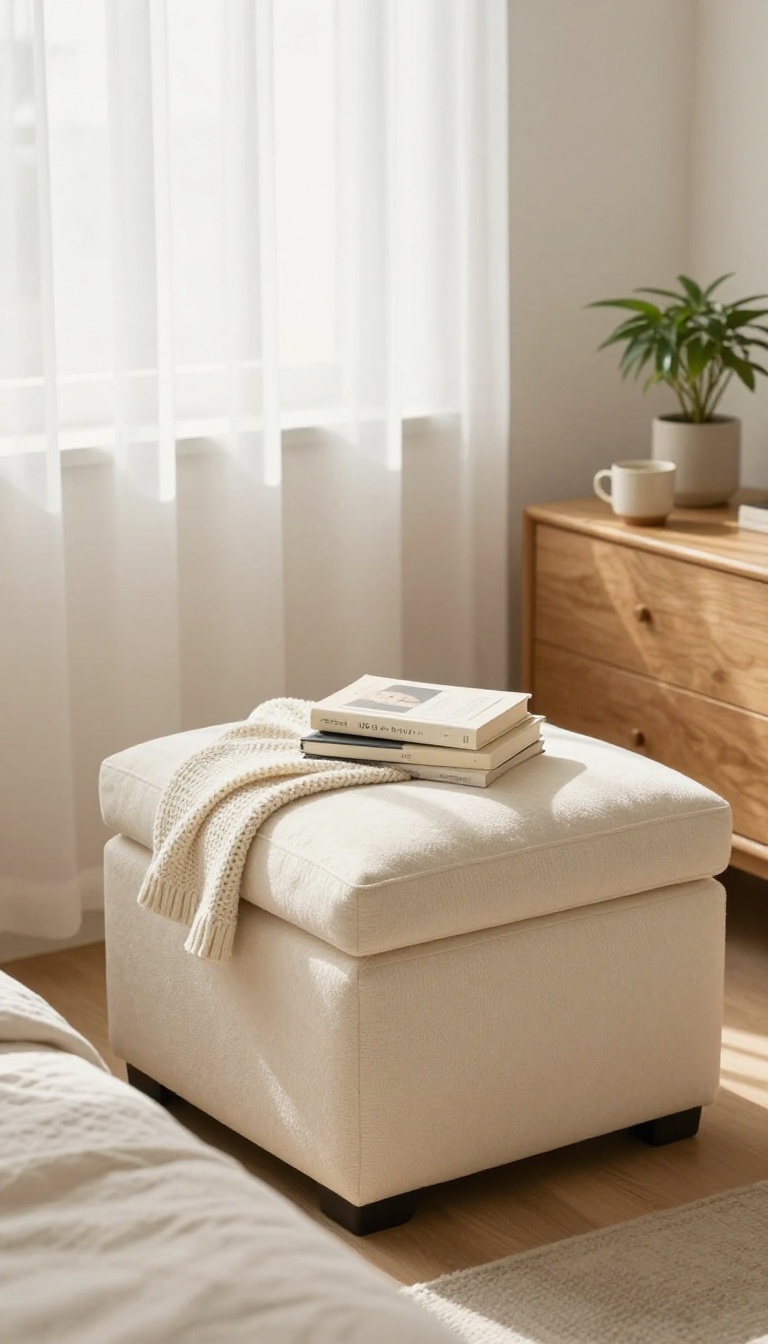
Every small bedroom has a pile somewhere. Maybe it's the throw blanket that never gets folded, the stack of paperbacks you swear you'll read, or the laundry that's clean but not put away yet. A storage ottoman chair gives that pile a home without adding another piece of furniture to the room.
The trick is the lift-up seat. Pop the top, drop your stuff inside, and the chair goes back to looking like a seat instead of a mess. It's one of the few small-space buys that actually earns its footprint.
You're not sacrificing comfort for storage either. A well-made version has a cushioned lid that's firm enough to sit on for real, not just perch on for a second while you tie your shoes.
Why The Cube Shape Works So Well
A cube ottoman chair fits into tight spots that a full armchair can't touch. It tucks beside a dresser, slides under a window, or sits at the foot of the bed without blocking your path to the door. Because the sides are straight, it also reads as intentional furniture rather than a random box.
Push it against a wall and it almost disappears into the room. The flat top doubles as a surface too. Set a lamp, a mug, or your phone on it when you're not sitting there.
What To Stash Inside
Think about what actually piles up in your room and size the chair around that. A 15- to 20-gallon interior handles a folded throw, a couple of sweaters, and a small stack of books without overflowing. Laundry is the big one.
If you're tired of a hamper eating floor space, a lined ottoman chair swallows a full load and keeps it out of sight until wash day. Keep a few things in mind: heavier items go on the bottom, and anything you need daily should sit near the top so you're not digging.
What To Look For Before You Buy
Check the lid first. A good one has a hinge or a soft-close mechanism so it doesn't slam down on your fingers, and it stays open while you load it. Look at the cushion next.
Foam that's too soft will flatten after a few weeks of sitting. You want something with enough density to hold its shape. Finally, check the weight limit and the fabric.
A removable, washable cover is worth paying a little more for in a bedroom, where dust and pet hair add up fast.
Making It Feel Cozy, Not Clinical
Storage pieces can look a bit utilitarian if you let them. A textured fabric like boucle, linen, or a chunky weave softens the cube shape right away. Add a small throw draped over one corner and a pillow on top.
Now it reads as a cozy reading nook that happens to hide your clutter, not a box with a lid. A warm wood tray on top holds a candle or a book and gives the piece a purpose when you're not using it as a seat.
4. A Narrow Accent Chair with a Skinny Profile
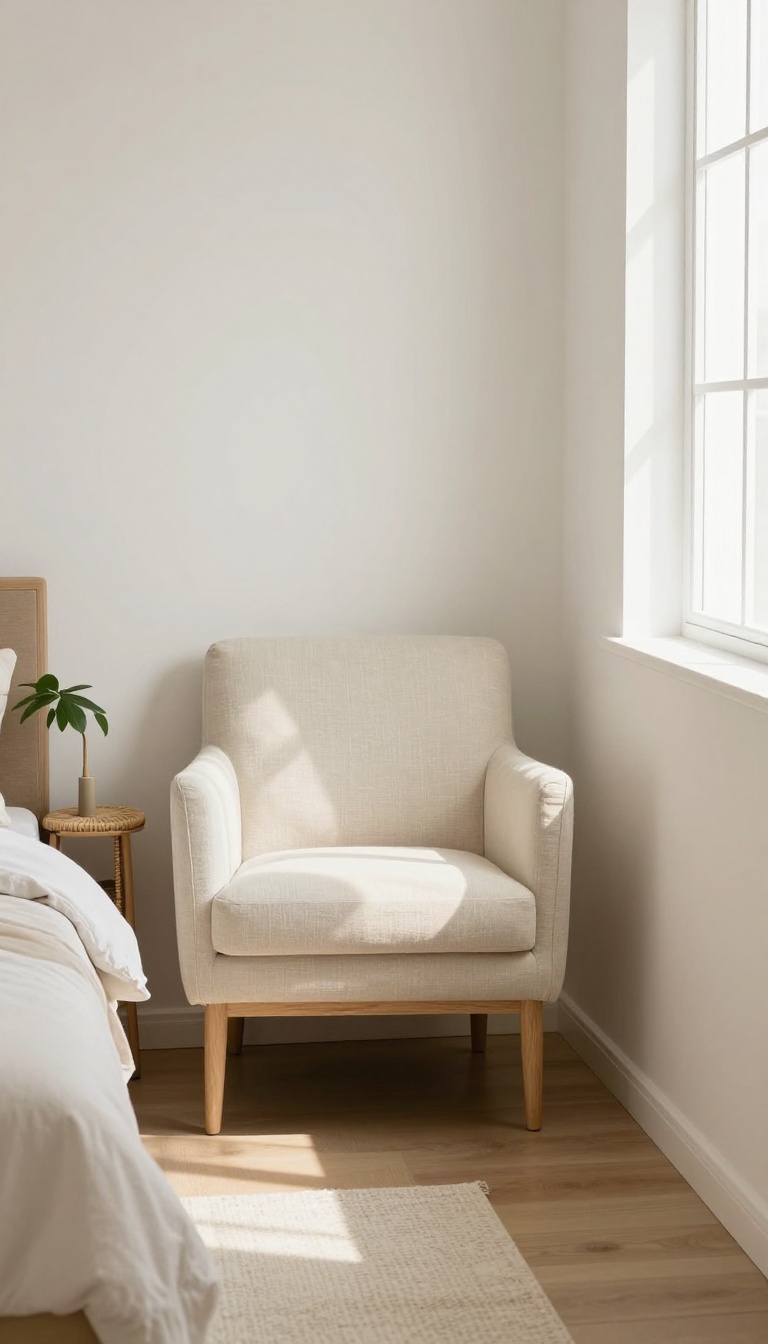
Some gaps in a small bedroom don't fit a standard chair, no matter how you angle it. A narrow accent chair solves that problem by measuring under 24 inches wide, which is slim enough to slip into the strip of floor between the bed and the wall. The trick is keeping the frame light so the chair reads as furniture, not a roadblock.
A skinny profile does two jobs at once: it fits where nothing else will, and it lets light and sightlines pass through. Chairs with tapered legs and open frames feel almost weightless compared to a bulky club chair. That visual breathing room matters just as much as the actual inches you save.
Measure the gap before you shop. If you have 26 inches between the mattress edge and the wall, a 22-inch chair leaves you a little wiggle room for a lamp or a small side table. Anything wider and you'll be squeezing past it every night.
Look For Legs, Not Skirts
Tapered or splayed legs lift the chair off the floor and let you see underneath it. That open space keeps the corner from feeling like a solid block. Upholstered skirts hide storage, but they also swallow visual space, so skip them in a tight room.
Keep The Back Low And Slim
A low back keeps the chair below the window line and stops it from dominating the wall. Slim arms or no arms at all shave off precious inches. If you need armrests, choose ones that taper inward rather than sticking straight out.
Choose Light Fabrics And Finishes
Pale linen, woven cotton, or a light wood frame bounce light around the room. Dark, heavy upholstery in a tight corner can feel like a shadow. A washable slipcover is a smart bonus if the chair doubles as a spot for tossing clothes.
5. The Swivel Chair That Turns One Spot into Two
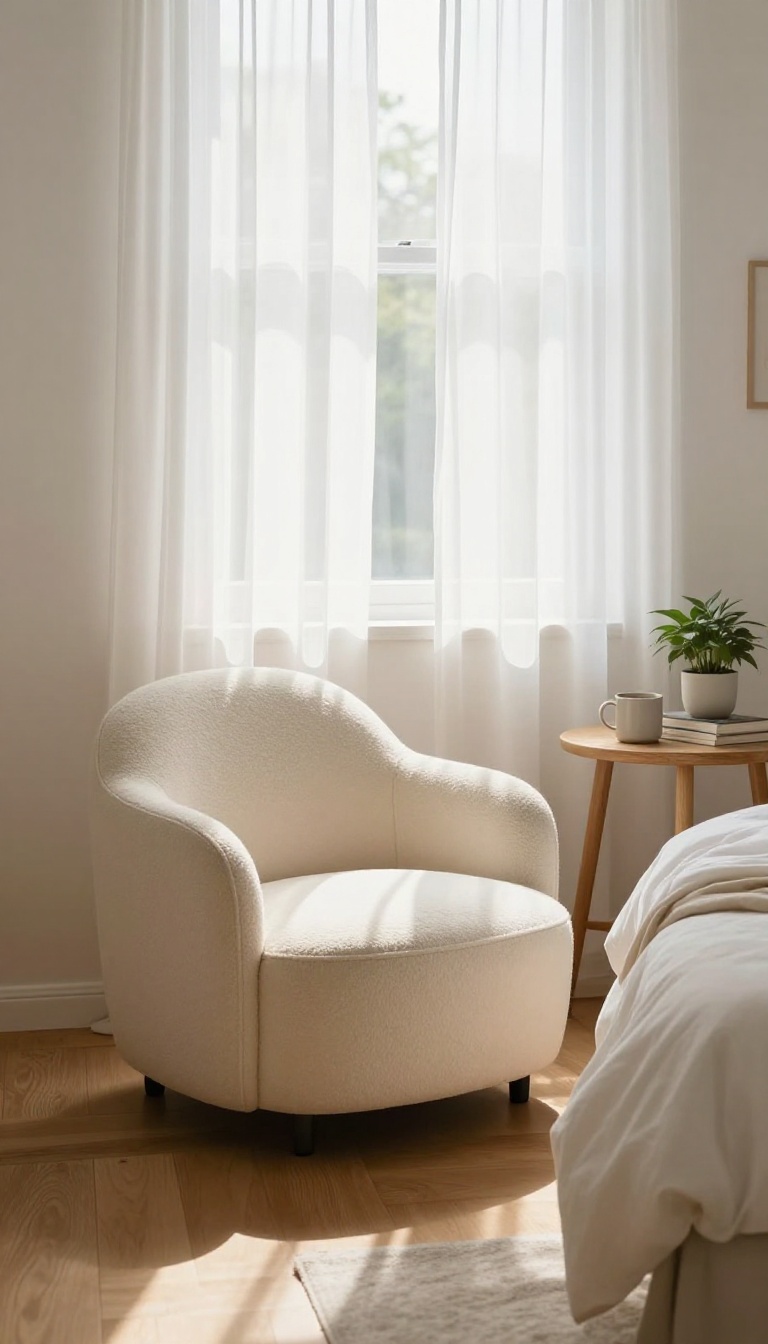
A swivel chair gives you two rooms in one footprint. Spin it toward the bed and it's a spot to sit while you pull on shoes. Turn it toward the window and it becomes a reading nook.
No dragging, no rearranging, no asking anyone to move. In a small bedroom, that flexibility matters more than extra inches. You get the function of a chair plus the option to change your view whenever you want.
It's the closest thing to having a corner that reshapes itself.
Most small bedroom chairs lock you into one position. You face one direction, and that's it. A swivel base breaks that rule without taking up any more floor space than a fixed chair.
The trick is picking the right size and base. Too big and it crowds the room. Too tall and it blocks sightlines.
Get it right and the chair almost disappears into the corner until you need it.
Why The Swivel Matters In A Tight Corner
A fixed chair forces you to choose: face the room or face the wall. A swivel chair lets you do both. Sit down facing your bed to chat or watch TV, then rotate toward a window for daylight and a book.
That simple motion replaces the need for two separate seating spots. In a bedroom that's maybe 10 by 10, that's a real gain. You're not adding furniture; you're adding options.
Picking The Right Size And Base
Look for a swivel chair with a compact footprint, roughly 24 to 30 inches wide. Anything wider starts to feel like a living room chair that wandered into the wrong room. A round base or a four-prong base works best in tight spots.
Avoid wide, splayed legs that catch on rugs or bump into nightstands. A low back keeps the room feeling open, while a mid-back gives more support without blocking the view.
Placement That Keeps It Useful
Put the chair in a corner near the bed but not jammed against it. Leave about 18 inches of clearance so you can swivel without hitting anything. If the corner is too tight, angle the chair slightly outward.
You want a clear arc of motion. Test it by sitting down and spinning slowly. If your knees bump the wall or the bed frame, shift the chair a few inches.
Small adjustments make a big difference.
Styling It So It Blends In
A swivel chair can look like an office chair if you're not careful. Choose one with a fabric or leather upholstery that matches your bedding or curtains. A neutral tone keeps it from shouting for attention.
Add a small throw pillow or a folded blanket on the seat. It softens the look and makes the chair feel like part of the room, not a piece of gym equipment. When you're not using it, it just looks like a cozy corner seat.
6. A Foldable Chair You Can Stash Under the Bed
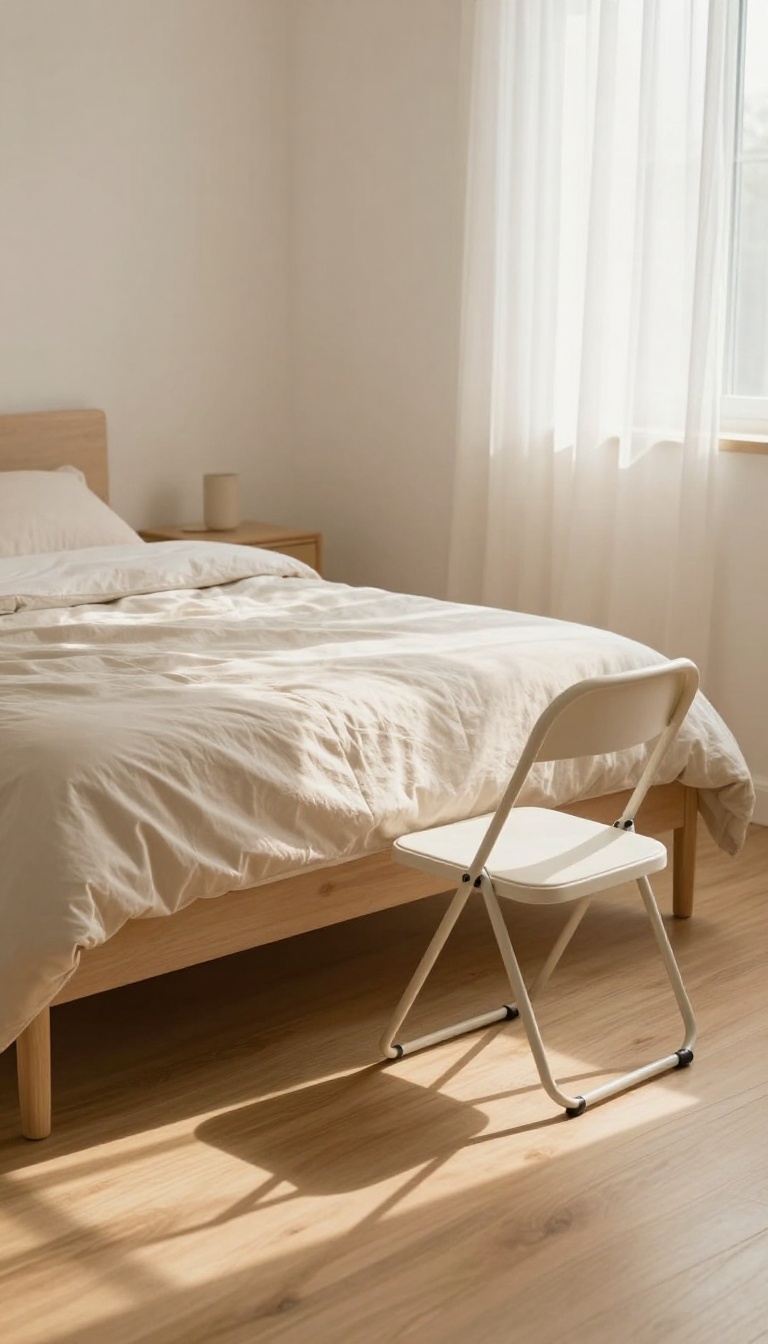
A folding chair is the ultimate space-saver because it only exists when you need it. When you're done, it collapses into a slim package that slides under the bed or tucks behind a door. That means you get a real seat without sacrificing permanent floor space.
The trick is picking a lightweight, slim design that's actually comfortable. You don't want a heavy wooden folding chair that's a pain to move. Look for models that fold flat and weigh under 10 pounds.
Not all folding chairs are created equal. Some are bulky and awkward, while others are designed specifically for tight spaces. The best ones for a small bedroom are those that fold down to just a few inches thick.
You also want something that's easy to open and close one-handed. If it's a hassle, you won't use it. And since it's going under the bed, make sure it's clean and doesn't have sharp edges that could scratch your floor or bed frame.
What To Look For
A good folding chair for under-bed storage should be lightweight, ideally under 10 pounds. Look for a flat-fold design that gets no thicker than 4 inches. Materials like aluminum or plastic are lighter than wood.
Also check the seat height—you want something that's comfortable for sitting, not a tiny camp stool.
Best Types For Small Bedrooms
Butterfly chairs are a classic choice because they fold into a compact bundle. They have a sling seat that's surprisingly comfy. Another option is a folding desk chair with a padded seat and back.
These often fold flat and can double as a desk chair during the day. Just make sure the folded dimensions fit under your bed.
Storage Tips
Before you buy, measure the clearance under your bed. You need at least 4-6 inches of height. If your bed has drawers or a low frame, consider hanging the chair behind the door instead.
A simple hook on the back of the door can hold a lightweight folding chair. That keeps it accessible and out of the way.
7. The Window Nook Chair with a Built-In Shelf
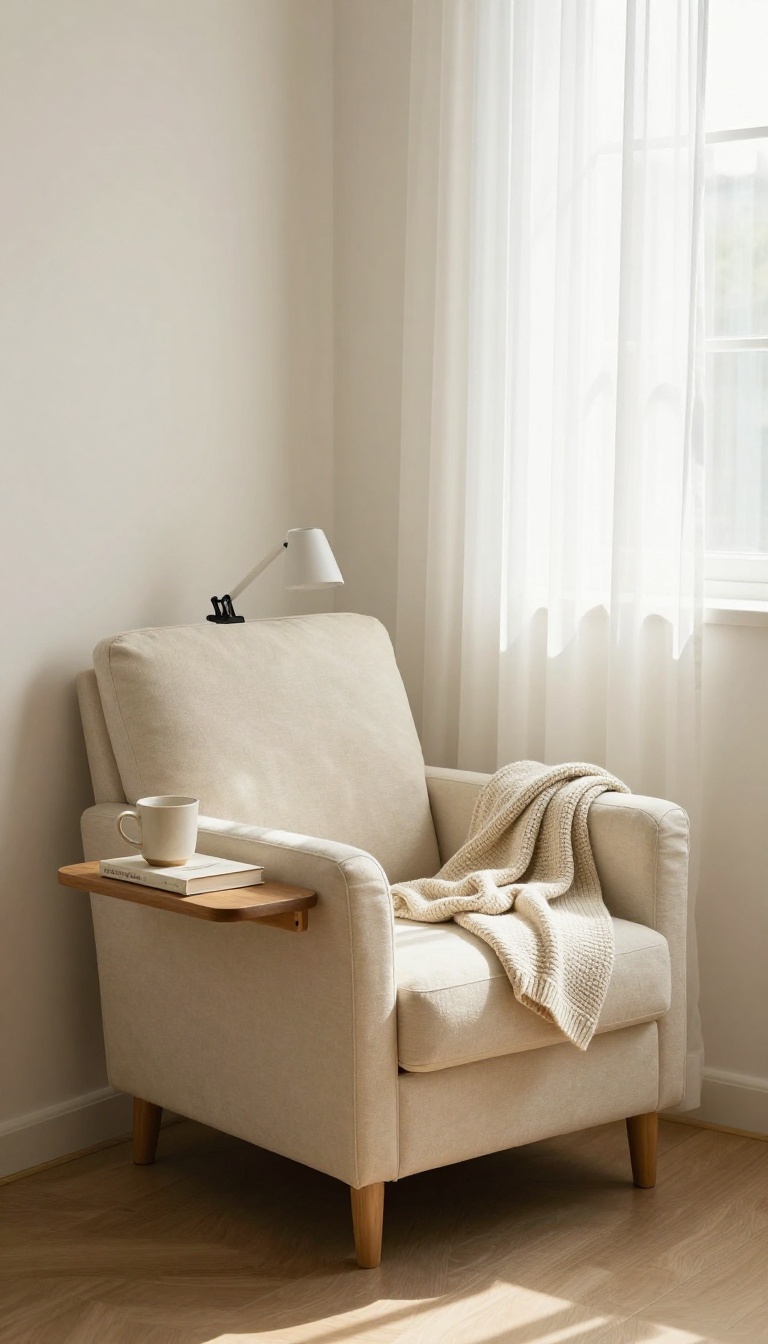
A bare window corner often sits empty because it's too narrow for a side table and too awkward for a full desk. A chair with a small attached shelf solves that problem in one piece. It gives you a place to set a mug, a book, or your phone without adding furniture that eats floor space.
The result feels intentional, not improvised.
The built-in shelf is the whole point. It turns a chair into a tiny command center for reading, sipping coffee, or scrolling before bed. You get the comfort of a seat plus the function of a surface, all within the same footprint.
That matters when every inch of your bedroom is already spoken for.
What To Look For
Look for a shelf that's wide enough for a mug and deep enough for a paperback. A lip or raised edge keeps things from sliding off when you shift in the chair. If the shelf folds down or tucks away, even better for tight corners.
Making It Cozy
Add a small throw blanket and a clip-on lamp to warm up the spot. A cushion that ties to the backrest keeps the chair from feeling stiff. Keep the shelf clear except for one or two items so it stays useful, not cluttered.
Placement Tips
Angle the chair slightly toward the window so you get natural light without glare on your phone or book. Leave a few inches between the chair and the wall so the shelf doesn't bump. If the window gets drafty, a sheer curtain behind the chair softens the look and blocks cold air.
8. A Pouf or Beanbag Chair That Softens Hard Corners
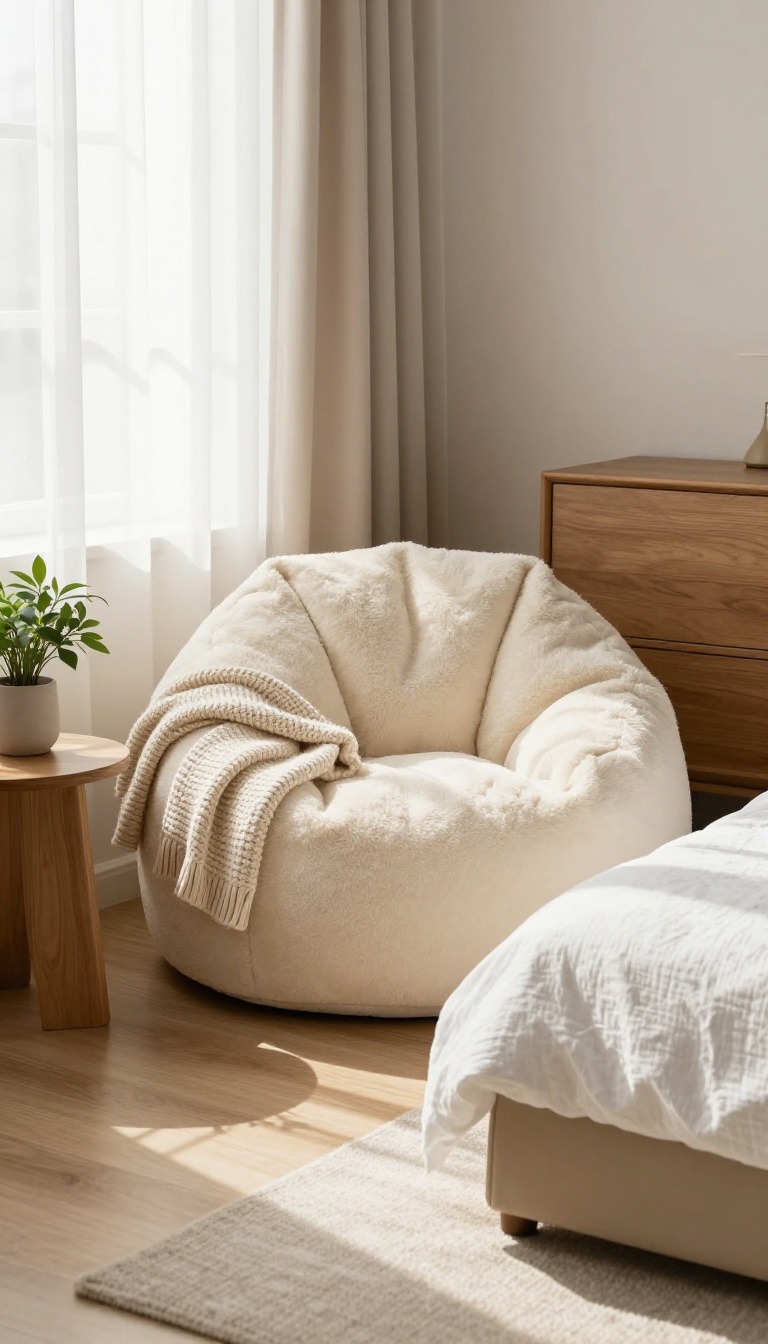
Poufs and beanbags bring a soft, sink-in feel that rigid chairs can't match. They're lightweight, so you can move them from the reading nook to the closet and back. In a tight bedroom, that kind of flexibility keeps the room feeling open and cozy.
A pouf or beanbag chair works best where a traditional seat would feel too stiff or take up too much visual weight. It fills awkward corners without blocking traffic, and its rounded shape balances out boxy furniture. Plus, it adds a layer of texture that makes the room feel warmer.
Why Soft Seating Works In Tight Spots
Hard-edged chairs can make a small room feel even more cramped. A pouf or beanbag has no sharp corners, so it visually softens the space. It also sits low, which keeps sightlines open and makes the ceiling feel higher.
Pick The Right Fill And Cover
Beanbags filled with shredded foam hold their shape better than polystyrene beads, which tend to flatten over time. Look for covers that are removable and washable, especially in a bedroom where dust and spills happen. Faux fur or chunky knit adds cozy texture, while cotton canvas is easier to clean.
Move It Where You Need It
The real advantage of a pouf or beanbag is portability. Toss it in the corner for daytime reading, then pull it out when a friend sleeps over. Some styles even have a handle, so you can drag it to the closet without a struggle.
9. The Slipcovered Chair That Doubles as a Laundry Drop Zone

Laundry has a way of landing on the nearest flat surface, and in a small bedroom that surface is usually the chair. A slipcovered chair leans into that habit instead of fighting it. The cover comes off and goes in the wash, so the chair stays clean even when it's buried under yesterday's clothes.
Pick one in a neutral fabric that blends with your bedding, and it won't compete for attention.
A slipcovered chair solves a problem most small bedrooms share: there's never a good spot for the clothes you've worn once but aren't ready to wash. A regular upholstered chair gets grimy fast when it becomes the default drop zone. A slipcover changes that math.
You toss the jeans and the hoodie on the seat, and when the pile gets sad, you strip the cover and wash it with the towels. The chair keeps working as a chair. It just also absorbs the mess that small rooms create.
Why Washable Matters More Than Pretty
Fabric you can't clean turns a chair into a permanent stain magnet. Look for covers that unzip or tie off and can go in a home machine without fading or shrinking. Cotton blends and linen-cotton mixes hold up well and feel soft against bare legs.
If the cover is dry-clean only, you'll avoid using the chair the way you actually need to. Washable is the whole point.
Blend It With Your Bedding
A slipcovered chair sits close to the bed, so it reads as part of the same visual zone. Choose a color that already shows up in your duvet, sheets, or throw pillows. Oatmeal, warm gray, soft white, and muted sage all disappear into most bedding palettes.
A loud pattern fights the bed for attention and makes a small room feel busier than it is. Quiet fabric keeps the corner calm.
Make The Drop Zone Work
A chair that catches clothes still needs a little structure. Hang a hook on the wall above it for the pieces you'll wear again tomorrow. Keep a small basket on the floor beside the chair for anything that's truly dirty.
The chair handles the in-between stuff, and the basket handles the rest. That two-step system keeps the pile from becoming a mountain.
Sizing It For A Tight Corner
Slipcovered chairs come in armless and slim-arm styles that fit where a full armchair won't. Measure the corner and leave at least a foot of walking space in front of the seat. A low back keeps sightlines open, which makes the room feel bigger.
If the chair doubles as your reading spot, add a small lumbar pillow you can toss aside when laundry takes over.
10. A Vintage School Chair or Stool for Tight Budgets
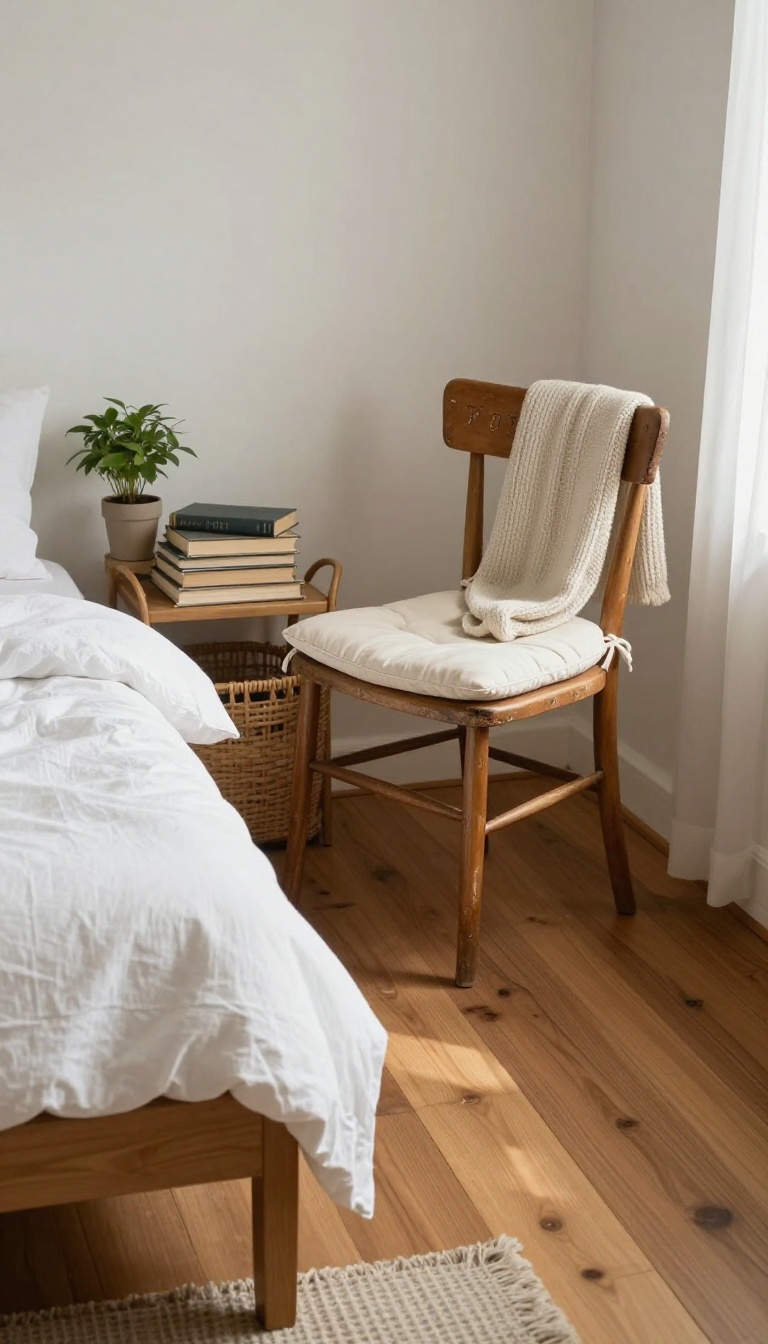
Vintage school chairs and wooden stools show up at flea markets, thrift stores, and online listings for next to nothing. They're narrow, sturdy, and have a built-in charm that new furniture rarely matches. Toss on a cushion and a throw, and you've got a cozy perch that barely touches your floor plan.
These pieces were built for cramped classrooms, so they're naturally slim and tough. A standard school chair is about 18 inches wide, which means it can slip into spots where a full-size chair would feel like a roadblock. Stools are even more compact, and many stack or tuck away when you need extra floor space.
The trade-off is comfort, but that's easy to fix. A simple seat pad softens the hard wood or metal, and a folded blanket over the back adds warmth. You're not trying to create a lounge chair—just a quick spot to sit while you pull on socks or scroll your phone before bed.
Best of all, these pieces have history. Scratched paint, worn edges, and old initials carved into the wood give them a story that mass-produced furniture can't fake. In a small bedroom, that kind of character earns its keep.
Where To Find One For Cheap
Check local thrift shops, estate sales, and online marketplaces first. School districts sometimes sell off old furniture in bulk, so keep an eye on auction sites. You can also ask around—someone's basement or garage might be hiding one.
Expect to pay anywhere from $5 to $30, depending on condition and style.
Making It Comfortable
A tie-on cushion is the easiest upgrade, and it stays put when you stand up. Look for one with a non-slip bottom or straps. For extra coziness, drape a small throw blanket over the backrest.
If the seat is too low, add a thick pillow; if it's too high, a footstool solves the problem.
Styling It In A Small Room
Place the chair in a corner or beside your bed as a makeshift nightstand. The narrow profile means it won't block walkways. Lean a favorite book or a small plant on the seat to make it look intentional.
If you have a stool, use it as a side table when you're not sitting on it.
FAQ
What is the best chair for a really tiny bedroom?
A wall-mounted folding chair or a slim slipper chair under 24 inches wide usually works best. Both keep the floor clear and still give you a place to sit.
How do I keep a bedroom chair from making the room feel crowded?
Choose a chair with an open frame, tapered legs, or a low back. Light colors and visible floor space under the chair also help the room feel bigger.
Can I use a storage ottoman as a bedroom chair?
Yes, as long as it has a firm, cushioned lid. A storage ottoman works great for hiding clutter and gives you a soft spot to sit, but it is not ideal for long reading sessions.
Where should I place a chair in a small bedroom?
Tuck it into a corner, beside a window, or at the foot of the bed if there is room. Avoid placing it in the main path between the door and the bed.
Do I really need a chair in a small bedroom?
Not always. If the room feels tight, a pouf or a folding chair gives you the option of seating without a permanent commitment. Skip it if it blocks your movement.
Conclusion
The payoff of a good bedroom chair shows up fast: you stop tossing clothes on the floor, you finally have a spot to read, and the room feels finished instead of half-done. Pick one idea from this list that solves your biggest annoyance, whether that's clutter, bad lighting, or bare corners. Give it a week before you buy anything else.
Notice where you naturally sit and what still feels missing. Small rooms rarely need more furniture—they need the right one.