13 Patio Backyard Ideas for Stylish Open-Air Living
A patio that's just a slab of concrete with a lonely chair isn't living up to its potential. You want a space that feels like an extension of your home, where you can relax, entertain, and soak up the outdoors. The good news?
You don't need a massive budget or a professional designer to get there. With a few smart choices, you can turn even a small patio into a stylish open-air room. Think comfortable seating, layered lighting, and a touch of greenery.
The key is to focus on what makes outdoor spaces work: flow, function, and a vibe that suits you. In this list, we'll walk through 13 patio backyard ideas that blend practicality with style.
1. Create a Cozy Conversation Zone with Sectional Seating
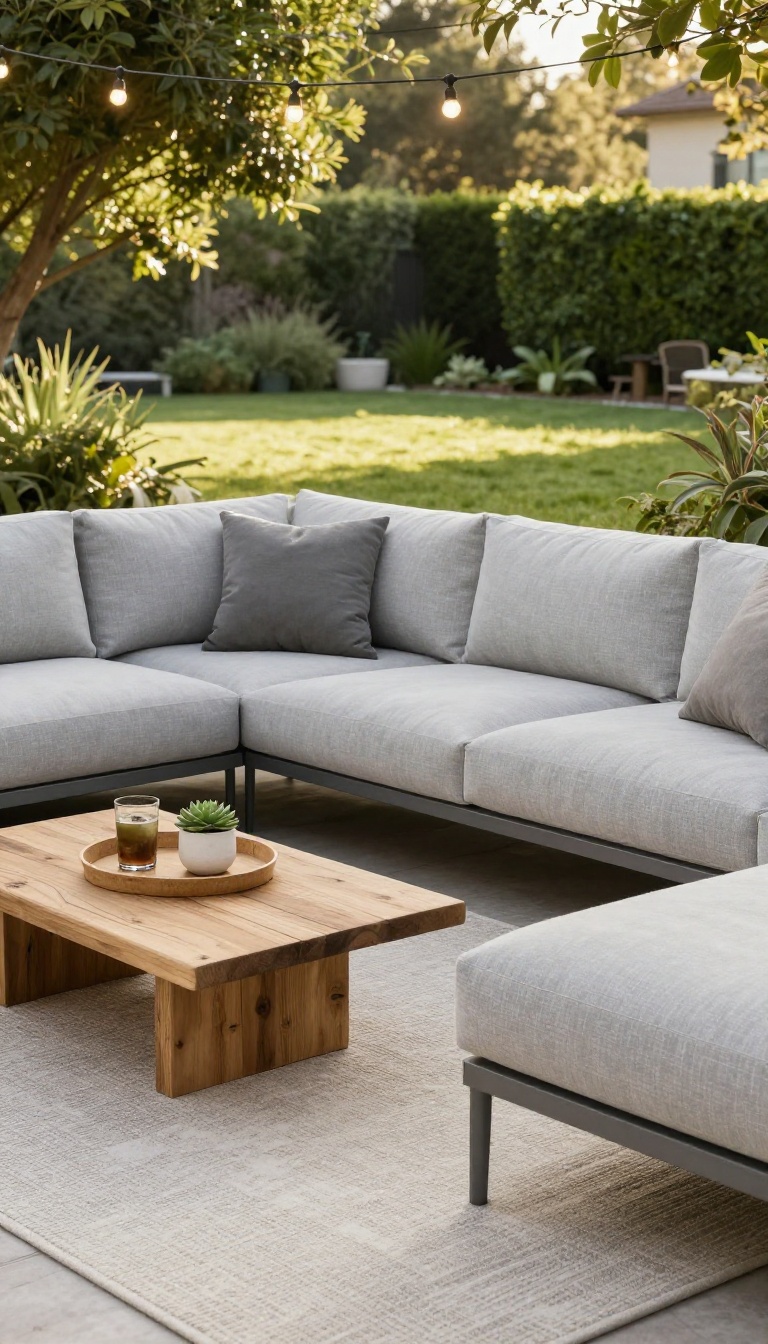
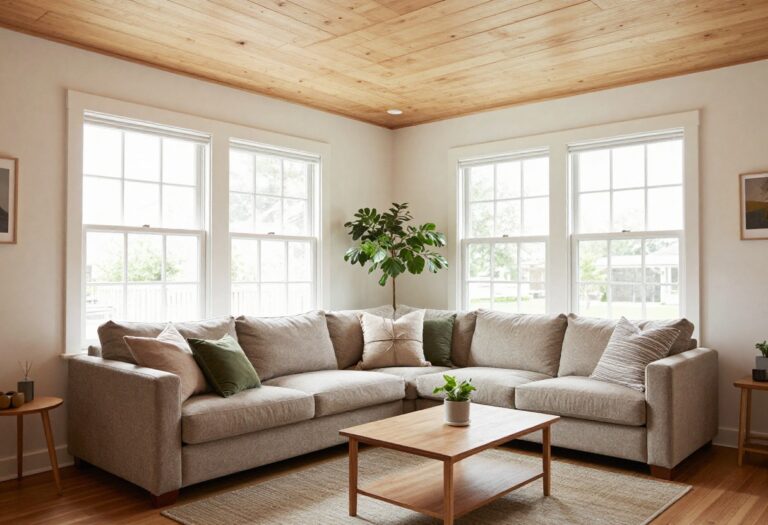
A sectional sofa instantly turns an open patio into a defined conversation area. Instead of scattering chairs around the space, you anchor everything in one comfortable spot. That simple move makes the patio feel intentional and inviting.
Sectionals work because they give everyone a place to land without feeling cramped. You can stretch out, face each other easily, and still have room for drinks or a tray of snacks. The L-shape or U-shape naturally guides people into a circle, which keeps conversation flowing.
When you're choosing a sectional, think about how you'll use the space. If you entertain often, go bigger. If it's mostly for quiet mornings, a smaller two-piece modular set might be all you need.
The goal is comfort without blocking the flow to the yard or grill.
Pick The Right Size For Your Patio
Measure your patio before you shop. Leave at least 18 inches between the sectional and any walls or railings so people can walk behind it. For small patios, a three-seat sectional with a chaise works well.
Larger patios can handle a full U-shape with room for a coffee table in the middle.
Choose Weather-ready Materials
Outdoor sectionals need to handle sun, rain, and temperature swings. Look for powder-coated aluminum frames, which won't rust. Cushions should be made from solution-dyed acrylic or olefin fabrics—they resist fading and dry quickly.
Quick-dry foam is worth the upgrade if you live in a rainy area.
Add A Rug And Coffee Table To Anchor The Zone
An outdoor rug defines the conversation area and makes it feel like a real room. Choose a polypropylene rug that can handle hose-downs. A low coffee table or a pair of nesting tables gives everyone a spot for drinks.
Keep the table lightweight if you need to move it for storage.
2. Add a Fire Pit for Warmth and Ambiance
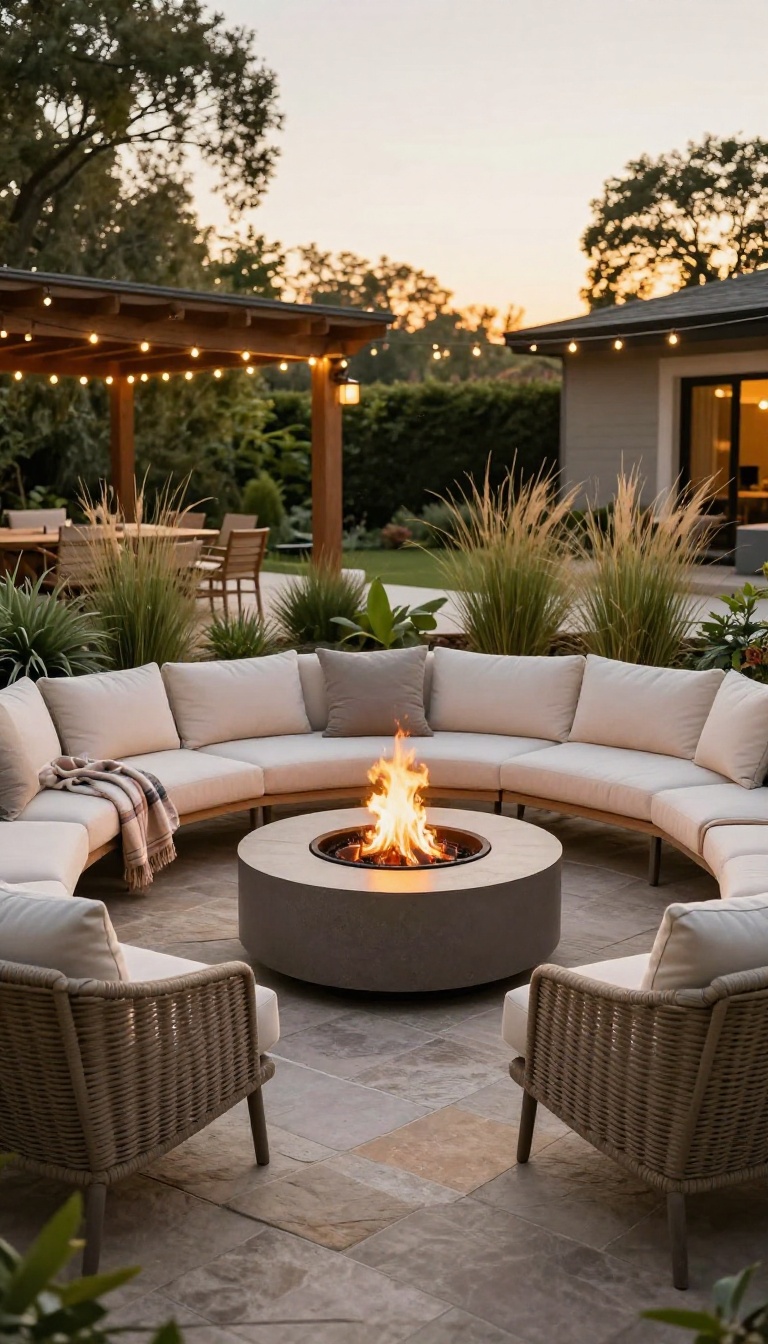
A fire pit does more than keep you warm—it becomes the natural gathering spot on your patio. As the sun sets and the air cools, a crackling fire draws people in and encourages lingering conversations. It's an instant upgrade that makes your outdoor space feel cozy and complete.
Fire pits come in all shapes and sizes, from sleek metal bowls to rustic stone structures. The right one depends on your patio's layout, your budget, and how you plan to use it. But no matter which style you choose, a fire pit adds a layer of warmth and ambiance that's hard to beat.
Choosing The Right Fire Pit
Start by deciding between wood-burning and gas models. Wood-burning pits offer that classic crackle and smoky scent, but they require more maintenance and cleanup. Gas models light instantly and burn clean, making them a convenient choice for small patios or areas with burn restrictions.
Portable fire pits are great if you want flexibility, while built-in versions create a permanent focal point. Consider your available space and local regulations before you buy.
Placement And Safety
Position your fire pit at least 10 feet away from your house, overhanging branches, and anything flammable. Keep it on a level, non-flammable surface like stone, concrete, or brick—never directly on a wood deck unless you use a heat shield. Always check local burn laws and keep a fire extinguisher or bucket of sand nearby.
Safety first, so you can relax and enjoy the flames without worry.
Seating And Atmosphere
Arrange seating in a circle or U-shape around the fire pit to encourage conversation. Adirondack chairs, a curved sectional, or even floor cushions work well. Add a few blankets and some soft lighting—string lights or lanterns—to enhance the mood.
The fire itself provides a mesmerizing focal point, so keep other decor simple and let the flames do the talking.
3. Install a Pergola for Shade and Style
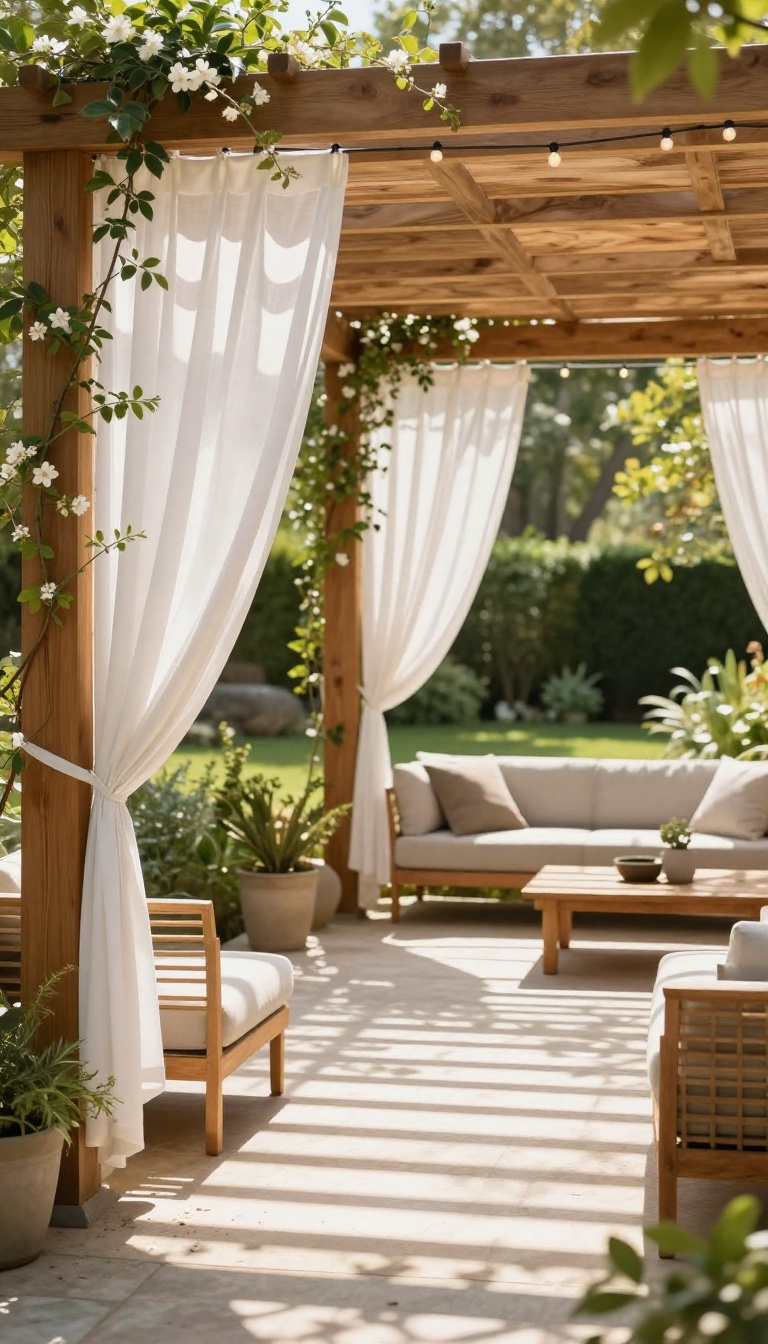
A pergola adds instant character to a plain patio, turning an open slab into a defined outdoor room. It provides partial shade so you can enjoy sunny afternoons without feeling baked. Plus, it creates a natural frame for climbing plants, lights, or drapes.
Unlike a solid roof, a pergola lets you control how much sun you get. The open slats cast shifting shadows that keep things cool but not gloomy. And because it's open, air still moves freely, so you don't lose that breezy outdoor feel.
Pick The Right Spot
Place your pergola over a seating or dining area to maximize shade where you need it most. If your patio gets harsh afternoon sun, orient it so the slats run east to west. That way, you block the strongest rays while still letting in softer morning light.
Choose Your Material
Wood pergolas bring warmth and can be painted or stained to match your home. Aluminum or vinyl options hold up better in wet or humid climates and need less upkeep. Both styles come in kits that are surprisingly easy to assemble.
Dress It Up
String lights across the beams for evening ambiance, or hang sheer curtains for a soft, romantic look. Climbing vines like jasmine or ivy add greenery and extra shade over time. Just avoid heavy plants that could damage the structure.
4. Layer Outdoor Rugs for Comfort and Color
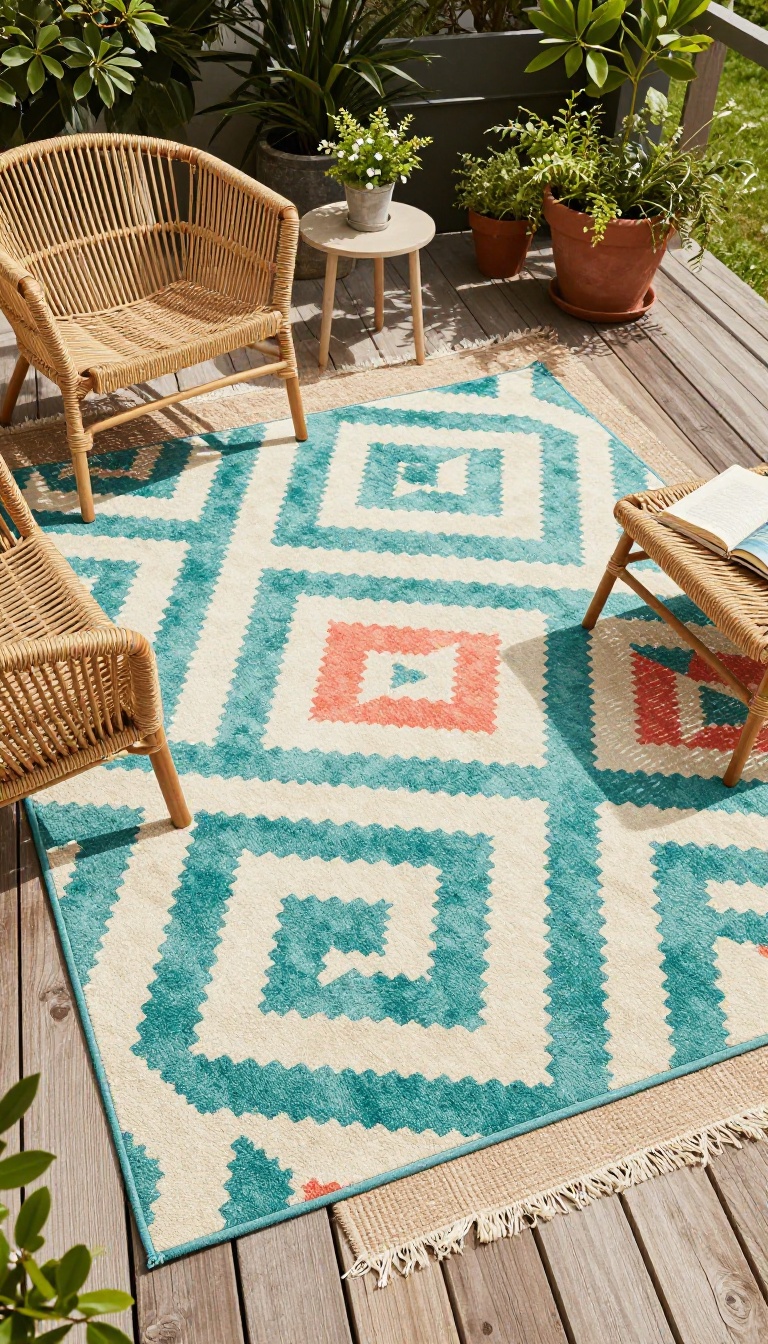
Bare concrete or wood decking can make a patio feel unfinished, no matter how nice your furniture is. An outdoor rug changes that instantly, adding softness underfoot and a splash of color that ties everything together. It's one of the easiest upgrades you can make, and it works on just about any surface.
Beyond looks, rugs help define zones. A rug under a dining set says "eat here, " while one near a lounge chair says "relax here. " That visual cue keeps your patio from feeling like one big, undifferentiated space.
Best of all, weather-resistant rugs are built to handle sun, rain, and foot traffic. So you get the cozy feel of an indoor room without the worry.
Start by measuring your space and choosing a rug size that fits your furniture arrangement. A common mistake is going too small—rugs should be large enough that at least the front legs of your furniture sit on them. That anchors the seating area and prevents the rug from looking like a postage stamp.
Material matters more outdoors than in. Look for polypropylene, recycled plastic, or solution-dyed acrylic. These resist fading, mold, and mildew.
Avoid natural fibers like jute or wool unless your patio is fully covered and dry. Color and pattern are your chance to have fun. A bold geometric print can wake up a neutral palette, while a subtle stripe adds texture without overwhelming.
If you have patterned cushions, choose a rug with a simpler design so they don't compete. Finally, don't forget maintenance. Most outdoor rugs just need a quick hose-down and air-dry.
Shake them out regularly to keep debris from working into the fibers.
Pick The Right Size And Shape
Measure your seating area first. For a conversation set, a 5×8 or 8×10 rug usually works. For a dining table, add at least 24 inches on all sides so chairs stay on the rug when pulled out.
Round rugs soften square patios, while rectangular ones suit long, narrow spaces.
Choose Weather-proof Materials
Polypropylene is the go-to for outdoor rugs—it's affordable, durable, and resists moisture. Recycled plastic (like PET) is eco-friendly and dries fast. Solution-dyed acrylic holds color well in direct sun.
Skip wool, jute, and cotton; they stay damp and grow mildew.
Use Rugs To Define Zones
On a large patio, two rugs can separate a dining area from a lounge area without walls. Place one under the table and another under the sofa. Leave a walkway between them so the space still feels open.
This trick works especially well on long, rectangular patios.
Keep It Clean And Fresh
Vacuum or sweep your rug weekly to prevent dirt from settling. For deeper cleaning, hose it down with mild soap and let it dry in the sun. Rotate the rug occasionally to avoid uneven fading.
In winter, roll it up and store it dry if you live in a snowy climate.
5. Hang String Lights for Evening Magic
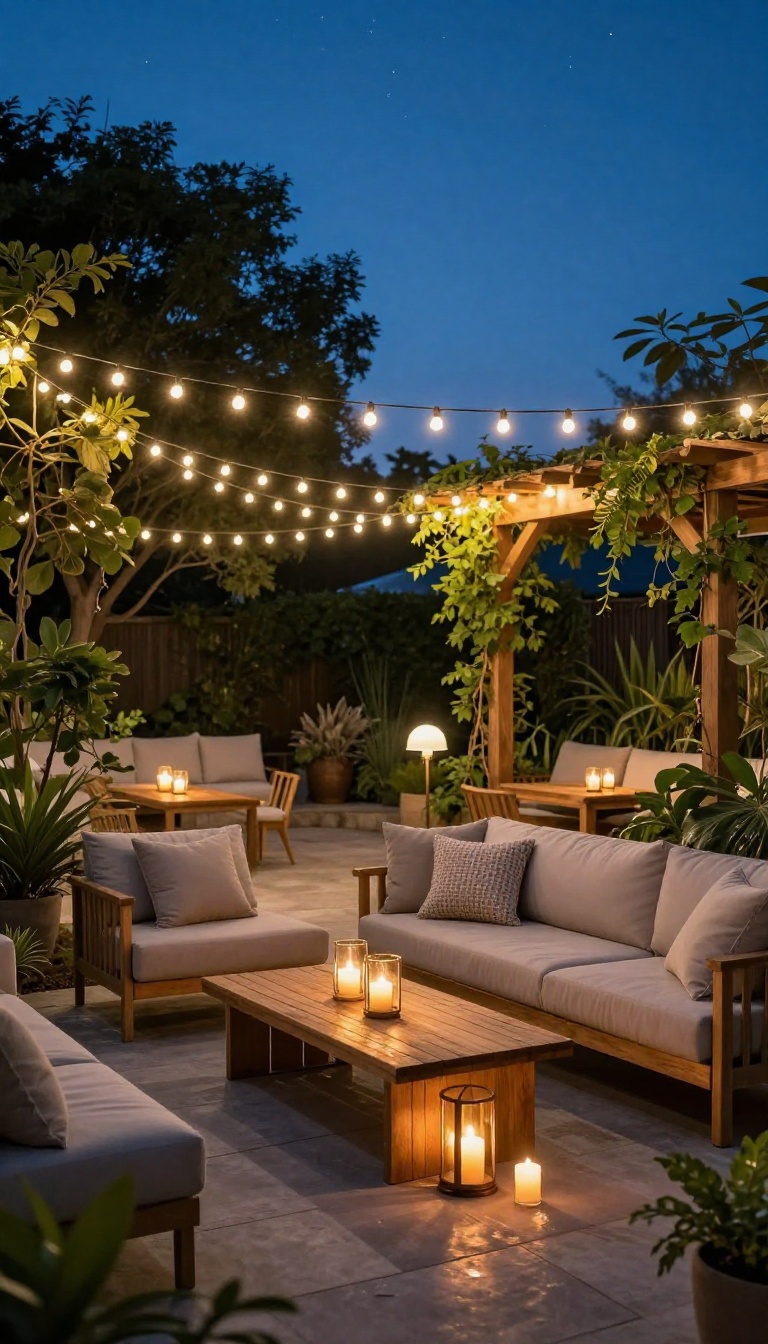
As the sun goes down, your patio can either fade into darkness or come alive with a warm, inviting glow. String lights are the simplest way to make that shift happen. They add a soft, festive layer of light that feels cozy without being harsh.
String lights aren't just for holidays. They're a year-round patio staple that instantly makes your outdoor space feel more intimate and welcoming. The key is to hang them with a little intention, so they look deliberate rather than tangled.
Pick The Right Bulbs And Style
Classic round bulbs give a vintage, cafe-style vibe, while Edison bulbs offer a slightly more industrial look. If you want something more modern, try globe lights or even flat string lights that sit flush against a surface. For a softer glow, choose warm white LEDs—they're energy-efficient and won't glare.
Hang Them Like A Pro
Don't just drape lights over a single hook. Create a canopy by zigzagging them between posts, trees, or your house and a pergola. Use guide wires or light-hanging kits for straight runs, and keep the strands taut to avoid sagging.
If you have a covered patio, run them along the beams for a polished look.
Layer With Other Lighting
String lights work best when they're part of a layered lighting plan. Pair them with a few candles, lanterns, or a dimmable floor lamp to avoid a one-note effect. That way, you can adjust the mood from bright and lively to soft and romantic.
6. Incorporate a Water Feature for Soothing Sounds
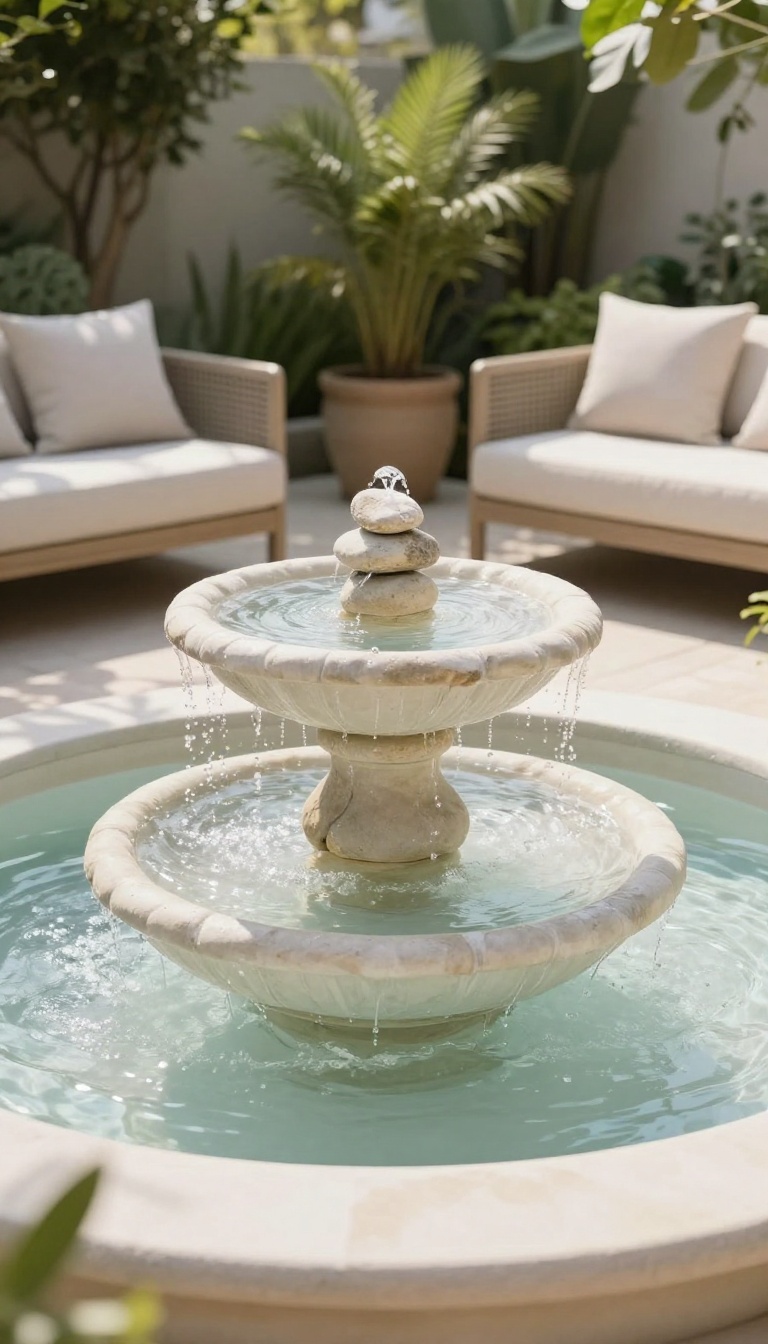
Adding a water feature to your patio isn't just about looks—it's about creating a calming atmosphere that engages your senses. The gentle sound of moving water can mask traffic noise, help you relax, and even attract birds to your outdoor space. Whether you have a sprawling backyard or a cozy balcony, there's a water feature that fits your style and budget.
Water features come in all shapes and sizes, from simple bowls to elaborate fountains. The key is to choose one that matches your space and maintenance preferences. A small, self-contained fountain is a great starting point—it's easy to set up and doesn't require plumbing.
For a more natural look, consider a stone or ceramic water bowl that mimics a birdbath. The sound of water trickling or splashing adds a layer of tranquility that you can't get from plants or furniture alone. Plus, the movement of water creates a focal point that draws the eye and makes your patio feel more intentional.
Choosing The Right Size
Scale matters when it comes to water features. A massive fountain will overwhelm a small patio, while a tiny bowl might get lost in a large space. Measure your area and consider how the feature will fit with your existing furniture.
As a rule of thumb, the water feature should take up no more than a quarter of your patio's open space. If you're short on room, a wall-mounted fountain or a tabletop version can add the same auditory benefits without eating up floor space.
Placement And Sound
Where you place your water feature affects how you experience it. Put it near your seating area so you can enjoy the sound while you relax, but not so close that it interferes with conversation. If you want to block out street noise, position it between your patio and the source of the sound.
The type of water flow also changes the vibe: a gentle trickle is soothing, while a bubbler or spout creates a more lively, energetic feel. Experiment with placement before you commit to a permanent spot.
Maintenance Made Easy
One of the biggest concerns with water features is upkeep. Algae, debris, and pump maintenance can be a hassle if you're not prepared. Choose a feature with a removable pump and filter for easy cleaning.
Adding a few drops of algaecide or using distilled water can help keep it clear. If you live in a cold climate, consider a feature that you can drain and store during winter. With a little routine care, your water feature will stay beautiful and functional for years.
Attracting Wildlife
A water feature isn't just for you—it's also a magnet for birds and beneficial insects. A shallow basin with a gentle slope gives birds a place to drink and bathe. Add a few rocks or a small branch for perching.
You'll be surprised at how quickly word gets out in the avian community. Just avoid using chemicals that could harm wildlife, and keep the water fresh. The added movement and life will make your patio feel like a true oasis.
7. Build a Vertical Garden to Save Space
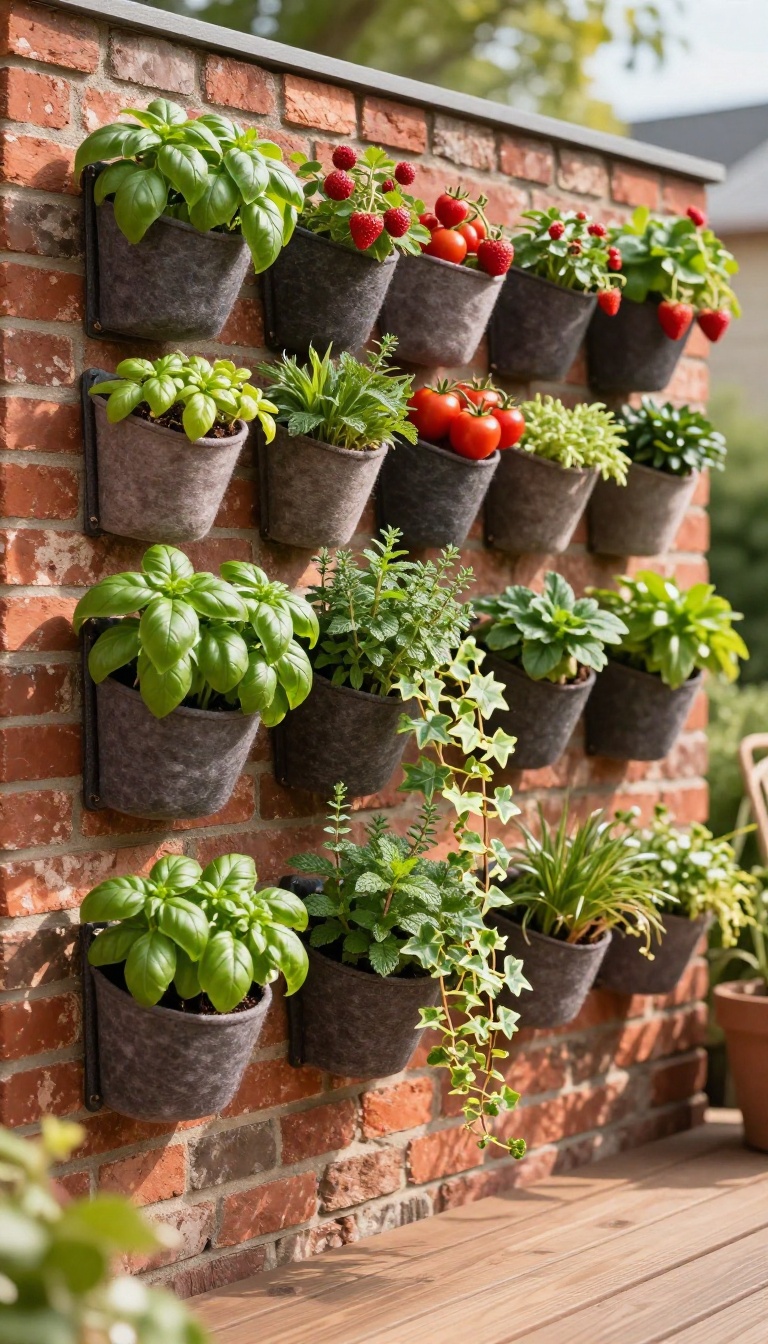
Floor space disappears fast on a patio. Between seating, a grill, and a side table, there's rarely room left for a full garden bed. Vertical gardening flips that problem on its side—literally.
By growing up instead of out, you get lush greenery and fresh herbs without sacrificing an inch of walking room.
Wall-mounted planters, trellises, and hanging systems turn blank walls and empty corners into productive growing zones. They work on brick, wood, stucco, and even chain-link fences with the right hardware. The result is a patio that feels alive and layered, not cluttered.
Pick The Right System For Your Wall
Pocket planters made from felt or fabric are lightweight and easy to hang on almost any surface. They're great for herbs, lettuce, and small flowers. For heavier plants like tomatoes or climbing vines, use sturdy metal or wood trellises anchored into studs or masonry.
If you rent, freestanding vertical frames or over-the-door racks let you garden without drilling a single hole.
Choose Plants That Thrive Up High
Not everything loves growing vertically. Herbs like basil, mint, and thyme do great in wall pockets. Trailing plants such as ivy, creeping jenny, or sweet potato vine spill beautifully over the edges.
For edible beauty, try strawberries or cherry tomatoes in a sunny spot. Just match the plant to the light your wall gets—most herbs and veggies want at least six hours of sun.
Keep It Watered And Looking Good
Vertical gardens dry out faster than ground beds because air circulates around every pot. Check moisture every couple of days, especially in summer. A drip irrigation kit on a timer takes the guesswork out of watering.
Also, trim back anything that gets leggy or blocks the plants below. A little maintenance keeps the whole wall looking intentional instead of overgrown.
8. Choose Multifunctional Furniture for Small Patios
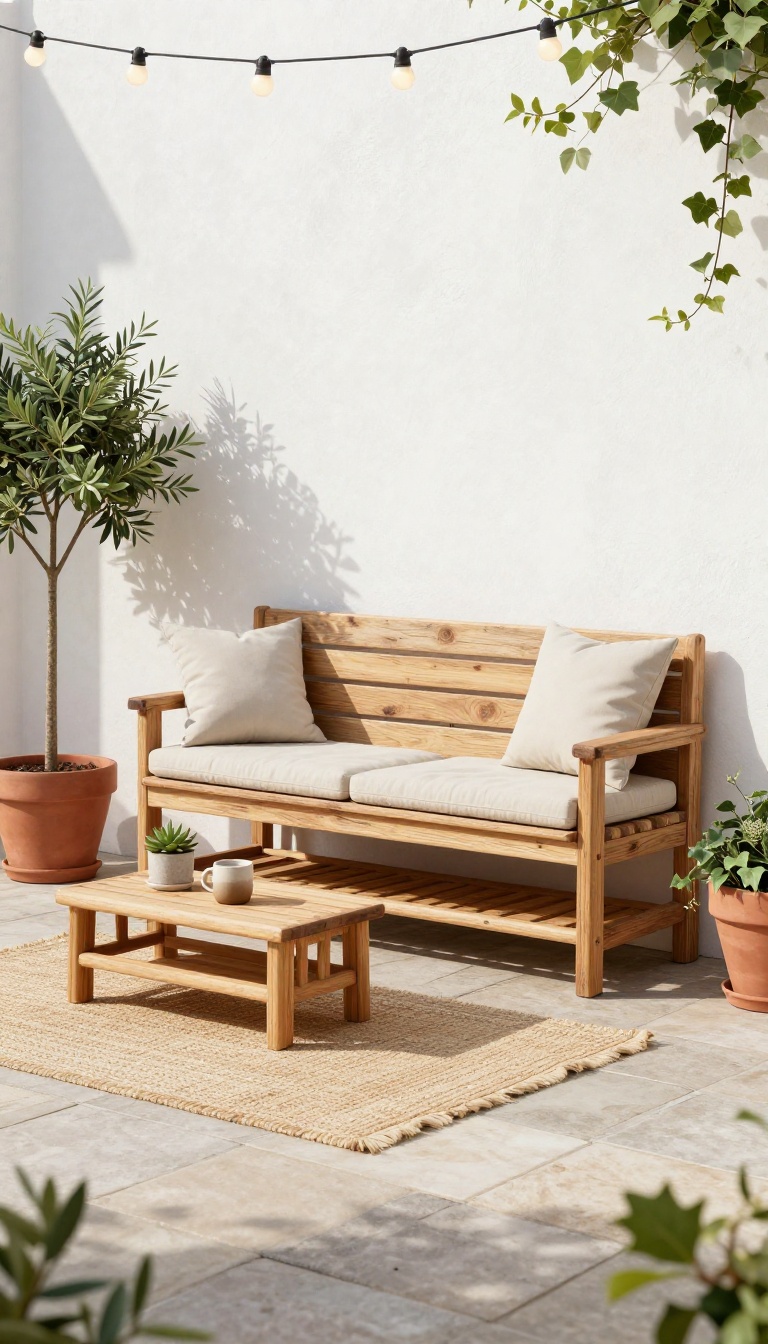
Small patios don't have room for one-trick pieces. Every item needs to earn its keep by doing at least two jobs. That's where multifunctional furniture comes in—it lets you relax, store, and entertain without cramming your space.
Think of it as a puzzle where each piece serves a purpose beyond the obvious. A bench that hides cushions, a table that expands for guests, or seating that transforms into a lounger. These smart picks keep your patio flexible and clutter-free.
When square footage is tight, the wrong furniture can make your patio feel like a storage unit. The right multifunctional pieces, on the other hand, open up possibilities. You get more function without more footprint.
The goal is to choose items that adapt to how you actually use your patio. Morning coffee, evening cocktails, weekend gatherings—your furniture should shift with your needs. Here are a few types to consider.
Storage Benches That Pull Double Duty
A storage bench gives you a place to sit and a place to stash things. Use it to hide throw pillows, gardening tools, or kids' toys. Look for weather-resistant materials like teak or polywood.
Some models even have backrests that flip down to become a flat surface for trays or drinks.
Nesting Tables For Flexible Surfaces
Nesting tables are a small-space hero. They tuck away when you don't need them and pull out when guests arrive. Use one for your drink, another for snacks, and a third for a lantern.
Choose lightweight designs so you can move them around easily. Metal or acacia wood hold up well outdoors.
Convertible Seating That Adapts
Convertible seating—like a sofa that becomes a bed or chairs that recline—adds serious versatility. A futon-style outdoor couch can serve as a daytime lounge and an overnight guest bed. Look for modular pieces you can rearrange into different configurations.
That way, your patio adapts to movie nights, dinner parties, or solo naps.
9. Set Up an Outdoor Kitchen or Bar Cart
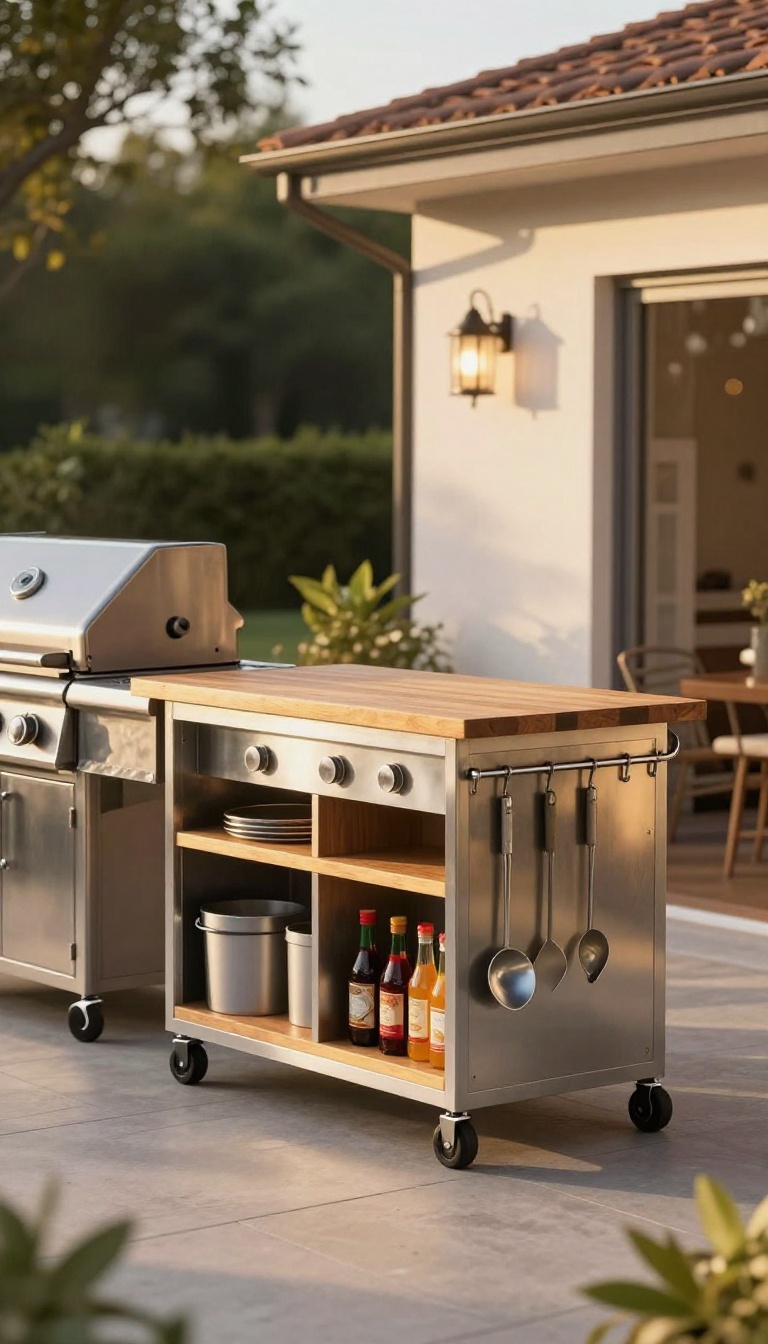
Cooking outside used to mean balancing a plate on your knee while guarding the grill from wind. An outdoor kitchen or bar cart changes that completely. It gives you a dedicated spot for prepping, grilling, and serving—so you can actually enjoy the party instead of running back inside every five minutes.
You don't need a built-in masonry setup to make it work. A simple cart, a sturdy side table, and a few smart accessories can turn any patio corner into a functional cooking station. The goal is convenience: everything within arm's reach, nothing scattered across the yard.
Start by choosing a location that makes sense. You want your cooking zone close to the house for easy access to the kitchen, but not so close that smoke drifts through open windows. A corner of the patio or a spot near the dining area usually works well.
If you already have a grill, build around it. If not, a freestanding cart with a built-in side burner can handle most of your needs without a major renovation. Once the spot is set, think about the flow.
Prep space on one side, grill in the middle, and a landing zone on the other side for finished food. That simple triangle keeps you from doing the hot-plate shuffle. Add hooks for tools, a shelf for sauces, and a bin for trash or recycling.
Small details like these make the difference between a frustrating setup and one that feels effortless. A bar cart isn't just for drinks, though it excels at that too. Roll it out for cocktail hour, then wheel it back when you're done.
Look for one with locking casters and at least two tiers so you can store bottles, glasses, and a small ice bucket. Weather-resistant materials like powder-coated steel or teak will hold up season after season. If you have the space, a compact outdoor fridge keeps drinks cold and saves you trips inside.
Lighting matters here as much as anywhere else on the patio. String a few warm bulbs overhead or clip a rechargeable lantern to your cart. You want to see what you're doing without feeling like you're under a spotlight.
A small prep light on the grill itself can be a game-changer for evening cookouts. Finally, don't overlook storage. A weatherproof bin for charcoal, a covered tray for utensils, and a few stackable crates for dry goods keep everything organized.
When the season ends, you can roll the cart into the garage and cover the grill. That kind of flexibility makes an outdoor kitchen feel like a smart investment rather than a permanent commitment.
Pick The Right Spot
Place your cooking zone near the house but away from windows and doors. You want easy access to the kitchen without smoke drifting inside. A corner or edge of the patio usually gives you the best balance of convenience and airflow.
Build A Simple Work Triangle
Set up prep space on one side, the grill in the middle, and a landing area on the other. This keeps you from walking back and forth with hot food. Add hooks and shelves so tools and sauces stay within reach.
Make The Bar Cart Earn Its Keep
Choose a cart with locking wheels and at least two tiers. Use it for drinks during happy hour, then roll it aside when you need more prep room. Weather-resistant materials like powder-coated steel or teak last longer.
Light It And Store It
Hang warm string lights or clip a rechargeable lantern to your cart for evening cooking. Keep charcoal, utensils, and dry goods in weatherproof bins. When the season ends, roll the cart away and cover the grill.
10. Add a Privacy Screen for Seclusion
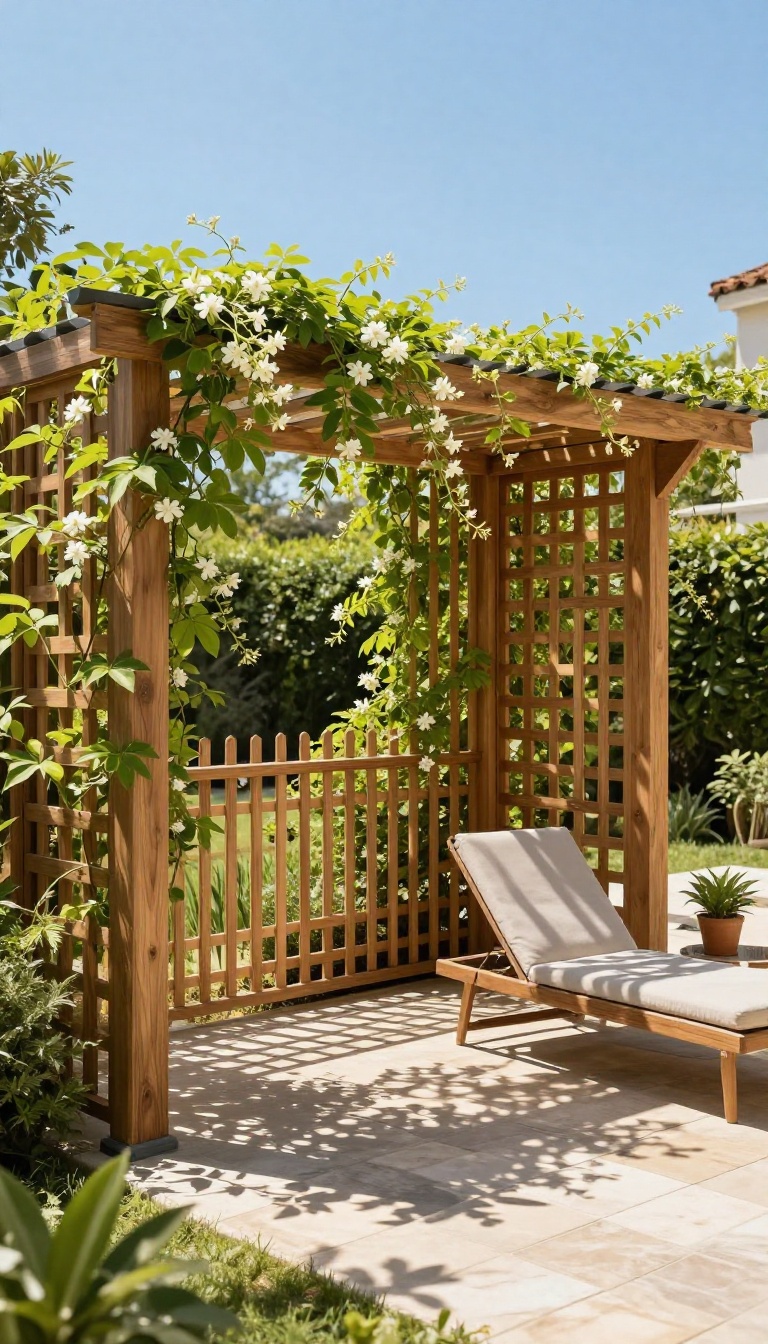
A patio loses some of its magic when the neighbor's kitchen window stares straight into your lounge chair. Privacy screens fix that fast, and they do it without walling you in. You get the open-air feel with a little more room to breathe.
The trick is picking a screen that matches your space and your budget. Lattice, planters, and fabric all work, but they solve different problems. Here's how to choose and set one up so it looks intentional, not improvised.
Lattice Panels That Breathe
Lattice gives you privacy without turning your patio into a solid box. Light and breeze still pass through, which keeps the space from feeling closed in. A framed panel between two posts looks clean and costs far less than a custom wall.
Paint or stain the lattice to match your railing or trim so it reads as part of the design. Climbing vines like jasmine or clematis will fill it in over a season or two. If you want instant coverage, weave in faux greenery until the real stuff catches up.
Tall Planters As A Living Wall
A row of tall planters does double duty: it blocks sightlines and adds greenery at eye level. Choose containers at least 24 inches high so they actually screen seated guests. Bamboo, ornamental grasses, and tall grasses fill out quickly and sway in the wind.
Line them up along the property edge or use two or three to break up a long stretch of patio. Wheels on the bottom let you rearrange the layout whenever you want. Grouping planters in odd numbers tends to look more natural than an even row.
Outdoor Curtains For Softness
Fabric curtains on a pergola or a simple rod soften hard edges and let you control how open the space feels. Slide them closed for dinner, then pull them back when you want the full view. Look for solution-dyed acrylic fabric that resists fading and mildew.
A weighted hem keeps curtains from flapping around on breezy days. Tie-backs hold them neatly when they're open. This option works especially well on covered patios where the fabric stays out of direct rain.
Mix Materials For A Custom Look
You don't have to commit to one screen style across the whole patio. Lattice on one side, planters on another, and curtains overhead can work together if the colors and finishes agree. Stick to two or three materials so it still feels cohesive.
Measure your sightlines before you buy anything. Stand where you usually sit and note exactly what you want to block. That quick check saves you from buying a screen that's too short or in the wrong spot.
11. Mix Textures with Pillows and Throws
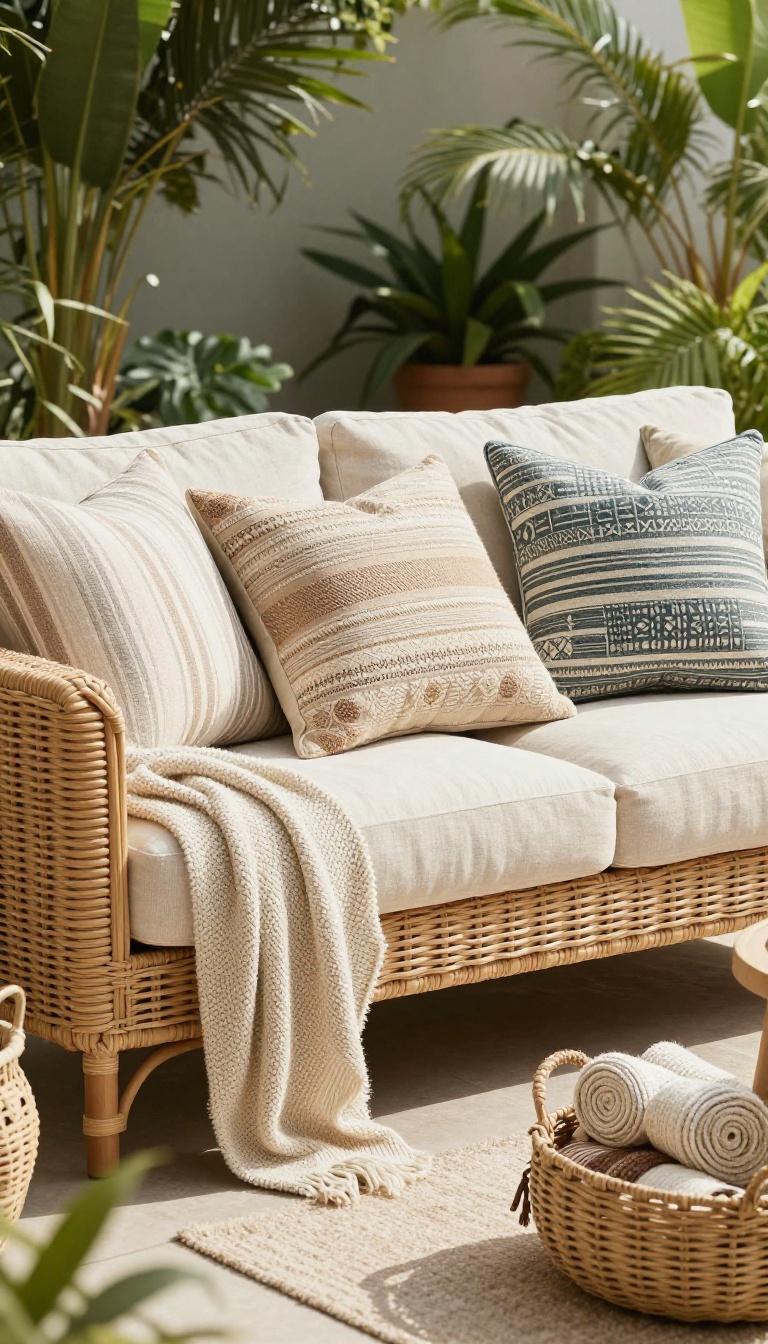
Pillows and throws are the easiest way to make your patio feel like an extension of your living room. They add softness, color, and a layer of comfort that hard outdoor furniture often lacks. Plus, you can swap them out whenever you want a fresh look without spending a fortune.
Start by choosing a base color palette that complements your patio's existing materials. Then, mix in pillows with different textures—like smooth cotton, nubby linen, or woven wool—to create depth. Don't be afraid to combine patterns, such as stripes with florals or geometrics with solids.
The key is to keep the scale of patterns varied so they don't compete. For throws, consider lightweight options for summer and heavier knits for cooler evenings. Drape them over chair backs or keep them in a basket for easy access.
This not only adds visual interest but also makes your space more inviting for guests.
Choose Weather-friendly Fabrics
Outdoor pillows and throws need to handle sun, rain, and humidity. Look for solution-dyed acrylics, polyester, or treated cotton that resist fading and mildew. If you love the look of natural fibers, opt for quick-drying materials like Sunbrella or Olefin.
These fabrics stay vibrant and clean with minimal effort.
Play With Color And Pattern
Use pillows to introduce a pop of color that ties your patio to your interior. If your furniture is neutral, go bold with bright hues or playful prints. For a more subdued look, stick to tonal variations and subtle textures.
Mixing a few different patterns—like a solid, a stripe, and a small-scale print—creates a designer feel without overwhelming the space.
Store And Swap Seasonally
Keep a storage bench or weatherproof bin nearby to stash pillows and throws when they're not in use. This protects them from the elements and makes it easy to switch up your look. Rotate heavier throws in fall and lighter ones in spring to keep your patio feeling fresh year-round.
12. Create a Zen Corner with a Hammock or Swing
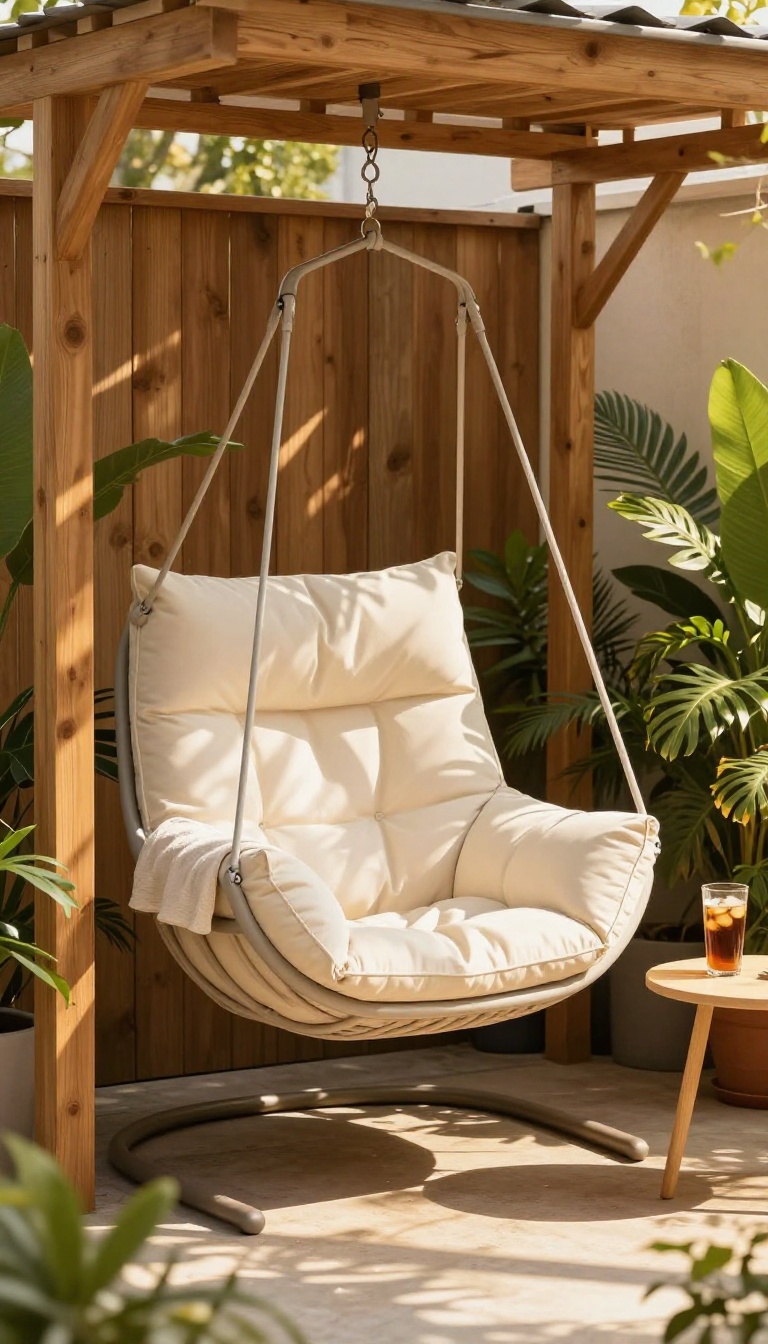
Every patio needs a spot where you can do absolutely nothing without feeling guilty about it. A hammock or hanging chair gives you that permission slip. It's a small footprint with a big payoff: instant relaxation, a little bit of motion, and a visual cue that says this corner is for slowing down.
You don't need a huge tree or a custom pergola to make it work. Modern stands and ceiling mounts fit almost anywhere, and the right fabric and placement can turn even a narrow side yard into a destination. The trick is treating it like a real piece of furniture, not an afterthought.
Start by choosing between a hammock and a hanging chair. Hammocks are great for full-body lounging and feel more traditional, while hanging chairs offer more structure and are easier to get in and out of. Both work on patios, but they ask different things of your space.
Next, figure out your anchor point. If you have a sturdy beam, pergola, or roof overhang, a ceiling mount keeps things clean and saves floor space. No overhead structure?
A freestanding metal or wood stand is your best friend. It's portable, stable, and won't damage your patio. Placement matters more than you think.
You want shade for most of the day, a little privacy, and enough clearance so you don't bump into furniture when you sway. A corner near a wall or fence usually works best because it feels cozy and contained. Finally, layer in comfort.
A weather-resistant cushion, a small side table for drinks, and maybe a lightweight throw for cooler evenings. Keep it simple so the corner stays calm, not cluttered.
Pick The Right Spot
Look for a corner that gets dappled shade, not full sun all afternoon. You also want a bit of a buffer from foot traffic and noise. If your patio is small, a hanging chair in the corner can free up floor space for other things.
Mount It Safely
Check your structure before you drill. A ceiling mount needs to hit a joist or beam, and a stand needs level ground. When in doubt, go with a stand—it's forgiving and you can move it if you change your mind.
Style It Without Clutter
Add a small outdoor rug underneath to define the zone. A tiny stool or side table gives you a place for a book or a drink. Skip the string lights if they make it feel busy—sometimes less really is more.
13. Illuminate Pathways with Solar Lights
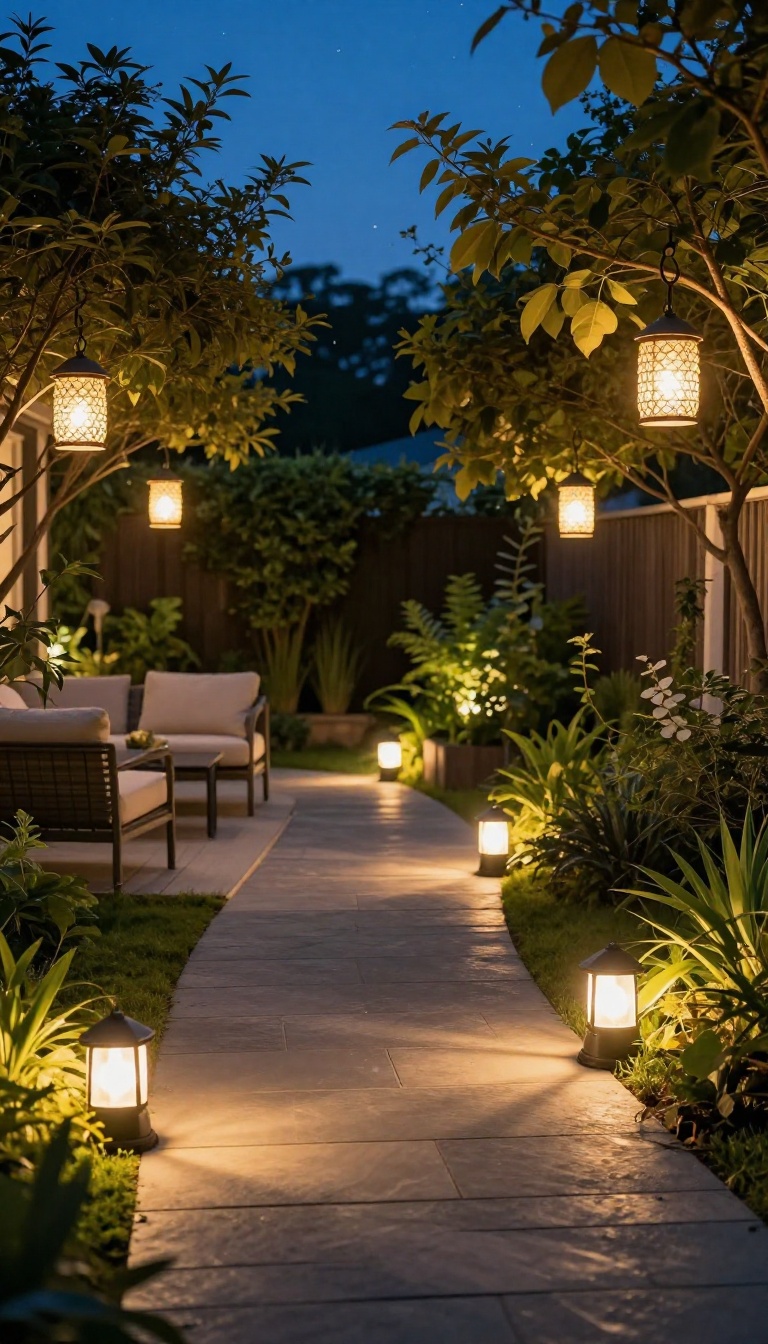
A dark patio after sunset feels smaller and less inviting. Solar lights fix that without wiring, batteries, or an electrician. They charge all day and glow automatically at dusk, so your outdoor space stays usable and beautiful long after the sun goes down.
You don't need to light up the whole yard. A few well-placed solar lights along walkways and patio edges make a huge difference. They guide guests safely, define the space, and add a warm, enchanted feel.
The best part? They're affordable, easy to install, and cost nothing to run.
Choose The Right Solar Lights
Not all solar lights are created equal. For pathways, look for stake lights with warm white LEDs—they cast a soft glow without harsh glare. For patio edges, consider deck lights or string lights that drape along railings or pergolas.
If you want ambiance, go for lantern-style lights or color-changing globes. Check the battery life and lumens: higher lumens mean brighter light, but you don't need stadium-level brightness for a cozy patio.
Placement Tips For Maximum Impact
Space your lights evenly along walkways—about 4 to 6 feet apart—so the light pools overlap slightly. That creates a continuous guide without looking like a runway. For patio edges, tuck lights into planters or along the base of a wall to wash the area in a gentle glow.
Highlight steps and uneven ground to prevent trips. And don't forget vertical interest: hang solar lanterns from shepherd's hooks or tree branches for a floating effect.
Maintenance And Longevity
Solar lights are low-maintenance, but a little care goes a long way. Wipe the panels with a damp cloth every few weeks to keep them charging efficiently. In winter, bring them inside or store them in a dry spot if you live in a cold climate.
If a light stops working, check the battery—most are rechargeable and easy to replace. With minimal effort, your lights will keep shining for years.
FAQ
How can I make my patio feel more like an outdoor room?
Define zones with furniture and rugs, add overhead structure like a pergola or umbrella, and layer lighting to create a cozy, enclosed feel.
What are some budget-friendly patio ideas?
Focus on DIY projects like string lights, painted furniture, and thrifted planters. Rearranging existing pieces can also refresh the space without spending money.
How do I protect patio furniture from the weather?
Choose weather-resistant materials like teak, aluminum, or synthetic wicker, and use covers or store cushions when not in use.
What's the best way to add shade to a patio?
Options include pergolas, retractable awnings, patio umbrellas, and shade sails. Consider sun direction and wind when choosing.
How can I make a small patio look bigger?
Use light colors, vertical elements like trellises, and multifunctional furniture. Mirrors and glass tables can also create an illusion of space.
Conclusion
Turning your patio into a stylish open-air living space doesn't have to be complicated or expensive. Start with one or two ideas that resonate with you, and build from there. Whether it's a cozy fire pit or a simple string of lights, small changes can make a big difference.
Your patio can become the go-to spot for relaxing and entertaining. So go ahead, give it a little love, and enjoy the fresh air in style.