11 Small Outdoor Patio Ideas for Relaxed Compact Living
You don't need a sprawling backyard to enjoy the outdoors. Even the smallest patio can become your favorite spot to unwind, sip coffee, or host a friend.
The trick is to choose pieces and layouts that work with your space, not against it. Think vertical, think multi-purpose, and think about how you actually want to use the area.
Whether it's a morning nook or an evening hangout, these ideas will help you make every square foot count. Here are 11 small patio ideas that prove compact living can still feel open, inviting, and completely yours.
1. Use Vertical Space with a Living Wall
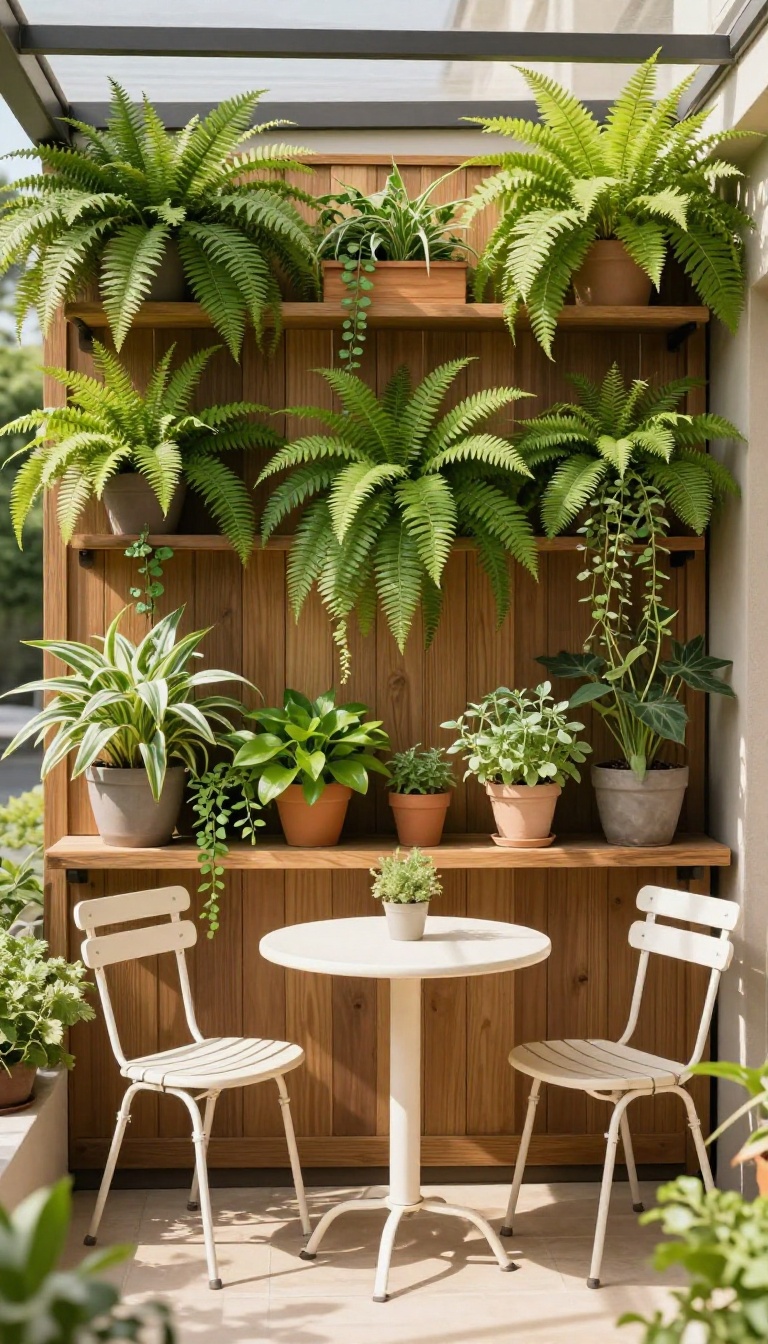
When floor space is tight, the walls are your best friend. A living wall—whether it's a ready-made planter system or a simple set of shelves—turns bare vertical space into a lush, functional feature. It's a smart way to bring in greenery without sacrificing your precious square footage.
Even a small patio can feel like a garden retreat when you look up. Plus, a living wall can double as a privacy screen or a natural backdrop for your outdoor seating. Let's explore how to make it work for you.
Start by choosing a wall that gets the right amount of light for the plants you want. Herbs like basil and mint need plenty of sun, while ferns and pothos thrive in shadier spots. If you're short on wall space, consider a freestanding vertical planter or a tiered stand that leans against the wall.
Keep maintenance simple by grouping plants with similar water and light needs. A drip irrigation system or self-watering planters can save you time, especially during hot summer months. And don't forget to leave room for easy access—you'll want to reach your herbs for cooking or trim your vines without a struggle.
Choose The Right Plants
For a living wall, pick plants that stay compact and don't mind being vertical. Herbs like thyme, oregano, and chives are perfect—they're small, useful, and smell great. Succulents and air plants are low-maintenance options that add texture.
If you want trailing vines, try pothos or string of pearls, which will cascade beautifully over the edges.
Diy Vs. Store-bought Planters
You don't need a fancy system to create a living wall. A wooden pallet, a shoe organizer, or a set of wall-mounted pots can work just as well. If you prefer a polished look, invest in a modular planter system that's easy to install and rearrange.
Just make sure whatever you choose has proper drainage and is securely attached to the wall.
Watering And Maintenance Tips
Vertical gardens dry out faster than ground plants, so check the soil regularly. A watering can with a long spout or a hose attachment can make the job easier. Consider adding a slow-release fertilizer to keep your plants healthy.
And prune regularly to encourage bushy growth and prevent your wall from looking overgrown.
2. Choose Foldable or Stackable Furniture
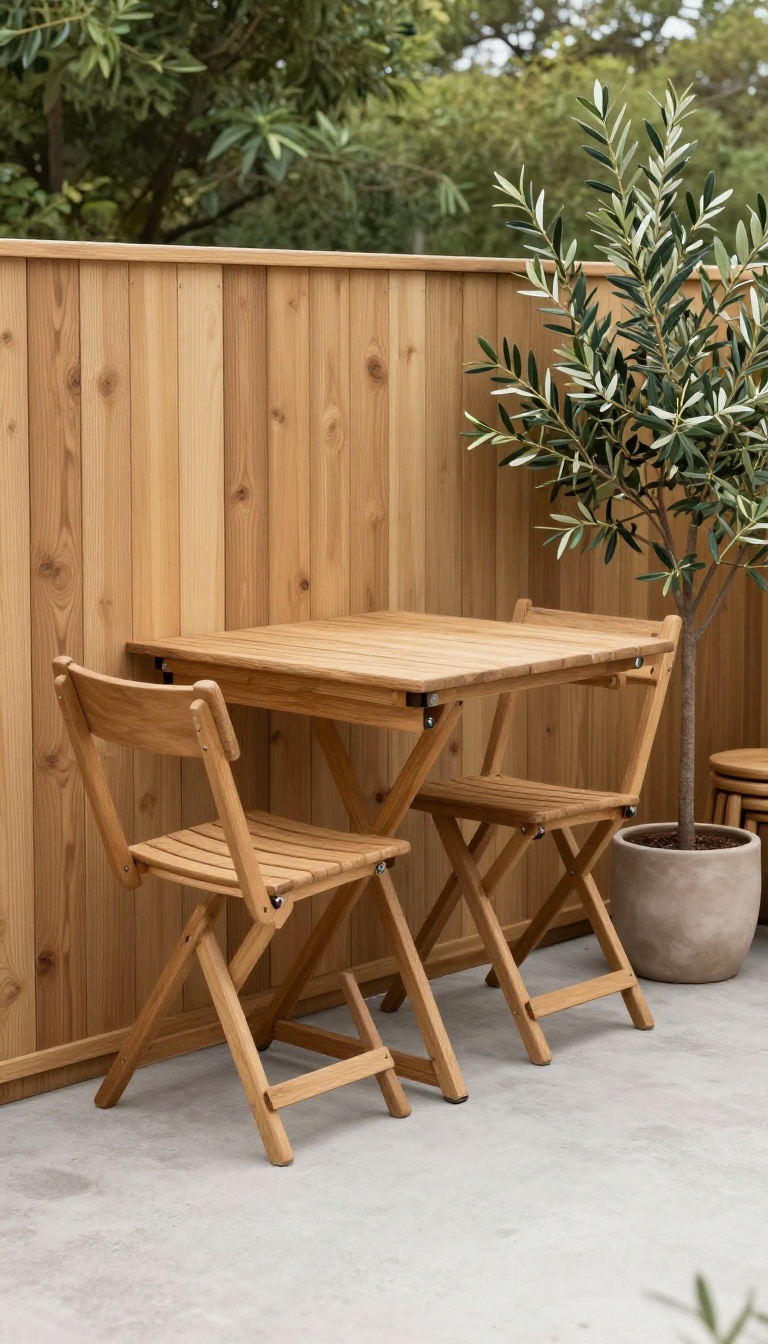
When every square foot counts, furniture that can disappear on demand is a game-changer. Foldable chairs, stackable stools, and drop-leaf tables give you the flexibility to transform your patio from a dining spot to a yoga corner in minutes. The key is picking pieces that are easy to store and even easier to pull out when needed.
Think of your patio as a stage, and your furniture as the props. You don't need everything out all the time. A couple of folding bistro chairs can lean against a wall, and a drop-leaf table can collapse to a slim console.
This way, you keep the space open for morning stretches or an impromptu dance party under the stars.
Look For Pieces That Fold Flat
Folding chairs and tables that flatten to just a few inches thick are perfect for tucking behind a door, under a bench, or into a narrow gap. Choose lightweight materials like aluminum or treated wood that won't rust or warp. Test the folding mechanism to make sure it's smooth—stiff hinges are a pain when you're in a hurry.
Stackable Stools Save Vertical Space
Stackable stools or chairs can pile up neatly in a corner without taking up floor area. They're great for extra seating when guests come over, and they double as side tables or plant stands when not in use. Look for designs with a handle or a shape that makes stacking easy and stable.
Use A Drop-leaf Table For Versatility
A drop-leaf table is a smart investment for a small patio. With the leaves down, it's a narrow console that holds drinks or plants. Flip them up, and you have a full dining surface for four.
Some models even come with built-in storage for cushions or small accessories.
3. Add an Outdoor Rug to Define the Zone
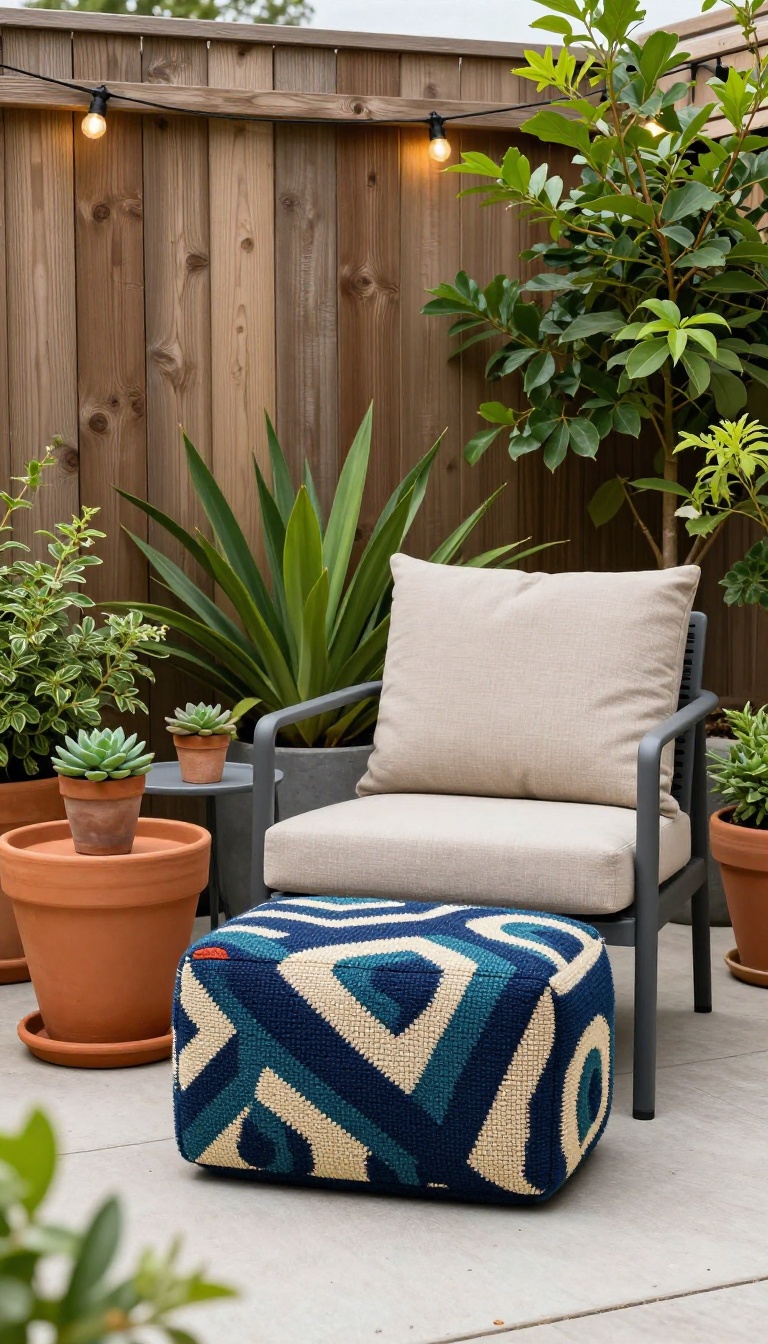
A small patio can feel like a random slab of concrete or wood until you give it a focal point. An outdoor rug does exactly that—it instantly anchors your seating area and makes the space feel intentional. Even a tiny 5×7 rug can transform a corner into a cozy retreat.
When you're working with limited square footage, every element needs to earn its place. An outdoor rug pulls together your furniture, adds color and texture, and makes the area more inviting. Plus, it's a low-commitment change that you can easily swap out when you want a fresh look.
Pick The Right Material
Not all outdoor rugs are created equal. Look for flat-weave polypropylene or other synthetic fibers that resist moisture, mold, and fading. These materials dry quickly and can handle rain, spills, and heavy foot traffic without showing wear.
Avoid natural fibers like jute or sisal, which can absorb water and get damaged.
Choose A Pattern That Works
Patterns are your friend on a small patio. A busy geometric or floral design hides dirt, pollen, and minor stains much better than a solid color. Plus, a bold pattern adds visual interest and can make the space feel more dynamic.
Just make sure the colors complement your furniture and surroundings.
Size And Placement Tips
Measure your seating area before buying. You want the rug to be large enough to sit under the front legs of your chairs or sofa, but not so large that it overwhelms the space. Leave a border of bare floor around the rug to create a clean, balanced look.
If your patio is very small, a round rug can soften the sharp lines of the furniture and make the area feel more organic.
4. Install String Lights for Ambiance
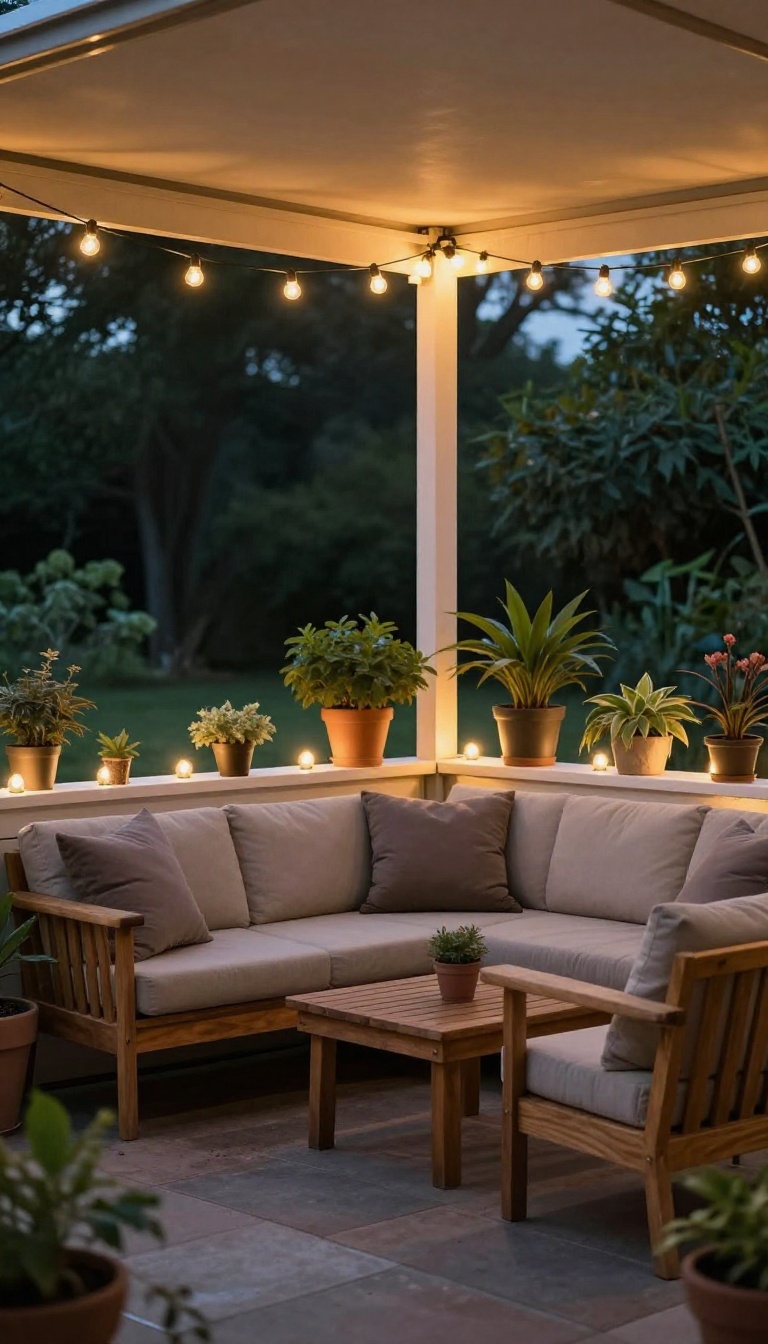
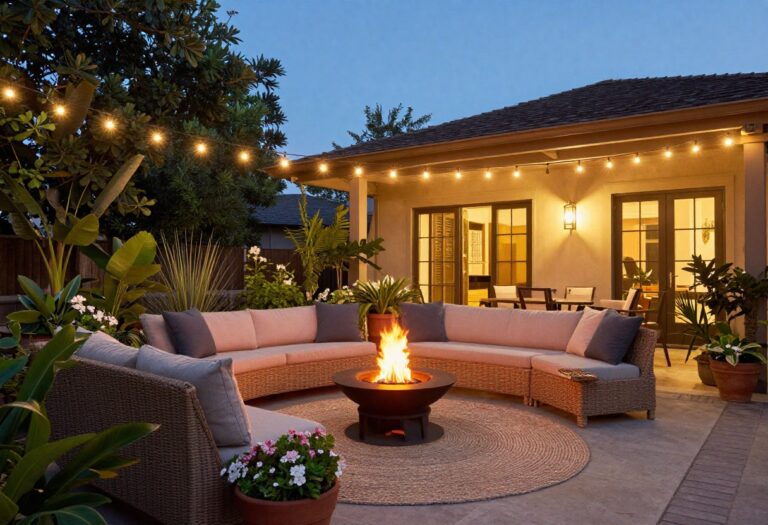
Once the sun goes down, a small patio can suddenly feel dark and cramped. String lights are the simplest way to change that. They add a soft, warm glow that makes the space feel bigger and more welcoming.
Hanging string lights overhead or along the railing instantly transforms your patio into a cozy retreat. The trick is to choose the right type and hang them at the right height. Use weatherproof lights and secure them with hooks or clips that won't damage your walls or railing.
For a relaxed look, drape them in gentle curves rather than pulling them taut. This softens the edges of your space and draws the eye upward, making the ceiling feel higher and the area more open.
Choose The Right Bulb Size
Bigger bulbs give off a warmer, more intimate light, while smaller ones create a subtle twinkle. For a small patio, medium-sized bulbs (around 1 inch in diameter) strike a good balance. They provide enough light for conversation without feeling harsh.
If you want a more festive vibe, go with smaller bulbs spaced closer together.
Hang Them At The Right Height
Hang the lights high enough so they don't get in the way, but low enough to feel part of the space. Aim for about 7 to 8 feet above the floor. This keeps them out of reach but still creates a canopy effect.
Use hooks or adhesive clips that can handle the weight and won't leave marks when you take them down.
Use A Smart Timer Or Remote
You don't want to fiddle with plugs every evening. Plug your string lights into a smart plug or use a timer so they turn on automatically at dusk and off at bedtime. Some lights come with a remote control, making it easy to adjust brightness or set a schedule.
This small convenience means you'll actually use them more often.
5. Incorporate Multi-Functional Pieces
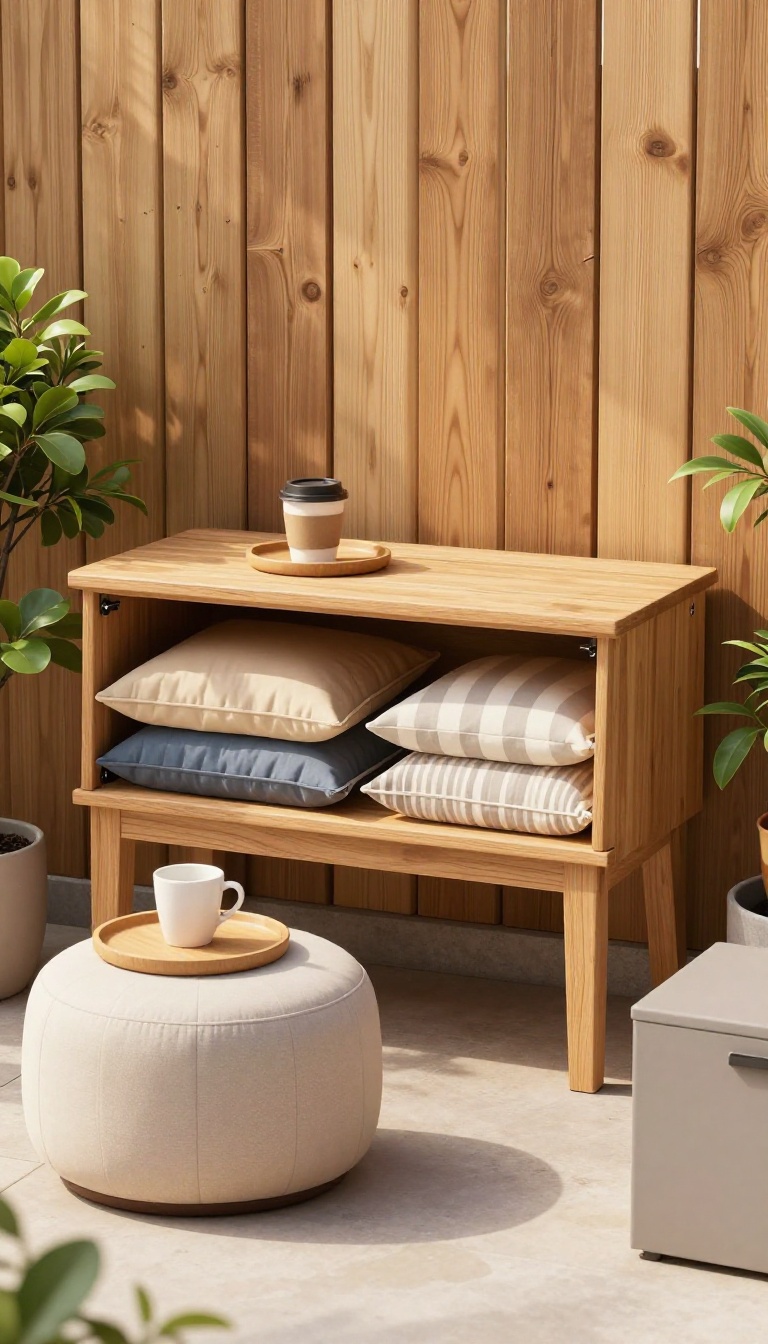
On a small patio, every piece of furniture has to earn its keep. That’s where multi-functional designs shine—they give you more use without taking up more space. Think of a bench that hides your cushions or a coffee table that turns into a dining spot when needed.
It’s about making your furniture work harder, so you can relax more.
When you’re short on square footage, a single-purpose chair or table can feel like a luxury you can’t afford. Multi-functional pieces solve that problem by combining two or more functions into one compact item. This approach not only saves space but also reduces clutter, since you won’t need separate pieces for storage, seating, or serving.
The goal is to create a patio that feels open and uncluttered, even when you’re using it for different activities throughout the day.
Storage Benches That Double As Seating
A storage bench is a classic small-space solution. It gives you a place to sit while hiding away outdoor pillows, gardening tools, or kids’ toys. Look for one with a weather-resistant lid and a sturdy frame.
Place it against a wall or under a window to keep the center of your patio clear. You’ll love having a tidy spot to stow things, and guests will appreciate the extra seating.
Ottomans That Work As Tables And Seats
Ottomans are the chameleons of patio furniture. Use one as a footrest, pull it up as an extra seat, or top it with a tray to make an instant side table. Some even come with built-in storage inside.
Choose a durable, water-resistant fabric and a size that fits your space. Having a couple of these around gives you flexibility without adding bulk.
Foldable Tables With Hidden Shelves
If you love hosting but don’t have room for a permanent dining table, consider a foldable table that can be tucked away when not in use. Some models feature shelves underneath that can hold drinks or snacks while you’re eating. When folded, they take up minimal space and can lean against a wall.
This way, you can enjoy a full meal outdoors without sacrificing your daily lounging area.
6. Create a Cozy Corner with Floor Cushions
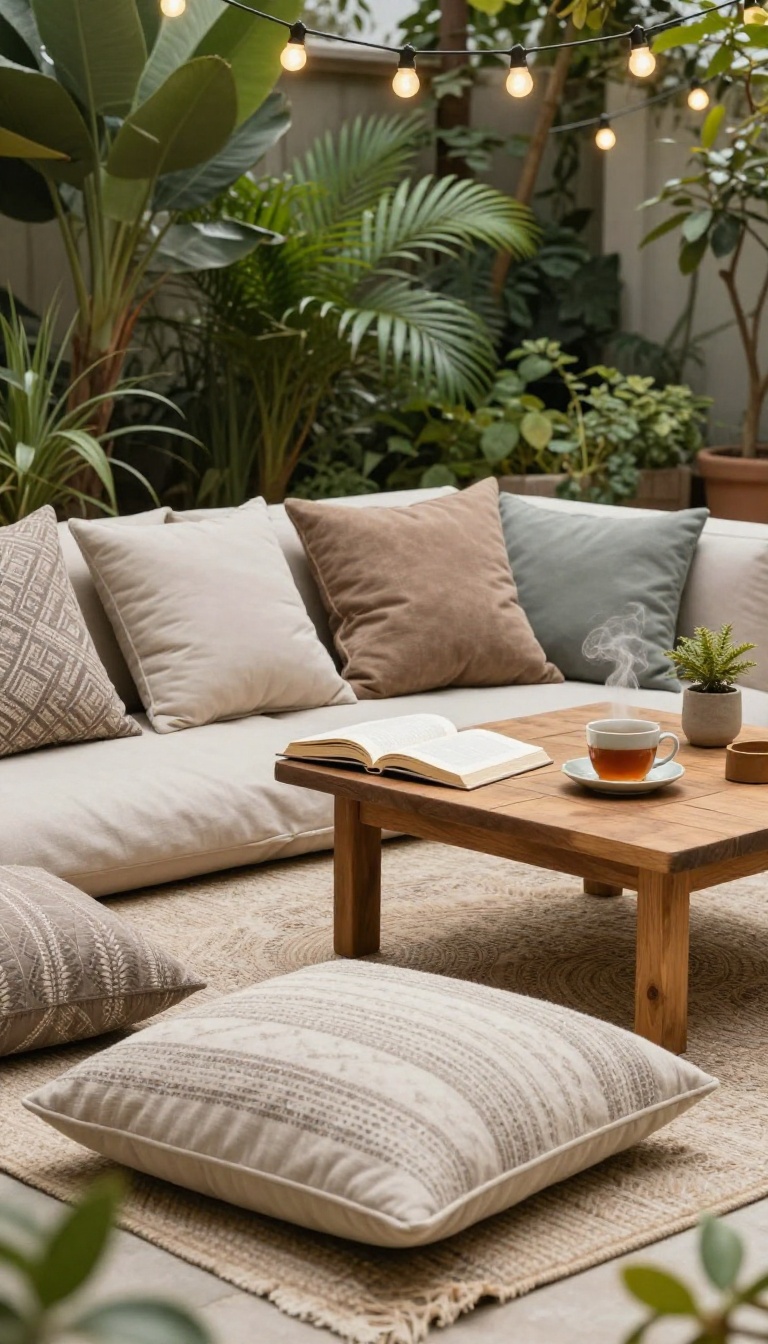
If your patio is too small for a full sofa, floor cushions are the answer. They bring a boho, relaxed vibe and can be tucked away when not in use. Plus, they invite you to sit low, unwind, and really soak in the outdoors.
Floor cushions turn a bare corner into an instant lounging spot. They're perfect for reading, meditating, or just watching the clouds. And because they're lightweight, you can rearrange them for different occasions or store them indoors during bad weather.
Pick The Right Cushions
Look for oversized floor cushions or poufs with removable, washable covers. Outdoor-grade fabric resists moisture and fading. Choose a mix of colors and patterns that complement your patio.
Aim for at least two or three to create a gathered, intentional look.
Layer With Rugs And Throws
Anchor the corner with an outdoor rug to define the space. Add a few throw pillows for back support and a soft blanket for cooler evenings. These layers make the area feel more like an indoor living room, just without walls.
Add A Low Table And Lighting
A low coffee table or a stack of wooden crates gives you a place for drinks or books. String lights or a lantern overhead add a warm glow. This setup makes the corner inviting for both solo relaxation and casual chats with friends.
7. Add a Compact Water Feature
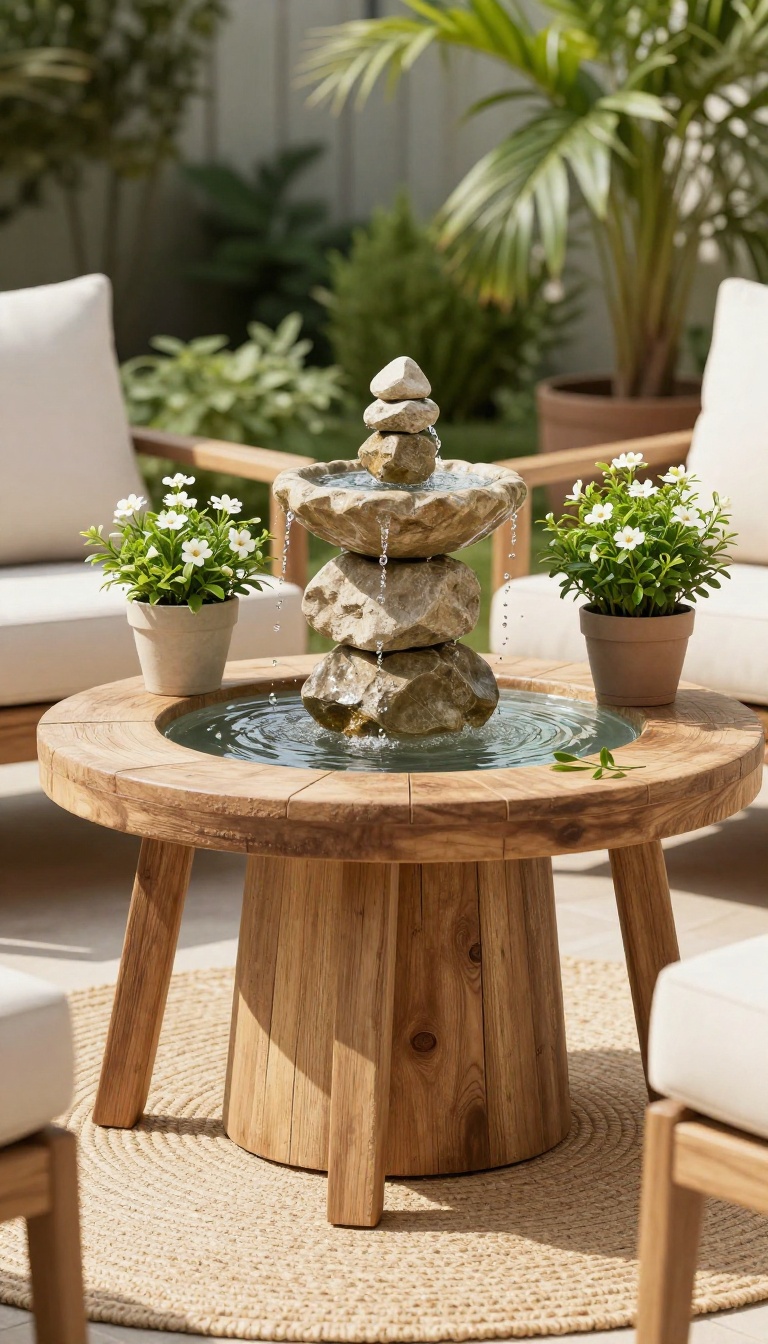
Water has a way of making any space feel cooler, calmer, and more alive. Even a tiny patio can benefit from the gentle trickle of a fountain, turning an ordinary corner into a mini retreat. The best part?
You don't need a pond or a big installation to get the effect.
Start with a tabletop fountain that fits right on a side table or the floor. These come in all sorts of styles, from stacked stone to sleek ceramic, and they plug in easily. If floor space is tight, a wall-mounted fountain is a smart pick.
It hangs like art, saves precious square footage, and still delivers that soothing sound. For a truly small patio, a fountain that doubles as a planter is a clever twofer. Just add a few water-loving plants around the base, and you've got a living focal point.
Whatever you choose, place it where you'll hear it most, like near your seating area, so the sound can actually do its job. And don't worry about maintenance; most compact fountains are designed to be low-fuss. Just top off the water every few days and give it a quick clean now and then.
Choose The Right Spot
Think about where you sit most often and place the fountain within earshot. A corner near your chair or beside the door works well. If you're worried about splashing, keep it away from electronics and soft furnishings.
Also, consider the view—you want to see it, not just hear it.
Style It To Fit Your Vibe
Match the fountain to your patio's personality. A modern space might call for a minimalist sphere, while a rustic setup could use a weathered stone basin. Don't be afraid to mix materials, like a metal fountain against a wooden fence.
The fountain should feel like it belongs, not like an afterthought.
Keep It Low-maintenance
Small fountains are generally easy to care for, but a few habits help. Use distilled water to prevent mineral buildup, and clean the pump monthly during heavy use. In winter, drain and store it indoors if you live in a cold climate.
With minimal effort, your water feature will keep running smoothly all season.
8. Use Mirrors to Create Depth
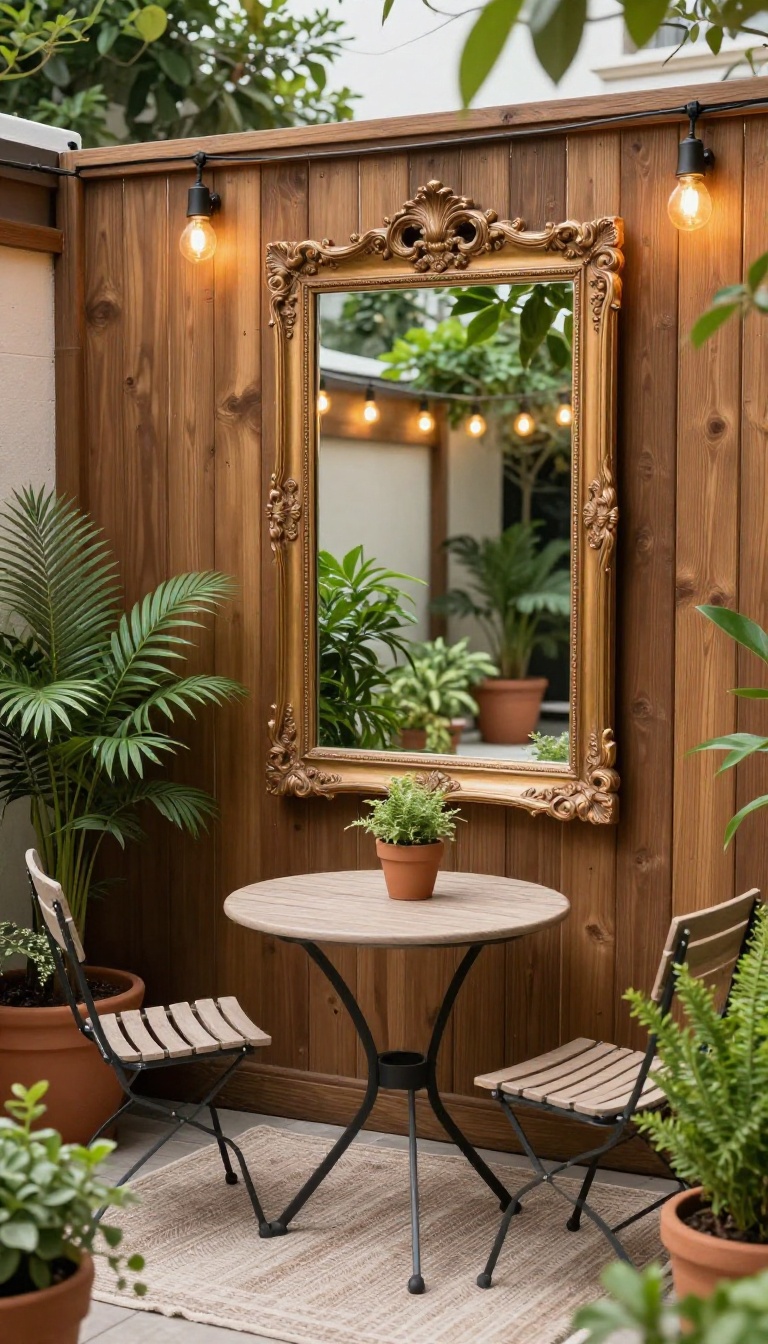
A well-placed mirror can trick the eye into seeing more space than actually exists. On a small patio, that visual expansion makes the whole area feel more open and less boxed in. Plus, mirrors bounce light around, which brightens shaded corners and adds a subtle glow during golden hour.
Outdoor mirrors aren't just functional—they bring a layer of sophistication that makes your patio feel like an intentional extension of your home. The trick is choosing the right frame, placement, and mounting method so it looks natural and stays safe in the elements.
Start by picking a mirror rated for outdoor use. Standard indoor mirrors can crack or fog up when exposed to moisture, so look for one with a weather-resistant backing and sealed edges. Acrylic mirrors are lighter and safer for small spaces, while glass mirrors offer clearer reflections if you have a sheltered spot.
Placement matters more than size. Hang the mirror across from a focal point—like a potted plant, a string light, or a small water feature—so it reflects that view and doubles the visual interest. Avoid placing it directly opposite the sun, or you'll create a blinding glare that makes the patio unusable in the afternoon.
Mounting is another key detail. Use heavy-duty outdoor hooks or brackets rated for the mirror's weight, and make sure the wall is solid enough to hold it. If you're renting or don't want to drill, lean a large mirror against the wall on a sturdy ledge or the floor—just ensure it's stable and won't tip over in the wind.
Finally, think about the frame. A wooden frame adds warmth and blends with natural surroundings, while a black metal frame gives a modern, sleek look. A weathered or antique-style frame can also bring a touch of rustic charm.
Whatever you choose, make sure it complements your existing patio furniture and color palette.
Choose The Right Mirror
Not all mirrors are created equal when it comes to outdoor use. Look for mirrors labeled 'outdoor safe' or 'weatherproof' to avoid damage from rain, humidity, and temperature swings. Acrylic mirrors are a great choice for small patios because they're lightweight and shatterproof, making them safer and easier to hang.
If you prefer the clarity of glass, ensure the mirror has a sealed backing and is placed in a covered area to extend its life.
Placement Tricks That Work
The placement of your mirror can make or break the illusion of space. Hang it on a wall that's perpendicular to a window or a lush green corner, so it reflects that view and makes the patio feel like it opens up into another area. Avoid placing it directly opposite a door or a busy street, as that can make the space feel chaotic.
A small tilt downward can also help reflect more of the patio itself, rather than just the sky.
Styling Around The Mirror
Once your mirror is up, style around it to enhance the effect. Add a couple of potted ferns or trailing vines near the base to soften the edges and create a natural frame. A small shelf under the mirror can hold candles or a succulent, giving the area a layered look.
If you have a bistro table nearby, position it so the mirror reflects the tabletop—this makes the seating area feel more expansive and inviting.
9. Grow Potted Plants at Different Heights
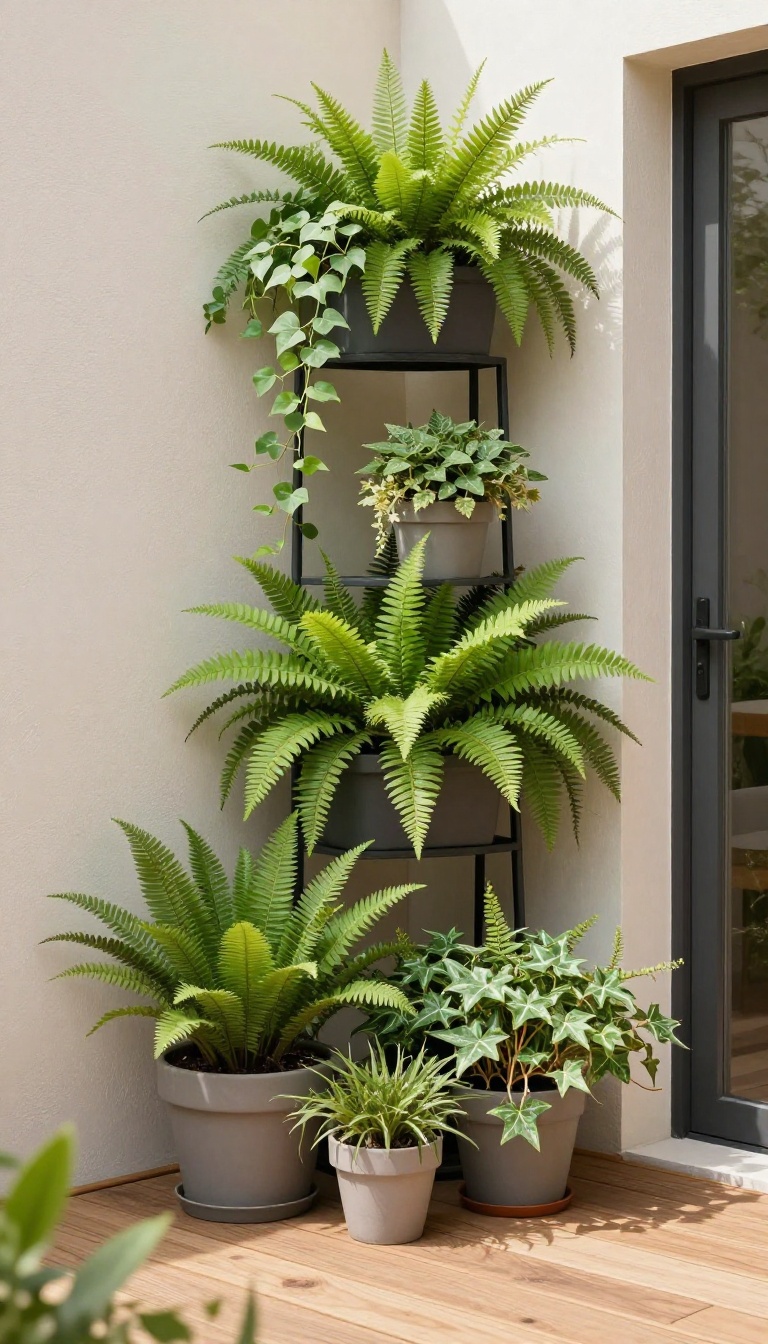
A flat row of pots can make a small patio feel cluttered and monotonous. But when you vary the heights, the space instantly gains depth and a lush, layered look. Tall planters, hanging baskets, and tiered stands pull the eye upward, making the area feel larger and more inviting.
Start by grouping plants at three distinct levels: ground, waist, and eye level. Use a tall planter or a trellis with climbing vines for the top, a medium stand for mid-level greenery, and low pots or trailing plants for the base. This simple trick creates a natural screen that adds privacy without blocking light.
Choose The Right Planters
Pick lightweight materials like resin or fiberglass for taller pots so they’re easy to move. For hanging options, consider wall-mounted brackets or a freestanding plant stand with arms. Make sure each planter has proper drainage and use saucers to protect your patio surface.
Mix Plant Types For Texture
Combine upright plants like ornamental grasses or dwarf citrus with trailing varieties such as ivy or string of pearls. Add some broad-leafed options like ferns or caladiums for contrast. The variety in leaf shape and color makes the arrangement feel rich and intentional.
Use Height For Privacy
Position tall planters along the edge of your patio to create a natural screen. Bamboo, tall grasses, or a compact evergreen in a large pot can block neighbors’ views without taking up floor space. Hanging plants at eye level also works well to shield a seating area.
10. Install a Small Bar Cart for Refreshments
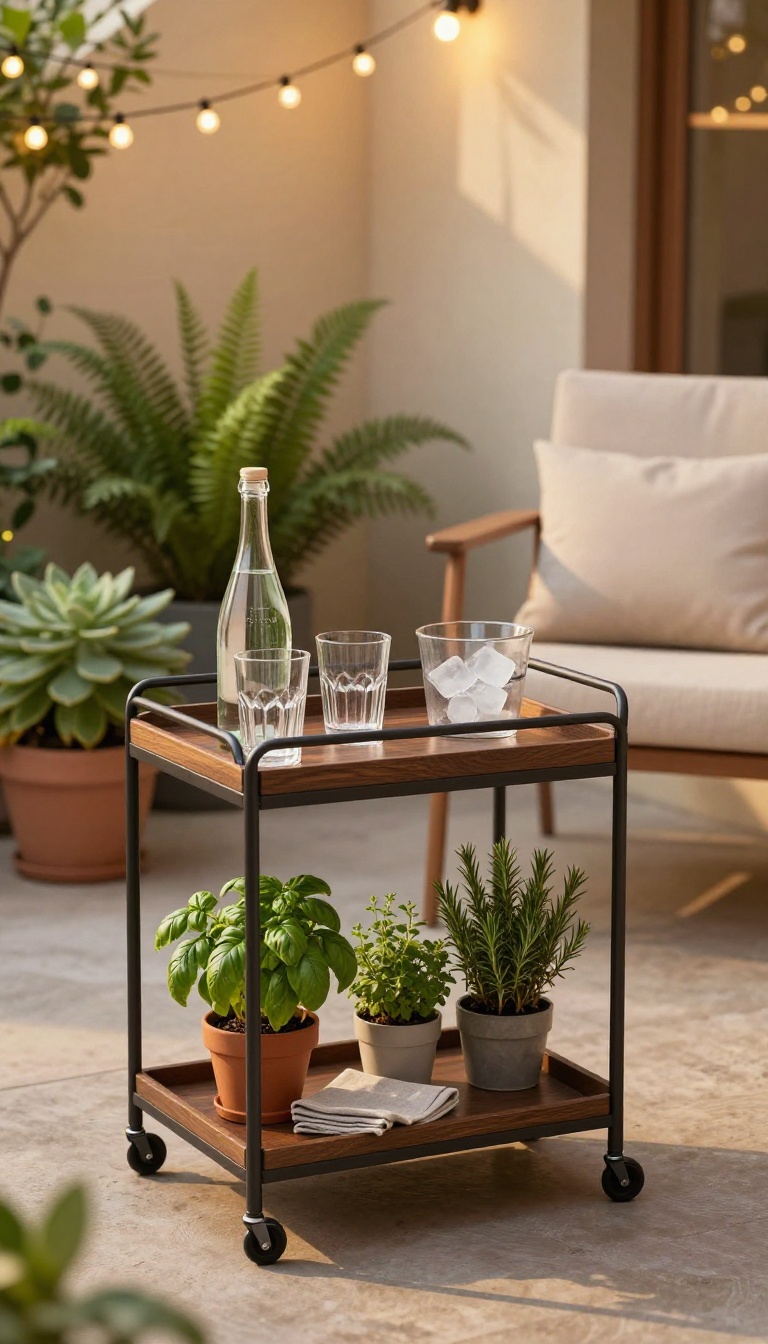
A rolling bar cart is a small patio’s best friend. It holds drinks, snacks, and plants without taking up permanent floor space. You can wheel it around to catch the sun or tuck it away when you need room to move.
Why A Bar Cart Works
Bar carts are compact by design. They fit into corners, along railings, or next to a chair. Their wheels let you rearrange your setup in seconds, so you can follow the shade or keep the party going where you are.
What To Put On It
Use the top shelf for glasses, bottles, and a small ice bucket. The bottom shelf can hold extra napkins, a cutting board, or a few potted herbs. Add a tray to keep things tidy and make it easy to carry inside.
Styling Tips
Choose a cart with a finish that matches your patio furniture—metal for a modern look, wood for a warmer vibe. Add a string of battery-powered lights or a small lantern to make it feel inviting in the evening.
11. Design a Mini Dining Nook
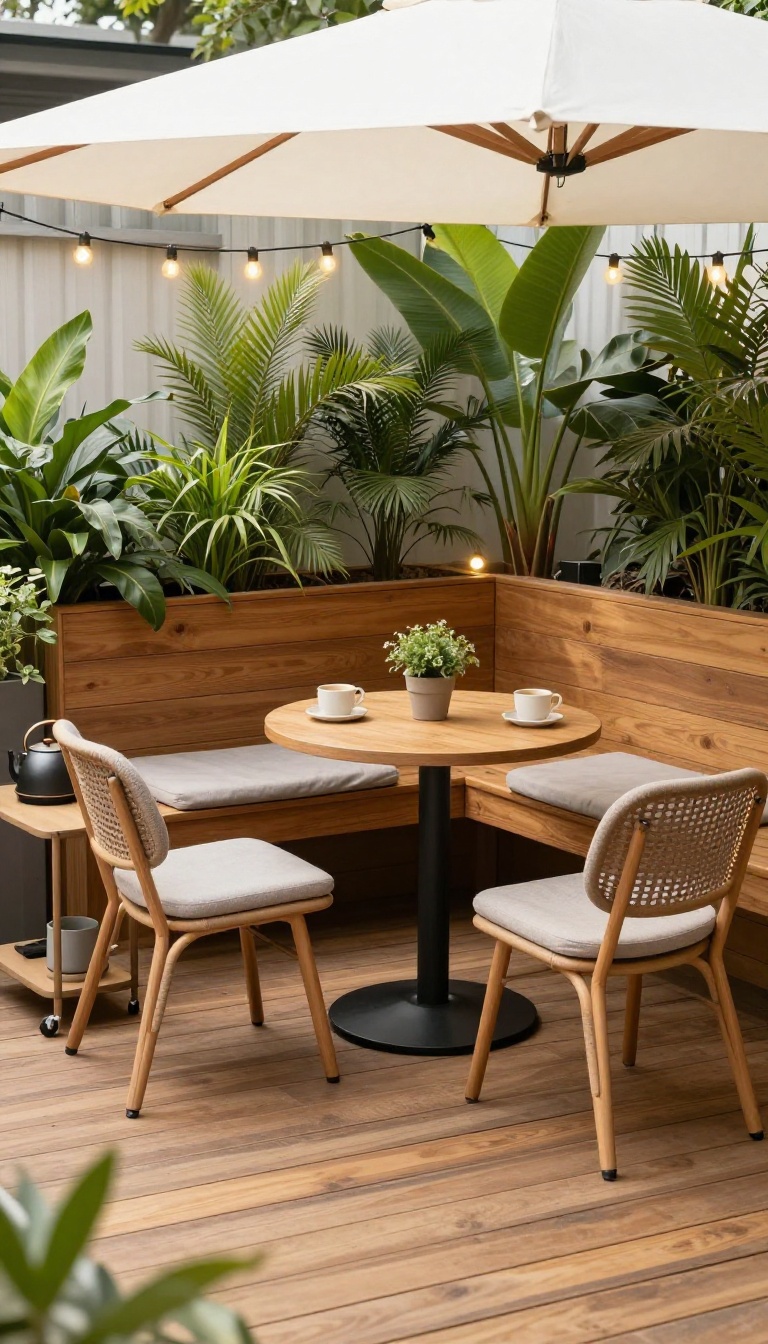
Who says you need a full dining set to enjoy meals outside? A compact bistro table with two chairs can turn a tiny patio into a cozy spot for morning coffee or a casual dinner for two. The key is choosing pieces that are proportionate to your space and easy to move or store when not in use.
Pick The Right Table
Look for a bistro table that folds flat or has a built-in umbrella hole. A round top takes up less visual space than a rectangular one and makes conversation easier. If you're really tight on room, consider a wall-mounted drop-leaf table that folds down when you need extra floor space.
Choose Comfortable Seating
Two chairs should be comfortable enough for lingering, not just perching. Look for chairs with padded seats or add your own cushions. Folding chairs are a smart choice because they can be tucked away when you need to use the patio for something else.
Add Ambiance And Function
A string light overhead or a small lantern on the table sets the mood. Use a tabletop planter or a small vase as a centerpiece. If you drink coffee or tea outdoors, a small side cart or a shelf nearby can hold mugs and a kettle.
FAQ
How can I make a small patio look bigger?
Use light colors, mirrors, and vertical elements to create the illusion of space. Keep furniture minimal and choose pieces that are proportionate to the area.
What is the best flooring for a small patio?
Outdoor rugs, interlocking deck tiles, or painted concrete are great options. They add style and comfort while being easy to clean and maintain.
How do I protect my patio furniture from the weather?
Choose weather-resistant materials like teak, aluminum, or synthetic wicker. Use covers when not in use, and store cushions indoors during harsh weather.
Can I have a garden on a small patio?
Absolutely! Use containers, vertical planters, and hanging baskets to grow flowers, herbs, or even small vegetables. Just ensure proper sunlight and drainage.
What are some budget-friendly small patio ideas?
DIY pallet furniture, string lights, and potted plants are affordable ways to transform your patio. Repurpose items you already own for a personal touch.
Conclusion
A small patio doesn't have to feel cramped or limiting. Even just a few smart tweaks, like a corner bench or a fold-down table, can turn it into your favorite spot to unwind.
Start with the ideas that solve your biggest space issue first, then layer in the cozy details. You'll be surprised how quickly a compact area becomes the place everyone wants to hang out.