10 Cozy TV Living Room Ideas for a Cleaner Screen Wall Setup
The TV wall often becomes the default dumping ground for cables, remotes, and random clutter. But with a little intention, it can transform into a cozy, layered focal point that feels both clean and inviting.
You don't need a complete renovation or a massive budget to make it happen. Small shifts in how you arrange furniture, choose accessories, and handle storage can completely change the energy of the room.
The goal isn't to hide the TV but to let it sit comfortably within a space that feels warm and put together. These ten ideas focus on practical, achievable ways to create a screen wall that looks intentional and lived-in.
1. Float the TV on a Low Console with Open Shelving
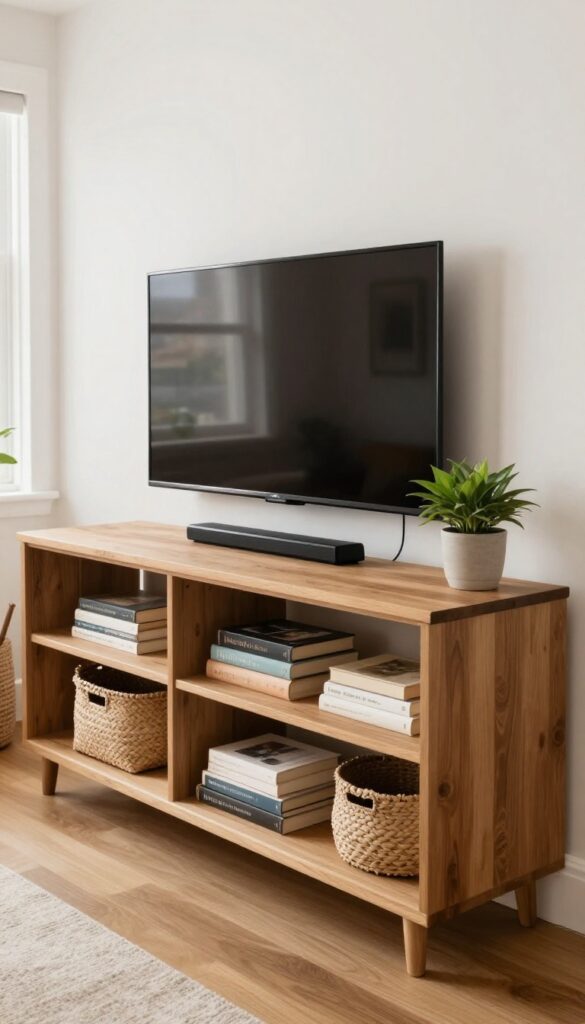
A low console with open shelving does two things at once: it anchors your TV without stealing the spotlight, and it gives you room to breathe. By mounting the screen just above the console, you create a clean horizontal line that makes the wall feel wider and the room less top-heavy. The open shelves below are perfect for stashing baskets, stacking books, or showing off a few curated objects—all within easy reach.
This setup keeps the sightline clear and the vibe relaxed, which is exactly what a cozy living room needs.
Start by choosing a console that sits low—think 24 to 30 inches tall—so the TV hovers at eye level when you're seated. The open shelving should be deep enough for medium baskets or stacked magazines, but not so deep that it feels bulky. A warm wood finish like oak or walnut adds texture, while a black or white lacquered option keeps things modern.
Mount the TV about 4 to 6 inches above the console, leaving just enough gap to slide a soundbar or a low plant underneath. This arrangement draws the eye across the room rather than up, making the space feel wider and more grounded.
Best Colors And Finishes
- Stick with neutrals that blend into the wall or softly contrast. A pale oak console against a white wall keeps the look airy, while a charcoal or navy unit adds depth without heaviness. For the shelves, mix in a few warm-toned baskets—seagrass or woven rattan—to soften the hard lines.
- If your wall is already a light gray or beige, a walnut finish brings just enough warmth to keep the room from feeling flat.
Shelf Styling Tip
- Treat the open shelves like a mini gallery, not a catchall. Place two or three large baskets on the bottom shelf for remotes, cables, and extra cords. On the upper shelves, stack a few coffee table books horizontally and prop a small framed photo or a ceramic vase on top.
- Leave about 30 percent of each shelf empty so the eye can rest. This balance keeps the console feeling curated, not cluttered.
Small-space Fix
In a narrow living room or apartment, swap a full-length console for a shorter version that leaves floor space visible. You can also use a slim media cabinet with doors on the bottom and open shelving above—just keep the overall height under 36 inches. Pair it with a low-profile sofa or floor cushions to maintain the open, grounded feel.
2. Layer a Tall Plant Beside the Screen for Soft Contrast
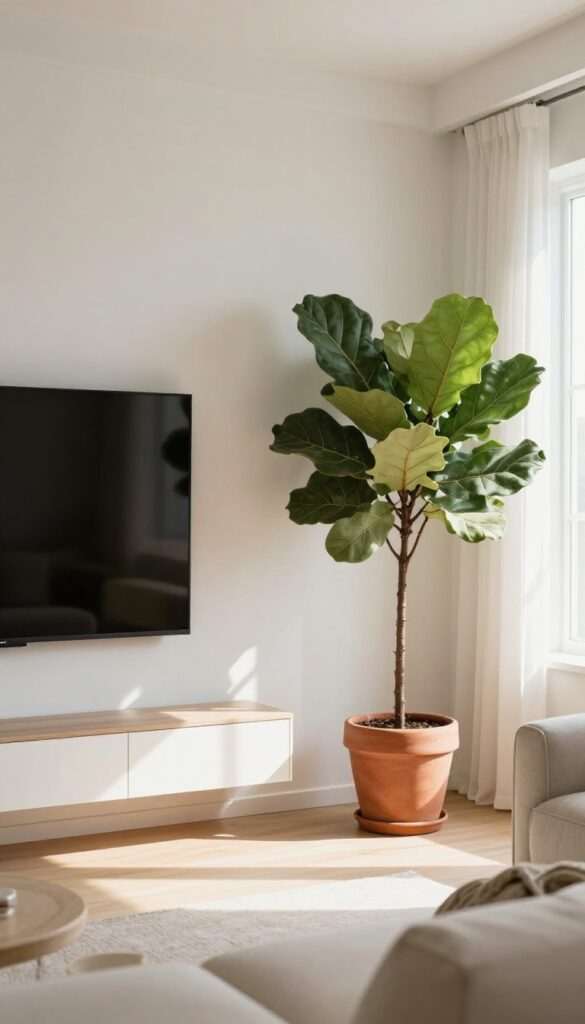
A flat black screen can feel a little cold and dominating, especially on a clean wall setup. Adding a tall plant next to the TV is one of the easiest ways to soften that hard edge and bring in a natural, calming element. The organic shape and rich green color break up the rectangle without cluttering your wall.
Place a tall fiddle-leaf fig, a cascading pothos on a stand, or even a sturdy snake plant in a woven basket beside your TV. The height should roughly match or slightly exceed the screen to create balanced visual weight. The green leaves add texture and life, making the whole setup feel more inviting and less tech-heavy.
This trick works especially well in living rooms where the TV is the focal point—it draws the eye away from the black box and toward the layered, cozy vibe you're building.
Best Plant Choices
- Fiddle-leaf figs, rubber trees, and tall snake plants are top picks because they grow upright and don't spread too wide. If you want a softer look, try a cascading pothos or a trailing philodendron on a plant stand. For low-light rooms, a ZZ plant or cast iron plant thrives with minimal fuss.
- Stick to plants with broad, sculptural leaves for maximum contrast against the screen.
Pot And Placement Tips
- Choose a pot that complements your room's palette—think matte ceramic in neutral tones like sand, terracotta, or charcoal. Avoid glossy finishes that might reflect glare. Place the plant slightly forward of the TV so it creates depth, not a flat line.
- If your TV is mounted, a plant on a side table or floor stand works beautifully. For small spaces, a slim plant like a tall snake plant fits snugly next to a console.
Finishing Touch
Add a small grow light behind the plant if the spot doesn't get enough natural light. This not only keeps your plant healthy but also casts a soft glow on the wall, reducing harsh shadows around the TV. Pair with a textured basket or a simple pebble tray for an extra layer of visual interest.
3. Use a Gallery Wall to Frame the TV
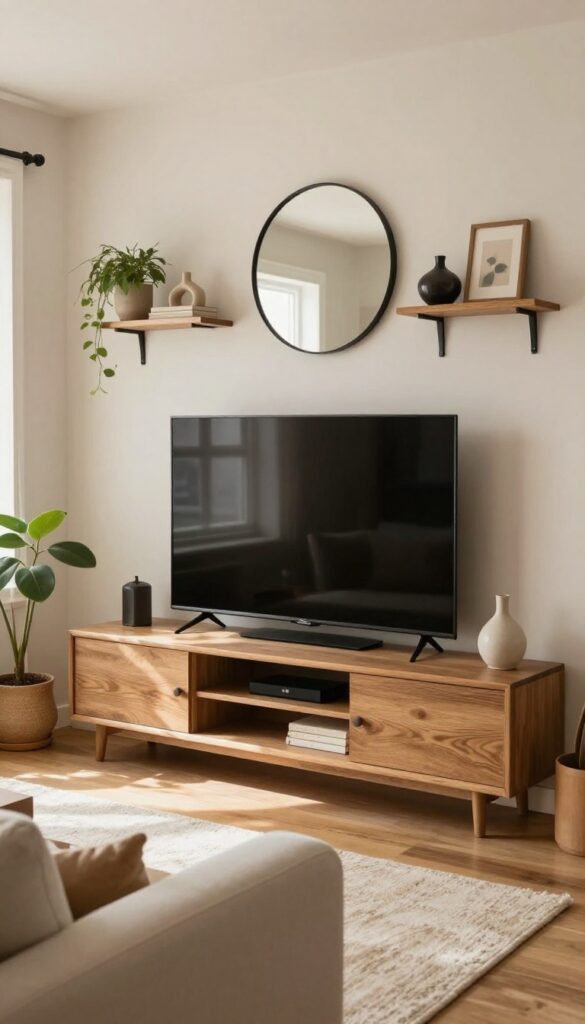
If your TV sits on a wall that feels a little bare, turning it into part of a gallery wall is a surprisingly cozy move. Instead of letting the screen dominate the room, you surround it with art, mirrors, and small shelves so it blends into a bigger, more personal composition. The trick is keeping the frames cohesive—think all black, all brass, or all natural wood—so the wall feels curated, not chaotic.
This approach works especially well in living rooms where you want a layered, collected look without hiding the TV away.
Start by mapping out a loose arrangement on the floor before you commit to nail holes. Place the TV slightly off-center within the gallery so it doesn't feel like the focal point, and balance it with a mix of frame sizes and shapes. A round mirror opposite a rectangular print can soften the hard lines of the screen.
Small floating shelves add dimension and let you swap in plants or small sculptures for texture. Keep the overall palette warm and muted—think cream frames, matte black, or walnut—to maintain that cozy, layered feel.
Frame Consistency
Stick to one or two frame colors or materials across the entire gallery. For a cozy living room, matte black or natural wood works well because they don't compete with the TV's bezel. Mixing too many finishes can make the wall feel busy and pull attention away from the art.
Layout Tip
Arrange the frames asymmetrically around the TV, leaving a few inches of breathing room between each piece. Use painter's tape to outline the TV's position on the wall first, then place your frames around it. This prevents the gallery from feeling too rigid or too scattered.
Finishing Touch
Add a small shelf above or beside the TV to hold a trailing plant or a stack of books. The greenery softens the electronics and brings life to the composition. A warm-glow picture light on one of the art pieces can also help create a cozy evening ambiance.
4. Install Floating Shelves Above or Beside the TV
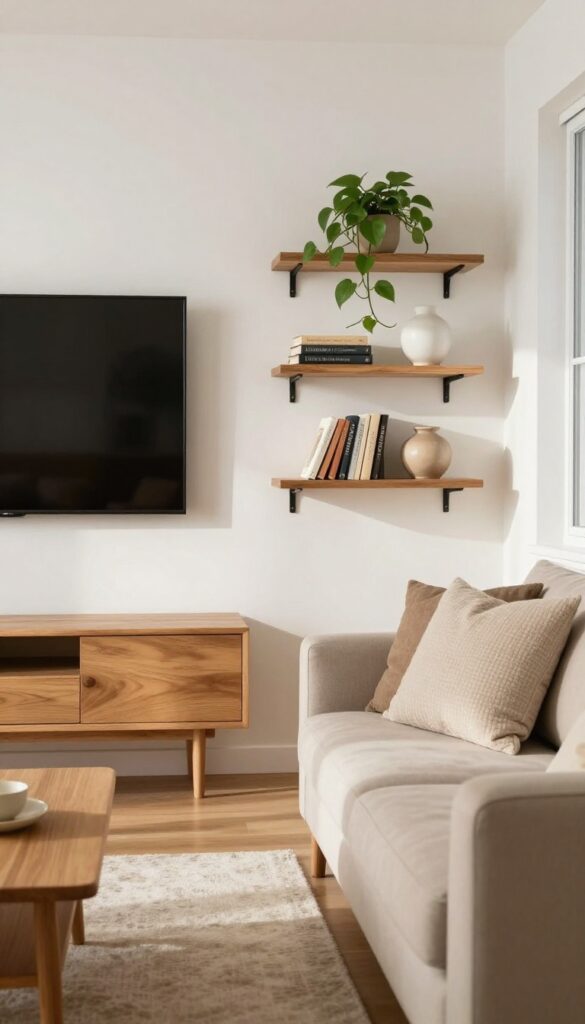
Floating shelves are a smart way to add storage and personality without making the wall feel cluttered. By placing them above or beside the TV, you draw the eye upward and balance the screen's visual weight. Choose warm wood tones or paint them to match your wall for a seamless, airy look that keeps the focus on your decor, not the hardware.
Floating shelves in a warm wood tone or matching the wall color provide display space without adding visual weight. Stack a few books, a small vase, or a ceramic sculpture to draw the eye upward and balance the screen's bulk. This setup works especially well in cozy, layered living rooms where you want to add character without overwhelming the space.
Best Materials
Solid wood like oak or walnut brings warmth, while painted MDF blends into the wall for a minimalist look. For a budget-friendly option, try reclaimed wood shelves with metal brackets for an industrial touch. Match the finish to your TV console or other furniture to tie the room together.
Shelf Styling Tip
Group items in odd numbers and vary heights with stacked books, a small plant, or a framed photo. Keep it sparse—leave some negative space to avoid a crowded feel. A trailing pothos or a small sculpture adds organic texture that softens the TV's hard edges.
Layout Tip
If your TV is mounted, place shelves slightly above or to the side, not directly behind it, to avoid visual competition. For a console setup, flank the TV with two shelves at the same height for symmetry, or stagger them for a more relaxed, collected look.
5. Hide Cables Inside a Cord Cover or Raceway
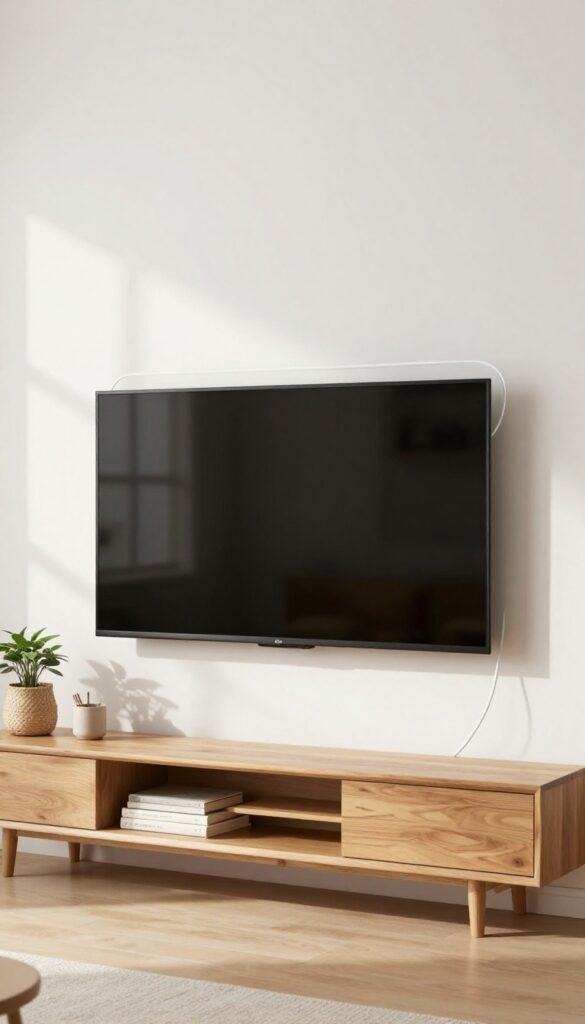
There's nothing like the satisfaction of a clean TV wall—until your eyes drift down to the tangle of black cords pooling beneath the screen. That messy knot instantly undermines the whole setup, no matter how stylish your media console is. The fix is surprisingly simple: a cord cover or raceway painted to match your wall color.
Once installed, those cables practically disappear, leaving behind a streamlined, polished look that makes the entire living room feel more intentional.
A cord cover is essentially a slim plastic channel that sticks to the wall and hides your cables inside. You can paint it to blend seamlessly with your paint color, so it becomes nearly invisible. For a more permanent solution, a raceway system allows you to run cables from the TV down to the outlet behind a series of interlocking tracks.
Some raceways even come with a paintable surface, so you can match them exactly to your wall. The best part? This small upgrade takes less than an hour to install but makes the biggest visual impact on your screen wall.
It's the kind of detail that guests might not notice at first, but they'll feel the difference in how clean and put-together the room looks.
Best Colors And Finishes
- For a truly invisible look, choose a cord cover that matches your wall color exactly. If your walls are white, go for a white raceway—no painting needed. For colored walls, buy a paintable cord cover and use leftover wall paint for a perfect match.
- If you prefer a more intentional design element, consider a metallic finish like brushed nickel or matte black that coordinates with your TV frame or other hardware. This approach turns the cord cover into a subtle accent rather than a flaw.
Installation Tips For A Flawless Look
- Before sticking the cover, clean the wall thoroughly with rubbing alcohol to remove dust and grease. Measure twice and cut the raceway to length using a fine-tooth saw or utility knife. For corners, use the included corner pieces to keep the line smooth.
- When painting, apply thin coats and let each dry completely to avoid drips. If you're running multiple cables, use a raceway with a larger capacity so you don't have to force them in—this prevents bulging and keeps the cover flush against the wall.
Small-space Fix For Apartments
- In a rental or small apartment where you can't paint or drill, opt for a self-adhesive cord cover that can be removed without damaging the wall. Look for a flat, low-profile design that sticks firmly but peels off cleanly. Alternatively, use a cable management box or a decorative fabric sleeve that wraps around the cords and sits behind the TV stand.
- These options are renter-friendly and still give you that tidy, uncluttered look without any permanent changes.
6. Add a Cozy Reading Nook or Accent Chair Nearby
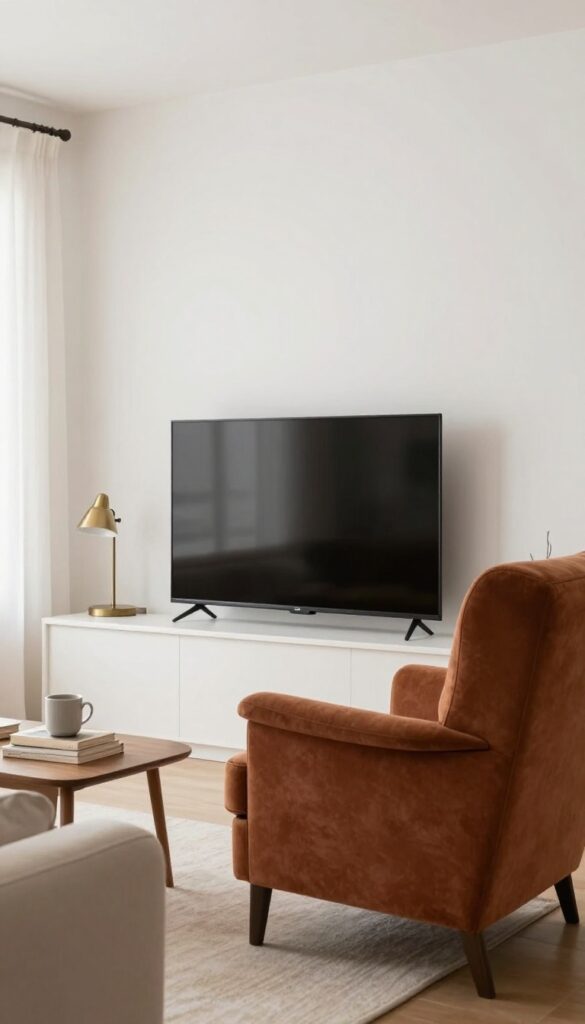
A TV wall doesn’t have to be all about the screen. By tucking a comfortable armchair or a small loveseat slightly off-center and angled toward the television, you instantly create a secondary seating zone that feels intentional and inviting. This simple layout trick breaks up the monotony of a straight sofa wall and gives the room a layered, lived-in look.
Plus, it offers a cozy spot for reading, scrolling, or just lounging while still keeping the TV in view.
Positioning an accent chair or loveseat at an angle softens the geometry of the room and makes the space feel more dynamic. Choose a chair with a high back or a wingback style for a cocooning feel, or go with a sleek mid-century armchair for a cleaner silhouette. Place it close enough to the TV so it doesn’t feel disconnected, but not directly in front of the sofa—offset it by a foot or two.
Add a small side table and a reading lamp to complete the nook, and you’ve got a spot that’s perfect for morning coffee or evening wind-downs.
Best Chair Styles
- Look for chairs with plush cushions, rolled arms, or a gentle recline. A swivel chair can be a fun addition, letting you pivot toward the TV or the room. For a cozy vibe, consider a fabric upholstery in a warm neutral like oatmeal, taupe, or a muted rust.
- Leather or faux leather adds a touch of sophistication and is easy to clean.
Layout Tip
- Angle the chair about 30 to 45 degrees toward the TV. This keeps the sightline clear without blocking walkways. If your room is tight, use a smaller accent chair with a slim profile.
- Leave at least 18 inches between the chair and the sofa for easy movement.
Finishing Touch
Drape a soft throw blanket over the back of the chair and add a small floor lamp or a wall-mounted reading light. A tiny side table with a coaster and a stack of books makes the nook feel purposeful and lived-in.
7. Incorporate a Large Mirror to Reflect Light
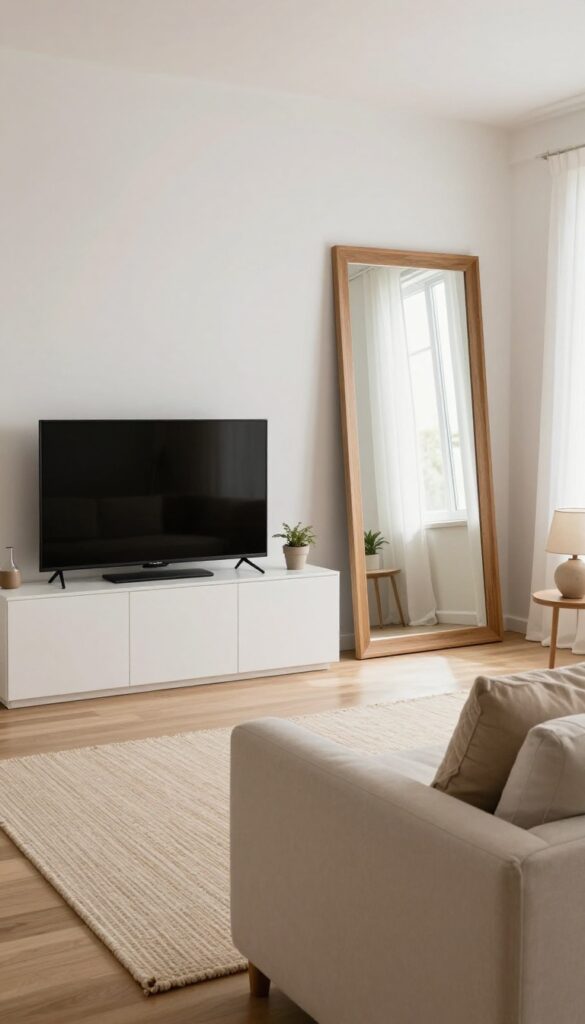
A large mirror isn't just for checking your outfit—it's a secret weapon for making your TV wall setup feel airy and open. By leaning or hanging a mirror opposite or adjacent to the screen, you bounce natural light around the room, softening the hard edges of the electronics. The reflection tricks the eye into seeing more space, while the mirror's frame becomes a decorative anchor that balances the TV's dark rectangle.
This trick works especially well in rooms that feel a bit cramped or lack windows, instantly adding depth and a cozy, layered glow.
Mirrors and TVs might seem like odd bedfellows, but when placed thoughtfully, they create a dynamic visual balance. The key is positioning: you want the mirror to catch daylight or lamplight, not the TV screen itself, to avoid glare. A floor-leaning mirror with a chunky wooden or metal frame adds texture and a casual, lived-in feel, while a hung mirror with an ornate frame brings a touch of elegance.
Either way, the mirror becomes a second focal point that prevents the TV from dominating the room. This idea shines in living rooms where you want a clean, uncluttered screen wall but still crave warmth and personality.
Best Placement For Maximum Effect
- Place the mirror directly across from a window to reflect outdoor light into the room, or angle it slightly toward a lamp for a softer, cozier glow. Avoid putting the mirror behind the TV, as it can create distracting reflections and double the screen's visual weight. Instead, position it to the side or at a 45-degree angle to bounce light without competing with the TV.
- In a narrow room, a tall, vertical mirror can make the space feel wider and more open.
Frame Styles That Complement The Screen
Choose a frame that echoes other materials in the room—like a black metal frame to match the TV's bezel, or a warm wood frame to tie into shelving or flooring. For a layered look, lean a large mirror with a natural rattan or bamboo frame against the wall; it adds organic texture that softens the tech vibe. If your decor leans modern, a frameless or thin-edged mirror keeps things sleek and minimal.
Cozy Styling Tip
Anchor the mirror with a low plant or a stack of books at its base to create a vignette that draws the eye downward and grounds the wall. A small lamp or candle placed nearby will reflect in the mirror, doubling the warm light and making the whole setup feel intentionally styled. This little cluster keeps the mirror from feeling like an afterthought and ties it into the room's cozy, layered aesthetic.
8. Use a Media Console with Closed Storage for Clutter
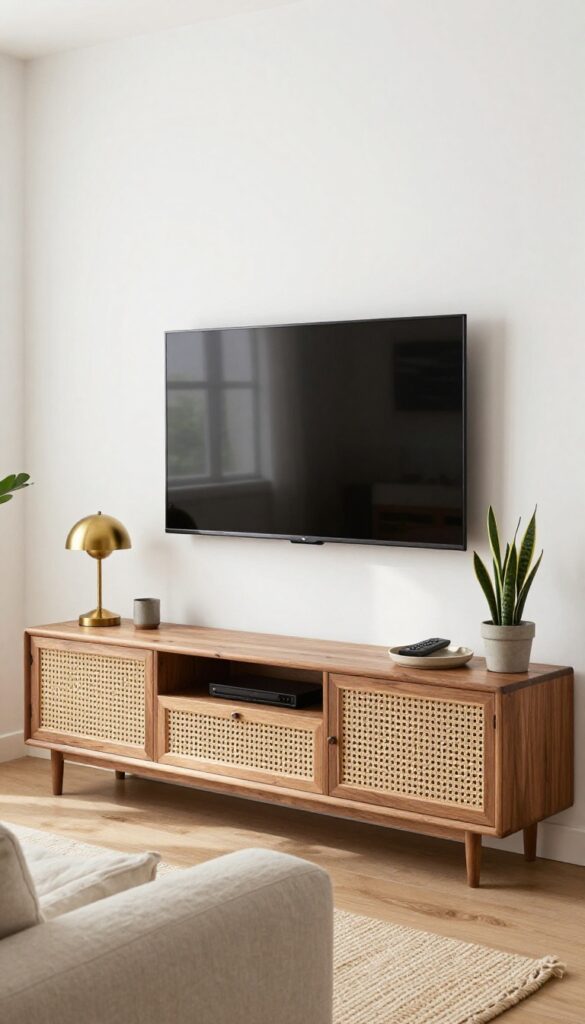
A TV wall can quickly turn into a tangle of cables, game consoles, and random remotes. The secret to keeping it calm? A media console that hides everything behind closed doors.
Cabinets and drawers let you stash the tech gear out of sight while leaving the surface free for a few curated pieces. The result is a cleaner, more intentional setup that still feels warm and layered.
A closed-storage console is the workhorse of a tidy screen wall. It gives you a place for all the electronics and accessories that would otherwise create visual noise. With the clutter tucked away, you can style the top with a lamp, a small plant, or a stack of books—whatever fits your cozy, layered look.
The key is choosing a piece that balances function with beauty, so it feels like furniture, not just a utility box.
Best Materials And Finishes
- For a cozy yet clean aesthetic, look for consoles in natural wood tones like walnut or oak, or a matte painted finish in a soft neutral. Avoid high-gloss or overly shiny surfaces—they can feel cold and highlight dust. A rattan or cane-front cabinet adds texture and warmth without sacrificing the clean front.
- If you want a lighter feel, a white or cream console with brass or black hardware keeps the look crisp but inviting.
Layout And Styling Tip
- Position the console so it’s centered under the TV, leaving a few inches of breathing room on each side. On top, keep styling minimal: one lamp on one end, a small plant or a stack of books on the other, and maybe a tray for the remote. This asymmetry feels natural and avoids a cluttered look.
- If your console has open shelves, use woven baskets or boxes to store extra items—they hide the mess while adding texture.
Small-space Fix
In a smaller living room, choose a console with a slim profile—no deeper than 16 inches—so it doesn’t eat up floor space. Look for one with a combination of drawers and cabinets: drawers for remotes and small accessories, cabinets for larger items like game consoles and DVD players. A floating console mounted on the wall can also make the room feel more open by leaving the floor visible.
9. Hang Sheer Curtains to Soften the Wall
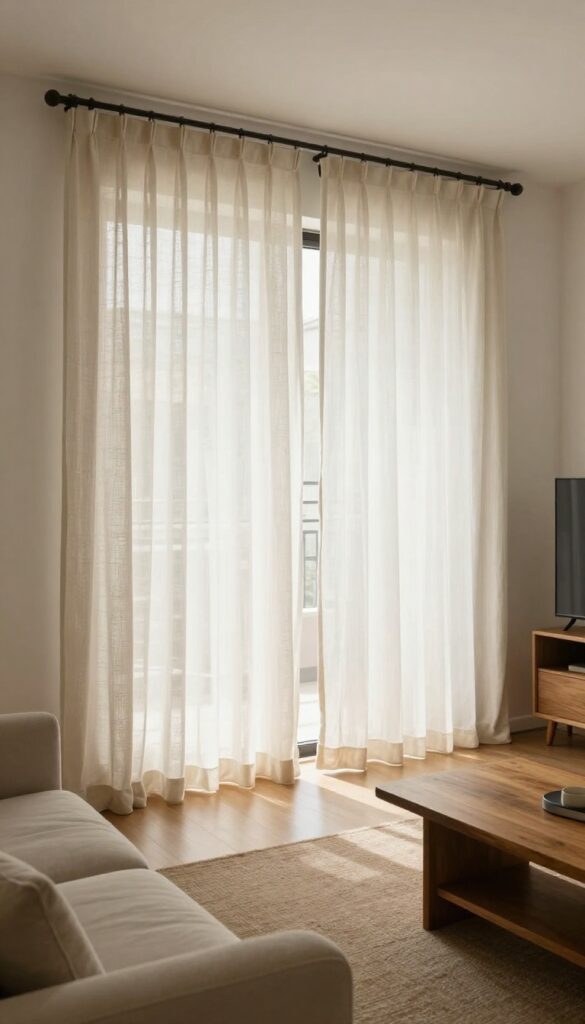
A TV wall can feel cold and tech-heavy, especially when the screen is dark and boxy. Floor-length sheer curtains on either side change that completely. They add softness, height, and a gentle, layered look that makes the TV feel more like a window than a device.
The fabric diffuses light and creates a subtle frame, so the screen blends into the room instead of dominating it.
This trick works best in living rooms where the TV is mounted on a flat wall without built-ins. Choose curtains in a light, neutral tone like ivory, linen white, or soft gray to keep the look airy. Hang the rod wide enough so the panels sit just outside the TV's edges when open, and let them pool slightly on the floor for a relaxed, cozy feel.
The effect is instant: the wall feels taller, the screen feels smaller, and the whole setup becomes more inviting.
Best Fabrics And Colors
- Stick with natural, lightweight fabrics like linen, cotton, or a linen-cotton blend. They let light through without being see-through, and they add texture without bulk. Avoid heavy velvet or blackout lining—they'll compete with the TV and make the wall feel heavy.
- For colors, go with warm whites, cream, or pale beige. If you want a subtle contrast, try a soft blush or dusty blue, but keep it muted so the focus stays on the room, not the curtains.
Layout Tip: Rod Placement
- Mount the curtain rod as close to the ceiling as possible—this draws the eye upward and makes the wall feel taller. Extend the rod at least 6 to 12 inches past each side of the TV so the panels frame the screen without covering it. When the curtains are open, they should sit just outside the TV's width, creating a balanced, symmetrical look.
- If your TV is off-center, use a single panel on the wider side to visually balance the wall.
Finishing Touch: Tiebacks And Layers
- Add simple tiebacks in the same fabric or a subtle contrast to hold the curtains open during the day. This keeps the TV fully visible while still enjoying the soft frame. For extra coziness, layer a sheer curtain behind a slightly heavier panel—like a linen sheer with a cotton voile—so you can adjust light and privacy throughout the day.
- The double layer also adds depth and makes the wall feel more intentional.
10. Add a Low, Wide Art Piece Above the TV
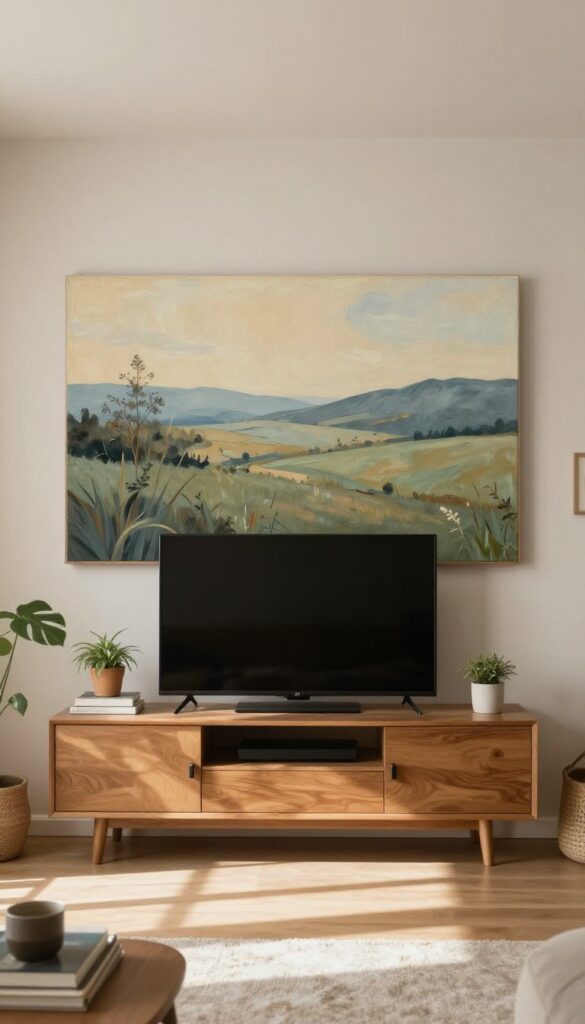
When your TV is mounted lower on the wall, the space above it can feel a bit empty or awkward. The trick is to hang a long, horizontal art piece just above the screen. This draws the eye upward, creating a layered look that feels intentional and collected.
A wide piece with muted tones keeps the wall calm and cohesive, so the TV doesn't dominate the room.
The key is choosing art that spans nearly the same width as the TV or a bit wider. This creates a balanced frame around the screen. Stick to soft, earthy colors—think warm beige, dusty blue, or sage green—to keep the overall look serene.
A landscape painting or a horizontal abstract print works beautifully. Leave about 3 to 5 inches of space between the top of the TV and the bottom of the art to avoid a cramped feel. This setup is perfect for living rooms where the TV is the focal point but you want to soften its presence with something more personal.
Best Art Styles
Horizontal landscapes, abstract line drawings, or minimalist photography work best. Avoid busy patterns or bright colors that compete with the screen. Matte finishes and neutral frames (black, natural wood, or brushed brass) keep the look polished.
Placement Tip
Mount the TV so its top sits at eye level when seated. Then hang the art piece 3 to 5 inches above the TV. If your TV is already installed, measure the gap and choose art that fits comfortably without touching the ceiling.
Finishing Touch
Add a small plant or a stack of books on the media console directly below the TV. This anchors the vertical line and ties the art and TV together visually. A low, trailing plant like pothos softens the hard edges.
FAQ
How can I hide TV wires without cutting into the wall?
Use a cord cover or raceway that sticks to the wall and can be painted to match. You can also run cables behind baseboards or use a cable management box that sits on the floor behind the console.
What's the best height to mount a TV in a living room?
The center of the screen should be at eye level when you're seated. For most sofas, that's about 42 inches from the floor to the center of the TV. Adjust based on your seating height.
Should I match the TV wall color to the rest of the room?
Not necessarily. A darker accent wall behind the TV can reduce glare and make the screen pop. But if you prefer a seamless look, match the wall color to the surrounding walls for a cleaner feel.
How do I make a large TV feel less dominant in a small room?
Surround it with soft textures like curtains, plants, and warm lighting. A gallery wall or floating shelves also help break up the visual weight. Keeping the area around the TV minimal prevents it from overwhelming the space.
Can I use a soundbar without adding clutter?
Yes. Mount the soundbar directly below the TV on the wall or place it on the console. Choose a slim model that matches the TV's width.
Hide the wires using the same cord cover as the TV cables.
Conclusion
A cleaner TV wall doesn't mean stripping everything away. It's about being intentional with what you add and where you place it. A few thoughtful layers—like a plant, a mirror, or closed storage—can turn a functional corner into a cozy, stylish part of your living room.
Start with one or two ideas that feel most doable for your space. Small changes add up, and soon your TV wall will feel less like a black box and more like a natural part of your home's story.