11 Indian Living Room Ideas You’ll Want to Save
An Indian living room rarely starts with a blank slate. It usually starts with a story—a swing from your grandmother's house, a brass lamp that has outlived three sofas, or a rug that has seen every Diwali since 2009. The trick is arranging those pieces so the room feels collected rather than crowded.
That is what this list is about. Eleven ideas that mix low seating, bold color, jali screens, and handcrafted textiles into a space that actually works for how you live. Some take a weekend.
Others take a carpenter and a bit of patience. You do not need a big budget or a designer.
1. Embrace Low Seating with Floor Cushions and Diwans
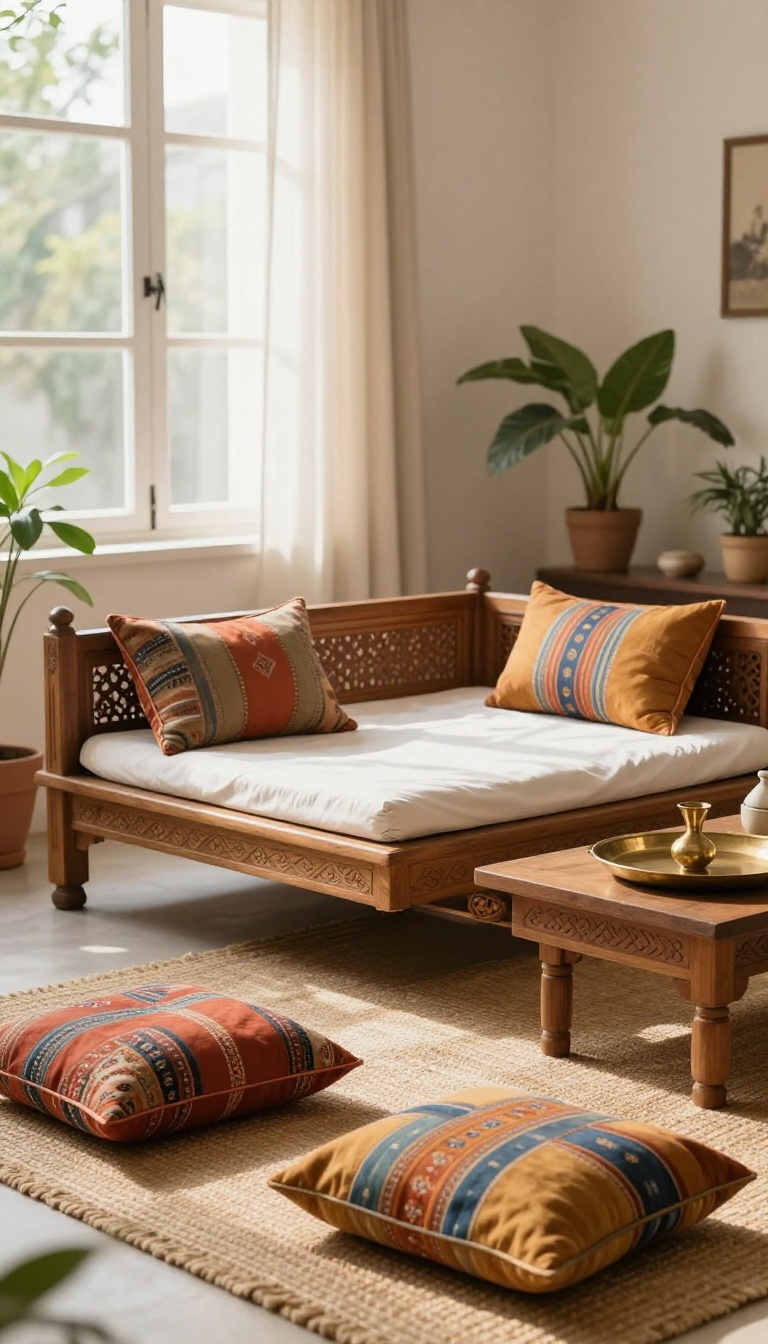
Low seating changes how a room feels the moment you walk in. Instead of towering sofas that chop up the space, you get an open, airy layout that invites people to sit closer and stay longer. It is also one of the most practical choices for Indian homes, where gatherings often spill onto the floor anyway.
Diwans and floor cushions have been part of Indian living rooms for centuries, and they still work beautifully today. They suit small apartments, rented flats, and any room where you want conversation to flow without furniture getting in the way. Best of all, you can start with just a few cushions and build from there.
A diwan is basically a low, backless sofa—sometimes with bolsters, sometimes just a flat cushioned platform. Pair it with a few floor cushions and you have seating for six without blocking a single window. The look stays traditional, but the comfort is all modern.
Floor cushions, often called gaddas or mudhas, come in every fabric from raw silk to block-printed cotton. They are easy to move, easy to store, and they instantly make a room feel more relaxed. Stack a few in a corner and people will naturally pull them out when the chai arrives.
One thing to remember: low seating works best when you commit to it. Mixing a tall sofa with floor cushions can feel awkward unless you zone the room clearly. Keep the heights consistent and the space will feel intentional, not improvised.
Pick The Right Diwan For Your Space
A wooden diwan with a firm cotton mattress suits traditional rooms, especially if you add a bolster at each end. For a lighter look, go with a metal frame and a slim cushion—it reads modern and takes up less visual weight. Measure your room first; a diwan that is too deep will make the space feel cramped.
Layer Cushions Without Clutter
Stick to three or four floor cushions in coordinating colors, and rotate them depending on the season. Block prints and ikat work well together if you keep the base neutral. Add a small tray or a low table in the center so people have somewhere to set their cups.
Make It Comfortable For Everyday Use
Low seating can be hard on the back if the cushions are too thin. Choose fillings that are at least three inches thick, and add a thin mattress topper to your diwan if it feels firm. A rug underneath ties everything together and protects your knees from cold floors.
2. Mix Bold Colors with Neutral Backdrops
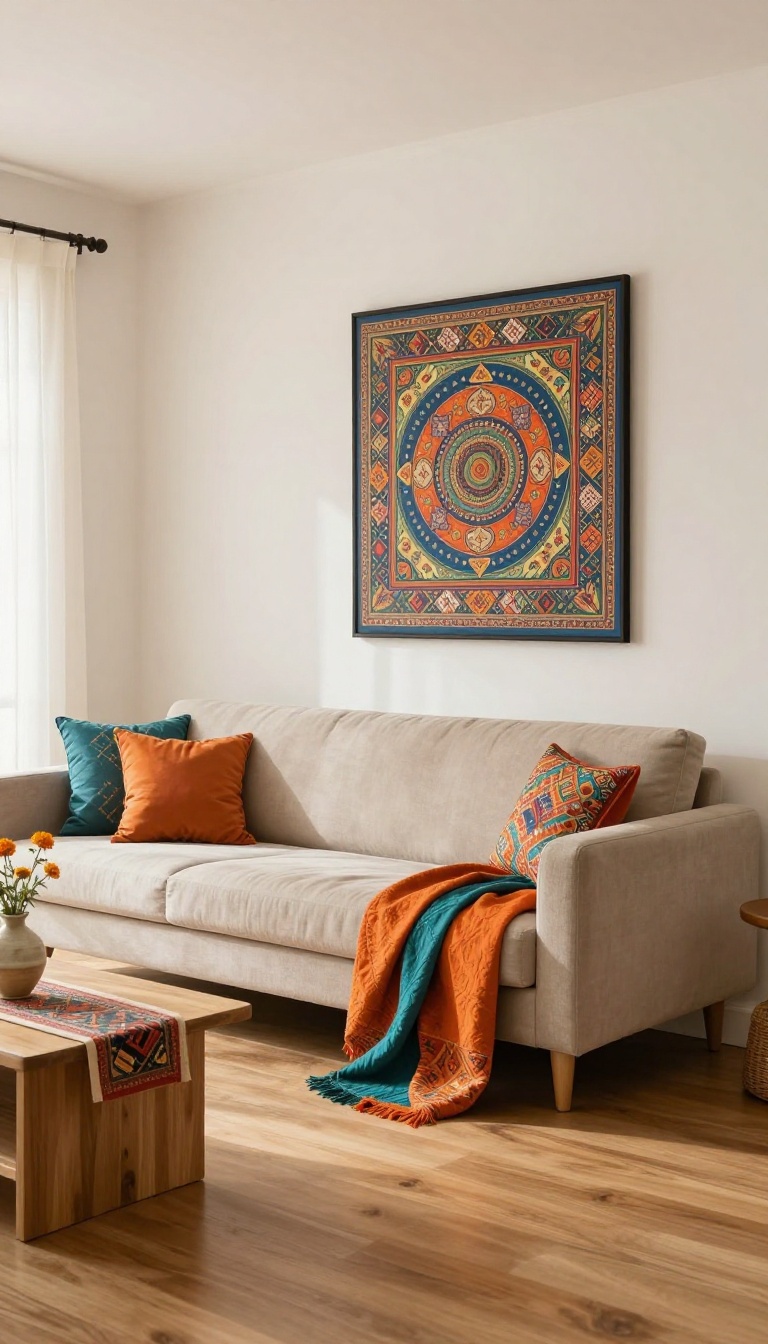
A neutral base is not boring—it is the calm that lets your brightest pieces speak. Think off-white walls, beige sofas, and light wood floors. Then bring in the color through cushions, throws, and art.
That way, the room feels lively without turning into a rainbow explosion.
The trick is to treat neutrals as your canvas and bold colors as your brushstrokes. You are not painting the whole wall red; you are adding a red cushion here, a yellow throw there. This keeps the room balanced and lets you change the accents with the season or your mood.
It also makes the vibrant Indian textiles and crafts stand out more.
Start With A Calm Base
Choose a wall color like warm white, soft grey, or sand. For furniture, go with beige, cream, or light wood. This creates a quiet background that makes everything else pop.
If you already have dark furniture, balance it with light walls and floors.
Add Color In Layers
Begin with one or two bold colors you love—maybe fuchsia and mustard, or teal and orange. Use them in cushions, a throw, or a rug. Then repeat those colors in smaller doses, like a vase or a framed print.
This repetition ties the room together.
Let Art And Textiles Do The Heavy Lifting
Indian textiles are perfect for this. A bright kantha quilt on a neutral sofa instantly adds life. Hang a colorful Madhubani painting on a plain wall.
Even a single block-printed runner on a console table can be enough.
3. Incorporate Handcrafted Textiles and Block Prints
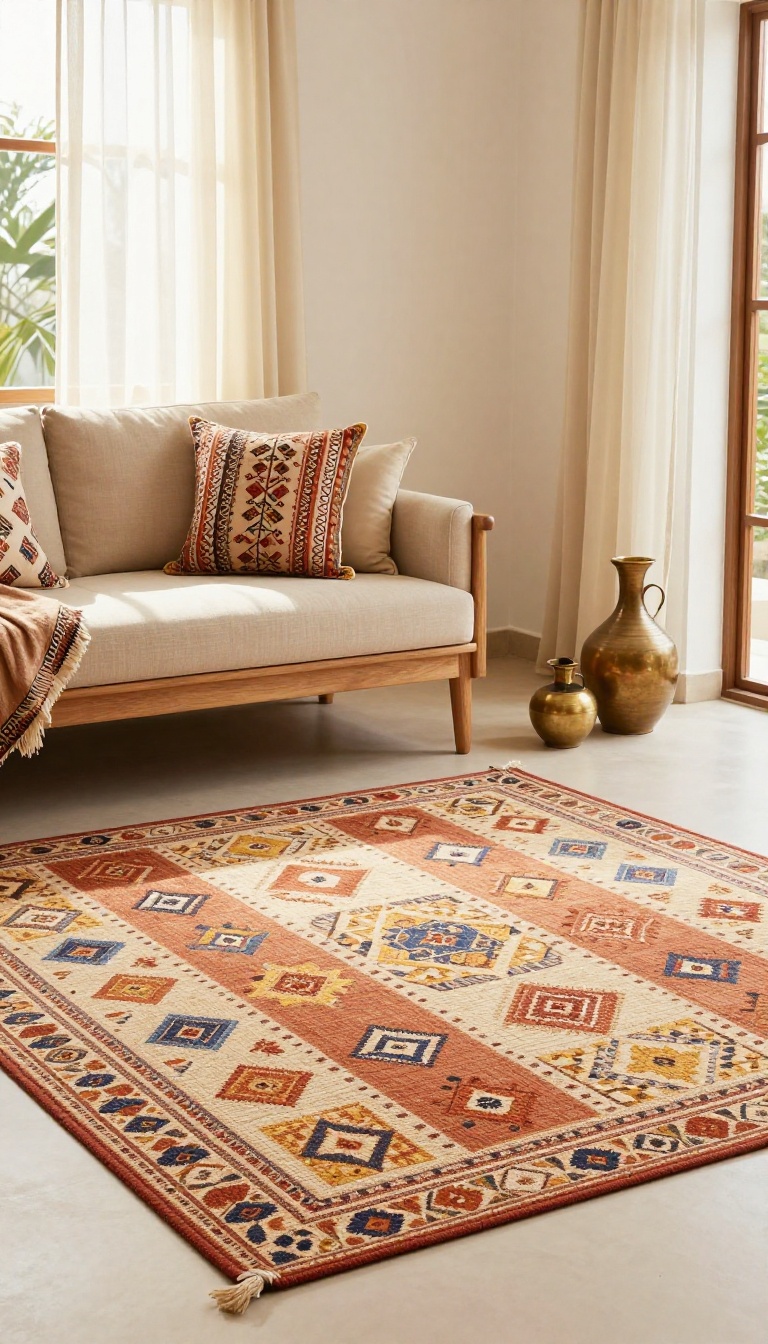
Handcrafted textiles bring a layer of warmth and personality that machine-made fabrics just can't match. Think of block-printed curtains, dhurries, and cushion covers—each piece carries the slight imperfections that make it feel human. These textiles add texture and a handmade feel without overwhelming the room.
They also let you play with color and pattern in a way that feels collected over time. You can start with a single dhurrie and build from there. The key is to mix and match thoughtfully, so the room feels curated, not cluttered.
Start with a dhurrie or two. Flat-woven and often reversible, dhurries are perfect for layering over a neutral floor. They come in endless patterns—from geometric to floral—and instantly add a pop of color.
Place one under a coffee table or beside a low seating area to define the space. Block-printed curtains can transform a plain window into a focal point. Choose a pattern that complements your existing color scheme, or go bold with contrasting hues.
The light filtering through the fabric creates a soft, inviting glow. Just make sure the print doesn't clash with other patterns in the room. Cushion covers are the easiest way to experiment.
Mix block prints with solid colors and different textures like cotton, silk, and jute. A few hand-embroidered covers can tie everything together. Don't be afraid to rotate them seasonally—it's a quick refresh that costs very little.
Finally, consider adding a handloom throw or a quilted bedspread on a sofa. These pieces add instant cosiness and are perfect for cooler evenings. Look for natural dyes and traditional motifs to keep the look authentic.
The goal is to create a space that feels lived-in and loved.
Layer With Dhurries
Dhurries are versatile and durable, making them ideal for high-traffic areas. Use a large one as a base and layer a smaller one on top for extra pattern. They're also easy to clean—just shake them out or vacuum gently.
Mix And Match Cushions
Combine different sizes and shapes—square, rectangular, round—to keep the arrangement interesting. Stick to a cohesive color palette, like earthy tones or jewel hues, so the mix feels intentional.
Choose Block-printed Curtains
Opt for lightweight fabrics like cotton or linen for a breezy feel. If you want more privacy, add a sheer lining. The block print will still shine through and add character.
4. Use Jali Screens for Privacy and Style
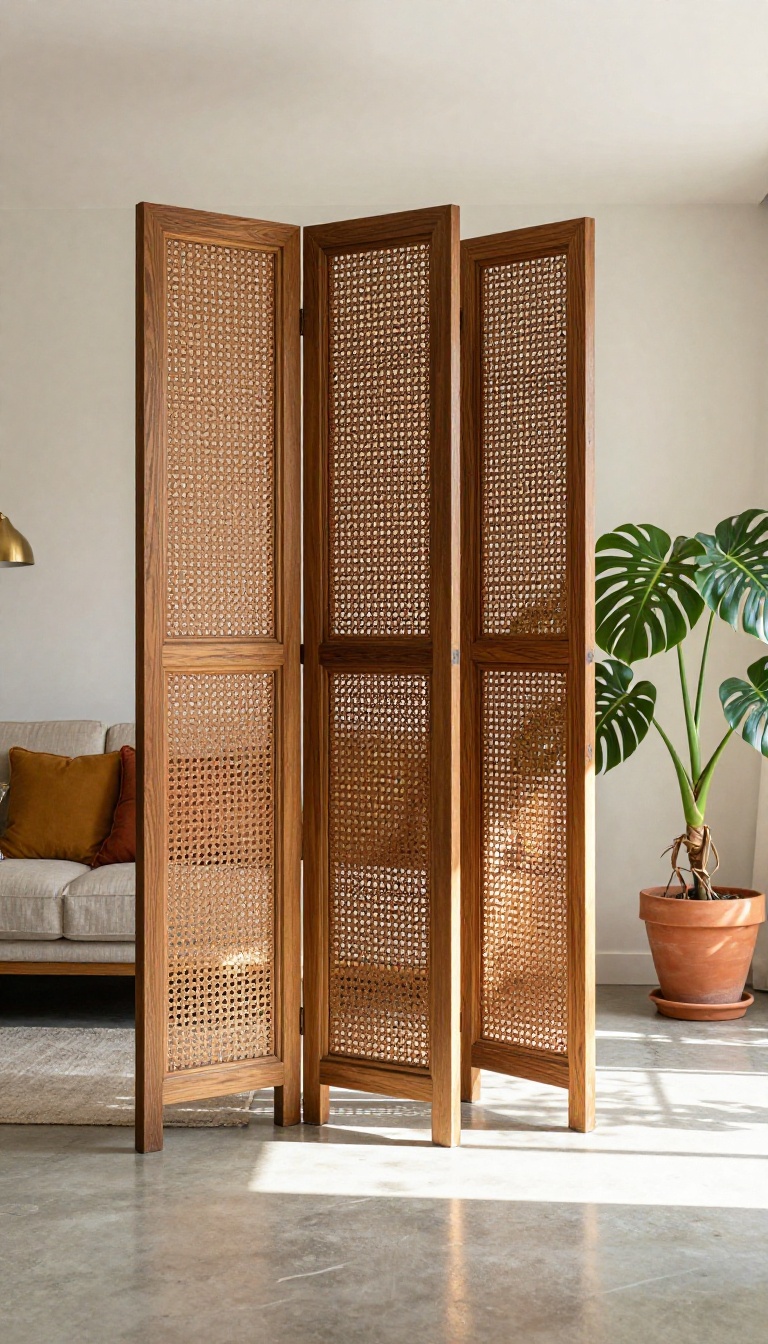
Jali screens are the original room dividers with a glow-up. Those intricate perforated panels—traditionally carved from sandstone or marble—now come in wood, metal, and even MDF, ready to slot into a modern Indian living room. They split spaces without blocking light, add pattern without wallpaper, and bring a handcrafted touch that feels rooted, not dated.
Think of a jali as a filter. It softens harsh sunlight into a dappled pattern across your floor, gives you visual privacy from a hallway or balcony, and still lets the room breathe. You can lean a tall panel against a wall as art, hang smaller ones in a window frame, or commission a full floor-to-ceiling partition.
The key is to treat it as a functional layer, not just decoration. That way it earns its place in a room that already has a lot going on.
Where Jali Screens Work Best
Use them to separate a living area from a dining zone without closing either off. In open-plan homes, a freestanding jali partition defines the sofa zone while keeping sightlines open. For windows, a jali panel over clear glass turns a plain view into a shadow play.
And in entryways, a narrow jali screen hides shoe racks or utility meters while still feeling intentional. Just avoid placing them where they block a walking path—aim for at least 3 feet of clearance.
Materials And Finishes That Fit Modern Homes
Wood jali in teak or sheesham adds warmth and pairs well with neutral sofas. Metal jali—laser-cut steel or brass—feels sharper and works in industrial or minimalist rooms. If you want the traditional look without the weight, choose MDF with a laminate or veneer finish.
Paint it matte black for drama, or keep it natural for a softer feel. A local carpenter can often custom-make a panel to your exact size for less than a designer brand.
Styling Tips To Keep It From Feeling Heavy
Don't crowd a jali screen with too many objects. Let it stand alone or pair it with one plant or a slim console. Backlight it with a warm LED strip to highlight the pattern after dark.
If you're using it as a window treatment, layer it with sheer curtains for adjustable privacy. And keep the surrounding walls simple—the screen is the star, so give it room to breathe.
5. Create a Focal Point with a Statement Piece
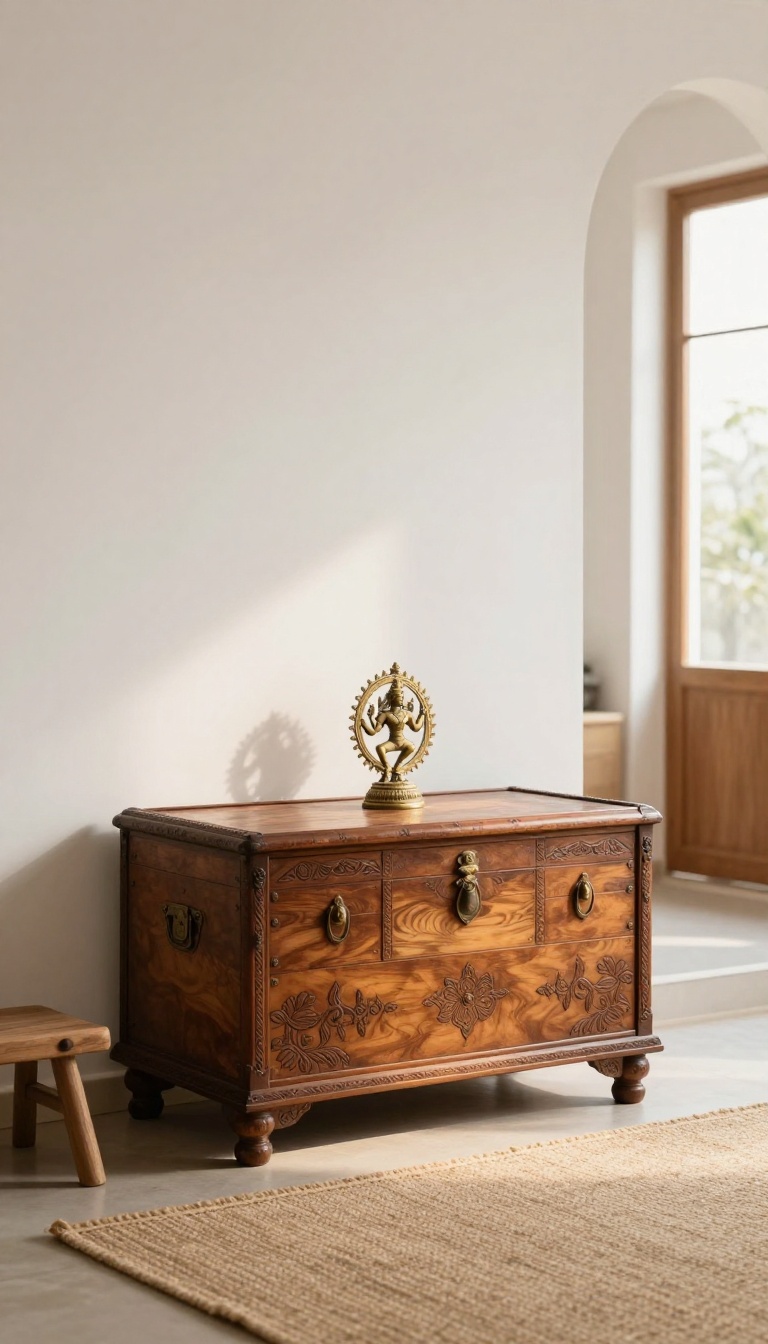
Every room needs something that makes you pause. In an Indian living room, that can be an antique chest, a large painting, or a carved wooden panel. It anchors the space and tells guests where to look first.
A statement piece does more than fill a corner. It gives the room a clear identity and a natural gathering point. The key is to choose one hero item and let everything else support it.
Pick A Piece That Tells Your Story
Your focal point should feel personal. Maybe it's a brass Nataraja statue from your parents' collection, or a hand-painted trunk you found in Jaipur. When the piece has meaning, it never feels like decoration for decoration's sake.
Give It Room To Breathe
A statement piece needs space around it to actually make a statement. Don't crowd it with too many small objects. Keep the wall behind it simple and let the piece own that zone.
Light It Like You Mean It
A focused light—a picture light, a floor lamp, or even a well-placed spotlight—makes your focal point pop. It draws the eye and adds warmth. Just avoid harsh glare that washes out the details.
Balance Scale With The Room
A tiny artifact on a huge empty wall will get lost. A massive piece in a small room can feel overwhelming. Match the scale to your space so the piece feels intentional, not accidental.
6. Layer Lighting with Lanterns and Fairy Lights
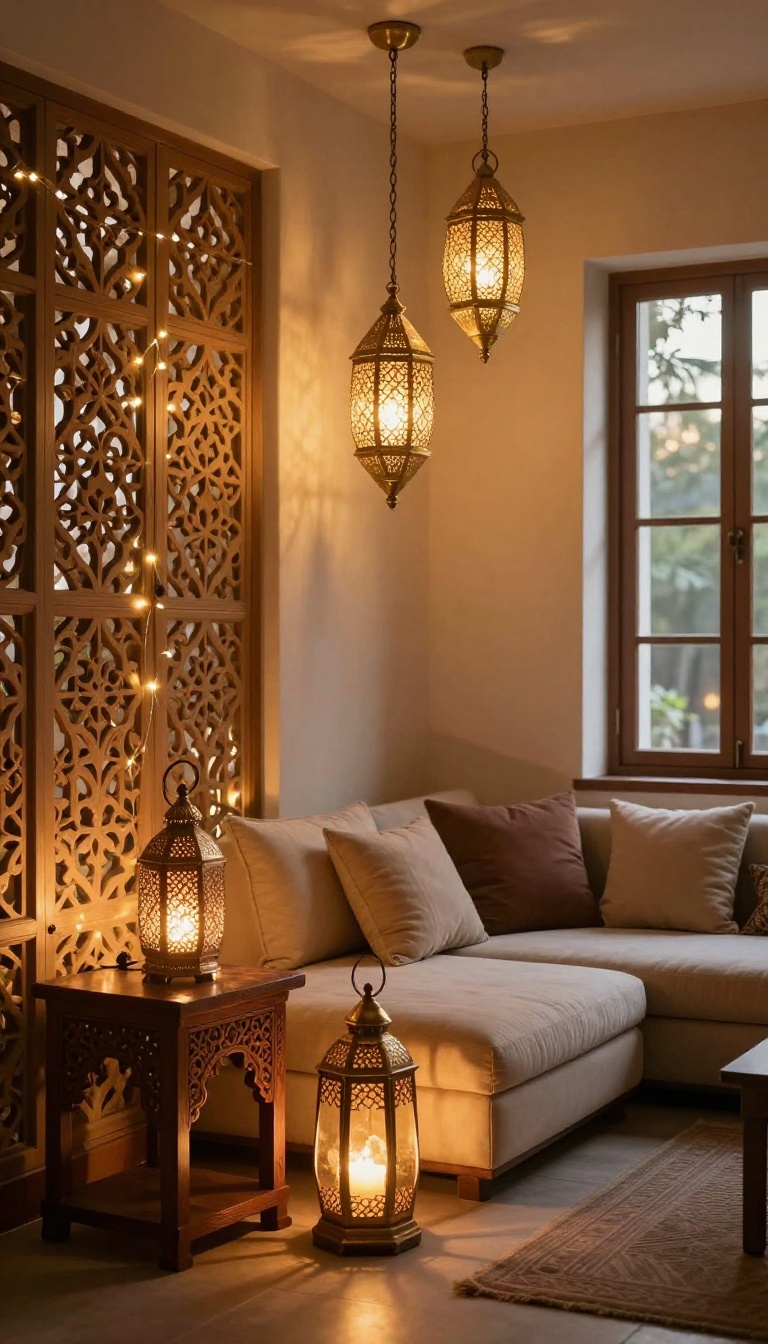
One overhead light never tells the whole story. In an Indian living room, evenings deserve soft pools of light, not a single harsh glare. Layering lanterns, fairy lights, and dimmable bulbs gives you control over the mood—bright for chai and conversation, low for quiet nights.
Think of lighting in three layers: ambient, task, and accent. Ambient light fills the room, task light helps you read or serve snacks, and accent light adds warmth and depth. When you mix them, the room feels alive instead of flat.
Start by swapping your main bulb for a dimmable one. That one change lets you go from bright to golden without touching a switch. Then add lanterns and fairy lights where they naturally fit.
You do not need to light every corner. A few well-placed sources do more than a dozen scattered ones.
Pick Lanterns That Match Your Room's Mood
Hanging brass or copper lanterns near a swing or window seat instantly warms up the space. Moroccan-style cutwork lanterns throw pretty patterns on the wall. For a modern Indian look, go with clean-lined metal or ceramic lanterns in matte black or white.
Cluster three at different heights over a side table. Or place a large floor lantern next to low seating. Use warm-white LED bulbs inside—they last longer and stay cool.
If you want a flicker of tradition, add a few real candles for special evenings, but keep safety in mind.
Use Fairy Lights Without Making It Look Like A Hostel Room
Fairy lights get a bad rep because people string them everywhere. The trick is restraint. Wrap a single strand around a jali screen or drape them inside a large glass jar.
Run them along a shelf edge or behind a sheer curtain. Choose warm white, not cool white, and keep the wires hidden. Battery-operated strings save you from hunting for plugs.
For a festive touch, use tiny copper wire lights inside a brass urli filled with water and floating flowers. Just make sure the lights are waterproof.
Set The Right Brightness For Every Hour
Morning light should be bright and clean. Evening light should be low and warm. Use a dimmer switch or smart bulbs you can control from your phone.
Set three scenes: bright for cleaning, medium for hanging out, and low for winding down. Add a small table lamp near your reading chair. Put a floor lamp behind the sofa for a soft halo.
And always keep one tiny night light near the doorway. That way, you never have to stumble in the dark.
Mix Old And New Light Sources
Your grandmother's brass oil lamp can sit next to a sleek LED strip. That contrast is what makes Indian homes feel personal. Use the oil lamp as an accent piece on a console table.
Let the LED strip hide under a shelf for a modern glow. Combine a traditional hanging lantern with a contemporary floor lamp. The mix keeps the room from looking like a showroom.
It also tells your story without saying a word.
7. Bring in Nature with Indoor Plants and Fresh Flowers
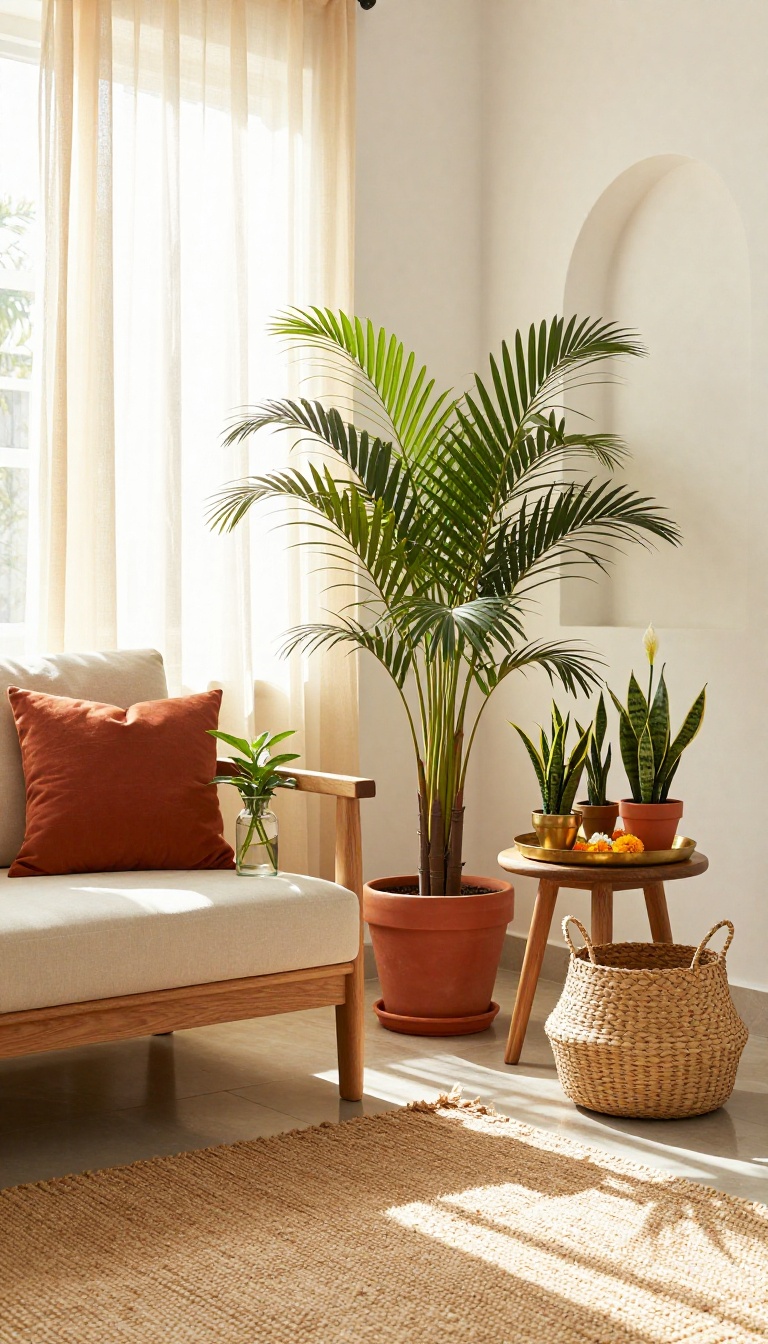
A living room without a single green thing can feel a bit stiff, no matter how nice the furniture is. Plants and flowers soften that instantly. They also connect your space to the courtyard culture most Indian homes grew up with.
You do not need a jungle—just a few well-placed pots and a fresh bloom or two.
Start with plants that forgive you. Money plants, areca palms, snake plants, and peace lilies handle Indian light and heat without drama. Place a tall areca palm in a corner to fill vertical space.
Put a money plant in a glass bottle on a side table or windowsill. Group smaller pots on a tray so they look intentional, not scattered. Fresh flowers add a different kind of energy.
Marigolds, jasmine, and roses are easy to find and cheap. A brass vase or a small urli filled with floating flowers gives you that traditional touch without trying too hard. Change the water every couple of days so they stay fresh.
If you have a window that gets decent light, a row of small pots on the sill works beautifully. No window? Snake plants and pothos do fine under regular room light.
Just rotate them once a week so they grow evenly. One more thing: don't hide the pots. Terracotta, ceramic, or brass containers are part of the look.
A plain plastic pot inside a woven basket is a quick fix if you are not ready to invest.
Easy-care Plants That Actually Survive
Money plants, areca palms, snake plants, and peace lilies are your best bets. They tolerate missed waterings and low light. Water them when the top inch of soil feels dry.
Wipe the leaves once a month so they can breathe. That is honestly all they need.
Fresh Flowers In Brass And Beyond
Marigolds and jasmine are cheap, cheerful, and everywhere. Drop them in a small brass vase or a silver tumbler. A single stem in a bud vase on a bookshelf also works.
Keep it simple—one or two arrangements per room is plenty.
Placement Tips That Look Intentional
Put tall plants in corners where furniture leaves a gap. Use small pots to break up a long console table. Hang a trailing plant from a ceiling hook near a window.
Group pots in odd numbers—three or five—for a natural look.
8. Showcase Brass and Copper Accents
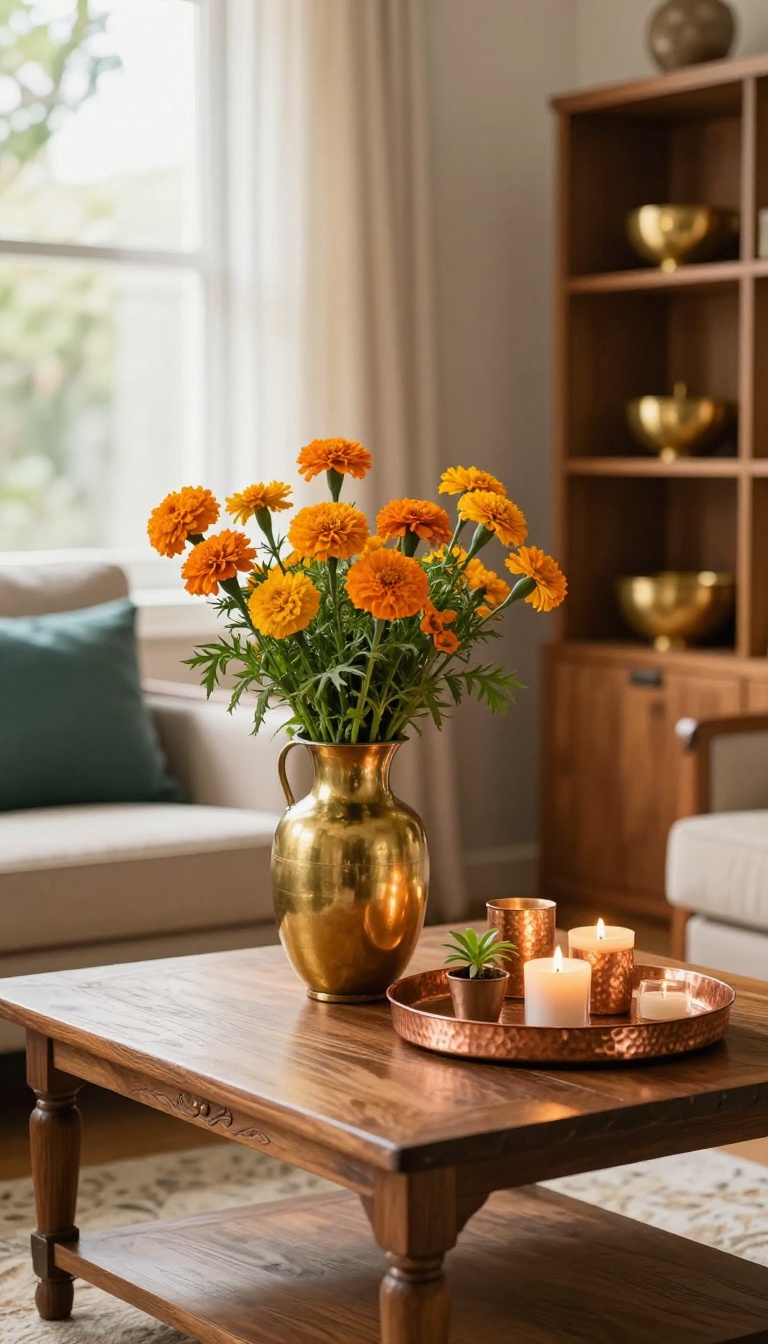
Brass and copper have a way of making a room feel instantly more expensive without trying too hard. A single polished pot or a hammered tray can pull together a corner that otherwise looks a bit flat. These metals also age beautifully, picking up a patina that tells its own story over time.
The best part? You don't need to overhaul your decor to make them work. Just a few well-placed pieces can add warmth and a subtle gleam that plays nicely with almost any color palette.
Whether your living room leans traditional or modern, these accents earn their keep.
Start by looking at what you already own. Many Indian homes have at least one brass item tucked away—a lamp, a small idol, or a set of bowls from a wedding gift. Bring those out and give them a proper clean.
A little lemon and salt or a gentle brass polish can restore their shine in minutes. Once you have a few pieces, think about where they'll have the most impact. Grouping them together on a shelf or coffee table creates a focal point.
Mixing sizes and heights keeps it interesting. You can also use them functionally—a copper tray for remote controls, a brass bowl for keys—so they earn their place beyond just looking pretty.
Where To Place Them
Coffee tables, console tables, and open shelving are natural spots. A brass vase with fresh or dried flowers adds height and color. A copper tray corrals candles or small planters.
On a bookshelf, a few brass figurines break up the rows of books and add a touch of shine.
Mixing Metals Without Clashing
You can mix brass and copper with other metals like iron or silver, but keep it balanced. Stick to two or three finishes in a space. If your room has a lot of warm wood, brass and copper will feel right at home.
In cooler-toned rooms, they add a welcome contrast.
Keeping Them Looking Good
Brass and copper tarnish over time, which some people love and others don't. If you prefer a polished look, a quick wipe with a soft cloth and a bit of lemon juice or vinegar will do the trick. For a deeper clean, use a commercial metal polish.
Avoid abrasive scrubbers that can scratch the surface.
9. Incorporate Traditional Motifs in Modern Ways
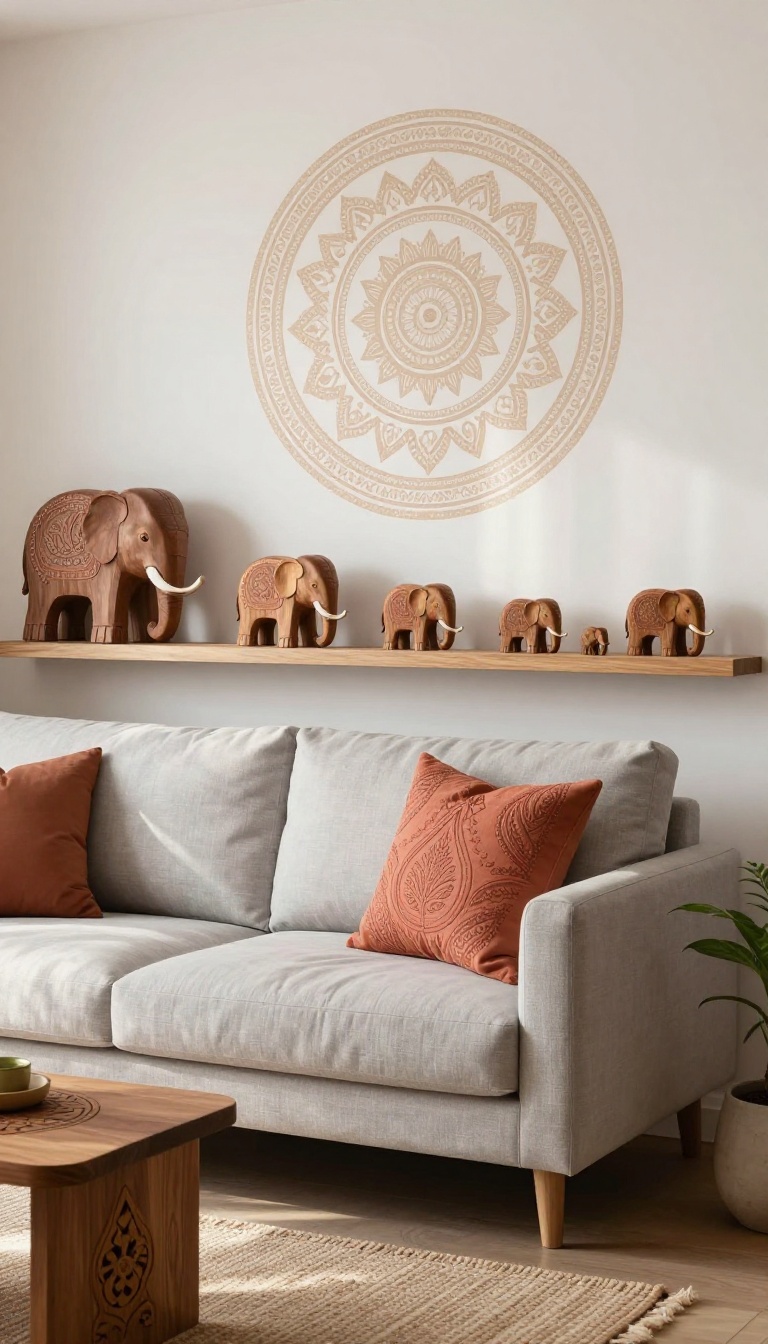
Traditional Indian motifs like paisleys, mandalas, and elephants carry centuries of craft behind them. But using them the same way your grandmother did can make a room feel like a museum rather than a home. The trick is to borrow the shapes and scale them down, repeat them quietly, or place them where you least expect them.
You are not trying to recreate a palace. You are just letting a few old symbols live comfortably alongside your modern sofa and your smart TV.
Start With A Single Motif
Pick one motif and commit to it. A paisley here, a mandala there, and an elephant on the other side of the room will fight for attention. Choose the one that speaks to you—maybe it reminds you of a family textile or a temple carving you love.
Then repeat it in different sizes and materials so it feels intentional, not accidental.
Go Subtle With Scale And Placement
A full wall of elephants can overwhelm a small living room. Instead, try a row of small carved elephants on a floating shelf or a single large mandala stencil behind the sofa in a tone-on-tone finish. Paisleys work beautifully as a border on a plain cushion or as a thin trim along a curtain edge.
The goal is a second glance, not a first gasp.
Mix Materials To Keep It Fresh
Traditional motifs feel modern when you change the material. A paisley embroidered in bright thread on a linen cushion looks different from the same paisley block-printed on cotton. A mandala carved into a wooden side table reads as contemporary, while the same mandala in brass feels more classic.
Mixing materials keeps the motif from looking dated.
Let Lighting Do Some Of The Work
A stenciled wall or a carved screen becomes a feature when you light it from below or from the side. A small uplight near a mandala stencil creates soft shadows that add depth without any extra decor. For carved furniture, a table lamp with a warm bulb highlights the texture and makes the motif pop in the evening.
10. Optimize for Small Spaces with Multifunctional Furniture
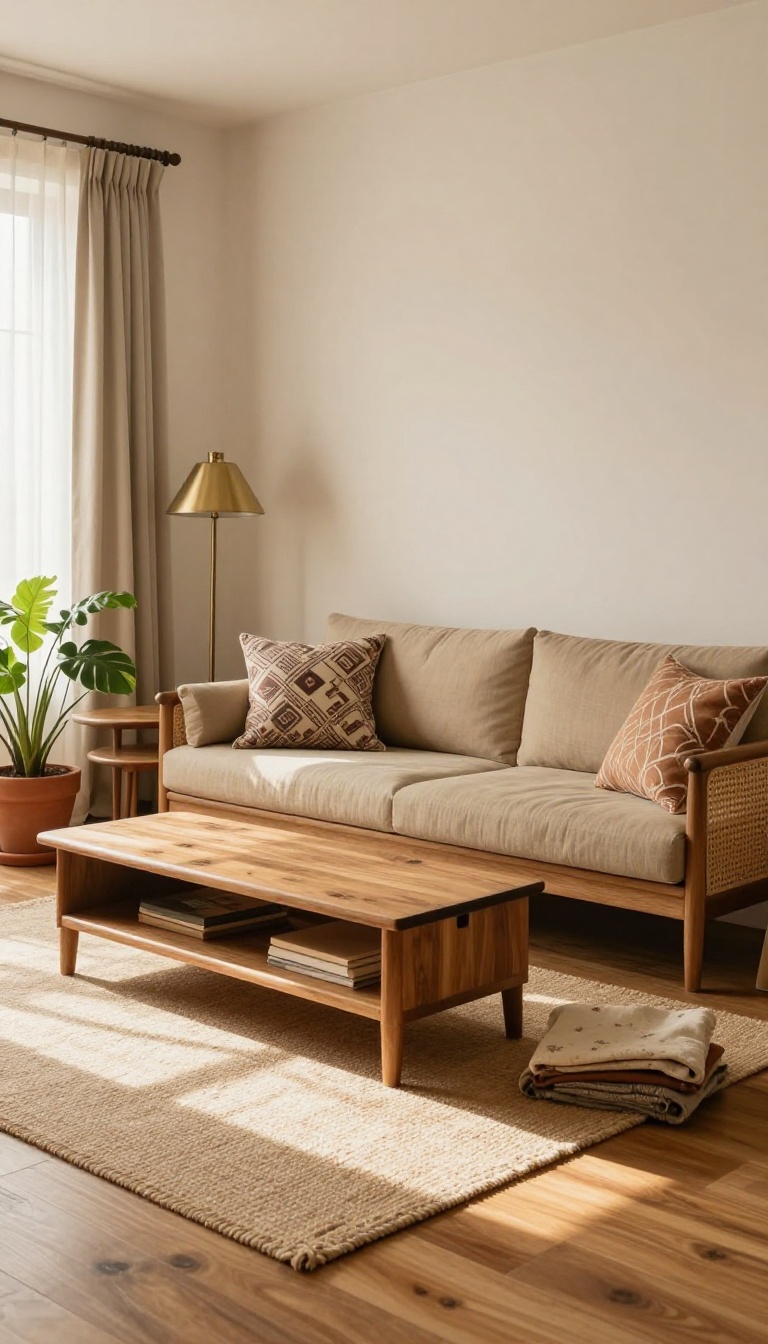
Most Indian living rooms are not sprawling. They are 10 by 12, maybe 12 by 14, and they have to handle guests, daily TV time, festival gatherings, and the occasional cousin who stays over. That is a lot to ask from one room.
The answer is not to buy less furniture. It is to buy smarter furniture—pieces that do two or three jobs without looking like they belong in a hostel. A storage ottoman that holds extra blankets and doubles as a seat.
A sofa that turns into a bed when your aunt decides to stay the night. A set of nesting tables that shrinks into a corner when you are not using them. These pieces do not have to look utilitarian.
Plenty of Indian brands and local carpenters now make multifunctional furniture in sheesham, cane, and even metal finishes that fit right into a traditional or modern Indian home. You just have to know what to look for.
Storage That Doubles As Seating
A storage ottoman is the quiet hero of a small Indian living room. It gives you a place to sit when the doorbell rings and three more people walk in. It also swallows the extra bedsheets, the winter razais, and the pile of magazines you keep meaning to read.
Look for one with a sturdy lid and enough depth to actually store things. Cane or woven versions work beautifully with jute rugs and wooden floors. Upholstered ones in cotton or velvet can double as a footrest or a coffee table if you place a tray on top.
If you have a bay window or a low ledge, a storage bench does the same job. It seats two, hides clutter, and does not eat into your walking space.
Sofa-cum-beds Without The Bulk
The old sofa-cum-bed had a reputation for being lumpy and ugly. That has changed. You can now find sleek versions with high-density foam, removable covers, and frames that fold out in seconds.
For a small Indian living room, a two-seater sofa-cum-bed is usually the sweet spot. It gives you everyday seating and a proper bed for guests. Choose a fabric that is easy to clean—microfiber or a tight weave—because chai spills happen.
If you have a diwan or a daybed already, you can add a trundle underneath. It slides out when needed and disappears when not. No one has to sleep on the floor, and you do not lose your living room to a permanent guest bed.
Nesting Tables And Foldable Surfaces
Nesting tables are perfect for rooms that need flexibility. Three tables of different heights tuck under each other when not in use. Pull them apart when you have guests and need extra surfaces for snacks or drinks.
Look for sets in sheesham, metal, or even marble tops. They are easy to move, and they do not block the flow of the room. A console table that folds flat against the wall is another smart pick.
Use it as a bar cart during parties and fold it away after. If you have a small balcony or a window ledge, a drop-leaf table can serve as a dining spot or a work desk. It takes up almost no space when closed and gives you a full table when open.
Poufs, Carts, And Other Movable Pieces
Poufs are lightweight, cheap, and endlessly useful. They can be extra seating, a footrest, or a side table if you put a tray on top. Leather or cotton poufs in bright colors add a pop without taking up visual weight.
A bar cart or a small trolley can move from the living room to the dining area and back. Use it for drinks, dessert, or even as a mobile plant stand. When not in use, it parks in a corner.
Finally, consider a folding screen. It can hide a messy corner, create a temporary guest nook, or separate the living area from the dining area without building a wall. Lightweight and easy to move, it is a small-space essential.
11. Add a Swing or Jhula for a Playful Touch
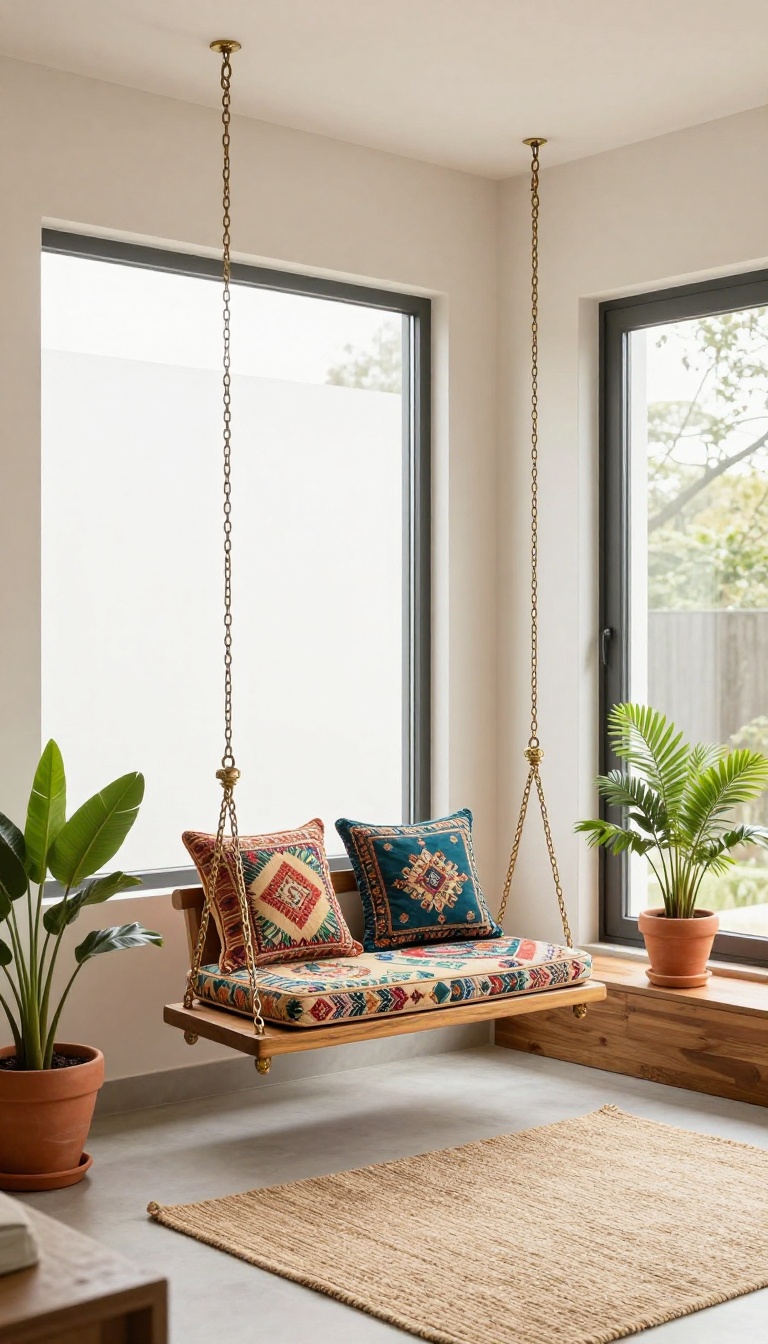
A jhula brings back memories of grandmother's house, where afternoons were spent swaying gently with a cup of chai. It's not just furniture; it's an invitation to slow down. In a modern Indian living room, a swing adds a playful, nostalgic touch that instantly warms up the space.
You can hang it in a corner or make it the centerpiece of a seating area. Either way, it becomes a natural gathering spot. Guests gravitate toward it, kids claim it, and you'll find yourself stealing a few minutes on it every day.
Swings are having a moment in Indian homes again, and for good reason. They're functional, beautiful, and deeply rooted in our culture. Whether you choose a traditional wooden jhula with carved details or a sleek metal one, it adds movement and personality.
A swing also solves a practical problem: extra seating without taking up floor space. It's perfect for small living rooms where every inch counts. Plus, it's a conversation starter—everyone has a swing story.
When done right, a jhula doesn't look out of place in a contemporary setting. It can blend with modern decor if you pick the right materials and hardware. The key is to integrate it thoughtfully, not just hang it anywhere.
Choosing The Right Spot
Pick a corner or an alcove where the swing can be a focal point without blocking traffic. Near a window is ideal—natural light makes it inviting, and you can enjoy the view while swaying. Make sure the ceiling can support the weight; if not, consider a floor-standing frame.
In open-plan rooms, use the swing to define a cozy nook. Pair it with a small side table for your chai and a floor lamp for evening reading. The goal is to make it feel like a destination, not an afterthought.
Materials And Styles
Wooden swings with intricate carvings suit traditional homes, while metal or acrylic ones fit modern interiors. You can also find swings with cane or jute seats that add texture. For a bohemian vibe, opt for a macramé swing.
If you want a custom look, local carpenters can build a swing to your specifications. Stain it to match your furniture or paint it a bold color to make it pop. Cushions and throws can change its look with the seasons.
Safety And Installation
Hang your swing from a beam or use a ceiling mount rated for at least twice the weight it will hold. If you're renting, a freestanding swing frame is a smart alternative. Always test it before letting kids use it.
Keep the swing away from ceiling fans and sharp edges. Add a soft rug underneath to cushion any accidental bumps. Regular checks of the ropes or chains will keep it safe for years.
FAQ
How can I make my Indian living room look modern yet traditional?
Mix modern furniture with traditional accents like brass decor, block-print textiles, and jali screens. Keep the base neutral and add color through accessories.
What are some budget-friendly Indian living room ideas?
Use floor cushions, DIY block-printed curtains, and fairy lights. Thrift stores and local markets are great for affordable brass items and textiles.
How do I choose the right colors for an Indian living room?
Start with a neutral wall color like beige or white, then add vibrant hues like orange, pink, or turquoise through cushions, rugs, and art.
Can I incorporate Indian decor in a small apartment?
Yes, use multifunctional furniture, vertical storage, and light colors. Opt for small brass accents and wall hangings instead of bulky pieces.
What lighting works best for an Indian living room?
Layer lighting with warm bulbs, lanterns, and fairy lights. Dimmable lights help create a cozy ambiance for gatherings.
Conclusion
Indian living rooms work best when they feel lived in, not staged. You don't have to redo everything at once. Pick one idea that fits your space, try it, and let the room tell you what it needs next.
A swapped cushion cover, a warmer light, or a single brass accent can shift the whole mood faster than a full overhaul. Take your time, mix what you love, and let the result reflect the people who actually sit there every day.