10 Orange Couch Living Room Ideas for a Warm, Stylish Update
An orange couch makes a statement the second someone walks in. It brings instant warmth and personality, but it can also leave you staring at the rest of the room wondering what actually goes with it.
The good news is that orange plays well with far more colors and textures than most people expect. You do not need to repaint, remodel, or replace your furniture to make it work.
A few smart swaps, like the right rug, wall color, or pillow mix, can pull the whole space together in an afternoon. Some of these ideas cost almost nothing, and others are worth a small splurge.
1. Pair Your Orange Couch With Warm Neutrals
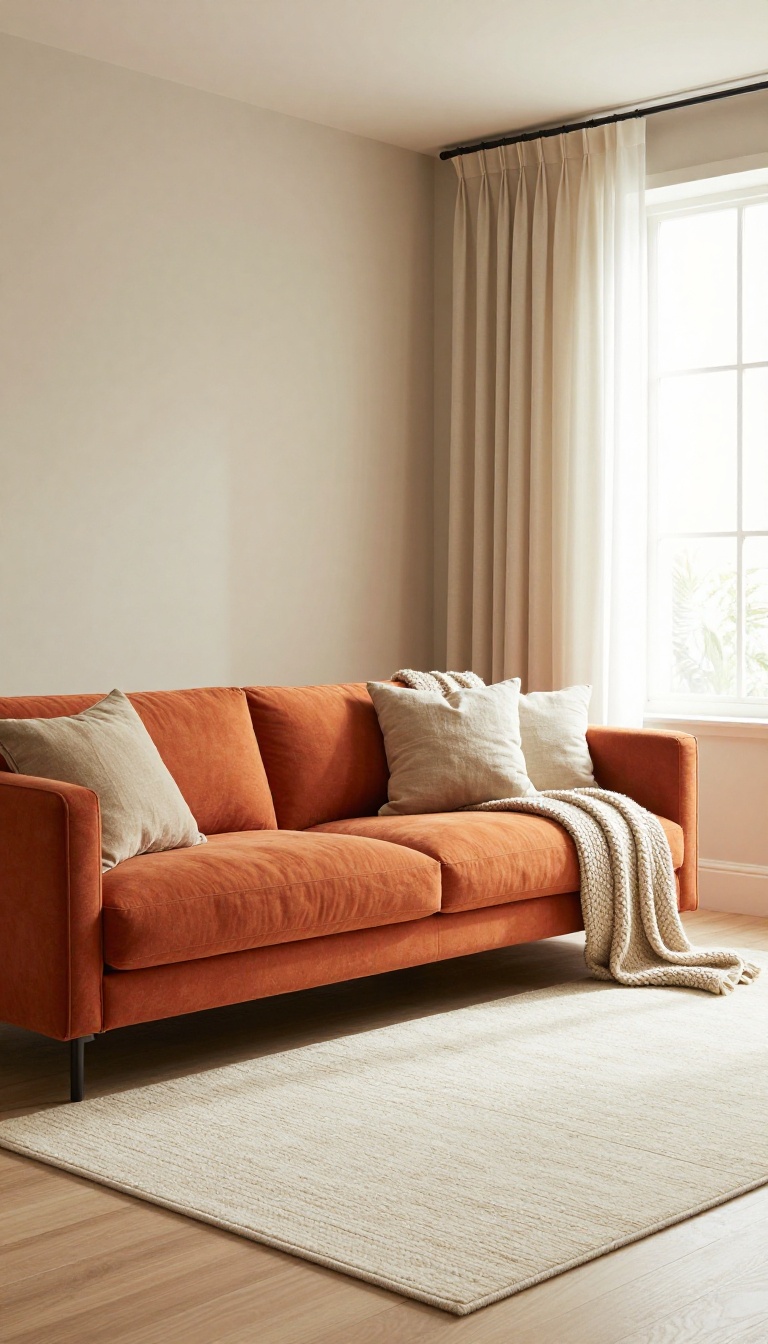
Orange is a bold color, but it does not need to be the only bold choice in the room. Surround it with warm neutrals like cream, taupe, and soft beige, and the orange becomes the star without a fight. This is the easiest way to dip your toe into color if you are nervous about making a mistake.
Warm neutrals are the secret weapon for any bold furniture piece. They give your orange couch room to breathe while keeping the overall vibe cozy and inviting. Think of them as the supporting cast that makes the lead actor look even better.
The best part? You probably already own some of these shades. A cream throw, a taupe rug, or beige curtains can instantly soften the look.
And if you need to buy, these colors are easy to find and affordable.
Start With A Cream Or Beige Rug
A large rug in a warm neutral tone anchors your seating area and balances the intensity of the orange. Look for textures like wool or jute to add depth without competing with the couch. Keep the pattern subtle, like a faint geometric or solid weave, so the orange remains the focal point.
Choose Taupe Or Greige Walls
If you are painting, skip stark white and go for a taupe or greige that has a hint of warmth. These shades complement orange without making it look garish. They also create a soft backdrop that makes the room feel instantly more expensive.
Layer In Soft Beige Textiles
Pillows, throws, and curtains in beige or oatmeal add cozy texture while keeping the palette calm. Mix in a few different fabrics like linen, cotton, and chunky knits for visual interest. Just avoid anything too matchy-matchy—variety keeps it from looking flat.
2. Go Bold With Complementary Blues and Teals
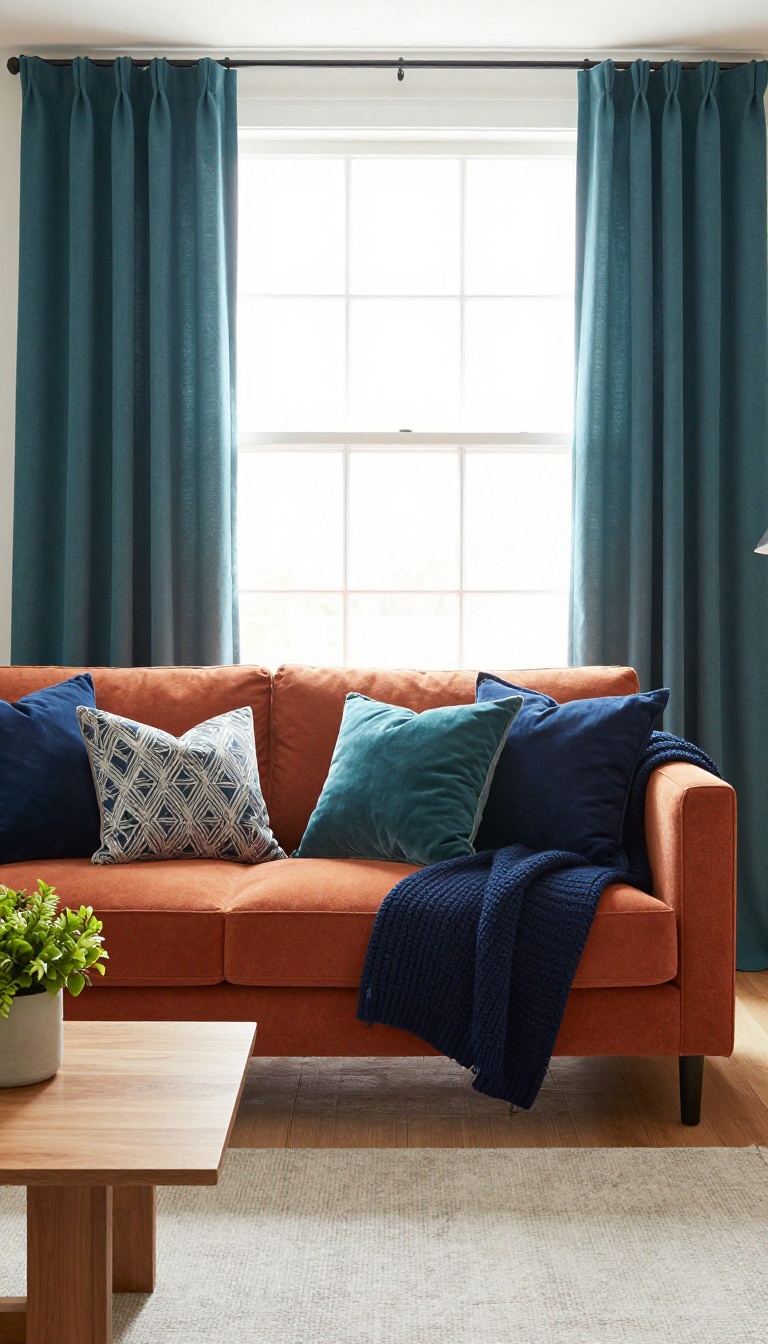
Blue and orange sit on opposite sides of the color wheel, which is exactly why they work so well together. That contrast creates instant energy without making the room feel chaotic. You get warmth from the couch and a cool, calming counterpoint from the blue tones.
The trick is picking the right shade and placement. Navy feels classic and grounding, while teal brings a bit more personality and a slightly coastal vibe. Either way, you are adding depth to a room that might otherwise lean one-note.
You do not have to commit to a full blue room to make this pairing sing. Small doses go a long way when the colors are this complementary. Start with textiles you can swap out easily, then build from there if you love the direction.
One thing to keep in mind: not all blues play nicely with every shade of orange. A burnt orange couch pairs beautifully with deep navy, while a brighter tangerine might call for a softer teal or dusty blue. Hold swatches next to your couch in natural light before you buy anything.
Start With Pillows And Throws
This is the lowest-risk way to test the blue-and-orange combo. Grab a couple of navy or teal pillow covers and see how they feel on the couch. A chunky knit throw in deep blue draped over one arm adds texture and ties the colors together.
Mix sizes and fabrics so it looks collected rather than matchy. Velvet, linen, and cotton all work. If you want extra polish, pick one pattern, like a subtle stripe or geometric, and keep the rest solid.
Try Teal Curtains For A Soft Backdrop
Teal curtains frame an orange couch beautifully without stealing the show. They add color and softness to the wall behind the seating area. Floor-length panels in a medium teal create a cozy, finished look.
Hang them high and wide to make the window feel bigger. A matte fabric keeps things relaxed, while a slight sheen adds a touch of glam. Either way, the cool tone balances the warmth of the couch.
Go For A Deep Blue Accent Wall
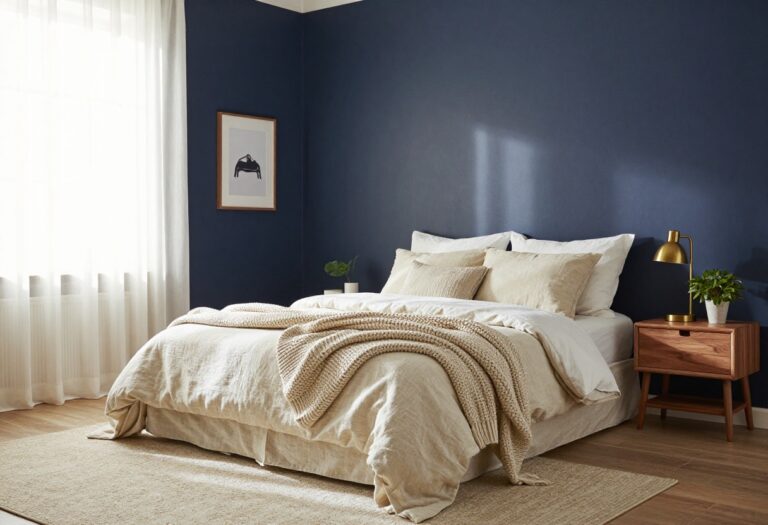
If you are ready to make a bigger move, paint the wall behind the couch in a rich navy or indigo. The orange will pop against it in a way that feels intentional and dramatic. It also makes the room feel more intimate and cozy.
Keep the other walls light so the space does not feel closed in. Add a few brass or gold accents, like a floor lamp or picture frame, to bridge the warm and cool tones. The result is bold but balanced.
3. Layer In Natural Textures Like Rattan and Jute
Orange already brings plenty of energy to a room. What it often needs is something to slow that energy down and give it a place to land. Natural textures do exactly that.
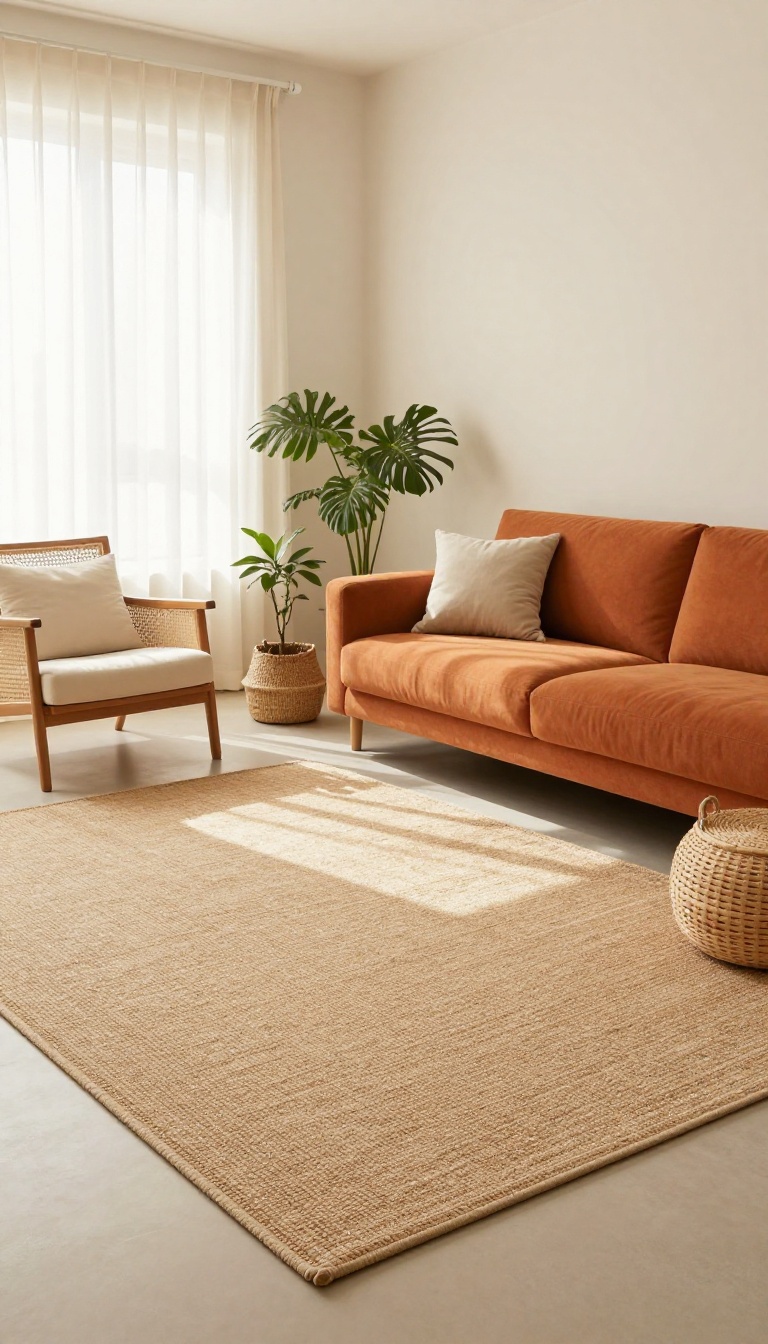
Woven materials like rattan, jute, and seagrass soften the intensity of orange without dulling its warmth. They add an earthy, relaxed feel that makes the color look intentional rather than loud. A single jute rug or rattan side table can do more for the space than a dozen extra accessories.
Natural textures work because they introduce a different kind of warmth. Orange is warm in a bold, saturated way. Jute and rattan are warm in a quiet, organic way.
When you put them together, the orange feels grounded instead of overwhelming. You get contrast without conflict. The room reads as cozy and collected, not like a color explosion.
This is one of the easiest updates you can make because these materials are affordable, widely available, and forgiving if you change your mind later.
Start With The Floor
A jute or sisal rug is the fastest way to anchor an orange couch. Choose a size that extends at least a few inches beyond the sofa on each side. That gives the seating area a clear boundary and keeps the orange from floating in the middle of the room.
A flatweave jute rug in a natural tan or sandy tone works with almost any shade of orange, from burnt terracotta to bright tangerine. If you want a little more softness underfoot, layer a smaller cotton or wool rug on top. Just keep the top layer simple so the textures do not compete.
Add Rattan And Cane Accents
Rattan side tables, cane-back chairs, and woven pendants bring in a light, airy texture that balances the visual weight of a large orange sofa. A round rattan side table next to the couch gives you a spot for a drink and a book without adding bulk. If you have room, a pair of cane chairs across from the sofa creates a nice conversational layout.
You can also swap a heavy wood coffee table for a rattan or wicker one. The open weave lets the floor show through, which keeps the room feeling open even when the couch is the clear focal point.
Mix In Woven Baskets And Wall Hangings
Baskets are the unsung heroes of this look. A large woven basket beside the couch can hold throw blankets, magazines, or kids' toys. A smaller one on a shelf adds texture without taking up floor space.
On the wall, a flat woven hanging or a group of seagrass baskets breaks up a plain wall and echoes the earthy feel of the rug. Stick to two or three woven pieces in the same room so the texture feels layered, not cluttered. Natural materials look best when they feel collected over time, not bought all at once.
Keep The Palette Calm
When you bring in jute and rattan, let them be the neutral base. Avoid adding too many other bold colors or shiny finishes. Cream, oatmeal, warm white, and soft clay all play nicely with orange and natural textures.
If you want a little contrast, a muted olive or dusty blue pillow works, but keep it to one or two accents. The goal is to let the orange couch and the woven materials do the talking. Too many competing elements and the room starts to feel busy instead of relaxed.
4. Choose a Wall Color That Makes Orange Pop
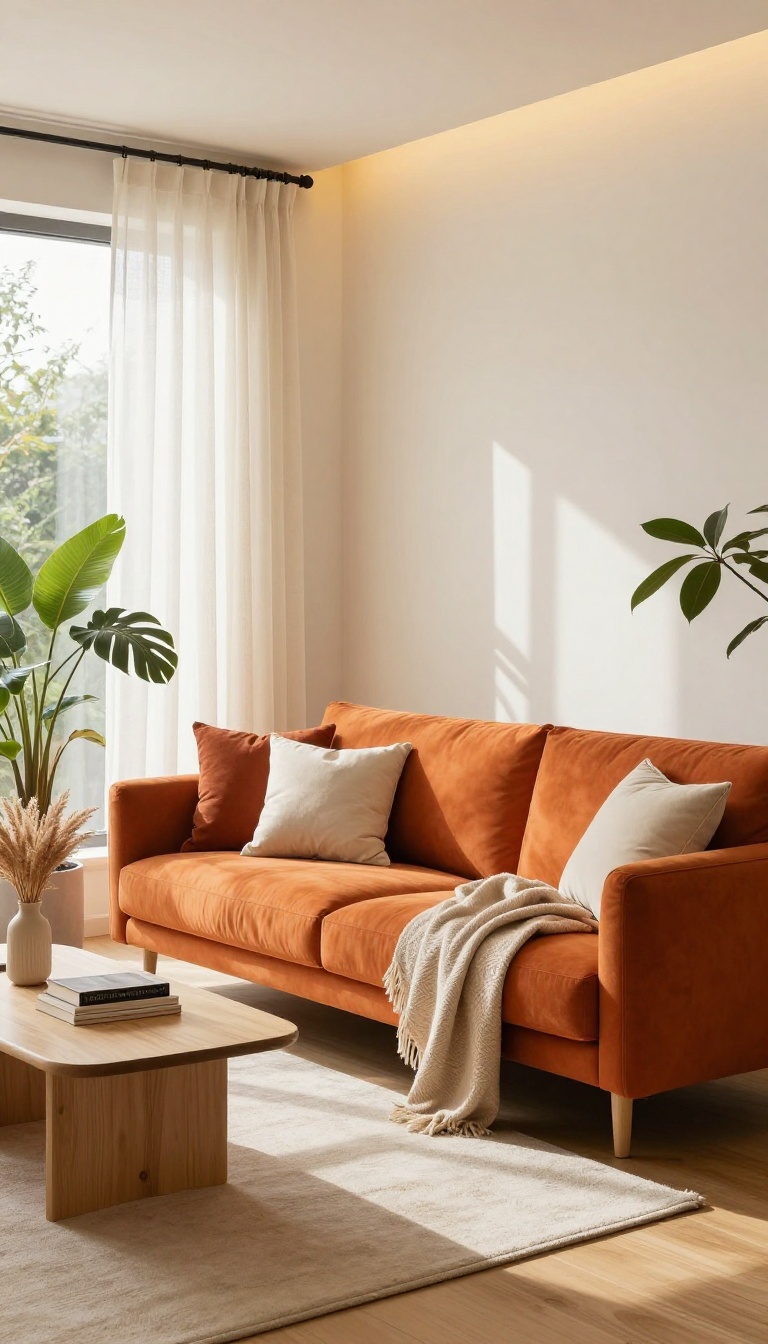
The wall behind your orange couch does more than hold up the room. It sets the stage for how that orange actually reads. A cool gray can make it look muddy, while a warm white lets it glow.
Pick the right backdrop and your couch becomes the star without trying too hard.
You do not need a dramatic color to make orange work. Sometimes the quietest wall color does the most. The trick is understanding undertones and how they interact with the specific shade of orange you own.
A burnt orange behaves differently than a bright tangerine, and your walls should respect that difference.
Warm Whites And Creams
A warm white with yellow or beige undertones keeps the room feeling soft and inviting. It bounces light around without competing with the couch. Think soft linen or antique lace rather than stark builder-grade white.
This combo works especially well if your orange leans toward rust or terracotta.
Sage And Muted Greens
Green and orange are neighbors on the color wheel, so they naturally harmonize. A muted sage or olive wall adds depth without stealing attention. It also brings a calm, earthy vibe that balances orange's energy.
If your couch is bright, go a shade deeper with the green for contrast.
Charcoal And Deep Gray
Charcoal might sound heavy, but it can make orange look downright luxurious. The dark backdrop turns the couch into a glowing focal point. Keep the rest of the room light with pale wood, cream rugs, and airy curtains.
This pairing works best in rooms with plenty of natural light.
Test Before You Commit
Paint large swatches on the wall and live with them for a few days. Check how they look in morning light versus evening lamps. Orange is sensitive to lighting, so a color that works at noon might fall flat at night.
A quick test saves you from a full repaint later.
5. Mix In Patterned Pillows and Throws
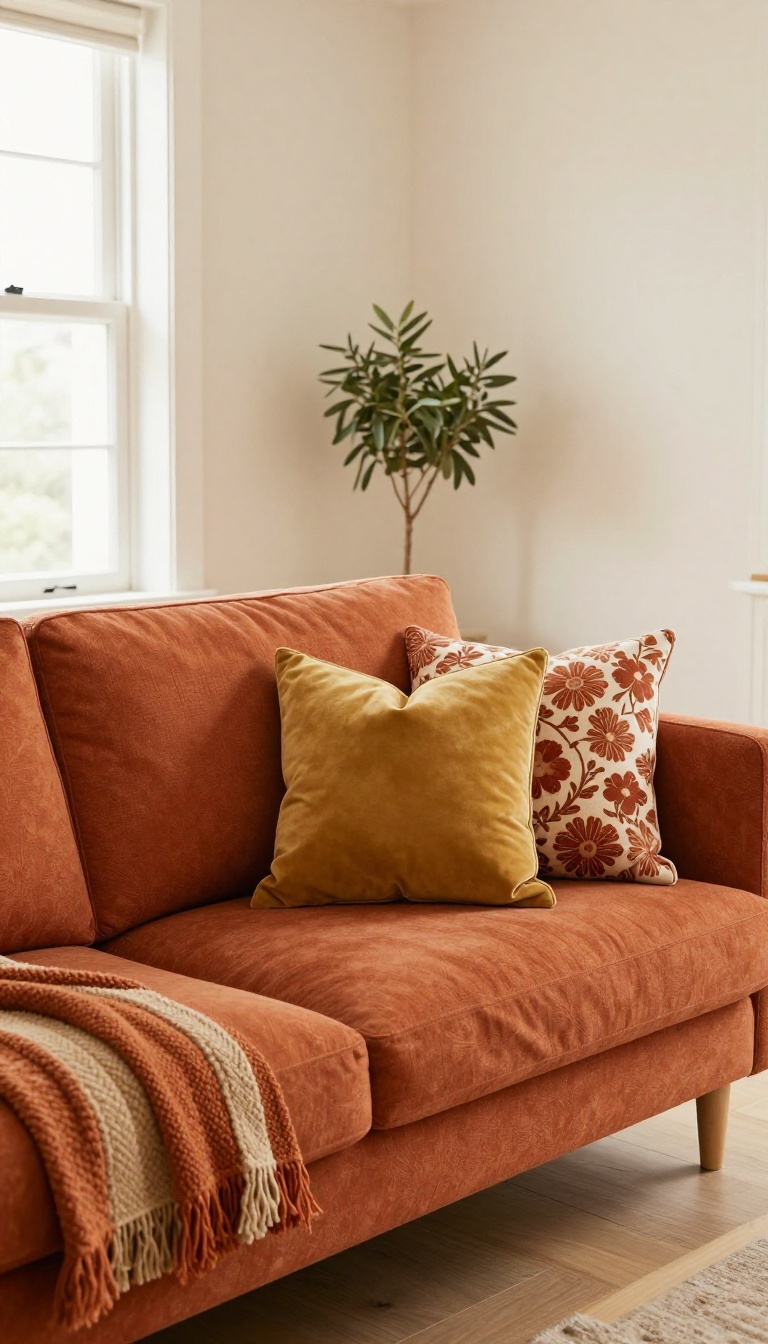
An orange couch can handle more pattern than you might think. In fact, solid orange often looks its best when you give it something to play off. Pillows and throws are the easiest way to add that layer without committing to a big change.
The trick is keeping your patterns in the same color family as the orange. That way, the mix feels intentional instead of chaotic. You get personality without turning the room into a circus.
Start with a base of two or three patterned pillows that share a similar palette. Think rust, terracotta, cream, and soft brown. Then add a solid throw in a matching tone to ground the whole arrangement.
You can also layer in one or two textured solids, like a chunky knit or a velvet pillow, to give the eye a place to rest. The goal is balance, not a pillow explosion. When you keep the colors related, the patterns can be as bold as you want.
Stripes, geometrics, and florals all work when they stay in the same warm family.
Stick To A Warm Palette
Pull your pattern colors from the orange itself. Rust, burnt sienna, mustard, and cream all feel like they belong. Add a touch of deep brown or olive for contrast without going cold.
If you want a little pop, a single pillow in a muted teal or navy can work as an accent. Just keep it to one or two pieces so the orange stays the star.
Mix Pattern Scales
Pair a large-scale print with a smaller, tighter pattern. A big floral cushion next to a small geometric one creates contrast without competition. A striped throw over the arm of the couch can tie the two together.
Avoid using three patterns that are all the same size. That is when things start to feel busy and unresolved.
Use Texture As A Neutral
Not every pillow needs a pattern. A solid boucle, linen, or chunky knit pillow acts like a palate cleanser. It gives your eyes a break between the busier prints.
A textured throw in a similar tone also adds warmth and makes the couch feel cozier. Drape it casually over one corner instead of folding it perfectly.
6. Anchor the Room With a Statement Rug
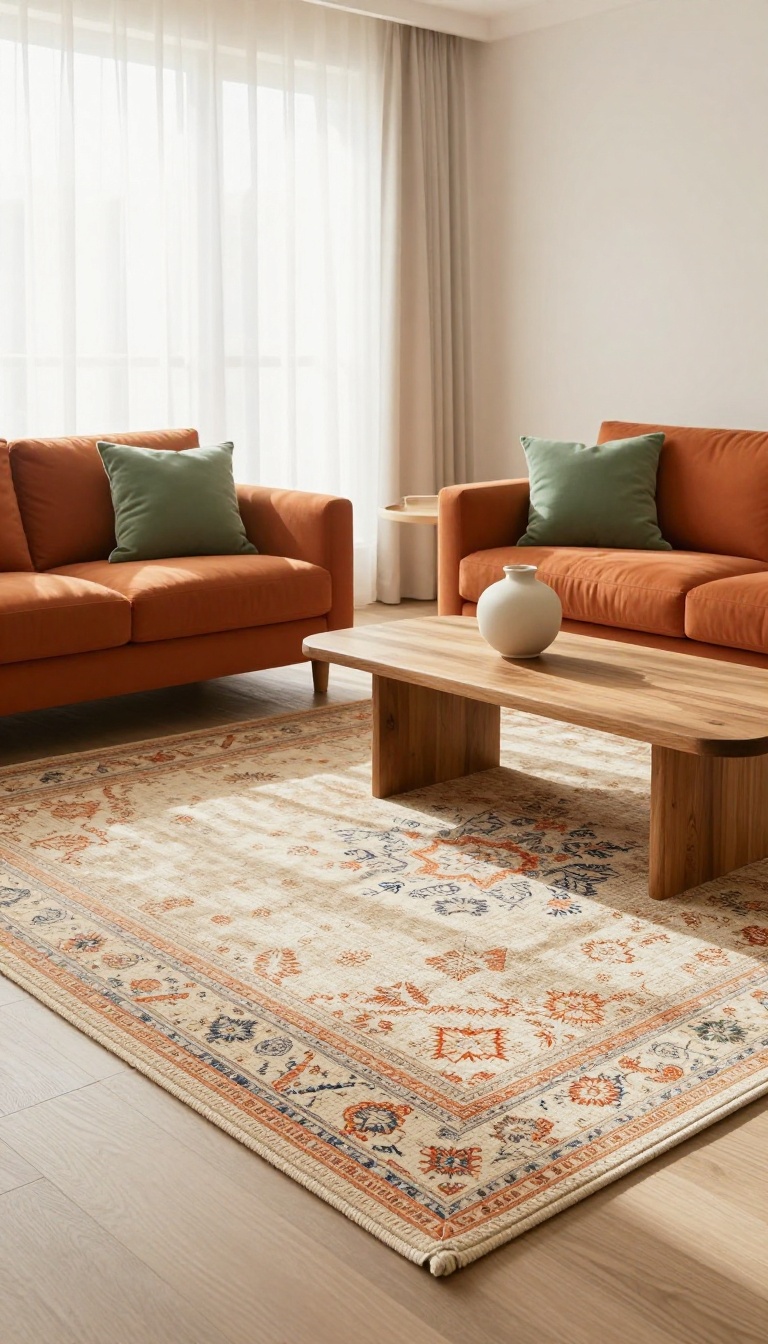
A rug does more than soften your steps. It visually anchors your seating area, defines the conversation zone, and creates a bridge between your orange couch and the rest of the room. Without one, furniture can feel like it's floating, and your color palette can look disconnected.
The right rug pulls everything into a cohesive, intentional look.
Start by considering the size. You want the rug to be large enough that at least the front legs of your couch and chairs sit on it. This creates a unified seating area rather than a postage stamp in the middle of the floor.
In a typical living room, an 8×10 or 9×12 rug works well, but measure your space first. If you have a large sectional, you might need an even bigger size or a rug layering approach.
Choose Colors That Connect
Look for rugs that have a hint of orange in the pattern. It doesn't have to be a solid orange rug—just a few threads or a subtle motif that echoes your couch. This creates a visual link that makes the orange feel intentional rather than random.
You can also pull in other colors from your room, like navy, cream, or sage, to tie everything together.
Pick A Texture That Balances
If your couch is smooth leather or velvet, a textured rug adds warmth and contrast. Wool, jute, or a high-low pile can bring in tactile interest. For a more formal look, a flat-weave or vintage-style rug works beautifully.
Just make sure the texture feels good underfoot and suits your lifestyle—especially if you have pets or kids.
Layer For Extra Style
Layering a smaller, patterned rug over a larger, neutral one is a designer trick that adds depth. It also lets you experiment with color and pattern without committing to a single statement piece. Try a bold Persian or geometric rug over a sisal or jute base.
This approach works especially well in open-plan spaces where you need to define different zones.
7. Balance the Boldness With Dark Wood Furniture
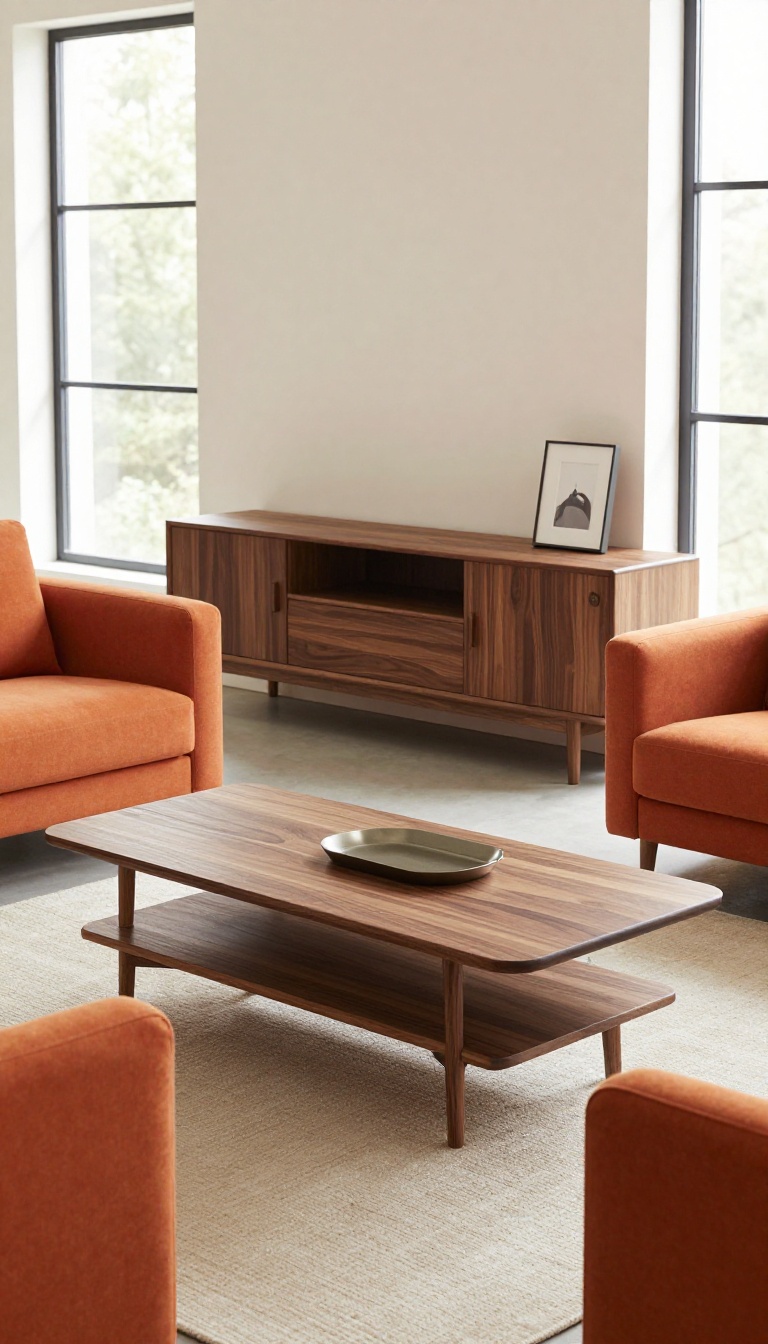
Orange has a way of pulling all the attention, which is great until the rest of the room feels like it's just standing there. Dark wood furniture gives that energy somewhere to land. Walnut, espresso, and mahogany tones add weight and warmth that complement orange instead of competing with it.
The result feels rich and grounded rather than loud.
Think of dark wood as the anchor for your orange couch. It absorbs some of the brightness and bounces back a sense of calm. You get contrast without a fight, and the room reads as intentional rather than accidental.
The trick is picking the right pieces and keeping the rest of the palette steady.
Why Dark Wood Works
Orange sits in the warm family, and dark wood shares that same warmth, just at a much deeper level. That shared undertone is what makes the pairing feel natural instead of forced. A walnut coffee table under an orange sofa looks like it was always meant to be there.
Espresso and mahogany do the same job, each with a slightly different mood. Walnut leans a little softer and more mid-century, while espresso feels modern and sharp. Mahogany brings a classic, almost vintage richness.
Any of them will ground your orange couch without making the room feel heavy.
Pick The Right Pieces
You do not need to fill the room with dark wood. One or two strong pieces are enough to do the heavy lifting. A coffee table, a media console, or a pair of side tables can carry the whole look.
If you already have a dark wood bookshelf or dining table nearby, even better. Let those pieces echo into the living room through a tray, a frame, or a lamp base. Repetition ties the spaces together and makes the orange feel deliberate.
Just avoid matching every single item, or the room starts to feel like a showroom.
Keep The Rest Light
Dark wood can swallow a room if everything around it is dark too. Balance it with light walls, a pale rug, or creamy curtains so the contrast stays crisp. A white or off-white wall behind an orange couch with dark wood furniture is a classic combo that never feels dated.
If you want more depth, add a mid-tone like camel or greige instead of going darker. Metals work here too. Brass and aged bronze pick up the warmth of the wood and the orange without adding visual weight.
Keep the palette to three or four tones and let the orange be the star.
Watch The Scale
Dark wood furniture reads heavier than light wood, so scale matters. A massive espresso sectional next to an orange sofa will fight for attention. Choose pieces that are visually lighter, like a console with slim legs or a coffee table with an open base.
Glass or metal accents can break up the solid mass without losing the warmth. If you love a chunky piece, give it breathing room and keep nearby items low-profile. The goal is balance, not a battle of the bulks.
8. Add Metallic Accents for a Polished Look
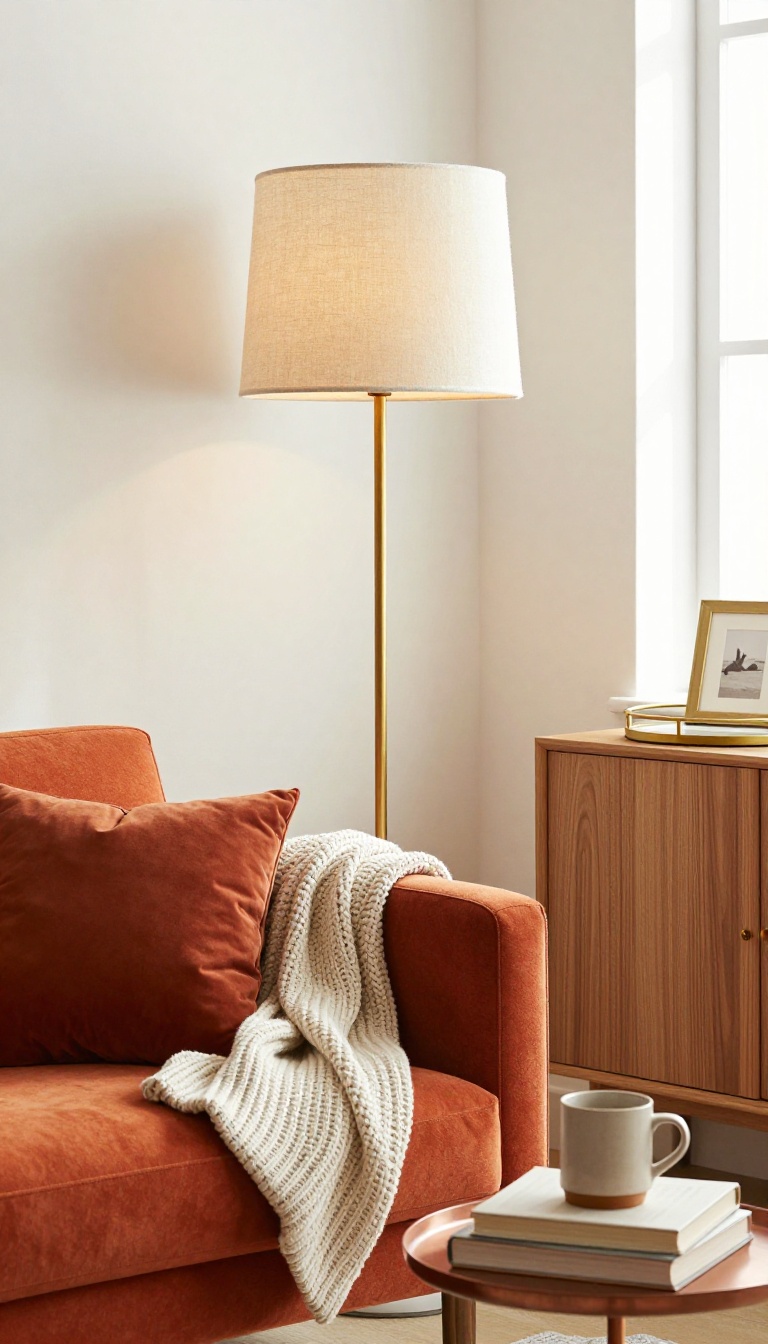
Orange is a warm color, and metals like brass, copper, and gold carry that same warmth. When you bring them into the room, they pick up the orange tones and make the whole space feel intentional instead of accidental. A single brass floor lamp or a copper side table can instantly sharpen the look without competing with your couch.
The trick is to treat metallics as jewelry for the room. They catch light, add a little shine, and give the eye a place to rest. You do not need much—two or three pieces in the same metal family will do more than a dozen mismatched ones.
Stick with warm metals over cool silver or chrome, since they echo the orange instead of fighting it.
Start With A Statement Light
A brass or copper floor lamp next to your orange couch is the easiest upgrade. It draws the eye upward, adds a soft glow, and makes the corner feel finished. Look for a slim stem and a simple shade so the metal does the talking, not the shape.
If you already have a ceiling fixture, swap the bulbs to warm white so the brass reads golden instead of green.
Layer In Small Metal Touches
Side tables, picture frames, and even the legs of an accent chair can carry the metallic thread. A copper side table beside the couch gives you a spot for a drink and a visual anchor. Brass candle holders on a shelf or a gold-rimmed tray on the coffee table keep the look consistent without feeling heavy.
Just keep the finishes close—antique brass with shiny gold can look mismatched fast.
Balance Shine With Softness
Too much metal can feel cold, so pair it with texture. A chunky knit throw, a velvet pillow, or a woven rug softens the glare and lets the metallics pop. If your orange couch is already bold, keep the metal accents small and let the texture do the heavy lifting.
The goal is warmth with a little polish, not a showroom floor.
9. Use Lighting to Shift the Mood
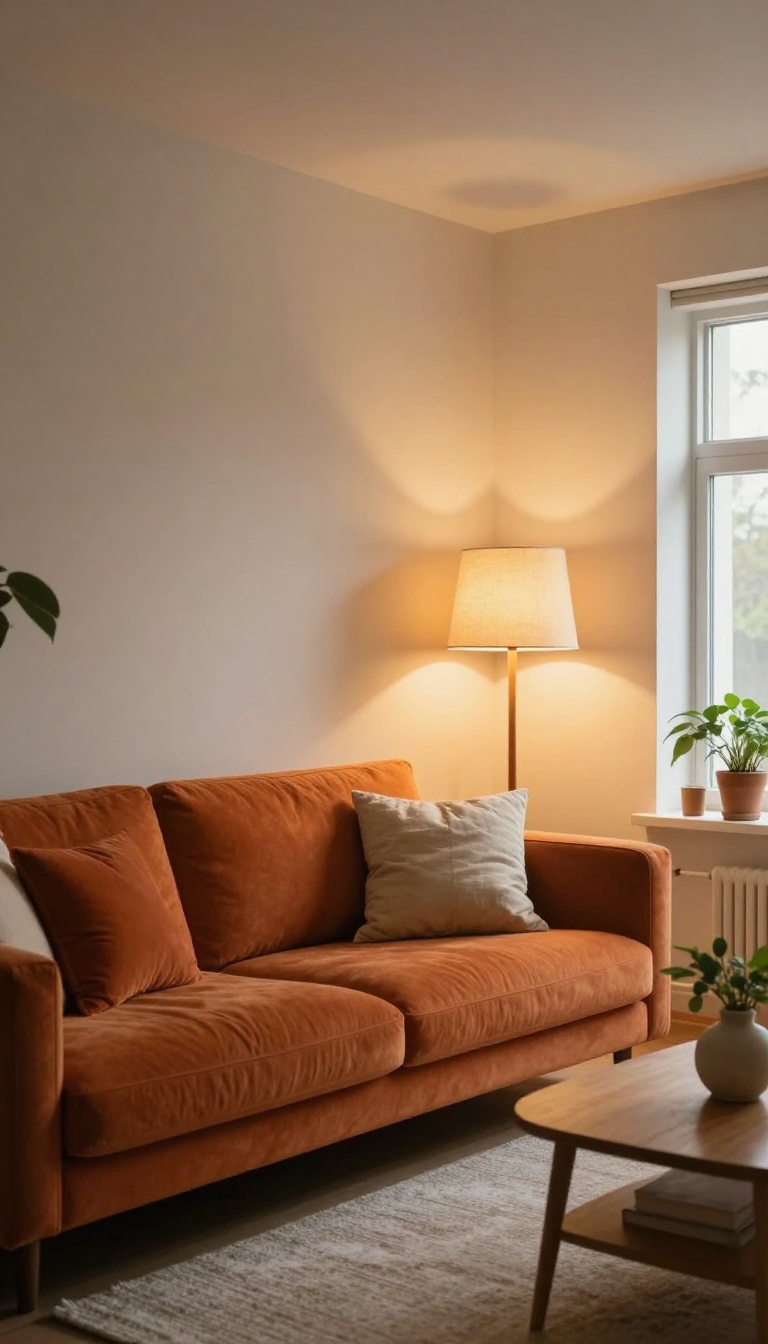
Lighting changes how your orange couch reads in a split second. Flip on a warm bulb and the fabric looks richer and more golden. Switch to a cooler white and the same sofa suddenly feels calmer and more modern.
That kind of control is basically free, and it is one of the fastest ways to make the room feel intentional instead of accidental.
You do not need a lighting designer to pull this off. You just need to understand what different bulbs and fixtures do to orange. Once you get that, you can nudge the mood of the room whenever you want, without moving a single piece of furniture.
Pick Bulbs That Flatter Orange
Bulb color temperature is measured in Kelvins, and it matters more than most people realize. A 2700K bulb throws a soft, amber glow that makes orange look deep and cozy. Step up to 3000K and the color gets a little cleaner and more balanced.
Anything at 4000K or above starts to wash orange out and can make it look slightly dingy. If you want that warm, inviting feel, stick with 2700K in lamps and 3000K in overhead fixtures. That combo keeps the couch glowing without turning the whole room yellow.
Layer Your Light Sources
One ceiling light flattens everything, including your orange couch. Instead, build a few layers. A floor lamp beside the sofa adds height and a soft pool of light.
A table lamp on a side table brings warmth closer to eye level. And a dimmable overhead fixture handles the bright moments, like when you are cleaning or hosting. Three sources in one room sounds like a lot, but it is actually the minimum for a space that feels flexible.
You can run just the floor lamp for a movie night or turn everything on for a party.
Use Dimmers To Dial The Boldness Up Or Down
A dimmer switch is the cheapest mood tool you can buy. Turn the lights low and the orange couch becomes a cozy anchor in a calm, shadowy room. Crank them up and the color pops with energy.
That range means you can go bold for a dinner party and soft for a Sunday morning with coffee. If you cannot install a dimmer, smart bulbs work just as well. Most let you adjust brightness and warmth from your phone, which is handy when you are already curled up on the couch.
10. Style With Greenery and Fresh Plants
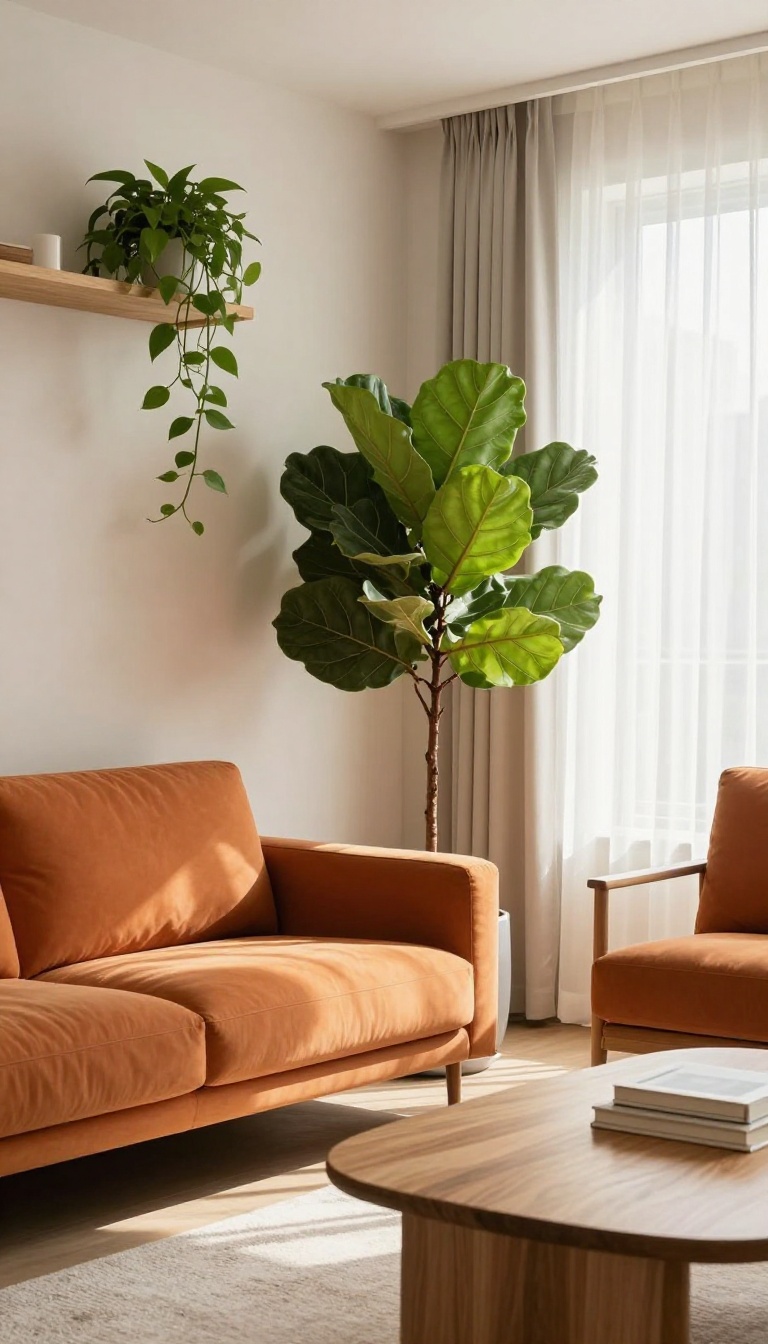
Plants bring a kind of energy to a room that furniture alone can't match. They add movement, texture, and a natural green that softens orange's intensity without competing with it. Even one healthy plant can make an orange couch look intentional instead of accidental.
Green and orange sit close to each other on the color wheel, which is why they work so well together. The contrast feels lively but never harsh. A plant also adds a vertical element that breaks up the horizontal lines of a couch, rug, and coffee table, giving the eye somewhere new to travel.
Pick A Plant That Fits Your Space
A fiddle leaf fig is the classic choice for a reason. Its large, glossy leaves hold their own next to a bold orange couch, and it grows tall enough to anchor a corner. Just give it bright, indirect light and water it when the top inch of soil feels dry.
If you want something easier, go with a pothos. It trails beautifully from a shelf or hanging planter, and it forgives missed waterings. Snake plants and ZZ plants are other low-maintenance options that still look polished.
The key is choosing something that matches your light and your schedule, not just your Pinterest board.
Placement Makes The Difference
A single large plant beside one arm of the couch creates balance without blocking conversation. If your couch sits against a wall, try a tall plant on one side and a smaller one on a side table for a layered look. Trailing plants work well on a mantel or high shelf where their vines can cascade down near the orange upholstery.
Avoid lining up several small plants in a row. That reads as cluttered. One or two statement plants will do more for the room than a dozen tiny pots.
Keep It Looking Fresh
Dusty leaves dull the green and make the whole room feel tired. Wipe them down with a damp cloth every couple of weeks. Rotate plants a quarter turn each time you water so they grow evenly instead of leaning toward the window.
If a plant starts struggling, swap it out before it becomes an eyesore. A healthy plant adds life; a sad one drags the whole corner down. Fresh greenery is one of the cheapest ways to keep an orange couch looking current.
FAQ
What colors go best with an orange couch?
Warm neutrals like cream and taupe are the safest bet, while blues, teals, and greens create a bolder contrast. Dark wood tones and metallics also pair well.
Is an orange couch hard to style?
Not at all. Orange is actually versatile because it works as both a warm neutral and a statement color. The key is balancing it with textures and a clear palette.
What rug works best with an orange couch?
A jute or sisal rug adds natural texture, while a patterned rug with subtle orange threads ties the room together. Avoid rugs that compete with the couch for attention.
Can I use an orange couch in a small living room?
Yes. Keep the surrounding palette light and airy, choose furniture with slim profiles, and use a mirror or two to bounce light around the space.
Should I paint my walls white if I have an orange couch?
Warm white or off-white works well because it lets the couch be the focal point. If you want more depth, try a soft sage or greige instead of stark white.
Conclusion
An orange couch already does the heavy lifting, so you don't need to overhaul the whole room to make it work. Pick one or two ideas that fit your space and budget, try them out, and see how the room responds. A swapped rug or a warmer bulb can shift the mood faster than you'd expect.
Take your time with the rest. The best orange rooms feel collected, not staged, and they usually reflect the people who actually sit on that couch every day. Have fun mixing, testing, and tweaking until it feels like yours.