11 Kids Small Bedroom Ideas Made for Sleep Play and Storage
Small bedrooms can be a challenge, especially when you're trying to fit a bed, a play area, and storage for all those toys and clothes. But with a little creativity, you can turn even the tiniest room into a cozy haven that your child will love.
These 11 ideas focus on making the most of every inch, so your kid can sleep, play, and keep things tidy—all in one space.
From vertical storage to multifunctional furniture, each tip is practical and easy to implement, no matter your budget or style.
1. Maximize Vertical Space with Tall Shelving
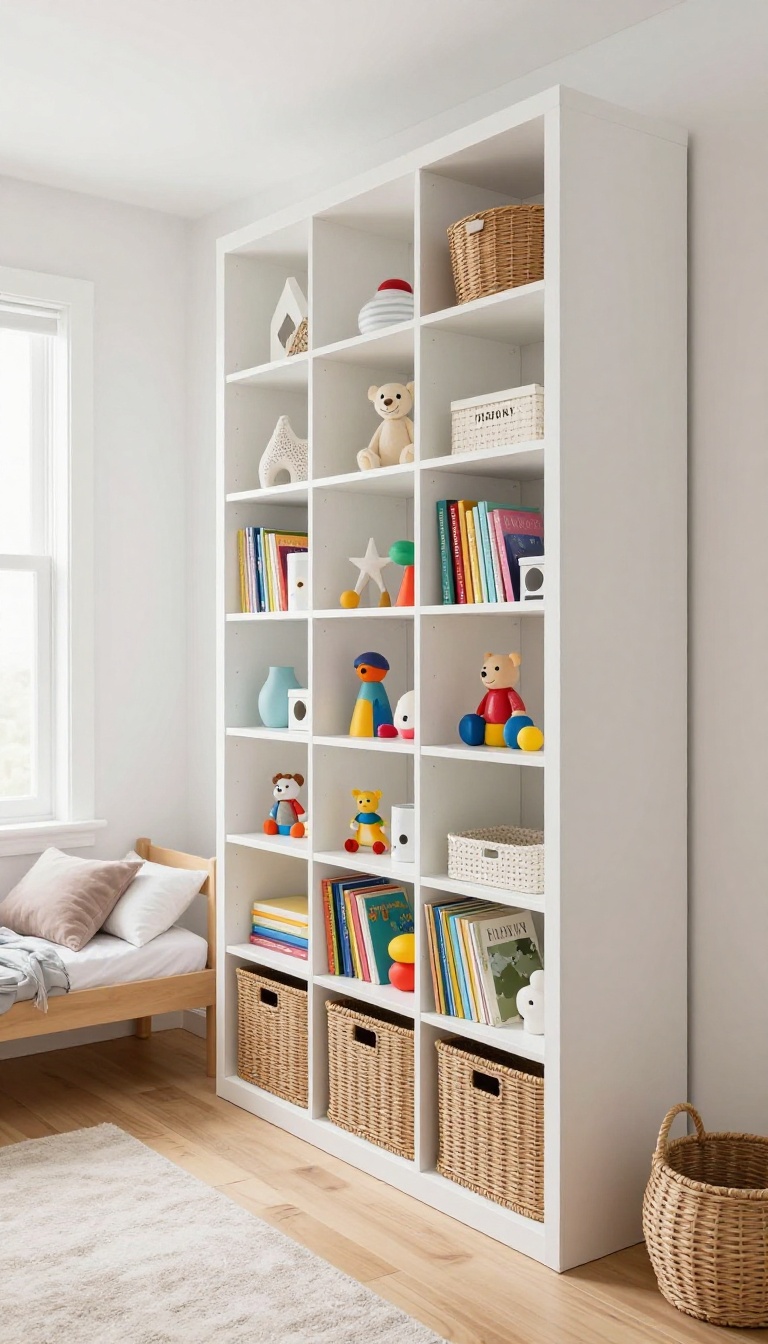
When floor space is scarce, look up. Tall shelving units and wall-mounted shelves turn blank walls into valuable storage real estate. They keep books, toys, and decor off the floor, leaving more room for play and movement.
Start by choosing a sturdy bookshelf that reaches close to the ceiling. Anchor it to the wall for safety, especially if you have an active climber. Use lower shelves for toys and books your child can reach, and reserve higher shelves for items you want to keep out of reach, like craft supplies or delicate decorations.
Wall-mounted shelves are another great option. Install them above the bed or desk to store favorite items without taking up floor space. Mix open shelves with baskets or bins to keep things looking tidy.
This way, everything has a place, and your child can easily grab what they need.
Choosing The Right Shelving
Look for shelves that match your room's style and your storage needs. A tall ladder shelf offers multiple tiers without looking bulky. Cube storage units are versatile and can be paired with fabric bins.
For a custom feel, consider floating shelves in a row or staggered pattern. Whichever you pick, make sure it's sturdy and properly mounted.
Organizing For Easy Access
Keep everyday items within your child's reach. Place frequently used toys and books on lower shelves. Use clear bins or labeled baskets to group similar items.
Rotate toys seasonally to keep the shelves from overflowing. Higher shelves can hold display pieces or items used less often, like holiday decorations or keepsakes.
Safety First
Always secure tall shelving to the wall to prevent tipping. Follow the manufacturer's instructions for mounting. Avoid placing heavy items on top shelves.
Check shelves regularly for stability, especially if your child likes to climb. Safety is key, so take a few extra minutes to ensure everything is secure.
2. Choose a Loft Bed to Free Up Floor Area
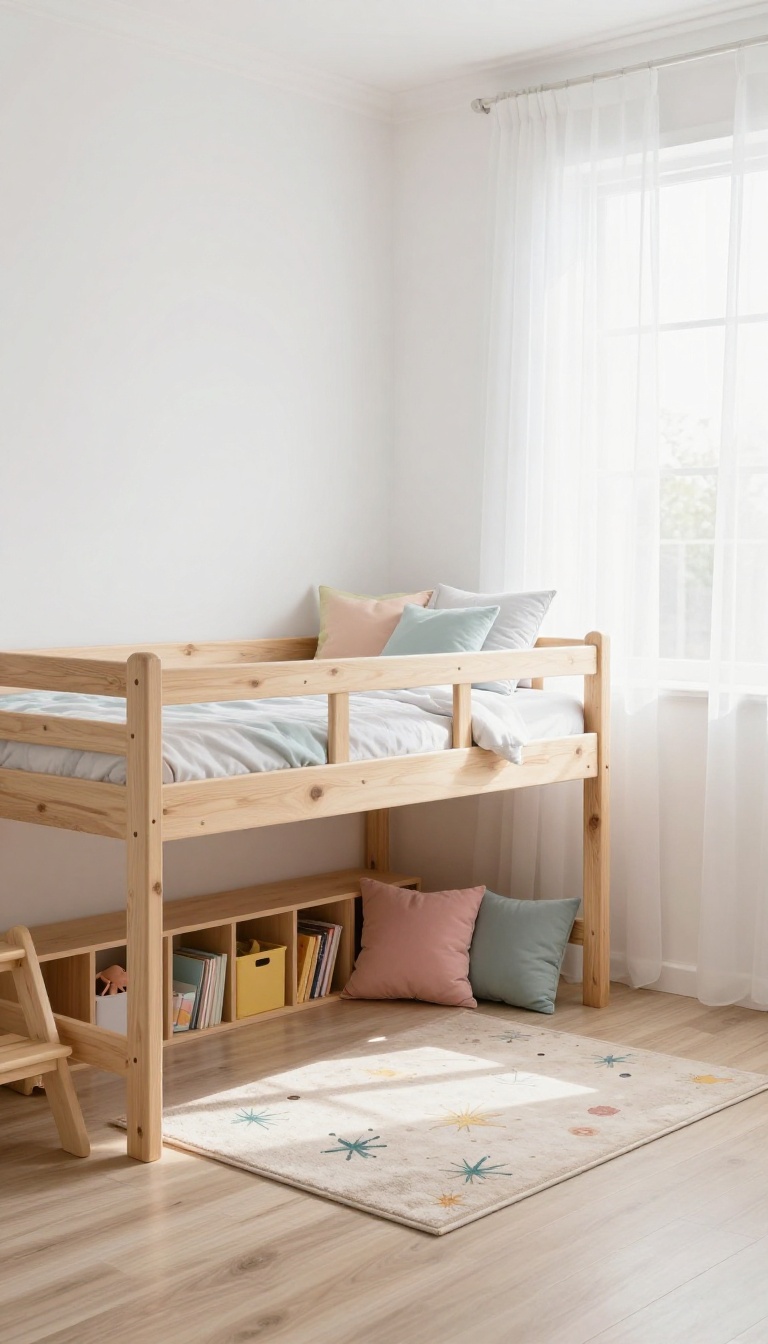
When you're working with a small room, every square foot counts. A loft bed is a game-changer because it lifts the mattress up high, leaving the entire floor below open for other things. That empty space can become a cozy reading nook, a homework station, or a spot for toy bins—whatever your child needs most.
A loft bed isn't just a bed; it's a space-saving superhero. By raising the sleeping area, you instantly gain valuable floor space that would otherwise be taken up by a traditional bed frame. This is especially handy in kids' rooms where floor space is precious for playing and moving around.
What To Put Underneath
The possibilities are endless. You could set up a small desk for homework and art projects, creating a dedicated study zone. Or, if your little one loves imaginative play, a play tent or a cozy teepee can turn the area into a magical hideaway.
Storage is another smart option—think low bookshelves, bins, or a dresser that fits neatly under the bed.
Safety And Comfort Considerations
Safety is key with any elevated bed. Make sure the loft has sturdy guardrails on all sides and a secure ladder that's easy for your child to climb. The ceiling height should be tall enough so your kid can sit up comfortably without bumping their head.
Also, consider the age and maturity of your child—loft beds are generally recommended for kids over six, but every child is different.
Style And Design Options
Loft beds come in all sorts of styles, from sleek modern designs to rustic wooden frames. Some even come with built-in desks, shelves, or curtains for a fun fort-like feel. You can also DIY a loft bed if you're handy, customizing it to fit your room's exact dimensions and your child's personality.
3. Incorporate Under-Bed Storage Drawers
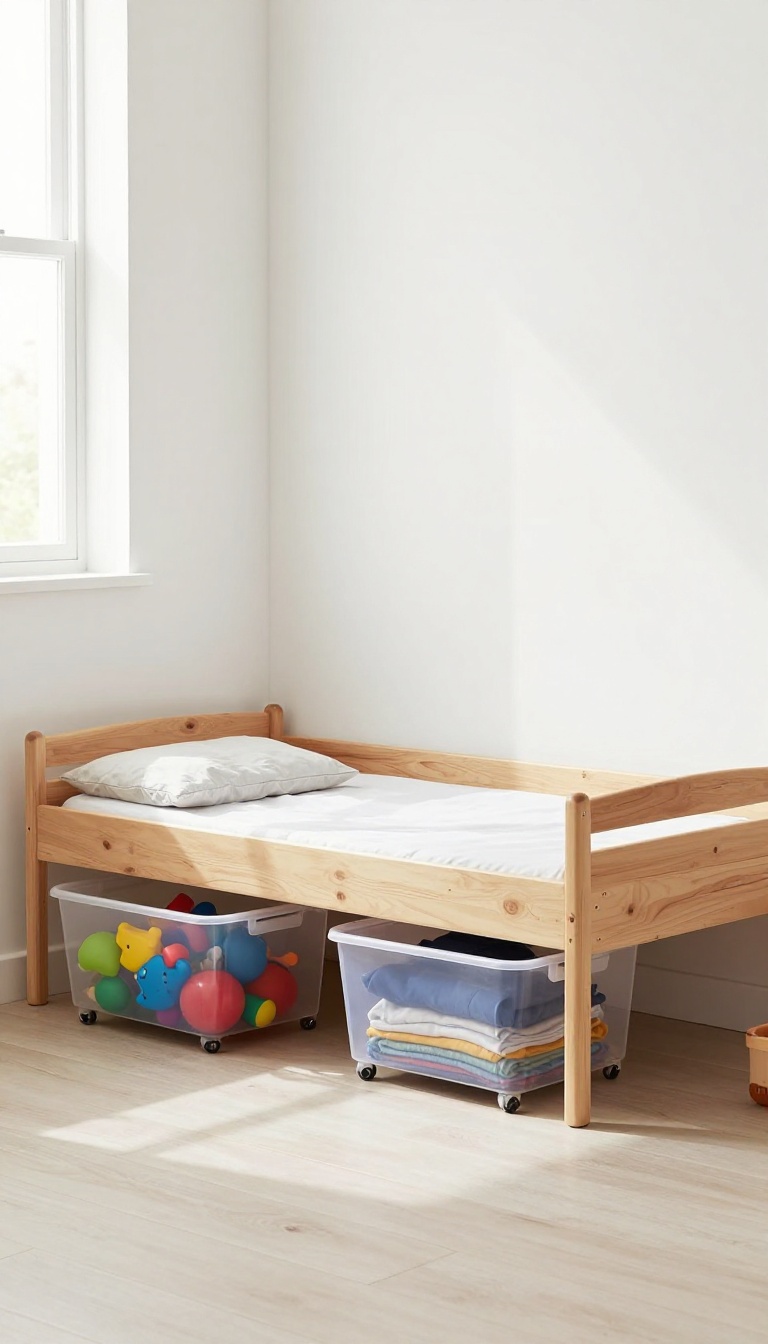
The space under the bed is often wasted, but it's prime real estate for storage. By adding roll-out drawers or bins, you can keep clutter out of sight while making it easy for your child to grab what they need. This trick works especially well in small rooms where every inch counts.
Under-bed storage is a game-changer for small bedrooms. Not only does it free up closet and shelf space, but it also keeps toys and clothes within easy reach. Plus, it's a simple DIY project that can be done on a budget.
Choose The Right Containers
Look for low-profile bins or drawers that fit snugly under the bed. Clear containers help kids see what's inside, while labeled bins teach organization. If you're handy, you can build custom drawers on wheels for a more permanent solution.
Sort By Category
Use different bins for different items—one for extra bedding, one for out-of-season clothes, and another for toys. This makes it easy to find things quickly and keeps the room tidy. You can even color-code the bins to make it fun for your child.
Make It Easy For Kids To Use
Kids are more likely to put things away if they can do it themselves. Choose bins with smooth-rolling wheels or handles that small hands can grip. Place the most-used toys in the easiest-to-reach bins, and rotate seasonal items as needed.
4. Use a Murphy Bed for Dual Functionality
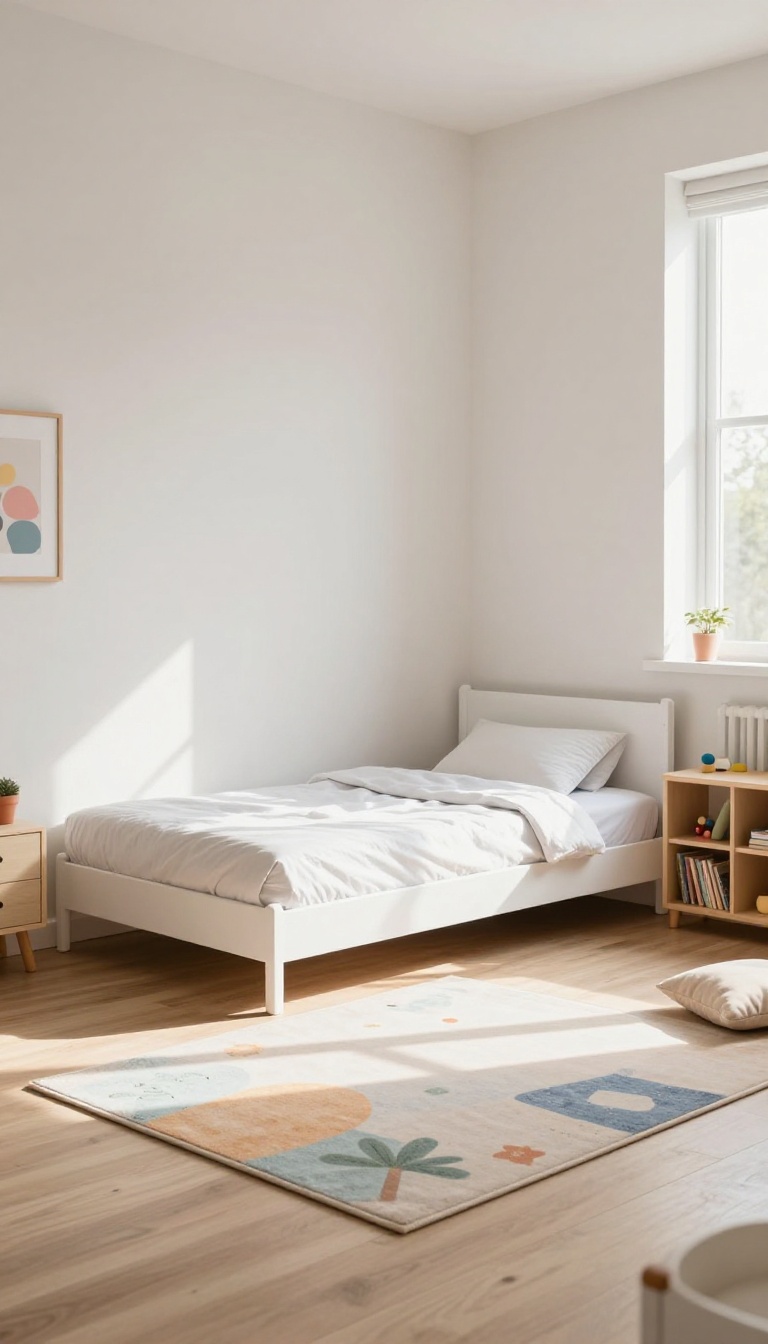
Murphy beds aren't just for studio apartments or guest rooms. In a kid's small bedroom, a wall-mounted bed that folds up can be a total game-changer. During the day, the floor is completely open for playing, building forts, or doing homework.
At night, it pulls down for a cozy, comfortable sleep.
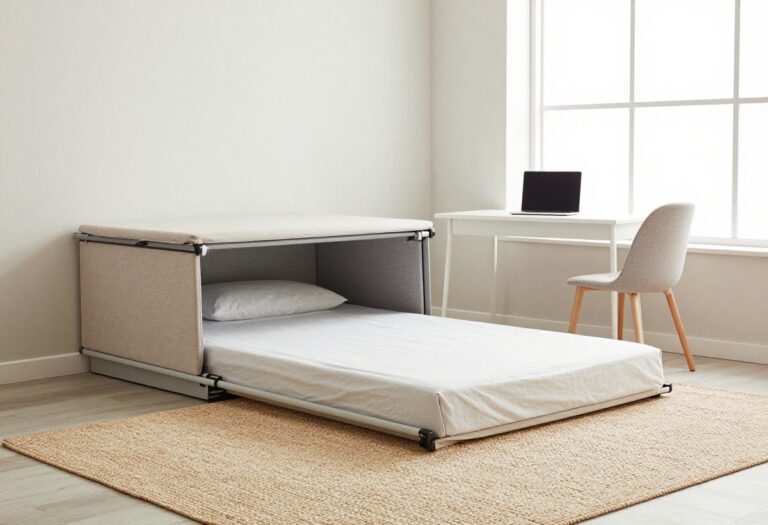
A Murphy bed is essentially a bed that folds vertically against the wall, often inside a cabinet or frame. When folded up, it frees up the entire floor space, making the room feel much larger. This is especially useful in small bedrooms where a permanent bed would take up most of the room.
With a Murphy bed, you can have a dedicated play area or study nook during the day, and a sleeping space at night.
Why A Murphy Bed Works For Kids
Kids need room to play, and a traditional bed can dominate a small room. A Murphy bed gives them that open space during the day, which is great for active play or spreading out toys. It also teaches them about tidiness—they have to put away their toys and maybe even make the bed before folding it up.
Plus, many Murphy beds come with built-in shelves or desks, adding even more functionality.
Safety And Installation Tips
When choosing a Murphy bed for a child's room, safety is key. Look for models with a sturdy locking mechanism and a soft-close feature to prevent slamming. Installation should be done by a professional or someone experienced, as the bed needs to be securely anchored to the wall studs.
Also, consider the mattress size—twin or full are common, but make sure it fits the room's proportions. And always teach your child how to use it safely, emphasizing that it's not a toy.
Maximizing The Space Around The Murphy Bed
The area around the Murphy bed can be optimized for storage and play. Install floating shelves above the bed for books and decor, or add a small desk that folds down from the side. You can also place a low bookshelf or toy bin against the wall opposite the bed.
When the bed is folded up, the room becomes a blank canvas for play, so keep the floor clear and use wall-mounted storage to keep things off the ground.
5. Install a Wall-Mounted Desk for Homework and Crafts
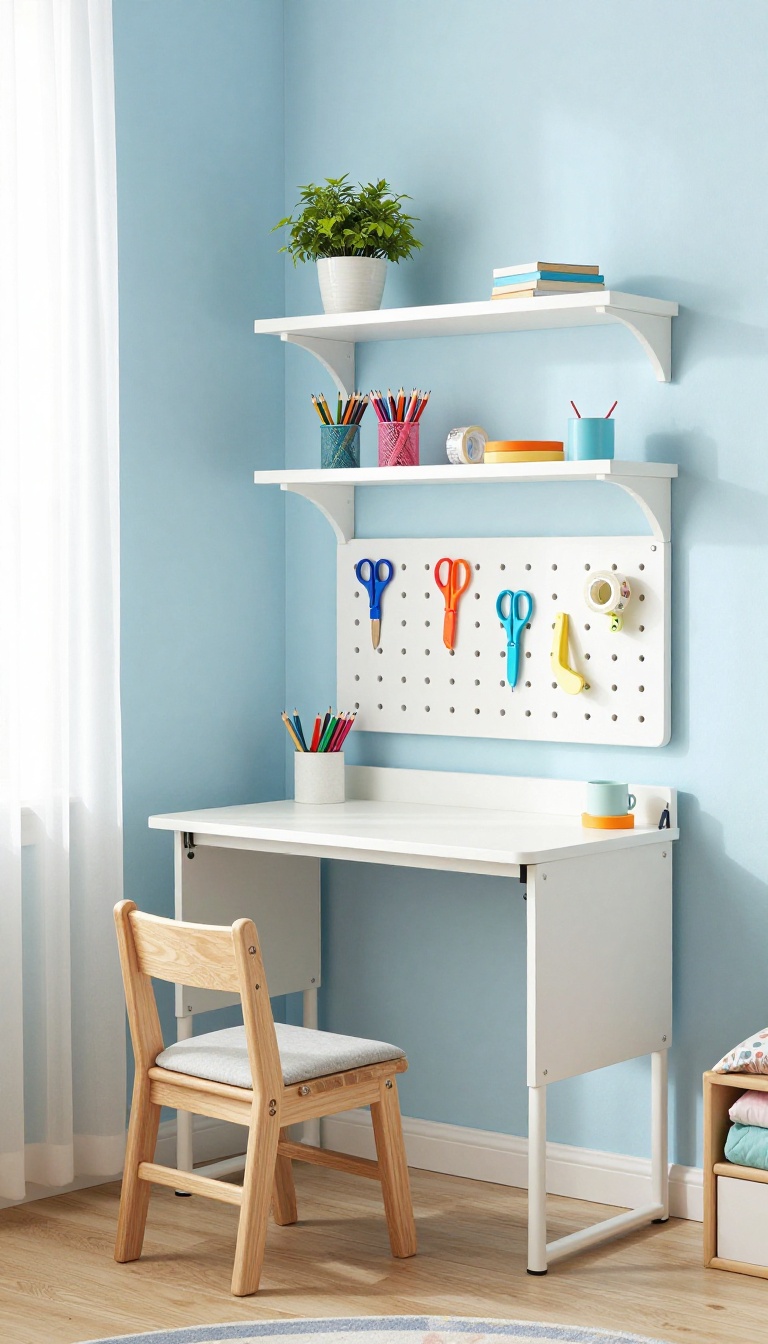
A fold-down desk is a game-changer in a small bedroom. It gives your child a dedicated spot for homework, drawing, or puzzles without taking up valuable floor space. When not in use, it folds flat against the wall, leaving the room open for play.
Wall-mounted desks come in all shapes and sizes, so you can find one that fits your child's needs and your room's dimensions. Some fold down to reveal a full work surface, while others are fixed and simply mounted higher to save floor space. Pair it with a small stool or chair that can tuck underneath when not in use.
Pick The Right Spot
Place the desk near a window for natural light, but avoid direct glare on screens. If the room is narrow, mount it along a wall opposite the bed. Make sure there's enough clearance for the chair and for opening the desk if it folds.
Add Simple Storage
Use wall-mounted shelves above the desk for pencils, paper, and craft supplies. A small pegboard or magnetic strip can hold scissors, tape, and other tools. This keeps everything within reach but off the work surface, so your child can focus.
Make It Kid-friendly
Choose a desk with rounded corners and a smooth finish. If you're handy, you can build one from plywood and add a chalkboard or whiteboard surface. Let your child personalize it with stickers or washi tape—it's their space, after all.
6. Create a Cozy Reading Nook in a Corner
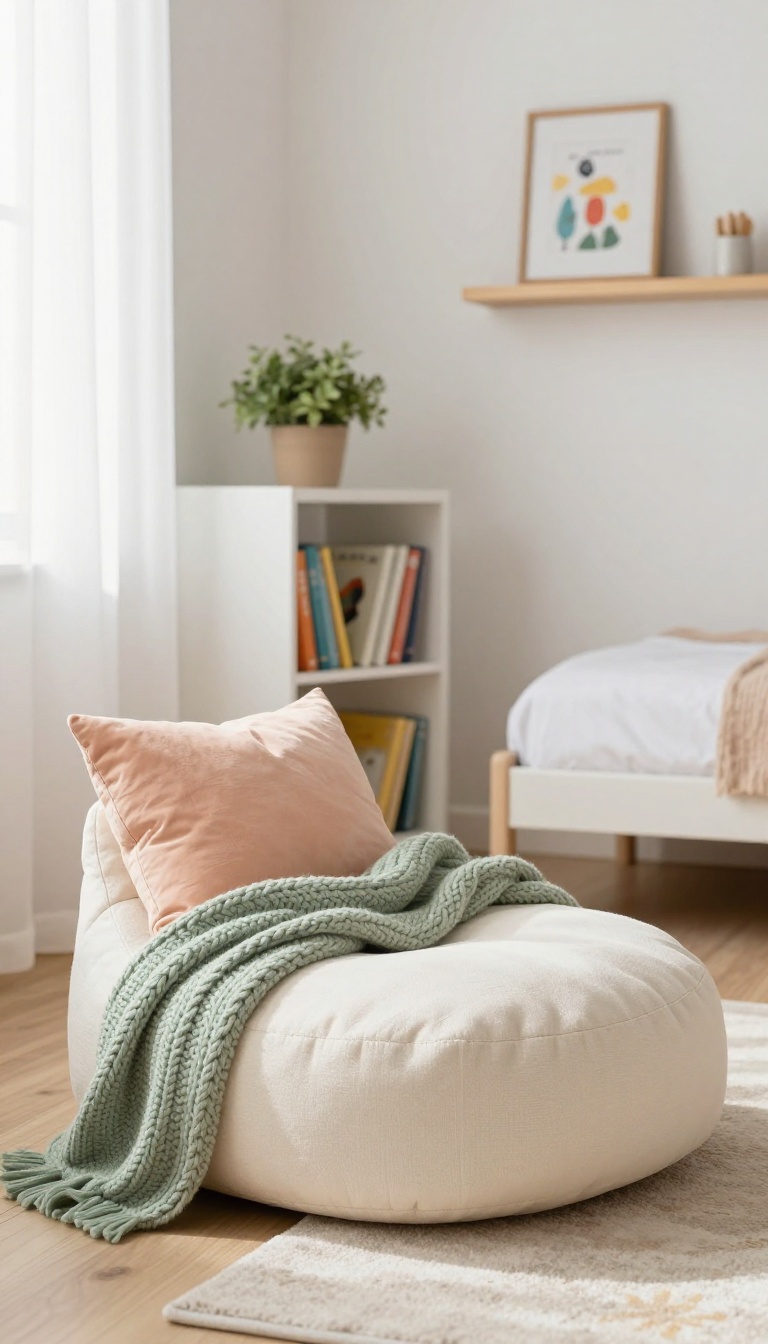
Even the smallest bedroom usually has a corner that’s just sitting there, collecting dust or holding a pile of laundry. That’s prime real estate for a reading nook. With a comfy seat, a few pillows, and a small shelf for books, you can give your child a dedicated spot to unwind and dive into stories.
It doesn’t take much space or money, but it adds a ton of charm and function.
A reading nook doesn’t need to be elaborate. Start with a soft floor cushion or a small armchair that fits the corner. Add a couple of throw pillows and a cozy blanket.
Then, mount a small bookshelf or floating shelves within arm’s reach. If floor space is tight, use a wall-mounted shelf or a hanging book organizer. The goal is to make it inviting and easy to use, so your child actually wants to sit there and read.
Pick The Right Corner
Look for a corner near a window for natural light, but avoid direct drafts. If the room has an awkward alcove or a spot behind the door, that can work too. Just make sure there’s enough room for a chair or cushion without blocking the path.
A corner that’s out of the main traffic flow is ideal—it feels like a secret hideaway.
Seating That Saves Space
Instead of a bulky chair, try a floor pouf, a bean bag, or a child-sized armchair. You can also use a stack of large floor cushions or a folded mattress topper. If you want something more structured, a small rocking chair or a papasan chair can fit neatly into a corner.
Just measure the space first and pick something that’s easy to move if needed.
Storage For Books And More
Keep books organized with a low bookshelf, a wall-mounted rack, or even a fabric bin. Rotate the selection every few weeks to keep things fresh. You can also add a small basket for toys or art supplies, so the nook doubles as a quiet play spot.
A small side table or a ledge for a water bottle and a lamp is a nice touch.
Make It Cozy And Personal
Let your child help decorate the nook with their favorite colors, a string of fairy lights, or a small rug. Add a canopy or a tent for extra coziness if space allows. Personal touches make the nook feel special, which encourages your child to use it.
Just keep it simple—too much clutter can make a small space feel cramped.
7. Use Multi-Functional Furniture Like a Storage Ottoman
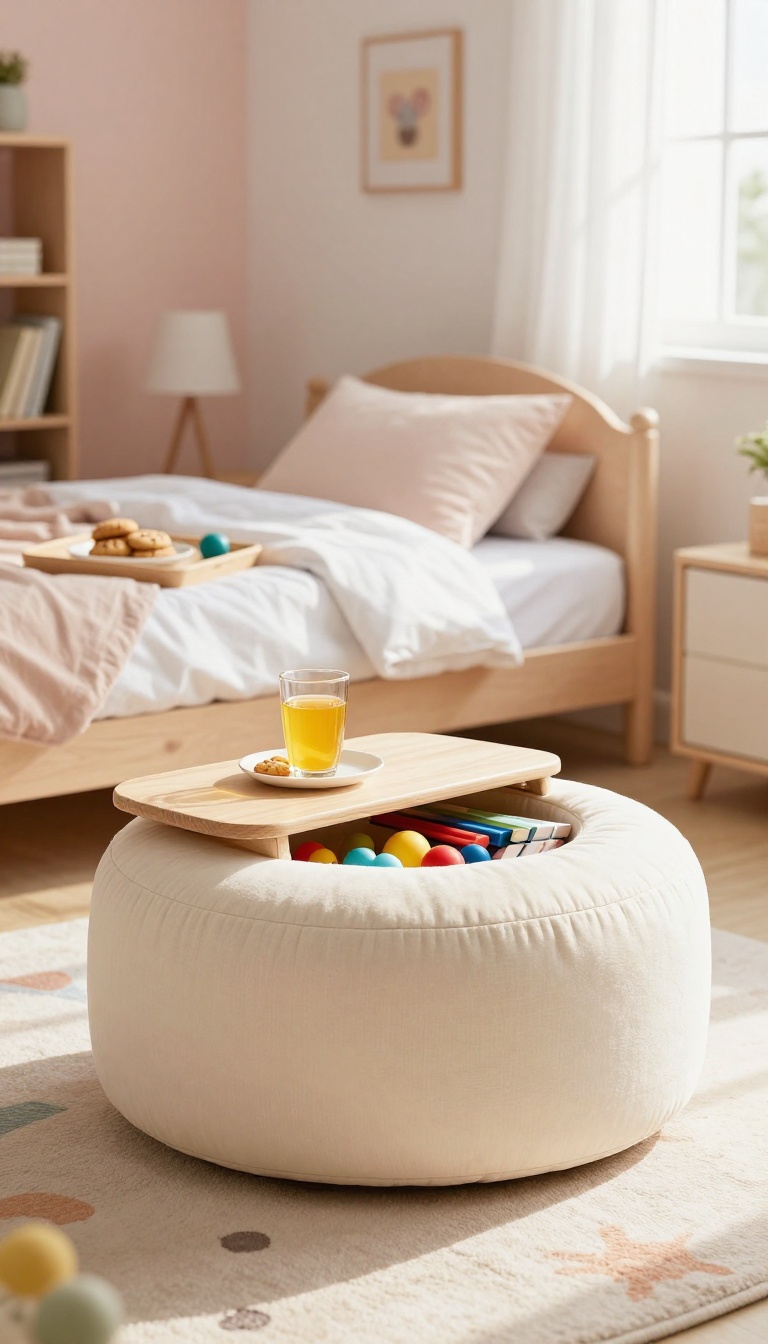
When a bedroom has to do double duty as a playroom and a sleep sanctuary, every piece of furniture should earn its keep. That's where multi-functional pieces like storage ottomans come in handy. They offer a soft place to sit, a spot to rest little feet, and a hidden compartment to stash toys, books, or extra blankets—all in one compact footprint.
A storage ottoman is a smart addition to any small kid's room because it replaces the need for a separate chair, footrest, and toy bin. It's a simple swap that instantly clears up floor space and reduces visual clutter. Plus, kids love the secret hideaway aspect—it makes tidying up feel like a game.
Pick The Right Size And Shape
Look for an ottoman that's proportionate to the room and the child's age. A round or square one works well in corners, while a rectangular version can double as a bench at the foot of the bed. Make sure the lid is lightweight enough for little hands to lift safely, or choose a hinge that stays open to avoid pinched fingers.
Use It For More Than Just Storage
Beyond hiding clutter, an ottoman can serve as a makeshift table for snacks or games when topped with a tray. It can also be a landing pad for getting dressed or a cozy reading nook when paired with a cushion. The more uses you find, the more value you get from this single piece.
Style It To Match The Room
Storage ottomans come in a variety of fabrics, colors, and patterns, so you can easily find one that fits your child's decor. Choose a stain-resistant material for durability, and consider a removable, washable cover for easy cleanup. A neutral tone can blend in, while a bright pop of color can become a fun focal point.
8. Add a Play Tent or Canopy for Imaginative Play
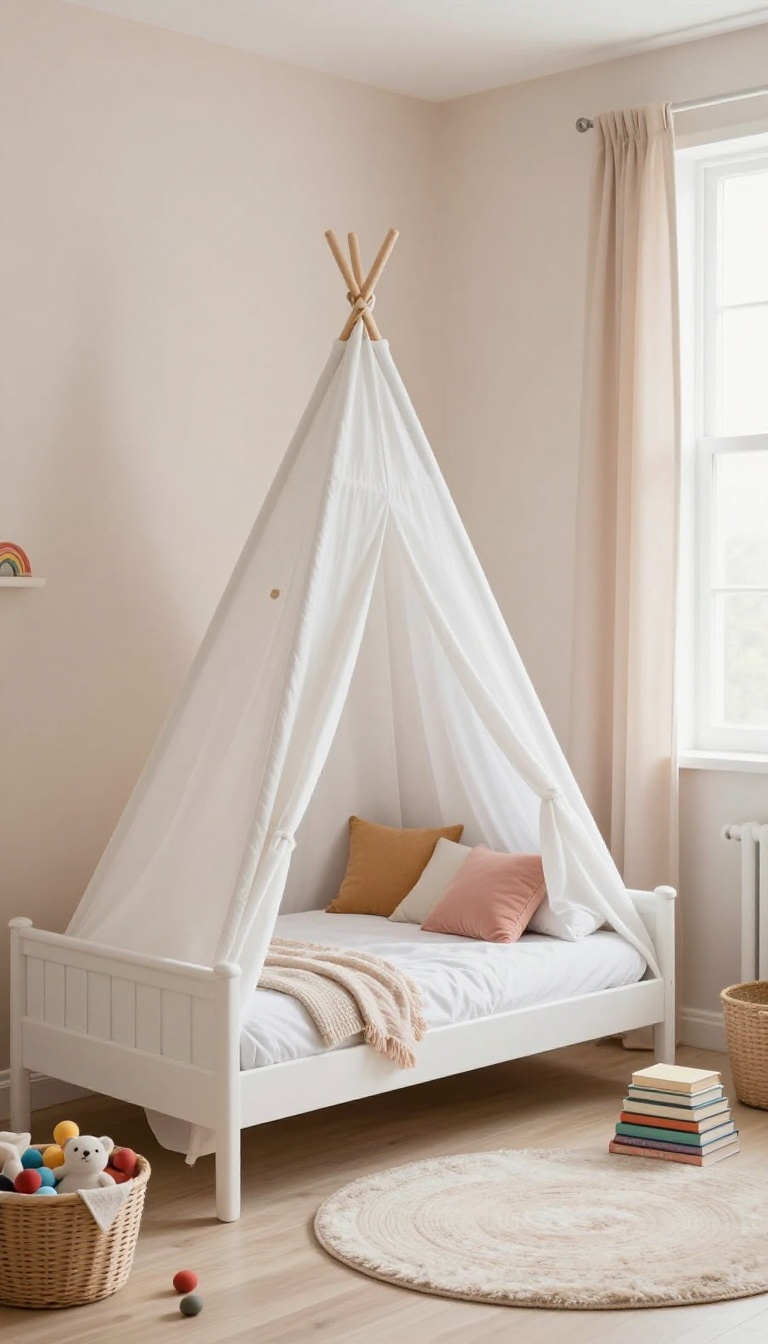
A simple tent or canopy can transform a plain corner into a castle, a spaceship, or a cozy reading nook. It’s a low-cost, high-impact addition that sparks creativity without eating up valuable floor space. Plus, it’s easy to move or store when not in use, making it perfect for small rooms.
When floor space is tight, going vertical or using the air above the bed can be a lifesaver. A play tent or canopy doesn’t need a dedicated area—it can hang from the ceiling, drape over a bed, or fit snugly in a corner. It gives your child a private hideaway that feels special, and it’s a breeze to set up or take down.
Pick The Right Style For Your Space
Think about what fits your room’s layout and your child’s interests. A classic teepee is charming and portable, but it takes up floor space. A canopy that hangs from the ceiling or over the bed is a better choice for a super small room because it uses vertical space.
You can also find pop-up tents that fold flat for storage—perfect if the room needs to be flexible.
Make It A Cozy Reading Or Relaxation Spot
Toss in a few cushions, a soft blanket, and a small basket of books to turn the tent into a mini reading retreat. This encourages quiet time and gives your child a place to unwind. Just make sure there’s enough light—a string of fairy lights or a clip-on reading lamp can make it extra inviting without taking up space.
Keep It Safe And Easy To Maintain
Safety comes first, especially with younger kids. Ensure the tent or canopy is securely anchored and doesn’t have any loose cords or small parts. Choose breathable fabrics that are washable, since kids will drag toys and snacks in there.
A quick shake or vacuum keeps it fresh, and you can easily fold it away when it’s time to clean the room.
9. Install Pegboards for Toy and Accessory Organization
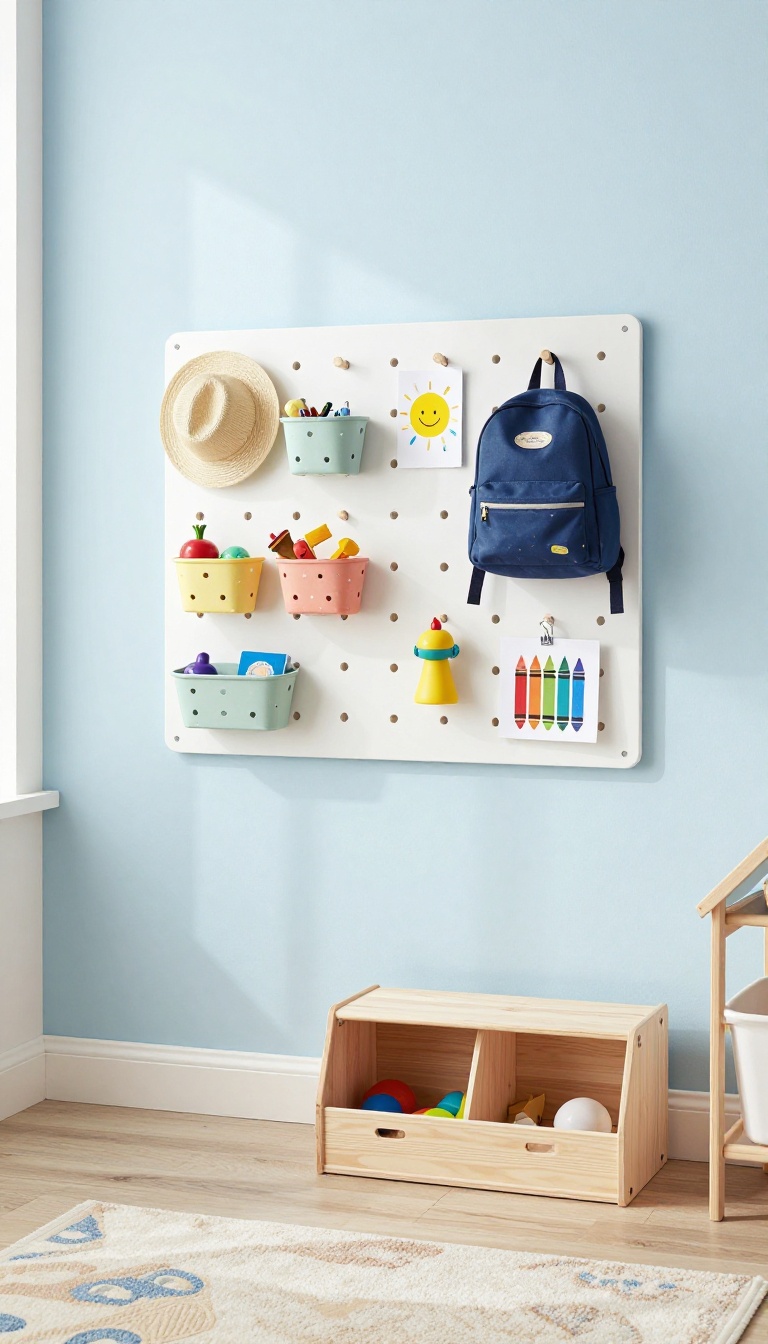
Pegboards aren't just for garages or craft rooms—they're a fantastic solution for a small kid's bedroom. By mounting a pegboard on the wall, you can keep toys, hats, bags, and art supplies within easy reach while freeing up precious floor and shelf space. Plus, pegboards are customizable and can grow with your child's changing interests.
A pegboard turns a blank wall into a flexible storage system. You can hang small baskets for action figures, hooks for dress-up clothes, and clips for artwork. Because everything is visible, kids can find what they need without digging through bins, which makes cleanup simpler too.
And the best part? You can rearrange the pegs and accessories whenever you want, so the setup never feels stale.
Choosing The Right Pegboard And Mounts
Look for a sturdy pegboard made of wood or heavy-duty plastic. You'll also need pegboard hooks and accessories that fit the board's hole spacing. For a kid's room, consider a smaller board (like 2×3 feet) that you can mount at their eye level.
Use wall anchors if you're attaching to drywall, and make sure the board is securely fastened so it can hold heavier items like bins or a small backpack.
Creative Ways To Use Pegboard Accessories
Mix and match accessories to suit your child's needs. Use deep baskets for larger toys, shallow trays for art supplies, and hooks for hanging hats or backpacks. Add a small shelf attachment for books or a favorite stuffed animal.
You can also paint the pegboard to match the room's decor or let your child decorate it with stickers—just make sure the paint and stickers don't clog the holes.
Keeping It Safe And Kid-friendly
Safety first: ensure the pegboard is mounted out of the way of the bed or play area to prevent bumps. Use rounded hooks or cover sharp ends with caps. Show your child how to hang items properly and encourage them to use the pegboard regularly.
With a little practice, they'll love having their own special place for their things.
10. Use Wall-Mounted Lighting to Save Surface Space
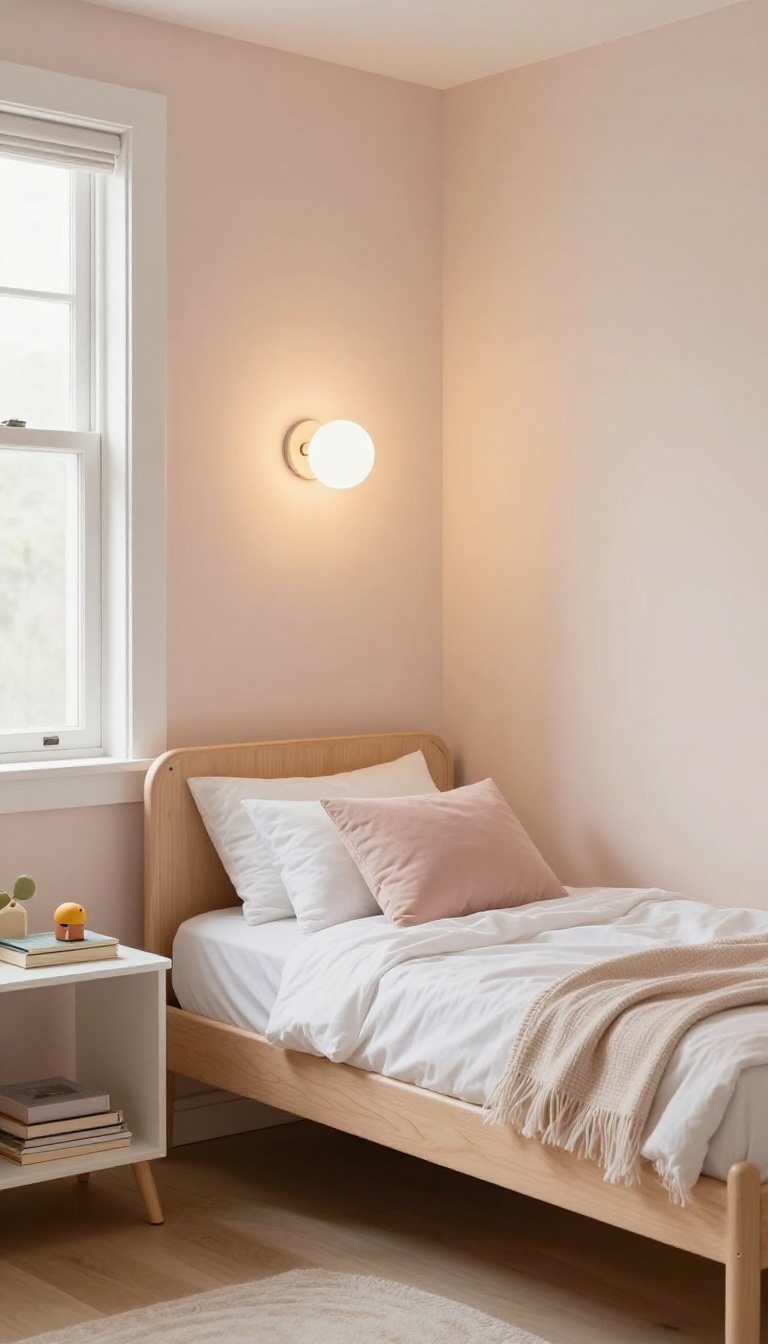
When every inch of floor and tabletop matters, overhead lights might not be enough, and bulky lamps can take over a tiny nightstand. Wall-mounted lighting, like sconces or clip-on fixtures, frees up that valuable surface for books, glasses, or a favorite toy. Plus, it adds a soft, warm glow that makes bedtime reading feel extra cozy—without the clutter.
Swapping a table lamp for a wall sconce is one of the simplest swaps you can make in a small kid's room. Not only does it clear the nightstand, but it also keeps cords out of reach and eliminates the risk of a lamp being knocked over during play. With so many styles available, you can match the light to your child's personality and the room's decor.
Choose The Right Style For Your Space
Swing-arm sconces are perfect for reading in bed because you can adjust the light exactly where you need it. Plug-in sconces are a renter-friendly option since they don't require hardwiring—just mount them and plug into a nearby outlet. For a playful touch, look for clip-on lights that attach to a headboard or shelf, or go with a wall-mounted fixture shaped like a star, rocket, or animal.
Safety And Placement Tips
Install sconces at least 18 inches above the mattress so they're out of reach for little hands. Make sure cords are secured along the wall or baseboard to prevent tripping hazards. Choose LED bulbs that stay cool to the touch, and avoid fixtures with dangling chains or glass that could break easily.
Layer The Lighting For Better Function
Wall sconces work best when paired with other light sources. Combine them with a ceiling light for overall brightness and maybe a small battery-operated puck light inside a closet for extra visibility. This way, you can dim the main light for story time and keep the sconce on for a calm, focused reading glow.
11. Choose a Daybed with Trundle for Sleepovers
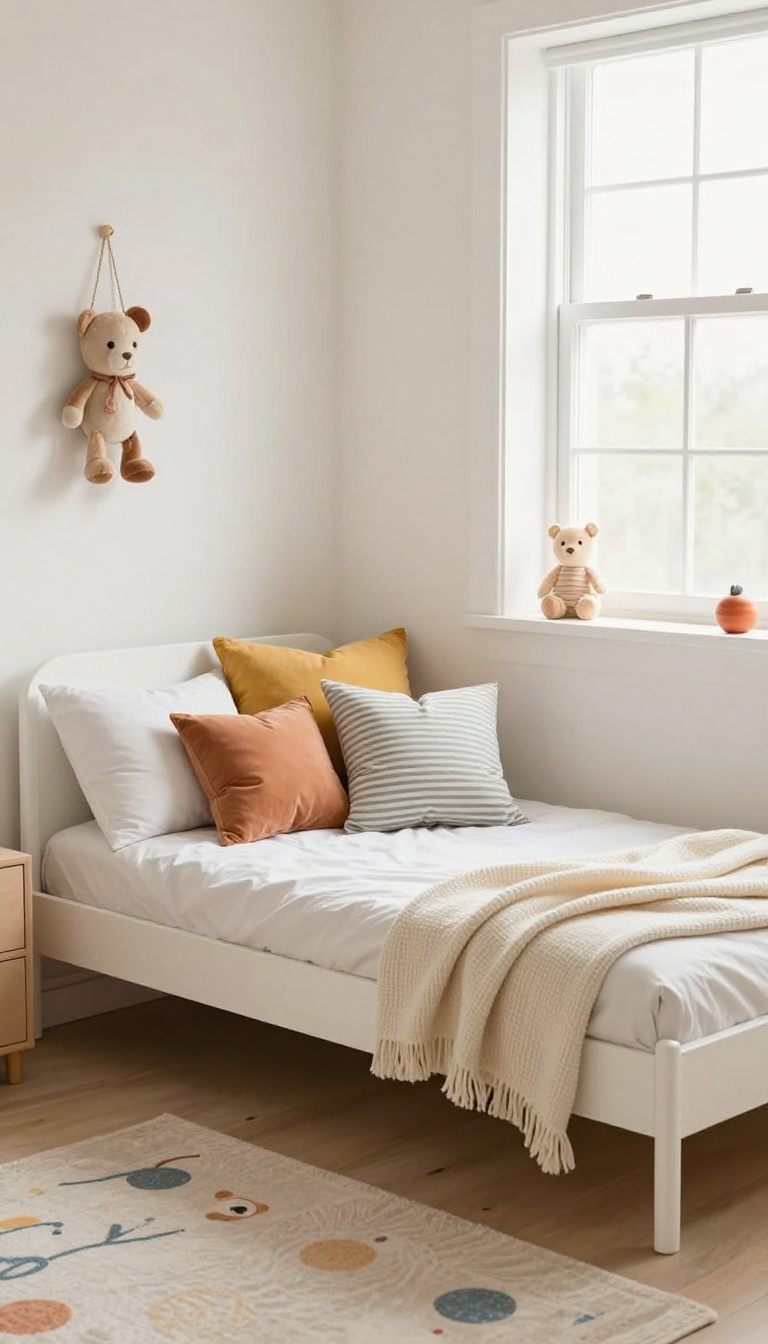
Sleepovers are a big deal for kids, but a cramped bedroom can make hosting feel impossible. A daybed with a trundle is the perfect compromise: it looks like a stylish sofa during the day and pulls out into a second bed at night. This way, you get extra sleeping space without sacrificing precious floor area.
Plus, it's a smart investment that grows with your child—from solo sleep to sleepovers and beyond.
How A Trundle Saves Space
A trundle bed slides neatly under the main bed, so it takes up zero extra floor space when not in use. That means your child still has room to play, build forts, or do homework. When a friend comes over, just pull out the trundle, add a mattress and bedding, and you've got a cozy second bed in seconds.
It's a clever way to host sleepovers without needing a guest room.
Styling Tips For A Daybed
To make a daybed work double duty, dress it with plenty of pillows and a throw blanket during the day. That instantly turns it into a comfy reading nook or a spot for lounging. At night, just remove the extra pillows and let your child snuggle in.
Choose a frame with built-in storage drawers underneath for even more functionality—perfect for stashing extra bedding, toys, or out-of-season clothes.
Safety And Comfort Considerations
When choosing a trundle, make sure the mattress is thick enough for a good night's sleep—usually 6 to 8 inches. Also, check that the trundle glides smoothly and locks securely in place. For younger kids, a low-profile trundle is safer and easier to manage.
And don't forget to measure your room to ensure there's enough clearance to pull out the trundle fully.
FAQ
What is the best bed for a small kids' room?
Loft beds are great for maximizing floor space, while bunk beds work well for siblings. A daybed with a trundle is also a smart choice for sleepovers.
How can I add storage to a small kids' room without cluttering it?
Use vertical shelving, under-bed bins, and multi-functional furniture like storage ottomans. Keep toys in labeled bins to make cleanup easy.
How do I create a play area in a small bedroom?
Use a corner for a play tent or a small rug with a toy bin. A loft bed frees up space underneath for a mini play zone.
What colors make a small kids' room look bigger?
Light, neutral colors like white, soft gray, or pastel tones can make a room feel more spacious. Add pops of color with accessories.
Are there any safety concerns with loft beds or wall-mounted furniture?
Always follow manufacturer instructions and secure furniture to the wall. For loft beds, ensure guardrails are in place and the ladder is stable.
Conclusion
With a bit of planning and these 11 ideas, you can turn a small kids' bedroom into a space that works hard for sleep, play, and storage. The key is to think vertically, choose furniture that does double duty, and keep things organized.
Start with one or two changes and see how much of a difference they make. Your child will love their new room, and you'll love how much easier it is to keep tidy.