15 Decorate Room Ideas for Bedroom Small Spaces with Flair
A cramped bedroom often feels like a storage unit with a mattress thrown in. You deserve a space that feels intentional, not like you're just making do with what's left. These 15 ideas focus on real solutions that add style without eating up floor space.
Most small-room advice tells you to declutter and call it a day. That helps, but it doesn't make the room feel designed. The trick is mixing practical moves with details that show off your personality.
You don't need a renovation budget or a degree in interior design. A few smart swaps and strategic choices can make even the tightest bedroom feel open, cozy, and completely yours.
1. Hang a Large Mirror Opposite the Window
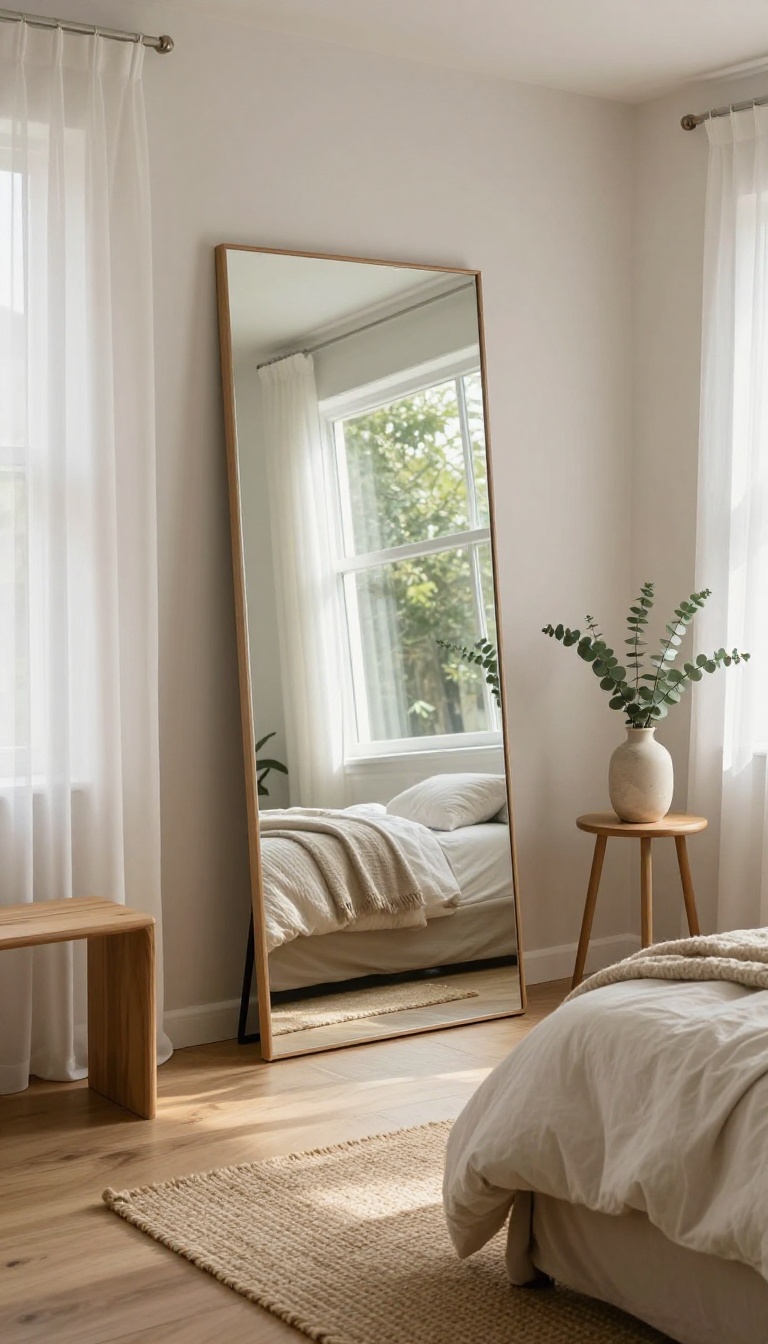
A mirror across from your window is like adding a second window without cutting into the wall. It bounces natural light around the room, making even a tiny bedroom feel brighter and more open. You get the illusion of extra square footage without moving a single piece of furniture.
The key is placement. The mirror needs to face the window directly to catch and reflect the light. A leaning full-length mirror works well if you don't want to drill holes, but a wall-mounted option saves floor space.
Either way, the effect is immediate: the room feels twice as deep and twice as bright. Size matters more than frame style. Go as large as your wall allows without overwhelming the space.
A mirror that's too small won't reflect enough light to make a difference. Aim for at least two-thirds the width of your window for a noticeable boost. You can also angle the mirror slightly toward the window to direct more light into the darker corners of the room.
Just make sure it's secure, especially if you have pets or kids. A few felt pads on the back will keep it from scratching the wall.
Pick The Right Spot
Directly opposite the window is ideal, but if that's not possible, place it on an adjacent wall at a 45-degree angle. Avoid putting it opposite a door or cluttered area—you'll just double the mess. The goal is to reflect light and open space, not chaos.
Choose A Light-boosting Frame
Thin metal or frameless mirrors reflect more light because there's less material blocking the glass. A thick, dark frame can absorb light and make the mirror feel heavy. If you want a frame, go with a light wood or white finish to keep things airy.
Secure It Safely
A large mirror can be a hazard if it's not properly anchored. Use wall anchors for mounted mirrors, or choose a leaning mirror with a sturdy base and anti-tip strap. If you're renting, adhesive strips designed for heavy mirrors can work, but check the weight limit first.
2. Choose a Bed with Built-In Drawers
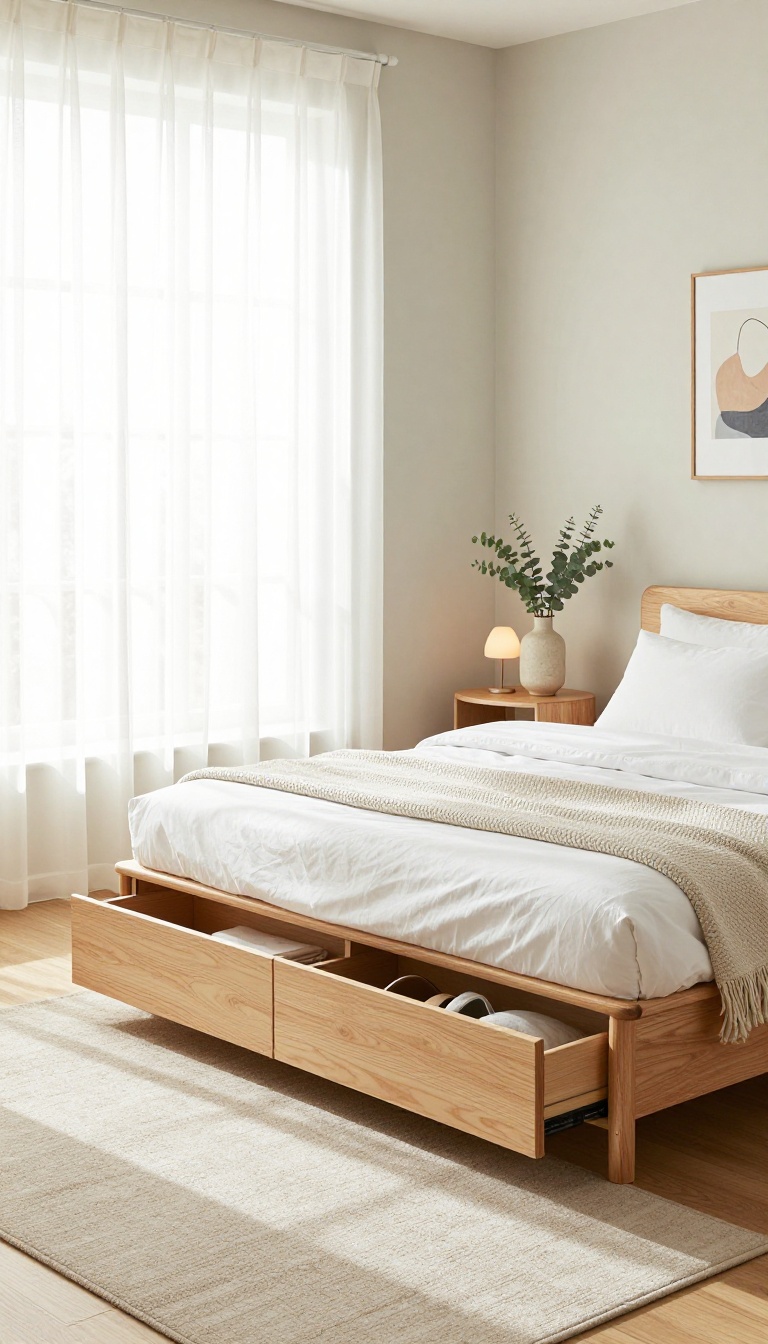
That empty gap under your mattress is wasted real estate. A bed frame with built-in drawers turns it into a dresser you never have to dust. You get storage without adding a single piece of furniture to the floor plan.
In a small bedroom, every square foot counts. A bed with drawers uses the footprint you already have, so you don't lose walking space to a bulky dresser. It's one of the simplest swaps you can make.
Most options come in two styles: captain's beds with drawers along the side, or platform beds with storage in the base. Both keep your clothes and linens out of sight, which instantly makes the room feel calmer. You can find them in wood, upholstered fabrics, or even metal, so matching your vibe isn't hard.
What To Store (and What Not To)
Drawers under the bed are perfect for off-season clothes, extra bedding, or shoes. They're also great for things you don't need daily, like holiday decor or old photo albums. Avoid stuffing them with heavy items that make the drawers hard to pull, and skip anything that needs airflow, like damp towels.
Drawer Placement Matters
Side drawers work well if your bed sits against a wall with space on both sides. If one side is against a wall, look for a bed with drawers on the foot or the open side only. Some models have drawers that pull out from the end, which is handy when the bed is in a corner.
Style Without The Bulk
Built-in drawers don't have to look utilitarian. Upholstered beds with hidden storage feel plush and modern. Wooden captain's beds add a coastal or cottage touch.
Pick a finish that blends with your walls or bedding so the storage disappears into the design.
3. Mount Floating Shelves Instead of a Nightstand
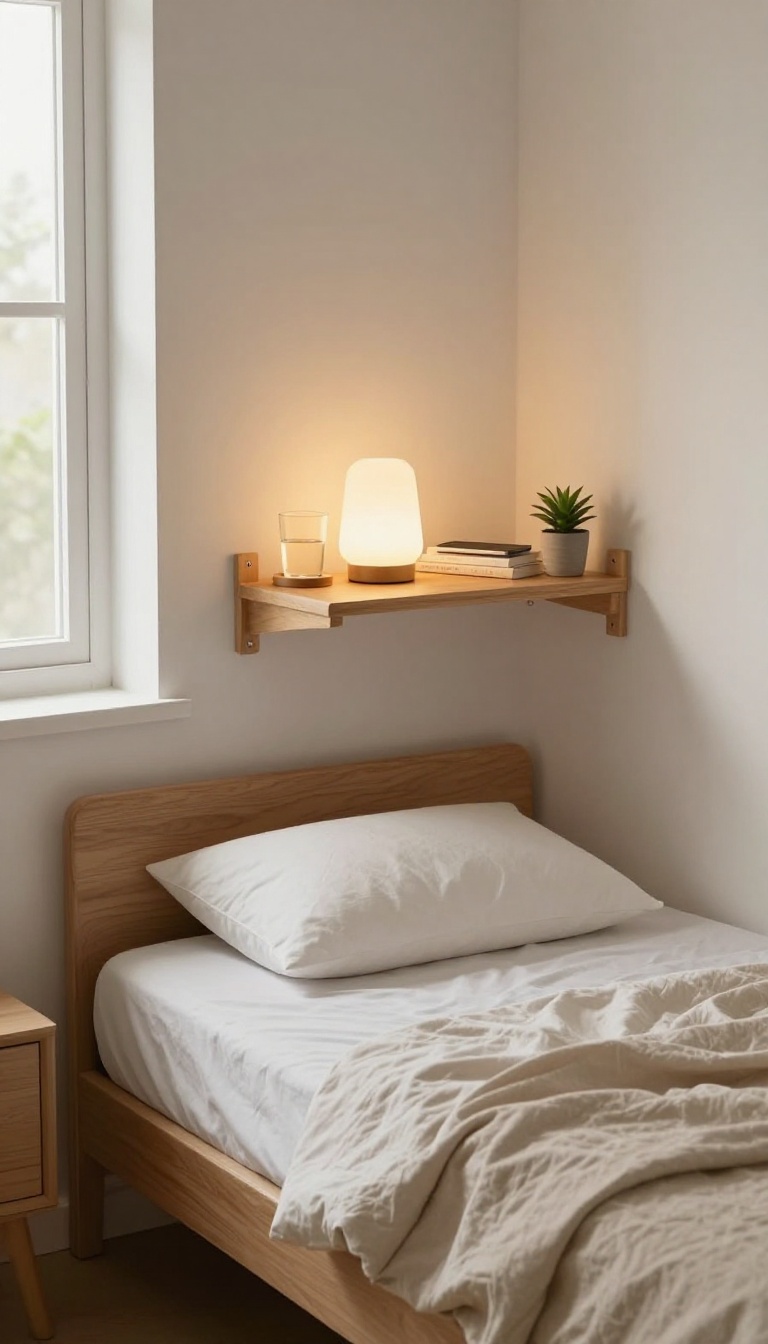
A nightstand takes up more room than you think. In a tight bedroom, that chunk of floor space next to your bed can make the difference between a room that feels cramped and one that feels open. Floating shelves solve the problem by moving your bedside essentials up onto the wall, leaving the floor clear for walking, breathing, and maybe even a plant or two.
Floating shelves give you a spot for your phone, a book, a glass of water, and a small lamp without the bulk of a traditional nightstand. They come in all lengths and finishes, so you can match your style without hunting for a piece that fits a weird gap. Installation is straightforward if you find the studs or use heavy-duty anchors.
Once they're up, you'll wonder why you ever bothered with a nightstand in the first place.
Pick The Right Spot
Mount the shelf at a height that's comfortable to reach from bed. Usually that's about 24 to 30 inches above the mattress. If your bed is against a corner, you can wrap shelves around the corner for extra surface area.
Just make sure the shelf doesn't stick out so far that you bump your head when you sit up.
Keep It Tidy
A floating shelf looks best when it's not overloaded. Stick to a few essentials: a small lamp, your phone, a coaster, and maybe a tiny plant. Use a small basket or tray to corral loose items like chargers and earrings.
That way, the shelf stays functional without looking cluttered.
Go Beyond The Bedside
You can use floating shelves in other tight spots too. Put one above a desk for office supplies, or run a long shelf along the wall above your dresser for extra storage. In a small room, every vertical inch counts.
Just keep the shelves spaced out so the room doesn't feel top-heavy.
4. Use a Wall-Mounted Swing Arm Lamp
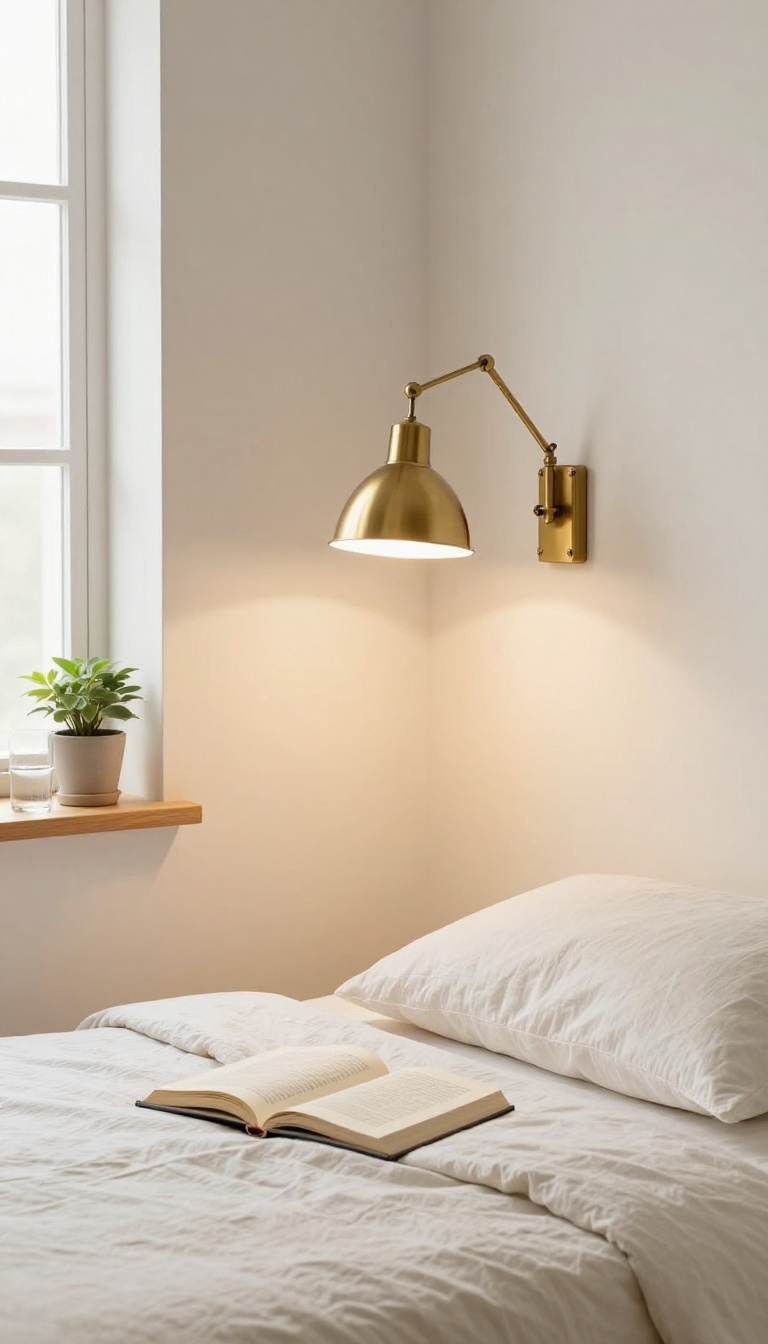
A table lamp on a nightstand eats up surface area and usually lights the whole room instead of your book. A wall-mounted swing arm lamp solves both problems by attaching to the wall and extending exactly where you need it. You get focused light without sacrificing floor or table space.
Swing arm lamps are a small-space MVP because they fold flat against the wall when you're not using them. When you're ready to read, just pull the arm out and angle the shade toward your page. No more fumbling with a lamp that's behind you or casting shadows over your shoulder.
Plus, they come in tons of styles, from sleek modern metal to vintage brass. You can find plug-in versions if you don't want to deal with wiring, or hardwired ones for a cleaner look. Either way, you reclaim your nightstand for a glass of water, your phone, or a small plant.
Why It Works In Tight Spots
In a small bedroom, every horizontal surface is precious. A swing arm lamp mounts directly to the wall, so it takes up zero table space. That means you can ditch the nightstand entirely or use a tiny floating shelf instead.
It also keeps cords off the floor, which makes the room feel less cluttered.
How To Pick The Right One
Look for a lamp with a long enough arm to reach over your bed—usually 12 to 18 inches. Check the swing range so you can point light at your book or across the room. If you rent, go with a plug-in model that you can mount with adhesive strips or a small bracket.
Hardwired versions look best but need an electrician.
Installation Tips
Mount the lamp about 24 to 30 inches above your mattress, or roughly at shoulder height when you're sitting up. That puts the light right where you need it without glare. Use a warm LED bulb around 2700K to keep things cozy.
If you're not handy, a plug-in lamp with a cord cover is a quick fix.
5. Go Vertical with a Tall, Narrow Bookcase
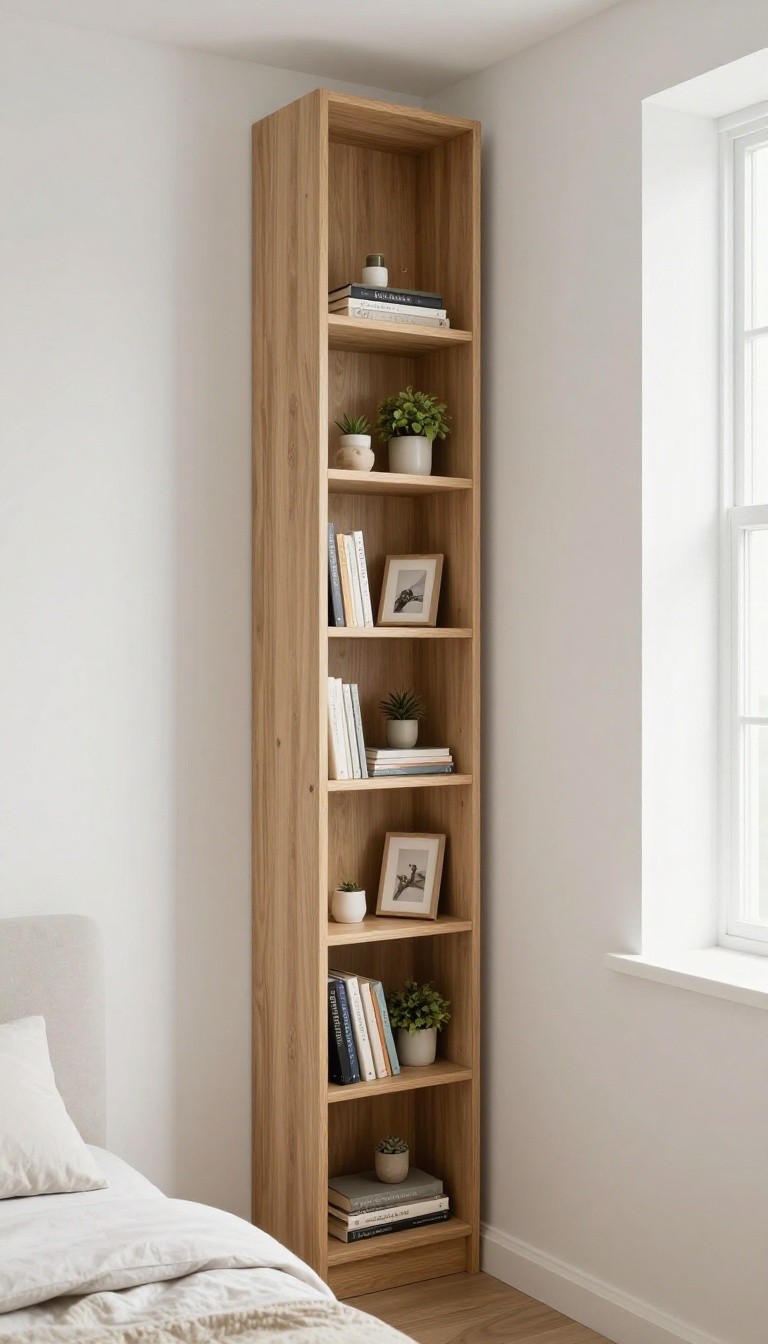
Floor space is precious in a small bedroom, so stop thinking horizontally and start thinking vertically. A tall, narrow bookcase draws the eye upward, making your ceiling feel higher and your room feel larger. It also gives you serious storage for books, plants, and decor without stealing an inch from your walking path.
A standard bookcase can overwhelm a tight room, but a slender one—usually 12 to 18 inches deep—fits into corners, beside the bed, or even in that awkward gap next to the closet. The key is to choose a height that stretches toward the ceiling, because the vertical lines create an illusion of height. You get the function of a full wall of shelves with a fraction of the footprint.
Style-wise, a tall bookcase can blend in or stand out. A white or light wood finish keeps things airy and open, while a black or bold color makes a statement. Either way, it becomes a focal point that organizes your stuff and adds personality.
Pick The Right Spot
The best place for a tall, narrow bookcase is often a corner that would otherwise collect dust. You can also slide it between the bed and the wall, or use it as a room divider if you need to carve out a tiny reading nook. Just make sure it doesn't block natural light or make the room feel more cramped.
Measure twice, then measure again—tight spaces leave no room for error.
Style It Like A Pro
Don't just fill shelves with books. Mix in small plants, framed photos, and a few decorative objects to break up the rows. Leave some empty space so the shelves don't look cluttered.
Group items by color or theme for a cohesive look. And if you're short on floor space, use the top shelf for items you don't need every day, like extra blankets or seasonal decor.
Secure It And Keep It Safe
Tall furniture can tip, especially in small rooms where you might bump into it. Use wall anchors or anti-tip straps to secure the bookcase to the wall. This is non-negotiable if you live in an earthquake zone or have kids or pets.
Also, distribute weight evenly—heavy books on the bottom, lighter items up top. That keeps the unit stable and prevents shelves from sagging.
6. Install a Pegboard or Bulletin Board Wall
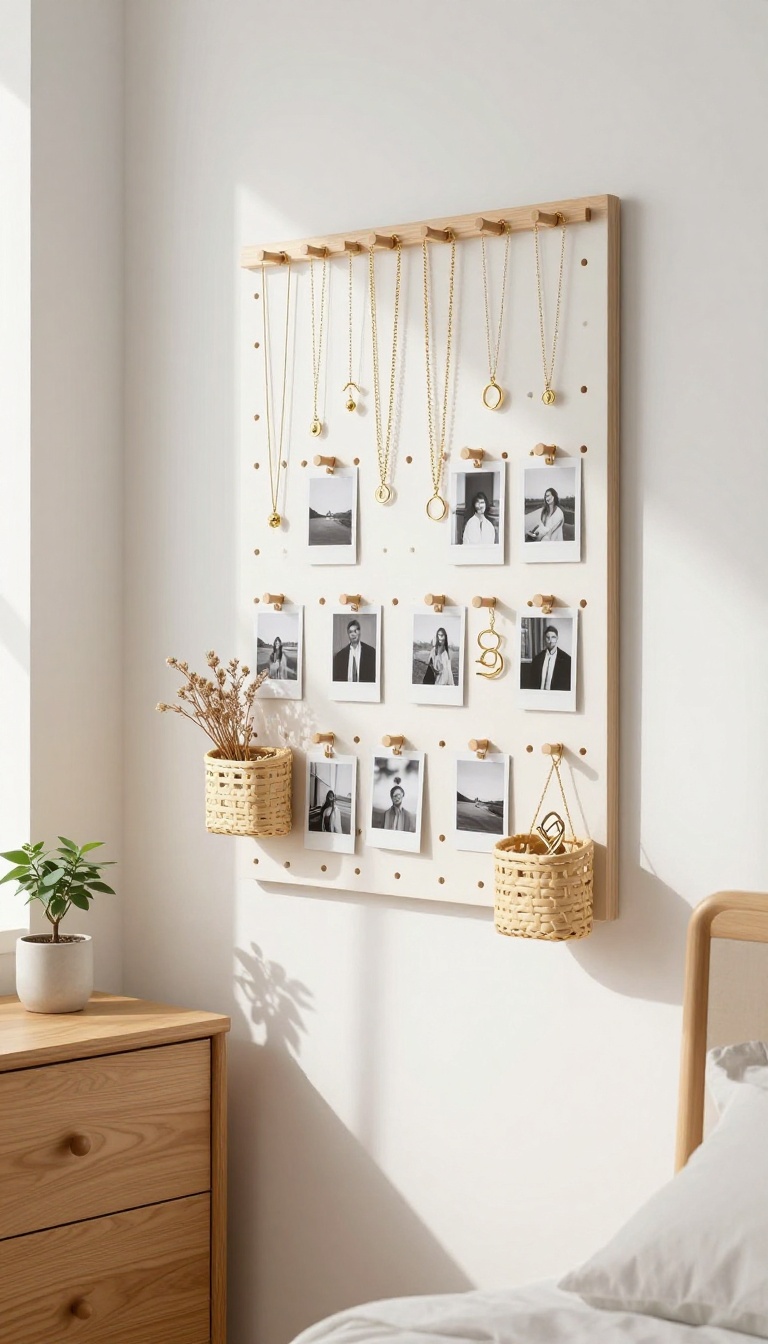
Walls are your best friend in a small bedroom, and a pegboard or bulletin board turns that vertical space into a functional display. Instead of letting jewelry, photos, and tiny accessories pile up on your dresser, you give them a home that looks intentional. It's a simple swap that adds personality and keeps clutter off your surfaces.
A pegboard or bulletin board isn't just for garages or offices. In a small bedroom, it becomes a rotating gallery of the things you love and use daily. You can hang necklaces, pin up Polaroids, clip notes, or stash small accessories in little bins.
The best part? You can change it up whenever you want without moving furniture.
Pick The Right Board For Your Space
Pegboards come in wood, metal, or plastic, and they're easy to paint or leave natural. Bulletin boards with fabric or cork add texture and soften the look. Measure your wall first, then choose a size that fills the space without feeling crowded.
A board that's too small gets lost, and one that's too big can overwhelm a tight corner.
Arrange With Purpose, Not Clutter
Start by grouping similar items together, like all your necklaces on one side and photos on the other. Use hooks, small containers, and clips to keep things tidy. Leave a little breathing room between clusters so the board doesn't look like a junk drawer.
You want it to feel curated, not chaotic.
Swap And Refresh As Needed
One of the best things about a pegboard or bulletin board is how easy it is to update. Rotate your display with the seasons or your mood. Swap out photos, add a new postcard, or change where your jewelry hangs.
It keeps the wall feeling fresh without spending a dime.
7. Pick a Light, Monochromatic Color Palette
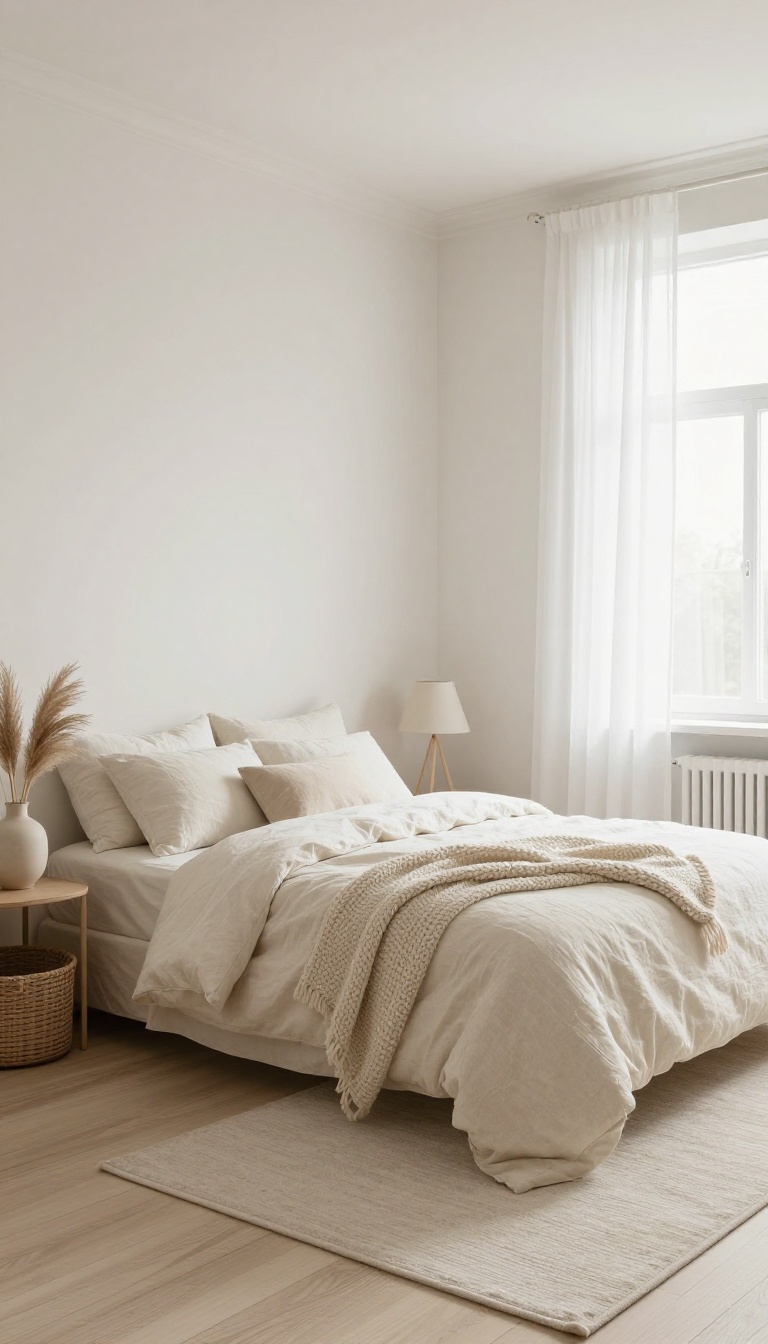
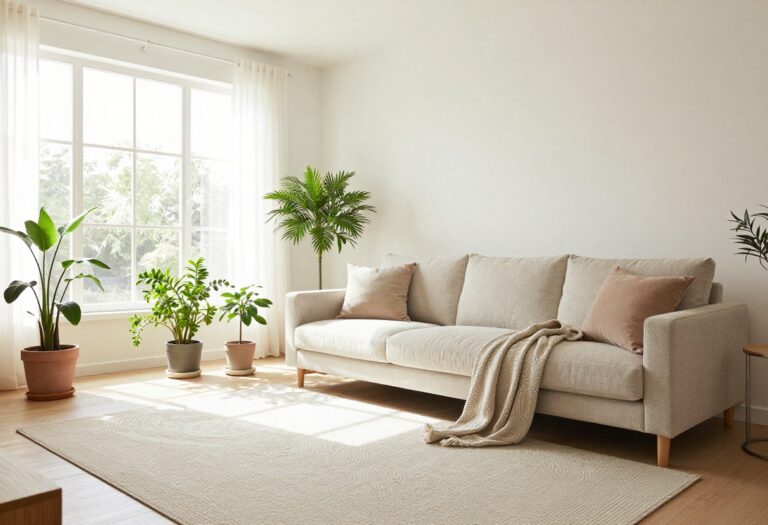
Color does more to a small bedroom than any piece of furniture ever will. When your walls, ceiling, trim, and floor all sit in the same light family, the eye stops noticing where one surface ends and another begins. That blur is the whole trick.
The room reads as one continuous, airy volume instead of a box chopped into separate planes.
A monochromatic palette doesn't mean everything has to match exactly. It means staying within one hue and playing with lightness, texture, and finish. Soft whites, warm creams, pale greiges, and muted taupes are the easiest families to work with because they bounce light around instead of swallowing it.
The payoff is a room that feels bigger without moving a single wall.
Paint The Ceiling The Same Color As The Walls
Most people stop painting at the wall line, which creates a hard visual seam right where the room feels tightest. Carry the same color up and over the ceiling, and that seam disappears. The ceiling lifts, the walls stretch, and the whole space reads taller.
Use a flat or matte finish on the ceiling to avoid glare, and keep the wall finish slightly softer so light diffuses instead of bouncing harshly.
Keep The Trim And Doors In The Same Family
Bright white trim against colored walls draws a sharp outline around every door, window, and baseboard. In a small bedroom, those outlines act like frames that shrink the room. Paint trim, doors, and baseboards in a tone that's one or two shades lighter or darker than the walls.
You still get definition, but it whispers instead of shouts. This one swap makes the room feel calmer and more cohesive instantly.
Layer Tone-on-tone Textures So It Doesn't Feel Flat
A single flat color everywhere can start to feel like a hospital corridor if you're not careful. The fix is texture, not more color. Add a chunky knit throw, a linen duvet, a woven jute rug, and a boucle pillow, all in the same light family.
The eye reads softness and depth without registering contrast. That's what keeps a monochromatic room feeling warm and lived-in instead of sterile.
Use One Dark Anchor To Ground The Space
All-light rooms sometimes float away and feel unmoored. One darker element in the same hue family, like a charcoal lamp base, a deep taupe headboard, or a single framed print, gives the eye a place to land. Keep it small and intentional.
That anchor adds weight without breaking the seamless, open feeling you worked so hard to create.
8. Swap Heavy Curtains for Roman Shades
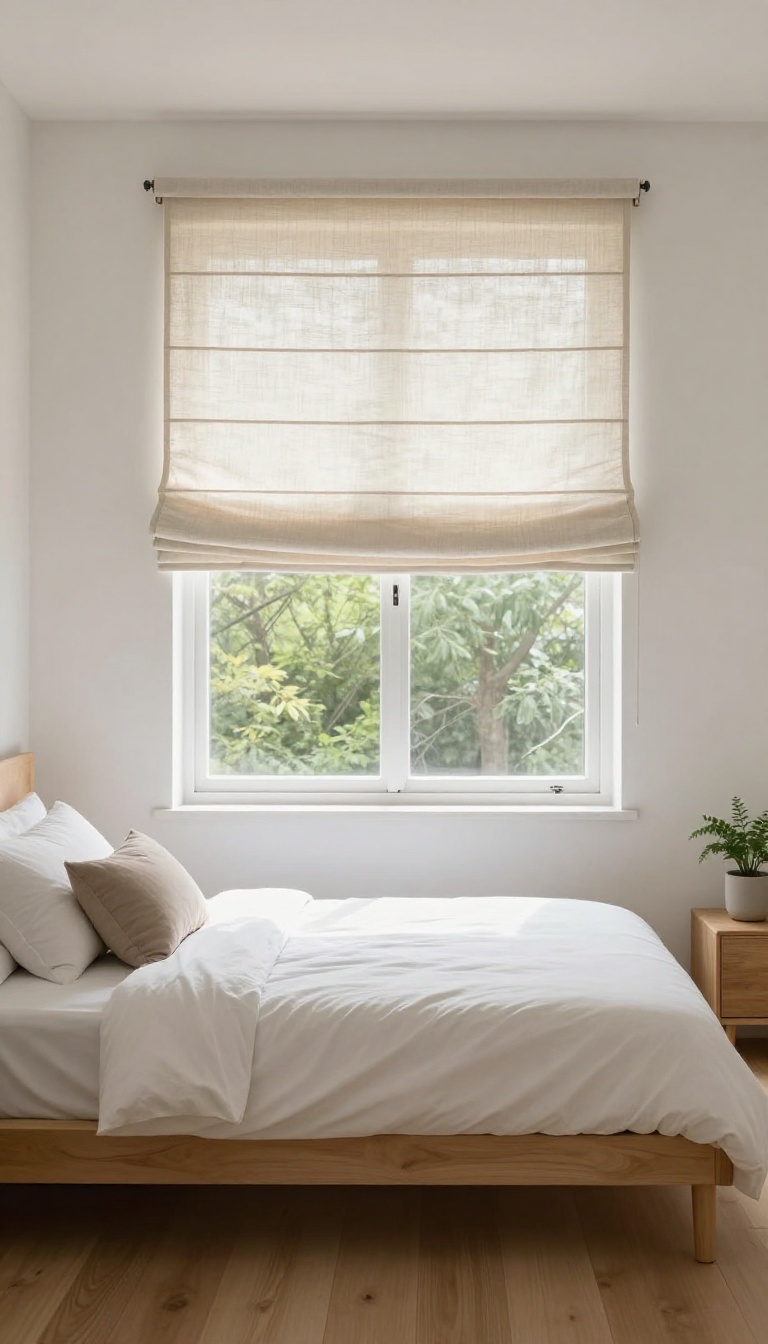
Heavy curtains can swallow a small bedroom whole. They pile up, block light, and make the window feel like a dark cave. Roman shades are the sleek alternative that keeps things light and lets you control brightness without the bulk.
Roman shades fold up neatly when you raise them, so they take up almost no visual space. They come in tons of fabrics and patterns, from linen to bamboo, so you can match your style without adding weight. Plus, they're easier to install than a full curtain rod setup.
Why Roman Shades Work Better In Small Rooms
Roman shades mount inside or outside the window frame, so they don't eat into wall space. They stack tightly at the top, leaving the glass clear and making the room feel taller. Unlike curtains, they won't block your view or collect dust in heavy folds.
Picking The Right Fabric And Style
Go for light-colored or sheer fabrics to keep the room airy. Flat Roman shades look modern and minimal, while soft folds add a touch of coziness. If you want privacy, add a liner, but skip heavy blackout unless you need it.
Installation Tips For Renters And Diyers
Most Roman shades come with simple brackets you can screw into the frame or wall. For rentals, use tension rods or adhesive hooks if you can't drill. Measure your window twice, and mount the shade a few inches above the frame to make the window look bigger.
9. Use an Over-the-Door Organizer for Shoes and Accessories
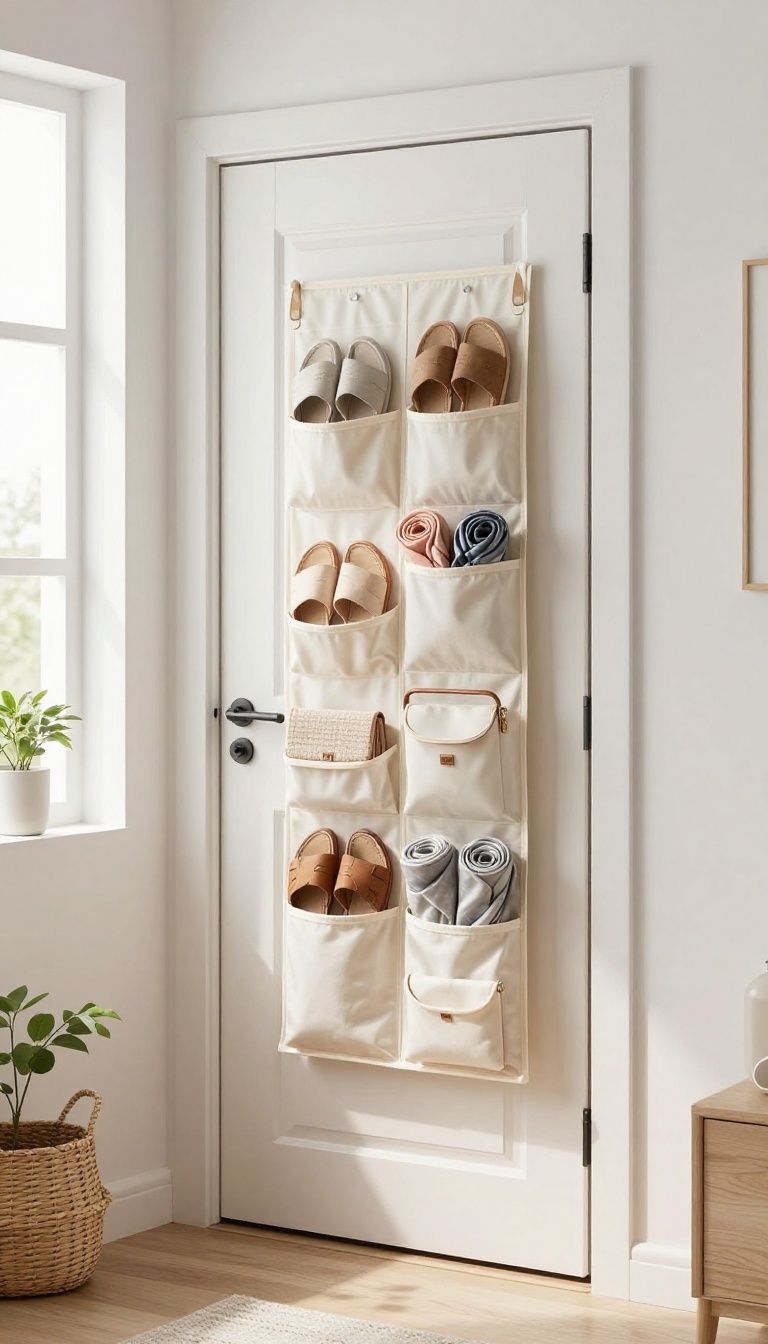
That narrow strip of space behind your bedroom door is basically free real estate. An over-the-door organizer turns it into instant storage for shoes, scarves, belts, and whatever else tends to pile up on the floor. No drilling, no floor footprint, and everything stays hidden when the door is open.
Most small bedrooms have at least one door that swings inward, which means the wall behind it sits completely unused. Hanging an organizer there costs you nothing in terms of usable square footage. You get dozens of pockets for the price of a single hook, and the clutter disappears the moment the door closes.
Pick The Right Organizer For Your Door
Standard over-the-door organizers come in fabric, mesh, or clear plastic, and each works better for different things. Fabric pockets hold their shape and look tidier, while mesh lets shoes breathe and dries faster after a rainy day. Clear pockets make it easy to spot what you need without digging, which matters when you're rushing out the door.
Measure your door height and thickness before buying, since some organizers need extra clearance at the top.
What To Store (and What To Skip)
Shoes are the obvious win here, especially flats, sandals, and sneakers that fit neatly into individual pockets. Accessories like belts, scarves, hats, and small purses also work well because they're light and easy to grab. Skip heavy boots or anything bulky that will stretch the pockets and make the door hard to close.
Keep the organizer for items you use often, not seasonal stuff you'll forget about.
Make It Look Intentional, Not Utilitarian
A cheap organizer can look messy if you just stuff it and walk away. Group similar items together, like all your black shoes in one column and colorful accessories in another. Choose a color that blends with your door or matches your room's palette so it fades into the background.
If the organizer has a clear front, face labels or tags outward so the whole thing reads as a system, not a pile.
Keep It Functional Long-term
Over-the-door organizers only work if they stay organized. Do a quick reset once a week, putting stray items back in their pockets and tossing anything you no longer wear. Rotate seasonal pieces out so the pockets don't get overloaded.
A small basket on the floor nearby can catch things that don't fit, keeping the system flexible without turning into a new clutter spot.
10. Choose a Rug That Fits the Room, Not the Floor
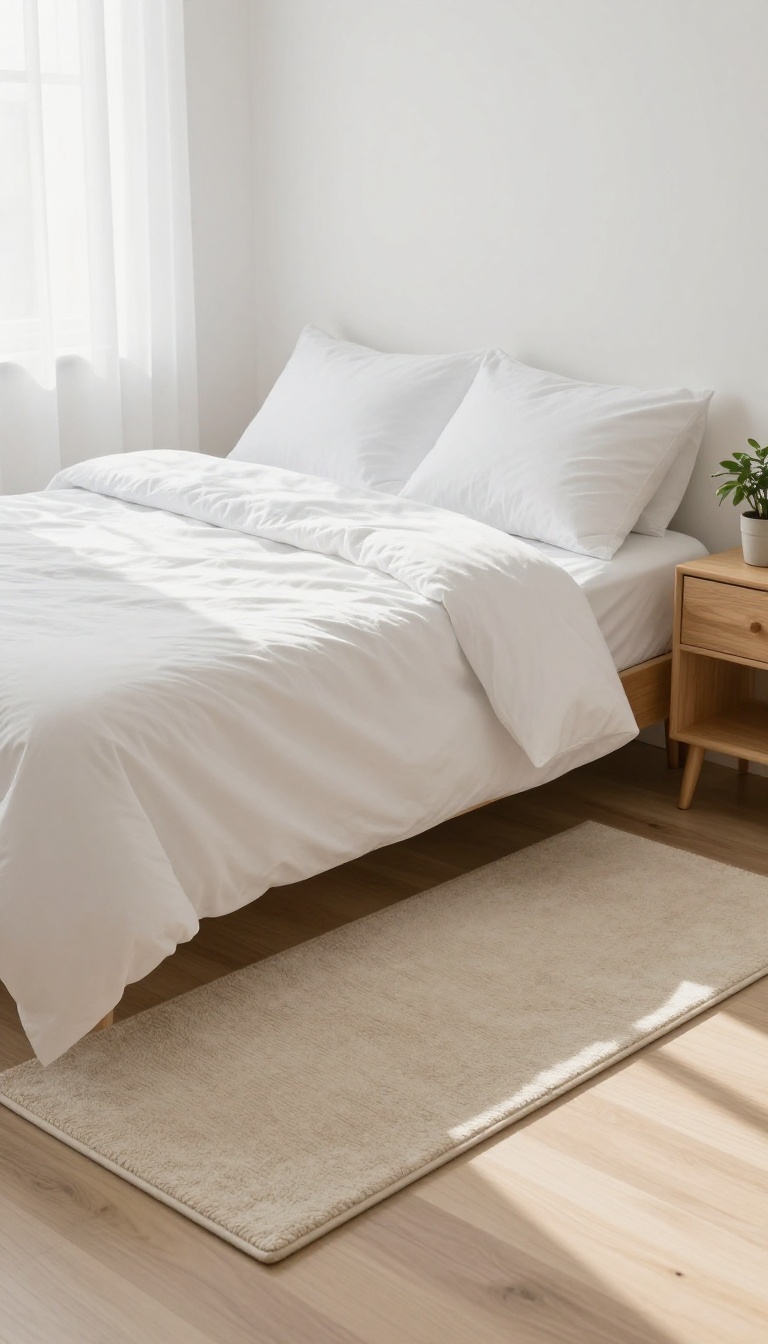
A rug that covers every inch of your floor can make a small bedroom feel like a padded box. Instead, pick one that leaves a border of bare floor around the edges. That visible floor acts like a frame, and frames make spaces feel bigger, not smaller.
The goal isn't to hide your floor. It's to define the room without swallowing it. A slightly smaller rug gives your eye a place to rest and your feet a soft landing.
You'll also save money and have more layout options. So before you roll out a wall-to-wall carpet, consider the power of a well-placed area rug.
Most people assume a bigger rug makes a room feel larger. In a small bedroom, the opposite is true. When a rug touches all four walls, it blurs the boundaries of the room and can make the space feel claustrophobic.
Leaving a few inches of floor visible creates a clear perimeter, which actually expands the perceived size of the room. Think of it like a picture frame. The mat around a photo gives the image breathing room.
The same principle applies to your floor. A rug that stops short of the walls gives your bedroom a defined zone for the bed and your feet, while the exposed floor keeps the room feeling open. This doesn't mean you need a tiny rug.
You just need one that's proportionate. A good rule of thumb: leave 8 to 12 inches of floor showing on all sides. That's enough to create that border effect without making the rug look like a postage stamp.
If your bed is against a wall, you can cheat a little. Let the rug go under the bed and extend out the sides and foot, but keep it away from the wall behind the headboard. That way, you still get the frame effect where it matters most. ### The 8-to-12-Inch Rule Measure your room and subtract 16 to 24 inches from both the length and width.
That's your ideal rug size. For a typical small bedroom (say, 10×10 feet), that means a 7×7 or 8×8 rug. It'll cover the center of the room and leave a nice border of floor.
If you can't find that exact size, go slightly smaller rather than larger. A rug that's a bit too small still works. One that's too big defeats the purpose. ### Runners and Layering for Awkward Spaces Not every small bedroom is a perfect square.
If you have a narrow strip of floor beside the bed, a runner can define that area without covering everything. Layering a small accent rug over a larger, neutral one can also add depth and personality without overwhelming the space. Just make sure the top rug doesn't touch the walls either.
Keep that border visible. ### Material and Color That Keep Things Light A thick, dark rug can feel heavy in a small room. Opt for a low-pile or flatweave rug in a light or medium tone. It'll reflect more light and keep the room feeling airy.
Patterns are fine, but avoid overly busy designs that make the space feel chaotic. If you want to add a pop of color, choose a rug with a subtle pattern or a single accent hue. That way, it adds interest without shrinking the room.
The 8-to-12-inch Rule
Measure your room and subtract 16 to 24 inches from both the length and width. That's your ideal rug size. For a typical small bedroom (say, 10×10 feet), that means a 7×7 or 8×8 rug.
It'll cover the center of the room and leave a nice border of floor. If you can't find that exact size, go slightly smaller rather than larger. A rug that's a bit too small still works.
One that's too big defeats the purpose.
Runners And Layering For Awkward Spaces
Not every small bedroom is a perfect square. If you have a narrow strip of floor beside the bed, a runner can define that area without covering everything. Layering a small accent rug over a larger, neutral one can also add depth and personality without overwhelming the space.
Just make sure the top rug doesn't touch the walls either. Keep that border visible.
Material And Color That Keep Things Light
A thick, dark rug can feel heavy in a small room. Opt for a low-pile or flatweave rug in a light or medium tone. It'll reflect more light and keep the room feeling airy.
Patterns are fine, but avoid overly busy designs that make the space feel chaotic. If you want to add a pop of color, choose a rug with a subtle pattern or a single accent hue. That way, it adds interest without shrinking the room.
11. Add a Fold-Down Desk or Vanity
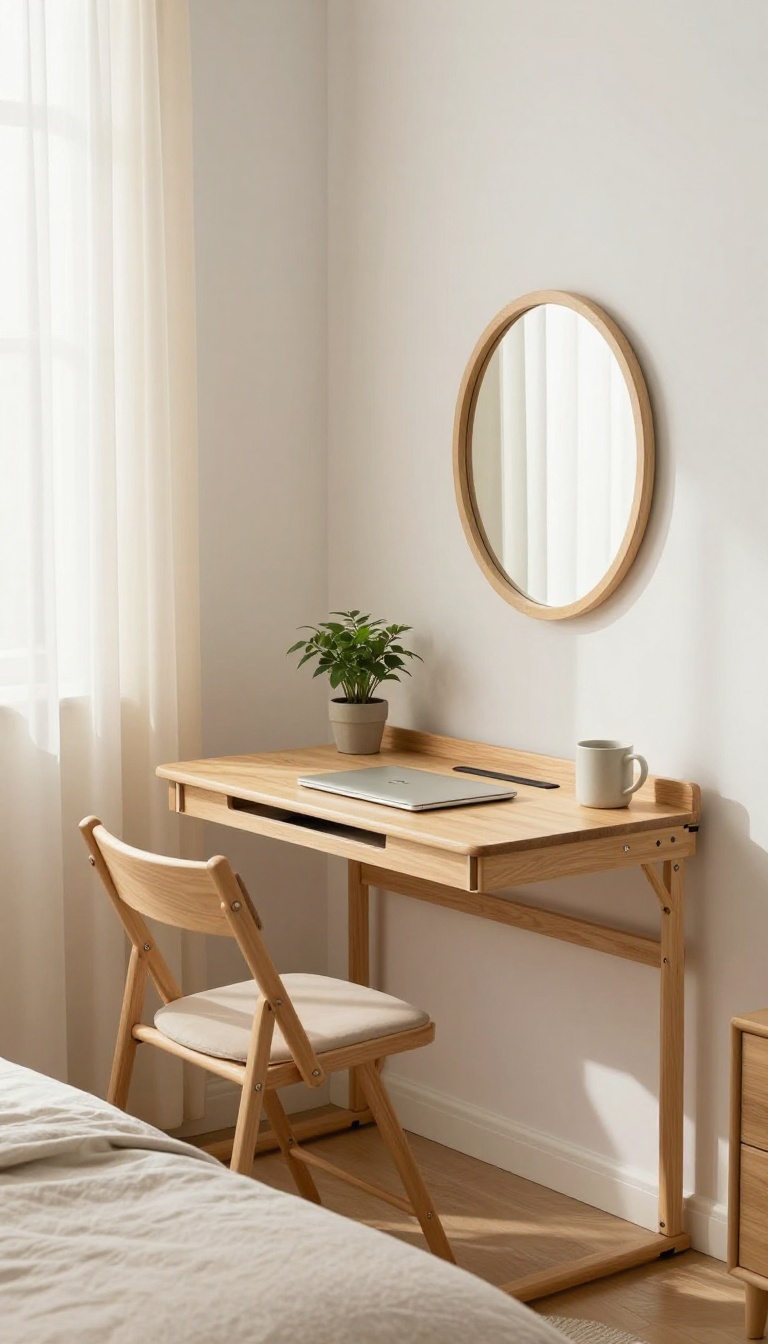
A fold-down desk or vanity is the ultimate small-space multitasker. It gives you a real surface for work, makeup, or hobbies, then vanishes against the wall when you're done. No more balancing your laptop on your knees or doing your makeup in a bathroom mirror.
The magic is in the hinge. These pieces mount directly to the wall and fold flat, so they take up zero floor space when not in use. You get the function of a full desk without the footprint.
That's a game-changer in a bedroom where every inch counts. You can buy a ready-made fold-down desk or build one with a simple bracket and a piece of wood. Either way, you control the size, finish, and height.
That means it fits your room and your body, not the other way around.
Choose The Right Spot
Pick a wall with enough clearance for a chair when the desk is down. A spot near a window gives you natural light, which is great for work or makeup. Just make sure the desk doesn't block outlets or vents you need.
Make It Work For You
Add a small shelf or ledge above the desk for supplies. Use a wall-mounted light or a clip-on lamp so you're not fumbling in the dark. Keep a folding chair nearby that tucks under the bed or in a closet when not in use.
Style It Up
When the desk is up, it's just a slim panel on the wall. Paint it the same color as your walls so it disappears, or go bold with a contrasting shade for a pop of personality. Add a small mirror above if you're using it as a vanity.
12. Hang Artwork High to Draw the Eye Up
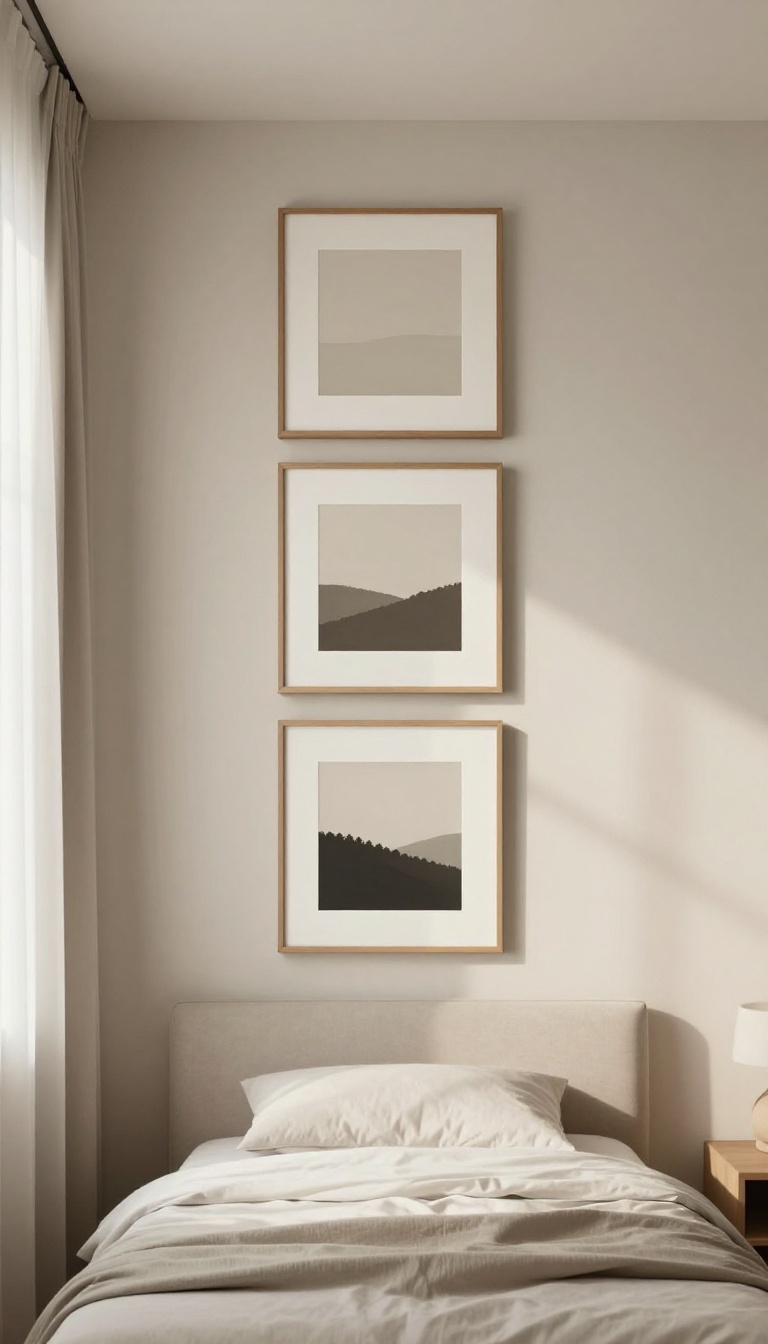
Your walls are prime real estate that most small bedrooms ignore. When you hang art higher than usual, you pull attention upward and away from the cramped floor. This simple shift makes ceilings feel taller and the whole room more open.
Most people hang art at eye level, which is fine in a big room. In a small bedroom, that keeps everything visually grounded. Instead, aim for the top third of your wall.
The goal is to create a vertical line that your eye follows up. This gives the illusion of height without any structural changes. You can use a single large piece or a stack of smaller ones.
Just keep the arrangement tight and intentional. Avoid spreading art across the entire wall, which can make the room feel wider but not taller. Focus on one strong vertical moment.
How High Is Too High?
A good rule is to place the center of your artwork about 60 to 66 inches from the floor. That's higher than the typical 57-inch gallery standard. In a small room, going a few inches higher works because you're usually viewing from a bed or chair.
Just make sure it doesn't touch the ceiling or crown molding. Leave at least 6 to 8 inches of breathing room above the frame. If you have a tall headboard, start your art above that and work upward.
Stacked Prints For Maximum Impact
A vertical stack of two or three prints is a small-space secret weapon. It creates a column of color and interest that draws the eye up naturally. Choose prints with a common theme or color palette to keep it cohesive.
Hang them 2 to 3 inches apart so they read as one unit. This works especially well above a nightstand or in a narrow corner. You get big impact without needing a wide wall.
Slim Frames Keep It Light
Bulky frames add visual weight, which can make a small room feel heavier. Go for thin metal or wood frames in a color that blends with your wall. Light wood, white, or brass are good choices.
If you want a pop of contrast, pick a frame that matches your bedding or curtains. The art should feel like it's floating, not like it's dragging the wall down. Keep the glass clean and avoid overly ornate styles.
13. Use Baskets and Bins as Decor
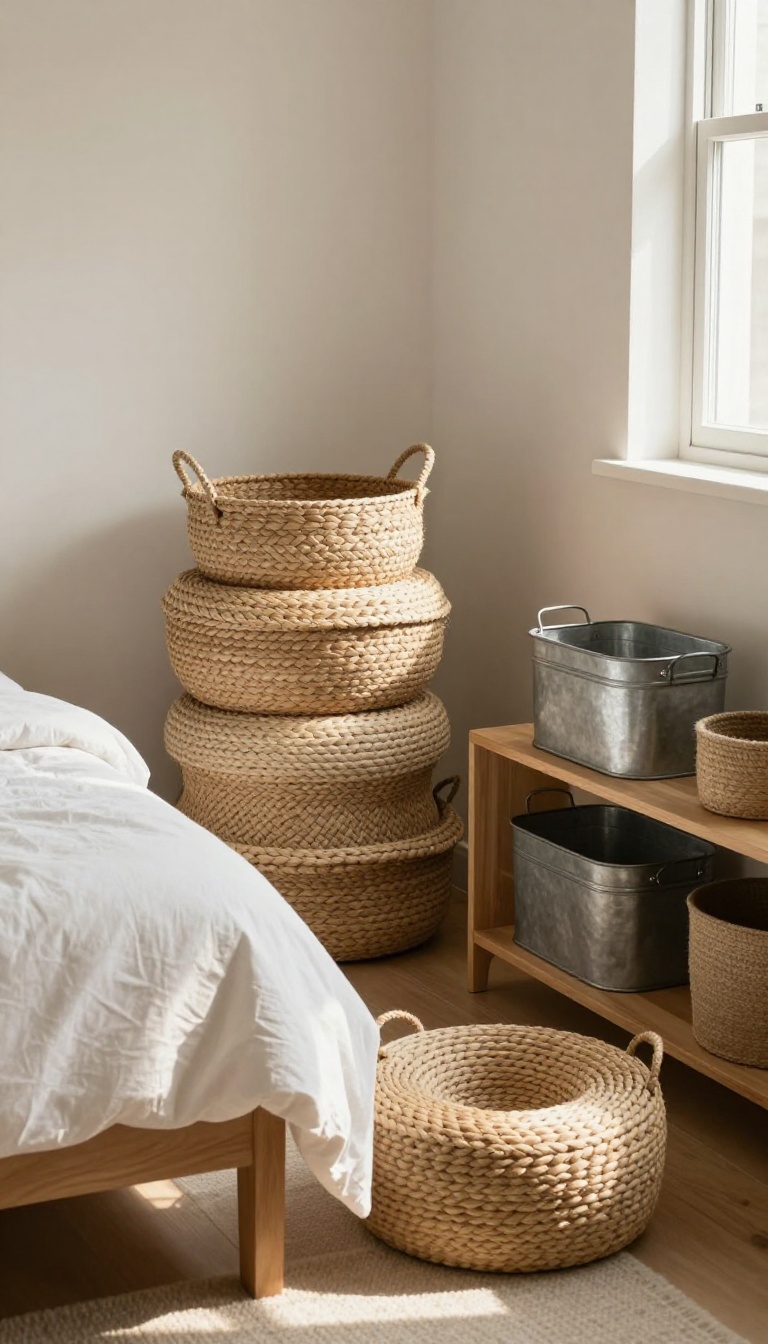
Baskets and bins usually get treated like invisible workhorses—you shove them in a corner and hope no one notices. But in a small bedroom, they can be some of the most eye-catching pieces you own. The trick is choosing ones that look as good as they function.
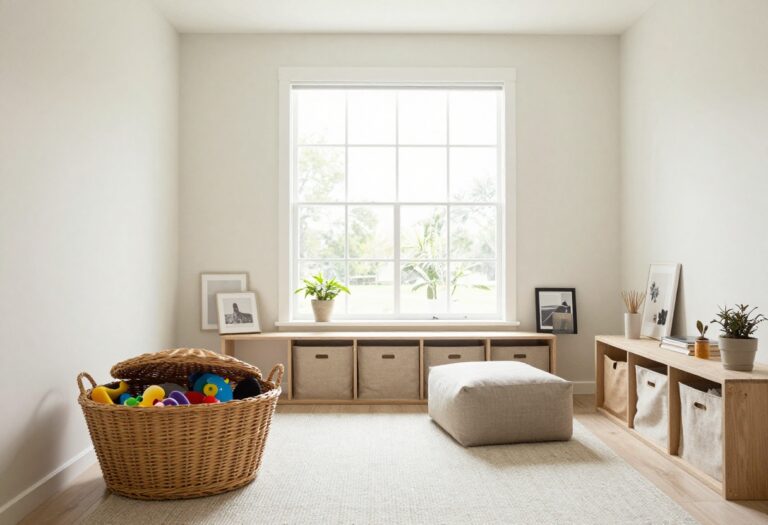
Woven textures add instant warmth, and a well-placed bin can break up a boring wall or anchor a cluttered shelf. Suddenly, your storage isn't just hiding mess—it's part of the room's personality. And because you need storage anyway, you're not sacrificing an inch of floor space for style.
Think of baskets and bins as double agents. They corral your stuff, but they also bring color, texture, and shape to a room that might otherwise feel flat. In a small bedroom, every object has to earn its keep, and these pieces pull their weight twice over.
The key is to treat them like decor, not just containers. That means picking materials, sizes, and placements that make you smile when you walk in. Below are a few ways to make that happen without overthinking it.
Pick Textures That Add Warmth
Natural materials like seagrass, jute, cotton rope, and felted wool soften a small space fast. A single chunky knit basket next to your bed can make the whole corner feel cozier. Mix two or three textures—say, a smooth metal bin and a rough woven one—to keep things interesting.
Avoid matching everything perfectly. A little contrast makes the room feel collected over time, not bought in one panic trip to the store.
Stack And Layer For Impact
One lonely bin on the floor looks like an afterthought. Stack two or three of different sizes, or nest them when they're not in use. A tall basket beside a low bench creates a nice visual step that draws the eye upward, which helps a small room feel taller.
You can also layer a smaller bin inside a larger one to add depth. Just make sure the top one holds something you actually need, so it doesn't become pure decoration.
Use Bins As Hidden Storage
Under-bed bins on wheels are a small-space classic for a reason. They swallow extra blankets, off-season clothes, and shoes without stealing floor space. Choose fabric or woven styles with lids so they look tidy from across the room.
On open shelves, matching bins hide visual clutter. A row of three identical bins reads as a design choice, not a mess. Just label them if you're prone to forgetting what's inside.
Place Them Where They Double As Art
A large woven basket on top of a dresser can hold scarves and look like a sculptural piece. A small bin on your nightstand can stash charging cables and double as a catchall that actually looks nice. Even a single bold bin on the floor near a reading chair can act like a side table for books and throws.
Rotate them occasionally so they don't become invisible. Moving a basket from the closet to the windowsill can refresh the whole room for free.
14. Install a Corner Shelf for Plants and Candles
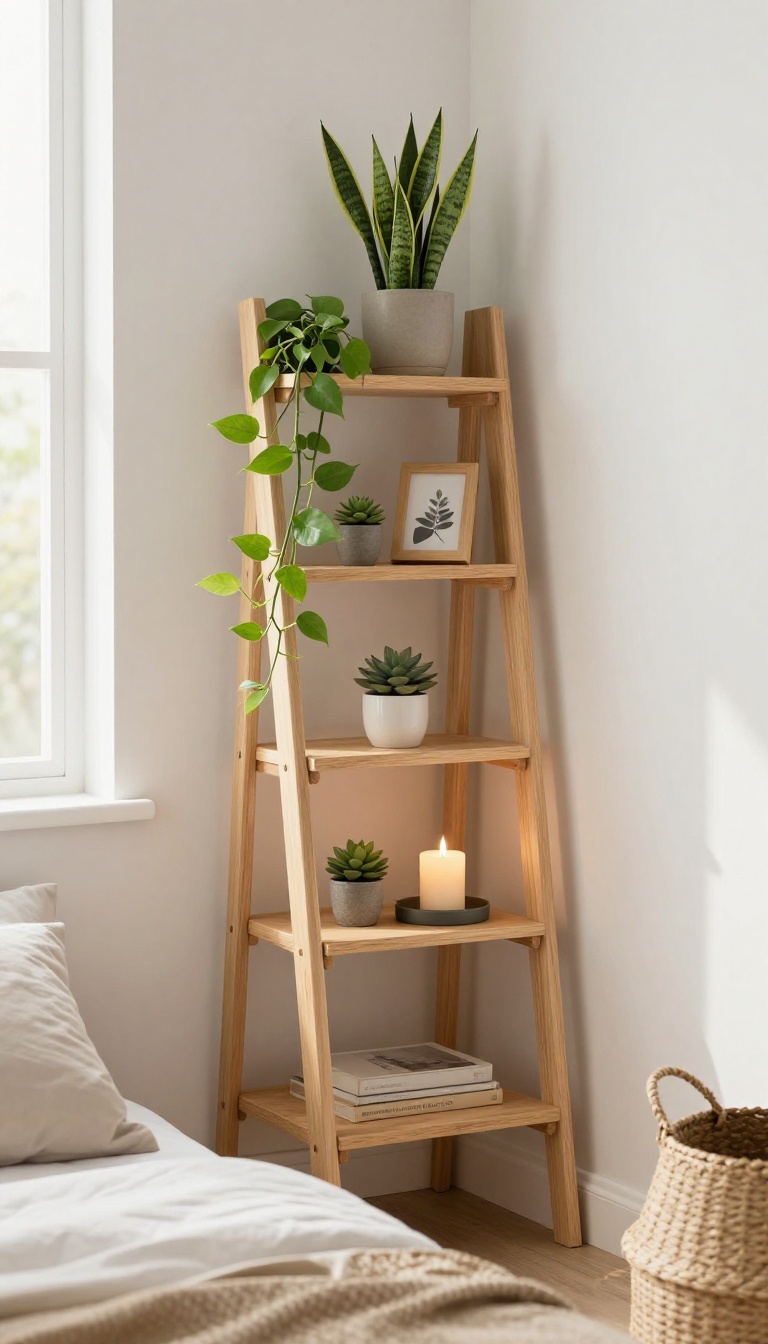
Corners get a bad rap in small bedrooms. They’re usually where you shove a laundry basket or an old lamp you don’t know what to do with. But that awkward nook?
It can become the coziest spot in the room with just one addition: a corner shelf.
A corner shelf takes up zero floor space and draws the eye upward, making your ceiling feel higher and your room feel less cramped. It’s a simple upgrade that adds function and personality without blocking your path to the bed or closet. Best of all, it gives you a dedicated stage for plants and candles—two things that instantly make a space feel warmer and more alive.
Pick The Right Shelf
Not all corner shelves are created equal. For a small bedroom, go with a tiered or ladder-style shelf that hugs the wall and doesn’t jut out too far. A slim, five-tier corner shelf in a light wood or matte black finish works with almost any decor.
If you rent, look for tension-pole shelves or adhesive-mounted options that won’t damage the walls. Measure your corner first—some shelves need a perfect 90-degree angle, while others adjust to uneven walls.
Style It Like A Pro
Start with the tallest item on the bottom tier—a trailing pothos or snake plant—and work your way up with smaller pieces. Mix heights: a short candle, a tiny succulent, a small framed photo. Keep it to three to five items per shelf max, or it’ll look cluttered.
Group candles in odd numbers and vary the sizes. If you’re using real candles, place them on a heat-safe tray or coaster to protect the shelf.
Safety And Practicality
Candles and small spaces need a little caution. Never leave a burning candle unattended, and keep flames away from trailing leaves. If you’re worried about fire, swap real candles for flameless LED ones—they still give that warm glow without the risk.
Also, make sure the shelf is securely anchored, especially if you have pets or kids who might bump into it. A wobbly shelf full of plants is a recipe for a mess.
15. Layer Lighting with a Dimmer Switch
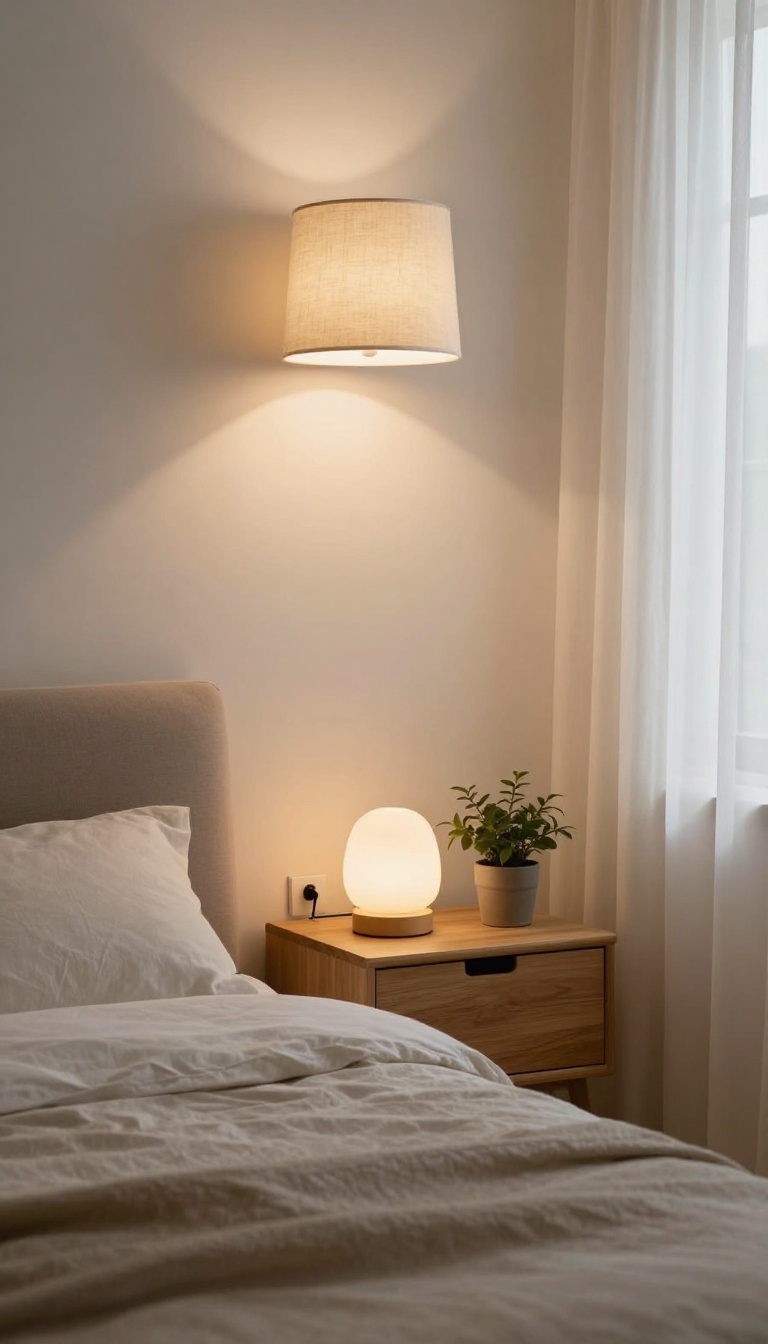
Most small bedrooms come with one sad overhead light that makes everything look like a hospital waiting room. A dimmer switch changes that instantly. You get bright, functional light when you need it and a soft, cozy glow when you don't.
The best part? It's one of the cheapest upgrades you can make. No rewiring the whole room, no calling an electrician if you go with a plug-in option.
Just a simple swap that makes your space feel custom.
A dimmer switch gives you control over the mood of your entire room. In a small space, lighting does double duty—it helps you see what you're doing and sets the vibe. With a dimmer, you can crank it up for getting dressed or cleaning, then dial it down for reading or winding down.
You don't need to replace every light fixture. Start with the main overhead light and add a dimmer there. If you have a bedside lamp, put it on a dimmer too.
That way you can keep one bright and one soft, or dim both for a movie-night feel.
Why It Works In Small Rooms
Small bedrooms have less natural light and fewer places to hide harsh bulbs. A dimmer lets you avoid that cave-like feeling without adding more lamps. It also makes the room feel bigger because you're not blasting every corner with the same intensity.
Soft light creates depth and coziness.
How To Install One (without An Electrician)
If you're comfortable flipping a breaker, you can swap a standard switch for a dimmer in about 15 minutes. Just match the wattage and follow the instructions. Not handy?
Go with a plug-in dimmer for lamps. You plug the lamp into the dimmer, then the dimmer into the wall. No tools, no stress.
Pair It With Smart Bulbs For Extra Control
Smart bulbs often come with dimming built into an app or voice control. That means you can skip the switch entirely and just use your phone. It's great for renters or anyone who doesn't want to mess with wiring.
You can also set schedules so the lights dim automatically at bedtime.
FAQ
What is the best way to make a small bedroom look bigger?
Use large mirrors, light colors, and vertical storage. Keep floors clear and choose furniture with exposed legs to create a sense of openness.
How can I add flair to a small bedroom without spending much?
Focus on lighting, textiles, and wall decor. A new lamp, colorful throw pillows, or a gallery wall can transform the room for under $50.
Should I use dark colors in a small bedroom?
Dark colors can work if you commit fully and layer lighting. But light, monochromatic palettes are generally safer for making tight spaces feel airy.
Where should I put a mirror in a small bedroom?
Place it opposite a window to reflect natural light. A full-length mirror on a closet door or a large wall mirror works best.
How do I store clothes in a tiny bedroom with no closet?
Use under-bed drawers, over-the-door organizers, and a tall narrow wardrobe. Floating shelves and hooks also help maximize vertical space.
Conclusion
Small bedrooms rarely get fixed in one weekend, and that's fine. Pick the idea from this list that solves your loudest daily problem, whether that's a bed eating the floor, clothes landing on a chair, or a corner that stays dark all day. Live with it for a week before you judge it.
Once that change settles, add the next one. Layer your choices, notice what still bugs you, and let the room evolve. A small bedroom with flair comes from a few smart moves repeated daily, not a frantic shopping spree.