15 Outdoor Shower Floor Ideas for Safe Stylish Drainage
A great outdoor shower starts with what's underfoot. The right floor keeps water moving, prevents slips, and ties your whole setup together—whether you're rinsing off after a swim or washing sandy feet.
With so many materials to choose from, it's easy to get stuck comparing looks and durability. That's why we've rounded up 15 practical options that balance safety, drainage, and style.
From classic teak to modern composite, each idea tackles the wet-and-wild reality of outdoor living. You'll find something that fits your space, your budget, and how you actually use your shower.
1. Teak Wood Slats
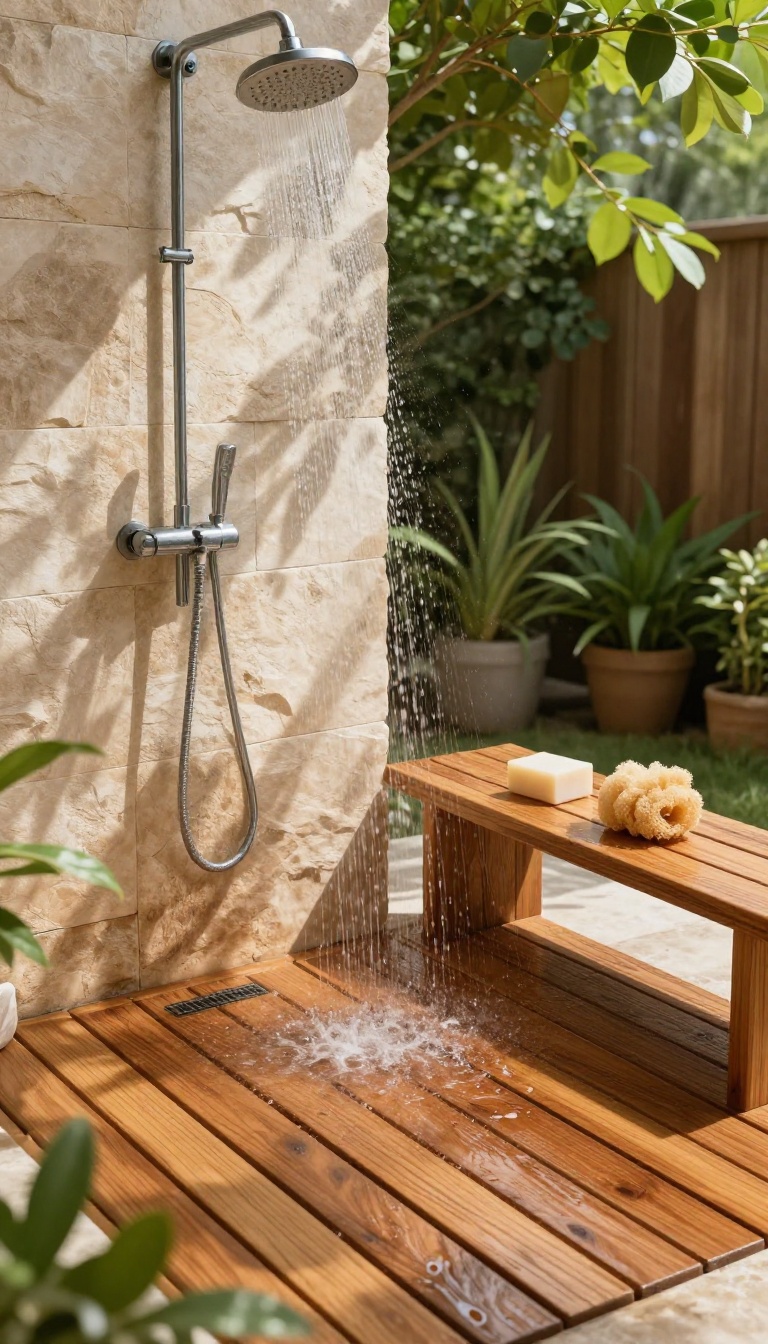
Teak has been the go-to choice for outdoor showers for decades, and it's easy to see why. The natural oils in the wood repel water, so it dries fast and resists rot and warping. Plus, the warm honey-brown color adds a touch of luxury that makes every rinse feel like a spa day.
Teak slats are typically spaced with small gaps to let water flow through, which keeps the surface from pooling and reduces the risk of slips. The wood's natural grain provides excellent traction even when wet, so you can move around confidently. Over time, teak weathers to a soft silver-gray patina, but you can sand it down to restore the original glow if you prefer.
Why Teak Works So Well
Teak contains natural oils that make it one of the most water-resistant woods available. That means it won't crack, split, or rot easily, even with constant exposure to moisture. It also stays cooler than many synthetic materials under the sun, so your feet won't burn on a hot day.
Choosing The Right Slat Size
For a comfortable feel, go with slats that are about 1 to 1. 5 inches wide and leave a quarter-inch gap between them. This allows water to drain quickly while still giving your feet enough surface to stand on.
Thicker slats feel more solid, but they also hold more water, so balance is key.
Installation And Maintenance Tips
You can lay teak slats directly on a concrete base or install them on a raised frame for better airflow. To keep them looking great, rinse off soap residue after each use and give them a quick scrub with a soft brush every few weeks. A light coat of teak oil once a year will help maintain the color and protect the wood.
2. Pebble Tile Mosaic
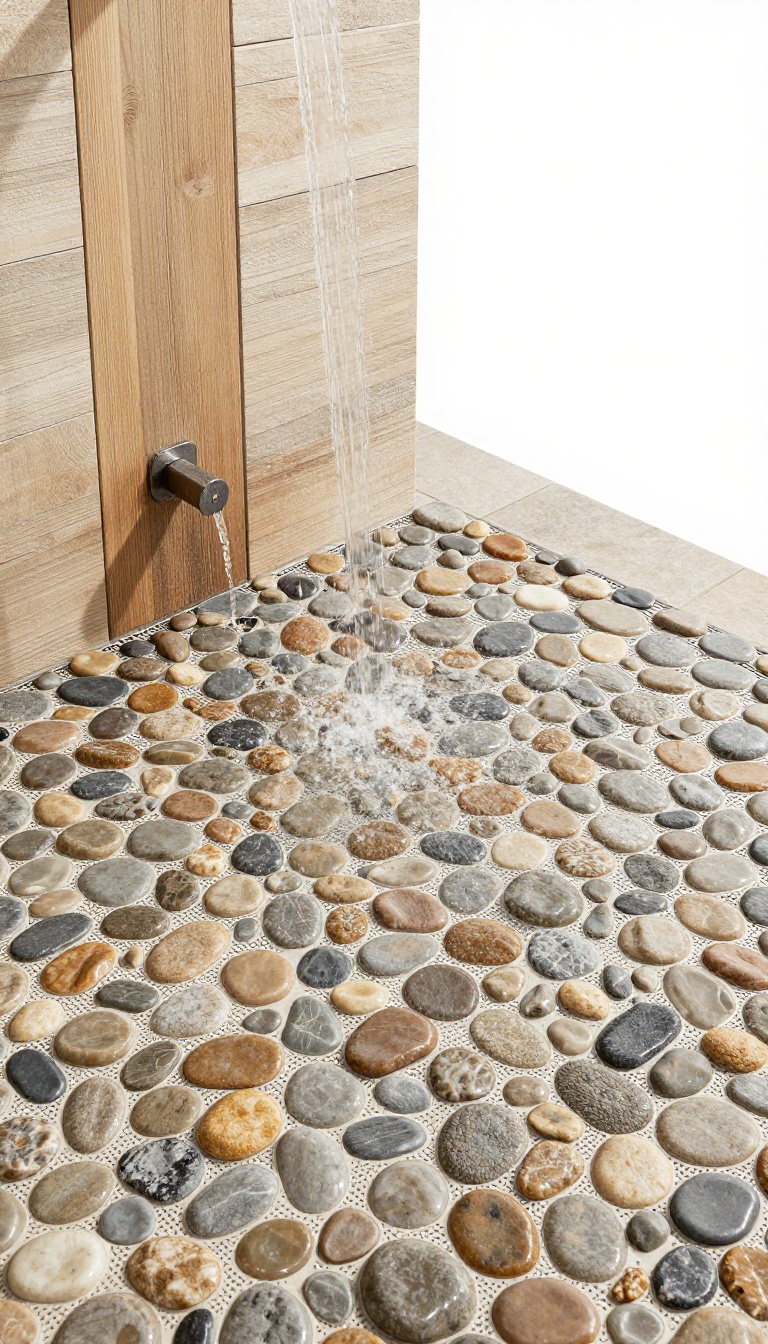
Pebble tile mosaics bring a natural, spa-like feel to outdoor showers while handling water like a champ. The smooth river stones are set into mesh-backed sheets, making installation straightforward even on curved or irregular surfaces. Because the stones are rounded and spaced apart, water slips between them easily, and the texture provides gentle traction underfoot.
Pebble tile mosaics are a favorite for outdoor showers because they combine safety, drainage, and organic beauty. The stones are naturally slip-resistant, even when wet, and the gaps between them allow water to flow through quickly, preventing puddles. Plus, the varied colors and shapes—from earthy grays to warm browns—add visual interest that blends seamlessly with outdoor surroundings.
These tiles work well over a sloped concrete base or a pre-formed shower pan. The mesh backing keeps the stones aligned, so you can lay them quickly and then grout with a sanded grout that matches the stone tones. For best drainage, use a wider grout line or leave the joints open, depending on your base and local codes.
Pebble mosaics are durable and low-maintenance. They resist mold and mildew better than some other materials, and cleaning is as simple as hosing them down. Over time, the stones may develop a natural patina, but that only adds to their charm.
If you want a floor that feels like a riverbed under your feet, this is a solid pick.
Why Pebble Mosaics Drain So Well
The secret to pebble mosaics' drainage is the gaps between stones. Water finds its way through these spaces quickly, so the surface never stays flooded. On a properly sloped base, the water runs off fast, leaving a dry, safe floor in seconds.
This makes pebble mosaics ideal for showers that get heavy use, like after beach trips or pool swims.
Installation Tips For A Smooth Finish
Start with a clean, level base that has a slight slope toward the drain. Roll out the mesh sheets and press them into a thin layer of thinset mortar, keeping the stones even. Use a grout float to press the stones down and fill the gaps with sanded grout, then wipe off excess before it dries.
Sealing the grout helps prevent staining and makes cleaning easier.
Styling And Maintenance Ideas
Pebble mosaics come in a range of colors, from cool slate blues to warm tan tones. You can mix different sheets for a more organic look or stick to one shade for a uniform feel. To keep the floor looking fresh, rinse it after each use and give it a deeper clean with a mild detergent every few weeks.
Avoid harsh chemicals that could dull the stones or damage the grout.
3. Concrete with Broom Finish
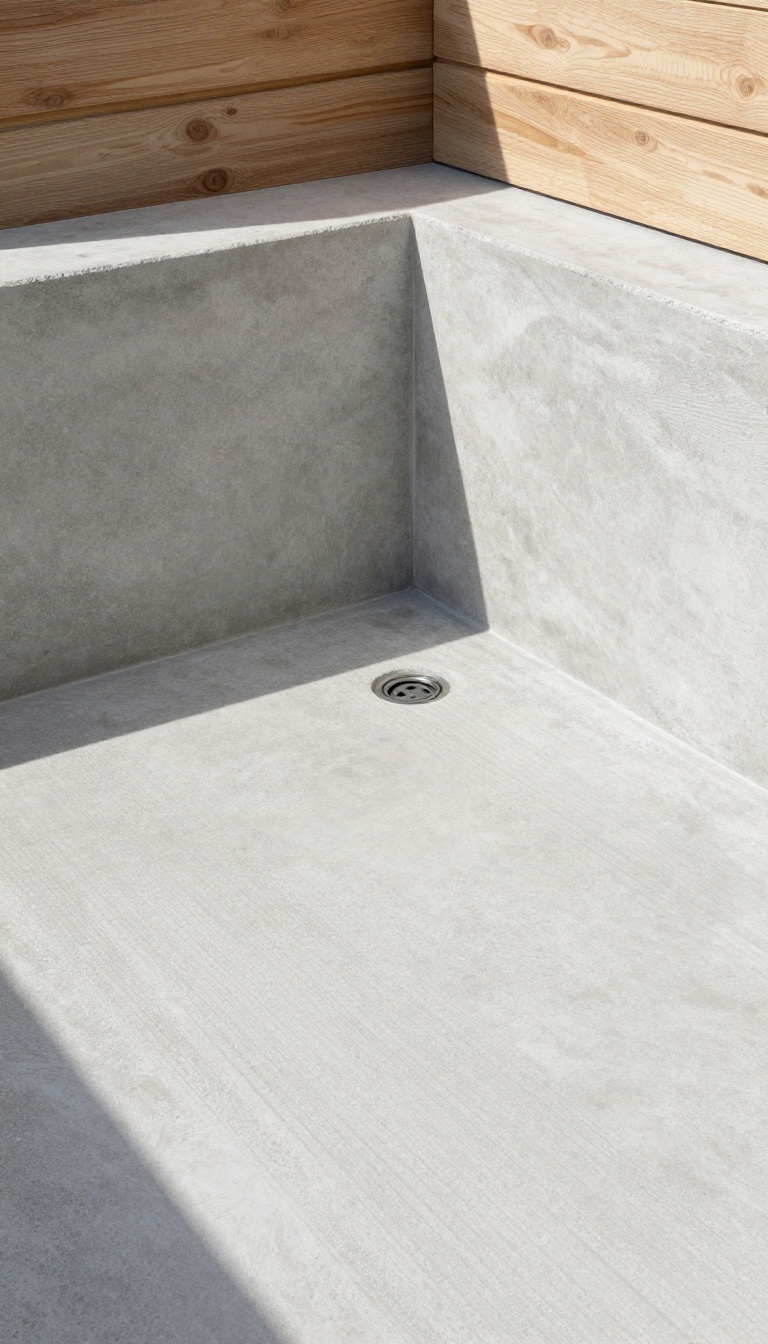
If you want a floor that’s tough, low-maintenance, and looks sharp, a broom-finished concrete slab might be your best bet. It’s a favorite for modern outdoor showers because it handles water and foot traffic without fuss. The broom finish adds a subtle texture that gives you grip even when wet, so you won’t be doing a slippery dance every time you step in.
Concrete is about as durable as it gets, and a broom finish takes it from plain to practical. The brushed texture not only improves traction but also hides dirt and minor wear, keeping the surface looking clean with minimal effort. Plus, it’s a budget-friendly option that can be poured to fit any shower size or shape, making it a versatile choice for both new builds and renovations.
Why Broom Finish Works
The key is the texture. A broom finish creates fine ridges that break up the water film on the surface, giving your feet something to grip. That’s a big deal in an outdoor shower where soap and water make everything slick.
It’s also a one-piece surface with no grout lines or joints, so there’s nowhere for grime to hide or for water to pool.
Installation Tips
Make sure the slab is sloped slightly toward the drain—about a quarter-inch per foot is ideal. That way, water runs off instead of sitting. You can also add a colored concrete stain or dye before the finish to match your outdoor aesthetic.
Just keep in mind that the broom finish will slightly dull the color, so test a sample first.
Keeping It Clean
Cleaning is a breeze. A quick rinse with a hose and an occasional scrub with a mild detergent is all it takes. To prevent staining, seal the concrete every couple of years.
That also helps it resist mold and mildew, which are common in damp outdoor spots.
4. Porcelain Wood-Look Tiles
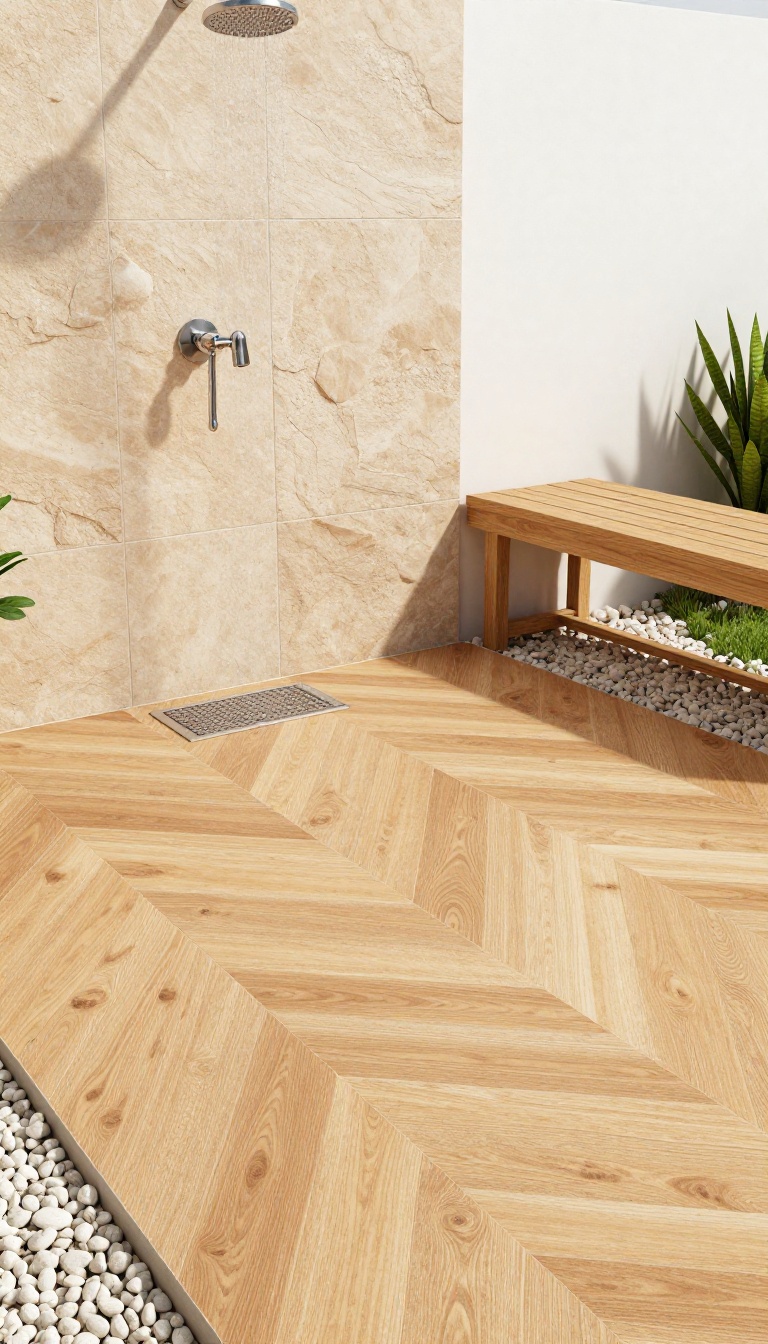
If you love the look of wood but worry about warping, splintering, or constant sealing, porcelain wood-look tiles are a smart swap. They give you that warm, natural vibe while standing up to water, sun, and heavy foot traffic without breaking a sweat. These tiles are essentially ceramic that’s been printed and textured to mimic real timber.
The result? A floor that looks like hardwood but behaves like stone—resistant to moisture, stains, and fading. For an outdoor shower, that’s a winning combination.
Porcelain wood-look tiles bring the charm of a wooden deck without the high maintenance. They’re dense, low-porosity, and far less likely to crack or chip than natural stone. Best of all, they come in a range of finishes—from smooth and sleek to hand-scraped and rustic—so you can match any style.
When you choose these tiles, you’re also getting a surface that’s easy to clean. Just sweep or rinse off soap scum and dirt, and you’re done. No oils, no sealants, no fuss.
That’s a big win for busy homeowners who want a great-looking shower without the weekly upkeep.
Why Porcelain Beats Real Wood Outdoors
Real wood needs constant care—sanding, staining, sealing—and even then, it can rot or warp in wet conditions. Porcelain, on the other hand, is fired at high temperatures, making it nearly impervious to water. It won’t absorb moisture, so it resists mold, mildew, and warping.
Plus, the color is baked in, so it won’t fade under harsh sun like stained wood can. You get the aesthetic without the anxiety.
Slip Resistance And Safety
Safety is key in a wet shower, and porcelain tiles can be finished with a textured surface to improve grip. Look for tiles with a high coefficient of friction (COF) or a matte finish—these provide better traction when wet. Many wood-look tiles are designed with subtle grain patterns that add texture without compromising the wood appearance.
That means you can step out of the shower confidently, even with wet feet.
Installation And Drainage Tips
Proper installation is crucial for drainage. You’ll want a slight slope toward the drain to prevent water from pooling. Use a large-format tile to minimize grout lines, which can harbor grime.
For outdoor use, choose a sanded grout that’s mold-resistant, and consider sealing the grout for extra protection. If you’re laying tiles over a concrete slab, make sure the surface is clean and level before you start.
5. Natural Stone Pavers
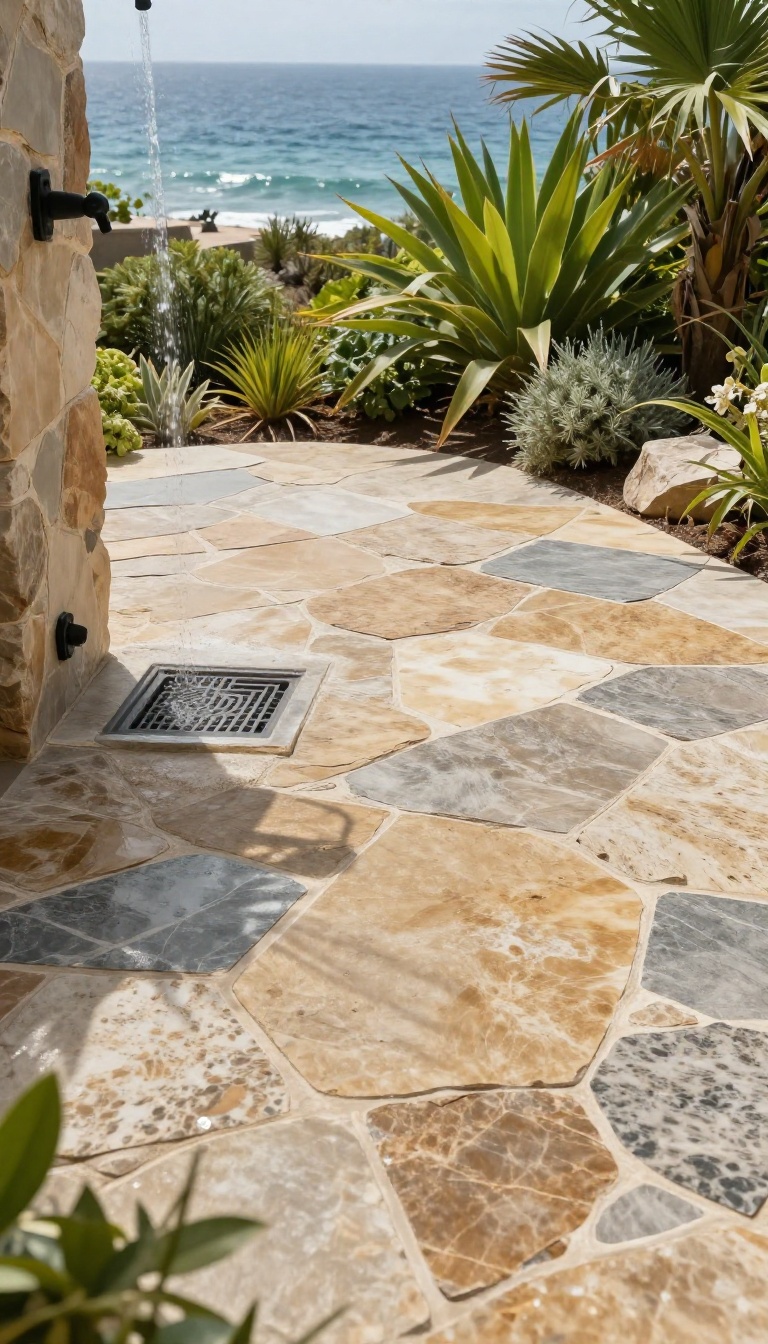
Flagstone or travertine pavers bring a rugged, earthy charm that blends right into a garden or coastal setting. Their naturally textured surface stays cool underfoot, even on scorching summer days, and the irregular shapes create built-in gaps that let water drain quickly. If you want a floor that looks like it's been there forever, stone is a tough, timeless pick.
Why Stone Works So Well Outdoors
Stone pavers are naturally slip-resistant thanks to their rough, pitted surface. They handle constant water exposure without rotting, warping, or fading. Plus, the gaps between pavers allow water to seep straight into the ground, so you won't get puddles or standing water.
Choosing The Right Stone
Flagstone offers a classic, irregular look with plenty of character. Travertine brings a softer, more uniform tone and stays cool even in direct sun. Both come in earthy shades like tan, brown, and gray that blend with almost any outdoor palette.
Go for a cleft or tumbled finish for extra grip.
Installation And Drainage Tips
Set your pavers on a compacted gravel base with sand or stone dust in the joints. Leave a slight slope away from your shower to keep water moving. For a more polished look, you can mortar the joints, but that reduces drainage—so dry-laid is usually better for outdoor showers.
Keeping Stone Looking Fresh
Stone is low-maintenance, but a quick rinse with a hose and an occasional scrub with a mild cleaner will keep it free of soap scum and mildew. Sealing once a year helps protect against stains and makes cleaning even easier, but it's not strictly necessary.
6. Composite Decking
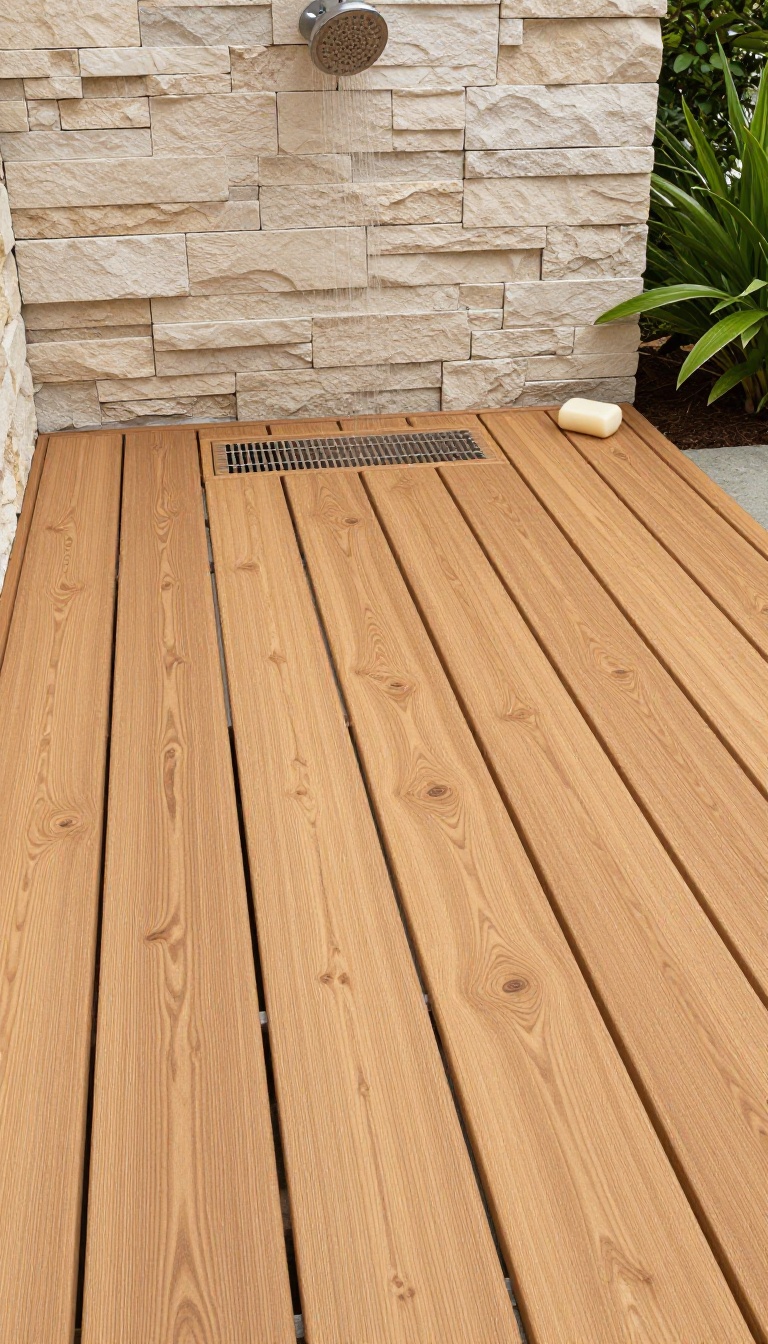
Composite planks are a smart upgrade if you want the warmth of wood without the upkeep. They're built to handle constant moisture, heavy foot traffic, and harsh sun without warping, splintering, or fading. For an outdoor shower, that means a floor that stays looking good year after year with minimal effort.
Composite decking has come a long way from the plastic-looking boards of the past. Today's options mimic real wood grain and come in a range of colors, from warm cedar to cool gray. The material is a blend of wood fibers and recycled plastic, which gives it the best of both worlds: natural appearance and serious durability.
It's also naturally slip-resistant, even when wet, making it a safe choice for bare feet and soapy water.
Why It Works For Wet Areas
Composite decking is designed to resist moisture, so it won't rot, crack, or split like traditional wood. The surface is textured to provide traction, which is crucial in a shower where water and soap create slippery conditions. Plus, it doesn't absorb water, so it dries quickly and resists mold and mildew growth.
Installation Tips For Drainage
To ensure proper drainage, install composite planks with gaps between them, just like you would with wood decking. Use a level base and allow for a slight slope so water runs off easily. You can also add a drainage mat underneath to direct water away from the subfloor.
Make sure to use stainless steel or composite screws to avoid rust stains.
Maintenance And Longevity
One of the biggest perks of composite is the low maintenance. You don't need to sand, stain, or seal it. A simple rinse with a hose or a mild soap solution keeps it clean.
It's also resistant to scratches and stains, so even if you drop a shampoo bottle, it won't leave a mark. With proper installation, a composite shower floor can last 25 years or more.
7. Gravel and Stone
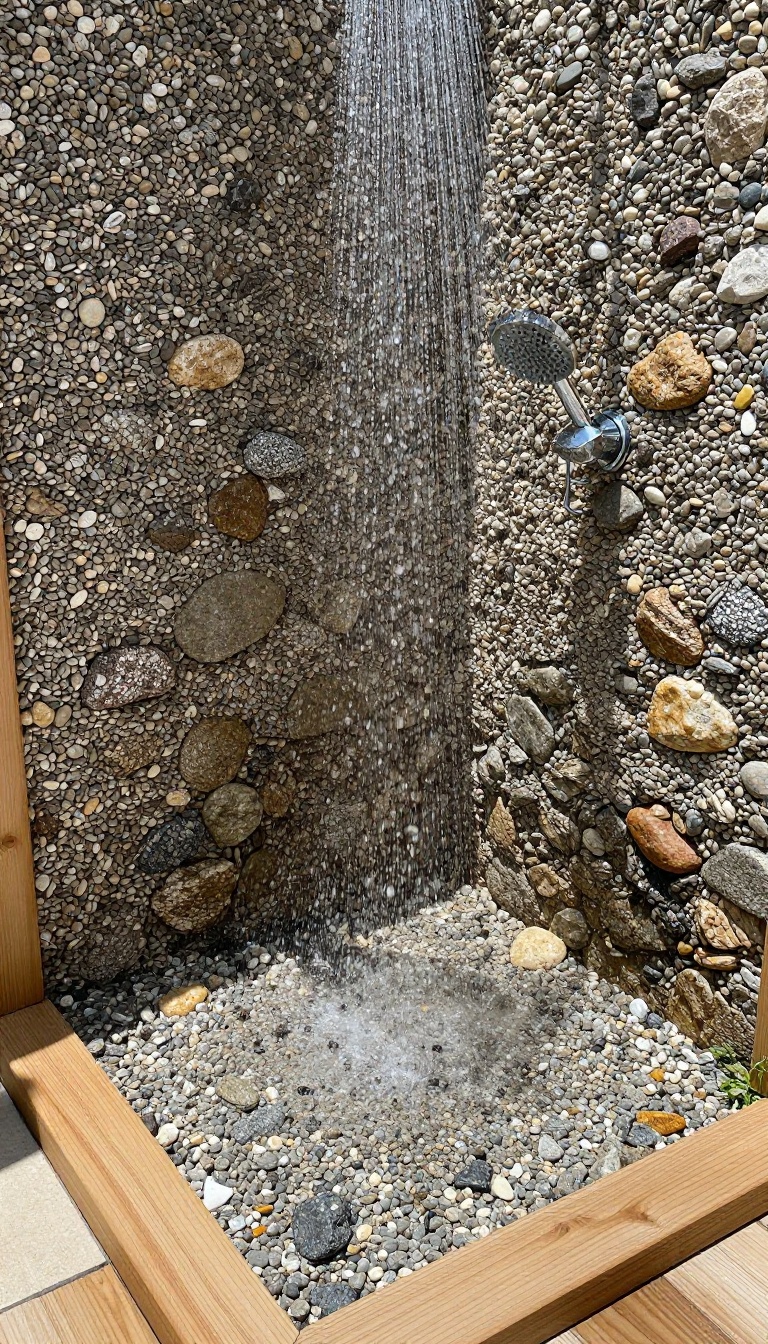
Loose gravel or pea stone gives your outdoor shower a laid-back, coastal vibe while letting water disappear fast. It's one of the most forgiving surfaces you can stand on—no grout lines to scrub, no sealant to refresh, just a natural, porous bed that drains as quickly as it rains. Because gravel shifts and settles, it's not for every spot.
But with the right border and a bit of prep, it becomes a low-maintenance floor that feels great under bare feet and handles heavy use without complaint.
Gravel and stone floors are all about simplicity. You dump them in, rake them flat, and you're done. The key is choosing the right aggregate size and making sure the base underneath is solid.
Pea gravel (about 3/8 inch) is smooth and comfortable, while crushed stone locks together better and stays put. Either way, you'll want a landscape fabric beneath to keep weeds from sprouting up between your toes. A border is non-negotiable.
Without one, gravel spreads into your lawn or walkway within a week. Use metal edging, pavers set on edge, or a wooden frame to keep everything contained. You can also mix in larger stones or a central paver for a bit of visual interest and a stable spot to stand while soaping up.
Why Gravel Works So Well
Gravel drains almost instantly because water slips between the stones and into the soil below. That means no puddles, no slippery film, and no standing water that attracts mosquitoes. It also gives you a satisfying crunch underfoot that feels both natural and grounding.
Plus, it's cheap—a few bags of pea gravel can cover a small shower area for less than the cost of most tiles.
Choosing The Right Aggregate
Pea gravel is the go-to for comfort, but it can shift underfoot. Crushed stone (like decomposed granite) packs down harder and stays more stable, though it's not as smooth. For a middle ground, mix pea gravel with a bit of sand to help it lock together.
Avoid sharp-edged gravel that can scratch bare feet, and go for rounded stones in warm, earthy tones to keep the space feeling inviting.
Installation Tips For A Stable Surface
Start by excavating about 4 to 6 inches of soil, then lay down a weed barrier. Add a few inches of crushed stone as a base and compact it, then top with your final layer of pea gravel or mixed stone. Use edging that's at least 4 inches tall to keep the gravel contained.
For extra stability, place a few flat stepping stones or a wooden pallet in the center so you're not always standing directly on loose gravel.
8. Rubber Tiles
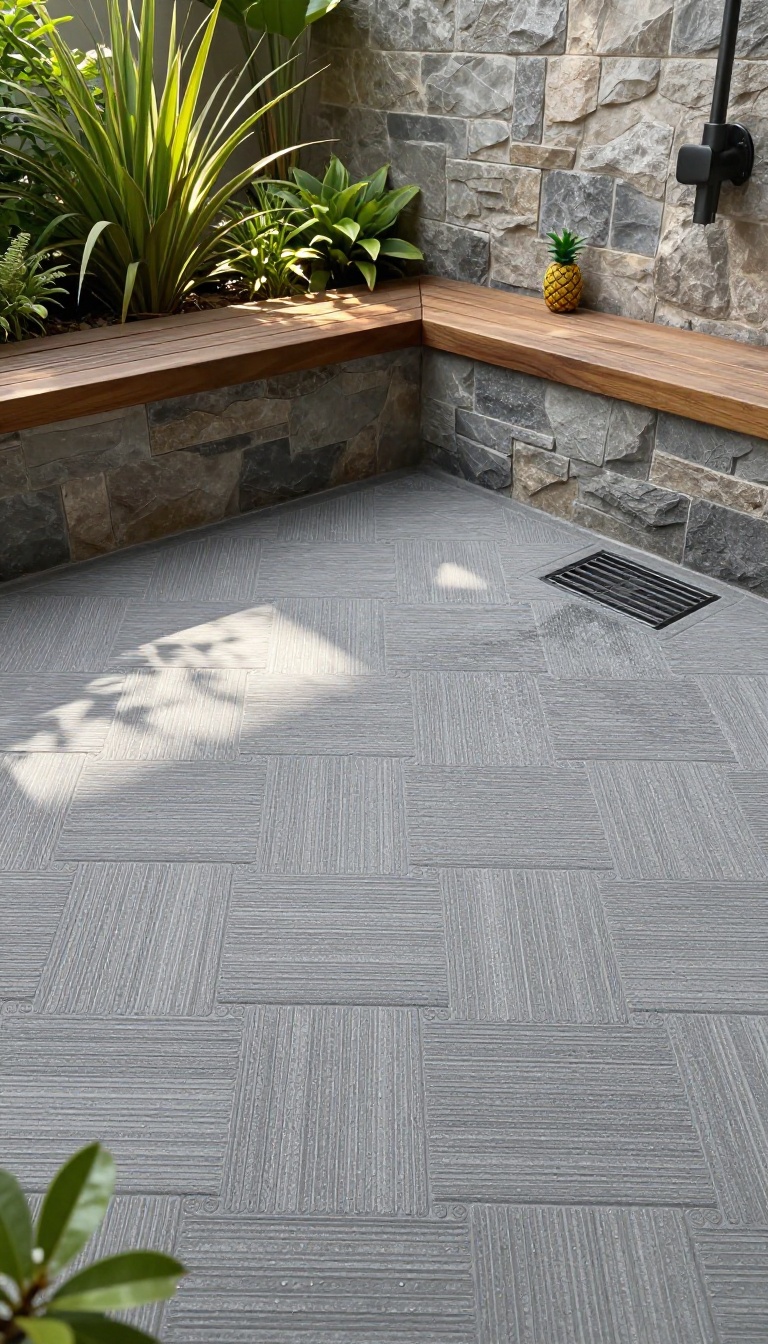
Interlocking rubber tiles bring a soft, forgiving surface to your outdoor shower that's kind to bare feet and tough on slips. They're a favorite for family-friendly setups because they cushion every step and dry quickly, so you won't be tiptoeing over cold, hard surfaces. Plus, the DIY-friendly installation means you can have a safe, stylish floor laid out in an afternoon.
Rubber tiles are a practical choice for outdoor showers, especially in homes with kids, pets, or anyone who prefers a gentler landing. The interlocking design makes them a breeze to install—no adhesive or special tools required. You can cut them to fit around drains or corners, and if a tile gets damaged, just pop in a replacement.
They're also naturally slip-resistant, even when wet, which is a huge plus for a space that's constantly exposed to water and soap. And because they're porous, water slips through the gaps instead of pooling, keeping the surface drier and safer.
Why Rubber Works For Wet Areas
Rubber's natural grip and shock absorption make it a standout for outdoor showers. Unlike smooth stone or tile, rubber provides traction even when soapy, reducing the risk of falls. It also stays comfortable underfoot in warm weather, unlike materials that absorb heat and burn your soles.
And since it's designed for high-traffic, wet environments, it holds up well against constant moisture and UV exposure without cracking or warping.
Installation And Maintenance Tips
Start by leveling the ground and laying a weed barrier if needed. Then simply connect the tiles like puzzle pieces, trimming them with a utility knife for a custom fit around pipes or drains. For cleaning, a quick rinse with a hose or a mild soap solution is all it takes.
To keep them looking fresh, sweep away debris regularly and give them a deeper scrub every few months. They're also easy to remove and store if you live in a cold climate and want to protect them during winter.
Style And Design Options
Rubber tiles come in a variety of colors, from subtle grays and browns to bold blues and greens, so you can match your outdoor aesthetic. Some have a textured surface that mimics stone or wood grain, giving you the look of natural materials without the maintenance. You can even mix and match colors to create patterns or borders.
While they may not have the high-end feel of teak or travertine, they offer a clean, modern look that works well in contemporary or casual spaces.
9. Cement Tiles
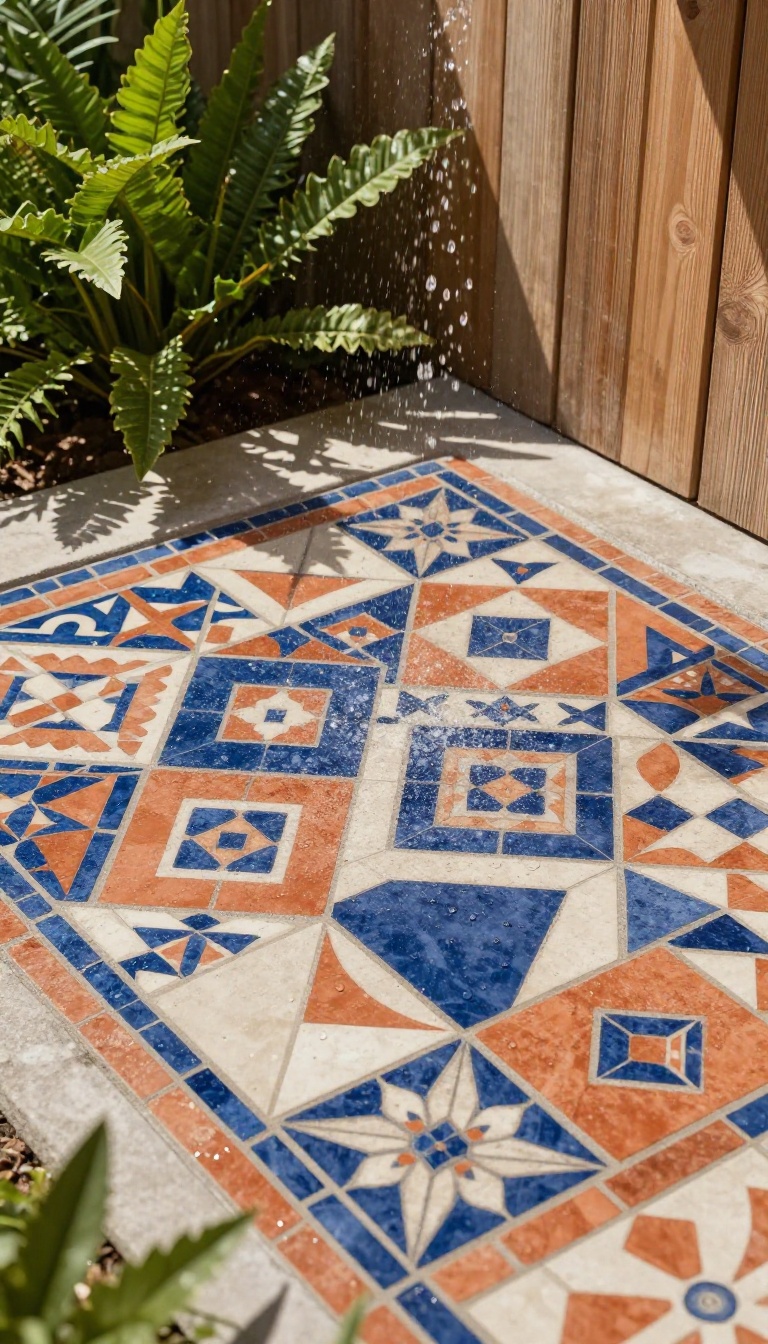
Cement tiles are having a moment, and it's easy to see why. They bring bold patterns and rich colors to any surface, turning a simple outdoor shower into a design statement. But they're not just about looks—these tiles are tough, water-resistant, and they actually get better with age, developing a charming patina that adds character.
Cement tiles are a fantastic choice for outdoor showers because they combine artistry with practicality. Made from a mixture of cement, sand, and pigment, they're pressed and cured to create durable, dense tiles that can handle moisture and foot traffic. Their surface is naturally slip-resistant when textured, and they drain well when properly installed with a slight slope.
Plus, the color options are endless, so you can match any style from Mediterranean to modern.
Pattern Play
Cement tiles come in an array of geometric and floral patterns that can make your shower floor a focal point. Mix and match different designs to create a custom rug-like effect. Since they're so versatile, you can go subtle with muted tones or bold with vibrant hues—whatever fits your outdoor vibe.
Durability That Lasts
These tiles are built to last. They resist chipping, cracking, and fading, even with constant exposure to water and sun. The surface is dense and non-porous, so it won't absorb moisture or harbor mold.
With proper sealing, they'll stay beautiful for years with minimal upkeep.
Installation And Care
Installing cement tiles requires a solid, level base and a professional touch to ensure proper drainage. Use a waterproof membrane underneath and apply a high-quality sealer to protect the surface. Cleaning is easy—just sweep and rinse with mild soap.
Avoid harsh chemicals that can strip the sealer.
10. Slate Tiles
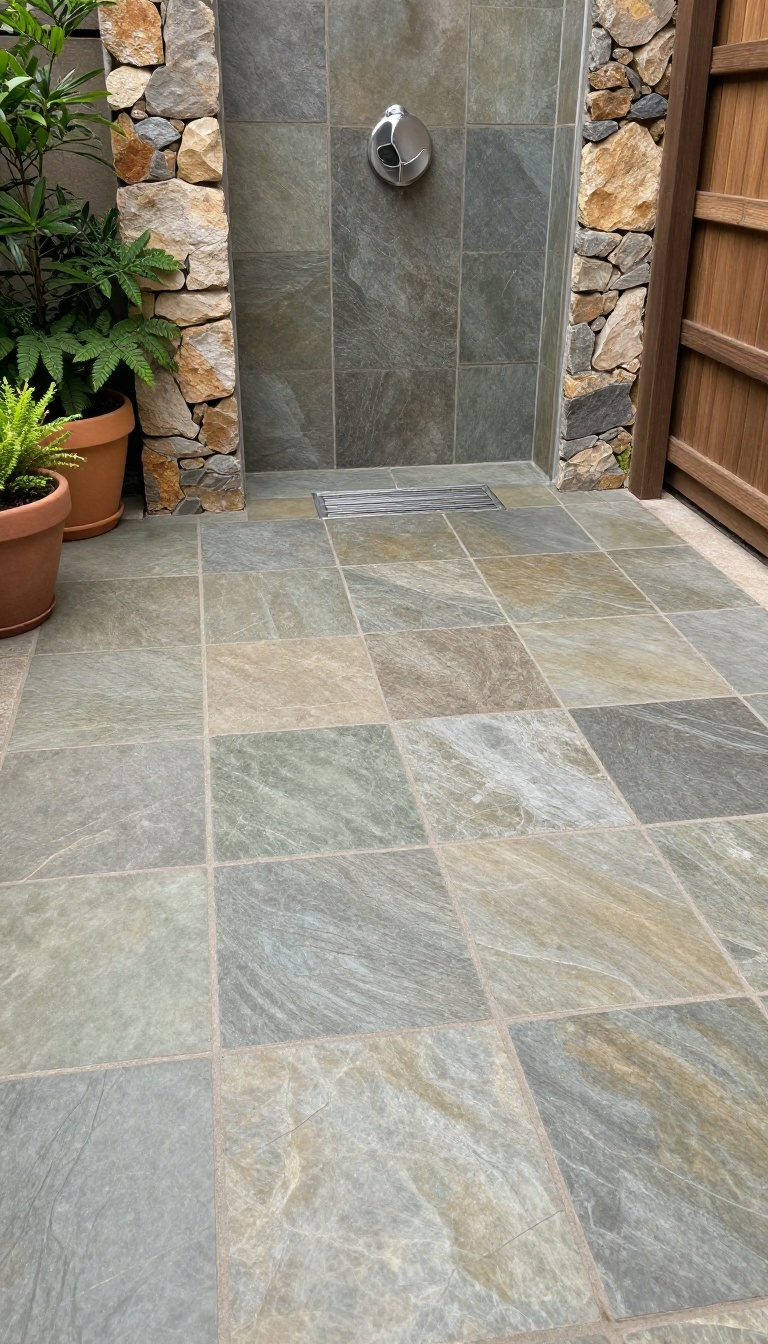
Slate brings a natural, rugged charm that fits right into an outdoor setting. Its cleft surface isn't just for looks—it gives your feet real grip when things get slippery. Plus, the earthy tones blend beautifully with plants, stone, and wood.
Why Slate Works For Outdoor Showers
Slate is naturally slip-resistant because of its textured, cleft finish. That's a big deal when soap and water are involved. It also handles temperature swings well, so it won't crack in freezing winters or scorching summers.
And because it's a natural stone, each tile has its own character—no two showers look exactly alike.
Choosing The Right Slate
Look for tiles with a gauged thickness (around 3/4 inch) for durability. You can pick from a range of colors—grays, greens, purples, even rust tones—to match your outdoor palette. For the best drainage, choose tiles with a tumbled or cleft finish rather than a honed one, since the rougher surface gives more grip.
Installation And Drainage Tips
Set slate tiles with a slight slope toward your drain, about 1/4 inch per foot. Use a wide grout line (at least 1/4 inch) filled with sanded grout to allow for expansion and improve water flow. Seal the tiles after installation to protect against stains and make cleaning easier—just use a penetrating sealer that won't alter the natural look.
11. Exposed Aggregate Concrete
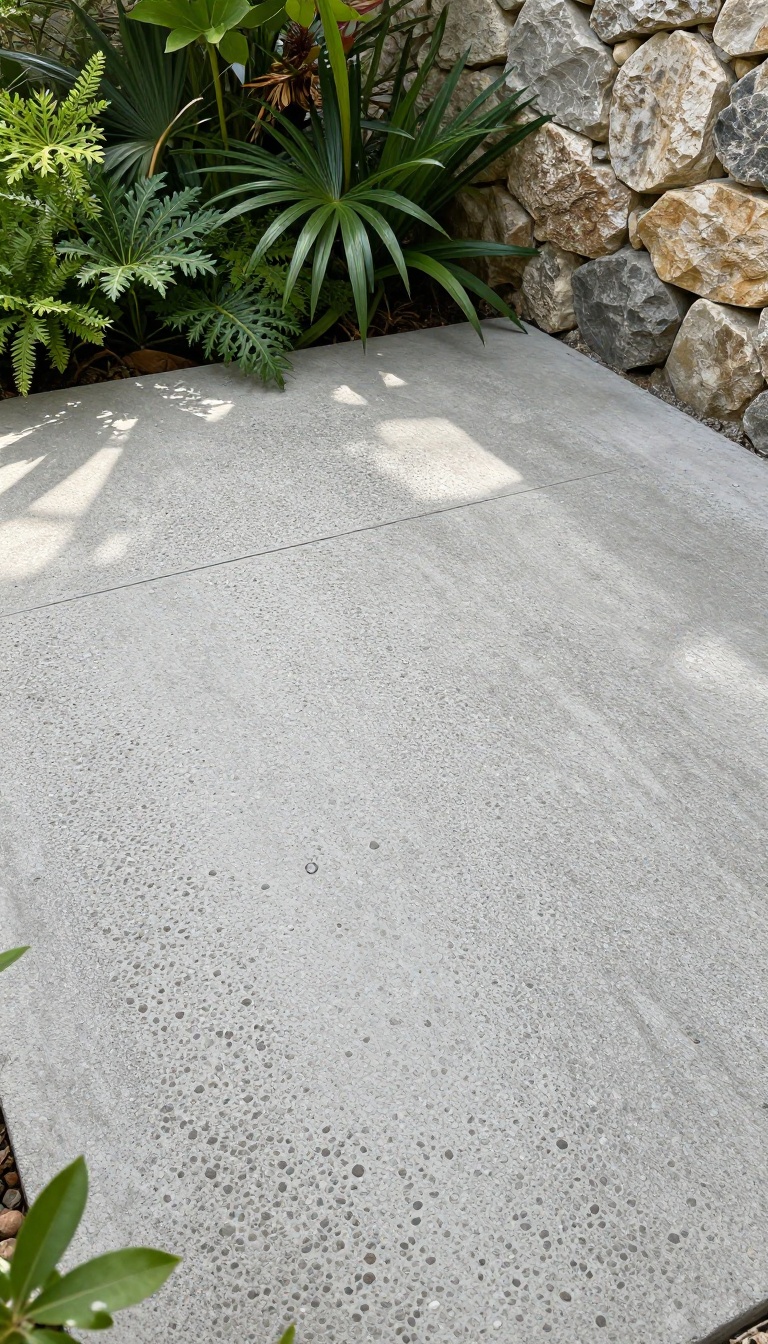
Exposed aggregate concrete takes the durability of a concrete slab and adds a textured, pebbled surface that grips wet feet. The small stones embedded in the concrete create natural drainage channels, so water doesn't pool. It's a rugged, low-maintenance option that blends well with outdoor surroundings.
Exposed aggregate is made by washing away the top layer of cement paste to reveal the underlying stones. The result is a surface that's both slip-resistant and visually interesting, with a speckled look that hides dirt and wear. This finish works especially well for outdoor showers because it's tough enough to handle constant water exposure and temperature swings without cracking or fading.
Why It Works For Outdoor Showers
The rough, pebbled texture gives your feet something to grip, even when soap and water are involved. Unlike smooth concrete, exposed aggregate provides natural traction that reduces slip risk. Plus, the gaps between stones allow water to drain quickly, keeping the surface drier and less slippery.
Installation And Maintenance
You can pour exposed aggregate as a custom slab or use precast tiles for easier installation. The surface is sealed to protect the stones and make cleaning a breeze—just hose it down or use a mild detergent. Over time, resealing every couple of years keeps it looking fresh and prevents staining.
Design Options And Customization
Choose from a variety of aggregate sizes and colors to match your style. From fine pebbles to larger river rock, the look can range from subtle to bold. You can also mix in colored glass or shells for a unique touch.
Pair it with a wooden bench or teak accents for a warm, natural vibe.
12. Bamboo Mats
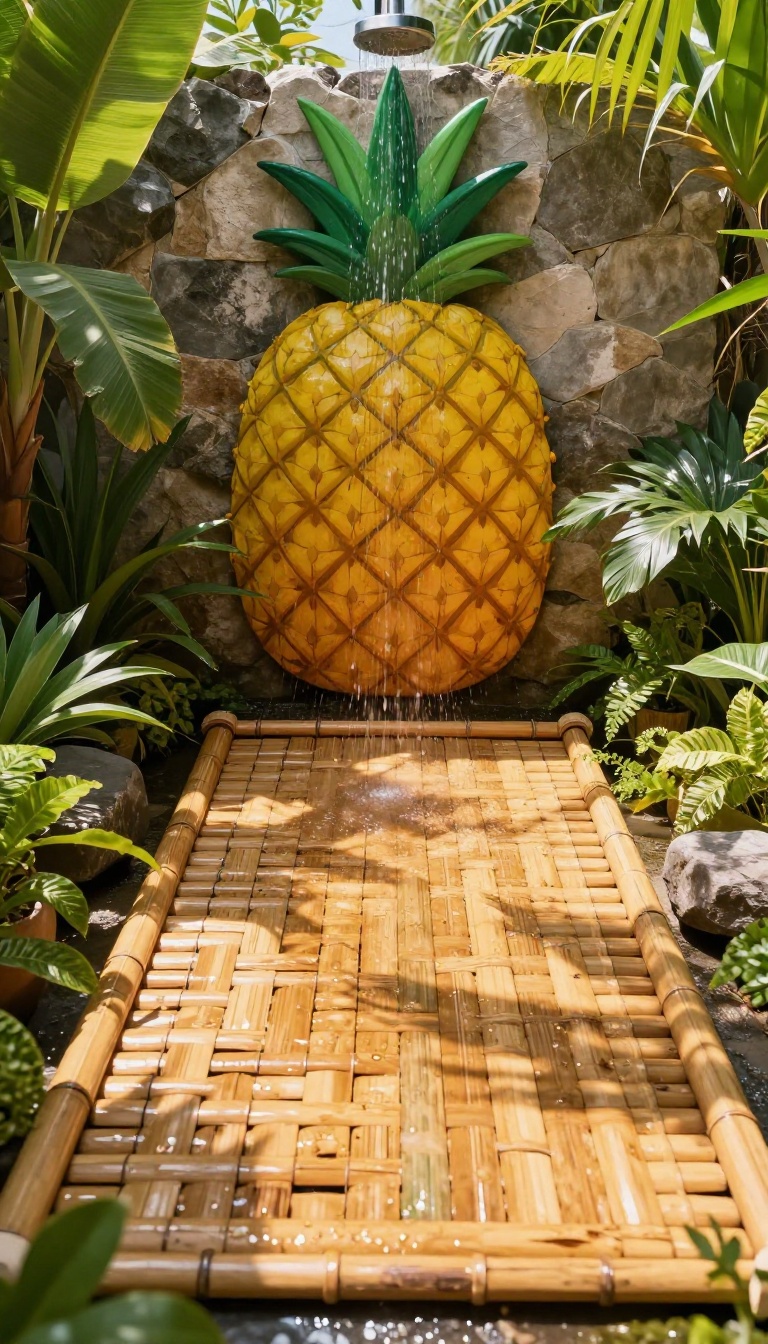
Roll-out bamboo mats are the easiest way to add a natural, tropical feel to your outdoor shower without committing to a permanent floor. They're lightweight, affordable, and let water pass right through, so you won't have to worry about puddles or mildew. Plus, you can roll them up and store them when not in use, making them a flexible option for renters or seasonal setups.
Why Bamboo Works
Bamboo slats are naturally water-resistant and dry quickly, which helps prevent mold and rot. The gaps between slats allow water to flow through easily, keeping the surface from getting slippery. Bamboo also warms up in the sun, so your feet won't hit a cold shock on a chilly morning.
Placement And Care
Set the mat on a flat, well-draining surface like concrete or gravel. Make sure it's not sitting in standing water for long periods. To extend its life, rinse it occasionally and let it dry in the sun.
If you live in a rainy climate, consider bringing it inside during heavy storms.
Style And Budget
Bamboo mats come in various sizes and weaves, from tight slats to wider gaps. They're one of the most budget-friendly options, often costing less than $50. The natural tan color adds warmth and pairs well with plants, stone, or wood accents.
You can even layer multiple mats for a larger footprint.
13. Interlocking Plastic Deck Tiles
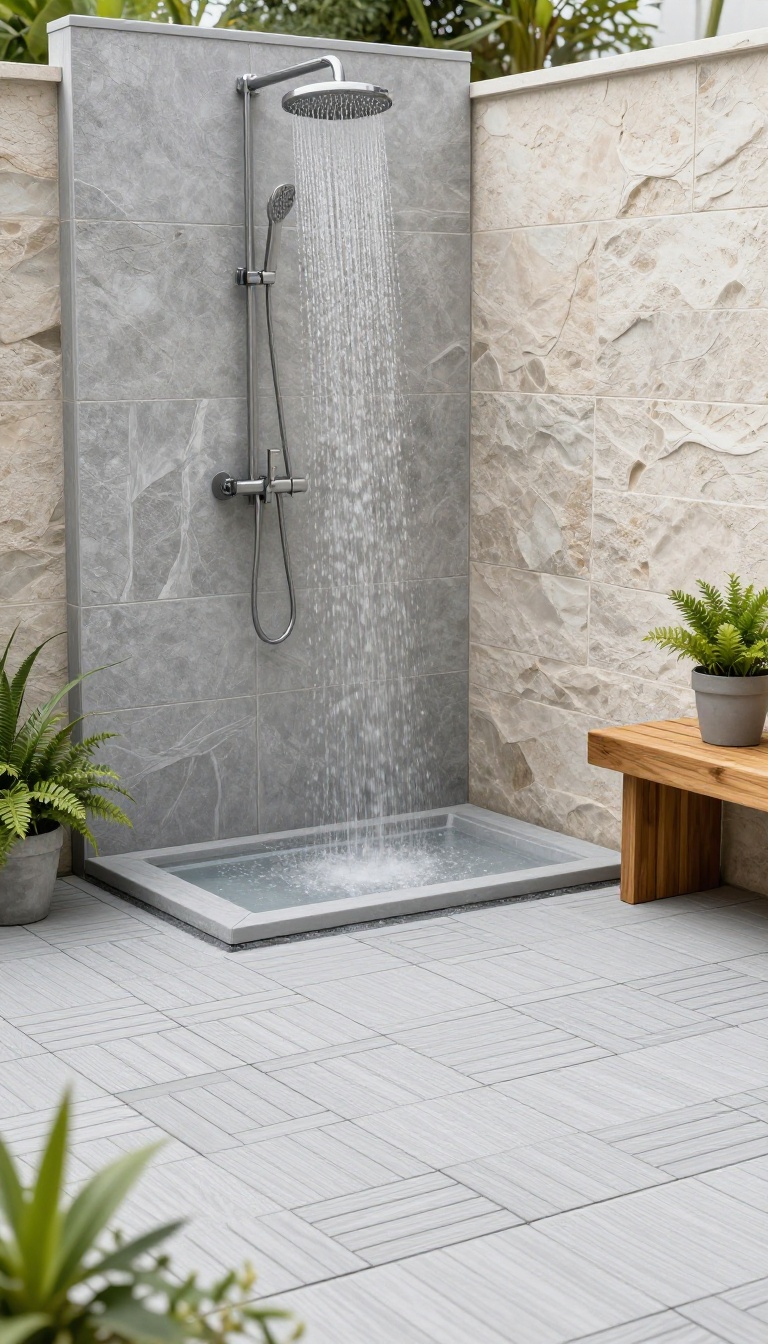
If you want a floor that’s as easy to install as it is to maintain, interlocking plastic deck tiles are a smart pick. These snap-together squares sit above the ground, letting water pass right through the gaps. The result is a surface that dries fast, feels comfortable underfoot, and looks clean and modern without much effort.
Interlocking plastic deck tiles are a favorite for outdoor showers because they solve two problems at once: drainage and safety. The grid design lets water flow through instantly, so you’re not standing in a puddle. Plus, the raised profile adds texture that helps prevent slips, even when soap and water are involved.
Installation is a weekend DIY project—no tools required. You just connect the tiles over a flat, stable base like concrete or pavers. And if one tile gets damaged, you can pop it out and replace it in seconds without redoing the whole floor.
Why They Drain So Well
The open-grid pattern is the secret. Water drops straight through the gaps, so the surface stays relatively dry. That reduces the chance of slipping and keeps the area cleaner.
Plus, because the tiles are elevated slightly, air circulates underneath, which helps everything dry out faster and prevents mildew from taking hold.
Easy To Customize And Replace
These tiles come in a range of colors—from neutral grays to bold blues—so you can match your shower’s vibe. The interlocking system means you can cut tiles to fit odd corners or curves. And if one piece cracks or fades, you just order a replacement.
No need to tear up the whole floor.
Comfort And Maintenance
The plastic material is soft enough to be kind to bare feet, but sturdy enough to handle daily use. Cleaning is a breeze: a quick rinse with a hose or a sweep with a broom does the trick. They’re also resistant to UV rays, so they won’t warp or discolor quickly, even in full sun.
14. Cork Flooring
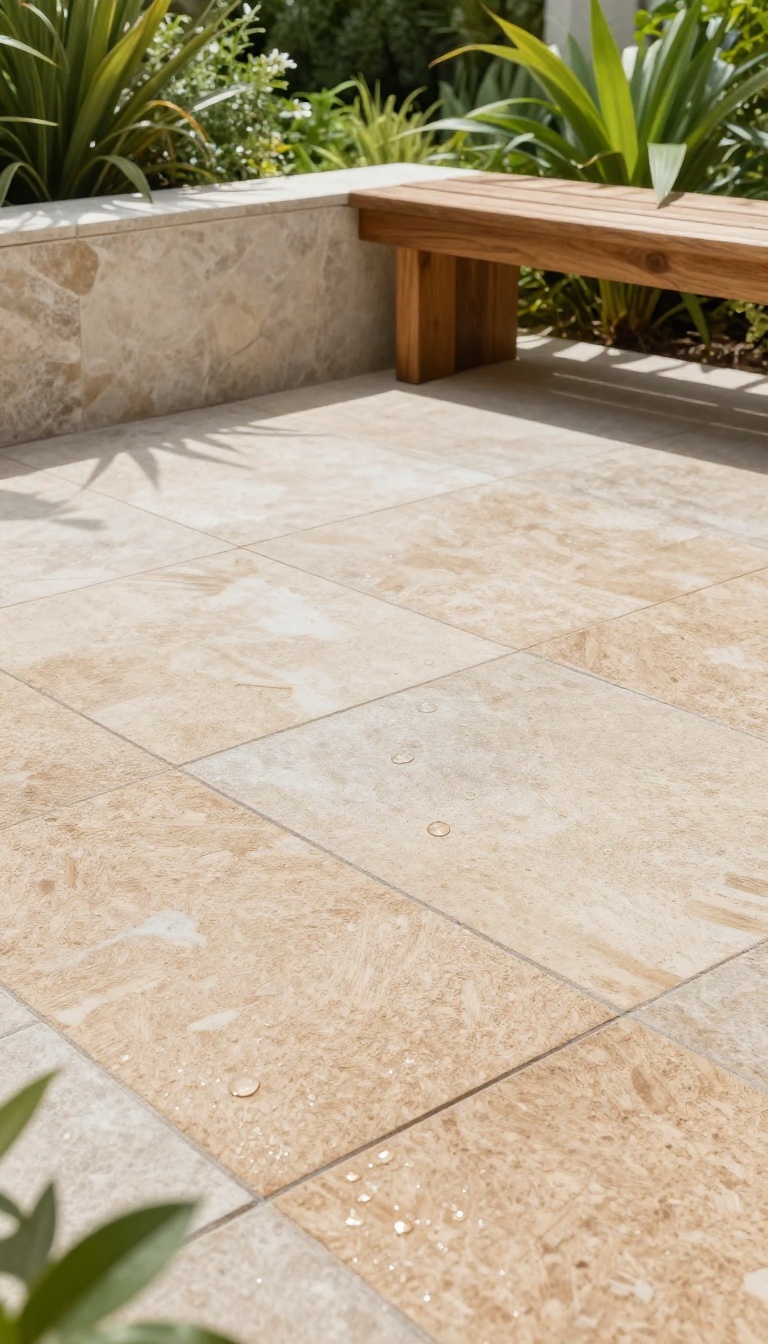
Cork might not be the first material that comes to mind for a wet area, but it's surprisingly well-suited for outdoor showers. This renewable material is naturally antimicrobial, which means it resists mold and mildew better than many other options. Plus, it's soft underfoot, offering a comfortable, warm surface that feels great on bare feet.
Cork's unique cellular structure gives it a springy, cushioned feel that's easy on joints and provides a non-slip surface even when wet. It's also an eco-friendly choice, harvested from the bark of cork oak trees without harming the tree. While cork is typically used indoors, with proper sealing and maintenance, it can work beautifully in a sheltered outdoor shower.
Why Cork Works Outdoors
Cork contains suberin, a natural substance that repels water and resists decay. This makes it inherently resistant to moisture damage and microbial growth. The honeycomb-like structure also provides excellent traction, reducing the risk of slips.
Plus, cork is a sustainable material that adds a warm, organic aesthetic to your shower space.
Installation And Sealing Tips
For outdoor use, choose cork tiles that are pre-sealed or apply a high-quality marine-grade sealant. Install them over a well-drained subfloor, leaving small gaps for expansion. Use a waterproof adhesive and seal all edges thoroughly to prevent water infiltration.
Reapply sealant annually to maintain protection.
Maintenance And Care
Cork is easy to clean with a mild soap and water solution. Avoid harsh chemicals that can strip the sealant. Regularly inspect for any signs of wear or water damage, especially in high-traffic areas.
With proper care, cork can last for years in an outdoor setting, offering a unique and comfortable surface.
15. Stamped Concrete
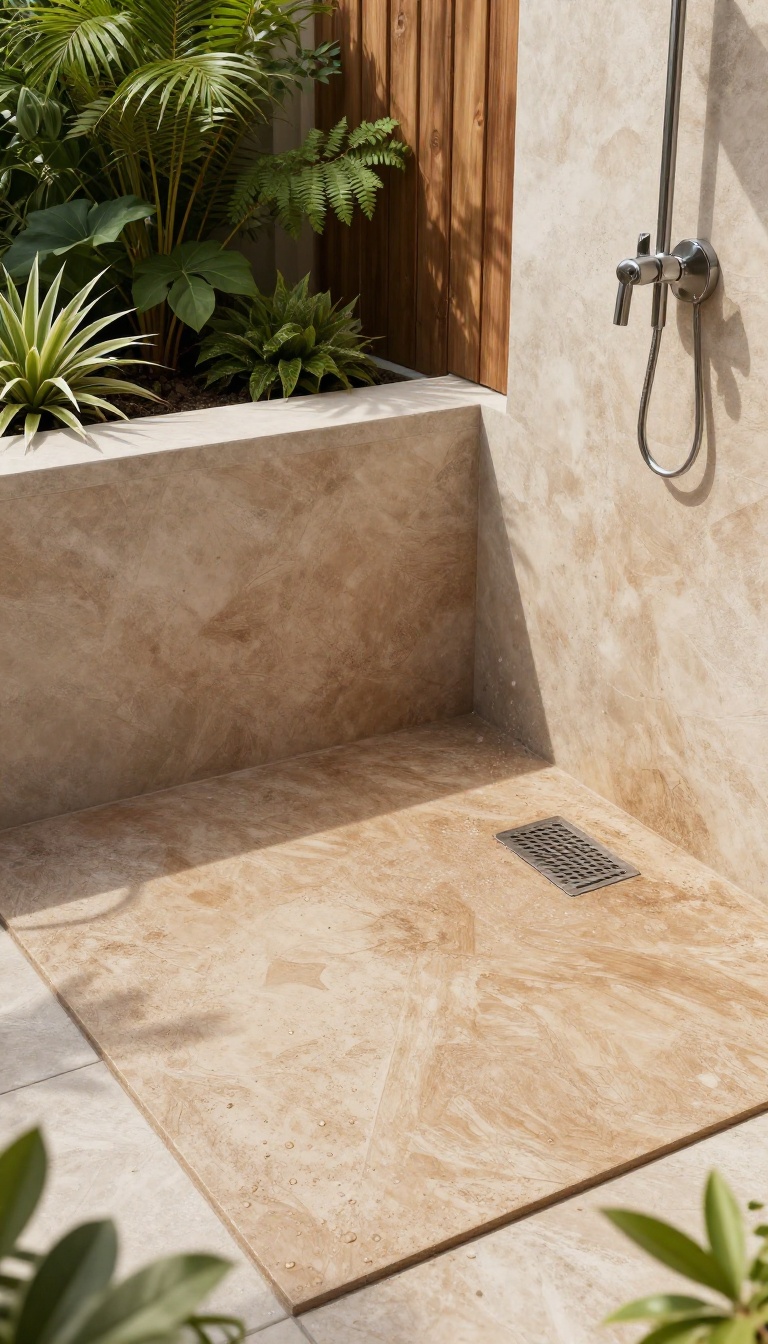
Stamped concrete gives you the look of stone or brick without the hassle of individual pieces. It's poured as a single slab, then textured and colored to mimic natural materials. The result is a seamless surface that handles water flow beautifully.
The real magic of stamped concrete is how it combines beauty and brawn. You get the upscale appearance of pavers or flagstone, but with fewer joints where weeds can creep in or water can pool. Plus, the imprinting process adds texture that improves traction, making it safer when things get slippery.
Why It Works For Showers
A stamped concrete floor is poured as one continuous piece, so there are no gaps for water to sneak through. That means less maintenance and fewer places for grime to build up. The texture from the stamping gives your feet something to grip, even when soap and water are everywhere.
Design Options
You can choose from a wide range of patterns and colors to match your outdoor aesthetic. Want a rustic flagstone look? Go with a natural gray and a rough texture.
Prefer a more modern vibe? Opt for a smooth, large-format tile pattern in a warm earth tone. The flexibility is nearly endless.
Installation And Maintenance
Installing stamped concrete is a job for a professional, since it involves pouring, stamping, and sealing. Once it's down, though, it's easy to care for. A simple rinse with a hose and an occasional reseal every couple of years keeps it looking fresh and protects the surface from stains and moisture.
FAQ
What is the safest outdoor shower floor material?
Materials with natural texture or added grip, like teak, pebble tiles, or broom-finished concrete, are safest because they reduce slip risk when wet.
How do I ensure good drainage for my outdoor shower floor?
Install a slight slope toward a drain or use permeable materials like gravel, slatted wood, or tiles with wide grout lines to let water flow away quickly.
Can I install outdoor shower flooring over concrete?
Yes, you can use interlocking tiles, rubber mats, or a wooden platform over existing concrete, as long as you manage drainage with a slope or gaps.
What is the most low-maintenance outdoor shower floor?
Composite decking and porcelain tiles are among the lowest maintenance—they resist moisture, stains, and fading without needing regular sealing or treatment.
How do I clean outdoor shower floors?
Most floors can be cleaned with a mild detergent and a brush or hose. For wood, use a gentle wood cleaner; for stone, avoid acidic cleaners that can etch the surface.
Conclusion
Good drainage and a solid floor go hand in hand. You don't need to overcomplicate the build—just match the material to your climate and how often you use the shower. Start with the area that gets the most water, and work from there.
Pick something slip-resistant that looks good wet, and you'll set yourself up for years of worry-free use. Your outdoor shower should feel as easy as it looks.