11 Patio Set Up Ideas for a Comfortable Outdoor Layout
Your patio holds more potential than you might think. With a few thoughtful tweaks, it can become the favorite spot in your home—a place where mornings start with coffee and evenings end with laughter. The key is to design with intention, focusing on comfort and flow.
Start by thinking about how you want to use the space. Do you dream of lazy afternoons with a book, or lively dinners under the stars? Your answers will guide every choice, from furniture to lighting.
These 11 patio setup ideas will help you transform your outdoor area into a cozy, functional retreat. Whether you have a sprawling deck or a tiny balcony, there's something here for you.
1. Define Zones for Dining, Lounging, and Greenery
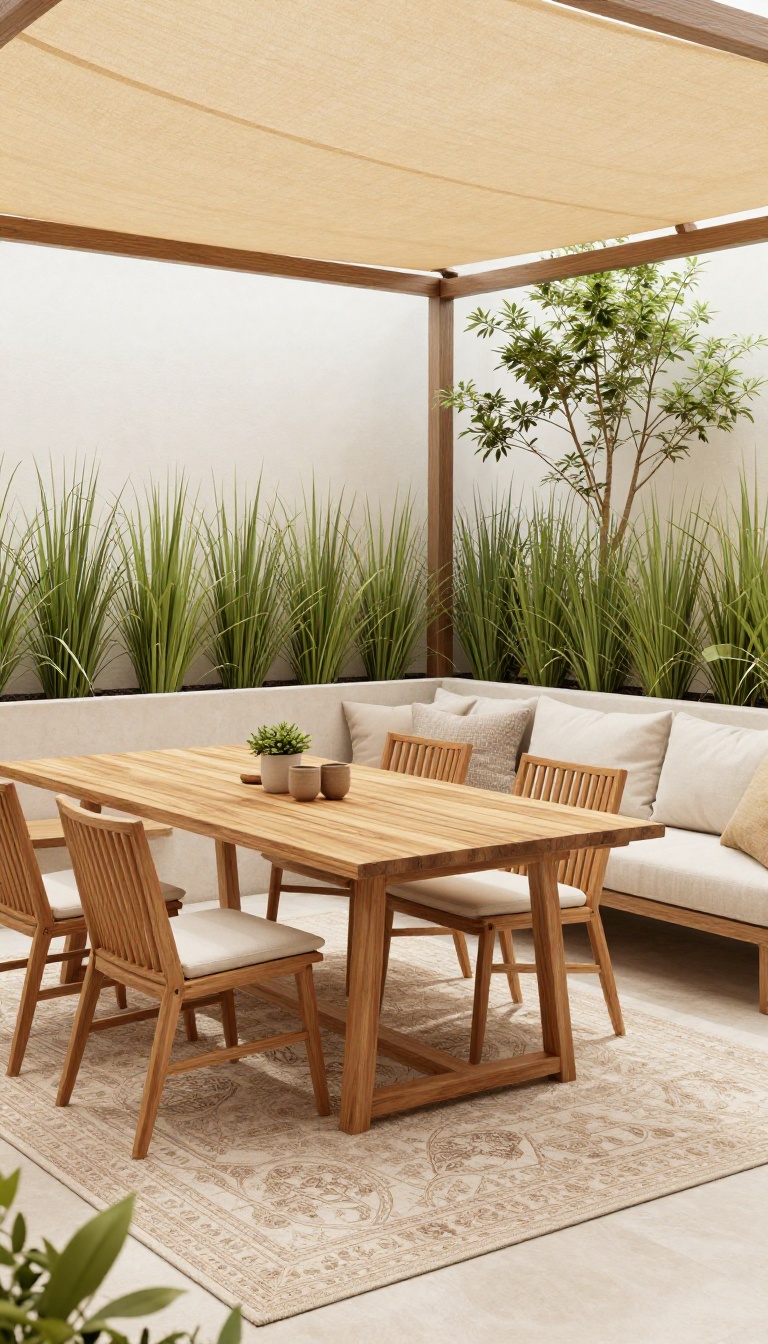
A patio can quickly feel chaotic when everything is crammed together. Dividing the space into clear zones for different activities brings a sense of order and calm. This simple approach also makes your patio feel larger and more inviting, even if the square footage is modest.
Start by sketching a rough layout of your patio. Think about the natural traffic flow—where you enter and exit, and where you might want to move between zones. Then, assign each area a primary purpose: dining, lounging, or greenery.
For dining, place a table and chairs in a spot that's convenient to the kitchen or grill. For lounging, choose a corner with comfortable seating and a coffee table. For greenery, designate a spot for potted plants, a vertical garden, or a small herb bed.
Once you have your zones, use visual cues to define them.
Use Rugs To Anchor Each Zone
Outdoor rugs are a quick way to visually separate areas. Place a large rug under the dining set to ground the space, and a softer, plush rug in the lounging area to create a cozy vibe. Choose rugs that complement each other but have distinct patterns or colors to reinforce the separation.
This trick works especially well on open patios where there are no walls or railings to guide the eye.
Let Planters Act As Natural Dividers
Tall planters with ornamental grasses, small trees, or climbing vines can serve as living partitions. Position them between the dining and lounging areas to create privacy without blocking sightlines. You can also use a row of potted herbs along the edge of the patio to define the boundary between the hardscape and the garden.
This adds greenery and structure at the same time.
Arrange Furniture To Create Flow
How you place your furniture matters as much as where you put it. Angle lounge chairs toward a focal point like a fire pit or a view. Keep dining chairs pulled in when not in use to avoid blocking pathways.
Leave at least two feet of clear space between zones so you can move around easily. This makes the patio feel open and intentional, not cluttered.
2. Start with Comfortable, Weather-Resistant Seating
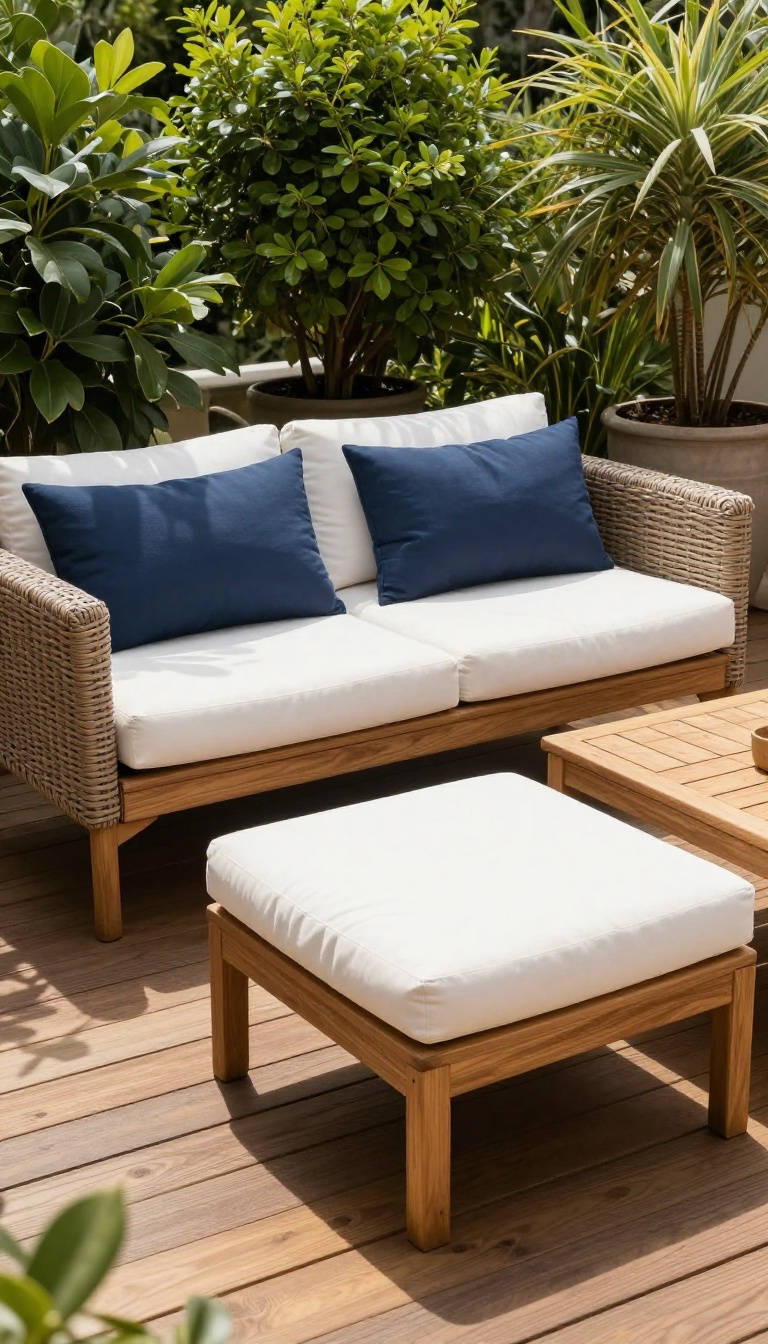
The right seating can make or break your patio. You want pieces that invite you to sit down and stay a while, not ones that have you fidgeting after ten minutes. Comfort and durability go hand in hand—choose materials that can handle the elements while keeping cushions plush and supportive.
When shopping for outdoor furniture, look for frames made from aluminum, teak, or all-weather wicker. These materials resist rust, rot, and fading, so your investment lasts for years. For cushions, opt for quick-dry foam wrapped in high-performance fabric that repels water and resists UV rays.
That way, you can leave them out without worrying about mildew or color loss. Mixing seating types adds visual interest and practical flexibility. A loveseat offers a cozy spot for two, while a few armchairs give guests their own space.
A bench along one side can provide extra seating without taking up too much room. This variety lets people choose their preferred spot—whether they want to lounge, chat, or simply soak up the sun.
Choose Materials That Last
Durability starts with the frame. Powder-coated aluminum is lightweight and rustproof, making it a top choice for coastal areas. Teak is naturally weather-resistant and ages beautifully, but it requires occasional oiling to maintain its golden hue.
All-weather wicker, made from synthetic resin, offers a classic look without the upkeep. Check the weight capacity and warranty to ensure the furniture can handle regular use.
Focus On Cushion Comfort
Cushions should feel supportive, not saggy. Look for high-density foam with a 1. 8 or higher density rating—it holds its shape and bounces back quickly.
Quick-dry foam allows water to drain through, so cushions dry fast after a rain shower. Pair it with a fabric like Sunbrella or Outdura, which is fade-resistant and easy to clean with mild soap and water.
Mix And Match Seating Styles
You don't need a matching set. Combine a loveseat with a couple of club chairs and a wooden bench to create a relaxed, collected look. This approach adds depth and makes the space feel more inviting.
Plus, you can tailor the arrangement to your patio's size—push chairs together for conversation or spread them out for privacy.
3. Add an Outdoor Rug to Anchor the Space
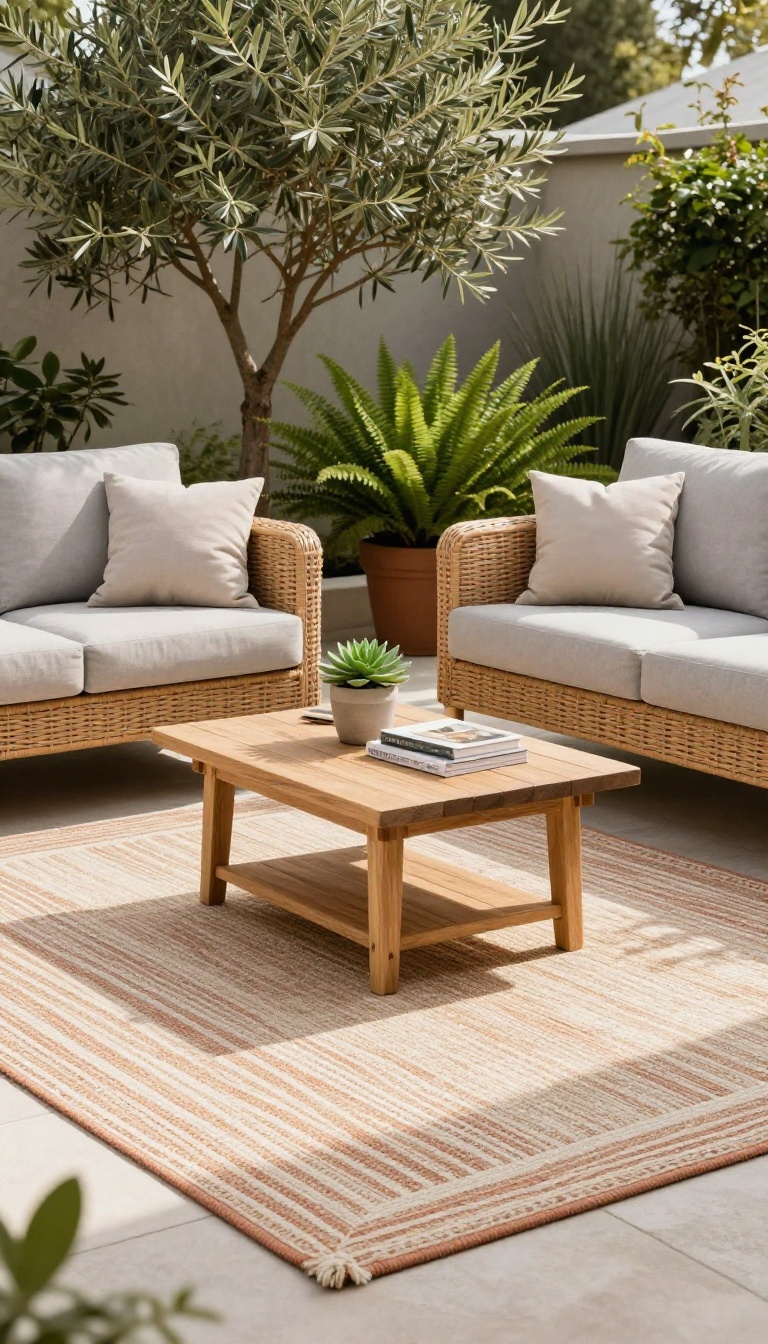
An outdoor rug is one of the quickest ways to make your patio feel intentional and cozy. It visually defines the seating area, adds a layer of color and texture, and softens the hard surfaces underfoot. Plus, it helps tie together your furniture and accessories, giving the space a pulled-together look that rivals any indoor room.
Choosing the right outdoor rug is about balancing style with practicality. Look for materials like polypropylene or recycled plastics that are fade-resistant, mold-resistant, and easy to clean with a hose. Size matters too—make sure the rug is large enough to fit under the front legs of your main seating pieces, so the whole arrangement feels grounded.
If you have a dining set, the rug should extend at least 24 inches beyond the table on all sides to allow chairs to slide in and out comfortably.
Pick The Right Material
Outdoor rugs come in a range of weaves and fibers. Flat-weave polypropylene rugs are durable and dry quickly, making them ideal for high-traffic areas. For a softer feel underfoot, look for rugs with a low pile and a rubber or TPR backing to prevent slipping.
Avoid natural fibers like jute or sisal, as they can absorb moisture and mildew in damp climates. Instead, opt for synthetic options that can handle sun, rain, and foot traffic without losing their color or shape.
Size And Placement
A common mistake is choosing a rug that’s too small. A tiny rug floating in the middle of the patio can make the space feel disjointed. Measure your seating area and aim for a rug that fits under all the main pieces.
For a living room setup, the rug should extend at least 6 inches beyond the furniture on all sides. For a dining area, make sure the rug is large enough for chairs to pull out without catching the edge. When in doubt, go bigger—a larger rug anchors the space and makes the patio feel more expansive.
Style And Maintenance
Use the rug as a chance to inject personality. Bold patterns can hide dirt and stains, while solid colors offer a neutral base for colorful cushions and planters. Choose a palette that complements your existing decor and the natural surroundings.
To keep the rug looking fresh, shake it out weekly and spot-clean spills immediately. Most outdoor rugs can be hosed down and left to air dry. With minimal care, a quality outdoor rug can last for years and become the foundation of your patio’s comfort.
4. Layer Lighting for Evening Ambiance
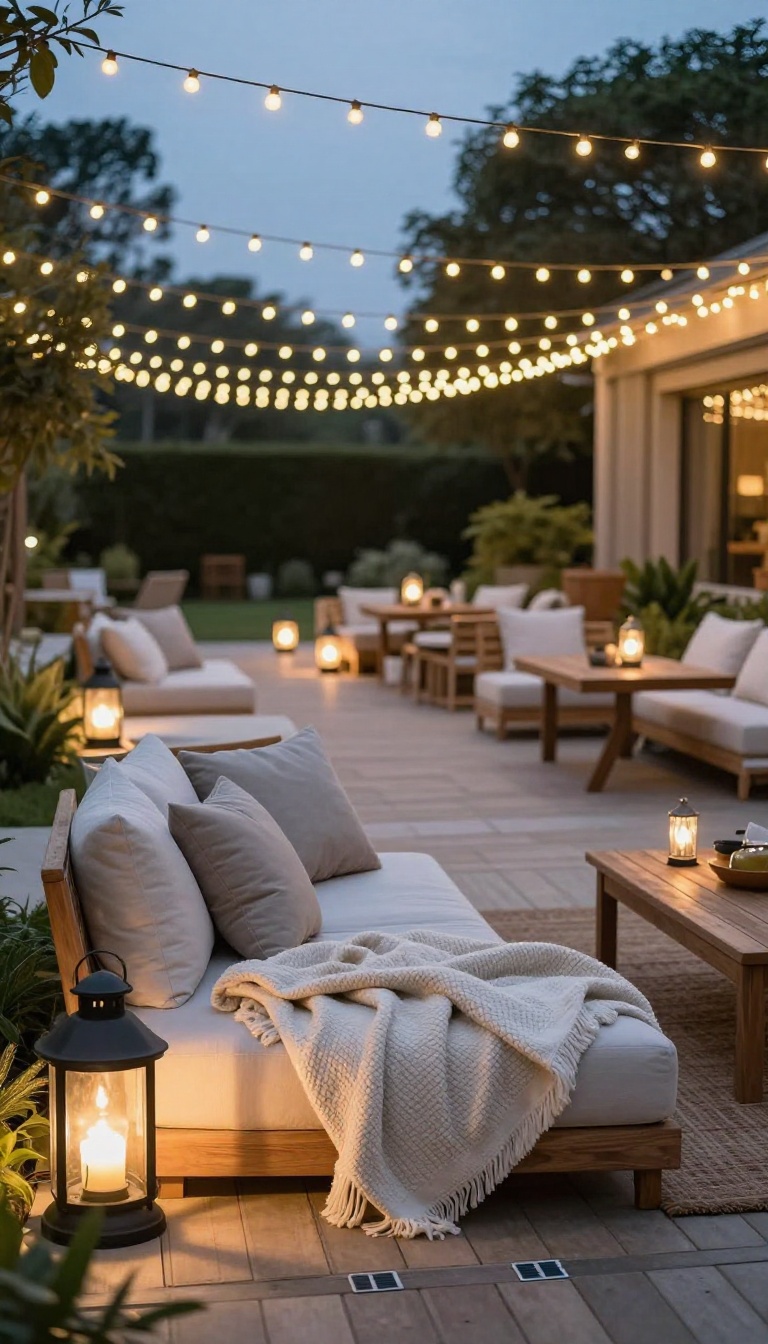
When the sun goes down, your patio shouldn't just disappear into the dark. The right lighting can turn a simple backyard into a magical evening spot. It's not about one bright overhead light—it's about creating layers that you can adjust as the night goes on.
Think of it like setting the mood for a movie. You want a mix of soft glows, gentle shadows, and just enough light to see your drink and your friends' faces. With a few easy additions, you can make your patio feel warm and welcoming long after sunset.
Start with the basics: string lights overhead. They instantly add charm and a soft, diffused glow. Drape them across the patio, between posts, or along a railing.
For a more flexible option, use clip-on lights that can be moved around. Next, bring in lanterns. Place them on tables, steps, or the ground.
They create pools of light that make the space feel intimate. Mix different sizes and styles—glass, metal, or paper—for visual interest. Finally, add solar path lights along walkways or garden edges.
They guide the way and add a subtle, safe glow. With these layers, you can adjust the brightness to suit any occasion, from a bright family dinner to a cozy late-night chat.
Start With String Lights
String lights are the backbone of patio lighting. They’re easy to hang and instantly make the space feel festive. Use weatherproof ones and hang them in a zigzag or along the perimeter.
For a softer look, choose warm white bulbs. If you want to go a step further, opt for smart lights that you can dim or change color with your phone.
Add Portable Lanterns
Lanterns are perfect for adding flexibility. You can move them around to highlight a seating area or a plant. They come in all shapes and sizes, from classic candle lanterns to modern LED versions.
Place a few on the table for dinner, or line them up on the steps for a welcoming path. They also work well as centerpieces when you’re not using the table.
Use Solar Path Lights For Safety And Style
Solar path lights are a no-fuss way to add light along walkways or garden borders. They charge during the day and turn on automatically at dusk. Not only do they look attractive, but they also prevent trips and falls.
Choose a style that matches your patio—modern, rustic, or classic—and place them at regular intervals for a polished look.
Layer With Dimmers And Candles
To really control the mood, add dimmers to your string lights or use plug-in dimmers for other fixtures. This lets you go from bright and lively to soft and romantic in seconds. Candles are another great option.
Place them in hurricane vases or on a tray to avoid wind issues. They add a flickering warmth that nothing else can match. Just remember to blow them out before you head inside.
5. Incorporate Vertical Gardens or Potted Plants
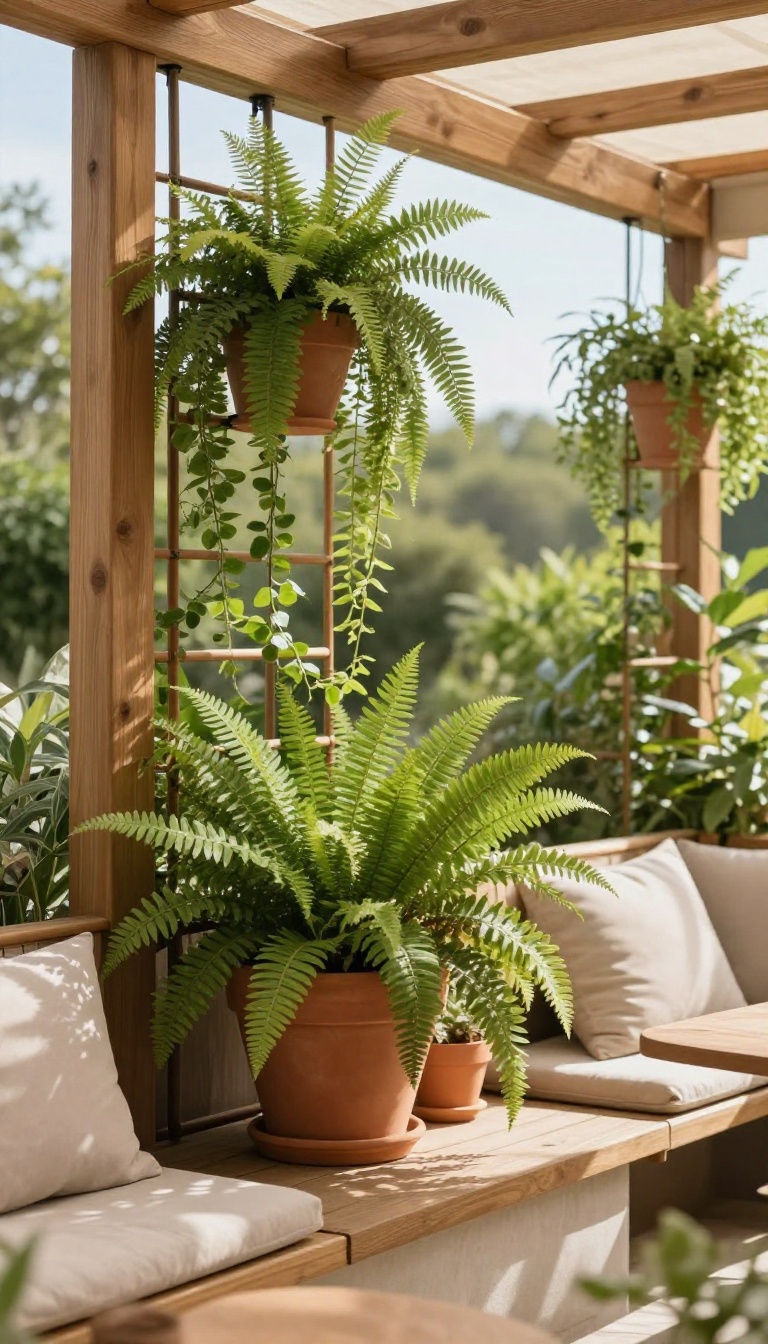
Plants are the quickest way to breathe life into a patio, but you don't need a sprawling yard to make a big impact. Vertical gardens and potted arrangements can turn even the smallest balcony into a lush retreat. They also offer practical perks like natural privacy and a cooling layer of shade.
Start by assessing your space and light conditions. Then, mix and match containers, heights, and foliage to create a layered, inviting look. Whether you prefer a tidy herb garden or a wild jungle vibe, plants can adapt to your style and needs.
Choose The Right Plants For Your Climate
Not all plants thrive in the same conditions. Pick species that match your local climate and the amount of sunlight your patio receives. For sunny spots, try lavender or succulents.
For shady corners, ferns and hostas work well. Group plants with similar water and light needs together to make care easier.
Mix Containers And Heights For Visual Interest
Use a variety of pot sizes and materials—like terracotta, ceramic, or metal—to add texture. Place taller plants in corners or against walls to frame the space, and use shorter pots on tables or railings. Hanging baskets can draw the eye upward, making the patio feel larger and more dynamic.
Build A Simple Vertical Garden
If floor space is tight, go vertical. You can install a wall-mounted planter system, use a freestanding trellis, or repurpose a pallet with pockets for herbs and flowers. Vertical gardens not only save space but also create a stunning living wall that adds privacy and a natural backdrop.
Use Plants For Privacy And Shade
Tall grasses, bamboo, or climbing vines can screen your patio from neighbors without building a fence. Position them along the edges to block sightlines and soften the area. For shade, consider a pergola with trailing plants or a row of potted trees that cast dappled light.
6. Install a Shade Solution: Umbrella, Pergola, or Canopy
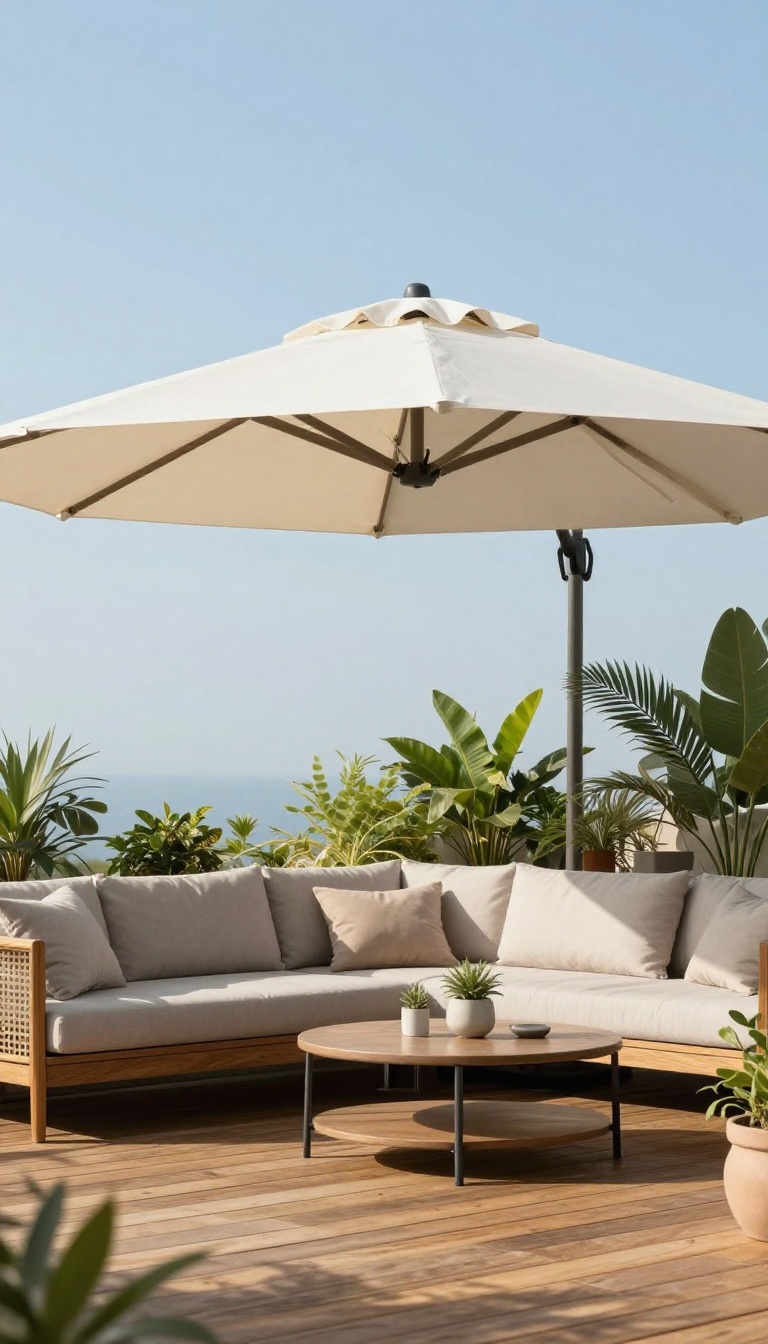
A sunny patio is lovely, but too much sun can drive you back inside. Shade is what makes your outdoor space usable from morning to evening, especially on those scorching summer days. Adding a shade solution not only protects you from harmful UV rays but also keeps your furniture from fading and your drinks from getting warm too fast.
The good news is you have plenty of options, from a simple portable umbrella to a permanent pergola. Each choice brings its own vibe and level of coverage. Let's break down the most popular shade solutions and how to pick the right one for your patio.
When it comes to shade, think about your patio's size, your budget, and how much sun you want to block. A large cantilever umbrella offers flexibility—you can tilt it and move it as the sun shifts. A pergola adds structure and charm, and you can top it with climbing vines or a retractable canopy for extra coverage.
A retractable awning is another great option, giving you shade on demand without blocking the view when you want it open. Whichever you choose, make sure it's sturdy enough to handle wind and weather. Look for UV-resistant fabric and rust-proof frames.
And don't forget to position your shade where you need it most—over the seating area, dining table, or a cozy reading nook.
Umbrella: Flexible And Budget-friendly
Umbrellas are the easiest way to add shade without a major installation. You can get a classic center-pole model or a cantilever one that hangs over your seating area from the side. Cantilever umbrellas are great for large tables or when you want to cover a lounger without a pole in the way.
Look for a sturdy base—if you're using it on a deck, a heavy paver or a wheeled base works well. Choose a fabric that's water-resistant and UV-protected, and pick a color that complements your patio decor.
Pergola: Style And Structure
A pergola is a permanent structure that adds architectural interest and a sense of enclosure. It provides partial shade with its slatted roof, but you can increase coverage by adding a canopy, shade cloth, or climbing plants like wisteria or grapevines. Pergolas work beautifully over outdoor dining areas or as a transition between your house and yard.
They require a bit more investment and installation, but they can dramatically boost your home's value and outdoor appeal.
Retractable Canopy Or Awning: Shade On Demand
If you want the option of full sun or full shade, a retractable canopy or awning is perfect. These can be mounted to your house or freestanding, and you can extend them when you need shade and retract them when you want to soak up the sun. They're especially handy for patios that face west and get intense afternoon heat.
Look for motorized options with a remote control for ultimate convenience, and choose fabrics that are fade-resistant and easy to clean.
7. Use Outdoor Curtains for Privacy and Softness
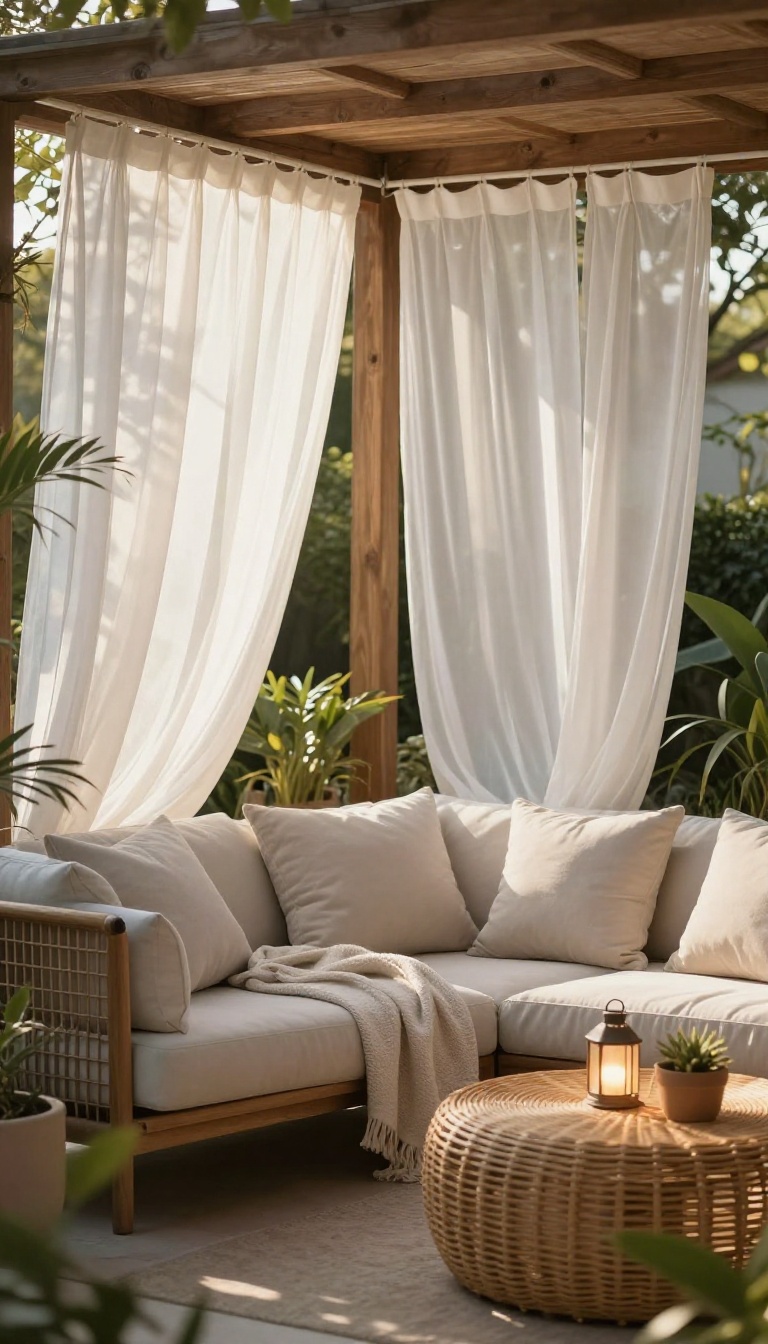
Curtains aren't just for windows. Outdoors, they can transform an open patio into a snug, private retreat. They block wind, filter harsh sunlight, and add a layer of softness that makes the space feel more like an outdoor room.
Hang weather-resistant curtains from a pergola, awning, or a simple curtain rod to create a sense of enclosure. Choose light, airy fabrics like polyester or acrylic that dry quickly and resist mildew. For a boho vibe, go with sheer white panels; for a cozier feel, pick heavier, earth-toned curtains.
Create A Cozy Nook
Use curtains to define a small seating area within a larger patio. Draw them partially closed to block a draft or to create an intimate corner for reading or conversation. This trick works especially well on balconies or small patios where you want to maximize every inch.
Block Wind And Sun
Outdoor curtains act as a flexible shield. On windy days, they can break the breeze and keep your space comfortable. In the afternoon, they can filter harsh sunlight, reducing glare and heat while still letting in natural light.
This makes your patio usable for longer periods.
Add A Touch Of Elegance
Curtains instantly soften the hard lines of outdoor furniture and architecture. They add movement and a touch of luxury, making your patio feel more polished. Choose colors that complement your outdoor palette—soft neutrals for a calm vibe, or bold stripes for a playful look.
8. Set Up a Fire Pit or Portable Heater for Cooler Nights
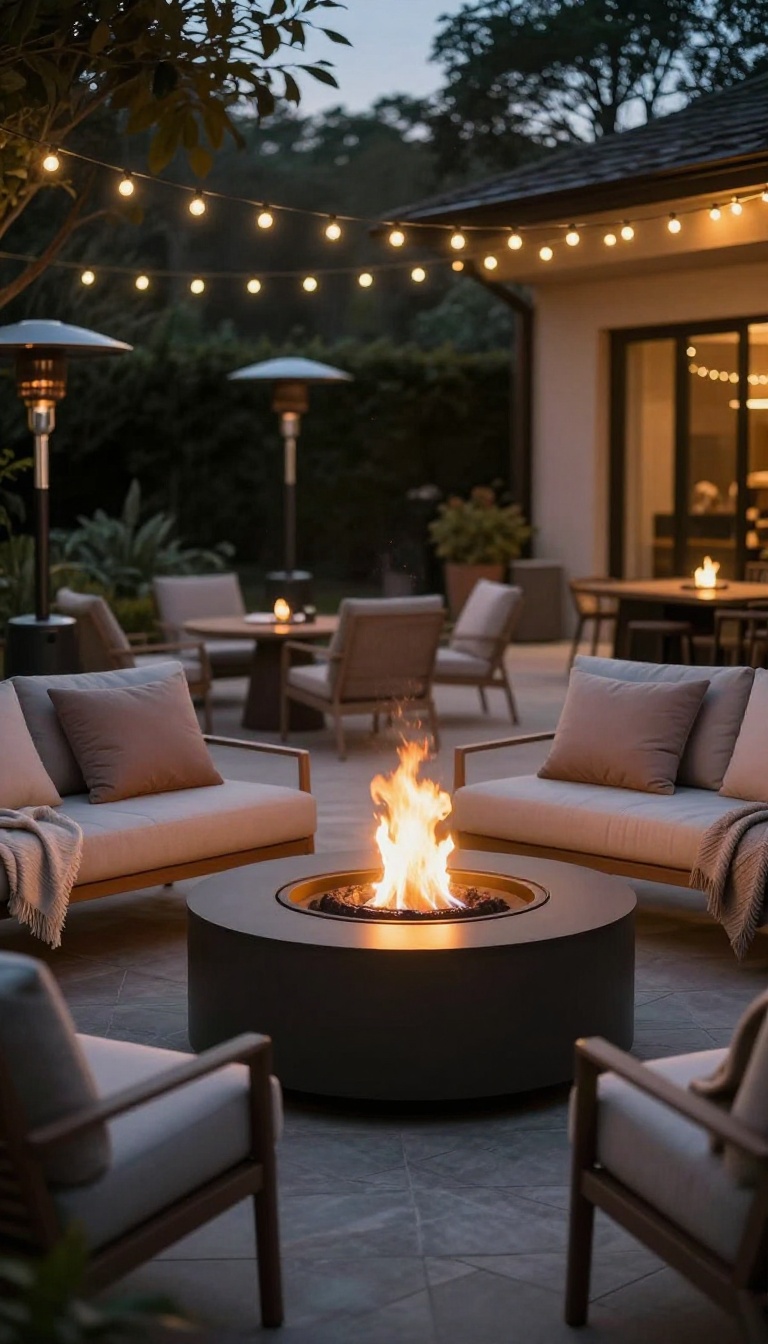
When the temperature dips, your patio doesn't have to go into hibernation. A fire pit or portable heater can turn a chilly evening into a cozy gathering spot. The gentle crackle of wood or the steady warmth of a heater invites people to linger a little longer, making those cooler nights just as enjoyable as summer ones.
Before you buy anything, think about your space and how you plan to use it. A fire pit is more of a focal point, great for roasting marshmallows and storytelling. A portable heater, on the other hand, is flexible and can be moved around to warm specific seating areas.
Both options have their perks, and the right choice depends on your patio's layout and your lifestyle.
Setting up a heat source isn't just about staying warm—it's about creating an inviting atmosphere that extends your outdoor living season. Here's how to make it work safely and stylishly.
Choosing The Right Fire Pit For Your Space
Fire pits come in wood-burning, propane, and natural gas varieties. Wood-burning pits offer that classic campfire feel and the aroma of burning wood, but they require more cleanup and a safe distance from structures. Propane and natural gas pits are cleaner and easier to control, with instant on/off flames.
Consider the size of your patio: a small brazier works well for a compact space, while a large bowl fire pit becomes a dramatic centerpiece on a bigger deck. Always check local regulations and your homeowner's association rules before installing one.
Portable Heaters: Flexibility And Convenience
If you want warmth without the commitment of a permanent fire pit, a portable patio heater is a great alternative. Propane models are common and can be moved around as needed, while electric heaters are ideal for covered patios or balconies where ventilation is a concern. Look for features like adjustable heat settings and tip-over safety switches.
Place the heater near seating areas, but keep it at least three feet away from anything flammable. A tall mushroom-style heater can radiate heat downward, warming a group of people sitting around it.
Safety First: Placement And Fuel Considerations
Where you place your heat source matters. Fire pits should sit on a non-combustible surface like concrete, stone, or brick, and be at least 10 feet away from your house, trees, or overhanging branches. Always keep a fire extinguisher or a bucket of sand nearby.
For propane heaters, check hoses and connections regularly for leaks. Electric models should be plugged into a GFCI outlet to prevent shocks. And never leave a fire or heater unattended, especially with kids or pets around.
Creating A Cozy Vibe Around The Heat
Once you have your heat source, think about how to arrange your furniture to make the most of it. Angle chairs and sofas toward the fire or heater to encourage conversation. Add soft throws and cushions for extra warmth and comfort.
String lights overhead can add a warm glow, and a side table for drinks and snacks keeps everything within reach. The goal is to create a welcoming nook that feels like an extension of your living room, just with a better view.
9. Add a Dining Area with a Compact Table and Chairs
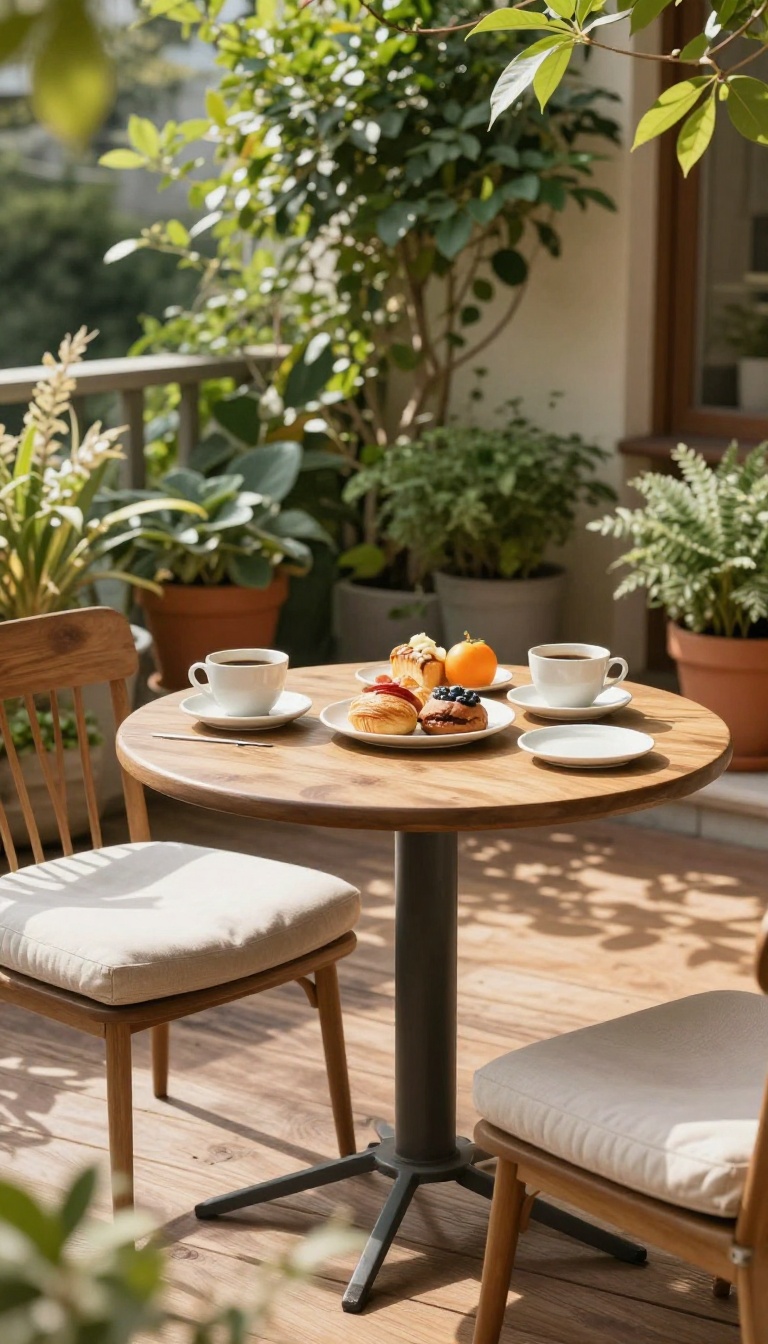
Outdoor meals just hit different. The fresh air, the sounds of birds, and the warm breeze make everything taste better. If you love eating outside, a dedicated dining area is a must.
But you don't need a huge space or a massive table to make it work.
A compact dining set can transform a small patio into a cozy spot for breakfast, lunch, or dinner. The trick is to choose pieces that fit your space without overwhelming it. Look for tables that fold or have drop leaves, and chairs that stack or tuck neatly underneath.
This way, you can enjoy a full meal outdoors without sacrificing precious square footage.
Choose The Right Size
Measure your patio before you buy anything. You want enough room to pull chairs out and move around comfortably. A bistro table with two chairs works well for tight corners or balconies.
If you have more space, a four-seater round table encourages conversation and fits easily. Remember, you can always add extra seating with benches or stools when guests come over.
Pick Materials That Last
Since your dining set will live outside, choose materials that can handle the elements. Aluminum and teak are lightweight and durable. Wicker or rattan look charming but may need extra care.
Powder-coated steel is another sturdy option. If you go with wood, make sure it's treated for outdoor use. Cushions should be water-resistant and easy to clean, so you can leave them out without worry.
Make It Comfortable And Functional
Add a few outdoor pillows to make the chairs more inviting. A small side table or cart nearby can hold drinks, condiments, or a lantern. Consider a freestanding umbrella or a shade sail to keep the sun off your food and face.
With these simple touches, your dining area becomes a place where you'll want to linger long after the plates are empty.
10. Create a Cozy Corner with a Hanging Chair or Hammock
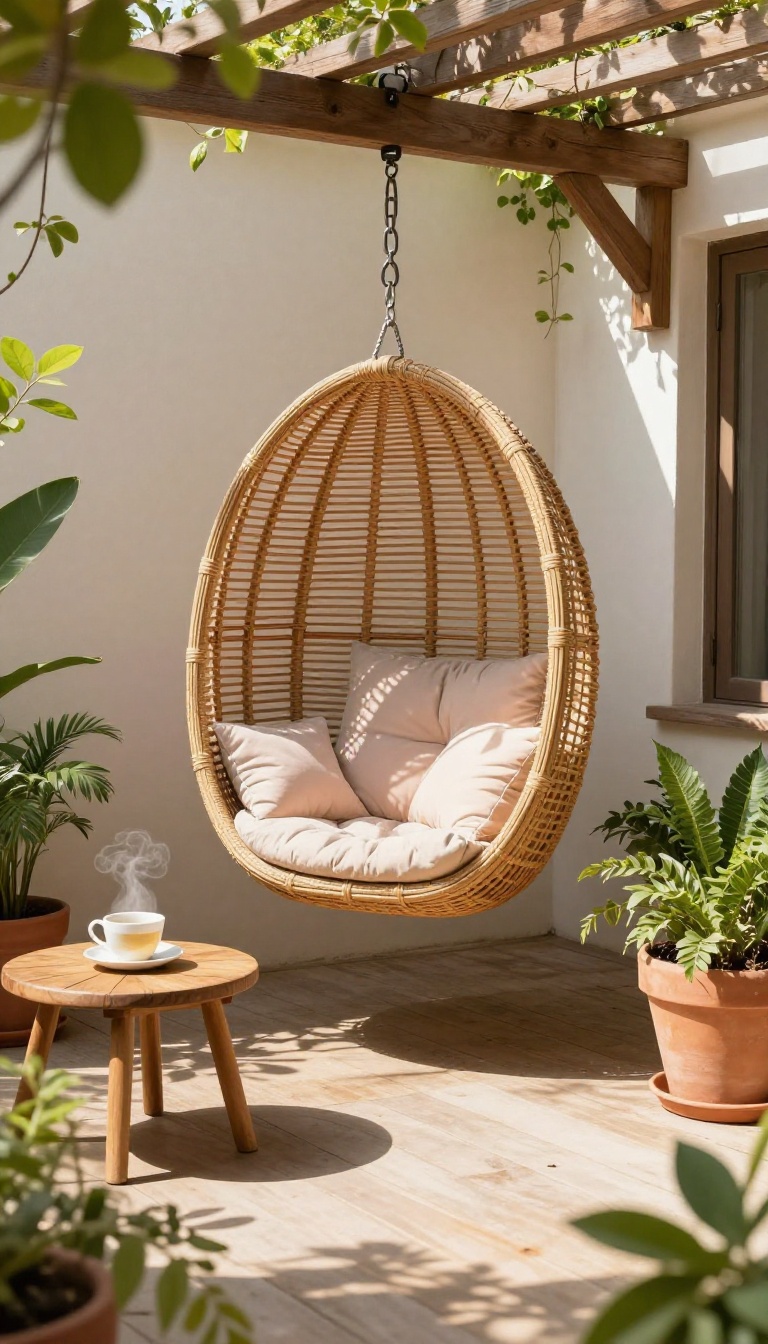
A hanging chair or hammock instantly turns an unused corner into the most sought-after seat on the patio. The gentle sway and suspended feel create a private nook that invites you to slow down. Whether you're curling up with a book or just watching the clouds, this addition brings a touch of whimsy and relaxation.
The right hanging piece depends on your space and how you plan to use it. A sturdy tree branch or pergola beam can support a classic hammock, while a stand-alone frame works well on decks or balconies. For smaller patios, a hanging egg chair takes up less floor space and adds a modern, cocoon-like feel.
Think about the materials too—woven rattan, canvas, or weather-resistant fabric all bring different vibes and levels of durability.
Choosing The Right Hanging Seat
Match the hanging seat to your patio's structure and your comfort needs. Hammocks are perfect for stretching out, but they need about 10 to 15 feet of clearance. Hanging chairs, like egg or pod styles, require less space and offer back support, making them great for reading or chatting.
If you're renting or don't want to drill into walls, a portable hammock stand or a chair with its own frame gives you flexibility.
Placement And Safety Tips
Place your hanging seat where it gets the right amount of shade and a good view. Avoid high-traffic walkways so it doesn't become an obstacle. Always check the weight rating and ensure the mounting point is secure—use a beam, a sturdy branch, or a ceiling joist.
For extra safety, use a heavy-duty hanging kit with proper hardware and consider a weatherproof cover when not in use.
Accessorizing Your Cozy Corner
Layer in soft touches to make the corner even more inviting. Add a plush outdoor cushion or a throw blanket for chilly evenings. A small side table or a hanging shelf can hold your drink or book.
String lights or a lantern nearby create a warm glow as the sun sets. Potted plants around the base help blend the corner into the garden and add privacy.
11. Accessorize with Outdoor Pillows, Throws, and Decor
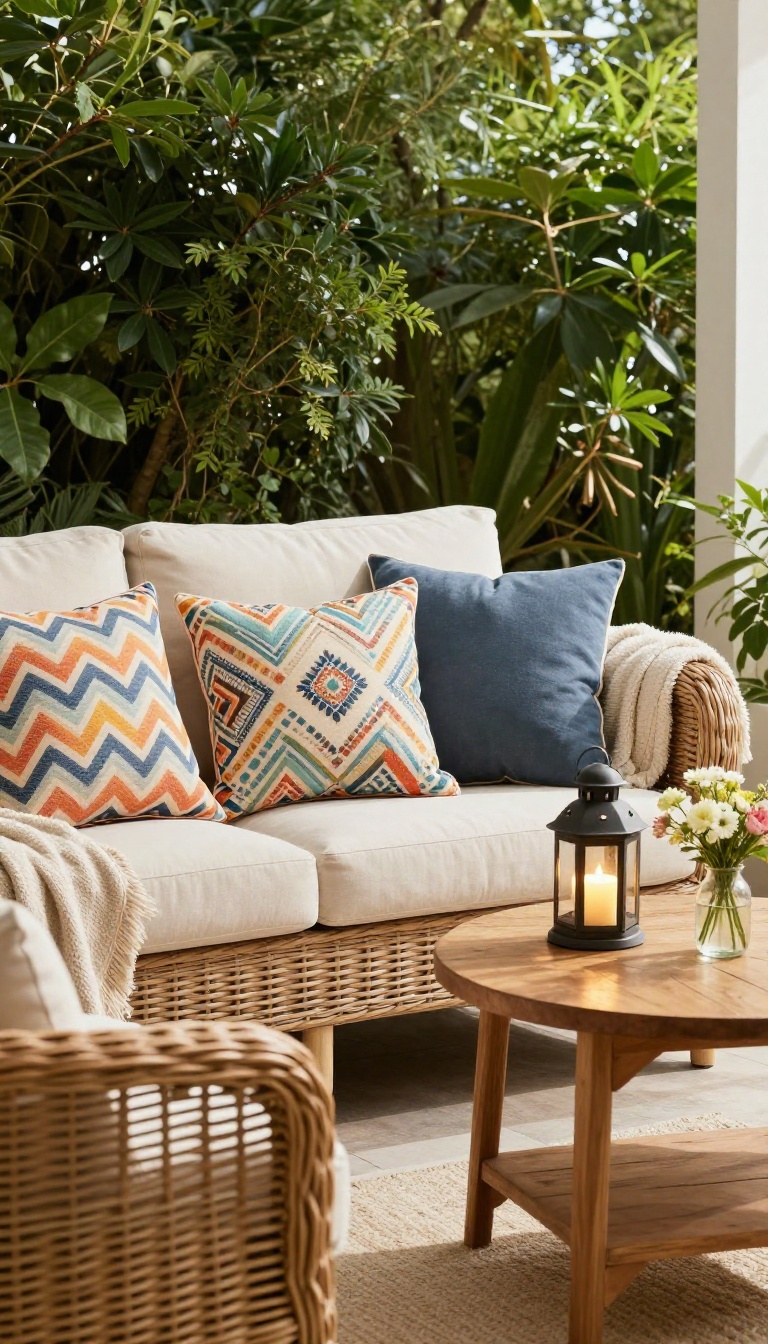
The final touch is all about personality. Outdoor pillows, throws, and decor turn a functional patio into a space that feels like an extension of your home. These details add color, texture, and warmth, making the area more inviting for lazy weekends and lively get-togethers.
Start with weatherproof pillows in a mix of patterns and solids. Choose fabrics that resist fading and mildew, like solution-dyed acrylic or polyester. Arrange them on chairs, benches, and even the ground for a relaxed vibe.
Add a few soft throws for cooler evenings—they're practical and add a cozy layer. Then, bring in decor that reflects your style: lanterns for a warm glow, vases with fresh or dried flowers, and wall art that can handle the elements. These small touches make the patio feel curated and personal.
Pick Pillows That Pop
Mix and match colors and patterns to create visual interest. Go bold with a vibrant print or keep it subtle with neutral tones. Just make sure they're made for outdoor use—they'll resist sun damage and rain.
Don't be afraid to layer different sizes and shapes for a more relaxed, inviting look.
Layer In Throws For Cozy Evenings
Throws are perfect for those nights when the temperature drops. Drape them over the back of a chair or keep a basket nearby for easy access. Choose materials like outdoor fleece or cotton that dry quickly and feel soft against the skin.
They add a touch of warmth and comfort that makes the patio feel like a living room.
Add Decor That Tells A Story
Decorative accents are where your personality shines. Lanterns with candles create a magical glow after dark. Vases with fresh flowers or dried grasses bring life and color.
Wall art, like metal sculptures or weatherproof canvases, adds a focal point. Mix and match pieces that mean something to you—a vintage find, a souvenir from a trip, or a handmade item. The goal is to make the space feel uniquely yours.
FAQ
What is the best way to arrange patio furniture for conversation?
Place seating pieces facing each other, ideally around a central focal point like a fire pit or coffee table. Keep walkways clear and maintain a distance of 3-4 feet between seats for easy conversation.
How can I make a small patio feel larger?
Use light colors, mirrors, and vertical storage. Choose multi-functional furniture like benches with storage, and avoid overcrowding. A single large rug can also unify the space.
What are the most durable materials for outdoor furniture?
Teak, aluminum, and all-weather wicker are excellent choices. They resist moisture, UV rays, and temperature changes. Look for powder-coated frames and quick-dry foam cushions.
How do I protect my patio furniture from the elements?
Use furniture covers when not in use, store cushions indoors, and apply protective sealants to wood. Consider placing furniture under a pergola or awning for extra protection.
What are some budget-friendly patio setup ideas?
Shop secondhand, DIY pallet furniture, use string lights for ambiance, and incorporate plants from cuttings. Repurpose indoor items like rugs or side tables that can withstand outdoor conditions.
Conclusion
Transforming your patio into a comfortable retreat doesn't require a huge budget or professional help. Start with a clear vision and tackle one idea at a time—whether it's adding a cozy seating nook or stringing up lights.
Remember, the best patio setup reflects your personal style and how you love to spend your time outdoors. So, grab a notepad, pick your favorite ideas, and start creating a space you'll never want to leave.