15 Small Boys Bedroom Ideas Designed for Play and Sleep
Designing a small bedroom for a boy means balancing energy with rest, and play with practicality. You don't need a massive space to create a room that sparks imagination and still winds down at night.
These 15 ideas focus on smart layouts, clever storage, and cozy corners that work hard for both active days and peaceful sleep. From loft beds that open up floor space to themed nooks that invite adventure, each suggestion is easy to adapt to your child's needs.
Whether you're tackling a tiny room or just want to refresh what's there, you'll find simple, budget-friendly ways to make the most of every square foot.
1. Loft Beds: The Ultimate Space Saver
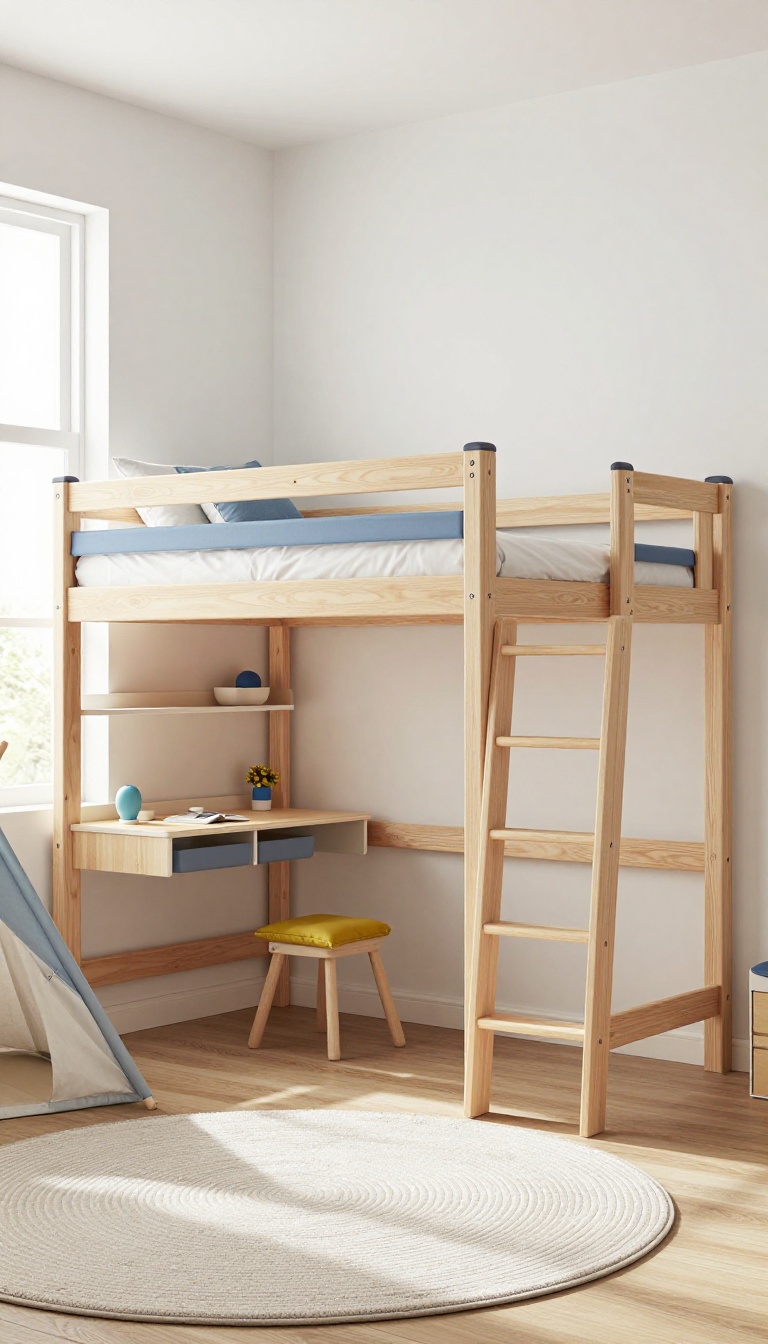
When floor space is tight, look up. Loft beds lift the mattress high enough to turn the area below into a mini command center. That extra room can become a reading nook, a play zone, or a quiet spot for homework—without adding a single square foot.
The best part? Most loft beds are sturdy and safe for kids, with guardrails and ladders designed for little climbers. You'll gain a whole new layer of functionality, and your son will love having his own secret hideaway underneath.
Loft beds are a game-changer for small rooms. By raising the bed, you instantly create a second zone that can be used for play, study, or storage. This setup works especially well for boys who need space to build, imagine, and move around.
When choosing a loft bed, look for one with a solid frame and a weight limit that matches your child's size. Some models come with built-in desks, shelves, or even a small couch underneath. Others are more basic, leaving the space open for you to customize.
Safety is key: make sure the guardrails are high enough, the ladder is secure, and there's no gap between the mattress and the frame. A good rule of thumb is to wait until your child is at least six years old before moving to a loft bed, but always check the manufacturer's recommendations.
Create A Cozy Play Zone Underneath
Turn the space below the bed into a dedicated play area. Add a soft rug, a few bean bags, and a small tent or canopy to make it feel like a fort. This gives your son a private spot to read, play with toys, or just hang out.
You can also hang a curtain or fabric to create a sense of enclosure, which makes the space feel even more special.
Add A Study Station Or Storage
If your son needs a place to do homework, place a small desk or a lap desk under the loft. Add shelves or cubbies to keep books, art supplies, and school materials organized. This way, the loft bed serves double duty—sleeping and studying—without taking up extra floor space.
You can even mount a pegboard or a wall organizer for easy access to frequently used items.
Pick The Right Loft Bed Style
Not all loft beds are the same. Some come with a built-in desk, while others have a futon or a small couch underneath. Think about what your son needs most.
If he loves building with blocks or LEGOs, a low, open space might be better. If he loves reading, a cozy corner with pillows and a bookshelf could be ideal. Measure your room carefully to ensure the bed fits comfortably without blocking windows or doors.
2. Wall-Mounted Storage: Keep the Floor Clear
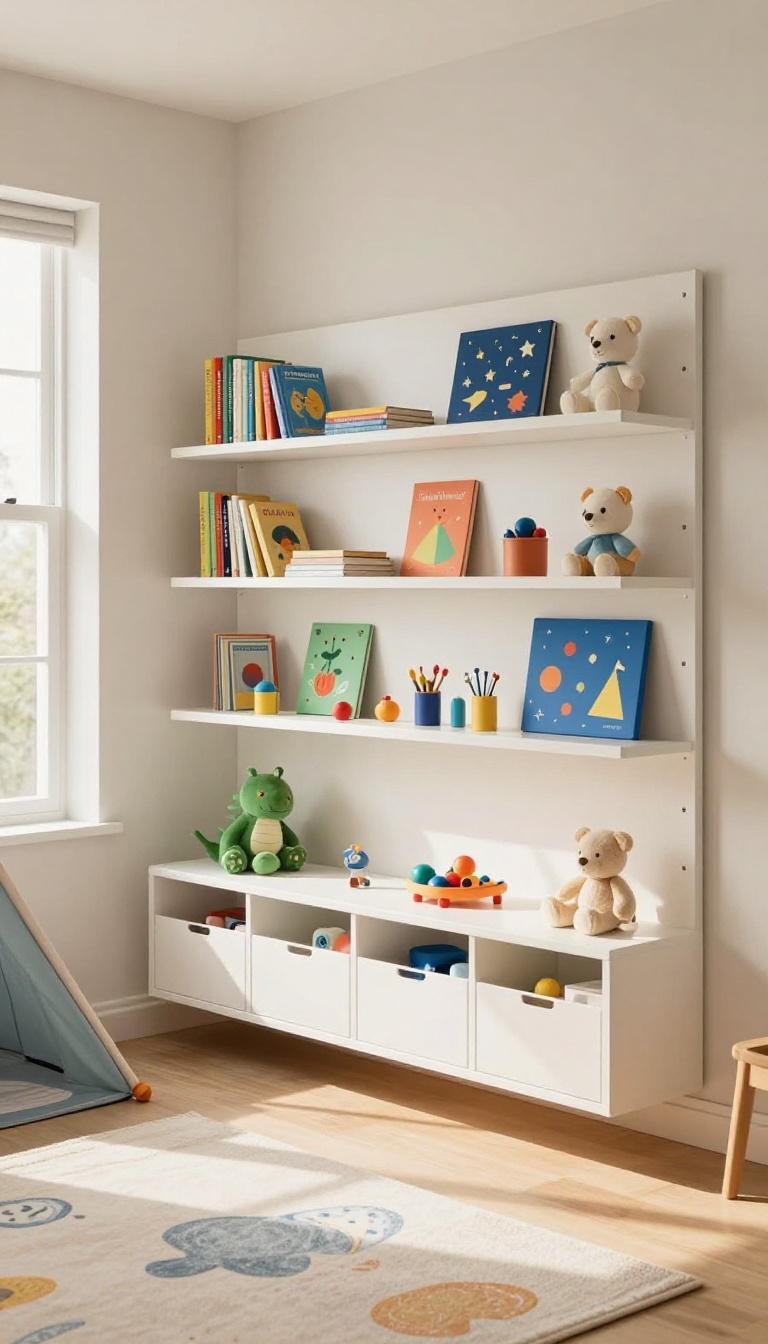
When wall space goes unused, you're missing out on prime real estate. Floating shelves, pegboards, and wall bins can lift toys and books off the floor, giving your little one more room to run, build, and play. Plus, cleanup becomes a breeze when everything has a designated spot on the wall.
The Power Of Vertical Storage
In a small room, the floor is precious. Wall-mounted storage shifts the clutter upward, opening up the center of the room for active play. It also keeps toys within easy reach, encouraging your child to put things away without a struggle.
And because everything is visible, it’s easier for kids to find what they need and know where it goes.
Choosing The Right Wall Storage
Mix and match floating shelves for books and display items, pegboards for art supplies and small toys, and wall bins for larger items like stuffed animals or building blocks. Opt for sturdy materials that can hold weight, and install them at a height your child can reach. Use color-coordinated bins or baskets to keep the look tidy and playful.
Safety And Style
Always secure storage to wall studs to prevent tipping. Choose rounded edges and non-toxic finishes for safety. To keep it stylish, pick a consistent color scheme or use natural wood tones that blend with the room’s decor.
You can even let your child personalize their storage with labels or chalkboard paint.
3. Multi-Functional Furniture: Beds with Built-In Drawers
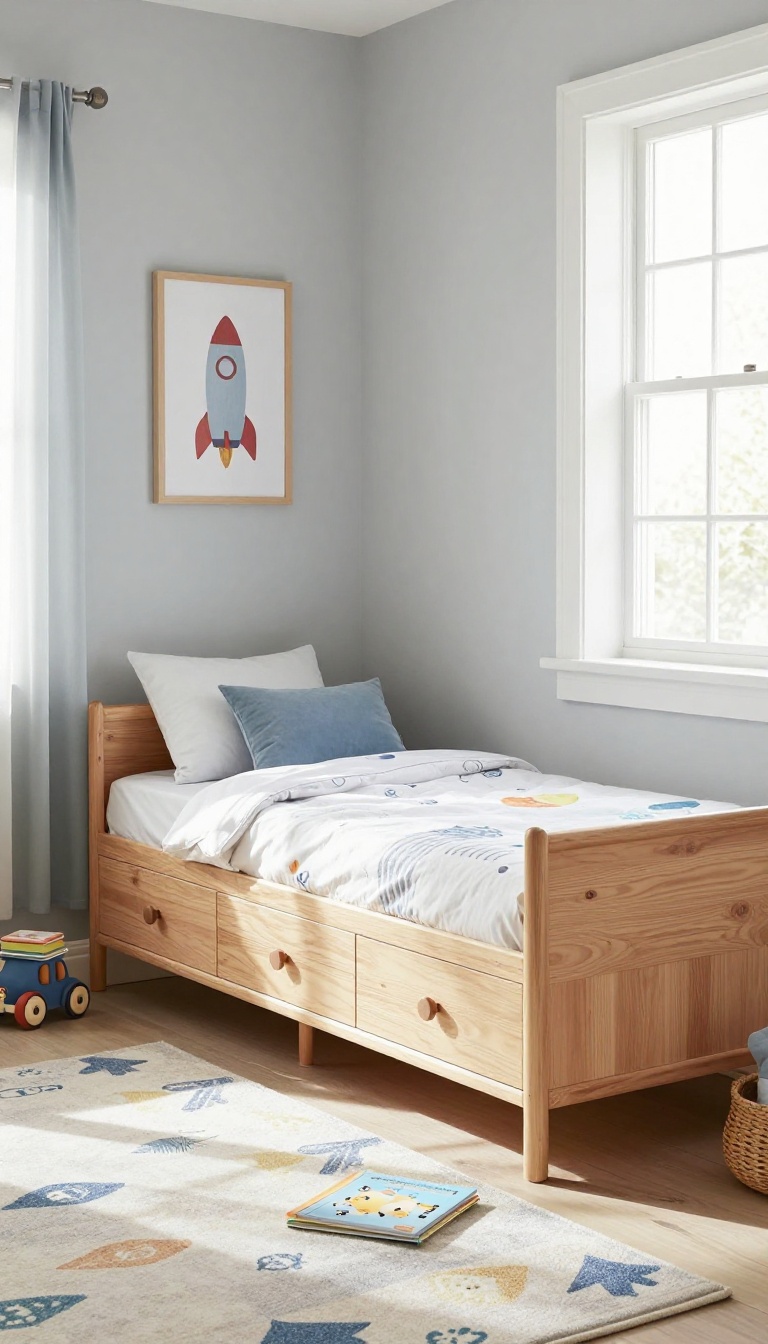
When you're working with a small room, every piece of furniture should earn its keep. A bed with built-in drawers does exactly that, turning the space underneath into a hidden storage powerhouse. It's a simple swap that can clear clutter and keep the floor looking tidy.
The right bed can do double duty. Instead of a basic frame, choose one with drawers integrated into the base. These are perfect for storing off-season clothes, extra bedding, or the growing collection of toys that always seems to multiply.
You'll free up closet space and make it easier for your child to grab what they need without digging through piles.
Drawer Configurations That Work
Not all drawer beds are created equal. Some have two large drawers, others have four smaller ones. Think about what you'll store.
Deep drawers are great for bulky items like sweaters or comforters, while shallower ones work well for toys, books, or shoes. Some beds even come with a mix, giving you flexibility. Consider a trundle drawer that pulls out for extra sleeping space when a friend stays over—it's a clever way to host sleepovers without sacrificing floor space.
Styling And Safety Tips
When picking a bed with drawers, make sure the drawers glide smoothly and have safety stops to prevent them from being pulled out all the way. Look for rounded corners and sturdy construction. To keep the room looking cohesive, match the drawer fronts to the bed frame or choose a contrasting color for a fun pop.
You can also add labels or color-coded bins inside the drawers to help your child stay organized—turning cleanup into a game.
4. Corner Desks: Maximize Awkward Nooks
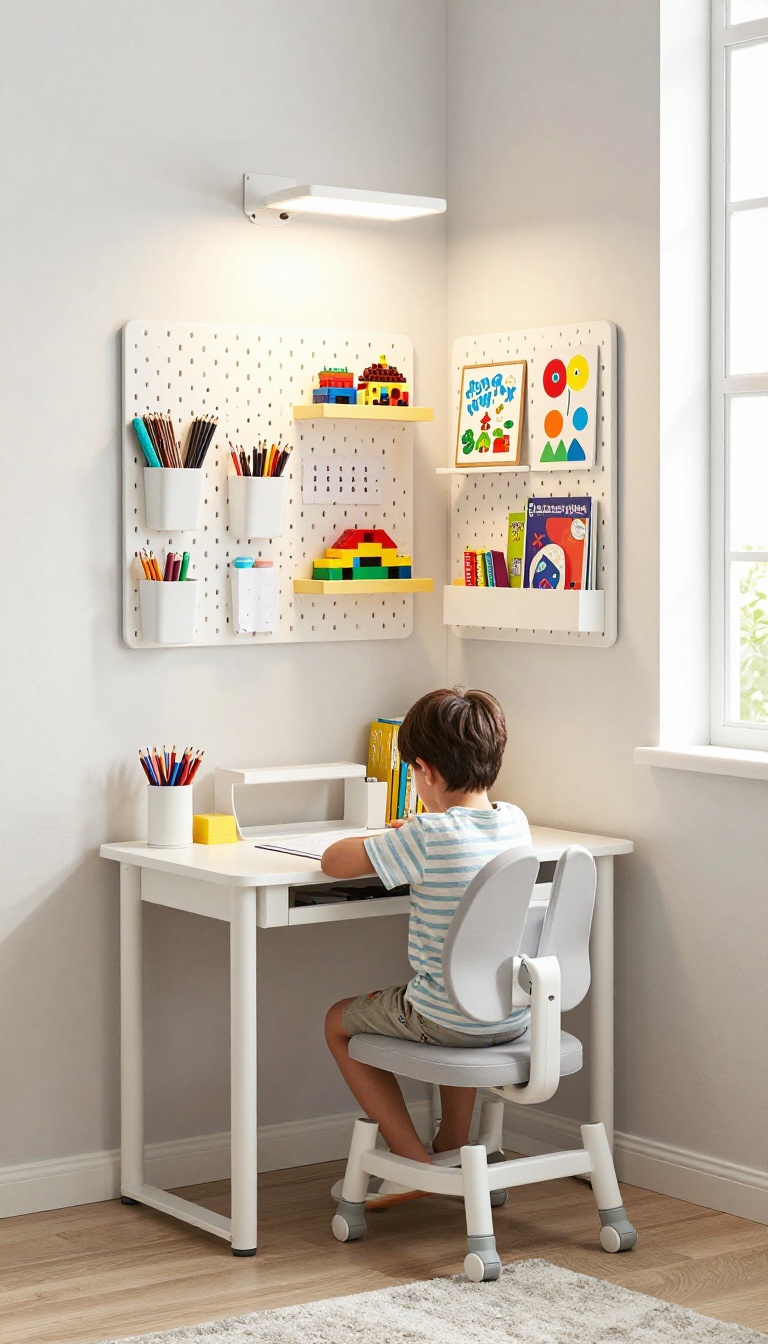
Every small bedroom has that one corner that seems too narrow for anything useful. Instead of leaving it empty, a compact corner desk turns that dead space into a dedicated spot for homework, drawing, or building LEGO masterpieces. It's a simple switch that makes the room feel more complete without eating up valuable floor area.
A corner desk fits snugly into the angle where two walls meet, making use of space that would otherwise go to waste. Pair it with a small chair that tucks underneath when not in use, and you've got a functional workstation that doesn't crowd the room. Wall-mounted organizers above the desk keep pencils, paper, and other supplies within easy reach, so everything has a place and the surface stays clear for actual work.
Choosing The Right Size And Style
Measure the corner carefully before buying. Look for desks with a depth that leaves enough room to walk past comfortably. A floating desk that attaches to the wall can free up floor space even more, and it's easy to adjust the height as your child grows.
If you prefer a freestanding option, choose one with rounded edges and a compact footprint.
Making It Work For Play And Study
This corner can double as an art station or a quiet reading nook. Add a small pegboard or a few shelves to display finished projects or favorite books. A soft chair cushion or a small rug underneath makes the spot more inviting.
Keep the area flexible so it can adapt to whatever activity your child is into that week.
Lighting And Organization Tips
Good lighting is essential for a desk corner. A clip-on LED lamp or a small battery-operated light can brighten the space without taking up much room. Use clear jars or caddies for supplies so they're visible and easy to grab.
Label drawers or bins to help your child keep track of their things, and encourage them to tidy up after each session.
5. Themed Canopies: A Cozy Play Retreat
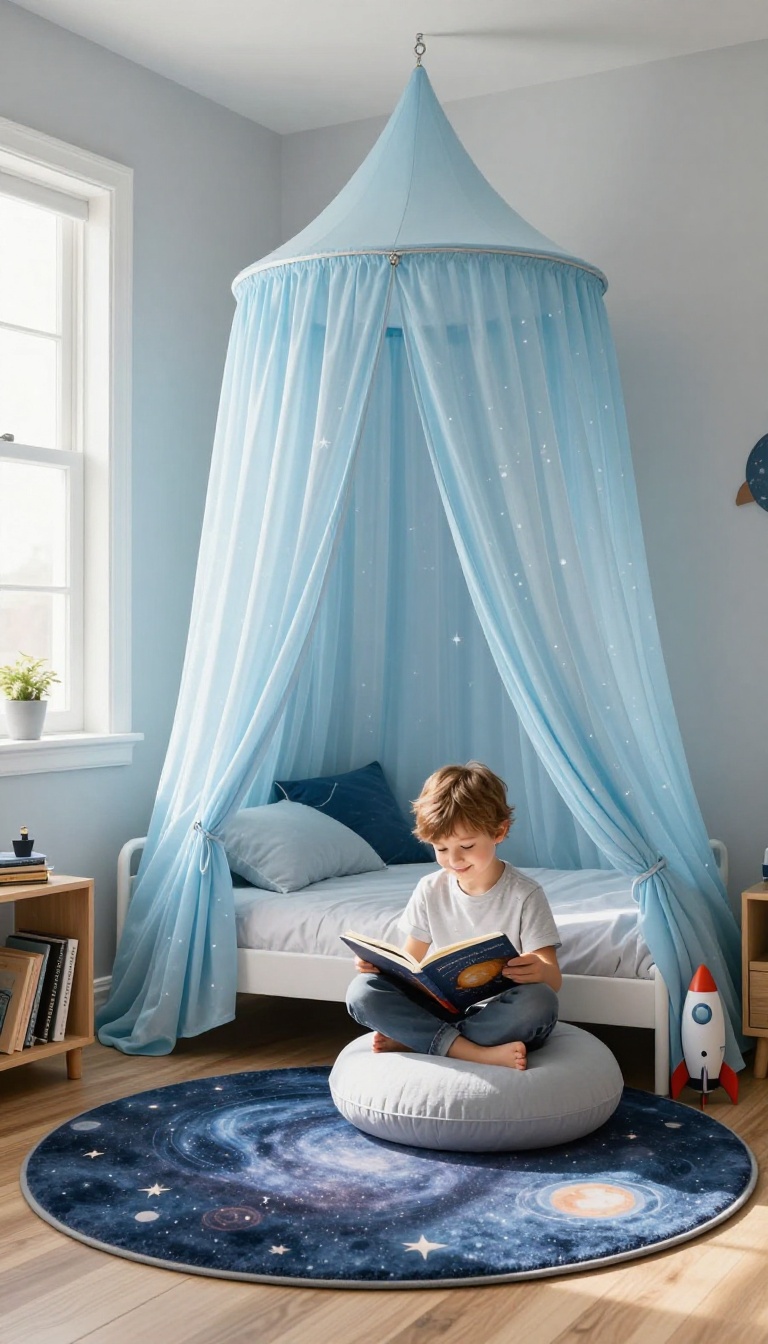
A canopy can turn a plain corner into a secret fort, a spaceship, or a knight's castle. It's a simple addition that adds a big dose of imagination without eating up floor space. Plus, it gives your little guy a cozy nook for reading, daydreaming, or just hiding out from the world.
Themed canopies are a win-win for small rooms. They create a defined play zone that feels special, and they also soften the room visually, making it feel more inviting. Best of all, they're easy to install and can be changed as your child's interests evolve.
Choosing The Right Canopy
Think about the theme your child loves. A space-themed canopy with stars and planets can turn bedtime into an intergalactic adventure. For a jungle vibe, go with leafy greens and animal prints.
You can also find simple, neutral canopies and add your own decorations, like hanging toy planes or fairy lights.
Hanging And Safety Tips
Make sure the canopy is securely fastened to the ceiling or a sturdy frame. Avoid long, loose fabric that could be a tripping hazard. Use lightweight materials and check regularly for wear and tear.
If you're renting, consider a tension rod or a free-standing canopy frame that doesn't require drilling.
Making It A Multi-purpose Space
Use the canopy area for more than just play. Place a small beanbag or floor cushion inside for reading time. Add a soft rug and a low shelf for books or toys.
This way, the canopy becomes a cozy retreat for quiet activities, not just a play fort.
6. Vertical Storage Towers: Reach for the Sky
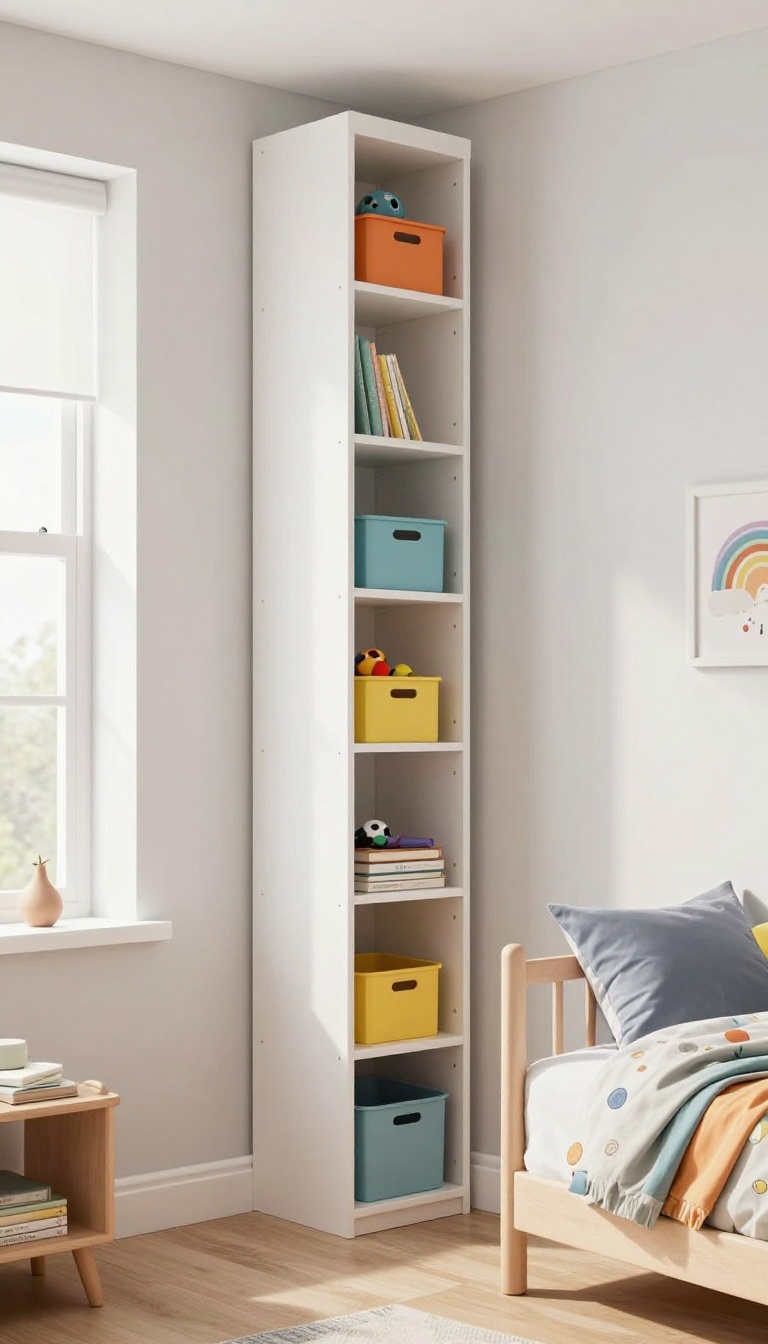
When floor space is at a premium, the answer is right above eye level. Vertical storage towers make use of the room's height, turning empty wall space into a functional storage hub. They keep toys, books, and clothes organized without eating into the precious play area.
A tall, narrow tower can hold a surprising amount. Think of it as a bookshelf, toy bin, and dresser all in one. The key is to anchor it securely to the wall – safety first, especially in a kid's room.
Place everyday items like favorite books or current toys on the lower shelves, so your little one can reach them easily. Higher shelves can hold seasonal clothes, extra bedding, or display items that are less frequently touched.
Choosing The Right Tower
Look for a tower with a small footprint but multiple shelves. Open shelving makes it easy to see what's inside, while closed cabinets hide clutter. A mix of both works well.
Consider the depth – a shallow tower (around 12 inches) is perfect for books and small toys, while a deeper one can store bins and baskets.
Safety And Stability
Always anchor the tower to the wall using sturdy brackets or straps. This prevents tipping, especially if your child likes to climb. Place heavier items on the bottom shelves to keep the center of gravity low.
Check the stability regularly, especially after rearranging.
Styling And Organization
Use matching bins or baskets to group similar items – one for LEGOs, one for cars, one for art supplies. Label the bins with pictures or words so your child knows where everything goes. This makes cleanup a breeze and teaches organization skills.
You can also add a few personal touches like a small plant or a framed picture on the top shelf.
7. Under-Bed Storage: The Hidden Gem
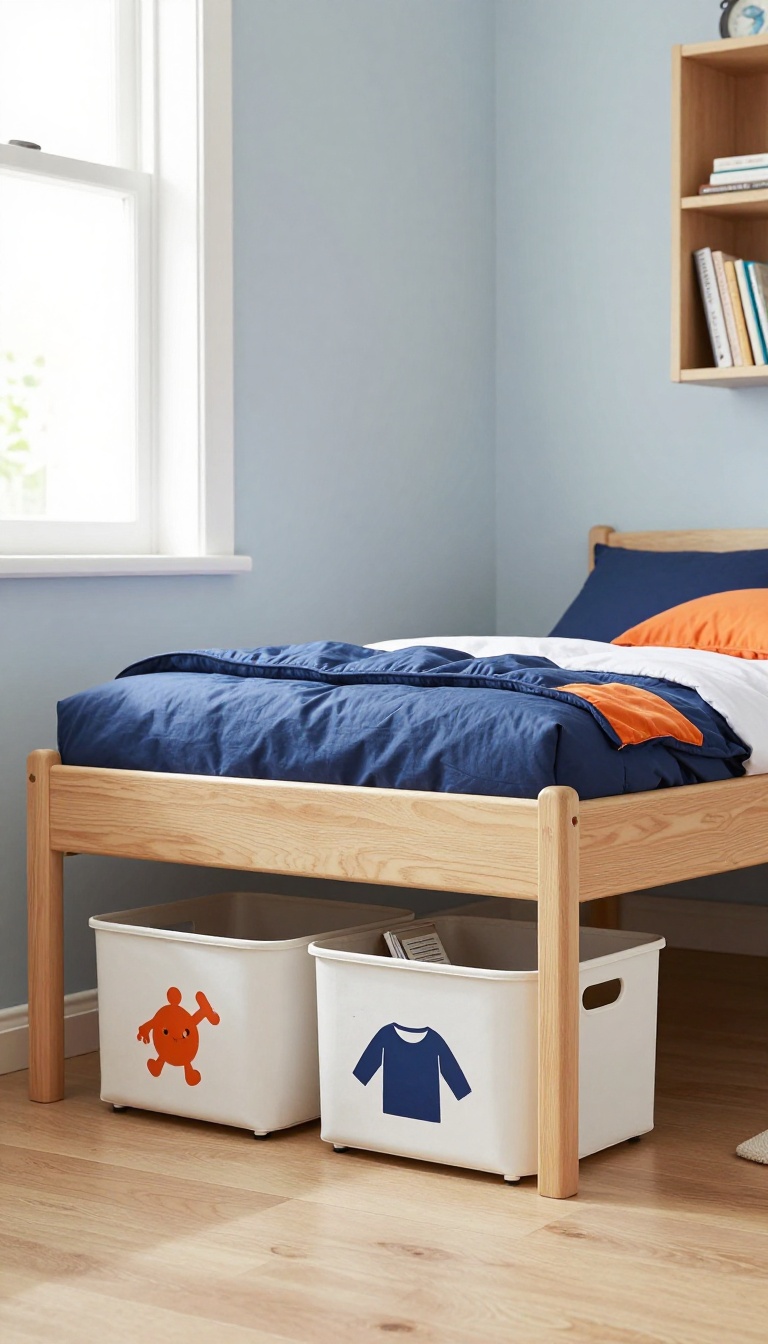
You've probably looked at the space under the bed and seen a dust bunny farm. But that gap is prime real estate for keeping a small room tidy. With the right storage, you can stash away the stuff that tends to pile up on the floor or the dresser, and it won't cost you any floor space.
Under-bed storage is a lifesaver in a small bedroom. It's out of sight, which means less visual clutter, and it's easy to access if you choose the right containers. This idea works for any age, from toddler to teen, and it's a smart way to keep the room feeling bigger than it is.
Pick The Right Containers
Rolling bins are your best friend here. They slide out smoothly, so even a kid can grab their own toys without a struggle. Flat drawers on wheels work well for clothes or extra bedding.
For seasonal items like winter coats or summer shorts, vacuum-sealed bags shrink them down to almost nothing, leaving more room for the stuff they actually use.
What To Store
Off-season clothes are a no-brainer, but don't stop there. Extra bedding, like a spare blanket or pillow, fits perfectly. Toys that don't get played with daily can live under there too, and you can rotate them out to keep things fresh.
If your child has a growing collection of books, flat bins can hold a bunch without taking up shelf space.
Keep It Accessible
The key is to make it easy for your child to use. Label the bins with pictures or words so they know where things go. Keep the heaviest items in bins with wheels, and avoid stacking them too high—you want to be able to slide them out without a tug-of-war.
A simple hook or handle on the bin makes it even easier for little hands.
8. Wall-Mounted Reading Nook: A Cozy Corner
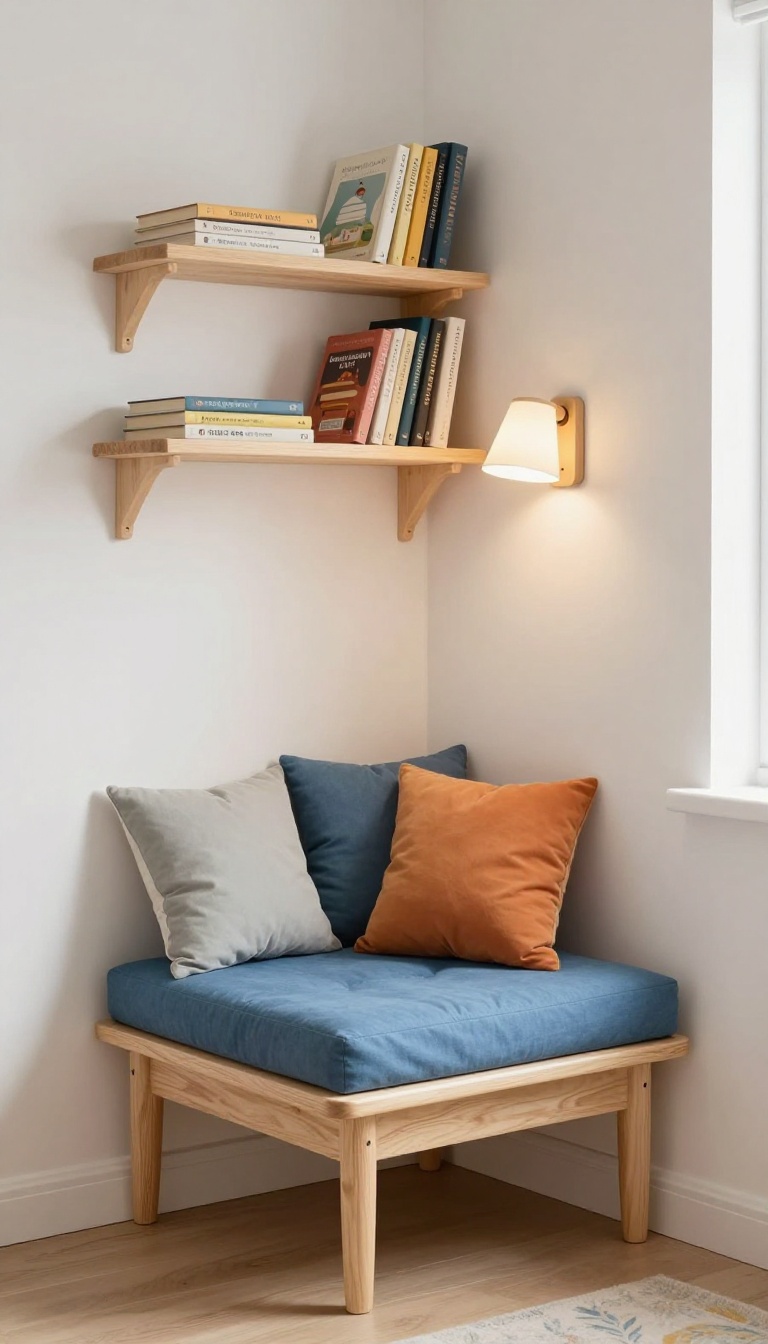
Even in a small room, there's often a bit of wall that's not doing much. Turning that into a reading nook gives your child a quiet retreat without eating up floor space. A simple floating shelf or bench with cushions can become their favorite spot to unwind.
Start by picking a wall that's not in the main traffic path. A corner or a spot near a window works well. Mount a sturdy shelf or a small bench at a height your child can easily climb onto.
Add a soft cushion and a couple of pillows to make it comfy. A wall-mounted lamp right above provides focused light for reading without taking up surface space. Keep a small basket or a few shelves nearby for books so everything stays within reach.
This nook not only encourages reading but also gives your child a sense of ownership over their space.
Choosing The Right Spot
Look for a wall that's not too close to the door or closet to avoid distractions. A spot near a window offers natural light during the day, but make sure it's not drafty. If the room has an awkward corner, that can be perfect for a snug nook.
Safety And Sturdiness
Make sure the shelf or bench is anchored securely into wall studs. Use brackets rated for the weight of a child. Avoid sharp edges and choose rounded cushions.
Check the nook regularly for any loose screws or wear.
Making It Inviting
Let your child pick a fun cushion color or a small throw blanket. Add a string of fairy lights or a small clip-on book light for extra coziness. Rotate books regularly to keep the selection fresh and exciting.
9. Fold-Down Desk: Work When You Need It
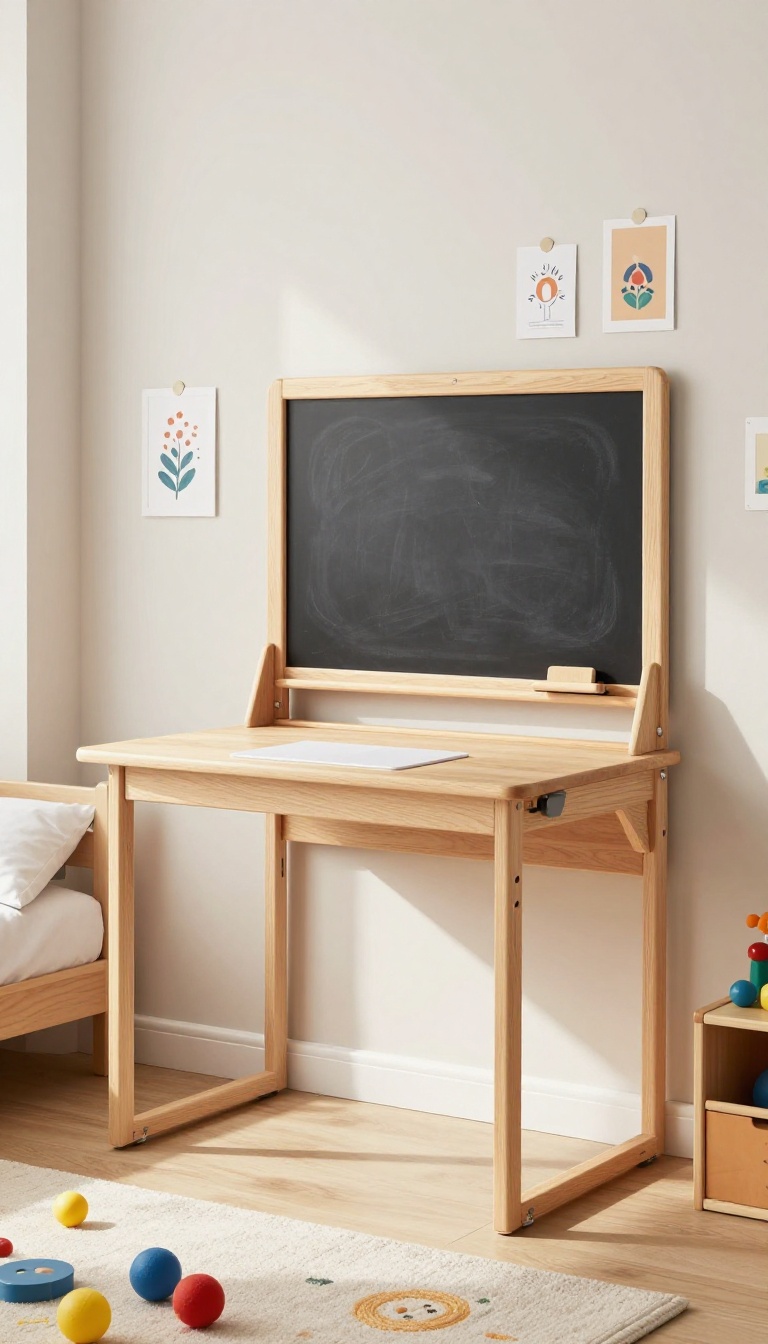
A fold-down desk is a clever way to add a study or craft area without sacrificing precious floor space. When it's closed, it's just a slim panel on the wall, leaving the room open for play. When open, it offers a sturdy surface for homework, drawing, or building LEGO masterpieces.
This space-saving solution is perfect for small bedrooms that double as playrooms. You can mount it at the right height for your child, and when it's not in use, simply fold it up and out of the way. It's like having a secret workspace that appears only when you need it.
Choosing The Right Fold-down Desk
Look for a desk with a locking mechanism that keeps it securely in place when open. Consider the weight capacity—it should hold books, a laptop, and art supplies without wobbling. Some models come with built-in shelves or a chalkboard surface, adding extra functionality.
Making It Comfortable And Useful
Pair the desk with a comfortable chair that can be tucked underneath when the desk is folded. Add a small lamp or a clip-on light for focused work. You can also attach a pencil holder or a small caddy to the underside of the desk to keep supplies within reach but hidden when folded.
Styling It To Match The Room
Choose a fold-down desk that blends with the room's decor—paint it a fun color or leave it natural wood. When closed, it can double as a display area for artwork or a small chalkboard for notes. This keeps the room looking tidy while still offering a dedicated workspace.
10. Play Tent or Teepee: Instant Fun Zone
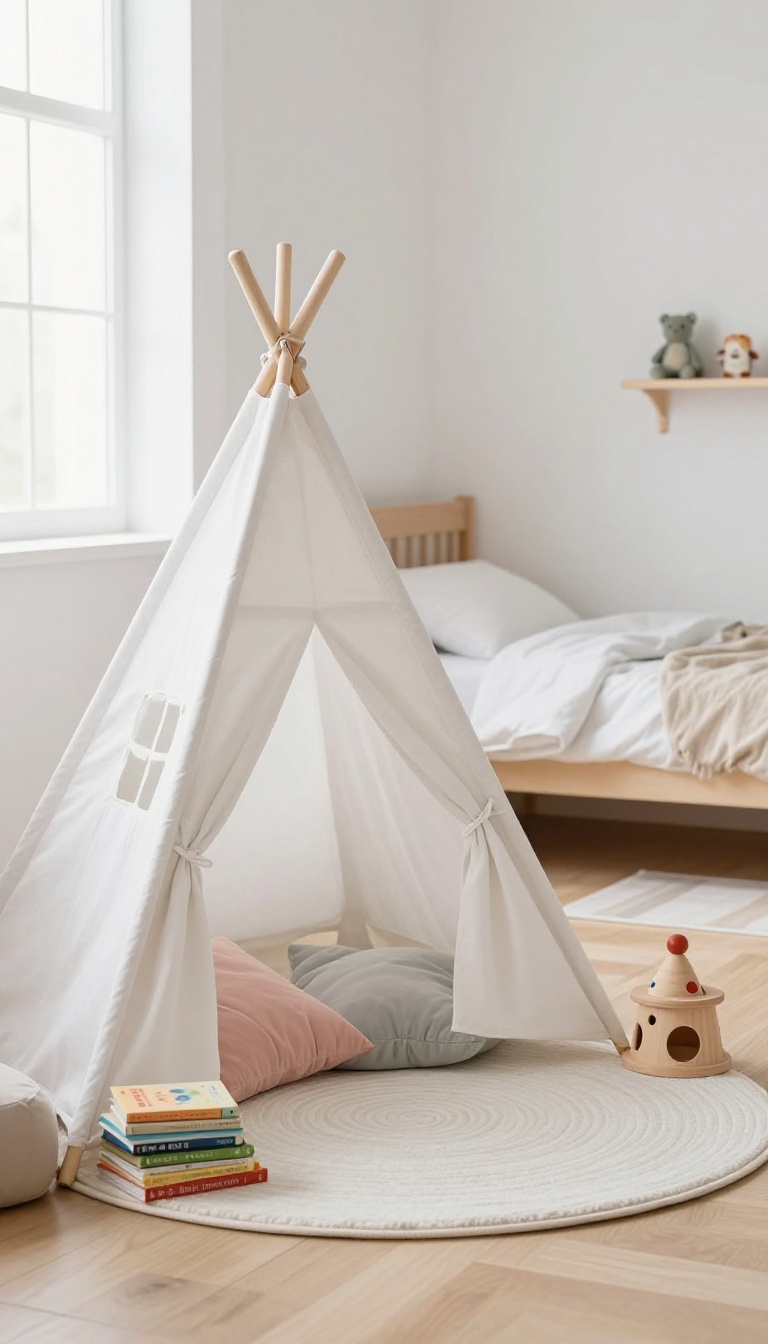
A pop-up tent or teepee can transform a plain corner into a magical hideaway without any permanent changes. It's a flexible addition that gives kids their own little world while keeping the room easy to rearrange. Whether it's for reading, playing, or just hanging out, a tent adds instant charm and function.
Tents and teepees are perfect for small rooms because they create a defined play area without taking up much space. They're lightweight, easy to move, and can be stored flat when not in use. Plus, they come in a variety of styles, from classic canvas teepees to colorful pop-up tunnels, so you can match your child's interests.
Why It Works In Small Spaces
Unlike bulky playhouses or furniture, a tent folds away in seconds, freeing up floor space for other activities. It also gives kids a sense of ownership and privacy, which is especially valuable in a shared or compact room. You can even use it as a cozy reading nook by adding a soft mat and a few pillows inside.
Choosing The Right Tent
Look for a tent that's easy to set up and take down, with a sturdy frame that won't tip over easily. Fabric should be breathable and washable, since it'll see plenty of action. If space is really tight, consider a corner teepee that fits snugly into an unused nook.
For older kids, a simple canopy or tent with a starry ceiling can double as a cool hangout spot.
Making It A Sleep-friendly Zone
While a tent is mainly for play, it can also become a calm retreat for winding down. Add some string lights or a soft glow lamp inside, and it becomes a magical spot for reading or quiet time before bed. Just make sure it's not too stimulating—keep the tent for daytime adventures and transition to the bed for sleep.
11. Wall-Mounted Toy Storage: Clear the Clutter
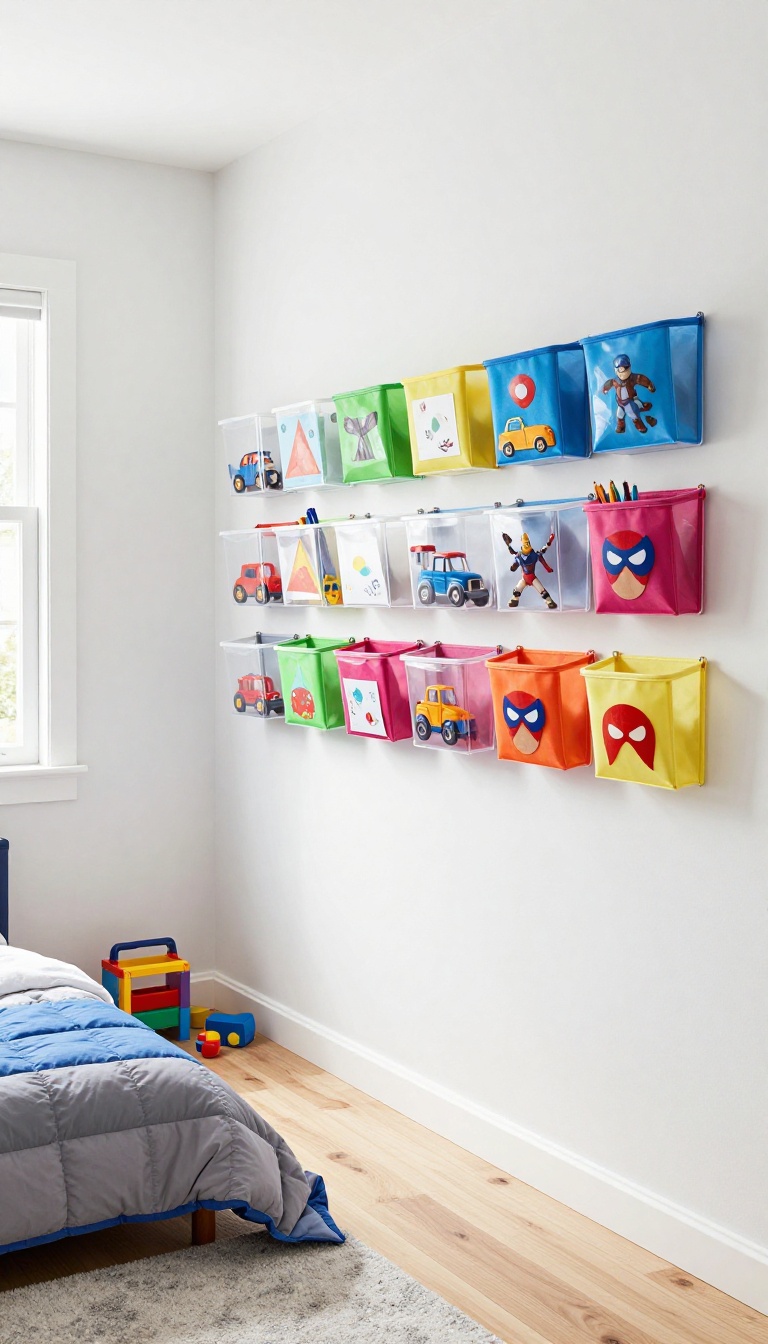
If your little one's toys have taken over every flat surface, wall-mounted storage is the secret weapon you've been missing. By moving toys up off the floor, you instantly free up precious square footage for play and movement. Plus, when everything has a visible home, cleanup becomes a quick, frustration-free game.
Wall-mounted storage isn't just about tidiness—it's about creating a room that works harder for your child. Clear bins let him see his favorite trucks or action figures at a glance, so he can grab what he needs without dumping everything out. Canvas pockets add a softer, more colorful touch, perfect for smaller items like art supplies or superhero masks.
And the best part? You can adjust the height as he grows, keeping the most-used toys within easy reach while storing lesser-played items higher up.
Choose The Right Bins And Pockets
Not all wall storage is created equal. Clear plastic bins are great for durability and visibility, but they can feel a bit clinical. Canvas pockets, on the other hand, come in fun patterns and colors, adding a cozy vibe to the room.
Think about what you're storing: heavy blocks need sturdy bins, while light stuffed animals do fine in fabric pockets. Mix and match to keep things interesting and functional.
Install At The Right Height
The golden rule is to mount storage at your child's eye level, not yours. That way, he can see and reach his toys independently, which builds confidence and makes cleanup feel like a game. For toddlers, that might be around 2-3 feet off the ground.
For older kids, you can go a bit higher, but keep the most-used items at chest height. And always use proper wall anchors—kids can be surprisingly strong when they're pulling down a favorite toy.
Rotate Toys To Keep It Fresh
One of the sneaky benefits of visible wall storage is that it makes toy rotation easy. Instead of having every toy out at once, stash some in a closet or under the bed. Swap them out every few weeks, and your son will feel like he's getting new toys without spending a dime.
This also cuts down on clutter and keeps the room feeling organized longer.
12. Bunk Beds with Stairs: Storage and Safety
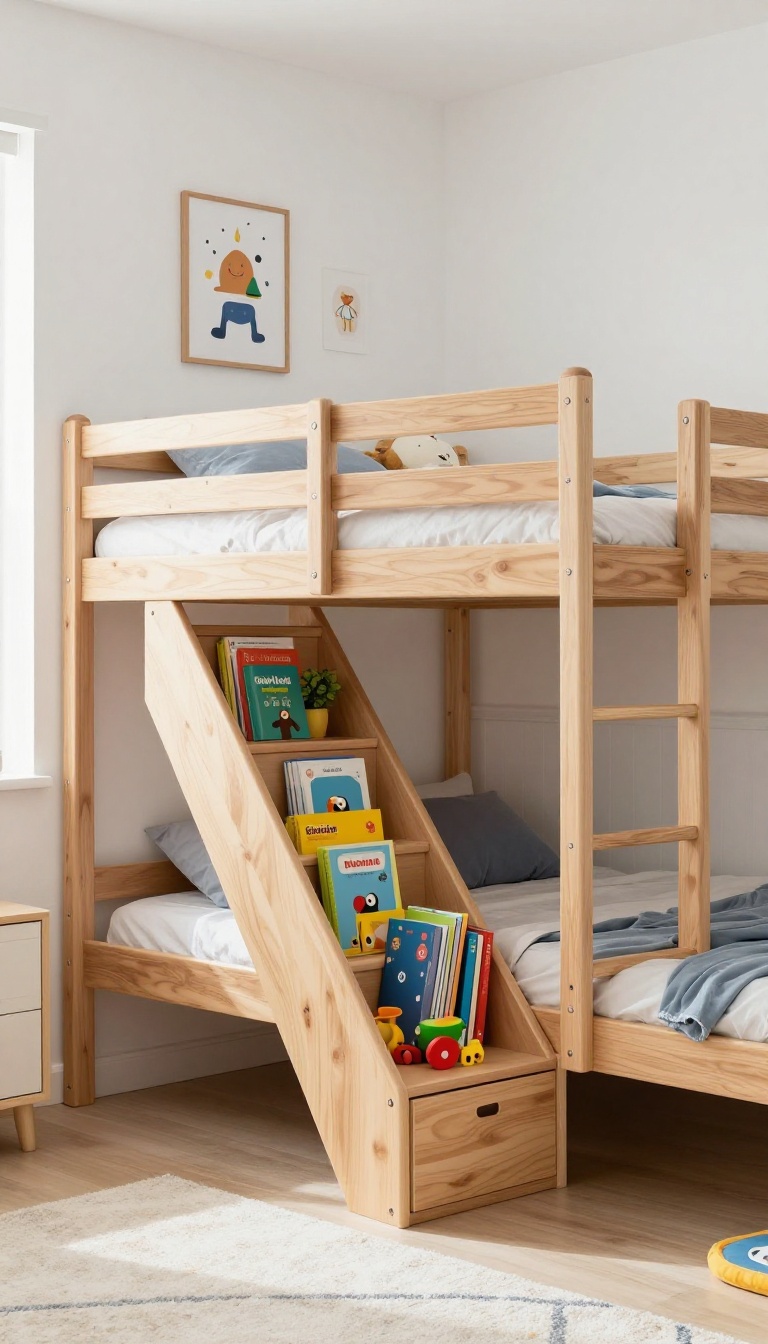
Bunk beds are a classic space-saver, but the ladder can be a hurdle for little ones. Stairs change the game entirely, offering a safer climb and a built-in storage solution that hides toys and books in plain sight. Each step becomes a drawer or open cubby, turning the climb into a playful routine.
Plus, the wider footprint of stairs feels more secure than a vertical ladder, especially for younger kids who might be new to the top bunk.
When you're short on square footage, bunk beds with stairs pull double duty. The steps aren't just for getting up—they're mini shelves or drawers that keep the floor clear. You can stash bedtime stories, favorite action figures, or extra blankets right where they're needed.
Safety is the big win here. Stairs with handrails and deeper treads reduce the risk of slips, and kids can climb up and down with confidence. Many designs even have a side rail on the top bunk for extra peace of mind.
This setup works especially well in rooms with higher ceilings, since the stairs add a bit of height. But even in a standard room, the storage payoff makes it worth considering.
Step-by-step Storage
Each stair can be a drawer or an open cubby. Use the lower steps for heavy items like board books, and the upper ones for lighter toys or pajamas. Label each step with pictures or words to help your child find things fast.
If you're handy, you can build custom stairs to fit your exact space. Otherwise, many ready-made bunk beds come with built-in drawers that slide out smoothly. Either way, you'll be amazed at how much clutter disappears.
Design Ideas For Stairs
Paint the stairs a bright accent color to make them a fun feature. Add a small reading nook under the top bunk by leaving a gap in the stairs, or use the side of the stairs for a chalkboard or pegboard. For a cohesive look, match the stair finish to the bed frame or the room's trim.
You can also add soft-close hinges to drawers to avoid slammed fingers and keep the room quiet during nap time.
Safety Checks
Make sure the stairs have a sturdy handrail and non-slip treads. Check that the guardrail on the top bunk is high enough and securely attached. Regularly tighten any loose screws or bolts.
Teach your child to use the stairs one at a time and to hold the rail. With these basics, the stairs become a safe, everyday part of the room.
13. Ceiling-Mounted Curtains: Divide and Conquer
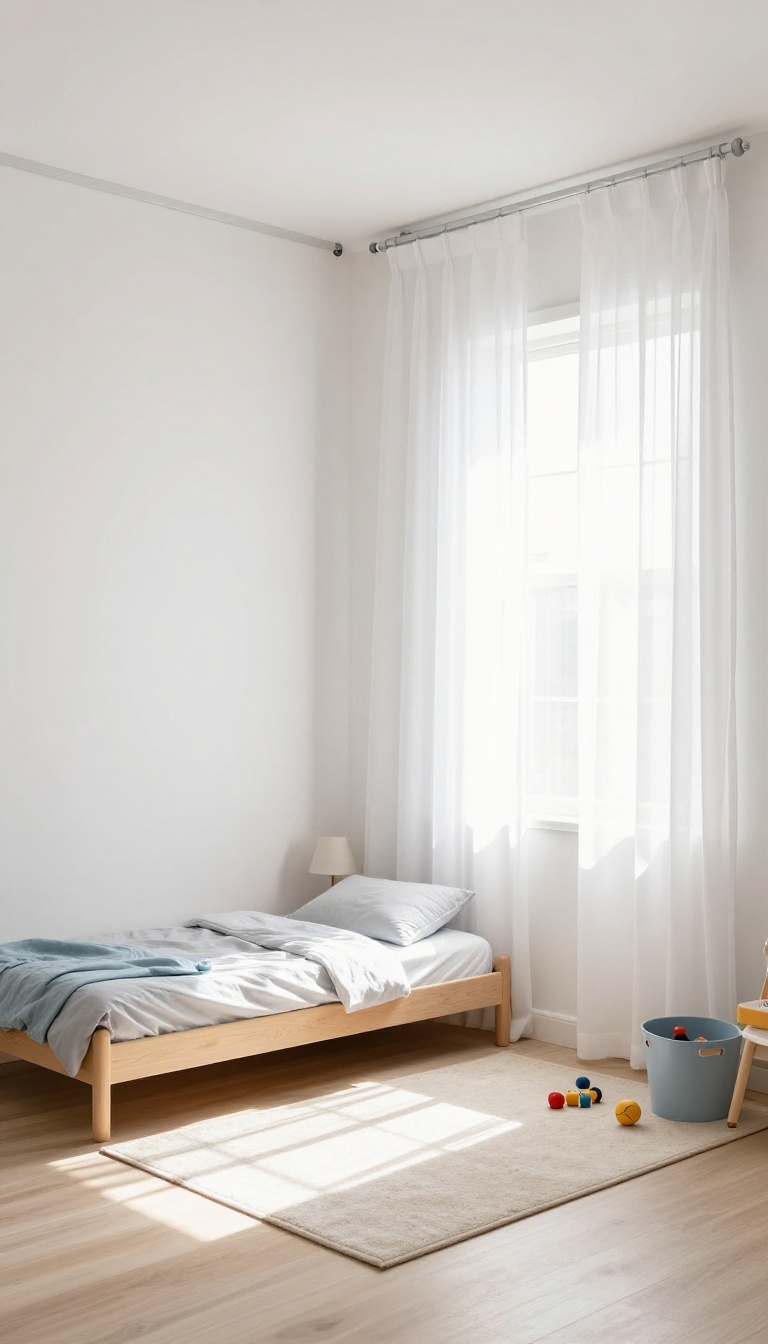
When a single room has to host both a play zone and a sleep zone, boundaries become everything. Ceiling-mounted curtains offer a flexible, budget-friendly way to carve out two distinct areas without building walls or losing floor space. This trick works especially well in shared rooms or small spaces where visual separation makes a big difference.
You can pull the curtains closed at naptime to dim the play area, then open them wide when it's time to let the imagination run wild.
The beauty of ceiling-mounted curtains is their versatility. You can choose sheer fabric to let light filter through, or go with blackout curtains to create a darker, cozier sleep nook. The track mounts directly to the ceiling, so you don't need to worry about wall studs or awkward angles.
Installation is straightforward: pick a sturdy curtain track, mount it securely, and hang your chosen panels. For a playful touch, use curtains with a fun pattern or color that matches the room's theme. You can even swap them out seasonally or as your child's tastes change.
Why It Works For Small Rooms
In a compact space, visual clutter can make the room feel even smaller. By separating the play area from the sleep area, you create a sense of order and calm. The curtain acts as a soft partition that doesn't block light entirely, so the room still feels open and airy.
Plus, it's a temporary solution—no permanent construction required.
Choosing The Right Curtains
Think about the mood you want to create. Sheer white curtains keep things light and breezy, perfect for a play area that needs natural light. For a sleep zone, consider blackout curtains in a calming color like navy or gray.
You can also mix and match: use a sheer panel on top and a blackout layer underneath for the best of both worlds.
Installation Tips
Make sure the track is securely anchored to the ceiling, especially if you're using heavier curtains. Use a stud finder to locate ceiling joists, and follow the manufacturer's instructions for mounting. If you're not comfortable with DIY, a handyman can install it in under an hour.
For rental spaces, opt for a tension rod or adhesive hooks that won't leave marks.
14. Wall-Mounted Art Station: Creativity on Display
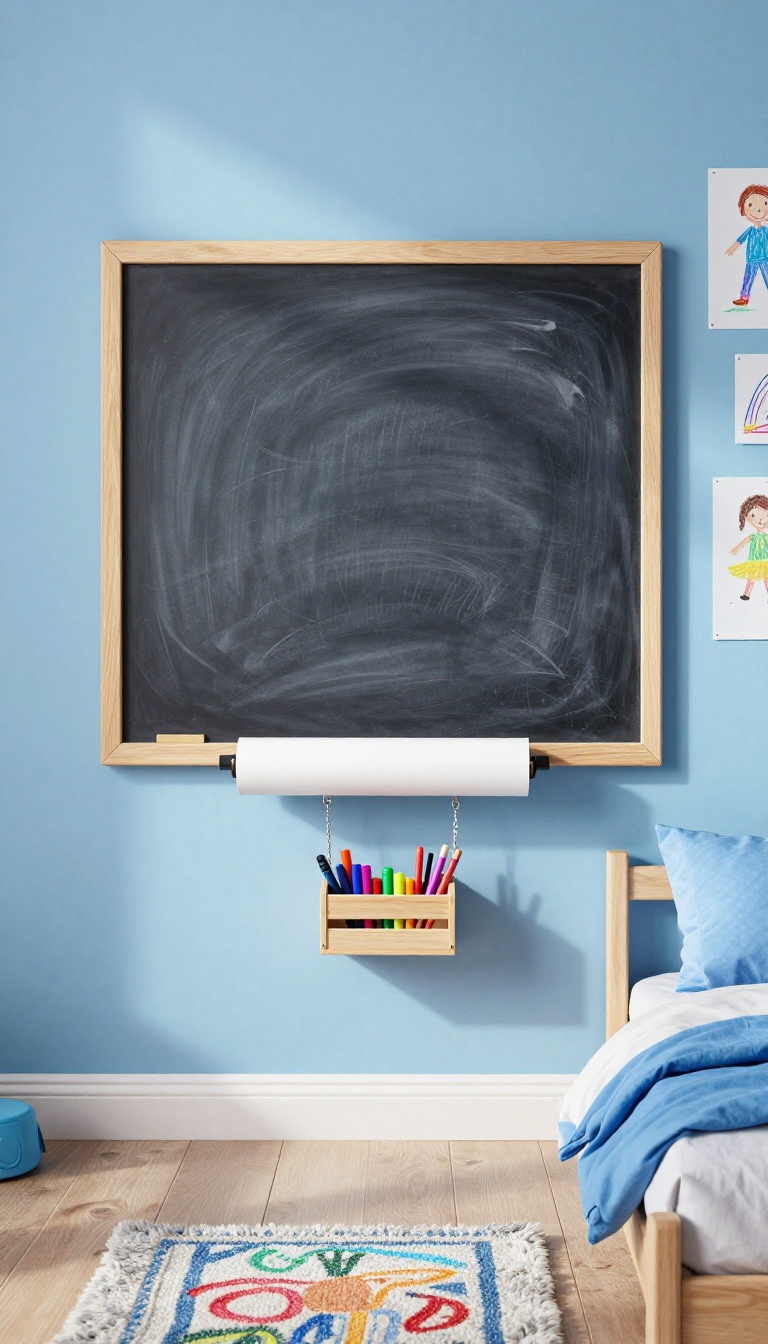
Kids love to draw, paint, and doodle, but the mess can be overwhelming. A wall-mounted art station gives them a dedicated spot to create without taking up any floor space. It turns a blank wall into an interactive canvas that's always ready for inspiration.
Setting up a wall-mounted art station is easier than you think. You can use a chalkboard, a whiteboard, or a roll of paper that unrolls from a dispenser. Attach a small tray or caddy below to hold crayons, markers, and other supplies.
This keeps everything within reach and makes clean-up a breeze. The best part? It doubles as a display area for their latest masterpieces, so their work feels valued and special.
Pick The Right Surface
Chalkboards are great for a classic feel, but they can get dusty. Whiteboards are cleaner but need special markers. A roll of paper is perfect for little artists who love to draw big, and you can tear off a fresh sheet whenever they're ready.
You can even combine surfaces, like a chalkboard with a paper roll on top, for more variety.
Keep Supplies Organized
A simple wall-mounted caddy with compartments works wonders. You can store markers, crayons, pencils, and erasers in separate slots. For an even simpler option, use a few small buckets or jars attached to a wooden board.
This keeps everything visible and easy to grab, so your child can start creating without asking for help.
Make It Easy To Clean And Maintain
Place a small rug or mat underneath to catch any drips or spills. For chalkboards, keep a soft cloth or eraser handy. For paper rolls, a cutter or a tear-off edge makes it easy to get a fresh sheet.
You'll also want to check the wall anchors to make sure everything is secure, especially if your child tends to pull or lean on it.
15. Neutral Base with Colorful Accents: Easy to Update
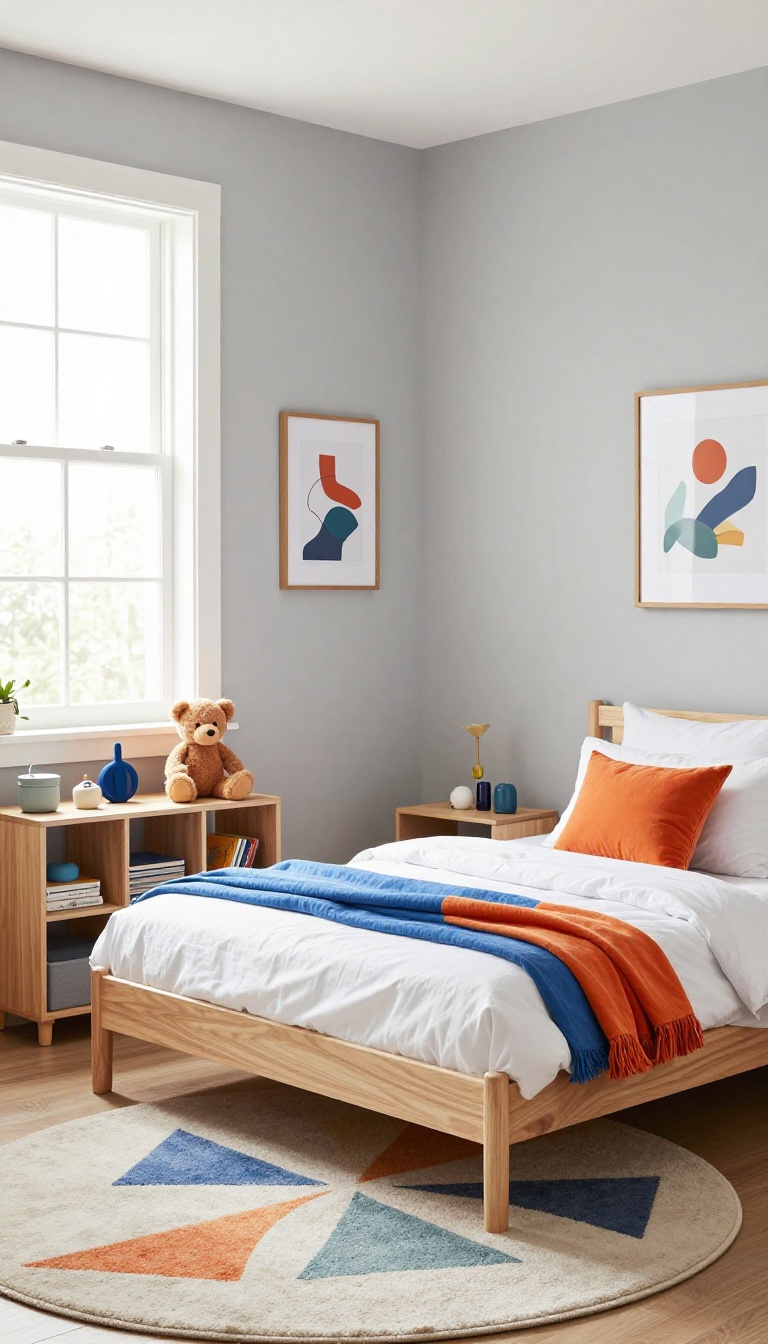
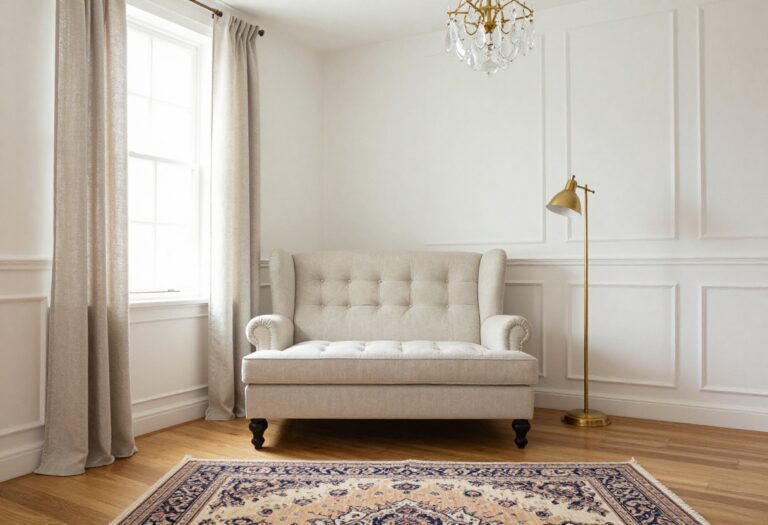
A neutral backdrop gives you freedom to change the room's personality without a full makeover. Walls in soft gray, beige, or white, paired with simple wood furniture, create a calm canvas that works for any age. Then you can layer in color through bedding, rugs, curtains, and wall art—all easy to swap out as your son's tastes evolve.
Starting with a neutral base is a smart move for small bedrooms because it visually opens up the space and makes it feel more serene. It also saves you from repainting or buying new furniture every few years. Instead, you refresh the room with a few colorful accessories that match his current interests—dinosaurs one year, sports the next.
This approach keeps the room functional and stylish without breaking the bank.
Pick A Flexible Wall Color
Choose a warm white, light gray, or soft beige for the walls. These shades reflect light, making the room feel bigger and brighter. They also pair well with any accent color, so you won't need to repaint when you switch themes.
If you want a hint of color, consider a muted sage or pale blue that still acts as a neutral.
Invest In Timeless Furniture
Opt for furniture in natural wood tones or white. A simple bed frame, dresser, and bookshelf in classic styles will last through many phases. Avoid themed furniture that might feel babyish later.
Instead, let the accessories carry the personality, so the core pieces remain versatile.
Rotate Accents Seasonally Or By Interest
Use bedding sets, throw pillows, area rugs, and wall decals to inject color. These are easy to swap out when he outgrows a phase or wants a new look. You can even involve him in picking out new accents, making the room feel like his own.
Keep storage bins for off-season items so the room stays tidy.
FAQ
How can I make a small boys bedroom feel bigger?
Use light colors on walls and bedding, maximize vertical storage, and keep the floor clear. Mirrors can also create an illusion of more space.
What is the best bed for a small boys bedroom?
Loft beds or bunk beds with built-in storage are great options because they free up floor space for play and storage.
How do I organize toys in a small bedroom?
Use wall-mounted bins, under-bed storage, and multi-functional furniture like ottomans with hidden storage. Rotate toys to keep the room clutter-free.
What colors are best for a small boys bedroom?
Light, neutral colors like white, soft gray, or pale blue make the room feel airy. Add bright accents through decor and bedding for a playful touch.
How can I create a play area in a small bedroom?
Use a corner for a small play tent, a wall-mounted table, or a fold-down desk. Keep the floor open by using vertical storage and multi-functional furniture.
Conclusion
Designing a small boys bedroom doesn't have to be a compromise. With a mix of smart storage, vertical thinking, and playful touches, you can create a room that supports both active play and restful sleep.
Start with the ideas that fit your space and your child's needs, and don't be afraid to get creative. The best room is one that grows with him and makes everyday life a little easier.