13 Stylish Cement Kitchen Ideas to Make Everyday Cooking Feel Better
Cement might sound cold and industrial, but in the kitchen, it brings a surprising warmth and grounding presence. The right concrete finish can turn a utilitarian space into something that feels calm, modern, and quietly luxurious. It’s not about rough, gray slabs—it’s about texture, polish, and how light plays across the surface.
From smooth countertops to sculptural sinks, this material adapts to your style, whether you lean minimalist or rustic. The best part?
It’s durable enough for daily life, so beauty and function actually work together. Here are 13 ways to bring that raw elegance into your cooking space.
1. Polished Concrete Countertops
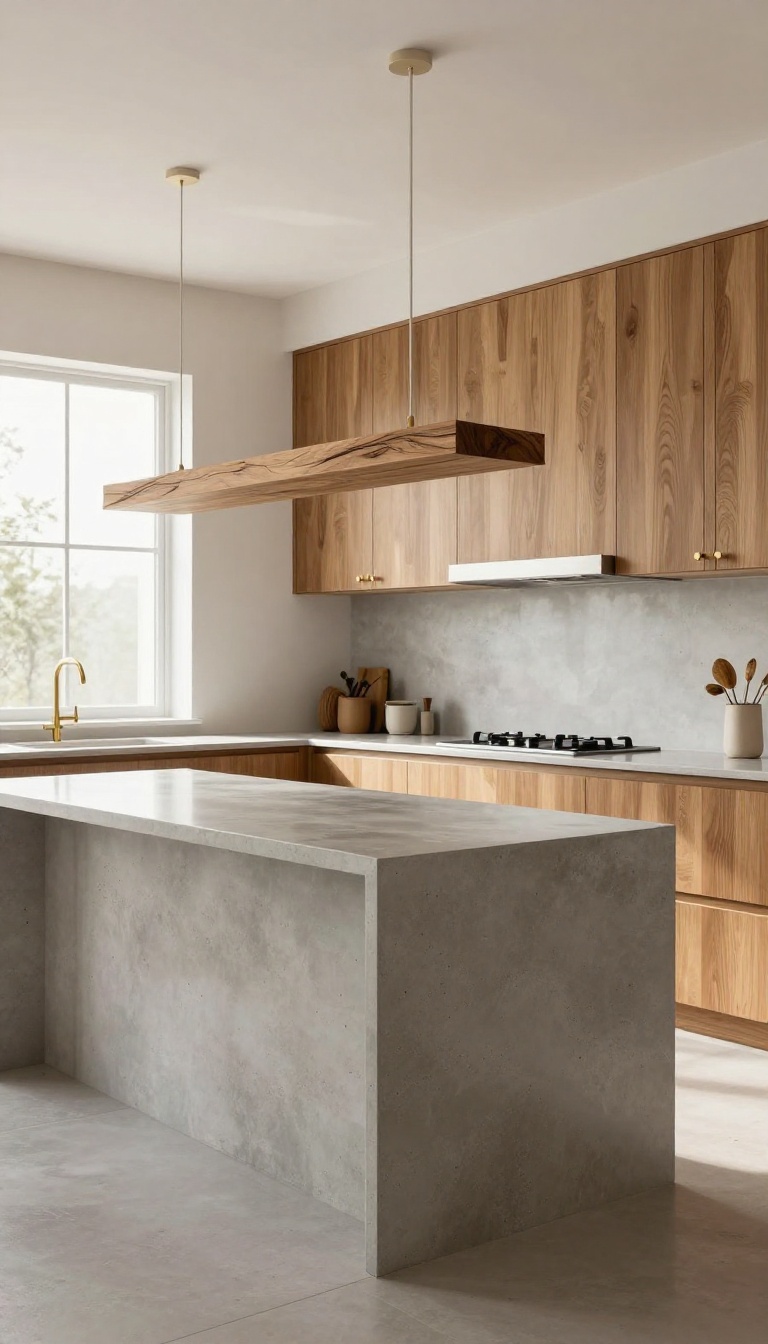
Polished concrete countertops are the workhorses of the cement kitchen—smooth, sealed, and surprisingly warm to the touch. They handle hot pans, knife marks, and red wine spills without flinching, and they only get better with age. The key is a high-quality sealer and a finish that feels silky, not rough.
A well-polished concrete countertop brings a quiet, monolithic elegance to the kitchen. Unlike tile or butcher block, it has no seams or grout lines to trap crumbs, so cleanup is a breeze. You can tint the mix to match your cabinets or keep it natural for that soft, stone-gray look that pairs beautifully with wood and brass.
Why Polished Beats Matte
A polished surface reflects light, making the kitchen feel brighter and more open. It also resists staining better than a matte finish because the sealer sits on a smoother surface. If you drop a glass of red wine, you’ll have time to wipe it up without a permanent mark.
Tinting And Finishing Options
You can add pigments to the concrete mix for a warm taupe, soft charcoal, or even a subtle terracotta. For the finish, choose a matte sealer for a natural stone feel or a high-gloss polish for a more dramatic, reflective surface. Both are durable, but gloss shows smudges more easily.
Pairing With Warm Materials
Concrete can feel cold if you let it dominate. Balance it with warm oak cabinets, brass fixtures, or a leather island stool. A live-edge wood shelf or woven pendant lights soften the industrial edge and make the space feel inviting.
2. Concrete Kitchen Island
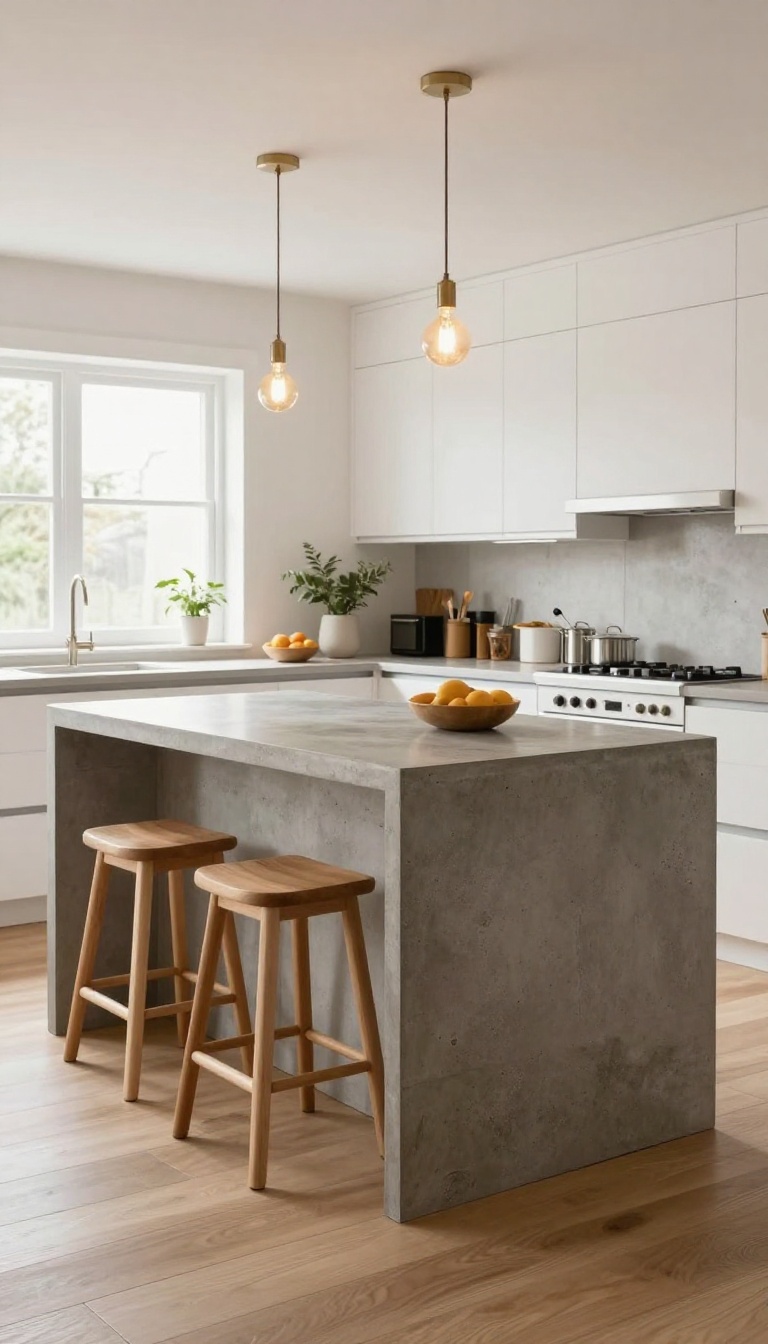
A concrete island does more than hold your cutting board—it becomes the heart of the kitchen. Its weight and presence anchor the room, giving you a solid surface for everything from rolling dough to setting down hot pans. With the right design, it can also double as a breakfast bar or a place for kids to do homework while you cook.
The beauty of a concrete island is its versatility. You can shape it to fit your space, add built-in storage, or let it stand as a sculptural piece. The material’s natural variations in color and texture mean no two islands are exactly alike, adding a unique character to your kitchen.
Built-in Storage And Seating
Incorporate open shelving or drawers into the island’s base for extra storage without cluttering the surface. A waterfall edge—where the concrete flows down to the floor—creates a sleek, modern look and also provides a comfortable spot for bar stools. Leave one side slightly overhanging for legroom, and you’ve got a casual dining area that’s perfect for quick meals.
Choosing The Right Finish
The finish you pick affects both the look and the maintenance. A polished, sealed surface is smooth and easy to wipe down, while a matte finish hides smudges better. If you love the raw, industrial vibe, go with a lightly sanded texture.
Just make sure it’s properly sealed to resist stains from wine, oil, and acidic foods.
Lighting And Contrast
Concrete can feel heavy, so balance it with lighter elements. Pair it with light wood stools, a bright rug, or pendant lights that cast a warm glow. The contrast between the cool gray and warm accents makes the island stand out without overwhelming the room.
3. Cement Backsplash Tiles
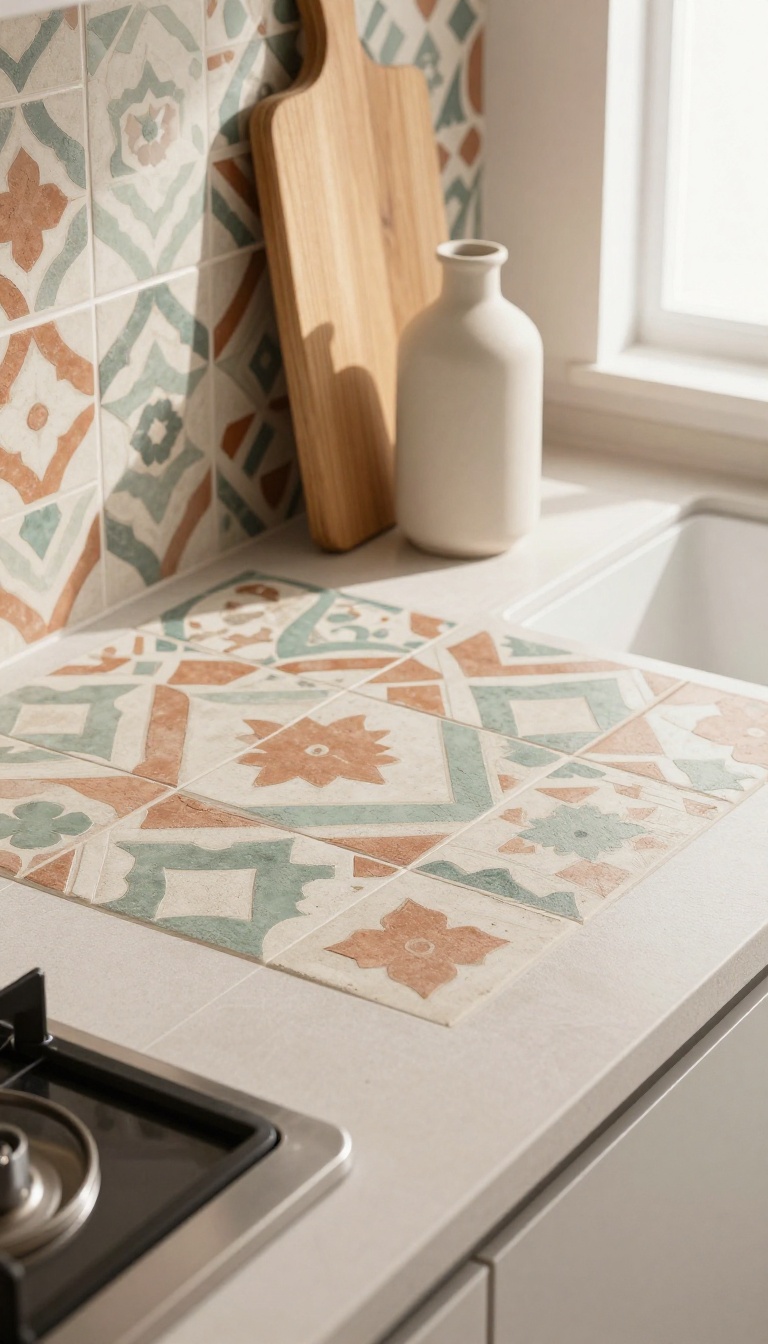
The wall behind your stove or sink takes a lot of splashes, heat, and grease. Cement tiles step up to that challenge with a look that’s far from ordinary. They bring pattern and color into the kitchen without shouting for attention, and they’re tough enough to handle real life.
Cement tiles bring pattern and color to your walls without overwhelming the space. They’re durable, easy to clean, and available in geometric or floral designs that add personality behind your stove or sink.
Patterns That Pop
Geometric shapes, Moroccan-inspired motifs, or subtle floral patterns—cement tiles give you a range of styles. Pick a bold pattern for a focal point, or keep it simple with a monochrome design. The color stays vibrant because the pigment goes through the tile, not just on the surface.
Built To Last
Cement tiles are dense and durable. They resist chipping and cracking better than many ceramic options. With a proper seal, they handle moisture and stains without a fuss.
That makes them a smart choice for busy kitchens where messes happen daily.
Easy Maintenance
Cleaning cement tiles is straightforward. A damp cloth and mild soap do the trick for most spills. Avoid harsh chemicals that can dull the finish.
Seal the tiles once a year to keep them looking fresh and to protect against water damage.
4. Concrete Sink
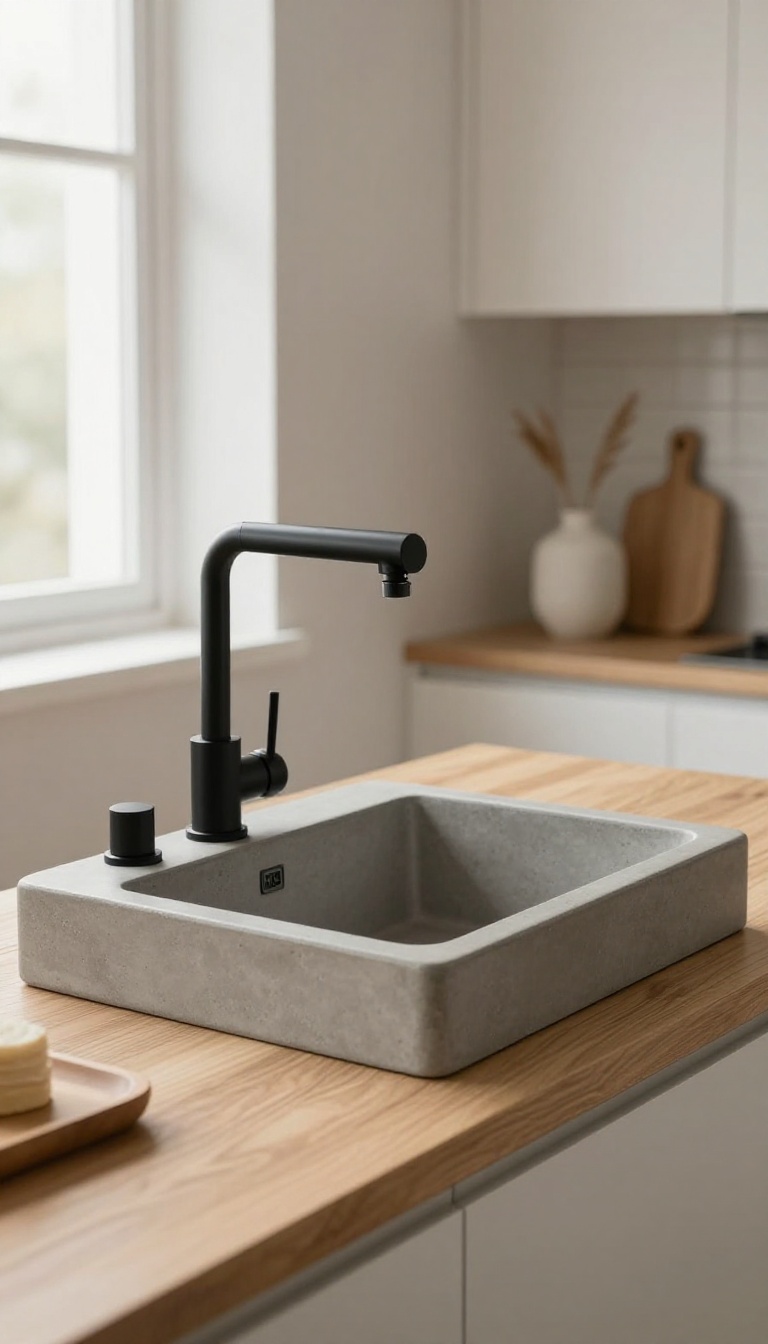
A handcrafted concrete sink does more than hold dishes—it becomes a focal point. Its sculptural presence softens the industrial edge of cement, while the matte finish resists water spots and hides daily wear. This sink is a blend of art and utility that makes washing up feel less like a chore.
Concrete sinks are surprisingly practical. The dense material handles hot pots and sharp knives without scratching, and the sealed surface wipes clean easily. Plus, each sink develops a unique patina over time, adding character to your kitchen.
Why Concrete Works In The Kitchen
Concrete is naturally resistant to heat and scratches, so it stands up to busy cooking sessions. The matte finish hides water spots and smudges, meaning less wiping. And because it’s cast in a mold, you can customize the shape and depth to fit your exact needs.
Styles And Finishes To Consider
Go for a smooth, polished surface for a sleek look, or keep it slightly textured for a more organic feel. You can also add pigments to match your cabinetry or countertops. A deep farmhouse-style basin adds rustic charm, while a minimalist rectangular shape feels modern.
Pairing Your Sink With The Right Faucet
A wall-mounted faucet frees up counter space and highlights the sink’s silhouette. A gooseneck design offers clearance for filling pots. Choose a matte black or brushed brass finish to complement the concrete’s earthy tone.
5. Concrete Flooring
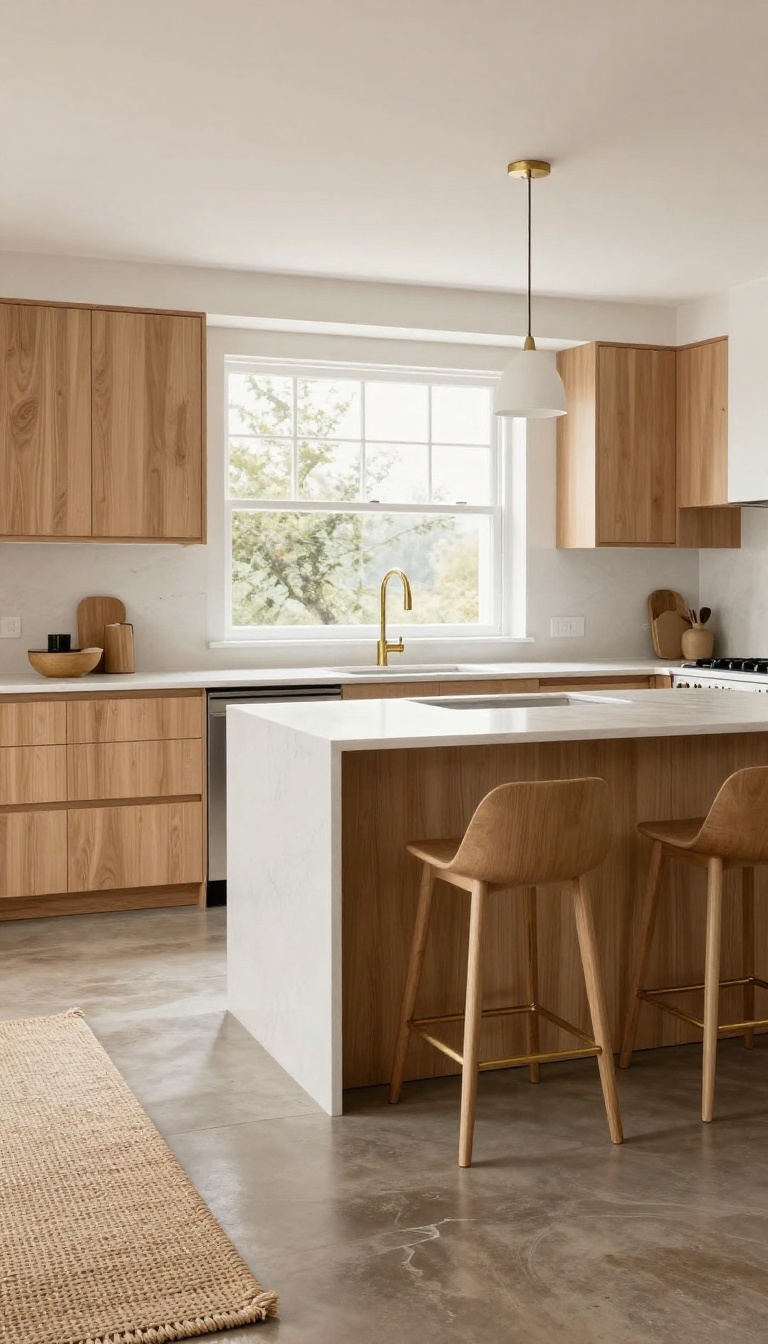
The floor is the stage for everything else in your kitchen, and concrete brings a quiet confidence that other materials just can't match. It's not the cold, gray slab you might imagine—modern finishes can be warm, smooth, and surprisingly cozy. Plus, it's a workhorse that handles spills, drops, and daily chaos without showing wear.
Concrete flooring is more than just a surface—it's a design statement that anchors the whole room. With the right sealer and finish, it becomes a seamless, low-maintenance option that feels cool underfoot in summer and works beautifully with radiant heating in winter. You can also stain or score it to mimic tile or stone, giving you endless design flexibility without the upkeep of grout lines.
Why Concrete Floors Work In Kitchens
Concrete is naturally durable and resistant to moisture, making it ideal for kitchens. It doesn't harbor bacteria like grout can, and it's easy to clean—just sweep and mop. Plus, its thermal mass helps regulate temperature, keeping the room cooler in summer and warmer in winter when paired with underfloor heating.
Finishes And Colors To Consider
You're not stuck with plain gray. Concrete can be tinted in earthy tones, soft whites, or even deep charcoal to match your cabinetry. Polished finishes give a sleek, modern look, while matte or brushed finishes offer a more rustic feel.
You can also add decorative aggregates or expose small pebbles for extra texture.
Staining And Scoring For Style
If you love the look of tile or stone but want the seamlessness of concrete, staining and scoring are your friends. Acid staining creates rich, mottled colors that mimic natural stone, while scoring—cutting shallow lines—can mimic large-format tiles or geometric patterns. This adds visual interest without the hassle of grout lines.
6. Concrete Open Shelving
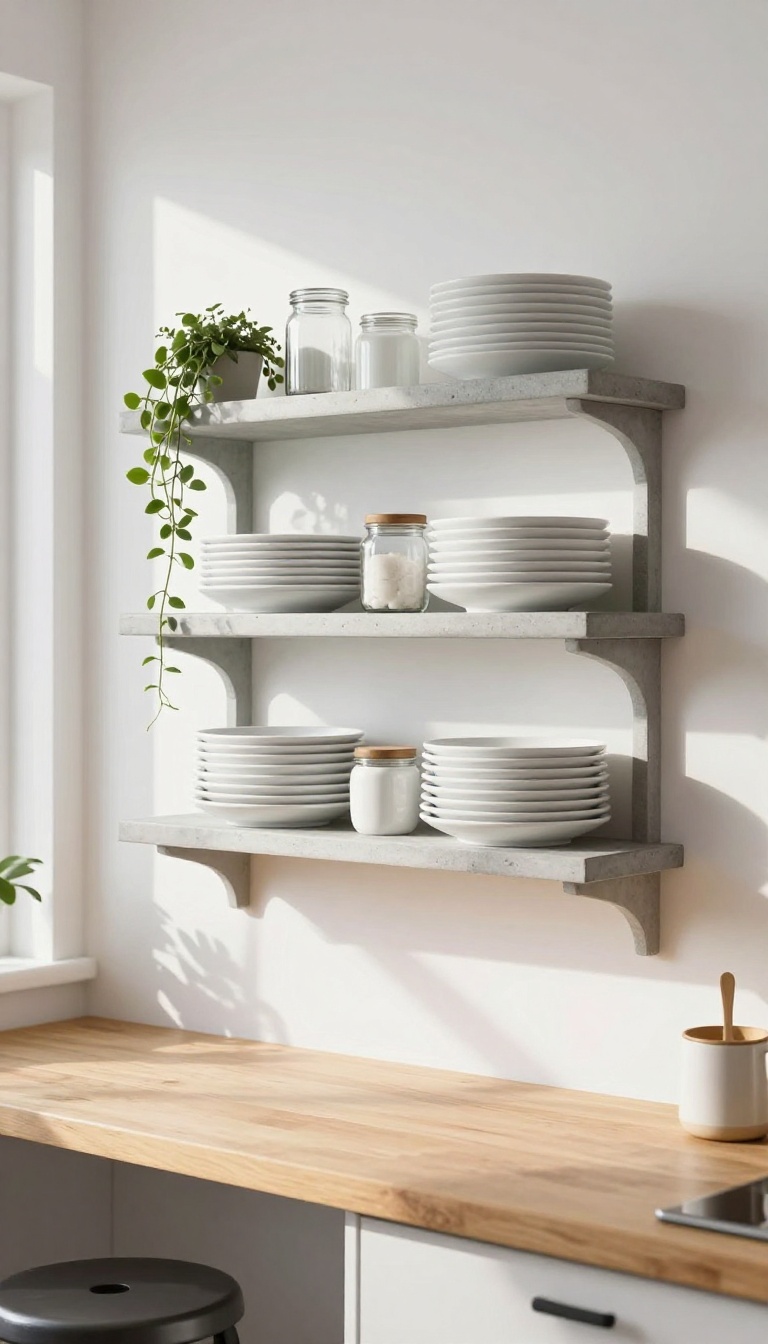
Open shelving has a way of making a kitchen feel more personal, and concrete takes that idea to a whole new level. These floating shelves are sturdy enough for heavy dishes and glass jars, yet they keep the space feeling airy and uncluttered. The raw texture adds a subtle industrial touch that pairs beautifully with wood, metal, or even colorful ceramics.
Concrete shelves work best when they’re not overloaded. Keep the styling simple—stack a few plates, line up your everyday mugs, or let a trailing plant soften the edges. Because the material is naturally cool and neutral, it lets your kitchen items shine without competing for attention.
How To Style Them Without The Clutter
The trick is to group items by color or function. Use open baskets for smaller odds and ends, and reserve the main shelf space for things you actually reach for daily. A few cookbooks laid flat or a small bowl of fruit can break up the gray nicely.
Best Spots To Install Them
Above the sink is a classic choice for keeping soap and sponges handy, but they also work well beside the stove for oils and spices. If you have a blank wall near your dining area, a set of two or three shelves can become a stylish display for your favorite ceramics.
Installation Tips That Save You Headaches
Concrete is heavy, so you need proper wall anchors or a reinforced stud. Measure twice and use a level—there’s no hiding a crooked shelf. If you’re renting, consider freestanding concrete shelving units instead of drilling into the wall.
7. Concrete Bar Counter
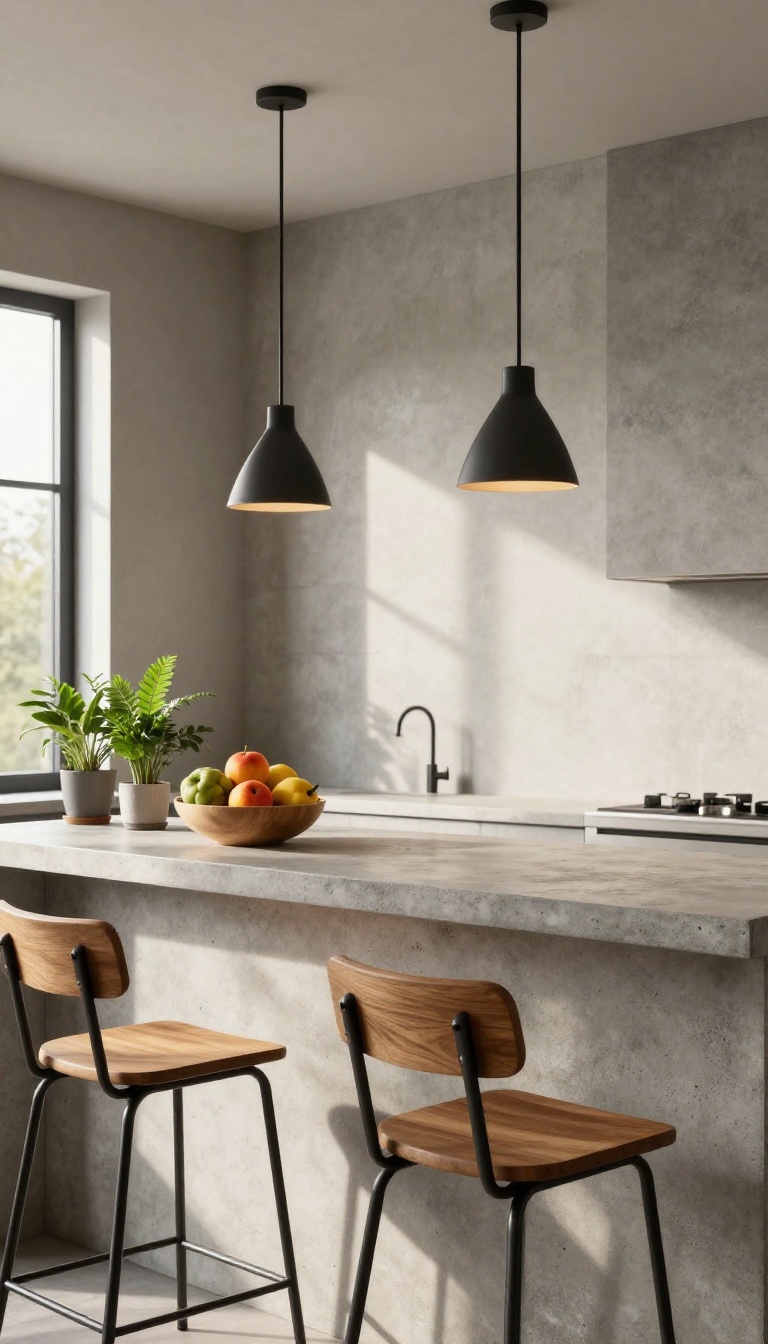
A bar counter is where quick breakfasts, coffee breaks, and evening chats happen. Concrete gives it a sturdy, grounded feel that invites you to pull up a stool and stay a while. It’s a simple addition that turns an empty wall or corner into a favorite spot.
Pair your concrete bar counter with comfortable bar stools and a couple of pendant lights to create a cozy nook. The material’s natural texture adds depth without overwhelming the room. It’s a practical surface that’s easy to wipe down, so you can enjoy it without fuss.
Choosing The Right Height
Standard bar height is about 42 inches, but you can adjust based on your space and how you plan to use it. If you want a more casual feel, go a bit lower and use counter-height stools. Make sure there’s enough legroom for comfort.
Seating And Lighting
Pick stools that contrast with the concrete—wood or metal works well. Pendant lights hung at the right height add warmth and define the area. Aim for about 30 inches between the countertop and the bottom of the lights.
Styling And Accessories
Keep the countertop mostly clear, with a small bowl for fruit or a coffee station. A few plants or a stack of cookbooks add personality. Since concrete is neutral, you can easily switch up decor with the seasons.
8. Concrete Range Hood
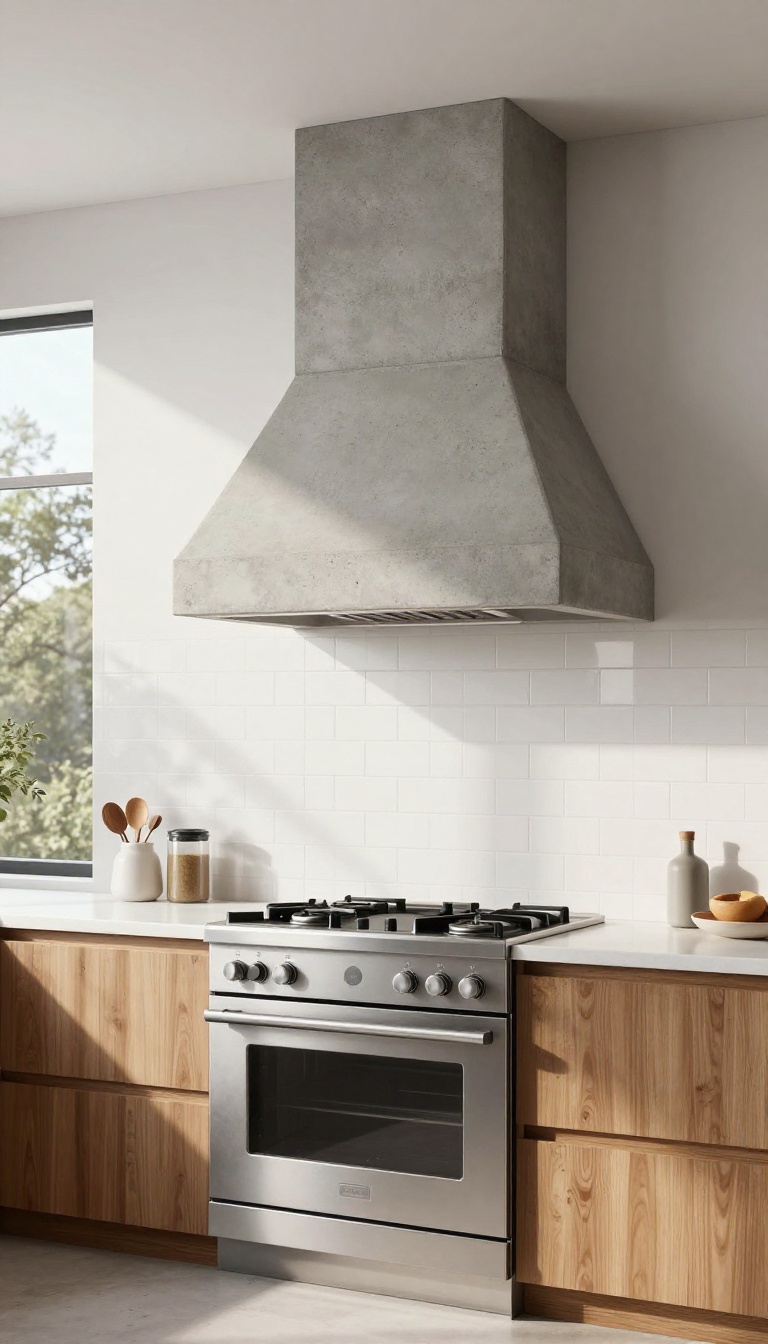
A concrete range hood is a bold move that pays off. It turns the most functional part of your kitchen into a sculptural centerpiece, drawing the eye upward and anchoring the whole room. Because it's custom-made, it can be shaped to fit your exact space, whether you want a sleek, minimal box or a dramatic, angled statement.
A concrete range hood does more than just vent smoke and steam—it becomes the visual anchor of your kitchen. The raw, matte texture contrasts beautifully with glossy tiles, warm wood, or stainless steel, adding depth and character. Plus, concrete is naturally heat-resistant and easy to clean, so it handles the demands of daily cooking without losing its cool.
Why It Works
Concrete range hoods are inherently durable and fire-resistant, making them a safe and practical choice. Their weight and mass also help dampen noise from the vent fan, so your kitchen stays quieter. And because they're often custom-made, you can tailor the size, shape, and finish to match your kitchen's proportions and style—whether that's a smooth, polished look or a rougher, textured surface.
Design Options
You can go with a simple, boxy hood that blends into the cabinetry, or make it the star with a cantilevered or angled design. Add subtle details like a recessed ledge for spices or a built-in light strip. For a softer feel, opt for a tinted concrete that picks up warm undertones from your flooring or counters.
The possibilities are nearly endless.
Installation Tips
Because concrete is heavy, proper support is crucial. Work with a contractor to ensure the structure can handle the weight, and plan for the venting system before the concrete is poured. Also, think about the finish—a sealed surface will resist stains and make cleaning easier, while an unsealed one will develop a natural patina over time.
Either way, it's a conversation starter.
9. Concrete Table
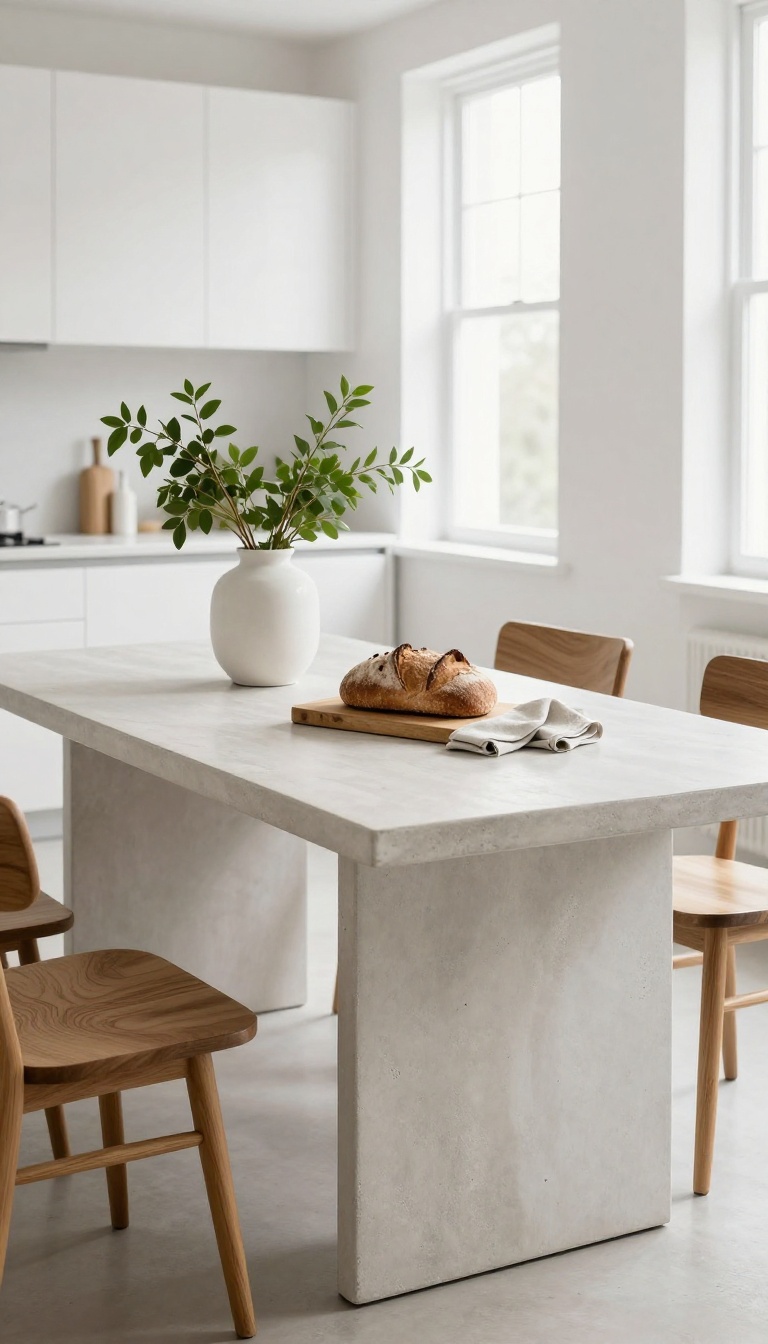
A concrete table can anchor your kitchen with a grounded, modern feel. Whether it's a dining table or a prep island, the material adds texture and a sense of permanence that wood or metal can't quite match. It's also forgiving—scratches and stains blend into the surface, making it a practical choice for busy households.
Pairing a concrete top with wooden legs or chairs softens the industrial edge, creating a warm, inviting spot for meals. You can leave it raw for a matte, natural look or seal it for a subtle sheen. Either way, it becomes a conversation piece that feels both stylish and effortless.
Why Concrete Works In The Kitchen
Concrete is durable, heat-resistant, and easy to clean—just wipe with a damp cloth. It also absorbs and releases heat slowly, so it stays cool to the touch, perfect for rolling dough or setting hot pans. Unlike delicate stone, it doesn't chip easily, and minor imperfections add character over time.
Design Ideas For Your Concrete Table
For a sleek, modern look, pair a polished concrete top with metal legs. For a rustic vibe, choose a rough-hewn finish with reclaimed wood. You can also add a live edge or embed recycled glass for a unique touch.
If you're worried about stains, seal it with a food-safe sealer and use coasters for acidic items.
How To Care For Your Concrete Table
Clean spills quickly with mild soap and water. Avoid harsh chemicals that can strip the sealer. Reapply sealer every year or two to keep the surface protected.
With simple upkeep, your concrete table will age gracefully and stay beautiful for decades.
10. Concrete Planters and Decor
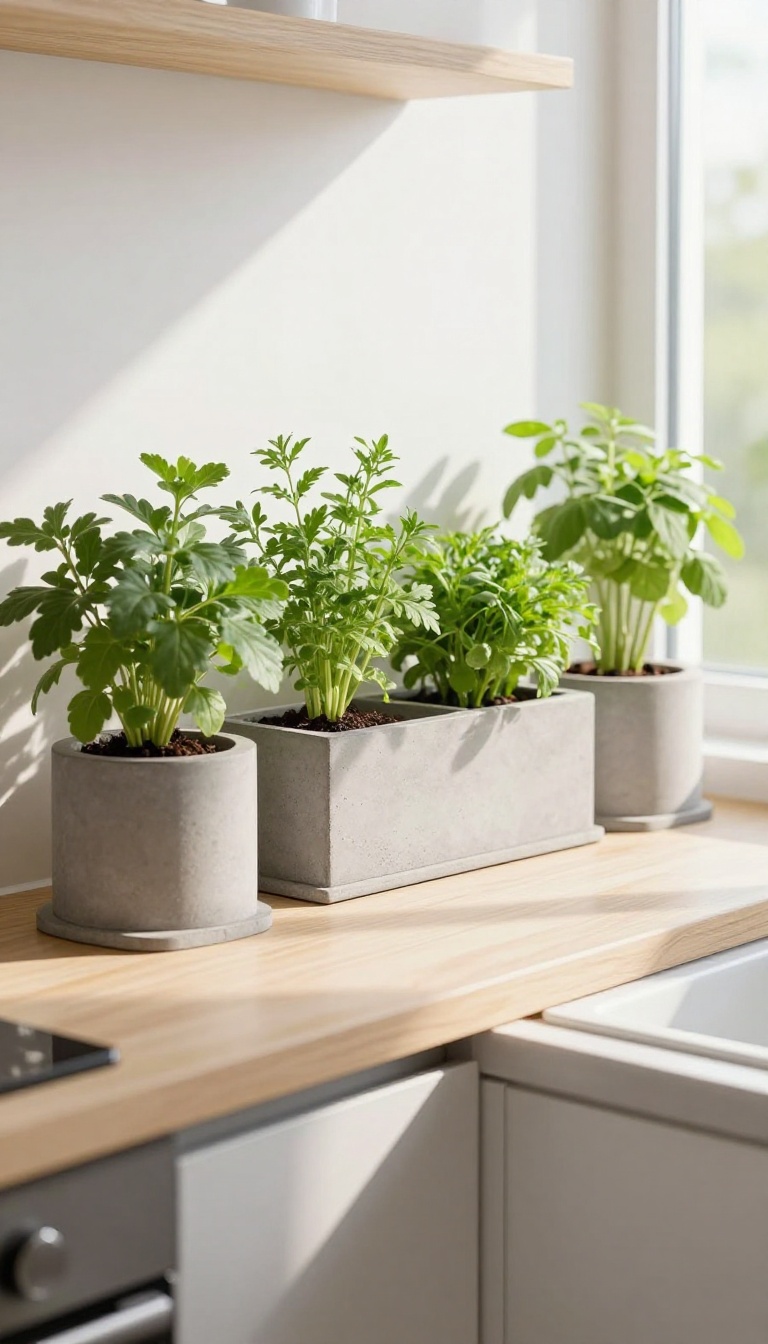
Not ready to commit to a full concrete countertop or sink? Start small. Concrete planters, canisters, and trivets bring that same raw, earthy texture to your kitchen without the permanence.
They’re like little whispers of the material that tie the whole room together. And because they’re small, you can experiment with placement and style. A concrete planter with fresh herbs on the windowsill, a set of canisters holding your daily staples, or a trivet under a hot pot—each piece adds a subtle, grounding touch.
Plus, they bring a bit of nature indoors, which always makes a kitchen feel more alive.
Concrete decor doesn’t have to be cold or heavy. In fact, when it’s paired with greenery or everyday items, it feels warm and intentional. The trick is to choose pieces that blend function with style, so they earn their spot on your counter or shelf.
Think about where you’ll notice them most. A cluster of small concrete planters on a windowsill or open shelf can become a focal point. Or, keep it minimal with a single statement piece, like a large planter holding a trailing plant.
The contrast between the smooth, gray concrete and the vibrant green leaves is what makes this look work. Concrete decor also plays well with other materials. It pairs beautifully with wood, metal, and glass, so you don’t have to worry about it clashing with your existing kitchen style.
Whether your kitchen leans modern, rustic, or industrial, these accents fit right in.
Herb Planters That Double As Decor
Fresh herbs are a game-changer in the kitchen, and concrete planters make them look even better. Choose a set of small, rectangular planters and line them up on a sunny windowsill or a shelf near your prep area. The porous nature of concrete actually helps with drainage and airflow, which herbs love.
You can also go for individual round pots and group them at different heights. Mix in a few trailing herbs like thyme or oregano for variety. Not only do they add a pop of green, but they’re also within arm’s reach when you’re cooking.
It’s practical and pretty at the same time.
Canisters For Everyday Staples
Replace your plastic or glass canisters with concrete ones for a more cohesive, earthy look. Use them to store flour, sugar, coffee, or pasta. The weight of the concrete keeps them sturdy, and the neutral tone works with any color scheme.
Look for canisters with tight-fitting lids to keep contents fresh. You can even label them with chalk or a simple tag for a personalized touch. They’re not just storage—they’re part of the decor.
Place them near your coffee station or on open shelving to show them off.
Trivets And Small Accents
Concrete trivets are both functional and stylish. They protect your countertops from hot pots and pans while adding a textural element to your kitchen. Choose a geometric shape or a simple round design to match your style.
Other small accents like concrete soap dispensers, utensil holders, or even a small tray for your salt and pepper shakers can tie the look together. These little touches make the space feel curated without being overwhelming. Mix and match with wood or metal items to keep it from feeling too uniform.
11. Concrete Window Sill
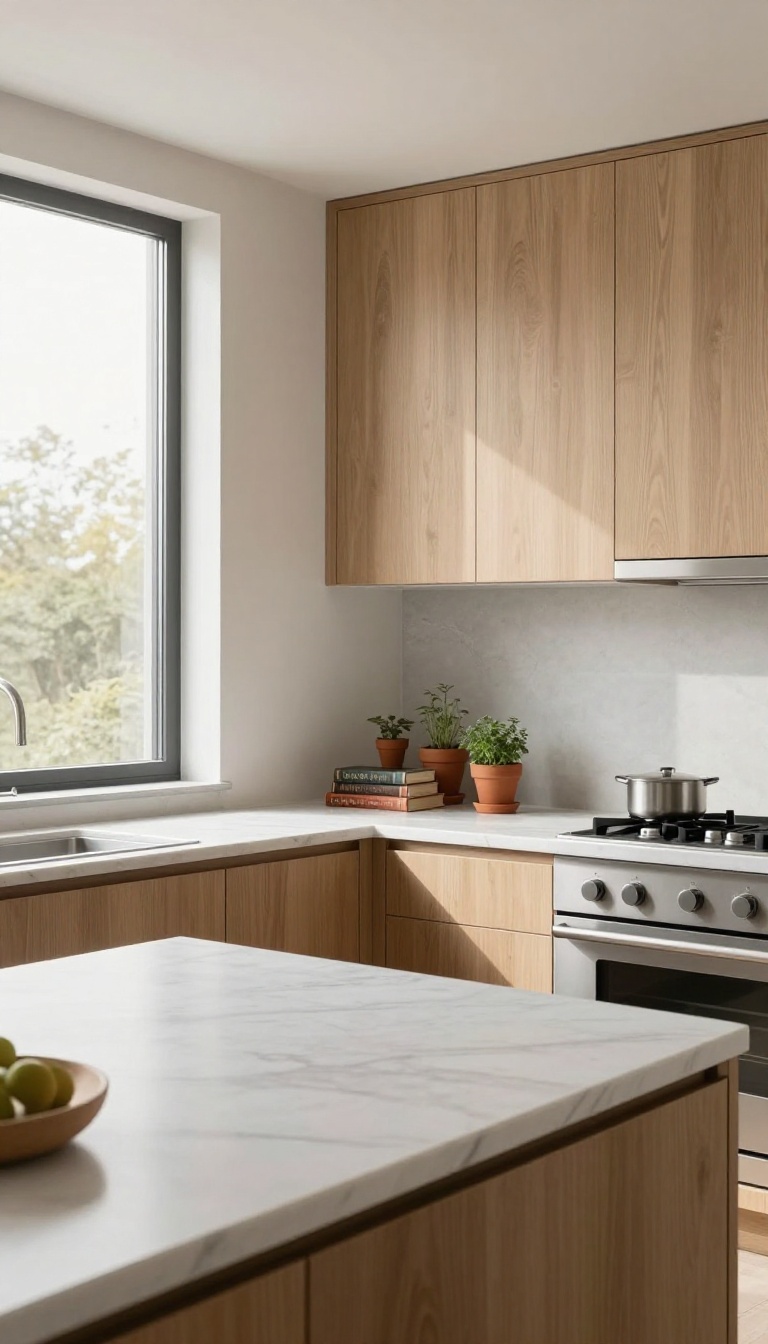
Windows in kitchens often get ignored when it comes to design, but they’re prime real estate for both style and function. A concrete window sill turns that narrow ledge into a hardworking feature. It’s a simple upgrade that adds architectural interest and gives you a spot to keep fresh herbs or a few favorite cookbooks within arm’s reach.
A concrete window sill is more than just a place to rest your coffee mug. It brings a subtle industrial touch that complements both modern and farmhouse kitchens. Because concrete is naturally durable, it can handle damp pots, potted plants, and the occasional splash without showing wear.
Plus, the matte finish softens the material’s heaviness, making it feel intentional rather than cold.
Why A Concrete Sill Works
Concrete’s density makes it perfect for a window ledge. It resists moisture from condensation and spills, and it won’t warp or stain like wood. The neutral gray also pairs well with most color palettes, from bright white cabinets to deep green tiles.
You can even add a subtle polish to make it easier to wipe clean.
Styling Your New Ledge
Once the sill is in, the fun part is filling it. Small herb pots in terracotta or ceramic look great and stay within reach while you cook. A stack of well-worn cookbooks adds a personal touch.
For a minimalist look, keep just one small vase with fresh flowers or a single sculptural object.
Installation And Customization
You can pour a concrete sill in place or order a precast one to match your window’s dimensions. If you’re handy, a DIY form is doable, but for a seamless finish, a professional might be worth it. You can also tint the concrete to match your countertops or leave it natural for that classic gray look.
12. Concrete Backsplash Panel
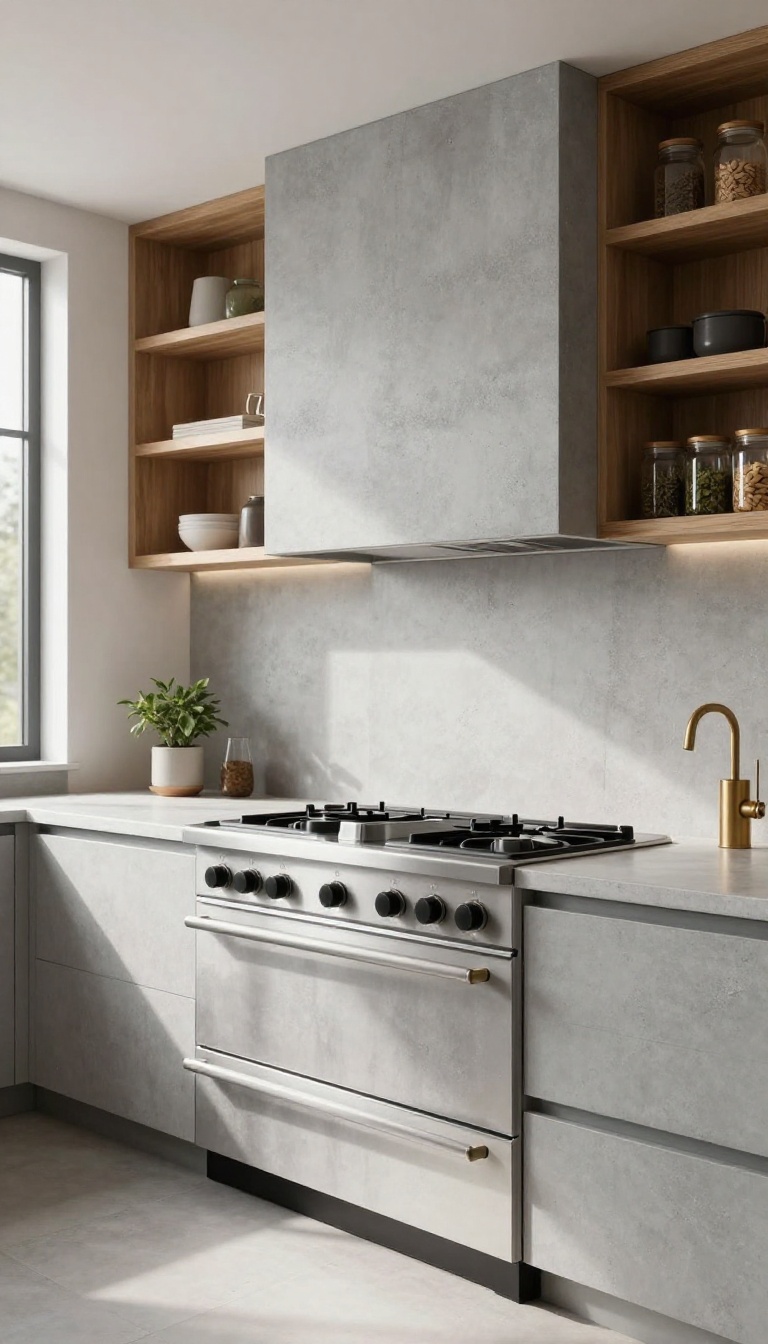
A single large concrete panel behind the stove creates a seamless, minimalist look. It’s easy to clean and can be sealed to resist stains, making it a practical yet stylish choice. This isn’t about tiny tiles or busy patterns—it’s one bold, smooth surface that ties the whole cooking zone together.
A concrete backsplash panel is a bold, modern statement that also happens to be incredibly practical. Unlike traditional tile, there are no grout lines to scrub, and the sealed surface wipes down in seconds. It’s a perfect fit for anyone who wants a clean, uninterrupted backdrop that makes the stove area feel like the heart of the kitchen.
Why A Single Panel Works
One large panel eliminates the visual clutter of multiple tiles and grout lines. It creates a smooth, continuous surface that makes the kitchen feel more open and streamlined. Plus, fewer seams mean fewer places for grease and grime to hide.
Sealing And Maintenance
A good concrete sealer is key. It protects against stains from oil, tomato sauce, and other cooking splatters. With proper sealing, you can just wipe the panel with a damp cloth and mild soap—no harsh chemicals needed.
Reapply the sealer every year or two to keep it looking fresh.
How to Style It
Pair the concrete panel with warm wood shelves or brass fixtures to soften the industrial edge. Add a few open shelves with jars and plants to bring in life and color. The concrete acts as a neutral canvas, so you can easily switch up accessories without changing the backsplash.
13. Concrete Accent Wall
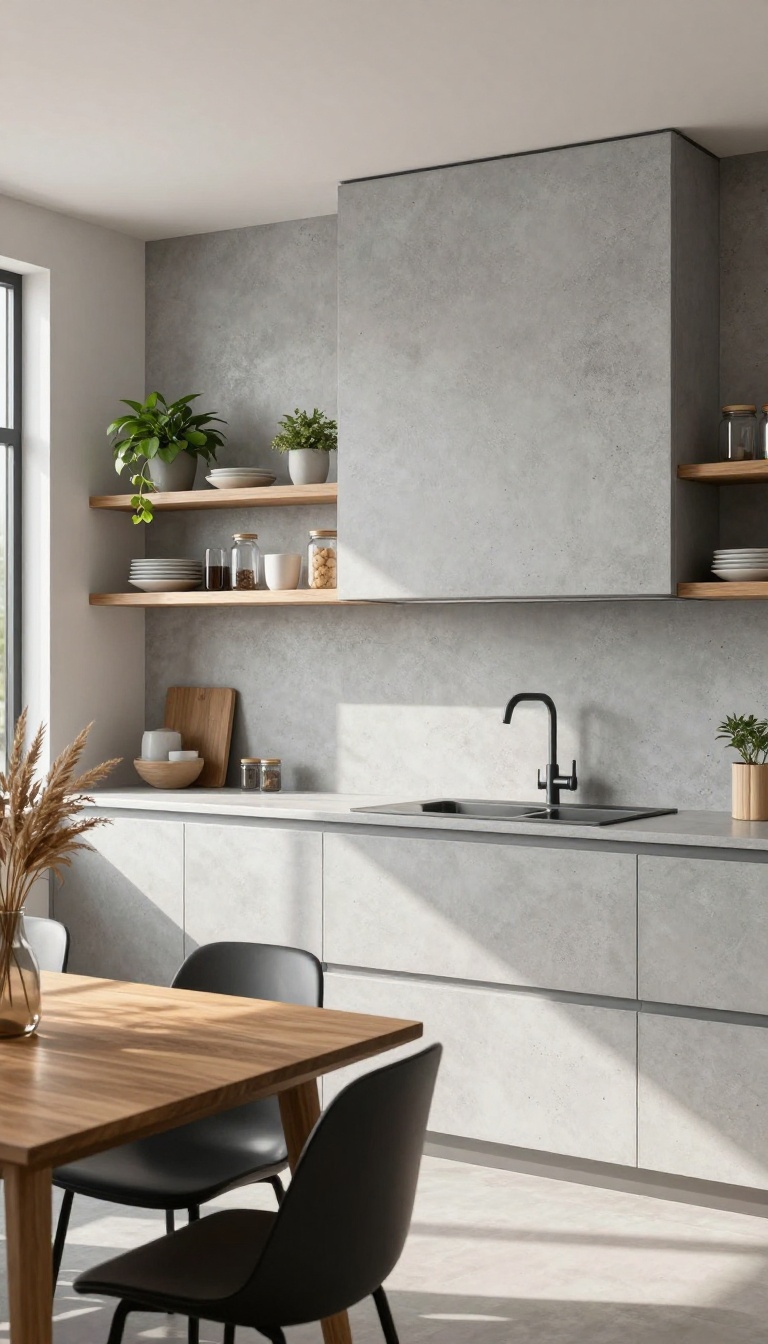
One concrete accent wall can transform the entire kitchen, adding depth and a sense of calm. Use it behind open shelving or as a backdrop for your dining area to create a cozy, industrial feel. It’s a simple way to introduce texture without overwhelming the space.
A concrete accent wall works wonders in kitchens where you want a focal point that isn’t just another cabinet or backsplash. It brings a raw, organic element that pairs beautifully with wood, metal, and greenery. Plus, it’s surprisingly low-maintenance—just seal it properly and it’ll handle splashes and steam without a fuss.
Pick The Right Finish
Smooth, polished concrete gives a sleek, modern vibe, while a troweled or board-formed finish adds more texture and rustic charm. Think about your kitchen’s overall style—if you have lots of flat surfaces, a rougher texture might add just the right amount of contrast.
Placement That Works
The wall behind your stove or sink is a natural spot, but don’t overlook a wall that’s visible from the dining area. An accent wall in the breakfast nook can create a cozy backdrop for meals. Just avoid placing it where it’ll get constant direct water spray—unless you seal it well.
Pairing With Other Materials
Concrete loves company. Warm woods, matte black fixtures, and even bright tiles all pop against a gray wall. Add some open shelving with plants or copper pots to soften the look.
A concrete accent wall is a perfect canvas for layering your personality.
FAQ
Are cement countertops durable?
Yes, when properly sealed, cement countertops are durable and resistant to heat and scratches. They do require periodic resealing to maintain their appearance and prevent stains.
How do you clean cement kitchen surfaces?
Use a mild soap and water solution with a soft cloth. Avoid harsh chemicals or abrasive scrubbers, as they can damage the seal. For tough stains, use a gentle cleaner specifically designed for concrete.
Can cement be used in a small kitchen?
Absolutely. Concrete can make a small kitchen feel more spacious if used sparingly, like on a backsplash or countertop. Its neutral tones and clean lines help open up the space.
Does cement crack easily?
Concrete can develop hairline cracks over time, but this is often part of its natural character. Proper installation and sealing can minimize cracking, and many homeowners embrace the patina.
Is cement kitchen flooring cold?
Concrete floors can feel cool, but they can be paired with area rugs or radiant heating systems to add warmth. They also help keep the kitchen cool in warmer climates.
Conclusion
Cement kitchens don't have to feel cold or industrial. With the right textures, warm wood accents, and clever lighting, you can turn that raw material into something inviting and personal. Start with one idea—maybe a polished countertop or a textured backsplash—and see how it changes the whole vibe.
The beauty of cement is that it ages gracefully, gaining character with every spill and scratch. So pick a style that feels like you, and let your kitchen become a space where cooking feels less like a chore and more like a ritual you actually look forward to.