13 Mediterranean Backyard Ideas with Relaxed Coastal Charm
A backyard that feels like a slow morning on the coast comes down to a handful of moves: whitewashed walls, terracotta, dappled shade, and plants that shrug off the heat. Get those right and the whole space relaxes, even if your zip code is nowhere near the sea.
The best part is that most of these ideas work with what you already have. A pergola, a few olive trees in pots, and a stone patio can transform a plain lawn into somewhere you actually want to spend evenings.
Below are 13 Mediterranean backyard ideas, from built-in seating to a simple outdoor shower. Pick a few, layer them over a season, and let the space settle into something easy.
1. Whitewashed Walls and Soft Textures
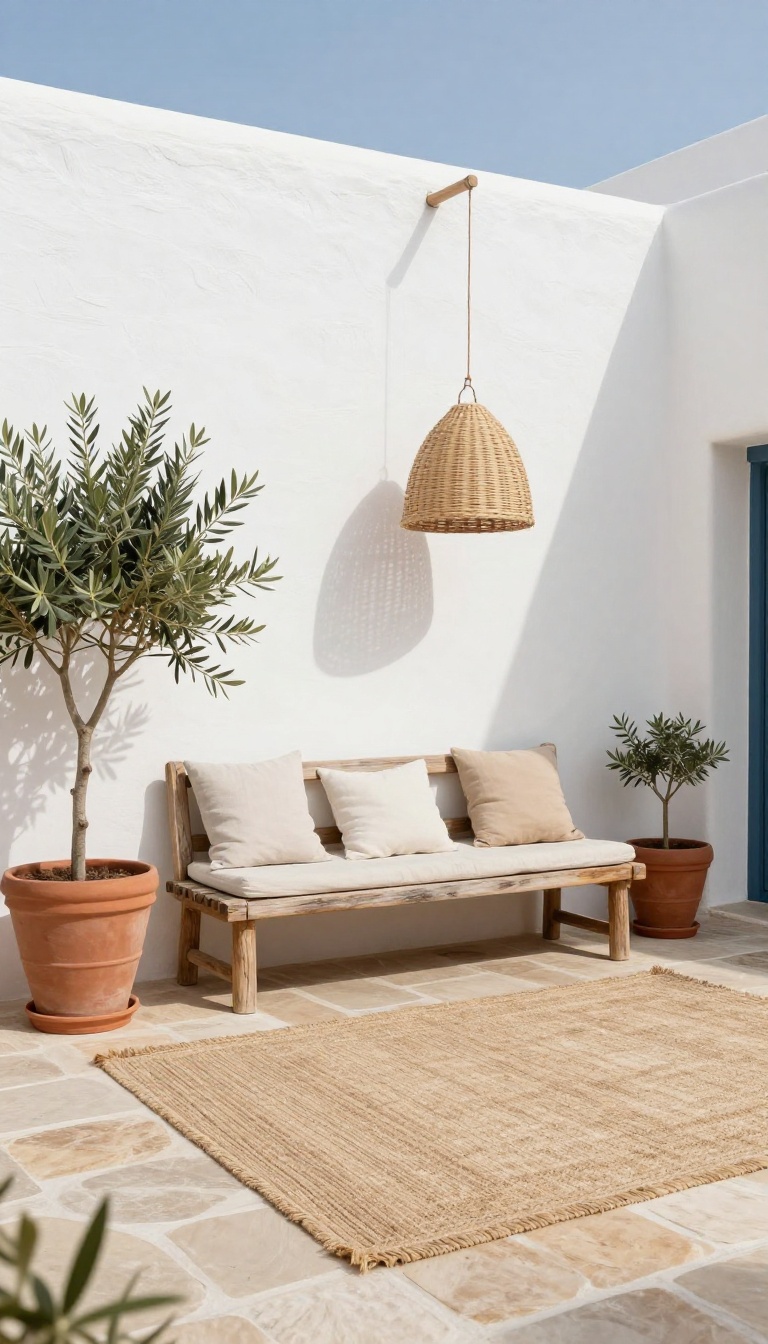
Whitewashed walls do more than look pretty. They bounce light around a space, so even a small patio feels open and breezy. Pair that brightness with soft, natural textures and you get a backyard that's cool to the eye and warm to the touch.
Start with the walls. If you have a privacy fence, a garden wall, or even a plain stucco exterior, a coat of whitewash or limewash changes everything. It's not the same as flat white paint.
The finish is chalky and slightly uneven, which gives it that lived-in, coastal feel. You can apply it yourself with a brush and a rag, and the result looks like it's been sun-bleached for years. For a more authentic look, leave the base slightly darker and build up thin layers until you get the right depth.
The key is to avoid a perfect, plastic finish. Imperfection is the point. Once the walls are bright, bring in texture to keep things from feeling sterile.
Wood, rattan, jute, and unglazed clay all work. A weathered teak bench, a rattan pendant light, or a few terracotta pots with olive trees will soften the hard edges. Mix in a linen throw or outdoor cushions in off-white or sand.
The contrast between crisp walls and soft, tactile materials is what makes the space feel relaxed instead of showy. Don't forget the floor. A stone or concrete patio can feel cold, so add an outdoor rug in a natural fiber.
It anchors the seating area and adds another layer of softness. Just make sure it's made for outdoor use so it can handle sun and rain.
Choosing The Right White
Not all whites are the same. Warm whites with a hint of yellow or pink feel softer and more Mediterranean. Cool whites with blue or gray undertones can look stark.
Test a few samples on the wall at different times of day. The light changes everything.
Layering Natural Materials
Wood, rattan, and clay are your best friends here. A wooden dining table, rattan chairs, and a few clay pots create a rhythm. Stick to two or three materials and repeat them.
Too many different textures can feel busy.
Keeping It Low-maintenance
Whitewashed walls are forgiving. Scuffs and marks blend in, and you can touch them up with a little more wash. For textiles, choose solution-dyed acrylic or quick-drying fabrics that resist mildew.
A quick hose-down is usually enough.
2. Terracotta Pots in Every Corner
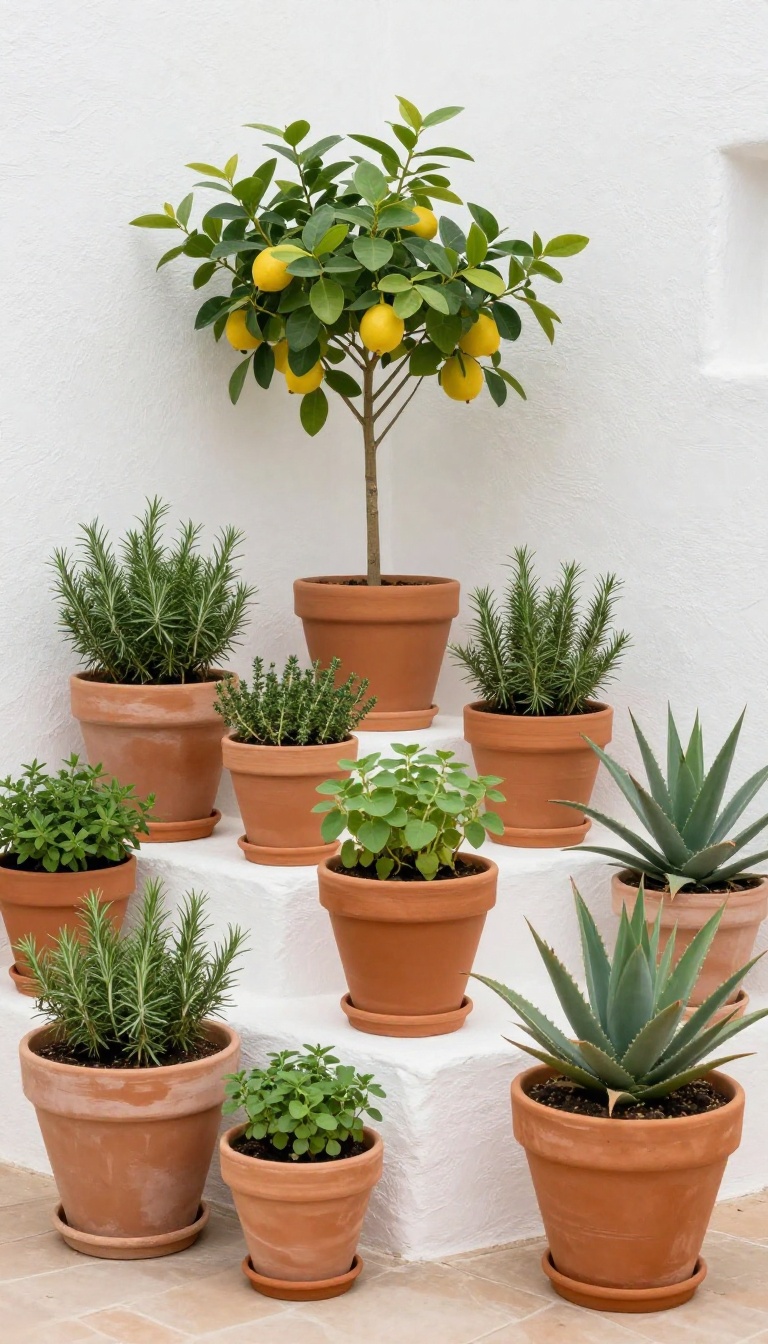
Terracotta pots bring that sun-baked, earthy feel of the Mediterranean to any backyard, no matter where you live. Their warm orange tones pair perfectly with whitewashed walls and green foliage, creating an instant coastal vibe. The best part?
You can start with just a few and build from there.
The trick is to think beyond a single pot on the patio. Cluster them at different heights and sizes to create a dynamic, layered look that feels collected over time. Use a mix of herbs, succulents, and small citrus trees to add texture and scent.
Place them along steps, in corners, or even on walls to maximize your space.
Choosing The Right Pots
Not all terracotta is created equal. Look for pots that are frost-proof if you live in a colder climate, and check that they have a drainage hole. Unglazed terracotta breathes, which helps prevent root rot, but it dries out faster, so you'll need to water more often.
If you want a more weathered look, leave them outside year-round and let them develop a patina.
Arranging For Impact
Group pots in odd numbers for a natural look. Vary heights by using a mix of sizes or by placing some on stands or overturned pots. Create a focal point near a doorway or seating area, then repeat smaller clusters elsewhere to tie the space together.
Don't be afraid to mix in a few glazed pots for contrast, but keep terracotta as the star.
Planting Ideas That Thrive
Herbs like rosemary, thyme, and oregano love terracotta and add fragrance. Succulents like agave or aloe bring sculptural interest and need little water. For a touch of citrus, try a dwarf lemon or kumquat tree in a large pot.
These plants not only look good but also reinforce the Mediterranean theme with their scents and flavors.
3. A Pergola for Dappled Shade
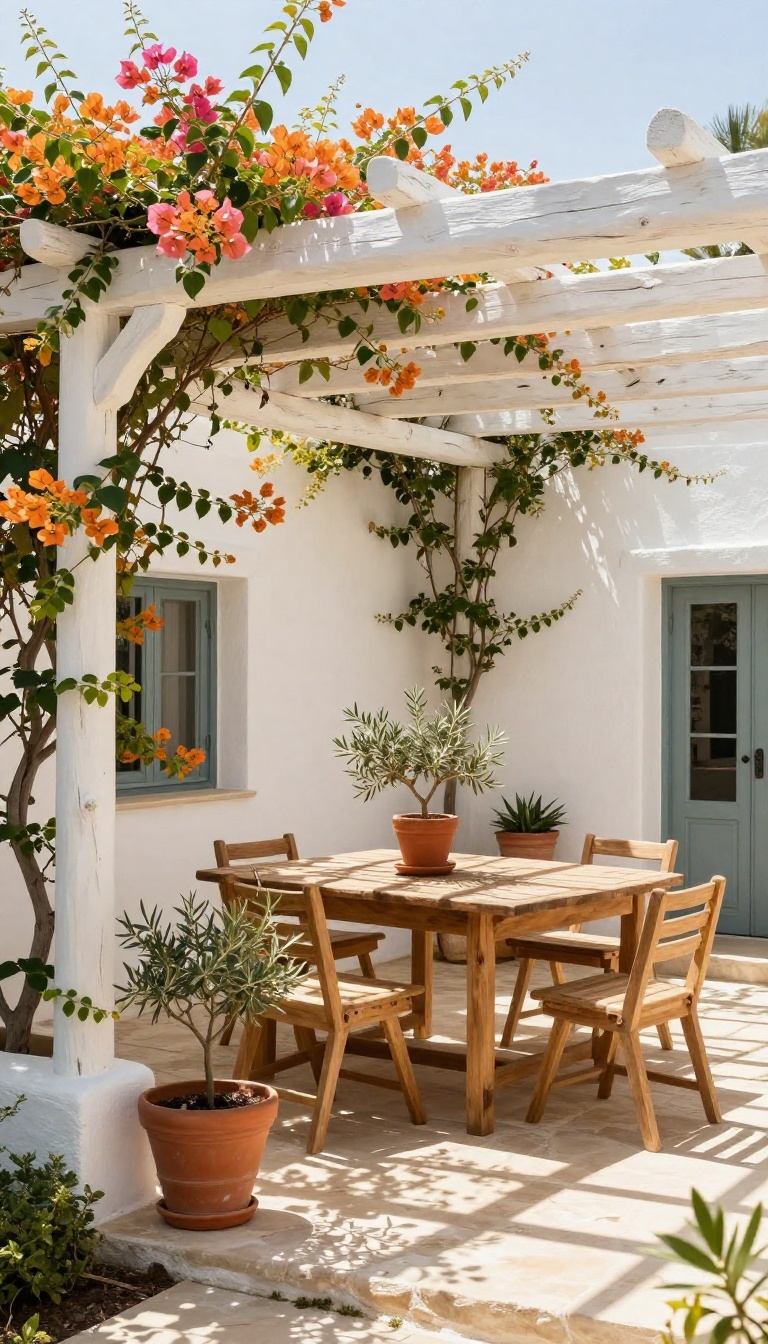
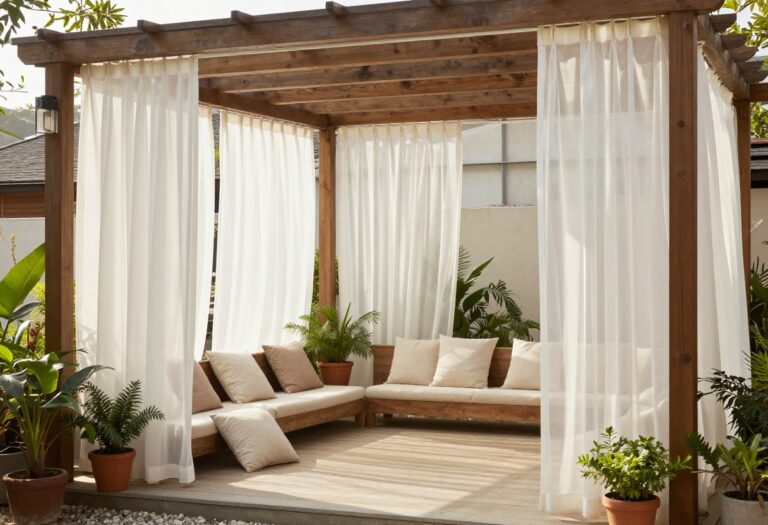
A pergola does something no umbrella or awning can: it turns a patch of open yard into a room without walls. The overhead beams filter sunlight into soft stripes, so you get shade where you sit and sun where you don't. It's the closest thing to sitting under a grape arbor on a Greek island, minus the ferry ride.
You can build one from wood, metal, or even thick bamboo, and the style matters less than the proportions. Keep the beams spaced wide enough that light still comes through, and set the posts so they frame a view rather than block it. A pergola that's too small feels like a cage; one that's too big loses the cozy factor.
Aim for a footprint that covers a dining table, a pair of loungers, or a small seating nook, and let the rest of the yard stay open.
Wood Or Metal?
Wood gives you that warm, whitewashed or natural cedar look that fits the Mediterranean palette perfectly. It's easy to drill into for hooks, lights, or vines, and it ages into a soft gray if you let it. Metal, especially powder-coated aluminum or steel, holds up better in humid or coastal climates and needs almost no upkeep.
If you want the look of wood without the repainting, go with a wood-grain aluminum that reads as timber from a few feet away.
Draping It With Vines Or Fabric
Climbing plants are the soul of a Mediterranean pergola. Bougainvillea, jasmine, and grapevines all love the heat and will weave through the beams within a season or two. If you want shade now, not next year, drape a light linen or cotton canvas across the top.
Choose a neutral tone like sand, ivory, or faded terracotta so it blends with the rest of the yard. A simple curtain rod or eye hooks let you pull the fabric back when you want full sun.
Making It Feel Like A Room
Once the shade is handled, treat the space under the pergola like an outdoor living room. Add a rug that can handle weather, a couple of lanterns, and a small side table for drinks. String lights along the beams give you a warm glow after sunset without feeling fussy.
If you have room, hang a swing or a hammock chair from one of the crossbeams. The goal is to make it somewhere you linger, not just pass through.
4. Olive Trees and Citrus in Containers
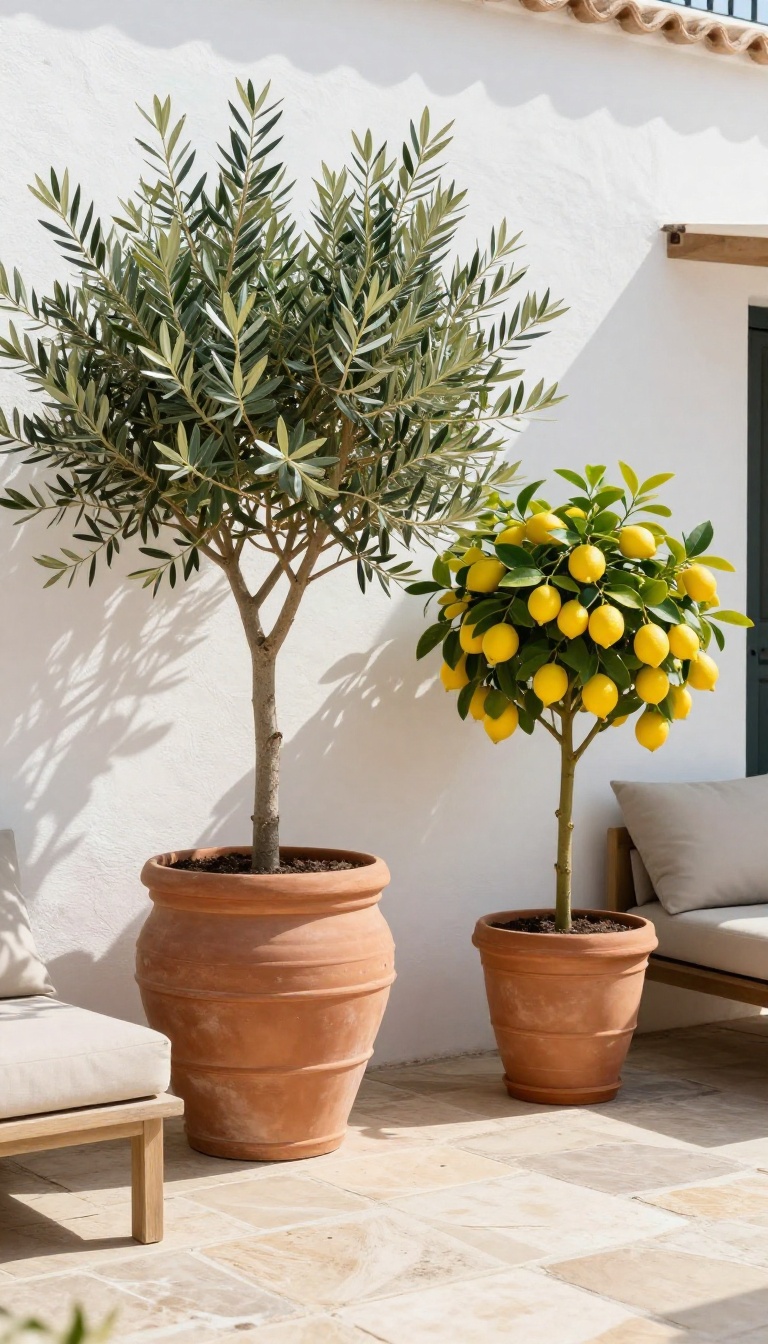
Olive trees and citrus bring the Mediterranean straight to your patio. They grow happily in pots, so you don't need a orchard or a frost-free climate. A single lemon tree or a pair of olives can anchor a seating area and stay green all year.
The trick is treating containers like small gardens. Choose the right pot, use gritty soil, and give them sun. They'll reward you with silvery leaves, fragrant blossoms, and fruit you can actually eat.
Even in cooler zones, you can wheel them into a garage or sheltered spot for winter.
Pick The Right Pots And Soil
Terracotta or glazed ceramic pots look the part and breathe well. Go at least 18 inches wide for olives and 12 to 15 inches for dwarf citrus. Use a cactus or citrus mix, or make your own with potting soil, perlite, and a little compost.
Drainage holes are non-negotiable—roots rot fast in soggy soil.
Sun, Water, And Feeding
Both olives and citrus want at least six hours of direct sun. Water deeply when the top inch of soil feels dry, then let it drain. Feed citrus monthly in spring and summer with a citrus fertilizer; olives are lighter feeders but appreciate a balanced organic feed in spring.
Don't overwater in winter—just keep the soil barely moist.
Winter Care And Pruning
If you live where temps drop below 20°F, move pots into a cool, bright garage or sunroom before the first hard freeze. Water sparingly and skip fertilizer until spring. Prune lightly in late winter to shape and remove dead wood.
Citrus may need a protected spot even in mild zones if a hard freeze is forecast.
5. A Stone or Brick Patio with Character
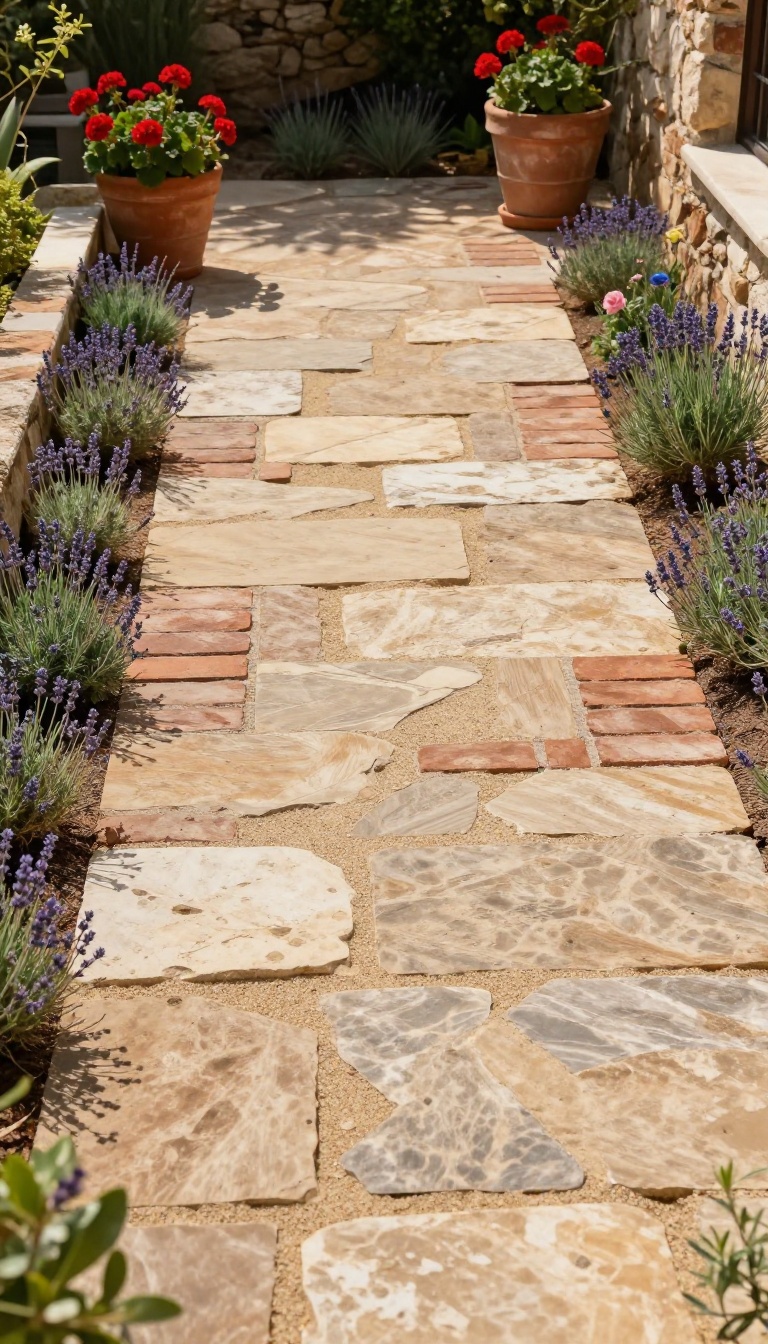
Perfectly uniform pavers can make a backyard feel like a showroom floor. A patio laid with tumbled stone, old brick, or travertine does the opposite — it looks like it has been there for decades, softened by sun and footsteps. The trick is embracing imperfection.
Irregular edges, slightly uneven surfaces, and warm, earthy tones read as authentic rather than manufactured. That lived-in quality is the whole point of Mediterranean design.
Pick Materials That Age Well
Tumbled limestone and travertine come pre-weathered, so they look settled from day one. Reclaimed brick brings a rosy, faded color you simply cannot fake with new stock. If you want the most forgiving option, go with a natural stone that has a matte, slightly porous finish — it hides dust and stays cool underfoot.
Lay It Loose, Not Perfect
Skip the tight grid pattern and let stones sit with wider, irregular joints. Fill those gaps with sand, fine gravel, or creeping thyme instead of rigid mortar. The result feels hand-set and organic, like a courtyard that grew into place over time rather than being installed last weekend.
Warm The Edges
A patio with hard, straight borders can feel clinical. Soften the perimeter with low plantings — lavender, rosemary, or a few pots of geraniums — so the stone meets greenery instead of a sharp line. Add a couple of aged terracotta pots at the corners to tie the whole thing together.
6. An Outdoor Shower for Post-Beach Rinses
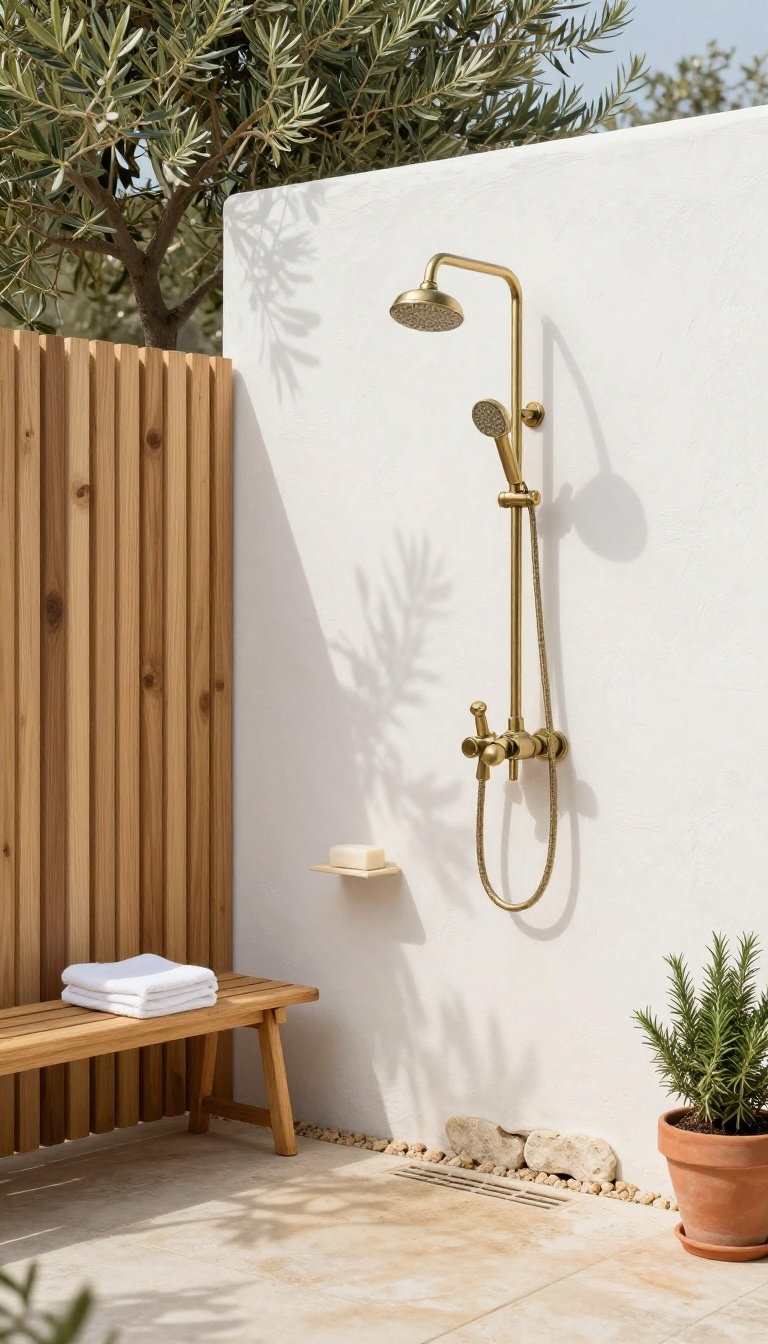
Sand has a way of following you home. An outdoor shower catches it at the door, before it ever reaches your floors, your sofa, or the sheets you just washed. It also happens to be one of the most quietly luxurious things you can add to a backyard, and it costs far less than a pool.
The setup itself is simple: a shower head, a mixing valve, and a place to stand that drains well. What makes it feel Mediterranean is the enclosure. Stone, stucco, or warm wood around the base turns a utility fixture into something you actually want to look at from the kitchen window.
Placement matters more than people expect. Tuck it along a side wall, behind a pergola post, or at the edge of a patio where it gets late-afternoon shade. You want privacy from the street and easy access from the pool, the garden hose, or the back gate.
Once the structure is up, the details do the rest. A bench, a hook for a towel, and a small shelf for soap make it feel intentional rather than improvised.
Choosing Your Enclosure
Stone walls give you that whitewashed coastal look and hold up to weather without much fuss. Stacked ledger stone or smooth stucco both work, and either pairs well with a concrete or gravel floor. Wood is the warmer option.
Cedar or teak slats let air move through, so the space dries fast and never feels damp. A simple three-sided screen gives you privacy without blocking the breeze. If you want something lighter, consider a curved stucco wall with an open front.
It reads as sculpture from the yard and still hides you from view.
Plumbing And Drainage Basics
Run hot and cold lines from the house if you can, or use a solar bag setup for a simpler, seasonal version. A thermostatic valve keeps the temperature steady so you are not fiddling with two handles while covered in sand. Drainage is the part people skip.
Slope the floor slightly toward a gravel bed or a French drain, and keep it at least a few feet from the foundation. Pea gravel over a perforated pipe handles most residential use without a formal drain. In colder climates, add shutoff valves inside the house and drain the lines before the first freeze.
The Bench And The Small Comforts
A built-in bench gives you somewhere to sit while you pull off wet swimsuits and sandy shoes. Teak or sealed concrete both hold up, and a slatted top lets water run through instead of pooling. Add a row of hooks at shoulder height for towels and a robe.
A small teak shelf or a stone ledge holds soap, shampoo, and a scrub brush without clutter. A potted olive tree or a clump of lavender nearby softens the hard edges and keeps the whole thing feeling like part of the garden rather than a utility corner.
7. Built-In Seating with Colorful Cushions
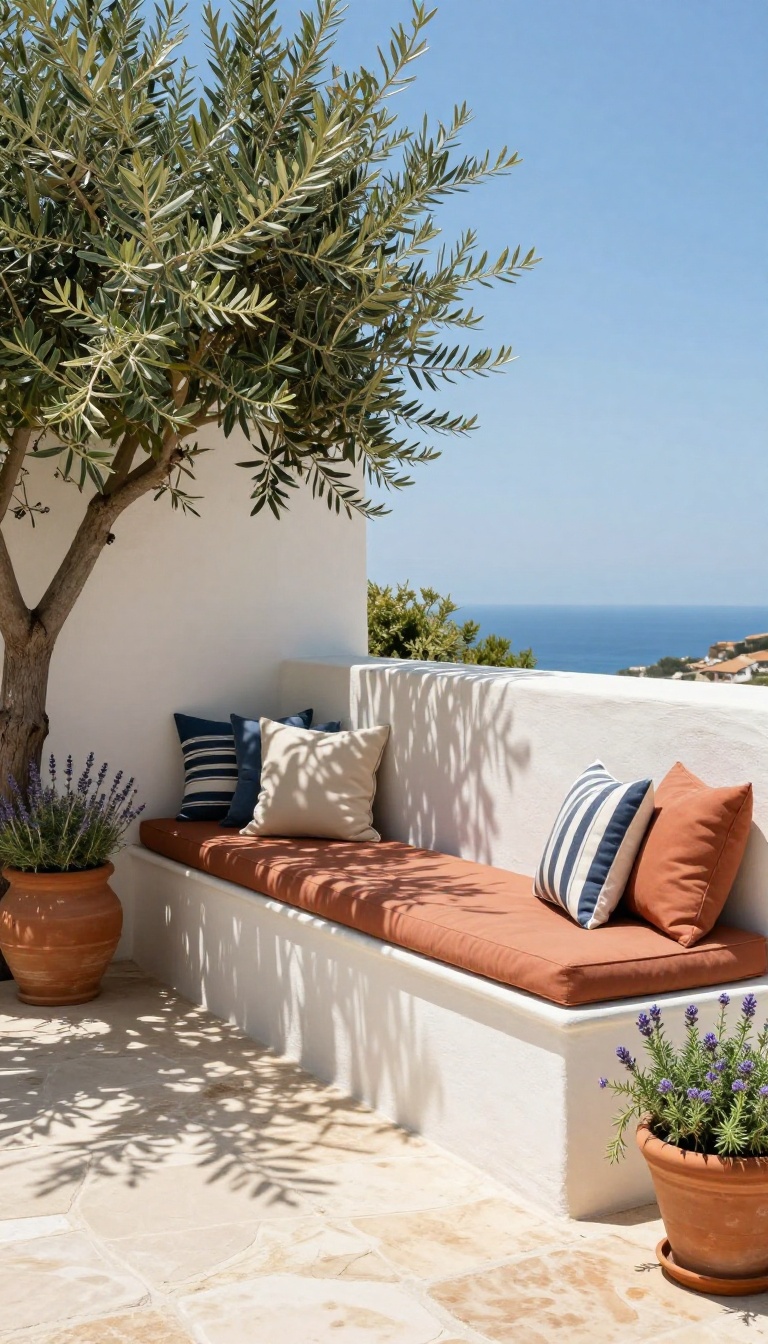
Built-in benches turn a plain wall or patio edge into a destination. They stay put, handle weather, and give you that loungey, coastal look without dragging furniture around. The trick is pairing simple masonry with thick, colorful cushions that invite you to sit and stay a while.
A low bench made from stucco, stone, or concrete blocks feels like it grew there. It anchors the space and adds a touch of Mediterranean architecture. Top it with weather-resistant cushions in blues, whites, and terracotta to bring in the relaxed seaside vibe.
Pick The Right Spot
Run built-in seating along a privacy wall, under a pergola, or around a fire pit. Corners work especially well because they feel cozy and defined. Just make sure the bench depth is comfortable—around 18 to 20 inches is standard.
Choose Coastal Cushions
Go for thick, high-density foam wrapped in solution-dyed acrylic fabric. Stripes in navy and white, solid terracotta, or soft sand tones all read as coastal. Add a few patterned throw pillows for extra color and comfort.
Keep It Low-maintenance
Store cushions in a deck box during heavy rain or off-season to extend their life. A quick wipe with mild soap keeps the fabric looking fresh. If you live in a damp climate, consider quick-dry foam and mesh-bottom cushions.
8. A Fire Pit or Chiminea for Cool Evenings
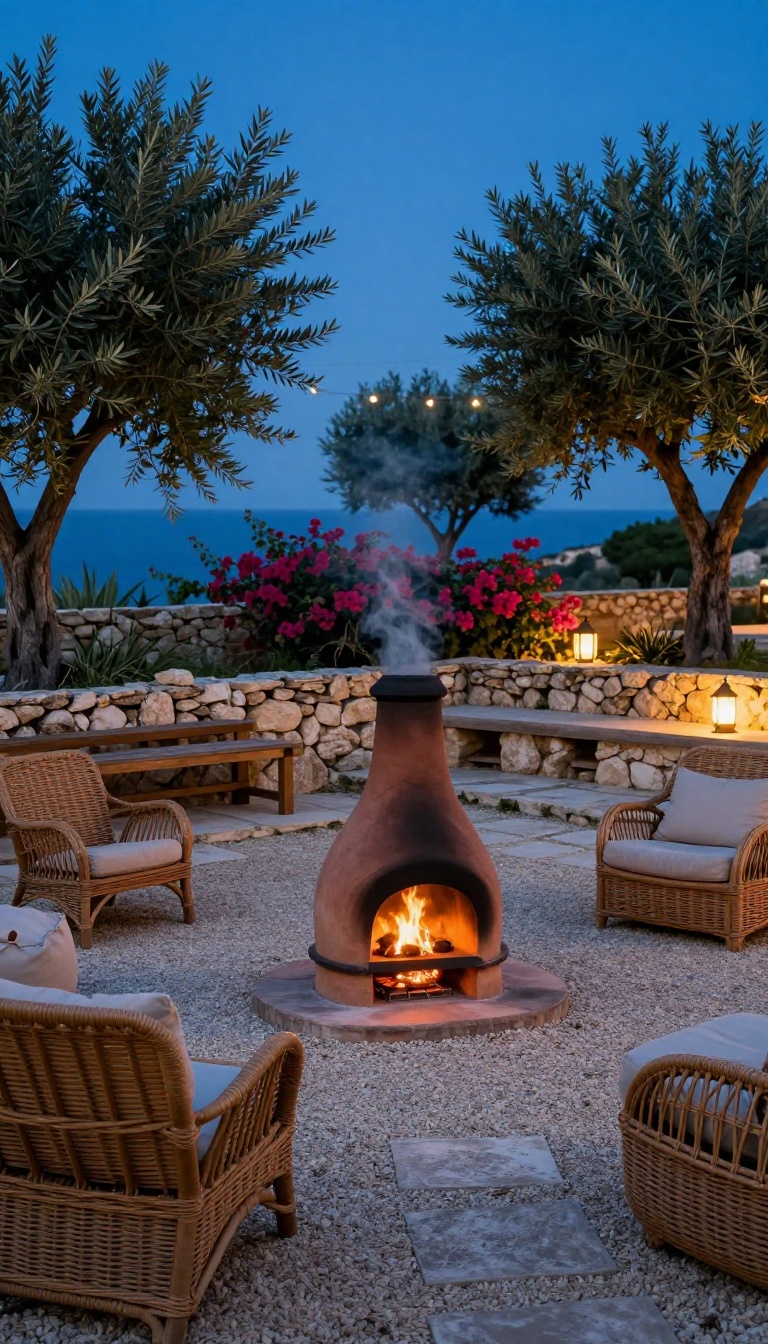
As the sun dips and the air turns cool, a fire pit or chiminea keeps the backyard gathering going. It adds warmth, light, and a natural focal point that draws people in. Whether you choose clay or stone, the effect is the same: an invitation to linger.
A fire feature extends your outdoor evenings well past sunset. It gives everyone a reason to stay put, talk, and watch the flames. The Mediterranean version leans rustic and simple—no fancy glass rocks or stainless steel rings required.
Clay Chiminea Or Stone Fire Pit?
A clay chiminea has a narrow chimney that sends smoke up and away, so it works well on smaller patios. A stone or stucco fire pit offers a wider opening and more heat, making it better for group seating. Both fit the coastal look, but pick based on your space and how many people you usually host.
Arrange Seating In A Circle
The magic happens when seats face each other. Pull chairs, benches, or poufs into a loose circle around the fire. Keep the circle wide enough for easy conversation and safe distance from the flames.
A few lanterns or string lights overhead add soft glow without competing with the fire.
Keep It Low-maintenance
Choose a spot on gravel, stone, or fire-resistant pavers. Avoid placing it under a low pergola or near hanging fabric. For clay chimineas, cure them slowly with small fires first to prevent cracks.
A simple cover keeps rain out when not in use.
9. Gravel and Drought-Tolerant Planting
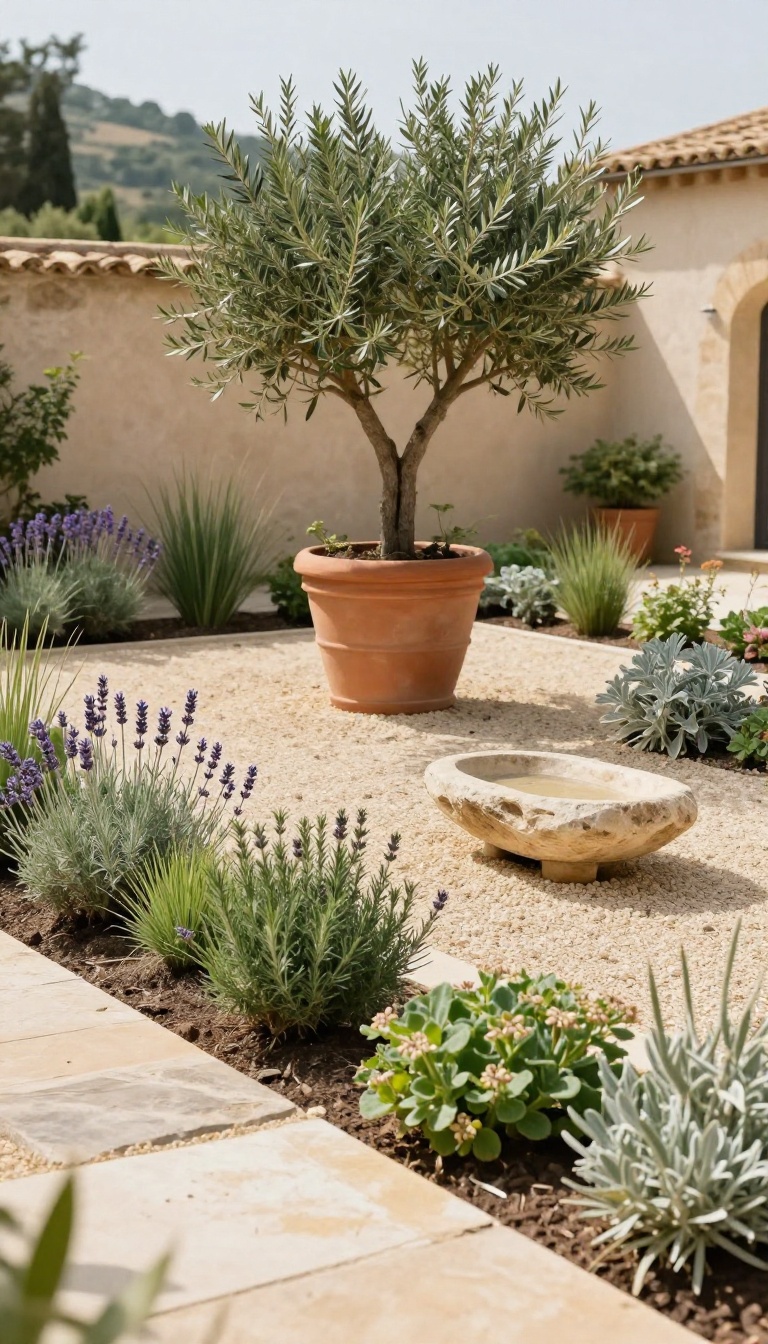
Lawn is the thirstiest thing in most backyards, and it's also the least Mediterranean. Swap it for gravel and plants that thrive on neglect, and the whole space starts to feel like a hillside in Provence. You water less, mow never, and somehow it looks better.
The trick is layering. Gravel gives you the blank canvas, and drought-tolerant plants give you the texture, scent, and movement that make the space feel alive. You're not just removing grass—you're replacing it with something that actually belongs in a hot, dry climate.
Pick Plants That Like It Dry
Lavender, rosemary, thyme, and ornamental grasses are the workhorses here. They all want full sun, sharp drainage, and very little water once established. Add in some sedum, santolina, or euphorbia for different shapes and shades of green and silver.
The mix should look a little wild, not perfectly spaced.
Lay The Gravel Right
Go with a pea gravel or crushed stone in warm tones—beige, cream, or soft gray. Spread it 2 to 3 inches deep over a weed barrier or a base of compacted sand. If you want to walk on it barefoot, choose a rounded pea gravel; crushed stone is rougher but stays put better on slopes.
Add A Few Anchors
A couple of large terracotta pots, a stone birdbath, or a single olive tree in the gravel keeps the space from looking like a parking lot. These anchors give the eye somewhere to rest and make the planting feel intentional. You can also tuck in a few stepping stones if you need a path.
10. A Vine-Covered Wall or Fence
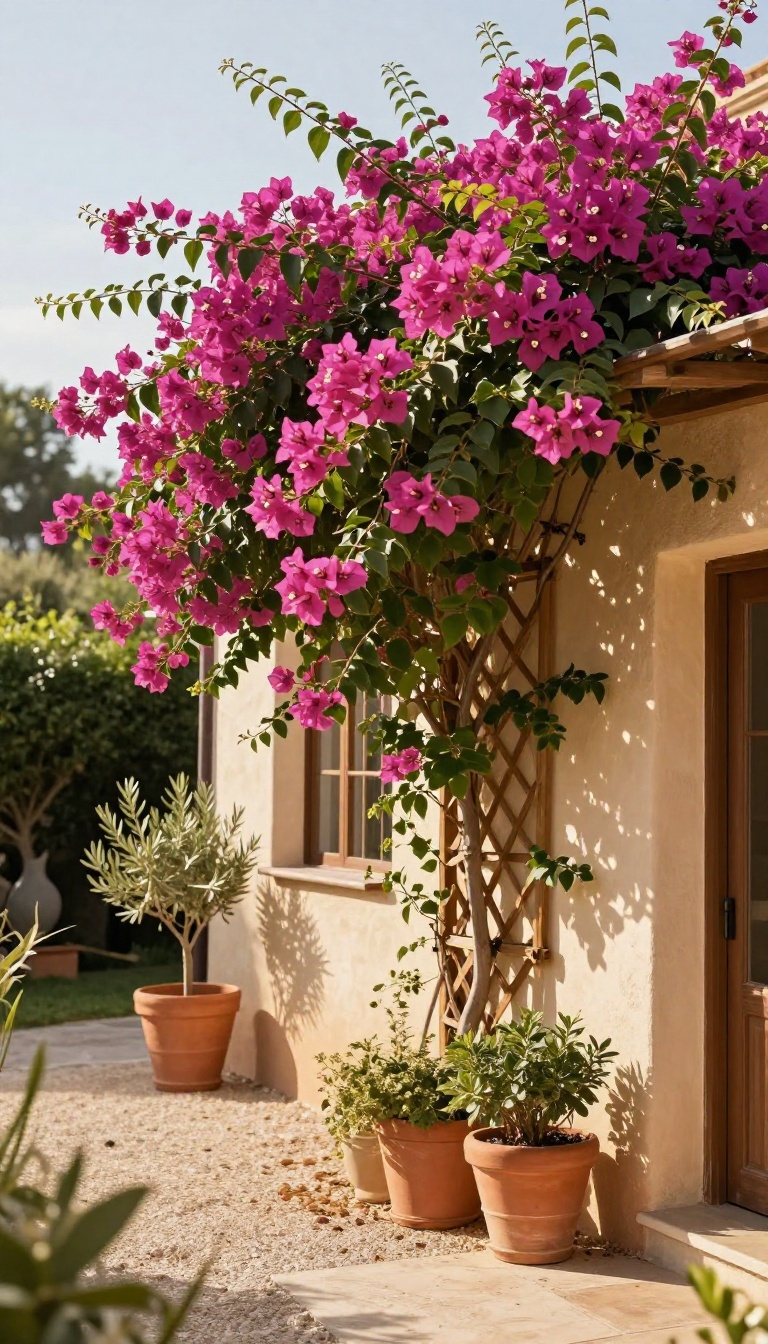
A bare wall or fence can make even a great backyard feel unfinished. Cover it with vines and suddenly the space feels softer, older, and a whole lot more Mediterranean. Think of it as living architecture: green walls that cool the air, hide ugly boundaries, and add color without taking up an inch of floor space.
The trick is picking a climber that loves your climate as much as you do. Bougainvillea throws out shocking pink and orange bracts in hot, dry spots. Jasmine fills the evening air with scent in milder zones.
Ivy and creeping fig are the reliable workhorses for shade and quick coverage. Each has its own personality, so choose based on the look you want and how much pruning you're willing to do.
Pick The Right Climber For Your Zone
Bougainvillea is the poster child for Mediterranean gardens, but it sulks in frost and needs full sun. Jasmine (especially star jasmine) handles a bit more cold and offers those tiny white flowers that smell like summer nights. Ivy is nearly indestructible and thrives in shade, though it can get aggressive.
Creeping fig clings to masonry without support and gives that classic old-world look. Check your USDA zone before you buy, and ask at the nursery which varieties stay manageable in your area.
Give It Something To Climb
Vines need a framework. A simple wire trellis, a wooden lattice panel, or even a few eye hooks and tension wire will do. For masonry walls, attach a trellis a few inches off the surface so air can circulate and you can prune behind it.
On fences, run horizontal wires between posts. If you want a freestanding green wall, a metal obelisk or a pair of tall posts with wire between them works beautifully.
Prune Like You Mean It
Vines grow fast, and that's both the gift and the curse. Regular pruning keeps them from swallowing windows, gutters, and neighboring trees. For bougainvillea, cut back hard after each bloom cycle to encourage more flowers.
Jasmine likes a light trim after flowering to stay bushy. Ivy can be sheared anytime during the growing season. The goal isn't a perfect shape—it's a relaxed, slightly wild look that still lets you use the wall or fence underneath.
Keep It Healthy And Happy
Most vines want well-drained soil and regular water while they're getting established. Once they're rooted, many are drought-tolerant, especially bougainvillea and creeping fig. Feed them lightly in spring with a balanced fertilizer, and watch for pests like aphids and whiteflies.
A strong blast of water from the hose knocks most of them off. If you're growing jasmine in a pot, repot every couple of years to refresh the soil.
11. A Small Water Feature for Ambience
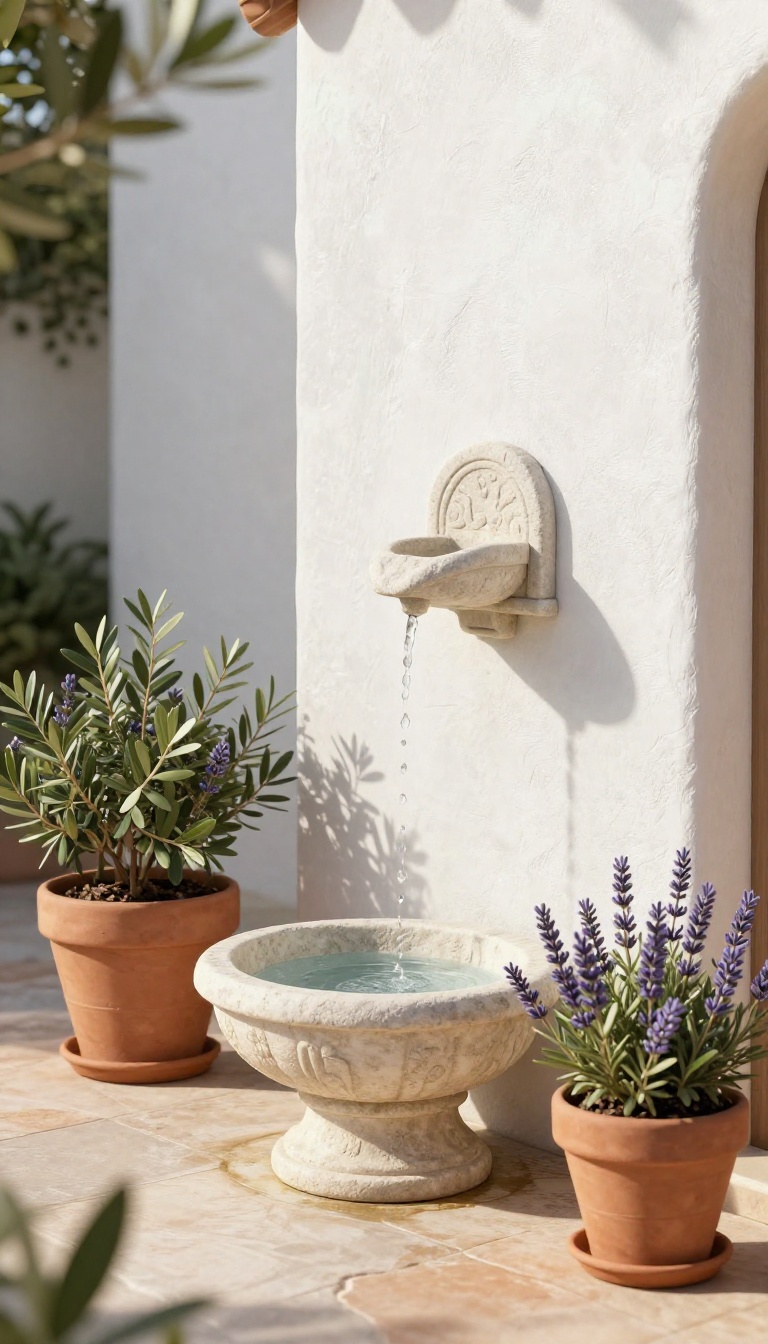
Water has a way of softening a backyard without asking for much space. A small fountain or a wall-mounted spout gives you the soothing sound of moving water, and it fits neatly into a Mediterranean scheme when you keep it simple. The goal isn't a grand display—it's a quiet background hum that makes the patio feel cooler and more relaxed.
The trick is to treat water as a detail, not a centerpiece. A subtle feature tucked into a corner or mounted on a stucco wall reads as intentional and calm, while a big, splashy fountain can overwhelm a modest yard. Stone, tile, and terracotta are your best friends here because they tie the feature to the rest of the Mediterranean palette.
Pick The Right Spot
Place the feature where you'll actually hear it—near seating, a dining table, or an open window. A corner of the patio or a spot against a wall works well because it doesn't eat up prime lounging space. If you have a covered area, a wall-mounted spout that drips into a small basin keeps things contained and easy to maintain.
Keep It Simple And Integrated
Choose a design that blends with your hardscaping. A carved stone basin, a tiled wall fountain, or a plain terracotta pot with a recirculating pump all feel at home in a coastal Mediterranean yard. Avoid shiny plastic or overly ornate pieces—matte finishes and natural materials age better and look more authentic.
Low-maintenance Moves
Recirculating pumps mean you're not wasting water, and a covered reservoir keeps debris out. Check the pump every few weeks, top off the water in hot weather, and give the basin a scrub when it needs it. That's about it—no plumbing required for most small features.
12. An Outdoor Dining Nook Under the Stars
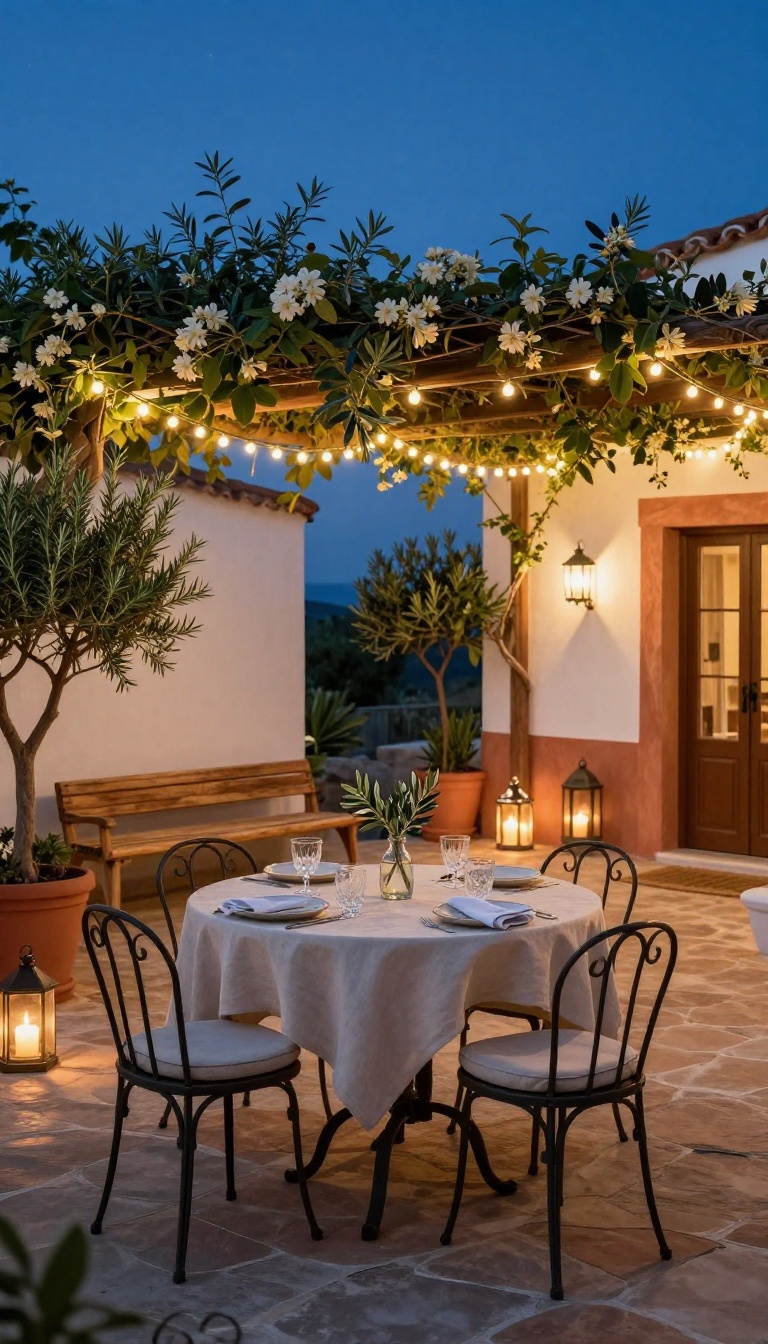
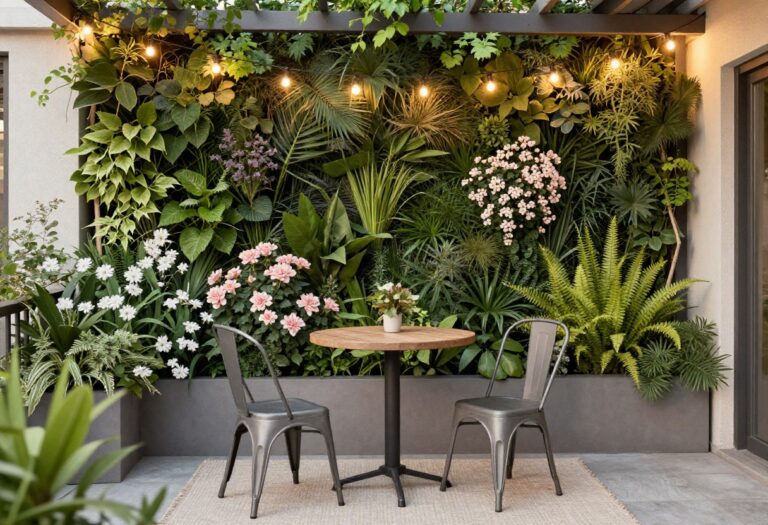
A table set for two under a canopy of lights feels like a tiny seaside trattoria, even if it's just your side yard. The trick is to keep it simple: a sturdy table, comfortable chairs, and a few thoughtful touches that make dinner outside feel like an occasion. You don't need a full outdoor kitchen—just a spot that invites you to linger.
Start with the table itself. A round bistro table works in tight corners, while a long farmhouse table welcomes a crowd. Pair it with chairs that you can actually sit in for an hour—wood folding chairs with cushions, or wrought-iron seats with a bit of give.
If space allows, add a bench on one side to save room and mix up the seating.
Lighting That Sets The Mood
String lights are the easiest win. Drape them overhead between two posts or from a pergola, and use warm-white bulbs—not the harsh cool ones. A dimmer switch or smart plug lets you dial the glow down as the evening goes on.
For a softer touch, scatter a few lanterns with candles or battery-operated flicker lights on the table and around the edges.
Table Settings With Coastal Ease
Skip the paper plates and go for ceramic or stoneware in sandy, off-white, or deep blue tones. A linen tablecloth or runner in a natural hue adds texture without fuss. Cloth napkins, simple glassware, and a small vase of rosemary or olive branches finish the look.
Keep a basket nearby for easy clearing when the meal is done.
Shade And Shelter For Daytime
If your dining spot gets full sun, a vine-covered arbor or a simple umbrella keeps lunch comfortable. Plant fast-growing climbers like jasmine or bougainvillea at the base of an arbor and let them weave through the slats. A retractable awning or a sail shade also works if you want flexibility.
The goal is dappled light, not deep shade.
Make It Easy To Use Every Day
Keep a tray with essentials—salt, pepper, a corkscrew, and matches—so you're not running inside mid-meal. A small side table or a rolling cart holds extra plates and drinks. If you have the room, add a compact outdoor fridge or a cooler tucked under the table.
The less effort it takes to set up, the more often you'll eat out there.
13. Layered Lighting for Evening Glow
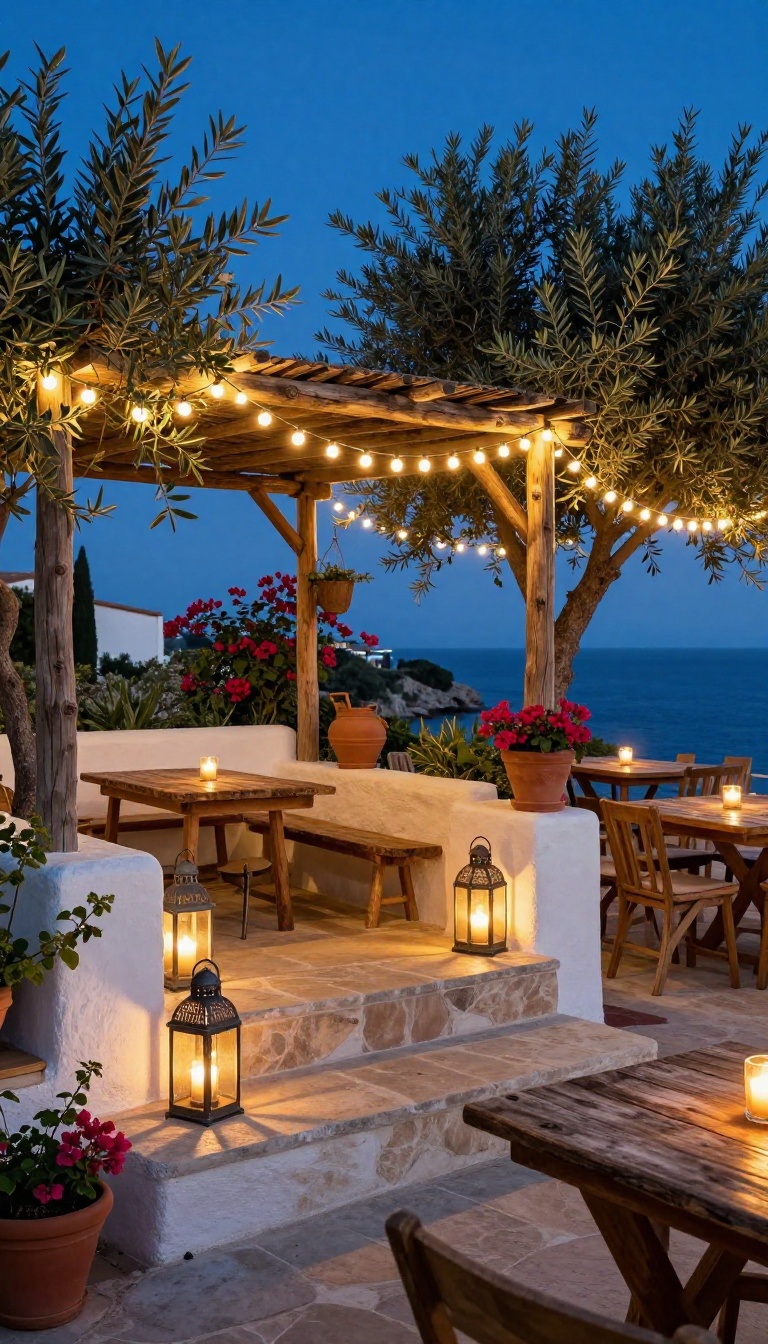
Mediterranean evenings have a magic that daytime can't match. The harsh sun fades, the air cools, and the right lighting turns your backyard into a warm, intimate retreat. Layering different light sources—from lanterns to string lights to candles—creates depth and a soft glow that feels effortlessly coastal.
And with solar options, you can keep it easy, energy-efficient, and ready to shine every night without a single plug.
Start by mixing light types: overhead string lights for ambiance, lanterns for task lighting, and candles for that flickering, romantic touch. This combination mimics the layered lighting you'd find in a seaside taverna, where every corner has its own little pool of warmth. The goal isn't to flood the yard with brightness but to highlight key areas and leave some mystery in the shadows.
String Lights: The Backbone Of Ambiance
String lights are the easiest way to add instant charm. Hang them overhead in a zigzag pattern from pergolas, trees, or posts to create a canopy of stars. Choose warm white bulbs for a soft, golden glow that flatters everything.
Solar string lights are a game-changer—they charge all day and turn on automatically at dusk, no wiring or timers needed. Drape them along fences or weave them through olive branches for a more organic look.
Lanterns: Portable Pools Of Light
Lanterns bring flexibility and a touch of old-world style. Place them on tables, steps, or hanging from hooks to light pathways and seating areas. Mix sizes and heights—a large lantern on the ground next to a small one on a side table creates visual interest.
Solar lanterns are perfect for this: set them out in the sun and let them glow all evening. For a cohesive look, stick to a material like black metal or weathered wood.
Candles: The Finishing Touch
Nothing beats the flicker of real candlelight for a relaxed, intimate vibe. Use them in groups on dining tables, in lanterns, or even floating in a water feature. Citronella candles do double duty, keeping bugs at bay while adding a warm glow.
If you're worried about wind or safety, opt for flameless LED candles that look surprisingly realistic. Scatter a few in mason jars or terracotta pots for a rustic, coastal feel.
Solar Power: Easy And Efficient
Going solar means you can light up your backyard without worrying about outlets or energy bills. Solar lights have come a long way—they're brighter, last longer, and come in stylish designs that fit any Mediterranean scheme. Use solar path lights to guide guests, solar spotlights to highlight a tree or wall, and solar string lights for overhead magic.
They automatically turn on at night and off at dawn, so you set them and forget them.
FAQ
What plants are best for a Mediterranean backyard?
Olive trees, lavender, rosemary, bougainvillea, and citrus trees are classic choices. They thrive in sunny, dry conditions and need little water once established.
How can I get the Mediterranean look on a budget?
Start with white paint or limewash on existing walls, add terracotta pots, and use gravel instead of grass. Thrift stores and flea markets are great for finding rustic furniture and decor.
Do I need a warm climate for a Mediterranean backyard?
Not necessarily. Many Mediterranean plants are hardy in cooler zones, and you can adapt the style with cold-tolerant varieties and portable plants you bring indoors in winter.
What colors work best for Mediterranean coastal style?
Stick to white, cream, terracotta, and shades of blue. These colors reflect sunlight and create a relaxed, beachy feel.
How do I maintain a Mediterranean backyard?
Keep it low-maintenance by choosing drought-tolerant plants, using gravel mulch, and installing drip irrigation. Regular pruning of vines and trees keeps the look tidy.
Conclusion
The best Mediterranean backyards feel lived-in, not staged. Start with one idea that solves a real problem, like shade for a too-sunny patio or a spot for your morning coffee. Live with it for a week before adding more.
Layer in pieces as you notice what's missing.
A few pots here, a pergola there, and suddenly the space works. Coastal charm grows from small, honest choices you'll actually use, not a rushed weekend of shopping. Let it evolve.