11 Tiny Bathroom with Shower Ideas That Use Space Wisely
A tiny bathroom doesn't have to feel cramped, especially when the shower works smarter, not harder. The right layout and fixtures can free up floor space and make the room feel larger than it is.
These 11 ideas focus on practical choices that maximize every inch without sacrificing style. From clever corner installations to space-saving doors, each tip targets a specific problem you might face.
Whether you're dealing with an awkward layout or just want a more open feel, these solutions are easy to adapt. Let's dive into the details that can transform your small shower into a functional, comfortable retreat.
1. Corner Showers: Turn Dead Space into a Functional Nook
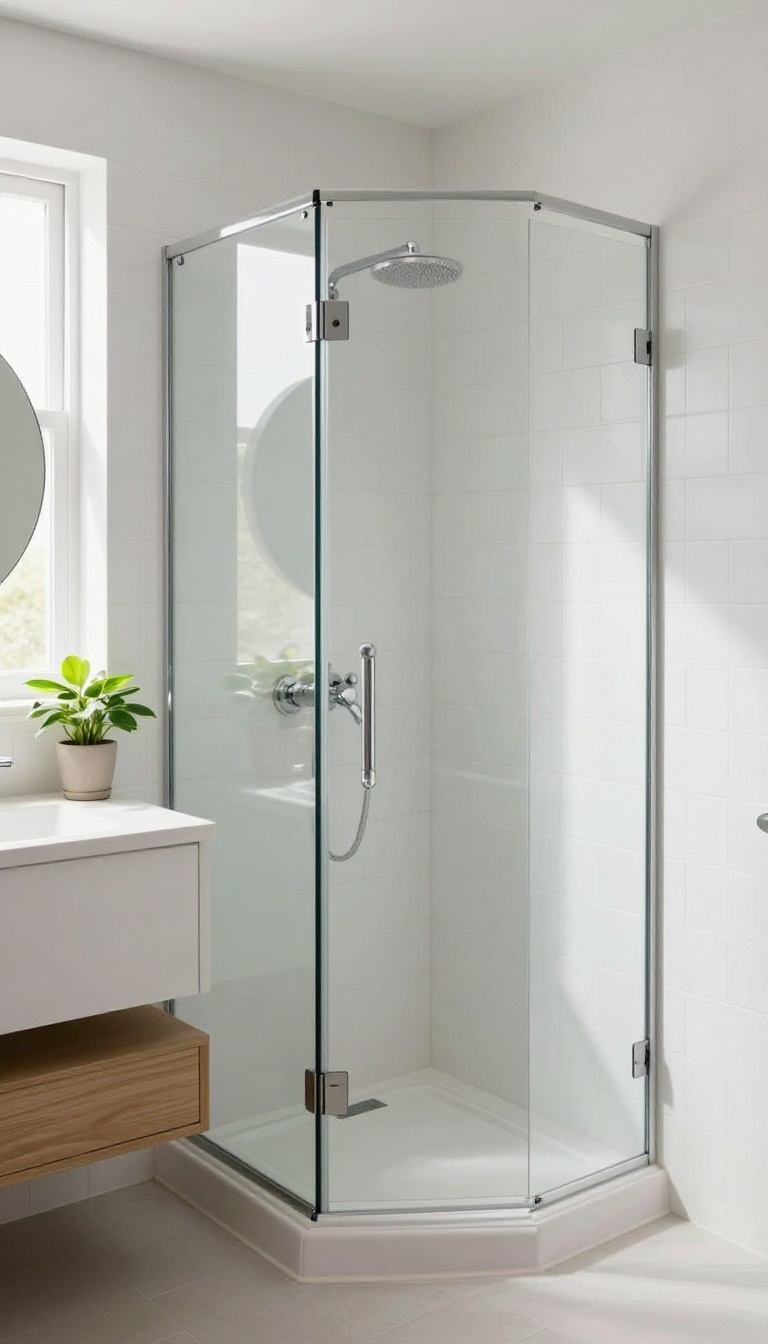
Corners often go unused in small bathrooms, but a corner shower can turn that awkward spot into a practical showering zone. By fitting into the corner, it leaves the rest of the room open for other essentials, making the space feel more spacious. Plus, with the right enclosure, it can look sleek and intentional rather than like an afterthought.
A corner shower is a smart choice for tiny bathrooms because it uses space that would otherwise be wasted. Instead of taking up a whole wall, it tucks neatly into the corner, freeing up valuable floor area. This layout allows for more room to move around, which can make the entire bathroom feel larger and more comfortable.
Pick The Right Enclosure
The type of enclosure you choose makes a big difference. Curved or quadrant shower enclosures are popular for corner showers because they have a rounded door that swings outward, saving space inside. They also create a more open feel compared to square or rectangular designs.
If you prefer a frameless look, a simple glass panel can work, but make sure it doesn't obstruct the rest of the room.
Maximize Floor Space
One of the biggest benefits of a corner shower is the extra floor space it provides. This means you can add a small vanity or a storage tower without feeling cramped. To further enhance the sense of space, consider using a clear glass enclosure instead of a solid wall.
It lets light flow through, making the bathroom feel brighter and airier.
Consider The Door Swing
When installing a corner shower, think about how the door opens. A door that swings into the shower can make it feel tight, while one that swings outward can take up floor space when open. Sliding doors are a great alternative because they don't require extra clearance.
They glide along tracks, saving both space and hassle in tight quarters.
2. Sliding Glass Doors: Save Swing Space
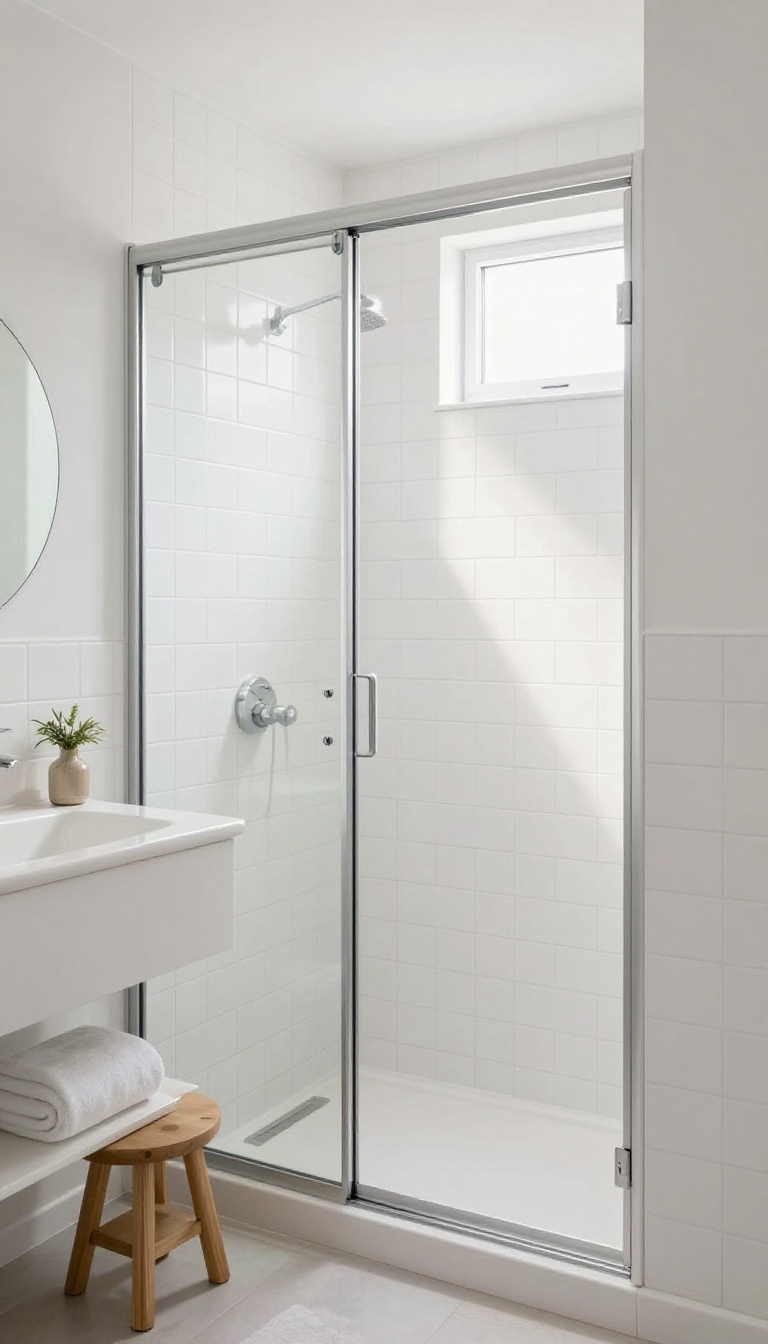
A hinged shower door needs a clear arc to swing open, which can eat up precious floor space in a tiny bathroom. Sliding glass doors glide along a track, so they don't require that clearance. That means you can position the shower closer to the toilet or vanity without worrying about the door hitting anything.
Sliding doors are a smart swap for small bathrooms because they free up the area right in front of the shower. You can step directly in and out without maneuvering around a door panel. Plus, frameless glass keeps the sightline open, making the whole room feel less boxed in.
Why Sliding Beats Hinged In Tight Spots
Hinged doors need about 24 to 30 inches of swing space, which is often impossible in a compact layout. Sliding doors run on a track, so they only need the width of the door itself. That extra floor area can be used for a small shelf, a towel rack, or just easier movement.
Frameless Glass For A Clean Look
Frameless sliding doors use thick tempered glass without bulky metal frames. This keeps the shower visually open, so your eye isn't stopped by a heavy border. Less framing also means fewer crevices for soap scum and grime, making cleanup quicker.
Installation Tips For A Smooth Fit
Measure your shower opening carefully before ordering a sliding door. Most kits come with adjustable panels, but you want a snug fit to prevent leaks. Also, check that the track is level—if it's off, the door won't glide smoothly.
Hiring a pro for installation can save headaches, but a confident DIYer can handle it with the right tools.
3. Walk-In Showers: No Door, No Problem
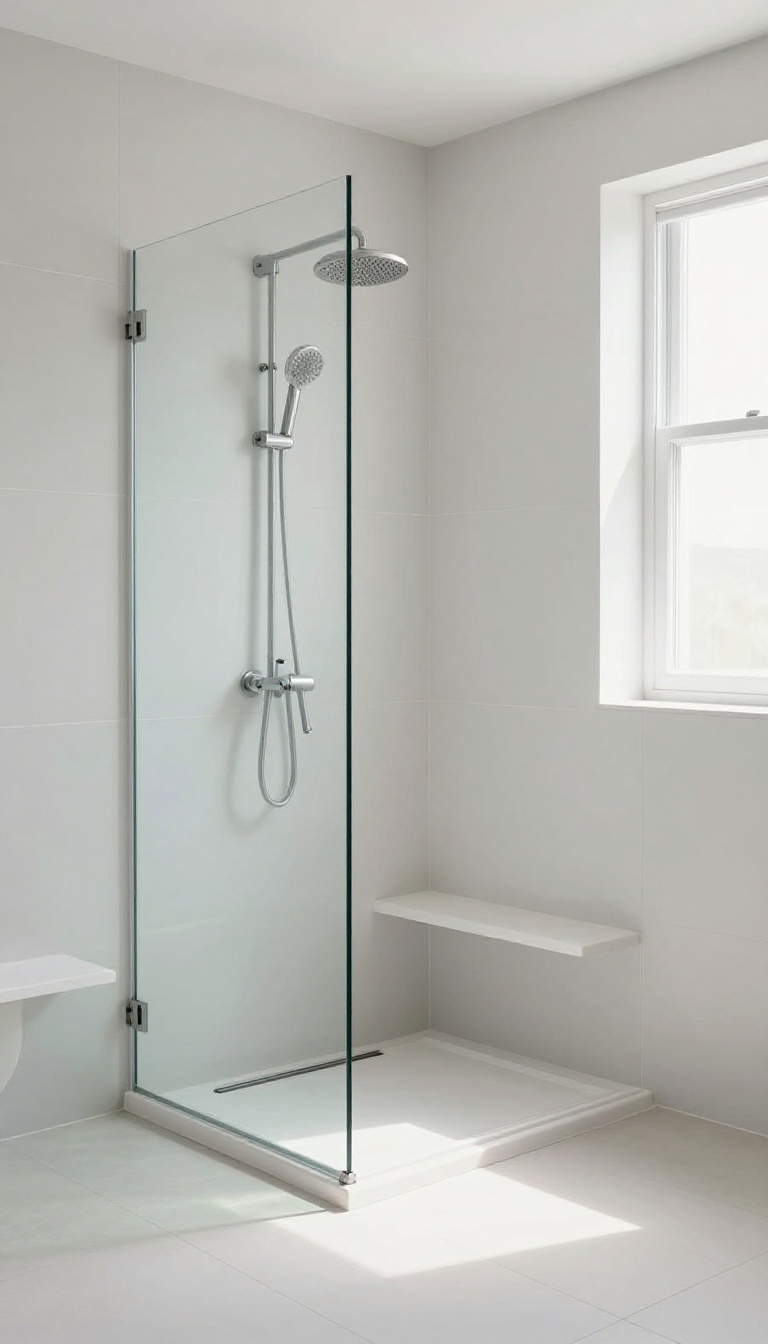
A walk-in shower without a door might sound like a recipe for a wet floor, but with the right slope and placement, it's a game-changer. You get a seamless look that makes the bathroom feel bigger and more open. Plus, it's a blessing if you have mobility concerns or just hate cleaning tracks.
The key is a curbless entry with a slight slope toward the drain. This keeps water where it belongs while you step right in without tripping over a threshold. You can add a fixed glass panel for splash control without taking up swing space.
Or, if you're on a budget, a simple shower curtain on a curved rod gives you privacy without the visual bulk.
The Magic Of A Curbless Entry
Removing the curb creates a continuous floor line that visually expands the space. It also means no more stepping over a high edge, which is safer and easier on the knees. Just make sure the floor slopes properly so water doesn't wander out.
Glass Panel Or Curtain?
A fixed glass panel offers a sleek, open feel and keeps most water inside, but it's a permanent fixture. A shower curtain is more flexible and cheaper, and you can push it aside to make the room feel even larger. Either way, you skip the door entirely.
Making It Work In A Tiny Bathroom
Even in a small footprint, a walk-in shower can work if you position it against a wall and use a slight L-shaped panel. Keep the shower head aimed inward, and add a slight bench or niche for storage. The open design makes the bathroom feel less boxed in.
4. Shower Curtains Over Glass: Flexible and Budget-Friendly
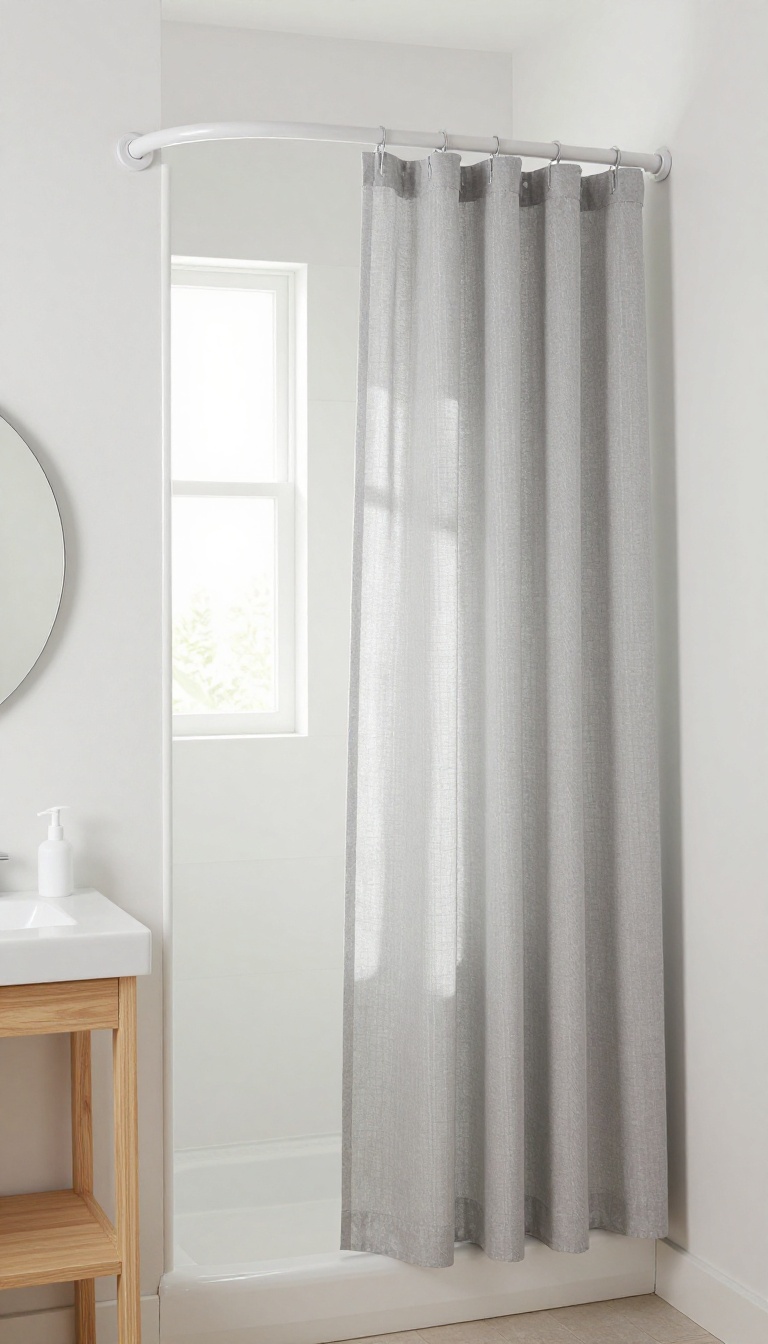
Glass doors look sleek, but they come with a hefty price tag and can make a tiny shower feel like a fishbowl. A curved shower rod with a light-colored curtain is a clever alternative that softens the space and keeps costs down. It's also one of the easiest swaps to make when you want a quick refresh without a full remodel.
Swapping a glass door for a curtain opens up a world of flexibility. You can change the look with the seasons, match a new color scheme, or simply replace a worn curtain in minutes. Plus, curtains are far more forgiving when it comes to installation—no need for precise measurements or professional help.
Why Curtains Beat Glass In Tight Spots
A curved rod pushes the curtain outward, giving you extra elbow room inside the shower without taking up more floor space. This little trick makes the shower feel more spacious and prevents the curtain from clinging to your skin. Curtains also soften the visual weight of the bathroom, making the room feel airier and less boxy.
Light Colors And Patterns That Open Up The Space
Stick to light, neutral tones like white, pale gray, or soft pastels to reflect light and make the shower area feel larger. If you want a bit of personality, choose a subtle pattern—like thin vertical stripes or a delicate botanical print—that adds interest without overwhelming the small space. Avoid dark, heavy fabrics that can make the shower feel like a cave.
Easy Maintenance And Quick Updates
Curtains are machine-washable, which is a huge plus in a humid bathroom where mold and soap scum can build up. When they start to look tired, you can swap in a new one for under $30. Glass doors, by contrast, require constant wiping to stay streak-free and are much more expensive to replace if they break or become outdated.
5. Built-In Niches: Recessed Storage Without Clutter
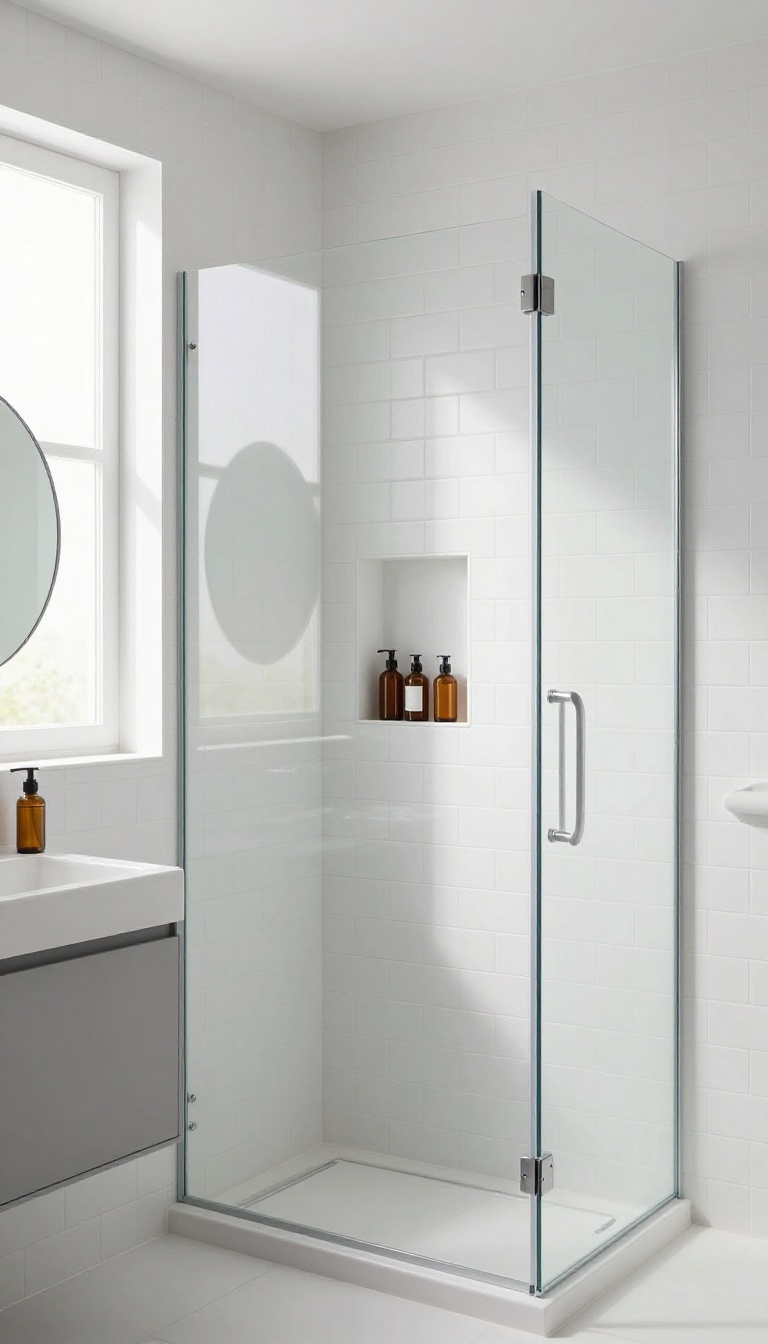
Shower caddies and hanging organizers can quickly turn a small shower into a cluttered mess. They take up visual space and often rust or mildew over time. A recessed niche, on the other hand, is built right into the wall, offering a sleek and permanent storage solution that keeps your essentials within easy reach.
When you're working with a tiny shower, every inch counts. A built-in niche not only provides storage but also eliminates the need for bulky add-ons that can make the space feel even smaller. By carving out a recessed shelf in the wall, you gain a clean, integrated spot for shampoo, soap, and other shower necessities.
It's a simple upgrade that pays off in both function and style, making your shower feel more open and organized.
Choose The Right Size And Location
The key to a useful niche is planning its size and placement. It should be large enough to hold your everyday items, but not so big that it overwhelms the wall. Typically, a niche that's about 12 to 16 inches wide and 6 to 8 inches tall works well for most bottles.
Place it at a height that's comfortable to reach—usually around chest level—and consider the showerhead's spray pattern to avoid water pooling inside.
Waterproofing And Maintenance
Proper waterproofing is essential to prevent moisture from seeping into the wall behind the niche. Use a waterproof membrane and slope the niche floor slightly toward the shower to allow water to drain. For easy cleaning, choose smooth, non-porous materials like tile or stone, and consider a single shelf to minimize grout lines.
Regular wiping after showers will keep it looking fresh and prevent soap scum buildup.
Design Ideas For A Seamless Look
To make the niche blend seamlessly with your shower, use the same tile as the surrounding walls. For a subtle contrast, you can use a different color or a decorative tile as the niche's back panel. Adding a small LED light inside the niche can create a spa-like ambiance and make it easier to find your products.
If you have multiple niches, stagger them at different heights to add visual interest without taking up extra space.
6. Wall-Mounted Fixtures: Streamline the Look
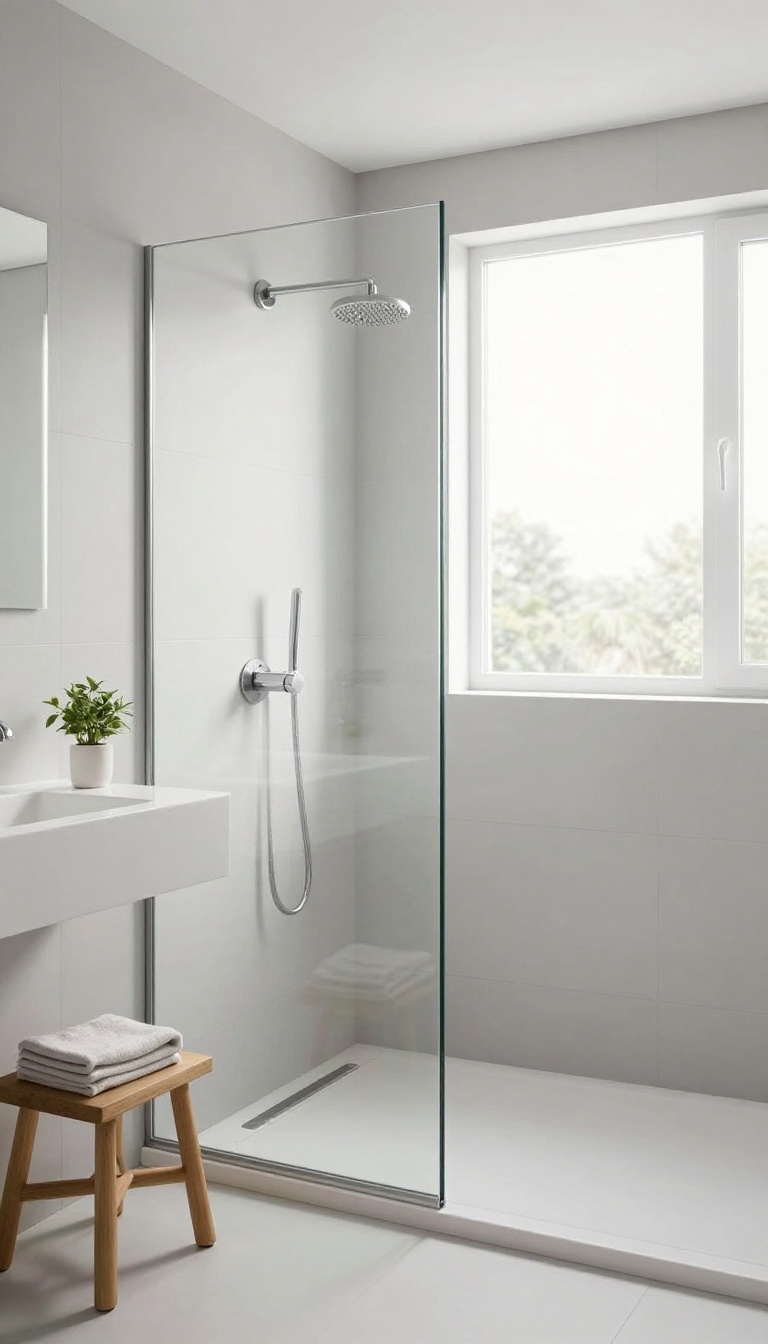
When you're working with a tiny bathroom, every inch of counter and floor space counts. Wall-mounted fixtures are a clever way to free up those precious surfaces while adding a clean, modern vibe. By attaching faucets and showerheads directly to the wall, you eliminate bulky hardware that can make a small shower feel crowded.
Plus, they're a breeze to clean—no more scrubbing around awkward bases or reaching into tight corners.
Free Up Counter Space
A wall-mounted faucet for your sink or shower doesn't just look sleek—it actually gives you more usable space. Without a traditional faucet base taking up room on the counter or tub edge, you can place toiletries or a small tray right where the hardware used to be. In a tiny bathroom, that extra few inches can make a world of difference.
You'll also find it easier to wipe down surfaces since there's no obstruction to work around.
Simplify Cleaning And Maintenance
Wall-mounted fixtures are a dream to clean. Because they're attached directly to the wall, there's no nook or cranny for grime to hide in. You can easily wipe the wall and the fixture without fighting for access.
This is especially handy in a shower where soap scum tends to build up quickly. Plus, many wall-mounted designs have fewer exposed parts, which means less to polish and maintain over time.
Choose A Sleek, Modern Design
When picking wall-mounted fixtures, go for a minimalist style that blends with your bathroom's aesthetic. A slim, angular faucet or a round, flat showerhead can reduce visual clutter and make the space feel more open. Look for finishes like brushed nickel or matte black that resist fingerprints and water spots.
The goal is to keep the eye moving smoothly across the room without any bulky distractions.
7. Glass Block Windows: Light and Privacy Combined
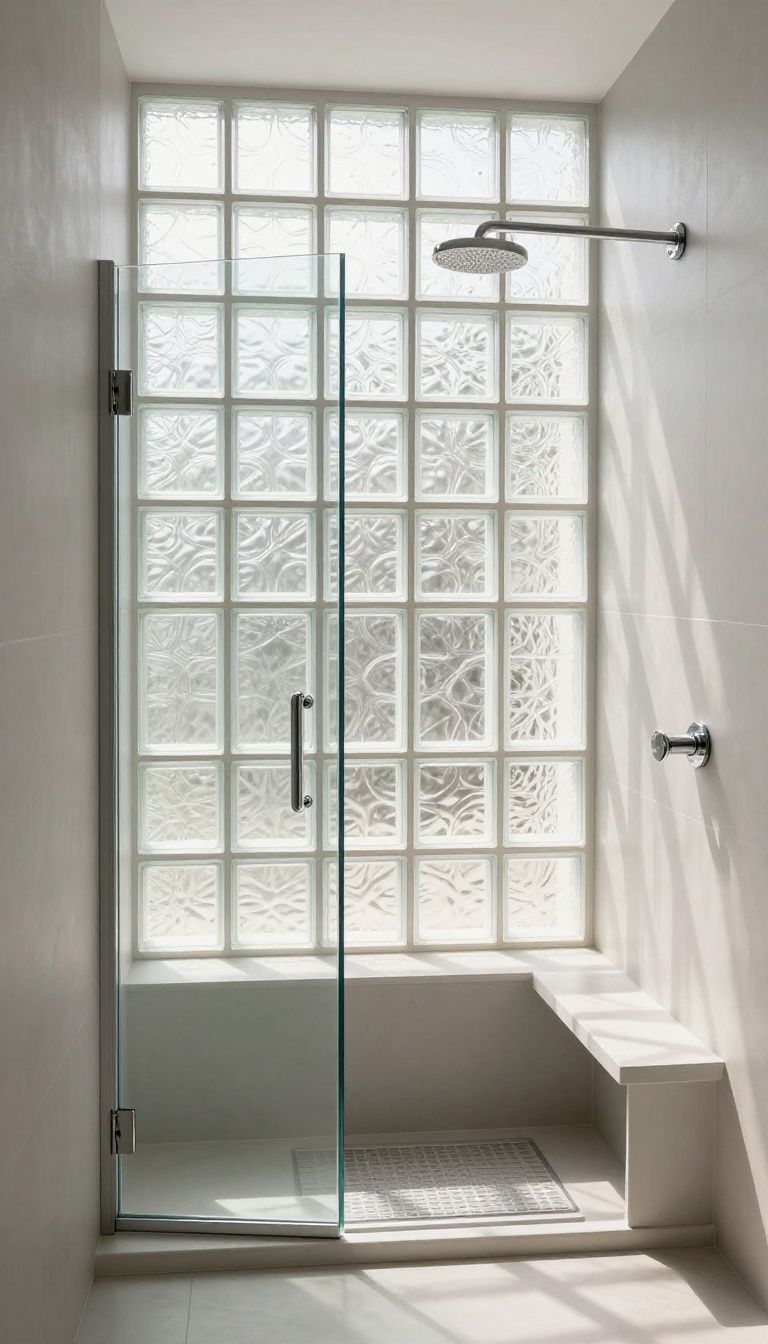
A tiny shower can feel like a dark cave, especially if the only window is small or frosted. That's where glass block windows come in—they let in natural light while keeping your privacy intact. Instead of a regular window that might need blinds or curtains, glass blocks diffuse light beautifully and add a timeless, textured look to your bathroom.
Glass block windows are a classic choice for small bathrooms because they solve two problems at once: they brighten the space and keep prying eyes out. The thick, textured glass scatters light, so you get a soft, even glow without any see-through gaps. Plus, they're durable and easy to clean, making them a practical option for a shower area where moisture is constant.
Why Glass Blocks Work In A Shower
Glass blocks are made to handle wet environments—they're non-porous and resist mold and mildew. Unlike traditional windows, they don't need curtains or blinds, which can get damp and musty. The light they let in makes the shower feel larger and more inviting, and the texture adds visual interest without overwhelming the space.
Installation Tips For Tight Spaces
If you're adding a glass block window in a small bathroom, consider a prefabricated panel that fits into a standard window opening. This makes installation faster and less messy than building from individual blocks. Choose a size that doesn't eat into wall space—maybe a narrow vertical strip or a small square near the showerhead.
Also, ensure proper waterproofing around the edges to prevent leaks.
Styling Around Glass Blocks
Since glass blocks have a distinct look, keep the rest of the bathroom simple to let them shine. Neutral tiles and minimal fixtures work well. You can also use the window sill (if there is one) for a small plant or a decorative bottle of bath salts.
The light filtering through the glass will highlight those touches nicely.
8. Light Colors and Large Tiles: Visually Expand the Space
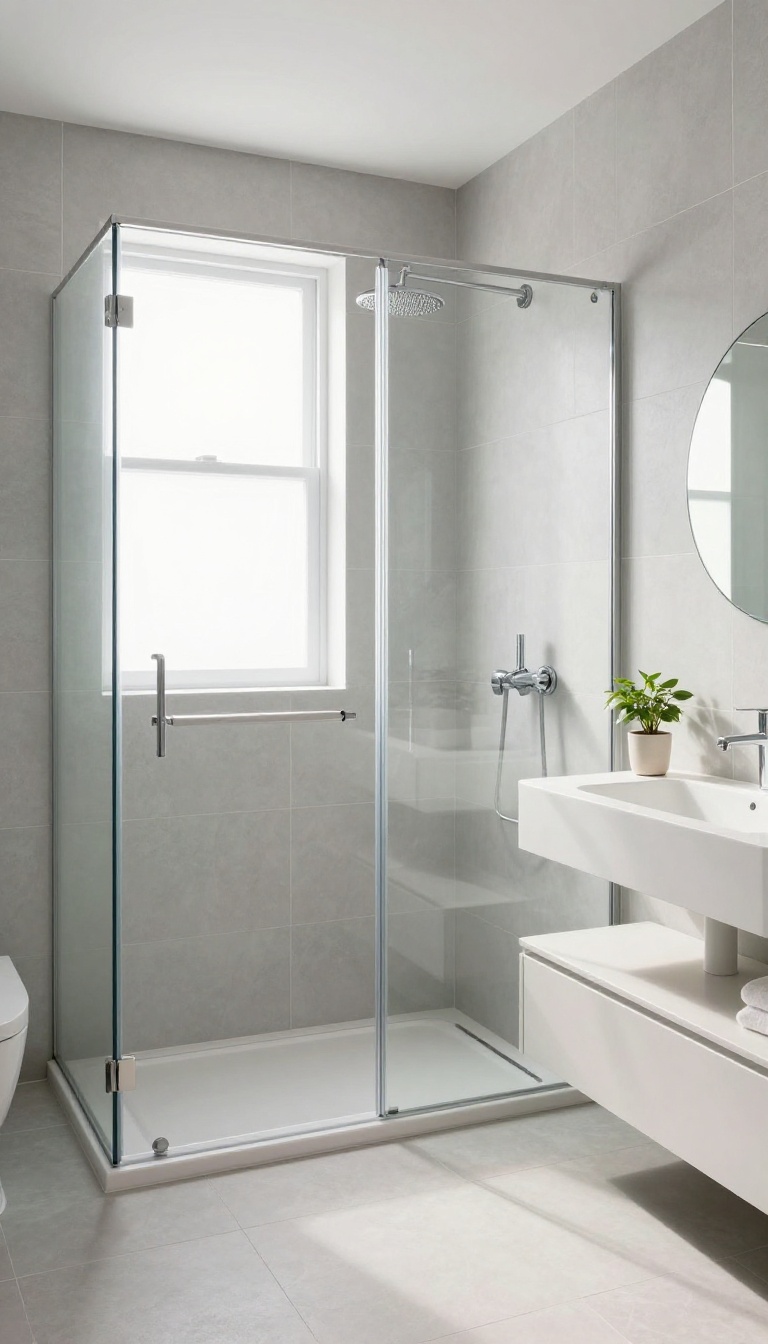
Color and tile size do more than set the mood—they can trick the eye into seeing a bigger room. In a tiny bathroom, the shower often takes up a large portion of the visual field, so what you put on those walls matters. Light tones reflect light, while large-format tiles cut down on busy grout lines, creating a smooth, open backdrop that makes the whole space feel airier.
When you're working with a compact shower, the goal is to reduce visual clutter. Dark colors and small tiles tend to make walls feel busy and enclosed. By switching to light shades and larger slabs, you create a clean canvas that doesn't chop up the space.
It's a simple change that can make a dramatic difference in how open and inviting the shower feels.
Why Light Colors Work
Light colors—think whites, soft grays, pale blues—reflect more natural and artificial light than darker hues. This makes the shower feel brighter and more open. In a small space, that extra brightness can be the difference between a cave and a spa.
Plus, light colors don't show water spots or soap scum as easily, which is a practical bonus.
The Magic Of Large-format Tiles
Large-format tiles, like 12×24 inches or bigger, have fewer grout lines. Each line breaks up the visual flow, so fewer lines mean a more seamless look. This continuous surface tricks the eye into seeing a larger area.
Large tiles also require less grout to maintain, making cleaning easier—a win for any busy homeowner.
Matching Grout And Tile
To maximize the effect, choose grout that closely matches your tile color. When grout blends in, the wall appears as one smooth surface. Contrasting grout, on the other hand, emphasizes the tile pattern and can make the space feel smaller.
For a truly seamless look, go with a similar shade or even a slightly lighter grout.
9. Rain Showerheads: Luxury Without Extra Space
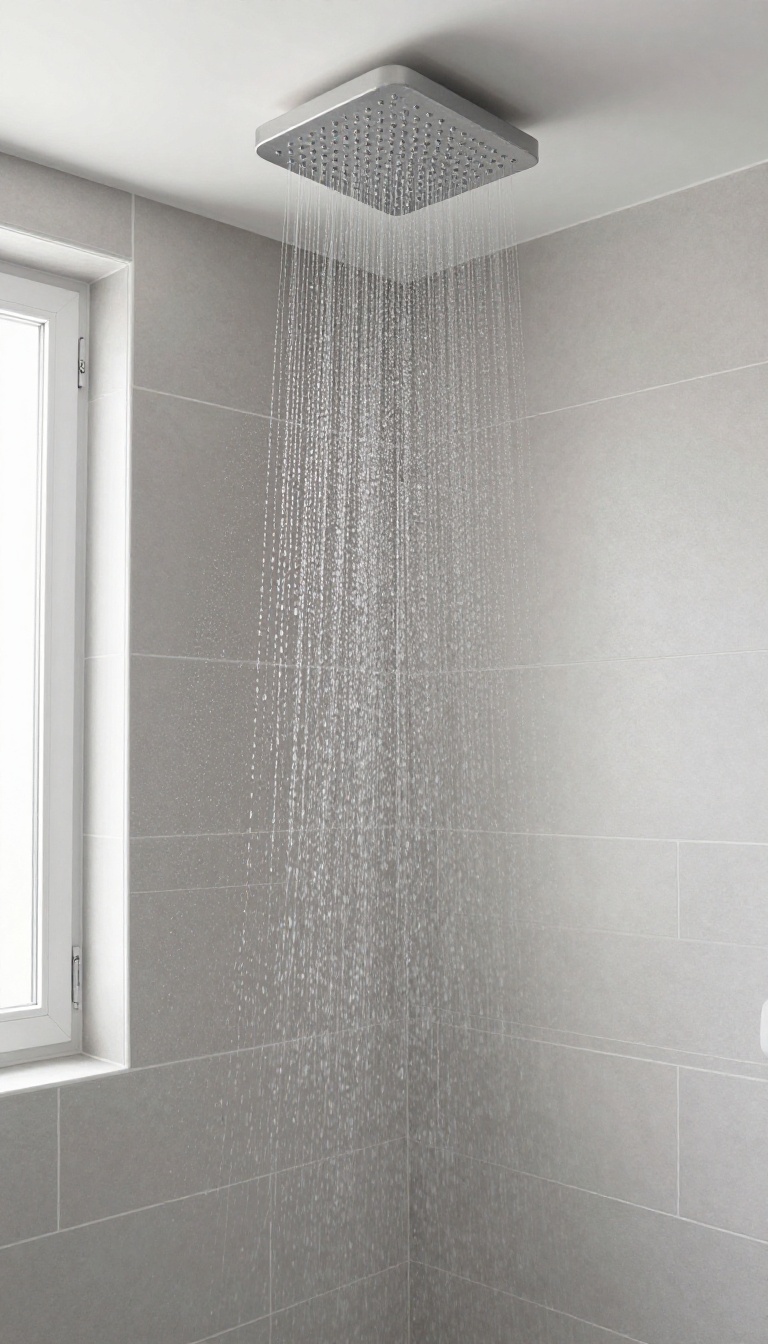
A rain showerhead mounted on the ceiling delivers a spa-like experience without demanding a single inch of wall space. It's a clever swap that instantly makes a small shower feel more open and airy. Here's why this simple upgrade can be a game-changer in a tiny bathroom.
Ceiling-mounted rain showerheads are a smart choice for compact bathrooms because they free up wall area that would otherwise be taken by a traditional showerhead and arm. This opens up the space for other essentials, like a niche or grab bar, and makes the shower feel less cluttered. The overhead flow also creates a more immersive, luxurious sensation, turning a cramped corner into a daily retreat.
Why It Works In Small Spaces
By mounting the showerhead on the ceiling, you eliminate the need for a wall-mounted arm and the visual bulk it adds. This can make the shower feel wider and more open, especially when paired with a clear glass door or curtain. Plus, the water falls straight down, so you don't need to angle the head, which simplifies the installation and keeps the look clean.
Installation Tips
Before you commit, make sure your ceiling can support the weight and that you have enough overhead clearance—a rain head typically needs at least 6 to 8 inches of space above you. If you're not comfortable with plumbing, hire a pro to reroute the water supply. Also, consider adding a handheld sprayer as a backup for rinsing the shower walls or washing pets.
Pairing With Other Space Savers
Rain showerheads work beautifully with other compact fixtures. For example, a corner shower bench or a recessed shelf can take advantage of the wall space you've freed up. You can also install a shower curtain rod that curves outward to add elbow room without taking up extra floor space.
The result is a functional, luxurious shower that feels much larger than it is.
10. Foldable Shower Seats: Comfort When You Need It
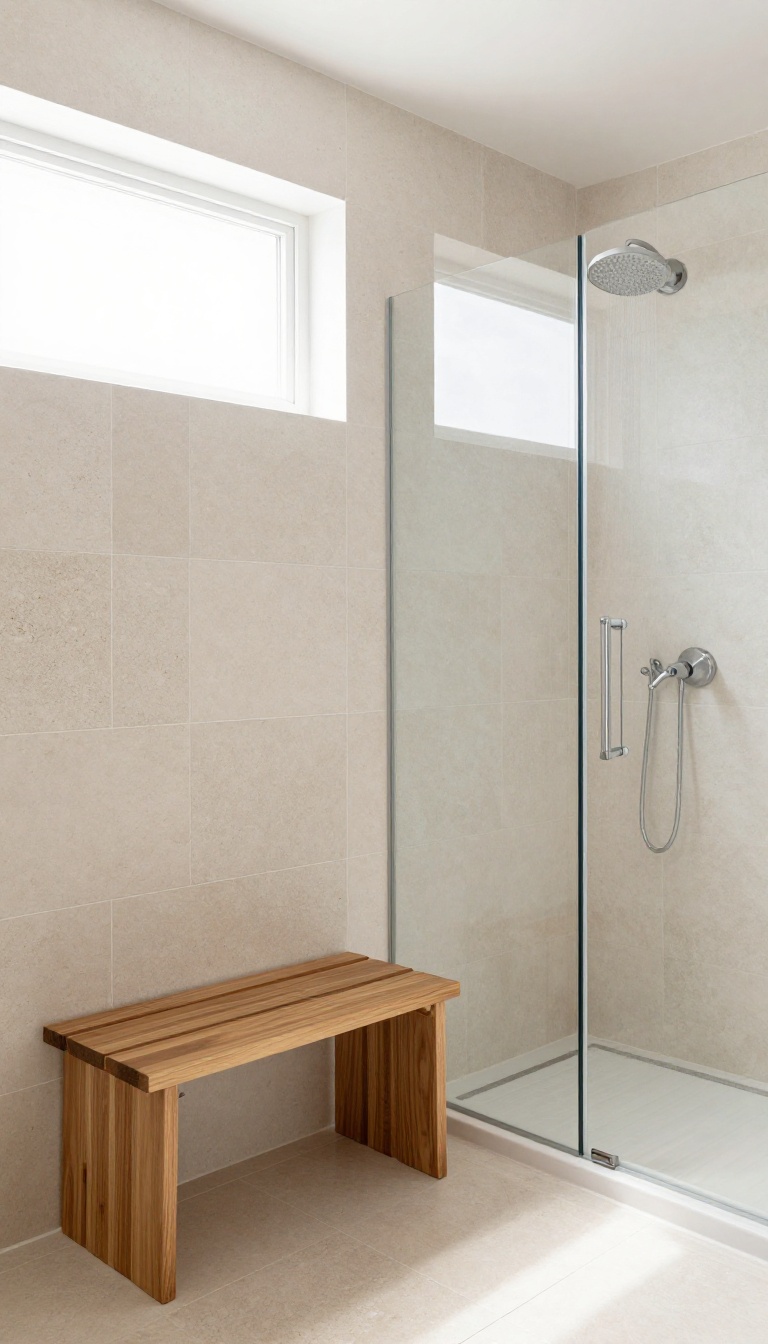
A foldable shower seat is a game-changer for small bathrooms. It gives you a sturdy place to sit when you need it, then tucks neatly against the wall when you don't. This way, you get the convenience of a bench without sacrificing valuable floor space.
Foldable seats are perfect for anyone who wants to sit while showering—whether for safety, comfort, or just a bit of luxury. The seat mounts securely to the wall and folds down when needed, then flips up to stay out of the way. This makes the shower feel more spacious and keeps the floor clear for movement.
Why A Foldable Seat Works In A Small Shower
In a compact shower, every inch counts. A permanent bench can make the space feel even tighter and harder to navigate. A foldable seat solves this by offering seating only when you need it.
When folded, it adds just a few inches of depth, so you still have room to move around comfortably.
Choosing The Right Material And Mounting
Teak and plastic are the most common materials for foldable seats. Teak looks warm and natural, resists water well, and adds a spa-like touch. Plastic is lightweight, easy to clean, and often more affordable.
Whichever you pick, make sure it's mounted into wall studs with rust-proof hardware. A secure installation is key, especially if you'll be sitting on it regularly.
Installation And Safety Tips
Before installing, measure the shower area to ensure the seat won't block the showerhead or door. Place it at a comfortable height—usually around 17 to 19 inches from the floor. Use a level to keep it straight, and apply a waterproof sealant around the mounting points to prevent moisture from seeping behind the tile.
If you're not comfortable with DIY, a professional can handle it quickly.
11. Pocket Doors: Hide the Entrance Completely
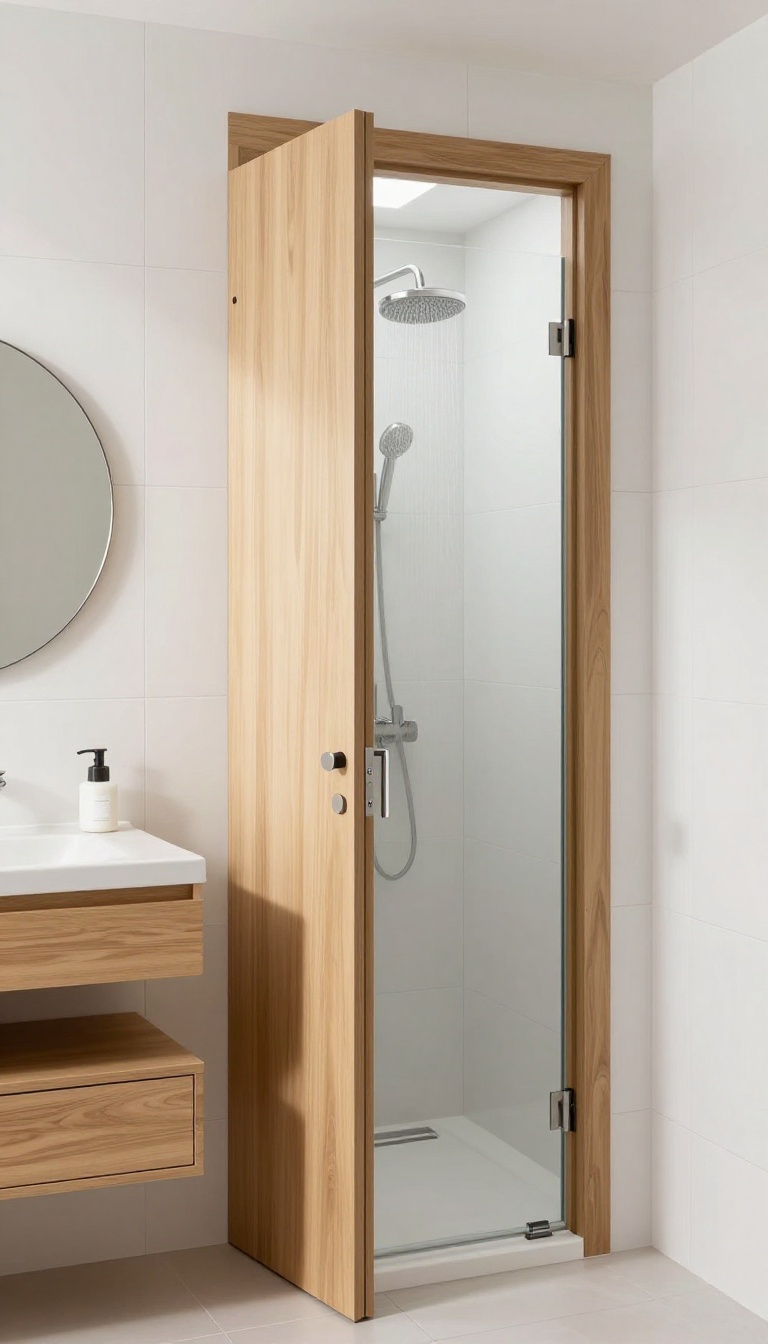
A traditional swinging door eats up valuable floor space every time you open it. In a tiny bathroom, that wasted area can make the room feel even tighter. A pocket door slides neatly into the wall, freeing up that swing zone and letting you position the shower closer to the entrance.
It's a simple swap that can open up your entire layout.
Pocket doors are a clever way to reclaim space without sacrificing privacy. Since the door disappears into the wall cavity, you can place fixtures right up against the opening. This is especially handy in narrow bathrooms where every inch matters.
Plus, the clean, flush look adds a modern touch that feels intentional and sleek.
Why Pocket Doors Work In Tiny Bathrooms
The main advantage is space. A standard door needs about 2 to 3 feet of clearance to swing open, which is often wasted. A pocket door eliminates that need entirely.
You can then slide the shower or vanity closer to the doorway, making better use of the floor plan. It also improves traffic flow, so you're not constantly stepping around a half-open door.
Installation Tips And Considerations
Installing a pocket door requires a wall that can accommodate the pocket—usually a non-load-bearing wall with enough depth. If you're renovating, this is the time to do it. Choose a high-quality track system with soft-close features to avoid slamming.
Also, consider moisture-resistant materials, as bathrooms are humid. A pocket door with a good seal helps with sound and light control too.
Styling And Finishing Options
Pocket doors come in various styles, from classic wood to frosted glass. Frosted glass lets light pass through while maintaining privacy, which is great for small, dark bathrooms. You can also match the door to your cabinetry or go with a bold color for a statement.
The hardware—handle and track—can be minimal or decorative, depending on your taste.
FAQ
What is the best shower layout for a tiny bathroom?
The best layout is often a corner shower with a curved or quadrant enclosure, as it uses dead space and leaves more floor area open. Alternatively, a walk-in shower with a glass panel can make the room feel larger.
How can I make a small shower feel bigger?
Use light colors, large tiles, and glass enclosures instead of opaque curtains. Adding a window or skylight for natural light also helps, as does keeping the shower area clutter-free with built-in niches.
Are walk-in showers practical for small bathrooms?
Yes, walk-in showers are practical because they eliminate the need for a door, saving space. A curbless design with a linear drain can make the bathroom feel more open and is easier to clean.
What is the cheapest way to update a small shower?
Replacing a shower curtain with a curved rod and a lighter curtain can instantly make the space feel bigger. Also, adding a new showerhead or re-grouting tiles are budget-friendly updates.
How do I add storage to a small shower without taking up space?
Install recessed niches in the shower wall to store toiletries. If that's not possible, use a corner caddy or a hanging organizer that doesn't take up floor space.
Conclusion
These 11 ideas show that a tiny bathroom doesn't have to feel cramped. By choosing space-saving fixtures and smart layouts, you can create a shower that's both functional and enjoyable.
Start with one or two changes that fit your budget and needs, and you'll see a big difference in how your bathroom feels. Remember, the goal is to make the most of what you have, and with a little creativity, you can achieve a bathroom that works for you.