10 Timeless Shower Tile Ideas That Never Feel Outdated
You've finally decided to redo your shower. But with so many tile trends popping up on social media, it's hard to know which ones will still look good five or ten years from now. The last thing you want is a bathroom that feels dated before the grout even cures.
The secret isn't chasing the latest fad. It's choosing materials, patterns, and colors that have proven their staying power across decades. Think classic subway tile, natural stone, and simple geometric shapes.
These ten ideas focus on what works: clean lines, neutral palettes, and quality finishes. They're versatile enough to fit any style, from modern farmhouse to urban loft. And they'll keep your shower looking fresh long after trends fade.
1. Classic Subway Tile in a Fresh Layout
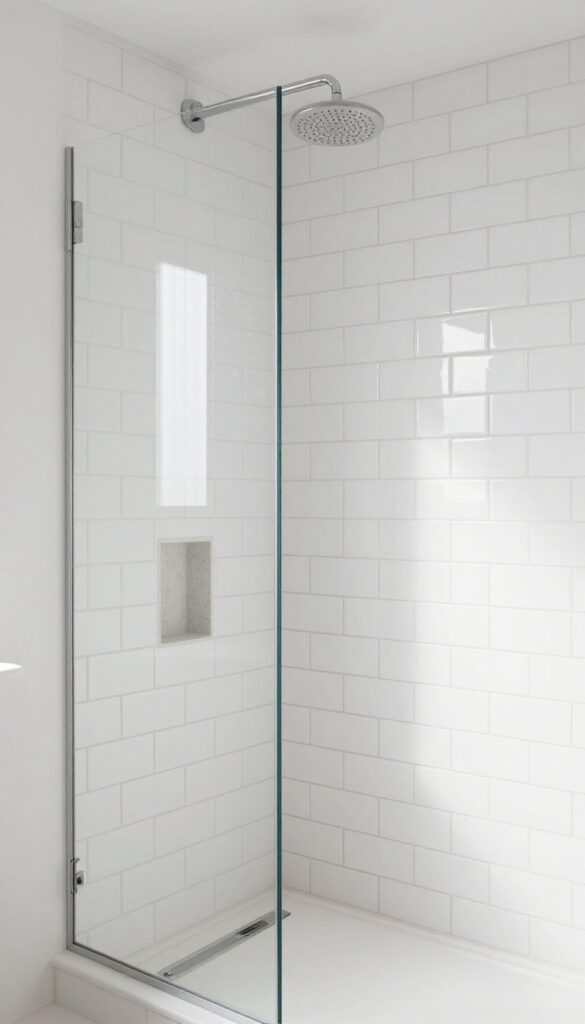
Subway tile has been a bathroom staple for over a century, and it's not going anywhere. The key to keeping it fresh is to play with the layout. Instead of the standard horizontal brick pattern, try a vertical stack or a herringbone arrangement.
These subtle changes add visual interest without straying from the timeless appeal of the tile itself.
Subway tile is a staple for a reason: it's clean, versatile, and affordable. But the classic horizontal brick pattern can feel a bit predictable. By switching up the layout, you can give your shower a modern edge that still feels classic.
A vertical stack creates height and makes a small shower feel larger, while herringbone adds a dynamic, almost woven texture. Both layouts are easy to install and work with any grout color, from crisp white to charcoal.
Why Subway Tile Endures
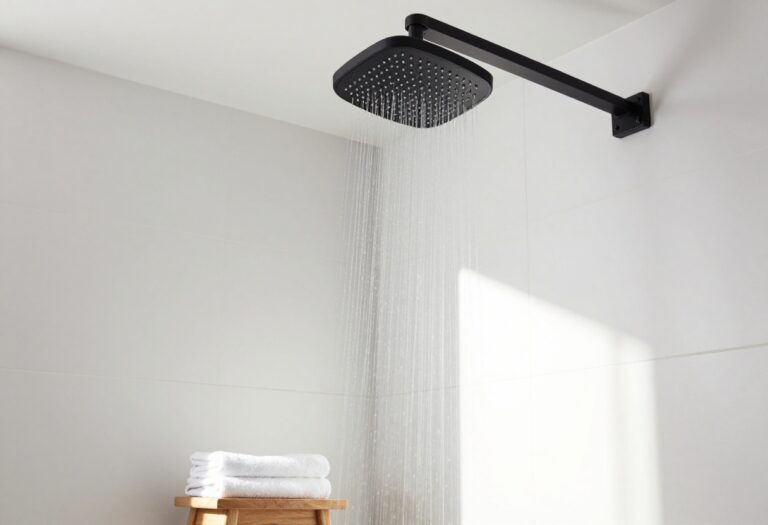
Subway tile's rectangular shape and beveled edges reflect light beautifully, making any shower feel brighter and more spacious. It's also incredibly durable and easy to clean. Plus, it's budget-friendly, so you can splurge on other elements like a rainfall showerhead or custom niche.
Layout Ideas To Try
Vertical stack: Tiles are stacked directly on top of each other, creating clean vertical lines. Herringbone: Tiles are laid at a 45-degree angle, forming a zigzag pattern. Both layouts break away from the norm while keeping the classic subway look.
For extra drama, use a contrasting grout color.
Pairing With Other Materials
Subway tile pairs beautifully with natural stone, marble, or wood-look porcelain. Use it as a full-wall treatment or combine it with a different tile halfway up the wall. A marble hexagon floor or a pebble shower base complements the clean lines of subway tile.
2. Large-Format Porcelain Slabs
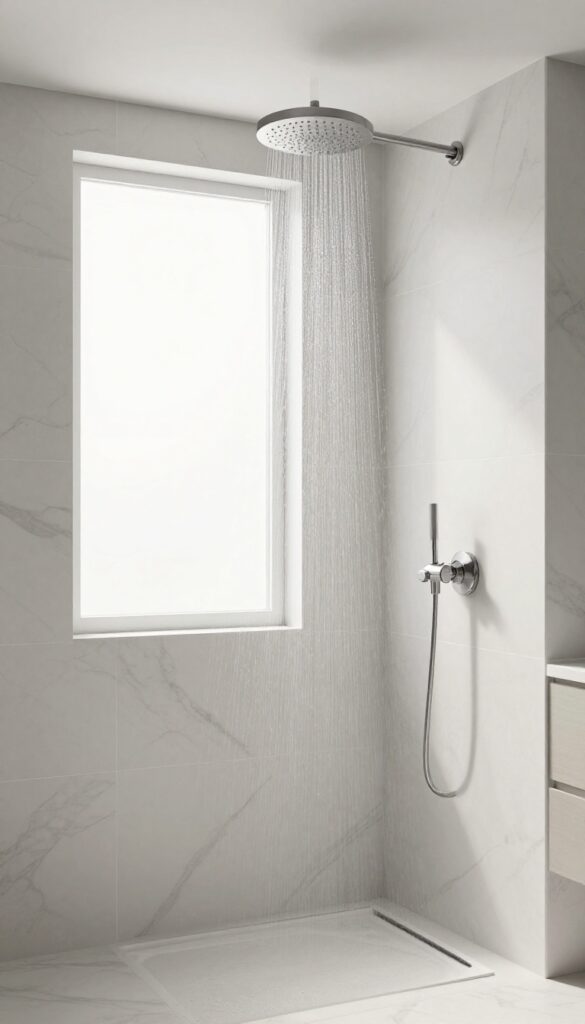
If you're tired of scrubbing grout lines, large-format porcelain slabs are a game-changer. These oversized panels (often 4×8 feet or larger) dramatically reduce the number of joints in your shower, creating a smooth, almost monolithic surface. The result is a clean, modern look that feels more like a luxury spa than a standard bathroom.
Large-format slabs give you the beauty of natural stone—think marble, travertine, or slate—without the high maintenance. Porcelain is non-porous, stain-resistant, and easy to clean, making it perfect for a wet environment. Plus, the minimal grout lines mean fewer places for mold and mildew to hide.
Why Size Matters
Bigger tiles mean fewer interruptions in the visual flow. A single slab can cover an entire wall, making the shower feel larger and more open. This is especially effective in small bathrooms where lots of small tiles can make the space feel busy.
Choose The Right Finish
Matte or honed finishes are popular for large slabs because they hide water spots and soap scum better than high-gloss. They also give a softer, more natural look that complements the stone aesthetic.
Installation Tips
Because large slabs are heavy and unwieldy, professional installation is a must. Make sure your walls are perfectly flat and use a leveling system to avoid lippage. Plan your layout carefully to minimize cuts and keep seams inconspicuous.
3. Hexagon Mosaic Floor Tile
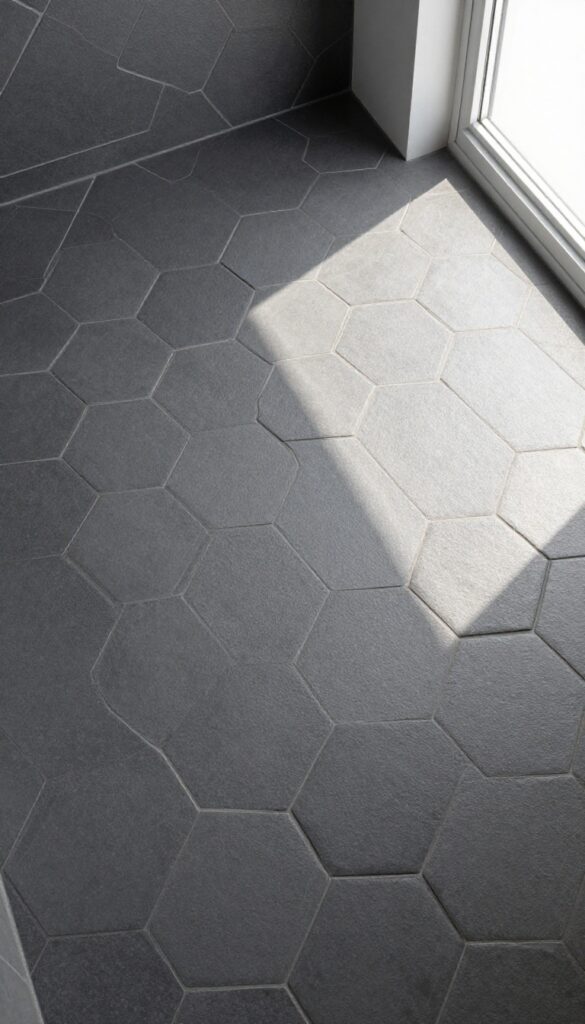
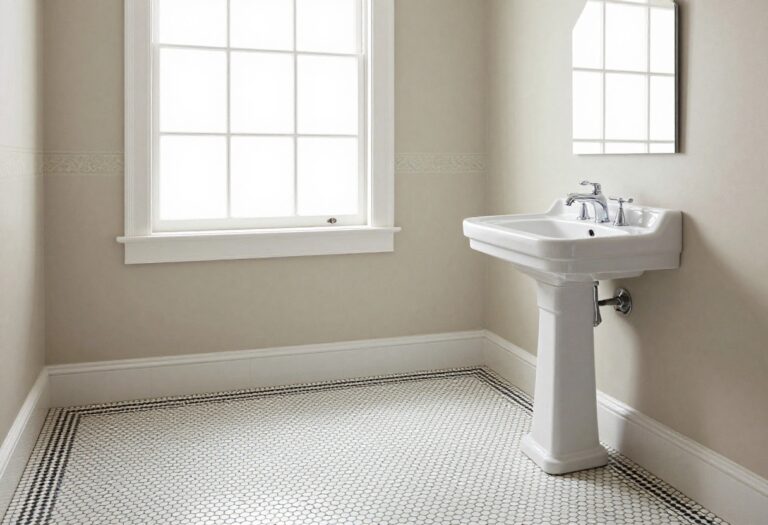
Hexagon tiles bring a subtle geometric punch to the shower floor without stealing the show. Their six-sided shape creates a honeycomb effect that feels organic and balanced, not busy. In a neutral finish like matte white or charcoal, they become a hardworking foundation that pairs with almost any wall tile or fixture.
This pattern has been around for decades in commercial spaces because it's tough and slip-resistant. But in a home shower, it adds just enough personality to keep things interesting. You get visual texture without the risk of looking trendy or overdone.
Hexagon mosaic tiles are a smart choice for shower floors because they're both durable and easy to maintain. The small tiles create many grout lines, which improves traction underfoot. And when you stick to a neutral color, the pattern stays fresh for years.
Why Hexagons Work On Floors
The hexagonal shape naturally breaks up the surface, so small imperfections or slight unevenness in the subfloor are less noticeable. The multiple grout lines also provide grip, making the floor safer when wet. Plus, the honeycomb pattern feels timeless—it's been used in bathrooms since the early 1900s.
Best Color And Finish Choices
Matte finishes are ideal for floors because they hide water spots and soap scum better than glossy ones. White hex tiles keep the space bright and airy, while charcoal or dark gray adds contrast and hides dirt. Avoid high-contrast grout if you want a seamless look; choose a grout color close to the tile shade.
Pairing With Wall Tiles
Hexagon floors work beautifully with simple wall tiles like subway, large-format rectangles, or even penny rounds. Keep the wall tile in a similar color family to maintain a cohesive look. For example, white hex floor + white subway tile = a classic, spa-like combo.
Or try charcoal hex with light gray walls for a modern twist.
4. Carrara Marble for Elegance
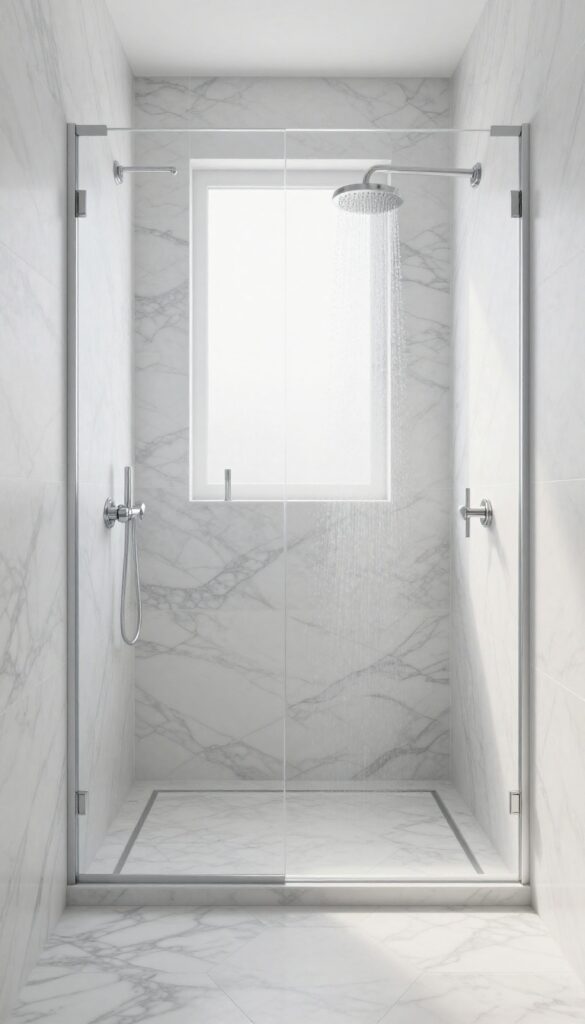
Carrara marble has been a symbol of luxury for centuries. Its soft gray veining on white creates a bright, airy feel. Seal it properly, and it will age beautifully.
Carrara marble brings a timeless elegance that few materials can match. The subtle gray veining adds character without overwhelming the space. It works beautifully in both traditional and contemporary bathrooms, pairing well with brass fixtures or minimalist chrome.
Because it's a natural stone, each tile is unique, giving your shower a one-of-a-kind look. Proper sealing is essential to prevent staining and etching, but with regular care, Carrara marble only gets better with age.
Why Carrara Works So Well In Showers
The light background of Carrara marble reflects light, making small showers feel larger and more open. Its neutral palette complements almost any color scheme, so you can change accessories without clashing. The veining hides minor water spots better than solid white tiles.
Installation Tips For Longevity
Use a high-quality penetrating sealer before grouting and reapply annually. Choose a fine sanded or unsanded grout in a matching light gray to keep the focus on the marble. Consider larger format tiles (12×24 inches) for fewer grout lines and a cleaner look.
Design Variations To Consider
For a classic look, use Carrara marble subway tiles in a straight stack or herringbone pattern. For a more modern feel, try large slabs on the walls with a matching marble hexagon floor. Pair with brushed nickel or matte black fixtures for contrast.
5. Neutral Field Tile with a Decorative Accent Band
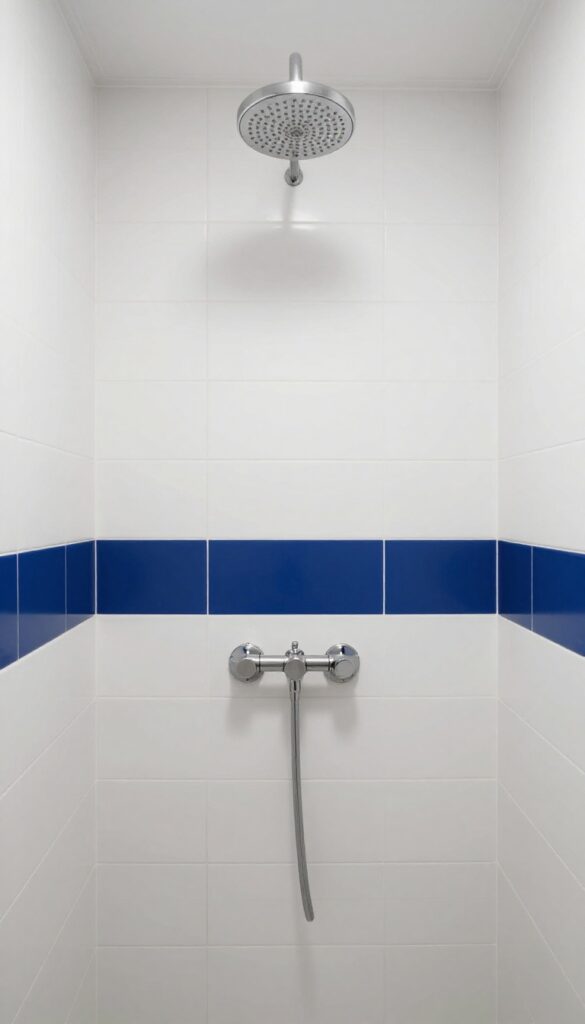
A full wall of patterned tile can feel overwhelming, while plain tile sometimes lacks personality. The sweet spot is a neutral field with a single decorative band that draws the eye without dominating the space.
This approach gives you the calm of a solid background plus a touch of visual interest right where you want it. The band acts like a piece of art, breaking up the wall and adding depth. It’s a subtle way to introduce color, texture, or pattern without committing to a full accent wall.
Plus, it’s easy to update later if your taste changes—just swap out the band tiles.
Choosing The Right Band Height
The band works best at eye level, typically around 48 to 54 inches from the floor. That way it aligns with your natural line of sight and creates a horizontal anchor. In a shower with a window or niche, line the band up with those features for a cohesive look.
Material And Color Pairings
Stick with large-format porcelain or ceramic tiles in a soft white, warm beige, or light gray for the field. For the band, choose something that contrasts but doesn’t clash: a matte black or navy blue, a marble mosaic strip, or even a thin band of handmade zellige tiles for a subtle shimmer. Avoid high-gloss finishes next to matte ones unless you’re going for a deliberate mix.
Installation Tips For A Clean Finish
Plan the band to be one or two rows high, depending on tile size. Use a level and measure carefully to keep it straight. If your shower has corners, miter the band tiles or use corner pieces for a seamless wrap.
Grout color should match the field tile so the band pops, not the grout lines.
6. Penny Round Tile for Texture
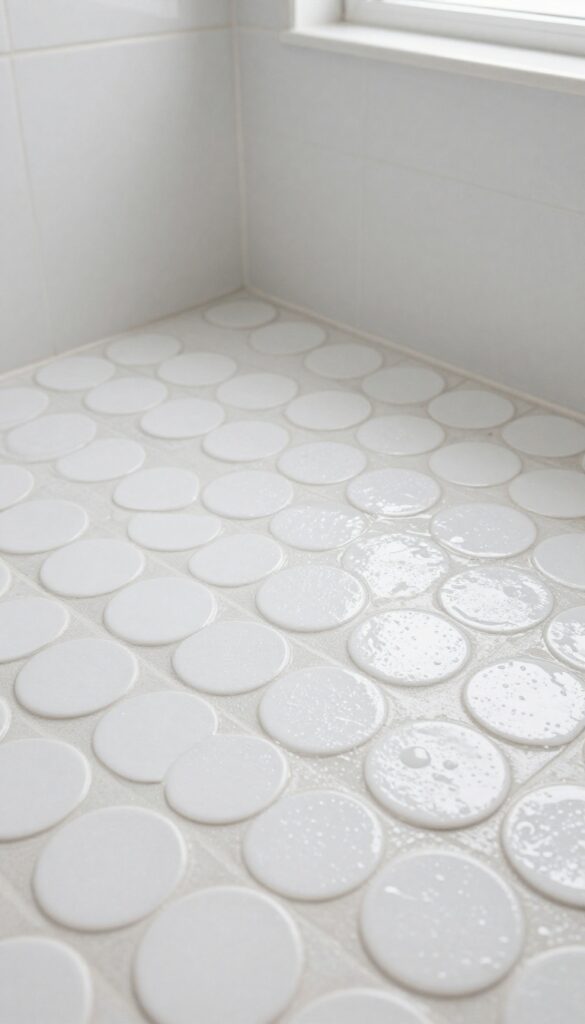
Small round tiles, often called penny rounds, bring a tactile quality that flat tiles just can't match. The gentle curves feel soft under bare feet, making them a natural choice for shower floors. But their appeal goes beyond comfort—the tiny circles create a subtle rhythm that adds depth without overwhelming the space.
Penny round tiles have been around for over a century, originally used in public baths and pool areas for their slip resistance and durability. Today, they're a favorite for adding texture and visual interest to showers. The small scale makes them ideal for curved surfaces like shower benches or niches, where larger tiles would require awkward cuts.
They also work beautifully as an accent strip within a larger field of subway or large-format tiles.
Best Placement For Penny Rounds
For maximum impact, use penny rounds on the shower floor—they provide excellent traction and a gentle massage-like feel. Alternatively, create a focal point by covering one wall or the back of a niche. They also make a charming border or inlay when paired with rectangular tiles.
Color And Grout Choices
Classic white penny rounds with white or light gray grout keep the look clean and airy. For a bolder statement, try soft pastels like blush or pale blue, which add a whisper of color. Dark grout with white tiles creates a striking contrast that highlights the circular pattern.
Maintenance Tips
The many grout lines mean more surface to clean, but a good sealant and regular wiping keep them looking fresh. Use a squeegee after each shower to reduce water spots. For floors, consider a darker grout that hides dirt better.
7. Stacked Stone Veneer for a Natural Touch
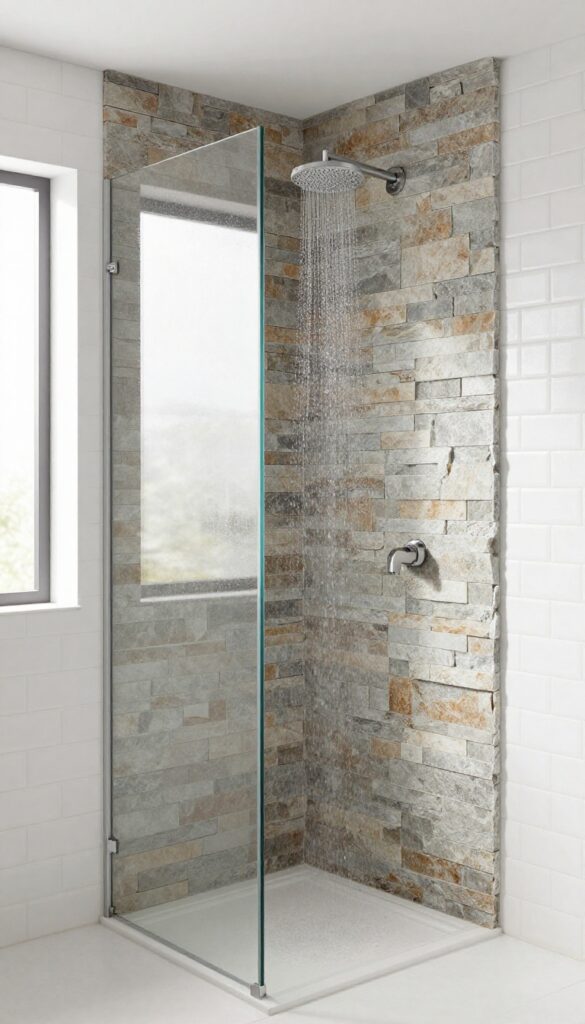
Thin stone veneer brings the outdoors in. Use it on one wall or a niche to create a focal point. The earthy tones and irregular shapes add warmth without going rustic overboard.
Stacked stone veneer is a fantastic way to add texture and a natural feel to your shower. Unlike bulky natural stone, these thin cuts are easy to install and don't eat up space. They work beautifully as an accent wall behind a bench or as the backdrop for a rainfall showerhead.
The key is to keep it contained—one feature wall or a niche is enough to make an impact without overwhelming the room.
Choose The Right Stone
Opt for materials like quartzite, slate, or limestone for durability in wet conditions. Avoid soft stones like sandstone that can absorb moisture and degrade over time. Look for tiles that are pre-sealed or have a low porosity to simplify maintenance.
Pair With Simple Finishes
Let the stone be the star by pairing it with simple, neutral tiles elsewhere. White subway tile or large-format porcelain in a matte finish complements the organic look. Keep fixtures minimal—brushed nickel or matte black works well without competing.
Installation Tips
Hire a pro for stacked stone installation, as the irregular edges require careful fitting. Use a grout that matches the stone's color to create a seamless look. Consider a mesh-backed veneer for easier handling and consistent spacing.
8. Herringbone Pattern in a Single Color
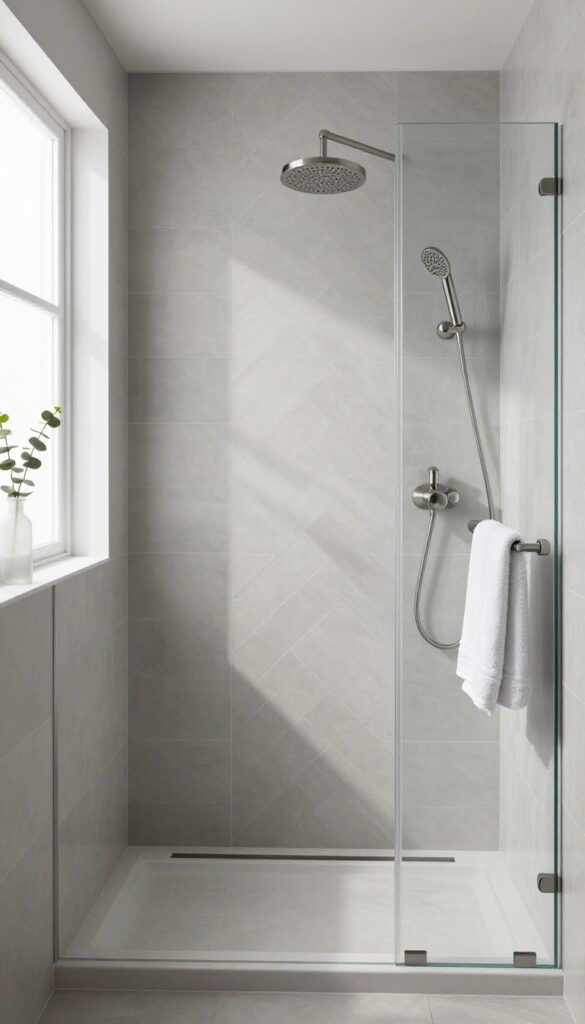
Herringbone is one of those patterns that instantly elevates a space without screaming for attention. The zigzag layout adds movement and texture, making even a simple tile look dynamic. By sticking to a single color, you keep the look cohesive and timeless.
The herringbone pattern works beautifully in showers because it draws the eye along the wall, making the space feel larger and more intentional. Choose rectangular tiles in a matte finish for a modern, understated look, or go with a glossy finish for a bit of shine. The key is to let the pattern do the talking, so avoid busy colors or high-contrast grout that could compete with the design.
Why Single Color Works
A monochromatic herringbone avoids visual clutter. It feels calm and sophisticated, and it pairs effortlessly with any fixture finish—brushed nickel, matte black, or polished chrome. You can also use it as a backdrop for a bold vanity or colorful accessories without overwhelming the space.
Best Tile Shapes And Sizes
Classic rectangular tiles like 3×6 or 4×12 subway tiles are perfect for herringbone. Longer planks (3×12 or 6×24) create a more dramatic, contemporary effect. Stick to tiles with a clean edge for a crisp pattern, or choose beveled tiles for extra depth.
Installation Tips
Herringbone requires precise alignment, so hire an experienced installer. Plan the layout carefully to avoid awkward cuts at corners and edges. Use a matching or slightly lighter grout to keep the pattern seamless.
A matte finish grout works best to reduce maintenance and hide imperfections.
9. Zellige-Inspired Ceramic for Handcrafted Charm
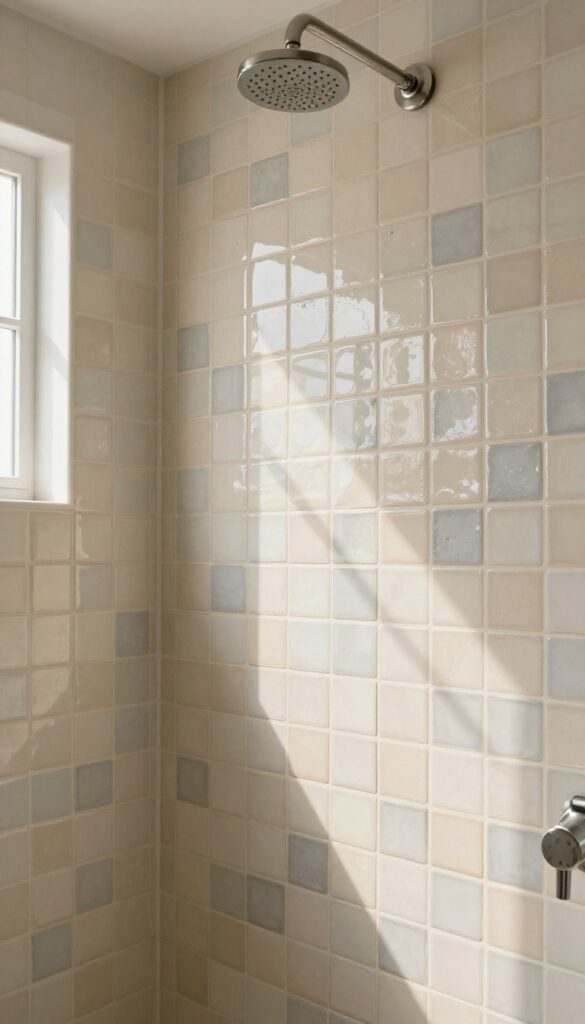
Zellige tiles bring an artisanal feel that mass-produced tiles just can't replicate. Their slight variations in color, texture, and shape give each tile a unique character, creating a shower wall that feels alive. The way they catch and reflect light adds depth, making even a small shower feel warm and inviting.
Zellige tiles, traditionally handcrafted in Morocco, have become a popular choice for bathrooms seeking a handmade look. The subtle irregularities in glaze and edges create a surface that feels organic and rich. They work beautifully in both modern and traditional settings, especially when kept in neutral tones like white, cream, or soft gray.
These colors ensure the tile remains timeless while still offering that distinctive handcrafted charm.
Why Neutral Tones Work Best
Sticking to neutral shades like ivory, beige, or pale gray helps the zellige tile stay versatile and long-lasting. Bright colors might feel trendy now but can date quickly. Neutrals, on the other hand, allow the texture and light play to take center stage without overwhelming the space.
Installation Tips For A Flawless Look
Because zellige tiles have natural size variations, they require careful installation. Use a professional who understands how to handle the slight differences. A wider grout line (around 1/8 inch) helps accommodate the irregularities and adds to the handmade aesthetic.
Be prepared for some chipping at edges—it's part of the charm.
Pairing With Other Materials
Zellige pairs beautifully with natural stone, wood-look porcelain, or simple white subway tile. Use it as a feature wall behind the shower bench or around the niche. Combine with matte black or brushed brass fixtures for a balanced, sophisticated look.
10. Simple White Tile with Dark Grout
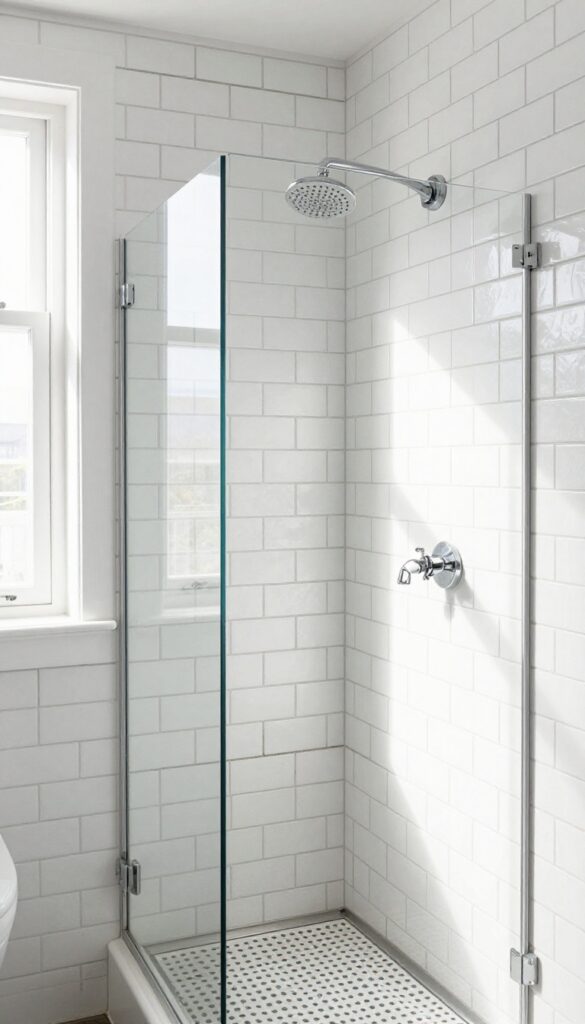
White tile is the backbone of timeless bathroom design, but it can sometimes feel a little flat. The fix is simpler than you think: swap bright white grout for a dark charcoal or black version. That one change turns basic white tiles into a striking feature with built-in contrast.
The dark grout creates a grid that defines each tile, making even standard square or subway tiles look intentional and architectural. It also hides soap scum and hard water stains far better than light grout, so your shower stays fresher between deep cleans. This combo works with any tile shape—hexagon, rectangle, or penny round—and fits seamlessly into modern, farmhouse, or industrial bathrooms.
Why Dark Grout Works So Well
Dark grout adds depth without overwhelming the space. The white tile keeps the room bright and airy, while the dark lines ground the design. It’s a low-risk way to introduce contrast, and it makes the tile pattern pop.
Plus, maintenance is easier because dark grout doesn’t show every speck of dirt.
Best Tile Shapes For This Combo
Subway tiles are the classic choice, but don’t stop there. Hexagonal tiles create a honeycomb effect that’s playful yet refined. Large-format squares give a more modern, minimalist look.
Penny rounds add texture and a vintage feel. Whatever shape you pick, the dark grout will highlight the geometry.
Grout Color Tips
Charcoal gray is the most versatile dark grout color—it’s softer than black but still provides strong contrast. If you want a bolder look, go with true black. For a warmer feel, try a dark brown or espresso grout.
Always test a small area first, because grout color can look different once it dries and against your specific tile.
FAQ
What is the most timeless shower tile?
Subway tile in a classic white finish is widely considered the most timeless. Its simple rectangular shape and neutral color have been used for over a century and work with almost any design style.
Should I use large or small tiles in a small shower?
Large tiles can make a small shower feel bigger because there are fewer grout lines. However, small tiles like hexagon or penny round can add texture and grip on the floor. A mix often works best.
What grout color is best for shower tile?
For a seamless look, choose grout close to the tile color. For contrast, go darker than the tile. Dark grout hides stains better and is easier to maintain in wet areas.
How do I keep shower tile looking new?
Regular cleaning with a mild, non-abrasive cleaner is key. Seal natural stone tiles annually. Use a squeegee after each shower to reduce water spots and soap scum buildup.
Can I mix different tile styles in one shower?
Yes, but keep it cohesive. Use one style for the main walls and a complementary style for the floor or accent band. Stick to a consistent color palette to avoid a chaotic look.
Conclusion
Choosing shower tile doesn't have to be stressful. By focusing on proven styles and quality materials, you can create a bathroom that feels both current and enduring. The key is to pick what you genuinely love, not just what's popular right now.
Remember that good design is about balance. Mix textures, play with layouts, but keep the overall palette simple. Your shower should be a place you enjoy stepping into every day—and these timeless ideas will help you get there without regret.