12 Budget-Friendly Navy Kitchen Ideas for a Fresh, Pulled-Together Look
Navy kitchens don't have to drain your savings to look sharp. With a few smart swaps and some DIY spirit, you can bring that deep, calming blue into your space without a full renovation.
These twelve budget-friendly ideas focus on high-impact changes that work whether you rent or own. From simple textiles to peel-and-stick backsplashes, each option helps you build a cohesive, pulled-together look.
Pick a few that fit your style, and you'll see how easy it is to refresh your kitchen's personality without overspending.
1. Paint Your Cabinets a Deep Navy
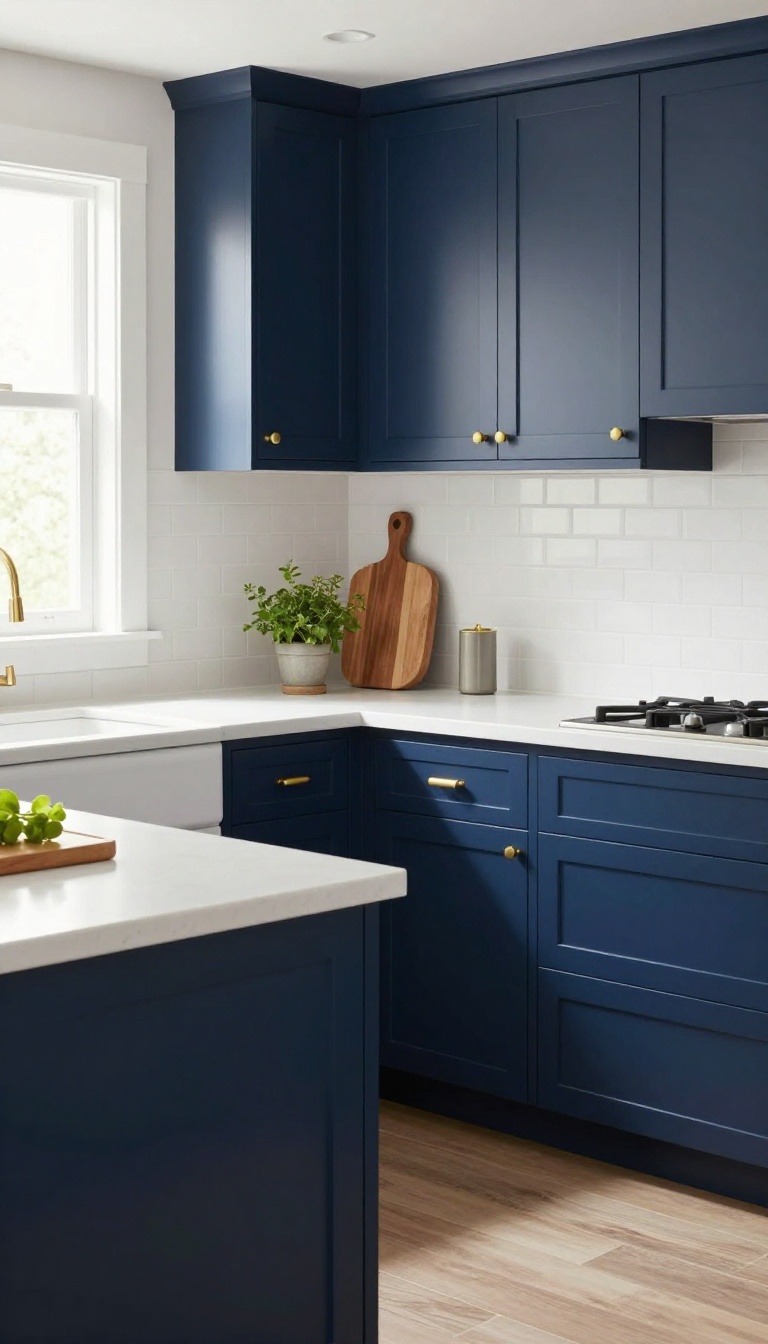
If your cabinets are structurally sound but visually tired, a coat of navy paint can completely change the room. It's one of the most affordable transformations you can make, especially if you do the work yourself. The key is choosing the right shade and prepping properly so the finish lasts.
Painting cabinets is a weekend project that delivers a huge payoff. You skip the cost of new cabinetry, and you get to pick a color that fits your style exactly. Deep navy works well with brass, chrome, or matte black hardware, so you can update the look without replacing everything.
Pick The Right Navy
Not all navy shades are the same. Some lean gray, others have a green or purple undertone. Test a few samples on your cabinet doors and look at them in different lighting throughout the day.
A shade with a slight gray undertone tends to feel more modern, while a brighter navy adds a classic coastal vibe.
Prep Like A Pro
The secret to a smooth, durable finish is all in the prep. Clean the surfaces with a degreaser, sand lightly to rough up the old finish, and wipe off the dust. Use a high-quality primer designed for cabinets, then apply thin, even coats of paint.
Let each coat dry fully before adding the next.
Finish With The Right Hardware
New hardware is a small expense that makes a big difference. Brushed brass or matte black knobs and pulls pop against navy cabinets. If you're on a tight budget, spray paint your existing hardware instead.
Just make sure to clean it well and use a primer meant for metal.
2. Swap in Navy Bar Stools
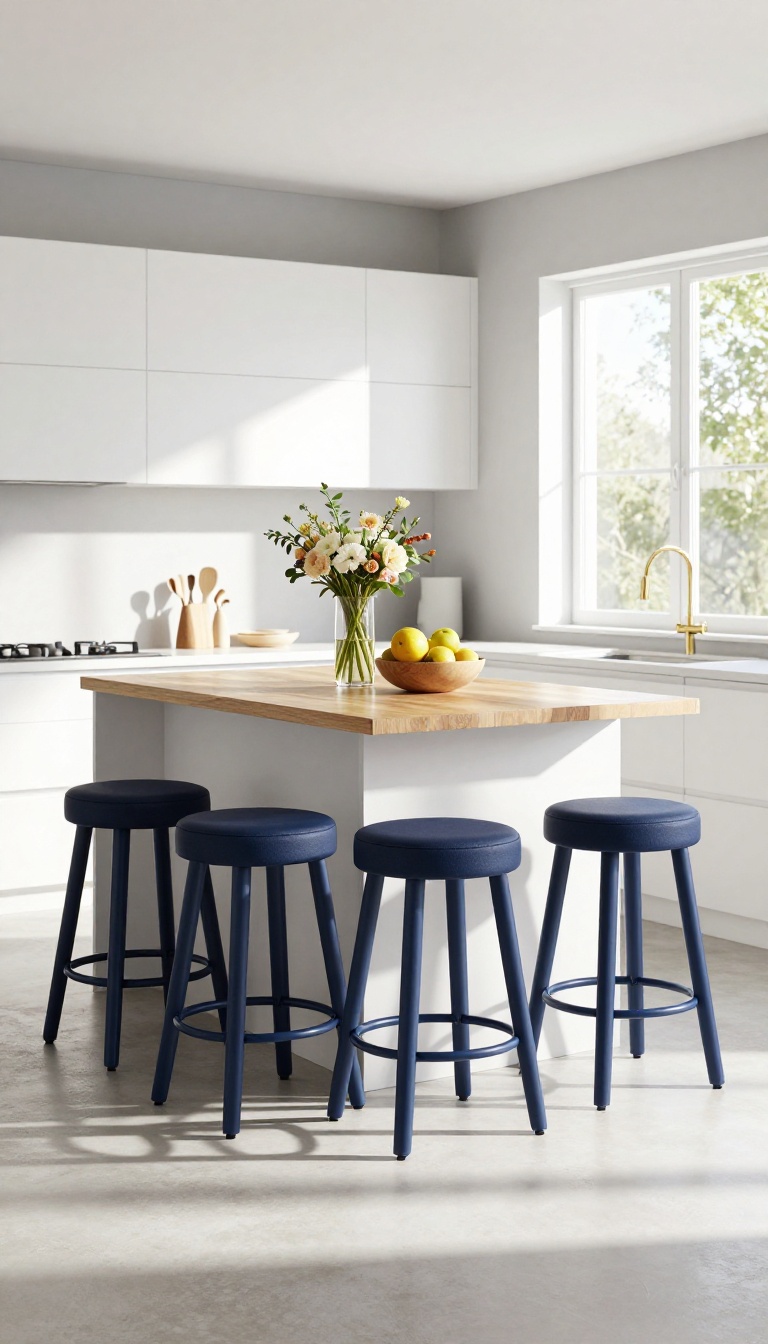
A breakfast bar or kitchen island is often the busiest spot in the room, so why not make it the focal point? Swapping out your old stools for navy ones is one of the quickest ways to inject color and personality without touching a single wall. You don't need to spend a fortune either—discount home stores and online marketplaces are full of affordable options that look far more expensive than they are.
Navy bar stools bring a rich, grounding hue that pairs beautifully with white, gray, or wood tones. They add visual weight and create a natural anchor for the space, making the whole kitchen feel more intentional. Plus, they're a practical choice: darker colors hide stains and everyday wear better than lighter fabrics or finishes.
When you're shopping, keep an eye out for sales, clearance items, or even secondhand finds. A little DIY can also go a long way—if you already have stools, a coat of navy paint and new fabric can give them a brand-new look for under $30.
Where To Find Affordable Navy Stools
Start with big-box retailers like Target, Walmart, or IKEA, which often have stylish navy stools under $100 each. Online marketplaces like Facebook Marketplace, Craigslist, or OfferUp are goldmines for gently used stools at a fraction of the retail price. Don't forget to check local thrift stores or Habitat for Humanity ReStores—you never know what you'll find.
Diy Stool Makeover On A Budget
If you already have wooden or metal stools, a simple paint job can transform them. Use a high-adhesion primer and a satin or semi-gloss navy paint for durability. For fabric seats, reupholstering is easier than it sounds: remove the seat, wrap it in new fabric, and staple it underneath.
This project can be done in an afternoon and costs less than $40.
Mixing Navy With Other Finishes
Navy stools work well with a variety of materials. Pair them with a white quartz or butcher-block countertop for a crisp contrast, or go for a more industrial look with a dark wood or concrete island. If your kitchen has brass or gold fixtures, navy's deep blue creates a striking combo that feels both classic and modern.
3. Add a Navy Backsplash with Peel-and-Stick Tiles
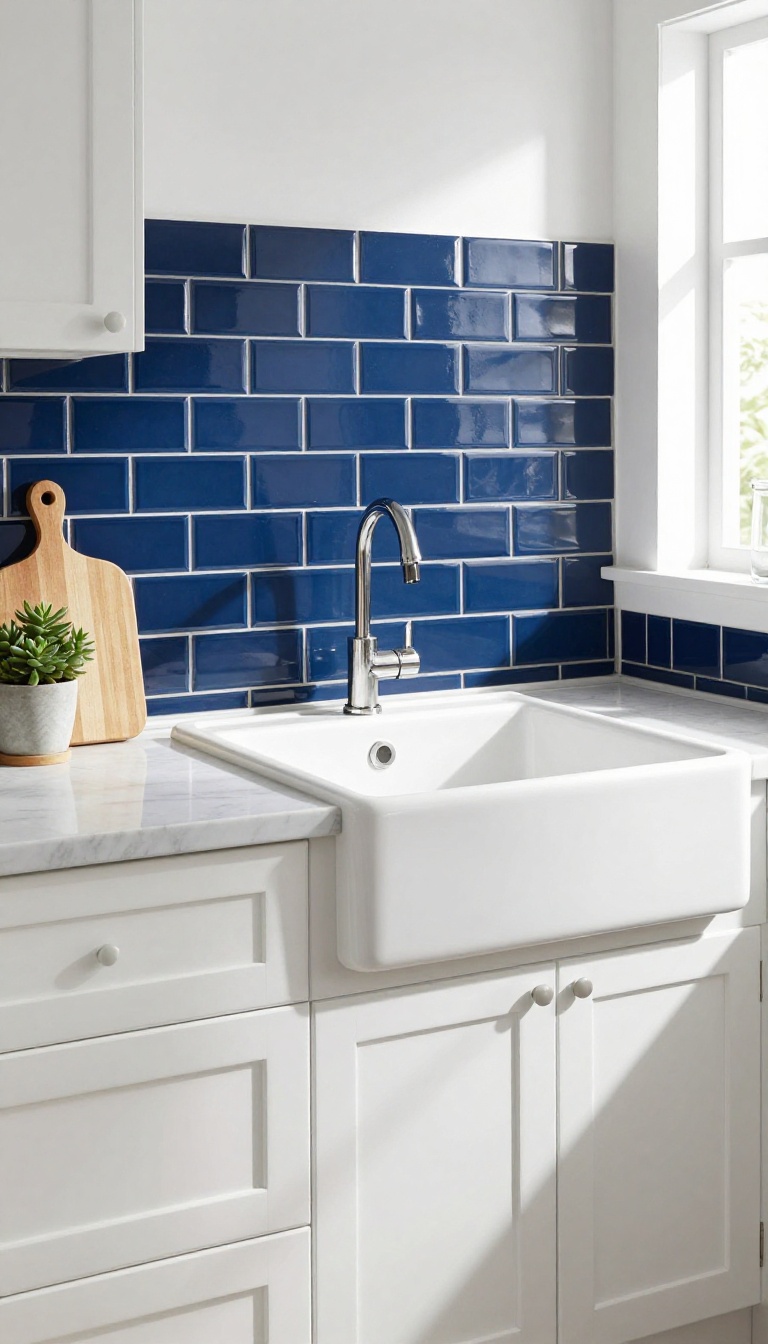
A navy backsplash can instantly anchor your kitchen and give it that polished, custom feel—without the mess or cost of traditional tile. Peel-and-stick tiles make this upgrade completely doable in an afternoon, and they’re perfect for renters since they come off cleanly when you move.
Peel-and-stick tiles are a game-changer for budget decorators. They’re affordable, easy to cut with scissors or a utility knife, and don’t require grout or special tools. You can find them in everything from classic subway to Moroccan-inspired patterns, so you can nail the navy look that fits your style.
Why Peel-and-stick Works For Navy
Navy is a bold color, and a full tile installation can feel risky if you’re not ready to commit. Peel-and-stick lets you test the look without a permanent change. Plus, the adhesive is strong enough to stay put, but gentle enough to remove without damaging your walls—ideal for rental kitchens or anyone who likes to switch things up.
Choosing The Right Pattern
The pattern you pick sets the tone. A classic subway tile in navy gives a timeless, clean look, while a geometric or herringbone pattern adds modern energy. If your kitchen is small, go with a lighter navy or a pattern with white accents to keep it from feeling too dark.
For a dramatic statement, a deep navy in a large-format tile works beautifully.
Installation Tips For A Flawless Finish
Start with a clean, dry, and smooth wall. Measure your space and plan the layout before you stick anything. Use a level to keep your lines straight, and press each tile firmly from the center outward to avoid air bubbles.
For cuts around outlets or edges, use a sharp utility knife and a straightedge—it’s easier than you think. And don’t forget to wipe away any finger smudges as you go.
4. Incorporate Navy Textiles: Towels, Runners, and Curtains
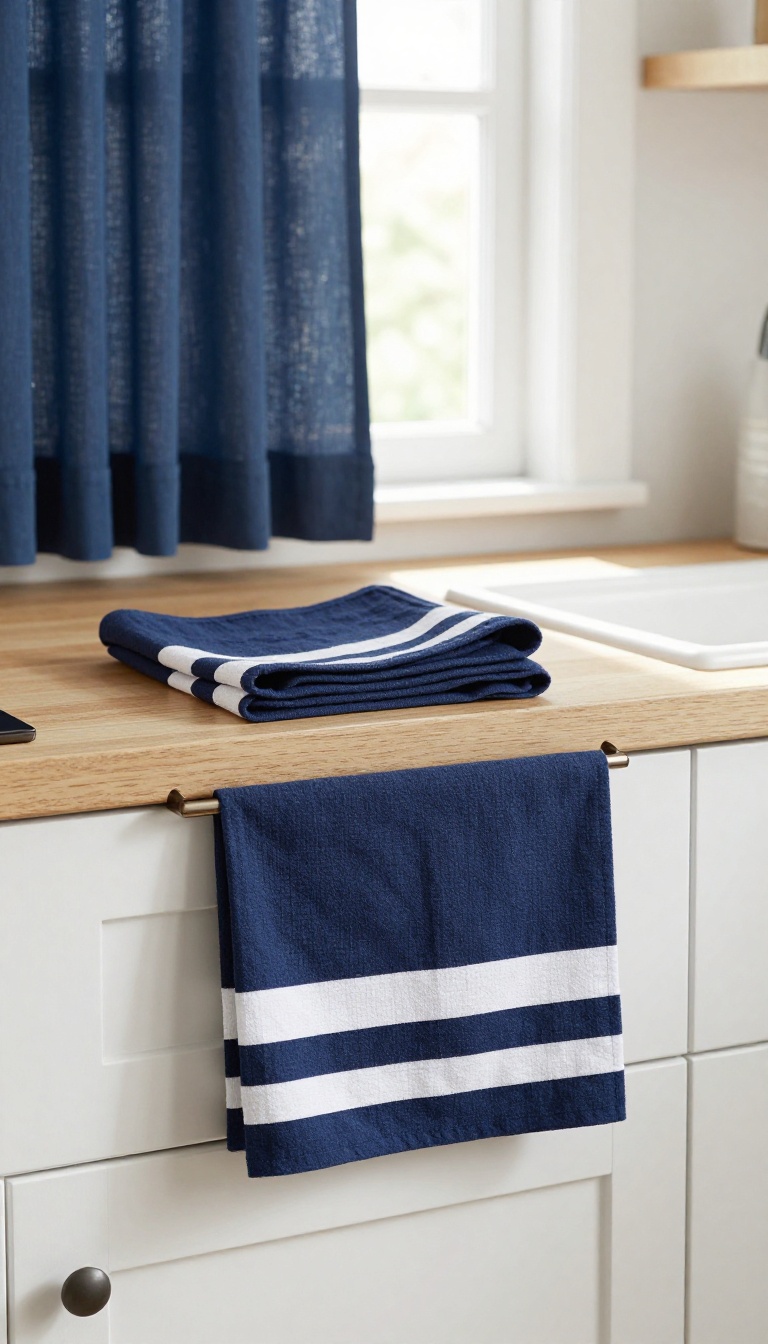
Textiles are the easiest way to test a color without any commitment. Swap out your kitchen towels, runner, and curtains for navy versions, and you'll instantly see how the shade transforms the room. Mixing patterns—like stripes with a subtle floral—adds personality without looking busy.
Start with the basics: a set of navy dish towels and a coordinating runner. These are small purchases that make a big visual impact. If you have a window, navy curtains can frame the space and pull the whole look together.
The key is to choose fabrics that are practical for a kitchen—cotton or linen work well and are easy to wash.
Choosing The Right Shades
Navy isn't one-size-fits-all. Some have a green undertone, others lean purple or gray. Hold fabric swatches against your cabinets and countertops to see what complements your existing palette.
A true navy works with most neutrals, but a softer navy can feel more casual, while a deep indigo adds drama.
Mixing Patterns Like A Pro
Don't be afraid to mix patterns—just keep them in the same color family. Pair a striped runner with a subtle geometric towel, or a floral curtain with a solid navy mat. The trick is to vary the scale: large prints with smaller ones create visual interest without clashing.
Start with two patterns and add more as you get comfortable.
Where To Find Budget-friendly Textiles
You don't need to spend a lot. Check discount stores, online marketplaces, or even thrift shops for navy textiles. Look for sales on kitchen linens, and don't overlook fabric remnants if you're handy with a sewing machine.
A simple hem can turn a piece of fabric into custom curtains or a runner.
5. Use Navy Accent Pieces: Canisters, Utensils, and Small Appliances
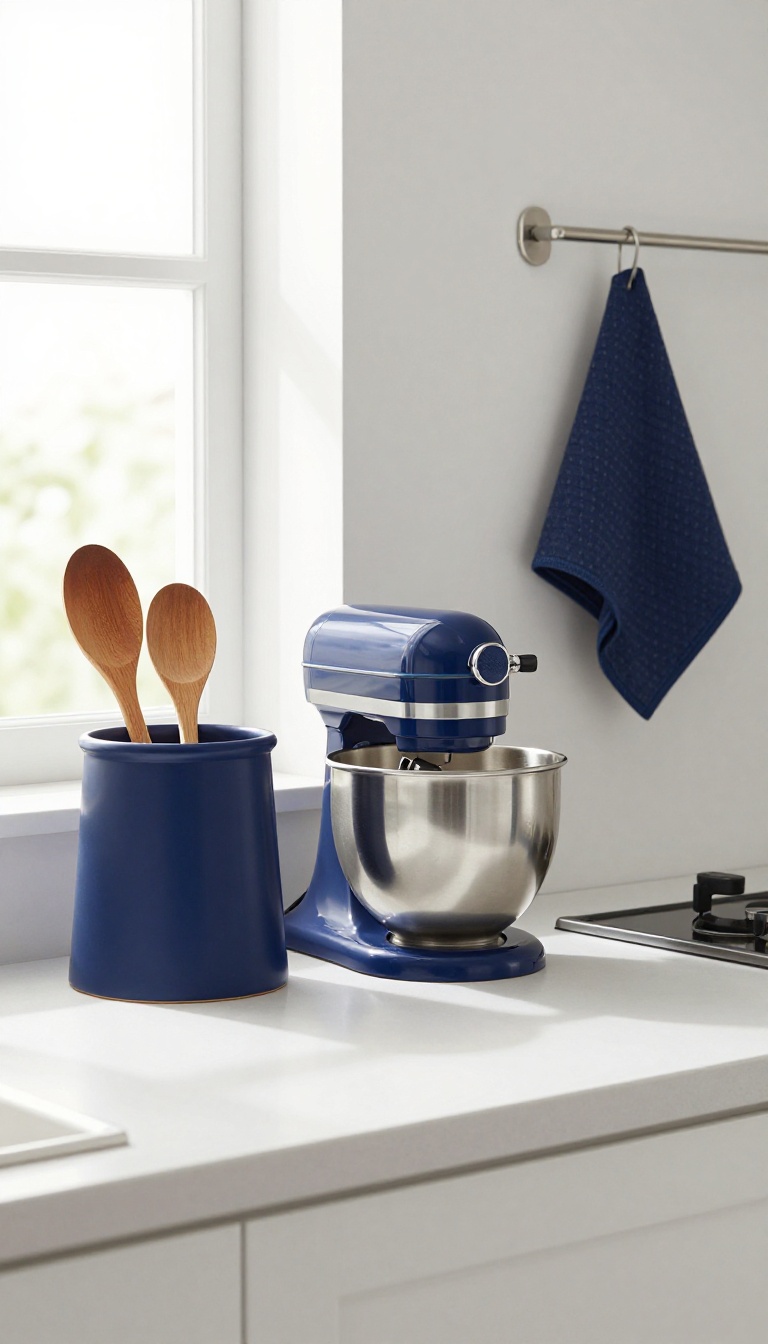
Sometimes the smallest touches make the biggest difference. Navy accent pieces—like canisters, utensil holders, and even a toaster or stand mixer—can inject personality into your kitchen without a major overhaul. These items are both functional and decorative, so they earn their keep while adding a cohesive pop of color.
Start by swapping out everyday items you already use. A navy utensil crock on the counter keeps spatulas and spoons within reach while adding a subtle color anchor. Ceramic canisters for flour, sugar, or coffee beans bring a classic, farmhouse feel.
Even a navy stand mixer or toaster can become a statement piece that ties the room together.
Mix And Match Textures
Don't be afraid to combine different materials. A matte navy canister next to a glossy toaster creates visual interest. Wooden utensils in a navy crock add warmth.
The key is to keep the shade consistent—stick to the same navy tone across all pieces for a pulled-together look.
Think Beyond The Counter
Navy accents don't have to live on the countertop. Hang a navy dish towel from the oven handle, or place a navy cutting board on the island. Even a navy fruit bowl or a set of navy measuring cups can contribute to the theme.
These small touches are easy to swap out seasonally or when you're ready for a change.
Shop Smart For Budget-friendly Finds
You don't need to splurge on designer brands. Check discount stores, thrift shops, or online marketplaces for navy kitchen accessories. Often, you can find high-quality pieces at a fraction of the cost.
Look for sales on small appliances in navy—they're becoming more common as the color trend grows.
6. Create a Navy Accent Wall
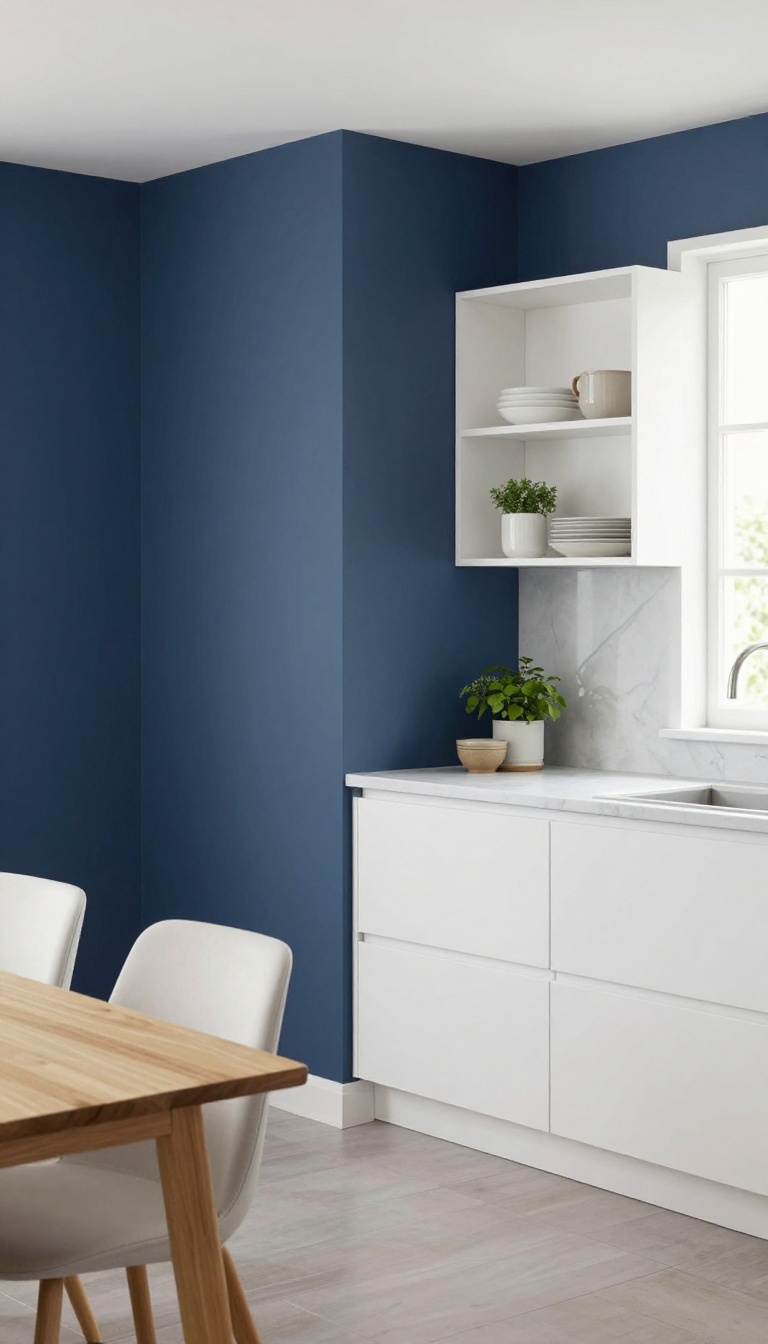
Painting all your cabinets navy is a big commitment, but a single accent wall gives you that same rich color with far less effort. It's a smart way to test the trend and add instant depth, especially if your kitchen flows into a living or dining area. One wall in a deep navy can anchor the whole room and make everything else feel more intentional.
An accent wall works best on a wall that's not hidden behind cabinets or appliances. Choose the wall that holds your dining nook, a tall pantry, or just open wall space. The contrast between navy and your existing cabinets or countertops creates a subtle, stylish backdrop without overwhelming the space.
Pick The Right Wall
Look for a wall that's visible from the main entry points and isn't broken up by too many windows or doorways. A solid, uninterrupted wall will show off the color best. If you have a wall with a breakfast bar or a pass-through, that can also work well because the navy will frame the opening and add visual interest.
Choose The Perfect Navy
Not all navy shades are the same. Some lean gray, some have a green undertone, and others are almost black. Test a few samples on your wall and look at them at different times of day.
A navy with a slight gray undertone tends to feel more modern and pairs easily with white, brass, or wood accents. For a cozy feel, try a deeper, almost ink-like navy.
Balance With Lighter Elements
To keep the room from feeling too dark, balance the navy wall with lighter elements. White or light wood shelving, pale countertops, and bright textiles will keep the space airy. Add a few open shelves in a light tone to break up the navy, or hang a large mirror to bounce light around.
This keeps the accent wall striking without making the kitchen feel like a cave.
7. Update Your Hardware with Navy Knobs and Pulls
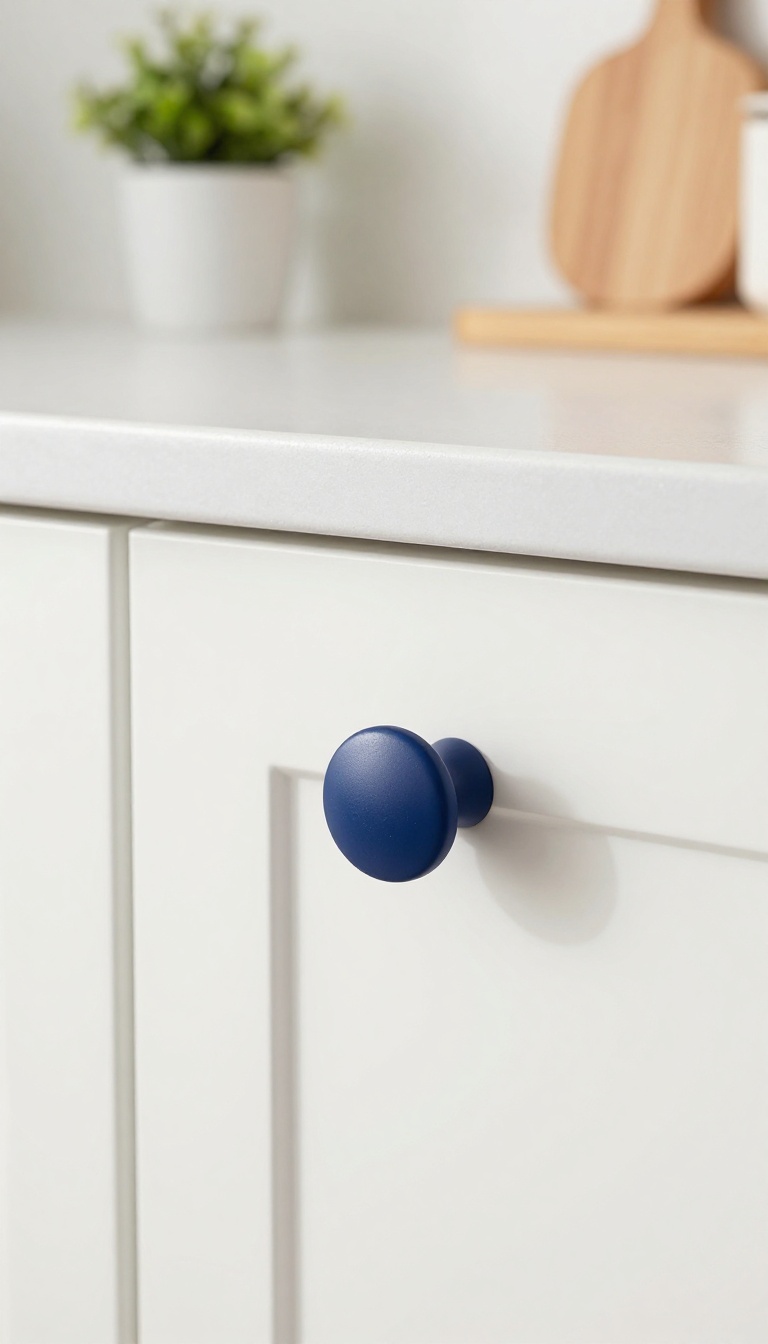
Cabinet hardware is like jewelry for your kitchen—small, but it catches the eye. Swapping out old handles for navy knobs and pulls is a quick, low-cost upgrade that instantly adds a pop of color. You don't need to repaint anything; just unscrew the old ones and screw in the new.
It's a perfect weekend project for renters and homeowners alike.
Navy hardware works with almost any cabinet color, from white to wood to gray. It brings a subtle nautical or classic vibe without overwhelming the space. Plus, it's easy to change again if you get tired of it.
Here’s how to make the switch smoothly.
Choosing The Right Finish
Navy comes in glossy, matte, and textured finishes. Glossy adds a shiny, modern touch, while matte feels more understated and sophisticated. For a rustic look, consider hammered or oil-rubbed navy.
Think about your existing fixtures—like faucets and lighting—and pick a finish that complements them. If you have brushed nickel, go for a navy with a metallic undertone. If your kitchen has brass accents, a warm navy with a hint of bronze works well.
Mixing And Matching Styles
You don't have to replace every knob and pull with the same style. Mixing can look intentional and stylish. For example, use navy cup pulls on drawers and navy T-bar handles on cabinet doors.
Or combine navy knobs with stainless steel pulls for a two-tone effect. Just keep the overall shape and size consistent so it doesn't look messy. A good rule is to stick to one shape per cabinet type and vary only the color.
Installation Tips For A Smooth Swap
Measure the distance between screw holes before buying new hardware to ensure a perfect fit. Most standard knobs use a single screw, while pulls have two. If the new pulls have a different hole spacing, you may need to fill old holes and drill new ones—but that's still a simple DIY task.
Use a template or painter's tape to mark holes precisely. Tighten screws gently to avoid stripping. If you're renting, keep the old hardware and swap it back when you move out.
8. Install a Navy Farmhouse Sink
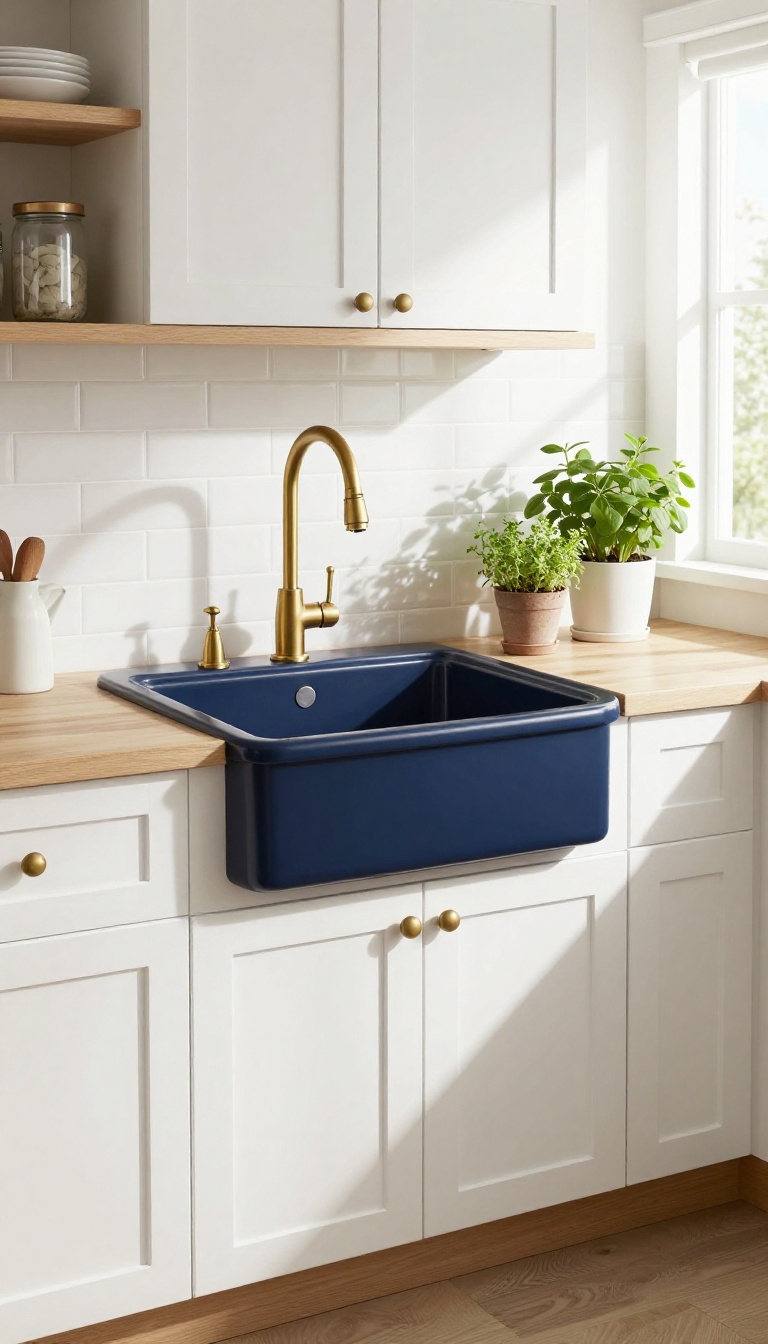
A navy farmhouse sink can become the heart of your kitchen, drawing the eye and adding a touch of rustic charm. While the idea might sound expensive, budget-friendly versions exist, and if you're handy, installing one yourself can save a bundle. This single swap can completely change the feel of your space without a full remodel.
Farmhouse sinks, also known as apron-front sinks, have a distinct look that pairs beautifully with navy cabinetry or even white cabinets with navy accents. The deep basin is practical for washing large pots, and the exposed front adds character. To keep costs down, look for fireclay or cast iron options on sale, or consider a stainless steel model with a navy finish.
If you're comfortable with plumbing, a DIY installation is possible, but be sure to measure your cabinet space carefully and check the sink's weight requirements.
Choosing A Budget-friendly Navy Sink
You don't need to splurge on a high-end brand. Many home improvement stores carry navy farmhouse sinks in the $300–$500 range, especially during sales. Look for composite materials that mimic the look of fireclay but cost less.
Also, check online marketplaces for open-box or clearance items. A navy sink with a matte finish can hide water spots and scratches better than glossy ones.
Diy Installation Tips
If you're handy, installing a farmhouse sink can be a weekend project. You'll need to reinforce the countertop and cabinet base to support the weight. Watch a few tutorials online and gather the right tools.
For a drop-in or undermount style, the process is simpler. If you're unsure, hiring a plumber for just the hookup can still save money compared to a full professional install.
Styling Around Your Navy Sink
Once your sink is in, let it shine. Pair it with a brushed brass or matte black faucet for contrast. Keep the countertop clutter-free to highlight the sink's color.
Add a wooden cutting board or a small plant nearby to soften the look. The deep blue pairs well with white subway tile or a light marble backsplash.
9. Add Open Shelving with Navy Painted Shelves
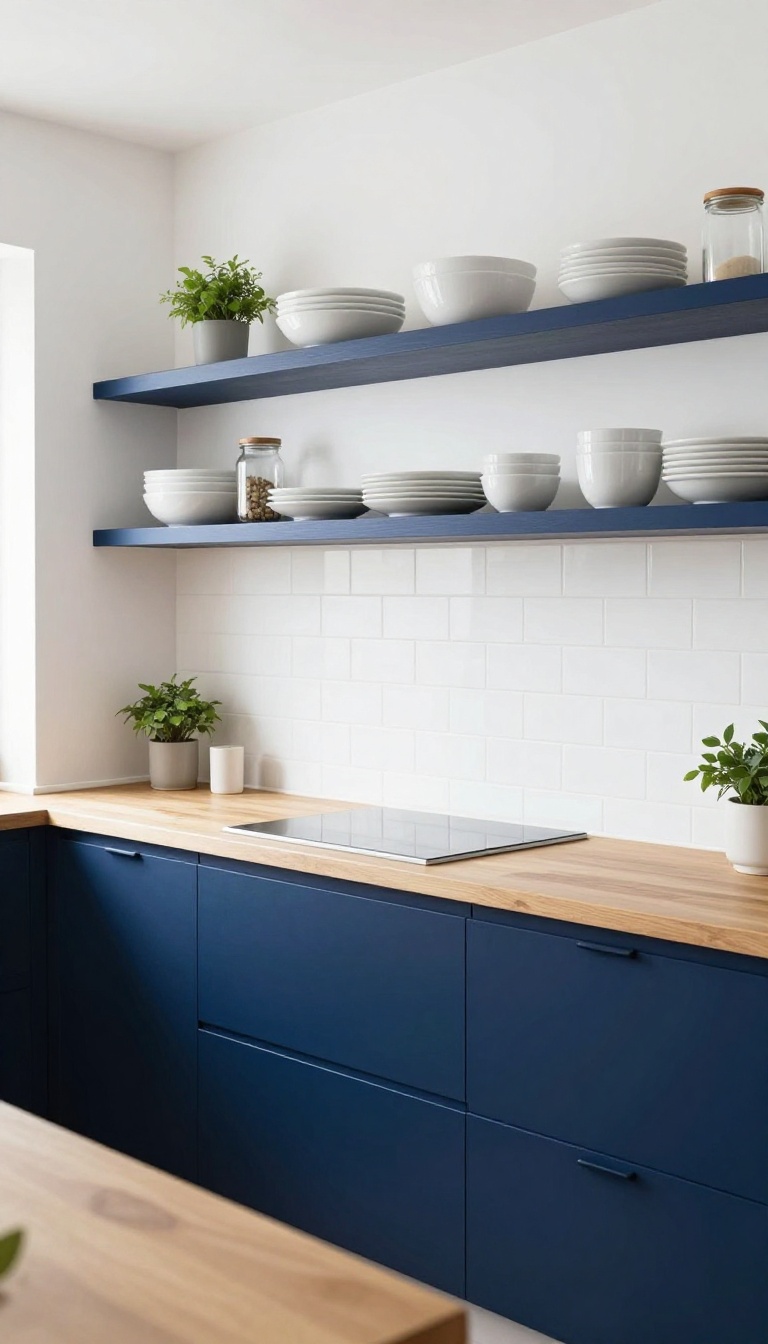
Upper cabinets can make a kitchen feel boxed in, especially when you're working with a tight budget. Swapping them for open shelving instantly lightens the room and gives you a chance to show off your favorite dishes. Painting the shelves navy adds a bold pop of color without the cost of new cabinetry.
Open shelving is a budget-friendly way to update your kitchen's look and function. By removing upper cabinets, you open up the wall space, making the room feel larger and more inviting. Navy-painted shelves provide a striking contrast against white or light-colored walls, and they tie in beautifully with other navy accents in your kitchen.
Choosing The Right Shelves
You don't need custom-built shelving to get the look. Floating shelves from a home improvement store are affordable and easy to install. Look for solid wood or sturdy MDF that can handle the weight of dishes.
If you're handy, you can even make your own from pine boards and brackets.
Painting Tips For A Smooth Finish
To get a professional-looking finish, sand the shelves lightly and apply a primer before painting. Use a high-quality paint with a satin or semi-gloss sheen—it's more durable and easier to wipe clean. Two coats of navy paint will give you rich, even color.
Let each coat dry completely before the next.
Styling Your Open Shelves
Group items in odd numbers and vary heights for visual interest. Mix everyday dishes with a few decorative pieces like vases or cookbooks. Keep frequently used items within easy reach, and don't overcrowd—leave some breathing room.
This keeps the display looking intentional and airy.
10. Decorate with Navy and White Dinnerware
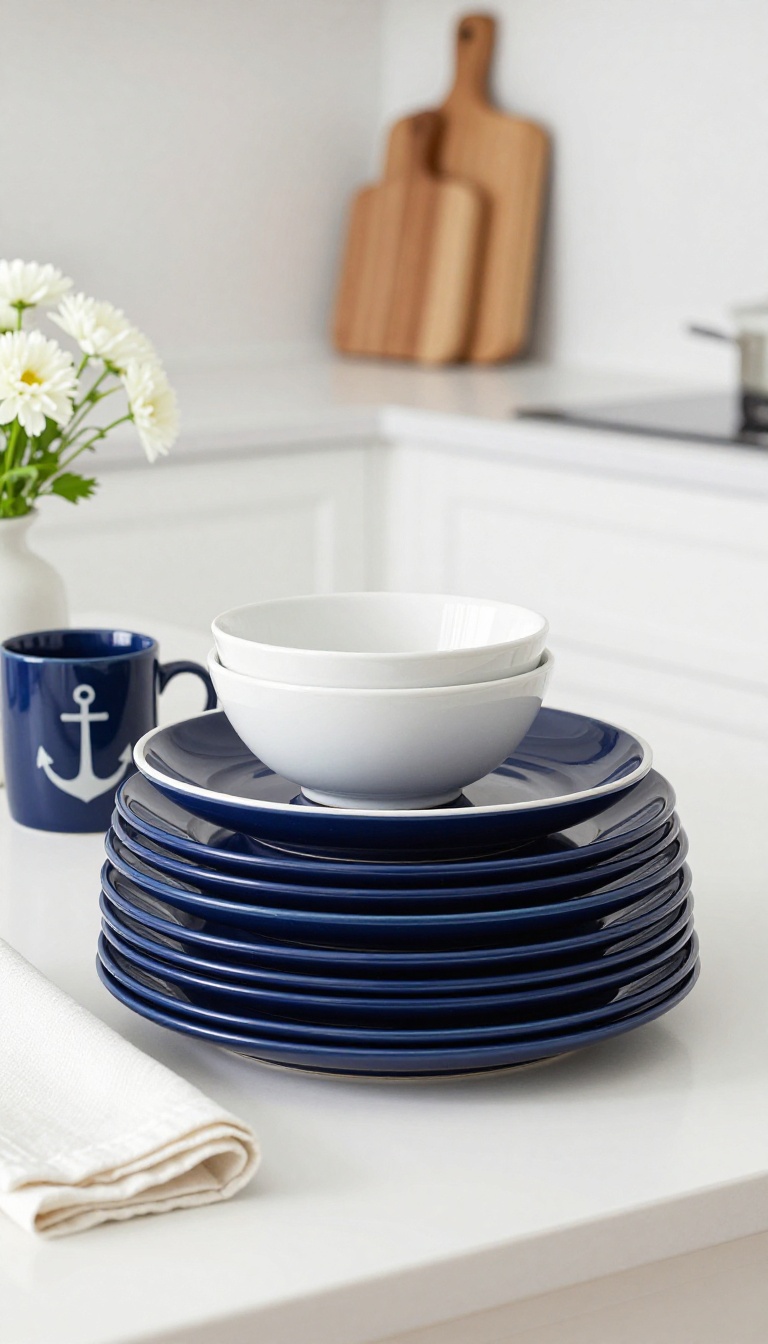
Your everyday dishes can do more than hold food—they can anchor your kitchen's color scheme. Navy and white dinnerware brings that crisp, coastal contrast to your table without costing a fortune. Mixing solid navy plates with white bowls and patterned mugs creates a collected, intentional look that feels anything but basic.
Start by pairing solid navy dinner plates with white salad plates—the layered look instantly adds depth. Then bring in white bowls for cereal or soup and navy mugs for coffee or tea. The key is balance: too much navy gets heavy, so let white keep things airy.
You can also mix in a few patterned pieces, like a white plate with a navy rim or a navy mug with a white anchor, to add personality without going overboard.
Where To Find Affordable Sets
Discount stores like TJ Maxx, HomeGoods, and Target often carry navy and white dinnerware at reasonable prices. Check clearance racks for mismatched pieces that still work together. Thrift stores are gold mines—you can find vintage navy or white plates for a few dollars each.
Mixing old and new gives your table a unique, layered look that's anything but cookie-cutter.
Mix And Match Like A Pro
Don't feel pressured to buy a full matching set. Pick up a few navy plates, a few white ones, and a couple of patterned pieces. The trick is to keep the color palette consistent—navy and white only—so the mix still feels cohesive.
Use navy plates for the base, white for the top, and let patterned mugs or bowls add the fun. This approach is budget-friendly and gives you flexibility to swap pieces as you find new ones.
Display Them For Extra Impact
If you have open shelving, stack your navy and white dishes in alternating piles. It creates a visual rhythm that draws the eye. You can also hang a few plates on the wall as inexpensive art.
Just use plate hangers and arrange them in a cluster above the sink or counter. This turns your everyday dishes into a design feature, not just storage.
11. Hang Navy Artwork or a Wall Clock
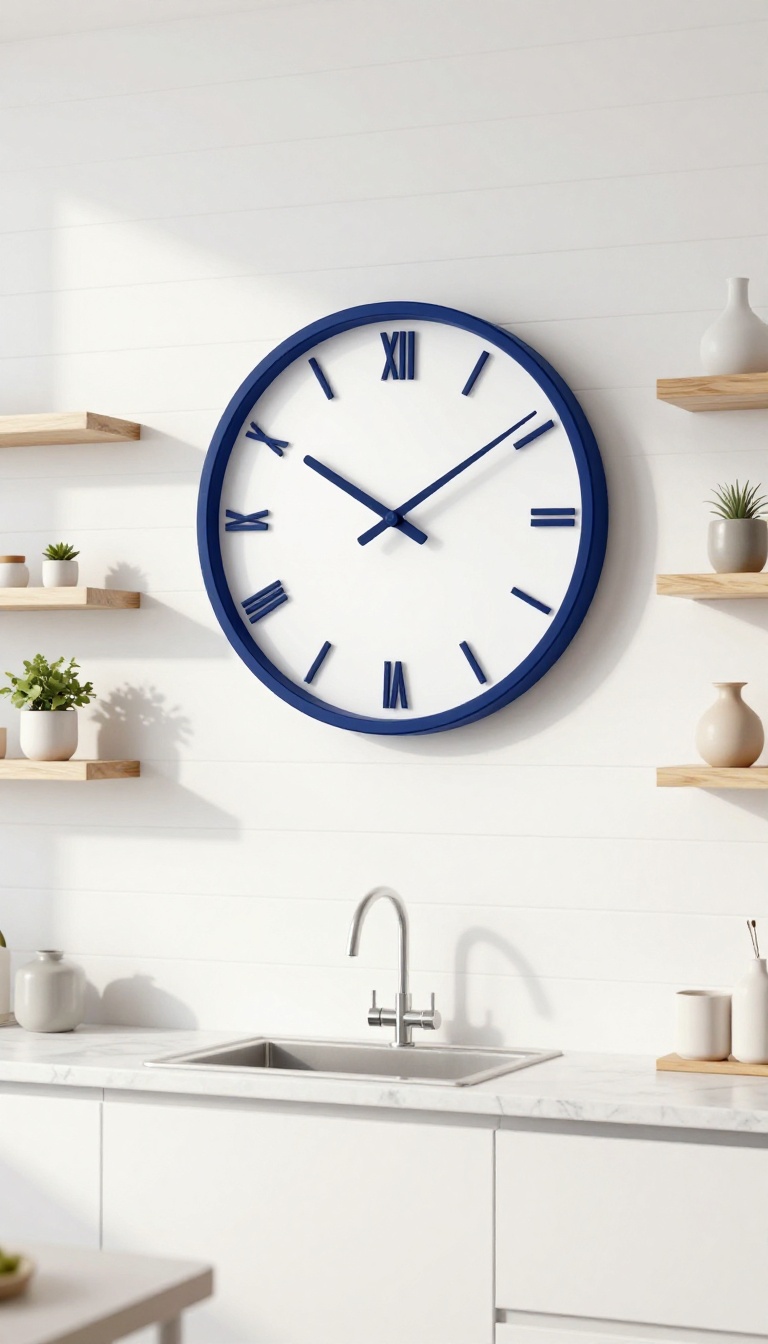
Walls often get overlooked in a kitchen makeover, but they’re prime real estate for adding color and character. A striking piece of navy artwork or a large navy wall clock can instantly anchor the room and tie your color scheme together. It’s a low-cost, high-impact change that doesn’t require any renovation skills.
You don’t need to spend a fortune on original art. Prints, posters, or even DIY canvas art can bring that rich navy hue into your space. The key is choosing a piece that resonates with you and fits the scale of your wall.
A big clock not only serves a practical purpose but also becomes a focal point that draws the eye and reinforces the navy theme.
Choosing The Right Piece
Look for artwork that includes navy as a dominant color, whether it’s abstract, botanical, or a food-themed print. If you’re crafty, create your own canvas by painting simple shapes or using fabric in navy tones. For a clock, opt for a large one with a navy face or frame—it’ll make a statement without overwhelming the space.
Placement And Scale
Hang artwork at eye level, typically 57 to 60 inches from the floor to the center. If you have a blank wall near the dining area or breakfast nook, that’s a perfect spot. For clocks, consider placing one above a doorway or on a wall that’s visible from the main cooking area.
Make sure the piece is proportionate to the wall—too small gets lost, too big feels cramped.
Diy Ideas For A Personal Touch
You can easily make your own navy art with a canvas, painter’s tape, and paint. Create geometric patterns or a simple ombre effect. Another idea: frame a piece of navy fabric or wrapping paper for a quick, budget-friendly update.
If you’re handy, repaint an old clock’s frame in navy to match your kitchen’s vibe.
12. Refresh Your Table Setting with Navy Linens and Napkins
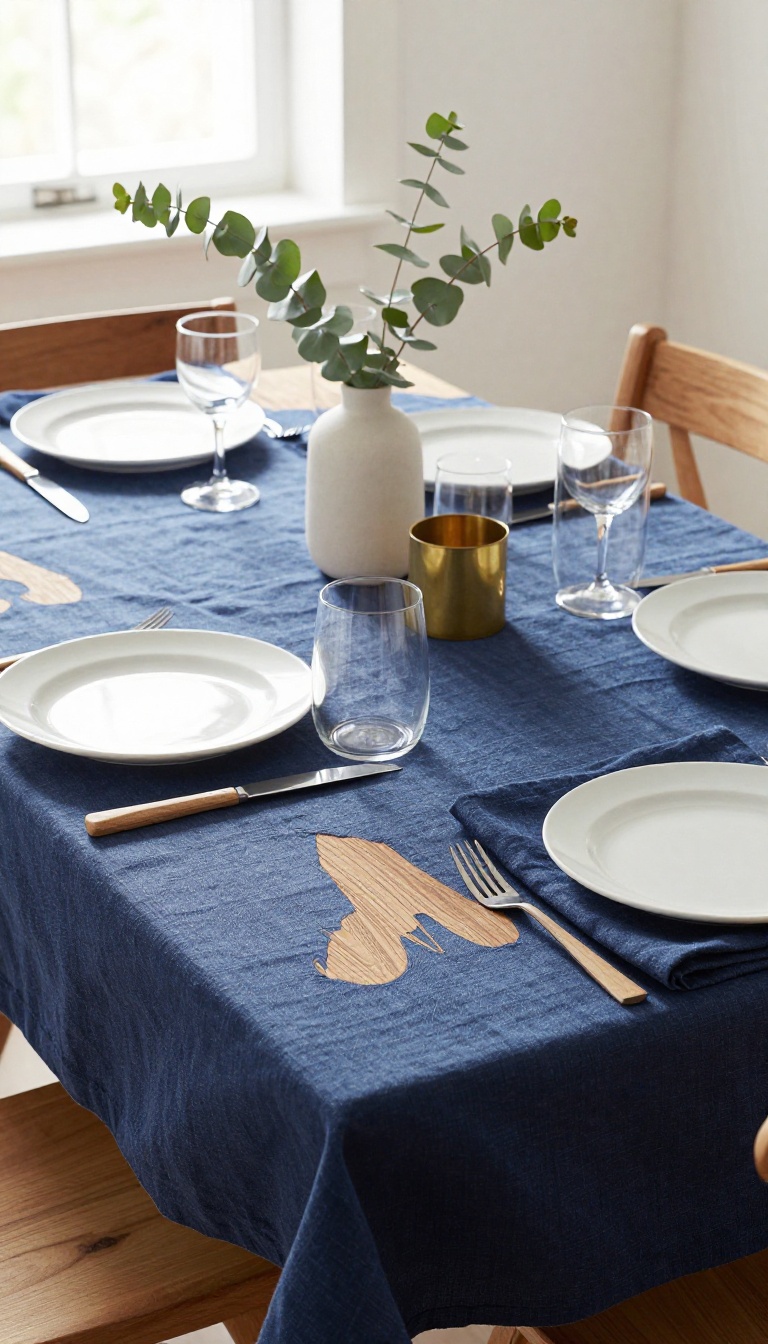
Your table is where meals happen, and it's also a prime spot for injecting navy without a big commitment. Swapping in navy linens and napkins is one of the fastest, most affordable ways to tie your kitchen's color story together. Whether you go full tablecloth or just a few cloth napkins, this small change makes a big visual impact.
Navy linens bring a sense of calm and sophistication to your dining area, and they're incredibly versatile. You can mix them with white dishes, natural wood tones, or even brass accents for a look that feels custom. Best of all, you don't need to buy everything at once—start with a few pieces and build from there.
Mix Textures For Depth
Don't be afraid to combine different fabrics. A navy linen tablecloth paired with cotton napkins in a contrasting shade like mustard or blush adds visual interest. Textured weaves, like a subtle herringbone or waffle pattern, catch the light and make the table feel more dynamic.
Layer With Neutrals
Navy works beautifully with white, cream, and natural wood tones. Use a navy runner over a light tablecloth, or set placemats in a mix of navy and neutral tones. This layering creates a pulled-together look without feeling heavy or monotonous.
Diy Custom Napkins
If you're handy with a sewing machine, consider making your own napkins from navy fabric. It's a budget-friendly way to get exactly the size and style you want. You can even add a contrasting stitch or a simple hem for a personal touch.
FAQ
Is navy blue a good color for a small kitchen?
Yes, navy can work in a small kitchen, especially when paired with white or light-colored countertops and plenty of lighting. It adds depth and a cozy feel without making the space feel cramped.
What colors go well with navy in a kitchen?
Navy pairs beautifully with white, brass or gold accents, natural wood tones, and even soft blush or green. These combinations create a balanced, inviting space.
How can I incorporate navy without painting?
You can add navy through accessories like towels, rugs, small appliances, and decorative items. These are easy to swap out and allow you to test the color before committing to a bigger change.
Is navy a trendy or timeless kitchen color?
Navy is considered a timeless color that has been used in interiors for decades. It's classic and versatile, so it's unlikely to feel dated quickly.
What is the best finish for navy kitchen cabinets?
A satin or semi-gloss finish is recommended for kitchen cabinets because it's durable, easy to clean, and offers a subtle sheen that highlights the richness of the navy color.
Conclusion
Updating your kitchen with navy doesn't have to mean a full remodel or a big budget. These twelve ideas show that a few thoughtful changes—whether it's paint, hardware, or simple accessories—can completely shift the feel of the room. Start with the one that excites you most and build from there.
The best part is that you can tackle these at your own pace, mixing and matching to fit your style. A little navy goes a long way, and with these budget-friendly options, you can enjoy a fresh, pulled-together look without the stress.