10 Patio Umbrella Ideas for Shade Style and Easy Comfort
Shade can make or break a patio, especially when the sun shifts every hour. A good umbrella does more than block rays—it sets the mood, defines your seating area, and keeps you outside longer.
But with so many styles out there, picking the right one can feel overwhelming. That’s why these ten ideas focus on real-world choices: flexible cantilevers for windy spots, wall-mounted options for tight balconies, and even solar-powered picks for evening hangouts.
Whether you’re working with a modest budget or just want smarter coverage, there’s a practical solution here that fits your space and your routine.
1. Go Big with a Cantilever Umbrella for Flexible Shade
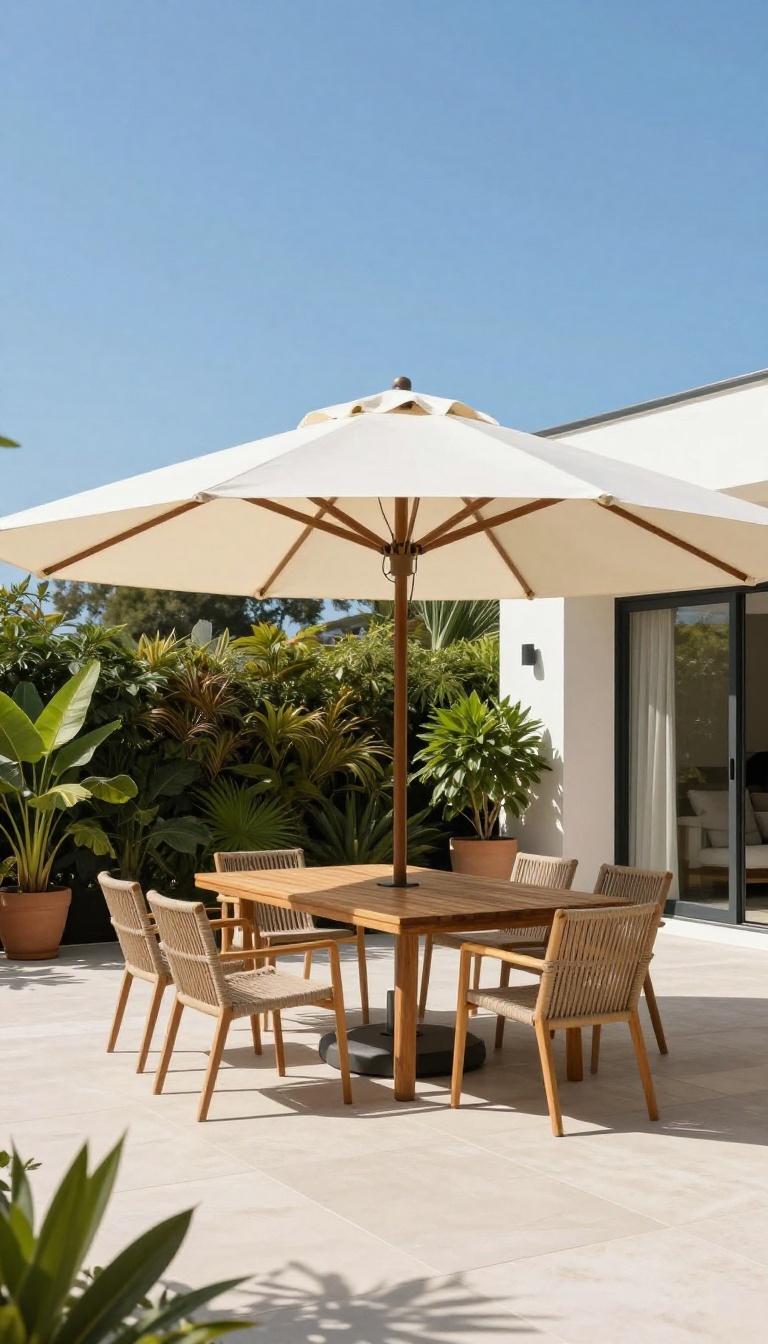
Cantilever umbrellas are the workhorses of patio shade, especially when you want to cover a seating area without a pole running through the middle. Their offset design lets you position the canopy exactly where you need it, while the base stays tucked to the side. That makes them a favorite for larger patios, outdoor dining sets, or any spot where the sun’s path keeps changing.
A cantilever umbrella is a game-changer for flexible shade. Unlike traditional center-pole umbrellas, the canopy hangs off to one side, so you can swing it over a table, a lounge chair, or a kid’s play area without the pole blocking the view or the walkway. Most models rotate 360 degrees, so you can follow the sun as it moves across the sky.
That’s perfect for all-day entertaining or just lounging with a book. The trade-off is that you need a sturdy base—usually a heavy concrete or resin stand—to keep it stable, especially in a breeze. But once it’s set up, you’ll wonder how you ever managed with a traditional umbrella.
Why Choose A Cantilever?
The main draw is the open, unobstructed space underneath. You can place a dining table, a sectional, or even a hammock right in the shade without bumping into a pole. The canopy also tilts and rotates, so you can angle it to block low morning sun or high afternoon rays.
That flexibility is a huge plus if your patio gets sun from different directions throughout the day.
Sizing And Placement Tips
Measure your patio before you buy. A 10-foot canopy covers a standard dining set, but you’ll need about 11 to 12 feet of clearance to swing it freely. Place the base near the edge of the seating area, not in the center, so the canopy hangs over the middle.
If you’re in a windy spot, look for a model with a vented canopy and a base that you can add weight to.
Materials And Durability
Look for a rust-resistant aluminum frame and a canopy fabric that’s UV-protected and water-repellent. Sunbrella fabric is a top choice because it holds up to sun and rain without fading. The base should be heavy enough to anchor the umbrella—concrete or resin with a weight capacity of at least 100 pounds is a safe bet.
Check the crank mechanism too; a smooth, sturdy crank makes it easy to open and close.
2. Choose a Tilting Umbrella for All-Day Sun Protection
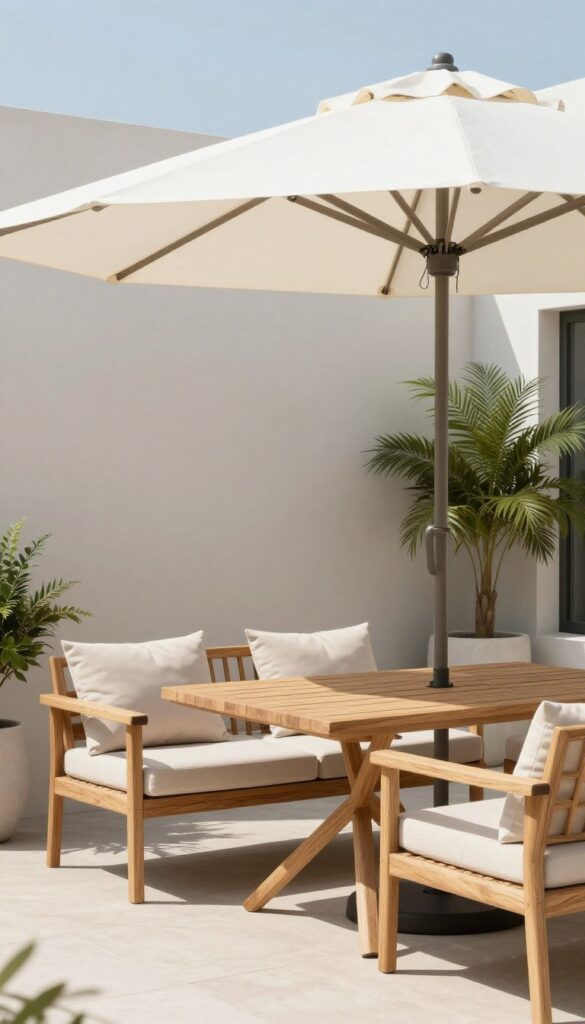
The sun doesn't stay put, and neither should your shade. A tilting umbrella lets you angle the canopy to follow the sun’s path, so you stay covered from that first morning coffee to the last evening grill session. It’s a small feature that makes a big difference in comfort, especially on long, sunny days.
Tilting umbrellas are designed with a mechanism that allows the canopy to tilt in different directions. This means you can adjust the angle to block the sun as it moves across the sky, without having to move the entire umbrella base. Whether the sun is low in the morning or high at noon, a quick tilt keeps you in the shade.
It’s a simple, practical upgrade that adds hours of comfortable outdoor time.
How Tilting Works
Most tilting umbrellas use a push-button or crank system that lets you angle the canopy up to 45 degrees or more. Some models have a collar that you loosen, tilt, and then tighten. The mechanism is usually located near the top of the pole, so you can adjust it while standing.
It’s an easy motion that doesn’t require much effort, and it makes a huge difference in how long you can stay shaded.
When To Tilt
The key is to tilt your umbrella to match the sun’s position. In the morning, tilt it eastward to block the low sun. Around midday, keep it more upright to cover the overhead rays.
In the afternoon, tilt it west to keep the setting sun off your face. A quick check every hour or so keeps you covered without having to move your furniture.
What To Look For
When shopping, look for a tilting umbrella with a sturdy pole and a smooth mechanism. Cheaper models may feel flimsy or get stuck over time. Also, consider the canopy size—a larger canopy gives you more coverage, but you’ll need a heavier base to keep it stable when tilted.
Some umbrellas even have a dual-tilt feature, letting you adjust both the canopy angle and the pole tilt for even more flexibility.
3. Pick a Square Umbrella for Clean Lines and More Coverage
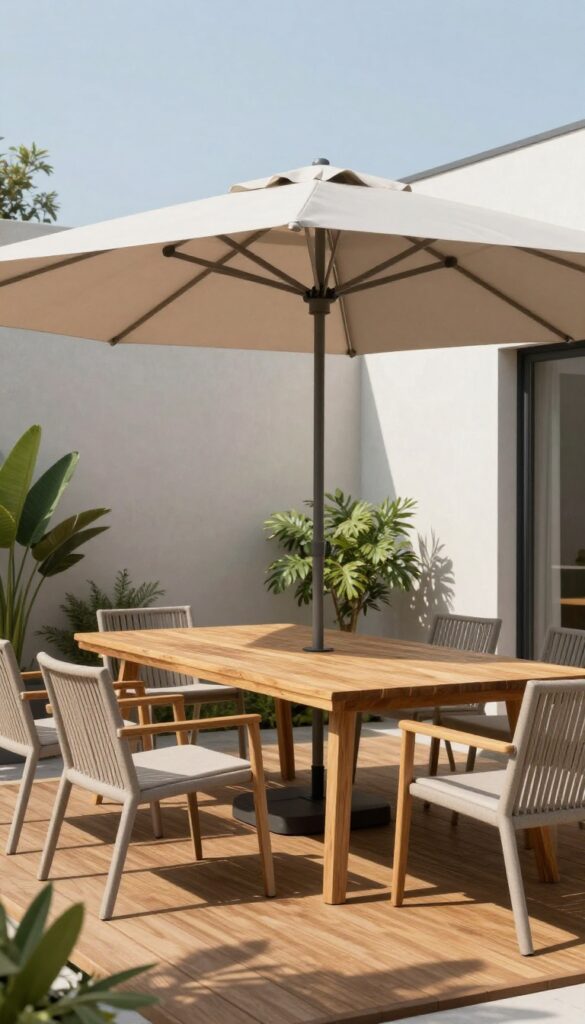
Round umbrellas are classic, but they leave gaps at the corners of rectangular tables. A square umbrella hugs the table shape better, giving you shade where you actually need it. Plus, the crisp geometry adds a modern touch that feels intentional rather than accidental.
Square umbrellas are a smart swap if you’re tired of adjusting your round canopy to cover the whole table. They’re also a favorite for contemporary patios because the straight edges echo the lines of modern furniture and decking. When you’re shopping, look for a model with a tilting mechanism—it helps you chase the sun without moving the whole base.
Why Square Beats Round For Rectangular Tables
A 10-foot round umbrella covers a 6-foot table, but the corners stay exposed. A square umbrella of the same width covers the entire tabletop, including the ends. That means no more scooting your chair to stay in the shade.
For long dining sets, a square canopy can also be offset to cover multiple seating areas without a pole in the way.
Sizing And Placement Tips
Measure your table and add two feet on each side for comfortable coverage. For a 6-foot table, a 9-foot square umbrella works well. Position the pole in the center unless you have a table with a hole—then you can use a table-mounted base.
If you’re using a freestanding base, make sure it’s heavy enough (at least 50 pounds) to keep the umbrella stable in a breeze.
Style And Fabric Choices
Square umbrellas come in a range of fabrics, from solution-dyed acrylic to polyester. Acrylic resists fading and mildew better, so it’s worth the extra cost if your patio gets full sun. For a clean look, choose a solid neutral like sand or slate.
If you want a pop of color, go with a bold stripe—the straight lines make the pattern look sharp, not busy.
4. Add a Solar-Powered Umbrella for Nighttime Ambiance
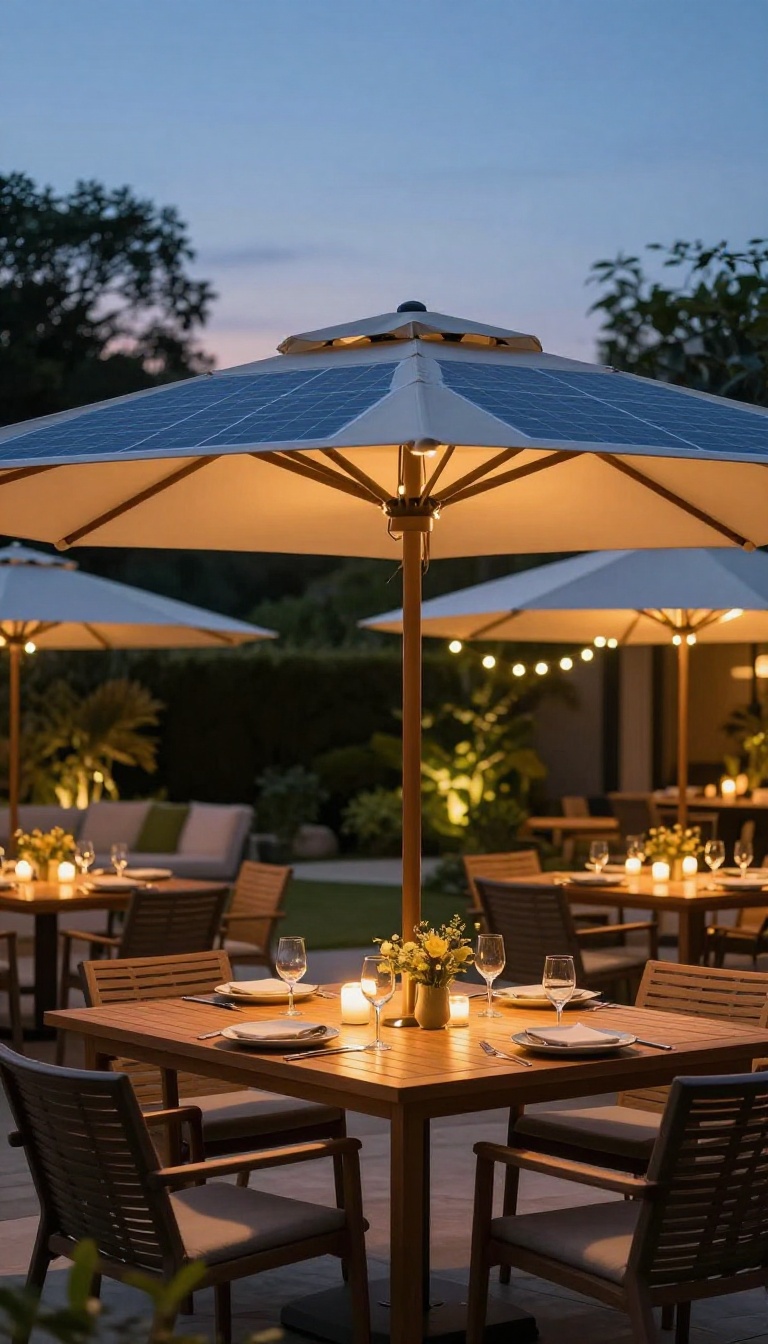
When the sun goes down, the patio doesn't have to become a dark void. Solar-powered umbrellas come with built-in LED lights that turn your outdoor space into a cozy retreat. They charge during the day and glow automatically at dusk, so you get ambient lighting without any wiring or electricity costs.
These umbrellas are perfect for evening dinners, late-night chats, or just reading a book under the stars. The warm light creates a relaxed vibe, and you can often adjust the brightness or set a timer. It's an easy upgrade that makes your patio usable long after sunset.
Solar umbrellas are more than just a shade solution—they're a lighting fixture that works for you. The built-in LEDs are powered by solar panels on the canopy, which soak up sunlight during the day. When night falls, the lights turn on automatically, giving you a soft, warm glow that's perfect for entertaining or unwinding.
You don't need to worry about extension cords or finding an outlet. Most models have a rechargeable battery that stores energy, so even on cloudy days, you'll have a few hours of light. Some even come with a remote control, letting you dim the lights or set a timer without getting up.
This idea is especially great for renters or anyone who wants a simple, low-maintenance setup. It's an eco-friendly choice that cuts down on energy use, and it adds a touch of magic to your outdoor space.
How Solar Umbrellas Work
Solar umbrellas have photovoltaic cells woven into the canopy fabric or mounted on top. These cells convert sunlight into electricity, which charges a battery stored in the pole or hub. When the light sensor detects darkness, the LEDs turn on automatically.
You can usually control the lights with a switch on the pole or a remote, and some models offer multiple brightness levels or a timer function.
What To Look For In A Solar Umbrella
When shopping, check the battery life and charging time. A good model should provide at least 8 hours of light on a full charge. Look for durable, waterproof fabric that won't fade, and a sturdy frame that can handle wind.
Also, consider the number and placement of LEDs—more lights mean better coverage. Some umbrellas have lights on the ribs, while others have a central hub that casts a wider glow.
Styling With Solar Lights
Solar umbrellas come in various colors and styles, so you can match your outdoor décor. For a warm, intimate feel, choose a canopy with a soft, diffused light. If you want a brighter area, opt for one with multiple LED strings.
You can also pair the umbrella with string lights or lanterns to create layers of light, making your patio feel inviting and magical.
5. Opt for a Tilting Wall-Mounted Umbrella for Small Spaces
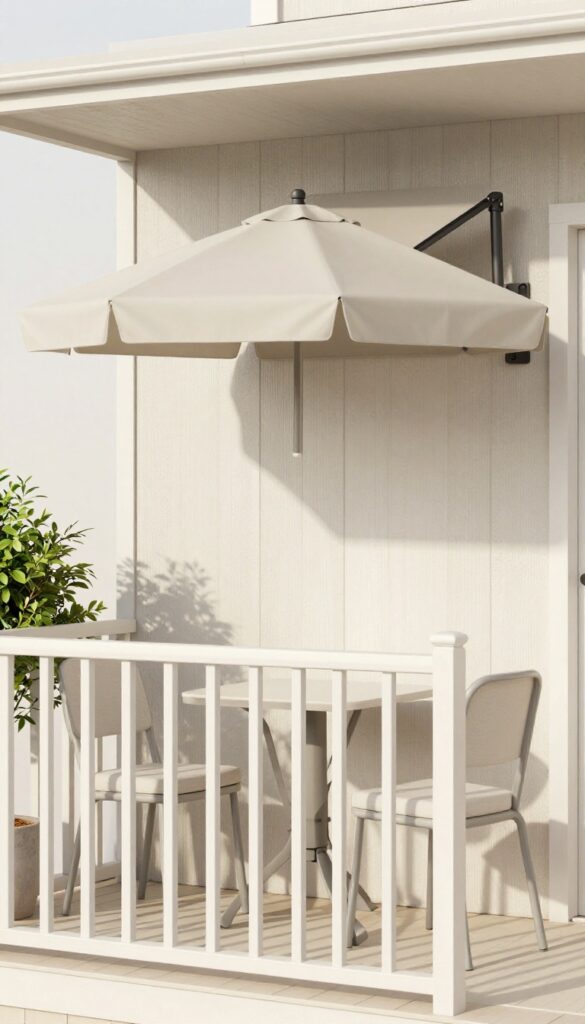
When your patio is more of a sliver than a wide-open space, every square foot counts. A traditional umbrella with a bulky base can eat up precious floor area and get in the way. That's where a wall-mounted umbrella shines—it attaches directly to your house or fence, so you get shade without sacrificing any walking room.
These umbrellas are especially handy on balconies, narrow side yards, or even along a deck railing. Many models come with a tilting arm that lets you angle the canopy throughout the day, so you stay shaded no matter where the sun moves. When you're done, simply fold it up against the wall, and your space feels open again.
Wall-mounted umbrellas are a smart solution for tight spots because they free up floor space and mount out of the way. They're ideal for rental apartments or small homes where you can't dig a permanent post. The tilting feature is the real game-changer—it lets you follow the sun without dragging furniture around.
Plus, they're usually more affordable than large cantilever models, making them a budget-friendly option for compact patios.
Why Wall-mounted Works Best
Wall-mounted umbrellas attach to a vertical surface, so they don't need a heavy base that takes up room. This makes them perfect for balconies where floor space is limited. They also stay out of the way when folded, leaving your patio clear for other activities.
The tilt mechanism allows you to adjust the angle of the canopy, so you can block the sun from different directions without moving the umbrella itself.
Key Features To Look For
When shopping for a wall-mounted umbrella, check the arm length and range of motion. A longer arm gives you more coverage, while a tilting head lets you fine-tune the shade. Look for a sturdy mount that can handle wind, and consider a model with a crank or push-button tilt for easy adjustments.
Also, make sure the canopy fabric is UV-resistant and waterproof, so it lasts through seasons.
Installation And Placement Tips
Install the mount on a solid wall or beam, using appropriate anchors for your surface. Position it so the umbrella clears railings and furniture when open. Ideally, mount it at a height that lets the canopy sit just above head level when you're seated.
Test the tilt range before drilling to ensure it covers your seating area. If you're renting, check with your landlord or use a freestanding mount that doesn't require permanent attachment.
6. Go with a Classic Market Umbrella for Timeless Appeal
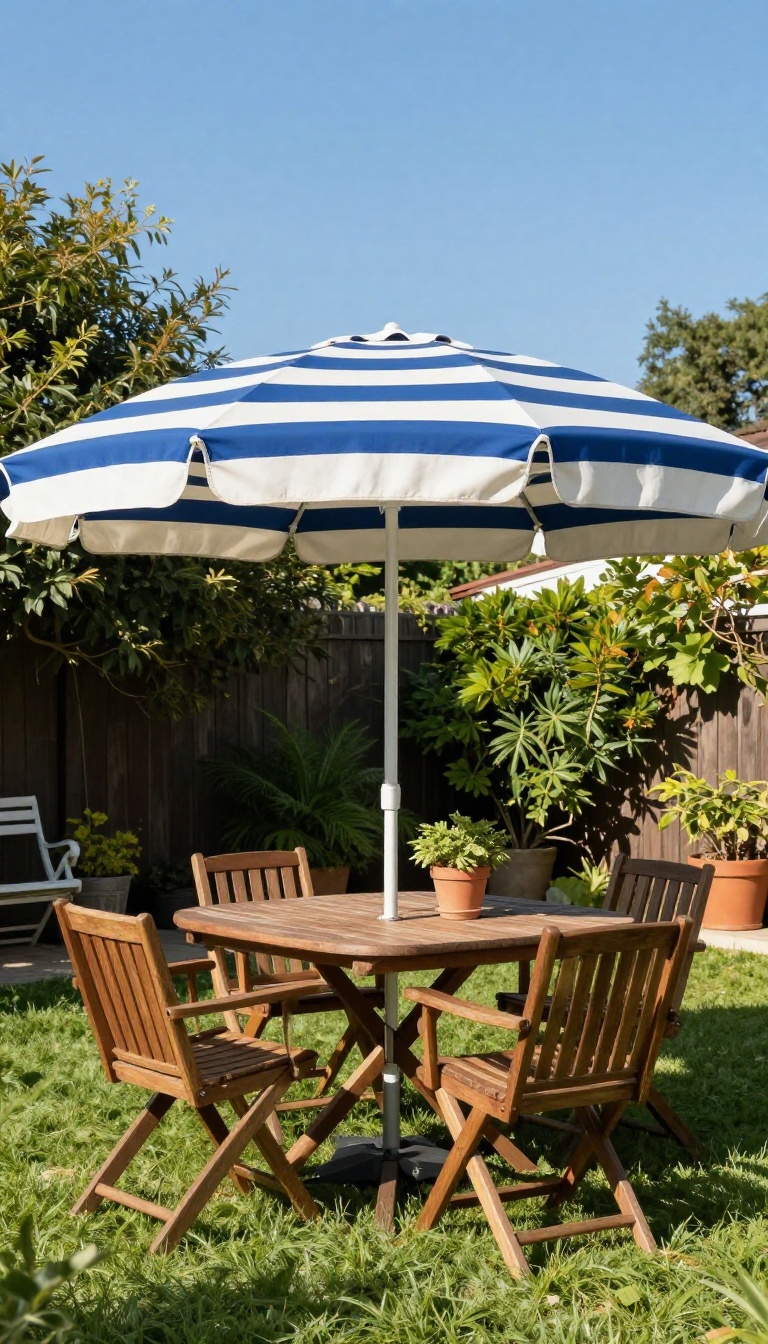
Sometimes the simplest choice is the best one. Market umbrellas have been around for ages, and they still hold their own on patios everywhere. They're easy to find, easy to set up, and easy on the wallet—plus they come in more colors and patterns than you can shake a stick at.
If you want a no-fuss shade solution that looks good anywhere, this is your pick.
Market umbrellas are the traditional choice, with a simple pole and round canopy. They're affordable, easy to find, and come in a variety of colors and patterns.
Why They're Still A Favorite
Market umbrellas are the workhorses of patio shade. They're lightweight, portable, and work with almost any table or stand. You can grab one at any home store, and they're budget-friendly enough to replace if the sun gets to them.
Plus, their classic silhouette never goes out of style.
Picking The Right Size And Fabric
Go for a 9-foot canopy if you have a standard 4-seat table, or bump up to 10 or 11 feet for larger gatherings. Look for fabric with UV protection and a water-repellent finish. Acrylic or polyester are common, but acrylic holds color better over time.
A tilt feature is a nice bonus, letting you angle the shade as the sun moves.
Matching Your Patio's Vibe
The best part about market umbrellas is the variety. Choose bold stripes for a coastal feel, solid neutrals for a modern look, or bright colors to add a pop of personality. Don't forget the base—make sure it's heavy enough to keep the umbrella steady on windy days.
7. Try a Double-Top Umbrella for Better Airflow
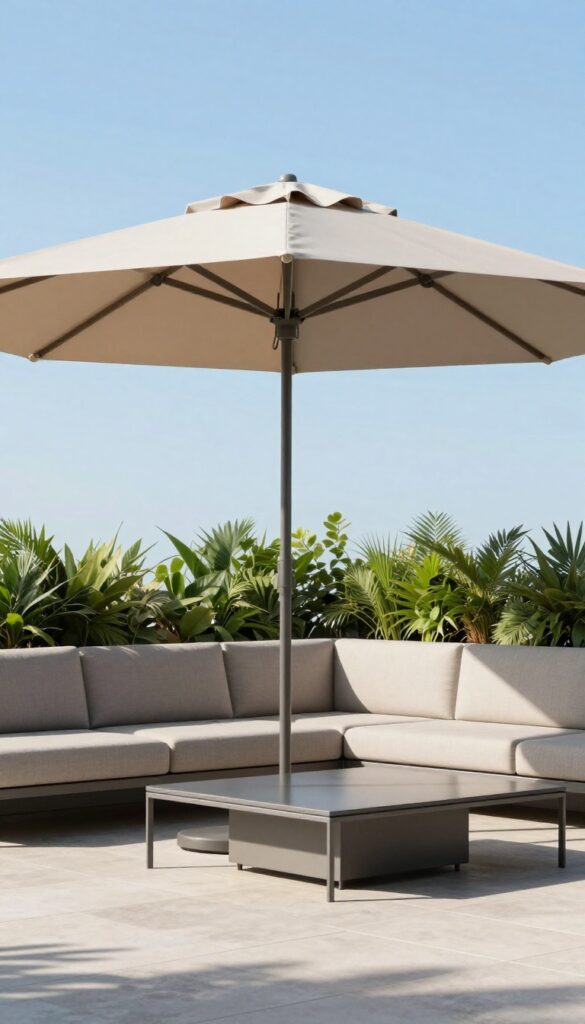
Hot air gets trapped under a solid canopy, turning your shaded spot into a stuffy pocket. A double-top umbrella solves that with a vented upper layer that lets heat rise and escape. It also handles gusty days better, since wind passes through instead of catching the fabric like a sail.
Double-top umbrellas feature a second, smaller canopy above the main one. That gap creates a chimney effect, drawing hot air up and out. The result?
A noticeably cooler seating area, even when the sun is blazing. Plus, the layered look adds a touch of architectural interest that stands out from the usual single-canopy designs.
Why The Vented Design Works
The open space between the two canopies lets heat escape naturally. Without that vent, hot air collects under the umbrella and radiates back down. With it, airflow moves continuously, keeping the area underneath fresher.
This makes a real difference on still, humid afternoons.
Built For Windy Spots
If your patio catches breezes, a solid umbrella can flip inside out or wrench the pole. The vented top reduces wind resistance, letting gusts pass through rather than pushing against the fabric. That means less wobble, less strain on the frame, and fewer sudden surprises when a storm rolls in.
Style Meets Function
Beyond the practical perks, the double-top silhouette gives your patio a layered, designer look. It works well with modern furniture and adds depth to your outdoor space. You can find them in a range of colors and fabrics, so matching your existing decor is easy.
8. Use a Tilt-and-Rotate Umbrella for Effortless Adjustments
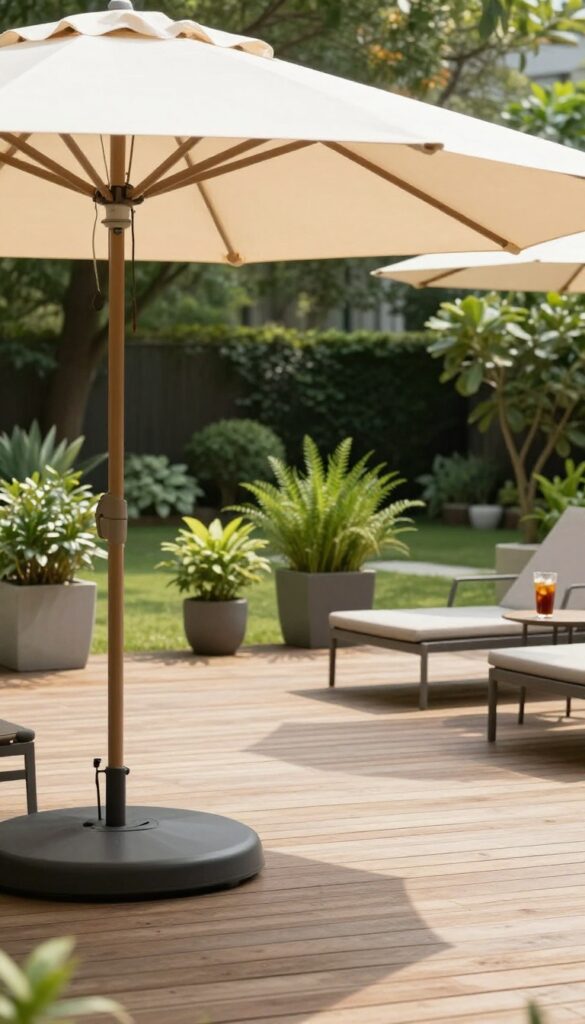
A tilt-and-rotate umbrella is the ultimate problem-solver for patios that get sun from different angles throughout the day. Instead of wrestling with a heavy base or repositioning the whole stand, you simply tilt the canopy and spin it a full 360 degrees. This means you can follow the sun’s path without ever leaving your seat, keeping you cool and comfortable from morning coffee to evening cocktails.
It’s a small feature that makes a big difference in how often you actually use your outdoor space.
The beauty of a tilt-and-rotate umbrella is its simplicity. With one hand, you can adjust the angle to block low morning sun or high afternoon rays, and then rotate the entire canopy to shade a different seating area. This flexibility is especially handy if your patio has multiple zones—like a dining set and a lounging corner—because you can shift the shade to wherever you need it most.
Plus, the mechanism is usually smooth and easy to operate, so you won’t struggle with stiff levers or complicated locks. Whether you’re hosting a brunch or reading a book, this umbrella adapts to your needs in seconds.
Why Tilt-and-rotate Beats A Fixed Umbrella
A standard umbrella only offers up-and-down adjustment, which means you’re stuck with shade in one spot. Tilt-and-rotate models add two more axes of movement, giving you total control over where the shade falls. This is a game-changer if your patio gets sun from different directions as the day progresses.
You can angle the canopy to block glare from your TV or keep the sun off your face while you eat, all without moving the base.
How To Choose The Right Tilt-and-rotate Model
When shopping, look for a sturdy pole and a reliable tilting mechanism—preferably one with a locking collar or push-button adjust. Also, consider the canopy shape: octagonal and square shapes offer different coverage, so pick one that matches your seating layout. Finally, check the rotation smoothness by testing it in the store or reading reviews.
A quality model will glide easily and stay put once you set it.
Tips For Getting The Most Out Of Your Umbrella
Position the umbrella base strategically so you can rotate it to cover multiple areas. For example, place it near the center of your patio to shade both a dining table and a lounge chair. Also, remember to close the umbrella during strong winds to prevent damage, even if it’s tiltable.
And don’t forget to periodically lubricate the moving parts to keep the tilt and rotation smooth for years to come.
9. Add a Freestanding Umbrella with a Weighted Base for Portability
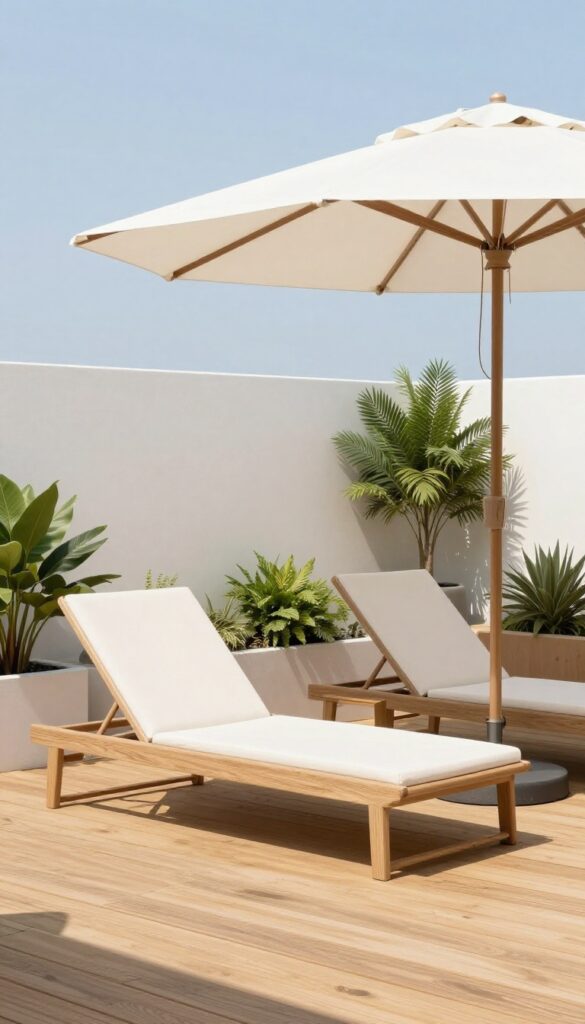
Sometimes you want shade exactly where you’re sitting, not where a pole happens to be. A freestanding umbrella with a weighted base gives you that freedom. You can roll it from the dining table to the loungers without breaking a sweat.
This setup is especially handy for renters or anyone who likes to refresh their patio layout often. No permanent installation, no drilling, just pick it up and move it. The weighted base keeps it stable on calm days, and you can add extra sand or water for windier conditions.
A freestanding umbrella is basically a pole stuck into a heavy base, and that’s its superpower. You can place it exactly where you need shade, then move it when the sun shifts. Most bases use sand, water, or concrete blocks to stay put, so you can adjust the weight based on your weather.
This type works well for patios, decks, and even grassy spots. You don’t need a table with a hole or a wall mount. Just set it up, tilt it, and enjoy the shade.
It’s also a smart option if you’re renting and don’t want to leave holes in the ground or attach anything permanent.
Why A Weighted Base Wins For Flexibility
The main advantage is portability. You can move the umbrella to follow the sun or to match your seating arrangement. A weighted base also lets you use the umbrella without a table, which is perfect for open lounging areas.
Plus, you can store it easily when the season ends—just drain the water or empty the sand.
Choosing The Right Base Weight And Style
Base weight matters. For a 9-foot umbrella, aim for at least 50 pounds of weight. For larger ones, go heavier.
You can buy pre-filled bases or fill them yourself with sand or water. Some bases have wheels, which makes moving even easier. Look for a base with a sturdy pole sleeve and a secure locking mechanism.
Tips For Stability In Wind
Even with a heavy base, wind can be tricky. Always close the umbrella when gusts pick up. Use a base with a crossbar or a low profile to reduce tipping.
You can also add a wind vent in the canopy to let air pass through. On extra windy days, consider moving the umbrella closer to a wall or fence for extra shelter.
10. Consider a Shade Sail as a Modern Umbrella Alternative
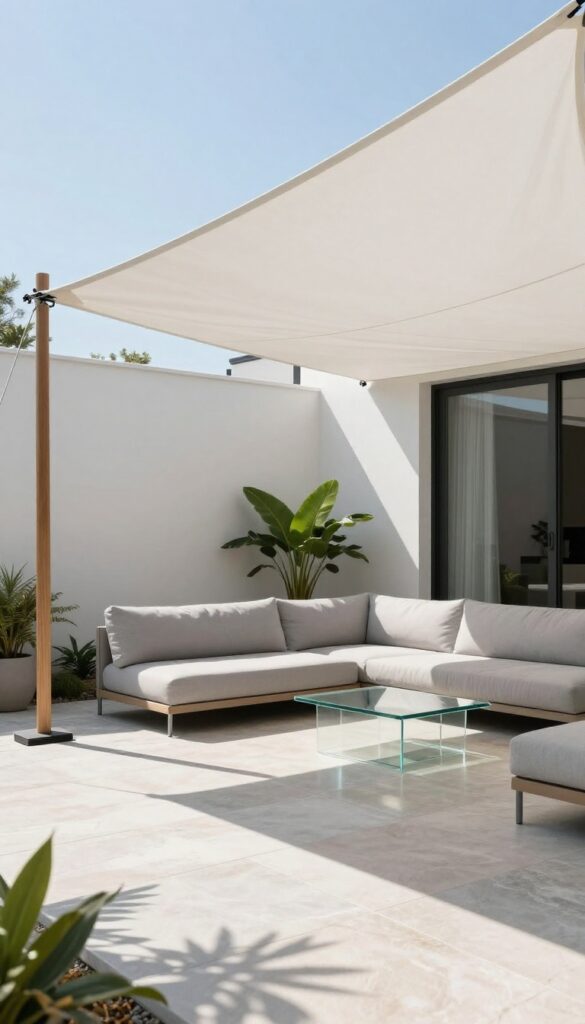
Shade sails bring a fresh, architectural vibe to patios that traditional umbrellas can't match. Instead of a single pole and canopy, these tensioned fabric panels stretch across open spaces, creating clean lines and dramatic shadows. They're especially popular in coastal and contemporary settings, but they work just about anywhere you want a bold shade statement.
Unlike a typical umbrella, a shade sail is a single piece of fabric anchored at multiple points. This setup lets you cover large, irregular areas—like a patio that wraps around a corner or a poolside lounge. You can angle them to block low morning or evening sun, and because they're tensioned, they handle breezy conditions better than many umbrellas.
Plus, they come in a rainbow of colors and shapes, from classic triangles to custom rectangles, so you can match your decor or add a pop of contrast.
Why Choose A Shade Sail?
Shade sails offer a few key advantages over traditional umbrellas. First, they provide continuous shade without a central pole getting in the way. That makes them ideal for dining tables or seating groups where you want unobstructed space.
Second, they're highly customizable—you can mix and match sizes and colors to create a unique overhead pattern. And third, they're often more affordable than high-end cantilever umbrellas, especially for large coverage areas.
Installation And Mounting Tips
Installing a shade sail isn't complicated, but it does require some planning. You'll need sturdy anchor points—like walls, posts, or trees—that can handle the tension. For a freestanding setup, you can use steel poles set in concrete.
Make sure the sail is angled slightly to allow rainwater to run off, and use stainless steel hardware to prevent rust. If you're not handy, many companies offer installation services, or you can rent a post-hole digger and do it yourself over a weekend.
Caring For Your Shade Sail
Shade sails are built to last, but a little care goes a long way. Most are made from UV-resistant, waterproof fabric, so they can stay up year-round in mild climates. In harsh winters or high winds, you can take them down and store them inside.
Clean them occasionally with mild soap and water to remove dirt and bird droppings. Check the tension periodically and adjust if they sag—keeping them taut prevents flapping and prolongs their life.
FAQ
What is the best size umbrella for a standard patio table?
For a standard 48-inch round table, a 9-foot umbrella is usually sufficient. For larger tables (60 inches or more), consider a 10- or 11-foot umbrella to ensure full coverage.
How do I keep my patio umbrella from blowing away?
Use a sturdy base that weighs at least 50 pounds for most umbrellas, or opt for a base with a higher weight rating. You can also use a wind vent or tie-downs for extra security.
What fabric is best for a patio umbrella?
Look for solution-dyed acrylic fabrics like Sunbrella, which are fade-resistant, water-repellent, and easy to clean. Polyester is a budget-friendly alternative but may not last as long.
Can I leave my patio umbrella out in the rain?
Most umbrellas are water-resistant, but prolonged exposure to rain can cause mold and mildew. It's best to close and cover your umbrella when not in use, or store it indoors during heavy rain.
How do I clean my patio umbrella?
Use a mild soap and water solution with a soft brush to scrub the canopy. Rinse thoroughly and let it air dry. For stubborn stains, use a specialized fabric cleaner.
Conclusion
Finding the right patio umbrella comes down to matching the shade to how you actually use your space. Start with one idea that solves a real problem—like glare at dinner or too much sun on the loungers—and build from there as you see what works. You don't need to overhaul everything at once.
Pick a style that fits your budget and routine, and let the rest follow naturally. The best setup is the one you actually use every day, so choose what feels right and enjoy the shade.