10 Tan Couch Living Room Color Ideas That Look Beautiful Together
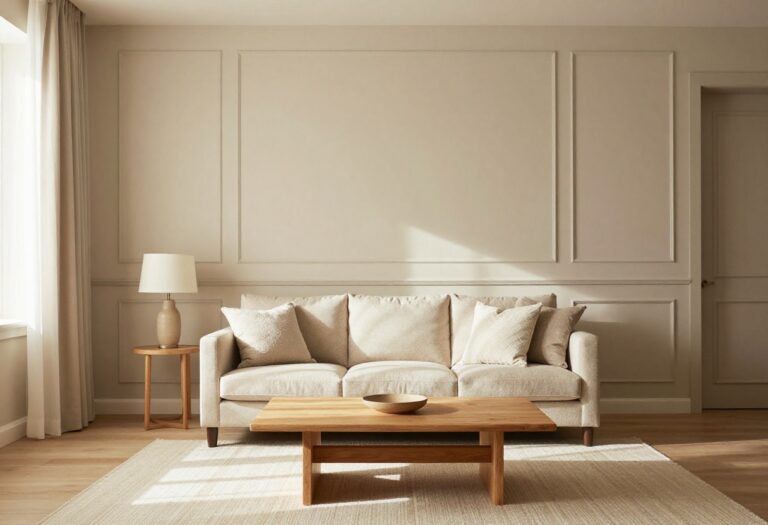
A tan couch is one of those rare pieces that feels both timeless and flexible. It doesn't scream for attention, yet it grounds a room with quiet warmth.
But sometimes that neutral expanse can feel a bit flat, especially if the rest of the space hasn't caught up. The good news?
You don't need a full remodel or a designer budget to make it shine. With a few thoughtful swaps and styling tricks, your tan sofa can become the heart of a living room that feels collected, cozy, and unmistakably you.
1. Layer in Texture with Throws and Pillows
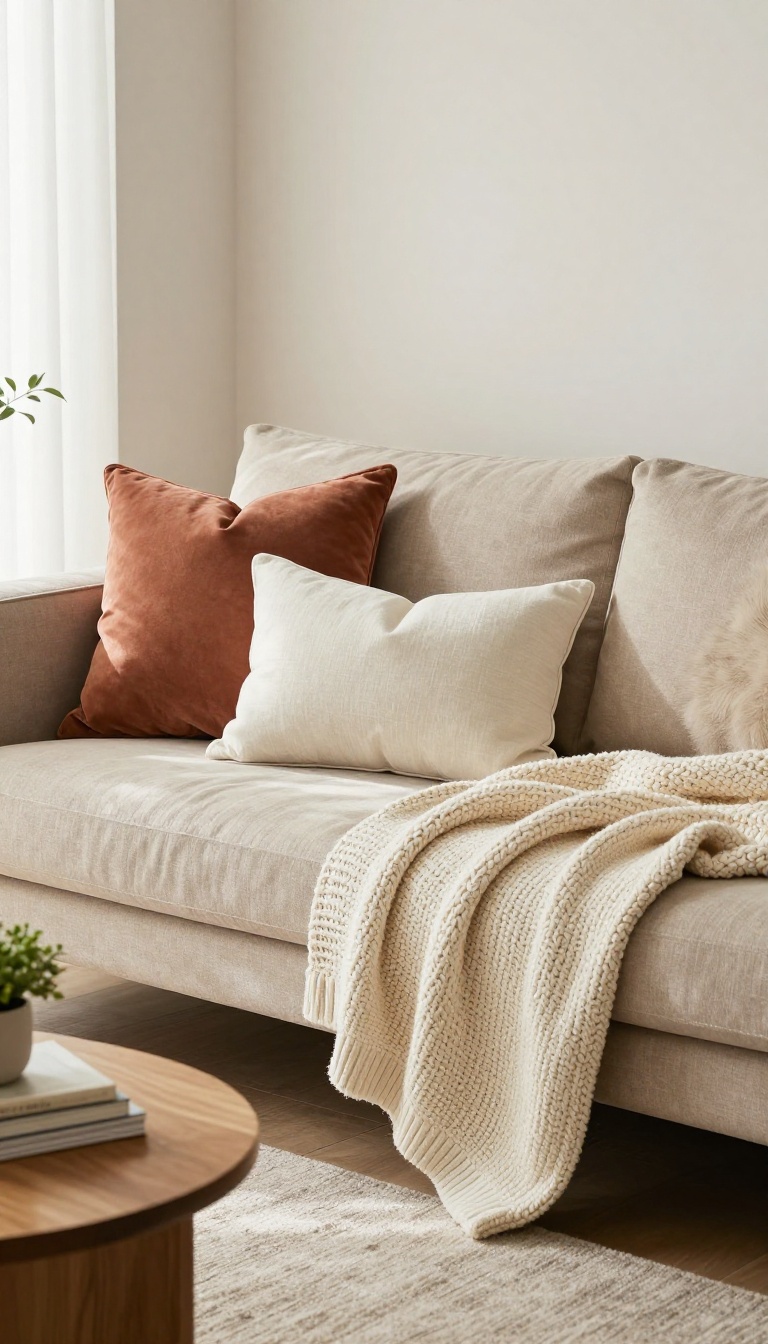
A tan couch is a beautiful blank canvas, but a single tone can sometimes feel a little one-dimensional. The quickest way to add depth and personality is by piling on textures that invite you to touch and linger. Think of it as dressing your sofa for comfort and style, where every layer tells a part of your design story.
Start with a base of neutral linen or cotton throws, then build up with contrasting materials. Chunky knits bring a cozy, handmade feel, while velvet adds a touch of luxury. Don't forget faux fur—it injects instant softness and a hint of glamour.
The key is to mix and match in complementary tones like cream, warm white, soft beige, and even muted terracotta or olive to keep the look cohesive.
Pick A Palette That Pops
While tan is neutral, your accessories can introduce subtle color without overwhelming the space. Choose shades that sit well with tan—think warm whites, dusty pinks, sage greens, or rich caramel. These tones add visual interest while keeping the overall vibe calm and inviting.
Avoid stark contrasts that might feel jarring; instead, aim for a gradient of warmth.
Mix Materials Like A Pro
The secret to a professional-looking sofa is variety in texture. Pair a smooth linen throw with a chunky cable-knit pillow, or set a velvet cushion against a woven wool one. Faux fur adds that irresistible touch, but use it sparingly—one or two pieces are enough.
The goal is to create a tactile experience that feels layered, not cluttered.
Arrange With Intention
How you place your pillows matters as much as what they're made of. Start with larger pillows at the corners, then layer smaller ones in front. Alternate shapes and sizes—square, lumbar, round—to break up the monotony.
Drape a throw over one arm or the back corner for an effortless, lived-in look. Step back and adjust until the arrangement feels balanced and inviting.
2. Anchor with a Contrasting Area Rug
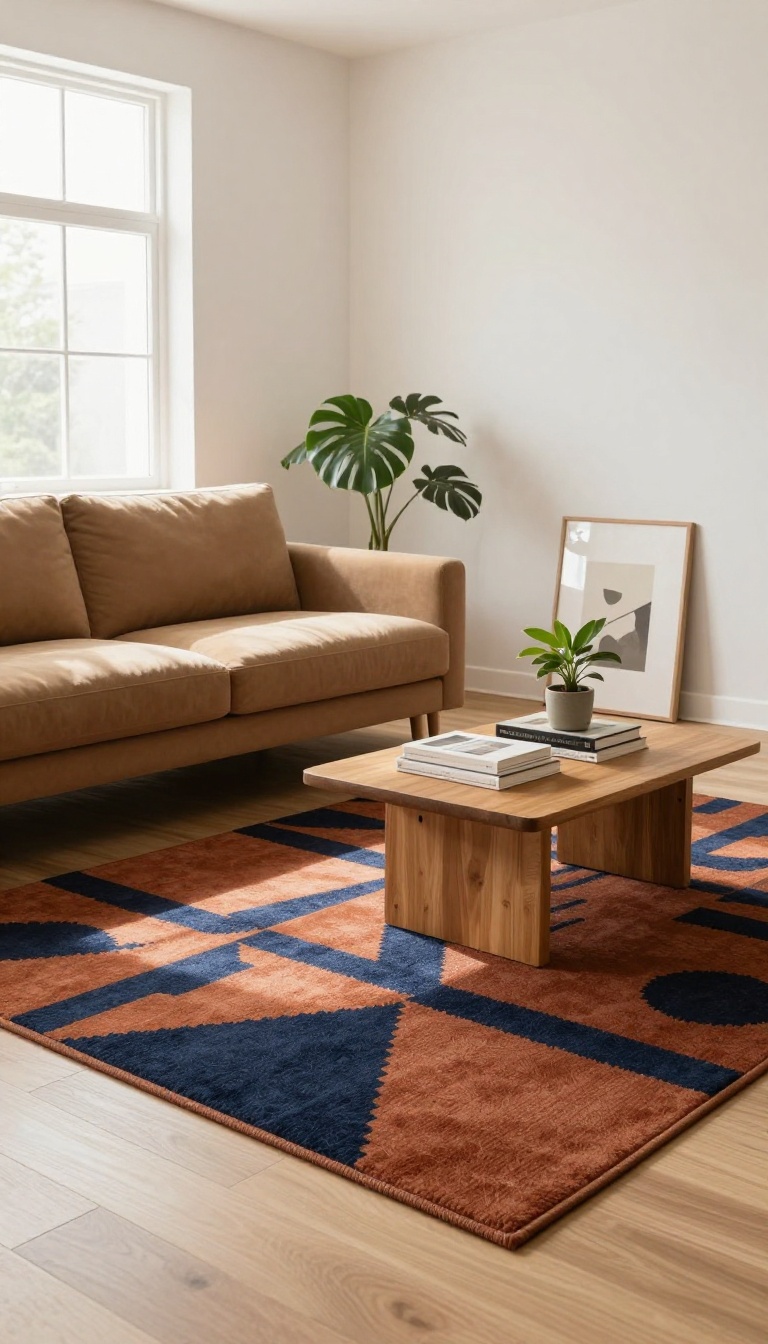
A tan sofa can blend into a beige or light wood floor, making the whole seating area feel washed out. A rug with a stronger presence solves that instantly. It defines the zone, adds a layer of texture, and gives your eye a clear place to rest.
Think of the rug as the visual anchor for your couch. When you choose one with a deeper color or a lively pattern, it creates a deliberate contrast that makes the tan pop. That contrast also helps the room feel more grounded and intentional, rather than accidental.
Pick A Pattern That Pops
A geometric or abstract pattern in navy, terracotta, or olive works beautifully against tan. These colors echo earthy tones without disappearing into them. If you prefer a more subtle look, a vintage-inspired medallion rug in muted blues and rusts adds depth without overwhelming the space.
Size And Placement Matter
Make sure the rug is large enough to fit at least the front legs of your sofa, ideally all of them. This visually ties the furniture together and makes the room feel bigger. Leave about 12 to 18 inches of bare floor around the rug's edges for a balanced, intentional look.
Layer For Extra Warmth
If your main rug is flat or low-pile, consider layering a smaller, textured rug like a sheepskin or a woven cotton one on top. This adds a casual, cozy vibe and breaks up the pattern. It also gives you flexibility to change the look seasonally without replacing the entire rug.
3. Play with Earthy Accent Colors
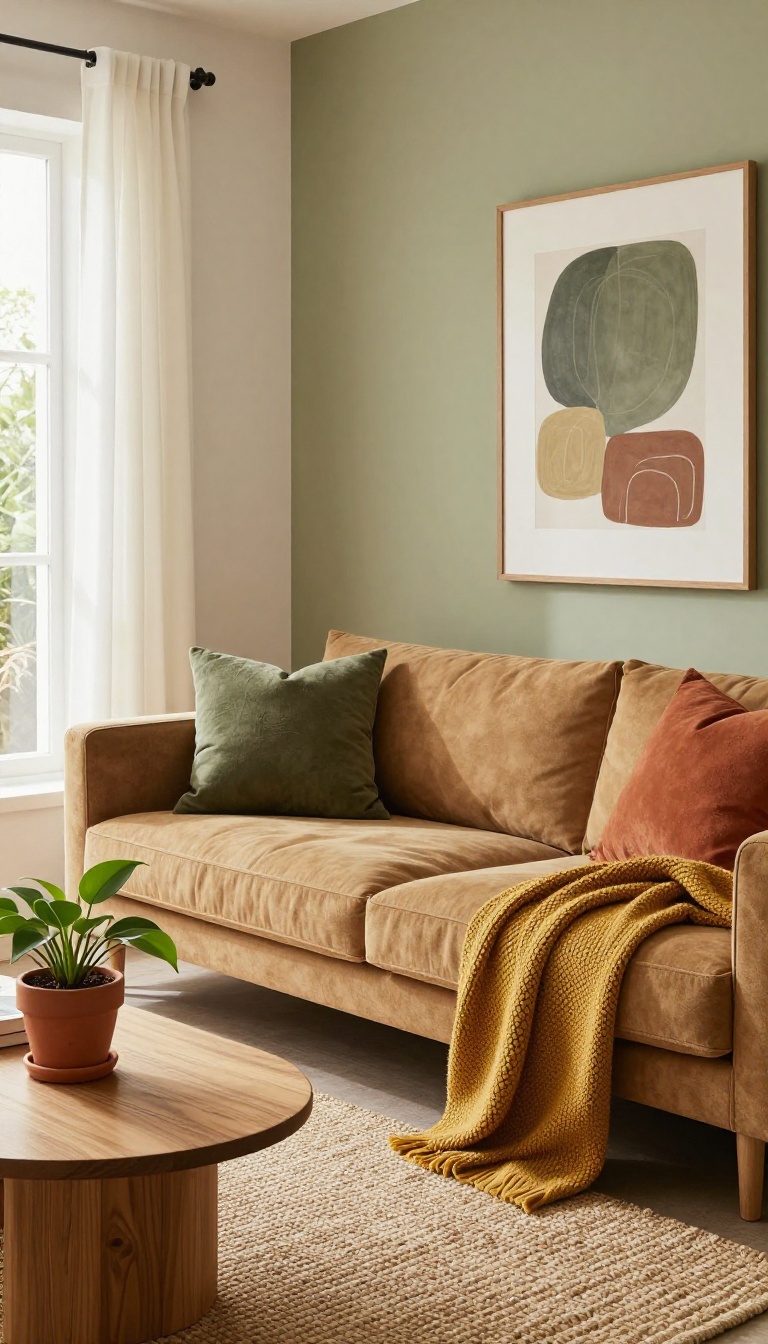
If your tan sofa feels a little too safe, earthy accents can add depth without overwhelming the room. Think olive green, terracotta, rust, or mustard—shades that feel pulled from nature and pair effortlessly with warm neutrals. These colors bring a grounded, organic vibe that makes the space feel intentional.
Start with a few pillows or a throw, then build from there. You might be surprised how a single rust cushion can change the whole mood of the room.
The trick is to use earthy tones in layers, not all at once. Pick one or two main shades and repeat them in different textures—a velvet pillow, a woven basket, a ceramic vase. This creates a cohesive look that feels curated, not chaotic.
Don't forget the walls. A muted olive or terracotta accent wall can make your tan couch pop, but if painting feels too permanent, try removable wallpaper or a large framed art print with those tones. Even a simple gallery wall with earthy abstract prints can tie everything together.
Start With Textiles
Textiles are the easiest way to test earthy colors without commitment. Swap in a rust-colored knit throw, olive green lumbar pillows, or mustard velvet cushions. Mixing patterns—like a subtle stripe with a geometric print—keeps it interesting.
For a more natural feel, choose linen or cotton fabrics with a slightly textured weave.
Add Natural Elements
Bring in elements like rattan, wood, or stone in your accent pieces. A terracotta planter with a trailing pothos, a wooden coffee table, or a woven jute rug can reinforce the earthy palette. These textures add warmth and depth, making the room feel more grounded and inviting.
Layer With Lighting
Lighting can change how earthy colors appear. Warm, soft lighting—like a table lamp with a beige shade or a floor lamp with a dimmer—enhances the richness of olive and rust tones. Avoid harsh white light, which can make the colors look flat or dull.
Instead, aim for a cozy, amber glow that makes the whole space feel snug.
4. Add a Statement Coffee Table
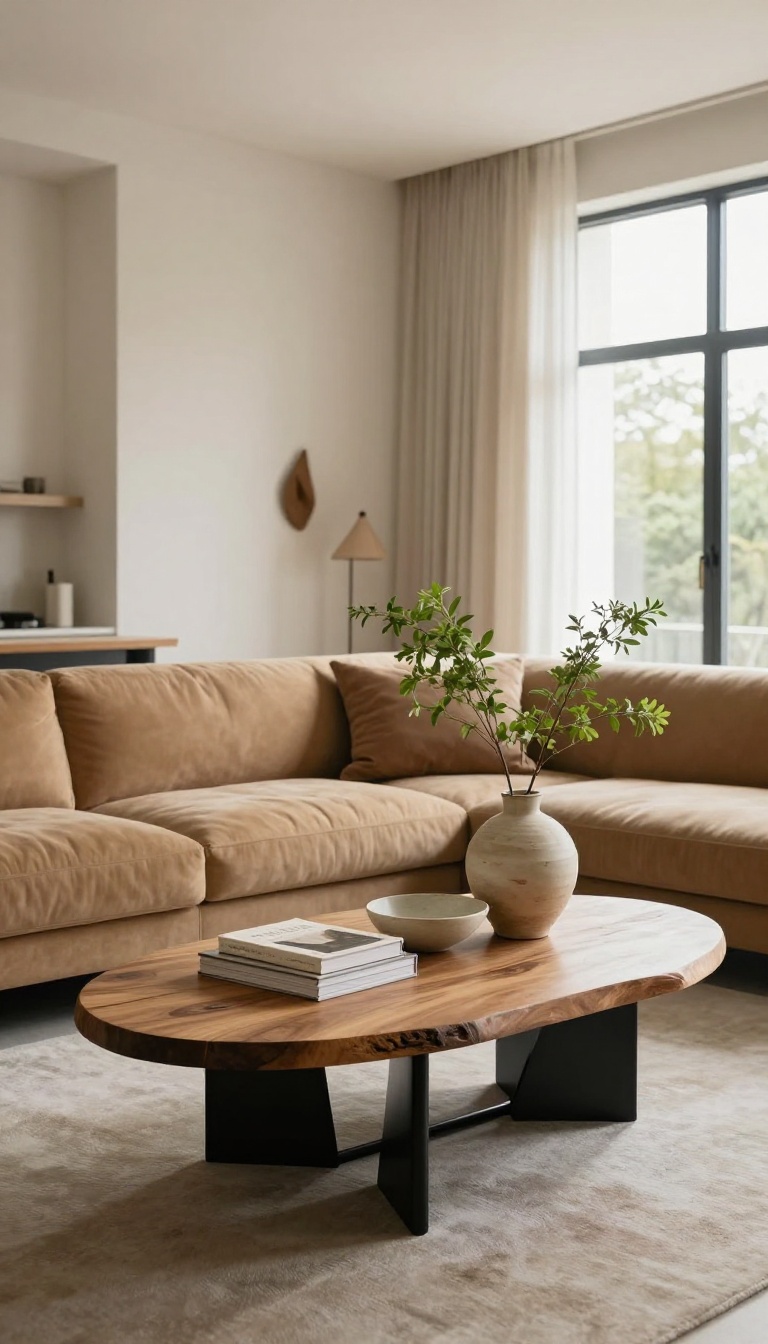
The center of your living room deserves more than a forgettable surface. A coffee table with personality can anchor the space and give your tan sofa a reason to shine. Think of it as the jewelry for your seating area—something that catches the eye and pulls the whole look together.
When you choose a coffee table with a unique shape, material, or finish, you instantly add visual interest without overhauling the room. A live-edge wood slab brings organic texture that complements the warmth of tan, while a sleek black metal frame adds a modern edge. The contrast creates a focal point that makes the sofa feel intentional.
Pick A Shape That Breaks The Mold
Round, oval, or even sculptural curved tables soften the straight lines of a sofa and make the space feel more inviting. A round table also works well in smaller rooms because it leaves more walking space. If you have a large sectional, consider a rectangular table with rounded corners for a balanced look.
Mix Materials For Instant Depth
Combine wood with metal, stone with brass, or glass with rattan to create a table that feels layered. A live-edge wood top on black iron legs brings rustic charm, while a marble top with a brass base adds a touch of luxury. Mixing materials also helps bridge the gap between your tan sofa and other elements in the room.
Style It Like A Pro
Once your statement table is in place, keep the styling simple so the piece stays the star. Arrange a stack of coffee table books, a small sculptural object, and a low vase with fresh greenery. Leave some empty space—clutter will only dull the impact of your new focal point.
5. Incorporate Mixed Lighting Sources
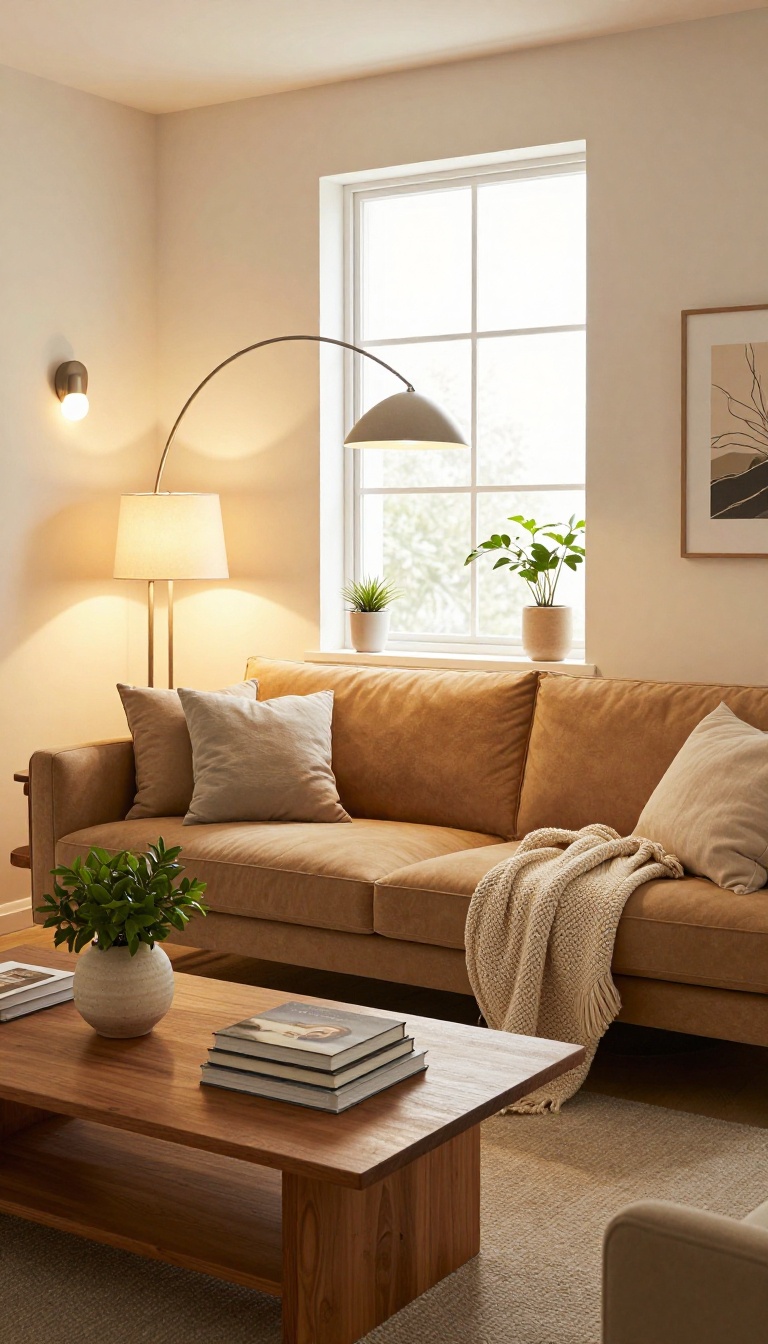
Lighting can make or break the mood of a room, and with a tan couch as your anchor, you have a fantastic opportunity to play with warm, layered illumination. A single overhead light often leaves the sofa looking flat and the space feeling stark. By mixing different light sources, you not only brighten the room but also add depth and coziness that flatters the tan upholstery.
The key is to think in layers. Start with ambient lighting for overall illumination, then add task lighting for reading or hobbies, and finish with accent lighting to highlight architectural features or decor. This approach creates a warm, inviting glow that makes your tan couch the star of the room.
Start With A Warm Ambient Base
Your ambient lighting sets the tone. Instead of relying on a single harsh ceiling light, consider a dimmer switch to adjust the brightness. A stylish floor lamp with a fabric shade can cast a soft, diffused glow that wraps the room in warmth.
Place it near the couch to create a cozy nook, and choose bulbs with a warm color temperature (around 2700K) to complement the tan tones.
Add Task Lighting For Function
Task lighting is both practical and decorative. A sleek arc floor lamp that swings over the sofa provides focused light for reading or knitting without taking up side table space. Alternatively, a pair of table lamps on either end of the couch offers symmetry and convenience.
Look for lamps with adjustable arms or shades to direct light exactly where you need it.
Use Wall Sconces For Accent And Ambiance
Wall sconces are a fantastic way to add visual interest at eye level and free up floor space. Install them on either side of a piece of art or a mirror above the couch. The upward or downward light creates a soft, sculptural effect that highlights the wall texture and adds a layer of sophistication.
Choose sconces with warm metal finishes like brass or bronze to tie in with the earthy vibe of tan.
6. Style with Greenery and Natural Elements
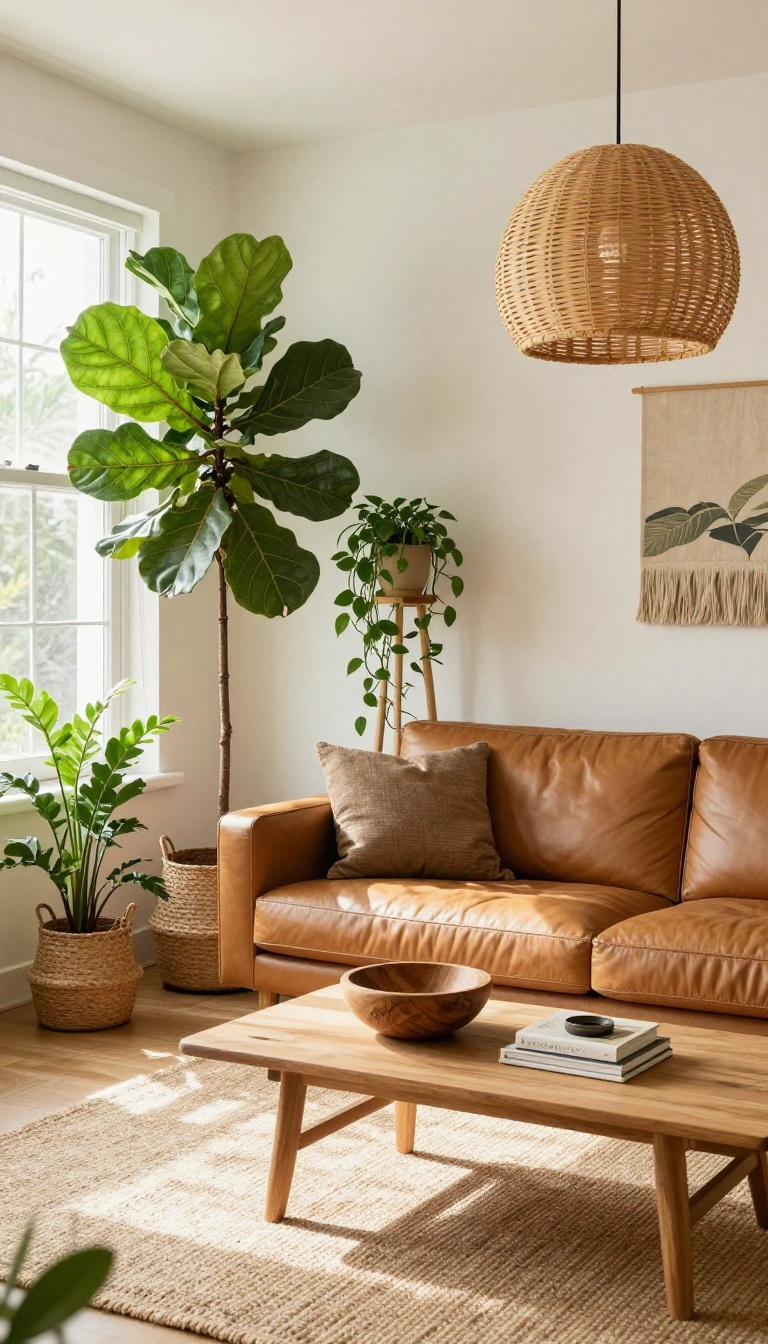
Bringing the outdoors in is one of the simplest ways to make a tan couch feel alive. Plants add color, life, and a sense of calm that balances the warmth of the leather or fabric. Natural textures like wood and woven fibers create a layered, organic look that feels effortless and inviting.
Start with a few statement plants in varying heights—like a fiddle leaf fig or a trailing pothos—to frame the couch and draw the eye upward. Then, mix in woven baskets for storage or as plant holders to add texture. Wooden accents, such as a coffee table or floating shelves, reinforce the earthy vibe without overwhelming the space.
Choosing The Right Plants
Not all plants thrive in every living room, so consider your light and maintenance level. Low-light options like snake plants or ZZ plants are forgiving and still make a visual impact. If you have bright, indirect light, a monstera or rubber tree adds bold, sculptural leaves that contrast nicely with the couch's muted tone.
Layering Natural Textures
Mix materials like jute, rattan, and seagrass to add depth. A jute rug under the coffee table grounds the seating area, while rattan pendant lights or a woven wall hanging bring warmth to vertical spaces. Don't forget small wooden decor pieces—like carved bowls or driftwood sculptures—to tie the look together.
Placement Tips For A Balanced Look
Arrange plants and decor in odd numbers for a more natural, less symmetrical feel. Use a tall plant on one side of the couch and a low, trailing plant on the other to create visual balance. Keep walkways clear and avoid overcrowding surfaces—leave some negative space so the room feels open and breathable.
7. Create a Gallery Wall Above the Couch
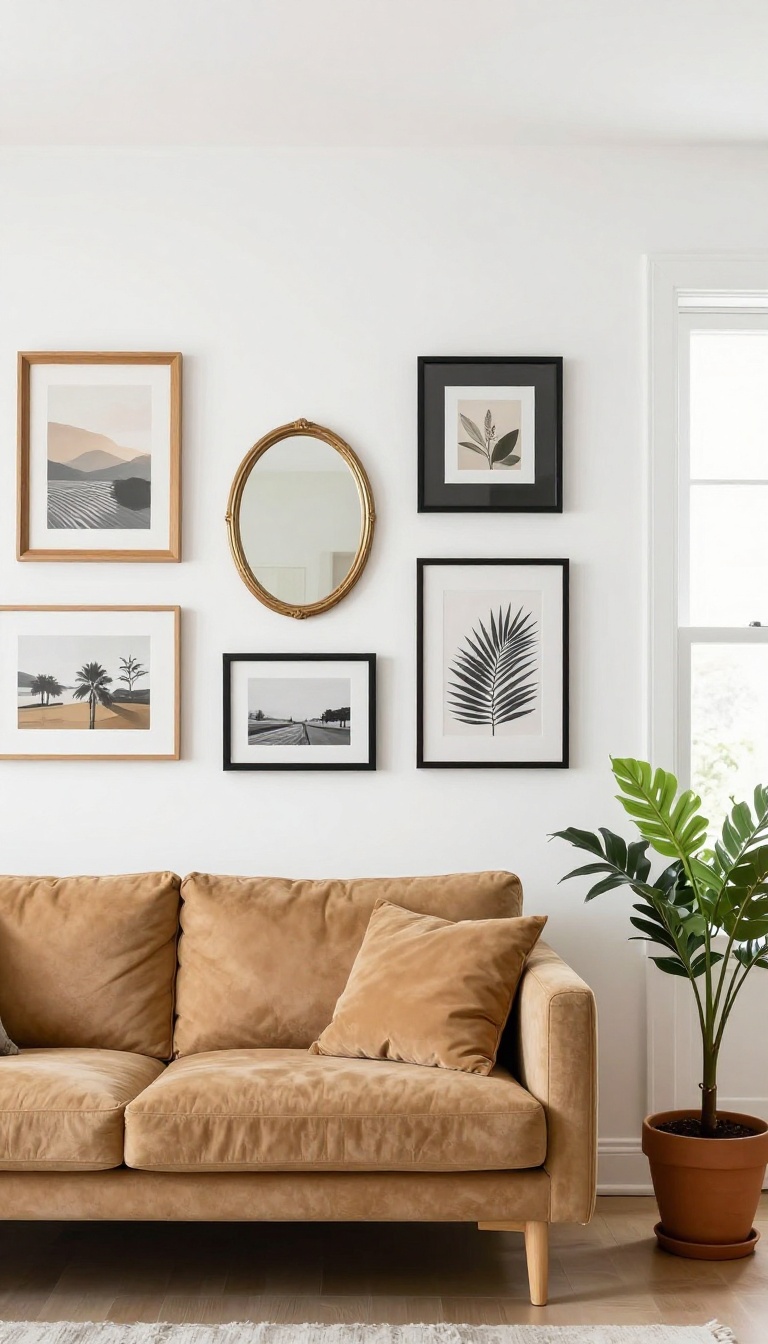
The wall above your tan couch is prime real estate for personality. A gallery wall can turn that blank space into a conversation starter, and it instantly adds warmth and visual interest. Plus, it's a project you can tackle over a weekend without breaking the bank.
Start by gathering a mix of frames in different sizes and finishes. You don't need to match everything perfectly—a curated mix of wood, black, and metallic frames looks intentional and collected. Include a few mirrors to reflect light and make the room feel larger, and sprinkle in personal photos or small prints that mean something to you.
Map It Out Before You Hammer
Lay your frames on the floor first to experiment with arrangements. Use kraft paper to trace each frame, cut out the shapes, and tape them to the wall to visualize the layout. This saves you from making extra holes and lets you adjust spacing easily.
Aim for about 2 to 3 inches between frames for a cohesive look.
Balance The Visual Weight
Your gallery wall should feel balanced, not lopsided. Place larger pieces or mirrors slightly off-center from the couch, and fill in with smaller frames around them. If your couch is against a wall with other decor, like a floor lamp or plant, factor that into the overall composition.
Play With Heights And Shapes
Don't limit yourself to rectangles. Add a round mirror or an oval frame to break up the straight lines. Vary the heights of the pieces so the eye moves naturally around the arrangement.
This adds a dynamic, artistic feel that complements the clean lines of a tan sofa.
8. Balance with Dark or Bold Accent Furniture
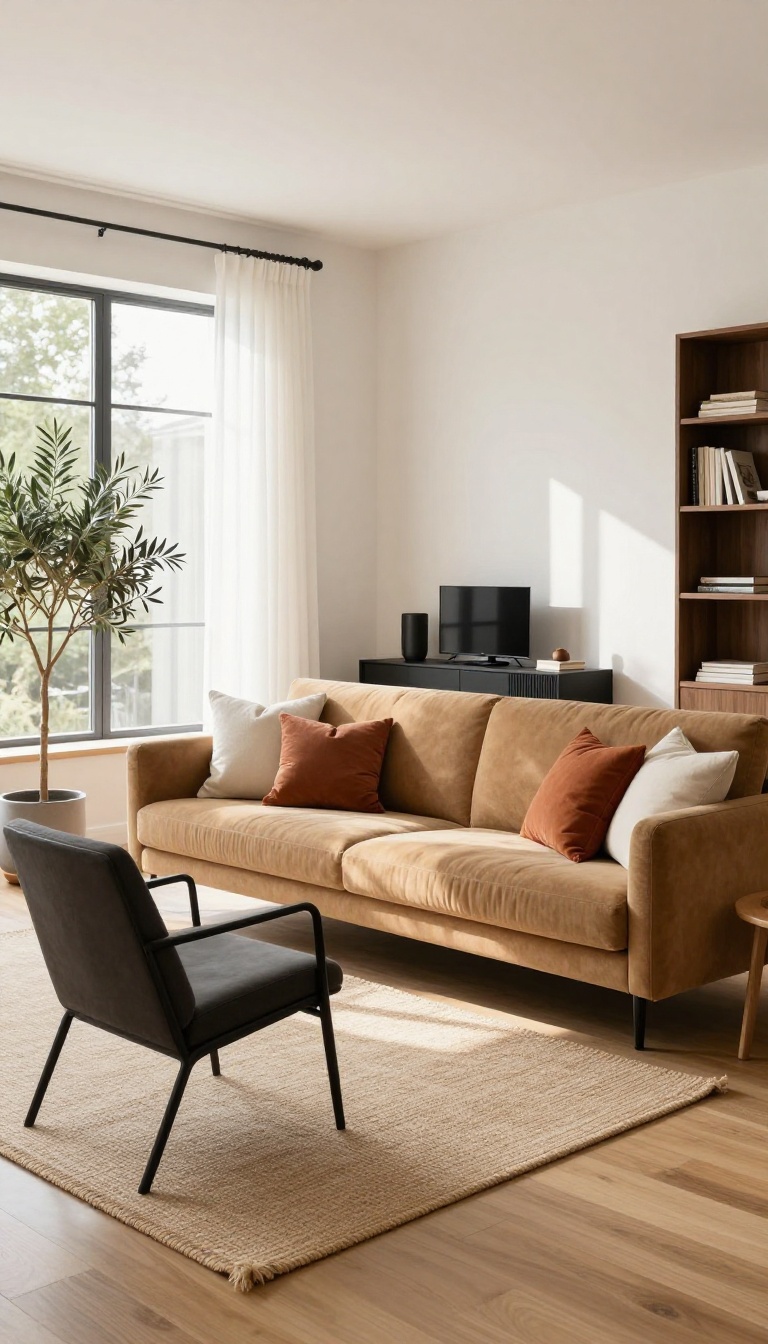
A tan couch can sometimes feel like it's floating in a sea of beige, especially if the surrounding furniture is just as light. That's where a dark, grounding piece comes in. Introducing a black or dark wood accent chair, shelving unit, or media console gives the eye a place to rest and creates a visual anchor.
It's a simple trick that instantly adds depth and makes the whole room feel more intentional.
When you place a dark accent piece near your tan sofa, you're not just adding contrast—you're creating a focal point that balances the room's energy. The key is to choose pieces that feel substantial but not overpowering. A sleek black media console under the TV, a dark wood bookshelf against a wall, or a deep charcoal armchair angled toward the couch can all do the job.
The contrast makes the tan feel richer and more sophisticated, while the dark tones add a touch of drama without making the space feel heavy.
Why Dark Accents Work So Well
Dark furniture acts like an anchor in a room. It gives the eye a place to land, which is especially helpful in open-concept spaces where everything can start to blend together. The deep tones also make the tan couch appear warmer and more defined.
Plus, dark pieces hide wear and tear better, so they're practical as well as stylish.
Choosing The Right Pieces
Think about what your room actually needs. If you're lacking storage, a dark wood media console or bookshelf is a smart choice. If you want extra seating, a black or charcoal accent chair adds function and contrast.
For a smaller footprint, consider a dark coffee table or end tables. The goal is to pick one or two substantial pieces that create a bold counterpoint without cluttering the space.
Mixing Textures And Finishes
Don't be afraid to mix materials. A matte black metal frame on a chair can pair beautifully with a smooth walnut console. A dark leather ottoman adds a different texture than a dark linen armchair.
The contrast in both color and texture keeps the room from feeling flat. Just keep the undertones consistent—warm woods and cool blacks both work, but try not to mix too many different dark finishes in one small area.
9. Use Curtains to Frame the Room
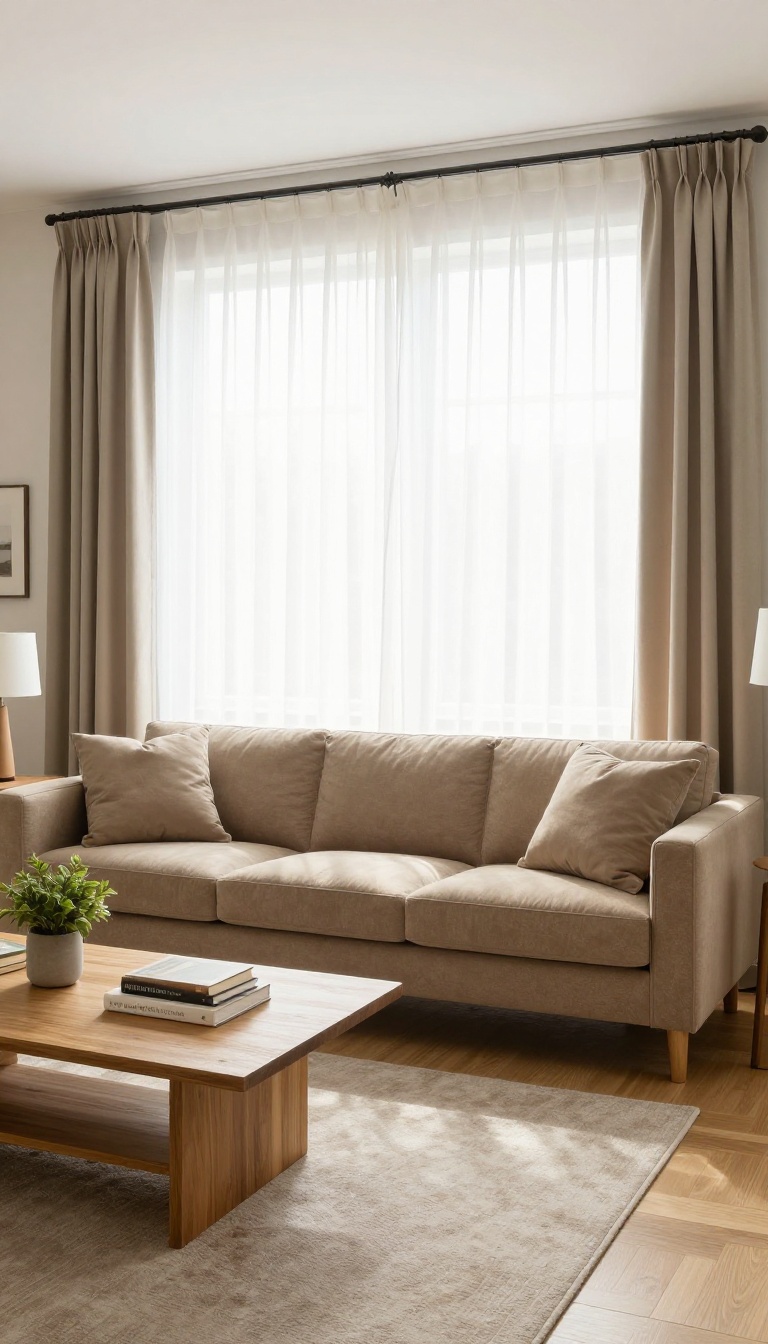
Curtains do more than block light or add privacy. They can visually anchor your tan couch and give the whole room a polished, pulled-together feel. With the right choice, they soften the space and even make the ceiling seem higher.
Floor-to-ceiling curtains draw the eye upward, creating the illusion of taller walls and a more expansive room. This trick works especially well in living rooms with standard 8-foot ceilings. When your tan couch sits against a wall, a pair of long drapes on either side frames it like a picture, making the seating area feel intentional and complete.
Choosing The Right Color And Pattern
For a calm, cohesive look, pick curtains in a tone slightly deeper than your couch, like warm taupe or soft terracotta. If you want more contrast, go with a muted pattern—think subtle stripes or a faded botanical print. The key is to keep the pattern in the same color family so it complements rather than competes with your tan sofa.
Hanging Them High And Wide
Mount the curtain rod a few inches below the ceiling and extend it several inches past the window frame on each side. This makes the window appear larger and lets in more light when the curtains are open. When closed, the curtains will fully cover the window without blocking the edges, keeping the look clean and airy.
Layering Sheers For Flexibility
Pairing heavier drapes with sheer panels underneath gives you options. During the day, you can close the sheers for soft, diffused light that flatters your tan couch. In the evening, draw the heavier curtains for warmth and privacy.
This also adds depth and texture, making the window area feel more luxurious.
10. Add a Cozy Throw Blanket Drape
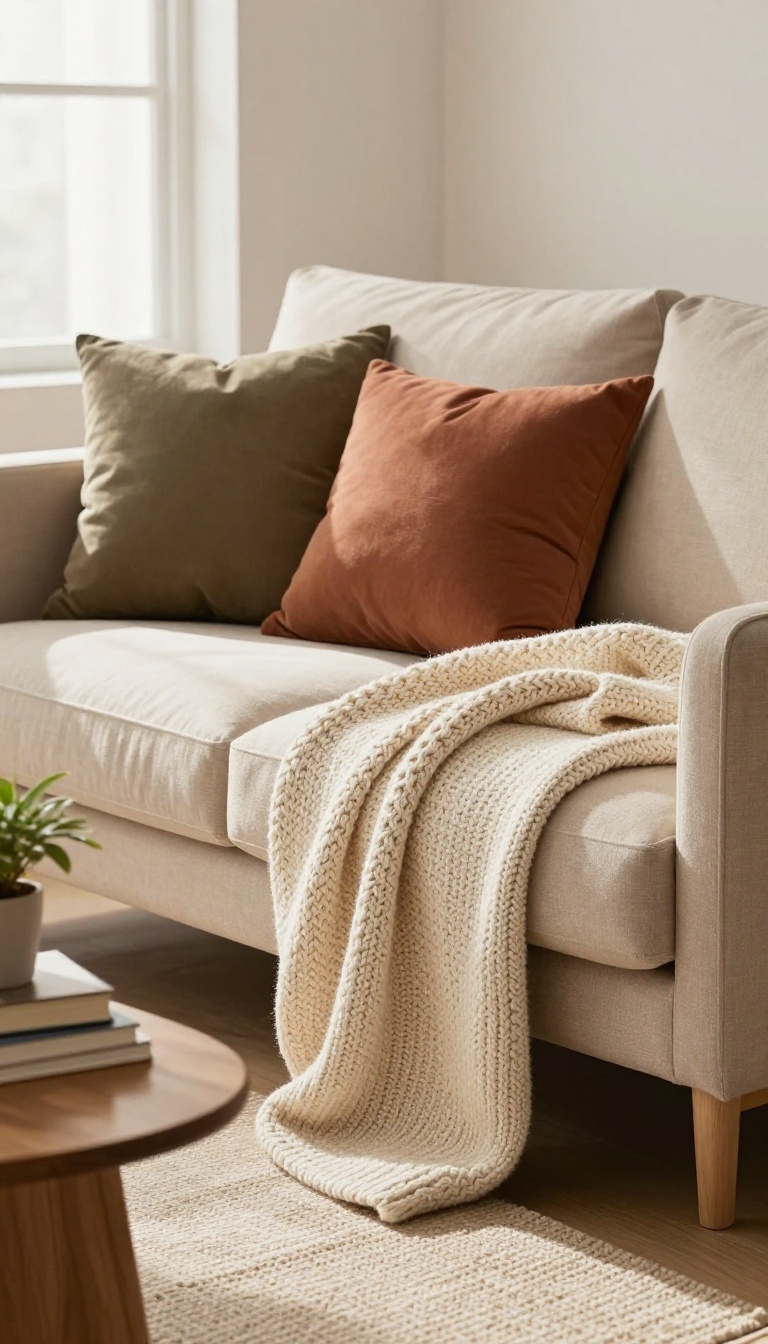
A throw blanket is the quickest way to inject texture and color into a neutral sofa. When draped casually over the back or arm, it softens the lines of your couch and invites people to sit down and stay a while. The right throw can also tie together other accent pieces in the room, making the whole space feel more intentional.
Choosing the right throw is about more than just color. Think about the mood you want to create. A chunky knit in a warm cream adds a hygge vibe, while a woven cotton in a muted rust or olive brings a subtle earthy tone.
You can also play with patterns—a subtle stripe or a geometric print can break up the solid expanse of tan without overwhelming it. Once you have your throw, the way you drape it matters. A neat fold over the back looks tidy, but a slightly messy drape over one arm feels more relaxed and lived-in.
Try tucking one end between the seat cushions to keep it in place. The goal is to look effortless, not staged.
Pick The Right Fabric For The Season
Swap your throw with the seasons to keep the room feeling fresh. In summer, go for a light linen or cotton throw that adds texture without trapping heat. When winter rolls around, switch to a plush fleece or a chunky knit that begs to be wrapped around you.
This small change keeps your living room comfortable and visually interesting all year round.
Coordinate With Your Accent Colors
Use your throw as a bridge between your couch and the rest of your decor. If you have accent pillows in mustard or terracotta, pick a throw that echoes those tones. Or, if you want a more neutral look, choose a throw in a slightly darker or lighter shade of tan to add depth.
The throw should complement, not compete, with your existing palette.
Layer With Pillows For A Finished Look
A throw blanket works best when it's paired with a few well-chosen pillows. Place the throw over the back and then arrange pillows in front of it, mixing sizes and shapes for a casual, gathered feel. This layering creates a cozy, inviting nook that makes your tan couch the go-to spot in the house.
FAQ
What colors go best with a tan couch?
Earthy tones like olive green, terracotta, rust, mustard, and warm neutrals like cream and beige work beautifully. You can also add contrast with navy or charcoal for a more grounded feel.
How can I make a tan couch look more modern?
Pair it with sleek, contemporary pieces like a metal coffee table, geometric rug, and modern art. Keep the palette minimal and let the tan act as a warm neutral.
Is a tan couch easy to maintain?
Yes, especially if you choose a durable fabric like microfiber or a performance blend. Regular vacuuming and prompt spot cleaning will keep it looking fresh.
Can I use a tan couch in a small living room?
Absolutely. A tan couch can make a small space feel warm and inviting. Use light-colored walls, mirrors, and strategic lighting to keep the room from feeling cramped.
What accent chair colors work with a tan couch?
Deep greens, blues, or even a patterned chair with warm undertones can complement a tan couch. Stick to colors that appear in your rug or accessories for a cohesive look.
Conclusion
Refreshing your living room around a tan couch doesn't have to be complicated or costly. Start with a few key changes—like adding texture, playing with color, or updating your lighting—and build from there. Each small step brings you closer to a space that feels both stylish and lived-in.
Remember, the goal is to create a room that reflects your taste and makes you feel at ease. So take your time, experiment, and enjoy the process of making your tan couch the centerpiece of a warm, inviting home.