11 Cozy Brick Wall Kitchen Ideas for a More Pulled-Together Look
Brick walls can make a kitchen feel instantly warmer, but they can also tip into cold or cluttered territory if you don't style them with care. The trick is to treat brick as a backdrop, not the whole story—pairing it with the right finishes, lighting, and textures to keep the room cohesive.
You don't need a full remodel to get the look right; a few thoughtful tweaks can transform a raw surface into a cozy focal point.
From whitewashing to adding open shelving, these 11 ideas show you how to work with brick so it feels intentional, polished, and inviting.
1. Whitewash the Brick for a Soft, Airy Feel
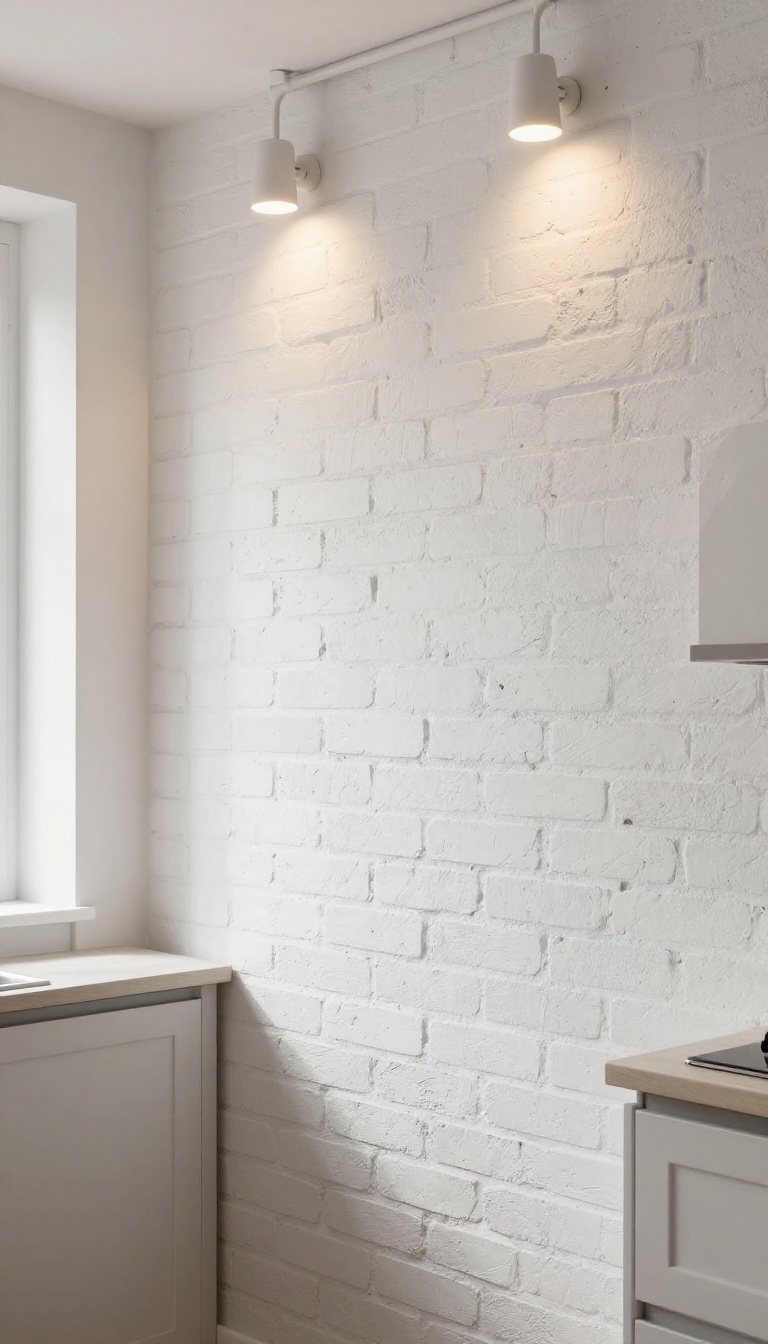
Whitewashing brick is like giving your kitchen a breath of fresh air. It softens the heavy, rustic look while keeping all that lovely texture you fell for in the first place. The result is a wall that feels light and open, but still has character.
Whitewashing isn't about covering the brick completely—it's about letting the natural variations peek through. The thin, diluted paint sinks into the pores and leaves a chalky, matte finish that catches light differently than raw brick. It's a simple weekend project that can change the whole mood of the room.
Why Whitewash Instead Of Paint?
Full paint creates a solid, opaque layer that hides the brick's imperfections and texture. Whitewash, on the other hand, is translucent. It lets the mortar lines and brick ridges show, so you get a softer, more organic look.
Plus, whitewash is more forgiving—if you want to go back to raw brick later, it's easier to remove than paint.
How To Get The Perfect Finish
Start with a clean, dry wall. Mix one part white latex paint with two parts water, and stir well. Use a brush or roller to apply the mixture in thin, even strokes.
Work in small sections so you can blend as you go. The more coats you add, the more opaque it becomes, so start with one and see how you like it. You can always add more.
Best Lighting To Pair With Whitewashed Brick
Whitewashed brick loves natural light. If you have a window nearby, let the sun do its thing—it'll make the wall glow. For artificial lighting, go with warm LEDs or pendant lights with a soft, yellowish hue.
Cool, blue-toned lights can make the whitewash look flat and sterile, which is the opposite of cozy.
2. Pair Brick with Warm Wood Tones
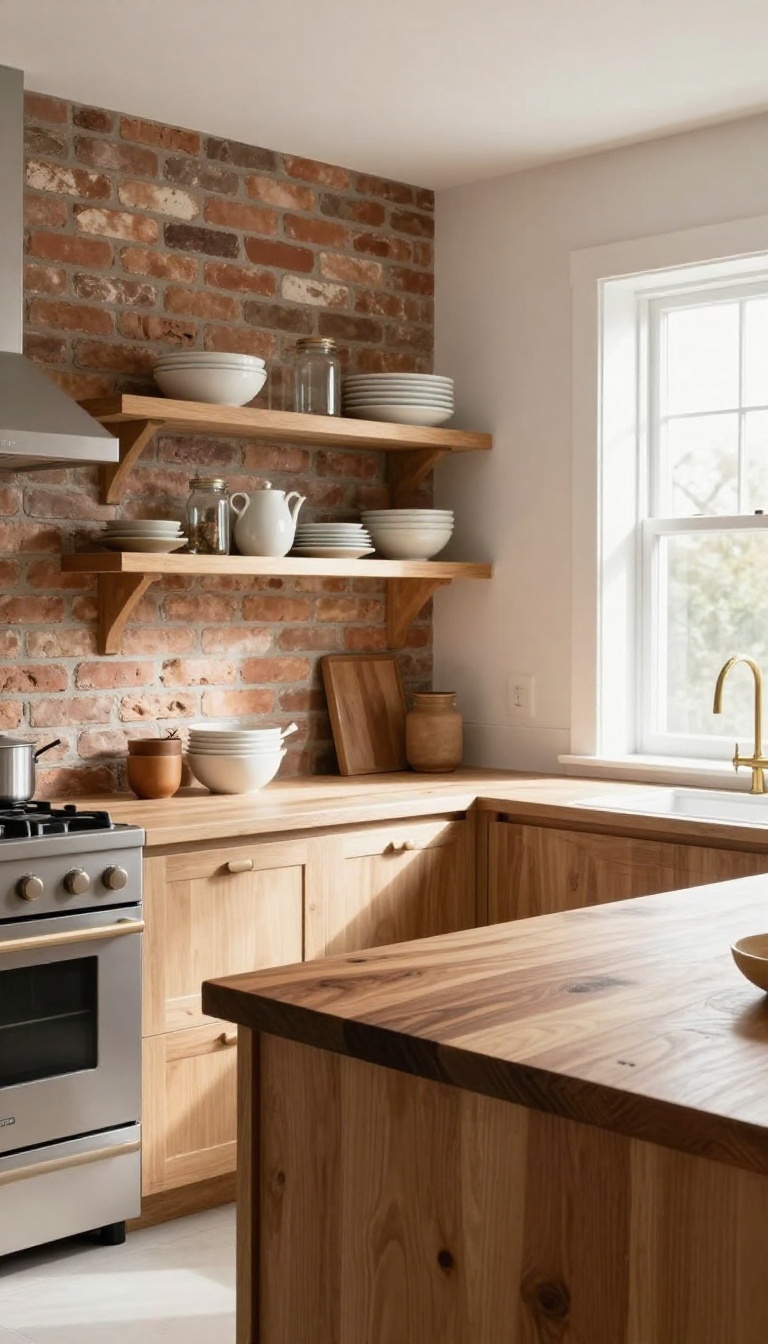
Brick has a cool, earthy feel that can sometimes read as stark, especially in a kitchen with lots of hard surfaces. Warm wood is the perfect counterbalance—it softens the look and adds a natural, lived-in quality. Think of it as a partnership: the brick provides texture and character, while the wood brings warmth and a sense of calm.
Wood and brick are a classic duo in farmhouse and rustic designs, but they also work in modern spaces when you choose the right tones and finishes. The key is to let the brick be the star and use wood as a supporting player—think open shelving, butcher block countertops, or even a wooden island top. These elements don't compete with the brick; they complement it, creating a space that feels grounded and inviting.
Start With Open Shelving
Open wooden shelves are an easy way to introduce warm wood without overwhelming the room. Choose solid wood planks in a natural or lightly stained finish to match the brick's tone. Use them to display everyday dishes, glass jars, or a few cookbooks—this adds function and visual interest.
The wood's grain brings a soft, organic feel that balances the brick's ruggedness.
Go For Butcher Block Countertops
If you're planning a kitchen update, butcher block countertops are a game-changer. They're durable, affordable, and instantly warm up any space. Pair them with brick walls and simple white cabinets for a classic farmhouse look, or go darker with walnut or cherry for a more dramatic contrast.
The wood's natural warmth will make the brick feel intentional, not cold.
Add Wood Accents And Furniture
You don't have to commit to full wood surfaces to get the effect. Wooden bar stools, a rolling cart, or a butcher block island can do the trick. Even small touches like wooden cutting boards or a bowl of fruit on a wooden stand help tie the room together.
The goal is to create a mix of textures that feels layered and cozy.
3. Use Brick as a Backsplash Behind the Range
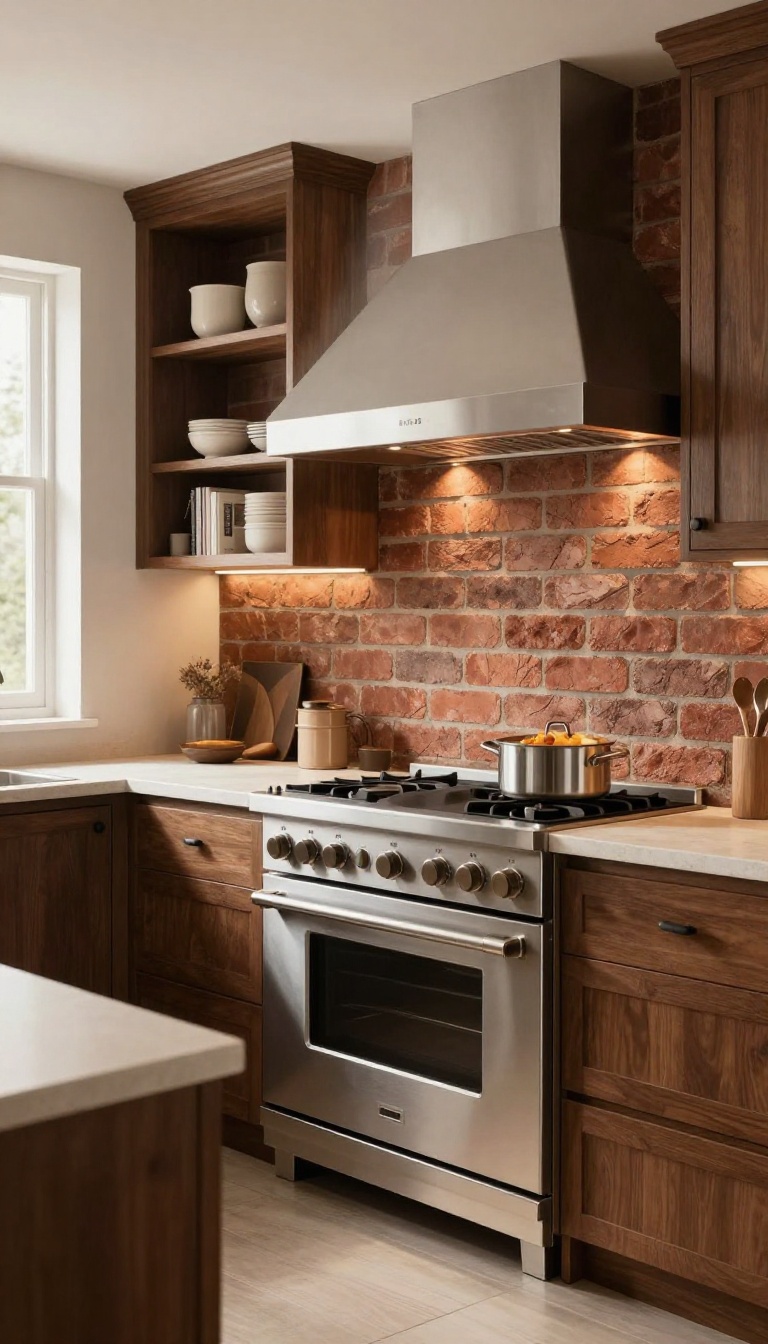
The area behind your stove takes a lot of abuse—splatters, heat, and steam. A brick backsplash handles all of that while giving the kitchen a rugged, lived-in charm that tile just can't match. It's a practical choice that also becomes the visual anchor of your cooking zone.
Choosing brick for the backsplash behind the range is a smart move for both looks and function. The natural texture of brick adds depth and warmth, and it's surprisingly easy to clean with the right sealant. Plus, it creates a beautiful contrast against stainless steel appliances or dark cabinetry, making the cooking area feel intentional and inviting.
Why Brick Works Behind The Stove
Brick is naturally heat-resistant, so it can handle the high temperatures from your burners without worry. It's also durable enough to withstand accidental bumps and scrapes. The uneven surface hides minor smudges and adds a rustic touch that feels cozy rather than sterile.
Sealing And Maintenance Tips
To keep your brick backsplash looking good, apply a high-quality masonry sealer. This protects against stains and makes cleaning easier—just wipe with a damp cloth. Reapply the sealer every year or two to maintain the barrier.
Avoid harsh chemicals that can strip the sealer or damage the brick.
Styling Around The Brick
Let the brick be the star by keeping the surrounding area simple. Use open shelving with a few neutral dishes or cookbooks to complement the texture. Add under-cabinet lighting to highlight the brick's color and create a warm glow in the evening.
Keep countertops clutter-free to let the backsplash shine.
4. Go Dark with Charcoal or Black Brick
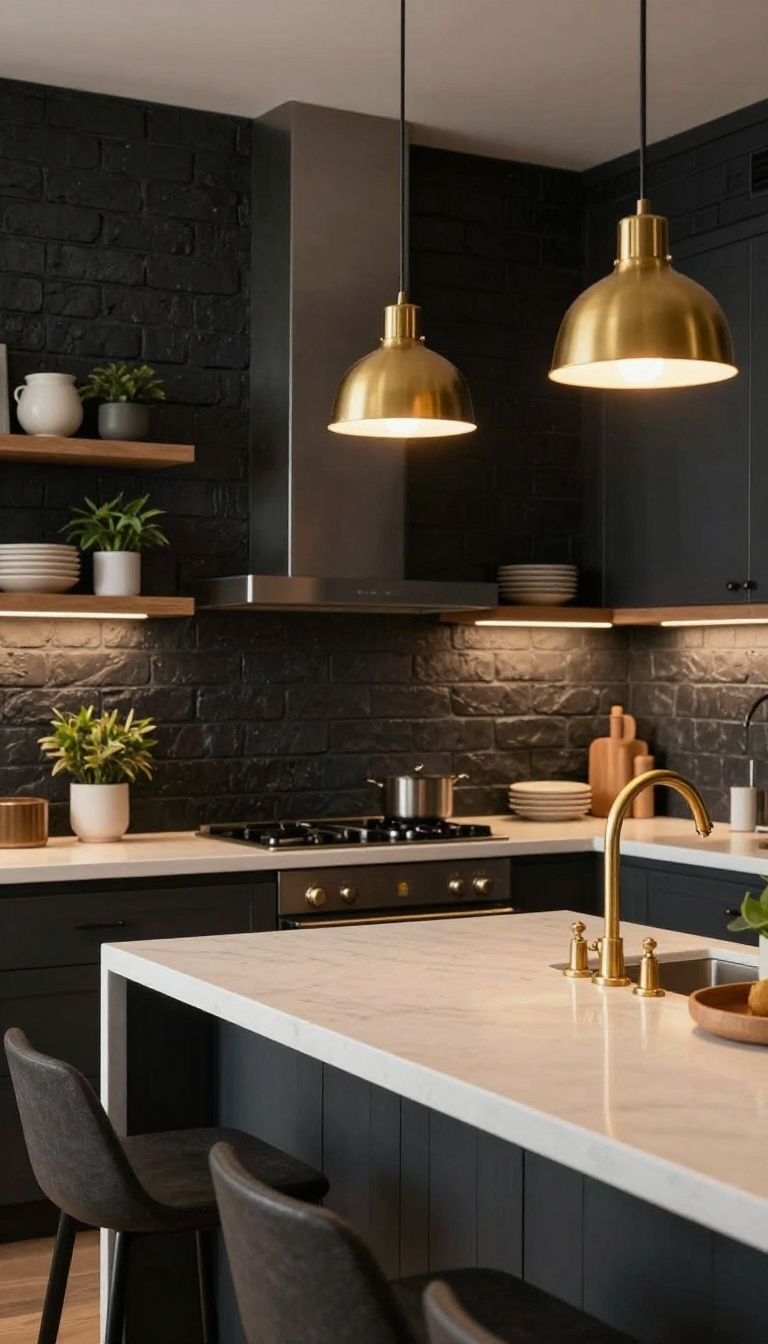
Dark brick might sound risky, but it can be one of the most inviting choices for a kitchen. When you paint or select brick in deep charcoal or black, the surface recedes, making the room feel intimate and grounded. The key is balancing that darkness with warm metals and soft lighting so it doesn't become cave-like.
A dark brick wall sets a dramatic stage. It absorbs light, so you need to plan your lighting carefully. Brass or copper fixtures add a warm glow that contrasts beautifully with the deep tones.
Open shelving with light-colored dishes or plants can also break up the darkness and add life.
Pair With Brass And Warm Metals
Brass faucets, cabinet handles, and pendant lights pop against dark brick. The warm gold tones reflect light and add a touch of elegance. Mixing in copper or bronze accessories can create a layered, collected look that feels upscale and cozy at the same time.
Layer In Warm Lighting
Dark walls need more than one light source. Use under-cabinet lights, a pendant over the island, and maybe a small lamp on the counter. Dimmers are a must so you can adjust the mood from bright and functional to soft and intimate.
Warm white bulbs (2700K-3000K) keep the space feeling inviting.
Balance With Light Textures
To keep the room from feeling too heavy, bring in light textures. Think white or cream countertops, light wood shelves, or a pale rug. These elements create contrast and make the dark brick feel intentional rather than overwhelming.
Natural materials like linen or cotton also soften the look.
5. Mix Brick with Open Shelving
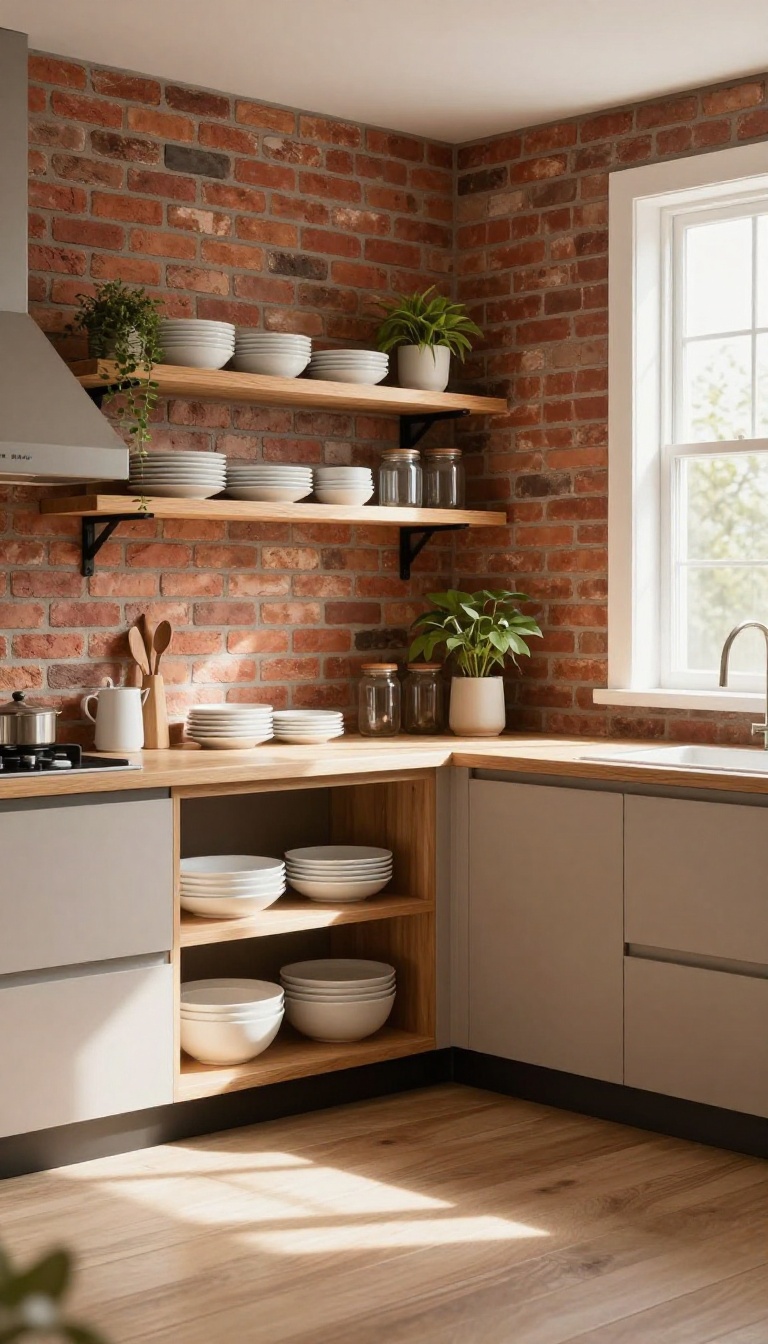
Open shelving against a brick wall is a match made in design heaven. The warm, textured brick softens the clean lines of the shelves, while the shelves add function and personality to what might otherwise be a plain wall. This combo lets you display your favorite dishes, plants, and cookbooks, turning the wall into a curated focal point that feels lived-in and inviting.
Start by choosing sturdy shelves that can handle the weight of your items. Wood shelves in a natural or stained finish complement the rustic feel of brick, while metal brackets add an industrial touch. Arrange your items in groups—stack plates, lean cutting boards, and tuck in a few plants for greenery.
Mix in everyday pieces with a few decorative ones to keep it practical and personal.
Choosing The Right Shelves
For a brick wall, you'll need shelves that can be securely mounted. Floating shelves with hidden brackets give a clean look, while open shelves with visible brackets offer more support and a more industrial vibe. Go for wood that matches your kitchen's tone—light oak for a airy feel, walnut for warmth, or painted wood for a pop of color.
Make sure the brackets are heavy-duty and anchored properly into the brick.
Styling Your Shelves
Think about balance and color. Start with a few large pieces, like a stack of dinner plates or a big bowl, then fill in with smaller items like mugs or jars. Add trailing plants like ivy or pothos to soften the hard lines.
Keep some shelves open for everyday items you use often, and use baskets or bins for clutter. Rotate items seasonally to keep the display fresh.
Practical Tips For Daily Use
If you're using open shelves for dishes, make sure they're within easy reach. Place the most-used items at eye level. To keep dust and grease off, wipe shelves regularly and consider a range hood if the shelves are near the stove.
Use shelf liners if you want to protect wooden surfaces from scratches. And don't be afraid to mix materials—ceramic, glass, and wood all work well against brick.
6. Add Greenery to Soften the Rugged Texture
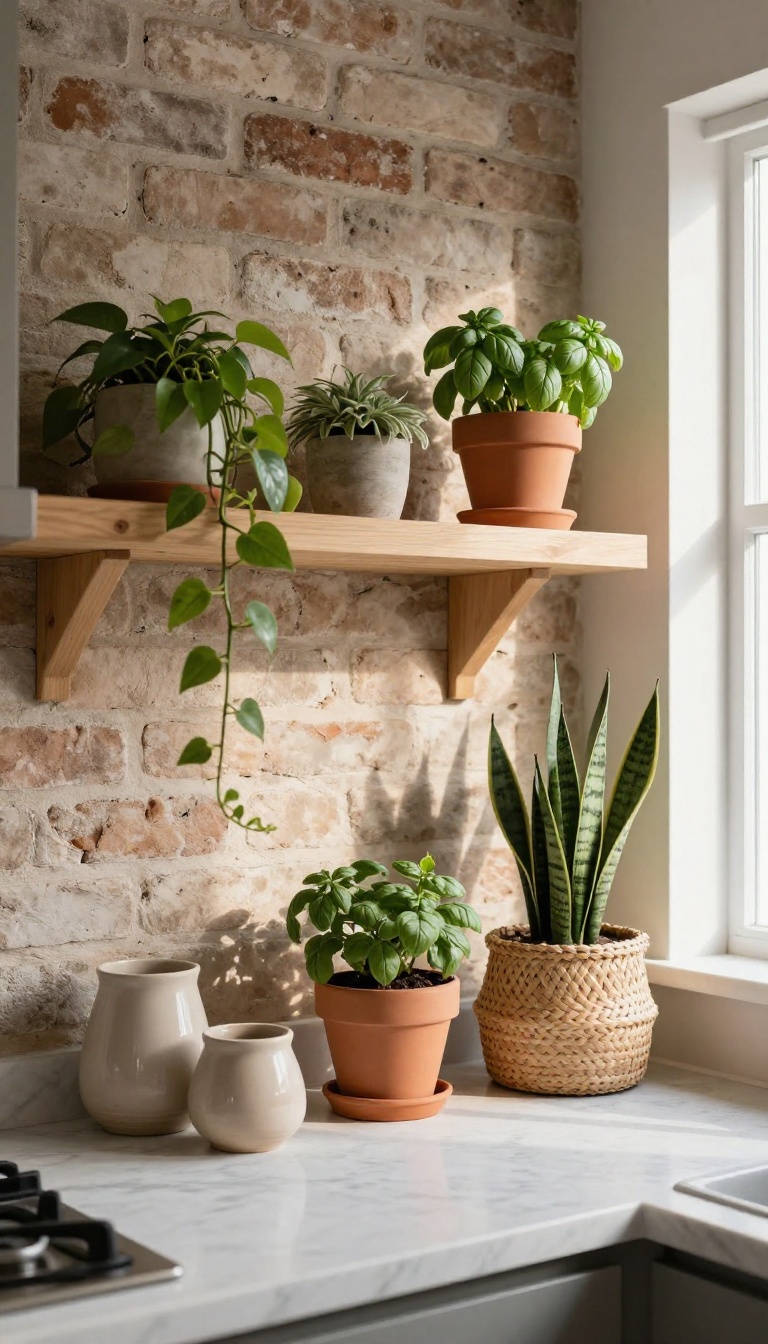
Brick brings a lot of texture and warmth, but it can also feel heavy if the space doesn't have any softness. Adding plants is one of the easiest ways to balance that rugged surface with life and color. Whether you have a deep ledge or just a corner counter, a few green touches can make the whole kitchen feel more inviting.
The contrast between rough brick and delicate leaves is what makes this idea work so well. Plants introduce organic shapes and fresh greens that break up the monotony of the wall, while also improving air quality and adding a sense of calm. You don't need a green thumb to pull it off—just choose low-maintenance varieties that thrive in kitchen conditions.
Best Plants For Brick Kitchens
Trailing plants like pothos, ivy, or string of pearls look stunning when they drape over brick ledges. For countertops or open shelves, consider herbs like basil, rosemary, or thyme—they're useful for cooking and add a lovely scent. If your kitchen gets low light, go for snake plants or ZZ plants, which are nearly indestructible.
Where To Place Them
Look for natural resting spots: the top of a brick ledge, a floating shelf, or a windowsill right next to the wall. If you have a brick backsplash, you can mount small pots directly onto the wall with brackets or use a hanging planter from the ceiling. Just make sure the plants aren't in the way of your cooking prep or traffic flow.
Styling Tips For A Cohesive Look
Mix different pot materials to keep things interesting—terracotta, ceramic, or woven baskets all complement brick nicely. Group a few plants together at varying heights for more impact, but don't overcrowd the space. You can also add a small watering can or a cute stool nearby to make the greenery feel like part of the design, not an afterthought.
7. Highlight Brick with Accent Lighting
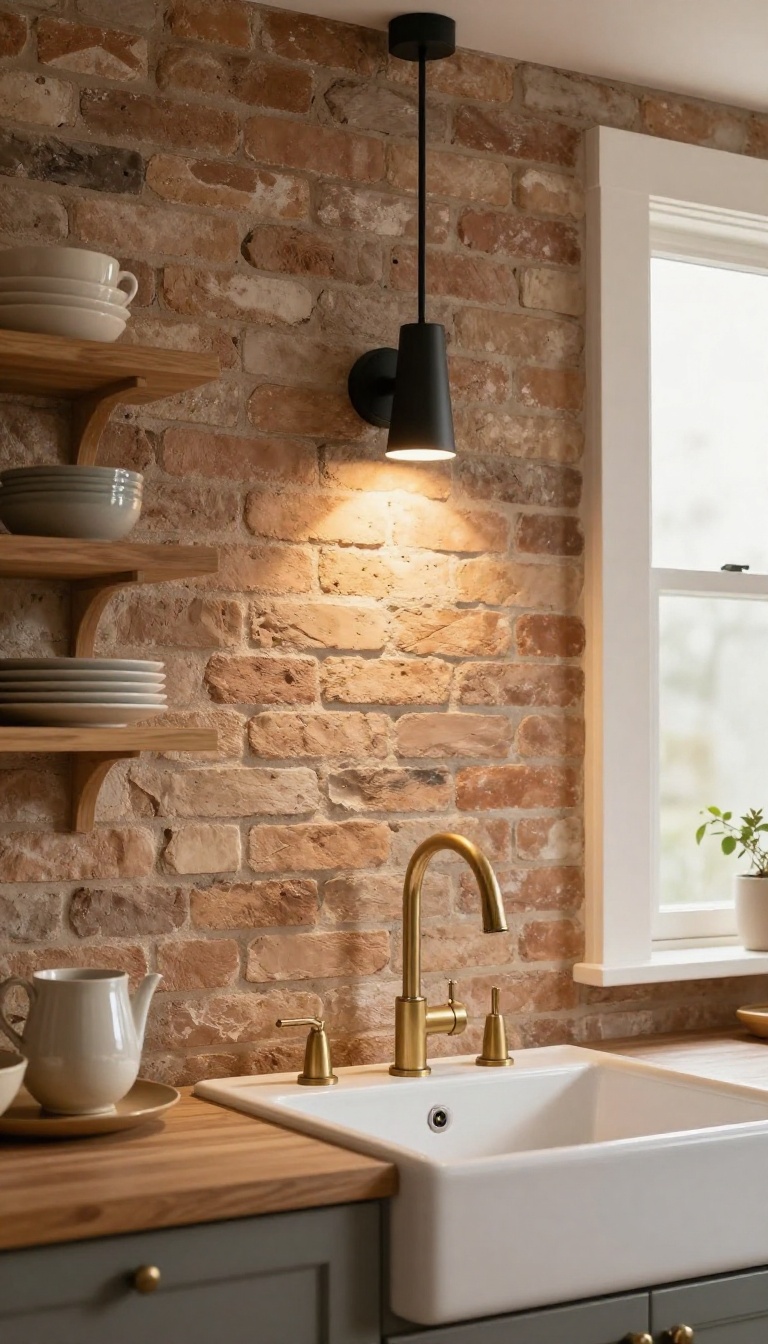
Lighting can make or break the mood in a kitchen, and when you have a brick wall, it’s your best friend. The right fixtures don’t just brighten the room—they bring out the texture and depth of the brick, turning a flat surface into a cozy, inviting feature. Instead of relying on a single overhead light, think about layering light.
Wall sconces, under-cabinet strips, or even a few well-placed picture lights can cast soft shadows that make the brick look rich and warm. It’s a simple upgrade that changes the whole feel of the space.
Brick has a natural, uneven surface that catches light in interesting ways. When you aim light across it, the nooks and crannies create subtle shadows that add depth. That’s why accent lighting works so well—it highlights the character of the brick without overpowering it.
Start by thinking about what you want to emphasize. If it’s a full wall, wall sconces placed at eye level can create a gentle wash of light. For a backsplash, under-cabinet lights are perfect because they sit close to the surface and graze the brick, making every bump and groove visible.
Don’t forget about dimmers. Being able to adjust the brightness lets you go from bright and functional to soft and intimate in seconds. That flexibility is key for a kitchen that works both day and night.
Also, consider the color temperature. Warm white bulbs (around 2700K to 3000K) enhance the reddish-brown tones of brick, making it feel even cozier. Cooler light can make the brick look dull or even gray, so stick with warm tones for that inviting glow.
Finally, think about placement. Lighting from above or below can create different effects. Uplights from the floor make the wall feel taller, while downlights from the ceiling add a more dramatic look.
Experiment to see what flatters your brick the most.
Choose The Right Fixtures
Not all lights are created equal when it comes to brick. Look for sconces that direct light upward or downward, rather than just out into the room. This grazing effect highlights the texture.
Under-cabinet LED strips are also great because they’re low-profile and can be tucked away neatly. If you have open shelves, small puck lights can work wonders too.
Use Dimmers For Flexibility
A dimmer switch is a game-changer. It lets you adjust the light to match the time of day or the mood you want. Bright for cooking, soft for a relaxed dinner.
Plus, dimming the lights can make the brick look more dramatic in the evening, adding to that cozy, pulled-together feel.
Layer Light With Other Sources
Don’t rely on accent lighting alone. Combine it with general ambient light and task lighting for a balanced kitchen. For example, use recessed ceiling lights for overall brightness, under-cabinet lights for prep areas, and sconces on the brick wall for that warm, textured glow.
This layering creates depth and makes the space feel more inviting.
8. Combine Brick with Modern Appliances
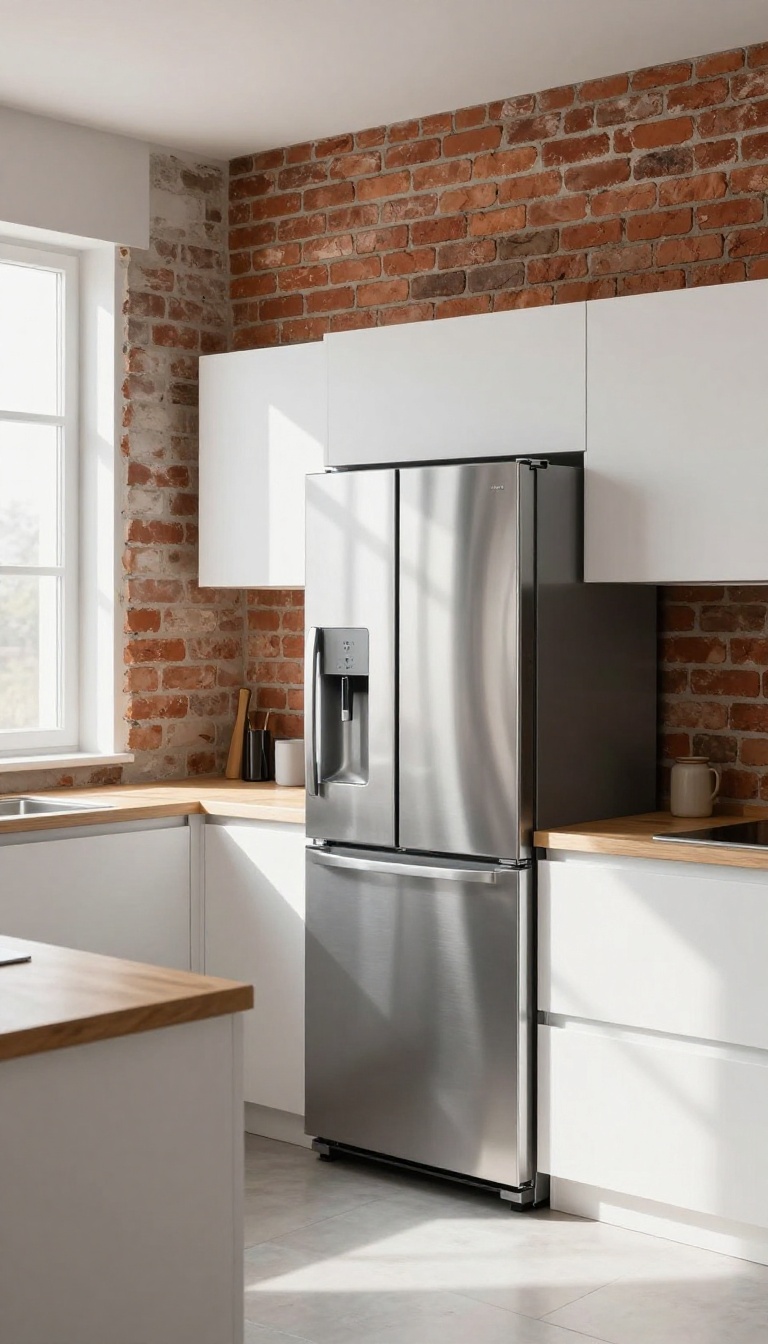
Brick has that rugged, old-world charm, but it doesn't have to live in the past. Pairing it with sleek, modern appliances creates a dynamic contrast that feels both current and classic. The key is letting the brick stay the star while the appliances bring a crisp, polished edge.
Mixing materials is a designer trick that always pays off. The rough texture of brick against the smooth surface of stainless steel or matte black is a visual treat. It adds depth and interest without trying too hard.
Why It Works
The contrast is what makes this combination so compelling. Brick brings warmth and character, while modern appliances offer clean lines and a sense of efficiency. Together, they balance each other out, preventing the space from feeling too rustic or too sterile.
Choosing The Right Finish
Stainless steel is the classic choice—it reflects light and brightens the space. Matte black is a bolder option that adds a touch of drama and pairs beautifully with darker brick tones. Consider the overall mood you want: stainless for a brighter, airier feel, matte black for a cozier, more intimate vibe.
Placement Tips
Let the brick wall be the backdrop for your main appliances, like the range or refrigerator. This draws the eye and creates a natural focal point. Keep smaller appliances on open shelving or countertops to avoid clutter, and let the brick breathe.
9. Create a Brick Accent Wall Behind the Dining Area
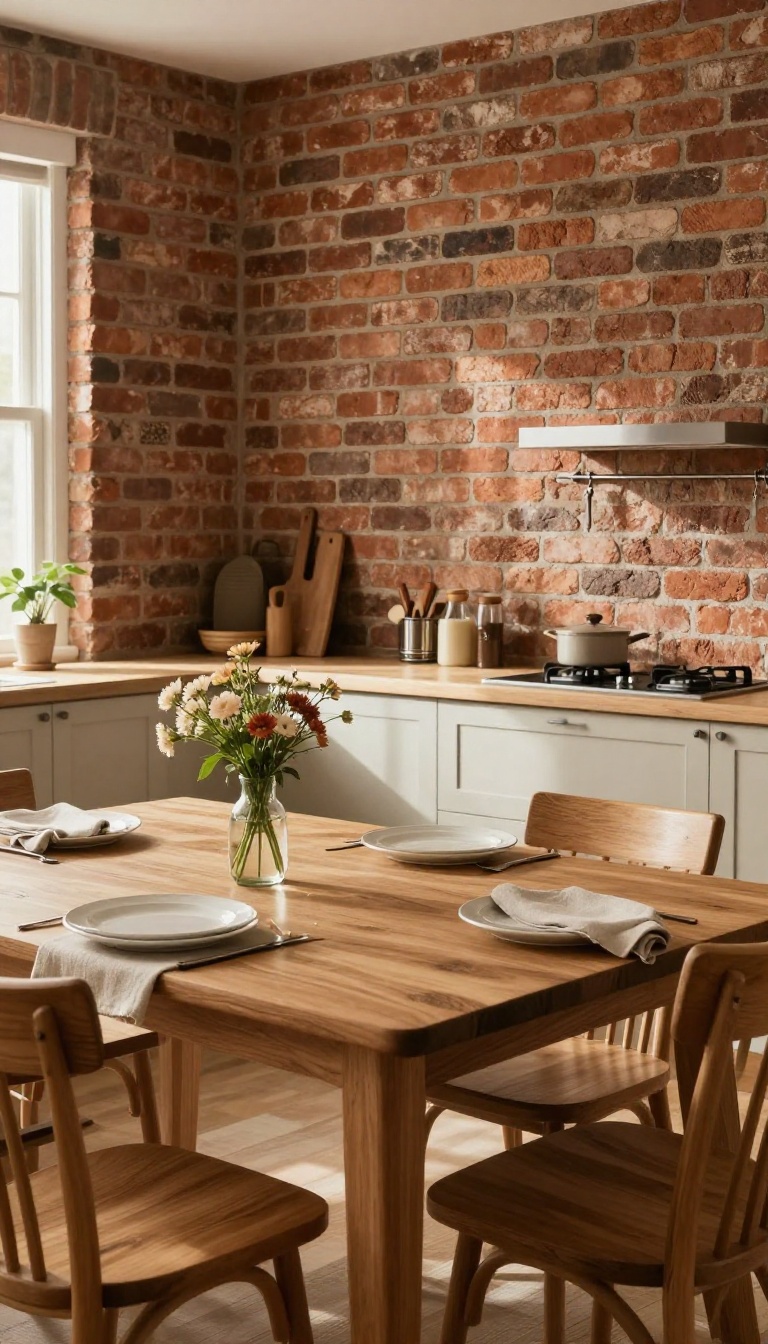
The dining nook often gets the short end of the stick when it comes to kitchen design. But a brick accent wall right behind the table can change that in a big way. It gives meals a cozy, grounded backdrop that makes every breakfast or dinner feel a little more special.
This idea works especially well if your kitchen flows into an eat-in area or a breakfast bar. The brick adds texture and warmth without overwhelming the cooking zone, and it helps define the dining space as its own little corner of the room.
A brick wall behind the dining table does more than just look good—it creates a sense of intimacy that’s perfect for lingering over coffee or hosting a casual dinner. The rough texture absorbs sound, making the space feel quieter and more private. Plus, it gives you a natural focal point to arrange furniture around, so the whole area feels intentional.
When you’re working with brick in a dining spot, think about how it interacts with the rest of the kitchen. If your cabinets are light, the brick adds contrast. If they’re dark, it brings in a rustic element that keeps things from feeling too sleek.
The key is to let the brick be the star, then layer in simple, functional pieces around it.
Choose The Right Brick Finish
Not all brick is created equal. For a dining area, you want a finish that feels warm but not too rough. A matte sealant keeps the brick looking natural while making it easier to clean—important if you’re eating right next to it.
Or you can go with whitewashed brick for a softer, more coastal vibe that still shows off the texture. If you’re working with an existing brick wall, a simple cleaning and sealing might be all you need. For a new accent wall, consider reclaimed brick for that authentic aged look.
It adds character and a sense of history that fits perfectly in a cozy dining corner.
Style The Table To Complement The Wall
Your dining table and chairs should work with the brick, not compete with it. A wooden table in a natural finish is a classic choice—it echoes the earthy feel of the brick. For a more modern look, go with a sleek metal or glass table to contrast the roughness.
Keep the styling simple. A neutral table runner, a few ceramic plates, and maybe a small vase of fresh herbs are all you need. Let the brick wall do the heavy lifting, and keep the tabletop clutter-free so the space feels open and inviting.
Lighting And Decor That Enhance The Mood
Lighting can make or break a brick accent wall. Warm, soft lighting—like a pendant lamp or wall sconces—brings out the reddish tones and makes the space feel cozy. Avoid harsh overhead lights that wash out the texture.
For decor, think about adding a few framed photos or a simple art piece that picks up the brick’s color. A mirror can also work well, bouncing light around and making the dining area feel larger. Just don’t overdo it—the brick is the main event, so keep the extras minimal.
10. Use Brick to Define a Kitchen Island
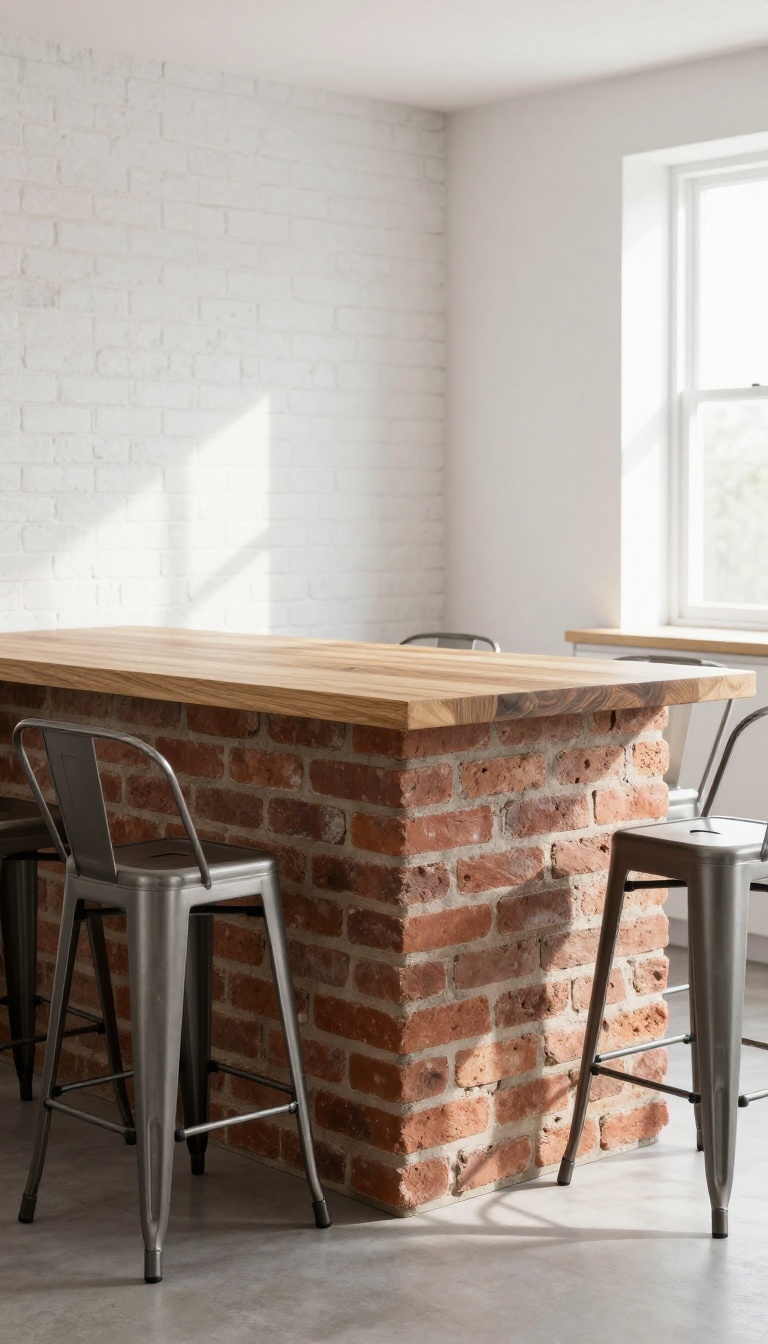
A kitchen island often becomes the busiest spot in the room, but it can also feel like a floating afterthought. Wrapping the base in brick gives it a grounded, built-in look that instantly adds character. It’s a simple way to introduce texture without overwhelming the space, especially if your walls are painted or tiled.
Brick on the island base creates a visual anchor that ties the whole kitchen together. It breaks up the monotony of cabinets and countertops, adding a rustic, tactile element that feels both sturdy and inviting. Plus, it’s durable enough to handle the bumps and scuffs of daily life.
Match Or Contrast Your Wall Brick
If your kitchen already has a brick wall, use the same brick on the island for a seamless, cohesive look. Or, go for a contrasting shade—like a lighter whitewashed brick against a darker wall—to make the island stand out as a focal point. The key is to keep the tones complementary so the space doesn’t feel disjointed.
Pair With Warm Materials
Brick pairs beautifully with wood, especially butcher block or reclaimed wood countertops. The combination adds warmth and a natural, earthy feel. Add some metal stools or pendant lights to balance the rustic vibe with a touch of industrial edge.
Think About Maintenance
Brick is porous, so sealing it is a smart move to prevent stains from splatters or spills. A clear sealer will keep the surface looking fresh while still letting the texture shine through. It’s a small step that saves you from scrubbing later.
11. Seal and Polish Brick for Easy Maintenance
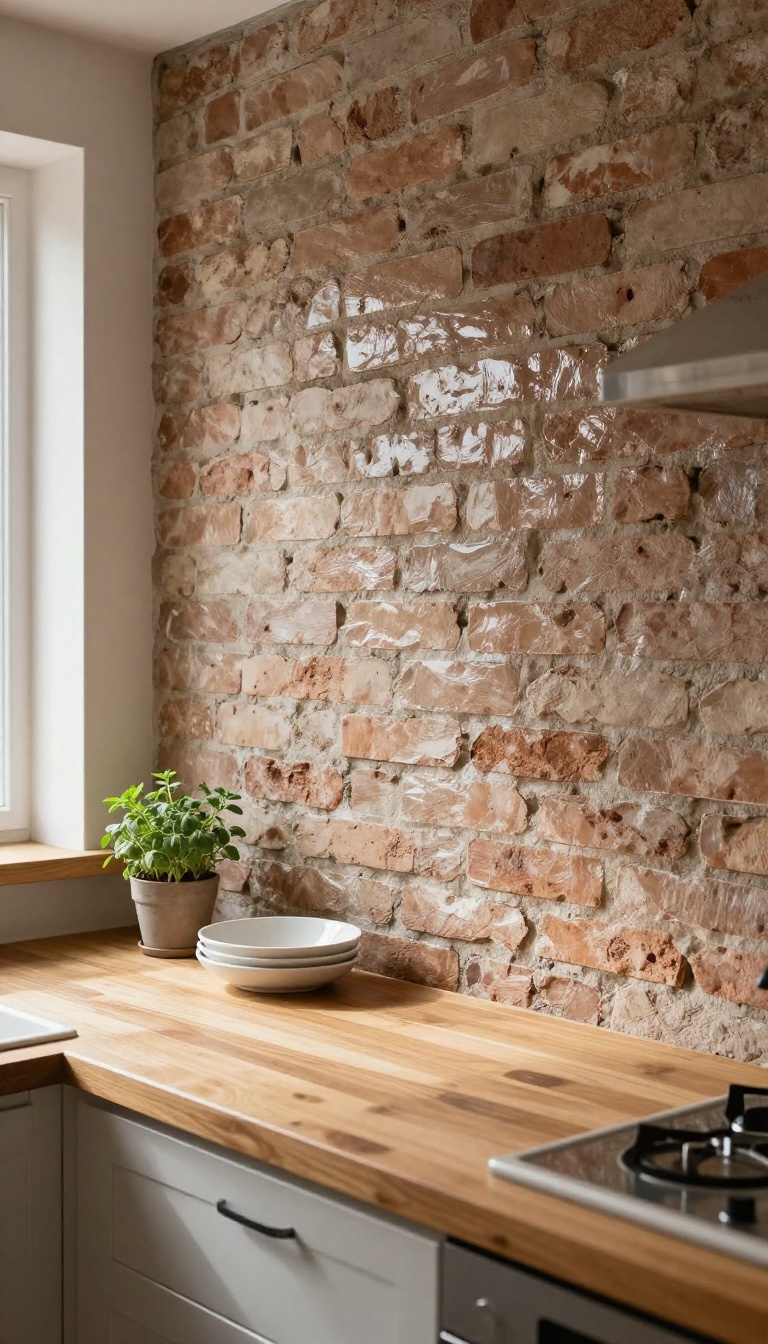
Raw brick is gorgeous, but it’s also a sponge for grease, dust, and cooking splatters. Sealing it doesn’t dull that rustic charm—it just makes life easier. A good sealer locks out moisture and stains, so you can wipe down the wall without worrying about damaging the surface.
Sealing your brick is one of those small upgrades that pays off every single day. Unsealed brick is porous, which means it soaks up spills and odors, and cleaning it often requires harsh scrubbing that can wear down the surface. A penetrating sealer soaks into the brick and forms a protective barrier without changing the look.
You can choose a matte finish to keep the natural texture, or a satin or glossy one for a subtle sheen that reflects light and makes the color pop. Once sealed, routine maintenance becomes a quick wipe with a damp cloth or a mild soap solution—no more worrying about red wine or tomato sauce leaving a permanent mark.
Choose The Right Sealer
Not all sealers are created equal. For kitchen brick, you want something that’s food-safe once cured and resistant to grease and water. Look for a penetrating sealer designed for masonry—it won’t sit on the surface like a film, so the brick keeps its breathable quality.
Avoid film-forming sealers that can peel or look plasticky. A water-based sealer is easier to apply and clean up, while solvent-based options offer extra durability. Test a small patch first to make sure you like the finish.
Prep And Apply Like A Pro
Before sealing, make sure the brick is clean and completely dry. Use a stiff brush to remove loose dust, then wipe down with a damp cloth. If there are any stains, treat them before sealing—once sealed, they’ll be locked in.
Apply the sealer with a brush or roller in even coats, working from top to bottom. Two thin coats are better than one thick one. Let each coat dry fully before adding the next.
The process is simple enough for a weekend DIY, and the payoff is a wall that’s both beautiful and low-maintenance.
Keep It Looking Fresh
Even sealed brick needs a little love. Wipe up spills quickly to prevent buildup, and use a soft brush or vacuum attachment to remove dust from the crevices. Avoid abrasive cleaners or steel wool, which can scratch the sealer.
If you notice the brick starting to absorb water or stains again, it’s time to reapply the sealer—usually every few years, depending on wear. With this simple routine, your brick wall stays cozy and clean without dominating your to-do list.
FAQ
Is brick in the kitchen hard to clean?
Sealed brick is much easier to clean than unsealed. Wipe with a damp cloth and mild soap. Avoid harsh chemicals that can damage the sealant.
Can I install brick over existing drywall?
Yes, you can use thin brick veneer or brick tiles that are lighter and easier to install over drywall. They give the same look without the weight.
Does brick make a kitchen feel smaller?
It can if you use dark, heavy brick everywhere. But a single accent wall or whitewashed brick can actually add depth and make the space feel cozier, not smaller.
What colors go well with brick walls in a kitchen?
White, cream, warm wood tones, and soft greens complement brick beautifully. For a bolder look, pair with navy or charcoal cabinets.
Is brick a good backsplash for behind a stove?
Absolutely. Brick is heat-resistant and durable. Just make sure it's properly sealed to protect against grease and stains.
Conclusion
Brick walls can bring a lot of warmth and texture to a kitchen without making it feel heavy or rustic. The key is mixing them with the right finishes—soft lighting, natural wood, and a few personal touches—so the space feels intentional rather than themed. Start with one idea that fits your layout, like a painted brick backsplash or open shelving, and build from there.
Whether you go for a full accent wall or just a subtle strip, the goal is a kitchen that feels cozy and pulled together. Pick what resonates with you, and let the brick do the rest.