13 Couple Bedroom Ideas for Small Rooms with Shared Style
Sharing a small bedroom gets easier the moment both people stop fighting for equal square footage and start sharing the same smart setup. You gain breathing room, fewer arguments over whose stuff goes where, and a space that finally looks intentional instead of split down the middle. The catch is that most couple bedroom advice assumes you have space to spare.
You don't. So every choice here earns its keep, from a closet divided down the middle to lighting each person controls without waking the other.
These thirteen ideas work in real apartments and rentals, not showrooms. Some take an afternoon, others a slow weekend, and none require knocking down a wall.
1. Split the Closet, Not the Room
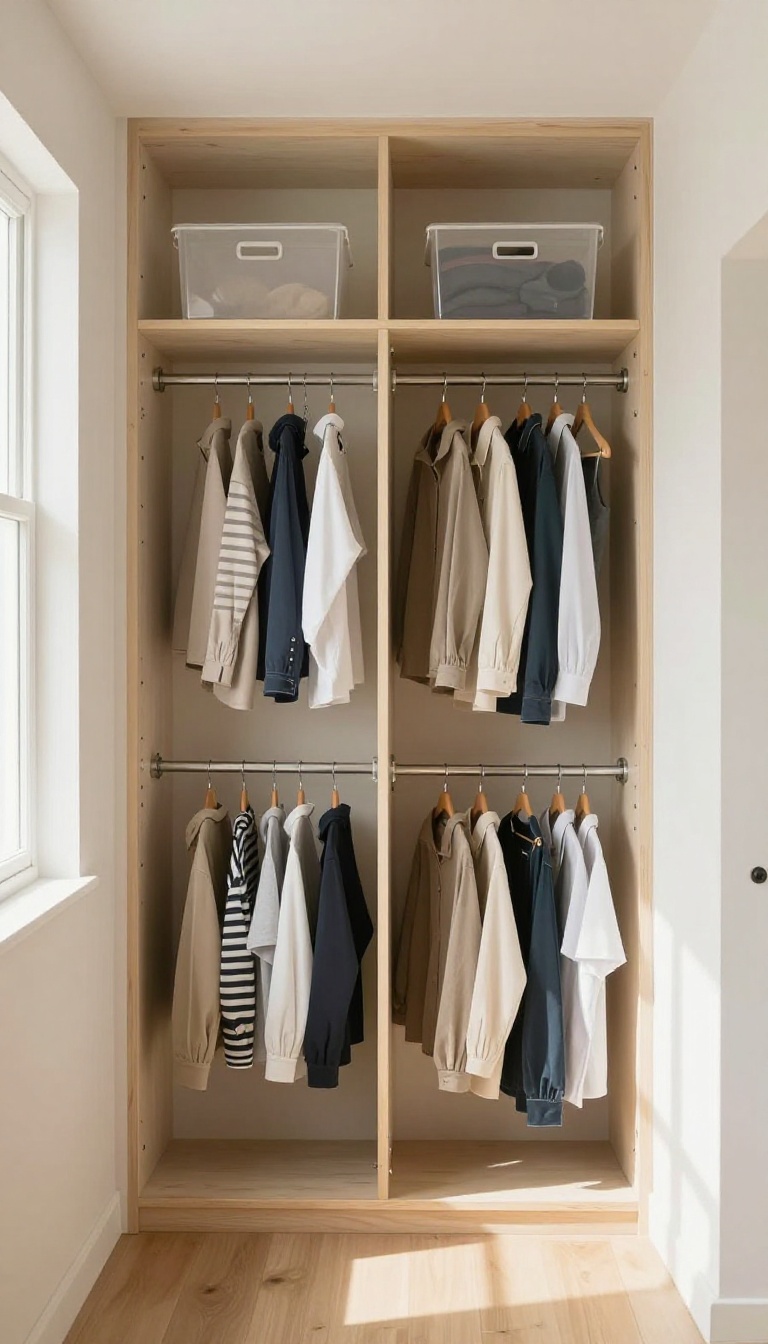
One closet, two people, zero breathing room. That's the reality in most small shared bedrooms, and it's usually the first thing that sparks tension. Instead of carving the room in half with furniture or tape lines, carve the closet into two equal zones.
You keep the floor plan open and give each person a side that's actually theirs.
A shared closet fails when it's treated as one big pile. Someone's shirts swallow the rod, someone else's shoes take over the floor, and the whole thing turns into a daily negotiation. The fix is structural: divide the space vertically, then give each half its own system.
You're not adding furniture, just using what's already there better. Start with a vertical divider. It can be as simple as a slim piece of plywood cut to fit, a tension rod with a fabric panel, or a wire shelf turned on its side.
The divider does two things: it creates a visual boundary and it stops clothes from creeping into the other person's zone. If you rent, go with a tension-based option so you don't damage the closet interior. Next, double up on rods.
Most closets have one high rod that wastes the lower half. Add a second rod below it, roughly at hip height, and suddenly you have twice the hanging space. One person takes the top, the other takes the bottom, or you split each level left and right.
Double rods work best for shirts, blouses, and folded pants on hangers. For longer items like dresses or coats, keep one section full-height on one side. Finally, label everything.
Clear bins on the top shelf, labeled by person or category, end the guessing game. Use matching bins so the closet looks calm, not chaotic. A label maker or even masking tape and a marker does the job.
The goal is simple: each person can find their stuff without asking, and neither side looks like the afterthought.
Pick The Right Divider
A tension rod with a fabric panel is the easiest rental-friendly divider. It costs under $20, installs in minutes, and comes down without a trace. For a more permanent look, a thin plywood divider painted to match the closet walls feels built-in.
Measure twice, cut once, and leave a small gap at the bottom so air moves and nothing warps.
Double Rods, Double Space
Adding a second rod is the single biggest space win in a small closet. Install it about 40 inches from the floor, or roughly at hip height. That gives you two hanging levels without stealing floor space.
Use the lower rod for pants, skirts, and kids' clothes if you have them. Keep one full-height section for long items so nothing drags.
Bins That End The Chaos
Clear bins on the top shelf keep off-season clothes, extra bedding, and shoes out of the way. Label each bin with a name or category so nobody has to dig. Stick to one bin size and style to keep the shelf looking uniform.
If your closet has no shelf, add a wire one or use stackable bins on the floor under the hanging clothes.
2. Choose a Shared Color Palette You Both Like
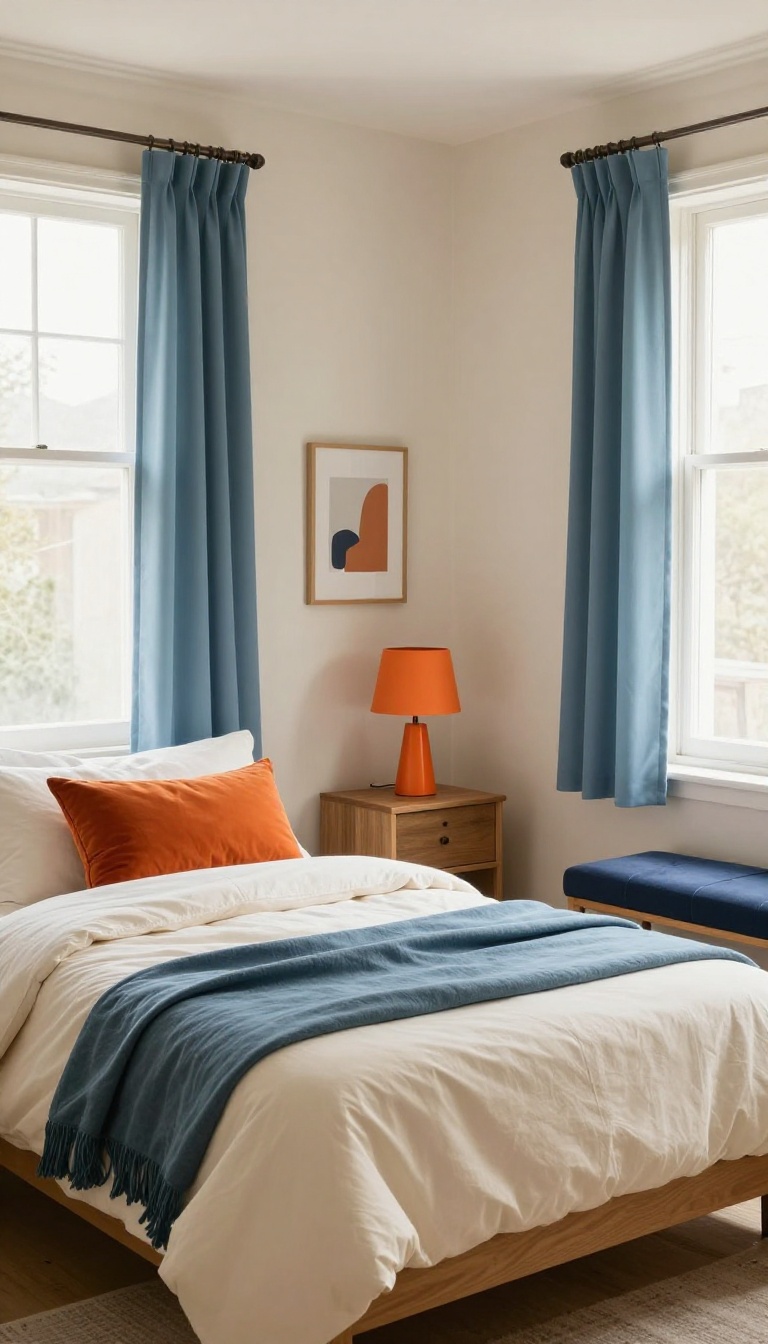
Color is the fastest way to make two people's stuff look like it belongs together. Pick two or three colors you both actually like, then repeat them across bedding, curtains, and art. That repetition creates a visual rhythm that pulls mismatched items into one cohesive look.
You don't need matching furniture or a full redesign. A shared palette does the heavy lifting by giving every object a reason to be in the room. When your partner's bright orange headphones sit next to your navy throw blanket, the colors either clash or connect.
Choose wisely and they connect. The trick is picking colors you both agree on without turning it into a debate. Start with what you already own and love, then narrow down to a trio that plays well together.
Neutrals plus one bold accent is the easiest formula for small spaces because it keeps things open and airy.
Start With What You Already Own
Pull out your favorite bedding, a throw pillow, or a piece of art you both like. Look for colors that show up more than once. Those repeating shades are your starting point.
If you both gravitate toward the same blue without realizing it, that's your anchor.
Pick A Base, A Soft, And A Pop
A base color covers the biggest surfaces, like walls or a duvet. A soft color supports it on curtains or a rug. A pop color shows up in small doses, like a lamp or a framed print.
This three-part mix keeps a small room from feeling flat or chaotic.
Repeat The Palette In Three Places
Use your colors in at least three spots: bedding, window treatments, and wall art. That repetition tricks the eye into seeing order. It also makes random personal items, like a phone charger or a stack of books, fade into the background instead of standing out.
Test It Before You Commit
Buy one small item in your new palette first, like a pillowcase or a candle. Live with it for a week. If it feels right, add more.
If not, you've only spent a few dollars and you can pivot without regret.
3. Use a Floating Nightstand on One Side
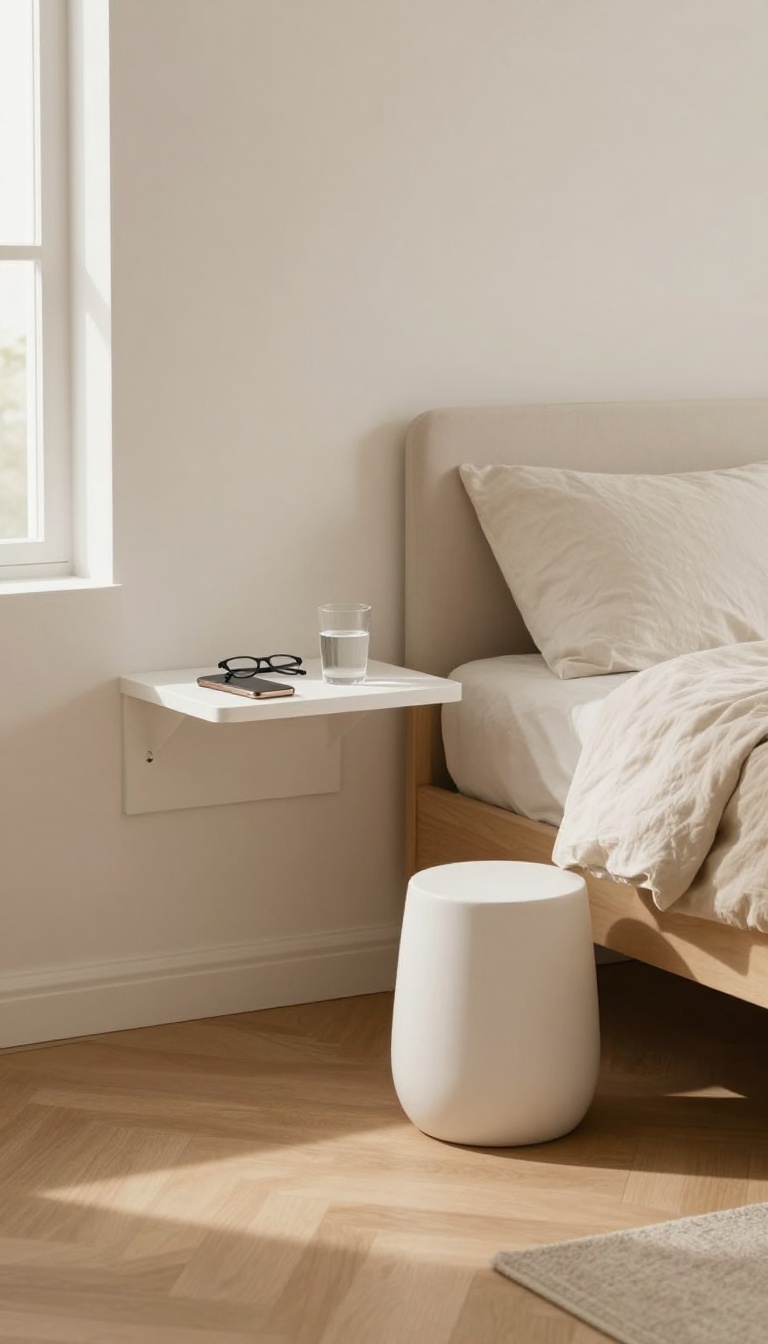
A bulky nightstand on both sides of the bed can make a tight room feel even tighter. But a floating nightstand on just one side—usually the side with less walkway—frees up floor space while still giving each person a place for their phone, glasses, and water. It’s a small change with a big payoff in a shared room.
Floating nightstands come in a few forms: a slim shelf, a drawer that mounts to the wall, or even a deep picture ledge. The key is to pick something shallow—around 6 to 8 inches deep—so it doesn’t jut into the room. Install it at mattress height for easy reach, and anchor it into a stud if you can.
If you rent, use heavy-duty adhesive strips rated for the weight, or choose a lightweight shelf that won’t pull free. One side gets the floating option, the other can keep a traditional nightstand or a small stool. That mix looks intentional when you match materials or finishes.
For example, a white floating shelf on one side pairs well with a white ceramic stool on the other. You get visual balance without symmetry, which actually makes a small room feel less boxed in.
Pick The Right Spot
Mount the floating nightstand on the side where floor space is tightest—often the side closest to the door or a wall. That’s usually the side where a regular nightstand would block traffic or bump into a dresser. Leave at least 24 inches of clear walkway if you can.
If the bed sits in a corner, the floating shelf can even wrap around the corner for extra surface without taking floor space.
Keep It Useful, Not Cluttered
A floating nightstand works best when it holds only the essentials: a phone, a book, a small lamp, maybe a coaster. Add a tiny drawer or a clip-on cup holder if you need more. Avoid stacking it with decor—clutter on a small surface looks messy fast.
A single small plant or a framed photo is plenty. The goal is function first, style second.
Rental-friendly Options
If you can’t drill into the wall, look for floating nightstands that use strong adhesive mounts or over-the-bed caddies that hook onto the bed frame. Another option is a slim console table that tucks behind the headboard—it acts like a floating shelf but stands on the floor. Just measure your bed height first.
Command strips rated for 20 pounds or more can hold a small shelf if you let them cure for 24 hours before loading.
4. Go Vertical with Wall Storage
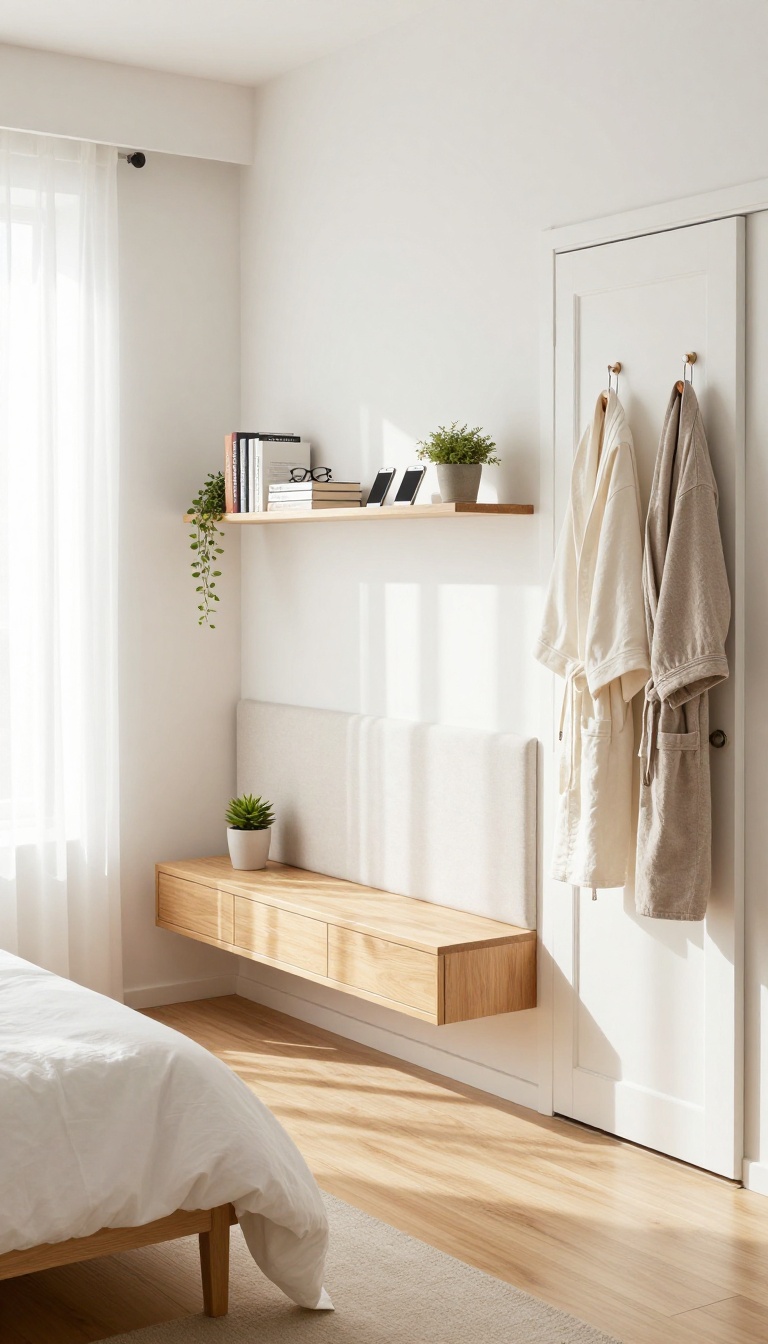
Floor space is the first thing to disappear in a small shared bedroom, and it usually vanishes under shoes, bags, and half-read books. The fix isn't another piece of furniture—it's using the walls you already have. Tall shelves, hooks, and slim ledges above the bed and behind the door turn dead vertical inches into real storage, so the floor stays clear and each person gets a dedicated spot for daily items.
When two people share a tight room, the floor becomes a battleground. Every square foot has to pull double duty, and clutter piles up fast. Going vertical flips that equation: you stop competing for floor space and start using the walls that are just sitting there.
The best part? You don't need a renovation—just a few smart, affordable additions that keep everyday items within arm's reach but off the ground.
Above-the-bed Shelves
A long floating shelf mounted above the headboard can hold books, glasses, phones, and a small plant—all the things that usually end up on a nightstand. If you each need your own zone, install two shorter shelves side by side, one for each person. Keep them shallow (6 to 8 inches deep) so they don't loom over the bed.
This clears both nightstands for lamps or a glass of water, and it gives you a natural divider without adding bulk.
Over-the-door Hooks And Racks
The back of the bedroom door is prime real estate that most couples ignore. An over-the-door rack with hooks or slim pockets can hold robes, towels, hats, and tomorrow's outfit. Assign the top hooks to one person and the bottom to the other, or split left and right.
It keeps daily wear off chairs and floors, and it costs almost nothing. Just make sure the door still closes without scraping.
Tall, Skinny Shelving Units
A narrow bookcase—12 to 18 inches wide—can slide into a corner or beside the bed and reach almost to the ceiling. Use the top shelves for shared items like extra blankets or decor, and give each person their own middle shelf for personal stuff. Look for units with adjustable shelves so you can fit taller items.
Anchor them to the wall for safety, especially in rentals where you can't afford to damage the drywall.
Wall-mounted Baskets And Bins
Wire or fabric baskets that hang on the wall add storage without any floor footprint. Mount a row of three or four at hip height near the closet or entry area. One basket for each person's keys, wallet, and sunglasses, plus one for shared odds and ends like chargers or hair ties.
They're easy to install with adhesive hooks if you're renting, and they keep surfaces clear. Choose colors that match your room's palette so they look intentional, not like an afterthought.
5. Pick a Bed with Built-In Drawers
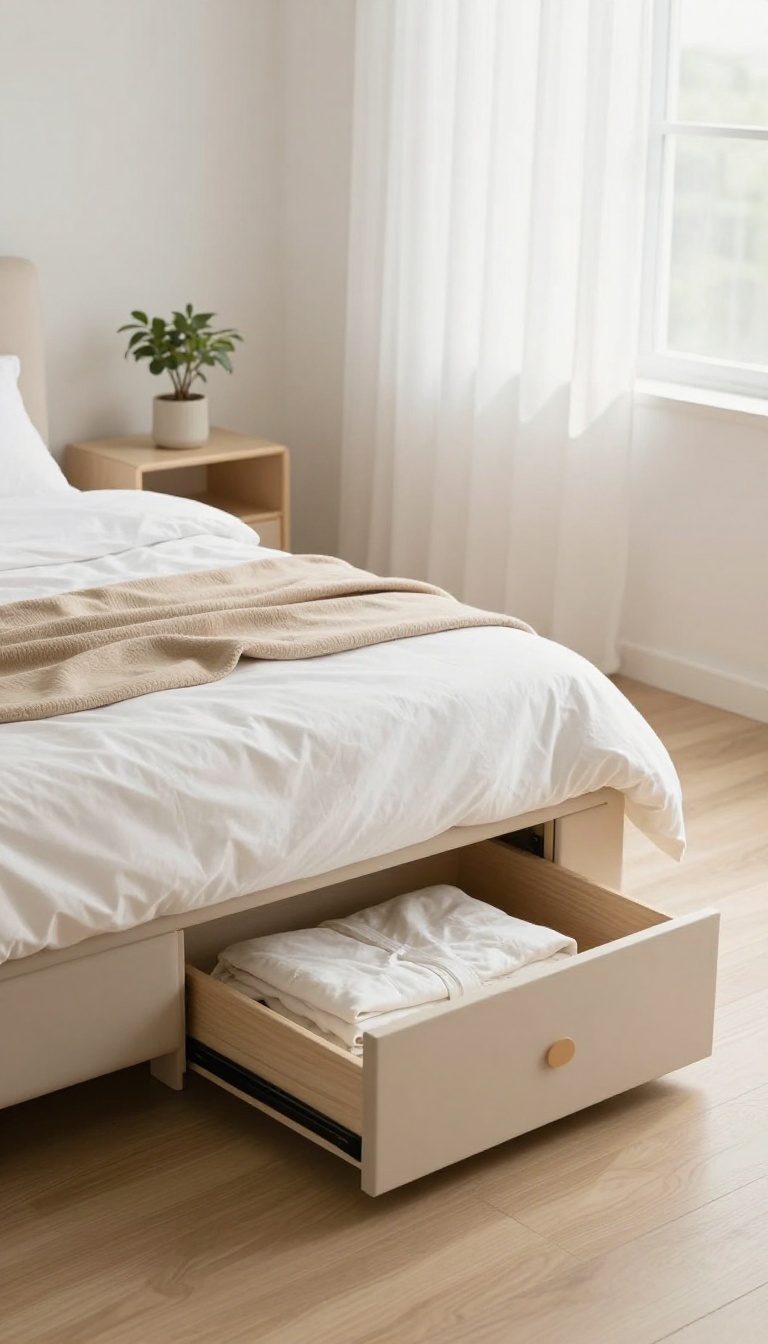
Your bed takes up the most floor space in the room, so why not make it work harder? A storage bed with built-in drawers turns that big footprint into hidden square footage you both can use. It's one of the few upgrades that adds function without adding furniture.
You get to stash extra linens, off-season clothes, or the shoes you both share without sacrificing an inch of walking space. And because the drawers are tucked under the mattress, the room instantly looks less cluttered. No more stacking bins in the corner or shoving bags under the bed where they collect dust.
Drawer Placement Matters
Side drawers work best if you each have your own side of the bed. You get your own drawer, your partner gets theirs, and neither of you has to dig through the other's stuff. Foot-of-the-bed drawers are great for shared items like extra blankets or bedding.
Just make sure you can open them without blocking the door or hitting a dresser.
What To Store (and What Not To)
These drawers are perfect for things you don't need every day: winter sweaters in summer, guest sheets, or that extra set of towels. Avoid cramming them with heavy items like books or tools, since the drawer bottoms aren't always built for that. Keep it light and organized with dividers or small bins so things don't turn into a jumbled mess.
Watch The Height And Mattress Fit
Storage beds sit higher than standard frames, so measure your room and your mattress before you buy. You want enough clearance to open drawers fully, but not so high that you need a step stool. Also check that your current mattress fits the bed's dimensions, or you'll be shopping for two things instead of one.
6. Blend Two Styles with a Neutral Base
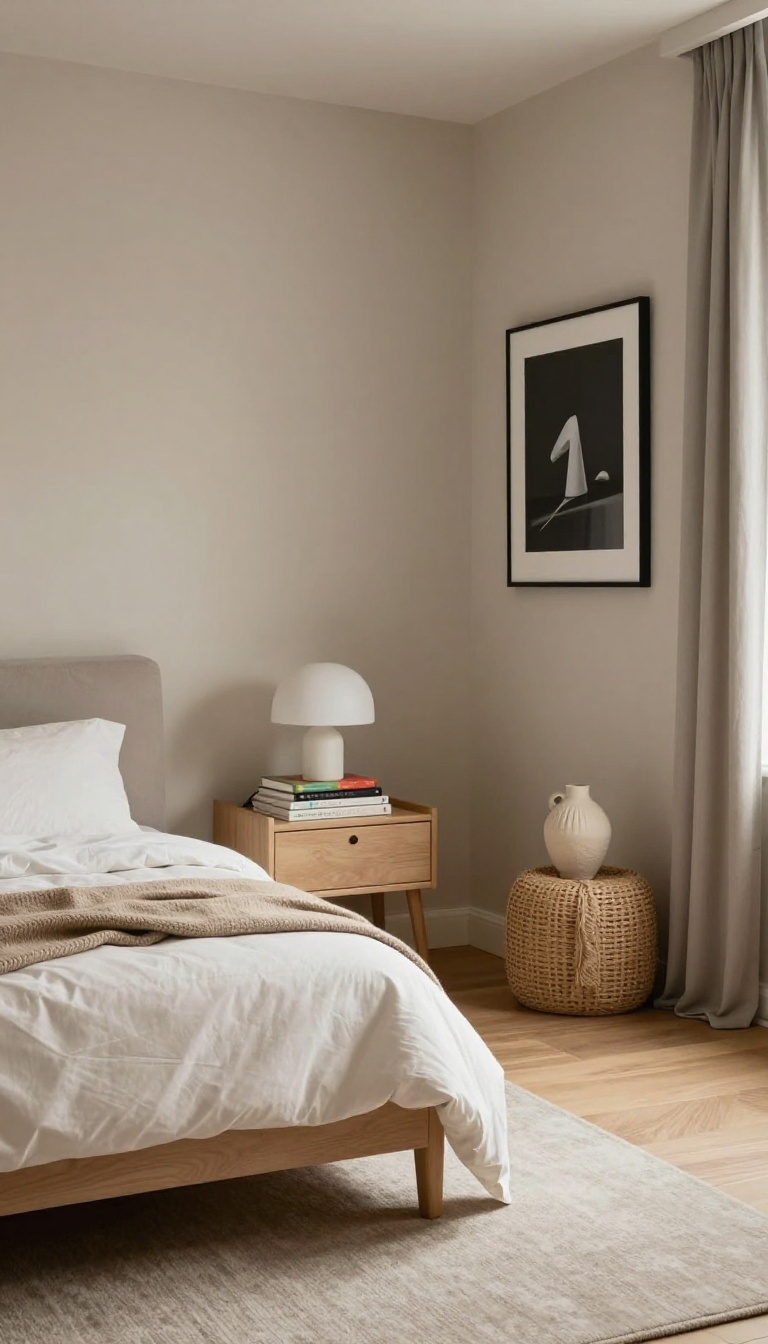
When you and your partner have completely different tastes, forcing one style to win never works. One person loves clean lines and calm colors, the other wants bold patterns and warm textures. The trick is to give both of you a neutral canvas, then let each side speak for itself.
A neutral base means starting with the big pieces in shades that don't compete: white, beige, gray, or soft taupe. Your bed, walls, and main furniture stay quiet, so they don't fight each other. That leaves the fun stuff—pillows, throws, art—as the places where your personalities show up.
This approach works because it stops the room from looking like two separate apartments smashed together. Instead, it looks like one calm space with two distinct voices. And in a small room, that calm base actually makes the space feel bigger, not boring.
Pick A Base You Both Can Live With
Choose a wall color and bedding set that neither of you hates. It doesn't have to be your favorite—just neutral enough to disappear. White duvets, light gray sheets, and simple curtains are safe bets.
If you want a little warmth, go with oatmeal or warm beige instead of stark white.
Let Each Side Have Its Own Accent Zone
Give each person a zone for their personality. One nightstand can hold a stack of colorful art books and a bold lamp. The other can have a small gallery wall of black-and-white photos and a textured ceramic vase.
The key is keeping the base consistent while the accents change.
Mix Textures, Not Just Colors
If your partner loves modern and you love cozy, you can blend both through texture. Add a chunky knit throw on one side and a sleek linen pillow on the other. A woven rug under a minimalist bed frame softens the whole room.
Texture differences read as intentional, not messy.
Rotate Accents Instead Of Buying New Furniture
When you get bored, swap out the small stuff. Change pillow covers, rotate art, or move a plant to the other side. This keeps the room fresh without spending much or redoing the whole space.
It also lets each of you try new things without committing to a full redesign.
7. Create His-and-Hers Lighting
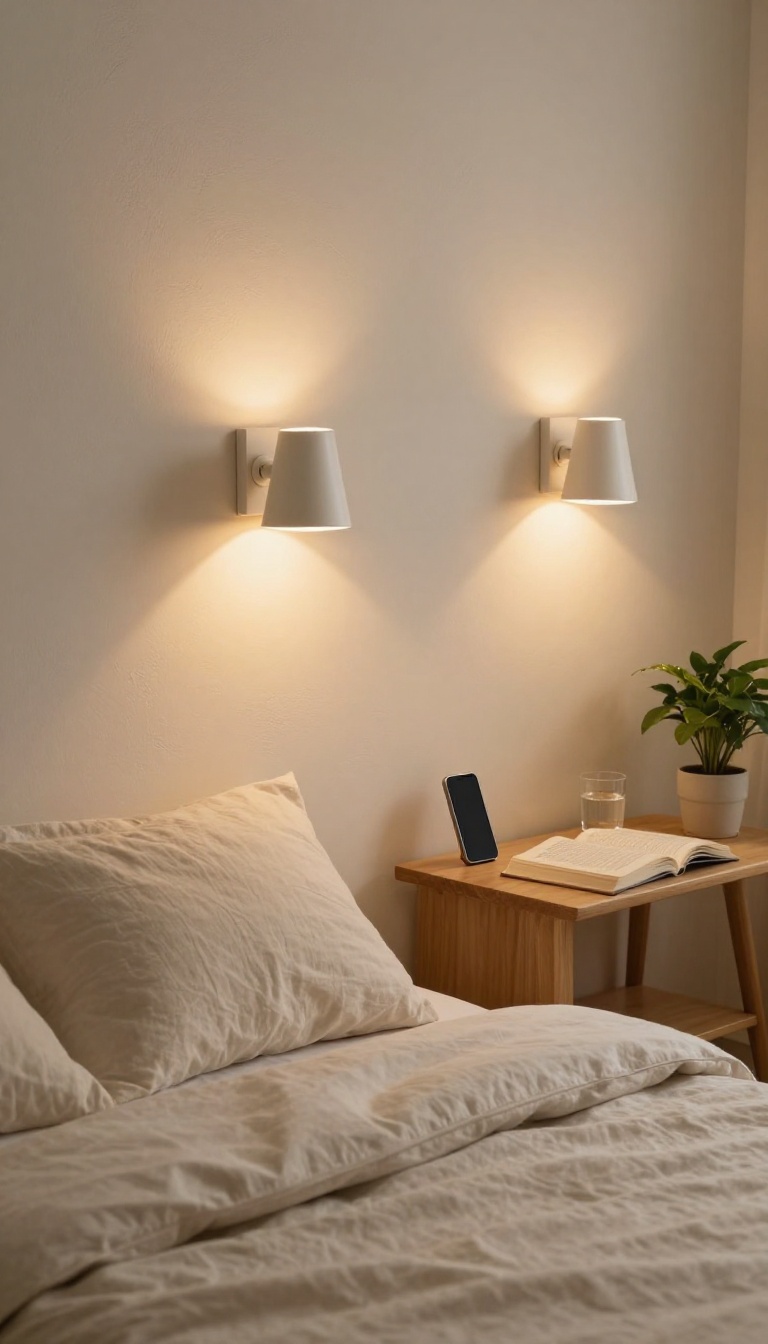
One person wants to finish a chapter. The other wants to fall asleep. In a small room, a single overhead light forces a compromise nobody enjoys.
His-and-hers lighting solves that by giving each of you control over your own little pool of light. The setup is simple: two adjustable wall sconces or clip-on reading lights, one on each side of the bed. They aim where you need them and stay out of the way when you don't.
No tangled cords across the floor, no lamp shade blocking the nightstand, no waking your partner just because you're not ready to sleep yet. This works especially well in tight rooms because it frees up surface space. You can ditch the bulky table lamps and use that nightstand for actual essentials.
Each light does its own job, and the room stays dark enough for whoever taps out first.
Wall sconces and clip-on lights come in a few styles, so you can match your room without much effort. Plug-in models are renter-friendly and install in minutes. Hardwired versions look cleaner but need a bit more commitment.
Either way, the goal is the same: separate controls, focused beams, and zero disturbance. Adjustability matters more than brightness. A light you can angle toward a book or phone keeps the glow off your partner's face.
Warm bulbs (around 2700K) feel softer at night and won't jolt either of you awake. Add a dimmer if you can, because sometimes you want just enough light to find your water glass. Placement is everything.
Mount sconces at eye level when you're sitting up in bed, usually 24 to 30 inches above the mattress. Clip-on lights attach to a headboard or shelf and can be moved as needed. Keep cords tucked behind the bed or along the wall with adhesive clips so they don't become a trip hazard.
If you share a headboard, look for slim sconces that don't stick out far. Swing-arm designs let you push the light flat against the wall during the day. For clip-ons, choose ones with a rubberized clamp so they don't scratch wood or fabric.
A simple USB-powered model works fine if you have an outlet nearby. One more thing: agree on a 'lights out' signal. Maybe it's a gentle tap on the shoulder or just turning your light off first.
That small courtesy keeps the setup from becoming a source of friction. The whole point is that you both get what you need without negotiating every night.
Pick The Right Light For Your Space
Wall sconces save nightstand space and look intentional. Clip-on lights are cheaper and more flexible, especially if you rent or have a metal headboard. Both give you individual control.
If your bed sits against a window, a clip-on might be your only option. Measure your space before buying so you don't end up with a sconce that bumps into a curtain or a clip that won't fit your headboard.
Install Without Waking The Neighbors
Plug-in sconces often come with cord covers that hide the wire. Run the cord down the wall and secure it with clear adhesive clips. For clip-on lights, check the battery life or cord length.
If you're handy, a hardwired sconce looks best, but a plug-in model works just as well for most rentals. No drilling required if you use adhesive mounts rated for the light's weight.
Keep The Glow Where It Belongs
Angle each light toward your own lap or book, not across the bed. Use a warm bulb and avoid anything too bright. A small shade or shield on the sconce directs the beam downward.
If one of you is sensitive to light, try a lower-wattage bulb or a dimmer switch. The goal is to read or scroll without lighting up the whole room.
8. Use a Room Divider for Instant Privacy
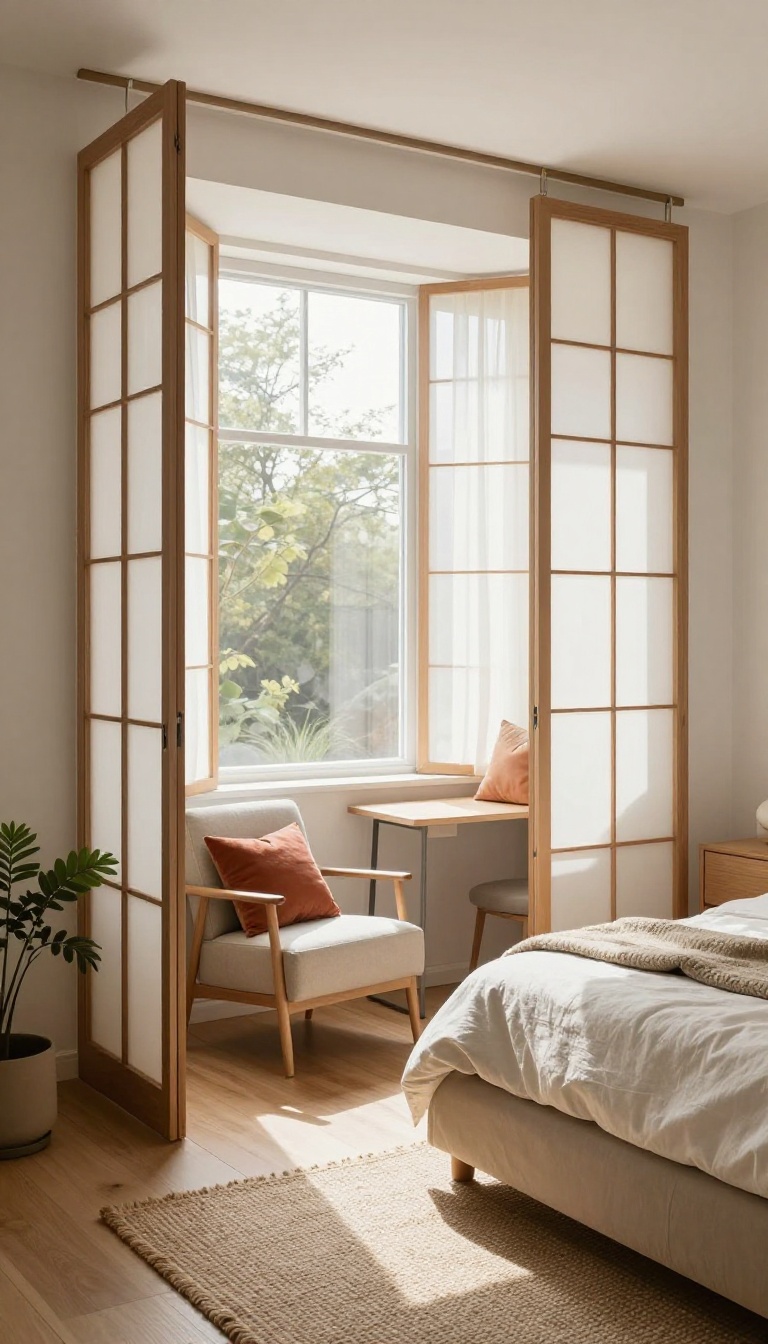
A room divider is the fastest way to carve out personal space without construction. It creates a visual and physical boundary that lets you dress, work, or unwind without feeling like you're on display. In a small shared bedroom, that bit of separation can make all the difference.
Not every couple needs a wall, but most need a moment of privacy. A folding screen or a ceiling-mounted curtain can section off a corner for a dressing area, a tiny desk, or just a quiet spot to read. It's a simple addition that gives each person a sense of ownership over their own slice of the room.
The key is choosing a divider that fits your space and style. You don't want it to feel like a barrier; it should blend in and serve a purpose. Whether you go for a tall shoji screen or a lightweight fabric curtain, the goal is to create a flexible boundary that you can open up when you want to feel connected.
Pick The Right Divider For Your Space
Folding screens come in many materials, from wood to fabric, and can be freestanding or mounted. They're great for defining a dressing nook or hiding a small home office. If you're short on floor space, a ceiling-track curtain is a smart alternative because it takes up zero footprint when pulled back.
Measure your area first, and consider how much light you want to block. A solid screen offers more privacy, while a sheer curtain keeps things airy.
Make It Work For Both Of You
A divider shouldn't feel like one person is being banished. Use it to create a shared zone, like a reading corner with two chairs, or a vanity area you both can use. If one partner works early and the other sleeps late, a divider around the desk can muffle sound and block light.
Just make sure it doesn't cut off airflow or make the room feel cramped. Test it out for a week and adjust as needed.
Style It To Blend In
Choose a divider that matches your room's palette so it doesn't stick out like a sore thumb. A woven rattan screen adds texture and warmth, while a sleek metal frame feels modern. You can even DIY one with fabric and a tension rod if you're on a budget.
The idea is to enhance the room, not overwhelm it. When not in use, fold it away or leave it partially open to keep the space feeling open.
9. Downsize the Dresser, Double the Function
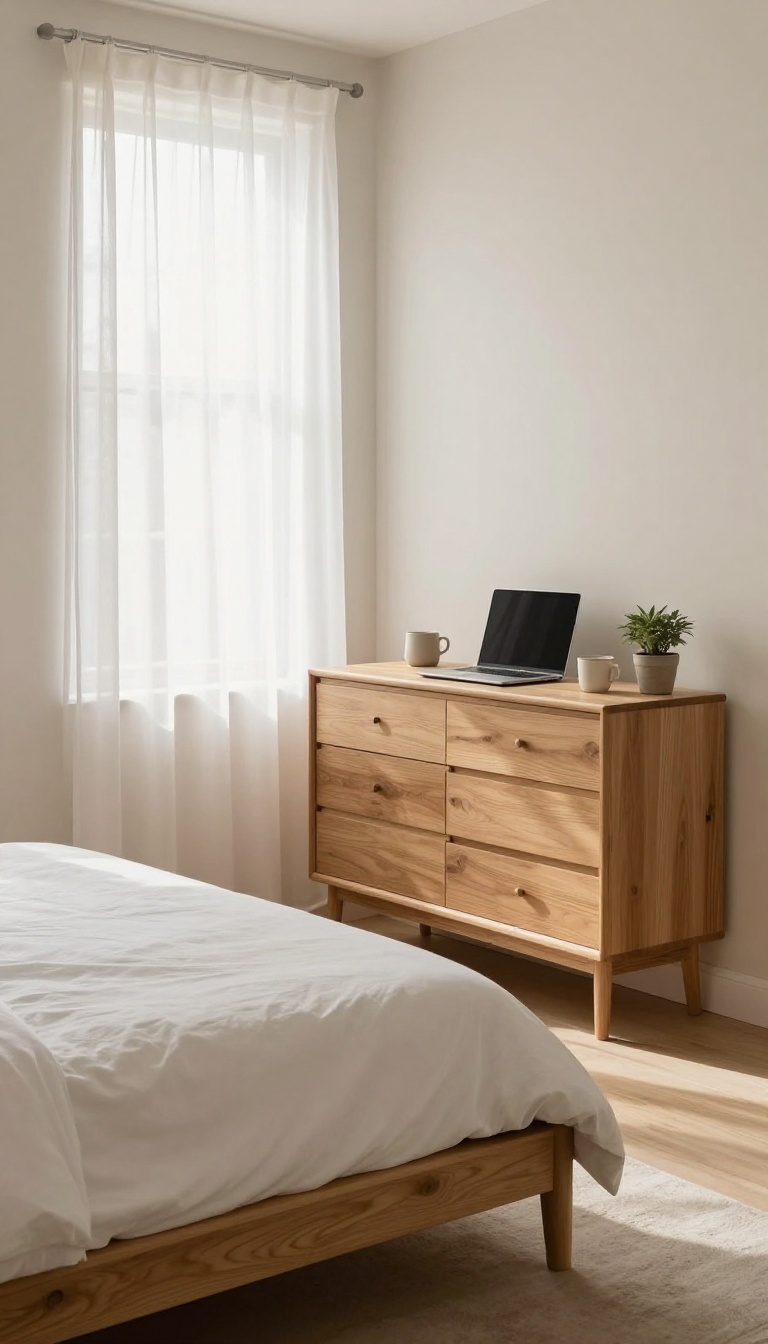
A standard six-drawer dresser can eat up a third of your walking space in a small room. But you still need somewhere to put clothes, so the answer isn't to go without storage. It's to pick pieces that pull double duty and stay shallow enough to keep the floor open.
Think of your dresser as a footprint, not a furniture category. The goal is to shrink that footprint without losing the drawers you actually use. A slim console, a floating unit, or a dresser that turns into a desk all keep clothes organized while giving you back the room to move.
Go Slim Instead Of Deep
Standard dressers are often 18 to 20 inches deep. Swap one for a 12- to 14-inch-deep console or a shallow chest, and you instantly gain six to eight inches of walkway. That's the difference between squeezing past the bed and actually walking around it.
Look for narrow dressers sold as entryway consoles or media cabinets. They hold folded clothes just fine, especially if you add drawer dividers. Just measure your folded stacks first so you don't end up with drawers that are too shallow to close.
Let The Dresser Become A Desk
A dresser with a pull-out keyboard tray or a flip-up top gives you a workspace by day and a clothing store by night. You get two pieces of furniture in one spot, which is huge when you're sharing a small room. Choose a model with at least three wide drawers for clothes and a flat top that fits a laptop.
If you can't find one, add a wall-mounted desk above a low dresser. The desk floats, the dresser stays low, and your feet still have room underneath.
Float It Or Tuck It Under
Wall-mounted or floating dressers clear the floor completely, which makes even a tiny room feel less cramped. You can also tuck a low dresser under a window or a sloped ceiling where a tall one would never fit. If you go floating, anchor it into studs and keep the weight balanced.
For renters, a slim dresser on legs works almost as well and still lets you slide a laundry basket or shoes underneath. Either way, you're using vertical space without blocking the path.
10. Coordinate Bedding for a Unified Look
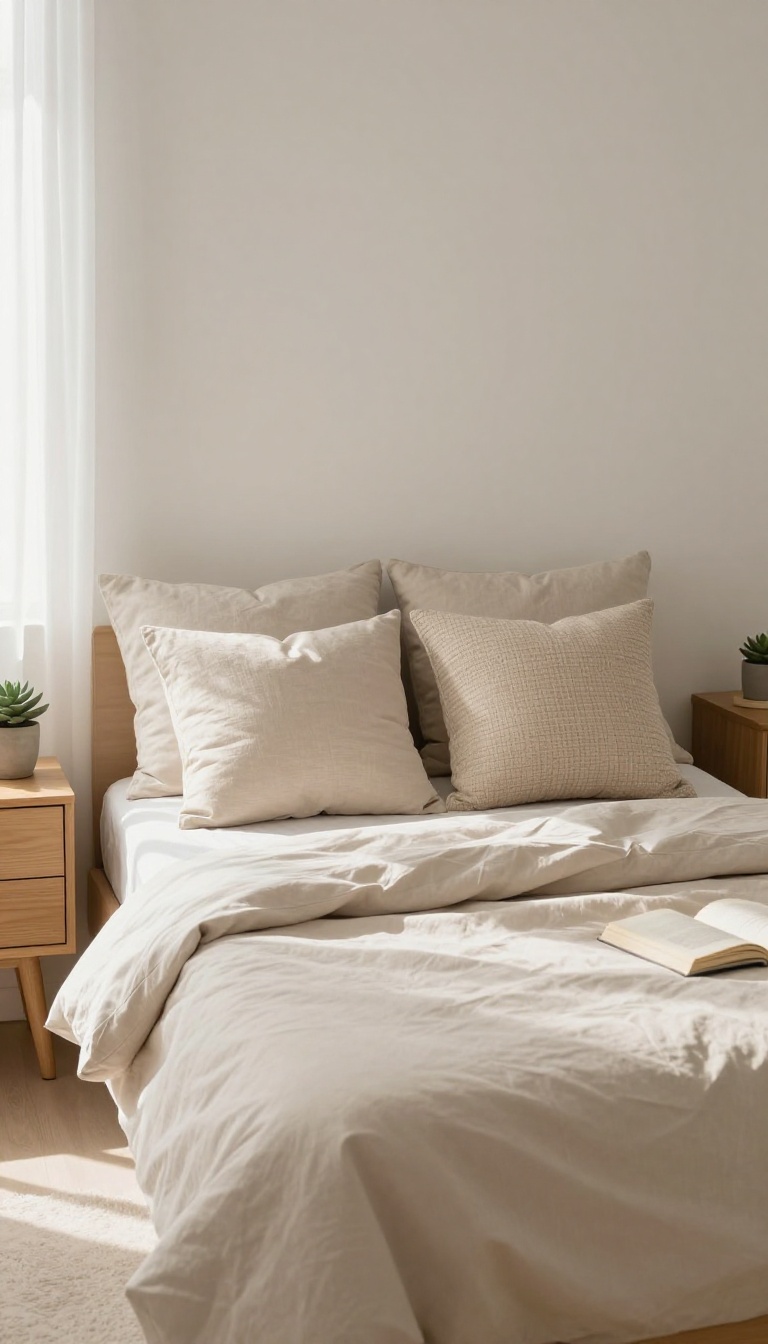
Two people, two sleep styles, one bed that somehow has to look like it belongs to a couple instead of two roommates sharing a mattress. The fix is simpler than you think: match the big stuff, split the small stuff. One duvet cover sets the color story for the whole room.
Then each person picks their own pillow setup, so nobody ends up fighting over the one pillow that actually works for their neck.
A coordinated bed does more than look nice. In a small room, the bed is the biggest visual object, so when the bedding looks pulled together, the entire space reads as calmer and more put-together. That matters even more when there is not much else to look at.
The trick is knowing what to share and what to keep separate. Shared items create the unified look. Personal items handle comfort.
Get that split right and you stop compromising on sleep just to keep the room looking decent.
Start With One Duvet Cover
Pick a single duvet cover in a color or pattern you both can live with, then let it do the heavy lifting. A solid neutral, a soft stripe, or a low-contrast print all work because they are easy to build around. If you cannot agree, choose the color from something already in the room, like the curtains or a piece of art.
That way the bed ties into the space instead of competing with it. Skip the matching bedskirt and shams unless you truly love them. In a small room, too much matching can feel heavy.
One strong shared piece is enough.
Let Each Person Pick Their Own Pillows
This is where comfort lives, so do not force a match here. One person might want a firm memory foam pillow, the other a soft down alternative. Different fill, different loft, different shape, all fine.
To keep it looking intentional, stick to the same pillowcase color family. Two white pillowcases with different inserts still read as coordinated from across the room. If you want a little personality, let each person choose one accent pillow in a color pulled from the duvet.
It is a small move that makes the bed feel like both of you.
Handle The Blanket Situation Early
Temperature is the number one sleep complaint between couples, and it shows up on the bed. One shared duvet plus one extra throw blanket on the colder side solves most of it. Fold the throw at the foot of the bed during the day so it looks styled, not like a pile of leftovers.
At night, whoever runs cold pulls it up. If you both run hot, go with a lighter duvet and skip the extra layer. The goal is a bed that looks coordinated and sleeps the way each of you actually needs.
Keep The Palette Tight
Two or three colors max is the rule for a small room. The duvet sets the base, the pillowcases stay in the same family, and any throw or accent pillow pulls from what is already there. This keeps the bed from turning into a patchwork of everyone's favorite colors.
It also makes the room feel bigger because your eye is not bouncing between competing patterns. When in doubt, repeat a color you already used elsewhere in the room. Repetition is what makes a small space feel deliberate.
11. Make the Most of Under-Bed Space
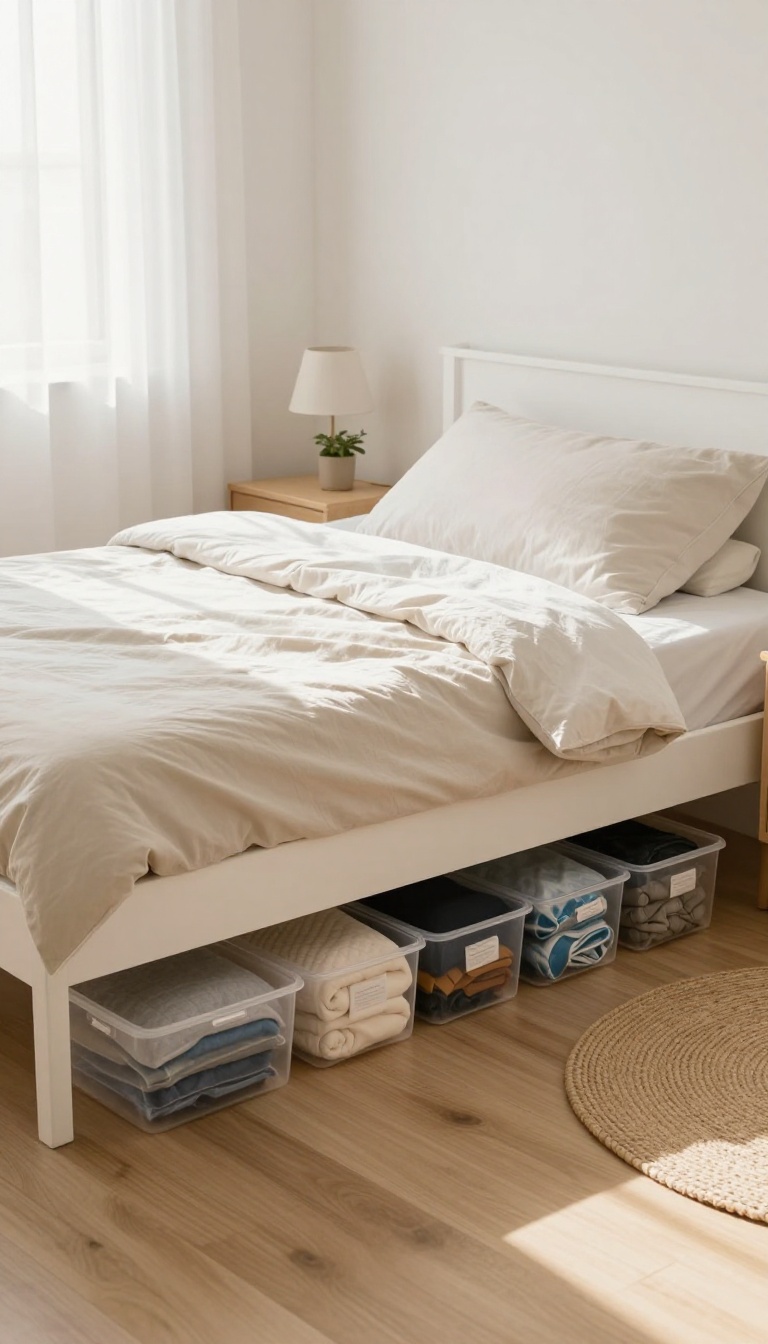
The space under your bed is prime real estate, especially when you share a small room. It’s dark, out of the way, and usually wasted on dust bunnies. With a little planning, it can hold the bulky stuff you both need but don’t use daily—extra blankets, luggage, off-season clothes—freeing up closet and floor space for the things you actually touch every day.
The trick is to keep it organized and accessible so you’re not shoving things around every time you need a suitcase. Low-profile bins and vacuum bags are your best friends here. They slide under most bed frames, and you can label them so you both know what’s where.
Just make sure you’re not blocking airflow or creating a fire hazard. A quick measure of your bed’s clearance will tell you what fits.
Choose The Right Containers
Rolling bins with wheels make it easy to pull things out without lifting the mattress. Look for ones that are no taller than your bed’s clearance—usually 6 to 9 inches. Vacuum bags are great for soft items like comforters and winter coats because they shrink down to almost nothing.
For hard items like shoes or books, use shallow plastic bins with lids to keep dust out. Clear containers help you see what’s inside without opening them.
Divide And Conquer
Assign one side of the under-bed area to each person, or split by category: one bin for shared bedding, one for each partner’s off-season clothes. Label everything with a marker or sticker. That way, when your partner asks where the extra pillows are, you can point instead of digging.
If you have a rolling bin, keep the heaviest items on the bottom to avoid tipping.
Keep It Easy To Access
Don’t pack bins so full that you dread pulling them out. Leave a little breathing room, and avoid stacking bins on top of each other—you’ll never use the bottom one. If your bed has a skirt or frame that hides the bins, even better.
Just make sure you can reach the most-used items without moving furniture. A long-handled grabber can help if you’re short on reach.
12. Set Up a Two-Person Morning Zone
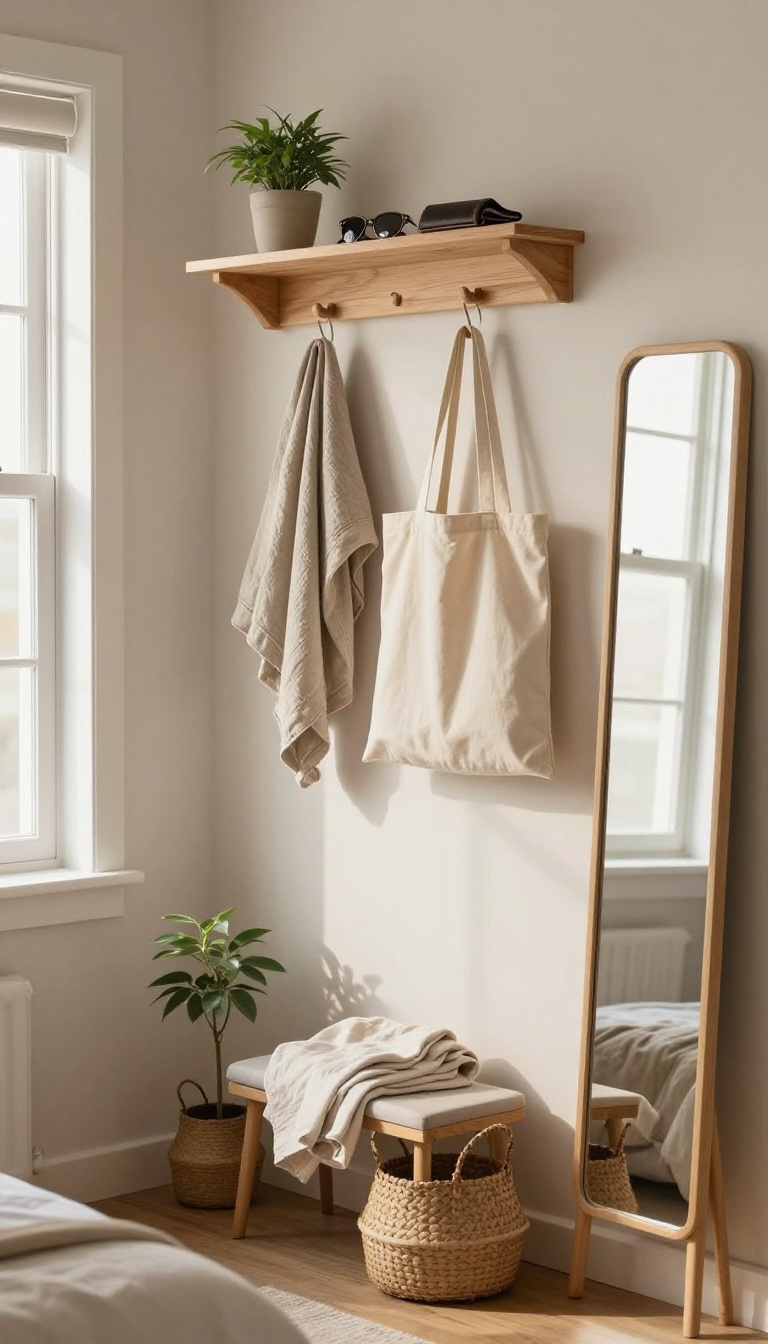
Mornings in a small shared room can turn into a traffic jam fast. One person needs the mirror, the other needs the outlet, and suddenly you're both late and annoyed. A tiny morning corner fixes most of that.
You're not adding a second bathroom, just a dedicated spot where the getting-ready routine actually works for two people at once. It takes maybe an hour to set up and costs almost nothing if you shop your own home first.
The goal is simple: give each person a place to land, a place to see themselves, and a place to drop the stuff that always goes missing. You want it near the door or beside the closet, not crammed against the bed where you'll trip over it at 6 a. m. Pick a wall or corner that already gets decent light.
Natural light beats overhead bulbs for anything involving a mirror, and it makes the whole corner feel less like an afterthought. Keep everything at arm's reach. If you have to walk across the room to grab your keys, the zone isn't doing its job.
Give Each Person A Hook And A Spot
Mount two hooks at different heights or on opposite sides of the corner so neither person has to reach past the other. One hook holds the jacket or bag that always ends up on the floor. A slim floating shelf above the hooks handles wallets, sunglasses, and the small stuff that scatters.
Label nothing, but assign sides so there's no daily negotiation. If you have room for a second small hook lower down, use it for keys. It sounds fussy, but it ends the where-are-my-keys panic for good.
Make One Mirror Work For Two
A single mirror can serve both people if you position it right. Hang it where you can both angle toward it, or add a small adjustable mirror on a swing arm for the second person. A lighted mirror is worth it in a dim rental, since overhead light casts shadows that make makeup or shaving harder.
If you can't hardwire anything, a plug-in LED strip along the mirror edge does the same job. Keep the counter or shelf in front of the mirror shallow. Deep surfaces collect clutter, and clutter is what makes a small morning corner feel cramped.
Build A Landing Tray For Daily Carry
One shallow tray near the door catches phones, keys, and earbuds so they stop migrating to the nightstand or the floor. Choose a tray with a lip so nothing rolls off. If you both charge overnight, run a single power strip to the tray instead of hunting for outlets every morning.
One strip, two cables, done. Wipe the tray once a week. It's the one spot in the room that gets touched every single day, so it collects receipts and loose change faster than you'd think.
13. Rotate Decor Instead of Adding More
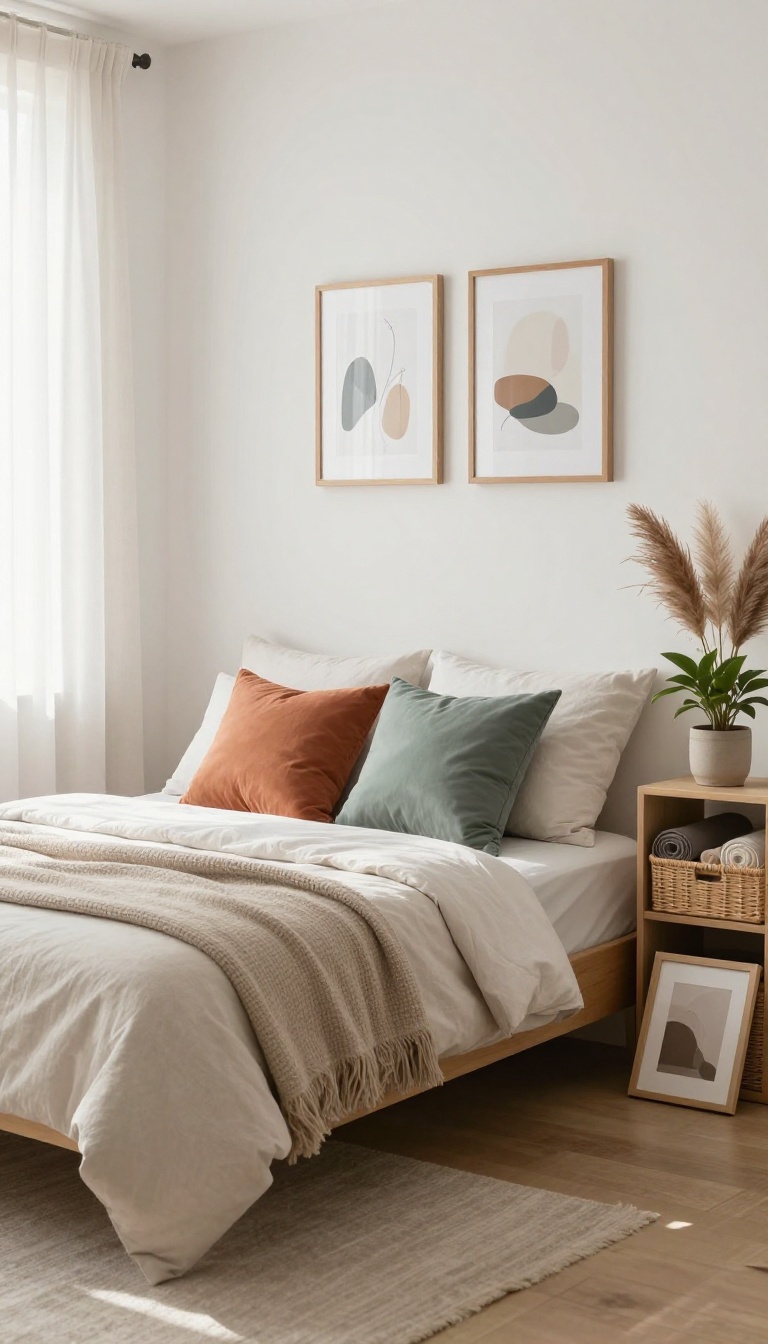
Small rooms get stale fast when the same four walls never change. You don't need new furniture to fix that—you need a rotation system. Keep a small bin of interchangeable pieces and swap them out monthly.
The room feels new without gaining a single square foot of clutter.
Think of it like a capsule wardrobe, but for your walls and surfaces. A handful of art prints, a couple of planters, and two or three throws can cycle through the room in different combinations. Each swap takes ten minutes and costs nothing after the initial setup.
The trick is storage. The bin has to live somewhere out of the way—under the bed, on a closet shelf, or behind the door. If storing the extras creates its own mess, the whole system falls apart.
Build A Small Swap Kit
Start with six to eight items total. Two or three framed prints in the same size, one or two small potted plants or dried arrangements, and a couple of throws or pillow covers. Stick to a shared color palette so any combination works together.
Keep every frame the same dimensions. That way you're only swapping the art inside, not hunting for new hardware or patching nail holes every month.
Set A Monthly Swap Day
Pick a recurring date—the first Sunday, payday, whatever you'll remember. On that day, pull out the bin and let each person choose one piece to bring into the room and one to retire. It sounds small, but that shared ritual gives you both a reason to talk about the space instead of just coexisting in it.
It also stops decor from becoming one person's project.
Where To Store The Off-season Pieces
A shallow under-bed bin works best for flat items like prints and fabric. For plants, use a shelf in the closet or a spot on top of a wardrobe. Label nothing—you'll remember what's in there after the first rotation.
If you truly have zero storage, shrink the kit to four items. Two on the wall, two in the bin. That's still enough variety to keep the room from feeling frozen.
FAQ
How do we fit two people's clothes in a small bedroom closet?
Use a vertical divider and double hanging rods. Add over-the-door hooks and under-bed bins for items you both use less often.
What's the best bed size for a small couple's bedroom?
A queen is usually the sweet spot. If space is really tight, a full works, but prioritize a storage bed to make up for lost floor space.
How can we blend two different decor styles without fighting?
Agree on a neutral base for walls and big furniture, then let each person express their style through smaller items like pillows, art, or a side shelf.
Do we need two nightstands in a small room?
Not necessarily. One full nightstand plus a floating shelf or wall pocket on the other side gives both people a surface without crowding the room.
How do we keep a small shared bedroom from feeling cluttered?
Stick to a one-in-one-out rule, use vertical storage, and choose furniture with hidden compartments. A quick nightly reset also helps a lot.
Conclusion
Sharing a small bedroom works best when both of you get a say in what stays. Pick one idea from this list that fixes your biggest daily friction, whether that's a missing nightstand or a bed that eats the whole floor. Try it for a week before adding anything else.
You don't need all thirteen. Let one change settle, see how it feels on a Tuesday morning and a Sunday night, then decide what's next. Small rooms get better through small, agreed-upon moves, not a single rushed overhaul.