13 Korean Bedroom Ideas for Small Spaces with Calm Style
A small bedroom can feel twice as calm once you stop fighting its size and start working with it. Muted colors, low furniture, and smart storage do more for a cramped room than any bigger footprint ever could.
Korean bedroom style leans into exactly that. Soft tones, natural materials, and a floor bed keep things grounded instead of crowded, so the room breathes even when the square footage doesn't.
The thirteen ideas below cover layout, lighting, storage, and the small touches that pull it together. Some take an afternoon, others a slow weekend, and none require knocking down a wall.
1. Start with a Soft, Muted Color Palette
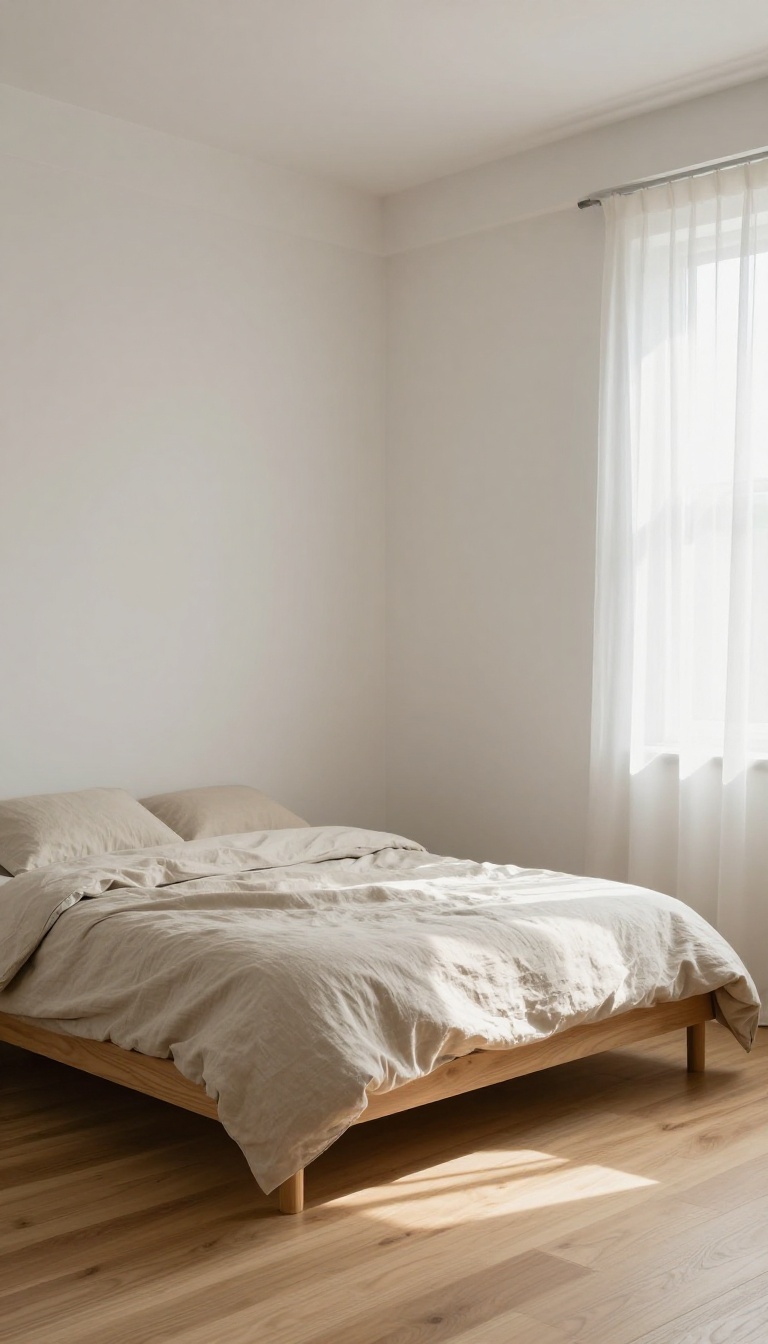
Color sets the mood before you even place a single piece of furniture. In a small Korean-style bedroom, the goal is to make walls recede, not compete for attention. Warm whites, oatmeal, and pale gray do exactly that, giving you a calm base that makes tight square footage feel open and airy.
Think of your walls as the backdrop, not the star. When you choose soft, low-contrast tones, the eye glides around the room instead of stopping at harsh lines. That subtle flow is what makes a small space feel bigger and more peaceful.
Korean bedroom design often leans on these muted shades because they pair effortlessly with natural wood, linen, and soft lighting. You are not locking yourself into a boring room. You are creating a quiet canvas that lets texture and light do the talking.
Why Muted Tones Work In Small Rooms
Dark or saturated colors can make walls feel like they are closing in. Muted shades reflect more light and blur the edges of the room, so your eye perceives more depth. Warm whites and oatmeals also add a gentle glow that feels cozy rather than clinical.
Pale gray is another quiet hero. It cools down a space without feeling cold, and it plays nicely with both warm and cool accents. The key is keeping the contrast low between your walls, trim, and ceiling.
Picking The Right Shades Without Guesswork
Start with a base of warm white for the ceiling and trim. Then choose a slightly deeper oatmeal or pale gray for the walls. This subtle difference adds dimension without visual noise.
Test swatches on multiple walls and check them at different times of day. Morning light can make a shade look pink, while evening lamplight can turn it yellow. Live with the samples for a day or two before committing.
Layering Texture Without Adding Color
Once your palette is set, bring in texture through fabrics and finishes. A linen duvet, a chunky knit throw, or a woven jute rug adds interest without breaking the calm. Keep metals soft too.
Brushed brass, matte black, or pale wood tones blend better than shiny chrome. The goal is a room that feels layered but never busy.
2. Choose Low-Profile Furniture to Open Up the Room
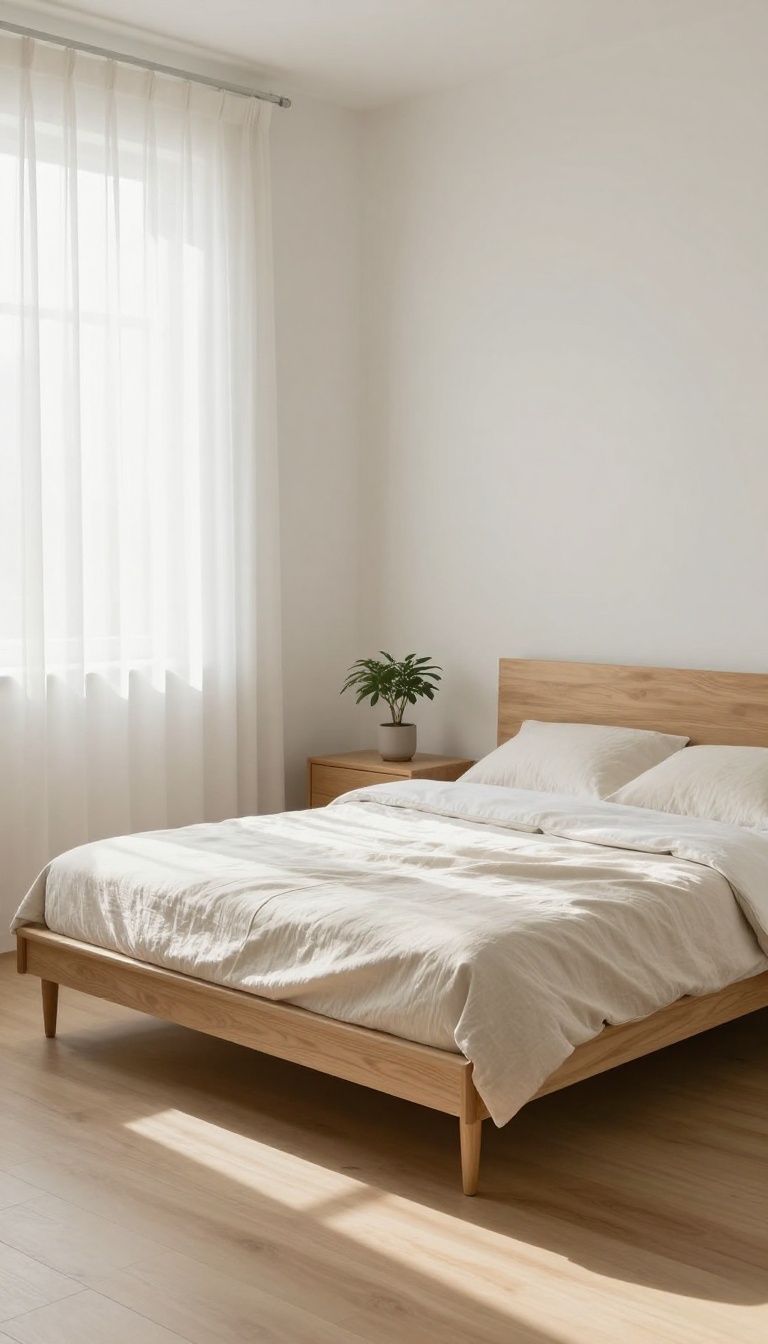
Low furniture does more for a small bedroom than almost any other design choice. When your bed and dressers sit closer to the floor, your eye travels across the room instead of getting blocked by bulky shapes. The ceiling suddenly feels taller, and the floor looks wider than it actually is.
Korean bedrooms often skip the tall, heavy furniture you see in Western catalogs. Instead, they favor pieces that hug the ground and keep the upper half of the room completely clear. That empty space above the furniture is what makes a tiny room feel airy and calm.
Why Low Furniture Works
Standard beds and dressers eat up vertical space. They create visual weight that makes a small room feel even smaller. Low-profile pieces do the opposite: they leave the walls and ceiling open, so your brain reads the room as bigger.
It's a simple trick, but it works every time.
Platform Beds And Floor Beds
A platform bed sits just a few inches off the ground, often with a simple wooden frame. It keeps the mattress low and the lines clean. Even better, a Korean-style floor bed skips the frame entirely and puts the mattress right on a mat or slatted base.
Both options make the room feel grounded and spacious.
Low Dressers And Storage
Swap tall chests for low, wide dressers. They give you the same storage but don't block sightlines. Look for pieces under 30 inches tall, and choose ones with legs that lift them slightly off the floor.
That small gap lets light pass underneath and adds to the open feel.
3. Use a Floor Bed for a Grounded, Minimal Look
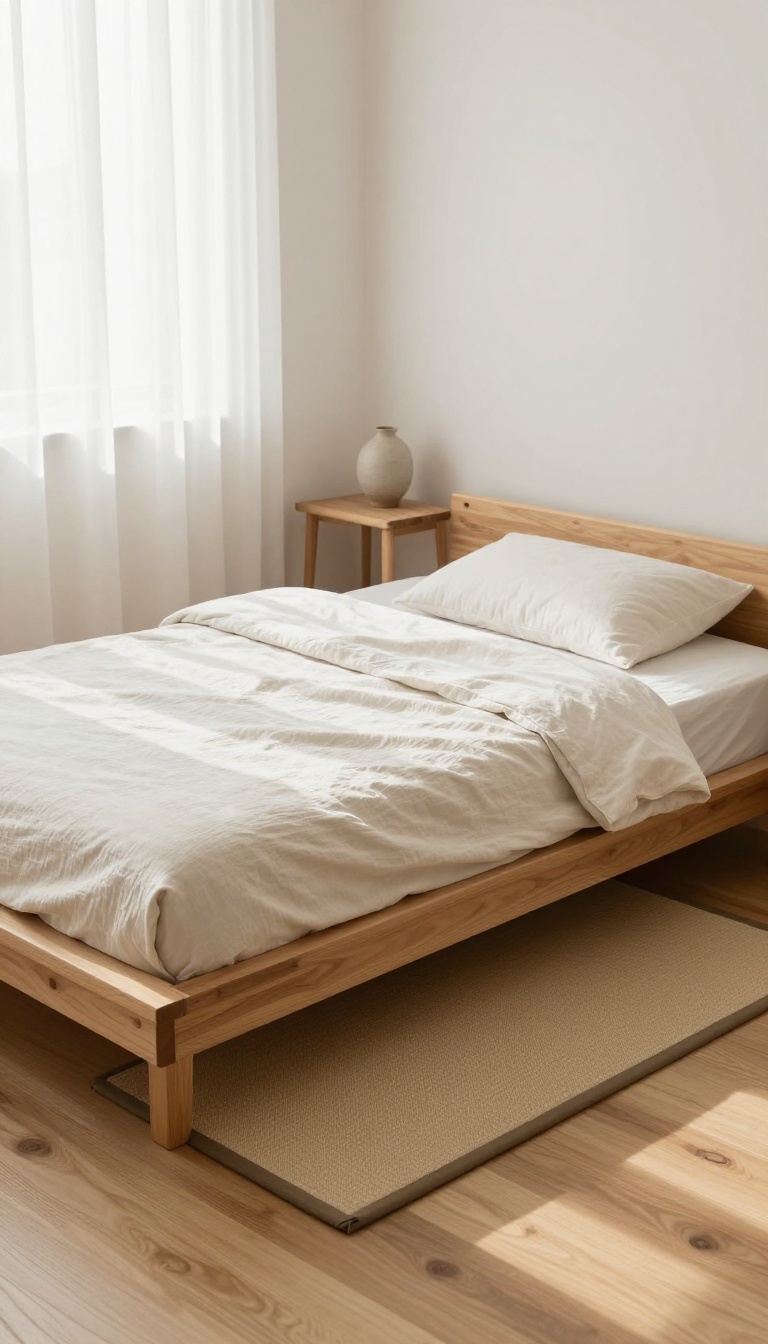
A floor bed might sound like a step backward, but in a small Korean-inspired bedroom it's a smart move. You skip the bulky frame and drop the mattress closer to the ground, which instantly makes the room feel taller and less packed. It also brings a relaxed, Japanese-Korean fusion vibe that fits calm, low-key spaces.
The trick isn't just tossing a mattress on the floor. You want a proper base so it looks intentional, stays breathable, and doesn't slide around. A simple wooden platform or a tatami mat does the job without adding visual weight.
The result is a bed that feels like part of the room, not a piece of furniture dominating it.
Why It Works In Small Rooms
Low beds keep the sightline open, so your eye travels across the room instead of hitting a tall headboard. That alone can make a tiny space feel less cramped. They also cut down on the visual noise that comes with chunky frames and under-bed clutter.
In a Korean-style room, that quiet, uncluttered look is the whole point.
Choosing Your Base
You've got a few good options. A low wooden platform with slats lets air circulate under the mattress, which helps prevent moisture. A tatami mat gives you that traditional Japanese-Korean feel and works well on hard floors.
If you want something softer, a foldable mattress or a thick futon on a rug can work, but you'll need to air it out regularly. Pick based on your floor type and how much you care about airflow.
Keeping It Comfortable And Practical
Floor beds can get cold in winter and stuffy in summer if you don't manage airflow. A breathable mattress and a slatted base solve most of that. Add a thin rug underneath for warmth and to protect the floor.
Keep the area around the bed clear so you're not stepping over stuff when you get up. And if you have pets or kids, a low bed is actually easier to manage than a tall one.
Styling It Without The Bulk
Skip the heavy headboard and use a couple of large floor cushions or a low shelf instead. A small side table at mattress height keeps things functional without adding height. Lean a piece of art against the wall or hang it low to match the bed's level.
Soft, neutral bedding in linen or cotton ties the whole look together.
4. Maximize Storage with Built-In or Under-Bed Drawers
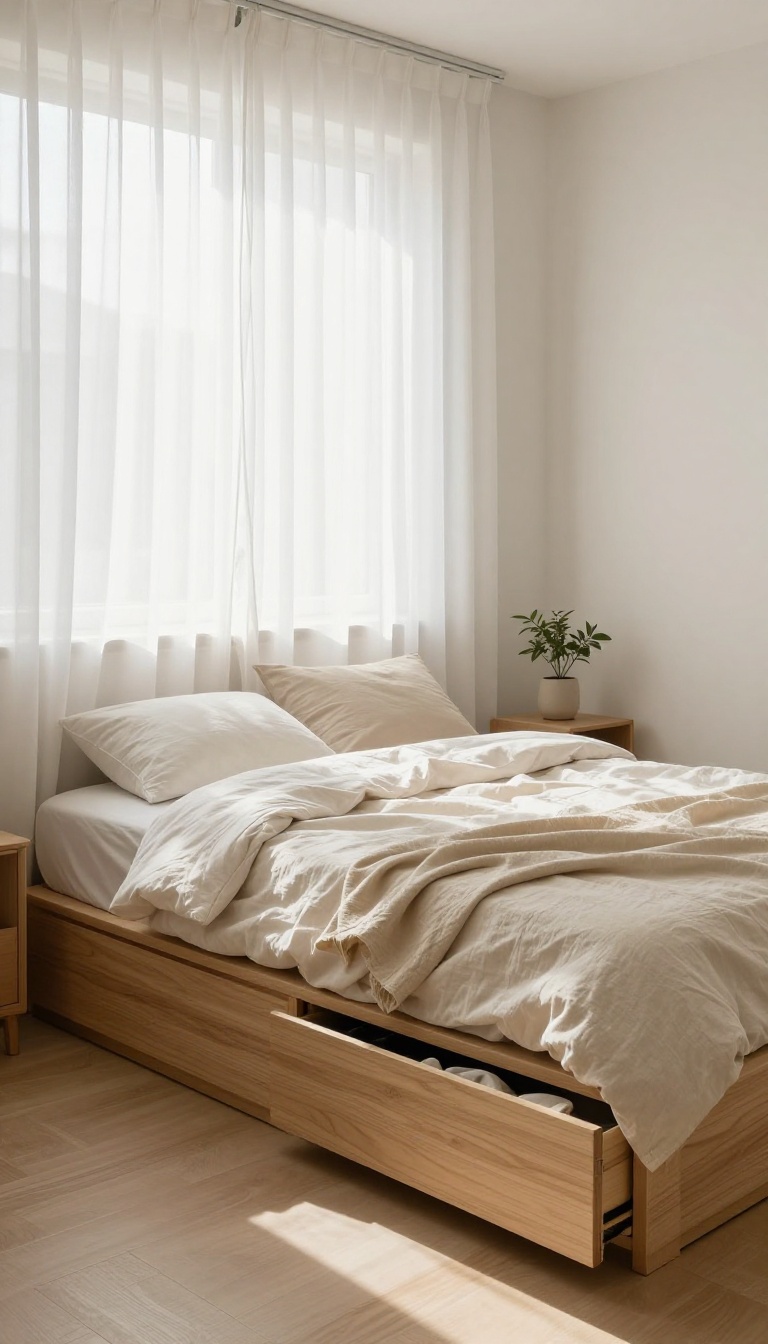
Small rooms rarely fail because they lack space. They fail because stuff piles up where you can see it. Built-in and under-bed drawers solve that by giving everyday items a home you never have to look at.
In a Korean-inspired bedroom, that hidden storage keeps the calm, uncluttered look intact while doing real work.
The bed is the biggest object in the room, so it should earn its keep. Instead of letting that space sit empty, use it. Drawers that slide under the frame or tuck into the base turn dead square footage into usable storage.
You get a place for extra bedding, off-season clothes, and the random bits that never seem to have a spot. And because everything disappears, the room stays visually quiet. That's the whole point of this style: function you feel, not clutter you see.
Why Under-bed Storage Works So Well
Under-bed space is often wasted, especially with a low or floor bed. Adding shallow drawers uses that gap without raising the bed height. It keeps the room feeling open because nothing new is added to the walls or floor.
You just reclaim what was already there. For small rooms, that's a quiet win.
Built-in Drawers That Disappear
Built-in drawers sit flush with the bed frame, so they look like part of the design. No handles sticking out, no gaps showing. You can have them made to match the wood tone or paint them the same color as the walls.
When closed, they vanish. When open, they hold a surprising amount. This works best with a platform bed or a custom base.
Slide-out Drawers For Renters
Not everyone can build in storage. Rolling drawers or fabric bins on wheels slide under most bed frames with a little clearance. They're cheap, easy to move, and you can take them with you.
Look for low-profile options in muted colors so they blend in. A simple canvas or woven material fits the natural Korean look better than bright plastic.
What To Actually Store Down There
Use under-bed drawers for things you don't need daily. Extra blankets, winter sweaters, spare sheets, and shoes you rotate by season. Keep a small drawer near the head for chargers, books, or a sleep mask.
Just don't overload them. Heavy items can be hard to pull out, and you'll avoid using them. A little planning keeps the system working.
5. Hang Curtains High and Wide to Fake Height
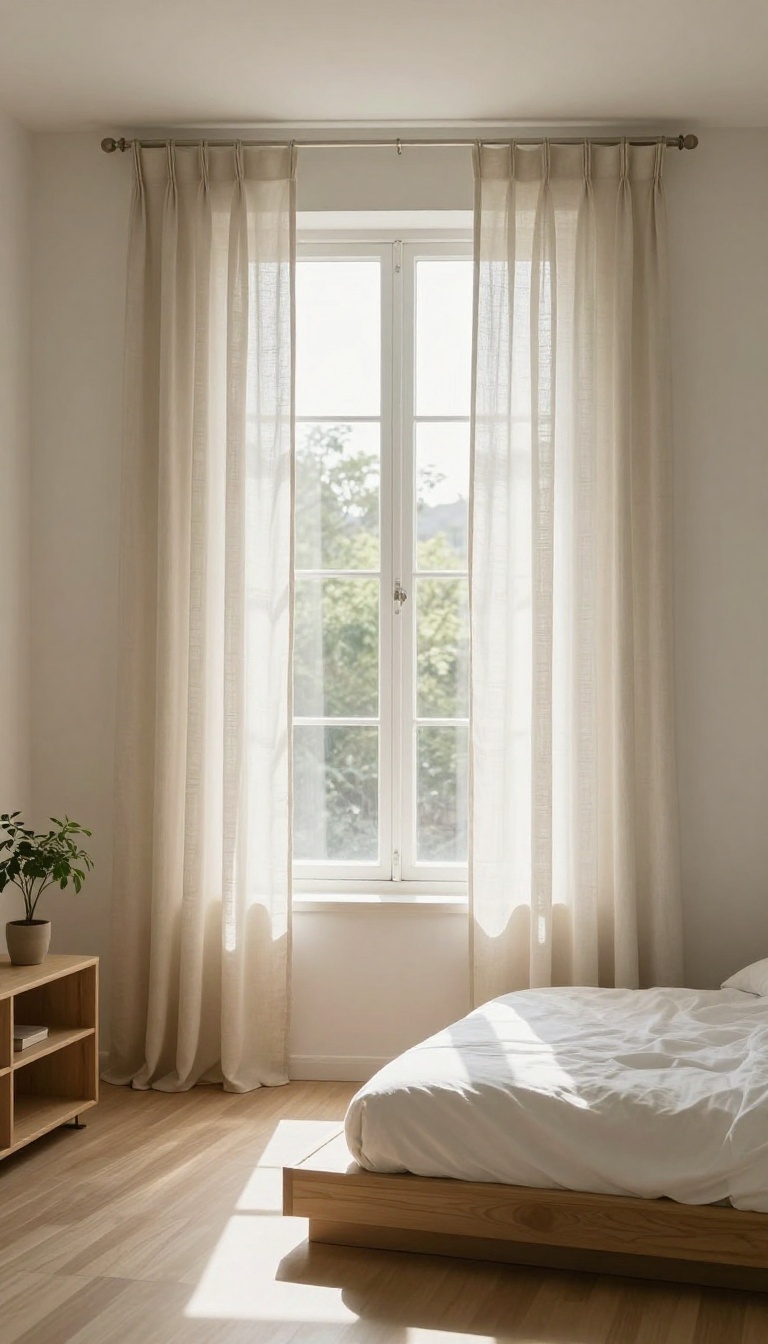
Curtains are one of the few things in a small bedroom that can change how tall the room feels without adding a single inch. Most people hang them just above the window frame, which quietly cuts the wall in half and makes the ceiling feel lower than it is. Move the rod up toward the ceiling and push it out past the window on both sides, and the whole room stretches.
The window reads bigger, the wall reads taller, and the light softens the way it falls into the space.
The trick works because your eye follows the fabric, not the frame. When curtains start near the ceiling and end near the floor, they create one long vertical line that pulls the gaze upward. In a compact Korean-style bedroom, that quiet lift is exactly what keeps things feeling airy instead of boxed in.
You do not need custom curtains or a big budget. A basic rod, a pair of panels, and about twenty minutes with a drill get you most of the way there. The rest is just getting the proportions right.
Where To Mount The Rod
Aim for the rod to sit two to four inches below the ceiling, or right at the ceiling line if your trim allows it. Then extend it six to ten inches past each side of the window frame. That extra width lets the curtains hang mostly over the wall when open, so the glass stays clear and the room still feels bright.
If your ceiling is low, going all the way up can feel heavy. In that case, mount the rod just above the top trim and keep the panels light in color. The height gain is smaller, but the room still reads taller than it would with a standard mount.
Pick A Fabric That Hangs Long
Floor-length panels do the heavy lifting here. Curtains that stop at the sill break the vertical line and shrink the window, so let them kiss the floor or hover a half inch above it. Lightweight fabrics like linen, cotton, or a linen blend drape softly and let daylight through.
Heavy velvet or blackout panels can work in winter, but in a small room they tend to swallow the light and make the walls feel closer. Stick with soft neutrals, warm whites, or muted sage to match the calm Korean palette.
Keep The Hardware Simple
Slim rods in matte black, brushed brass, or warm wood disappear into the room instead of competing with it. Skip chunky finials and ornate brackets, which add visual weight you do not need. Rings or a hidden track both work.
Rings are easier to swap out later, while a track gives you a cleaner line across the top. Either way, match the hardware to your other metals so the room feels intentional rather than pieced together.
Layer Without Clutter
Sheer curtains behind a heavier panel give you privacy and softness without darkening the room. Keep the sheers on the same rod or a slim second track tucked just behind it. Resist the urge to add valances, tiebacks, or extra trim.
In a small space, every added detail competes for attention. One clean pair of panels, hung high and wide, does more than three layered treatments ever will.
6. Add a Sliding Door or Room Divider for Flexible Zoning
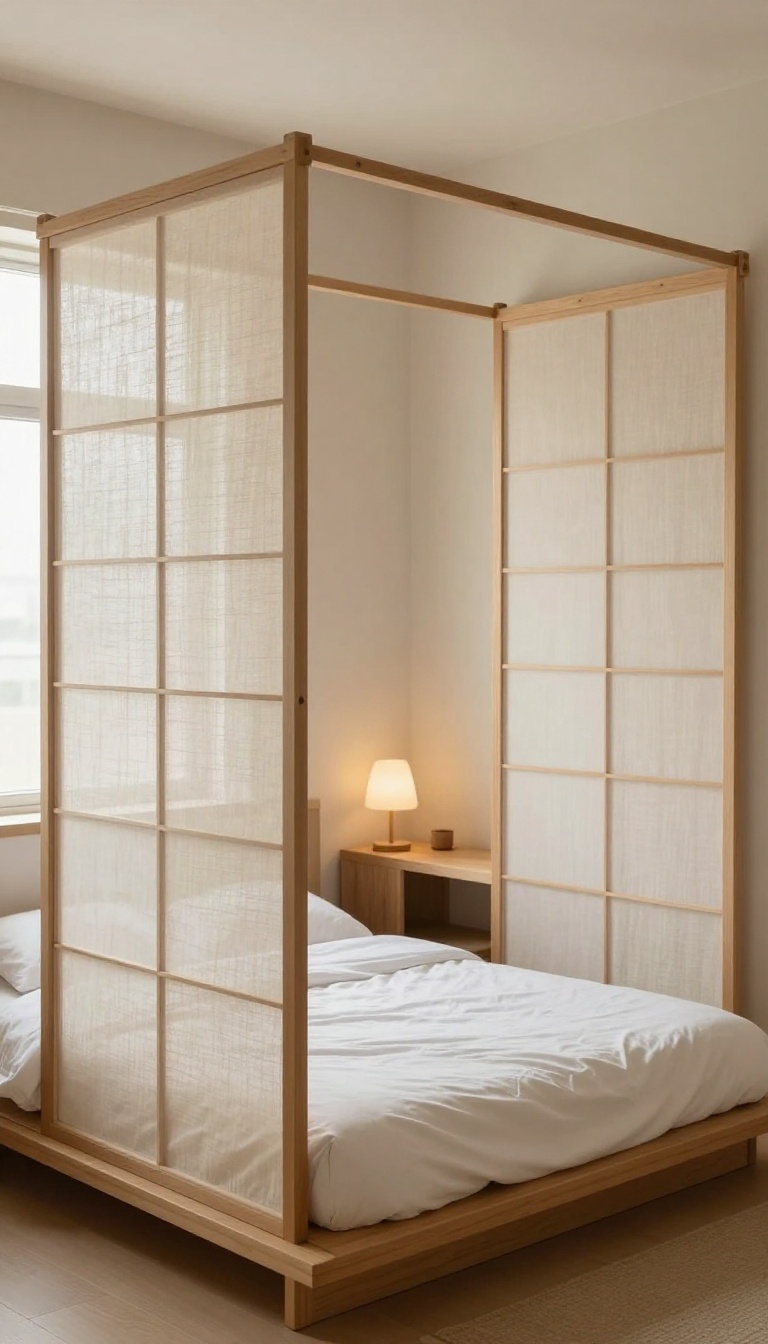
A single room often has to pull double duty, especially when it's small. You sleep there, work there, maybe even eat there, and somehow it all has to feel calm instead of chaotic. A sliding door or a simple room divider solves that problem without eating up floor space or blocking the light you actually want to keep.
The trick is choosing something that slides, folds, or hangs rather than swings open. In Korean homes, that often means a shoji-style screen with translucent paper or a lightweight fabric panel that glides along a ceiling track. Both options let you section off a study nook or a sleeping corner in seconds, then open everything back up when you want the room to feel bigger again.
Why Sliding Beats Swinging
A traditional door needs a clear arc of space to open, and in a small bedroom that arc is usually where your desk or bed already sits. Sliding doors and screens move side to side, so they only need a few inches of clearance. That makes them ideal for tight layouts where every corner counts.
You also get to keep the room open when you don't need privacy, which helps a small space feel less boxed in.
Shoji Screens And Fabric Dividers
Shoji-style screens bring that soft, diffused light Korean bedrooms are known for. The paper panels glow during the day and turn into a gentle nightlight when you put a lamp behind them. If you want something even lighter on the budget, a fabric divider on a tension rod works just as well.
Choose a natural linen or cotton in a muted tone, and it will blend into the room instead of shouting for attention.
Zoning Without Walls
You don't need a full wall to create a separate zone. A half-height divider or a screen that only covers part of the room can mark the boundary between sleep and study while still letting air and light move through. Place it so it hides clutter from the bed, or use it to block the view of a work desk when you're trying to wind down.
The goal is flexibility, not a permanent build.
Track And Installation Tips
Ceiling-mounted tracks are the cleanest option because they keep the floor completely clear. If you rent, look for tension rods or freestanding screens that don't require drilling. For fabric panels, a simple curtain wire works fine and costs almost nothing.
Just make sure the track or rod is sturdy enough to handle daily use, and measure twice before you install anything.
7. Keep Lighting Warm and Layered
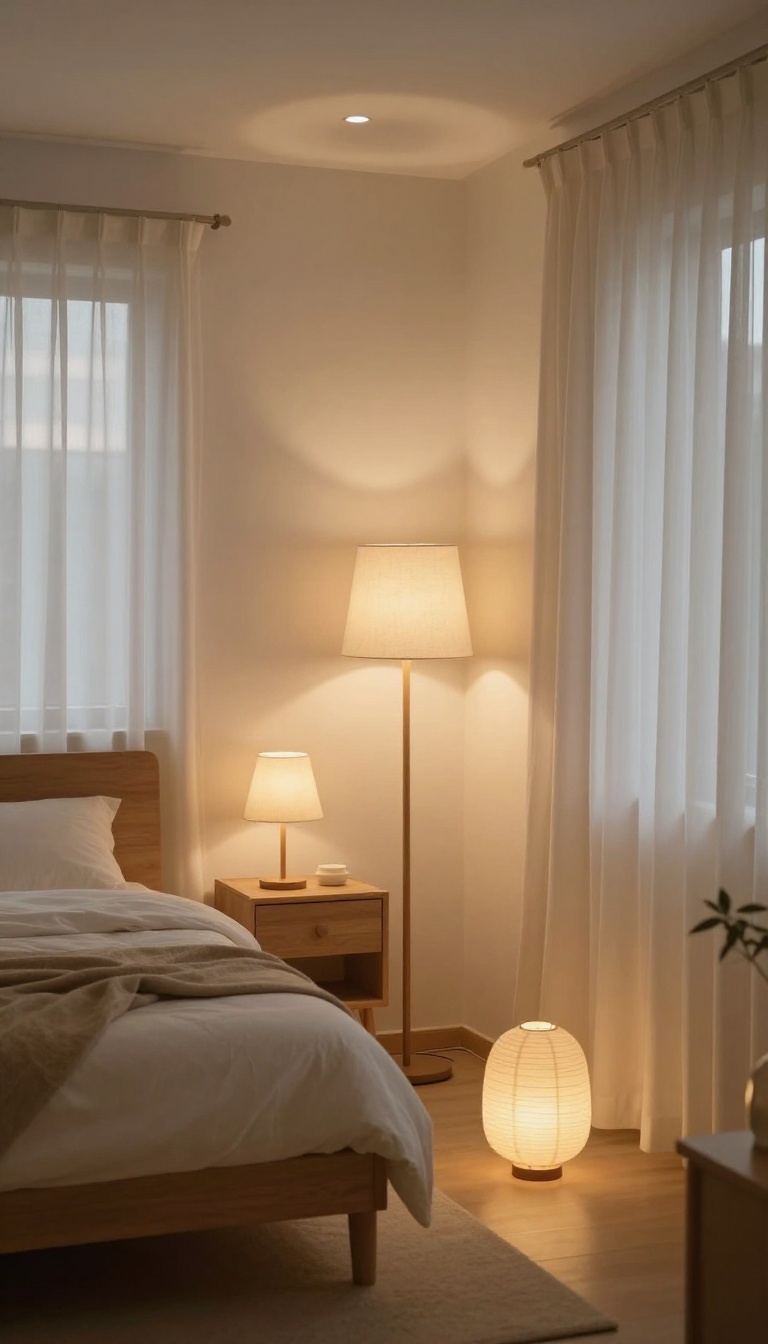
One overhead light in a small bedroom usually does two things: it flattens the room and makes it feel like a waiting area. Layering your lighting fixes that fast. You want a soft general glow, a focused pool of light near the bed, and one small source you can switch on without waking anyone up.
Korean bedrooms often use warm, dimmable light because it mimics the way daylight fades at home. That matters more in a small room, where a single bright ceiling fixture bounces off every wall and makes the space feel exposed. Start with a warm bulb in your main light, then add two smaller sources at different heights.
The mix gives you options: bright enough to fold laundry, soft enough to wind down.
Start With The Overhead
Swap whatever cool white bulb is up there for something in the 2700K to 3000K range. If you can put it on a dimmer, do it. A dimmed overhead light stops being the star of the room and becomes a quiet base layer.
Add A Bedside Lamp
A small lamp on a nightstand or a wall-mounted sconce gives you light exactly where you read or scroll. Choose a shade that softens the bulb, like linen or rice paper, so it glows instead of glares. Keep the height low enough that it doesn't compete with the ceiling light.
Tuck In A Floor Lamp Or Paper Lantern
A slim floor lamp in a corner or a small paper lantern on the floor adds a third layer without eating surface space. It's the light you leave on when you're just moving around the room. Warm, low, and easy to ignore when you don't need it.
8. Embrace Negative Space on Walls
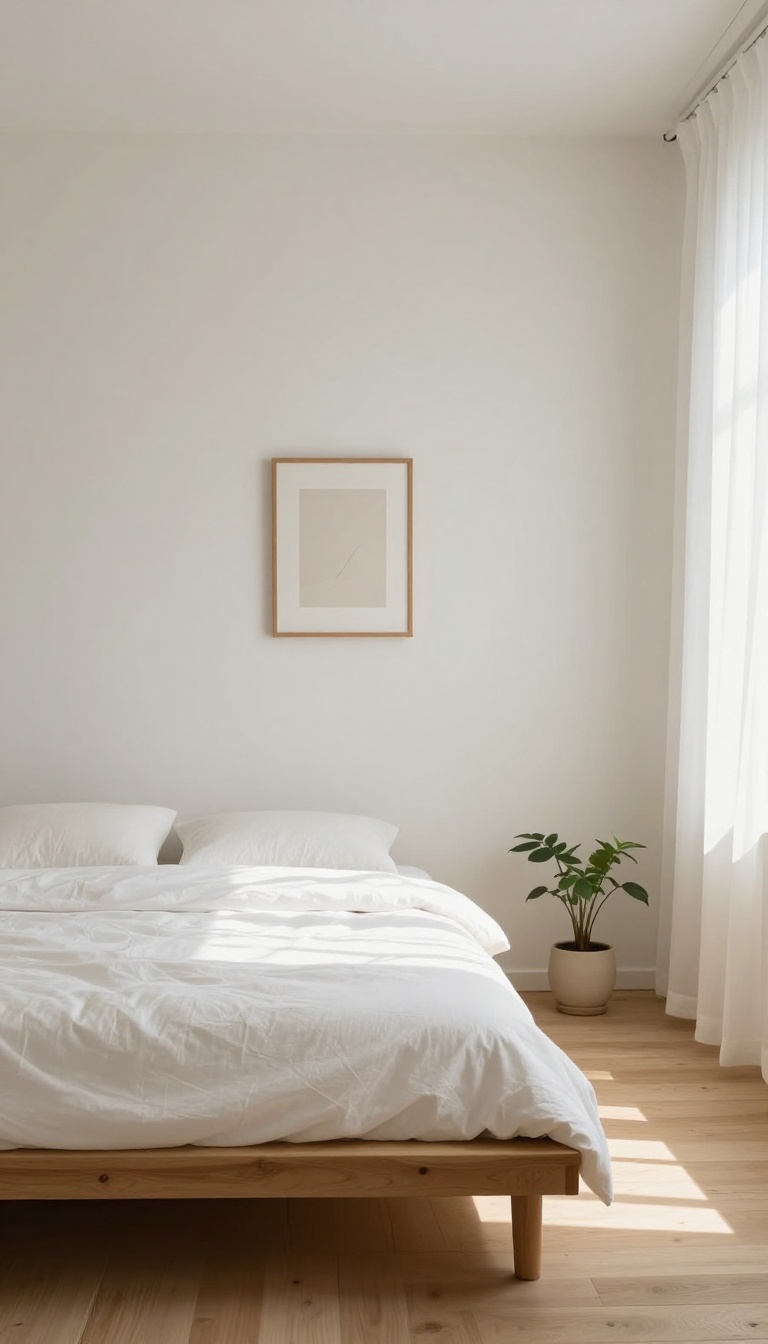
Walls in a small bedroom can easily become a catch-all for decor, but that often backfires. When every inch is covered, the eye has nowhere to rest, and the room feels busier than it is. Korean style often does the opposite: it treats empty wall space as a design feature, not a gap to fill.
Leaving walls mostly bare or hanging just one or two simple pieces keeps the room calm and visually lighter.
Negative space isn't about being lazy or unfinished. It's a deliberate choice to let the walls breathe, which makes the whole room feel more open. In a small space, that breathing room matters even more because clutter—visual or physical—can make the walls feel like they're closing in.
By resisting the urge to fill every blank spot, you create a sense of quiet that's hard to achieve otherwise.
Why Less On The Walls Feels Like More
Every piece you hang adds visual weight. A gallery wall might look great in a large living room, but in a small bedroom it can overwhelm the space. When you leave walls mostly empty, your eye isn't constantly pulled in different directions.
The room feels simpler, and your brain gets to relax. That's a big part of the Korean calm aesthetic—it's not about having nothing, but about having only what matters.
How To Choose The Right Piece (if You Hang Anything)
If you do want something on the wall, stick to one or two pieces max. A single framed print, a small textile, or a simple wall hanging can be enough. Choose something with muted colors or natural tones that blend with the room instead of shouting for attention.
Scale matters too: a piece that's too small can look lost, while one that's too large can dominate. Aim for something that feels balanced with the wall space around it.
Placement Tips For A Calm Look
Hang art at eye level, not too high. In a small room, centering a single piece on the largest wall often works best. If you're hanging two pieces, keep them aligned and spaced a few inches apart.
Avoid clustering multiple small items unless you're going for a curated, minimal grouping. And don't forget to step back and check how it feels—if it adds stress, take it down.
9. Use Natural Materials Like Wood, Linen, and Paper
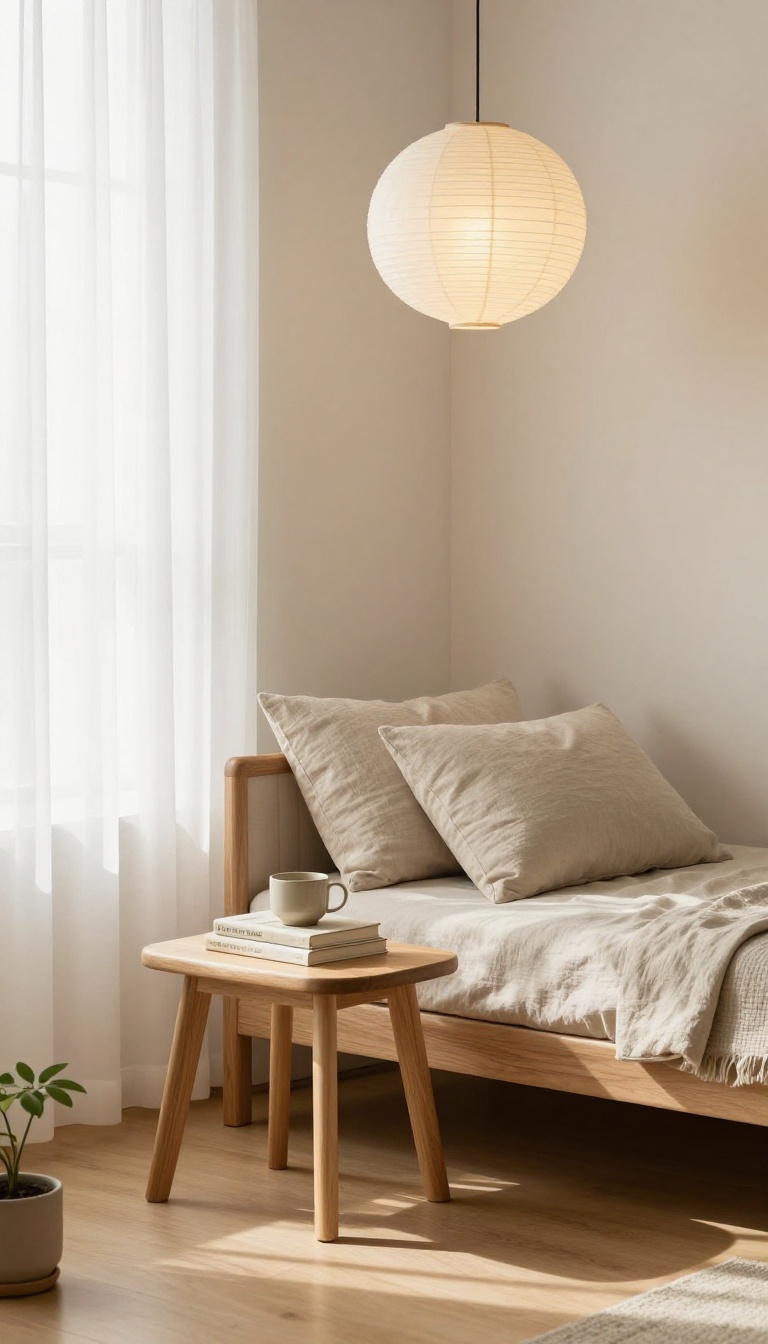
Natural materials bring a quiet warmth that synthetic finishes can't fake. In a small Korean bedroom, they add texture without adding visual noise. Think of a wooden stool, linen bedding, and a paper lantern—simple pieces that make the room feel grounded and calm.
These materials work because they reflect light softly and age gracefully. They also connect the room to nature, which is a core part of Korean design. You don't need much—just a few key items can shift the whole mood.
Start With A Wooden Stool
A small wooden stool is one of the most useful pieces in a tight room. It can be a bedside table, a plant stand, or extra seating when friends visit. Look for a light wood like oak or ash to keep the space feeling airy.
Place it next to your bed with a book and a cup of tea, and you've got a cozy corner that doesn't crowd the floor.
Choose Linen Bedding
Linen bedding is breathable, soft, and gets better with every wash. Unlike heavy patterns, it adds texture through its natural weave. Stick to muted tones like oatmeal, sage, or dusty blue to keep things calm.
In a small room, a linen duvet and a couple of pillows are enough—no need for a mountain of cushions.
Hang A Paper Lantern
A paper lantern gives off a soft, diffused glow that's perfect for winding down. It's lightweight, so it won't feel bulky in a small space. Hang one from the ceiling or place a tabletop version on your nightstand.
The rice paper softens the light and adds a subtle organic touch.
Mix, Don't Match
You don't need everything to be the same wood tone or fabric. Mixing a dark wood stool with light linen and a white paper lantern creates depth. Just keep the palette within the same family—warm neutrals, soft earth tones—so it still feels cohesive.
A little variation keeps the room from looking like a catalog page.
10. Incorporate a Small Floor Cushion or Pouf
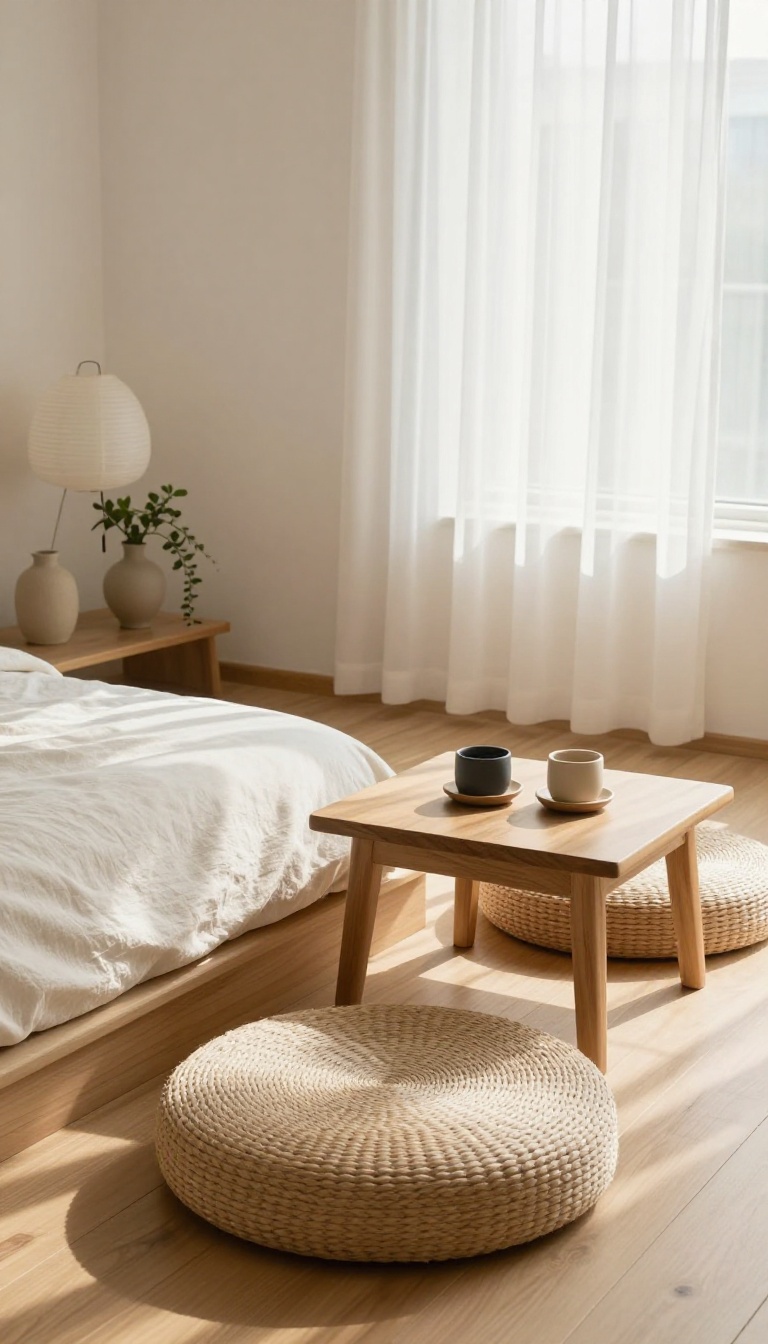
A floor cushion solves a problem that chairs can't: it gives you a place to sit without claiming permanent floor space. In a small Korean-style bedroom, that flexibility matters more than another piece of furniture. You can drop it by the window for morning reading, pull it to the low table for tea, or stack it in a corner when you need the floor clear.
One cushion, several jobs, zero commitment.
The appeal here is simple. A pouf or floor cushion is light enough to move with one hand and soft enough to double as a footrest or a spot for a laptop. It doesn't block sightlines the way a chair back does, so the room still reads as open.
Korean bedrooms often use floor seating as the default, which is why this fits so naturally. You're not adding a Western armchair into a tight layout. You're adding a low, quiet object that belongs at floor level.
Pick one that matches your existing palette. A linen cover in oatmeal, charcoal, or soft clay keeps it from becoming a bright distraction. If you want a little texture, a woven cotton or hemp cover works without shouting.
Pick The Right Size And Fill
A 16- to 20-inch cushion works for most adults. Smaller than that and you're sitting on a coaster. Larger and it starts acting like furniture you have to walk around.
For fill, buckwheat hulls hold their shape and stay cool. Shredded foam is softer and cheaper but flattens over time. Cotton batting sits in the middle.
If you plan to meditate, go firmer. If you want to lounge, go softer.
Place It Where You Actually Sit
Don't park it in a random corner. Put it where you naturally pause: beside the bed, under the window, or near a low shelf. That's where it'll get used.
If you have a floor bed, a cushion at the foot gives you a spot to sit while you pull on socks or check your phone. It also softens the transition between bed and floor.
Keep It From Becoming Clutter
One cushion is enough. Two starts to look like a pile, and three turns into storage for laundry you haven't folded. When you're not using it, lean it against the wall or tuck it under a low table.
A cushion with a handle or a loop makes that even easier. If it has a removable cover, wash it every couple of weeks so it stays fresh.
11. Hide Clutter with Baskets and Fabric Bins
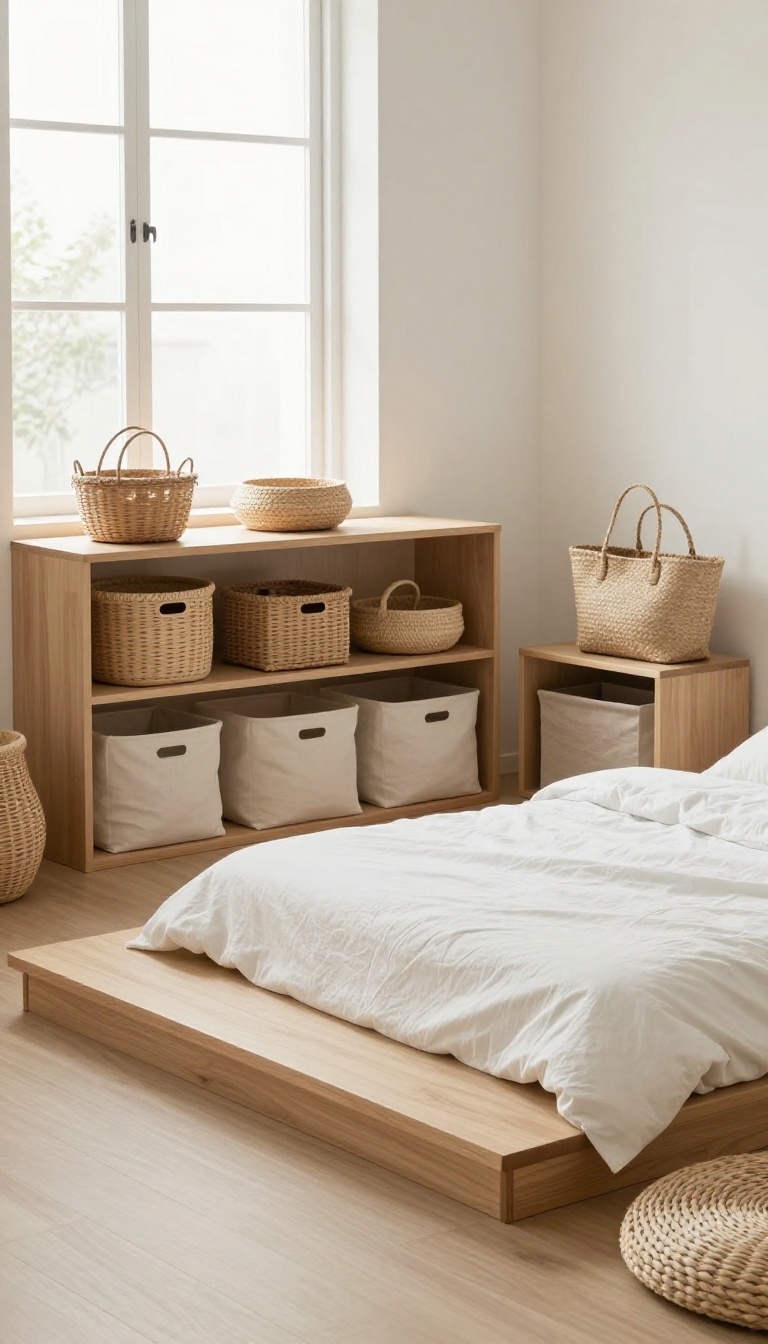
Small items are the quiet enemy of a calm bedroom. Chargers, hair ties, books, and half-read magazines pile up fast, and before you know it, the room feels messy even when it's clean. Baskets and fabric bins solve this without adding visual weight.
They give every little thing a home, so surfaces stay clear and the room keeps its soft, uncluttered look.
Korean bedrooms often use woven baskets and soft bins as part of the decor, not just as storage. They blend into the room instead of standing out, which keeps the calm vibe intact. You can place them on open shelves, tuck them under a floor bed, or line them up in a corner.
The key is choosing materials and colors that match your palette—think natural rattan, cotton, or linen in muted tones.
Pick Baskets That Blend In
Look for baskets made from natural fibers like seagrass, jute, or cotton rope. These materials add texture without shouting for attention. Stick to neutral shades—beige, gray, off-white—so they disappear into the background.
If you want a little contrast, choose a basket that's one shade darker than your walls. Avoid bright colors or busy patterns; they break the calm.
Use Fabric Bins For Soft Storage
Fabric bins are perfect for items you want to grab quickly, like socks, scarves, or skincare. They're soft, so they won't scratch furniture or make noise when you set them down. Look for bins with handles so you can pull them off a shelf easily.
Collapsible ones are great because you can stash them away when not in use. Stick to cotton or canvas in solid colors.
Place Them Where Clutter Collects
The best spot for a basket is wherever clutter naturally piles up. That might be beside your bed, on a shelf, or in a corner near the door. Put a small bin on your nightstand for odds and ends, and a larger one under the bed for extra bedding or clothes.
In a tiny room, a stack of two or three baskets can double as a side table.
Keep It Tidy With A Simple System
Don't just toss things in—give each basket a purpose. One for laundry, one for books, one for electronics. Label them if you need to, but keep labels subtle.
At the end of each day, do a quick sweep and drop stray items into their bins. This five-minute habit keeps the room looking calm without a major cleanup.
12. Add a Tiny Plant or Two for a Touch of Life
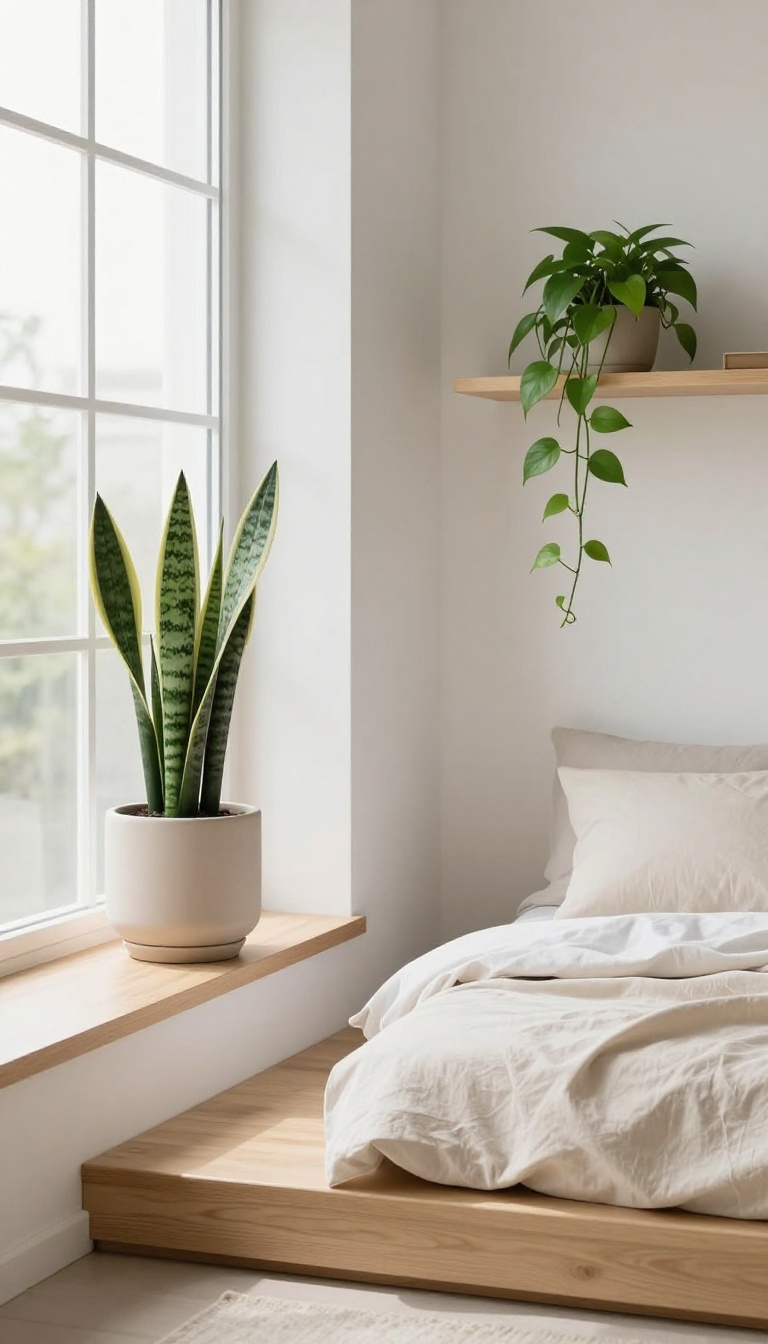
A bedroom with no green at all can start to feel a little sterile, no matter how nicely you style it. One small plant on a windowsill or shelf fixes that without eating into your floor plan. You're not building a jungle here.
A single snake plant or pothos in a modest pot is enough to soften the room and give your eye something alive to land on. It's one of the cheapest, fastest changes on this list, and it works in even the tiniest space.
Plants earn their place in a small Korean-style bedroom for a simple reason: they add life without adding clutter. They sit on surfaces you already have, they don't need to match a color scheme, and they quietly clean the air while you sleep. The trick is picking varieties that stay small, tolerate low light, and don't demand constant attention.
You want greenery that looks calm, not a project that stresses you out.
Best Plants For Tight Corners
Snake plants and pothos are the two easiest wins. A snake plant stands upright in a narrow pot, so it fits on a windowsill or the edge of a shelf without sprawling. Pothos trails, which means it can hang from a hook or sit on a high ledge and drape down gently.
Both handle low light and irregular watering, which matters in a small bedroom where you might not have a bright window. If you want something with a little more shape, a small ZZ plant or a single succulent works too. Just keep the pot small, since a big planter defeats the purpose.
Where To Put It Without Cluttering
The windowsill is the obvious spot, but don't stop there. A floating shelf above your bed or desk can hold one small plant and nothing else, which keeps it from turning into a junk shelf. A nightstand corner works if you keep the rest of the surface clear.
If floor space is truly tight, hang a pothos from the ceiling near the window. It draws the eye upward and makes the room feel taller. One plant in the right spot reads as intentional.
Three crowded together reads as messy.
Keep It Calm, Not Chaotic
Match the pot to the room's muted palette. Terracotta, matte white, or a soft stone gray blend in better than glossy bright colors. Skip the patterned cachepots and the plastic-looking finishes.
Stick to one or two plants total. A single healthy plant looks calmer than a shelf full of half-alive ones. Trim dead leaves, water on a simple schedule, and let the plant do its quiet job.
13. Create a Simple Nighttime Routine to Keep It Calm
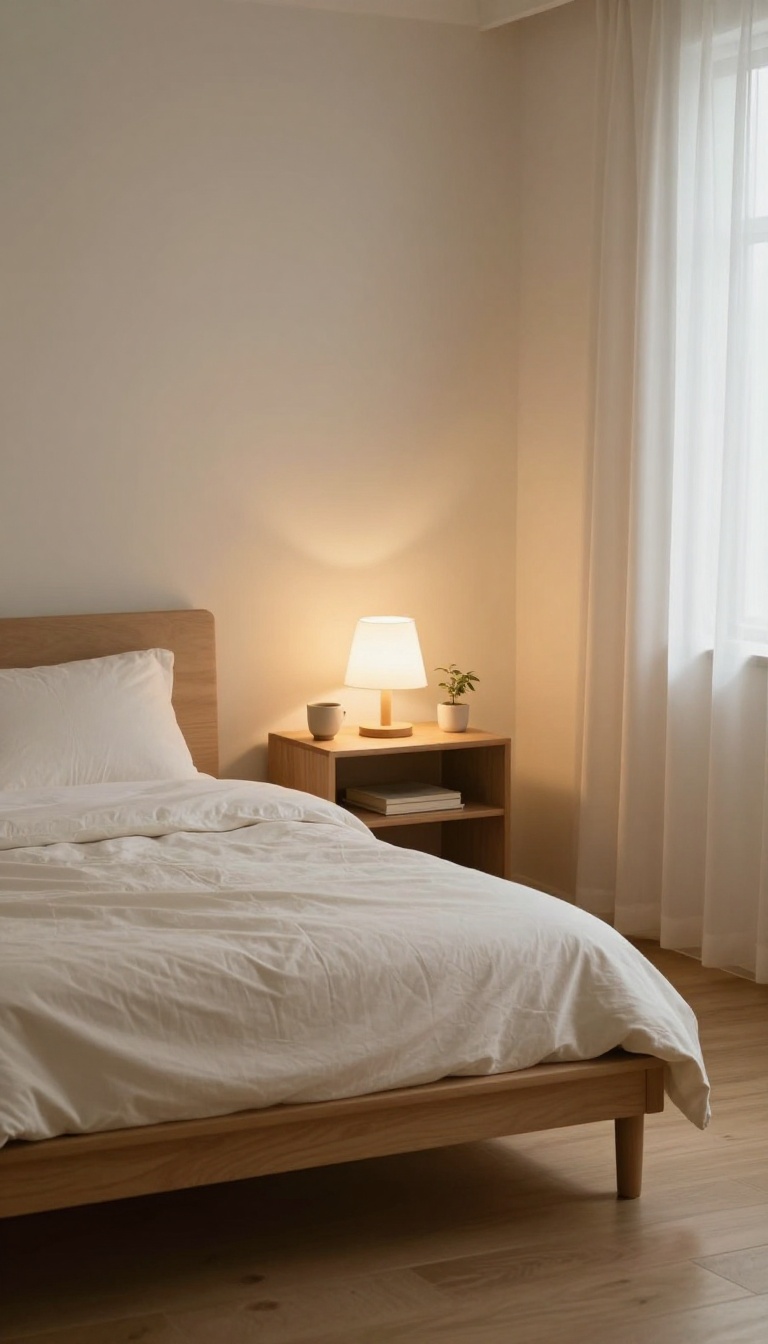
You can spend a weekend perfecting your small Korean-inspired bedroom and still watch it fall apart by Thursday. The fix isn't more storage or another shopping trip. It's a five-minute routine that resets the room before you climb into bed.
The idea is simple: every night, you tidy the surfaces you can see and dim the lights you actually use. That's it. No deep cleaning, no rearranging, no guilt if you skip a night.
The point is to protect the calm you've already built, not to add another chore to your day.
Think of this routine as the closing shift for your bedroom. The room served you all day; now you give it five minutes to get ready for tomorrow. When you do it consistently, you stop waking up to clutter and harsh light, which means your first and last moments in the room stay peaceful.
It also makes the rest of the article's ideas last longer. A floor bed looks serene until laundry piles up on it. Muted walls feel soft until every surface is covered in cups and chargers.
The routine is what keeps those design choices working.
The Five-minute Reset
Set a timer if you need to. Five minutes is enough to put away clothes, stack books, and clear any cups or random items from your nightstand and floor. You're not organizing, just returning things to their spots.
If you share the room, make it a joint habit. One person handles surfaces, the other handles the floor. It goes faster and nobody feels like the default tidy-up crew.
Dim The Lights, Not Just The Overhead
Harsh ceiling light kills the calm faster than clutter. About an hour before bed, switch off the main light and turn on a small lamp or clip-on reading light with a warm bulb. If you have a floor bed, a low lamp near the mattress works well.
You can also use a smart plug or a simple dimmer switch so you don't have to think about it. The goal is a soft, low glow that signals to your brain that the day is winding down.
Keep The Routine Visible
A routine you forget isn't a routine. Leave a small tray or basket near the door for anything that doesn't belong in the bedroom, so you can grab it in the morning. Put your lamp on a timer or smart plug so it turns on at the same time each night.
If you're the type who ignores sticky notes, tie the routine to something you already do. Brush your teeth, then tidy. Set your alarm, then dim the lights.
Attach it to an existing habit and it sticks.
FAQ
What makes Korean bedroom design different from other styles?
Korean bedroom design emphasizes simplicity, natural materials, and a calm atmosphere. It often uses low furniture, muted colors, and smart storage to keep small spaces feeling open and uncluttered.
Can I use these ideas in a rented apartment?
Yes, most ideas are renter-friendly. You can use removable hooks for curtains, freestanding room dividers, and under-bed storage bins without making permanent changes.
How do I choose the right colors for a small Korean-style bedroom?
Stick to warm neutrals like white, beige, and light gray. These colors reflect light and make the room feel bigger. Add subtle accents like pale wood or soft green if you want a bit of contrast.
What kind of lighting works best for a calm bedroom?
Warm, layered lighting works best. Use a dimmable overhead light, a bedside lamp with a soft bulb, and maybe a small floor lamp. Avoid harsh white lights that can feel clinical.
How can I keep my small bedroom from feeling cluttered?
Use hidden storage like under-bed drawers and baskets, and keep surfaces mostly clear. A quick nightly tidy-up and sticking to a 'one in, one out' rule for decor items also helps.
Conclusion
Calm style in a small Korean bedroom comes down to a few honest choices repeated daily, not a shopping spree. Start with the idea that fixes your worst morning friction, whether that's a bed crowding the door or clothes piling on the floor. Give it a week before you judge it.
Then layer in the next piece when the room tells you it's ready. Low furniture, soft light, and one clear surface do more than any haul ever will. Small spaces reward patience, and yours will feel quieter for it.