13 Large Backyard Ideas Layout Tips for Better Outdoor Flow
A big backyard can feel like a liability until the layout starts working for you. Suddenly the same square footage that felt scattered and awkward becomes a place where people drift naturally from the patio to the fire pit without thinking about it.
That shift rarely comes from buying more stuff. It comes from planning how the space moves.
The thirteen tips below cover zones, paths, lighting, and the small transitions that make a large yard feel connected instead of chopped up. Work through them in order or cherry-pick what fits your space, and you'll get more use out of the yard you already have.
1. Map Out Zones Before You Move a Single Chair
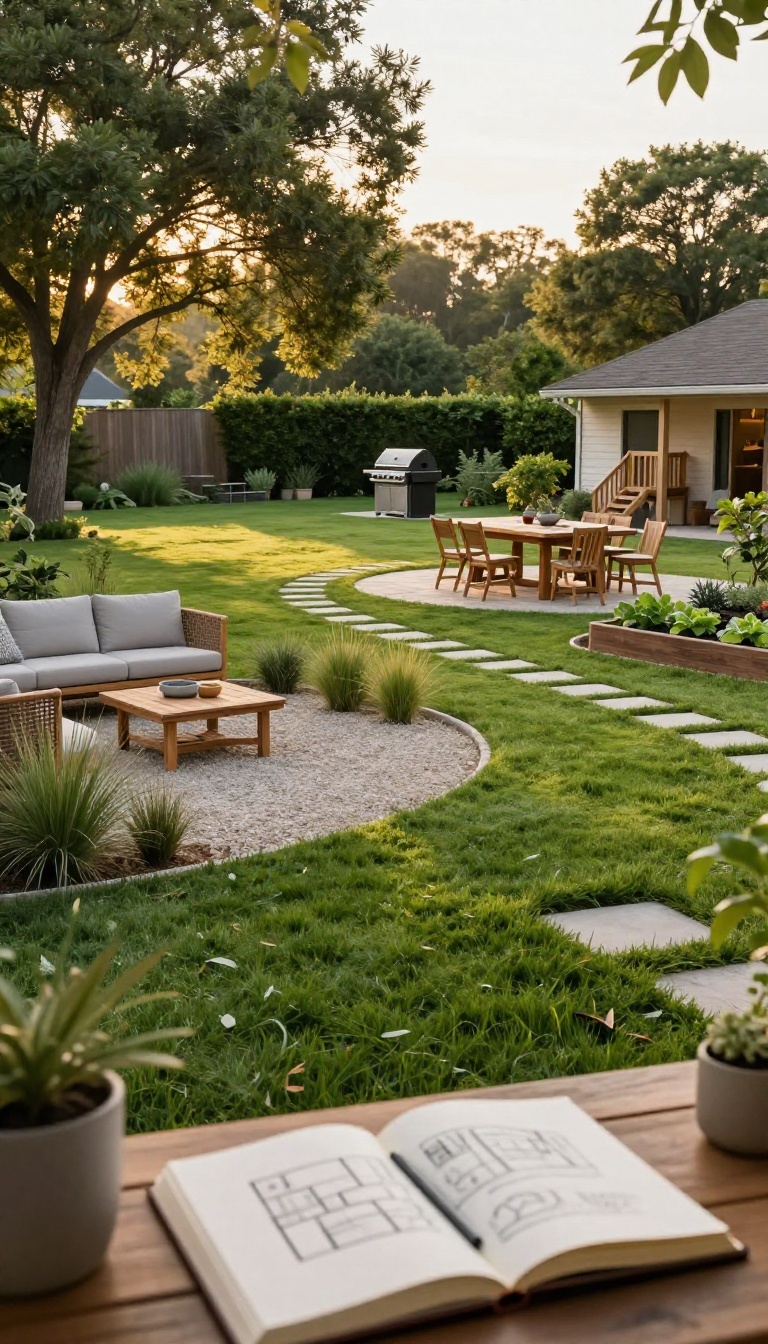
Before you buy a single piece of furniture or plant a shrub, take a step back and think about how you want to use your backyard. A large space can quickly become a mishmash of random items if you don't have a plan. By dividing your yard into clear activity zones—like dining, lounging, play, and gardening—you create a roadmap for everything that follows.
This simple step saves you from costly mistakes and ensures your yard works for your lifestyle.
Most people start by placing a grill or a patio set wherever it looks good, then wonder why the yard still feels disjointed. The problem is that they're decorating, not planning. Zones give each part of your yard a purpose, so every square foot earns its keep.
You wouldn't design a house without rooms, so why treat your backyard like one big open floor?
Sketch It Out On Paper First
Grab a piece of graph paper and draw your yard to scale. Mark the permanent features: house walls, trees, slopes, and utility lines. Then start blocking out zones with simple shapes.
This low-stakes exercise lets you test ideas without spending a dime. You'll quickly see if the dining area is too far from the kitchen door or if the play zone overlaps with your quiet reading corner.
Think About How You Actually Live
Don't just copy a magazine layout. Consider your daily routines and special occasions. Do you host big summer barbecues?
Then you need a dining zone that flows into a lounging area. If you have kids, a play zone should be visible from the kitchen or patio. And if you love gardening, give yourself a dedicated spot with easy access to water and tools.
Your zones should reflect your real life, not an idealized version of it.
Avoid Common Zone Planning Mistakes
One big mistake is making zones too small or too close together. In a large yard, you have room to spread out—use it. Another is forgetting about traffic flow.
Leave wide paths between zones so people can move without weaving through furniture. Also, don't put the compost pile next to the dining table. Sounds obvious, but it happens when you don't plan.
2. Create a Main Path That Connects Everything
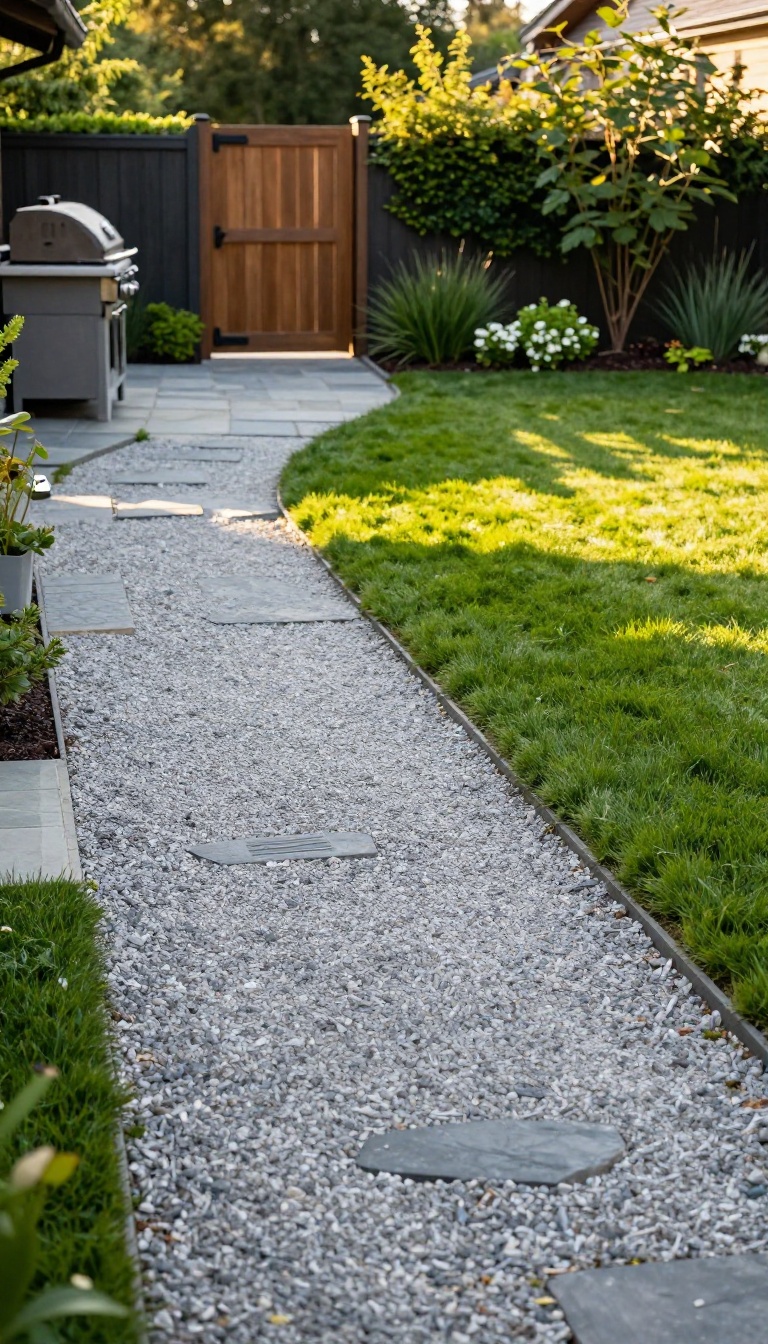
A main path gives your backyard a backbone. Without one, people wander aimlessly or cut across the lawn in random lines. With one, every zone feels like it belongs to the same space.
The path doesn't have to be fancy. It just needs to be clear, intentional, and wide enough to walk comfortably. Think of it as the hallway of your outdoor home.
Start by mapping where people naturally walk. Watch how guests move from the patio to the grill, or from the gate to the back door. Those worn lines in the grass are telling you where the path should go.
Once you know the route, pick a material that fits your style and budget. Gravel is affordable and easy to install, but it shifts over time. Pavers cost more upfront but last decades.
Stepping stones work well for a casual, garden-like feel. Width matters more than you think. A path under three feet wide feels cramped when two people try to pass.
Aim for three to four feet for a main route, and wider if it doubles as a gathering spot. Use the path to define borders. A line of pavers can separate a lawn from a planting bed without a fence.
It tells the eye where one zone ends and another begins, which keeps a large yard from feeling like an open field.
Choose A Material That Matches Your Maintenance Style
Gravel is cheap and drains well, but you'll need to rake it back into place now and then. Pavers stay put and handle heavy foot traffic, though they cost more and require a solid base. Stepping stones are the easiest DIY option, but they work best for light use and a relaxed look.
Pick based on how much upkeep you actually want, not just what looks good on day one.
Let The Path Set The Width Of Your Zones
A main path can double as a divider. If it runs between a dining area and a play zone, make it wide enough to feel like a real boundary. Three feet is the minimum for comfort.
Four feet gives you room to add a bench or a planter without blocking the flow. The path becomes a feature, not just a strip of gravel.
Add Soft Lighting Along The Route
A path that disappears at night is a path people avoid. Low-voltage stake lights or solar caps on pavers keep the route visible after dark. Place them every six to eight feet, and angle them so they light the ground, not your eyes.
The goal is guidance, not a runway.
3. Use Vertical Elements to Break Up Wide Open Space
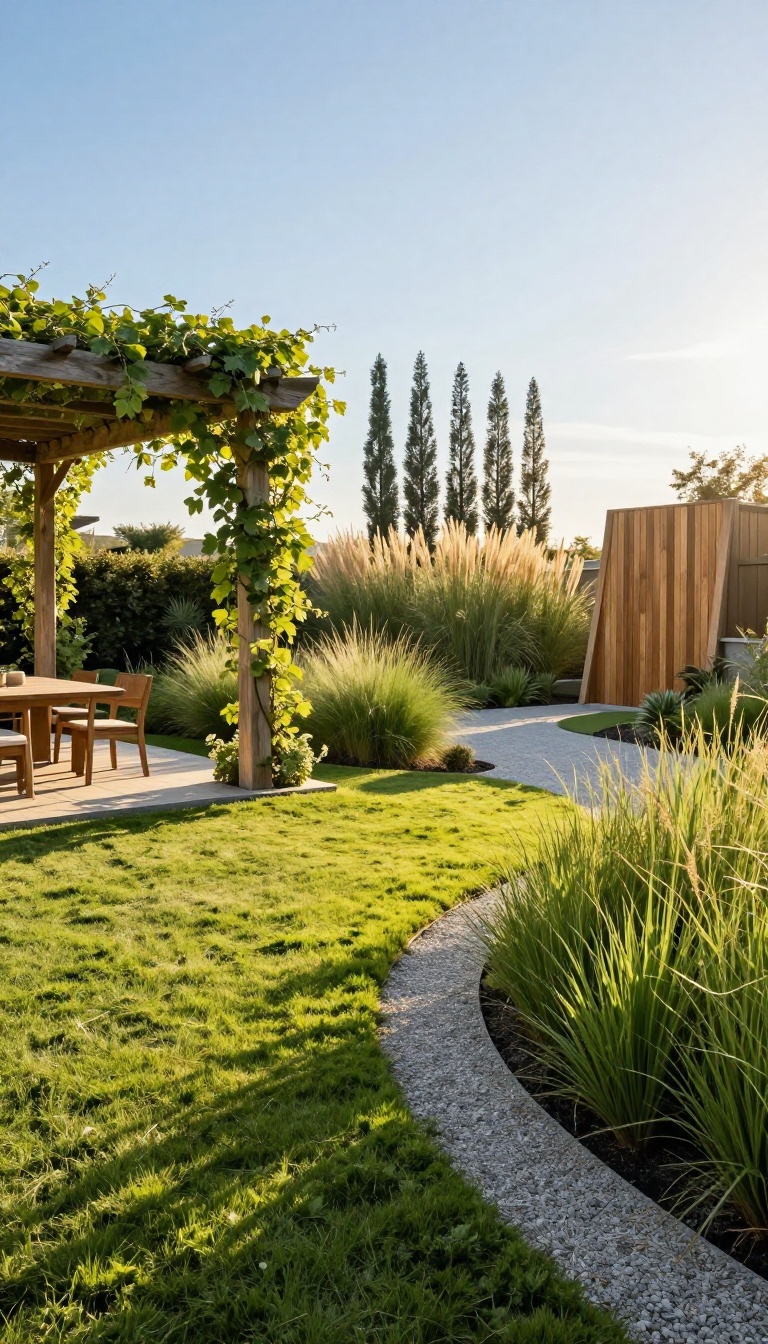
A wide, flat yard can feel like a parking lot—lots of room, but nowhere for your eye to land. Vertical elements change that by adding height and creating soft boundaries. They break up the space without making it feel closed in.
Think of vertical elements as the walls and columns of your outdoor room. They don't need to be solid or permanent. A few well-placed tall plants, a pergola, or a privacy screen can define different areas while keeping the yard open and airy.
The key is to use them strategically, not to fill every empty spot.
Tall Plants As Natural Dividers
Ornamental grasses, bamboo, or columnar trees like arborvitae can create a living screen that separates zones. Plant them in clusters or rows to form a soft edge. They'll add movement and texture, and they won't block light the way a solid fence would.
Pergolas And Arbors For Overhead Structure
A pergola over a dining area or pathway adds height and casts interesting shadows. It also defines a space without walls. You can train vines up the posts for extra greenery, or keep it bare for a modern look.
Privacy Screens That Keep Things Open
Freestanding screens—whether wood, metal, or fabric—can block sightlines to a neighbor's window or hide a utility area. Place them at an angle to guide foot traffic and create a sense of discovery. They're easy to move if you change your layout later.
4. Anchor the Space with a Focal Point
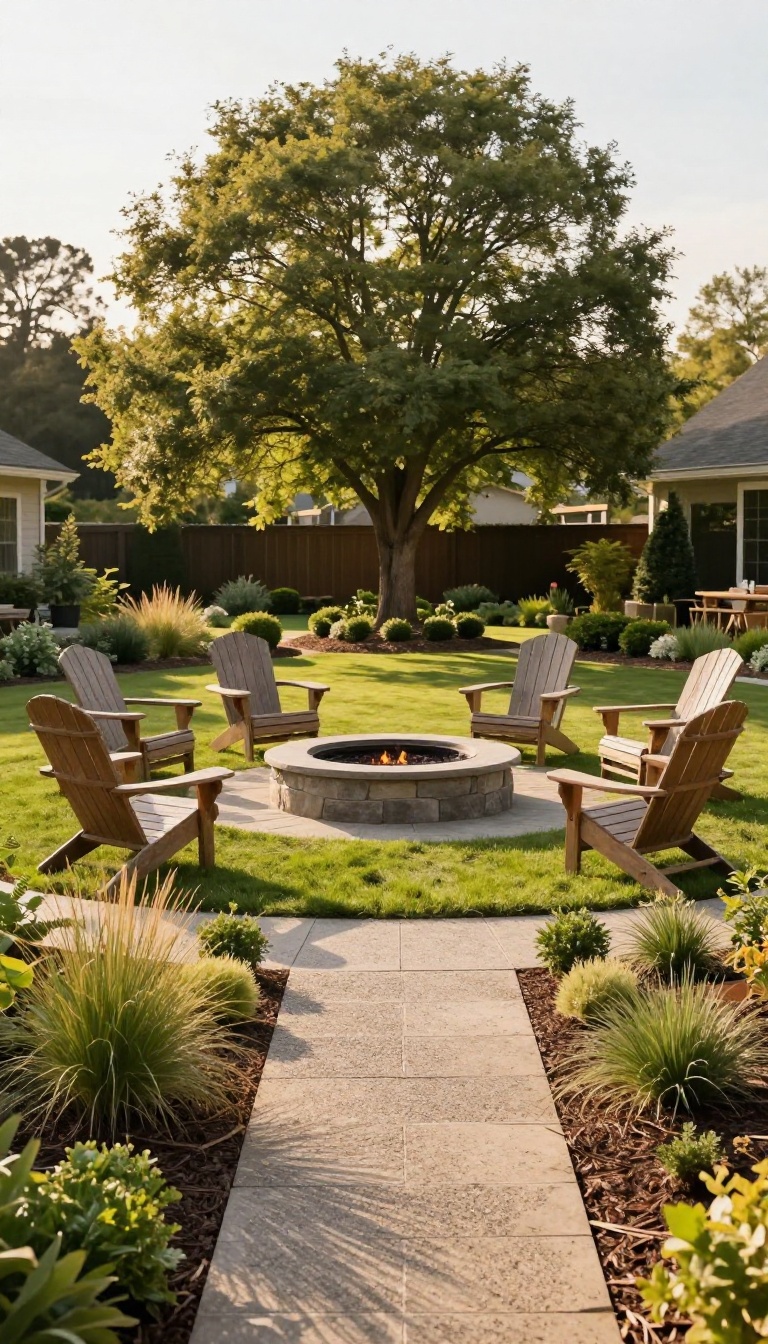
A wide, open yard can feel like a parking lot—lots of room, but nowhere for your eye to land. That's why every great layout needs a focal point. It gives the space a center of gravity, pulling people toward it and making the rest of the yard feel intentional instead of random.
Pick something that draws the eye and the feet—a fire pit, a water feature, a striking tree—and you've got a natural gathering spot that organizes everything around it.
A focal point isn't just decoration. It's a planning tool. Once you choose one, you can arrange seating, paths, and plants to frame it, and the whole yard starts to make sense.
The key is to pick something that fits how you actually use the space.
Choose A Feature That Pulls People In
The best focal points are things people want to walk up to and hang around. A fire pit works because it's social and warm. A small pond or fountain adds sound and movement that catches the eye from across the yard.
A big, beautiful tree can be the star if it's healthy and well-placed. Whatever you choose, make sure it's something you'll enjoy looking at and using, not just something that looks good in a photo.
Place It Where It Can Be Seen
A focal point only works if it's visible from the main areas—your patio, kitchen window, or the spot where you sit most often. Put it at the end of a sightline, like straight ahead from your back door, or at a slight angle so it feels discovered. If you bury it in a corner, it won't do its job of pulling the layout together.
Build The Layout Around It
Once your focal point is set, arrange everything else to support it. Curve a path toward it. Place seating so people face it.
Use plants to frame it, not hide it. Even lighting can help—a spotlight or string lights aimed at your feature will make it pop at night. The goal is to make it clear that this is the heart of the yard.
5. Layer Lighting for Evening Flow
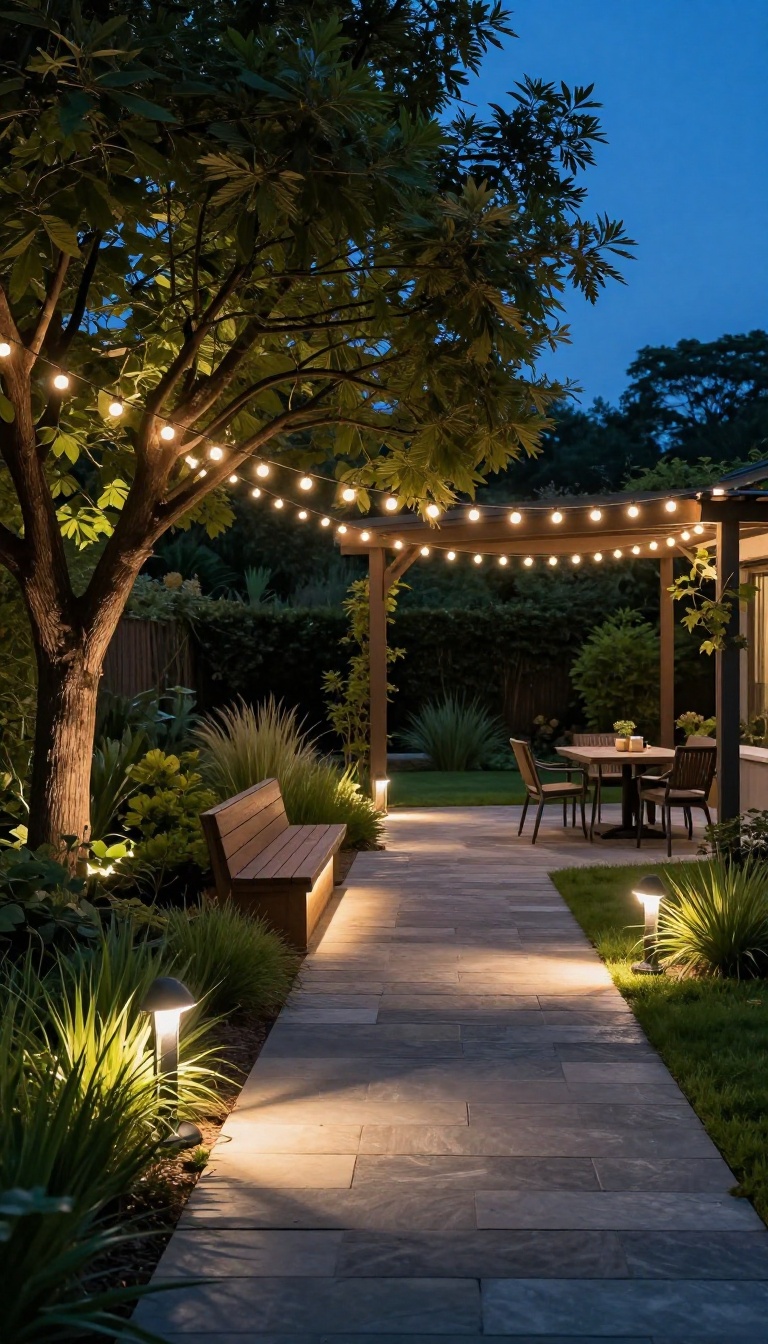
As the sun drops, a backyard without lighting turns into a black hole. You can't see your steps, you can't find your drink, and everyone migrates inside. Layering three types of light—ambient, task, and accent—keeps the party going and makes the space feel deliberate instead of accidental.
Ambient light gives you a soft wash so you can move around without a flashlight. Task lights handle the practical stuff, like grilling or reading. Accent lights add the drama, highlighting trees, walls, or water features.
Together, they extend your yard's usable hours and make evening flow feel natural.
Start with ambient light. String lights across a patio or pergola create a cozy ceiling of light. For a softer glow, use path lights along walkways and low-voltage well lights aimed up into trees.
Avoid one bright floodlight—it flattens the space and kills the mood. Next, add task lighting where you actually do things. Under-cabinet lights on an outdoor kitchen, a focused spotlight over a dining table, or step lights on stairs.
These keep you safe and functional without lighting up the whole neighborhood. Finally, sprinkle in accent lights. Uplights on a favorite tree, a spotlight on a sculpture, or LED strips under a bench.
They draw the eye and create depth. The goal is a mix of layers, not a single source.
Choose Warm Bulbs For A Relaxed Vibe
Stick with warm white bulbs (2700K–3000K). Cool white or daylight bulbs look harsh and clinical outdoors. Warm light feels like candlelight and makes people want to linger.
If you use colored bulbs, keep them subtle—deep amber or soft white is usually best.
Use Path Lights To Guide Movement
Path lights do more than show the way. They create a rhythm that pulls people from one zone to the next. Place them every 6–8 feet along walkways, and angle them slightly toward the path, not up into the sky.
Solar options work fine if they get enough sun, but low-voltage wired lights are more reliable.
Add Dimming And Zoning For Control
Not every light needs to be on at once. Put your ambient, task, and accent lights on separate switches or smart plugs. Dimming lets you go from bright dinner party to quiet nightcap without touching a single fixture.
Zoning also saves energy and keeps the yard from looking like a runway.
6. Balance Hardscaping and Softscaping
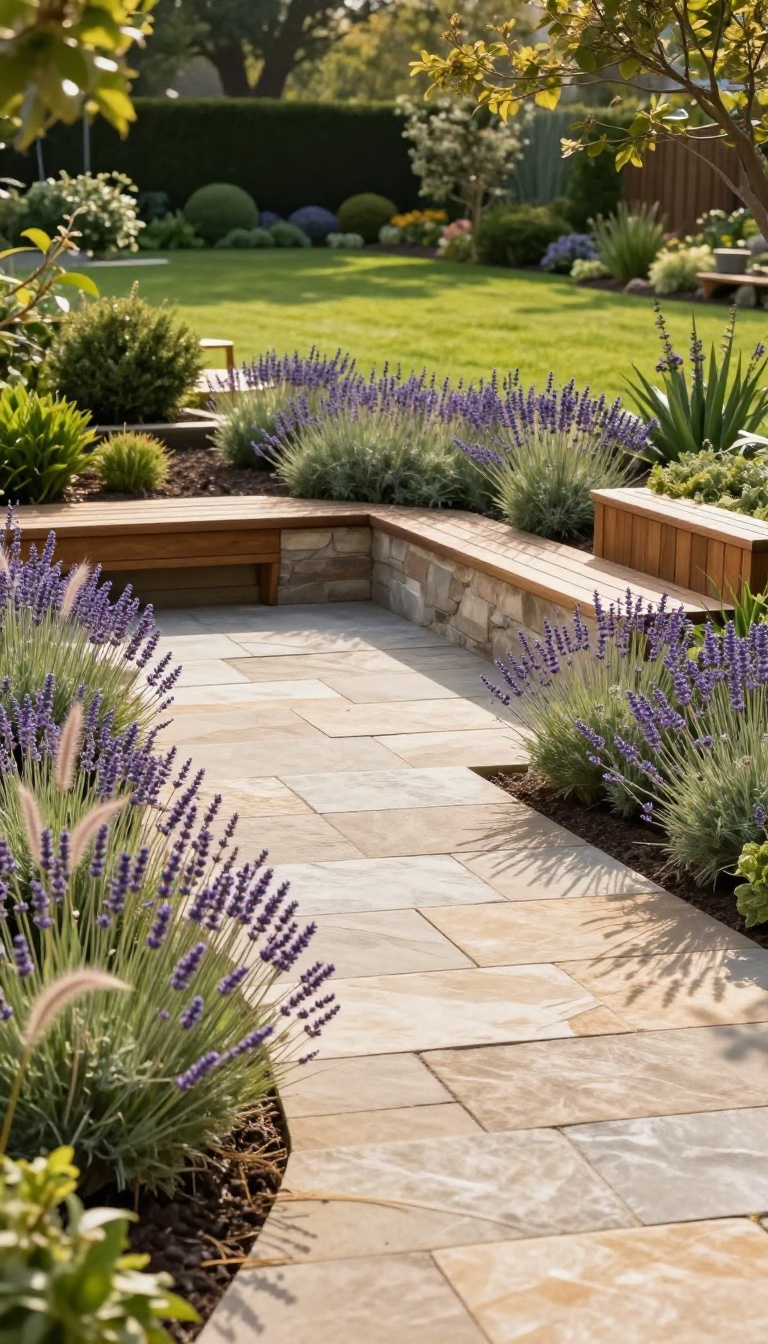
A patio that stretches from fence to fence starts to feel like a parking lot with chairs. A lawn that runs wild in every direction feels like nobody finished the job. The sweet spot lives somewhere in the middle, where stone and wood share space with leaves, stems, and soil.
That mix is what gives a large backyard rhythm—something to walk on, something to look at, and something that softens all the hard edges.
Hardscaping covers the built stuff: pavers, decking, retaining walls, gravel, and concrete. Softscaping is everything alive or planted: grass, garden beds, shrubs, trees, and ground cover. When one dominates, the yard loses its balance.
Too much hardscape and the space feels hot, loud, and impersonal. Too much softscape and it feels unfinished, muddy, and hard to actually use. The goal isn't a perfect 50/50 split.
It's about using each material where it makes sense and letting them play off each other. A stone patio bordered by feathery grasses feels different from the same patio surrounded by more concrete. A wooden deck with planters tucked against the railing feels warmer than a bare platform floating in the yard.
Think of hardscaping as the bones and softscaping as the clothing. You need both, and they should fit together. A path made of stepping stones with creeping thyme between them does more for flow than a solid ribbon of pavers.
A seating wall with lavender spilling over the top feels intentional. Those small overlaps are where the magic happens. As you plan, watch for long stretches of any single material.
A 30-foot run of plain fence, a giant slab of concrete, or an uninterrupted lawn all create the same problem: your eye gets bored. Break them up with texture changes, planted pockets, or a simple shift in material.
Use Plants To Soften Hard Edges
Every hard surface has an edge, and that edge is an opportunity. Line a patio with low mounding shrubs or ornamental grasses to blur the transition between stone and soil. Let vines climb a pergola post or a retaining wall.
Tuck creeping plants between pavers so the joints aren't just gray lines. This isn't just about looks. Soft edges make a space feel more inviting and less like a commercial plaza.
They also help with drainage and temperature—plants cool the air around them, while bare stone radiates heat. A few well-placed beds can make a sunny patio usable on a hot afternoon. Keep maintenance in mind.
Choose plants that won't swallow your walkways or stain your deck. Low-growing options like creeping jenny, sedum, and dwarf mondo grass work well in tight spaces. For larger beds, mix evergreens with perennials so you get year-round structure and seasonal color.
Create Rhythm With Repeating Materials
Rhythm in a backyard comes from repetition. If you use the same paver style for your patio, fire pit area, and a small landing by the gate, the yard feels connected. The eye recognizes the pattern and relaxes.
You can do the same with a single plant type—like a row of boxwoods or a repeated clump of switchgrass—to tie different zones together. But repetition doesn't mean monotony. Vary the scale and placement.
A large patio might use big square pavers, while a narrow path uses the same material cut into smaller pieces. The color and texture stay consistent, but the format changes. That's how you get variety without visual chaos.
Wood works the same way. A cedar deck, a cedar pergola, and a cedar bench create a family of elements that feel related. Add a different material—like a stone wall or a metal fire bowl—as an accent, not a main event.
One or two accents are plenty.
Plan For Transitions Between Zones
The space between a patio and a lawn is a transition zone, and it deserves attention. A sharp drop from stone to grass looks abrupt. A gentle curve, a low border, or a strip of ground cover can ease that shift.
Even a simple edging of brick or steel gives the eye a place to pause. Think about how people move. If they step off the patio onto grass, the grass should be thick and level.
If they walk from gravel to decking, a small wooden threshold or a row of pavers can signal the change. These details keep people from stumbling and make the yard feel thoughtfully put together. Transitions also help with maintenance.
A defined edge between mulch and lawn keeps grass from creeping into beds. A gravel strip along a fence line reduces trimming. Small moves like these save you time and keep the balance intact.
Avoid The All-or-nothing Trap
It's tempting to go all in on one material because it's easier to install or cheaper to buy in bulk. But a yard that's 90% concrete or 90% grass rarely feels good. Even a small change—like swapping a section of lawn for a gravel seating area or adding a few large planters on a bare patio—can shift the whole vibe.
Start with the areas you use most. If you entertain on the patio, soften its edges with plants. If kids play on the lawn, add a hard path to the swing set so they aren't wearing a dirt trail.
Let the balance follow function, and the yard will feel better without a full redesign.
7. Add Transitional Spaces Between Zones
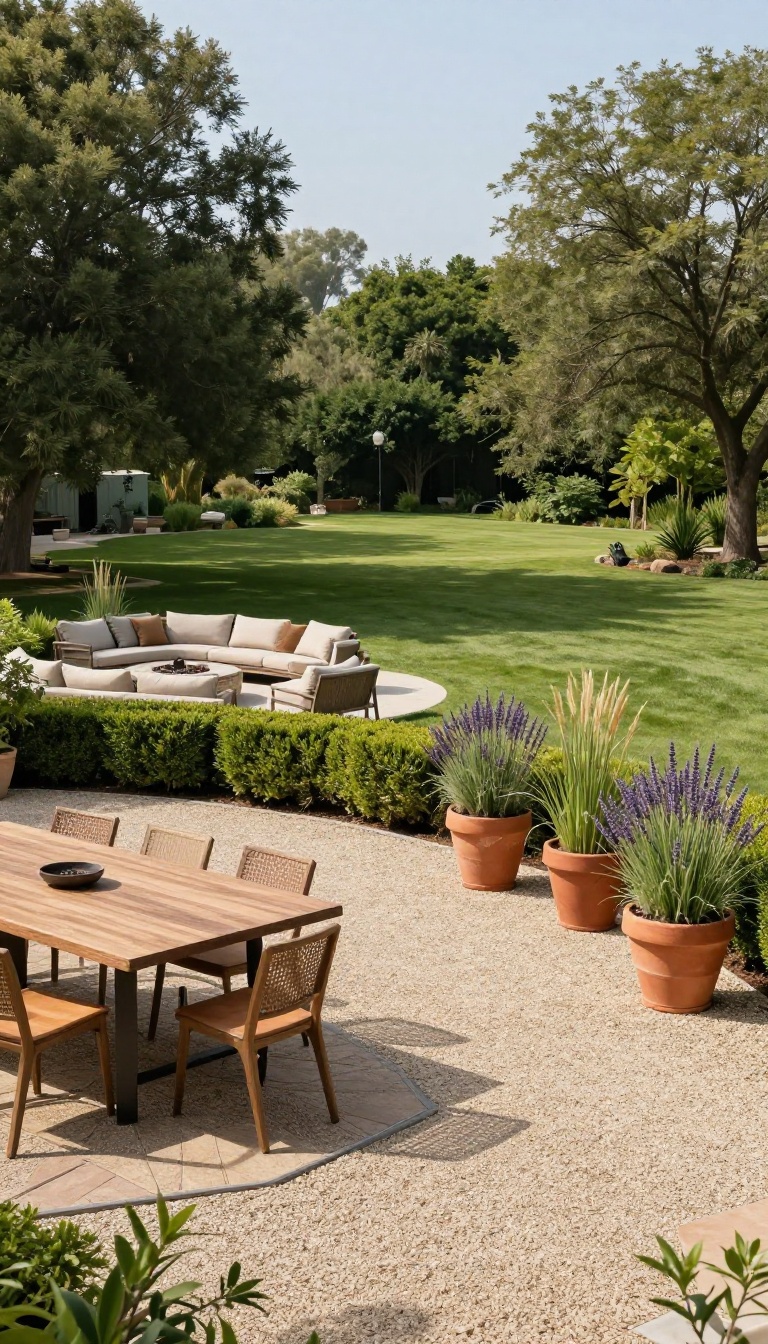
You've carved out your zones—dining, lounging, fire pit, play area—but if they butt right up against each other, the yard can feel like a series of disconnected rooms. Transitional spaces are the connectors: small buffers that ease the shift from one area to another. They prevent abrupt stops and make the whole layout feel intentional.
Think of transitions as the commas in a sentence. Without them, your yard reads like one long run-on. With them, each zone gets its own moment while still feeling part of a larger story.
The good news is that transitions don't require a big budget or a lot of space. A low hedge, a row of planters, a change in flooring—these small moves do the heavy lifting.
Use Low Hedges As Soft Dividers
A knee-high hedge of boxwood, lavender, or ornamental grasses creates a gentle boundary without blocking sightlines. It says 'this is a different area' without feeling like a wall. Plant them in a continuous line or as a series of clusters to guide foot traffic.
Keep them trimmed to about 18–24 inches so they stay in the background.
Let Flooring Changes Do The Work
Switching from pavers to gravel, or from decking to flagstone, signals a shift underfoot. You don't need a hard edge—a simple border of brick or steel can separate materials cleanly. This works especially well between a dining patio and a lounging area.
The change in texture tells your brain to adjust expectations.
Add Planters And Pots As Movable Buffers
Large planters filled with tall grasses or small shrubs can stand in for permanent borders. They're perfect for renters or anyone who likes to rearrange. Group two or three together to create a visual pause between zones.
Roll them aside when you need extra space for a party.
Keep Pathways Wide Enough To Feel Inviting
A transition isn't a bottleneck. Aim for at least 3 feet of clear width so two people can walk side by side. If you're using stepping stones, space them for a natural stride.
The goal is to make movement feel effortless, not like an obstacle course.
8. Design for Sightlines from Inside the House
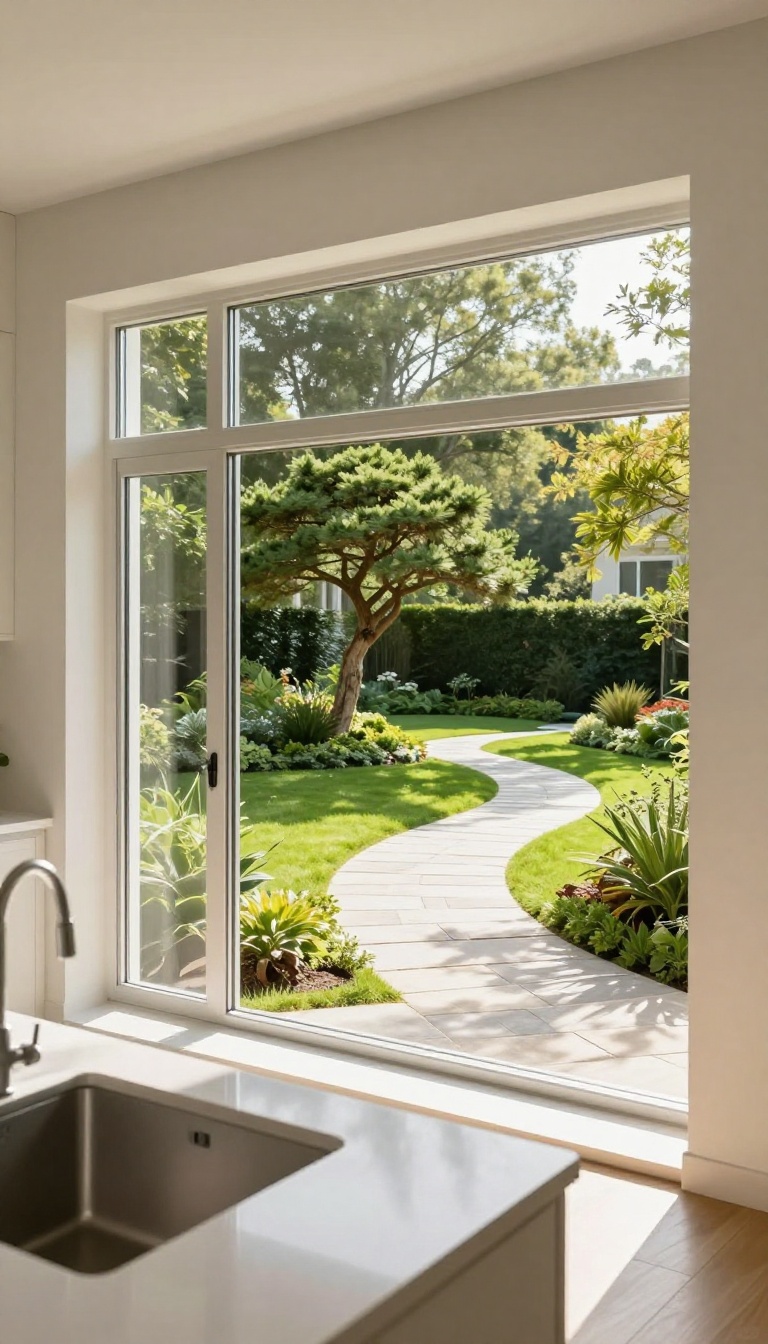
Stand at your kitchen sink, your favorite reading chair, or the sliding door you use every morning. What you see from those spots shapes how you feel about your yard more than any single feature you buy. A yard that looks good from inside gets used more, even when you're not out in it.
It also makes the space feel larger because your eye travels through the window and keeps going. So before you move a single shrub, walk through the house and note the main views. Then lay out your yard to make those views work year-round.
Most people design a backyard from the patio outward. That's backwards. The best layouts start from the inside looking out, because that's how you actually experience the space most days.
Think of your windows and doors as frames. Each one shows a slice of the yard, and you get to decide what fills that frame. A bare fence corner becomes a focal point.
A messy utility area gets hidden. A plain stretch of lawn gains depth with a well-placed tree or bench. This isn't about making every view perfect.
It's about removing the stuff that bugs you and adding a few elements that catch the eye in a good way.
Map Your Main Indoor Viewpoints
Start with the rooms you use most: kitchen, living room, dining area, home office, bedroom. Stand at each window and door and take a mental snapshot. Ask yourself what draws your eye first.
Is it the neighbor's shed, a dead shrub, or an empty stretch of grass? Those are the spots that need attention. Write down the top three views.
Those are your priority sightlines, and everything else can wait.
Place Focal Points Where You'll See Them
A focal point doesn't have to be big. A sculptural tree, a birdbath, a fire pit, or even a colorful planter can anchor a view. Put one focal point in line with each main window.
If two windows face the same direction, stagger the focal points so each view feels a little different. Keep paths leading toward those focal points. That way your eye follows the path and the yard feels deeper.
Hide What You Don't Want To See
Every yard has something ugly: trash bins, AC units, a compost pile, or a neighbor's clutter. You can't always move them, but you can block the view. Use a tall shrub, a fence panel, a trellis with vines, or a simple screen.
Place it between the window and the eyesore, not right next to the eyesore. This small move makes the whole yard feel more polished without a full redesign.
Plan For Every Season
A view that's gorgeous in July can look sad in January. Mix evergreens with deciduous plants so there's always something green. Add structure that stands out in winter: a bench, a piece of garden art, or a stone wall.
These hold the view when plants die back. Think about lighting too. A few well-placed uplights on a tree or wall keep the view interesting after dark.
9. Incorporate a Mix of Seating Options
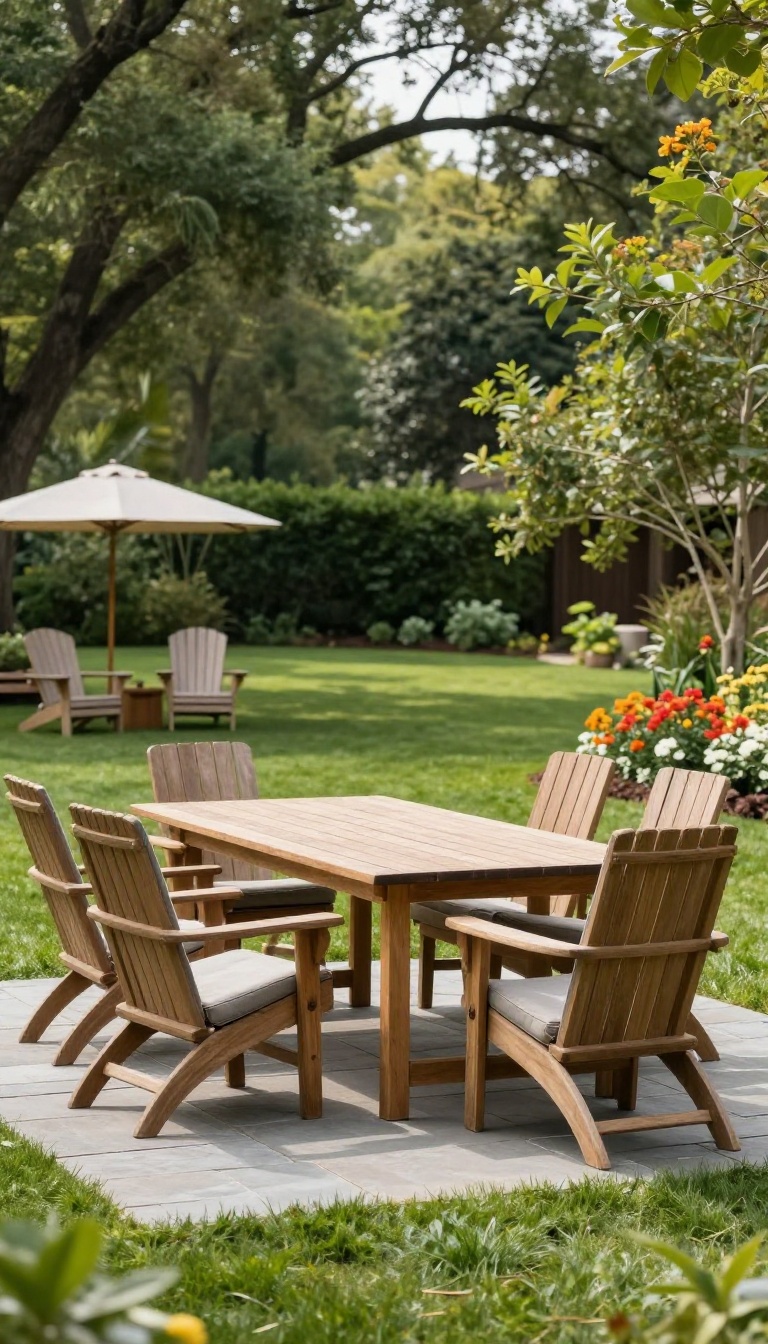
A single long dining table and a few scattered chairs might handle dinner, but they won't handle the lazy Sunday afternoon when half your group wants to lounge and the other half wants to play cards. Different people relax in different positions, and a large yard gives you room to accommodate all of them without dragging furniture around. When seating choices are built into the layout, people naturally find their spot.
That reduces bottleneck areas and keeps the whole yard in play instead of letting everyone pile into one corner.
Think of seating as a menu, not a one-size-fits-all solution. You want upright chairs for eating and talking, reclined options for reading and napping, and perches for quick conversations or watching the game. The goal isn't to fill every square foot with furniture—it's to give each zone a clear purpose and enough variety that no one feels stuck.
Spread seating types across the yard so movement feels organic. If all the comfortable seats are on the patio, the lawn and garden areas become pass-through spaces instead of destinations. A bench near the flower beds or an Adirondack pair under a tree invites people to linger in places they'd otherwise walk past.
Match The Seat To The Zone
Dining areas need chairs with backs and a seat height that works with the table. Lounging zones call for chaise lounges, hammocks, or deep-seated sectionals. Fire pit circles work best with movable chairs or benches that let people angle toward the flames.
When each zone has the right seat type, people don't have to compromise comfort to be in the conversation.
Add Movable Pieces
Lightweight chairs, folding stools, and small side tables let people rearrange on a whim. A guest can pull a chair from the edge of the patio into the circle without asking for help. That flexibility keeps the yard adaptable for different group sizes and activities without a full furniture overhaul.
Use Benches As Flexible Anchors
A bench along a wall, planter, or garden edge provides seating without blocking sightlines. It can serve as a spot to tie shoes, set down a drink, or host three people who want to chat. Benches also work as visual dividers between zones, subtly guiding foot traffic while offering a place to rest.
Don't Forget The Solo Spots
Not everyone wants to be in the middle of the action. A single chair tucked near a water feature or a swing on the porch gives introverts and quiet-talkers a retreat that still feels connected. These small perches often become the most-used seats in the yard because they offer peace without isolation.
10. Use Plants to Guide Movement Naturally
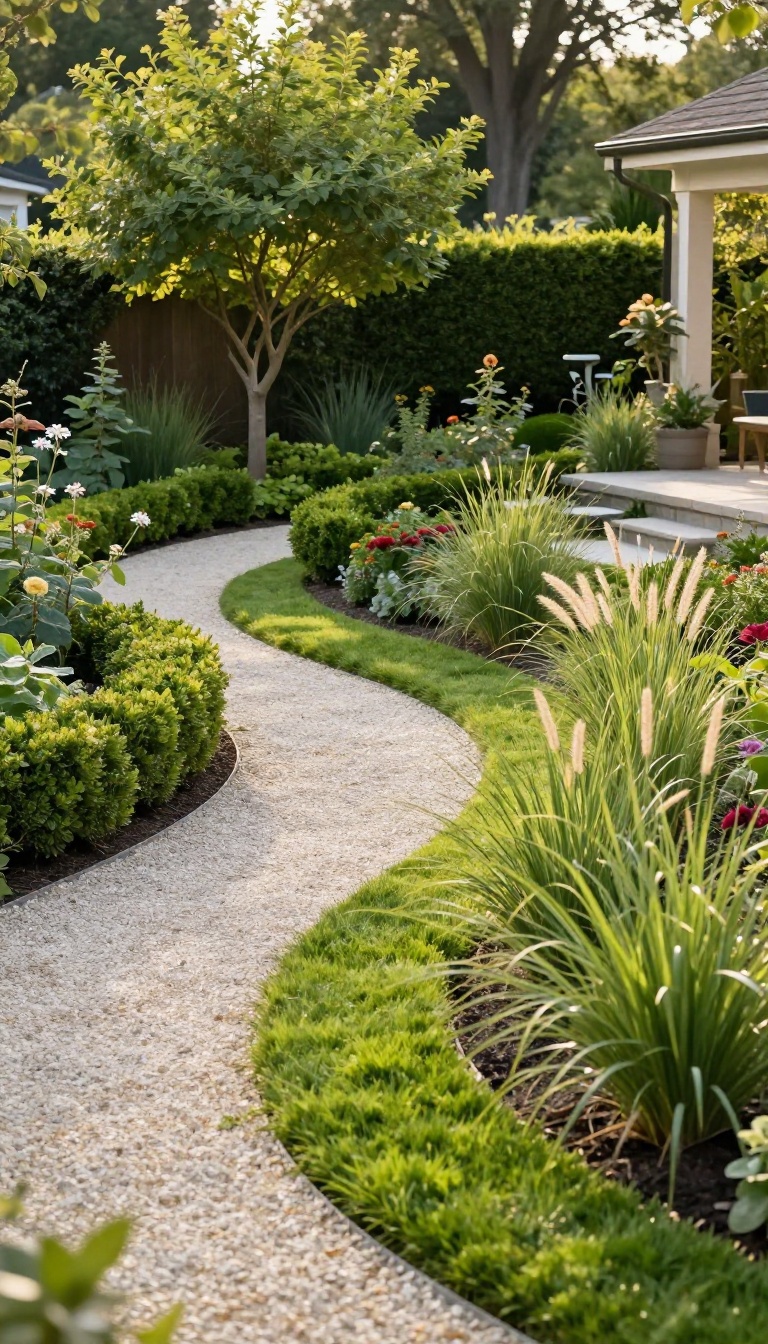
Hardscape tells people where to walk, but it can feel like a set of rules. Plants do the same job with a softer touch. A row of boxwoods or a clump of tall grasses quietly nudges feet in the right direction without a single sign.
The result is a yard that feels discovered rather than directed.
You already know that plants add color and texture. What they also do is shape behavior. A hedge that stops short of the patio creates a natural opening.
A tree placed just off a path makes people curve around it. These small moves add up to a yard that guides you without making you think about it. The trick is to use plants the way you'd use walls and doorways indoors.
They can block, funnel, or slow you down. And because they grow and change, the layout never feels frozen. You get function and a little bit of life at the same time.
Soft Walls, Clear Paths
Think of a low hedge as a living fence. It marks the edge of a zone without cutting it off completely. Plant one along the side of a walkway and people will stay on the path.
Leave a gap where you want them to turn. That gap becomes a doorway. Tall grasses work the same way.
They move in the breeze and feel relaxed, but they still say 'not here. ' Use them to screen a utility area or to keep foot traffic out of a flower bed. They're forgiving if you forget to prune, and they look good almost year-round in most climates.
Planting For Curves And Pauses
Straight lines are efficient, but they can feel rigid. A single shrub placed at the corner of a patio can turn a sharp turn into a gentle curve. People will naturally follow the curve without realizing they've been redirected.
You can also use plants to create small pauses. A fragrant bush near a seating area invites people to stop and smell it. A small tree with low branches gives a sense of shelter.
These moments break up a long stretch of yard and make the space feel more intimate.
Layering For Depth And Direction
One row of plants is a border. Two or three rows create depth. Start with low groundcovers or small perennials at the front, then medium shrubs, then taller trees or ornamental grasses at the back.
This layering pulls the eye along and makes the yard feel bigger. Use that layering to guide movement too. A taller plant at the end of a path draws people forward.
A lower section invites them to step through. You're basically using height to control what feels open and what feels closed.
11. Keep Maintenance in Mind with Your Layout
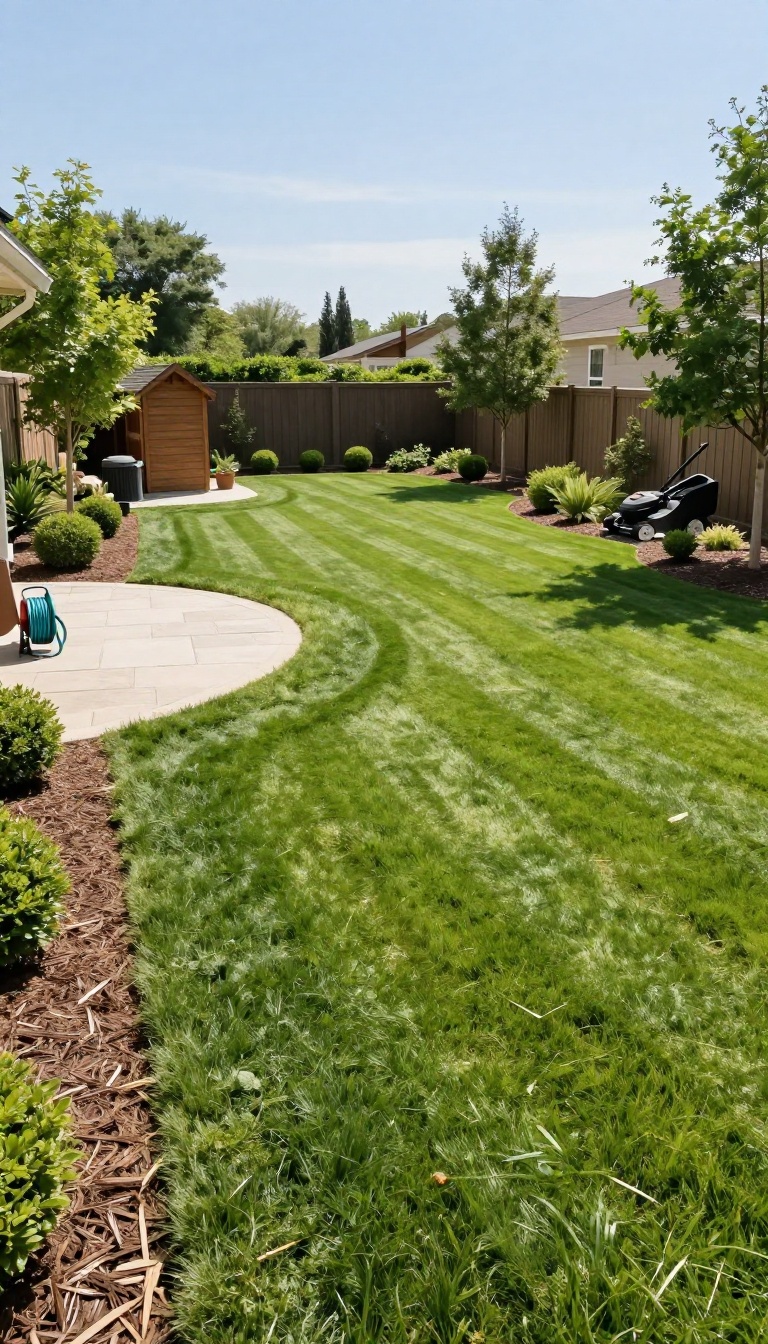
A layout that looks incredible on day one can turn into a weekend chore list if you don't plan for upkeep. The best big-yard designs leave room for mowers, pruners, and a hose without making you squeeze past furniture or trample beds. Think about how you'll actually maintain the space, not just how you'll use it.
A few smart gaps and access points now save you hours of frustration later.
Maintenance isn't glamorous, but it's the difference between a yard you enjoy and one that slowly gets away from you. When every edge is tight and every zone is packed, simple tasks like mowing or raking become a puzzle. Give yourself breathing room and the upkeep stays manageable.
Start by tracing your mower's path. If you have to move chairs, dodge planters, or lift a gate off its hinges, you'll put off cutting the grass. Wider gaps between beds and fences, plus smooth transitions from lawn to patio, keep the job quick.
The same goes for pruning: leave enough space around shrubs and trees so you can reach all sides without climbing into the bed. Cleaning is another one people forget. Leaves, twigs, and pollen collect in corners.
If your layout creates dead-end pockets that are hard to reach with a leaf blower or rake, those spots become mess magnets. A simple fix is to avoid narrow, enclosed angles where debris hides. Keep curves gentle and access open.
Finally, think about seasonal tasks. Where will you store the hose, the mower, the pruning shears? If the shed is on the opposite side of the yard from where you need those tools, you'll delay every job.
A small staging area or a few well-placed hooks near the action can make maintenance feel effortless.
Leave A Mower-friendly Buffer
A strip of open lawn or mulch between your beds and fences gives you room to push a mower without scraping bark or hitting sprinkler heads. Aim for at least two feet of clearance on all sides of the lawn. If your yard has tight corners, consider widening them or replacing grass with ground cover that needs less cutting.
Design For Easy Pruning Access
Shrubs and small trees look great until they grow into a wall you can't reach behind. Plant them with enough space to walk around them, or keep them near the edge of a bed so you can trim from the lawn side. A little foresight means you won't need a ladder just to shape a hedge.
Avoid Debris Traps
Sharp inside corners, narrow gaps between structures, and low crevices under decks collect leaves and dirt. When you plan your layout, round off those tight spots or keep them open enough for a rake or blower. Fewer hiding places means faster fall cleanup and less spring scrubbing.
Put Tools Within Reach
Store your most-used maintenance gear close to where you use it. A small weatherproof cabinet near the patio for hose accessories, or a hook in the shed for the leaf blower, cuts down on trips across the yard. The easier it is to grab what you need, the more likely you'll stay on top of upkeep.
12. Plan for Flexible Use Throughout the Year
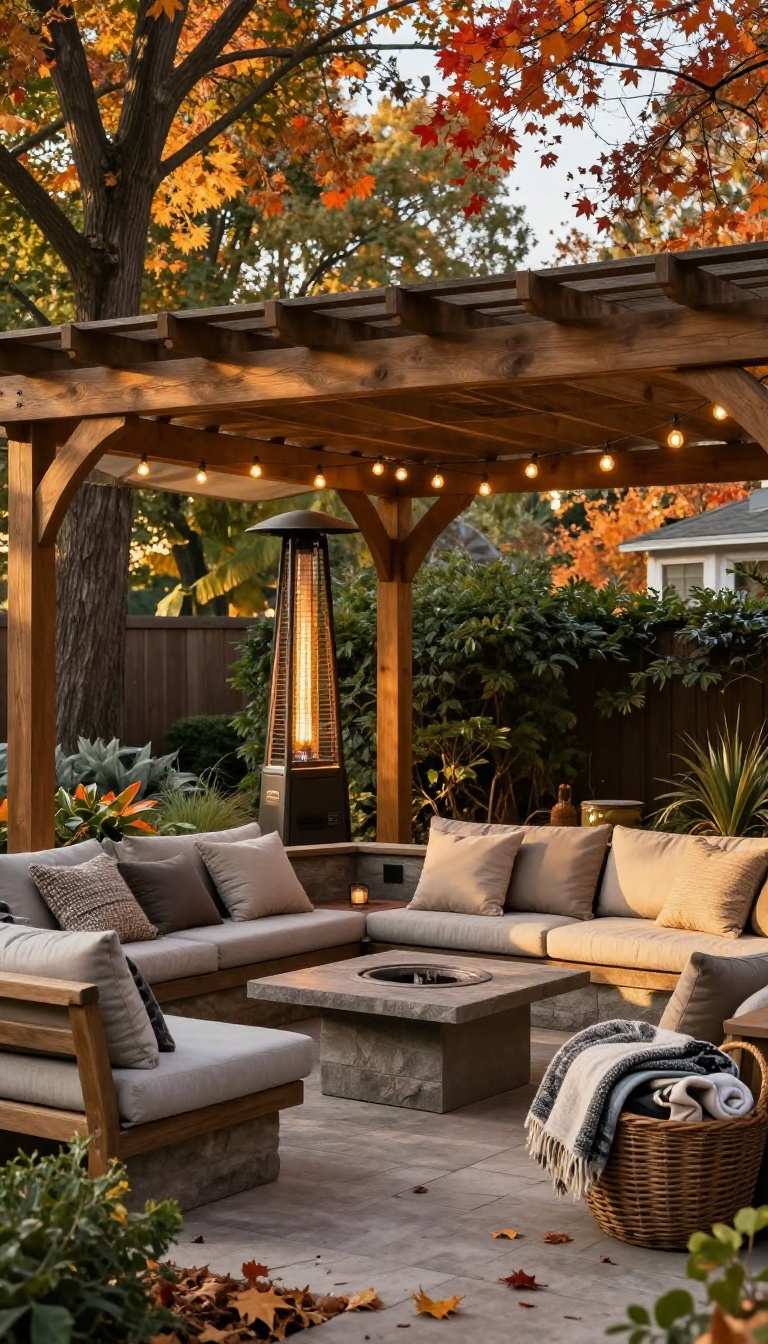
A backyard that only works for three months out of the year is a waste of space and money. You want a layout that earns its keep in April and October, not just July. The trick is choosing features that pull double duty and arranging them so they stay comfortable no matter the season.
Think about how you actually use the yard when the weather isn't perfect. Maybe you want to sip coffee outside on a crisp morning or host a small gathering in early fall. If your only seating is an open patio with no cover, those shoulder-season days slip away.
Flexible features change that.
Covered Spaces That Work Rain Or Shine
A pergola with a retractable canopy or a solid roof gives you shade in summer and shelter from light rain in spring and fall. Add a ceiling fan or infrared heater, and you can stretch comfortable evenings well into October. The key is placing it near your main gathering zone so people naturally gravitate there.
Fire Features For Warmth And Ambiance
A fire table or built-in fire pit becomes the heart of the yard when temperatures drop. It provides warmth, light, and a focal point that draws people together. Choose a model with a lid or cover so it doubles as a coffee table or dining surface during the day.
Layer In Portable Comfort
Keep a basket of throw blankets and a few sturdy outdoor cushions near your seating areas. When the evening turns cool, people can grab what they need without running inside. Portable heaters and string lights on timers also make cool-weather hangouts feel intentional rather than improvised.
13. Edit and Adjust as You Live in the Space
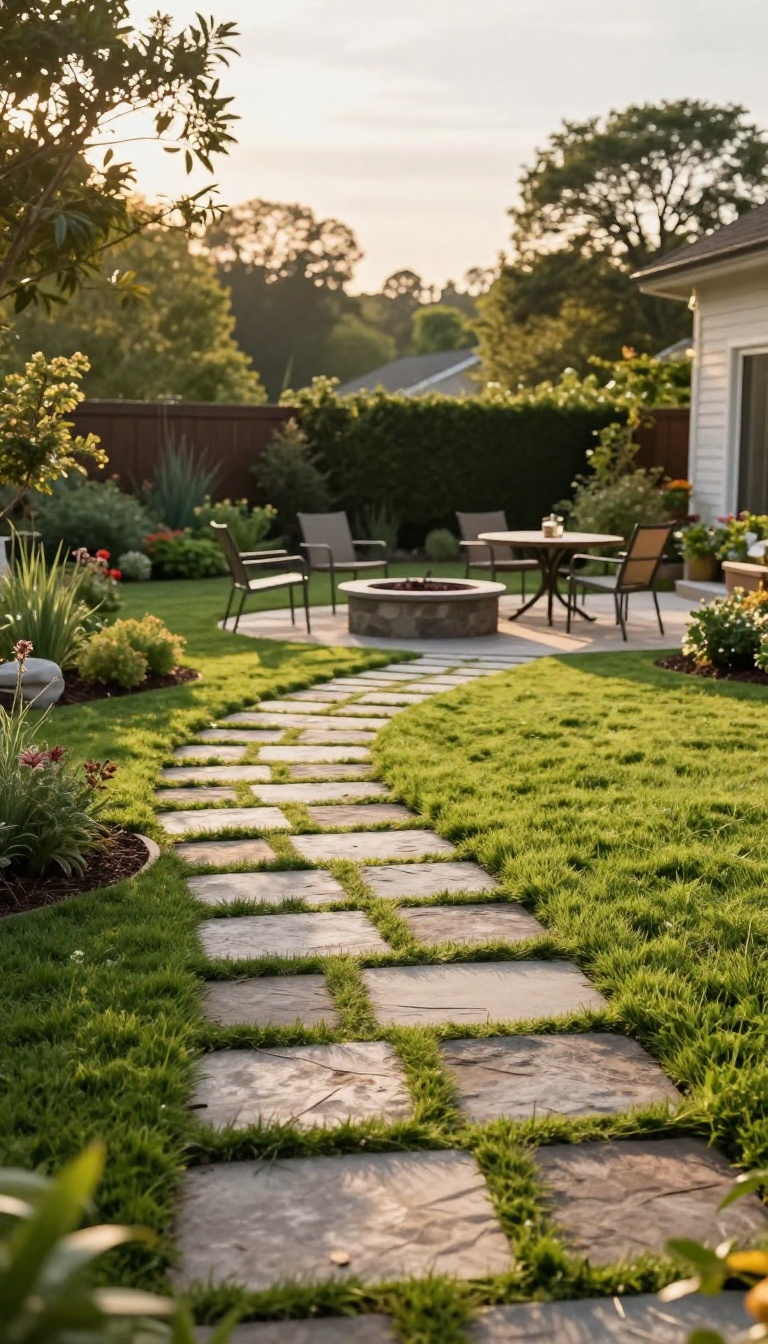
Your backyard isn't a finished painting. It's a living space that changes with the seasons, your family, and how you actually use it. The best layouts get tweaked over time, not locked in on day one.
Watch how people move through the yard. Notice where they pause, where they cut corners, and where they avoid going. Those clues tell you what to adjust.
Small edits—moving a chair, widening a path, adding a plant—can fix flow problems you didn't even know you had. Treat your layout like a draft, not a final exam.
A backyard that works perfectly on paper can still feel off in real life. Maybe the fire pit is too close to the dining table, or the path to the shed cuts through the middle of a conversation area. You won't know until you live with it.
So plan to edit. Give yourself permission to move things around after a few weeks or a full season. The goal isn't perfection—it's a space that feels easier to use every month.
Here's how to spot what needs changing and make adjustments without starting over.
Watch The Traffic Patterns
Pay attention to the worn spots in your grass or the way guests hesitate at a turn. Those are clues that a path or opening isn't where it should be. If people keep stepping over a flower bed to get to the grill, maybe that bed needs to shrink.
If everyone walks around the patio instead of across it, the patio might be too small or in the wrong spot. You don't need a formal study. Just observe for a week or two.
The yard will show you its problems.
Move Furniture Before You Buy More
Before you order a new sectional or a second dining set, try rearranging what you already have. Sometimes the issue isn't a lack of seating—it's that the seating is in the wrong place. Pull chairs away from the wall.
Angle them toward the view. Create a conversation circle instead of a row. Small shifts can make a space feel twice as inviting.
If you still have gaps after moving things around, then you know exactly what to buy. And you'll buy less of it.
Let Plants And Paths Evolve
Plants grow. Paths get muddy. A layout that worked in spring might feel crowded by August.
That's normal. Prune back shrubs that swallow a walkway. Add a stepping stone where the grass wears thin.
Move a potted tree to block a wind tunnel or create a little privacy. These small edits keep the yard functional without a full redesign. Think of it as maintenance for flow, not just for looks.
Do A Seasonal Reset
Twice a year—say, early spring and early fall—walk your yard with fresh eyes. What worked last season? What felt annoying?
Maybe the outdoor rug is always damp. Maybe the string lights are too dim in one corner. Maybe you need a bench near the gate where you drop your bags.
Write down three small changes. Do them over a weekend. Then enjoy the yard until the next reset.
Over a couple of years, those tiny edits add up to a space that fits you perfectly.
FAQ
How do I start planning a large backyard layout?
Start by listing how you want to use the space—dining, playing, gardening, relaxing. Then sketch zones on paper, keeping paths and sightlines in mind. Test with temporary furniture before committing.
What's the best way to connect different areas in a big yard?
Use a clear main path, repeated materials, and transitional elements like low plantings or step changes. Consistency in flooring and lighting helps tie zones together.
How can I make a large backyard feel cozy?
Break it into smaller rooms using vertical elements, plants, and changes in level. Add warm lighting, comfortable seating, and textures to soften the space.
Should I use a designer for a large backyard?
Not always. If you're handy and have a clear vision, you can DIY. But for complex grading, drainage, or hardscaping, a pro can save you time and money.
How do I keep a large backyard from feeling empty?
Layer plants, add focal points, and create destinations. Use repeated elements like matching planters or lights to create rhythm and draw the eye through the space.
Conclusion
Once you see how much easier the yard feels, you won't want to stop tweaking. Pick the layout fix that solves your biggest bottleneck first, live with it for a week, then let the next idea build on what you learned. Flow comes from small, tested moves, not a single overhaul.
Your backyard doesn't need to be finished to be great.
It just needs to work for how you actually move through it. Start with one shift, watch where people naturally gather, and adjust from there. The space will tell you what it needs next.