11 Tiny Backyard Ideas That Make Limited Space Feel Bigger
A small backyard doesn't have to feel cramped. Most of the time, the problem isn't square footage; it's how that footage gets used. A few deliberate tweaks can make even a postage-stamp yard feel open and inviting.
The good news is that you don't need a contractor or a big budget. Most of these eleven ideas cost little, take an afternoon, and work with what's already there. Some you can knock out this weekend.
We'll cover vertical planting, furniture that vanishes, mirrors, diagonal paths, and more. Pick the ones that fit your space, layer them over a season, and watch the yard open up.
1. Go Vertical with a Living Wall
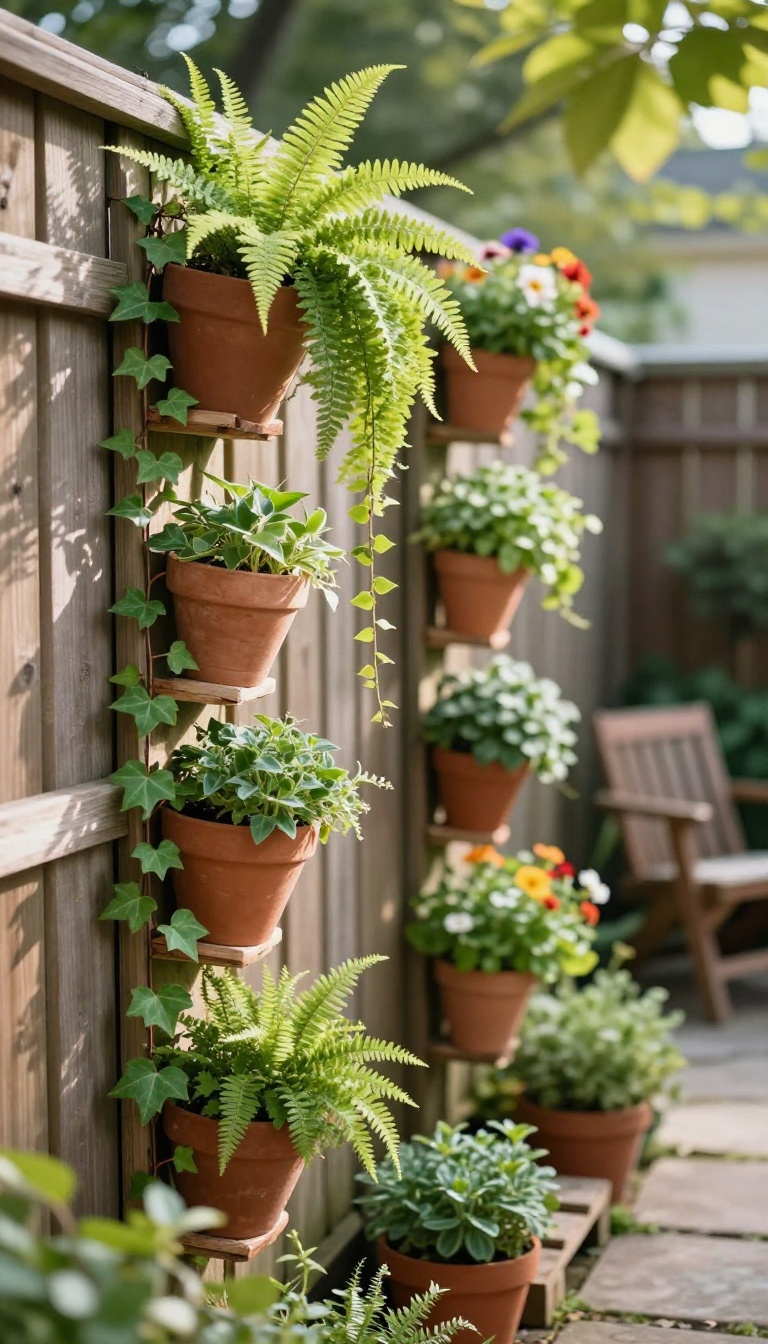
A bare fence or side wall is wasted real estate. Cover it with plants and you gain growing space without losing an inch of lawn. Vertical gardens also soften hard lines and add depth, which tricks the eye into seeing a larger yard.
You don't need a fancy system. Stacked pots, a simple trellis, or a repurposed pallet can all do the job. The goal is to draw the eye upward and free up the ground for seating or a path.
Start by picking a wall that gets the right light. Most edibles and flowering plants want at least four to six hours of sun, so a south- or west-facing fence is ideal. If your wall is shady, choose ferns, hostas, or trailing ivy instead.
Next, decide how you'll attach things. Rental-friendly options like freestanding trellises or over-the-door hooks won't damage the wall. If you own the place, screw-in brackets or a wall-mounted grid give you more flexibility.
Finally, group plants by water needs. Putting thirsty ferns next to drought-tolerant succulents makes watering a headache. Keep similar types together so everyone stays happy.
Pick The Right Wall
Not every wall works. Check the light first, then think about access. You'll need to water and prune, so don't block the only walkway.
A wall near a downspout or hose bib makes maintenance easier.
Choose A Simple System
Pocket planters, stacked pots, and pallet gardens are all beginner-friendly. A trellis with climbing vines is the cheapest option. For a cleaner look, try a modular wall planter with built-in irrigation.
Keep It Manageable
Start small. A single column of pots or one trellis panel is enough to test the idea. Once you see how it performs, you can expand.
Remember to water more often than ground plants—vertical soil dries out faster.
2. Choose Furniture That Folds, Stacks, or Disappears
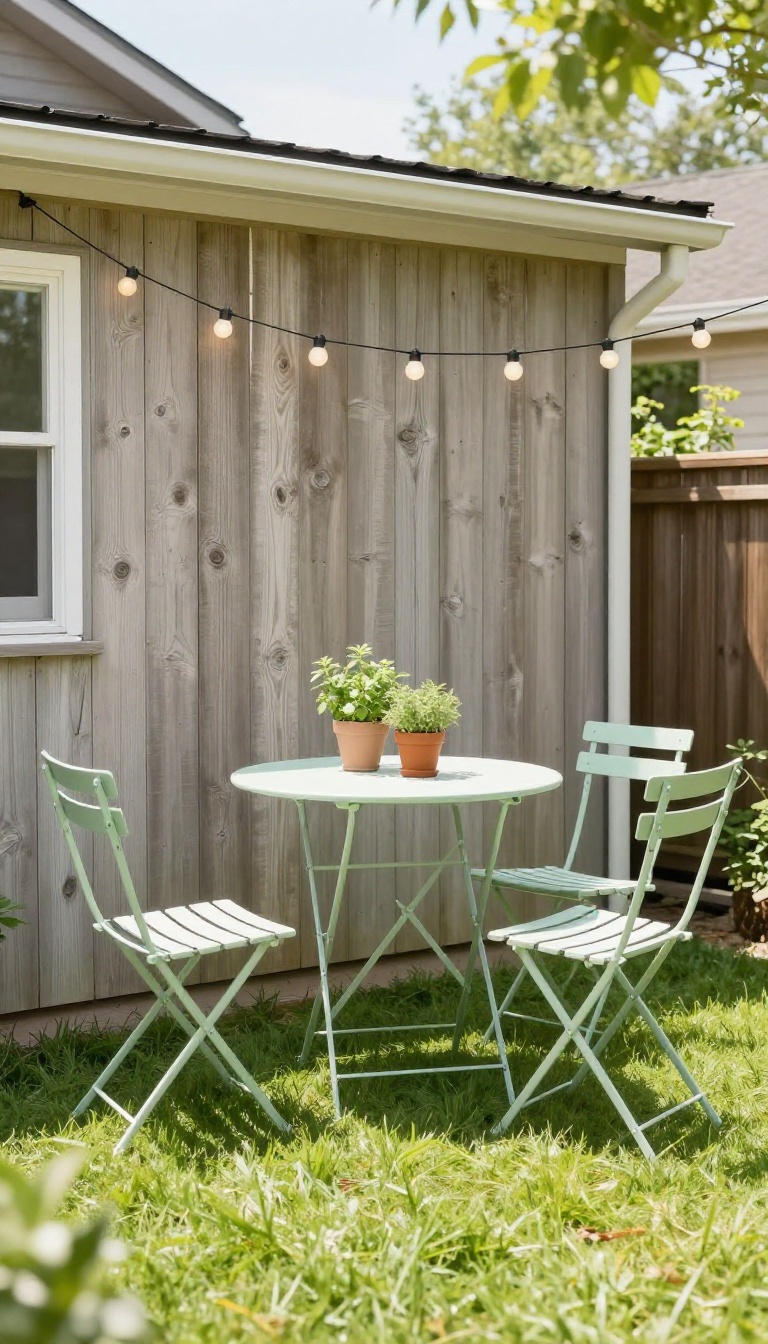
Bulky patio furniture eats up more square footage than you realize. A single oversized sofa and coffee table can swallow half a small yard. The fix is simple: pick pieces that fold, stack, or tuck away when you're not using them.
That way, your space stays open and flexible instead of feeling like a storage unit for chairs.
Think of your backyard as a room that needs to switch functions. Sometimes it's a dining spot, sometimes a reading nook, sometimes just open space for kids or pets. Furniture that disappears when you're done lets all those versions coexist without crowding each other.
You don't need to sacrifice comfort, either. Plenty of foldable and stackable options look good and feel sturdy.
Fold-down Chairs And Stools
Foldable chairs have come a long way from flimsy camping gear. Look for bistro-style folding chairs with metal or weather-resistant wood frames. They hang flat on a wall hook or slide into a slim gap beside the house.
Folding stools work the same way and double as side tables when you drape a tray on top. When guests leave, everything collapses in seconds.
Nesting Tables That Slide Together
A set of nesting tables gives you surface area only when you need it. Pull them apart for drinks and snacks, then push them back into one compact stack. They're perfect for tight corners because the smallest table tucks under the middle one, which tucks under the largest.
Choose lightweight materials like aluminum or acacia so you can move them with one hand.
Benches With Hidden Storage
A bench does double duty when the seat lifts up. Store cushions, gardening tools, or kids' toys inside, and you've just eliminated a separate storage box. Look for weatherproof resin or teak models with hinges that stay put.
Place it along a fence or under a window, and it reads as seating first, storage second. That's the trick: function hiding in plain sight.
Wall Hooks And Overhead Racks
Where do folded chairs go when they're not in use? On the wall. A simple row of heavy-duty hooks or a ceiling-mounted rack keeps them off the floor and out of the way.
This works especially well on a side wall or inside a shed. You get instant floor space back, and your furniture stays dry and ready to grab.
3. Use a Mirror or Two to Fake More Depth
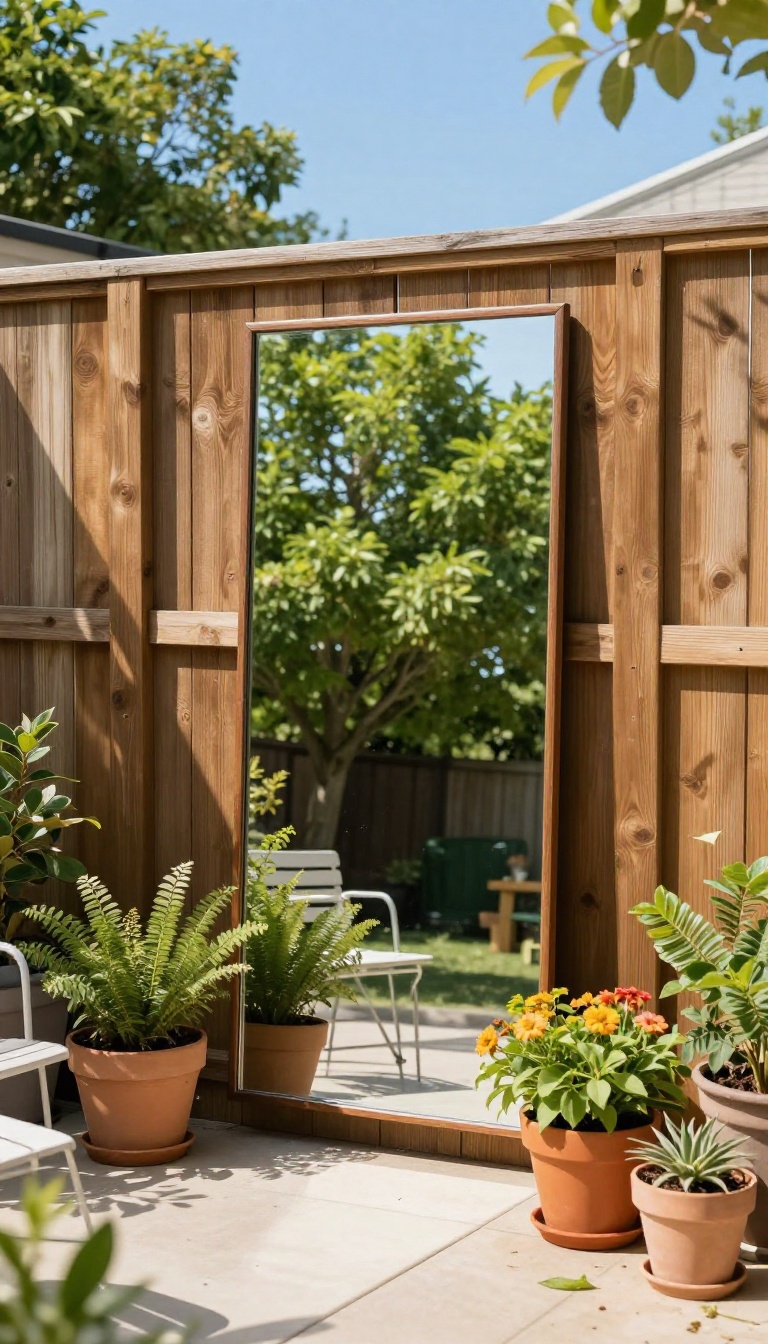
A mirror in a small yard works like a secret door. It reflects whatever sits in front of it—trees, sky, a bright fence—and your brain reads that reflection as more space. Suddenly the yard doesn't end at the fence; it keeps going.
The trick is placement. Put the mirror opposite something worth looking at, and it doubles the view. Put it opposite a blank wall, and you just get more blank wall.
Get it right, and a 10-foot-wide yard can feel like a 20-foot one.
You don't need a fancy mirror. A weatherproof outdoor mirror—or even a cheap acrylic one—can do the job. Just make sure it's safe and won't shatter.
Mount it on a fence, a shed wall, or a side of the house. The reflection adds light and greenery where you'd otherwise see a flat surface. It's one of the cheapest ways to mess with perspective.
Pick The Right Spot
Stand where you'll spend the most time—usually the patio or a seating area. Look straight ahead. What do you see?
If it's a boring fence, that's your mirror spot. Now look at what's behind you. If there's a nice plant, a tree, or a colorful pot, the mirror will bounce that image back.
That's the magic. The mirror should face the good stuff.
Mount It Safely
Use sturdy hooks or a French cleat. A mirror that falls in a windstorm is dangerous. If you're renting, go with a lightweight acrylic mirror and removable adhesive strips rated for outdoor use.
Angle it slightly downward if you want to reflect plants and not just sky. A tiny tilt changes everything.
Style It Like A Window
Frame the mirror with weatherproof wood or metal. It'll look intentional, like a window into another garden. Add a small shelf or a hanging plant beside it to blend it in.
One mirror is usually enough. Two can work if they're on opposite walls, but don't overdo it. You want depth, not a funhouse.
4. Lay a Diagonal Path Instead of a Straight One
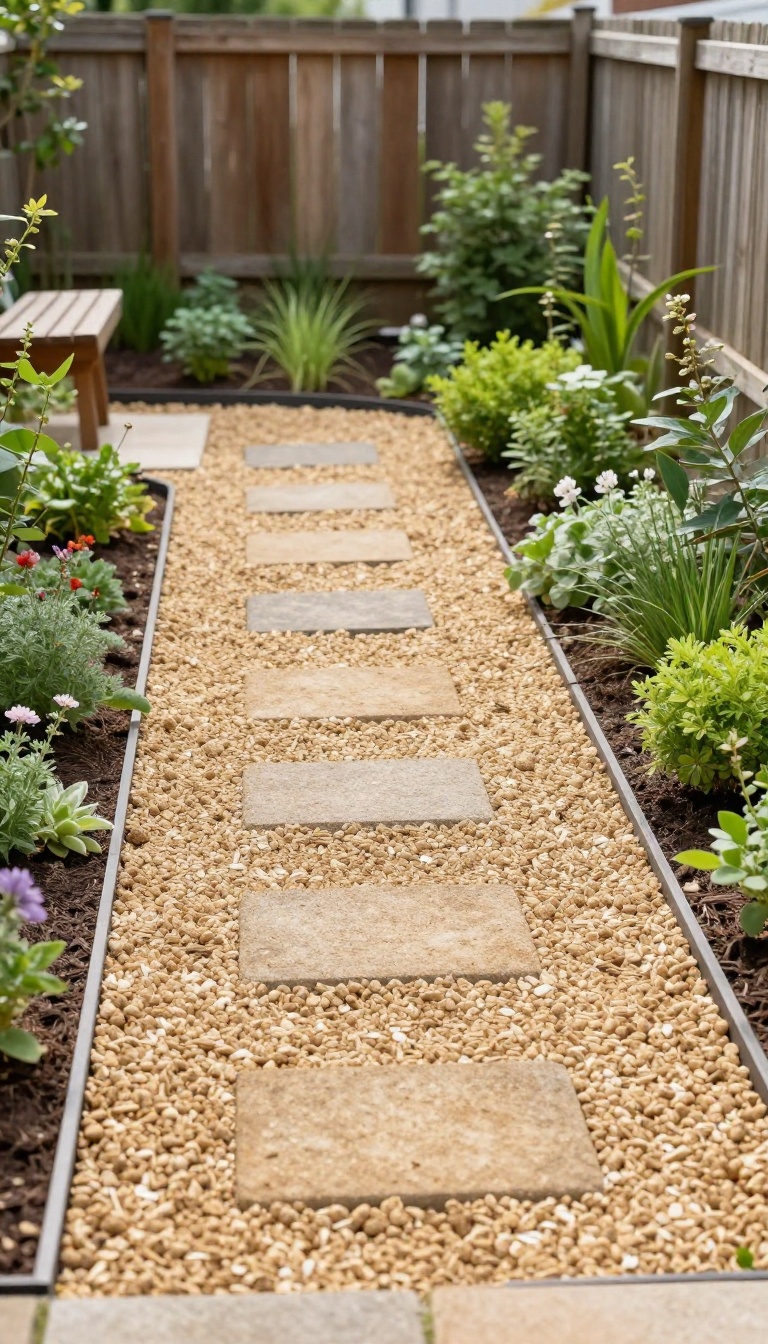
A straight path from the back door to the fence does the opposite of what you want in a small yard. It splits the space into two obvious halves and sends the eye straight to the boundary, which makes the whole area feel boxed in. Run that path on a diagonal instead, corner to corner, and something shifts.
The eye travels farther before it hits an edge, and the yard reads as deeper and less predictable.
The diagonal move works because of basic perspective. A line that crosses the space at an angle creates a longer visual journey than one that runs parallel to the fence. Your brain reads that longer line as more distance, even when the actual measurements haven't changed.
It's a cheap trick, but it's one of the most reliable ones in small-space design. You don't need a fancy hardscape crew to pull it off. Pavers, gravel, or simple stepping stones all do the job.
The material matters less than the direction. What you're really doing is breaking up the boxy feel that makes small yards feel like pens. There's a practical bonus, too.
A diagonal path naturally guides movement from one corner to another, which means you stop cutting across the lawn and wearing a dead strip through the middle. It also gives you a reason to place planting beds or a small seating nook in the leftover triangles on either side.
Pick Your Material
Gravel is the fastest and cheapest option. A bag or two of pea gravel, a shovel, and an hour gets you a path that looks intentional. Just edge it with something—steel, brick, or even a trench—so it doesn't migrate into the lawn.
Pavers give you a cleaner, more permanent look. You can set them in sand or on a base of crushed stone if you want them to stay put through winter. Stepping stones are the middle ground: casual, easy to reposition, and they let grass or groundcover grow between them, which keeps things soft.
If you're renting or just not ready to commit, go with stepping stones. You can lift them and take them with you.
Get The Angle Right
A true corner-to-corner diagonal is the strongest move, but it's not the only one. If your yard is long and narrow, a gentle diagonal that starts near the back door and ends at the opposite rear corner often works better than a hard 45-degree line. Aim for the path to land somewhere useful—a seating area, a fire pit, a gate, or a focal plant.
A path that leads nowhere feels like a mistake, no matter how good the angle is. Lay it out with a garden hose or a length of rope before you dig or place anything. Move it around until the line feels right from the main viewing spot, usually the back door or a kitchen window.
Keep It Wide Enough
A path that's too narrow feels like a tightrope, and that brings the cramped feeling right back. Eighteen inches is the bare minimum for one person. Twenty-four to thirty inches is comfortable and still leaves room for planting on both sides.
If you're using pavers, a single row of 12-inch pavers is usually too skinny. Two rows side by side, or one row of larger 18-inch pavers, reads better and feels more generous underfoot. Don't forget the edges.
A crisp edge—whether it's steel, brick, or a simple spade-cut trench—makes even a gravel path look deliberate and finished.
5. Zone the Space with Rugs and Lighting
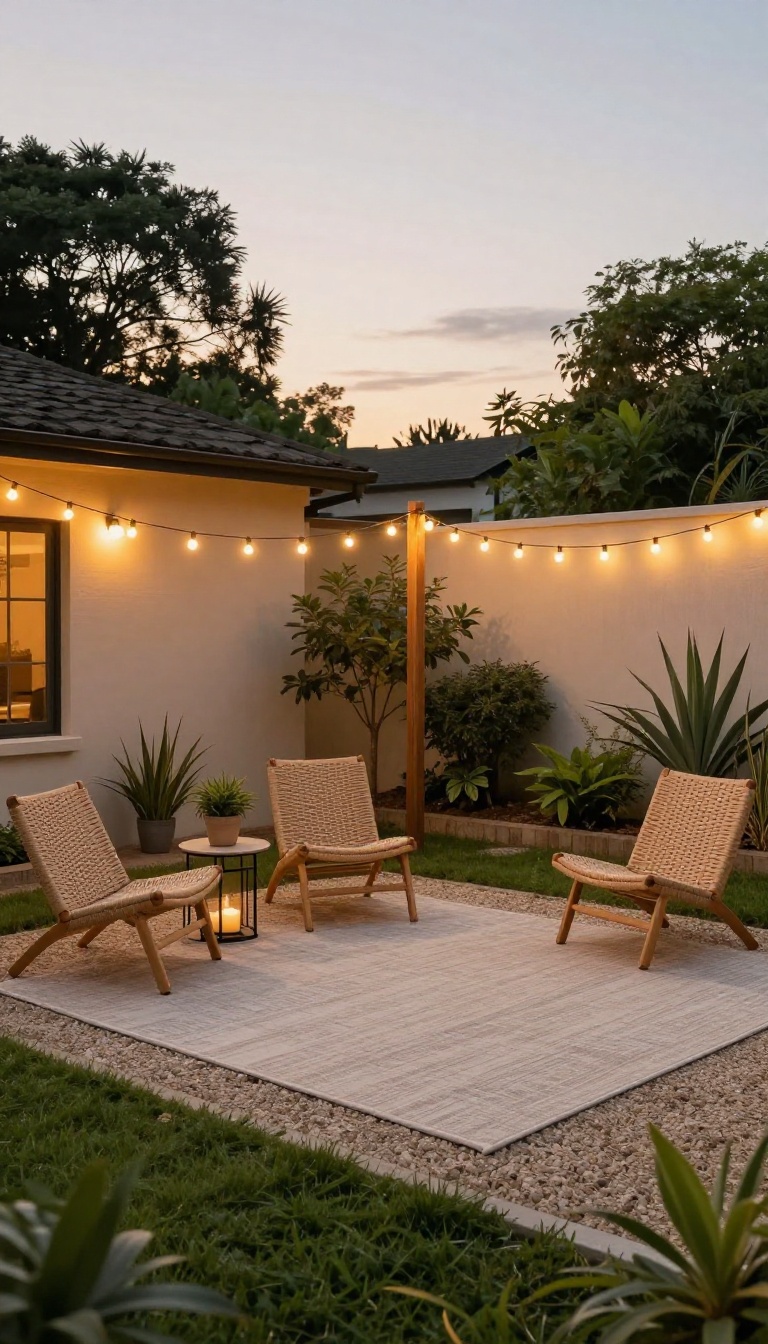
A small yard can handle more than one activity if you stop treating it as one big blob of space. An outdoor rug instantly marks a spot as a sitting area, a dining nook, or a play corner. String lights hung above that zone make it feel like a room without walls.
The result is a yard that feels intentional instead of cramped.
Zoning works because your brain reads boundaries even when they're soft. A rug edge says 'this is where conversation happens. ' Lights overhead say 'this is where you linger after dark. ' You don't need a fence or a hedge to separate uses. You just need a visual cue that tells you what each patch of ground is for.
Pick A Rug That Fits The Zone, Not The Whole Yard
Choose a size that covers the furniture footprint plus a little breathing room. A 5×8 works for a two-chair setup; a 4×6 suits a bistro table. Leave a border of grass or gravel around it so the zone doesn't swallow the entire space.
Material matters too: polypropylene handles rain, while recycled plastic rugs dry fast and resist fading.
Hang Lights That Define The Overhead Boundary
String lights don't just add glow; they create a ceiling. Run them from the house to a tree or a couple of tall posts. Keep the lowest point above head height so nobody ducks.
Warm white bulbs feel cozy, while cool white can look harsh in a small yard. A dimmer switch lets you shift from dinner to late-night hangout.
Keep Each Zone To One Clear Purpose
A rug with a chair and a side table reads as a reading nook. Add a dining table and it becomes a dining zone. Mixing too many functions in one small area muddies the effect.
If you want two zones, give each its own rug and its own light strand. The separation does the work for you.
6. Pick a Few Big Plants Over Many Small Ones
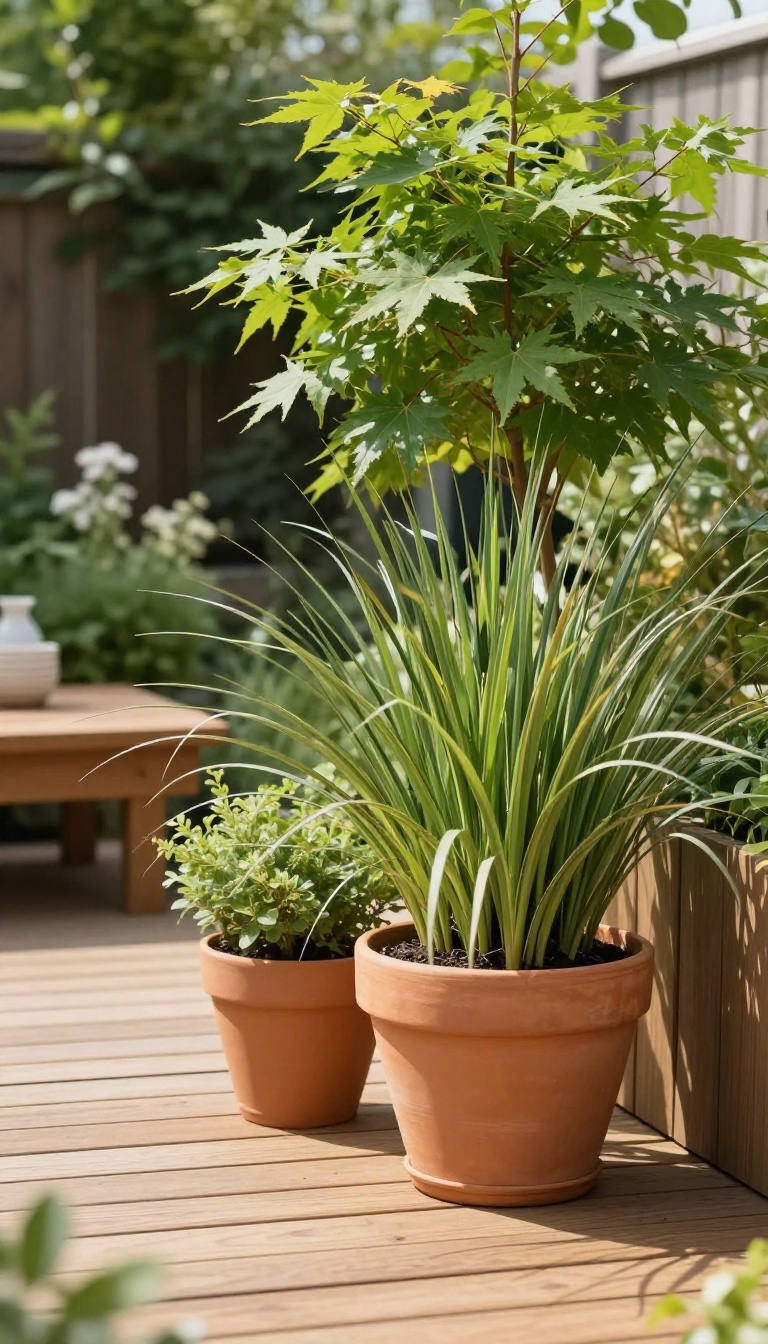
A cluster of tiny pots might seem like the safe way to fill a small yard. But all those little containers create visual clutter, and clutter makes any space feel tighter. Swap them for a few bold, oversized plants and the whole area instantly breathes easier.
Big plants do more than just look impressive. They give your eye a clear place to land, which cuts down on the busyness that makes small yards feel chaotic. When you group a handful of large pots instead of lining up twenty little ones, the space reads as calm and intentional.
Think of it like decorating a room: one statement chair beats five folding stools. In the yard, a single tall grass or potted tree becomes that statement piece. It draws the eye up and out, tricking your brain into thinking there's more room than there really is.
The best part? Fewer plants mean less watering, less repotting, and less fuss. You get more impact with less work, which is exactly what a tiny backyard needs.
Choose Plants With Height
Tall, narrow plants are your best friends in a small space. Think bamboo, ornamental grasses, or a slim Japanese maple. They grow upward instead of outward, so they don't hog your precious floor area.
A single 6-foot grass in a sturdy pot can anchor a corner and add drama. Pair it with one or two medium plants at its base, and you've got a full look without a jungle of pots.
Go Big With Containers
Don't be afraid to use a really large pot. A 20-inch planter holds its own and makes a stronger statement than a bunch of small ones. It also gives roots room to stretch, so plants stay healthier.
Stick to two or three large containers max. Place them where they matter most, like flanking a door or marking a seating area. That's enough to define the space without crowding it.
Edit Ruthlessly
Take a hard look at your current pots. If a plant isn't pulling its weight, rehome it. Keep only the ones that add real presence.
Group the keepers into odd numbers, like three or five, and vary their heights. This creates a natural rhythm that feels collected, not cluttered. The empty space around them is just as important as the plants themselves.
7. Add a Fold-Down Bar or Shelf for Entertaining
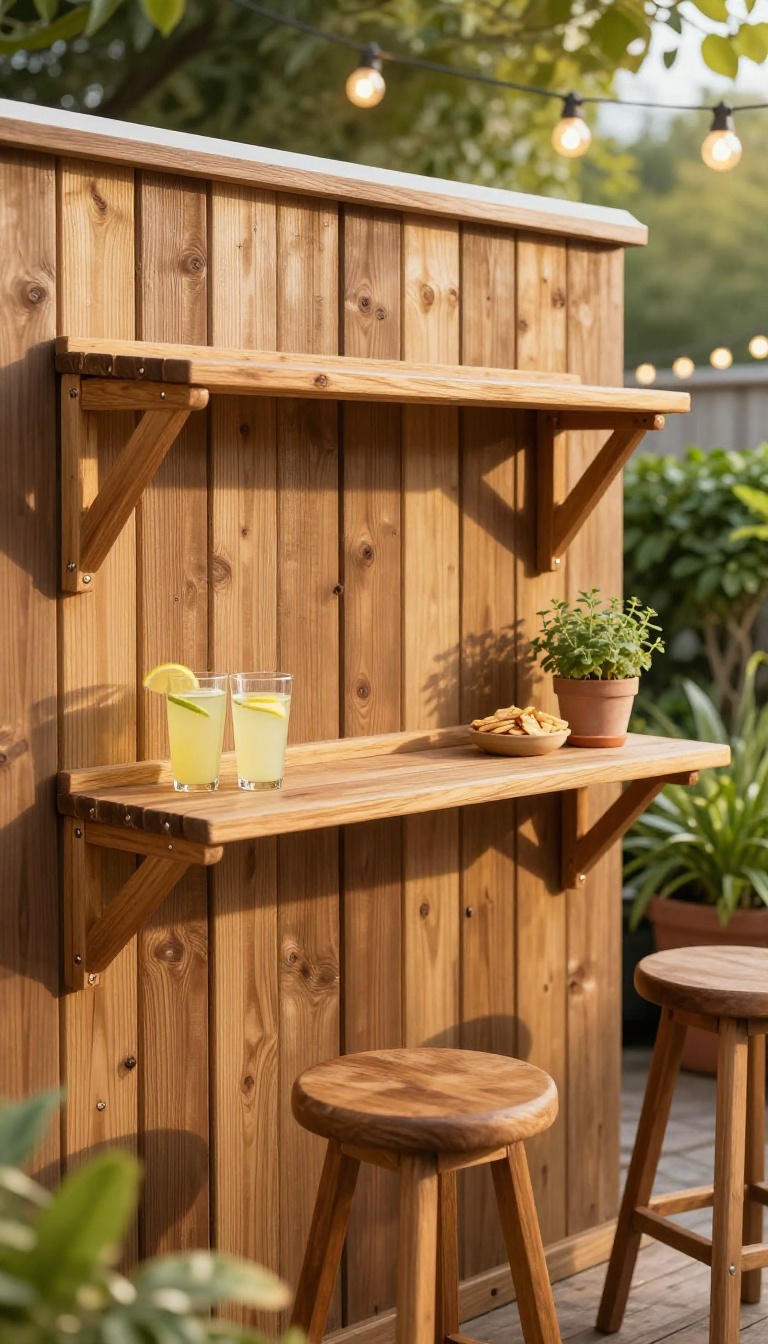
A fold-down bar solves a problem that plagues almost every small yard: you need a surface for drinks and snacks when people come over, but you don't want a table taking up room the other 360 days of the year. A wall-mounted shelf that flips up for use and drops flat against the fence when you're done gives you the best of both worlds. It's one of the cheapest builds on this list, and it might be the one your guests remember most.
The basic idea is simple. You mount a sturdy shelf to a fence, wall, or even a post, using hinges that let it swing up to horizontal and lock in place. When the party's over, you release the support and let it fold down.
The whole thing takes up a few inches of depth when stowed, which means you can walk right past it without ducking or sidestepping. That's the magic of it: you get a real bar surface without giving up a single square foot of permanent floor space. Most versions use a piano hinge along the back edge and a pair of folding shelf brackets underneath.
The brackets do the heavy lifting, so you don't have to worry about the shelf sagging when someone leans on it. A 36- to 48-inch shelf is plenty for a few drinks and a plate of snacks. Go wider if you host often, but keep in mind that longer shelves need more support.
A simple 1×6 or 2×8 board works fine, and you can stain or paint it to match your fence. The real payoff shows up on party day. You set up the bar in seconds, load it with cups and a bottle, and suddenly your tiny yard has a proper serving station.
No folding table to drag out, no cooler hogging the only open spot. When everyone leaves, you wipe it down, fold it flat, and your yard is back to normal. That kind of flexibility is what makes small spaces work.
If you're handy with a drill, you can build one in an afternoon. If you're not, a pre-made folding shelf or a wall-mounted drop-leaf table gets you most of the way there. Either way, you're adding function without adding clutter.
Pick The Right Spot
Mount your fold-down bar where people naturally gather. A fence section near the grill or beside the seating area usually works best. You want it close enough to serve guests without making them get up and walk across the yard.
Also check that the shelf won't block a gate, a hose bib, or a path when it's folded down. Measure the height so it lands around 36 to 40 inches from the ground, which is standard bar height. If you have a low fence, you might need to add a post or a backing board to anchor the hinges securely.
Build It Sturdy, Keep It Simple
You don't need fancy woodworking skills. A single board, two folding brackets, and a piano hinge cover the basics. Use exterior-grade screws and stainless hardware so rust doesn't become a problem.
If your fence is vinyl or metal, you may need a wooden mounting strip to give the screws something to bite into. Seal the wood with an outdoor stain or paint to protect it from rain and sun. The whole project usually costs less than $50 if you already have a drill and a saw.
Make It Party-ready
Once the bar is up, add a few small touches that make it feel intentional. A couple of hooks underneath can hold a bottle opener or a bar towel. A small tray keeps glasses from sliding around.
If you want to get fancy, run a strip of LED lights along the underside of the shelf for evening gatherings. And keep a small cooler or a bucket nearby for ice. The goal is to have everything within arm's reach so you're not running back inside every five minutes.
8. Use Light Colors and Warm Textures
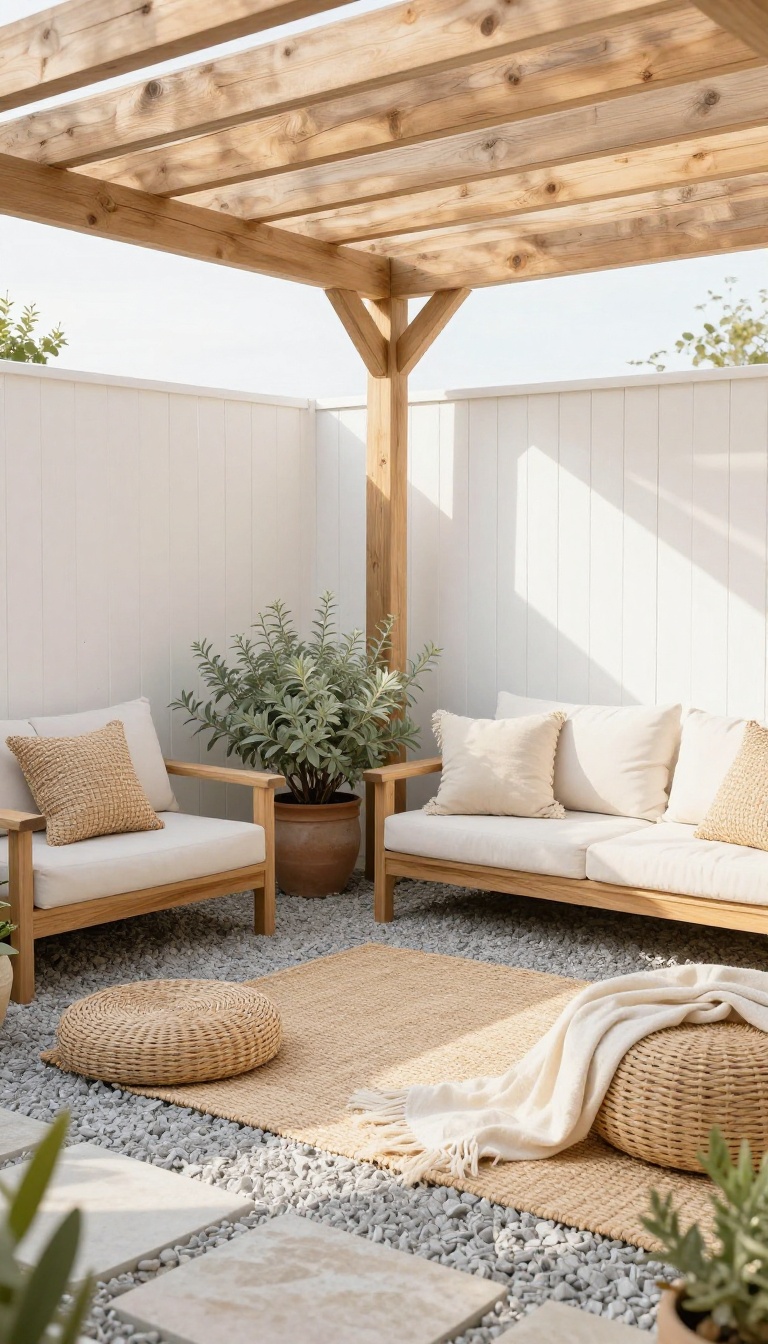
Color does more heavy lifting in a small yard than most people realize. Dark fences, deep gravel, and heavy furniture soak up light and shrink the space. Switch to pale surfaces and the same square footage suddenly breathes.
Light colors bounce daylight around, especially in the late afternoon when a small yard tends to go dim. Warm textures keep it from feeling clinical. The trick is pairing airy tones with a few cozy touches so the space feels open and inviting, not cold.
Start with the biggest surfaces: fences, walls, and the ground. A light gray or soft white fence reflects sun instead of swallowing it. Pale gravel or light-toned pavers do the same at foot level.
Natural wood tones in furniture or a pergola add warmth without going dark. Once the base is bright, layer in texture. Woven mats, cotton throws, and a few natural fiber cushions give the eye something soft to land on.
The contrast between pale surfaces and tactile fabrics is what makes a small yard feel designed rather than just empty. You don't need to repaint everything. Pick one or two large surfaces to lighten and let the rest follow.
A single pale fence can change how the whole yard reads.
Lighten The Big Surfaces First
Fences, walls, and flooring cover the most area, so they set the tone. A soft white, warm gray, or pale sage fence will reflect light back into the yard. Light gravel or pale stone does the same underfoot.
If you can't replace the ground, a light outdoor rug over dark pavers works almost as well.
Add Warmth With Natural Textures
Pale surfaces alone can feel a little flat. Bring in woven mats, cotton throws, and natural fiber cushions. Wood tones in a small table or planter box add warmth without darkening the space.
These touches make the yard feel lived-in and comfortable.
Balance Light And Cozy
The goal is airy, not sterile. Keep the base light and layer in one or two warm textures where you actually sit. A light fence with a woven mat and a few cotton pillows hits the sweet spot.
You get the openness of a bright palette with the comfort of soft materials.
9. Create a Focal Point at the Far End
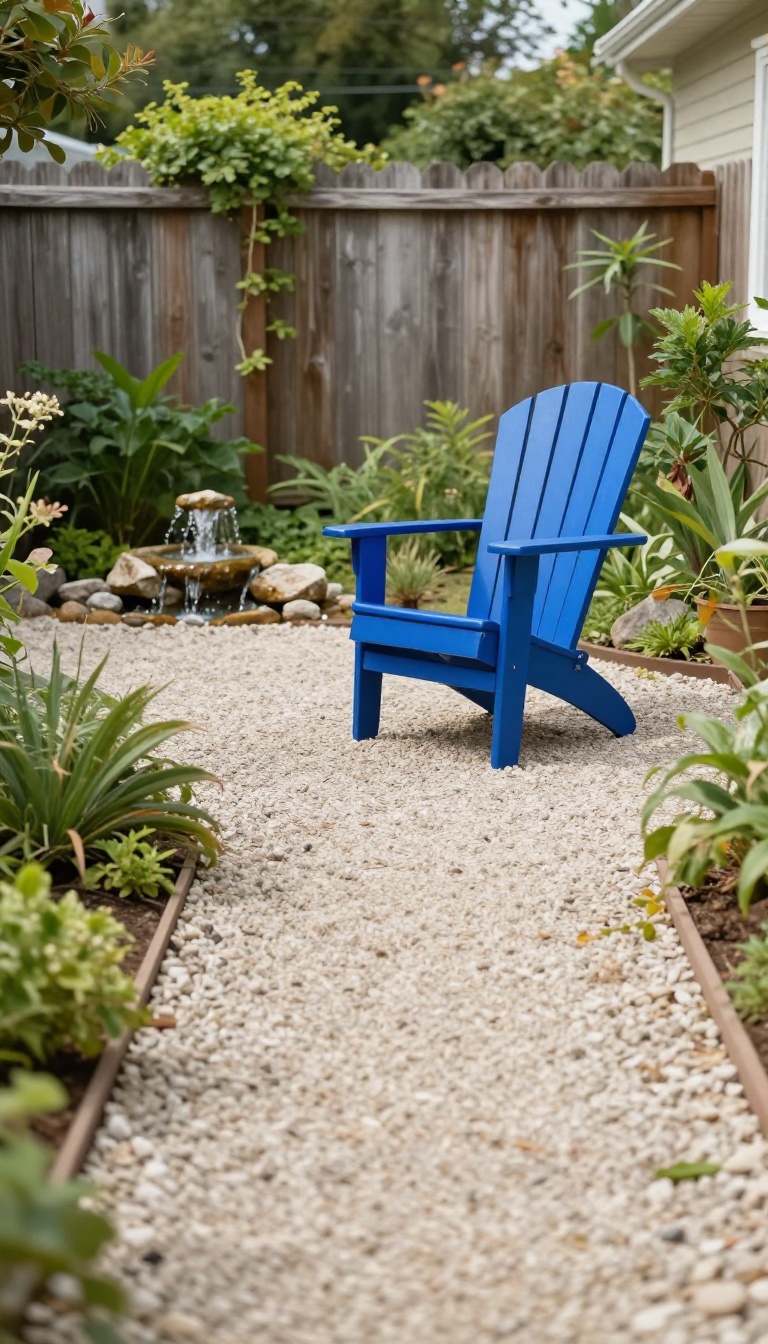
A small yard without a focal point feels like a plain box. Your eye has nowhere to land, so it bounces around and notices every boundary. Give it one clear destination at the back, and the whole space suddenly reads as deeper and more intentional.
The trick is to place something worth looking at near the far edge of the yard. Not in the middle, not right by the door. The back.
That's where the eye naturally wants to travel, and when it finds something interesting there, the distance between you and that object feels like depth. You don't need a grand statue or a koi pond. A small bubbling rock, a single bright chair, or a tall sculptural plant can do the job.
The key is contrast: the focal point should stand out from its surroundings in color, shape, or texture. Once you have that anchor, arrange other elements to support it. A path that curves toward it, plants that frame it, or lighting that highlights it at night all reinforce the effect.
The result is a yard that feels designed rather than just filled.
Pick Something That Pulls The Eye
Choose a focal point with strong visual weight. A bright cobalt blue chair against green foliage, a rusted metal sculpture, or a small fountain with a gentle splash all work. Avoid anything too small or muted, because it will get lost.
If you already have a tree or shrub at the back, you can turn it into a focal point with uplighting or a contrasting planter at its base. The goal is to make that one spot the star of the show.
Place It Just Off-center
Dead center can feel static. Shift your focal point slightly to one side, and the yard feels more dynamic. It also creates a natural flow, because your eye travels diagonally instead of straight back.
This small adjustment makes the space feel wider, too. You're not just looking at a target; you're looking across the yard, which adds perceived width.
Frame It With Layers
Use plants, low walls, or even a pair of matching pots to frame the focal point. Think of it like a picture frame: the frame guides your attention inward. A couple of tall grasses on either side of a fountain, for example, create a soft, natural frame.
Layering also adds depth. Place a low plant in front, a medium one beside it, and the focal point behind. That simple arrangement tricks the eye into seeing more distance than actually exists.
Light It For Evening Impact
A focal point that disappears at night is a missed opportunity. A small solar spotlight or a string of fairy lights draped nearby keeps the effect going after dark. It also makes the yard feel larger because the illuminated area draws the eye outward.
Keep the lighting subtle. You want a glow, not a runway. A single warm light aimed at your focal point is usually enough.
10. Keep the Floor Clear with Wall Hooks and Hangers
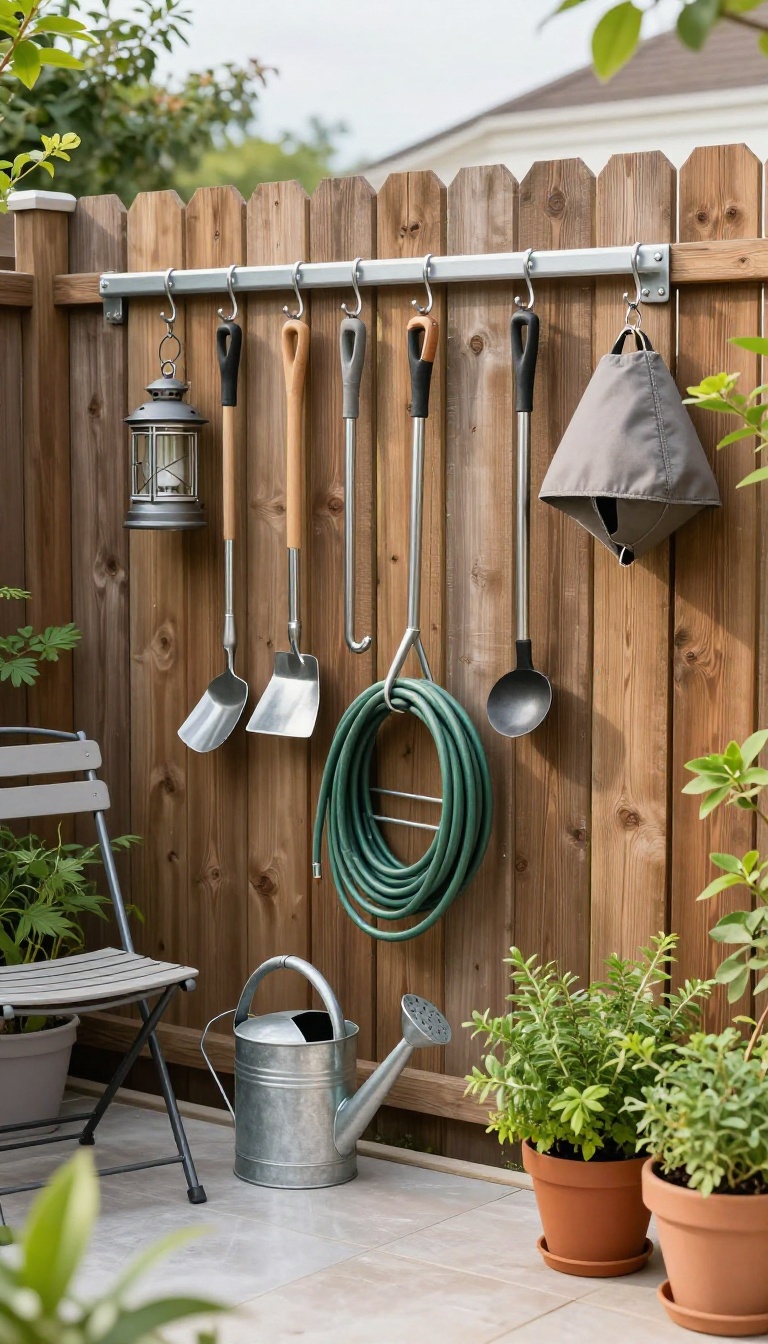
Every square foot of ground you free up is a square foot you can actually use. Hooks, rails, and hangers move the clutter that normally piles up on the patio floor onto the fence, wall, or side of a shed. It's a simple swap, but the payoff is immediate: the yard reads as open instead of busy.
Think about what ends up underfoot in a small yard. Garden tools, a watering can, a coiled hose, folding chairs, a lantern, maybe a grill cover. None of it is heavy, but all of it eats floor space and makes the area feel tighter than it is.
Hanging those items turns dead vertical space into storage. A fence line that was just a boundary becomes a working wall. You don't lose any planting room, and you don't have to build a shed to get things off the ground.
Pick The Right Hardware
For most small yards, a simple rail system with adjustable hooks covers the basics. Look for stainless or powder-coated steel so it survives the weather. Screw-in hooks work fine for lighter items, but use a proper rail for anything heavy like a hose reel or a stack of chairs.
Mount everything into solid wood or masonry, not thin fence pickets. If your fence is flimsy, add a horizontal backing board first. That gives the hooks something real to bite into and keeps them from sagging over time.
What Belongs On The Wall
Long-handled tools are the obvious win. Rakes, brooms, and shovels hang flat and take up almost no depth. A hose reel mounted at waist height keeps the hose off the grass and out of the way.
Folding chairs and a small step stool can hang too, especially if you use a double hook. Lanterns, string lights, and a grill cover all have a natural home on a hook. Even a lightweight folding table can hang on a pair of heavy-duty brackets if you position them right.
Keep It Tidy, Not Cluttered
A wall of random hooks can look just as messy as a floor full of stuff. Group similar items together and keep the spacing even. A short rail with four hooks looks intentional; hooks scattered at random look like an afterthought.
If the wall is visible from the seating area, choose matching hooks and keep the colors neutral. You can also add a small shelf above the rail for lighter items, which doubles the storage without adding floor footprint.
11. Soften the Edges with Curtains or Screens
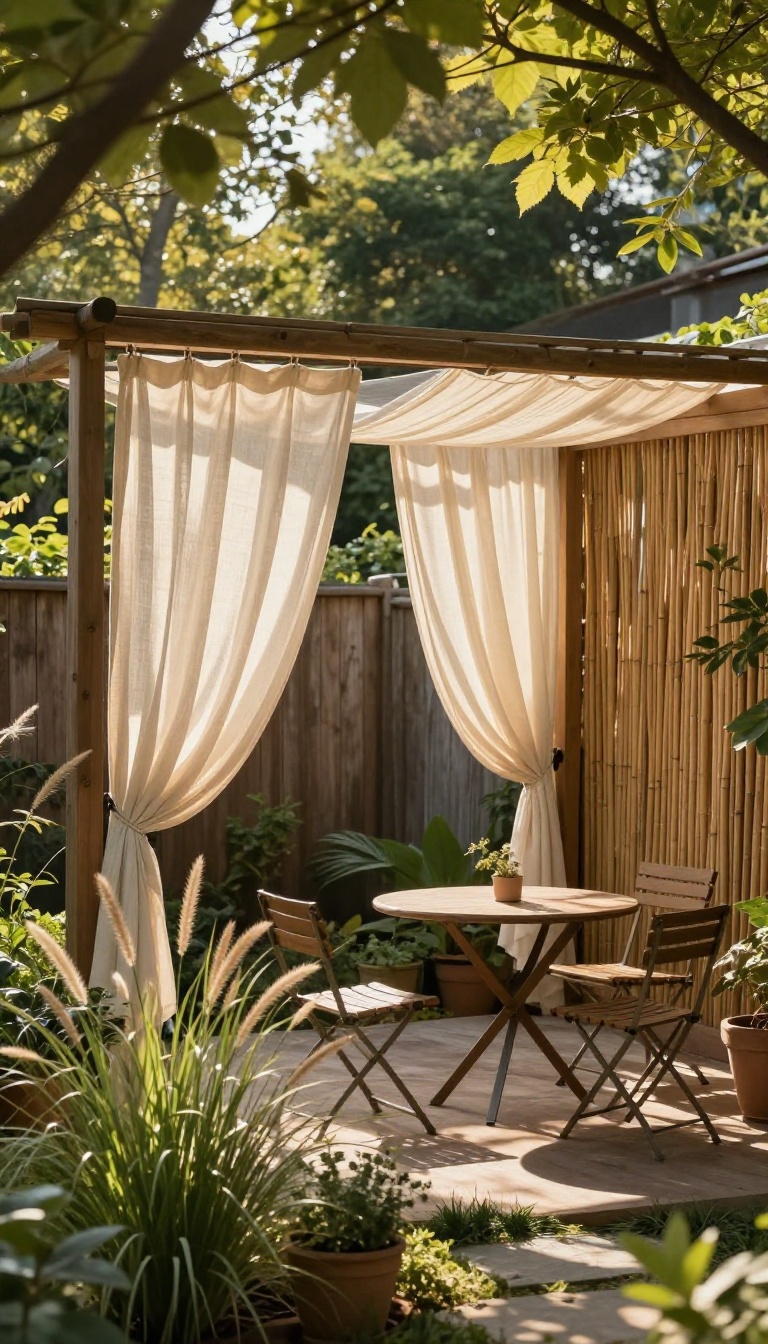
Hard boundaries make small yards feel like cages. A fence, a cinder block wall, or a stark property line draws the eye straight to the limits of your space. Cover those edges with something soft, and the yard suddenly reads as a room instead of a box.
Outdoor curtains, bamboo screens, and tall grasses all do the same job: they blur where your yard ends and something else begins. You get privacy without a solid wall, and the space feels open rather than sealed off. The best part is how cheap and quick this can be.
A curtain rod and two panels can change an entire patio in under an hour.
Hang Curtains Where You Want A Room
Outdoor curtains work best on a pergola, a covered patio, or along one fence line. Mount a weatherproof rod and hang two panels on each side. Leave them open most of the time, then pull them closed when you want shade or privacy.
Choose a light color and a fabric that moves in the breeze. Sheer or linen-look panels soften the view without blocking light. That gentle movement is what makes the yard feel lived-in and calm.
Use Screens For Instant Privacy
Bamboo screens and reed fencing roll out fast and cost very little. Zip-tie them to an existing fence or a simple frame. They hide ugly walls, air conditioners, and nosy neighbors in an afternoon.
Go with a natural tone so the screen blends with plants instead of shouting for attention. If you rent, build a freestanding frame with two-by-fours and attach the screen to that. It moves with you when you leave.
Let Tall Grasses Do The Work
Ornamental grasses like maiden grass or switchgrass grow tall and move with the wind. Plant them in a row along a fence or property line. They create a soft, living screen that changes with the seasons.
Leave the seed heads up through winter for structure and bird interest. Cut them back in early spring, and they'll come right back. No hardware, no installation, just plants doing what they do.
FAQ
What's the cheapest way to make a small backyard feel bigger?
Start with a mirror and a few vertical planters. Both cost little, and together they add depth and greenery without eating floor space.
Do I need to spend a lot of money to improve a tiny yard?
No. Most of these ideas use what you already have or cost under $50. Focus on layout and light before buying anything new.
How do I keep a small backyard from feeling cluttered?
Choose multi-purpose furniture, keep the floor clear, and limit yourself to a few large plants instead of many small ones. Less stuff reads as more space.
What's the best lighting for a small backyard?
Warm string lights and a couple of solar path lights work well. They define zones and add ambiance without harsh glare that makes the space feel smaller.
Can I make a tiny backyard work for entertaining?
Yes. A fold-down bar, stackable chairs, and a clear path for movement let you host a few people comfortably. Keep the setup flexible so you can reset quickly.
Conclusion
You don't need a bigger yard to get more out of it. A mirror, a vertical planter, and a fold-down table can change how the whole space feels. Start with one idea this weekend and see how it opens things up.
Once you stop fighting the size, you can focus on making it work for how you actually live. Small yards reward smart choices, not big budgets. Pick what fits your routine and enjoy the extra room you just created.