11 Backyard Courtyard Ideas for a Cozy Private Escape
A courtyard that blocks out the neighbors and wraps you in quiet changes how you use your yard. Instead of waving at passing cars or dodging the wind, you get a spot that feels genuinely yours. The trick is layering a few smart moves rather than overhauling everything at once.
Start with the bones: fencing, a solid patio surface, and something green to break up the hard lines. From there, lighting, seating, and a little warmth turn an empty corner into a place you'll actually linger.
You don't need a big footprint or a big budget to pull it off. Below are 11 backyard courtyard ideas that build privacy and comfort step by step.
1. Enclose with Fencing or Walls for Instant Privacy
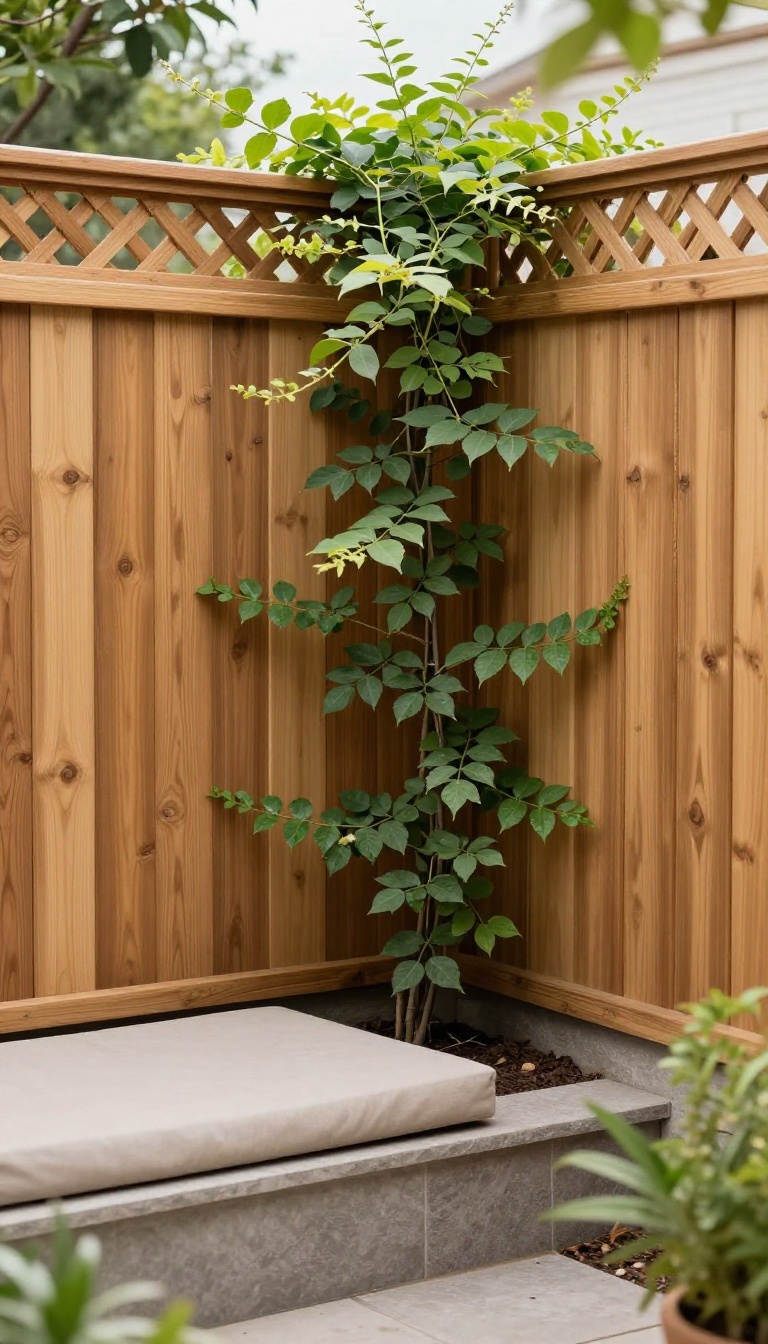
The quickest way to make a courtyard feel like a private retreat is to put something solid between you and the outside world. Tall fencing, lattice panels, or low walls do more than block views; they create a psychological boundary that tells your brain, "You can relax here. " Without that enclosure, even a beautifully furnished patio can feel exposed and unfinished.
The good news is you don't need a construction crew to get the effect. A few well-placed panels or a simple wall can transform an open corner into a snug hideaway. The key is choosing materials and heights that match your space, your budget, and how much privacy you actually need.
Pick The Right Height
For true privacy, aim for a fence or wall that's at least 6 feet tall. That height blocks most sightlines from neighbors and the street, especially when you're seated. If local rules cap your height, consider a lower wall paired with tall planters or a trellis to extend the screen upward.
Just check your city's fence ordinance first—most places have limits, and you don't want to build twice.
Choose Materials That Fit Your Style
Wood fences bring warmth and are easy to stain or paint. Vinyl and composite hold up to weather with almost no upkeep. Lattice panels add texture and let a little light through, which keeps the space from feeling like a box.
Low brick or stone walls work well if you want a built-in look and extra seating. Mix materials if you like—a wood fence with a stone base can look custom without the custom price.
Don't Forget The Gate And Gaps
A privacy fence with a see-through gate defeats the purpose. Choose a solid gate that matches your fencing and add a latch that closes securely. Also, scan for gaps between panels or at the bottom.
Weeds and small animals slip through, and so do prying eyes. A strip of bamboo screening or a row of low shrubs along the base can close those gaps and soften the hard edge.
2. Lay a Stone or Brick Patio for a Solid Base
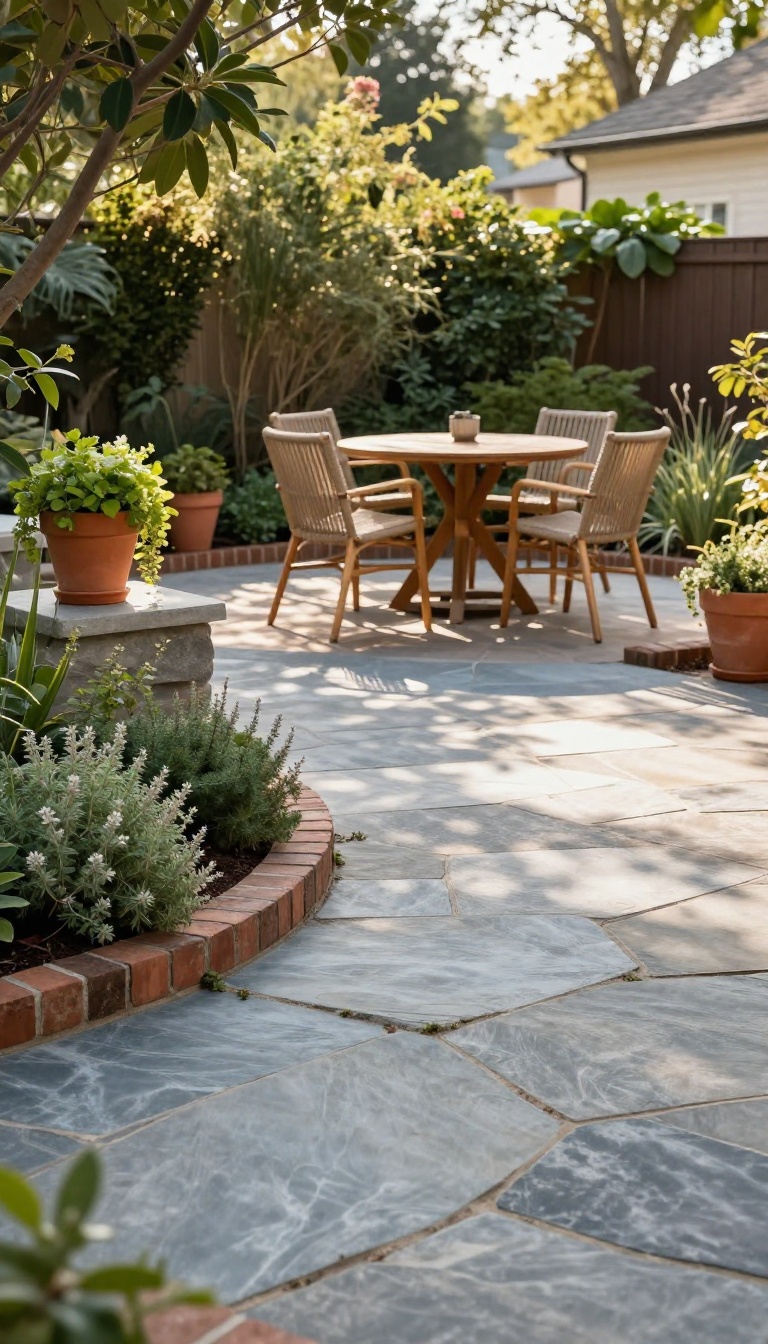
A courtyard lives or dies by what's underfoot. Grass turns to mud, gravel migrates into the house, and bare dirt kills the vibe fast. A hard surface fixes all that and gives you a real floor to build on.
Stone, brick, or pavers each bring their own personality. The right pick depends on your climate, your budget, and how much time you want to spend maintaining it. Get this layer right and everything else—furniture, planters, fire pits—just clicks into place.
The patio is the anchor of your courtyard. It tells you where to put the chairs, how to walk through the space, and what kind of mood you're setting. A wobbly table on uneven ground ruins the whole escape.
You don't need a pro crew for every option. Some materials are genuinely DIY-friendly, while others are worth hiring out. Either way, the goal is the same: a flat, stable, good-looking surface that lasts.
Pick A Material That Fits Your Space
Natural stone like bluestone or travertine looks incredible but costs more and needs a solid base. Brick brings warmth and a classic feel, especially in herringbone or running bond patterns. Concrete pavers are the budget-friendly workhorse—tons of colors, shapes, and they handle freeze-thaw cycles well.
For a small courtyard, go with larger format pavers to make the space feel bigger. Smaller bricks can make a tight area feel busy. And if you want a softer look, mix in groundcover like creeping thyme between the stones.
Get The Base Right The First Time
Every hardscape fails because of a bad base. You need to dig down about 6 to 8 inches, compact the soil, then add a layer of crushed gravel and sand. Skip this and you'll get shifting, cracking, and weeds within a year.
If you're laying pavers on sand, use a plate compactor and check for level constantly. For mortared stone or brick, you'll want a concrete slab underneath. That's a bigger job, but it's permanent.
When in doubt, hire a hardscaper for the prep and do the finishing yourself.
Add Details That Make It Feel Custom
A plain rectangle of pavers works, but a little pattern goes a long way. Try a border of contrasting brick or a diagonal layout to add visual interest. You can also leave gaps for moss or low-growing plants to soften the edges.
Think about drainage too. A slight slope away from the house keeps water from pooling. And if you're in a cold climate, avoid dark colors that heat up and crack in winter.
A light gray or warm tan stays cooler and hides dust better.
3. Add a Small Water Feature for Calm Ambience
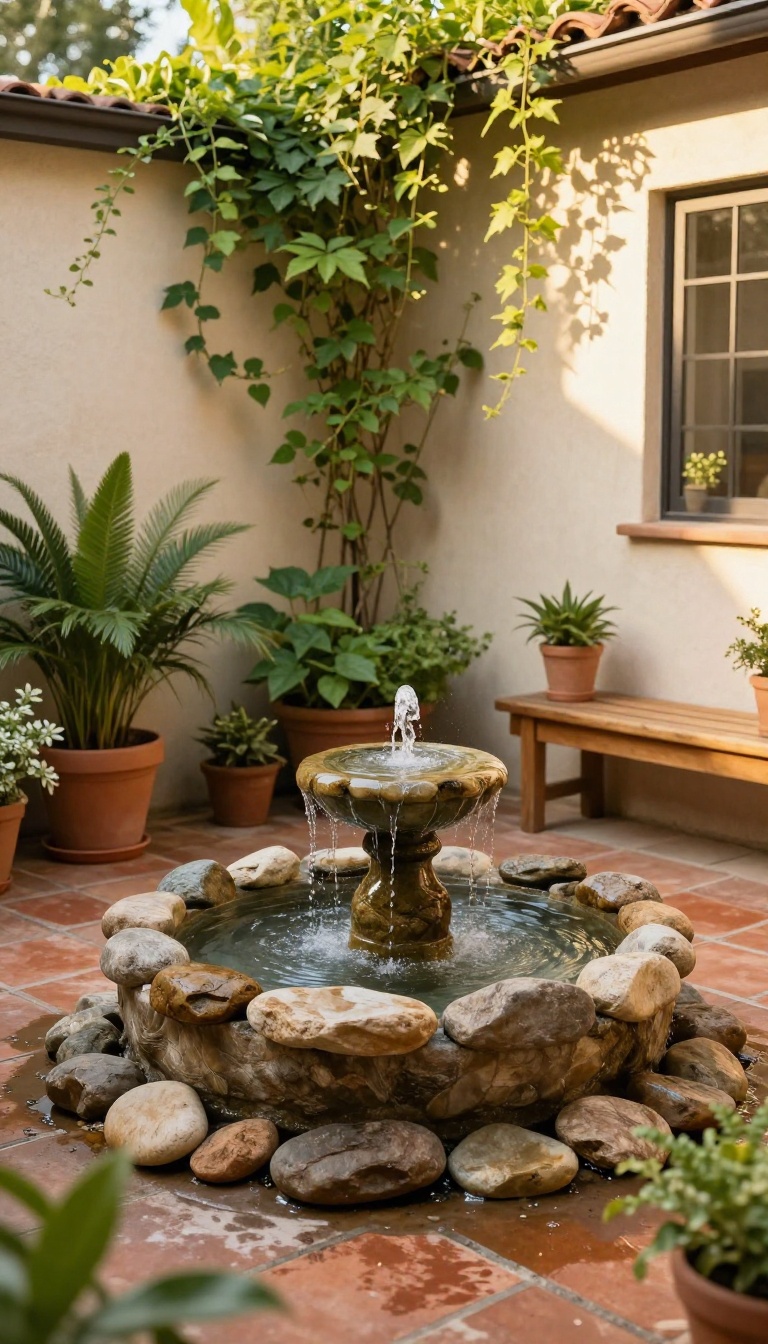
Water does something to a courtyard that nothing else quite matches. The gentle sound of a fountain or the quiet ripple of a small pond gives your space a calming soundtrack that instantly makes it feel more private. It's also a natural noise buffer.
Traffic hum, lawnmowers, and nearby conversations fade into the background once moving water takes over. You don't need a huge installation to get the effect, either. Even a modest feature can shift the whole mood of the space.
A water feature works on two levels at once: it looks good and it sounds good. That combination is what turns a plain courtyard into a spot where you actually want to sit and unwind. The best part is how flexible the options are.
You can go as simple as a wall-mounted spout or as involved as a dug-in pond with plants and a few small fish. Either way, the goal is the same: gentle movement and a sound that feels natural rather than mechanical.
Pick The Right Type For Your Space
A bubbling fountain is the easiest starting point. They're self-contained, need minimal plumbing, and you can move them around until you find the right spot. Small ponds suit courtyards with a bit more room and a desire for a more natural look.
Wall-mounted spouts are perfect for tight corners where floor space is at a premium. Think about how much maintenance you're willing to take on. Fountains and spouts are low-effort.
Ponds need a little more attention, especially if you add plants or fish. Match the feature to your lifestyle, not just the photos you like online.
Place It Where You'll Hear It Best
Sound travels in specific ways, so placement matters more than size. Put the feature near where you sit most often, but not so close that you have to raise your voice over it. A spot a few feet away from your main seating area usually hits the sweet spot.
If you're trying to mask street noise, position the water feature between your seating and the source of the sound. The moving water creates a soft barrier that makes the outside world feel further away. A little trial and error with placement is worth the effort.
Keep It Low-maintenance And Looking Good
Algae and cloudy water are the quickest ways to kill the vibe. A small pump with a filter keeps things clear, and a few drops of water treatment go a long way. If you're using a fountain, check the water level weekly and top it off as needed.
For ponds, add a couple of oxygenating plants to help keep the water balanced. In colder months, drain and store portable features so they don't crack. A little routine care keeps the feature looking and sounding like a deliberate design choice rather than an afterthought.
4. Create a Cozy Seating Nook with Built-in Benches
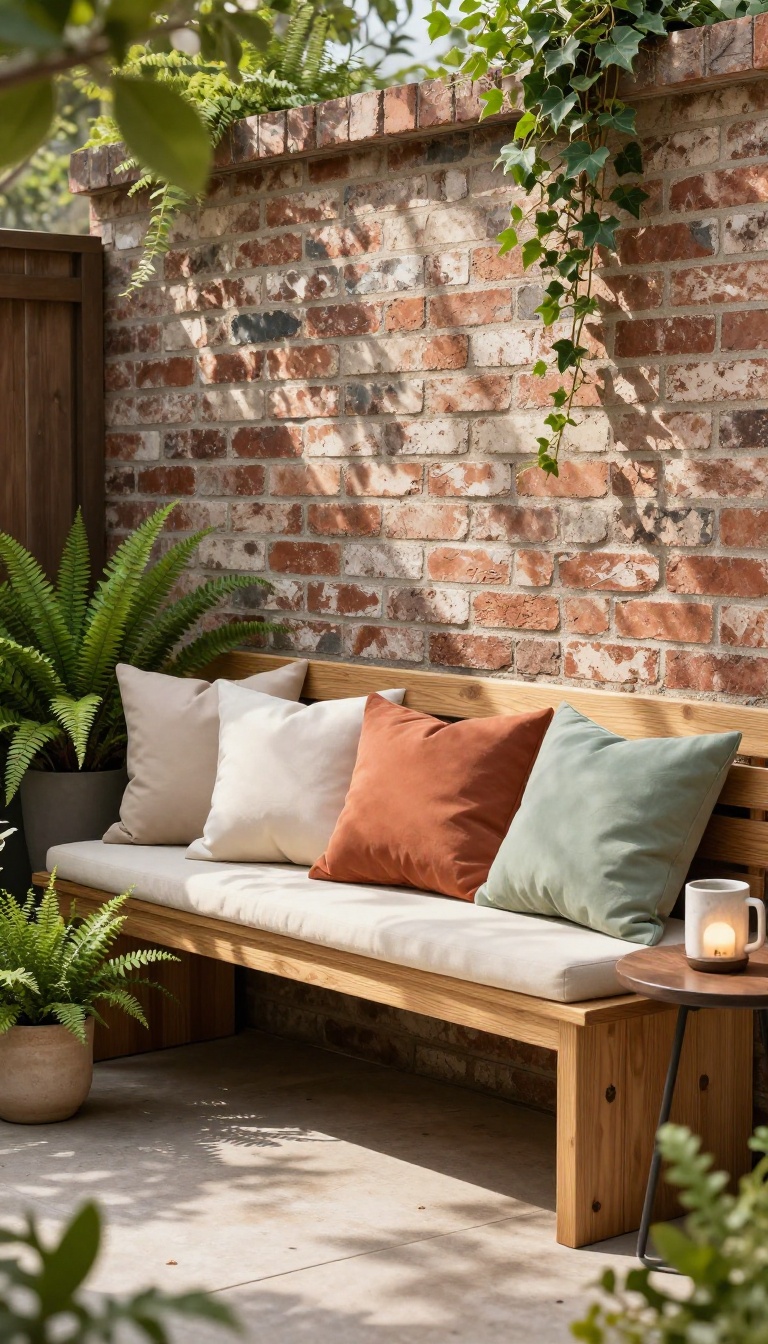
Built-in benches turn dead wall space into the most inviting spot in your courtyard. They save room because they hug the perimeter instead of jutting into the middle. Add cushions and throw pillows, and suddenly everyone wants to sit and stay awhile.
A built-in bench does double duty: it gives you seating and defines the edge of your courtyard without a bulky furniture footprint. You can run it along a fence, a low retaining wall, or even a raised planter. The result feels intentional and custom, not like you just dragged a couch outside.
Because the bench is fixed, you can design the rest of the courtyard around it. A small side table, a lantern, and a few plants are all you need to finish the nook. The key is comfort—bare wood or stone gets old fast, so plan for softness from the start.
Pick The Right Spot
Look for a wall or planter that already blocks wind and prying eyes. A corner works especially well because it feels enclosed on two sides. If you have a sunny spot, great, but a little shade is fine for afternoon lounging.
Make sure the bench doesn't block a path or a door. You want easy access to the nook without squeezing past it. A depth of 18 to 22 inches is comfortable for sitting, and a height of 16 to 18 inches suits most adults.
Build For Comfort And Storage
You can build the bench from wood, concrete, or even cinder blocks faced with stone. If you're handy, frame it with pressure-treated lumber and top it with cedar or teak. For a simpler route, hire a mason to pour a low wall and add a wood cap.
Add hidden storage underneath if you can. Lift-up seats or pull-out drawers give you a place for cushions, tools, or kids' toys. That keeps the courtyard tidy and makes the bench even more useful.
Cushions, Pillows, And Color
Outdoor cushions turn a hard bench into a place you'll actually relax. Choose quick-dry foam wrapped in solution-dyed acrylic fabric—it resists fading and mildew. A bench cushion that's 3 to 4 inches thick feels plush without looking bulky.
Throw pillows add color and personality. Mix two or three patterns that share a common hue, then swap them out seasonally. Add a couple of lumbar pillows for back support, and you're set for long conversations and lazy afternoons.
5. Use Potted Plants to Soften Hard Edges
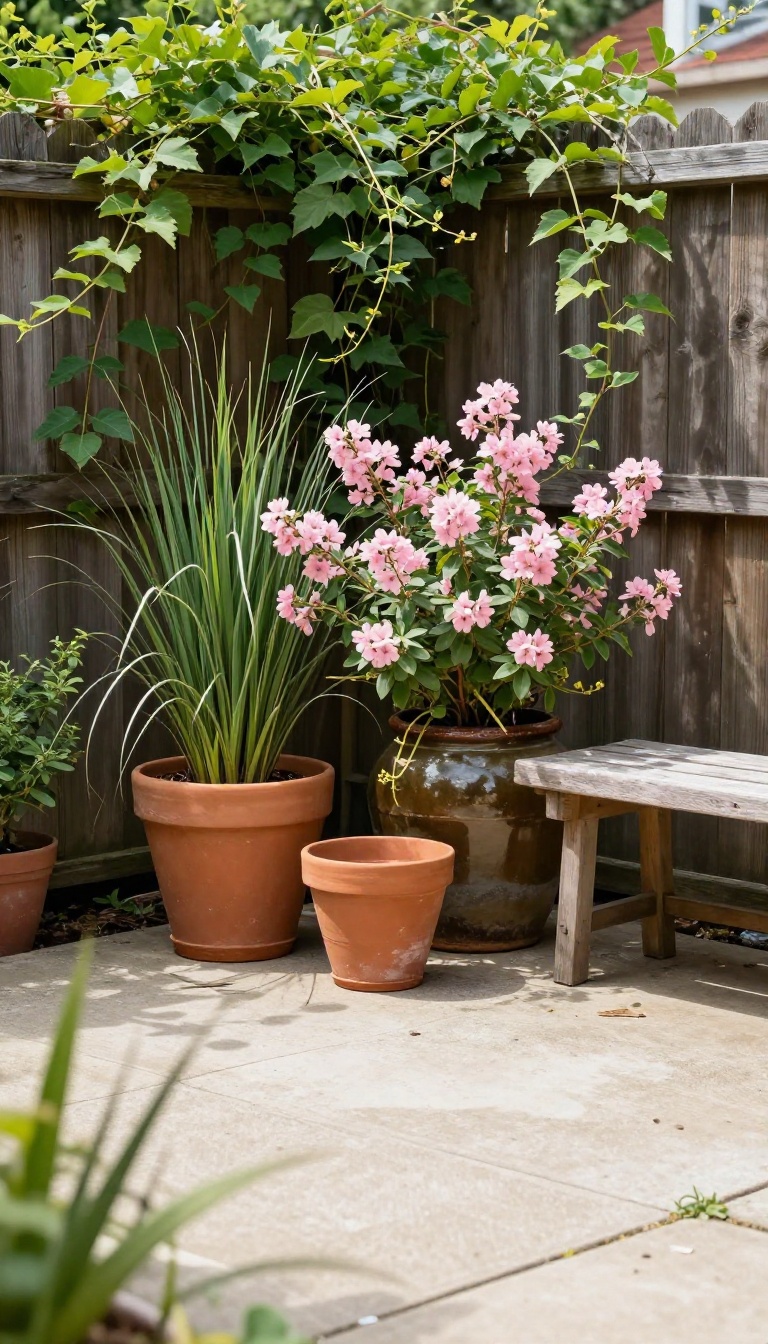
Hard surfaces define a courtyard, but they don't have to dominate it. Potted plants bring softness and life to walls, pavers, and fences without committing to permanent planting. You can move them around, swap them out, and change the whole feel of the space in an afternoon.
Containers give you flexibility that in-ground plants can't match. You can shift them to block a view, fill a corner, or open up a walkway whenever you want. They also let you garden on concrete, which is often the reality in small courtyards.
Cluster For Impact
Group pots in odd numbers and vary the heights. A tall grass, a mid-size flowering shrub, and a low trailing plant create a full, layered look. Clustering also makes watering easier and keeps the arrangement from feeling scattered.
Pick Plants That Earn Their Space
Choose plants that look good year-round or have a long season of interest. Evergreens, ornamental grasses, and hardy perennials hold their shape. Add a few annuals for color, but don't rely on them for structure.
Match Pots To The Space
Pot material and color set the tone. Terracotta feels warm and casual, glazed ceramic adds a pop of color, and concrete or resin blends into modern settings. Keep the palette consistent so the collection looks intentional, not random.
Use Pots To Solve Problems
A row of tall pots can screen a utility box or an ugly fence line. A single large container can anchor a seating area or mark a pathway. Think of pots as movable walls and accents, not just decoration.
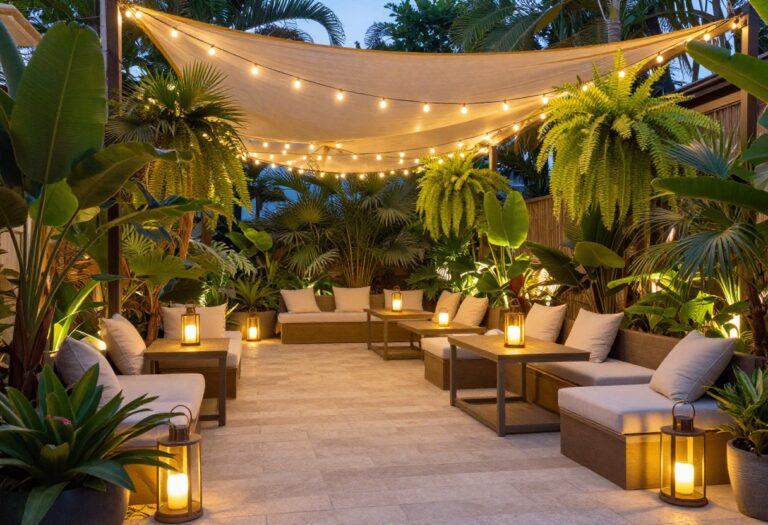
6. Hang String Lights or Lanterns for Evening Glow
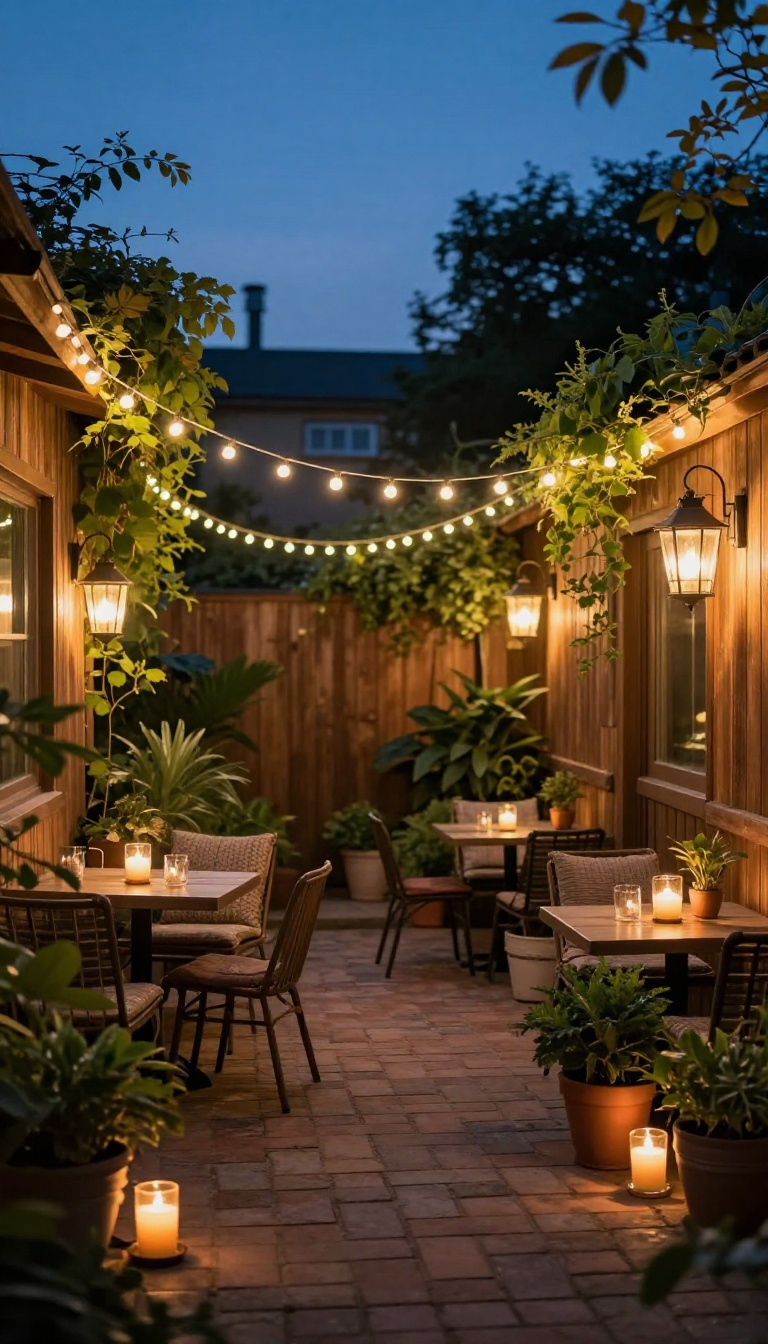
Daylight isn't the only thing that makes a courtyard inviting. Once the sun drops, the right glow keeps you out there longer, whether you're eating dinner, reading, or just sitting with a drink. The goal is soft, layered light, not a floodlight that makes the space feel like a parking lot.
String lights and lanterns do more than look pretty. They pull the eye upward, soften the edges of fences and walls, and make a small courtyard feel bigger and warmer at the same time. You don't need an electrician or a permanent install to get there.
A few well-placed strands and a couple of lanterns will do the heavy lifting.
Pick The Right Bulbs
Warm white bulbs around 2200K to 2700K give that amber, candle-like glow. Cool white or daylight bulbs read as harsh and clinical, which kills the cozy mood fast. If you want color, keep it subtle and stick to one hue rather than a rainbow.
Zigzag, Don't Stretch
Run string lights in a loose zigzag from fence to fence or wall to wall instead of pulling them tight in one straight line. The gentle dips create a canopy feel and spread the light more evenly. Use screw hooks or cup hooks so you can take them down without damaging anything.
Mix Heights And Sources
Hang a few lanterns lower, near seating or along a step, so the light doesn't all come from one level. Battery or solar lanterns work well if you don't have an outdoor outlet. Add a couple of candles in glass holders on a table for flicker and depth.
Keep It Safe And Simple
Choose lights rated for outdoor use and plug into a GFCI outlet or use solar and battery options. Skip anything that gets hot near fabric, plants, or dry wood. A smart plug or timer means you never have to remember to switch them off.
7. Install a Pergola or Awning for Shade and Structure
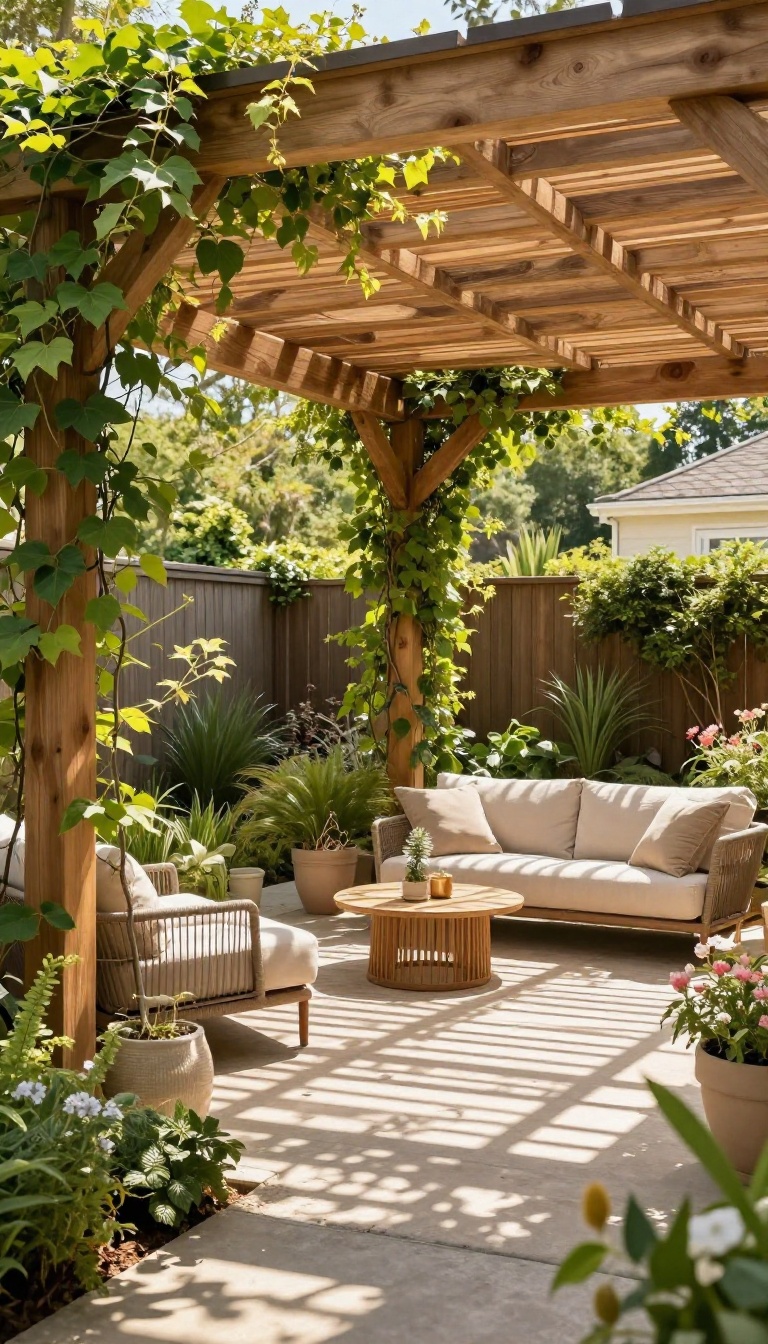
Overhead shade changes everything. A pergola or awning gives your courtyard a ceiling, so you can enjoy it even when the sun is beating down. It also adds architectural interest, turning a flat space into something with depth and character.
Think of a pergola as a skeleton for your courtyard. It defines the area without closing it in, and you can dress it up or keep it simple. An awning, on the other hand, is more about function—it rolls out when you need cover and tucks away when you don't.
Both options make the space more usable and more inviting.
Pergola Vs. Awning: Which One Fits?
A pergola is a permanent structure, usually made of wood, vinyl, or metal. It offers partial shade and a lot of style. You can grow vines on it, hang lights, or add a fabric cover for more shade.
An awning is typically retractable and attaches to your house or a freestanding frame. It's great for quick shade and can be motorized. If you want a architectural feature, go pergola.
If you want flexible shade with less commitment, an awning wins.
Placement And Size Tips
Put your pergola or awning where you'll actually use it—over a seating area, dining table, or outdoor kitchen. Size matters: too small and it won't shade anything; too big and it can overwhelm a small courtyard. As a rule, aim for at least 10 feet by 10 feet for a pergola.
For an awning, measure the area you want covered and add a foot or two on each side. Also, consider the sun's path. In hot climates, you might want shade in the afternoon, so position accordingly.
Materials And Maintenance
Wood pergolas need staining or painting every couple of years, but they look classic. Vinyl is low-maintenance and won't rot. Aluminum is lightweight and rust-resistant.
For awnings, acrylic fabric resists fading and mildew, while polyester is cheaper but less durable. Retractable awnings need occasional cleaning and mechanism checks. Whatever you choose, make sure it can handle your local weather—wind, rain, and snow can take a toll.
Adding Comfort And Style
Once the structure is up, you can make it cozier. Hang string lights or a chandelier for evening ambiance. Add a ceiling fan to circulate air.
If your pergola has open slats, you can add a shade sail or fabric panels for more coverage. For awnings, consider a valance or side panels to block low sun. Plants like climbing roses or wisteria can soften the edges and add greenery.
Just keep in mind that vines can damage wood over time, so choose carefully.
8. Incorporate a Fire Pit or Chiminea for Warmth
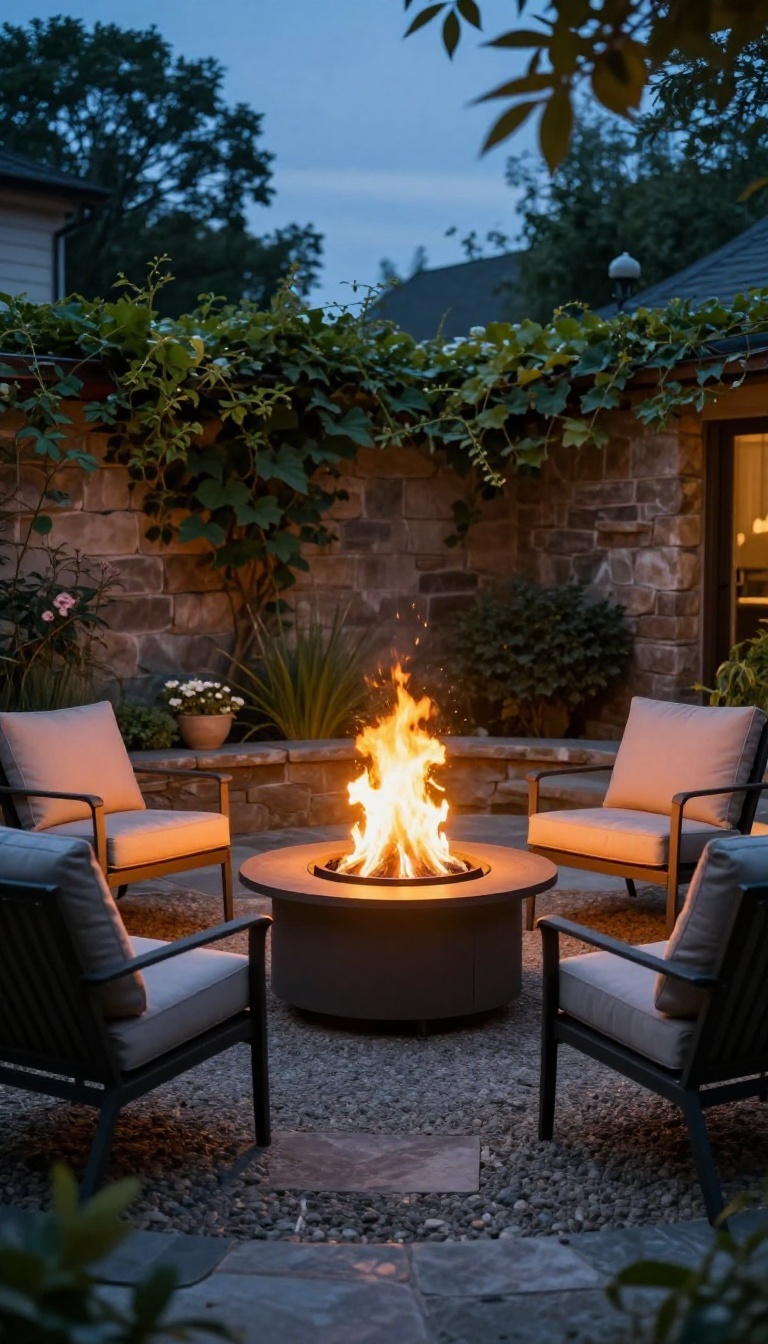
A fire feature does more than take the chill off a cool evening. It gives everyone a reason to pull their chairs into a circle and stay a while longer. Whether you go with a crackling wood fire or the convenience of gas, the glow becomes the heart of your courtyard.
The best choice depends on how you plan to use the space. Wood-burning options deliver that classic campfire smell and sound, but they need more attention. Gas models light with a flick and shut off clean, which suits small courtyards and busy schedules.
Size matters, too. A massive fire pit can overwhelm a compact space, while a tiny one won't throw enough heat. Measure your seating area and leave at least three feet of clearance around the feature for safety and comfort.
Wood-burning Vs. Gas
Wood-burning fire pits and chimineas win on atmosphere. You get real flames, crackling sounds, and that smoky scent that makes cool nights feel like an event. The trade-off is ash cleanup, spark screens, and storing dry wood.
Gas models run on propane or natural gas and start with a push of a button. They produce steady heat without smoke, which keeps your clothes and hair from smelling like a campfire. If you want low-maintenance cozy, gas is hard to beat.
Placement And Safety
Put your fire feature on a nonflammable surface like stone, concrete, or gravel. Keep it away from low-hanging branches, wooden fences, and anything that could catch a stray spark. A chiminea works well near a wall because its chimney directs smoke up and away.
Check local rules before you buy. Some neighborhoods restrict wood burning on certain days, and rental properties may ban open flames entirely. A quick call now saves a headache later.
Styling The Surroundings
Arrange seating so people face each other, not just the fire. A curved bench or a few Adirondack chairs set at an angle create a natural conversation zone. Add a small side table for drinks and a basket of blankets for when the temperature drops.
At night, keep the area dim so the flames stand out. String lights or a few low lanterns give just enough glow to move around safely without killing the mood. The fire should be the brightest thing in the courtyard.
9. Add a Vertical Garden or Trellis for Greenery
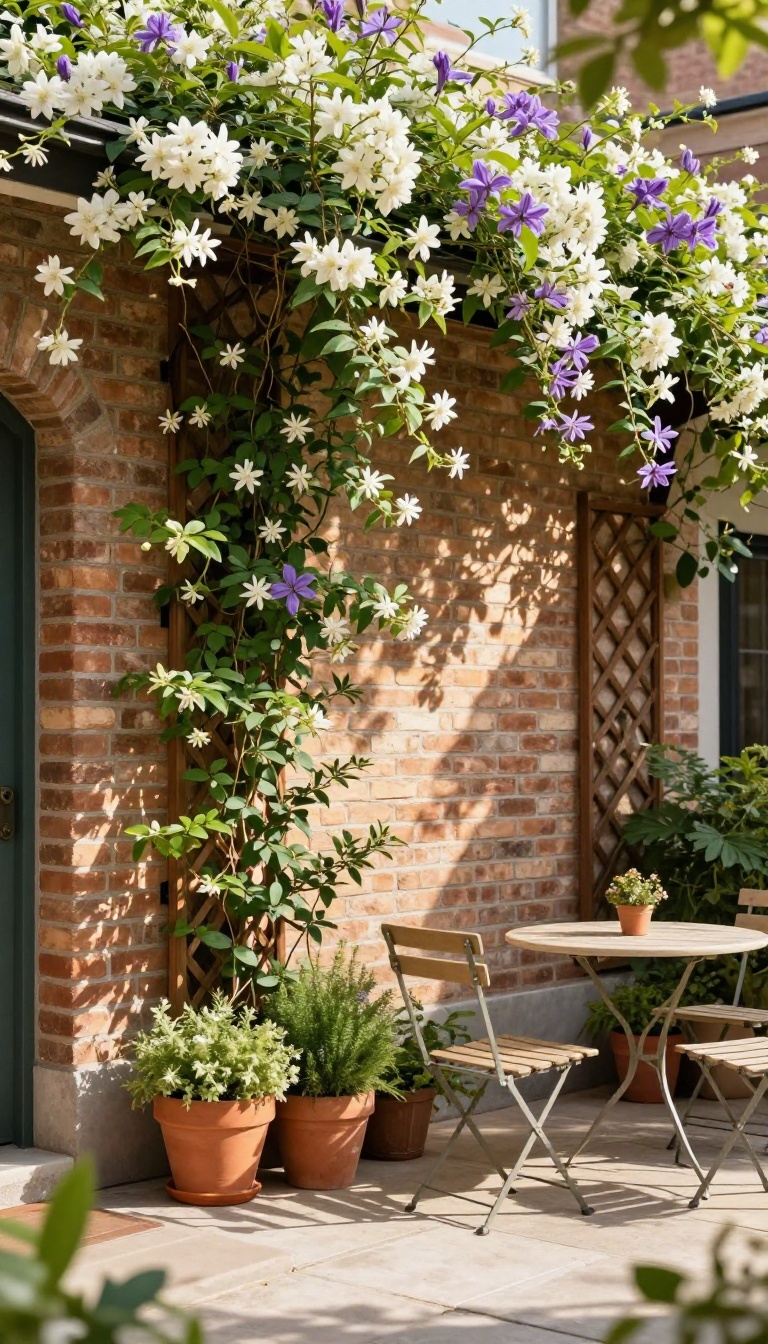
Walls don't have to stay bare. A vertical garden or trellis turns them into living surfaces that add privacy, soften hard edges, and make a small courtyard feel like a hidden garden. You don't need much ground space either—just a wall, a sturdy support, and the right climbing plants.
Vertical growing is one of the smartest moves for a compact courtyard. It draws the eye upward, which makes the space feel taller and more enclosed. It also gives you greenery where a traditional garden bed won't fit.
The best part? You can start simple with a single trellis and expand over time.
Pick The Right Support
Trellises come in wood, metal, and expandable lattice styles. Choose one that matches your courtyard's look—wood for a rustic feel, black metal for a modern edge. Mount it securely to a wall or fence, or use a freestanding version if you rent.
For a fuller look, attach several panels side by side.
Choose Climbing Plants That Thrive
Not all climbers behave the same. Annual vines like morning glory grow fast and die back each year. Perennials like clematis or jasmine come back stronger and offer repeat blooms.
In shady spots, try ivy or climbing hydrangea. Match the plant to your light and climate, and you'll get lush coverage with less fuss.
Keep It Tidy And Healthy
Climbers need a little guidance. Tie stems loosely to the support as they grow, and trim stray shoots to keep things neat. Water deeply once a week, and feed monthly during the growing season.
A quick check for pests now and then keeps your vertical garden looking its best.
10. Choose Weather-Resistant Furniture and Fabrics
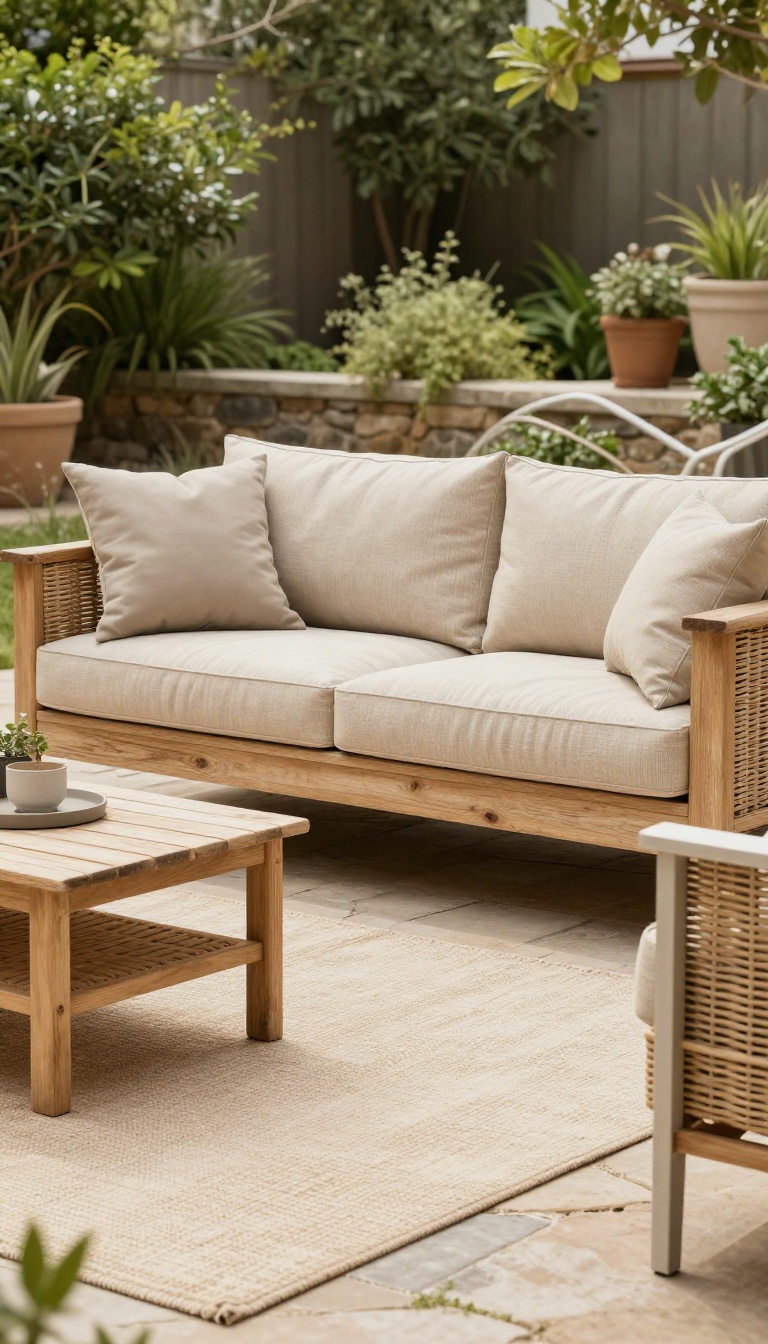
Furniture that lives outside takes a beating, and cheap pieces show it fast. A courtyard used year-round needs materials that shrug off rain, sun, and temperature swings without warping or fading. Pick the right stuff once and you'll spend your evenings relaxing instead of hauling cushions indoors.
The goal is simple: buy pieces that look good on day one and still look good after a few seasons. That usually means skipping the bargain set that fades by August. Teak, powder-coated aluminum, and all-weather wicker handle the elements with minimal fuss.
Pair them with quick-dry cushions and an outdoor rug, and your courtyard stays comfortable and low-maintenance.
Materials That Hold Up
Teak is the gold standard for wood. It's naturally oily, so it resists rot and insects, and it ages into a soft silver-gray if you let it. Powder-coated aluminum won't rust, and it's light enough to move around when you rearrange.
All-weather wicker wraps a sturdy frame in a synthetic weave that handles sun and rain without cracking. Any of these will outlast the flimsy resin set at the big-box store.
Cushions And Fabrics
Regular upholstery soaks up water and grows mildew overnight. Look for solution-dyed acrylic or olefin fabrics, which resist fading and dry fast. Quick-dry foam cores let water drain instead of turning into a sponge.
If you want the look of plush cushions without the hassle, choose covers you can unzip and toss in the wash at the end of the season.
Rugs And Extras
An outdoor rug ties the seating area together and keeps bare feet off hot pavers. Polypropylene rugs are affordable, hose off easily, and won't mildew. Add a small storage bench or deck box for cushions and throws when rain is coming.
A few weatherproof accents, like a metal side table or a covered lantern, finish the space without adding upkeep.
11. Personalize with Art, Mirrors, and Accessories
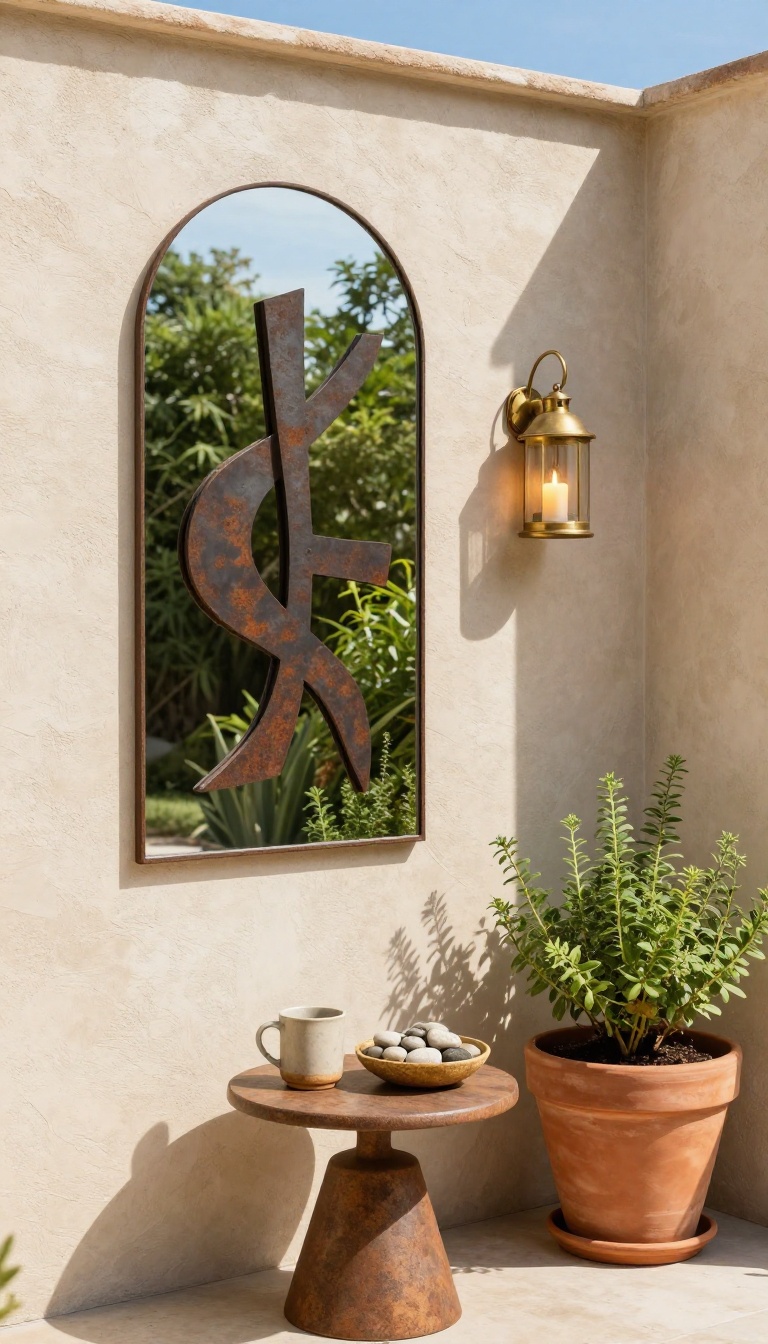
The final layer of a cozy courtyard is the stuff that tells your story. Art, mirrors, and small accessories turn a nice outdoor space into one that feels like you. They also do practical work, bouncing light around and giving your eye something interesting to land on.
A courtyard can have great bones and still feel a little flat. That's usually because it's missing the personal details that make a room feel lived in. The good news is this step is cheap, fast, and easy to swap out whenever you want a change.
Hang Art That Can Handle The Weather
Outdoor art needs to survive sun, rain, and temperature swings. Look for pieces made from metal, treated wood, stone, or weather-resistant canvas. A single bold piece on a privacy wall can anchor the whole space.
If you're renting or not ready to commit, lean a framed outdoor print against the fence or set a sculpture on a pedestal. You still get the personality without drilling holes.
Use A Mirror To Fake More Space
A weatherproof mirror reflects greenery and sky, which makes a small courtyard feel twice as big. Mount it where it catches the best light, like opposite a sunny wall or facing a favorite plant. Just avoid aiming it directly at a neighbor's window or into harsh afternoon glare.
A simple arched or rectangular shape in a rustproof frame works almost anywhere.
Add Small Touches That Make It Yours
Lanterns, candles, and a little side table for your drink make the space feel intentional. A few potted herbs or a bowl of stones can add texture without clutter. Group accessories in odd numbers and vary the heights.
That small rhythm keeps the eye moving and stops the space from feeling like a showroom.
FAQ
How do I make my backyard feel private without a tall fence?
Use tall plants, trellises, or lattice screens to create a visual barrier. You can also add a pergola with climbing vines or hang outdoor curtains.
What's the best flooring for a small courtyard?
Stone, brick, and concrete pavers are durable and classic. For a softer look, consider gravel or decomposed granite, but keep it contained with edging.
How can I light my courtyard for evening use?
String lights, solar path lights, and lanterns are easy options. For a focal point, add a fire pit or candles on a table.
Do I need a water feature for a cozy courtyard?
Not necessarily, but a small fountain or birdbath adds soothing sound and attracts wildlife. It's a nice touch if you want a calming atmosphere.
How do I keep my courtyard low-maintenance?
Choose weather-resistant furniture, use artificial turf or gravel, and plant drought-tolerant perennials. Avoid too many small pots that need frequent watering.
Conclusion
A cozy courtyard rarely comes from one big weekend project. It grows out of small choices that fit how you actually use the space, whether that means better lighting, softer seating, or a little more privacy.
Start with the idea that solves your biggest daily annoyance, then let the rest come together over a season or two. You will know what to add next once you start spending evenings out there.