12 Inviting Traditional Kitchen Indian Ideas for a Cleaner, Prettier Home
A traditional Indian kitchen is more than a place to cook—it's the heart of the home, filled with warmth, aroma, and memories. But keeping it both inviting and organized can be a challenge, especially when you're juggling modern convenience with timeless style.
The good news? You don't have to choose between beauty and practicality.
These 12 ideas draw from classic Indian design principles to help you create a kitchen that feels both grounded and functional. Whether you're renovating or just looking for small changes, these tips will bring a sense of calm and charm to your daily cooking space.
1. Open Wooden Shelving for Easy Reach and Display
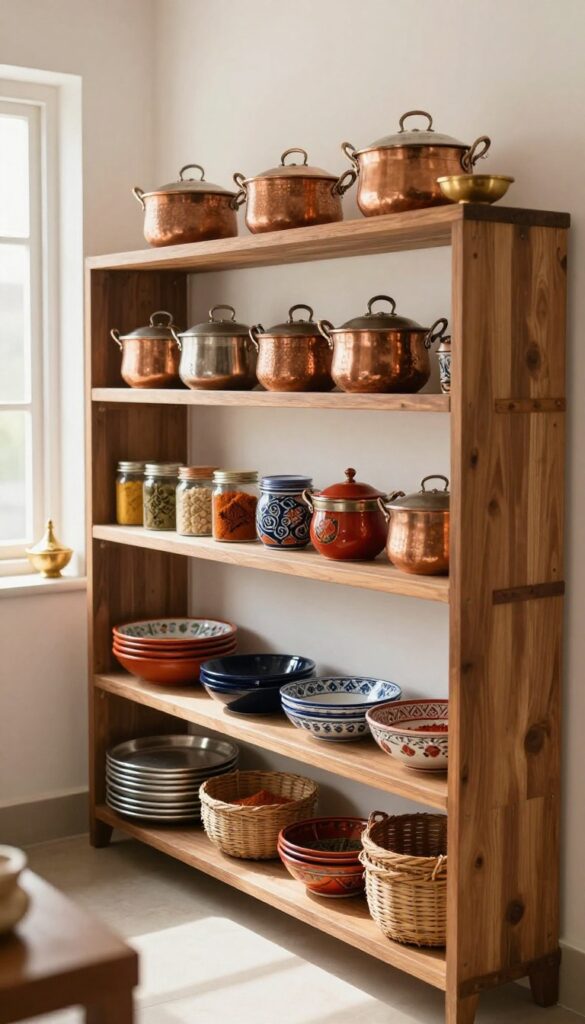
Upper cabinets can make a kitchen feel boxed in and hide your favorite pieces. Open wooden shelving flips that script, putting daily-use items right where you can grab them. It also gives your cookware a chance to shine, turning practical storage into a design feature.
Open shelving is a simple swap that changes how your kitchen looks and works. Instead of digging through dark cupboards, you see everything at a glance. That alone cuts down on the time you spend hunting for a spice jar or a ladle.
Plus, the natural wood tones add warmth that fits perfectly with traditional Indian interiors.
Why Wood Works Best
Wood brings a soft, earthy feel that metal or glass shelves just can't match. It pairs beautifully with brass, copper, and clay cookware, which are staples in many Indian kitchens. Choose sturdy hardwoods like teak or sheesham that can handle the weight of stacked dishes and pots.
A simple oil finish keeps the wood looking rich and protects it from moisture.
What To Display And What To Hide
The trick is to keep everyday items within reach and store rarely used gadgets out of sight. Show off your copper-bottomed pans, colorful spice boxes, and hand-painted ceramic bowls. Group similar items together, like all your masala jars on one shelf and your serving dishes on another.
This keeps the look intentional, not cluttered.
Styling Tips For A Traditional Touch
Add small touches that make the shelves feel curated. A brass diya, a few woven baskets, or a stack of steel thalis can break up the visual weight of cookware. Leave a little breathing room between items so the shelves don't look overcrowded.
And don't forget to dust them regularly—open shelves do collect a bit more, but the charm is worth it.
2. Brass and Copper Utensils as Decorative Accents
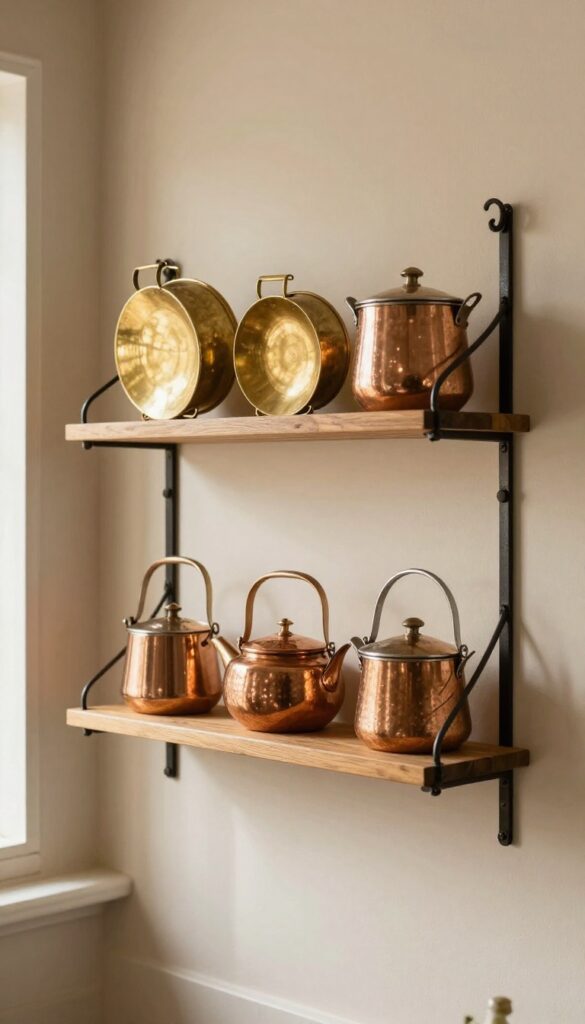
There's a certain magic in the gleam of polished brass and the warm glow of copper that instantly adds character to a kitchen. In traditional Indian homes, these metals were more than just cookware—they were symbols of prosperity and craftsmanship. By turning them into decor, you not only celebrate that heritage but also create a space that feels both lived-in and curated.
Hang brass ladles, copper pots, and steel glasses on a wall rack or hooks. They're not just tools—they double as gleaming decor that reflects light and brings an authentic Indian feel to your kitchen. This approach is practical too: you keep your most-used utensils within arm's reach while adding a layer of visual interest that changes with the light.
Why Brass And Copper Work So Well
These metals have a natural warmth that complements wooden shelves, clay pots, and earthy tones. They also age beautifully, developing a patina that tells a story. Plus, they're incredibly versatile—you can mix them with modern appliances or keep them purely traditional.
How To Display Them Without Clutter
Choose a dedicated wall or a corner near your stove. Install a sturdy wrought-iron rack or use individual hooks. Arrange the pieces by size and shape, leaving some breathing room between them.
Group similar metals together for a cohesive look, or alternate brass and copper for contrast. Avoid overcrowding—let each piece shine.
Mixing Old And New
You don't need to go full vintage. Pair a few antique brass pieces with sleek modern cabinets or a minimalist backsplash. The contrast makes the metals pop and keeps the space from feeling like a museum.
Even a single copper pot on an open shelf can anchor the whole design.
3. Stone or Marble Countertops with a Traditional Edge
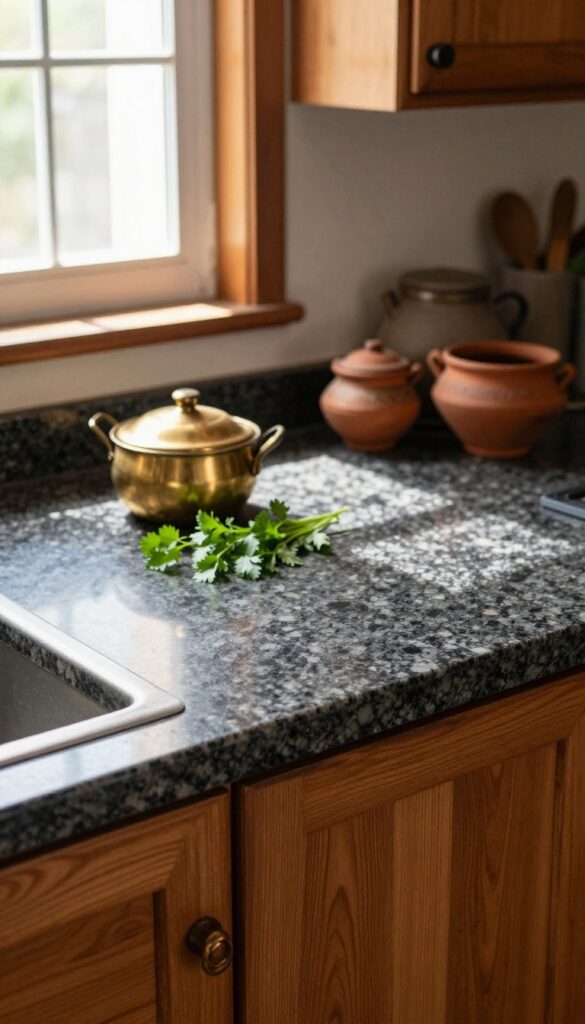
If you've ever rested a hot pot on a cool stone counter, you know the quiet satisfaction it brings. Natural stone isn't just durable—it carries a sense of permanence that fits right into a traditional Indian kitchen. Granite and marble have been used in Indian homes for centuries, and for good reason.
They handle daily wear, resist stains when sealed, and add a timeless elegance that never goes out of style.
Pairing stone countertops with wooden cabinets creates a balanced look—warm wood softens the cool stone, while the stone keeps the wood from feeling too heavy. This combination works beautifully whether your kitchen leans rustic or more polished. Plus, stone surfaces are naturally hygienic, making them a smart choice for food prep areas.
Why Granite Wins For Daily Use
Granite is one of the hardest natural stones, so it stands up to scratches, heat, and spills without showing much wear. It's also less porous than marble, meaning it's easier to keep clean—especially important in a busy kitchen. Choose a dark or speckled granite to hide crumbs and minor marks, and you'll have a countertop that looks great with minimal effort.
Marble's Cool Charm (and How To Care For It)
Marble brings a bright, airy feel that's perfect for rolling out dough or making sweets. It stays cool naturally, which is a bonus in warmer climates. Just remember that marble is softer and more porous than granite, so it needs a little more attention.
Seal it regularly and wipe up acidic spills like lemon or vinegar quickly to keep it looking pristine.
Mixing Stone With Traditional Details
To keep the traditional vibe, pair your stone countertop with classic touches like a carved wooden edge, brass fixtures, or a tiled backsplash in a vintage pattern. You can also opt for a honed finish instead of a shiny polish—it gives a softer, more matte look that feels closer to old-world charm. This way, your countertop feels like part of the home's story, not just a modern upgrade.
4. Clay Pots and Earthenware for Storage and Cooking
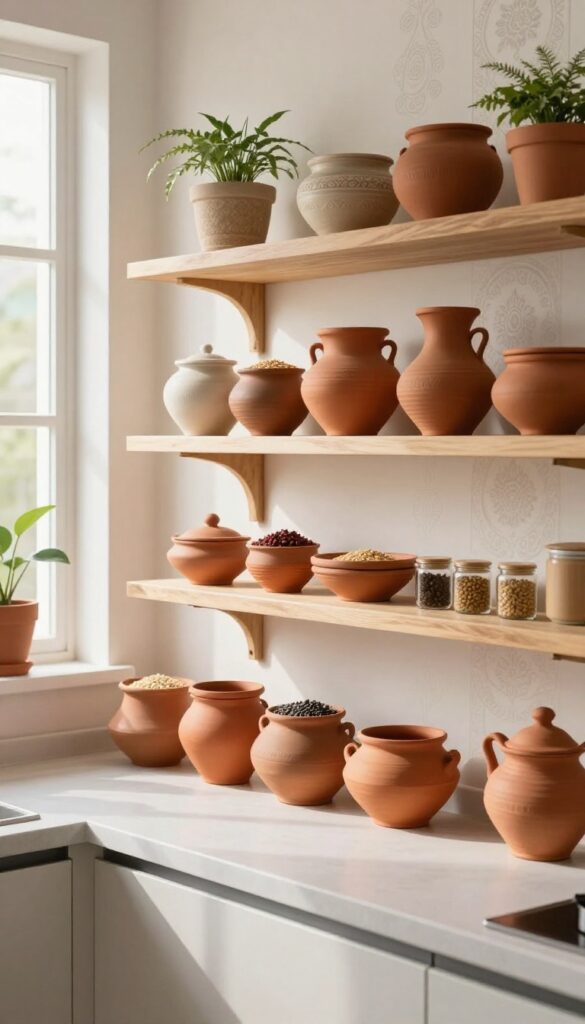
There's a reason your grandmother's kitchen always felt cooler in the summer—clay pots are nature's original air conditioners. These humble vessels do more than just store your staples; they actively keep them fresh while adding a warm, earthy texture to your shelves and countertops. Embracing earthenware isn't about going back in time; it's about bringing a piece of timeless wisdom into your modern kitchen.
Clay pots and ceramic jars are more than just pretty containers. Their porous nature allows air to circulate, which helps regulate temperature and moisture. This keeps grains, lentils, and spices fresher for longer, and it's why pickles stored in clay develop that perfect tang.
Plus, the natural terracotta and matte finishes add an organic, grounded feel that instantly makes a kitchen feel more inviting.
Why Clay Keeps Things Cooler
The tiny pores in unglazed clay allow water to evaporate through the walls, which creates a natural cooling effect. This is the same principle behind the traditional clay water pot (matka). When you store dry goods in clay, they stay at a consistent, slightly lower temperature than the room, which helps preserve their flavor and nutritional value.
It's a simple, energy-free way to keep your pantry items in peak condition.
Styling Your Shelves With Earthenware
Mix and match different sizes and shapes of clay pots, ceramic jars, and terracotta bottles to create a visually interesting display. Group them on open shelves or a wooden countertop. The earthy tones of terracotta, beige, and warm browns pair beautifully with brass accents, wooden utensils, and green plants.
You can even use small clay bowls for holding spices or tea bags, adding a cohesive, rustic charm to your kitchen.
Cooking In Clay: Beyond The Pot
Clay cookware, like the traditional handi or clay tawa, isn't just for show—it's perfect for slow-cooking curries, dals, and rice dishes. The even heat distribution and moisture retention create dishes that are more flavorful and tender. Plus, cooking in clay requires less oil, making your meals healthier.
If you're new to clay cooking, start with a simple clay pot for rice or a small handi for a comforting one-pot meal.
5. Hanging Storage for Spices and Masalas
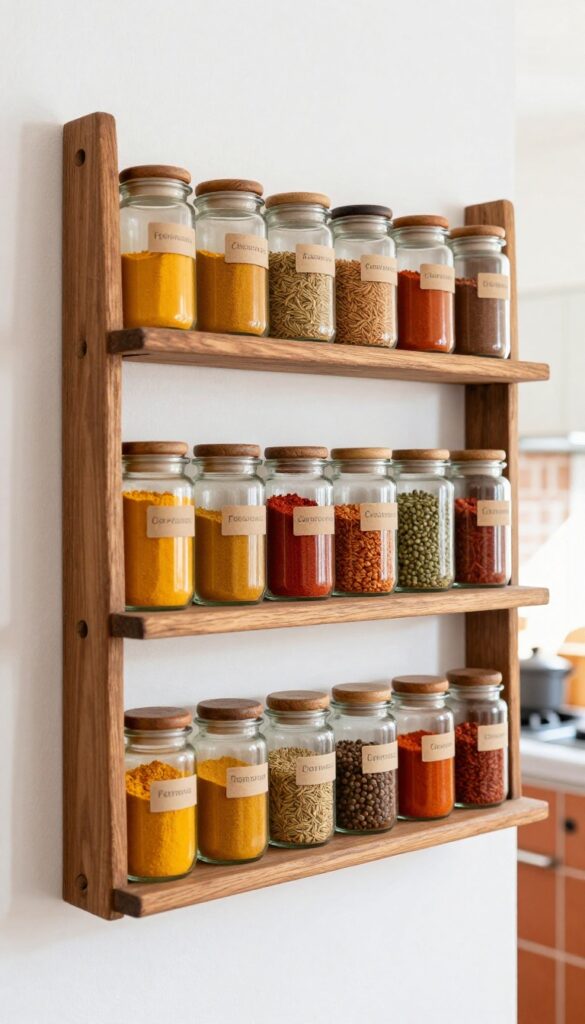
Spices are the soul of Indian cooking, but they can quickly clutter your countertops and make your kitchen feel chaotic. A hanging spice rack is a smart, traditional solution that keeps your most-used masalas within arm's reach while freeing up valuable workspace. Plus, it adds a rustic, organized charm to your kitchen walls.
When you're in the middle of cooking, the last thing you want is to dig through a crowded cabinet to find your cumin. Hanging storage solves this by putting your spices right where you need them—near the stove or prep area. It also keeps them away from moisture and heat, which can dull their flavor over time.
Choose a wooden rack for a classic look or a sleek metal one for a modern twist. Label each jar clearly so you can grab the right spice without hesitation, and you'll wonder how you ever cooked without it.
Choosing The Right Rack
Look for a rack that fits your wall space and matches your kitchen's style. Wooden racks with a natural finish blend beautifully with traditional Indian interiors, while black or brass metal racks add a subtle elegance. Consider the number of spices you use daily—if you have a large collection, opt for a multi-tiered rack or one with a built-in shelf.
Make sure it's sturdy enough to hold glass jars without sagging.
Organizing Your Spices
Group your spices by how often you use them. Keep everyday essentials like turmeric, cumin, and coriander at eye level, and store less-used ones higher or lower. Use small, airtight glass jars with labels—either handwritten or printed—to keep everything uniform and easy to identify.
Arrange them in a logical order, such as by cuisine or alphabetically, so you can find what you need in seconds.
Installation And Safety
Mount the rack securely to a wall stud or use heavy-duty anchors to prevent it from falling. Place it away from the stove to avoid heat damage, but close enough that you can reach it while cooking. If you're renting or don't want to drill holes, consider a rack that hangs over a cabinet door or uses adhesive hooks.
Always check the weight limit and distribute spices evenly to keep the rack balanced.
6. Traditional Rangoli or Floor Art Near the Entrance
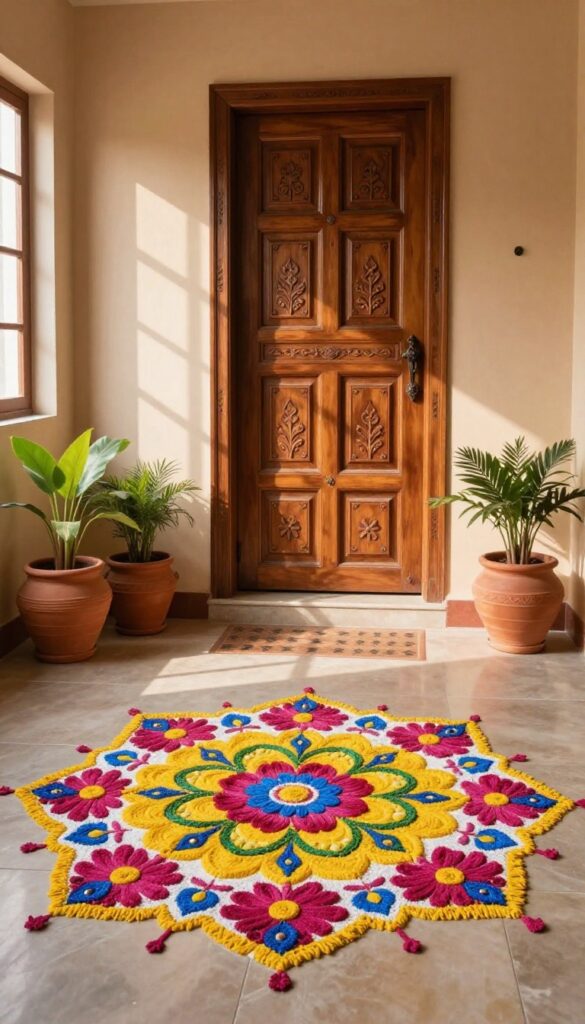
A small rangoli at the kitchen entrance does more than decorate—it sets a welcoming tone every time you walk in. The vibrant colors and intricate patterns are a nod to Indian heritage, and they instantly make the space feel more personal and lived-in. Even a simple design can turn a plain threshold into a daily reminder of tradition and warmth.
Rangoli isn't just for festivals. A permanent or semi-permanent floor art near the kitchen entrance can bring the same festive spirit into your everyday routine. It's a small touch that makes a big difference in how the kitchen feels—both to you and to anyone who steps in.
Why Rangoli Works In A Kitchen
The kitchen is often the busiest room in the house, and a touch of color at the entrance can soften the transition from the rest of the home. It also serves as a visual cue that this is a special space, one where meals are made and memories are shared. Plus, it's a conversation starter when guests peek in.
Easy Ways To Add Rangoli Without The Mess
If you're worried about daily upkeep, try a stencil and colored powders for a quick design that lasts a few days. Or go for a more permanent option: a painted rangoli pattern on the floor, sealed with a clear coat. You can also use colorful tiles to create a mosaic that mimics the look of rangoli without any maintenance.
Choosing Colors And Patterns That Fit Your Kitchen
Stick to colors that complement your kitchen's palette—earthy tones like terracotta and turmeric work well in rustic spaces, while brighter hues like magenta and peacock blue add a pop of energy. For patterns, start with simple floral or geometric shapes. You can always add more detail as you get comfortable.
7. Brass or Copper Sink for a Vintage Look
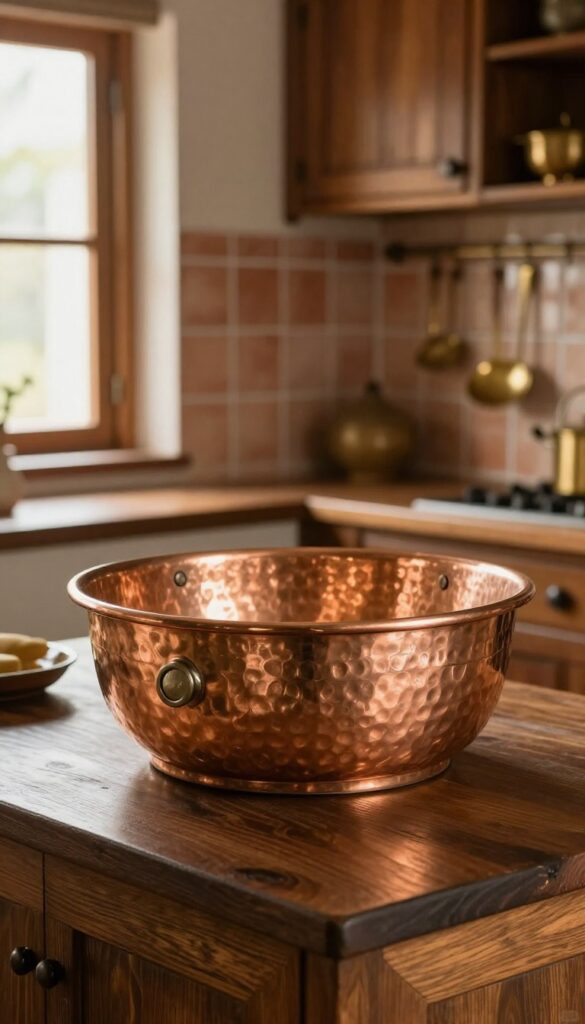
A hammered copper or brass sink isn't just a utility—it's a statement. These metals bring a warm, old-world charm that pairs beautifully with traditional Indian kitchens. Plus, they're naturally antimicrobial, which means they actively help keep your kitchen cleaner.
Over time, they develop a rich patina that makes each sink unique, turning an everyday fixture into a conversation piece.
When you choose a brass or copper sink, you're bringing in a material that has been trusted for centuries. Both metals have natural antibacterial properties, so they're a smart choice for food prep areas. They also age gracefully, gaining character with every scratch and stain.
If you love the idea of a kitchen that feels lived-in and full of history, this is a perfect fit. And they're not just for looks—these sinks are durable and can handle hot pots and heavy use, making them both beautiful and practical.
Why Copper And Brass Work In Indian Kitchens
Indian cooking involves a lot of spices, oils, and heat. Copper and brass are naturally resistant to corrosion and can handle the wear and tear of daily use. Their warm tones complement the earthy colors of traditional Indian decor, like terracotta, wood, and brass utensils.
Plus, they're easy to clean with simple, natural ingredients like lemon and salt, which fits right into a home that values purity and simplicity.
Caring For Your Metal Sink
To keep your sink looking its best, avoid harsh chemical cleaners. Instead, use a mix of baking soda and lemon juice to gently polish the surface. Rinse thoroughly and dry with a soft cloth to prevent water spots.
Over time, you'll notice a natural patina forming—this is a good thing! It adds depth and character. If you prefer a shiny finish, you can buff it with a brass or copper polish once a month.
Pairing With Traditional Fixtures
To complete the vintage look, pair your metal sink with traditional brass or copper faucets and handles. You can also add a wooden drainboard or a stone soap dish to enhance the rustic feel. The key is to let the sink be the focal point, so keep the surrounding area simple and uncluttered.
This way, your kitchen feels both modern and timeless, blending the best of both worlds.
8. Use of Natural Light and Warm Lamps
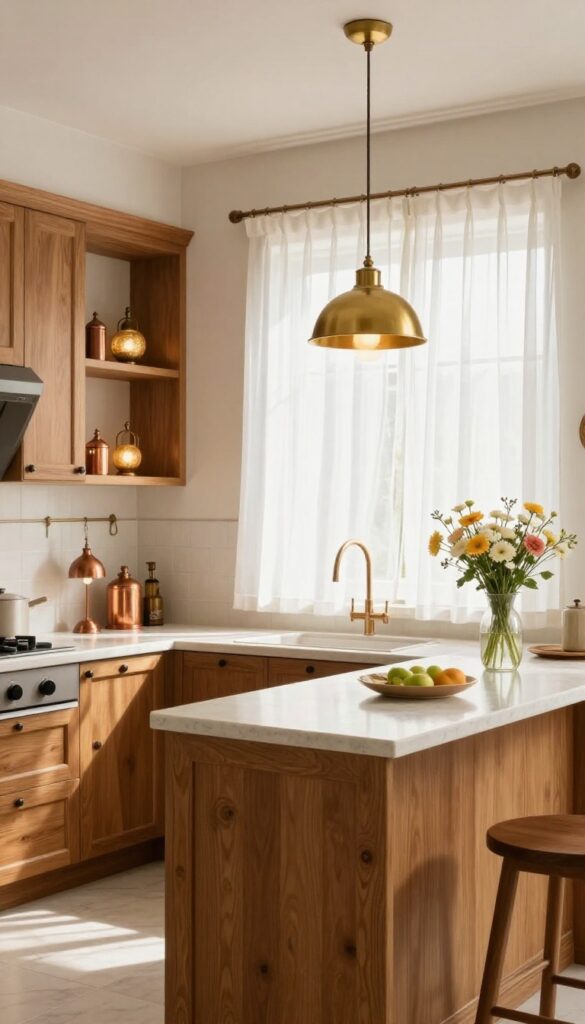
Light can completely change how a kitchen feels. Traditional Indian homes often relied on natural light streaming through courtyards and windows, creating a space that felt airy and peaceful. You can recreate that same effect by letting in as much daylight as possible and pairing it with warm, soft lighting for the evenings.
Think of it as layering light: bright and fresh during the day, then cozy and golden at night. This simple shift can make your kitchen look cleaner, more spacious, and instantly more welcoming.
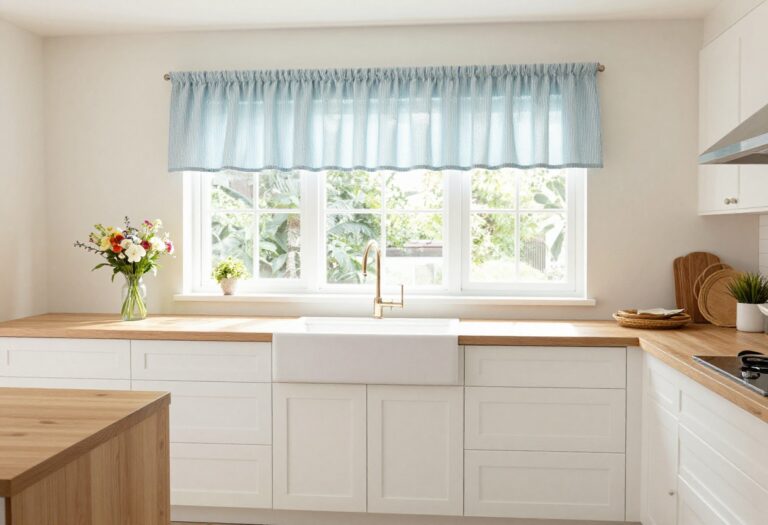
Start by maximizing natural light. Swap heavy curtains for sheer cotton or linen ones that let sunlight filter through while still offering privacy. If your kitchen has a window, keep the sill clear of clutter so light can spread across the room.
For darker kitchens, consider adding a skylight or a light tube—these bring in daylight without compromising wall space. Then, add warm lamps for the times when the sun goes down. Pendant lamps with brass or copper finishes work beautifully over islands and counters, casting a soft, golden glow.
You can also place small table lamps on open shelves or countertops to create pockets of warmth. The goal is to avoid harsh, cool overhead lighting and instead mimic the gentle light of a traditional oil lamp.
Sheer Curtains And Window Treatments
Heavy drapes can block out precious daylight. Instead, opt for sheer cotton or linen curtains that diffuse light softly. They keep the room bright while adding a light, airy texture that fits the traditional aesthetic.
If you need more privacy, layer them with wooden blinds that can be adjusted easily.
Warm-toned Pendant Lamps
Pendant lamps are perfect for task lighting over prep areas and kitchen islands. Choose fixtures with brass, copper, or matte black finishes and warm LED bulbs (2700K–3000K). These create a cozy, inviting atmosphere that feels like a traditional home, especially when paired with wooden or cane shades.
Accent Lighting For Shelves And Niches
Don't forget the corners. Small LED strip lights or tiny warm spotlights can highlight open shelves, spice racks, or a beautiful brass utensil display. This adds depth and makes the kitchen feel curated and warm, even in the evening.
It also helps you find things easily without flipping on harsh overhead lights.
9. Wooden or Stone Flooring for Durability and Warmth
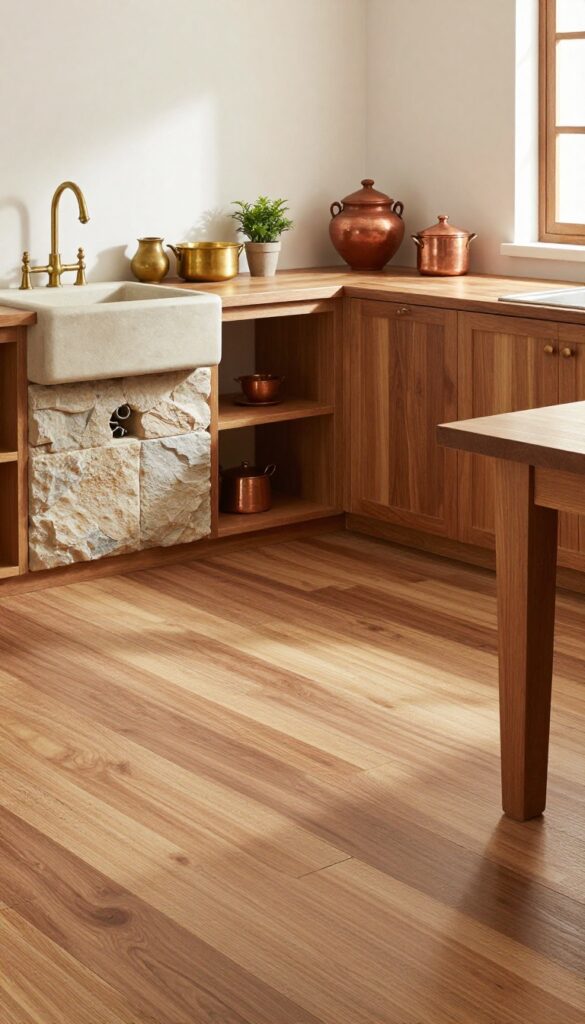
The floor often gets overlooked, but it's the foundation of your kitchen's look and feel. Wooden planks or natural stone tiles bring a rich, earthy texture that instantly grounds the space. They're also surprisingly practical—easy to sweep and mop, and they age gracefully, hiding everyday wear and tear.
Choosing the right flooring can make your kitchen feel more inviting and stand up to daily use. Wood and stone are classic choices that offer both beauty and resilience. Here's how to make them work in your traditional Indian kitchen.
Why Wood Works In The Kitchen
Hardwood floors add warmth and character that tile just can't match. They're comfortable underfoot, which is a blessing during long cooking sessions. With a good sealant, they resist stains and moisture, making them perfect for a busy kitchen.
Plus, minor scratches and dents blend in over time, giving the floor a lived-in charm.
The Appeal Of Natural Stone
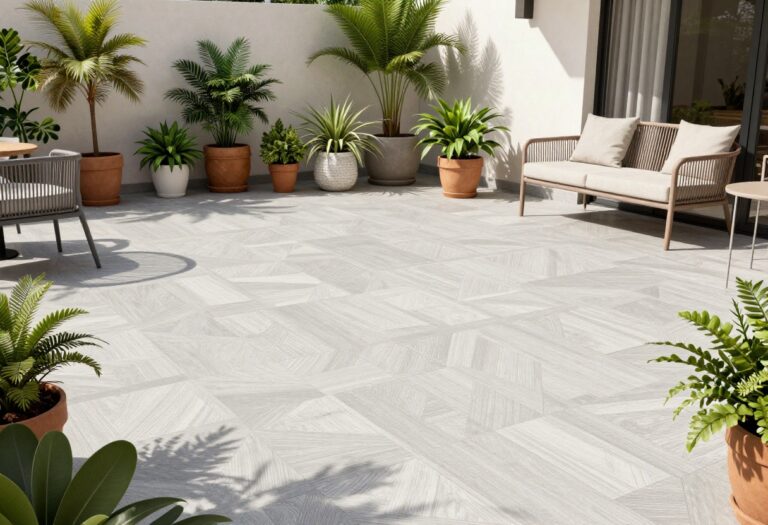
Stone tiles like granite, slate, or Kota stone are incredibly durable and naturally cool—a bonus in warm climates. They handle heavy foot traffic and spills with ease, and their subtle variations in color and texture add depth. A simple sweep and mop keep them looking pristine, and they pair beautifully with wooden cabinets or brass accents.
Blending Both For A Unique Look
You don't have to pick just one. Consider using stone in high-moisture areas like near the sink or stove, and wood in the dining or seating zone. This creates a functional and visually interesting layout.
Alternatively, wood-look tiles offer the warmth of wood with the durability of stone, giving you the best of both worlds.
10. Traditional Pooja Corner or Sacred Nook
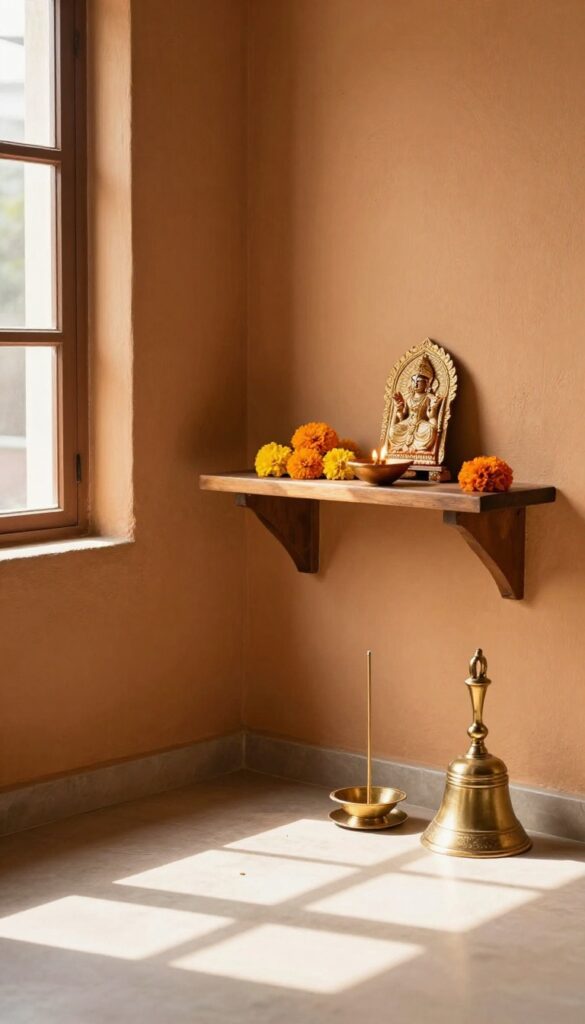
A tiny corner dedicated to the divine can transform your kitchen from a purely functional space into something deeply personal. In many Indian homes, the kitchen is considered sacred, and having a small pooja area reinforces that feeling. It doesn't need to be elaborate—just a shelf, a small idol, and a place for a diya can make a world of difference.
Setting up a pooja corner in your kitchen is about creating a moment of calm amidst the daily bustle. It's a visual anchor that reminds you to pause, breathe, and maybe offer a quick prayer before you start cooking. Plus, the warm glow of a diya in the evening adds a soft, inviting light that no lamp can quite replicate.
Choosing The Right Spot
Look for a corner that's clean, dry, and away from the main cooking area to avoid splatters and smoke. A corner of the countertop, a wall shelf, or even a windowsill can work. Make sure it's at eye level or slightly above, so it feels elevated and respected.
If space is tight, a compact shelf mounted on the wall can do the trick without taking up valuable counter space.
What To Place There
Start with a small idol or picture of your preferred deity. Add a brass or clay diya for lighting, and a small holder for incense sticks. Fresh flowers, especially marigolds, are a beautiful touch—they add color and fragrance.
You can also keep a small bell to ring during prayers. Keep it simple; too many items can make the space feel cluttered and hard to clean.
Keeping It Clean And Fresh
The key to a welcoming pooja corner is regular cleaning. Wipe the shelf daily, change the flowers every few days, and make sure the diya is cleaned of old oil or wax. This not only maintains hygiene but also keeps the sacred space feeling fresh and inviting.
A quick daily wipe-down takes less than a minute and makes a big difference.
Making It Your Own
Your pooja corner should reflect your personal style and beliefs. You can add a small framed image of your guru or a meaningful symbol. Use a beautiful cloth or a small wooden stand for the idol.
Some people like to add a small hanging bell or a tiny brass pot with a tulsi plant. The idea is to create a spot that feels uniquely yours and brings you peace.
11. Built-in Seating with Cushions for a Cozy Corner
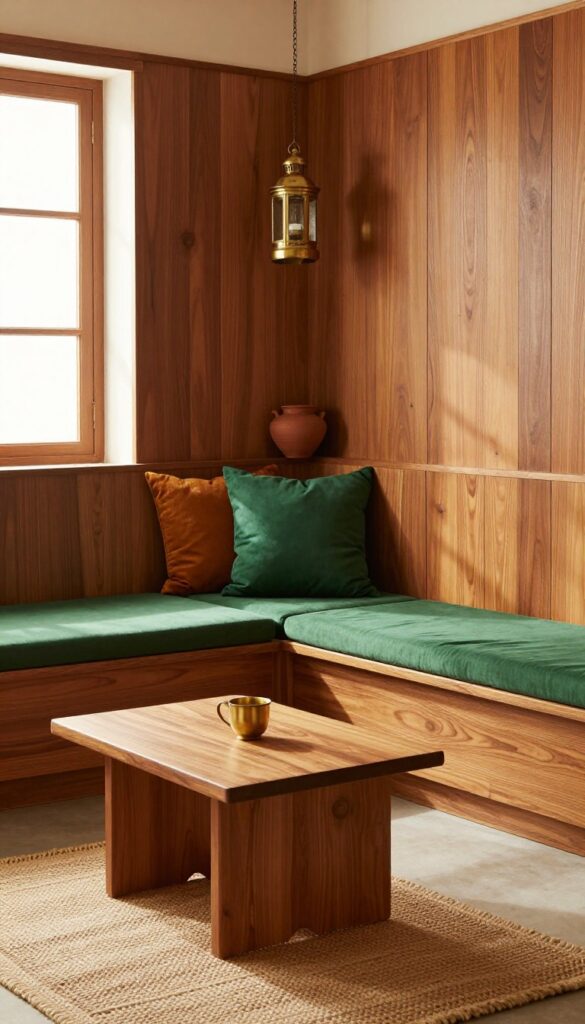
A built-in bench tucked into a corner can turn an unused spot into the most loved part of your kitchen. Think of it as a modern nod to the old chowka or the low wooden stools your grandmother used. With a few cushions and a small table, you've got a cozy nook that invites everyone to sit down, sip chai, and linger a little longer.
Built-in seating is a smart way to maximize space, especially in compact kitchens. Unlike standalone chairs, benches fit snugly against the wall, leaving more room to move around. You can build them along one side of a table or create an L-shaped corner that hugs the room's edges.
The best part? You can customize the height, depth, and storage underneath to match your needs.
Choose Wood That Feels Warm And Durable
For a traditional look, go with solid wood like teak, sheesham, or mango wood. These woods are sturdy, naturally beautiful, and age well. You can leave the wood in its natural finish or paint it to match your kitchen's palette.
A little polish now and then keeps it looking fresh. If you're on a budget, plywood with a wood veneer works too, but solid wood is worth the splurge for that authentic feel.
Add Cushions That Pop With Color
Cushions are where you can have fun with color and pattern. Bright jewel tones like saffron, emerald, or peacock blue add energy, while softer pastels keep the mood calm. Traditional prints like block prints, ikat, or bandhani bring in that Indian touch.
Make sure the cushion covers are removable and washable—kitchens get messy, and you'll want to keep them clean without stress. Also, choose a fabric that dries quickly, like cotton or a cotton-poly blend.
Make It A Place For More Than Just Eating
This nook isn't just for meals. It can double as a spot for reading, doing homework, or even a quick workspace. Add a small shelf above the bench for books, plants, or a tea station.
You could also install a fold-down table if space is tight. The idea is to make the corner flexible so it serves you all day long.
12. Use of Jute and Cotton Textiles for Softness
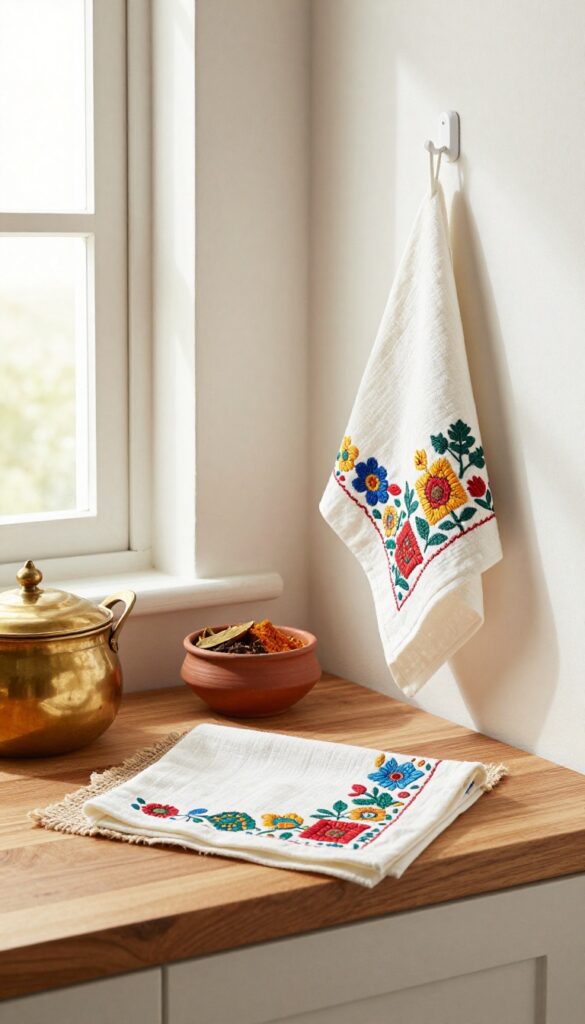
Hard surfaces dominate most kitchens—stone counters, tile backsplashes, wooden cabinets. But a truly inviting traditional Indian kitchen balances those with softness. That's where jute and cotton come in.
These natural fabrics bring warmth and texture without trying too hard. They're practical, easy to wash, and instantly make the space feel more lived-in and cozy.
Jute runners on the counter or dining table add an earthy, rustic charm. Cotton napkins and hand-embroidered towels bring color and personality. These textiles soften the look, absorb spills, and are simple to maintain—just toss them in the wash.
Mix and match patterns like block prints or subtle stripes. The key is to keep it natural and unfussy, letting the texture do the work.
Why Natural Fabrics Work
Natural fibers like jute and cotton are breathable and durable. They don't trap heat like synthetics, and they age beautifully, developing a soft patina over time. Plus, they're eco-friendly, which is a bonus for a home that values tradition and sustainability.
Easy Ways To Add Them
Start small: a jute runner down the center of your kitchen island or dining table. Swap out paper napkins for cloth ones in vibrant colors. Hang embroidered cotton towels near the sink or stove.
These simple swaps instantly add character and softness.
Caring For Your Textiles
Jute can be spot-cleaned or gently hand-washed. Cotton is machine-washable on a gentle cycle. Air-dry to preserve colors and prevent shrinkage.
With a little care, these textiles will last for years and keep your kitchen feeling fresh.
FAQ
How can I make my Indian kitchen look traditional without spending a lot?
Start with small changes like swapping plastic containers for clay pots, adding brass accents, or hanging a few copper utensils. These affordable touches instantly add a traditional feel.
Are traditional Indian kitchen designs practical for modern cooking?
Absolutely. Many traditional elements like open shelving, clay storage, and natural materials are highly functional. They can be integrated with modern appliances for the best of both worlds.
What are the best materials for a traditional Indian kitchen?
Wood, stone, brass, copper, and clay are ideal. They are durable, easy to maintain, and naturally beautiful. These materials also age well and develop character over time.
How do I keep my traditional kitchen clean and organized?
Use open shelving to reduce clutter, store spices in labeled jars, and keep countertops clear. Regular decluttering and using natural cleaning agents like lemon and vinegar can help maintain a fresh look.
Can I mix traditional Indian elements with modern appliances?
Yes, blending is common and looks great. For example, pair sleek stainless steel appliances with wooden cabinets and brass handles. The contrast creates a unique, inviting space.
Conclusion
Bringing traditional Indian charm into your kitchen doesn't mean a full remodel—small touches like brass accents, clay storage, or a carved wooden shelf can shift the whole feel. Start with one idea that fits your daily routine, then layer in another as you get comfortable.
The goal is a space that feels both rooted in heritage and easy to live with. Pick what speaks to you, and let your kitchen become a warmer, more organized part of your home.