9 Modern Luxury Living Room Ideas That Make the Room Look Better
A luxury living room rarely comes from one expensive purchase. It comes from a handful of deliberate choices that work together, and most of them cost far less than you would expect. You do not need a designer or a renovation crew to pull them off.
The nine ideas below focus on the moves that create the biggest visual payoff: lighting that flatters, seating that anchors, and details that add depth instead of clutter. Each one stands on its own, so you can start with a single change and build from there. Some are quick weekend swaps.
Others take a bit more planning. Together, they turn a plain room into one that looks collected, warm, and genuinely high-end.
1. Layer Your Lighting for a Warm, High-End Glow
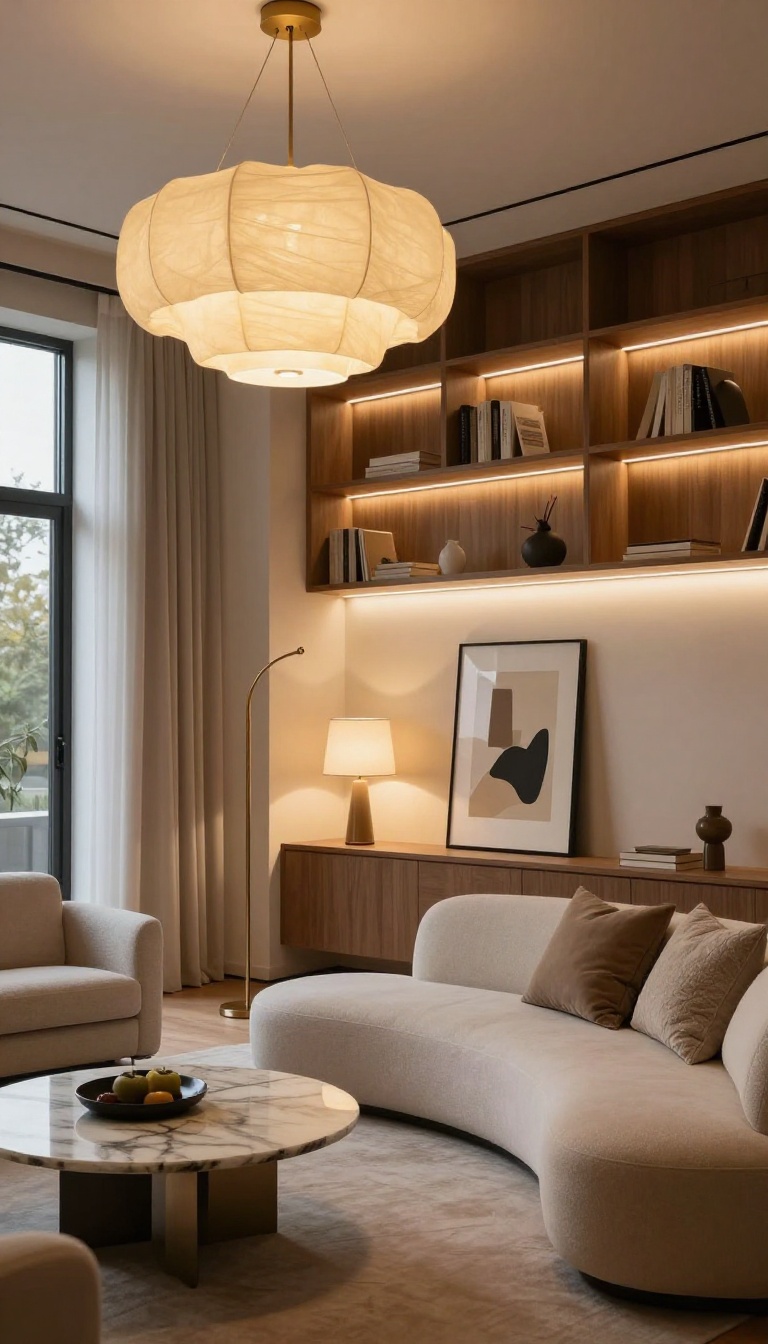
Lighting is the difference between a room that feels flat and one that feels alive. A single overhead fixture washes everything in the same dull brightness, but layered light creates depth, warmth, and a sense of occasion. The trick is to use three types of light—ambient, task, and accent—and control them separately.
This approach works in any size room and instantly makes even builder-grade finishes look more expensive.
Start by thinking of your lighting as a series of layers instead of one source. Ambient light fills the room, task light helps you see what you're doing, and accent light adds drama and highlights your best features. When you combine them, the room gains dimension and a cozy, high-end glow.
You don't need to install everything at once; even swapping a few bulbs and adding one dimmer can make a noticeable difference.
Mix Ambient, Task, And Accent
Ambient light is your base—a ceiling fixture, chandelier, or recessed lights on a dimmer. Task light comes from floor lamps, table lamps, or reading sconces that serve a purpose. Accent light is the sparkle: picture lights, LED strips behind a shelf, or a spotlight on a plant.
Aim for at least three sources in different spots so shadows stay soft and the room feels balanced.
Use Dimmers Everywhere
A dimmer is the cheapest luxury upgrade you can make. It lets you shift the mood from bright and functional to low and intimate without touching a single lamp. Put dimmers on your main lights and plug-in dimmers on your table and floor lamps.
Once you can control intensity, you'll use your overhead light less and your accent lights more.
Choose Statement Fixtures
One bold fixture—a sculptural chandelier, a pair of oversized pendants, or a dramatic floor lamp—can anchor the room and start conversations. Keep the rest of your lighting simple so the statement piece stands out. Scale matters: a tiny fixture in a big room disappears, while an oversized one can overwhelm.
Measure your space and pick something that feels intentional.
Warm Bulbs And Layered Placement
Stick with warm white bulbs (around 2700K) for a cozy, inviting feel. Cool white bulbs can make a living room feel like an office. Place lights at different heights—table lamps at eye level, floor lamps near seating, and accent lights up high—to draw the eye around the room.
The goal is a soft, layered glow that flatters people and decor alike.
2. Choose a Statement Sofa That Anchors the Space
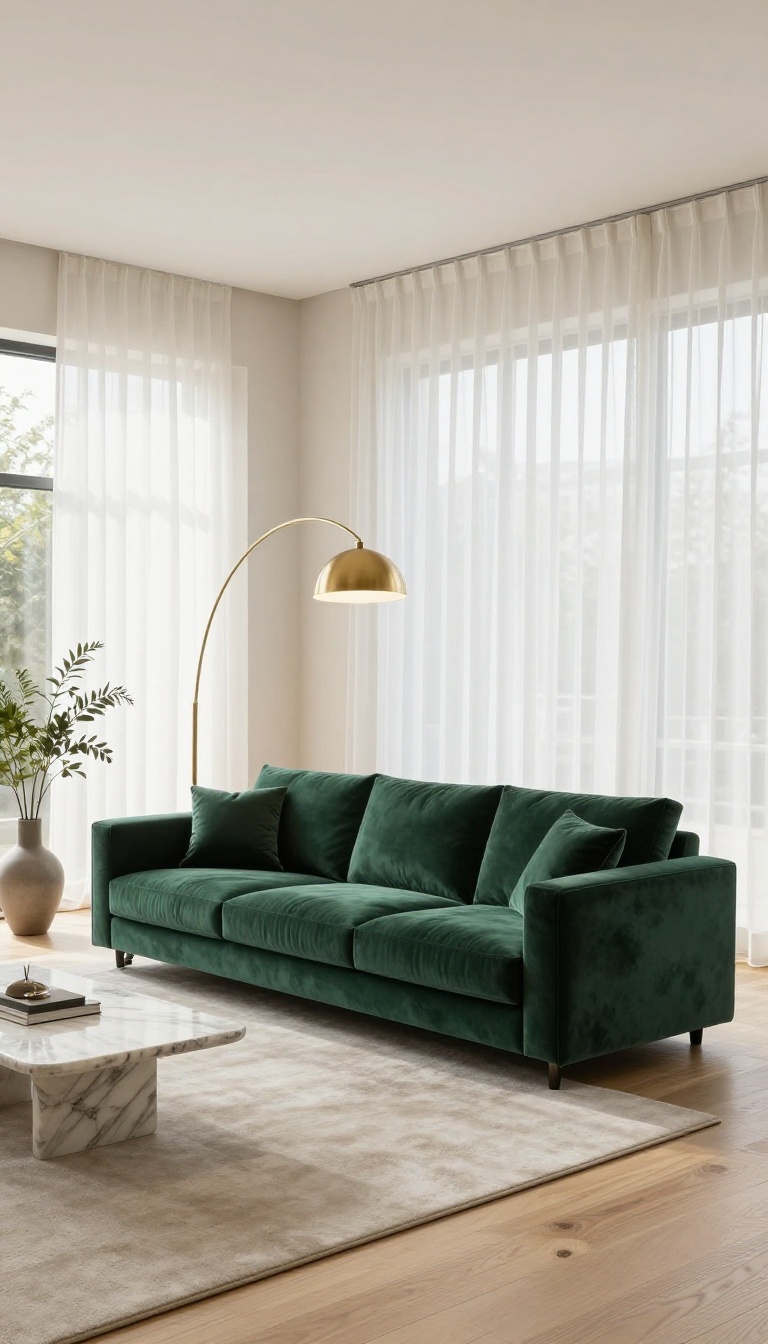
A sofa does more than give you a place to sit. It sets the visual weight for the entire room, and when it's right, everything else falls into place. Pick one with presence and you've solved half the design work in a single purchase.
The trick is finding a sofa that feels intentional rather than accidental. You want something with clean lines and a fabric that invites you to touch it. Think velvet, bouclé, or a tightly woven linen in a color that makes a quiet statement.
Scale matters just as much as style. A sofa that's too small makes a large room feel unfinished, while an oversized one can swallow a smaller space. Measure your room and tape out the footprint before you buy.
Once the sofa is in place, build outward. Add a rug that grounds it, a coffee table that complements its height, and lighting that highlights its texture. The sofa becomes the anchor, and the rest of the room follows its lead.
Pick A Fabric That Feels As Good As It Looks
Rich textures like velvet or bouclé add instant luxury, but they also show wear. If you have pets or kids, consider a performance fabric that mimics the look without the stress. Leather is another option that ages beautifully and only gets better with time.
Get The Proportions Right
A sofa should fit the room, not fight it. Leave at least 14 inches between the sofa and the coffee table for easy movement. In smaller rooms, a loveseat or apartment-size sofa keeps things open.
In larger spaces, a sectional or a pair of sofas creates a conversation area.
Use Color To Set The Mood
Neutral sofas are safe, but a bold color turns the sofa into a focal point. Deep green, navy, or camel add warmth and depth. If you go bold, keep the rest of the room quieter so the sofa can shine.
3. Add Texture with Rugs, Throws, and Pillows
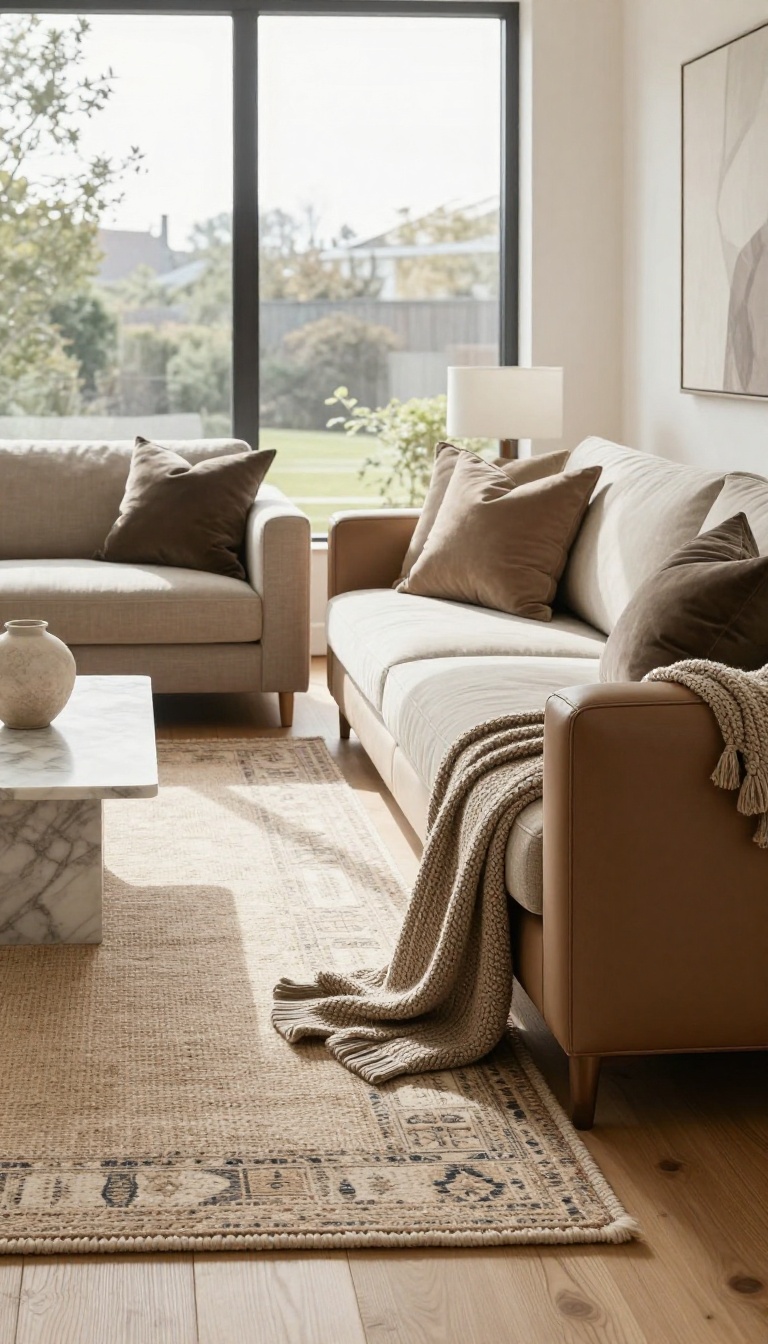
Texture is what separates a room that looks good in photos from one that feels good to actually sit in. You can have the perfect sofa and the right lighting, but if every surface is smooth and every fabric is the same weight, the space falls flat. Rugs, throws, and pillows are the easiest way to fix that because they add depth without requiring any structural changes.
The trick is mixing materials on purpose. Velvet next to linen, wool next to cotton, a chunky knit throw draped over a sleek leather chair. Those contrasts catch light differently and give the eye more to explore.
When you layer textures well, the room reads as curated and expensive, even if you bought everything on sale.
Start with the floor. A bare floor makes even a beautifully furnished room feel unfinished, and a single flat rug does not solve the problem on its own. The goal is to create a base layer that anchors your seating area and then build upward with softer, more touchable materials.
You do not need to spend a fortune. A large jute or sisal rug as a base, topped with a smaller wool or vintage rug, gives you that layered look designers use constantly. It also lets you play with color and pattern without committing to one big statement piece.
Once the floor is handled, move to the furniture. Throws and pillows are where you can really have fun because they are low-commitment and easy to swap seasonally. The key is variety in both texture and scale.
Layer Your Rugs For Depth
One rug can look lonely, especially in a large living room. Layering a smaller patterned rug over a bigger neutral one adds instant depth and makes the space feel intentional. Try a flatweave or vintage rug over a jute base.
Keep the top rug large enough to sit under the front legs of your sofa and chairs, but not so big that it covers the entire base layer. This approach also protects your floors and lets you change the look by swapping just the top rug when you want a refresh.
Mix Materials In Your Pillows
A sofa full of matching pillows looks like a showroom, not a home. Instead, mix at least three textures: something smooth like velvet, something natural like linen or cotton, and something nubby like boucle or wool. Vary the sizes too.
A 22-inch square behind a 20-inch square, with a small lumbar in front, creates a nice hierarchy. Stick to a cohesive color palette so the mix feels deliberate rather than chaotic. Two or three colors plus a neutral is usually plenty.
Drape A Throw Like You Mean It
A throw folded neatly on the back of a sofa can look stiff. Instead, drape it loosely over one arm or across a chair seat so it looks like someone actually uses it. Chunky knits, waffle weaves, and soft chenille all work well.
Choose a throw that contrasts with your sofa fabric. If your sofa is smooth leather, go for a textured wool. If it is a nubby weave, try a smoother cashmere blend.
One or two throws in a room is enough. More than that starts to feel cluttered.
4. Incorporate Natural Stone or Marble Accents
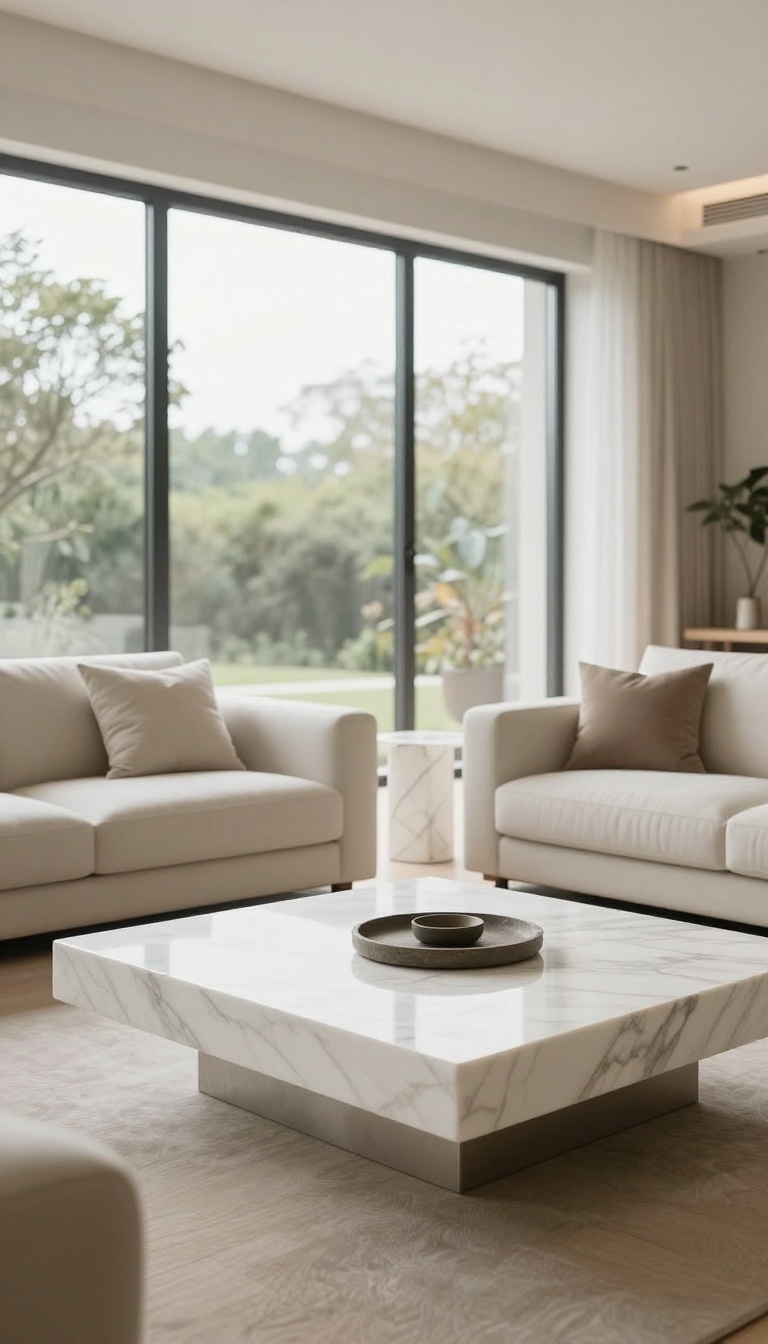
Natural stone brings a sense of permanence and quiet luxury that few other materials can match. A single marble coffee table or a quartz side table instantly elevates the room without shouting for attention. The key is to use these materials as accents, not overwhelm the space.
Natural stone and marble have been used in the finest homes for centuries. They age gracefully and add a tactile quality that manufactured materials often lack. In a modern living room, a stone accent can be the difference between a nice room and a truly memorable one.
You don't need to clad entire walls in marble to get the effect. A well-placed piece or two is enough to shift the entire mood of the room.
Choose The Right Stone For Your Space
Marble is the classic choice, but it's not the only option. Quartzite offers similar veining with more durability. Soapstone brings a soft, matte look that works well in modern settings.
Granite can feel heavy, so use it sparingly. Travertine adds texture and warmth. Consider the overall palette of your room.
Cool-toned stones like white marble pair well with cool grays and blues. Warm stones like travertine or honey onyx complement earthy tones. If you're unsure, start with a small piece like a side table or a tray.
Where To Add Stone Accents
The coffee table is the easiest place to start. A marble or stone-topped table becomes an instant focal point. A stone fireplace surround adds architectural interest and a sense of history.
Side tables in quartz or marble can flank a sofa or chair. Even a stone tray on an ottoman can introduce the material. For a bolder move, consider a stone console table behind the sofa.
Just remember to balance the hardness of stone with softer textures like wool, velvet, or linen.
Styling Tips For Stone Pieces
Keep the surrounding decor simple to let the stone shine. A marble coffee table looks best with a few well-chosen books and a small vase. Avoid clutter.
Mix stone with warm woods and soft textiles to prevent the room from feeling cold. A stone side table next to a plush armchair creates a nice contrast. If you have a stone fireplace, keep the mantel minimal.
Let the material speak for itself. And don't forget lighting—a well-placed lamp can highlight the veining and texture of the stone.
5. Use a Neutral Base with Bold Accents
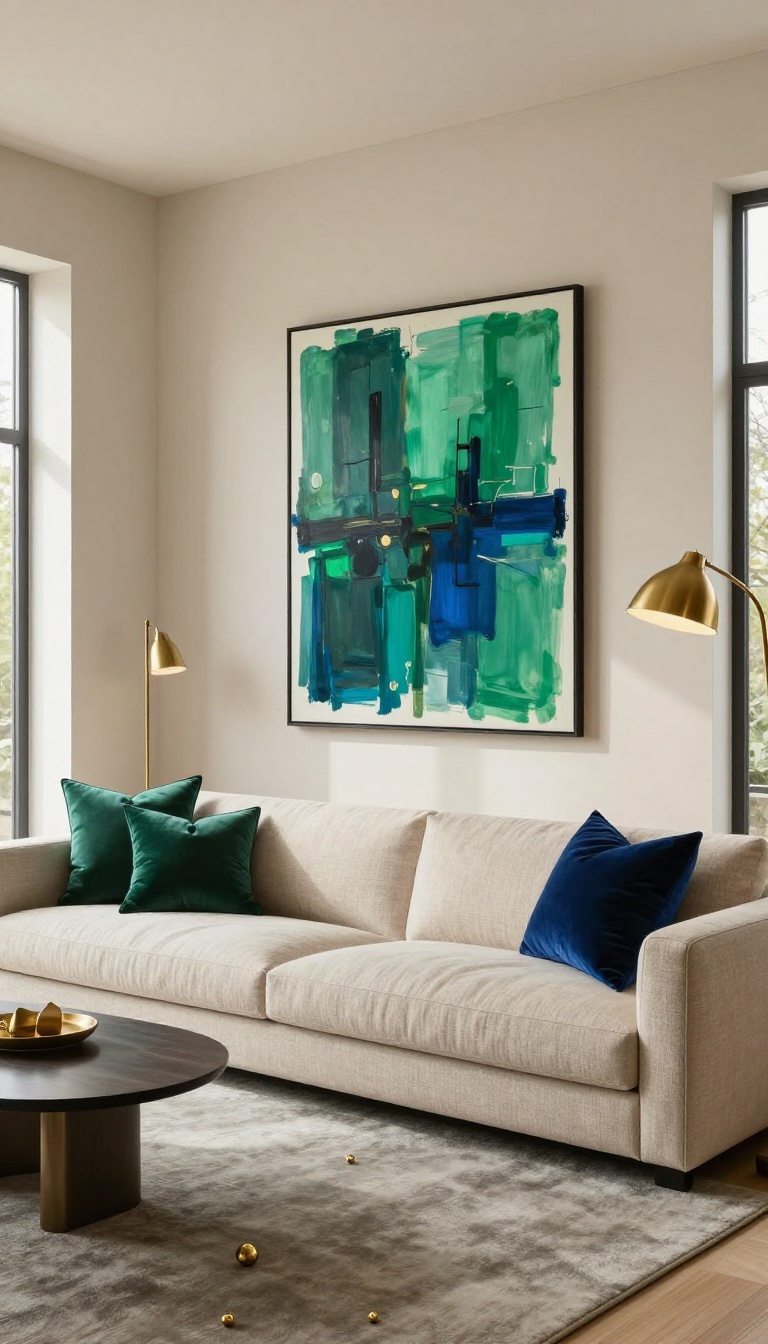
A neutral base gives your living room a calm, expensive feel that never goes out of style. Think soft whites, warm greys, or creamy beiges on the walls and big furniture pieces. Then you layer in bold accents—a colorful painting, metallic pillows, or a sculptural lamp—to add energy and personality.
This approach works because it balances serenity with surprise, making the room look curated rather than chaotic.
Neutral doesn't mean boring. It means you're creating a quiet backdrop that lets your favorite pieces shine. The trick is to choose a consistent undertone—warm, cool, or greige—and stick with it for walls, sofa, and rug.
That consistency makes the room feel larger and more cohesive. Once that's set, you can introduce color and shine without overwhelming the space.
Pick Your Neutral Palette
Start by selecting a neutral family that suits your light. North-facing rooms often benefit from warm neutrals like oatmeal or sand, while south-facing rooms can handle cooler greys and taupes. Test samples on the wall at different times of day.
Once you commit, use that same undertone on your largest surfaces: walls, sofa, and rug. This creates a seamless foundation that makes any accent look intentional.
Add Bold Accents That Pop
Now bring in contrast. A single piece of art with vivid colors can anchor the room. Or try velvet pillows in jewel tones like emerald or sapphire.
Metallic accents—brass, gold, or chrome—add a touch of glam without shouting. Keep accents to about 10-20% of the visual space. That's enough to catch the eye without turning your calm room into a circus.
Balance And Repeat
To make bold accents feel deliberate, repeat each color or metal at least twice in the room. For example, if you add blue pillows, include a blue vase or book on the coffee table. This repetition ties the look together.
Also, vary textures: a smooth leather sofa pairs well with a chunky knit throw. The mix keeps the neutral base from feeling flat.
6. Hang Art That Makes a Statement
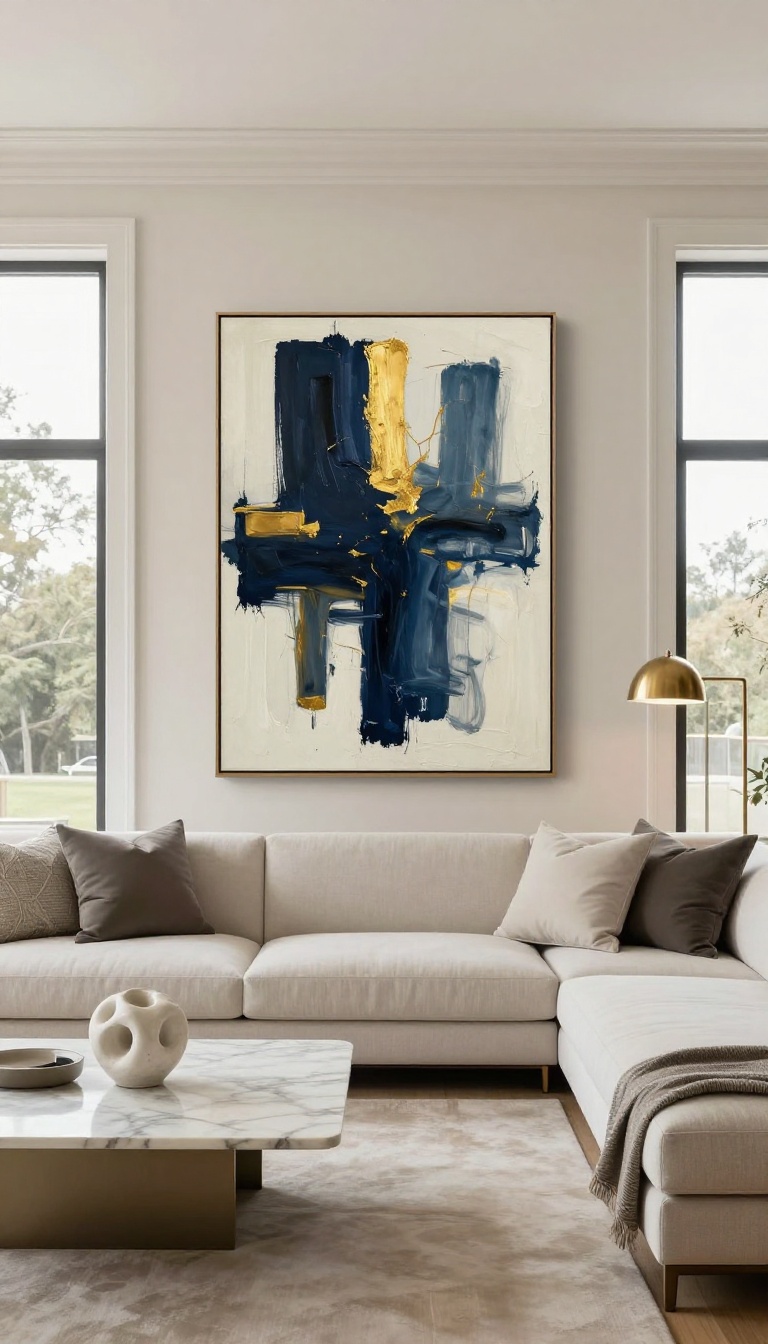
Art is the quickest way to make a living room feel personal and polished. A single large piece or a curated gallery wall can anchor a seating area, add color, and give the eye somewhere interesting to land. The key is to choose art that you genuinely love and to hang it with intention, not just to fill empty space.
Scale matters more than you might think. A tiny piece on a huge wall looks lost, while a bold, oversized canvas can transform the entire room. If you're not ready to commit to one big piece, a gallery wall lets you mix sizes and styles for a collected look.
Either way, treat art as a focal point, not an afterthought.
Go Big Or Go Gallery
One large-scale artwork can serve as the room's centerpiece. Aim for a piece that takes up about two-thirds of the width of your sofa or console. If you prefer variety, a gallery wall works just as well.
Keep the arrangement tight—2 to 3 inches between frames—so it reads as one cohesive unit. Mix prints, photographs, and maybe a sculptural object for depth.
Hang At The Right Height
The most common mistake is hanging art too high. The center of the artwork should sit at eye level, typically 57 to 60 inches from the floor. If you're hanging above furniture, leave 6 to 8 inches between the top of the sofa or console and the bottom of the frame.
This keeps the art connected to the furniture instead of floating away.
Choose Art That Speaks To You
Trends come and go, but personal taste lasts. Pick pieces that make you feel something—a memory, a mood, a spark of joy. That could mean an abstract canvas, a black-and-white photograph, or a vintage find.
When art reflects your story, the room instantly feels more authentic and luxurious.
7. Bring in Greenery with Sculptural Plants
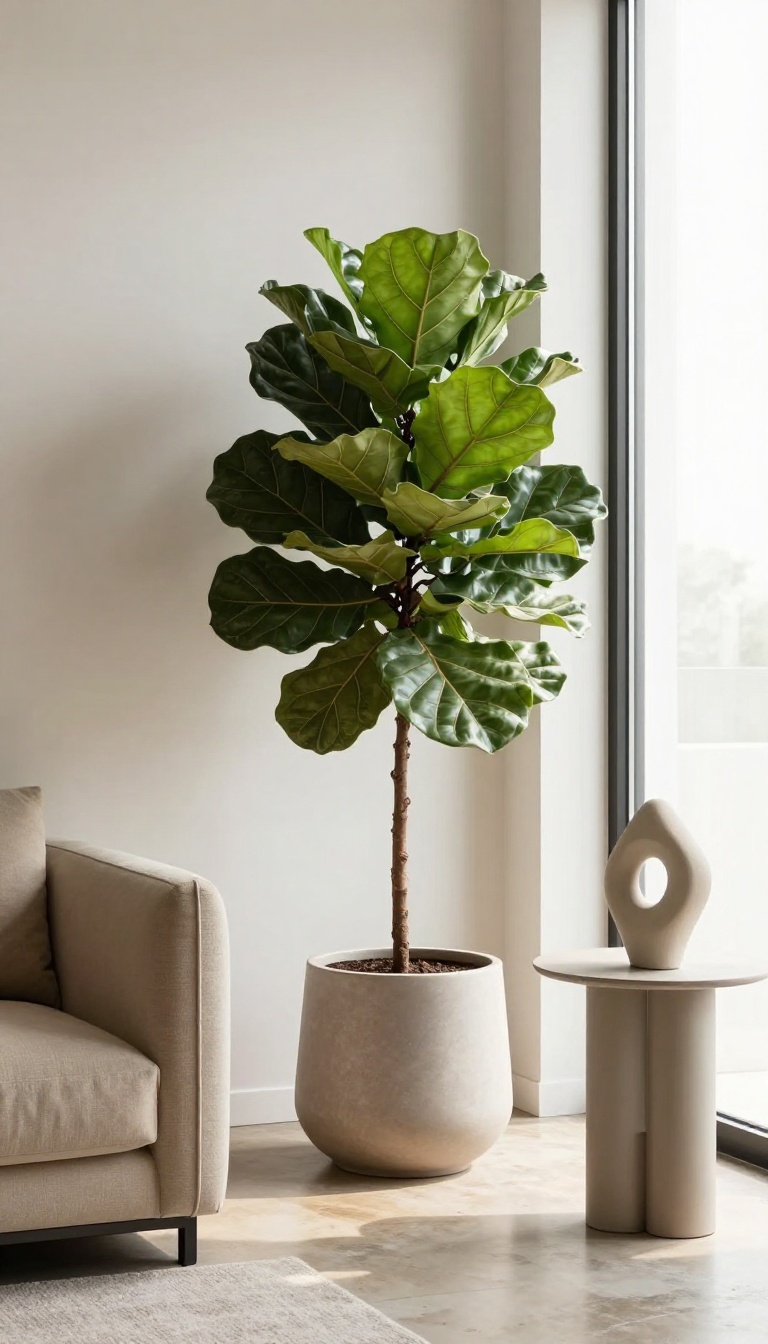
A living room can have perfect lighting, a gorgeous sofa, and a flawless layout, but without something alive in it, the space can still feel a little flat. That is where a tall, sculptural plant comes in. A fiddle leaf fig or an olive tree does more than fill an empty corner.
It adds a living, breathing element that changes the whole mood of the room. Plants soften hard edges. They break up straight lines from furniture and walls, and they introduce a natural shape that feels organic and relaxed.
That contrast is what makes a room feel fresh and inviting instead of stiff or staged. The best part is that you do not need a jungle. One well-chosen plant, placed with intention, can do the heavy lifting.
It becomes a piece of living sculpture that grows and changes over time.
Think of a sculptural plant as art that happens to be alive. A fiddle leaf fig with its broad, glossy leaves or an olive tree with its slender, silvery foliage creates a strong silhouette. That silhouette draws the eye and gives the room a focal point without adding visual clutter.
Scale matters here. A tiny plant on a side table will not have the same impact as a tall floor plant that reaches toward the ceiling. You want something that holds its own next to your furniture, not something that gets lost.
Placement is everything. A plant tucked into a dark corner will just look like an afterthought. Put it where it can catch some light and where its shape can be appreciated from multiple angles.
Near a window, beside a sofa, or flanking a fireplace are all strong choices. And do not forget the pot. A beautiful planter can elevate the whole look.
A simple ceramic or woven basket keeps the focus on the plant itself, while a metallic or sculptural pot adds another layer of design.
Choosing The Right Plant
Not every plant works as a sculptural statement. You want something with a strong shape, a clear trunk, and leaves that add texture. Fiddle leaf figs are popular for a reason: they are tall, dramatic, and relatively easy to find.
Olive trees bring a softer, more Mediterranean feel with their thin leaves and graceful branches. Rubber trees, bird of paradise, and large monstera are other options that make a statement. Consider the light in your room.
Most of these plants need bright, indirect light to thrive. If your living room is on the darker side, look for a plant that tolerates lower light, like a snake plant or a ZZ plant, though they may not grow as tall. The goal is to find something that will stay healthy and look good for the long haul.
Styling Tips For Maximum Impact
A single large plant can be enough, but you can also group two or three smaller ones to create a cluster. Just keep it simple. Too many plants can start to feel like a greenhouse instead of a living room.
Use a plant stand or a stool to add height if your plant is not quite tall enough. This also makes watering easier and protects your floors. If you have a bare corner, a tall plant is a natural fix.
If you have an empty space next to a console or media unit, a medium-sized plant can fill it nicely. Finally, think about the view from different spots in the room. A plant should look good from the sofa, from the doorway, and from wherever you spend most of your time.
Rotate it occasionally so it grows evenly and stays looking its best.
Keeping It Looking Luxe
A dusty, droopy plant does not say luxury. A healthy, well-cared-for plant does. Wipe the leaves with a damp cloth every few weeks to keep them shiny and free of dust.
Water according to the plant's needs, not on a fixed schedule. Most people overwater rather than underwater, so check the soil before you reach for the watering can. If a leaf turns yellow or brown, trim it off.
A little maintenance goes a long way. You can also add a layer of decorative stones or moss on top of the soil to make the pot look more finished. That small detail makes a big difference in how polished the whole arrangement feels.
8. Create a Focal Point with a Fireplace or Media Wall
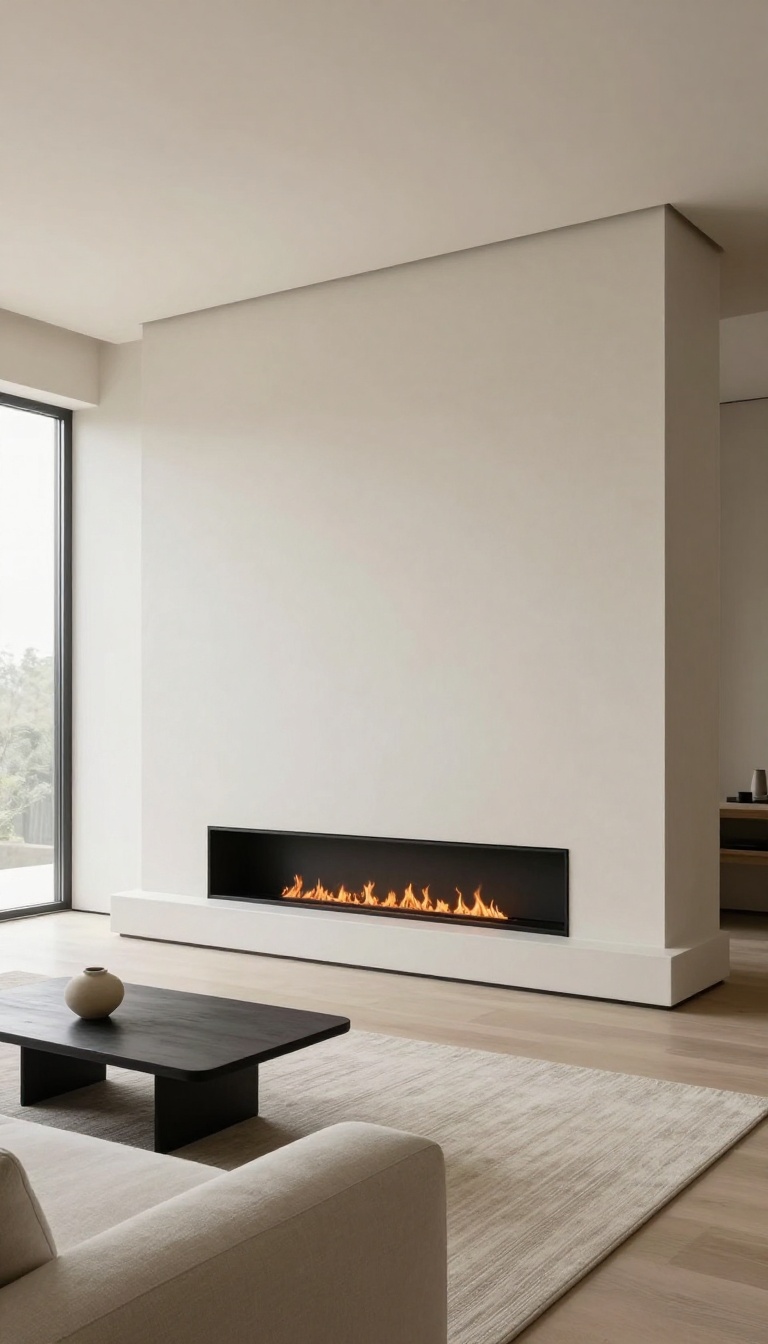
Every great living room has a spot where your eye naturally lands when you walk in. Without one, the space can feel like a collection of nice things with nowhere to rest. A modern fireplace or a built-in media wall solves that problem instantly.
It gives the room a clear anchor and a reason to feel intentional. The trick is keeping it sleek. A focal point should pull the room together, not dominate it with clutter or heavy ornament.
When it is done right, everything else in the room gets a little easier to arrange.
A fireplace or media wall does more than fill an empty wall. It sets the tone for the whole room and tells you where to put the sofa, the rug, and the coffee table. In a luxury living room, that anchor should feel calm and architectural rather than busy.
Think clean lines, balanced proportions, and a finish that matches the rest of the space. Whether you go with a linear gas fireplace, a plaster surround, or a floating media console, the goal is the same: one strong, quiet statement that makes the room feel designed.
Choose A Linear Or Plaster Fireplace
A long, horizontal fireplace reads as modern and expensive without shouting. It draws the eye across the wall and makes the room feel wider. Plaster or microcement surrounds keep the look smooth and seamless, especially when they match the wall color.
Skip heavy mantels and ornate stone if you want that clean, contemporary feel. A simple hearth or no hearth at all often looks more luxurious than a traditional setup.
Build A Media Wall That Disappears
A media wall works best when the TV is not the star. Recess it into a niche, frame it with slim cabinetry, or hide it behind a panel when it is off. Floating shelves in the same finish as the wall keep things visually quiet.
Use closed storage for cables, remotes, and consoles so the surface stays clear. The result is a wall that looks like architecture first and entertainment second.
Keep The Surroundings Minimal
Once you have a strong focal point, resist the urge to decorate around it too much. A few well-chosen objects on the hearth or console are enough. Symmetry helps here: matching sconces, a pair of stools, or a single large piece of art above the fireplace.
Too many small items will fight the anchor and make the room feel cluttered. Let the fireplace or media wall breathe, and the rest of the room will feel calmer too.
9. Finish with Metallic or Glass Accents
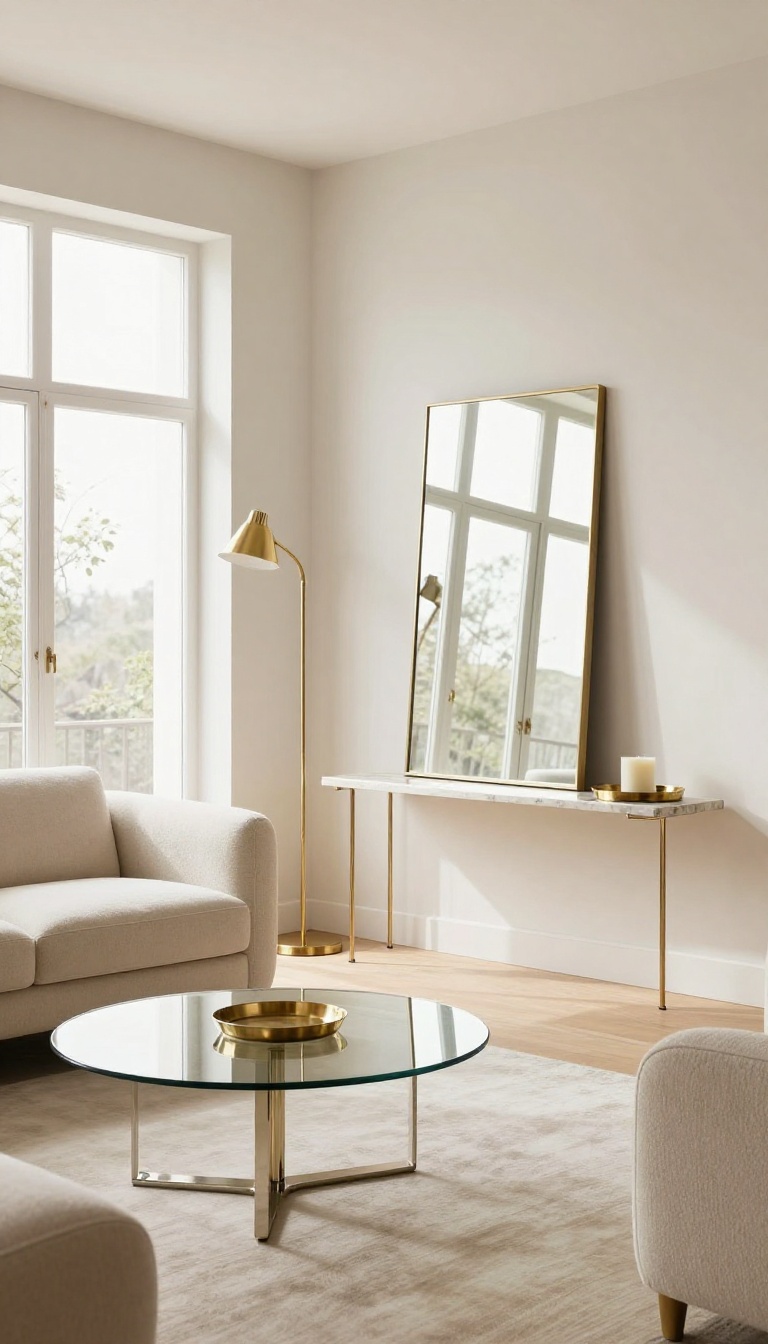
Metallic and glass accents are the jewelry of a living room. They catch light, add reflection, and make even simple furniture look more expensive. You do not need much—just a few well-placed pieces can sharpen the whole space.
The key is restraint. One or two finishes, repeated in a few spots, create a polished look. Too many metals or too much glass can feel cold or chaotic.
Use them to highlight what is already there.
Think of these accents as the final layer. They do not change the layout or the big pieces. Instead, they add sparkle and definition.
Brass, chrome, and glass all bounce light around the room, which makes the space feel brighter and more dynamic. They also add a touch of glamour without overwhelming the eye. The best part?
You can add them gradually. Start with a lamp, then a mirror, then a tray. Each piece builds on the last, and the room gets better with every addition.
Choose Your Metal Wisely
Brass and gold bring warmth and a classic feel. They pair well with wood, leather, and rich colors. Chrome and nickel are cooler and more modern; they shine in minimalist or contemporary rooms.
You can mix metals, but keep one dominant. For example, use brass as your main finish and add a small chrome detail for contrast. Just make sure they are in different spots so they do not compete.
Glass That Works
Glass is not just for tables. A glass coffee table keeps a small room feeling open. A glass lamp base adds shimmer without weight.
Mirrors are the ultimate glass accent—they reflect light and make the room feel larger. Try a large mirror opposite a window, or a set of small mirrored frames on a gallery wall. Just avoid too many glass surfaces at eye level; a little goes a long way.
Where To Place Them
Spread metallic and glass accents around the room. Put a brass floor lamp next to your sofa. Set a chrome tray on the ottoman.
Hang a glass pendant light over a side table. Use metallic frames for your artwork. The goal is to have these touches at different heights and in different zones.
That way, the light catches them from every angle and the whole room feels considered.
FAQ
What defines a modern luxury living room?
A modern luxury living room combines clean lines, high-quality materials, and thoughtful lighting. It feels sophisticated yet comfortable, with a focus on texture and balance.
How can I make my living room look expensive on a budget?
Focus on lighting, texture, and a few statement pieces. Layering rugs, adding dimmers, and using metallic accents can make a big impact without a huge spend.
What colors are best for a luxury living room?
Neutrals like cream, gray, and taupe work well as a base. Add depth with rich jewel tones or metallic accents for a high-end feel.
Do I need a large living room to achieve a luxury look?
No, scale and proportion matter more than size. Choose furniture that fits your space and avoid clutter to make any room feel luxurious.
How do I choose the right lighting for a luxury living room?
Mix ambient, task, and accent lighting. Use dimmers and statement fixtures like chandeliers or sculptural lamps to create layers and warmth.
Conclusion
Modern luxury is about making your living room feel intentional and inviting. You don't need to do everything at once. Start with one or two ideas that resonate with you.
Small changes like better lighting or a textured throw can shift the whole mood.
As you add pieces, keep balance and comfort in mind. The goal is a space that looks great and feels like home. With these ideas, you can create a living room that truly stands out.