25 Carpet Cleaning Solution Ideas for Tough Home Stains
That stubborn red wine stain or lingering pet odor doesn't have to mean calling in a pro. With the right household ingredients—like salt, vinegar, or hydrogen peroxide—you can tackle each mess head-on.
These 25 carpet cleaning solutions target specific stains, from grease to grass, using simple recipes that actually work. No guesswork, no expensive products, just practical fixes for the toughest spots your carpet faces daily.
Ready to lift those set-in stains and restore your carpet's fresh look?
1. Red Wine Stain Remover with Salt and Club Soda
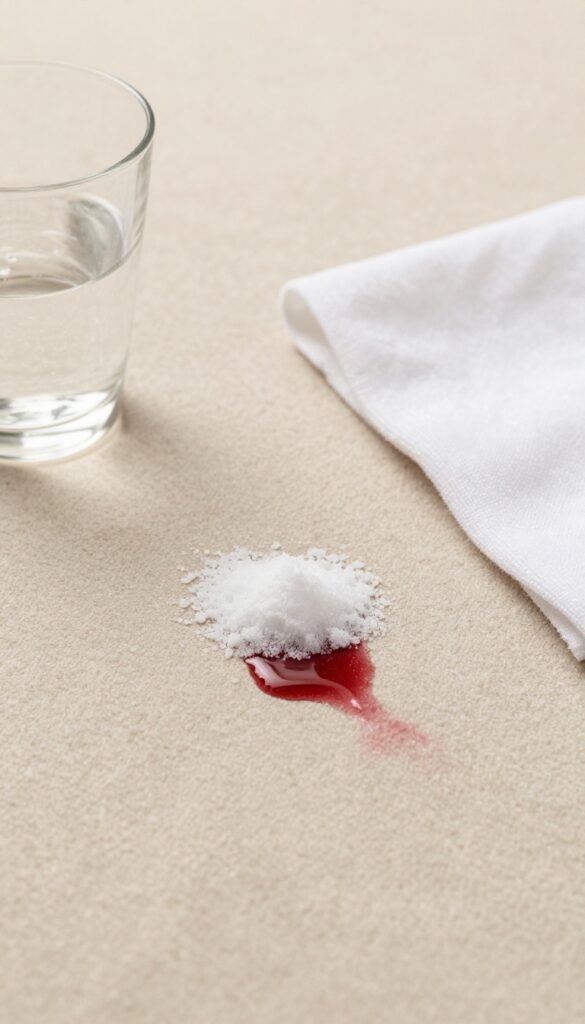
Red wine spills happen fast, but you don't have to panic. Salt and club soda are two kitchen staples that work together to lift the stain without scrubbing it deeper. The key is acting quickly and letting the ingredients do the heavy lifting.
Blot the spill immediately with a clean cloth to remove as much wine as possible. Pour a generous layer of salt over the stain—it will start absorbing the liquid right away. Let it sit for a few minutes, then pour club soda over the salt and blot again with a fresh cloth.
The carbonation helps dislodge the pigment while the salt pulls the wine up from the fibers. Repeat until the stain fades, then vacuum once dry.
Why Salt Works So Well
Salt is a natural absorbent. It draws moisture and dissolved particles out of the carpet fibers, which is exactly what you need for a liquid stain like red wine. It's also gentle enough not to damage the carpet pile.
The Club Soda Advantage
Club soda's carbonation creates tiny bubbles that help lift stain particles from deep in the fibers. The mild acidity also helps break down the wine's color compounds. Just make sure you're using plain club soda—not tonic water or flavored seltzer.
Step-by-step Blotting Technique
Always blot, never rub. Rubbing spreads the stain and pushes it deeper. Use a white cloth or paper towel to avoid color transfer.
Work from the outside of the stain inward to keep it from spreading.
2. Pet Urine Neutralizer with White Vinegar and Baking Soda
Pet accidents happen, and the longer urine sits, the tougher the stain and odor become. This two-step method uses common pantry items to break down uric acid and lift moisture from deep within carpet fibers. No harsh chemicals, no lingering smells—just a clean, fresh carpet.
Start by blotting up as much fresh urine as possible with paper towels or a clean cloth. Press firmly, but don't rub, to avoid spreading the stain. Mix equal parts white vinegar and water (about 1 cup each) and pour it over the affected area.
Let it sit for 5 minutes to neutralize the ammonia. Blot again, then sprinkle a generous layer of baking soda over the damp spot. Allow it to dry completely—this can take several hours.
Once dry, vacuum up the baking soda. The vinegar kills odor-causing bacteria, and the baking soda absorbs residual moisture and smell.
Why This Works
White vinegar is acidic, which counteracts the alkaline nature of urine and neutralizes odor. Baking soda is a natural absorbent that pulls moisture and trapped odors from the carpet. Together, they break down the stain without damaging fibers.
Tips For Set-in Stains
For older, dried stains, first re-wet the area with a little water to reactivate the uric acid crystals. Then apply the vinegar solution and let it sit for 10–15 minutes before blotting and adding baking soda. You may need to repeat the process for stubborn spots.
Avoid These Mistakes
Don't use steam cleaners or hot water on urine stains—heat can set the protein and make the stain permanent. Also, never mix vinegar with hydrogen peroxide or bleach, as it can create toxic fumes. Stick to the vinegar-baking soda combo for safe, effective results.
3. Grease and Oil Stain Fighter with Dish Soap and Warm Water
Grease and oil stains from cooking spills, hair products, or even a dropped slice of pizza can be some of the trickiest to remove. The key is to break down the oil without pushing it deeper into the carpet fibers. Dish soap is designed to cut through grease on dishes, and it works just as well on carpet—especially when paired with warm water and a gentle blotting technique.
This method is simple, fast, and uses ingredients you already have in your kitchen. It's safe for most synthetic carpets, but always test on a hidden area first to be sure. The goal is to lift the grease from the fibers, not scrub it in.
Why Dish Soap Works So Well
Dish soap contains surfactants that break the surface tension between oil and water. This allows the grease to loosen from the carpet fibers and be absorbed into a cloth. Warm water helps melt any solidified grease, making it easier to remove.
Avoid using hot water, though, as it can set some stains.
Step-by-step Application
Mix a few drops of dish soap with two cups of warm water. Dip a clean white cloth or paper towel into the solution, blot the stain gently—don't rub. Rubbing can spread the grease and damage the carpet.
Blot from the outer edge toward the center to prevent the stain from enlarging. Repeat with a fresh part of the cloth until no more grease transfers.
Rinsing And Drying
After the stain lifts, dampen a clean cloth with plain warm water and blot the area to remove any soap residue. Then place a dry towel over the spot and press firmly to absorb excess moisture. Let the carpet air dry completely, then vacuum to restore the texture.
4. Coffee and Tea Stain Eraser with Hydrogen Peroxide and Dish Soap
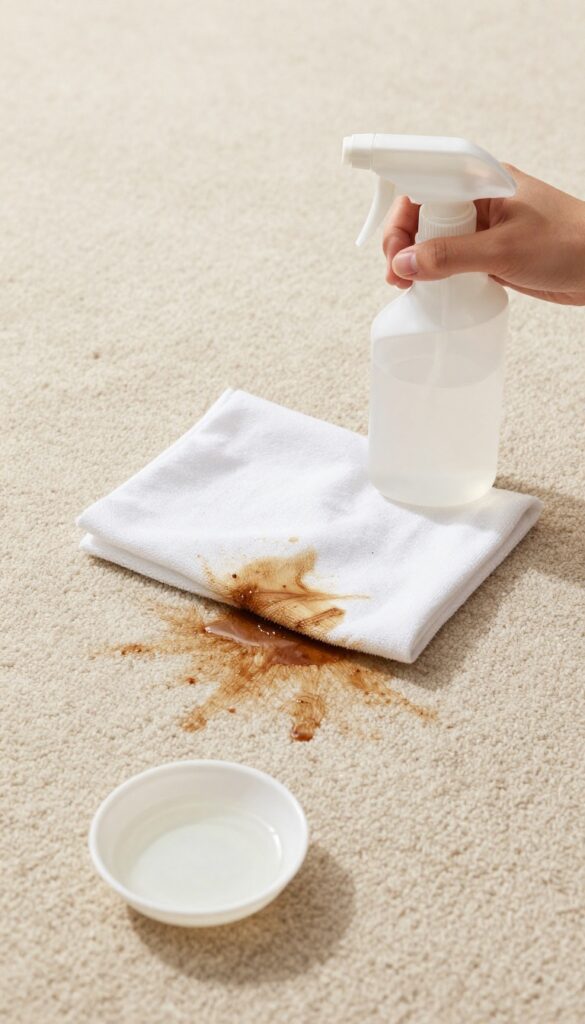
Coffee and tea leave behind stubborn brown rings and dark patches that seem impossible to lift. The trick is using hydrogen peroxide to break down the tannins—the compounds responsible for those deep stains—while dish soap helps lift the residue from the fibers. This two-step approach works on fresh spills and set-in marks alike.
Start by blotting up as much liquid as possible with a clean cloth. Mix one part hydrogen peroxide (3%) with one part dish soap, then apply a small amount to the stain using a spray bottle or a cloth. Let it sit for 5–10 minutes to let the peroxide work on the tannins.
Blot the area with a dry cloth until the stain lifts, then rinse with cold water and blot again. Repeat if needed.
Why Hydrogen Peroxide Works
Hydrogen peroxide is a mild oxidizing agent that breaks down the chemical bonds in tannins, making them water-soluble. It's safe for most synthetic carpets but always test on a hidden area first, especially on wool or delicate fibers.
Dish Soap As A Lifting Agent
Dish soap helps suspend the loosened stain particles so they can be blotted away rather than spreading deeper into the carpet. Use a clear, dye-free dish soap to avoid adding another stain.
Application Tips For Best Results
Work from the outside of the stain inward to prevent spreading. Don't rub—blot gently. For older stains, let the solution sit up to 15 minutes before blotting.
Rinse thoroughly to avoid residue that attracts dirt.
5. Ink and Marker Stain Remover with Rubbing Alcohol
Ink and marker stains on carpet can feel like a disaster—especially if a pen explodes or a child gets creative. The good news is that rubbing alcohol, a common household item, can break down these stains quickly. This method works on both water-based and permanent inks, making it a versatile go-to for unexpected messes.
Rubbing alcohol dissolves the pigments in ink, allowing you to lift the stain without scrubbing it deeper into the fibers. The key is to blot, not rub, and to work from the outside in to prevent spreading. This technique is safe for most synthetic carpets, but always test on a hidden area first.
What You'll Need
You only need a few items: rubbing alcohol (isopropyl alcohol, 70% or higher), clean white cloths or paper towels, a small bowl, and a blunt knife or spoon. Optional: a mild dish soap and water for a final rinse.
Step-by-step Instructions
First, blot up any excess ink with a dry cloth. Then, dampen a clean cloth with rubbing alcohol and gently dab the stain—don't rub. The ink should start transferring to the cloth.
Continue with fresh areas of the cloth until no more ink lifts. If the stain is stubborn, let the alcohol sit for a few minutes before blotting again. Finally, rinse the area with a mixture of water and a drop of dish soap, then blot dry.
Tips For Best Results
Act quickly—fresh ink lifts easier. For large stains, work in small sections. Avoid using colored cloths that might bleed dye onto the carpet.
If the stain persists, repeat the process or try a commercial ink remover. Always vacuum the area after it dries to restore the carpet's texture.
6. Blood Stain Eliminator with Cold Water and Salt
Blood stains can be alarming, but they're actually one of the easier stains to remove if you act fast. The key is cold water—hot water will cook the protein into the fibers, making it permanent. Salt works as a gentle abrasive and helps draw out the blood proteins.
Why Cold Water Is Non-negotiable
Heat sets blood stains. Always start by blotting the stain with a cloth soaked in cold water. Never use hot water or a steam cleaner until the stain is completely gone.
Cold water keeps the protein soluble so it can be lifted out.
How To Make And Apply The Salt Paste
Mix table salt with a small amount of cold water to form a thick paste. Spread the paste over the stain and let it sit for 10–15 minutes. The salt will absorb the moisture and pull the blood out of the carpet fibers.
Then gently brush or scrape off the dried paste and vacuum.
Repeat If Needed
For older or larger stains, you may need to repeat the process. If a faint shadow remains, follow up with a hydrogen peroxide solution (3%) applied with a dropper, then blot. Always test peroxide on a hidden area first.
7. Mud and Dirt Cleaner with Liquid Laundry Detergent
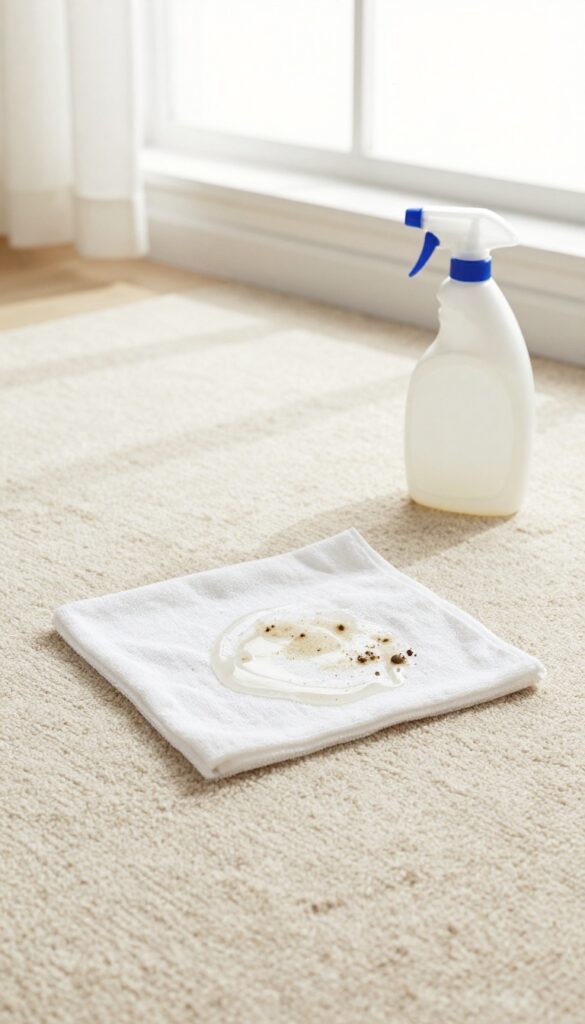
Mud and dirt tracked onto carpet can turn into a gritty, smeared mess if you try to clean it while it's still wet. The trick is patience: let the mud dry completely first, then vacuum up the loose particles. After that, a simple solution of liquid laundry detergent and water lifts the remaining stain without pushing dirt deeper into the fibers.
Mud is mostly soil and water, so scrubbing wet mud only grinds the dirt into the carpet. Drying turns it into powder that vacuums away easily. Once the loose dirt is gone, the detergent breaks down the oily or clay-like residue left behind.
Let It Dry Completely
Resist the urge to blot or scrub fresh mud. Instead, place a dry towel over the spot to absorb excess moisture, then let the area air-dry. This could take a few hours depending on humidity.
Once the mud feels hard and crumbly, vacuum thoroughly.
Mix And Treat The Stain
Combine 1 tablespoon of liquid laundry detergent with 2 cups of warm water. Dip a clean white cloth into the solution and blot the stain—don't rub. Work from the outside in to prevent spreading.
The detergent lifts the remaining dirt, and the cloth absorbs it.
Rinse And Blot Dry
After treating, dampen a fresh cloth with plain water and blot the area to remove any soap residue. Press with a dry towel to absorb excess moisture, then let air-dry. Vacuum again once dry to restore the carpet's texture.
8. Ketchup and Tomato Sauce Spot Remover with White Vinegar
Ketchup and tomato sauce spills are common, especially around kids and during cookouts. Their bright red color comes from lycopene, a pigment that can stain carpet fibers quickly if not treated properly. The good news is that the acidity in white vinegar neutralizes the tomato acids and lifts the color without bleaching or damaging the carpet.
Start by scraping off any excess sauce with a dull knife or spoon—don't rub, or you'll push the stain deeper. Blot the area with a clean cloth to absorb as much liquid as possible. Then, pour a small amount of white vinegar directly onto the stain, enough to saturate it.
Let it sit for 5 to 10 minutes to break down the pigments. Blot again with a fresh cloth, repeating until no more color transfers. Rinse with cold water and blot dry.
If any residue remains, mix a drop of dish soap with water and dab it on, then rinse. This method works on both fresh and dried stains, though dried stains may need a second application.
Why Vinegar Works On Tomato Stains
White vinegar is mildly acidic, which helps dissolve the alkaline compounds in tomato-based products. This chemical reaction breaks the bond between the pigment and the carpet fibers, allowing the stain to lift away without scrubbing. It's gentle enough for most synthetic carpets but always test on an inconspicuous area first.
Step-by-step Application
- Blot excess sauce with a paper towel. 2.
Apply white vinegar directly to the stain. 3. Let sit for 5–10 minutes.
- Blot with a clean cloth until the stain transfers. 5.
Rinse with cold water and blot dry. Repeat if needed.
What To Avoid
Never use hot water on tomato stains—heat can set the protein and make the stain permanent. Also avoid rubbing vigorously, which can fray the carpet fibers. Stick to blotting and gentle pressure.
9. Chocolate and Candy Stain Solution with Dish Soap and Ammonia
Chocolate and candy spills are a sweet nightmare for carpets. The combination of fats, sugars, and sometimes dairy can create a sticky, stubborn stain that attracts more dirt. But you don't need a specialty cleaner—just dish soap and a few drops of ammonia can break down the mess effectively.
This simple solution works because dish soap cuts through grease and fats, while ammonia tackles the sugars and proteins. Together, they lift the stain without harsh scrubbing that could damage the carpet fibers. Always test on a hidden area first, especially on wool or delicate carpets.
What You'll Need
Gather liquid dish soap (preferably a grease-fighting formula), household ammonia, a clean white cloth or paper towels, a bowl of warm water, and a spoon or dull knife for scraping. Avoid colored cloths that might bleed dye onto the carpet.
Step-by-step Instructions
First, scrape off any excess chocolate or candy with a dull knife—don't rub, or you'll push it deeper. Mix 1 tablespoon of dish soap with 2 cups of warm water and add 1 tablespoon of ammonia. Dip a cloth into the solution and blot the stain from the outside in.
Continue blotting until the stain transfers to the cloth. Rinse with a damp cloth dipped in plain water, then blot dry.
Tips For Success
Work quickly while the stain is fresh. For dried chocolate, moisten the area with a little water first to rehydrate. Never use hot water on chocolate stains—it can set the protein.
If the stain persists, repeat the process or follow up with a carpet-safe enzyme cleaner.
10. Grass Stain Remover with Enzyme Laundry Pre-Treater
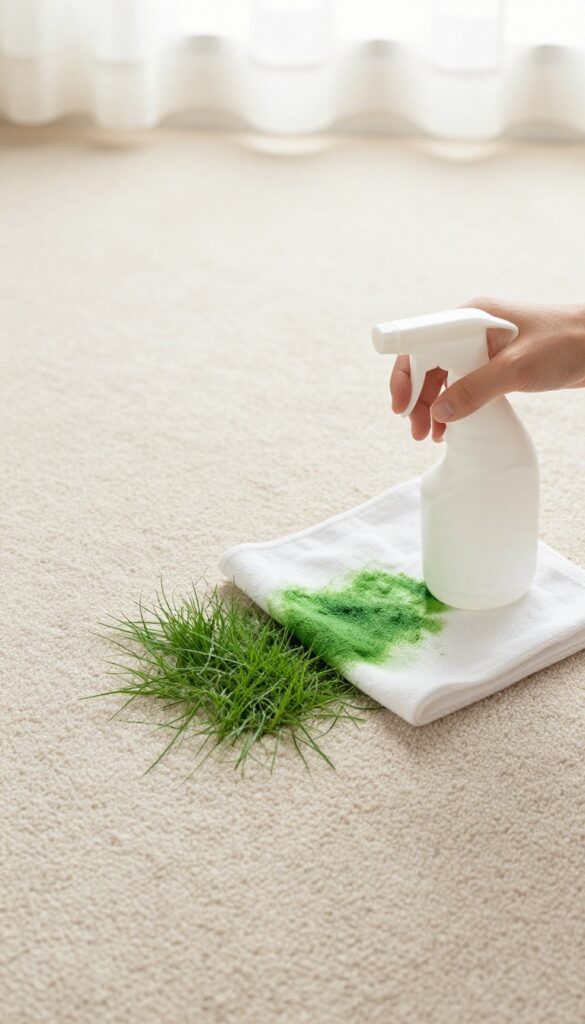
Grass stains are packed with chlorophyll and protein, which is why they cling so stubbornly to carpet fibers. Rubbing with soap often just spreads the green mess further. An enzyme laundry pre-treater, the kind you use for protein-based stains on clothes, targets the stain at a molecular level, breaking it down so you can lift it away without harsh scrubbing.
Enzyme cleaners are specifically designed to digest organic matter like grass, blood, and sweat. They work by breaking the protein bonds that bind the stain to the carpet, making it water-soluble and easy to blot out. This method is gentle on fibers and avoids the bleaching or discoloration that can come from stronger chemicals.
Why Enzymes Work On Grass
Grass stains are a combination of chlorophyll (green pigment) and proteins from the plant cells. Enzymes in laundry pre-treaters, like protease and amylase, target these proteins and carbohydrates, breaking them into smaller pieces that can be lifted away. This biochemical approach is far more effective than soap or vinegar alone.
Step-by-step Application
First, blot up any excess moisture from the stain. Spray the enzyme pre-treater directly onto the grass stain, covering it completely. Let it sit for at least 10–15 minutes—longer for set-in stains.
Then, blot with a clean white cloth, working from the outside in. Repeat if needed, then rinse with a little water and blot dry. Avoid heat until the stain is gone, as heat can set it.
Tips For Best Results
Always test the pre-treater on a hidden area first. Use a white cloth to avoid dye transfer. For dried grass stains, gently scrape off any residue before applying the enzyme.
If the stain is large, work in sections. And remember: patience is key—enzymes need time to work, so don't rush the dwell time.
11. Baby Formula and Milk Stain Cleaner with Cold Water and Baking Soda
Baby formula and milk spills are common in homes with little ones, and they can leave behind a stubborn, smelly stain if not treated properly. The key is to act fast and use the right technique to break down the dairy proteins before they set. A simple combination of cold water and baking soda does the trick without harsh chemicals.
Start by blotting up as much of the spill as possible with a clean cloth. Then rinse the area with cold water—never hot, as heat can cook the proteins into the fibers. Mix a paste of baking soda and a little cold water, apply it to the stain, and let it sit for 15 minutes.
The baking soda absorbs the proteins and neutralizes any sour odor. Vacuum up the dried paste, and repeat if needed.
Why Cold Water Matters
Hot water sets dairy proteins, making the stain permanent. Cold water keeps the proteins suspended so they can be lifted away. Always blot, never rub, to avoid spreading the stain deeper into the carpet.
Baking Soda's Dual Action
Baking soda is a gentle abrasive that helps lift the stain while also neutralizing odors. It's safe for most carpet types and won't leave a residue if vacuumed thoroughly.
When The Stain Has Dried
If the spill has already dried, scrape off any crusty bits first. Then apply the baking soda paste and let it sit longer—up to 30 minutes. You may need a second application for older stains.
12. Wax and Candle Drip Remover with Ice and a Butter Knife
Candle wax drips onto carpet and hardens fast, but you don't need to cut the fibers or use harsh chemicals. The trick is to freeze the wax solid, then gently break it away. A butter knife and an ice cube are your main tools for this simple rescue.
Start by placing a few ice cubes in a plastic bag and holding it against the wax for about 30 seconds. The cold makes the wax brittle, so it cracks rather than smears. Once it's firm, use a dull butter knife to scrape off as much wax as possible.
Work from the edges inward to avoid spreading. For any leftover residue, lay a paper towel over the spot and run a warm iron over it. The heat melts the remaining wax, which the towel absorbs.
Repeat with a fresh towel until no more wax transfers. This method works on most synthetic and wool carpets, but test a hidden area first if you're unsure about heat tolerance.
Why Freezing Works Best
Wax is soft and sticky at room temperature, so rubbing or wiping it only pushes it deeper into the fibers. Freezing turns it into a solid that shatters easily. The ice cube method is quick and doesn't wet the carpet much, which prevents mold or color bleeding.
Scraping Without Damage
A butter knife is ideal because its dull edge won't cut the carpet pile. Always scrape in the direction of the fibers to avoid fraying. If the wax is in a high-traffic area, you might need to vacuum after scraping to lift any loose particles.
Ironing Out The Last Traces
The iron and paper towel technique is a classic for a reason. Set the iron to medium heat (no steam) and press gently for a few seconds. Lift the towel to check progress—don't let it sit too long or the wax can re-melt into the carpet.
For colored wax, switch to a clean towel section each time to prevent dye transfer.
13. Nail Polish Stain Remover with Non-Acetone Polish Remover
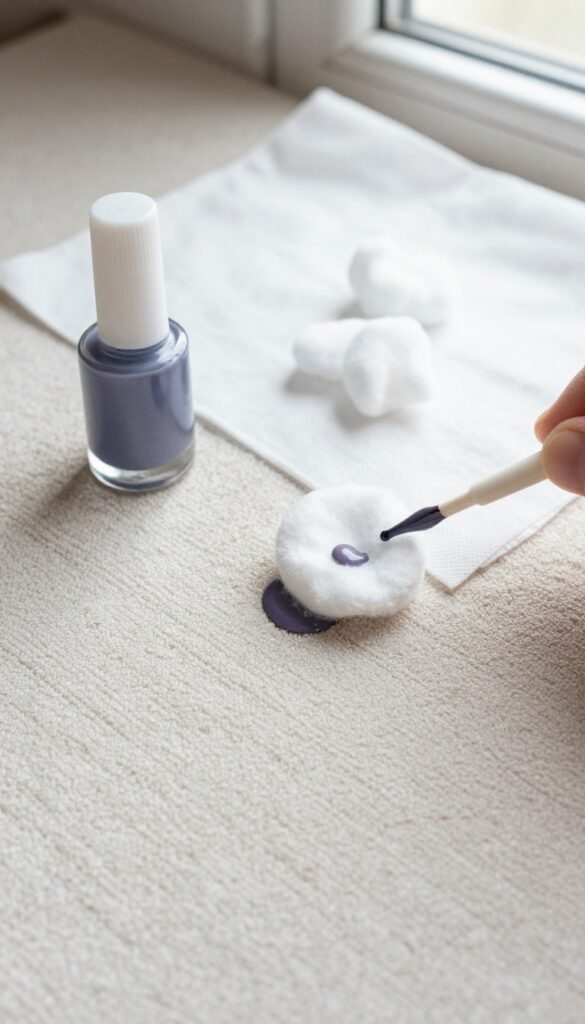
Nail polish spills are a disaster waiting to happen, especially if you're doing your nails near the carpet. The bright pigments and fast-drying formula can set in seconds, but don't panic. Non-acetone nail polish remover is your secret weapon—it dissolves the polish without damaging most carpet fibers.
First, test the remover on a hidden area of your carpet to make sure it doesn't cause discoloration. Then, blot up as much wet polish as possible with a clean cloth. Dab a small amount of non-acetone remover onto a cotton ball or white cloth, and gently blot the stain from the outside in.
The polish should start to dissolve and transfer to the cloth. Repeat with fresh remover until the stain is gone, then rinse with a bit of water and blot dry. Avoid rubbing, which can spread the stain or damage the fibers.
Why Non-acetone Works Best
Acetone-based removers are too harsh for many synthetic carpets and can melt or discolor the fibers. Non-acetone removers use milder solvents like ethyl acetate, which break down nail polish without the risk. Always check your carpet's material—if it's wool or delicate, test extra carefully.
Step-by-step Removal Process
Start by scraping off any excess dried polish with a dull knife. Apply the non-acetone remover to a cloth, not directly on the carpet, to avoid oversaturating. Blot gently, lifting the stain onto the cloth.
Rinse with a damp cloth afterward to remove any residue.
What To Avoid
Never use nail polish remover on carpets with natural fibers like wool or silk, as it can cause permanent damage. Also avoid rubbing vigorously, which can fray the carpet. If the stain is large or old, consider calling a professional.
14. Mustard and Turmeric Stain Neutralizer with Glycerin and Water
Mustard and turmeric stains are notorious for leaving bright yellow marks that seem impossible to remove. The pigment is stubborn, but you don't need bleach or harsh chemicals. A simple mix of glycerin and water can lift those yellow tones without damaging your carpet fibers.
Glycerin is a gentle, colorless liquid that helps break down oil-based pigments like those in mustard and turmeric. When diluted with water, it penetrates the stain and loosens the color particles so they can be blotted away. This method is safe for most carpet types and avoids the risk of fading or discoloration that comes with bleach.
What You'll Need
You only need two ingredients: liquid glycerin (available at drugstores or online) and water. Also have a clean white cloth or paper towels on hand for blotting. No special tools required.
Step-by-step Application
Mix one part glycerin with two parts water. Apply the solution directly to the stain, letting it sit for 10–15 minutes. Then blot gently with a cloth, working from the outside in.
Repeat if needed, then rinse with a little water and blot dry.
Why It Works
Glycerin acts as a humectant, drawing moisture into the stain and helping to dissolve the pigment. Unlike bleach, it doesn't strip color from the carpet—it simply lifts the stain so you can wipe it away. It's especially effective on fresh or set-in mustard and turmeric marks.
15. Berry and Fruit Juice Stain Remover with White Vinegar and Dish Soap
Berry and fruit juice stains are some of the most colorful and stubborn messes you'll face on your carpet. The natural pigments in fruits like blueberries, cherries, and pomegranates bond quickly with fibers, but you can break that bond with a simple two-step method using white vinegar and dish soap.
Start by blotting up as much of the fresh spill as possible with a clean cloth—don't rub, or you'll push the stain deeper. Mix one tablespoon of white vinegar with one tablespoon of liquid dish soap in two cups of cool water. Apply the solution to the stain with a spray bottle or a cloth, let it sit for five minutes, then blot again.
The vinegar neutralizes the fruit acids, while the dish soap lifts the color particles from the carpet fibers. Rinse with cold water and blot dry. For dried stains, first re-wet the area with the vinegar-soap mix and let it soak for 15 minutes before blotting.
Why This Works
Fruit juices contain natural acids and pigments that can set quickly. White vinegar is a mild acid that helps break down those fruit acids, making the stain easier to lift. Dish soap is a surfactant that surrounds and suspends the pigment molecules so they can be blotted away instead of re-depositing on the carpet.
Best Fruits To Treat
This method works wonders on stains from berries (blueberries, strawberries, raspberries), cherries, grapes, pomegranates, and fruit juices like orange, apple, and cranberry. It's also effective on wine stains, though red wine may need a hydrogen peroxide boost for older spots.
What To Avoid
Don't use hot water on fruit stains—heat can set the protein and pigment permanently. Stick with cold or cool water for rinsing. Also, avoid using bleach or ammonia, which can react with fruit acids and damage carpet fibers or cause discoloration.
16. Crayon Mark Remover with WD-40 or Hairspray
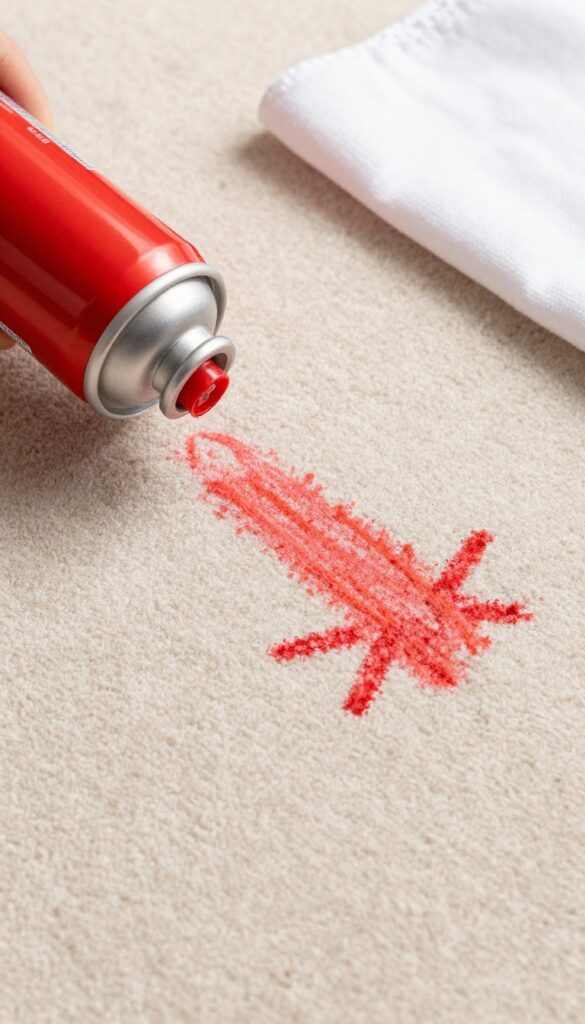
Kids and crayons are a classic combo, but when those colorful marks end up on the carpet, it can feel like a permanent art installation. The wax binds to the fibers, making soap and water useless. Luckily, a couple of household staples can dissolve that wax in seconds without damaging the carpet.
WD-40 and hairspray both contain solvents that break down the waxy residue in crayon marks. Spray a small amount directly onto the stain, let it sit for about 30 seconds, then blot with a clean cloth. The crayon should transfer to the cloth.
Repeat if needed, then blot with a mild soap solution to remove any leftover solvent. Always test on an inconspicuous area first, as some carpets may react to the alcohol or petroleum distillates.
Why Wd-40 Works
WD-40 is a penetrating oil that dissolves wax and grease. It seeps into the carpet fibers and breaks the bond between the crayon and the fabric. The key is to let it sit long enough to work, but not so long that it spreads.
Blot, don't rub, to avoid pushing the stain deeper.
Hairspray As An Alternative
Hairspray contains alcohol, which also dissolves crayon wax. Spray it on the stain until damp, let it sit for a minute, then blot. Hairspray is less oily than WD-40, so it may require more applications, but it's a great option if you don't have WD-40 on hand.
Final Cleanup Steps
After removing the crayon, you'll likely have a residue from the solvent. Mix a teaspoon of dish soap with a cup of warm water, dab it onto the area, and blot. Rinse with a little cold water on a clean cloth, then blot dry.
Vacuum once the carpet is fully dry to restore the texture.
17. Gum and Sticky Residue Remover with Ice and Peanut Butter
Chewing gum mashed into the carpet or a sticker that left a tacky mess? This trick uses two unexpected items from your kitchen: ice and peanut butter. The ice hardens the gum for easy scraping, while the oils in peanut butter break down the sticky residue left behind.
It's a safe, non-toxic method that works on most carpets.
Freeze And Scrape
First, grab a few ice cubes and place them in a plastic bag. Hold the bag against the gum for about 30 seconds until the gum becomes hard and brittle. Then, use a dull knife or a credit card to gently scrape the gum off the carpet fibers.
Work from the edges inward to avoid spreading the gum further. Most of the gum should come off in one piece.
Peanut Butter Power
Once the gum is gone, you'll likely see a sticky residue. Scoop a small amount of creamy peanut butter onto a clean cloth. Rub it into the residue using circular motions.
The oils in the peanut butter help dissolve the stickiness. Let it sit for a minute, then wipe away with a damp cloth. Repeat if needed.
Final Cleanup
After the residue is gone, there may be a slight peanut butter trace. Mix a drop of dish soap with warm water and dab the area with a cloth to remove any oily film. Blot with a dry towel and let the carpet air dry.
Your carpet will be free of gum and sticky goo.
18. Vomit Stain and Odor Eliminator with Baking Soda and Hydrogen Peroxide
Vomit on the carpet is one of the most unpleasant messes to clean, but you don't need harsh chemicals to get rid of both the stain and the lingering smell. A simple combination of baking soda and hydrogen peroxide creates a fizzing reaction that lifts the stain from deep within the fibers while neutralizing odors at the same time. This method is safe for most carpets and uses ingredients you likely already have in your pantry.
Start by blotting up as much vomit as possible with paper towels or a clean cloth. Avoid rubbing, which can push the stain deeper. Once the area is as dry as you can get it, generously sprinkle baking soda over the entire stain.
Let it sit for about 10 minutes to absorb moisture and start deodorizing. Then, fill a spray bottle with 3% hydrogen peroxide and spritz it directly onto the baking soda until the powder is saturated. You'll see it fizz—that's the reaction working to lift the stain.
Let it sit for another 10 minutes, then blot up the mixture with a clean towel. Repeat if necessary, then vacuum once dry.
Why This Combo Works So Well
Baking soda is a natural deodorizer and mild abrasive that helps break down organic matter. Hydrogen peroxide acts as a gentle bleach and disinfectant, breaking down the proteins in vomit. Together, they create a chemical reaction that releases oxygen bubbles, which physically lift the stain from the carpet fibers without scrubbing.
Tips For Best Results
Always test hydrogen peroxide on an inconspicuous area first, as it can lighten some carpets. Use cold water for blotting, as heat can set the stain. For older, dried stains, pre-moisten the area with water before applying baking soda to help the reaction work better.
19. Paint Stain Remover (Water-Based) with Dish Soap and Warm Water
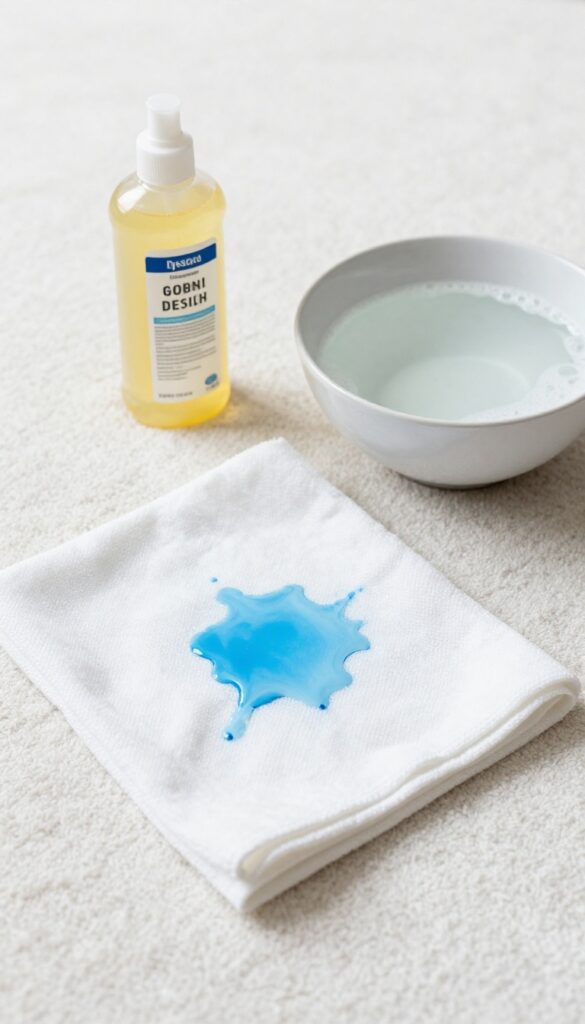
Paint spills happen fast, especially when you're in the middle of a DIY project. Water-based paints like latex or acrylic are easier to tackle than oil-based ones, but you still need to act quickly. The good news is that dish soap and warm water can handle fresh paint stains without harsh chemicals.
For fresh water-based paint, blot up as much as possible with a clean cloth—never rub, or you'll push the paint deeper into the fibers. Mix a few drops of dish soap with warm water, dip a cloth in the solution, and gently dab the stain. Rinse with a damp cloth and blot dry.
For dried paint, you'll need rubbing alcohol: apply a small amount to a cotton ball, dab the stain, then scrape gently with a dull knife. Test on an inconspicuous area first to make sure the carpet color doesn't lift.
Blot, Don't Rub
When paint first hits the carpet, grab a white cloth or paper towel and blot firmly. Rubbing spreads the paint and makes the stain larger. Keep blotting until no more paint transfers to the cloth.
Dish Soap And Warm Water Mix
Combine one teaspoon of mild dish soap with two cups of warm water. Dip a clean cloth into the solution, wring it out slightly, and dab the stain. Work from the outside in to prevent spreading.
Rinse with plain water and blot dry.
Rubbing Alcohol For Dried Paint
If the paint has dried, moisten a cotton ball with rubbing alcohol and press it onto the stain for a few seconds. The alcohol softens the paint. Gently scrape it off with a butter knife or spoon.
Repeat until the stain lifts, then clean with soapy water.
20. Rust Stain Remover with Lemon Juice and Salt
Rust stains from furniture legs, metal objects, or hard water can feel impossible to remove without bleach or harsh chemicals. But lemon juice and salt create a gentle yet effective bleaching action that lifts rust without damaging carpet fibers. The citric acid breaks down the iron oxide, while salt acts as a mild abrasive to scrub it away.
Sunlight accelerates the process, making this a three-part natural remedy.
To use this method, start by blotting up any excess moisture from the rust stain. Squeeze fresh lemon juice directly onto the stain, covering it completely. Sprinkle a generous layer of table salt over the lemon juice until it forms a paste.
Let the mixture sit for at least 2–3 hours, ideally in direct sunlight. The sun's UV rays enhance the bleaching effect of the lemon juice. After the time is up, rinse the area with a small amount of cool water and blot dry with a clean cloth.
Repeat if necessary for stubborn stains. This works best on synthetic carpets; test on a hidden area first for delicate natural fibers.
Why This Combo Works
Lemon juice contains citric acid, a natural chelating agent that binds to iron molecules in rust, making them soluble in water. Salt provides gentle abrasion to lift the loosened particles from the carpet fibers. Sunlight adds a mild bleaching effect that helps fade any remaining discoloration without chlorine or ammonia.
Step-by-step Application
Blot the rust stain to remove any loose debris. Apply fresh lemon juice directly to the stain, then sprinkle salt over it to form a paste. Let it sit in direct sunlight for 2–3 hours.
Rinse with cool water and blot dry. Repeat if the stain persists.
Precautions And Tips
Test on an inconspicuous area first, especially on wool or silk carpets, as citric acid can cause discoloration. Avoid using on alkaline-sensitive dyes. For best results, use fresh lemon juice rather than bottled, which may have lower acidity.
Do not rub the stain vigorously, as this can spread the rust.
21. Urine Stain (Old) Remover with Enzyme Cleaner and Steam
Old urine stains are tricky because the uric acid crystals bind deep into carpet fibers and keep smelling long after the stain dries. Standard cleaners just mask the odor, but enzymes actually eat those crystals away. Pair that with steam heat, and you've got a one-two punch that lifts both the stain and the smell for good.
Enzyme cleaners are biological detergents that break down proteins and uric acid into smaller, odorless molecules. For old stains, you need to let the enzymes work for at least 10–15 minutes before applying steam. The heat from a steam cleaner (or a hot water extraction machine) then flushes out the dissolved residue, leaving your carpet fresh.
Always test on a hidden area first, and blot—don't rub—to avoid spreading the stain.
Why Enzymes Beat Baking Soda
Baking soda absorbs surface odors temporarily, but it doesn't remove the uric acid crystals. Enzyme cleaners, on the other hand, contain live bacteria or enzymes that digest the stain at a molecular level. For old, set-in urine, enzymes are the only way to truly eliminate the source of the smell.
Steam Activation Tips
After applying the enzyme cleaner and letting it dwell, use a steam cleaner set to around 200°F (93°C). The heat helps break down any remaining crystals and activates the enzymes further. Don't over-wet—use a wet-dry vacuum to extract as much moisture as possible.
Repeat if the stain is particularly stubborn.
What To Avoid
Never use bleach or ammonia-based cleaners on urine stains—they can react with uric acid and set the stain permanently. Also, avoid excessive scrubbing, which can damage carpet fibers and spread the stain. Stick to blotting and gentle steam extraction.
22. Wine Stain (Red) Remover with White Wine and Club Soda
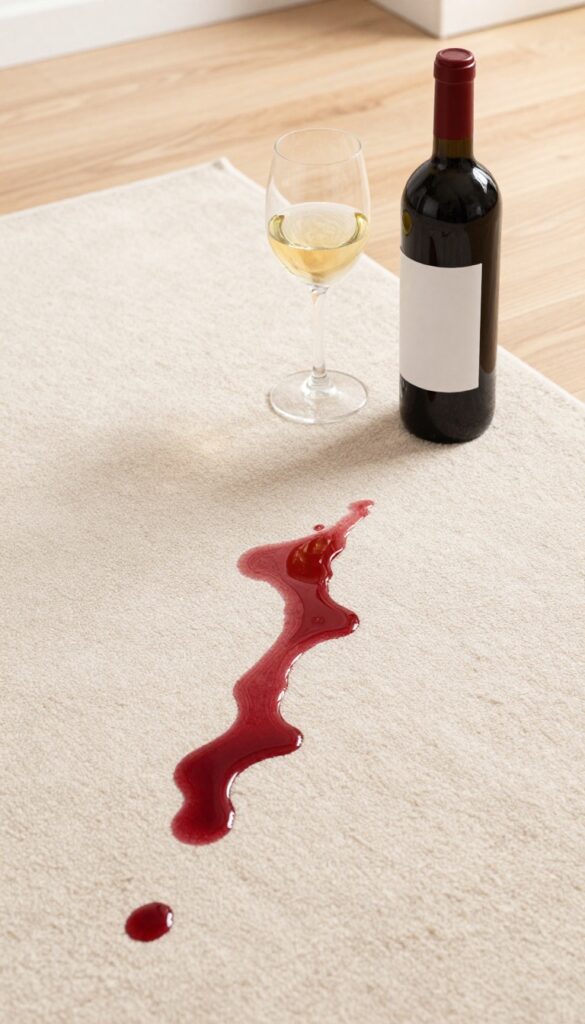
A red wine spill on a light carpet can feel like a disaster, but there's a surprising trick that uses more wine to fix it. White wine and club soda work together to dilute and lift the red pigment before it sets. This method is best for fresh spills—the sooner you act, the better the results.
Pour white wine directly onto the red wine stain to dilute the color. The white wine helps break down the red pigments, making them easier to blot up. Then, immediately pour club soda over the area and blot with a clean white cloth.
Repeat until the stain lifts. This technique works because the carbonation in club soda helps release the stain from carpet fibers, while the white wine neutralizes the red color.
Why White Wine Works
White wine acts as a diluent, reducing the concentration of red wine pigments. It also contains acids that help break down the tannins responsible for the deep color. This prevents the stain from bonding strongly with the carpet fibers.
Blotting Technique
Always blot, never rub. Rubbing pushes the stain deeper into the fibers. Use a clean, dry cloth and press firmly to absorb the liquid.
Work from the outside of the stain inward to avoid spreading it.
For Set-in Stains
If the stain has dried, try a mixture of hydrogen peroxide and dish soap. Test on an inconspicuous area first. Apply the solution, let it sit for 10 minutes, then blot and rinse with water.
23. Pet Feces Stain Remover with Dish Soap and White Vinegar
Pet accidents happen, and when they do, you need a cleaner that tackles both the stain and the odor. This simple combo of dish soap and white vinegar does exactly that. The vinegar neutralizes ammonia and kills bacteria, while the dish soap breaks down the greasy residue left behind.
Start by removing as much solid waste as possible without pressing it deeper into the fibers. Use a paper towel or a plastic bag to scoop it up. Then blot the area with a cloth dampened with a 1: 1 mixture of white vinegar and water.
Let it sit for 5 minutes to disinfect and deodorize. Finally, apply a few drops of dish soap mixed with water, scrub gently with a soft brush, and blot dry. Repeat if needed.
Why This Works
White vinegar is acidic enough to break down uric acid crystals in pet waste, which are the main cause of lingering odors. Dish soap is a surfactant that lifts the stain from carpet fibers. Together, they create a powerful, non-toxic cleaner safe for pets and kids.
Pro Tips For Stubborn Stains
If the stain is old or set in, let the vinegar solution sit for 10–15 minutes before scrubbing. For extra odor control, sprinkle baking soda over the area after cleaning, let it dry, then vacuum. Avoid using steam cleaners immediately after, as heat can set the stain.
24. General Heavy-Duty Carpet Cleaner with Oxygen Bleach (OxiClean)
For those tough, set-in stains that seem to laugh at regular cleaners, oxygen bleach is a game-changer. It works by releasing oxygen bubbles that lift dirt and organic stains from deep within the fibers, leaving your carpet brighter and fresher. This method is safe for most synthetic carpets and can handle multiple stain types at once.
Mix a scoop of oxygen bleach powder with warm water according to the package directions to create a cleaning solution. Apply it generously to the stained area and let it foam and bubble for 10–15 minutes. The bubbles will work to break down the stain.
After the foam settles, blot the area with a clean cloth until the stain transfers away. Rinse with a little water and blot dry. This cleaner is especially effective for coffee, tea, juice, and general grime.
Why Oxygen Bleach Works So Well
Oxygen bleach is a non-chlorine bleach that uses hydrogen peroxide to create an oxidizing reaction. This reaction breaks down the molecular bonds of stains, making them water-soluble and easy to lift. Unlike chlorine bleach, it won't damage carpet dyes or fibers when used correctly.
Best Practices For Application
Always test the solution on a hidden area first to check for colorfastness. Use warm (not hot) water to activate the bleach properly. Avoid scrubbing vigorously, as that can damage the carpet pile.
Instead, let the solution sit and do the work, then blot gently.
When To Use This Method
This heavy-duty cleaner is ideal for high-traffic areas, multiple stains, or when you need a deep refresh without harsh chemicals. It's also great for brightening dull carpets and removing yellowing from age or spills.
25. DIY Carpet Shampoo for Overall Refresh with Borax and Essential Oils
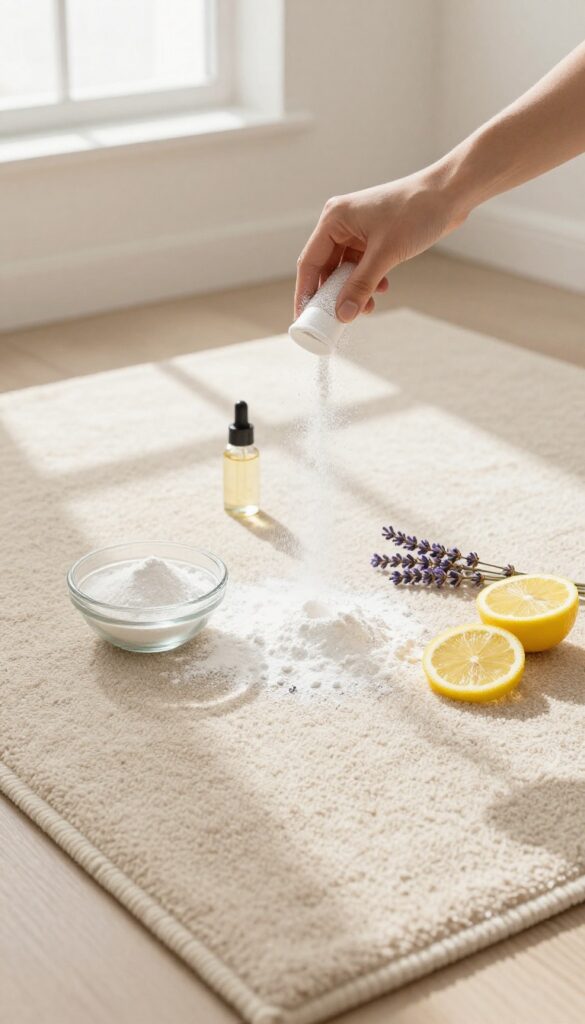
Sometimes your carpet just needs a deep refresh rather than a spot treatment. This DIY shampoo combines the cleaning power of Borax with the deodorizing magic of baking soda and essential oils. It's a gentle but effective way to lift dirt, neutralize odors, and leave your carpet smelling amazing.
This simple powder works like a dry shampoo for your carpet. Borax helps break down grime and fights odors, while baking soda absorbs moisture and freshens. Essential oils add a natural scent without harsh chemicals.
Just mix, sprinkle, let it sit, and vacuum.
What You'll Need
Mix 1 cup Borax, 1 cup baking soda, and 15-20 drops of your favorite essential oil (lavender, lemon, or tea tree work great). Stir well to distribute the oil evenly. Store in an airtight container.
How To Apply
Sprinkle the mixture generously over your carpet, focusing on high-traffic areas. Let it sit for at least 30 minutes—overnight for deeper refresh. Then vacuum thoroughly, making multiple passes to pick up all the powder.
Tips For Best Results
Test on a small hidden area first to ensure no discoloration. For extra freshness, add a few drops of oil to a cotton ball and toss it in your vacuum bag. This method is safe for most synthetic carpets but avoid on wool or silk.
FAQ
What is the best homemade carpet stain remover?
A mix of white vinegar, water, and a drop of dish soap works for most stains. For tougher spots, add baking soda or hydrogen peroxide.
Can I use bleach on carpet stains?
Avoid bleach—it can discolor or damage carpet fibers. Use oxygen bleach or hydrogen peroxide instead for safe brightening.
How do I remove old set-in stains from carpet?
Soak the stain with an enzyme cleaner or oxygen bleach solution, let it dwell for 15-30 minutes, then blot and repeat if needed.
What should I do if a stain won't come out?
Try a different method—some stains respond to acids, others to enzymes. If all else fails, call a professional carpet cleaner.
Is it safe to mix vinegar and baking soda on carpet?
Yes, but use them in sequence—first vinegar, then baking soda. The fizz helps lift dirt, but don't let the mixture sit too long.
Conclusion
Tackling carpet stains doesn't have to be a chore when you have the right solution at hand. These 25 ideas cover everything from red wine to pet accidents, using ingredients you probably already own. Try the method that matches your stain, and you'll likely see a big improvement.
Remember to always test on a hidden area first and blot—never rub—to protect your carpet fibers. With a little patience, your carpet can look fresh and clean again.