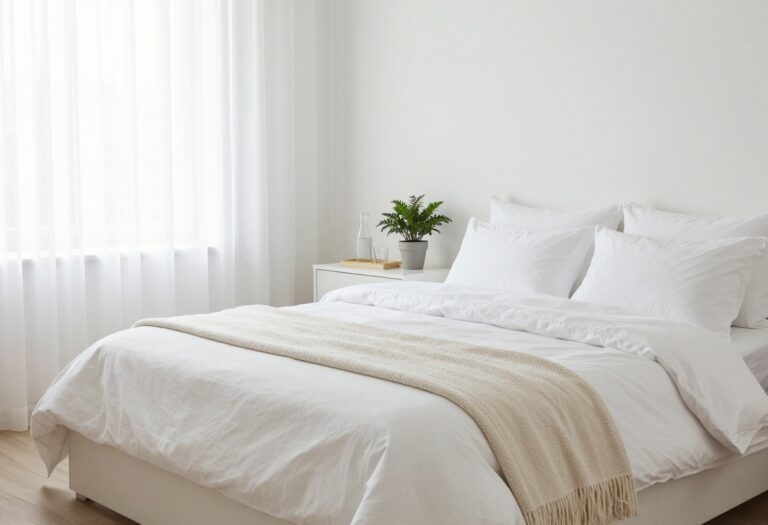
11 Boys Bedroom Ideas That Make a Small Space Work Harder
Small bedrooms often get a bad rap, but with the right approach, they can become the most functional and fun rooms in the house. For boys, a small space doesn't have to mean cramped or cluttered. It just takes a bit of creativity and planning to turn limitations into opportunities.
Think vertical, think multifunctional, and think about how your son actually uses the room. Whether it's for sleeping, playing, or doing homework, every square foot can serve a purpose.
The goal is to create a space that grows with him and adapts to his changing needs. These 11 ideas are designed to help you maximize every inch without sacrificing style or comfort.
1. Loft Beds: The Ultimate Space Multiplier
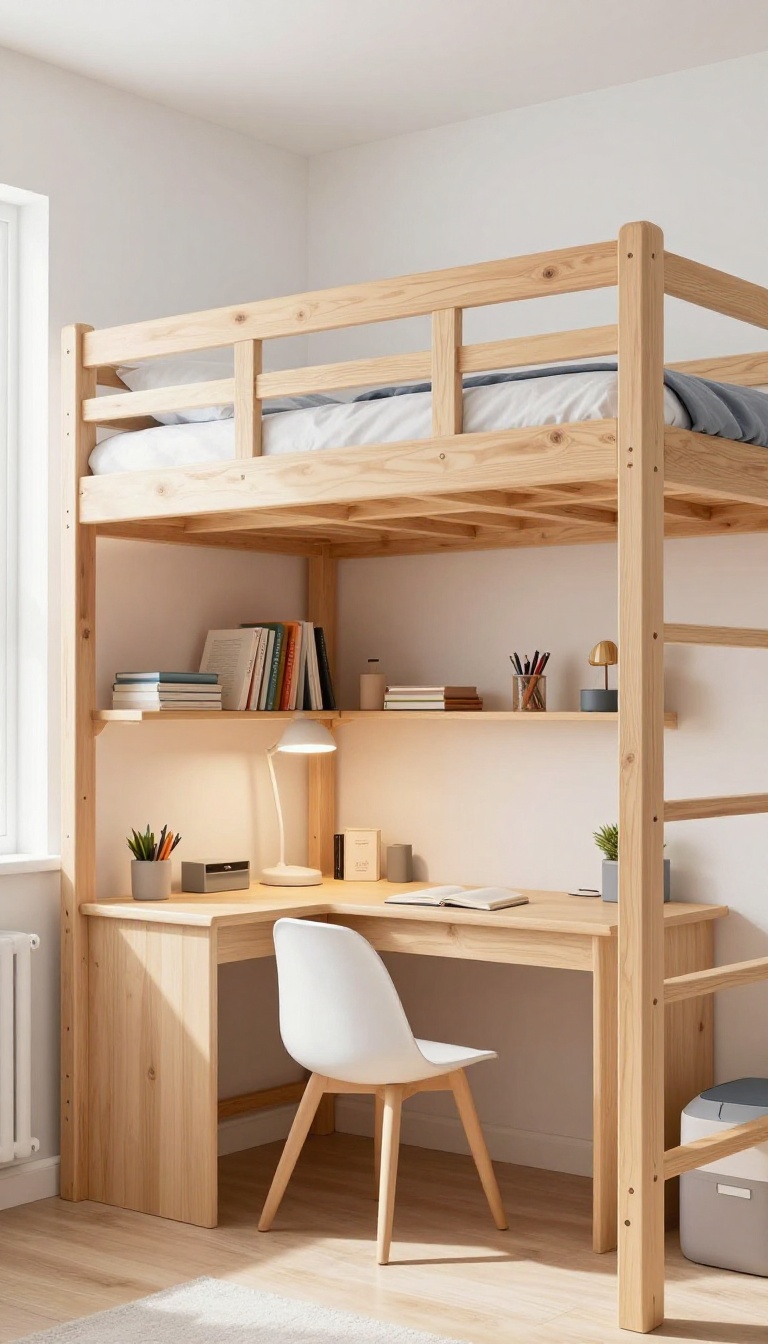
When floor space is scarce, the only way to go is up. Loft beds raise the sleeping area to ceiling height, instantly freeing up valuable square footage below. This single change can transform a cramped bedroom into a multifunctional zone that works as hard as your son does.
Loft beds are a game-changer in small rooms, turning unused vertical space into a functional area. By elevating the bed, you create a blank canvas underneath that can be tailored to your child's needs—whether that's a study nook, a cozy reading corner, or a play zone. The key is to choose a sturdy loft bed with a weight capacity that suits your child's age and activity level, and to measure the room's ceiling height to ensure there's enough headroom both above and below.
Under-bed Study Zone
A loft bed with a built-in desk is a classic choice for school-age boys. The space below becomes a focused homework station, complete with a chair, task lighting, and shelves for books and supplies. This setup keeps the floor clear and separates sleep from study, which can help with concentration and better sleep habits.
Play And Hangout Area
For younger kids, the space under a loft bed can be a mini play fort or a hangout spot. Add a soft rug, floor cushions, and a few bins for toys to create an inviting area that encourages imaginative play. This not only maximizes space but also gives your son his own little retreat within the room.
Storage And Organization
If your son has more stuff than space, use the under-bed area for storage. Install shelves, cubbies, or a low dresser to keep clothes, toys, and games organized and within reach. You can even hang curtains to hide the clutter and create a neat, streamlined look.
2. Wall-Mounted Shelves: Go Vertical
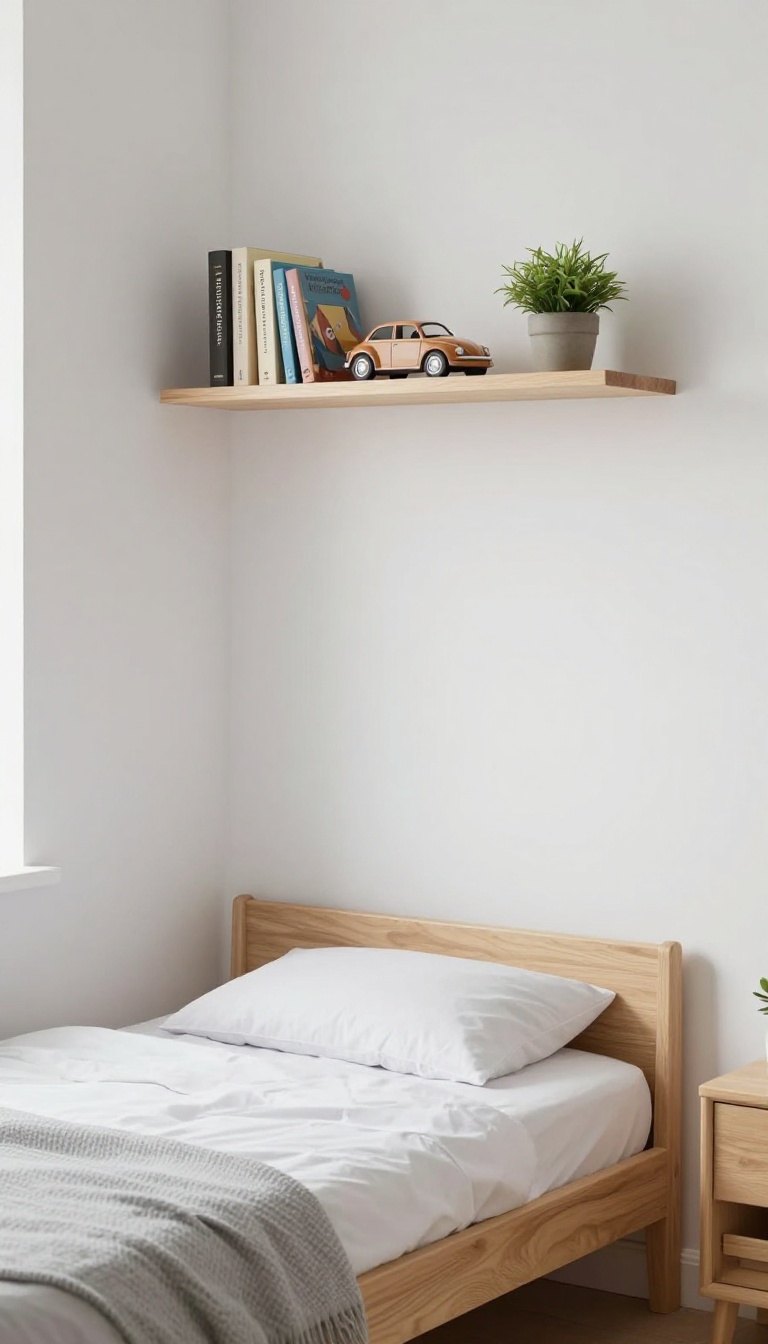
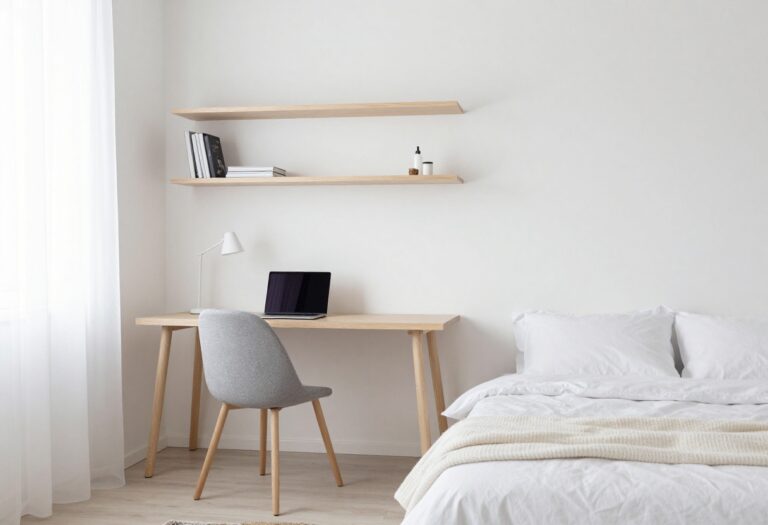
When the floor is already doing double duty, the walls are your best friend. Wall-mounted shelves turn unused vertical space into prime real estate for books, toys, and display pieces. They keep the floor clear, which makes the room feel bigger and easier to clean.
Floating shelves are a simple, affordable way to add storage without taking up a single square foot of floor space. They also add visual interest to plain walls, making the room feel more designed and less cluttered. Plus, you can adjust the height as your son grows, so the shelves work for years.
Mix Open And Closed Storage
Combine floating shelves with a few closed bins or baskets to hide smaller items. Open shelves show off favorite toys and books, while closed storage keeps the rest out of sight. This balance keeps the room looking tidy without making it feel sterile.
Use Corner Shelves For Awkward Spots
Corners often go unused, but corner shelves are perfect for tucking away extra books or displaying a small LEGO creation. They make use of space that would otherwise be wasted, and they add a custom touch to the room.
Create A Display Wall
Dedicate one wall to a grid of shelves at different heights. Use them to showcase trophies, art projects, or a growing collection of action figures. This turns the shelves into a personal gallery that your son will love showing off.
3. Built-In Storage Under the Bed
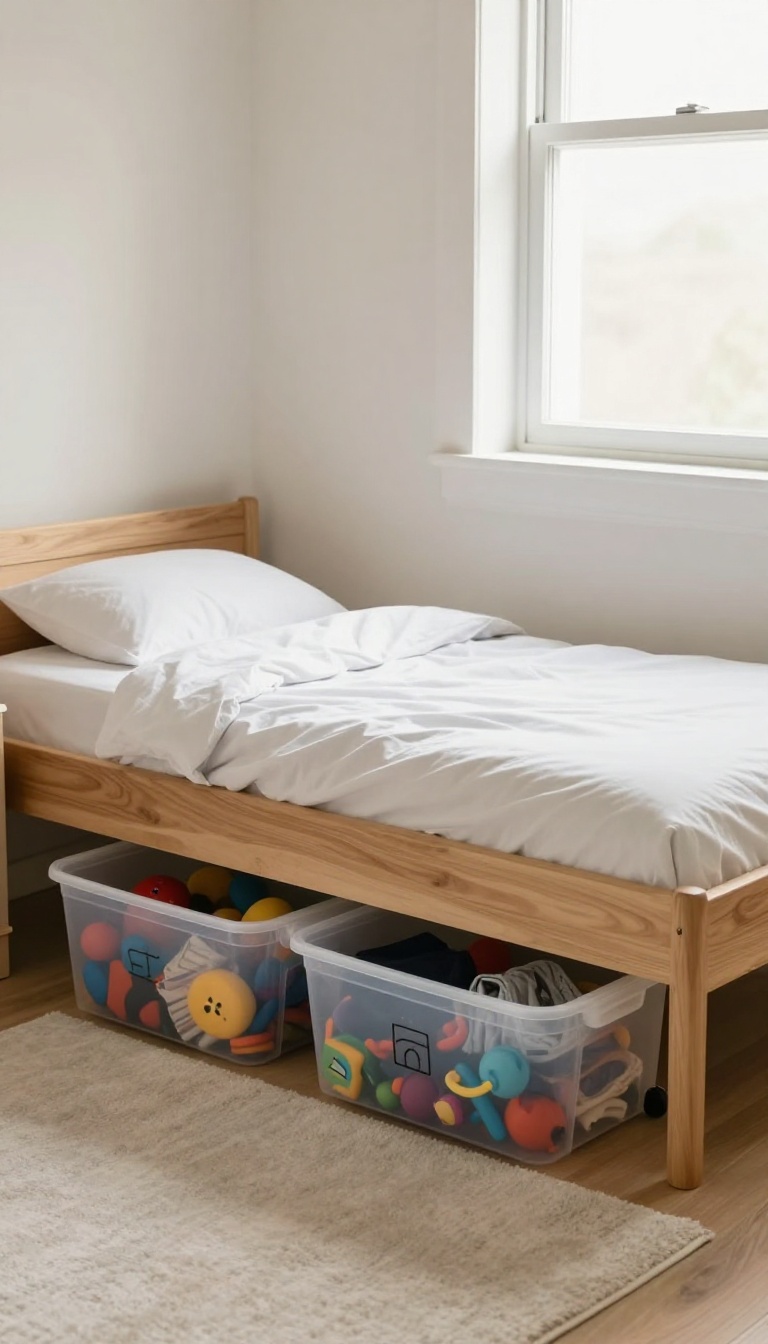
Under-bed space is prime real estate that often goes to waste. Instead of letting dust bunnies take over, turn it into a smart storage zone. With pull-out drawers or rolling bins, you can stash toys, clothes, or extra bedding without cluttering the room.
Built-in storage under the bed is a game-changer for small bedrooms. It keeps the floor clear and makes tidying up a breeze. Plus, kids love the novelty of sliding drawers in and out—it makes clean-up feel like a game.
Choose The Right Drawers
Look for low-profile drawers on wheels that fit snugly under the bed. Measure the clearance first to avoid buying something that doesn't slide in smoothly. Opt for sturdy plastic or wood bins with handles for easy access.
Sort And Label
Use clear bins or add labels so your son knows exactly where everything goes. Group items by category—like LEGOs, action figures, or seasonal clothes. This makes it easy for him to find what he needs and put things back.
Make It Easy To Slide
Attach felt pads or casters to the bottom of the bins to protect the floor and ensure they glide effortlessly. A simple pull handle or rope loop can also make it easier for little hands to grab and pull.
Use It For Extra Bedding
If toys and clothes are already covered, use under-bed storage for spare sheets, blankets, or pillows. This frees up closet space and keeps everything within reach when you need to change the bed.
4. Fold-Down Desks: Homework Without the Bulk
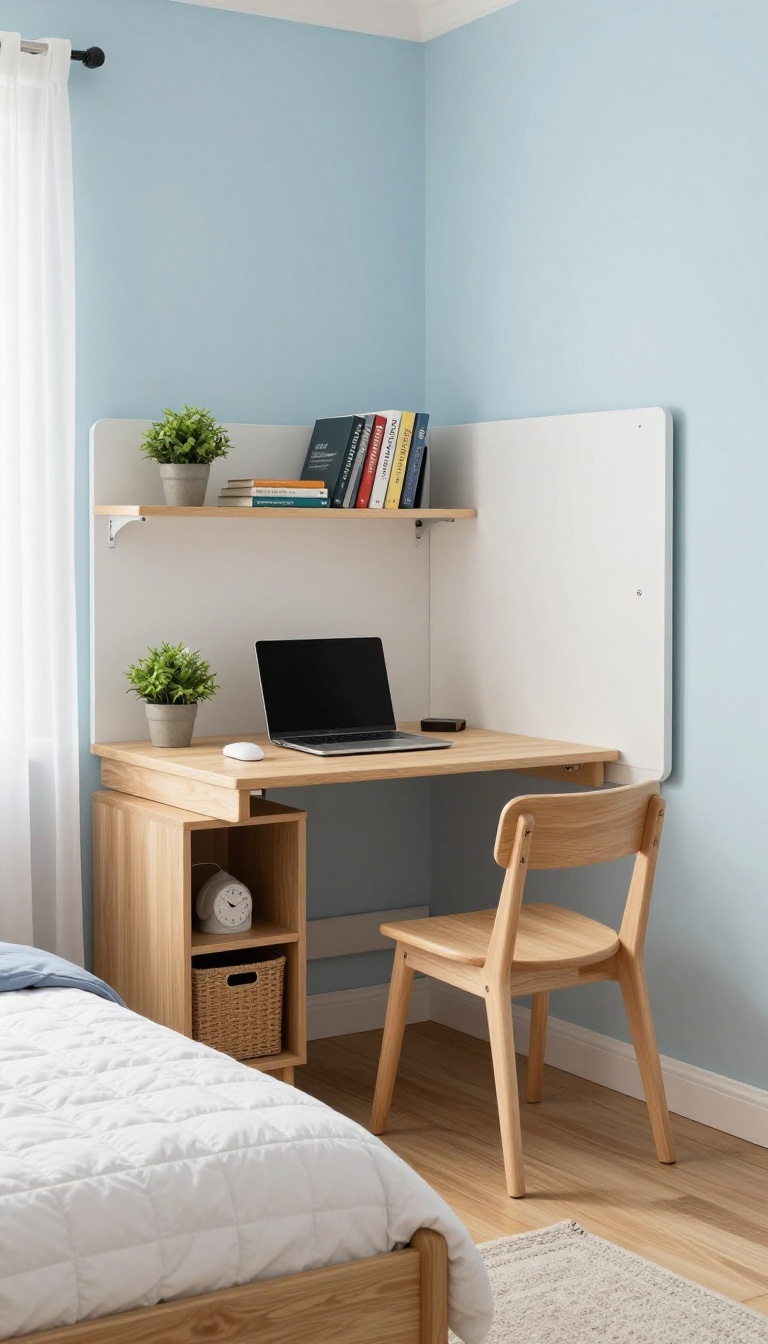
Homework and small bedrooms don't always mix well, especially when a full desk eats up half the room. A fold-down desk solves that by giving your son a dedicated study spot that tucks away when he's done. It's a simple swap that frees up floor space for play, storage, or just moving around.
A fold-down desk mounts to the wall and folds flat when not in use, so it takes up zero floor space. You can install one above a low shelf or cabinet to create a compact workstation that doesn't dominate the room. For boys who need a quiet place to focus, this setup keeps the room feeling open while still offering a spot to spread out books and supplies.
Choose The Right Size And Height
Measure the wall space you have and pick a desk that fits comfortably without blocking doors or windows. Mount it at a height that works for your son now, but consider an adjustable option if he's still growing. A desk that's too high or too low will make homework uncomfortable, so take the time to get it right.
Add Storage That Works With The Fold-down Design
Pair the desk with wall-mounted shelves or a small caddy to keep pencils, paper, and other supplies within reach. When the desk is folded down, you can leave a few items on top, but keep it clutter-free to make folding easy. A magnetic board or cork strip above the desk can hold notes and reminders without taking up desk space.
Make It A Spot He Actually Wants To Use
Let your son personalize the area with a fun chair, a bright lamp, or a small plant. A dedicated homework corner that feels like his own can make study time less of a battle. Just make sure the chair can slide under the folded desk to keep the floor clear when it's not in use.
5. Multi-Functional Furniture: One Piece, Many Uses
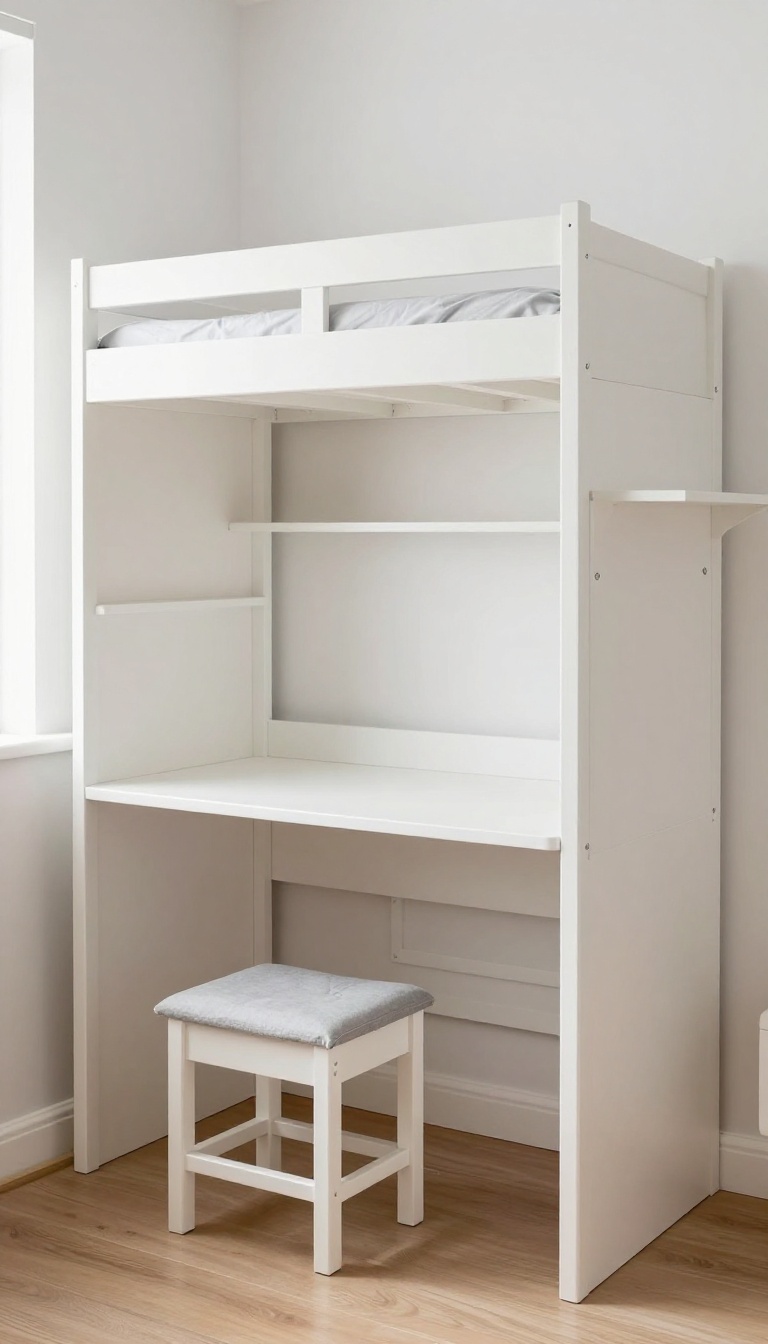
When every square foot counts, furniture that does more than one job is a game changer. Instead of filling the room with separate pieces for each activity, look for items that combine functions. A single piece can save space, reduce clutter, and keep the room feeling open.
Start with the bed—the biggest piece in the room. A loft bed with a desk or play area underneath is a classic space-saver, but even a standard bed can work harder with built-in drawers. If a loft bed isn't your style, consider a bed with a pull-out trundle for sleepovers or storage.
Beyond the bed, think about seating that hides toys, a desk that folds away, or a bookshelf that doubles as a room divider. The goal is to make every piece earn its keep.
Beds With Built-in Storage
Beds with drawers underneath are a no-brainer for small rooms. They give you a place for clothes, toys, or extra bedding without needing a separate dresser. For younger boys, drawers with easy-glide wheels are perfect for quick cleanup.
If you're handy, you can even build a platform bed with custom-sized drawers to fit your space exactly.
Desks That Disappear
A fold-down desk mounted on the wall is a brilliant way to create a homework station without sacrificing floor space. When it's not in use, it folds flat against the wall, leaving the room open for play. Some models even come with built-in shelves or a whiteboard surface.
Pair it with a stool that tucks underneath, and you've got a full workspace that takes up almost no room.
Seating That Stores
Storage ottomans, benches, and window seats with lift-up lids are perfect for stashing sports gear, extra blankets, or books. They give your son a comfy spot to sit or lounge while keeping clutter out of sight. Choose a sturdy one with a washable cover, and it'll double as a toy box, a reading nook, or an extra seat when friends come over.
6. Corner Shelving Units: Use Every Nook
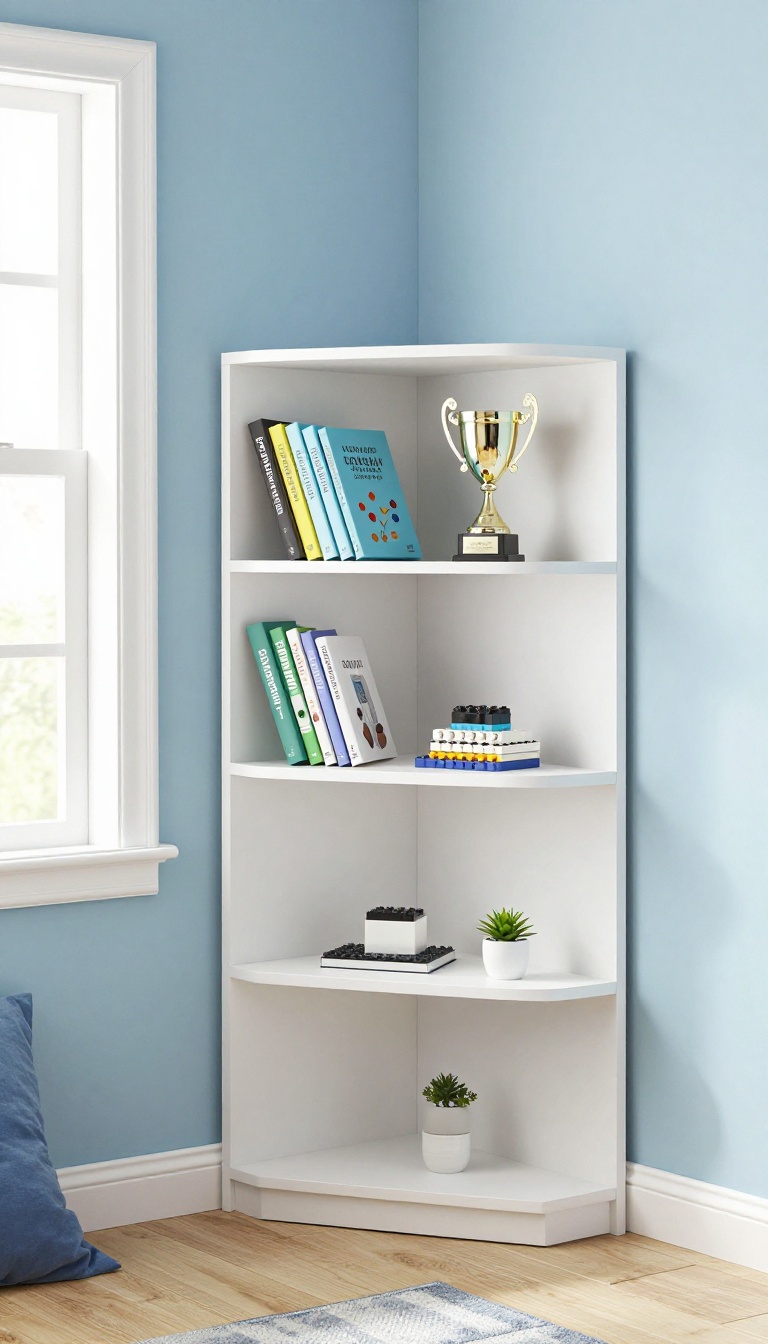
Corners often get overlooked, but they're prime real estate in a small bedroom. A corner shelf unit turns dead space into a functional display area without eating into the floor. It's perfect for showing off trophies, books, or that ever-growing LEGO collection.
Installing corner shelves is a straightforward DIY project that can be done in an afternoon. They're available in various styles, from floating shelves to ladder units, so you can match the room's decor. Plus, they keep items off the floor, making the room feel more open and organized.
Choose The Right Style
Think about what your son wants to display. Floating shelves give a sleek, modern look, while a ladder shelf offers more storage and a casual vibe. Corner bookshelves are great for readers, and cube units can hold bins for smaller toys.
Pick a style that fits both the room and his personality.
Installation Tips
Make sure to use a stud finder to anchor the shelves securely, especially if they'll hold heavier items. If you're renting, consider freestanding corner units that don't require drilling. Always follow the manufacturer's instructions and use the right hardware for your wall type.
Styling The Shelves
Group items by theme or color for a neat look. Mix books, trophies, and a few personal touches like a small plant or framed photo. Leave some breathing room between items so it doesn't look cluttered.
Rotate displays seasonally or when he gets new favorites.
7. Pegboard Walls: Organize and Display
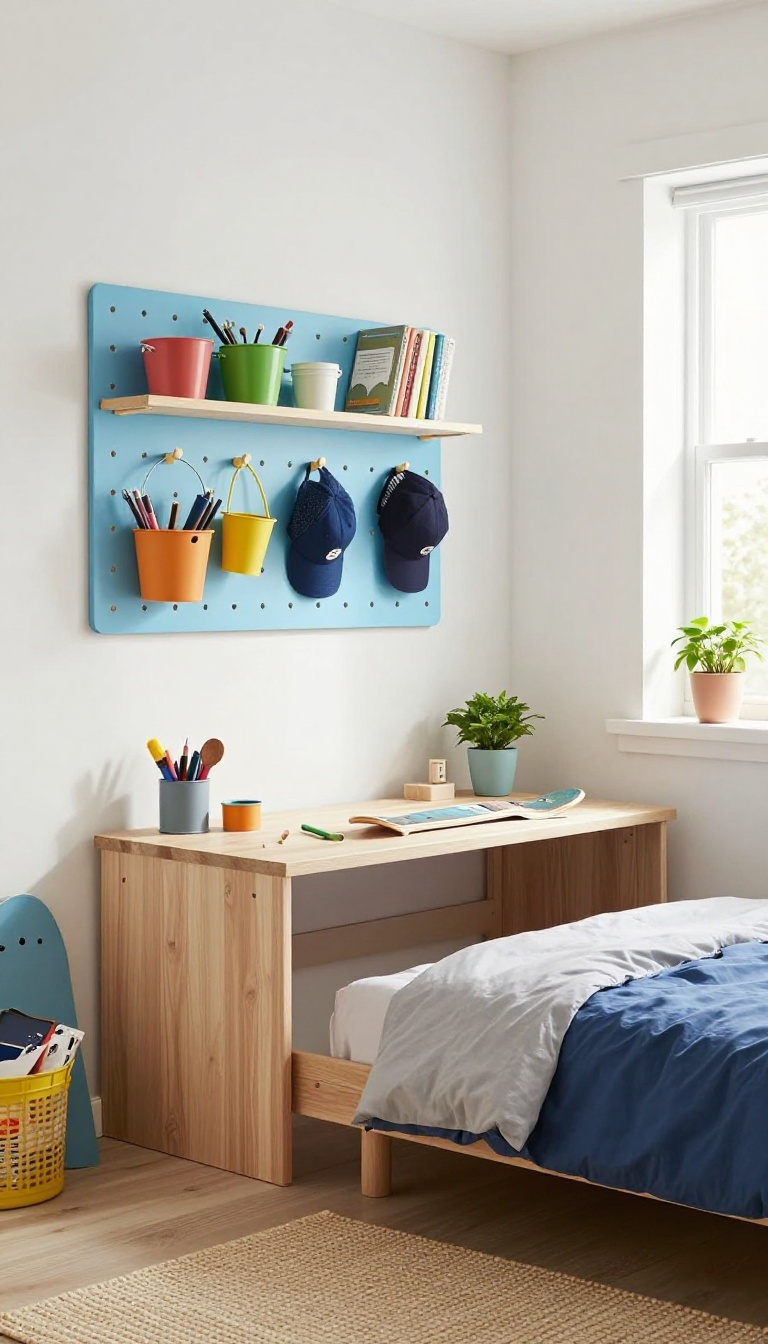
Kids accumulate stuff fast—sports gear, art supplies, trading cards, and all those little things that end up on the floor. A pegboard wall gives everything a home while showing off his favorite items. It’s like a customizable bulletin board that can change as his interests shift.
Pegboards are a classic workshop staple, but they work wonders in a kid’s bedroom. Instead of a static shelf or bin, a pegboard offers endless hooks, baskets, and shelves that you can rearrange in minutes. Plus, it turns the wall into a functional display area, so his room feels organized and personal.
What To Hang
Start by thinking about what your son actually uses daily. Sports equipment like baseball caps, lacrosse sticks, or skateboards hang easily on hooks. Art supplies—paintbrushes, scissors, and rolls of tape—can go in small buckets or jars attached to the board.
Even headphones, backpacks, or a favorite jacket can find a spot. The key is to keep frequently used items within reach and off the floor.
Installation Tips
Mounting a pegboard is straightforward. Use furring strips or standoff screws to create a gap between the board and the wall, which gives hooks room to fit. Paint the pegboard to match the room’s color scheme or let it stand out as a bold accent.
For a smaller footprint, consider a half-wall or a corner section. Make sure it’s securely anchored, especially if you’re hanging heavier items.
Making It Personal
Let your son customize his pegboard with painted edges, washi tape, or even a chalkboard section. Use it to display his latest artwork, a favorite jersey, or a collection of action figures. As he grows, swap out the hooks and baskets to fit new hobbies—that’s the real beauty of a pegboard.
It’s a living wall that adapts with him.
8. Ceiling-Mounted Storage: Think Up
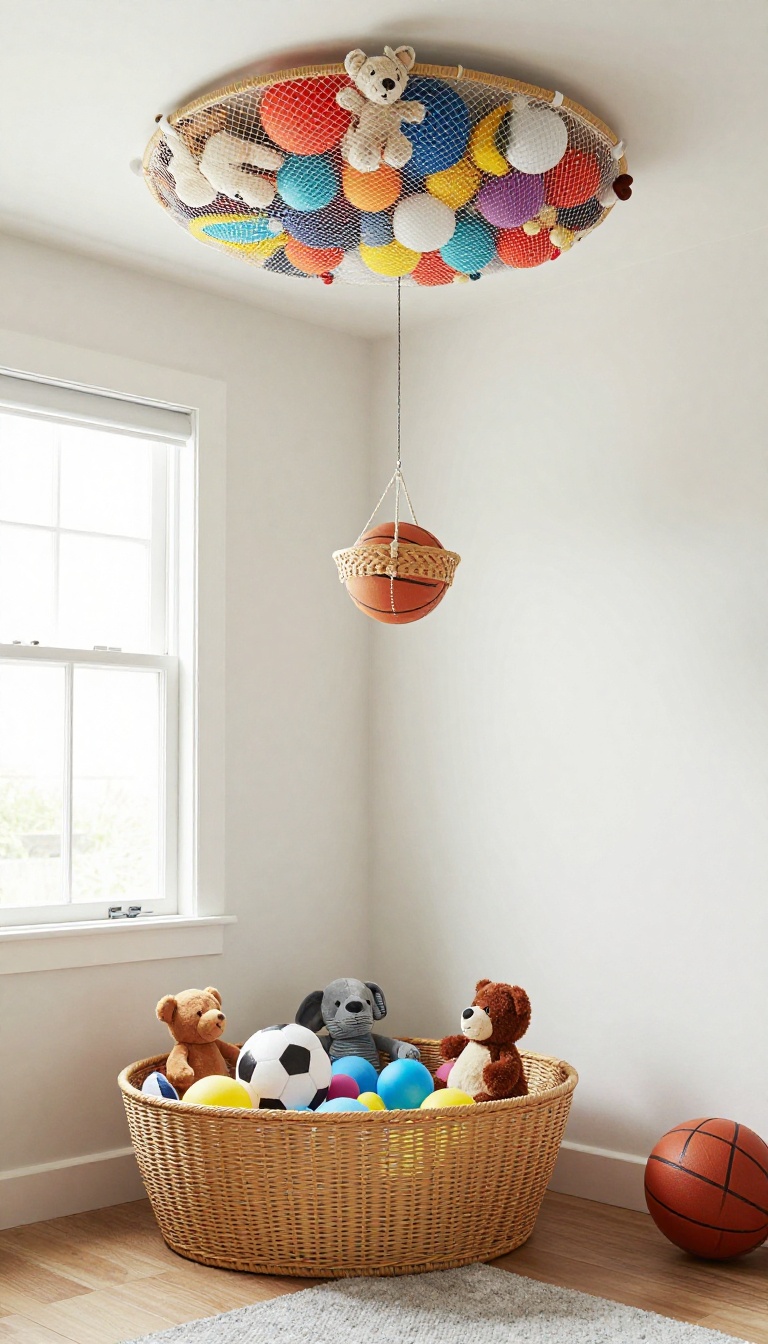
When floor space is tight, the ceiling is often the last place you think to look. But it's actually a goldmine for storage, especially in a boy's room. Hanging baskets, nets, or shelves can hold everything from stuffed animals to sports balls, freeing up valuable floor area for play and movement.
Plus, it adds a fun, adventurous vibe that kids love.
Ceiling-mounted storage is a clever way to use vertical space that's usually ignored. It keeps toys off the floor and within easy reach, making cleanup a breeze. And it can look pretty cool too—like a jungle gym for toys.
Here's how to make it work.
Pick The Right Baskets Or Nets
Not all hanging storage is created equal. For lightweight items like stuffed animals or action figures, mesh nets or fabric baskets work great. For balls or heavier toys, go with sturdy metal or woven baskets that can handle the weight.
Just make sure whatever you choose has a secure attachment point and can be easily lowered for access.
Install Safely And Securely
Safety comes first. Use ceiling hooks rated for the weight you plan to hang, and always screw into a ceiling joist or use a heavy-duty anchor. If you're renting or don't want to drill holes, consider using a tension rod or a freestanding frame that reaches the ceiling.
Double-check that the installation is stable before loading it up.
Make It A Fun Feature
Turn storage into part of the room's decor. Hang a net in a corner and call it the 'ball zone' or suspend a basket train along the ceiling for a playful look. You can even paint the baskets or add labels.
This way, it feels like a design choice, not just a storage hack.
9. Sliding Barn Doors: Save Swing Space
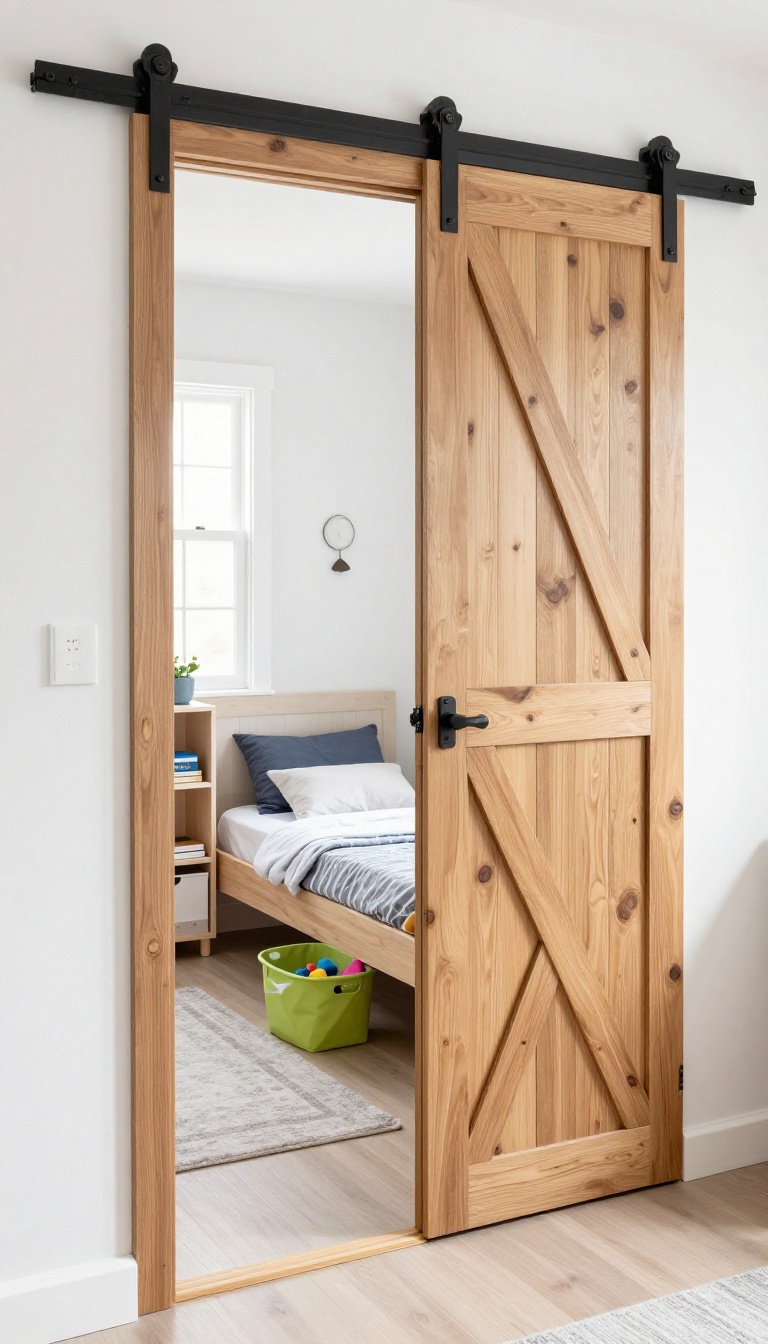
A standard hinged door can eat up valuable floor space every time it opens, especially in a compact bedroom. Swapping it for a sliding barn door frees that swing zone for furniture, play, or just easier movement. It's a simple change that makes the room feel bigger instantly.
Barn doors slide along a track mounted above the doorway, so they don't need clearance for a swing. That means you can push a bed, dresser, or bookshelf right up against the wall where the door used to open. For a small boy's room, that extra floor space is gold.
How It Frees Up Floor Space
With a hinged door, you need about 3 to 4 feet of clear floor area for it to swing open. A sliding door tucks neatly against the wall when open, leaving that entire footprint usable. You can place a toy bin, a low shelf, or even a small desk in that spot without blocking the doorway.
Choosing The Right Track And Mount
Pick a track that's long enough for the door to slide fully clear of the opening. Mount it securely to the wall studs above the door frame. If the wall is too narrow, consider a bypass setup where two doors slide past each other.
For a cleaner look, choose a track that matches the room's hardware and a door style that fits the room's vibe.
Safety And Practical Tips
Barn doors don't seal as tightly as traditional doors, so they're not ideal for rooms that need soundproofing or privacy. Make sure the door has a soft-close mechanism to prevent slamming. Also, keep the track clear of dust and check the rollers periodically.
For a boy's room, a chalkboard or whiteboard door can double as a fun surface.
10. Bright, Light Colors: Make It Feel Bigger
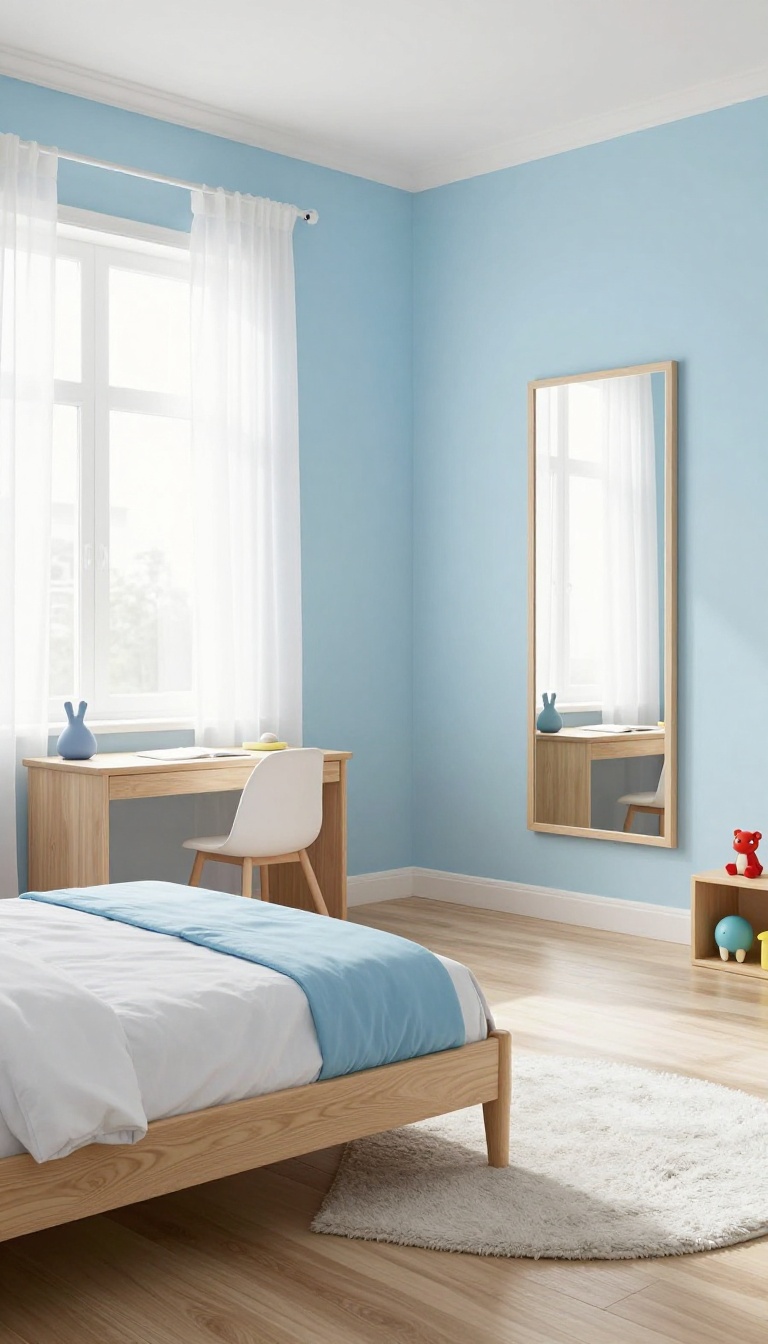
Color has a huge impact on how a room feels. Dark shades can make a small space feel even more cramped, while light and airy tones open things up. You don't have to go all-white—just pick colors that reflect light instead of absorbing it.
Start with a light base. Soft whites, pale grays, or light blues on the walls make the room feel larger and more open. Keep the ceiling white or off-white to give the illusion of height.
Then, add pops of color through bedding, rugs, or wall art so it doesn't feel sterile.
Let The Light In
Natural light is your best friend. Keep windows uncovered or use sheer curtains that let sunlight pour in. If privacy is a concern, try light-filtering shades.
Also, position the bed or desk near the window to take advantage of the brightness.
Mirror Magic
Mirrors are a classic trick for small rooms. Place a large mirror on one wall to reflect light and create the illusion of depth. You can also use mirrored closet doors or a mirrored backsplash on a desk area to double the visual space.
Light Furniture And Accents
Choose furniture in light wood tones or white finishes. Dark furniture can feel heavy and dominate a small room. Light-colored fabrics for curtains, bedding, and rugs also help keep the space feeling airy.
Add a few colorful accessories for personality without overwhelming the room.
11. Zone the Room: Define Sleep, Play, and Study Areas
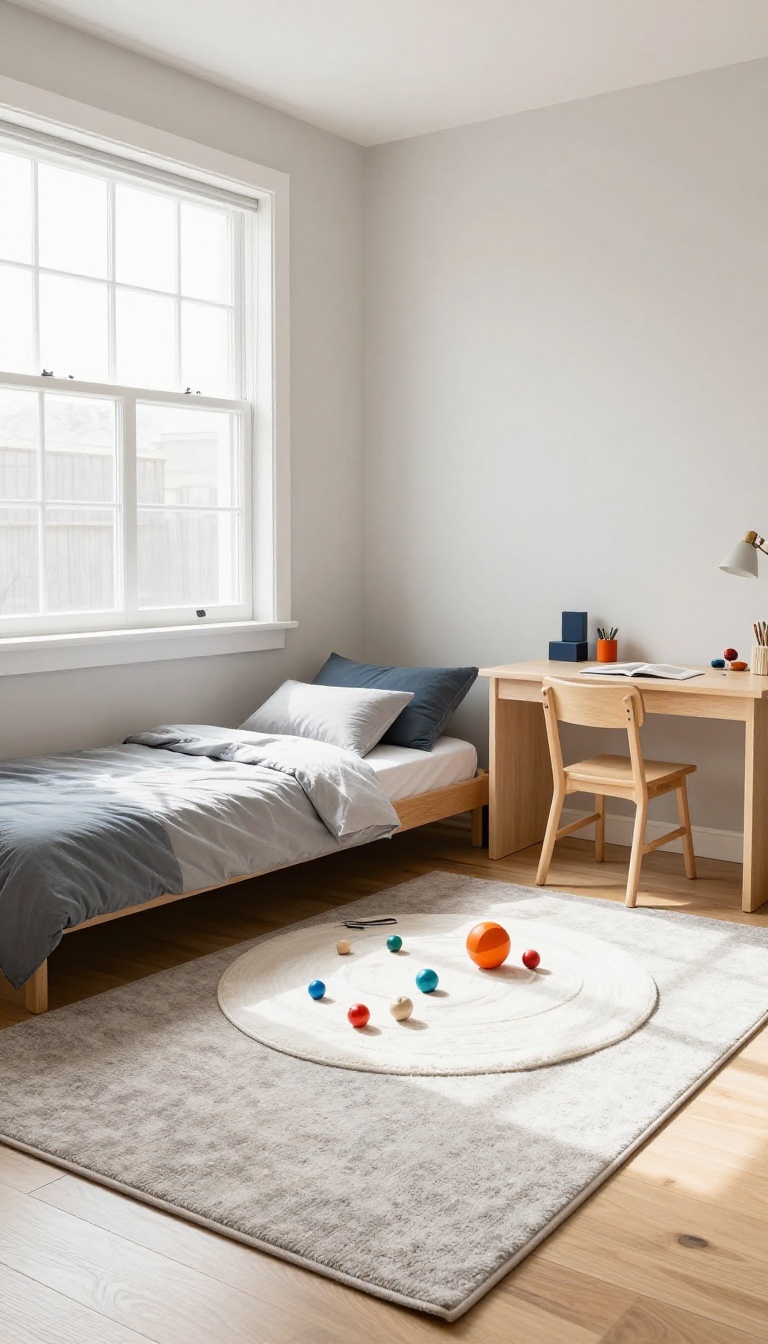
A small room can feel chaotic when everything blends together. Zoning solves that by giving each activity its own spot. Even in a tight space, you can carve out clear areas for sleeping, playing, and studying.
It's about making the room feel bigger and more organized without adding square footage.
Start by thinking about how your son uses the room. Does he do homework at a desk or on the bed? Does he play on the floor or at a table?
Once you know the main activities, you can create zones that work for his routine. The key is to use visual and physical cues to separate the areas, so his brain knows what to do where.
Use Rugs To Anchor Each Zone
A rug is the easiest way to define a zone. Place a soft rug under the bed to create a cozy sleep area. Use a different rug under a desk or a play mat in the open floor space.
The change in texture and color signals a shift in purpose. In a small room, even a simple runner can help separate the bed from the play area.
Lighting Sets The Mood For Each Zone
Different tasks need different lighting. A bright overhead light works for play, but for reading or homework, a desk lamp is better. For winding down at night, a dimmer bedside lamp or string lights can make the sleep zone feel calm.
You can also use a small clip-on light for a reading nook. Lighting helps each zone feel intentional and functional.
Arrange Furniture To Create Natural Boundaries
Furniture placement can physically separate zones without walls. Position the bed against one wall and the desk against another. Use a bookshelf as a room divider if space allows.
Even angling a chair can create a distinct corner. The goal is to make each zone feel like its own little room within the room.
Keep Zones Flexible For Growing Needs
Boys' interests change quickly, so zones should be easy to adapt. Use lightweight furniture that can be moved, and avoid nailing anything down. A play zone can become a hobby corner later.
A study area might turn into a gaming spot. Keep the layout simple so you can rearrange as your son grows.
FAQ
What is the best bed for a small boys' bedroom?
A loft bed or a bunk bed with storage underneath is ideal because it frees up floor space for other activities. If that's not possible, a bed with built-in drawers works well.
How can I maximize storage in a small boys' room?
Use vertical space with tall shelving units, wall-mounted shelves, and pegboards. Also, consider under-bed storage and multifunctional furniture like storage ottomans.
What colors make a small bedroom look bigger?
Light, neutral colors like white, soft gray, or pale blue can make a room feel more open. Adding mirrors and maximizing natural light also helps.
How do I create separate areas in a small bedroom?
Use rugs to define zones, position furniture to create natural divisions, and use different lighting for each area. Even in a small space, you can visually separate sleep, play, and study areas.
Are there any space-saving furniture ideas for small boys' rooms?
Yes, consider fold-down desks, wall-mounted shelves, loft beds, and furniture with built-in storage. These pieces serve multiple purposes and save valuable floor space.
Conclusion
Making a small boys' bedroom work harder is all about smart choices. By thinking vertically, choosing multifunctional furniture, and creating distinct zones, you can turn a cramped room into a space that feels bigger and more organized.
Remember, the goal is to create a room that grows with your child and adapts to his changing interests. With these ideas, you can make the most of every square foot and give him a space he'll love.