9 Living Room Bay Window Ideas for a Cozy, Elevated Look
A bay window gives your living room something most spaces never get: a built-in pocket of light, depth, and quiet. Use it well and the room instantly feels bigger, warmer, and more intentional. The tricky part is that curved alcove.
Furniture fights it, curtains sag around it, and a bare sill just collects dust. But the right setup turns that awkward nook into the best seat in the house.
These nine ideas range from quick weekend swaps to weekend projects, and every one works with the architecture instead of against it. Pick the version that fits your space, your budget, and how you actually live.
1. Build a Window Seat with Hidden Storage
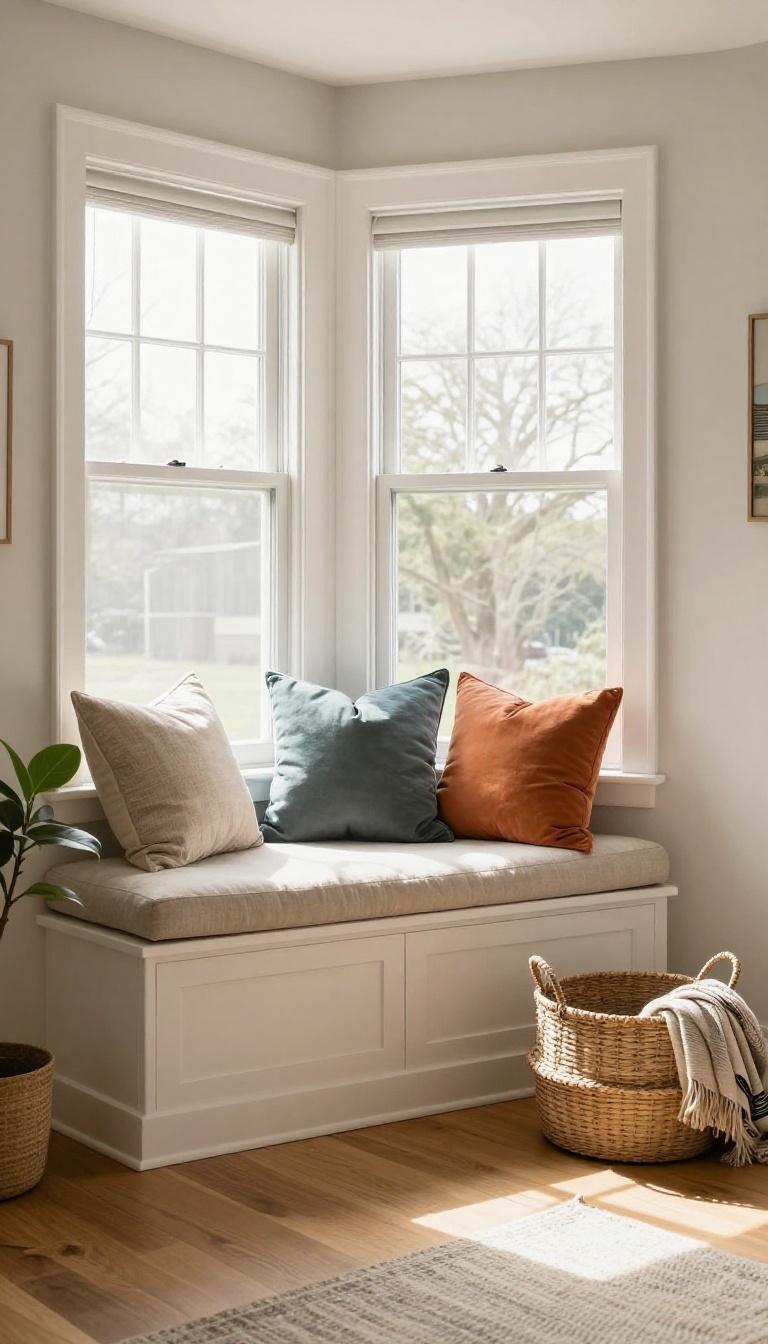
A built-in window seat turns that awkward bay into the most useful spot in the room. It gives you a place to sit, read, or watch the street, and it hides a surprising amount of stuff underneath. The best part?
You don't need a custom carpenter to pull it off.
Start by measuring the width and depth of your bay. You want a bench that fits snugly but leaves a little breathing room for curtains or trim. Most window seats sit 16 to 20 inches high, which is comfortable for adults and kids alike.
If your bay is deep enough, go for a depth of 20 to 24 inches so you can really stretch out. For the storage, you have two main options: a flip-up lid or drawers. A flip-up lid is simpler and gives you one big compartment for bulky items like blankets and pillows.
Drawers are easier to access but need more clearance in front. If you have the space, a combination—drawers on the sides, a lift-up top in the middle—works great. You can build the base from stock cabinets, a repurposed dresser, or plywood boxes.
Paint or stain it to match your trim, then add a cushion. A foam cushion wrapped in indoor-outdoor fabric holds up well and wipes clean. Toss on a few throw pillows that echo your room's colors, and you're done.
Choosing The Right Height And Depth
Standard seat height is 16 to 20 inches from the floor to the top of the cushion. That keeps your feet flat and your back supported. For depth, aim for at least 20 inches so it feels like a real seat, not a ledge.
If your bay is shallow, a 16-inch depth can work for perching, but it won't be lounge-worthy.
Storage That Actually Works
Lift-up lids are great for things you don't need daily—extra bedding, seasonal decor, board games. Drawers are better for everyday items like toys or magazines. Whatever you choose, add soft-close hinges or glides so they don't slam.
And line the inside with cedar or a moisture absorber if your window gets condensation.
Cushions And Comfort
A single long cushion looks clean and is easy to flip. Measure your bench and order foam cut to size—firm for sitting, medium for lounging. Wrap it in a removable cover you can wash.
For a cozier feel, add a few lumbar pillows and a throw. Just don't overcrowd it; you still want to see the window.
2. Create a Curved Reading Nook
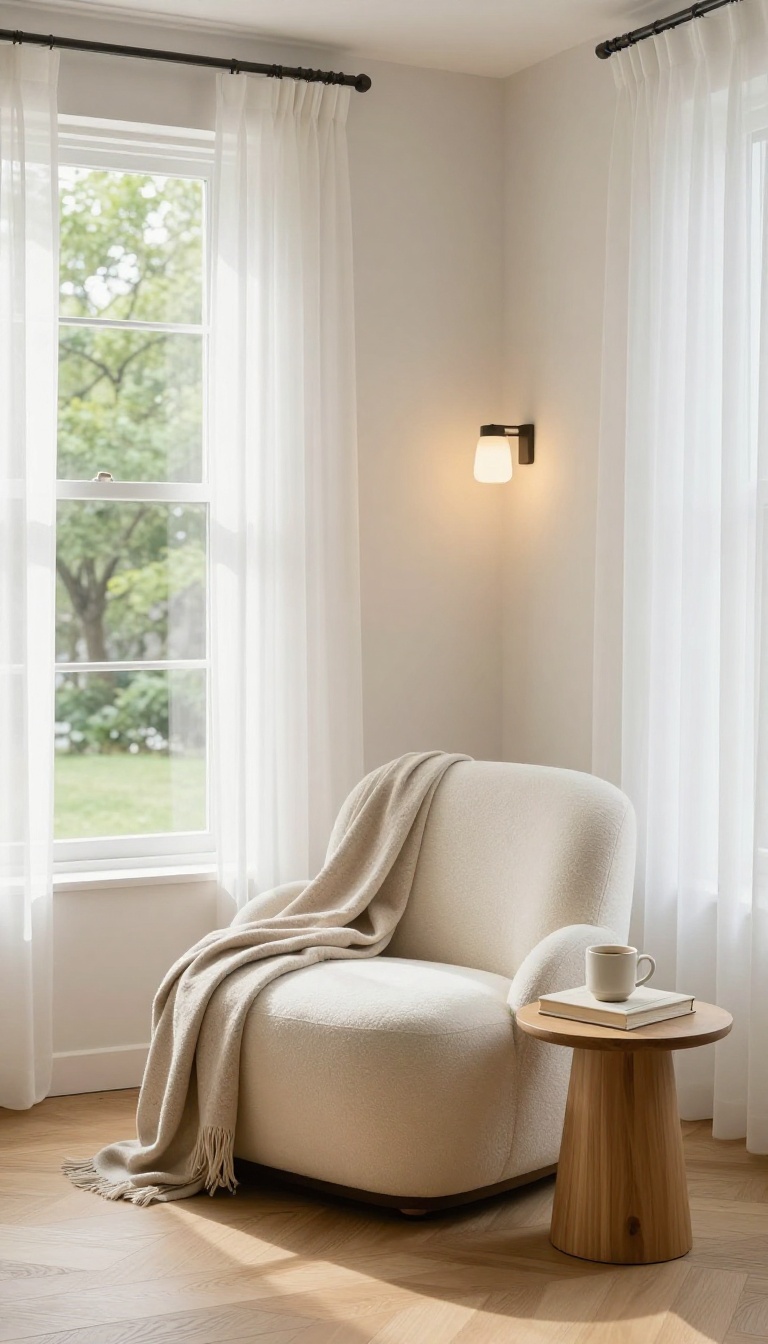
A bay window already curves around you, so why fight it with straight-backed furniture? Lean into that shape and you get a reading corner that feels custom-built, even if you never picked up a hammer. The curve does the cozy work for you, wrapping the space around a single chair like a gentle hug.
The trick is to place one comfortable chair right in the belly of the bay, then let the curve guide everything else. A small round side table tucks naturally into the angle without blocking the view. Add a wall-mounted light so you can read at night without a floor lamp eating up precious floor space.
This setup works because it respects the architecture. You're not trying to square off a round space or shove a sofa into a spot that was never meant for one. Instead, you're creating a dedicated pocket for one person to sink into, which makes the whole living room feel more intentional.
Best of all, it's renter-friendly. No built-ins, no major construction, just a few smart pieces that can move with you. The curve stays the star, and you get a reading spot that feels like it was always meant to be there.
Pick A Chair That Hugs Back
A rounded swivel chair or a barrel chair mirrors the bay's curve and keeps the space feeling open. Avoid anything with a high, straight back, which will look boxy against the window. If you want to splurge, a wingback with a slight recline works too, as long as it doesn't crowd the glass.
Tuck In A Tiny Table
You need a spot for coffee, a book, or your phone, but a full-size side table will feel bulky. Look for a round accent table around 18 to 20 inches wide, or even a C-table that slides over the chair's arm. A small stool can double as a table and a footrest when you want to stretch out.
Light It Without Clutter
A wall-mounted sconce or a plug-in swing-arm lamp keeps the floor clear and puts light exactly where you need it. Choose a warm bulb around 2700K for a cozy glow. If you can't hardwire anything, a rechargeable wall light or a slim floor lamp tucked behind the chair works just as well.
3. Layer Roman Shades for Soft Light
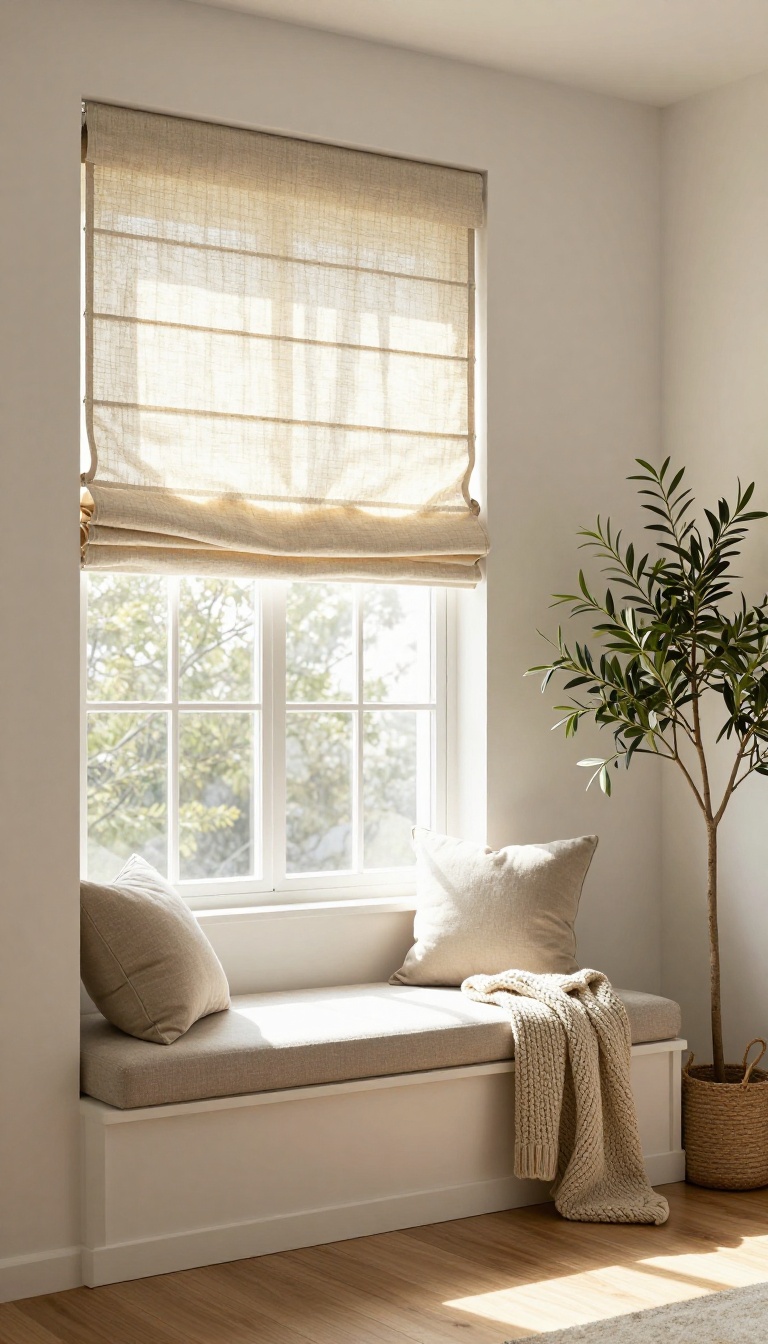
Roman shades bring a tailored softness to a bay window that curtains and blinds can't match. They fold up neatly, filter harsh sun into a warm glow, and add a layer of texture that makes the whole alcove feel intentional. The best part?
You can install them on each window panel or run one wide shade across the entire bay for a seamless look. Unlike heavy drapes that swallow the space, Roman shades sit close to the glass and let you control light without blocking the view. They're a practical upgrade that instantly makes the room feel cozier and more polished.
Roman shades are the quiet workhorse of bay window treatments. They stack tightly when raised, so you keep the view and the light, and they drop down smoothly when you want privacy or a softer mood. And because they're fabric, they absorb some of that echo you get in a hard-surfaced alcove, which makes the whole room feel calmer.
You can go with a flat-fold style for a clean, modern look, or a soft-fold (also called relaxed Roman) for something a little more romantic. Both work beautifully in a bay. The key is to choose a fabric with some texture or pattern so it doesn't disappear against the wall.
Pick A Fabric That Does The Work
Light filtering is the sweet spot for living rooms. It blocks glare but still lets a soft glow through, so the space stays bright without feeling exposed. Look for linen blends, woven textures, or subtle prints in a color pulled from your rug, pillows, or artwork.
If you want more control, consider a lined shade in a lighter color. The lining adds body and helps the shade hang straight, while the lighter face keeps the window from feeling heavy. Avoid stiff, shiny fabrics—they fight the relaxed vibe of a bay window.
Mount Them Right For A Clean Look
Inside mount keeps the shades tucked within the window frame for a streamlined finish. Outside mount gives you more coverage and can make the windows look larger, but it can also crowd the bay's angles. Measure each panel separately if you go inside mount, because bay windows are rarely perfectly square.
For a unified look, mount all the shades at the same height, even if the windows are slightly different sizes. A continuous mounting line tricks the eye into seeing a single, cohesive unit.
Style Them With Simple Hardware
Skip the heavy valances and swags—they add bulk and hide the shade's clean lines. Instead, let the fabric be the star. If you want a little extra detail, choose a shade with a subtle trim or a contrast lining that peeks out when the shade is raised.
Cordless or motorized options are worth the upgrade, especially if the bay is hard to reach. They keep the look uncluttered and make daily use effortless. A simple pull or a remote is all you need.
4. Float a Slim Console Table
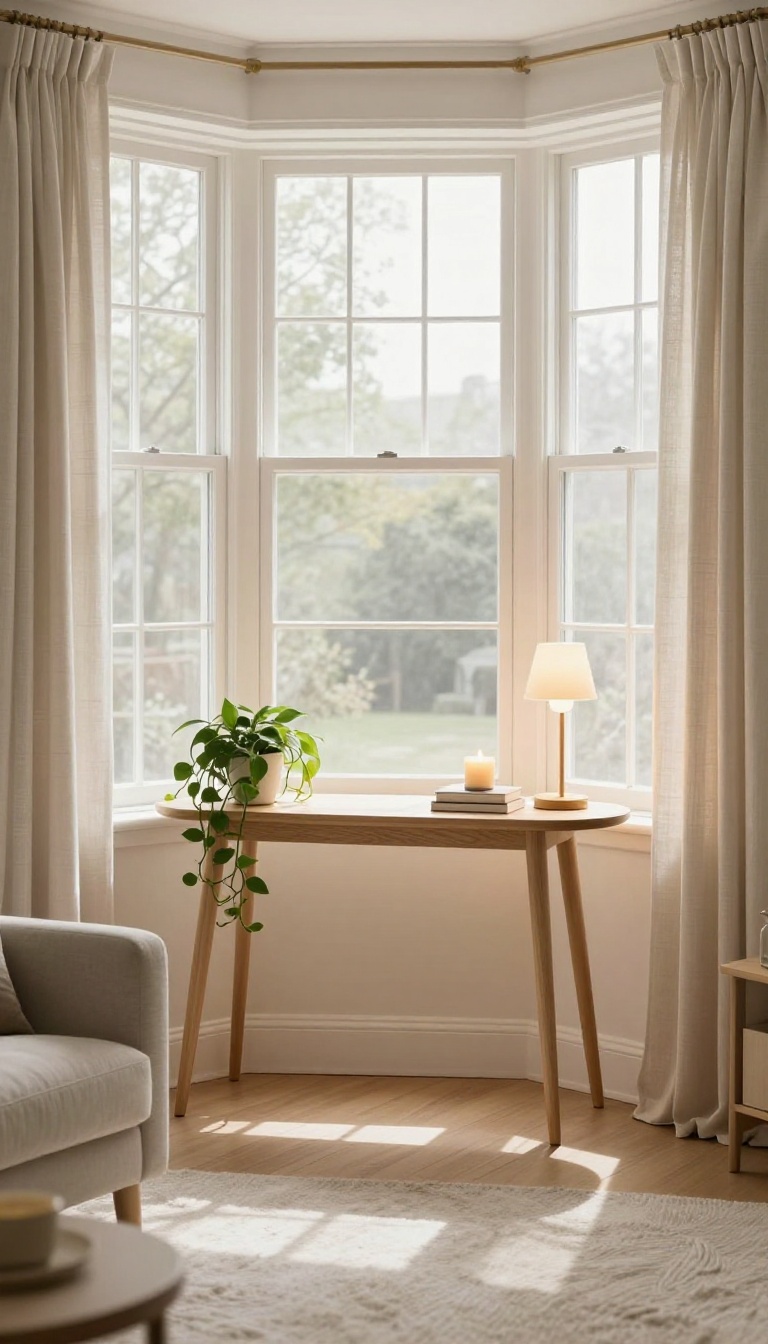
A bay window doesn't need a bulky piece of furniture to feel finished. A slim console table—often just 12 to 14 inches deep—slides right into that curved alcove without swallowing the floor space. It gives you a flat surface for the things you actually use, while keeping the area open and airy underneath.
Think of it as a stage for small moments, not a storage unit.
The trick is finding a console that follows the curve or sits low enough to disappear. You're not trying to fill the bay; you're trying to give it a job. A narrow table does that without blocking light or making the window feel like a wall.
Pick The Right Depth And Shape
Measure the bay's deepest point and subtract a few inches for breathing room. A depth of 12 to 14 inches works in most bays, but if your window curves sharply, look for a demilune or half-round console. Those shapes hug the wall instead of jutting out.
If you can't find a curved piece, a straight console pushed slightly off the wall still reads as intentional. Just avoid anything deeper than 16 inches—it'll turn the bay into a tight squeeze.
Style It Without Clutter
A console under a window is a display shelf at eye level, so treat it like one. A pair of small lamps adds warm light in the evening and balances the window's brightness during the day. Add one plant with soft, trailing leaves—like a pothos or string of pearls—to soften the hard lines.
Then leave a third of the surface empty. That negative space is what keeps the whole setup feeling airy instead of busy. Rotate in a few books, a candle, or a small sculpture depending on your mood or the season.
Make It Work For Real Life
If you need function, not just pretty, choose a console with a lower shelf or a couple of slim drawers. That gives you a spot for remotes, coasters, or kids' art supplies without piling things on top. Keep a small tray on the surface to corral keys and mail if the bay sits near your entry.
And don't forget cord management—a cloth sleeve or a discreet clip keeps lamp wires from dangling behind the table. The goal is a setup that looks effortless but actually holds up to daily use.
5. Hang a Statement Pendant or Chandelier
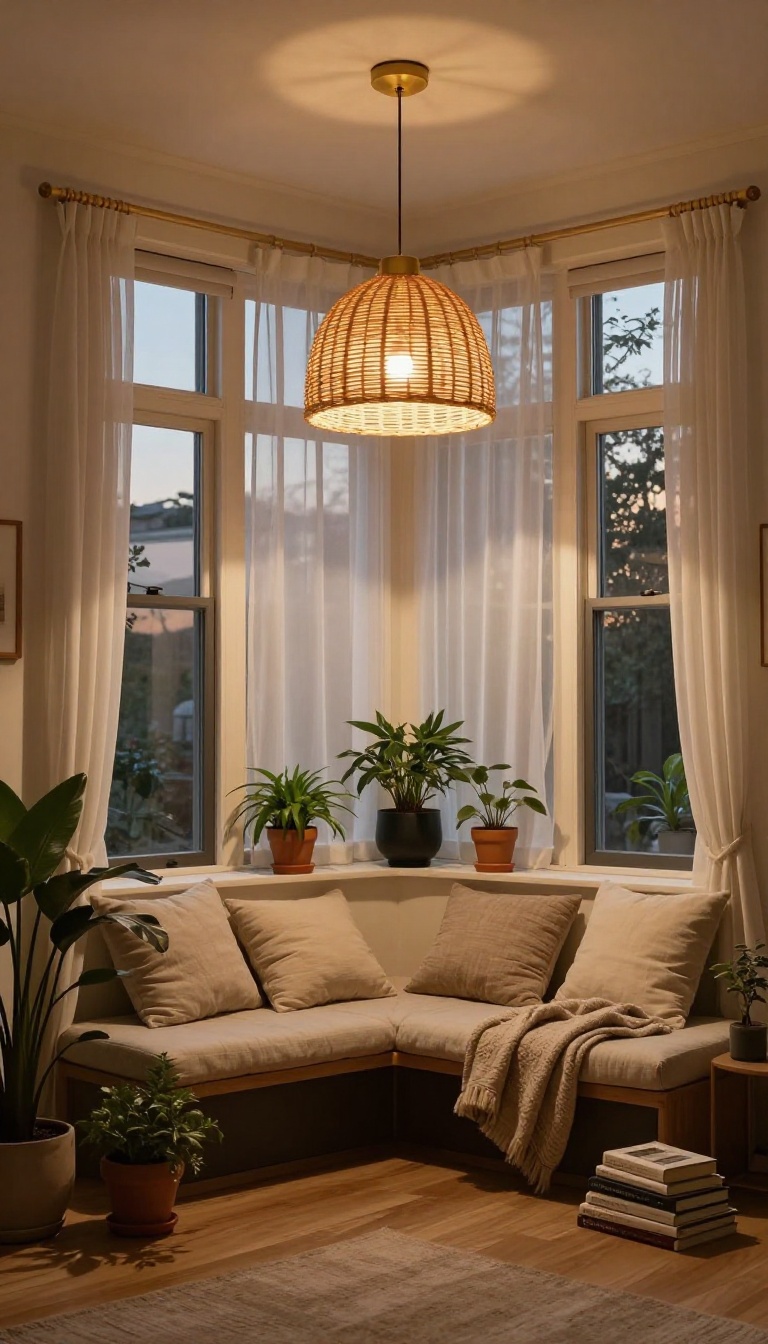
Light naturally pools in a bay window during the day, but once the sun drops, that corner goes dark and forgotten. A pendant or chandelier fixes that by pulling light—and attention—up into the curve of the alcove. It also gives the bay its own identity, so it reads as a destination instead of leftover floor space.
The trick is picking a fixture that fills the vertical space without crowding the view. You want something with presence, not bulk. A light that hangs too low chops the window in half; one that's too small disappears against all that glass.
Start by measuring the bay's width and the height from the floor to the ceiling. As a rough rule, leave at least 7 feet of clearance from the floor to the bottom of the fixture if people walk under it. If the bay holds a seat or table, you can drop it lower—around 30 to 36 inches above the surface.
Style matters as much as size. A sculptural pendant in rattan, brass, or matte black adds warmth without blocking sightlines. A small chandelier works if your living room leans traditional or glam.
Either way, put it on a dimmer so you can shift from bright task light to soft evening glow.
Sizing It Right
Add the bay's width and depth in feet, then treat that number in inches as a starting point for fixture diameter. A 6-by-4-foot bay suggests roughly a 10-inch fixture—small enough to float, large enough to register. If the ceiling is high, go up a size or two.
Placement And Height
Center the fixture on the bay's opening, not the room. Hang it so the lowest point sits about 7 feet from the floor for walk-through areas, or 30 to 36 inches above a window seat or bistro table. That keeps the view clear while anchoring the zone.
Style That Suits The View
Open, airy designs—woven shades, thin metal frames, clear glass—let the window stay the star. Solid drum shades and heavy crystal can feel like a wall. Match the finish to your other hardware for a pulled-together look.
Lighting Control
Put the fixture on a dimmer and, if you can, a separate switch from the main room lights. That way the bay can glow softly at night while the rest of the room stays bright, or vice versa. It's a small upgrade that makes the nook feel intentional.
6. Install a Built-In Desk for a Mini Office
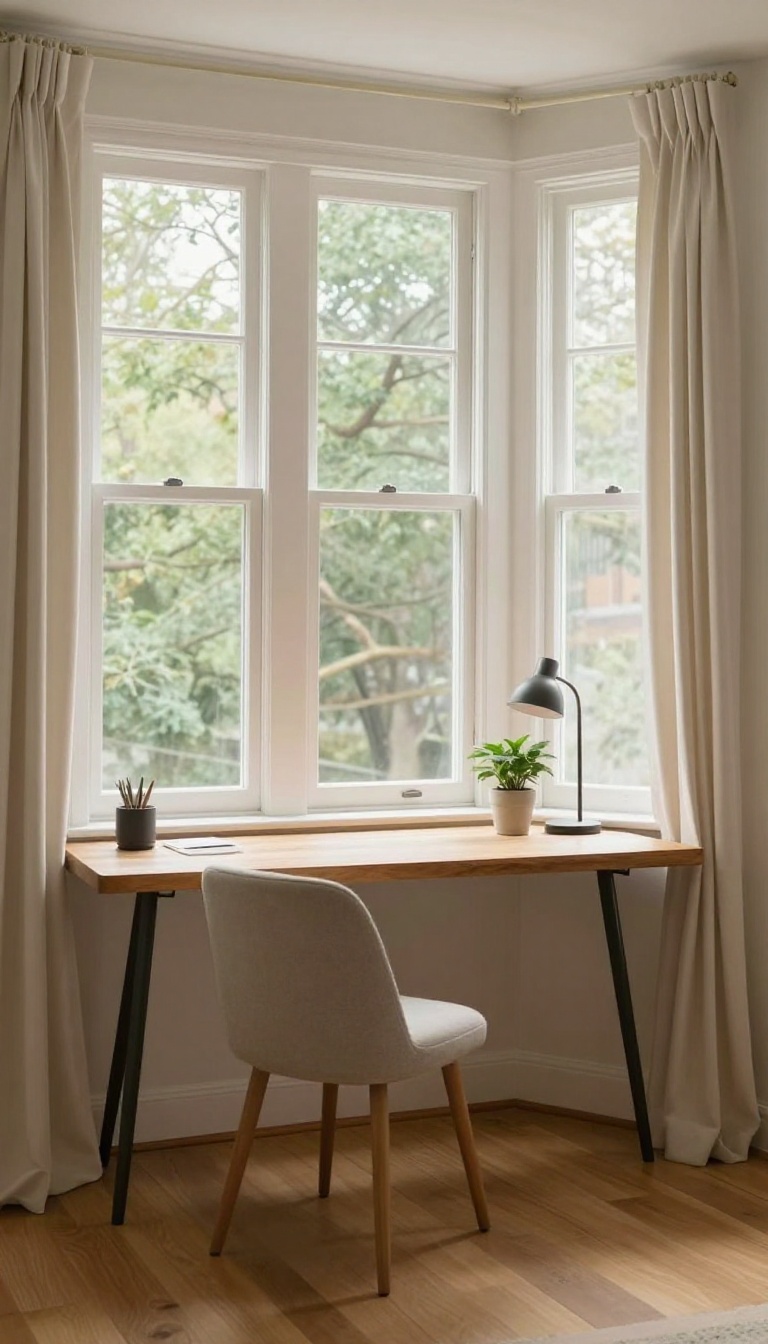
If you work from home, that bay window can become the brightest corner of your workday. A custom desk that follows the curve of the window turns dead space into a functional mini office. You get natural light, a view, and a reason to actually enjoy answering emails.
The key is to work with the shape of the bay, not against it. A straight desk will leave awkward gaps and wasted space. Instead, have a countertop cut to trace the window's angles or curve.
It can be as simple as a piece of butcher block or as polished as quartz. The desk should sit at standard height—around 29 to 30 inches—so you can pair it with a comfortable chair. You don't need a full renovation; a local carpenter or even a ready-made corner desk can often be trimmed to fit.
Once the surface is in, add a task lamp for cloudy days and a small plant for life. The result is a dedicated spot that doesn't eat up your living room floor.
Measure Twice, Cut Once
Before you buy or build anything, measure the bay's width at the front and back, plus the depth from the window to the room. Bays are rarely perfectly symmetrical, so note any angles. A cardboard template can help you visualize the shape.
Take those numbers to a carpenter or use them to shop for an adjustable desk. Getting the fit right means no wobble and no ugly gaps.
Choose A Surface That Works
Butcher block is warm, affordable, and easy to seal against coffee rings. Quartz or granite looks high-end and wipes clean, but costs more. Laminate is a budget-friendly option that comes in many finishes.
Whatever you pick, make sure it's at least 20 inches deep so you have room for a laptop, notebook, and mug. A rounded front edge keeps it comfortable for long sitting sessions.
Light It And Sit Comfortably
Natural light is great until 4 p. m. in winter. Add a slim LED task lamp with a warm bulb to avoid eye strain. For the chair, a compact ergonomic model with a low back works best in a bay—it won't block the view.
If you have space, a small rolling file cabinet can slide under the desk and double as a footrest. Keep cords tidy with a clip-on cable tray so the window still looks clean.
7. Style a Plant Gallery on Tiered Stands

That bay window gets more light than any other spot in your living room, and houseplants will happily soak it up. Instead of scattering a few pots on the sill, build a proper plant gallery on tiered stands or floating shelves. The layered look fills the corner with texture and color without covering the glass.
The trick is to treat the window like a vertical garden. Tiered stands let you stack plants at different heights, so every leaf gets its moment. Floating shelves do the same thing on a wall, and they keep the floor clear for a reading chair or a small bench.
Pick Stands That Hug The Curve
A bay window isn't straight, so standard rectangular shelving can look off. Look for corner stands or round tiered units that tuck into the angles. A three-tier stand with a slim footprint works in almost any bay.
If you have a deep sill, a low two-tier stand can sit right on it and still leave room for a cushion.
Layer Heights And Leaf Shapes
Put trailing plants like pothos or string of pearls on the top tier so they cascade down. Fill the middle with medium growers like philodendron or peace lilies. Save the bottom for taller floor plants or a cluster of small succulents.
Mixing leaf sizes and colors keeps the display from looking flat.
Keep The Glass Clear
The whole point of a bay window is the light, so don't block it. Choose stands with open frames instead of solid backs. Place them slightly off-center so the middle pane stays unobstructed.
If you use floating shelves, mount them on the side walls of the bay, not across the front.
Make Watering Easy
Plants on high shelves can be a pain to water. Use lightweight pots you can lift down, or add a small step stool nearby. Self-watering inserts cut down on drips and spills.
A cheap plastic tray under each pot saves your sill and your sanity.
8. Add a Cushioned Bench with Throw Pillows

A bench built for the curve of a bay window turns dead space into a real seat. It doesn't need to be custom or expensive—a simple frame with a plush cushion does the job. Add a few throw pillows, and suddenly that corner earns its keep every single day.
The bench itself can be as basic as a storage bench from a big-box store or a DIY frame you cut to fit. What matters is the cushion. A thick, high-density foam pad keeps it comfortable for reading, coffee, or watching the street.
Pick a fabric that can handle sunlight if the window faces south or west. Pillows do the heavy lifting here. They soften the hard lines of the bench, add color, and make the spot feel intentional.
Two or three is usually enough—one in each corner and one in the middle if the bench is wide. Mix sizes so it doesn't look like a matching set from a catalog. The best part is how easy it is to refresh.
Swap pillow covers with the seasons, and the whole window feels new without buying furniture. Store the off-season covers in a bin and rotate them when you're ready for a change.
Pick The Right Cushion Thickness
Aim for 3 to 4 inches of foam for everyday sitting. Thinner pads feel like a window seat in a waiting room—fine for a minute, not for an hour. If you plan to nap there, go thicker and add a layer of batting for softness.
Style Pillows Without Overdoing It
Stick to an odd number for a relaxed look. Use one large pillow as a base, then layer a smaller one in front. Textures like linen, velvet, or chunky knit add depth without adding clutter.
Make Swapping Covers Easy
Buy pillow inserts one size up from the cover so they look full. Keep covers with hidden zippers so you can strip and wash them. Rotate colors or patterns every few months to keep the bench from feeling stale.
9. Frame the View with Floor-Length Curtains
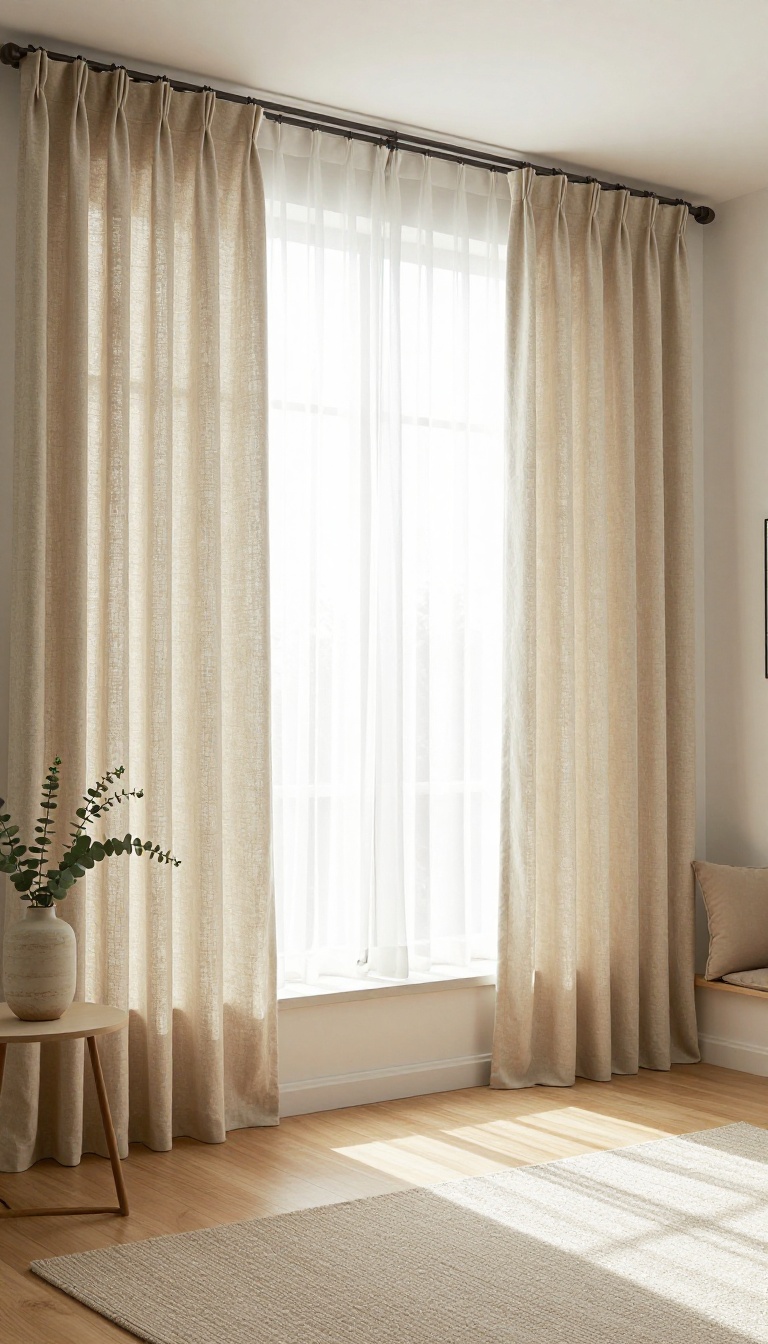
Curtains are the easiest way to make a bay window feel like a feature instead of an afterthought. Hang them high and wide, and the whole alcove reads as taller and more deliberate. The trick is treating the entire bay as one unit, not three separate windows.
Floor-length panels add softness and a little drama without blocking the light. A sheer layer underneath keeps things bright and airy during the day. Together, they frame the view like a picture.
This approach works in rentals too, as long as you can mount a rod. It's a low-commitment upgrade with a high-end payoff.
Start by mounting the rod as close to the ceiling as you can. That extra height draws the eye up and makes the window feel grander. Extend the rod a few inches past the edges of the bay so the curtains can stack clear of the glass.
For a curved bay, a ceiling-mounted track is your best friend. It follows the angle of the wall and lets the curtains glide smoothly. If you prefer a rod, use a bendable one or a series of short rods joined at the corners.
Sheer layers are the secret to keeping things soft. Hang a lightweight voile or linen sheer on a second track behind the main panels. It diffuses harsh afternoon sun and gives you privacy without shutting out the view.
Get The Height Right
Mount the rod at least four to six inches above the window frame, or go all the way to the ceiling if you can. This simple move adds visual height and makes the room feel larger. The curtains should just kiss the floor or break by half an inch.
Choose The Right Fabric Weight
For the main panels, pick a medium-weight fabric like linen, cotton canvas, or a lined velvet. It holds its shape and hangs beautifully. Sheers should be lightweight and airy, so they move with the breeze and let light through.
Handle The Curves
A curved bay needs a flexible track or a ceiling-mounted system. Measure the full arc of the bay and add a few inches on each end for stack-back. If you use a rod, look for a bendable style that can be shaped on site.
Layer For Light And Privacy
Use two tracks: one for sheers, one for heavier panels. During the day, pull the panels open and leave the sheers closed. At night, close both for a cozy, cocooning effect.
This combo gives you control without fuss.
FAQ
How do I make a bay window cozy without blocking light?
Use light-filtering curtains or shades, and choose furniture with open frames or low profiles. A bench with a thin cushion and a few pillows adds comfort without shutting out the sun.
What furniture fits best in a bay window?
Look for pieces that follow the curve or fit the depth, like a custom bench, a small armchair, a slim console, or a built-in desk. Avoid bulky sofas that crowd the space.
Can I add storage to a bay window seat?
Yes. A built-in bench with a lift-up lid or drawers underneath is a popular way to hide blankets, books, and other items while keeping the area tidy.
How high should I hang curtains on a bay window?
Mount the rod as close to the ceiling as possible, or at least a few inches above the window frame. This draws the eye up and makes the window feel taller.
What lighting works best for a bay window area?
A mix of ambient and task lighting works well. Try a pendant or chandelier overhead, plus a floor lamp or wall sconce for reading. Dimmable bulbs let you adjust the mood.
Conclusion
A bay window already gives your living room a head start. Pick the idea that solves your biggest frustration first, whether that is glare, dead floor space, or a spot that feels unfinished. You can layer in the rest over a few weekends.
Start with something small, like a cushion or a new lamp, and see how the light shifts through the day. The best bay windows feel collected, not decorated all at once. Give yours time to settle, and it will reward you every morning.