How to Clean a Glass Shower Door in 13 Clear Steps
A glass shower door can go from crystal clear to foggy and streaky faster than you'd expect. Soap scum, hard water stains, and everyday grime build up quickly, making your bathroom look less than fresh. But you don't need harsh chemicals or expensive products to restore its shine.
With the right approach and a few household staples, you can get that glass looking brand new. This guide breaks down the process into 13 straightforward steps that anyone can follow.
Whether you're dealing with light film or stubborn mineral deposits, these techniques will help you clean effectively without damaging the glass. Let's get started.
1. Gather Your Cleaning Supplies
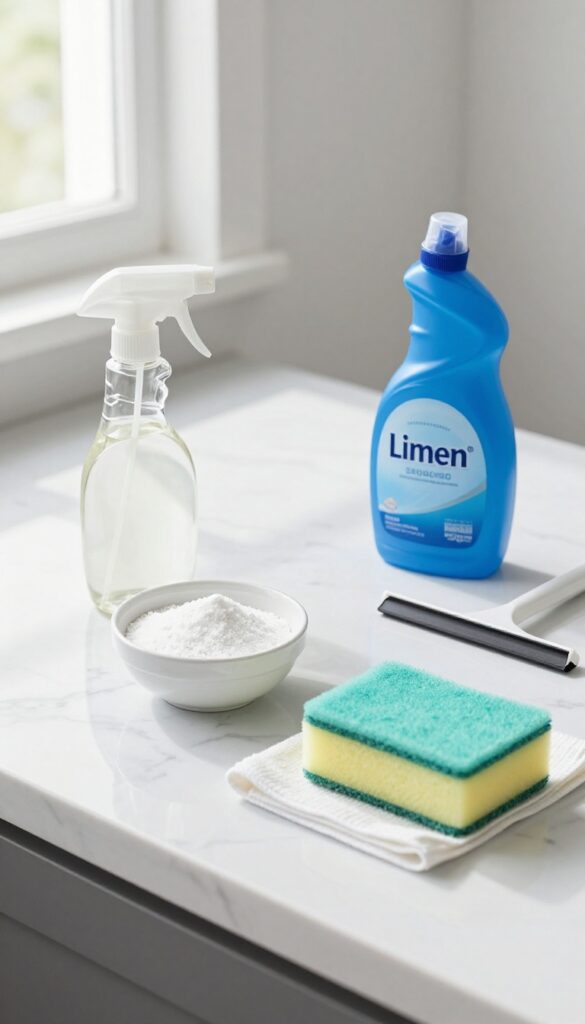
Before you start scrubbing, take a few minutes to round up what you'll need. Having everything within reach keeps the process efficient and prevents mid-task interruptions. Most of these items are already in your kitchen or bathroom cabinet.
The Core Ingredients
White vinegar is your best friend for cutting through soap scum and hard water stains. Dish soap helps break down greasy residue, while baking soda adds gentle abrasion for stubborn spots. You'll also need a spray bottle to mix and apply solutions.
Tools For The Job
A squeegee is essential for streak-free drying after cleaning. Microfiber cloths are lint-free and absorbent, perfect for buffing glass. A soft sponge (non-scratch) works well for applying cleaners without scratching the surface.
Optional But Handy
If you have heavy mineral deposits, a pumice stone or a commercial glass cleaner can help. But stick with the basics first—they're often enough to get great results.
2. Remove Loose Debris and Rinse the Door
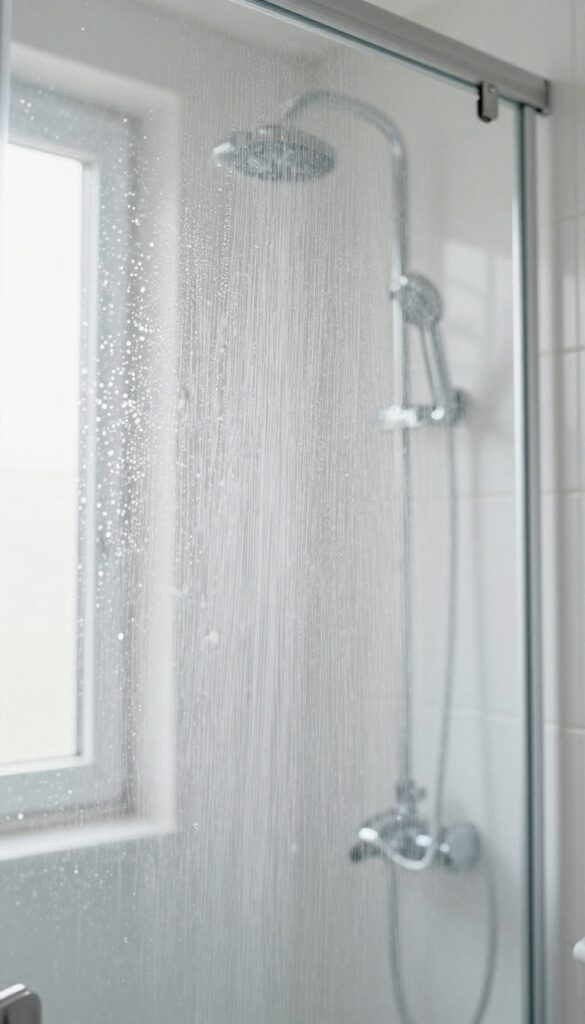
Before you bring out any cleaners, give the door a quick rinse. This simple step removes loose dirt, hair, and dust that can scratch the glass when you scrub. It also helps your cleaning solutions work more effectively by clearing the surface.
Start by turning on your shower and letting warm water run over the glass door for about a minute. Use a handheld showerhead if you have one to reach all corners. If your door is particularly dusty, you can wipe it down with a damp microfiber cloth first.
This pre-rinse prevents you from grinding grit into the glass later.
Why Rinsing Matters
Skipping the rinse is a common mistake. Loose particles act like sandpaper when you apply a cleaner and scrub. A quick rinse removes that risk and ensures your cleaning solution can focus on soap scum and hard water stains instead of battling surface debris.
Best Way To Rinse
Use warm—not hot—water to avoid shocking the glass. Start from the top and work your way down, letting the water cascade over the entire door. Pay extra attention to the edges and corners where hair and dust tend to collect.
When To Dry After Rinsing
You don't need to dry the door after rinsing. A damp surface is actually ideal for the next steps because it helps your cleaning solution spread evenly. Just let the excess water drip off for a few seconds before moving on.
3. Apply a Vinegar Solution for Soap Scum
White vinegar is a powerhouse cleaner that cuts through soap scum and hard water deposits without harsh chemicals. This simple solution works because the acetic acid in vinegar dissolves the mineral buildup that makes glass look cloudy. You probably already have everything you need in your kitchen.
Mix equal parts white vinegar and warm water in a spray bottle. Spray generously over the glass and let it sit for 5-10 minutes to break down soap scum and hard water deposits.
Why Vinegar Works
Soap scum is basically a mix of soap residue and minerals from hard water. Vinegar's mild acidity reacts with these minerals, turning them into soluble compounds that rinse away easily. It's safe on glass and won't leave behind streaks if used correctly.
How To Apply It Right
Fill a spray bottle with a 50/50 mix of white vinegar and warm water. Shake gently to combine. Mist the entire glass surface until it's dripping wet.
Don't be shy—you want the solution to cling to the glass so it has time to work.
Let It Sit
After spraying, let the solution sit for 5 to 10 minutes. For heavy buildup, you can leave it up to 15 minutes. This dwell time is crucial because it allows the vinegar to penetrate and loosen the grime.
If the solution dries out before you rinse, just respray.
Rinse Thoroughly
Once the waiting time is up, rinse the glass with warm water. Use a handheld showerhead or a cup to pour water over the door. Make sure all the vinegar is gone, or it can leave a faint smell.
Then move on to the next step for a streak-free finish.
4. Scrub with a Baking Soda Paste for Stubborn Spots
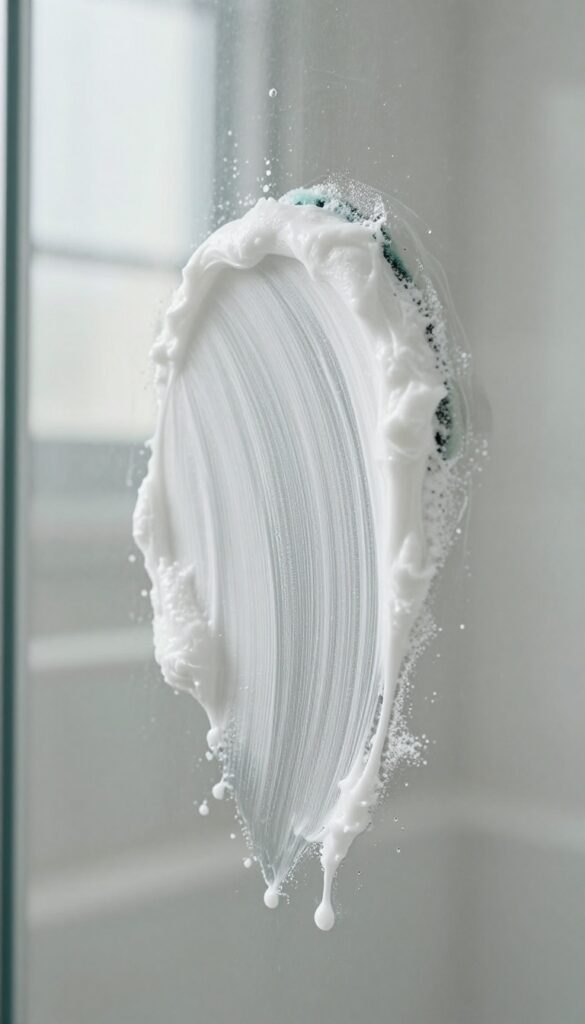
Even after a good vinegar soak, some spots just won't budge. That's where baking soda comes in. This gentle abrasive lifts stubborn stains without scratching the glass, making it perfect for those crusty areas that need extra elbow grease.
Baking soda is a mild alkali that reacts with acids in soap scum and hard water deposits, helping to break them down. When mixed with a little water, it forms a paste that gives you just enough grit to scrub away grime without damaging the surface. This method is especially effective for dried-on water spots and soap residue near the bottom of the door.
Making The Perfect Paste
Start with about three tablespoons of baking soda in a small bowl. Add water one teaspoon at a time, stirring until you get a thick, spreadable consistency—like toothpaste. You want it wet enough to apply easily but not so runny that it drips down the glass.
How To Apply And Scrub
Use a soft sponge or a microfiber cloth to scoop up the paste. Apply it directly to the stubborn spots and scrub in small circular motions. Focus on one section at a time, applying gentle pressure.
Avoid using abrasive pads like steel wool or scrub brushes with hard bristles—they can leave fine scratches that make the glass more prone to future buildup.
Rinsing And Checking Your Work
Once you've scrubbed the area, rinse the door thoroughly with warm water. Use a spray bottle or a cup to pour water over the glass, making sure all the paste is washed away. Check for any remaining spots; if needed, repeat the process on those areas.
The glass should feel smooth and look noticeably clearer.
5. Use a Dish Soap Solution for Grease and Grime
Sometimes water alone just doesn't cut it. Body oils, lotions, and everyday grime cling to glass and create a stubborn film that rinsing won't remove. That's where a simple dish soap solution comes in.
It breaks down grease without being harsh, making it a perfect middle step between rinsing and tackling hard water stains.
Mix a few drops of dish soap with warm water in a spray bottle. Spray the solution generously over the glass, then wipe with a damp microfiber cloth. This step adds extra cleaning power and preps the surface for deeper cleaning later.
Why Dish Soap Works
Dish soap is a surfactant, meaning it reduces surface tension and helps water lift away oils and grease. Unlike some all-purpose cleaners, it's gentle on glass and won't leave a cloudy residue. It's also safe for most shower door finishes.
How To Apply It
Fill a spray bottle with warm water and add 2-3 drops of liquid dish soap. Shake gently to mix. Spray the solution onto the glass door, covering all areas.
Let it sit for about a minute to loosen grime, then wipe with a clean microfiber cloth in circular motions. Rinse the cloth often and avoid using too much soap, which can leave streaks.
When To Use This Step
Use the dish soap solution after the initial rinse but before applying vinegar or a commercial cleaner. It's especially effective if you notice a greasy film or if the door feels slippery to the touch. For best results, follow up with a vinegar spray to tackle any remaining mineral deposits.
6. Tackle Hard Water Stains with Lemon Juice or CLR
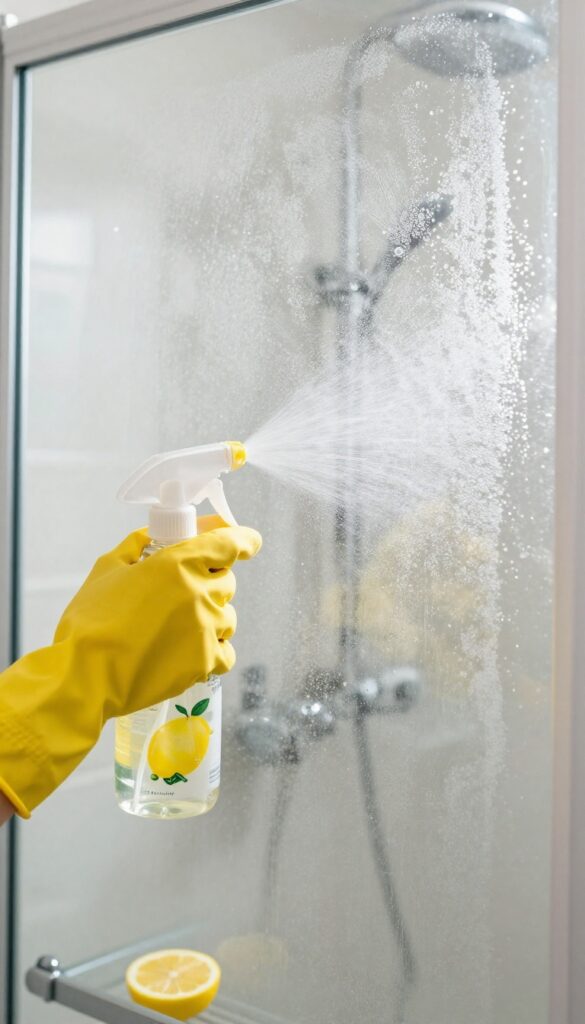
Hard water stains are the toughest enemy of a clean shower door. Those white, crusty rings come from mineral deposits that ordinary soap can't dissolve. Lemon juice and CLR are two powerful options that break down these stubborn marks without damaging the glass.
For light to moderate hard water stains, fresh lemon juice works wonders. Squeeze a lemon and apply the juice directly to the stains, or use a spray bottle for larger areas. Let it sit for 5-10 minutes, then scrub with a soft sponge or microfiber cloth.
Rinse thoroughly with water. For heavy, calcified deposits, a commercial calcium-lime-rust remover like CLR is more effective. Apply it according to the instructions, usually letting it sit for a minute or two.
Scrub gently with a non-abrasive pad, then rinse completely. Always wear gloves and ensure good ventilation when using chemical removers.
Why Lemon Juice Works
Lemon juice contains citric acid, which naturally dissolves calcium carbonate—the main component of hard water stains. It's gentle enough for regular use and leaves a fresh scent. Just be careful on natural stone or metal fixtures, as acid can etch them.
When To Use Clr
CLR is formulated specifically for tough mineral deposits. Use it when lemon juice or vinegar fail after two attempts. It's fast-acting but strong, so always follow the label directions.
Rinse extra well to avoid residue.
Safety Tips For Chemical Cleaners
Wear rubber gloves and open a window or turn on the bathroom fan. Avoid mixing CLR with bleach or ammonia. Test on a small hidden area first to ensure it doesn't damage the glass coating or frame.
7. Clean the Door Tracks and Edges
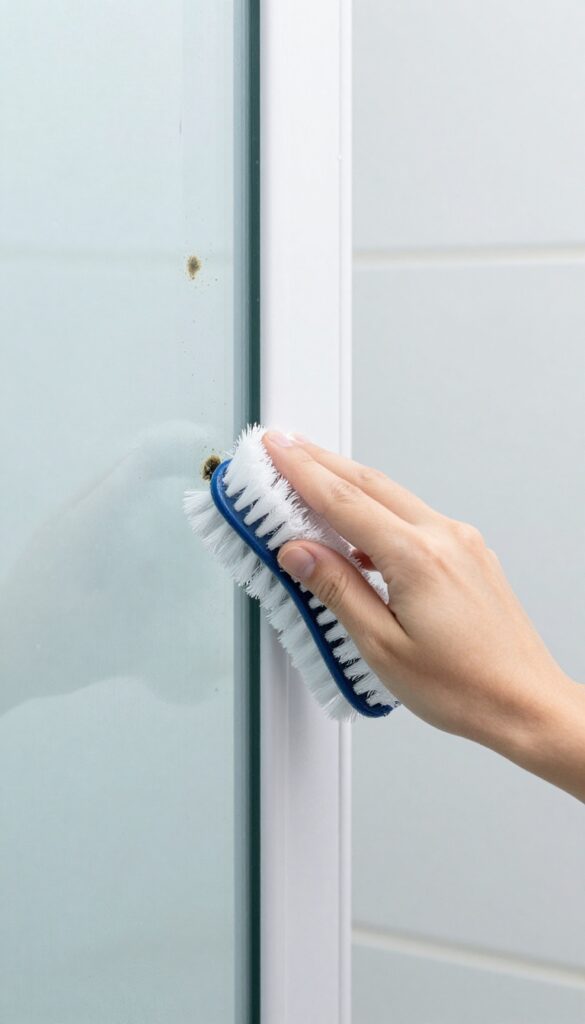
The tracks and edges of your shower door are magnets for grime, soap scum, and even mold. Because they're out of sight, they often get neglected until the buildup becomes obvious. But cleaning them is easier than you think, and it makes a big difference in how fresh your whole shower looks.
Why Tracks Get So Grimy
Water and soap residue naturally flow down into the tracks, where they sit and dry. Over time, this creates a sticky film that traps hair, dust, and other debris. The corners and edges are also prime spots for mold and mildew because they stay damp longer.
What You'll Need
Grab an old toothbrush or a small scrub brush, a spray bottle filled with equal parts white vinegar and water, and a microfiber cloth. If you have stubborn buildup, a toothpick or a small screwdriver can help loosen gunk from tight corners.
Scrubbing Technique That Works
Spray the vinegar solution generously along the tracks and edges. Let it sit for a few minutes to break down the grime. Then, use the brush to scrub vigorously, paying extra attention to corners and any visible mold spots.
Rinse with warm water and wipe dry with a cloth to prevent new buildup.
8. Rinse the Entire Door Thoroughly
You've scrubbed, soaked, and wiped—now it's time to wash away all that cleaning solution. Rinsing might seem like a no-brainer, but doing it properly makes the difference between a spotless door and one covered in residue. Warm water is your best friend here, as it helps dissolve any leftover soap or vinegar without leaving its own marks.
After cleaning, rinse the door with warm water from top to bottom. Make sure no soap or vinegar residue remains, as it can cause streaks or attract more dirt.
Use Warm Water, Not Hot Or Cold
Hot water can cause the glass to expand too quickly, potentially leading to cracks, especially if your bathroom is chilly. Cold water doesn't dissolve residues as effectively. Warm water strikes the perfect balance—it loosens leftover grime and rinses cleanly without shocking the glass.
Rinse From Top To Bottom
Start at the top of the door and work your way down. This ensures that dirty water doesn't run over already-rinsed areas, which can redeposit grime. Use a handheld showerhead if you have one, or a large cup or pitcher for a steady stream.
Don't Forget The Edges And Corners
Residue loves to hide in the corners and along the edges of the door. Angle the water spray to hit these spots directly. If you're using a cup, tilt the door slightly so water flows into the channels.
A quick visual check will tell you if you've missed any spots.
Check For Soap Bubbles Or Slippery Spots
After rinsing, run your hand over the glass. If it feels slippery or you see any bubbles, that means soap residue is still there. Give those areas another rinse.
A clean glass surface should feel smooth and squeak when you rub it with a wet finger.
9. Squeegee the Glass to Prevent Water Spots
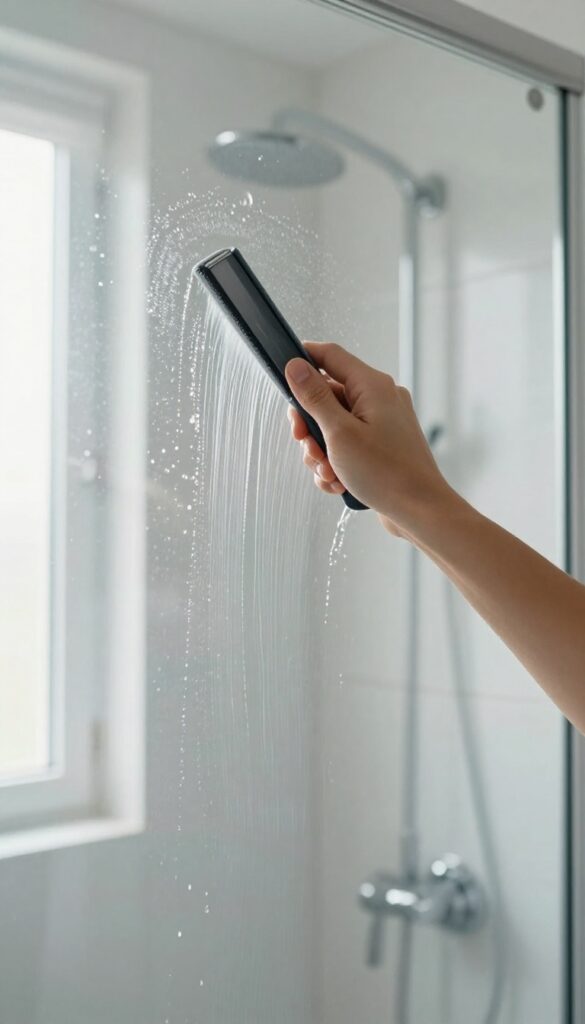
A squeegee is your best friend when it comes to keeping that shower door spot-free. After you've rinsed off all the cleaning solution, a quick pass with a squeegee removes the water that would otherwise dry into hard water spots and streaks. It takes only a minute but makes a huge difference in how long your glass stays clean.
Start At The Top
Begin at the highest corner of the glass and pull the squeegee straight down in one smooth stroke. Overlap each pass slightly to avoid missing any spots. Working from top to bottom ensures that water drips down onto already-squeegeed areas, not back onto dry glass.
Use Overlapping Strokes
Don't rush. Each stroke should overlap the previous one by about an inch. This prevents those thin lines of water from drying into streaks.
If you're using a squeegee with a rubber blade, make sure it's clean and free of nicks for the best results.
Wipe The Blade Between Passes
After every few strokes, wipe the rubber blade with a dry cloth or paper towel. This removes any water or soap residue that could be dragged back onto the glass. A clean blade means a streak-free finish every time.
Don't Forget The Edges
Once the main panel is done, use a microfiber cloth to dry the edges and corners where the squeegee can't reach. Those hidden spots can still collect water and cause spots over time. A quick wipe ensures the entire door stays spotless.
10. Dry with a Microfiber Cloth for a Streak-Free Shine
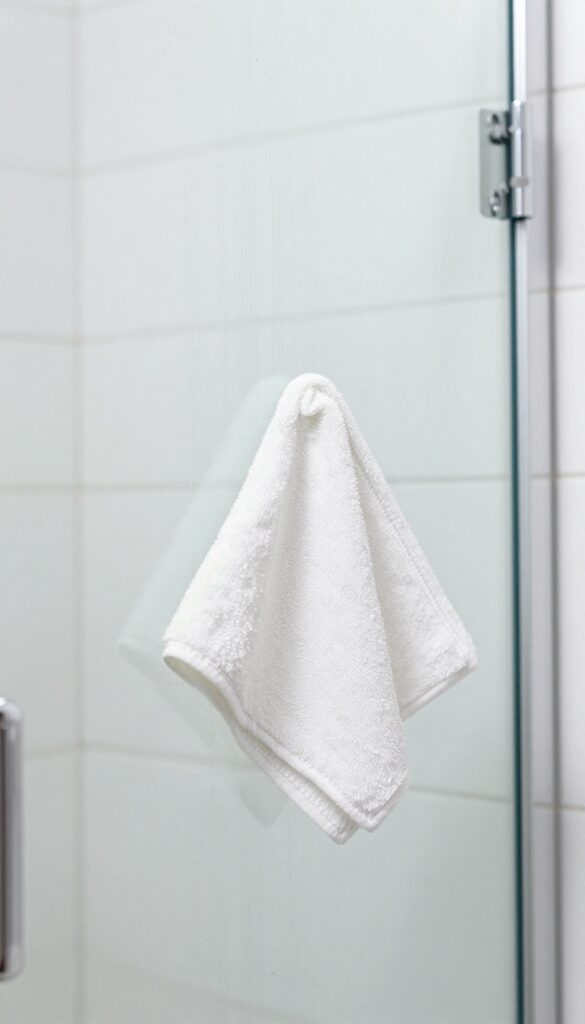
After all that scrubbing and rinsing, the final step is what really makes your glass door sparkle. Using a microfiber cloth to dry the surface removes any leftover water droplets and buffs away streaks. It's a simple move that delivers a professional-looking finish without any extra effort.
Grab a clean, dry microfiber cloth—the kind you use for cleaning glasses or electronics works perfectly. Start at the top of the door and work your way down in a single direction, like horizontal or vertical strokes. This prevents redepositing moisture and ensures you catch every drop.
For best results, use a fresh cloth if the first one gets too damp. The microfiber fibers trap water and minerals, leaving the glass crystal clear and streak-free.
Why Microfiber Wins
Microfiber cloths are made of ultra-fine synthetic fibers that create a static charge, attracting dust and water like a magnet. Unlike paper towels or cotton rags, they don't leave lint or tiny scratches behind. They also absorb several times their weight in moisture, so you can dry a large door with just one cloth.
The Right Technique
Fold the cloth into quarters to create multiple clean surfaces. Wipe in overlapping passes, and flip to a fresh section as soon as it feels wet. Pay extra attention to edges and corners where water tends to pool.
A final buff with a completely dry side gives that showroom shine.
Avoid These Mistakes
Don't use fabric softener on microfiber cloths—it clogs the fibers and ruins their absorbency. Also, skip the dryer sheets for the same reason. If your cloth leaves streaks, it might be dirty or overloaded with water.
Wash microfiber separately with mild detergent and air dry to keep them performing their best.
11. Apply a Protective Coating or Wax
Once your glass is squeaky clean, you can make future cleanings much easier by adding a protective layer. Think of it like waxing a car—it creates a barrier that water beads up on and rolls off, taking soap scum and minerals with it. This step isn't mandatory, but it's a game-changer for anyone tired of scrubbing every week.
A good protectant repels water and reduces the adhesion of grime. You have a few options: dedicated glass sealants, car wax, or even a DIY vinegar rinse. Each works slightly differently, but all aim to keep your door looking spotless longer.
Choose Your Protectant
You can buy a spray-on glass protectant made for showers, or use a high-quality carnauba car wax. Both create a hydrophobic surface. Avoid products with abrasives or harsh chemicals that might etch the glass.
For a budget option, some people swear by a quick wipe of distilled white vinegar, though it doesn't last as long.
Application Tips
Apply the protectant to a completely dry, clean glass surface. Use a microfiber cloth and follow the product instructions—usually a thin, even coat. Let it haze, then buff it off with a clean cloth.
For car wax, apply in circular motions and remove before it dries completely. Work in small sections to avoid streaks.
How Often To Reapply
Most protectants last 2 to 4 weeks, depending on how often you shower and your water hardness. Car wax may need reapplication every 1 to 2 weeks. You'll know it's time when water stops beading and starts sheeting again.
Regular reapplication keeps the barrier effective and makes each cleaning session faster.
12. Maintain with Daily Quick Wipes
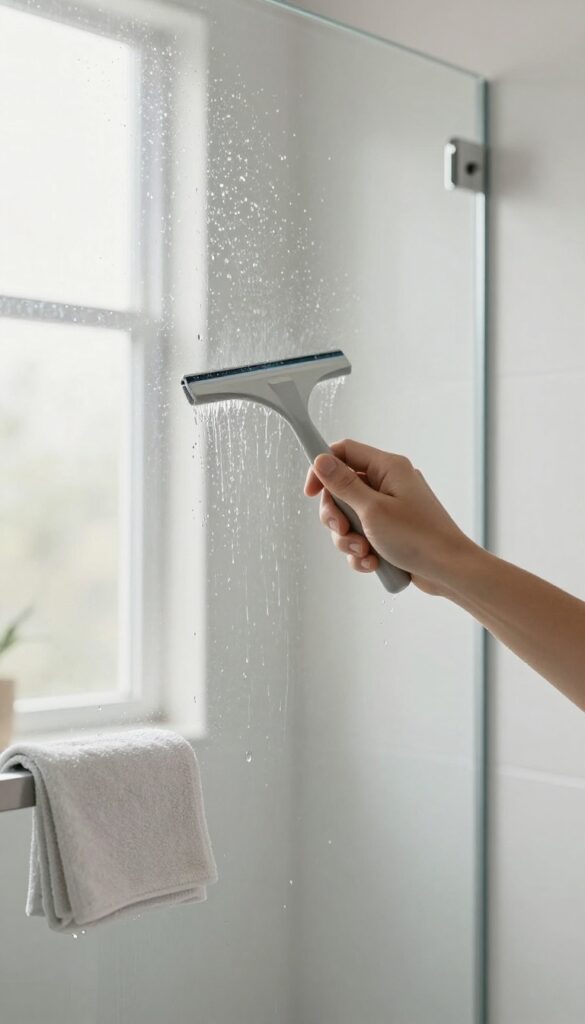
The best way to keep your glass shower door sparkling is to stop grime from building up in the first place. A daily quick wipe takes less than a minute and saves you from heavy scrubbing later. This simple habit is the secret to long-lasting clarity.
After each shower, grab a squeegee or a microfiber cloth and wipe down the glass. Focus on the main panel and any areas where water pools. This removes water droplets before they dry into hard water spots.
It also clears away soap residue that would otherwise turn into stubborn scum. Make it part of your post-shower routine—hang a squeegee right in the shower so it's always handy.
Why Daily Wiping Works
Hard water stains and soap scum form when water evaporates and leaves minerals and residue behind. By wiping the glass while it's still wet, you remove the water entirely. This prevents the drying process that creates deposits.
Over time, this single step dramatically reduces the need for deep cleaning.
Best Tools For The Job
A squeegee with a rubber blade is the most effective tool—it clears water in one smooth motion. Microfiber cloths are a great alternative; they absorb water without leaving lint. Avoid using regular towels, which can leave fibers and streaks.
Keep whichever you choose clean and replace it when it shows wear.
Making It A Habit
The hardest part is remembering to do it every day. Keep your squeegee or cloth within arm's reach of the shower. Some people hang it on a hook inside the shower door.
Others keep a small caddy with a microfiber cloth nearby. After a week or two, it becomes automatic.
13. Schedule a Weekly Deep Clean
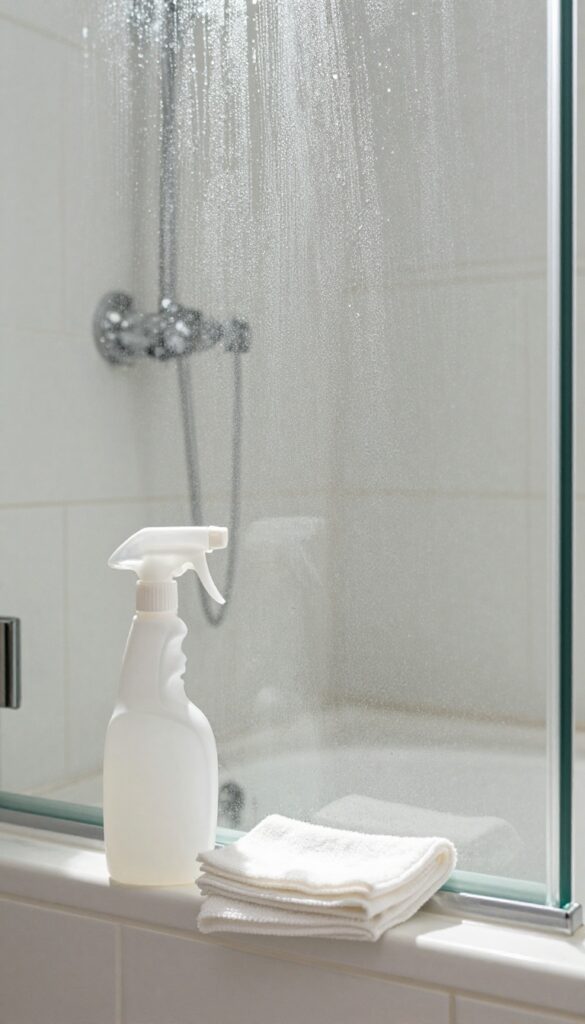
Even with daily squeegeeing, a weekly deep clean is essential to keep your shower door looking its best. Set aside just 15 minutes each week to tackle any buildup before it becomes stubborn. This regular maintenance prevents hard water stains and soap scum from taking hold, extending the life of your glass door.
A weekly deep clean doesn't need to be complicated. Use a simple solution of equal parts white vinegar and water, or a gentle glass cleaner. Spray it on, let it sit for a few minutes, then scrub with a non-abrasive sponge.
Rinse thoroughly and squeegee dry. This routine keeps your door sparkling and reduces the need for harsh chemicals.
Pick Your Cleaner
White vinegar is a natural, effective choice for cutting through soap scum and hard water deposits. If you prefer a store-bought option, look for a cleaner specifically formulated for glass shower doors. Avoid abrasive cleaners that can scratch the surface.
The 15-minute Method
Start by spraying the entire door with your chosen cleaner. Let it sit for 3–5 minutes to loosen grime. Then, use a soft sponge or microfiber cloth to scrub in circular motions.
Pay extra attention to corners and edges where buildup collects. Rinse with warm water and dry with a squeegee.
Don't Forget The Hardware
While cleaning the glass, give the metal frames and hinges a quick wipe. Soap residue can accumulate there too. Use a damp cloth with a bit of cleaner, then dry to prevent water spots.
This keeps the entire door looking cohesive and well-maintained.
Consistency Is Key
Stick to your weekly schedule. Missing a week makes the next clean harder. Over time, this habit will save you effort and keep your shower door looking like new.
Set a reminder on your phone if needed.
FAQ
Can I use bleach to clean my glass shower door?
Bleach is not recommended for glass shower doors because it can damage the glass finish and is harsh on the environment. Stick to vinegar, baking soda, or mild dish soap for safe and effective cleaning.
How often should I clean my glass shower door?
For best results, do a quick squeegee or wipe after every shower to prevent buildup. A deeper clean with vinegar or a dedicated cleaner should be done weekly or bi-weekly, depending on your water hardness.
What is the best homemade cleaner for glass shower doors?
A mixture of equal parts white vinegar and warm water is highly effective for removing soap scum and hard water stains. For extra scrubbing power, add a little baking soda to make a paste.
How do I remove hard water stains from glass shower doors?
Hard water stains can be removed with white vinegar, lemon juice, or a commercial calcium-lime-rust remover. Apply the solution, let it sit for a few minutes, then scrub gently with a soft sponge or cloth.
Why does my glass shower door still look streaky after cleaning?
Streaks are often caused by using too much cleaner or not rinsing thoroughly. Make sure to rinse all residue off and dry the glass with a clean microfiber cloth or squeegee for a streak-free finish.
Conclusion
Cleaning your glass shower door doesn't have to be a dreaded chore. With these 13 steps, you can tackle even the toughest grime and keep your door looking like new. The key is consistency—a quick daily wipe and a weekly deep clean will save you time and effort in the long run.
Now that you know the process, grab your supplies and give your shower door the attention it deserves. A sparkling clean bathroom starts with a clear glass door, and you have all the tools to make it happen.