11 Living Room Shelving Ideas That Look Good Without a Full Makeover
Shelving can change the whole feel of a living room without requiring a big renovation or a huge budget. Whether you're dealing with a blank wall or a cluttered corner, the right shelves add storage, personality, and visual interest. The best part?
Most of these ideas are totally doable over a weekend. You don't need to be a design pro or spend a ton of money to make your shelves look intentional. A few thoughtful choices—like mixing materials, playing with symmetry, or adding unexpected objects—can turn plain shelves into a focal point.
And since living rooms are where we actually live, the ideas here focus on real-life functionality, not just magazine looks. Ready to give your space a quick refresh?
1. Float a Single Shelf for Instant Impact
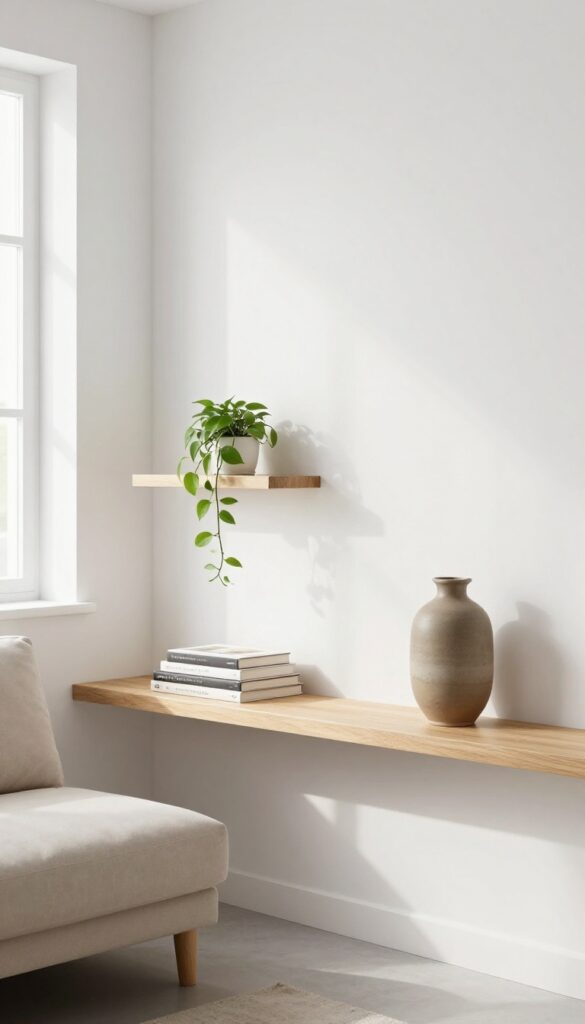
One long floating shelf above the sofa or a console table creates a clean line that anchors the room. It’s a low-commitment way to add character without drilling a dozen holes. Style it with a few art books, a small plant, and a ceramic vase for a curated look that doesn’t crowd the space.
Why It Works
A single shelf draws the eye horizontally, making the room feel wider and more balanced. It’s also a quick weekend project—just find the studs, mount the bracket, and you’re done. The simplicity keeps the focus on your styling, not the hardware.
Best For
This idea shines in living rooms with a low sofa or a long console table where you want a minimalist focal point. It’s perfect for renters or anyone who wants to avoid a full gallery wall commitment.
Styling Tip
Stick to odd numbers: three objects in varying heights. Use a stack of coffee table books as a base, then add a trailing plant like pothos and a matte ceramic piece. Keep the color palette neutral with one earthy accent to tie the room together.
2. Go Asymmetrical With Floating Cubes
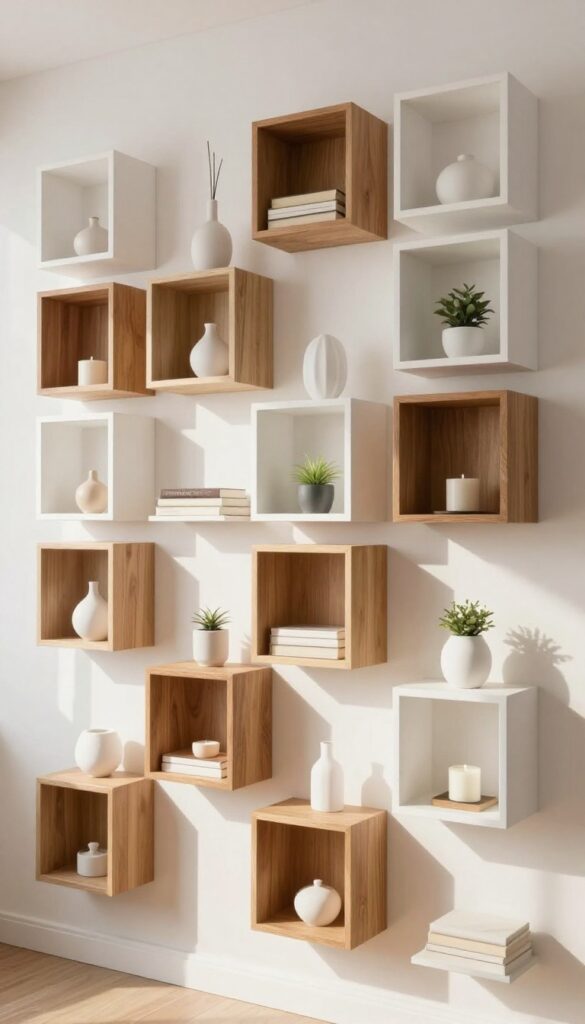
Forget the predictable row of shelves. Floating cubes arranged at different heights and depths create a dynamic, almost sculptural feature on your wall. It’s a look that feels modern but not cold, thanks to the mix of open space and the little objects you choose to display.
The asymmetry keeps your eye moving, making the whole arrangement feel intentional and artistic—without requiring a total room overhaul.
Why It Works
The staggered layout breaks up visual monotony and adds depth to a flat wall. Because the cubes are separate, you can easily rearrange them or add new ones over time. It’s a flexible system that grows with your style.
Best For
Living rooms that need a focal point without committing to a bulky piece of furniture. Also ideal for renters since the cubes can be removed and patched with minimal damage.
Styling Tip
Keep the display cohesive by sticking to a limited color palette—think whites, warm woods, and a single accent hue. Place one larger item (like a small vase or stack of books) in a cube, then balance it with a tiny plant or candle in another. Leave some cubes empty for breathing room.
3. Lean Into a Ladder Shelf for Casual Storage
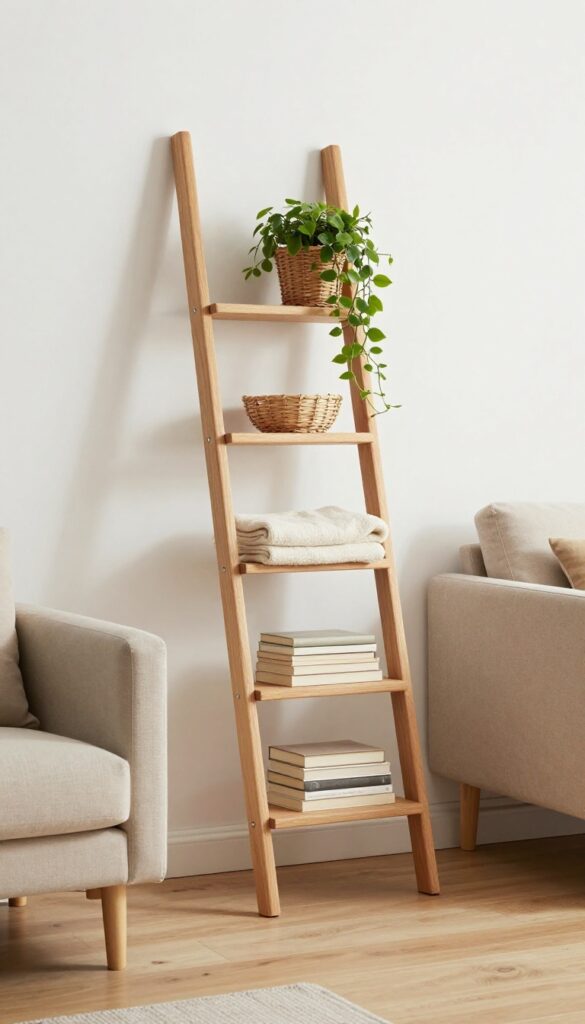
If your living room feels a little too buttoned-up, a leaning ladder shelf is the easiest way to loosen things up. It brings that relaxed, collected-over-time look without any heavy commitment—just prop it against the wall and start styling. Because it doesn’t require drilling or mounting, it’s perfect for renters or anyone who likes to rearrange their space on a whim.
The angled silhouette adds visual height and keeps the room from feeling flat, while the open rungs make everything feel light and airy rather than cluttered.
Why It Works
- A ladder shelf blends storage with display in a way that feels effortless. The staggered levels let you mix practical items like folded blankets and woven baskets with decorative touches like a small plant or a stack of books. Since it leans rather than stands rigidly, it adds a casual, almost imperceptible sense of movement to the room.
- Plus, it’s incredibly easy to move from one spot to another, so you can experiment with placement until it feels just right.
Best For
This idea shines in living rooms that lean toward a relaxed, modern farmhouse or boho aesthetic. It’s also a great choice for small spaces where a bulky bookcase would feel overwhelming—the ladder’s narrow footprint keeps the floor plan open. If your style is more minimalist, you can keep the styling sparse with just a single stack of magazines and a trailing plant for a clean, intentional look.
Styling Tip
- To keep the ladder shelf from feeling like a catch-all, stick to a simple color palette. Neutral baskets, cream blankets, and a few green plants create a cohesive, calming vignette. Place heavier items on the lower rungs and lighter decor higher up to maintain visual balance.
- And don’t overcrowd—leave some rungs bare so the ladder’s shape can breathe.
4. Frame the TV With Built-In Look Shelves
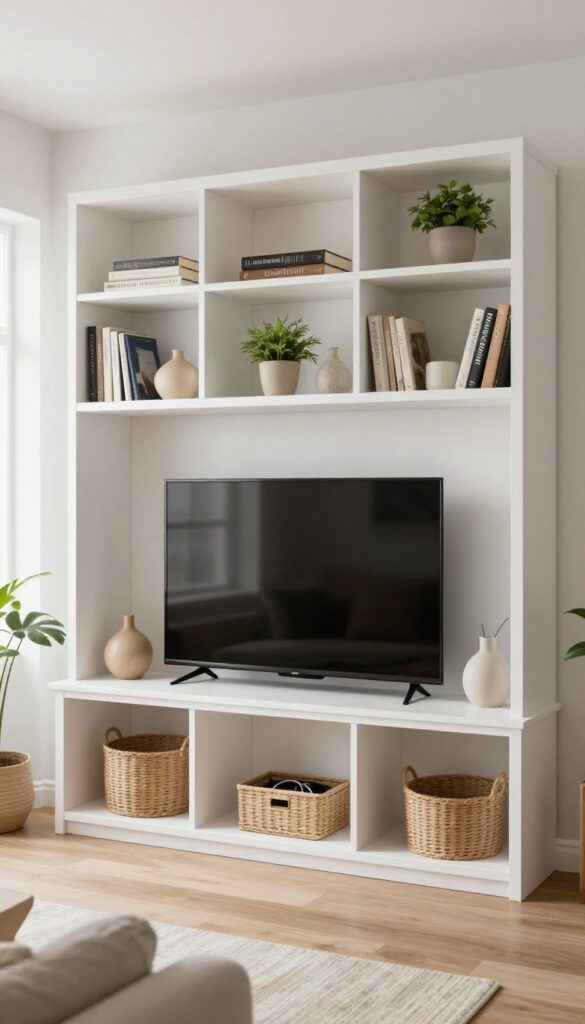
Instead of letting your TV dominate the wall, surround it with open shelves on either side to create a custom built-in feel. This approach turns the screen into part of a curated display rather than the main focus. It’s a weekend-friendly project that instantly adds architectural interest without any major construction.
Why It Works
The symmetrical framing balances the visual weight of the TV, making the whole setup feel intentional and polished. Open shelves keep the look airy while offering plenty of storage for media accessories, books, and decor.
Best For
This idea shines in living rooms where the TV is the focal point and you want to soften its presence. It works especially well in open-concept spaces or rental homes where permanent built-ins aren’t an option.
Styling Tip
Mix closed baskets on the lower shelves to hide cords and remote controls, then style the upper shelves with a few books, small plants, and ceramic vases. Keep the color palette cohesive—stick to two or three neutral tones for a calm, collected look.
5. Mix Open and Closed Storage on a Wall Unit
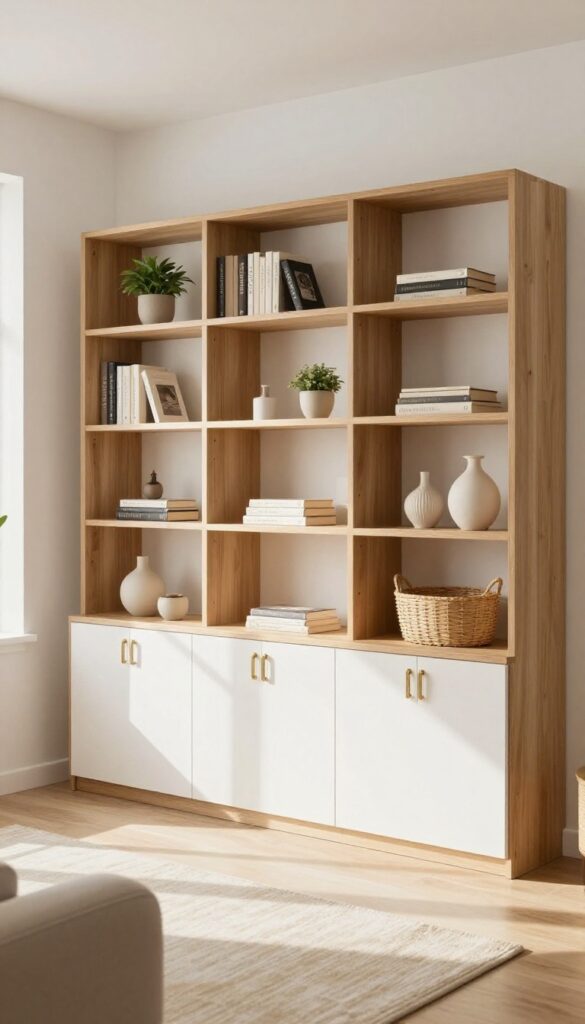
A modular wall unit that balances open shelves with cabinets is one of those rare pieces that does double duty without looking messy. The open sections let you show off your favorite books, plants, or ceramics, while the closed storage hides the less pretty stuff—like gaming consoles, remote controls, or that pile of board games. It’s a practical choice that still feels curated and intentional, especially if you’re working with a weekend refresh timeline and want a quick win.
Why It Works
Open shelving alone can quickly look cluttered, and all-closed cabinets can feel heavy. By mixing both, you get the best of both worlds: visual breathing room from the open displays and a clean, calm surface from the closed doors. This combo also makes the unit feel more like built-in furniture, adding a custom touch without the custom price.
Best For
This idea works well in medium to large living rooms where you have a full wall to dedicate to storage. It’s also great for families who need to stash toys or electronics but still want the room to look pulled together. If you’re someone who likes to swap out decor seasonally, the open shelves make that easy to do.
Styling Tip
Keep the open shelves visually cohesive by sticking to a limited color palette—think warm neutrals with one accent color. Use baskets or boxes on the lower open shelves to hide smaller items while adding texture. On the closed cabinets, choose hardware that complements your other room finishes, like brushed brass or matte black, to tie the whole look together.
6. Install Corner Shelves to Use Dead Space
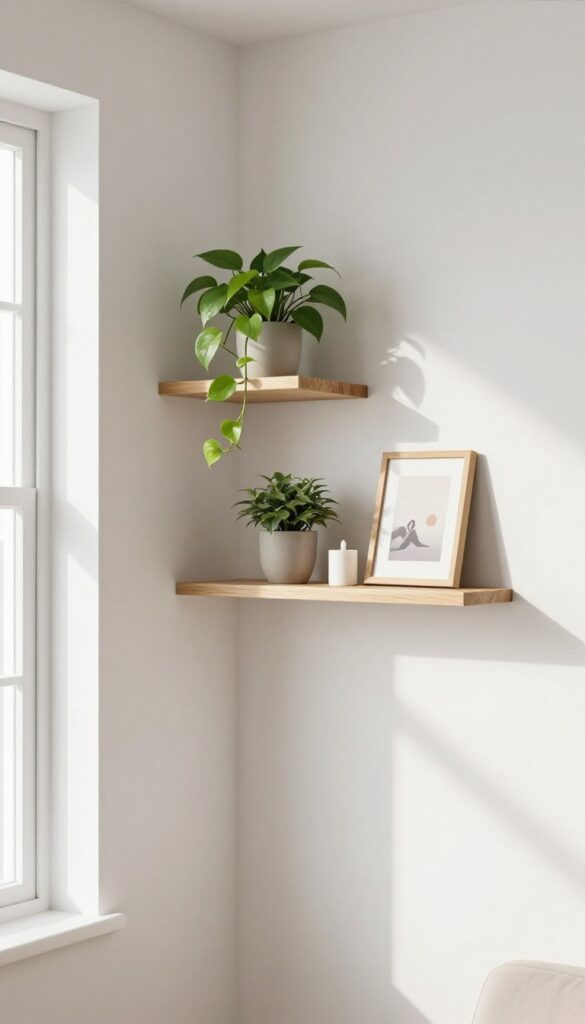
That awkward corner where two walls meet often ends up as a dumping ground for random items or just stays bare. But with a few corner shelves, you can turn that dead zone into a charming display area. Think of it as a mini gallery that adds personality without taking up any floor space.
Staggered triangular shelves work especially well because they create visual rhythm and let each piece shine.
Why It Works
Corner shelves make use of otherwise wasted square footage, which is a huge win for small living rooms. They draw the eye upward, making the room feel taller and more intentional. Plus, because they're tucked into a corner, they don't interrupt the flow of the room or feel bulky.
Best For
Living rooms with an empty corner that feels neglected, especially in apartments or cozy homes where every inch counts. It's also a great solution for renters who can't install heavy built-ins but want to add storage and style.
Styling Tip
- Keep the look curated but casual. On each shelf, place one small plant (like a pothos or succulent), a candle, and a tiny sculpture or framed photo. Stick to a cohesive color palette—neutral tones with one accent color—to keep it from feeling cluttered.
- Vary the heights of objects for visual interest.
7. Layer Art and Objects on a Picture Ledge
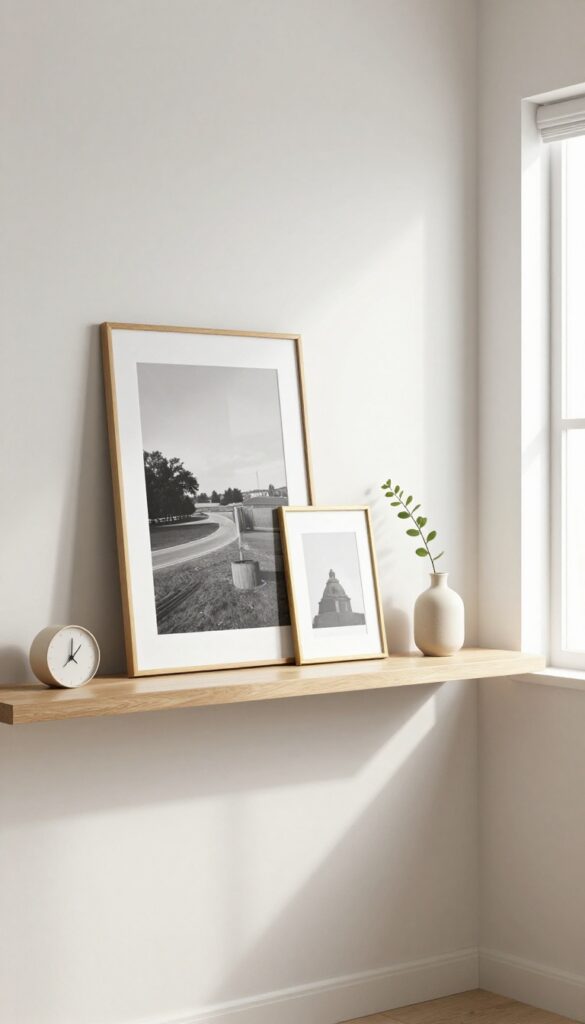
Picture ledges are the unsung heroes of wall decor. They let you lean art and photos without committing to nails or hooks, so you can rearrange your display whenever the mood strikes. This flexibility makes them perfect for a weekend refresh—swap out a frame, add a small clock, or tuck in a bud vase for an instant new look.
Why It Works
The ledge creates a curated, gallery-like feel without the permanence. You can mix and match frames of different sizes and finishes, then layer in small objects for depth. It’s an easy way to keep your wall feeling fresh and personal.
Best For
Living rooms where you want to display a rotating collection of art, photos, and small decorative objects. It’s also great for renters who can’t put holes in the wall.
Styling Tip
Stick to a cohesive color palette for the frames and objects to avoid visual clutter. Lean the largest piece first, then layer smaller frames in front, and finish with a tiny vase or sculptural object on one end.
8. Create a Gallery Wall With Narrow Shelves
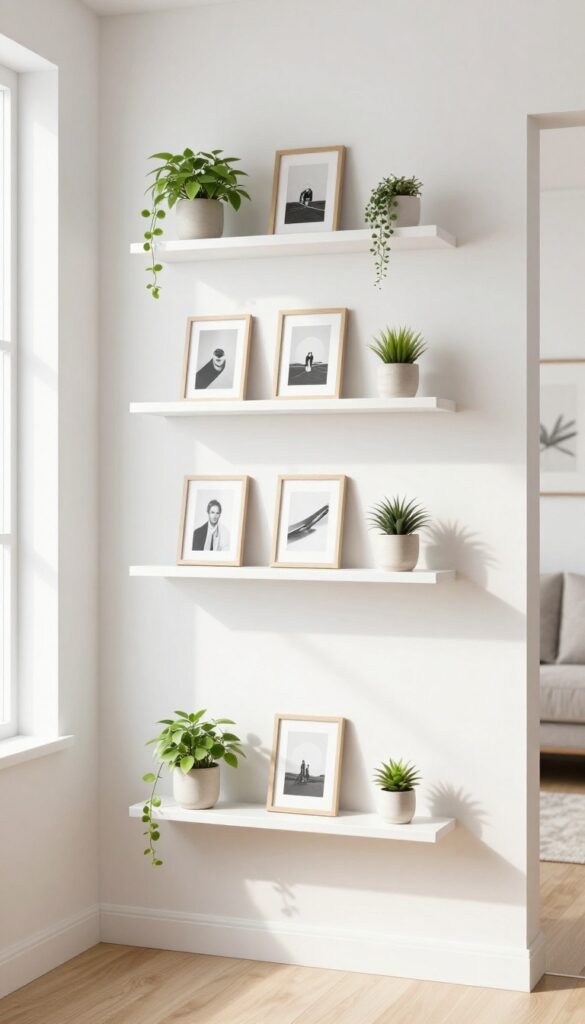
Gallery walls are a fantastic way to add visual interest without taking up any floor space—a huge win for small living rooms. But committing to a permanent arrangement of framed art can feel intimidating, especially if you like to switch things up seasonally. Narrow floating shelves give you the same curated look with the freedom to swap out pieces whenever the mood strikes.
Line up a few slim shelves in a row, and you've got an instant display for small framed prints, postcards, and even a tiny trailing plant.
Why It Works
This approach keeps your walls dynamic without the commitment of hammering dozens of nail holes. The shallow depth of the shelves means they won't protrude into the room, making them ideal for tight spaces or above furniture. Plus, the ability to lean art instead of hanging it makes rearranging feel effortless—perfect for a weekend refresh.
Best For
Living rooms where you want a personalized, evolving art display without the hassle of traditional hanging. It's also great for renters who can't put too many holes in the walls, or for anyone who loves to collect small prints and postcards.
Styling Tip
Stick to a cohesive color palette for a polished look—mix black-and-white photos with muted botanical prints, and add one small sculptural object like a ceramic bud vase. Keep the shelves at eye level and space them about 6 inches apart for a clean, gallery-like rhythm.
9. Add a Low Shelf Behind the Sofa
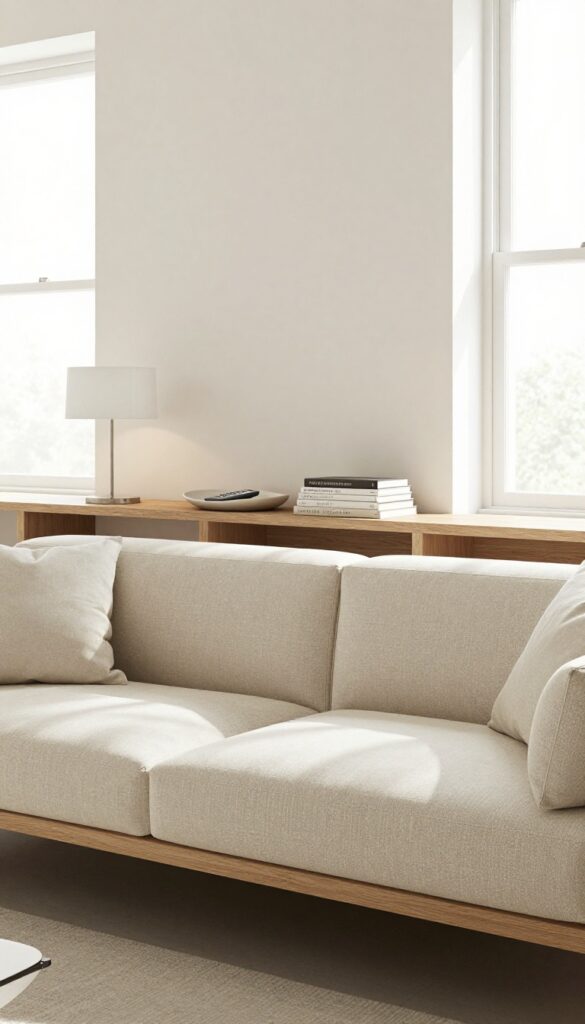
That awkward gap between your sofa and the wall is prime real estate. A low shelf running the length of the sofa turns dead space into a slim console that feels intentional, not cramped. It keeps daily essentials like a lamp, coasters, and a remote tray within arm's reach without eating into your floor plan.
The low profile keeps the room open and airy, so you get function without the visual weight of a bulky table.
Why It Works
It solves the classic problem of what to do behind the sofa without adding visual clutter. The shelf stays below sightlines, so it doesn't compete with artwork or windows. Plus, it's a weekend-friendly project: a simple floating shelf or a ready-made console that fits the gap.
Best For
Living rooms where the sofa floats away from the wall, leaving a narrow gap. It's also perfect for open-plan spaces where you want a subtle division without blocking sightlines.
Styling Tip
Stick to a low, linear lamp and a small tray for remotes. Add a stack of books or a single sculptural object for interest, but keep it minimal—this is a surface for daily use, not a full-on display.
10. Hang a Pegboard for Flexible Display
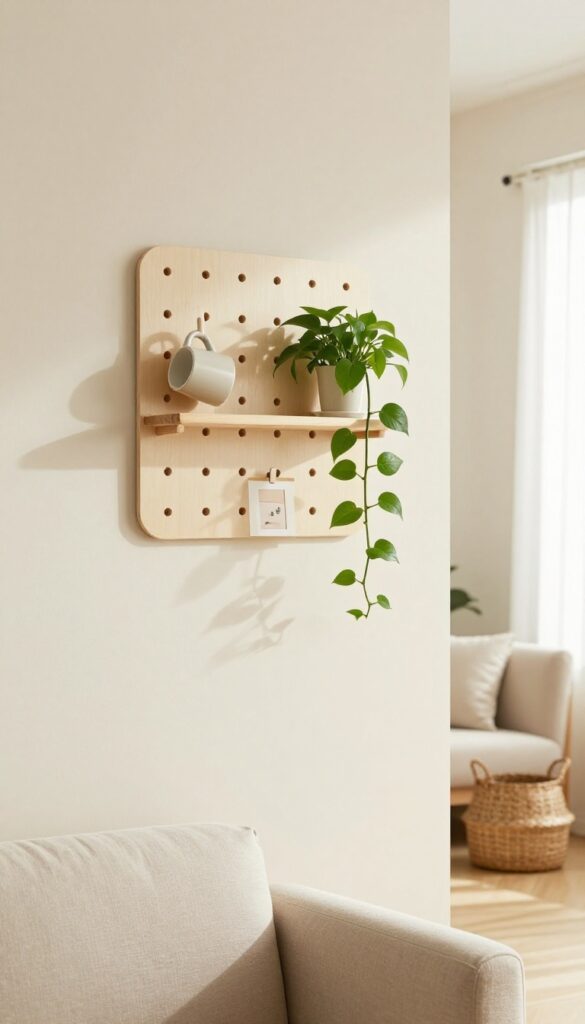
Pegboards aren't just for garages anymore. A painted pegboard mounted on your living room wall gives you a endlessly customizable display system for plants, small art, or even a mini bar setup. The best part?
You can rearrange the shelves, hooks, and containers whenever the mood strikes—no new holes in the wall required. It's a weekend-friendly project that instantly adds both storage and personality.
Why It Works
A pegboard keeps your wall looking curated without being permanent. You can swap out decor seasonally or whenever you find a new treasure, and the grid pattern adds a subtle graphic element to the room. Plus, it's incredibly practical for storing things you want to display but also need to access easily.
Best For
This idea is perfect for renters or anyone who likes to change their decor often. It's also great for small living rooms where you need vertical storage that doesn't feel bulky. If you have a collection of small plants, mugs, or art prints, a pegboard gives them a home without cluttering surfaces.
Styling Tip
Paint the pegboard the same color as your wall for a seamless look, or go bold with a contrasting hue like deep green or navy. Mix different accessories—small shelves for plants, hooks for mugs or bags, and jars for pens or utensils. Keep the layout balanced but not too symmetrical for a relaxed, collected feel.
11. Style a Single Tall Bookcase as a Focal Point
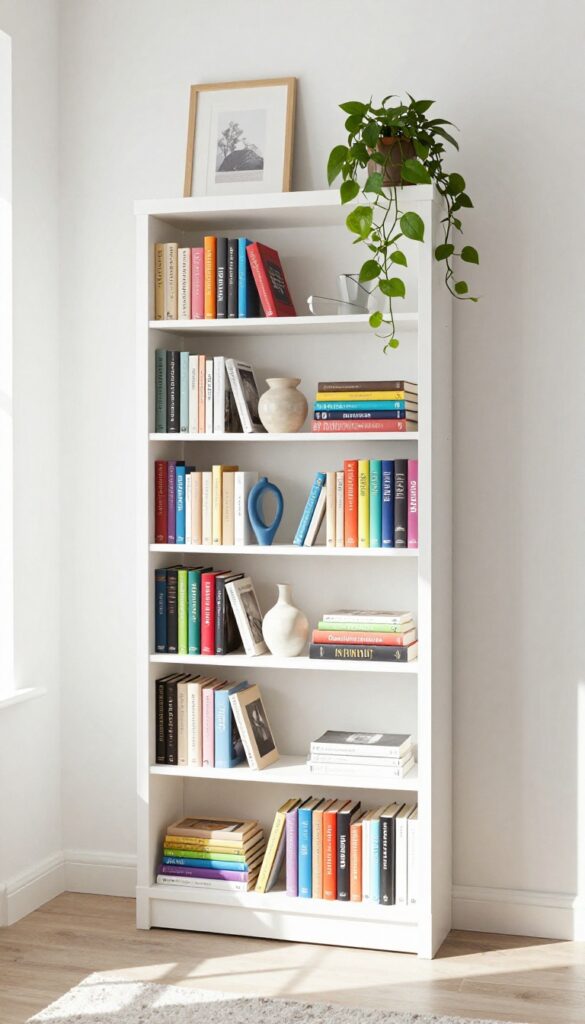
A single tall bookcase can completely transform a living room when you treat it like art. Instead of filling every inch, curate the shelves with a mix of books and objects that feel intentional. This approach gives the room a grounded, collected look without requiring a full wall of built-ins.
Why It Works
One tall bookcase acts as a vertical anchor, drawing the eye upward and making the ceiling feel higher. By leaving some shelves partially empty, you create visual breathing room that keeps the piece from feeling heavy or cluttered.
Best For
This works well in living rooms with limited floor space, where a large entertainment center or multiple shelving units would overwhelm the room. It's also great for renters who want a statement piece that can move with them.
Styling Tip
Group books by color for a cohesive rainbow effect, then place a few sculptural objects—like a ceramic vase or a small plant—on alternating shelves. Keep the top shelf light with a single piece of art or a trailing plant to draw the eye up.
FAQ
How do I choose the right shelving for a small living room?
Go for floating shelves or corner units that don't take up floor space. Stick to light colors or materials that blend with the wall to keep the room feeling open.
What's the best way to style shelves without clutter?
Follow the rule of thirds: mix books, decor, and empty space. Use baskets or boxes to hide small items, and keep a consistent color palette for a cohesive look.
Can I install shelves myself over a weekend?
Absolutely. Most floating shelves and ladder shelves are DIY-friendly. Just make sure you have a stud finder, level, and the right anchors for your wall type.
How do I make shelves look balanced?
Vary heights and textures. Pair tall items with shorter ones, and use odd numbers for groupings. Step back and adjust until the eye flows naturally across the shelf.
What are some budget-friendly shelving options?
Try using wall-mounted brackets with a wooden board, repurpose an old ladder, or install IKEA Lack shelves. Thrift stores often have unique pieces you can paint.
Conclusion
Shelving doesn't have to be complicated to make a difference. With a little thought and a weekend's work, you can add storage and style that feels personal and polished. The key is to pick ideas that fit your space and your habits.
Start with one wall or one corner, and see how it changes the room. You might just find yourself wanting to tackle the next shelf project sooner than you think.